
WEEKLY
March 23, 2026
ANALYSIS
THE ¥7-TRILLION PLAN TO REWIRE JAPAN
- Today, as Japan seeks to expand renewables, the biggest constraint is transmission infrastructure, which requires vast upfront investment and often takes decades to generate returns.
- The government has yet to settle on a financing model for a grid overhaul on this scale.
MINING “INVISIBLE GOLD”: HOW JAPAN IS BUILDING THE NEXT INDUSTRIAL ENERGY PLATFORM
- 2025 Nobel Prize winner Professor Kitagawa believes the next century will be built on extracting molecules directly from the air.
- The technology is metal-organic frameworks, or MOFs, which could be used to capture carbon, store hydrogen, produce synthetic fuels, etc. We review the projects Japan has in this space.
ASIA PACIFIC REVIEW
This column provides a brief overview of the region’s main energy events from the past week
NEWS
- Iran says ready to let Japanese ships transit Hormuz
- Japan, U.S. outline $73 bln energy investment package focused on SMRs, gas power
- Japan, U.S. launch critical minerals supply chain plan
- Agency to use GX bonds to finance clean steel project
- OCCTO’s FY2026 power supply outlook masks tension between tightening capacity and rising demand
- ANRE refines forward procurement rules for retailers as mid-to-long-term market plans crystallize
- METI reframes hydrogen as energy security tool, keeps ammonia imports in play
- IHI, GE Vernova advance ammonia-only gas turbine
- METI shifts state solar support to rooftop and selfconsumption as 2030 targets at risk
- ANRE discusses measures to scale use of PSCs
- Panasonic to test PSCs on windows
WIND POWER AND OTHER RENEWABLES
- Ministry sets timeline for floating offshore wind ports
- Round 1 retendering likely after Round 4 auction
- Marubeni says EEZ wind hinges on clarity over buyers for “high-cost” power
- RWE warns Japan offshore wind pipeline at risk without grid and offtake clarity
- U.S., Japan agree on potential nuclear power project
- Hitachi and GE Vernova ink MoU on SMRs in SE Asia
- Kashiwazaki-Kariwa NPP Unit 6 restart delayed again
- JERA sticks with Qatar LNG deal despite disruption
- JERA seeks extra supplies amid Iran war
- METI asks Australia to increase LNG production
- Refiners seek permission to use foreign-flagged ships
CARBON CAPTURE & SYNTHETIC FUELS
- ANRE proposes verifying supply chain management of imported e-methane
- MHI agrees with Shoko Chukin Bank on decarbonization of SMEs
EVENTS
March 31 End of Japan’s Fiscal Year 2025
Mid-April FIT/FIP Solar Auction #28
Japan Atomic Industrial Forum
(JAIF) Annual conference @ Tokyo
May 3-6 Golden Week (many companies will close from April 29 to May 6)
May 26-28 Japan Energy Summit @ Tokyo Big Sight
June 3 South Korea – Local Elections
June 23-25 “Summer Davos” in Dalian, China
September 14-18 IAEA General Conference 2026
PUBLISHER
K. K. Yuri Group
Editorial Team
Yuriy Humber (Chief Editor)
John Varoli (Senior Editor, Americas)
Kyoko Fukuda (Data, Events)
Magdalena Osumi (Renewables & Storage)
Filippo Pedretti (Thermal, CCS, Nuclear)
Tetsuji Tomita (Power Market, Hydrogen)
Aglaé Bange (Renewables and Biomass)
George Hoffman (Sales, Business Development)
Tim Young (Design)
SUBSCRIPTIONS & ADVERTISING
Japan NRG offers individual, corporate and academic subscription plans. Basic details are our website or write to subscriptions@japan-nrg.com
For marketing, advertising, or collaboration opportunities, contact sales@japan-nrg.com For all other inquiries, write to info@japan-nrg.com
NEWS: GENERAL OUTLOOK AND TRENDS

Iran signals safe passage for Japan-linked vessels through Hormuz amid tensions
(Japan Times, March 22)
- Iran has indicated it is prepared to allow Japan-related ships to transit the Strait of Hormuz, with Foreign Minister Abbas Araghchi stating vessels from non-hostile countries will be allowed to pass safely.
- Talks with Japan on transit arrangements have already begun. Iran’s foreign minister spoke with his Japanese counterpart, Motegi Toshimitsu. The latter said on Japanese TV that he stressed the need for safe passage through the Strait of Hormuz and that 45 Japanese vessels remain stalled in the Persian Gulf.
- CONTEXT: The strait handles around 93% of Japan’s crude oil imports, making its status a critical concern for Tokyo as regional tensions escalate.
- While Iran insists the strait remains open except to adversaries, the situation remains volatile.
- President Trump on March 21 warned that unless Iran stops threatening vessels passing the strait, he will authorize strikes on Iranian power plants within 48 hours.
Japan, U.S. outline $73 bln energy investment package focused on SMRs, gas power
(Government statements, March 19)
- Japan and the U.S. agreed to a second tranche of strategic energy investments worth up to $73 billion (¥11.5 trillion), announced in a summit between PM Takaichi and President Trump on March 19 in Washington.
- The package centers on three projects: o Building SMRs in Tennessee and Alabama (up to $40 billion); o Gas-fired power plant in Pennsylvania (up to $17 billion); o Gas-fired power plant in Texas (up to $16 billion).
- The SMR project, led by GE Vernova Hitachi, is touted as a next-gen baseload power source to stabilize electricity prices.
- The gas plants are intended to meet rising electricity demand, including from AI-linked data centers, and to reinforce supply chains in strategic sectors.
- CONTEXT: The initiative forms part of a $550 billion investment pledge by Japan into the U.S. in return for lowering American tariffs on Japanese goods.
- The two govts discussed future investments, including oil export infrastructure and nuclear projects, to boost energy security and increase U.S. crude exports to Japan.
- TAKEAWAY: Many expected Westinghouse nuclear reactors to be part of the initial wave of agreed projects, but it seems Japan chose to sponsor SMR construction first, with an eye on potentially deploying the same technology in the home market. Meanwhile, the bulk of the Japanese investment is going into thermal plants. Of the first six projects approved so far, three are for gas-fired generation to power data centers. As such, Japan will be largely powering the planned American AI boom. Price tags for the first six projects are $106 billion. Over the next three years, Japan is expected to commit another $444 billion of investments.
Japan, U.S. launch critical minerals supply chain plan, back multiple global projects
(Government statement, March 19)
- Japan and the U.S. agreed on an action plan to strengthen critical minerals supply chains, including coordination on trade policy, stockpiling, investment, etc.
- The plan envisages potential tools such as price floors, joint standards, and coordinated responses to supply disruptions.
- Both will prioritize financing and policy support for specific mining, processing and recycling projects across multiple regions, involving Japan’s trading houses.
- Key projects identified include: o Rare earth recycling (U.S., Indiana): Mitsubishi Materials exploring investment in ReElement and in projects to recover rare earths from magnets and scrap, and refining capabilities, with potential expansion to Japan.
- Copper mining (U.S., Arizona): Mitsubishi Corp holds a 30% stake in the Copper World project targeting ~100,000 tons annual output starting 2029. o E-waste smelting (U.S., Indiana): Mitsubishi Materials and partners developing secondary smelting to recover copper, nickel and precious metals.
- Lithium projects (U.S., Brazil): Albemarle (North Carolina) and Atlas Lithium (Brazil), with potential Japanese investment and offtake agreements. Mitsui & Co. involved in the Brazilian venture.
- Nickel processing (Japan): Sumitomo Metal Mining expanding Hyuga smelter capacity to produce nickel matte domestically by 2028.
- Gallium recovery (Australia): Sojitz/ JOGMEC-led project with Alcoa to extract gallium from alumina refining.
- Graphite supply chains (Canada, UAE): Projects involving Panasonic Energy, Mitsui & Co. and JOGMEC to secure battery-grade graphite.
- Fluorite (Australia) and rare earths (Namibia, Brazil): Additional projects aimed at securing inputs for semiconductors, EVs, etc.
- Also, Japan and the U.S. agreed to deepen cooperation on deep-sea mineral development, including research, technology exchange and industry coordination.
- The two countries reviewed potential cooperation in Japan’s rare-earth-rich mud project near Minamitorishima, which contains polymetallic nodules.
- TAKEAWAY: Unlike most energy cooperation deals Japan has signed, this one focuses on upstream and midstream materials essential for electrification and digital infrastructure. The breadth of projects, spanning mining, recycling, and processing across multiple continents, highlights an ambitious attempt to reduce reliance on China-dominated supply chains while embedding Japanese firms deeper into U.S.-led resource networks. Projects in resource-rich nations such as Canada and Australia are also part of the list, which adds diversification but raises questions about the ability to coordinate and execute such a large-scale initiative.
Japan caps gasoline at ¥170 with emergency subsidies over Iran war
(Jiji Press, March 19)
- Following a sharp spike due to the Iran conflict, Japan introduced emergency fuel subsidies to cap gasoline prices at about ¥170/ liter.
- Retail gasoline prices hit a record ¥190.8/ liter last week, rising ¥29 WoW, while diesel and kerosene also reached all-time highs at ¥178.4 and ¥154, respectively.
- The initial subsidy will be ¥30.2/ liter, adjusted weekly based on oil prices, and extended to diesel and heavy oil; jet fuel will receive 40% of the gasoline subsidy.
- Authorities expect a one- to two-week lag before lower prices reach consumers. Also, the govt will tighten monitoring of fuel retailers.
- CONTEXT: The measures could cost about ¥300 billion per month if prices remain near ¥200/ liter, exceeding the current ¥280 billion budget allocation. Gasoline price subsidies were abolished late last year after a spike in 2022 due to the Ukraine war.
- METI minister Akazawa urged consumers to avoid panic buying, framing the policy as a temporary measure to stabilize livelihoods and economic activity.
- SIDE DEVELOPMENT:
- Japan spent about ¥5 trillion on power and gas subsidies since Jan 2023
- (Denki Shimbun, March 16)
- The govt spent nearly ¥5 trillion on electricity and gas subsidies since January 2023 to cushion consumers from fuel price spikes following the Ukraine war.
- It was rolled out in phases, including summer cooling aid and winter heating support, with additional funding drawn from supplementary budgets and reserves.
- The program, set to end this month, is under pressure to be extended, with the ruling coalition backing such support amid energy price volatility linked to the Iran war.
JFE electric furnace wins state loan guarantee under GX
(Asia Nikkei, March 20)
- METI will support JFE Steel’s plan to build a next-gen electric arc furnace at its Kurashiki site, with operations targeted in FY2028.
- Total project cost is ¥329 billion, with ¥104.5 billion covered by METI subsidies and the remainder financed through loans, bonds and other private sources.
- The govt-backed GX Acceleration Agency will guarantee up to ¥180 billion in loans, roughly 50– 80% of financing, using proceeds from GX economic transition bonds.
- CONTEXT: This marks the first loan guarantee issued by the GX Acceleration Agency since its establishment in 2024.
- Also, the GX Acceleration Agency will guarantee ¥250 million of financing for Resonac Holdings, supporting a project to produce hydrogen and ammonia from plastic waste.
NEWS: ELECTRICITY MARKETS

OCCTO’s FY2026 supply outlook sees tightening capacity as demand rises
(Agency statement, March 16)
- OCCTO’s FY2026 supply plan shows electricity demand rising through 2035 (c.0.4% annually), driven by data centres and semiconductor plants outweighing population decline and efficiency gains.
- While reserve margins remain comfortable (above 11% in FY2026), this masks emerging stress: the Tokyo area is expected to exceed outage risk targets in FY2026, with multiple regions breaching limits later in the decade. The shortfall reflects accelerating thermal retirements, with 3.7 GW of capacity set to close in FY2026 alone, outpacing new additions.
- Over the longer term, supply tightness spreads nationwide, with Tohoku, Chubu–Shikoku, Kyushu and Okinawa all projected to exceed reliability thresholds in certain years.
- Although balancing capacity is set to increase – largely from LNG, coal and pumped storage – the power system is seen entering a phase where capacity adequacy increasingly depends on market mechanisms and operational adjustments, rather than structural surplus.
- The reserve margin will drop to above 7% in FY2027 across all areas and months.
- CONTEXT: The Expected Unserved Energy (EUE) is evaluated using the FY2026 target outage volume, with updated assumptions for demand fluctuations and extreme weather.
- SIDE DEVELOPMENT:
- OCCTO reports outlook for supply-demand balance under severe weather in FY2026
- (Agency statement, March 16)
- OCCTO reported the outlook for supply-demand balance during peak demand under severe weather conditions in FY2026.
- Even under severe summer and winter demand conditions, the reserve margin is expected to exceed 3% when additional thermal output, inter-regional transfers, and peak-period dispatched resources are included.
- In Tokyo, the minimum reserve margin improves from 0.9% to around 4% following maintenance adjustments and additional procurement. This assumes the restart of Kashiwazaki-Kariwa Unit 6, which adds 1.2 GW of capacity and improves the reserve margin by 2.2 percentage points.
- OCCTO will maximize the capacity market framework, continuously monitor supplydemand conditions (both kW and kWh), and coordinate with the govt and utilities to implement additional measures if risks emerge, while preparing public alerts via SNS in case of tight supply.
- Still, OCCTO sees overall system adequacy increasingly relying on non-baseload measures, including demand response, emergency dispatchable resources and interregional balancing, rather than structural capacity surplus.
- CONTEXT: OCCTO assesses supply-demand balance by ensuring a reserve margin of at least 3% during peak demand under severe weather, including additional risk scenarios. It considers interregional transfers, outages, and demand timing differences. Demand is estimated by each operator, while supply is based on submitted plans and includes generation, grid resources, and adjusted contributions from renewables and pumped storage using conservative assumptions.
OCCTO discusses technical issues for renewables as main power sources
(Agency statement, March 16)
- OCCTO discussed technical challenges and measures for making renewable energy a main power source
- To support grid stability for high renewables penetration, revisions to requirements were examined to address rapid voltage and frequency changes.
- Measures such as defining the rate of change of frequency (RoCoF) time window, prioritizing voltage ride-through in the first 100 ms, and avoiding zero output in certain voltage ranges, were confirmed to maintain system stability.
- These approaches were validated across multiple regions, with further details to be finalized in the grid code review process.
- CONTEXT: Severe grid disturbances can cause rapid voltage and frequency changes, which may result in large-scale blackouts. OCCTO discussed this as a challenge to grid stability in the context of making renewable energy a main power source.
ANRE refines retailer procurement rules as mid- to long-term power market takes shape
(Government statement, March 17)
- ANRE summarized past discussions on how retailers should secure sufficient electricity supply (kWh).
- The timing and volume will be based on securing electricity (kWh) equivalent to 50% of demand three years in advance and 70% one year in advance.
- To ensure compliance with retailers’ obligations, administrative guidance and recommendations under the Electricity Business Act will be adopted. Financial penalties are a possibility.
- The demand used as a basis for calculating the quantitative ratio will be primarily based on actual sales performance.
- Trading in the mid- to long-term market is expected to start in FY2028.
- The supply plan format will be revised by autumn FY2026.
- CONTEXT: The working group discussed how retail electricity suppliers should secure sufficient energy supply (kWh), but some issues remain unresolved.
Osaka Gas targets 26% jump in power sales as generation capacity expands
(Company statement, March 13)
- Osaka Gas plans to increase electricity sales by 26% in FY2026 to 20.9 TWh, supported by expanded thermal capacity.
- The plan is driven by new capacity, including Himeji gas-fired power plant, where a second unit begins operations in May following the launch of Unit 1 earlier this year.
- Total domestic thermal capacity is expected to reach around 3.2 GW, underpinning the company’s push to grow its power retail business.
- The company will also expand into battery storage, with two new projects in Hokkaido and Oita starting operations in FY2026, bringing the total to four, and targeting 1 GW of capacity by 2030.
ANRE reviews overseas approaches to grid access for large power users
(Government statement, March 16)
- ANRE presented findings from a Mitsubishi Research Institute survey on overseas regulations governing grid connections for large-scale demand, including data centres.
- In the U.S. and Europe, rapid growth in demand is shifting the issue from simple grid capacity constraints to broader market design challenges, particularly around connection queues and cost allocation.
- Regulators are responding with a mix of measures, including stricter screening of connection applications, revised cost-sharing rules, and more flexible connection arrangements, aimed at improving efficiency and reducing delays.
- TAKEAWAY: The rise of data centres and other large loads is straining traditional first-come, first-served connection systems, leading to delays and uncertainty. ANRE is now examining similar reforms in Japan, using overseas frameworks as a reference point for tightening application rules and redesigning grid access for large demand. MRI conducted the survey to understand what types of consumers are subject to what kinds of regulations.
JEPX day-ahead volumes fell 11% in Feb as demand eased, prices softened
(Denki Shimbun, March 16)
- In February, the day-ahead power market saw monthly trading fall 11.9% YoY, with average daily volumes down 2.5% MoM to 18.46 TWh, a second consecutive monthly decline.
- Prices also weakened as demand eased, with average prices settling around ¥10/ kWh in the latter half of the month; the monthly peak price fell sharply to ¥39.34, down from ¥80 in January.
- The share of demand through the market remained flat at 0.7%, while total trades dropped to 516.8 TWh, and the number of transactions declined slightly to 227,923.
- The monthly average price stood at ¥11.08, about ¥0.62 above the system price.
NEWS: HYDROGEN

METI reframes hydrogen as energy security tool, keeps ammonia imports in play
(Japan NRG, March 17)
- A senior METI official in charge of hydrogen and ammonia said the fuels have been reframed as tools for energy security and price stability, not just decarbonization.
- Rising geopolitical risk justifies Japan’s efforts to diversify into clean-burning fuels and reduce exposure to LNG markets, said the METI official at Smart Energy Week.
- While acknowledging higher costs and slower project timelines globally, the official said Japan continues to approve projects, deploy subsidies and build supply chains. Four projects already cleared the govt’s price-support scheme, with more expected.
- Thermal power, especially ammonia co-firing and dedicated use, remains the clearest early demand center.
- METI will support first-movers in terms of supplying Japan with low-carbon hydrogen via the CfD, and “second movers” via the LTDA auction mechanism.
- Also, Japan won’t be a passive buyer. METI seeks to embed Japanese technology, infrastructure and companies across the supply chain.
- Demand is expected to concentrate around industrial hubs and shared infrastructure (ports, pipelines). Suppliers that align with these cluster developments will be better positioned than those offering standalone cargoes.
- TAKEAWAY: Japan’s support for the sector remains steadfast despite headwinds for the industry globally. As with LNG, METI is keen to support Japanese activity across the hydrogen supply chain, from investing in production, to transport, storage, and usage. The message from the METI official indicates a sense of unity with the EU on policies, while retaining faith in the U.S as one of the core fuel suppliers.
IHI, GE Vernova advance ammonia-only gas turbine toward 2030 deployment
(Company statement, March 18)
- IHI and GE Vernova successfully demonstrated 100% ammonia combustion under conditions simulating large-scale gas turbines, a key step in commercial deployment.
- The test at IHI’s Aioi facility replicated operations of a GEV F-class gas turbine, confirming that ammonia-only firing is feasible in large (>200-MW-class) turbines.
- IHI had previously demonstrated ammonia combustion in 2-MW-class turbines, but this is the first validation at commercial-scale operating conditions.
- CONTEXT: The milestone supports the potential for zero-carbon thermal power, though work is needed, including multi-burner testing and NOx emissions reduction.
NEWS: SOLAR AND BATTERIES

METI shifts solar support to rooftop and self-consumption as 2030 targets at risk
(Japan NRG, March 18)
- METI worries that Japan is not on target to hit its 2030 target for solar installed capacity (103.5–117.6 GW) as the sector’s expansion slows, said an official in charge of solar during Smart Energy Week.
- As of March 2025, Japan’s installed solar capacity was 76.6 GW, but new annual additions slowed to 3.6 GW in FY2024. This needs to accelerate to 4.5 to 7 GW per year to achieve the 2030 goals and bolster national energy security, the official said.
- CONTEXT: Utility-scale solar rollout is now much harder in Japan, which already ranks among the highest globally in solar capacity per land area. The number of available sites for ground-mounted projects has shrunk while land prices are rising.
- Thus, METI is shifting policy toward rooftop and self-consumption solar, placing less strain on the grid and avoiding local opposition tied to large-scale developments.
- A new upfront support plan under the FIT/FIP, seeking to accelerate investment payback, begins in October.
- Also, the official said non-FIT/FIP solar deployment is increasing, reflecting falling costs and a gradual move toward market-based projects.
- METI is also boosting efforts to manage local tensions and regulatory oversight, establishing a crossministerial body to strengthen coordination on land use, environmental rules and local acceptance of solar projects.
- On market design, the govt will accelerate the shift to FIP, including revising curtailment rules to prioritize FIP over FIT power, and expanding support for aggregation, forecasting and battery integration.
- Corporate self-consumption also gains traction, as reported renewables usage reached about 14 TWh in FY2023 on growing demand from large energy users.
To scale use of PSCs, METI targets residential rollout, GI-backed mass production
(Organization statement, March 18)
- METI detailed a phased deployment strategy for perovskite solar cells (PSCs), prioritising early rollout of perovskite/silicon (Perov/Si) tandem cells in residential markets, where high efficiency and durability can command premium value.
- In the short term, support will focus on high-TRL Perov/Si tandem technologies, leveraging Japan’s strengths in coating and surface processing, while securing domestic and overseas demand through early deployment.
- The government is targeting commercialization benchmarks of >30% efficiency, 20-year durability and LCOE below ¥12/ kWh, with pilot production scaling from 300 MW to GW-class manufacturing.
- Through the Green Innovation (GI) Fund, METI is backing tandem cell development regardless of bottom-cell material, with ~¥12.8 billion project scale (¥9.4 billion supported) across FY2025– 2030.
- Two projects led by Kaneka and Choshu Sangyo were selected, both targeting ≥500 MW annual production capacity by 2030.
- Cost targets for PSCs are set at ¥20/ kWh by FY2025 and ¥14/ kWh by FY2030, with parallel efforts to build supply chains for non-silicon materials such as perovskite and CIGS.
- Deployment support is expanding at the local level, with METI-backed projects launched in multiple prefectures, while Tokyo targets ~1 GW by 2035 and ~2 GW by 2040, including full-cost (10/10) subsidies for private installations.
- To support PSC implementation, the govt allocated ¥7 billion in its FY2026 budget.
- TAKEAWAY: Japan is moving to a structured industrialization strategy for PSC, combining early residential deployment, GI-funded scale-up, and local subsidy schemes to anchor domestic manufacturing before global competition intensifies.
- SIDE DEVELOPMENT:
- AIST demonstrates heat resistance to PSCs
- (Company statement, March 13)
- The National Institute of Advanced Industrial Science and Technology (AIST) developed a hole transport layer (HTL) with low thermal degradation.
- This boosts PSC heat resistance; most existing HTLs have a low resistance to heat.
- AIST is developing high-performance PSCs with a lifespan over 20 years by conducting additional tests beyond heat, such as moisture, light, and long-term outdoor exposure.
Panasonic to test PSCs on windows ahead of commercialization
(Company statement, March 2)
- Panasonic HD will test 6 mm-thick glass-type PSCs on windows of its new building in Kadoma (Osaka Pref).
- Technical verification will cover installation and wiring materials, and assessments of outdoor and indoor appearance and power generation performance depending on transparency and design.
- Electricity generation begins in April.
- CONTEXT: Panasonic aims to commercialize PSCs for BIPV use by 2026-2028.
PowerX expands aggregation to hybrid solar/ BESS
(Company statement, March 13)
- PowerX expanded its aggregation business, adding support for primary frequency control in the supply–demand balancing market. This comes amid increasing curtailment, particularly in Kyushu.
- The firm will install its own BESS alongside clients’ solar power plants, and provide aggregation and maintenance, offering either a fixed revenue or hybrid model linked to market price.
- SIDE DEVELOPMENT:
- PowerX to launch a new option for power storage
- (Company statement, March 13)
- PowerX will introduce a new option allowing electricity retail subscribers to install the PowerX Cube 360 (358 kWh) energy storage system with no upfront investment.
- The offering targets customers with HV or EHV power contracts.
SoftBank explores next-gen battery using domestic materials
(Japan NRG, March 17)
- SoftBank is developing a next-gen battery that does not rely on lithium, said bank executive Tamba Hironobu at Smart Energy Week.
- The technology aims to use materials that can be sourced domestically, addressing concerns over dependence on imports for lithium and other critical minerals.
- The battery is positioned as a potential solution for large-scale energy storage, including applications in power supply for data centers.
- CONTEXT: The move reflects interest in alternative battery chemistries that support energy security and rising electricity demand from digital infrastructure.
NEWS: WIND POWER AND OTHER RENEWABLES

Transport ministry sets timeline for floating offshore wind ports
(Japan NRG, March 17)
- The transport ministry (MLIT) seeks to define port requirements for floating offshore wind by late FY2026, as part of a broader push to scale up projects by the early 2030s, said an MLIT official at Smart Energy Week.
- The timeline begins with scenario-building and technical assumptions this year, such as construction methods, turbine size (about 15 MW), and supply-chain models.
- By FY2026, the govt will propose required specifications and scale of port infrastructure to ensure ports can support large-scale floating projects.
- Port planning is shaped by logistical constraints and regional differences, notably limited installation windows on the Sea of Japan side versus year-round construction on the Pacific coast, as well as whether assembly yards can be secured locally or require long-distance transport.
- Also, MLIT is reforming the system for “base ports” by encouraging multi-port use, easing cost burdens and improving transparency on port availability.
- SIDE DEVELOPMENT:
- Round 1 retendering likely to come after Round 4 auction
- (Japan NRG, March 17)
- A METI official for the offshore wind sector said the re-tendering of Round 1 projects after the exit of Mitsubishi Corp will likely occur after the 4th auction round.
- The official confirmed that Round 2 and 3 projects will be allowed to bid in the LTDA capacity auction to help improve their economics, without giving further details.
- METI seeks more flexibility over project management timing for Round 2 and 3 developers to avoid the ‘worst-case’ scenario of one walking away as Mitsubishi did.
- Regarding costs, the METI director said offshore wind is vital for Japan’s energy security and needs to be supported.
Marubeni says EEZ wind hinges on clarity over buyers for “high-cost” power
(Japan NRG, March 18)
- Marubeni says offshore wind in the EEZ is unviable without clarity on who will buy the power; projects are far from shore and face higher construction and O&M costs.
- The company stressed policymakers must address how higher rates for floating wind – relative to bottom-fixed – will be accepted.
- Long-distance transmission via subsea cables and complex grid connection design – including whether to adopt single or shared connections – will raise costs.
- At Smart Energy Week, Marubeni senior offshore wind official Manabe Hisafumi said that a centralized system for maritime coordination may be needed, as EEZ projects involve a far wider set of stakeholders than nearshore developments.
- On the supply chain side, Manabe said Japan should prioritize building experience in bottom-fixed offshore wind, warning that floating projects – especially in the EEZ – face higher technical hurdles and a still-fragile domestic supply chain, including the absence of local turbine manufacturing.
- There are only a few years left for a Japanese wind turbine maker to emerge before the market opportunity closes, Manabe said.
- Marubeni also called for a two-stage bidding process for wind projects.
- Industry participants such as NYK Line warned that labor shortages and high costs for specialized ships, such as anchor handlers, could also constrain EEZ development. Long-term contracts are needed to justify such investments.
- CONTEXT: Among the most expensive ships today are LNG carriers, which cost ¥20-30 billion and are expected to operate for 20 or more years. Anchor handlers would be even more expensive, according to NYK.
RWE warns Japan offshore wind pipeline at risk without grid and offtake clarity
(Japan NRG, March 16)
- RWE, which won offshore wind Round 2 with Mitsui & Co and Osaka Gas, said it’s cautious on Japan projects, warning that auctions may struggle to attract investment.
- Jens Orfelt, RWE’s APAC offshore wind head, cited grid bottlenecks – such as delays to the Hokkaido link – and weak visibility on offtake demand, noting Japan lacks the large-scale industrial power buyers in Europe.
- RWE said it won’t commit large-scale debt funding without clearer revenue visibility. Orfelt also advised to slow and prioritize delivery of Round 2 and 3 projects, warning that premature reforms or re-tendering of Round 1 could undermine confidence.
- CONTEXT: The RWE comments come as METI revises the auction system and expands sector support under the LTDA, with speculation that the latter’s price caps may be raised to reflect rising offshore wind costs.
- RWE opposes suggestions that Japan should move to a two-stage auction system for offshore wind, arguing that the country lacks preconditions in markets like the UK.
- Variations in seabeds, grid access and stakeholder complexity make projects hard to compare and increase risk, Orfelt said.
- Still, Orfelt is positive on actions taken by Japan in recent months, welcoming the shift of focus from price to project deliverability.
KEPCO upgrades hydropower plant
(Company statement, March 9)
- KEPCO upgraded the turbine and generator of Unit 3 at the Kasagi hydropower plant (Gifu Pref), increasing its maximum output from 41.7 MW to 69 MW, along with an increase in maximum water intake.
- CONTEXT: Upgrades to Units 1 and 2 were completed in 2021 and 2023, respectively, also resulting in increased power generation.
NEWS: NUCLEAR ENERGY

U.S. and Japan agree on potential nuclear power project
(Reuters, March 14)
- The U.S. and Japan agreed on their respective roles in a potential joint nuclear power project to involve Westinghouse and Japanese nuclear equipment manufacturers.
- Westinghouse is considering nuclear investments of up to $100 billion, such as pressurized water reactors and SMRs.
- MHI, Toshiba, and IHI Corp may take part in the supply chain.
- SIDE DEVELOPMENT:
- Hitachi and GE Vernova ink MoU on SMRs in SE Asia
- (Nikkei Asia, March 14)
- Hitachi signed an MoU with major U.S. power equipment company GE Vernova to deploy SMRs in Southeast Asia.
- The companies aim to expand into the growing SE Asian market. They have experience advancing SMR construction in North America through a JV.
- The deal was made at the “Indo-Pacific Energy Security Ministerial and Business Forum” that brought together govt and businesses from Japan, the U.S., and SE Asia.
- CONTEXT: The SMR “BWRX-300” has an output of about 300 MW per unit. In 2025, the JV began making a BWRX-300 unit in Ontario, Canada.
Kashiwazaki-Kariwa NPP Unit 6 restart delayed, commercial operation set for April
(Japan NRG, March 19)
- On March 14, TEPCO halted electricity transmission from Kashiwazaki-Kariwa NPP Unit 6 due to a leakage alarm that triggered on March 12.
- TEPCO said the start of commercial operation of Kashiwazaki-Kariwa NPP Unit 6 will be delayed until April or later.
- The reactor itself was not shut down, but output was reduced to about 20%, while the turbine and generator stopped so engineers could investigate the cause. Full output should resume around March 29.
- If the review takes 10 days or longer, TEPCO may shut down the reactor completely.
- CONTEXT: TEPCO said the alarm at Unit 6 indicated a possible electrical leak in the generator. TEPCO plans to replace the part by March 21. The trigger was a broken grounding component to discharge electricity. Unit 6 restarted on Jan 21, TEPCO’s first reactor restart since Fukushima in 2011. It reached full output on March 3.
NRA says Chubu Electric failed at providing required work plans on seismic data
(Shizuoka Shimbun, March 18)
- The NRA still can’t determine the truth over data falsification concerning seismic ground motion at Hamaoka NPP.
- Officials said progress from on-site inspections is limited because documents at Chubu Electric are missing; thus, details of the misconduct remain unclear.
- CONTEXT: The NRA also revealed that Chubu Electric failed to create work plans when compiling seismic data such as safety screening at Hamaoka NPP, where data falsification is an issue. The NRA continues on-site inspections.
NEWS: TRADITIONAL FUELS

JERA sticks with Qatar LNG deal despite Hormuz disruption concerns
(Nikkei Asia, March 19)
- JERA will maintain its long-term LNG procurement contract with QatarEnergy, inked in February, despite supply risks and disruption from the Iran war.
- CONTEXT: The deal was a reset in relations after JERA allowed a major Qatar contract to expire in 2021, citing inflexible terms and declining domestic gas demand. The renewed deal reflects shifting power demand expectations in Japan, prompting JERA to rebuild ties with a key global supplier.
- In early March, Qatar declared force majeure following the start of the war, with some estimates suggesting that output recovery could take more than six months. The contract, starting in 2028, won’t be affected in the medium to long term.
- Qatar accounts for less than 10% of JERA’s LNG imports, and the utility plans to diversify supply through the U.S., Australia or spot markets if disruptions occur.
- SIDE DEVELOPMENT:
- JERA seeks extra supplies amid Iran war
- (Reuters, March 14)
- JERA seeks extra LNG supplies from global partners to reduce risks from instability in the Middle East. About 20% of global LNG supply is offline because QatarEnergy LNG facilities were shut following the start of the U.S.–Israeli war on Iran.
- JERA says it faces no immediate LNG shortage but seeks extra procurement in case of prolonged disruption. Only about 5% of JERA’s shipments pass through the Strait of Hormuz, but the company is still planning precautionary measures.
- If the Gulf war worsens, JERA will cooperate with the govt on energy-saving measures, and restart dormant power plants, such as coal-fired facilities.
- CONTEXT: LNG prices spiked initially but have begun to fall from $22.50 to about $19.50 per mmBtu for April delivery in Northeast Asia. Some industry leaders believe that market volatility will be short-term.
- TAKEAWAY: Industry insiders such as FEPC’s Chairman Mori (also president of KEPCO) said the Iran war won’t immediately disrupt LNG supply. Japan sources about 6% of its LNG from Persian Gulf countries. But Japan imports about 95% of its oil from the Middle East, which is why it maintains a strategic oil reserve in case of supply disruptions. It comprises direct state holdings and mandatory stockpiles by corporations. Japan also has domestic collaborative storage with Middle East oil-producing nations. Since LNG prices are often linked to crude oil, electricity costs in Japan may rise. For households, these increases would begin to appear in electricity bills in early summer.
- SIDE DEVELOPMENT:
- JERA signs 6-year deal with Dunkerque LNG
- (Company statement, March 19)
- JERA signed a six-year deal with Dunkerque LNG in France to secure LNG regasification capacity starting in 2031. The contract covers 2 billion cubic meters per year (about 1.5 Mt of LNG).
- This is JERA’s first overseas LNG terminal capacity deal.
- CONTEXT: JERA’s global LNG supply network and portfolio now includes long-term supplies from the U.S. and Europe.
- TAKEAWAY: With this deal, JERA can store LNG when there is surplus, and supply it when demand is tight. LNG can be sold via pipelines connected to the French terminal to nearby countries like Belgium. JERA is considering sending U.S.-sourced LNG to Europe via the French terminal. Also, JERA can use pipelines as an extra delivery method other than via ships.
- SIDE DEVELOPMENT:
- JERA and KOGAS sign MoU on LNG cooperation
- (Company statement, March 14)
- JERA and Korea Gas Corp (KOGAS) signed an MoU for LNG operations.
- The agreement focuses on optimizing LNG shipping and terminal operations.
- CONTEXT: LNG storage lasts only a few weeks before it vaporizes. The firms will exchange information on LNG receiving terminal status twice a year. An LNG procurement deal was signed in 2023, but this new MoU focuses on the specific coordination of cargo swaps and operation of receiving terminals.
METI asks Australia to increase LNG production
(Reuters, March 14)
- METI’s Minister Akazawa asked Australia to increase LNG production to help stabilize energy supplies.
- About 20% of global LNG supply is currently offline after shutdowns at facilities operated by QatarEnergy and the closure of the Strait of Hormuz.
- Japan depends on the Persian Gulf region for about 6% of its LNG imports and about 95% of its crude oil. To mitigate this risk, Akazawa asked Australia, which already supplies around 40% of Japan’s LNG, to expand production.
- Resources Minister Madeleine King said Australia is a reliable supplier. Projects such as Scarborough and Barossa gas fields should soon increase LNG output.
- TAKEAWAY: Japan’s spot power prices have more than doubled since February. LNG-fired power often sets the marginal cost in Japan’s market. So, higher fuel costs push up electricity prices. The impact is immediate for customers on market-linked pricing plans. In contrast, standard plans from major utilities reflect fuel cost increases with a delay of several months.
NYK warns loss of LNG shipbuilding capacity poses energy security risk
(Japan NRG, March 18)
- An NYK Line executive warned that Japan’s energy security is exposed by its loss of LNG carrier construction, leaving the country reliant on foreign shipyards.
- Japan once dominated LNG carrier manufacturing, but today only South Korea and China can build the vessels at scale.
- This leaves Japan dependent on a narrow supplier base – potentially just South Korea – driving up costs for LNG transport as global demand for vessels grows.
- The executive cautioned that higher shipping costs will feed directly into LNG prices and electricity costs, thus undermining Japan’s industrial competitiveness.
- CONTEXT: The remarks highlight a deeper concern that Japan no longer controls key parts of its LNG supply chain, despite being one of the world’s largest LNG buyers.
Idemitsu Kosan enters LNG market, invests in MidOcean Energy
(Company statement, March 18)
- Idemitsu Kosan will invest $500 million in MidOcean Energy to expand into LNG.
- The deal will be completed in March after regulatory approval; the companies did not reveal the stake size.
- CONTEXT: Focused on oil and coal, Idemitsu sees LNG as a way to diversify its resource portfolio and aims to gain expertise in LNG development and trading. MidOcean Energy holds LNG assets in Australia, Canada, and South America.
Oil refiners ask for permission to use foreign-flagged ships
(Sanyo Shimbun, March 17)
- Japan’s oil refiners asked the govt to allow the use of foreign-flagged ships to transport crude oil domestically.
- If approved, both Japanese and foreign ships could transport the released oil.
- TAKEAWAY: This request is ahead of a planned release of national oil reserves in late March. Large volumes of crude must be moved from storage bases to refineries. Firms say Japan-flagged ships may not be enough. Japan’s cabotage rules restrict domestic shipping to Japanese-flagged vessels. Only about 14% of the national merchant fleet is Japanese-flagged (323 ships as of 2024), raising concerns about the ability to respond to market demands.
Japan Freight Railway temporarily adds oil transport trains
(Nikkei, March 18)
- Japan Freight Railway added oil transport trains in response to rising crude prices and tighter supply linked to the Iran war.
- At the request of oil refiners, JR Freight ran nine extra trains between March 13–18. Total oil shipments for March 9–17 rose about 8–10% YoY.
- The increase reflects refiners stockpiling oil ahead of expected further price hikes.
- CONTEXT: The chairman of the Japan Bus Association expressed concern about diesel fuel shortages for buses across Japan. The Association will urge the govt to ensure stable fuel supplies and fair pricing.
JFE Steel to shut unit due to heavy oil shortages
(coki, March 19)
- JFE Steel will shut one of five thermal power units at its Fukuyama plant due to a shortage of heavy oil.
- Operations will continue at remaining units.
- CONTEXT: The shortage is linked to disruptions in global energy supply caused by the Iran war. JPower will reduce output at Units 1 and 2 of Matsuura Thermal Power Station due to difficulties procuring diesel fuel needed for output control.
- TAKEAWAY: This event at JFE Steel highlights Japanese industry’s vulnerability to fuel supply disruptions. Prolonged shortages could put pressure on manufacturers to curb activity.
LNG stocks up from previous week, up YoY
(Government data, March 18)
- As of March 15, the LNG stocks of 10 power utilities were 2.3 Mt; up 8.5% from the previous week (2.12 Mt); up 8.5% from end March 2025 (2.12 Mt); and up 15% from the 5-year average of 2 Mt.
February Oil/ Gas/ Coal trade statistics
(Government data, March 18)
| Imports Volume YoY Value (Yen) YoY | ||||
| Crude oil | 11.8 million kiloliters (73.9 million barrels) | 16.4% | 756.4 billion | -4.2% |
| LNG | 5.8 million tons | -0.9% | 496.9 billion | -10.3% |
| Thermal coal | 8.7 million tons | -1.1% | 164.9 billion | -13.4% |
NEWS: CARBON CAPTURE & SYNTHETIC FUELS

ANRE proposes verifying supply chain management of imported e-methane
(Government statement, March 11)
- ANRE proposed a method for verifying supply chain management when importing synthetic methane (e-methane).
- To recognize imported e-methane in Japan, the full supply chain must be verified using contracts, invoices, and infrastructure records.
- For transportation, boil-off gas (BOG) handling should remain flexible based on deals between shippers and carriers.
- To prevent double counting of emissions reductions, contracts should ensure the value is not claimed by multiple parties.
- The council will expand its focus to include biogas alongside synthetic methane and review its structure, including a possible name change.
- CONTEXT: Like hydrogen, e-methane is likely to be imported, making international rules necessary to certify environmental value. The e-methane alliance, e-NG Coalition, was set up in Belgium in December 2024, uniting energy, engineering, and shipping companies from Japan and abroad to advocate for international rules.
- TAKEAWAY: At the previous public-private council for methanation promotion, supply chain management requirements were proposed and broadly supported, with experts also emphasizing their necessity. While the discussion focused on overall direction for managing imports of synthetic methane, more specific requirements will be needed.
MHI agrees with Shoko Chukin Bank on decarbonization of SMEs
(Company statement, March 12)
- MHI agreed with Shoko Chukin Bank to support SMEs by explaining the cost-benefits of decarbonization to bring tangible financial returns.
- The initiative leverages MHI’s know-how in decarbonization through energy-saving technologies with Shoko Chukin Bank’s expertise in helping SMEs obtain certification for carbon reduction targets.
ANALYSIS
BY THOMAS SHOMAKER
The ¥7-Trillion Plan to Rewire Japan
Japan’s electricity grid was built for a different era – one dominated by regional monopolies and large thermal plants. Today, as the country seeks to expand renewables while accommodating a data-center boom, the system’s biggest constraint is transmission. Rewiring the grid has been put at around ¥7 trillion. Early projects suggest that estimate is already far too low.
Unlike most industrialized countries, Japan’s power grid is fully isolated from its neighbours. Within the country, transmission capacity between regions remains limited. Ten regional utilities operate largely separate networks, and the system is further divided by an unusual technical constraint: eastern Japan runs at 50 Hz, while western Japan operates at 60 Hz, further limiting the flow of electricity between the two.
This fragmented structure increasingly clashes with Japan’s clean energy ambitions. Regions such as Kyushu, Akita and Hokkaido are emerging as key centres of renewableenergy development, yet they are far from the major consumption hubs of central Honshu. Limited transmission capacity is already forcing curtailment of solar and wind output, a problem that is expected to grow.
The Organization for Cross-regional Coordination of Transmission Operators (OCCTO), established in April 2015 as part of Japan’s electricity market reforms, was tasked with improving coordination between regional grids. Its role has become more urgent as renewable capacity expands rapidly in areas where demand is relatively small.
In March 2023, OCCTO released its Long-Term Regional Grid Policy, a master plan estimating the cost of new interconnection construction and upgrades at roughly ¥6–7 trillion. The plan is now under review as demand forecasts rise and project costs become clearer.
Central to the plan are expanded connections linking Kyushu with the Chugoku region of western Honshu, as well as far larger subsea transmission lines connecting Hokkaido with northern Tohoku and ultimately the Tokyo metropolitan area. With OCCTO’s release of a grid development plan for the Chugoku–Kyushu interconnection in October 2025, parts of this strategy are beginning to move forward.
Yet a fundamental question remains unresolved. Transmission infrastructure requires vast upfront investment and often takes decades to generate returns. The government has yet to settle on a financing model for a grid overhaul on this scale.
Regional utilities and regional investment
The limitations of Japan’s fragmented grid came into sharp focus in 2011 following the Fukushima disaster, when the loss of generating capacity in eastern Japan forced TEPCO to impose rolling blackouts affecting millions of households. Although power imports from other regions helped stabilize the system, limited interconnection capacity and the frequency divide between eastern and western Japan restricted how much electricity could be transferred.
The unusual frequency split dates back to the Meiji era. When Japan first imported modern generators in the 1890s, Tokyo purchased German-made 50 Hz equipment while Osaka adopted American 60 Hz systems. At the time, electricity systems were small and local, and long-distance transmission was not yet considered. Regional grids therefore developed independently.
The ten regional utility systems that still dominate Japan’s power sector today were established in the 1950s under a regulated private-investment model. Each utility bore responsibility for financing its own power plants and transmission infrastructure, raising funds largely on the strength of its own balance sheet.
For decades this system functioned reasonably well. Major projects were built to serve regional demand, and many began generating revenue even before full completion. Kashiwazaki-Kariwa NPP, which ultimately became the world’s largest nuclear facility with seven reactors, began commercial operations in 1985 with only one reactor complete.
But this investment model was designed for intra-regional infrastructure, not large-scale interregional transmission. Grid projects spanning multiple regions involve substantial capital expenditure and produce shared benefits that may take decades to materialize.
Progress has been slow. The interconnection between Hokkaido and Honshu currently has a capacity of roughly 900 MW – small compared with the potential scale of offshore wind developments planned for northern Japan.
Historically, major nationwide infrastructure projects in Japan have relied on public financing mechanisms, dedicated implementation bodies, and cost-sharing arrangements between national and regional governments. The development of the Shinkansen highspeed rail network is perhaps the best-known example.
But as Japan’s electricity system evolved differently, with regional utilities largely financing infrastructure independently, analysts including at the Institute for Energy Economics and Financial Analysis (IEEFA) say this model is now poorly suited to the nationwide transmission investments required for the country’s energy transition.
The creation of OCCTO in 2015 provided a national coordination body for grid planning. But it was not designed as a financing vehicle. The government is now moving to change that, exploring reforms that would allow OCCTO to extend long-term loans and mobilize private capital for grid investment. A comprehensive financing framework, however, has yet to emerge.
Even so, some projects are beginning to move forward.
Kyushu & Chugoku pull ahead
One of the most advanced is the proposed Chugoku–Kyushu interconnection.
At an estimated construction cost of around ¥440 billion, the grid development plan released in October 2025 outlines a new high-voltage direct current (HVDC) interconnection linking the two regions. The project centres on a subsea cable of roughly 54 km across the Kanmon Strait, connecting Kyushu and Honshu with an initial transmission capacity of 1 GW, expandable to 2 GW.
To contain costs, the three companies involved – subsidiaries of Kyushu Electric and Chugoku Electric together with J-POWER – plan to coordinate procurement and construction.
Part of the project will receive national support, with about 40% drawn from Renewable Energy Promotion Surcharge revenues, a levy on electricity bills.
The need for additional transmission capacity is already clear. Kyushu has become Japan’s most solar-heavy region, and curtailment of renewables output has risen accordingly. More than 20% of solar power in Kyushu was curtailed during low electricity demand periods in spring 2025. The rate of green power curtailment in Tohoku and Shikoku was also often in double digits.
The curtailments reflect the rapid expansion of renewable capacity over the past decade and a half – 77.4 GW of solar and 6.1 GW of wind installed nationwide as of March 2025 – as well as fluctuations in weather and electricity demand.
Greater transmission capacity could allow surplus renewable electricity generated in Kyushu to flow toward demand centres in western Honshu, where renewable resources are more limited.
Crossing the Sea of Japan
If the Kyushu–Chugoku project represents incremental progress, the planned Hokkaido– Tohoku–Tokyo transmission corridor is much more ambitious.
Plans call for a 2 GW HVDC subsea cable stretching roughly 480 km from Hokkaido to the Kawabe substation in Akita Pref. From there, another 320 km subsea link would run to Niigata Pref before connecting with TEPCO’s grid serving the Tokyo metropolitan area.
In December 2025, OCCTO delayed the submission of implementation plans for the project, citing technical challenges along the Sea of Japan route as well as unresolved questions surrounding financing.
Funding is particularly complex because the project’s costs and benefits are unevenly distributed. Much of the electricity transmitted would ultimately serve Tokyo, implying TEPCO would bear a significant share of the investment. Yet the utility continues to face enormous financial obligations tied to the Fukushima disaster and nuclear safety upgrades.
OCCTO has explored several possible financing mechanisms, including early collection of wheeling charges and greater flexibility in transmission pricing. But the Sea of Japan route represents only half of the envisioned corridor. A second HVDC link along the Pacific coast is also planned.
With combined costs estimated in the range of ¥2.5–3.4 trillion, the Hokkaido–Tohoku– Tokyo corridor illustrates the scale of the challenge facing Japan’s grid planners.
2050 and the renewables bottleneck
Despite these uncertainties, renewable-energy development continues to accelerate.
Hokkaido alone is targeting 1.2–2 GW of offshore wind capacity by 2030 and as much as 15 GW by 2040. Nationally, solar capacity is forecast to rise from roughly 80 GW today to around 260 GW by 2050, while wind capacity is projected to expand from about 7 GW to roughly 86 GW over the same period.
Energy storage is also expanding to provide flexibility for renewable generation. TEPCO is developing roughly 2 GW of additional pumped-storage capacity expected to come online after 2032, adding to nearly 5 GW of existing facilities.
And while Japan’s less than 1 GW of connected BESS capacity is small compared to other peer nations, there are over 300 projects underway in Japan. Grid operators have received applications for more than 140 GW of storage, even if only a portion will ultimately be built.
Storage alone, however, cannot resolve the mismatches. Unless large volumes of power can be transmitted from resource-rich regions such as Hokkaido and curtailment-prone Kyushu to the major population centres of Honshu, renewable expansion will remain constrained. In that case, Japan will remain reliant on imported fossil fuels and exposed to volatile global markets.
Committing more than ¥7 trillion to upgrade the grid sounds costly. Yet that’s only a fifth of what Japan spent on imported fuels during the 2022 energy crisis. If a stronger transmission network allowed even a portion of today’s curtailed renewable output to displace thermal generation, the economic case for grid investment would look stronger than headline costs alone suggest.
ANALYSIS
BY ALEXANDER FARRELL
Mining “Invisible Gold”: How Japan is Building the Next Industrial Energy Platform
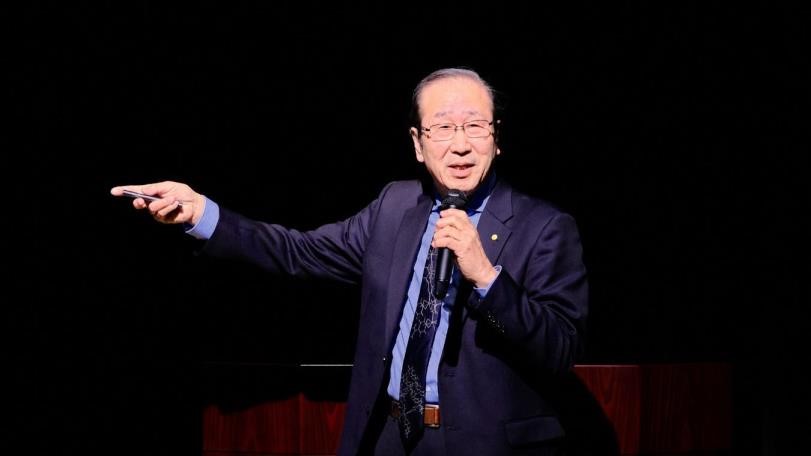
For two centuries, petrochemistry has been built on digging carbon out of the ground. Kyoto University Professor Kitagawa – a recipient of the 2025 Nobel Prize in Chemistry – believes the next century will be built on extracting molecules directly from the air. He calls the opportunity “invisible gold.”
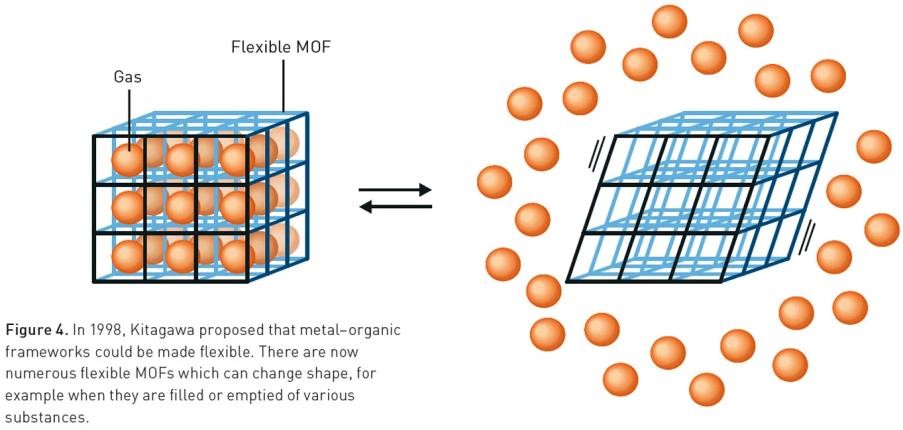
The technology behind this is metal-organic frameworks, or MOFs. These crystalline materials are built from metal clusters joined by organic molecules, forming sponge-like structures riddled with microscopic pores. By tuning those pores at the molecular level, scientists can design MOFs that selectively capture, store or release specific gases.
Mastering gas separation and storage carries massive industrial and energy implications. MOFs could be used to capture carbon, store hydrogen, produce synthetic fuels, and even regulate humidity in manufacturing.
For Japan, dependent on imported fuels for nearly 90% of its energy needs, such technology could be transformative. Recent conflict in the Middle East provides a reminder of how heavily the country relies on energy shipments passing through the Gulf, and how exposed those flows remain to geopolitical risk.
With few hydrocarbons of its own, Japan must look elsewhere to strengthen its energy security. Around Kyoto, a growing cluster of universities, startups and industrial firms is now trying to move MOFs from laboratory research to commercial deployment – potentially allowing the country to produce cleaner fuels and store energy more efficiently at home.
How MOFs work
Highly flexible molecular workability allows MOFs to come in numerous varieties. Those of greatest interest can store incredibly dense concentrations of specific gases, then release them under certain conditions. One of the most immediately impactful applications related to energy is e-methanation.
Methane (CH4) can be synthesized by combining hydrogen with carbon atoms from CO2. To source green hydrogen from water, electrolysis – powered by renewables such as wind or solar – remains the most practical method.
MOFs come in on the carbon side of the equation. A number of companies are developing MOF-based direct air capture (DAC) solutions that – through a largely passive, low-energy process – would separate carbon from flue gas emissions before their release into the atmosphere.
As Professor Kitagawa explained at this year’s Zero Emission Technology Summit in Muko (Kyoto Prefecture), humanity has mastered how to control solids and liquids. The next step is gases, the Earth’s most abundant resource. Their ubiquity makes them accessible from anywhere on the planet, including Japan.
In addition to gas separation and decarbonization, MOFs’ ability to convert air into a resource opens up applications in areas such as sensing and medicine. But, the technology has yet to receive the same level of attention from Kasumigaseki as semiconductors, quantum computing, or fusion energy.
National strategy documents often place MOFs alongside other “advanced materials,” as in a materials policy framework the Cabinet Office’s Council for Science, Technology and Innovation outlined in December.
Materials are one of the 17 strategic sectors the government has designated for state support, but MOFs are not even mentioned in the policy. Rather, the emphasis is on weaning Japanese manufacturers off of dependence on China for rare earths and other critical materials.
Kyoto’s emerging clean tech sector
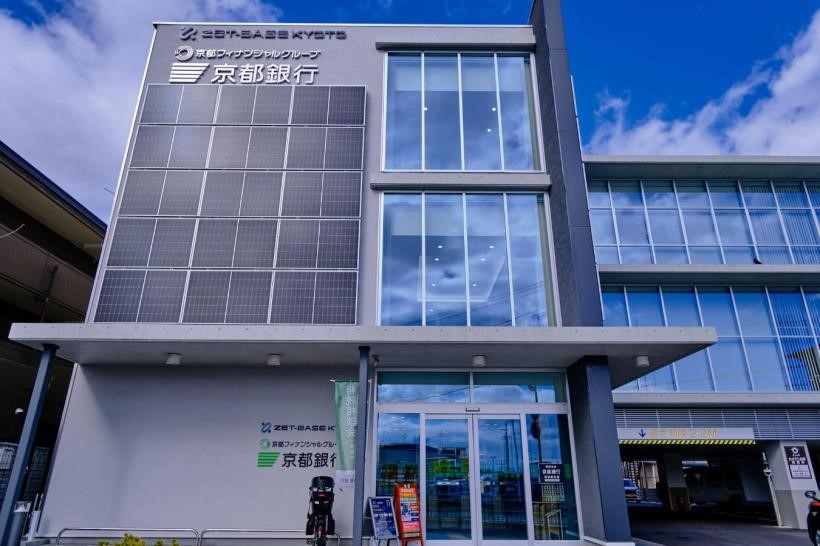
The technology is gaining traction on the local level, especially in Kyoto, which is nurturing a budding MOF ecosystem and a broader clean tech sector through the ZET Valley Initiative. Via open innovation between industry, academia, and government, the policy drive seeks to achieve zero-carbon urban development through zero-carbon manufacturing.
Part of this effort was the annual ZET Summit in Muko, where Professor Kitagawa gave the keynote address on February 2. He also engaged with Kyoto Governor Nishiwaki Takatoshi, suggesting steps to take advantage of a wealth of underutilized innovations at the prefecture’s prestigious universities and laboratories.
- Share data between universities so researchers can gauge progress.
- Build collaborative spaces for researchers.
- Reduce hierarchy in labs and give researchers more freedom.
- Foster international openness to produce solutions with global viability.
Kyoto City is taking action along these lines, working with local universities to recruit executives to commercialize their deep tech. An open innovation center is scheduled for completion in a central location near Kyoto Station in spring 2028.
Putting MOFs to work
This year’s ZET Summit had several companies – from large corporations to nimble startups – exhibiting real-world MOF applications. Carbon capture is the clean tech field where MOFs hold the most potential to turn ambition into reality.
Osaka Gas is manufacturing its own MOFs for direct air capture research. These structures have a surface area of about 3,000 square meters/ gram. In a gas mixture at an ambient temperature of 25⁰ C with CO2 at 400 ppm in nitrogen, they capture a larger amount of CO2 than commercially available products. This CO2 can then be released for reuse with relatively little heating, at a range of 50-70⁰ C.
A low-energy DAC process would make a major contribution toward developing a carbon-neutral e-methane production process. If the carbon is sourced from emissions by factories or thermal power plants, and the synthesis is powered by renewables, the result of this LNG-substitute would be net-zero GHG emissions once the gas is burned for consumption.
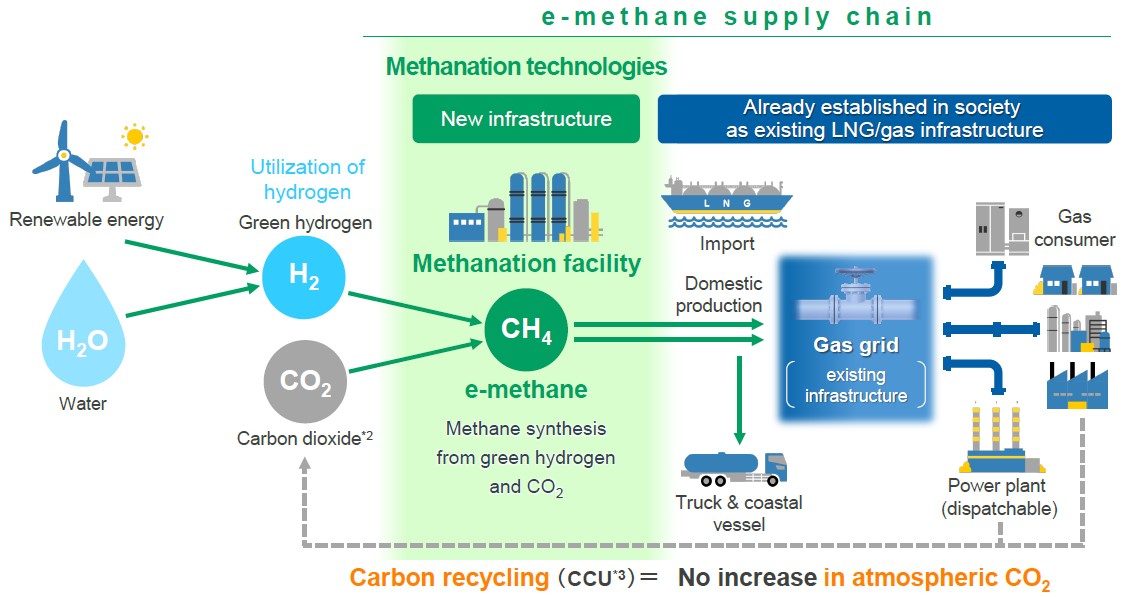
Source: Osaka Gas
Crasus Chemical is also developing DAC processes with MOFs. The carve-out from chemical giant Resonac is collaborating with Nippon Steel on research into capturing CO2 from factories.
Storage solutions are another avenue for MOFs to heavily impact the energy sector. For example, Atomis, a Kyoto University spinout based in Kobe, is partnering with Yachiyo Engineering to build a smart gas network in Indonesia.
Although the country produced 70 bcm of dry natural gas in 2024 – the 13th most worldwide – Indonesia has neither the pipelines for domestic distribution nor the funds to lay them. The government instead relies on propane – 80% of which is imported – and subsidizes consumer purchases. Propane meanwhile has a larger carbon footprint than natural gas.
Atomis’ solution to this pain point is the CubiTan, a portable high-pressure gas container. The tank is filled with a porous coordination polymer/metal-organic framework (PCP/MOF) that acts as a gas adsorbent, enabling nanoscale control of natural gas’ primary component: methane.
The result is gas storage at a lower pressure. This, plus the tank’s portable dimensions and IoT safety modules, are how Atomis and Yachiyo intend to roll out a digitally managed, safe distribution network for local consumption of locally produced natural gas in Indonesia.
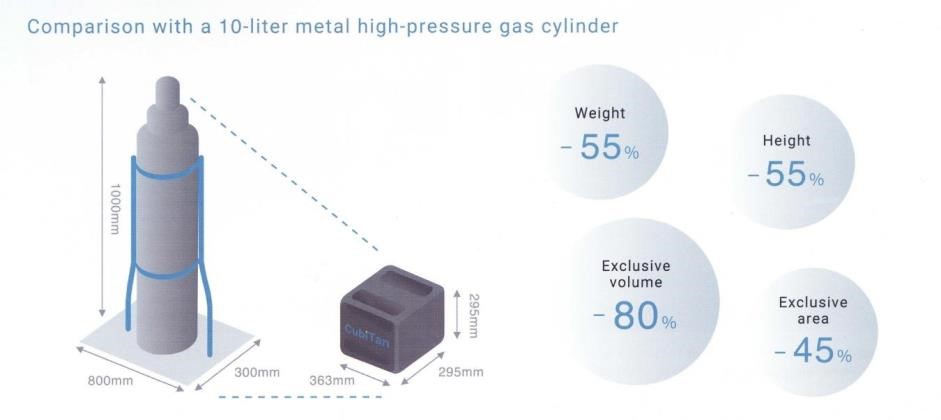
Source: Atomis
Another particularly promising energy-related commercial use for MOFs in the near future is humidity control. By adsorbing water vapor, MOFs can add or remove humidity in living environments and vehicles.
BASF Japan sees this application as significant for fast-growing economies like India and Southeast Asia, where air-conditioning use is growing, but high humidity means the units must work harder to achieve the same cooling effect.
One solution is to push indoor moisture outside with MOFs designed to capture and release water vapor. In other countries with cold, dry environments, reversing the process to add indoor humidity makes heating systems more efficient in winter.
Sumitomo Chemical believes humidity control could be most profitable in chip fabs and other electronics factories, where the optimal relative humidity is 40% to 60%.
When air is too dry, static charge builds up more easily, increasing electrostatic discharge risk and contributing to solder voids, delamination, and poor wetting. High humidity causes failures from moisture that swells components, outgassing, corrosion, and other forms of degradation that can lead to latent circuit failures.
Elsewhere in semiconductor manufacturing, Nippon Fusso released a clean room wafer mount coating in 2023 with a MOF additive that boosts design flexibility. Now the company is developing a PFAS-free version in response to growing awareness of the harm the long-lasting chemicals can cause.
Although MOFs are still expensive to manufacture, a coating additive is relatively easy to commercialize, as the coating process often costs more than production.
Prospects for a Japan-led MOF revolution
While none of the above solutions may become a world-changing “killer app,” their steady integration across manufacturing may come to represent another form of Japanese platform industrialization, following in the steps of lithium-ion batteries and carbon fiber composites. If nurtured, Japan’s emerging MOF ecosystem could eventually replicate the country’s past strengths in materials manufacturing.
Energy-saving humidity control and advanced fuel storage solutions should already improve balance sheets without government support, but some clean tech – such as Osaka Gas’ carbon-neutral e-methane project – still faces a long path to commercial feasibility.
For example, credits for CO2 removal can be issued and traded under the J-Credit program, the Joint Crediting Mechanism, and (in limited form) GX-ETS, but a large-scale, mature, stable market specifically for engineered CDR projects could up the incentive for utilities and manufacturers to adopt carbon capture technologies, including MOFs.
As for the global context, Professor Kitagawa said policy reversals on decarbonization in the U.S. may slow adoption, but they cannot undo scientific progress and the opportunities in our atmosphere. If MOF projects can win more public funding under the expansionary fiscal policy taking shape under Prime Minister Takaichi, this could attract the private-sector investment that transforms Japan into a global leader in mining the “invisible gold” all around us.
ASIA ENERGY REVIEW
BY JOHN VAROLI
A brief overview of the region’s main energy events from the past week
Australia / LNG
The govt is evaluating a potential windfall tax on its energy sector, following significant increases in global LNG prices. Australia is a leading global exporter of the fuel.
China / Fossil fuels
The National Energy Administration said China’s fossil energy consumption in 2025 rose by about 1% YoY, reaching 4.83 billion tons of standard coal.
China / Oil production
China, the world’s top oil importer, says it succeeded in a seven-year campaign to boost its own production, hitting a record high in 2025 with intensive drilling at ageing fields, as well as thanks to an offshore boom and nascent shale oil sector.
China / Oil reserves
China boosted crude oil inventories in Jan-Feb as strong imports and domestic output exceeded a rise in refinery production. China’s crude oil surplus was 1.24 mbpd in Jan-Feb.
India / Energy crisis
Shipping disruptions due to the U.S.-Israel war with Iran are squeezing gas supplies to India, risking a return to polluting fuels like coal, kerosene and biomass such as cow dung cakes.
India / Oil
In the week since the U.S. gave permission to buy Russian oil, Indian refiners have purchased 30 million barrels of sanctioned Russian oil.
Natural Gas
Experts say the bombing of the Ras Laffan facility in Qatar is a pivotal moment for gas and LNG markets. No Gulf exports beyond four or five months will mean that annual LNG supply falls, putting upward pressure on global prices through 2026. Prices in Asia have risen 65% and those in Europe rose 88% as the Iran war inhibits LNG supplies.
South Korea / LNG
The govt said Iranian attacks on Qatar’s LNG facilities increase global market uncertainty, but it downplayed concerns about disruption, citing availability of alternative LNG sources. South Korea is the world’s No.3 LNG buyer after China and Japan.
Taiwan / Natural gas
The govt rejected as “impossible” a Chinese offer for “energy security” if the island agreed to Beijing’s rule. Taiwan receives a third of its LNG from Qatar and now plans to secure alternative supplies from the U.S.
Disclaimer
This communication has been prepared for information purposes only, is confidential and may be legally privileged. This is a subscription-only service and is directed at those who have expressly asked K.K. Yuri Group or one of its representatives to be added to the mailing list. This document may not be onwardly circulated or reproduced without prior written consent from Yuri Group, which retains all copyright to the content of this report.
Yuri Group is not registered as an investment advisor in any jurisdiction. Our research and all the content express our opinions, which are generally based on available public information, field studies and own analysis. Content is limited to general comment upon general political, economic and market issues, asset classes and types of investments. The report and all of its content does not constitute a recommendation or solicitation to buy, sell, subscribe for or underwrite any product or physical commodity, or a financial instrument.
The information contained in this report is obtained from sources believed to be reliable and in good faith. No representation or warranty is made that it is accurate or complete. Opinions and views expressed are subject to change without notice, as are prices and availability, which are indicative only. There is no obligation to notify recipients of any changes to this data or to do so in the future. No responsibility is accepted for the use of or reliance on the information provided. In no circumstances will Yuri Group be liable for any indirect or direct loss, or consequential loss or damages arising from the use of, any inability to use, or any inaccuracy in the information.
K.K. Yuri Group: Hulic Ochanomizu Bldg. 3F, 2-3-11, Surugadai, Kanda, Chiyoda-ku, Tokyo, Japan, 101-0062.