
WEEKLY
August 3, 2026
ANALYSIS
INSURANCE FOR BESS: MANAGING RISK IN JAPAN’S GROWING ENERGY STORAGE MARKET
- Japan’s rapid deployment of BESS is creating a new challenge for insurers, as many utility-scale projects enter their portfolios.
- Accidents are rare, but they’re shaping underwriting standards and risk-management practices. What factors do insurers consider when evaluating BESS projects and site selection?
JAPAN ADDS ANOTHER LAYER TO OFFSHORE WIND RESET
- Japan is improving its offshore wind tenders. Several state entities are now involved in a public framework to give bidders a common baseline, reduce repeated surveys and make projects easier to design.
- Japan NRG examines this evolving survey framework, the division of responsibilities, and when the system will face its first meaningful test.
ASIA PACIFIC REVIEW
This column provides a brief overview of the region’s main energy events from the past week
NEWS
- METI creates group to review oil procurement and stockpiling after Hormuz disruptions
- Weather agency warns more heat to come in August, especially across Tokai and west Japan
- ANRE delays first FY2026 baseload market auction
- Peak power prices remain elevated as heat reshapes forward curve
- Govt weighs new mechanism to retain power plants with grid value
- ANRE discusses GX-ETS role in capacity market
- NEDO selects 12 regional hydrogen society model projects indicating future demand sectors
- Govt picks consortium to oversee hydrogen transport management demo; rail routes to be tested
- Toyota invests in overseas developer of fuel-cell systems for trucks
- iGrid Solutions debuts on TSE, to expand on-site solar PPA business
- Osaka Pref plans subsidies to support R&D for PSCs
- Hexa signs 20-year tolling deal with Tokyo Gas
WIND POWER AND OTHER RENEWABLES
- MLIT selects projects for promoting floating offshore wind power
- Okishin to make CTVs for offshore wind facilities
- Govt publishes target to replace reactors by 2040s
- TEPCO cancels transport of spent nuclear fuel
- Petronas and Hokuriku Electric extend LNG supply partnership
- LNG stockpiles at the major power utilities drop by 19% in a week; remain close to 5-year average
CARBON CAPTURE & SYNTHETIC FUELS
- METI advances integration of ETS into electricity markets
EVENTS
August 27-28 Asia-Pacific Economic Cooperation / Energy Ministerial Meeting
Sept 7-10 APPEC 2026 @ Singapore
Sept 9-11 Smart Energy Week (Autumn) 2026 @ Makuhari Messe (co-exhibiting H2 & FC Expo, Battery Japan, Smart Grid, Wind Expo, CCUS Expo, etc.)
Sept 9-11 Automotive World @ Makuhari Messe
Sept 14-18 IAEA General Conference 2026 @ Vienna, Austria
Sept 14-17 Gastech @ Bangkok
Oct 8 Innovations for Cool Earth Forum (ICEF) @ Westin Tokyo
Oct 13-15 Global Offshore Wind Summit – Japan 2026 @ Nagasaki
Nov 2-5 ADIPEC 2026 @ Abu Dhabi
Nov 3 U.S. Midterm Elections
Nov Publication of International Energy Agency – World Energy Outlook 2026
Nov 18-19 Asia-Pacific Economic Cooperation – Leaders Meeting @ Shenzhen, China
PUBLISHER
K. K. Yuri Group
Editorial Team
Yuriy Humber (Chief Editor)
John Varoli (Senior Editor, Americas)
Kyoko Fukuda (Data, Events)
Magdalena Osumi (Renewables & Storage)
Filippo Pedretti (Thermal, CCS, Nuclear)
Tetsuji Tomita (Power Market, Hydrogen)
Aglaé Bange (Renewables and Biomass)
George Hoffman (Sales, Business Development)
Tim Young (Design)
SUBSCRIPTIONS & ADVERTISING
Japan NRG offers individual, corporate and academic subscription plans. Basic details are our website or write to subscriptions@japan-nrg.com
For marketing, advertising, or collaboration opportunities, contact sales@japan-nrg.com. For all other inquiries, write to info@japan-nrg.com
NEWS: GENERAL OUTLOOK AND TRENDS

METI launches group to review oil procurement and stockpiling
(Government statement, July 24)
- METI set up a new working group to review Japan’s oil supply structure after the Middle East crisis disrupted tanker routes through the Strait of Hormuz.
- The group will discuss revisions to the nation’s petroleum stockpiling system and ways to diversify crude oil procurement.
- CONTEXT: In its initial response to the crisis, Japan released about 50 days of national oil reserves, lowered private-sector reserve requirements by 15 days, and released about six days of joint reserves held with oil-producing countries.
- The releases, together with alternative procurement efforts, allowed Japan to secure the overall volumes needed. Officials said this indicates the oil reserve system served its basic purpose.
- However, the crisis exposed supply problems for naphtha, which is not covered by the oil stockpiling system. Shortages and distribution bottlenecks emerged for naphtha-related products such as thinners, paints and adhesives.
- METI will also examine whether refineries and related facilities need medium- to long-term upgrades to handle a wider range of crude grades and feedstocks.
- TAKEAWAY: The oil reserve system helped absorb the first major shock in decades, but the naphtha bottleneck exposed a weakness in industrial supply chains that spread across the economy. Mandating naphtha stockpiles, however, is far from straightforward. Naphtha is a volatile petrochemical feedstock that is harder to store and manage over long periods than crude oil. In short, there is no plug-and-play solution. METI appears to want to weigh available options before committing to refinery upgrade subsidies, product stockpiles or other support measures. See last week’s Analysis section for a deeper dive into this topic.
JMA warns of more heat, especially across Tokai and west Japan
(Agency statement, July 30)
- The Japan Meteorological Agency expects above-normal temperatures across Tokai and western Japan through August, with temperatures considerably above normal in the first half of the month.
- The Kyushu area will stay especially hot, with a 80% probability of above-normal temperatures for Aug 1–7 and 60% for the week after that.
- Northern Japan and the Sea of Japan side are likely to see more sunny days than normal in the first week, as the area remains prone to high-pressure conditions.
- CONTEXT: The model outlook shows low pressure to the south of Japan and high pressure near Hokkaido, with above-normal temperatures at around 1,500 m leaving the country prone to warm air over the forecast period.
NEWS: ELECTRICITY MARKETS

ANRE delays first FY2026 baseload market auction
(Government statement, July 28)
- ANRE plans to postpone the first FY2026 baseload market auction, originally scheduled for August, until autumn.
- The delay is due to the need for further discussion on how GX-ETS costs should be reflected in wholesale electricity pricing and auction rules.
- The baseload market is operated by JEPX, with four auctions held each year. The first FY2026 auction was due to cover one-year fixed-price products and two-year products with ex-post fuel cost adjustment.
- A METI working group proposed that GX-ETS costs should be calculated at the business-operator level and reflected in electricity prices delivered in the same fiscal year. However, the method for calculating costs for baseload power sources and setting emissions allowance prices will be studied further.
- Ahead of the FY2026 auction, the costs associated with GX-ETS in the baseload market will be clarified, and the guidelines will be revised accordingly.
- CONTEXT: In the baseload market, supply price caps are based on the aggregate costs of power generation, and eligible generators are required to supply below these caps. As the ETS creates costs for emissions exceeding allocated allowances, it is necessary to clarify how eligible generators should reflect these costs in their base-load market supply prices.
- TAKEAWAY: The delay shows how the electricity markets are being pulled into the wider GX policy framework. Baseload market products are meant to support wholesale access and retail competition, but carbon-cost treatment now needs to be built into pricing rules. Many market participants expected this to happen later, but it’s already impacting calculations. There is clearly a design challenge here: if GX-ETS costs are passed through in a vague manner, then buyers will face uncertainty. On the other hand, if emissions are not included in the calculations or underpriced, then the point of introducing the GX-ETS is lost.
- SIDE DEVELOPMENT:
- ANRE discusses GX-ETS role in the capacity market
- (Government statement, July 29)
- ANRE discussed how GX-ETS costs and revenues should be treated in the capacity market.
- ETS-related costs would be treated as variable generation costs. When calculating capacity market bids, generators would reflect those costs through the marginal-cost assumptions used to estimate revenues from other markets.
- Revenue from selling allocated emission allowances would normally be deducted from capacity market bids.
- However, ANRE proposed that allowance-sale revenue would not need to be deducted if a generator commits to using the proceeds for future ETS compliance or additional decarbonization investment.
- The treatment of emission allowance revenue is proposed to apply from the FY2026 Main Auction.
- CONTEXT: The mandatory phase of the GX-ETS began in FY2026, with allowance allocation and market trading scheduled to start in FY2027. That creates new costs and potential revenues for generators, which must now be reflected across all of the electricity markets. The Electricity Business Environment WG has already discussed how GX-ETS should be handled in wholesale markets, proposing that emissions-related costs be reflected in bids, while allowance-sale revenues should not reduce bids if they are committed to future compliance or decarbonization investment. ANRE is now applying the same logic to the capacity market.
- TAKEAWAY: ANRE is trying to make the capacity market consistent with the wider treatment of GX-ETS in electricity markets. The basic idea is that emissions costs should be reflected as real generation costs, but allowance-sale revenues should not automatically be treated as ordinary income that lowers capacity market bids. That preserves an incentive for generators to use those revenues for future compliance and decarbonization investment. The tricky balance is avoiding double-counting while ensuring that capacity payments do not overcompensate generators for costs and revenues created by the ETS.
See the Carbon Capture section lower in the report for details of how the ETS may impact the broader electricity markets.
Peak power prices remain elevated as heat reshapes forward curve
(Exchange and broker data, July 31)
- The near-term power forward curve remained elevated at the end of July, with the strongest pressure in peak-load contracts rather than baseload.
- The July 30 curve showed August baseload prices easing slightly from July 24 levels: Tokyo fell to ¥24.05/ kWh from ¥24.50; Kansai to ¥20.85 from ¥21.20; and Chubu to ¥23 from ¥23.45, according to Tullett Prebon data.
- Peak-load prices showed a firmer pattern. August Tokyo peak slipped to ¥29.20/ kWh from ¥29.75; but Kansai peak rose to ¥26.65 from ¥25.85; and Chubu peak rose to ¥28.65 from ¥27.80.
- September peak contracts also moved higher across all three regions. Tokyo peak rose to ¥29.05; Kansai to ¥25.15; and Chubu to ¥27.80.
- The moves in the futures market reflect dynamics in the spot market. JEPX system prices for July rose steadily through the month, while the July 30 intraday curve showed afternoon prices moving above ¥30/ kWh.
- LNG prices softened on July 30, with Tullett Prebon showing JKM swaps down across the curve. But JKM remained at elevated absolute levels, with the balance-of-month contract at $21.30/ MMBtu and September at $21.338/ MMBtu.
- JMA declared the end of the rainy season in the Kanto region on July 20, after which Tokyo recorded its first “extremely hot day” of the year, exceeding 35°C.
- TAKEAWAY: Power prices are expected to stay elevated at least for the next month or two as concern about energy supply from the Middle East again takes center stage, in addition to the rising summer temperatures. Tokyo Gas told the media last week that it sees spot LNG prices remaining elevated for an extended period due to tightening supply and shipping constraints. LNG delivery times to Asia are rising as transit through the Suez Canal becomes difficult and the Panama Canal is overly congested, leaving the lengthy route around the Cape of Good Hope as the main alternative. In addition, traders are pricing the risk of concentrated afternoon and early-evening tightness due to sustained heat across most of central Japan. Peak-load exposure has become the main pressure point through August and early September.
Govt weighs new mechanism to retain power plants with grid value
(Government statement, July 29)
- ANRE is studying how to make greater use of existing power generation capacity as electricity demand uncertainty rises and new supply takes longer to develop.
- The agency said demand could increase as GX, DX and AX advance, while lead times for new power plants are expected to lengthen.
- The capacity market secures supply for the delivery year four years ahead. ANRE said it’s difficult to prepare for demand and supply uncertainty beyond that period.
- ANRE proposed studying a mechanism to retain existing power plants that may be needed in the future but are at risk of retirement, including resources that failed to clear the capacity market or did not bid.
- The mechanism would be designed to secure capacity ahead of future capacity market auctions, based on medium- to long-term supply-demand forecasts, including supply plans covering up to 10 years ahead.
- Retained plants may need multi-year arrangements, since operators of aging assets find it difficult to make repair and staffing decisions with a single-year framework.
- The agency also said some resources may be important not only for kW supply, but also for grid support.
- Future supply security should consider supply capacity and balancing capacity together, as renewable energy expands and demand patterns change.
- TAKEAWAY: Policies are meeting reality. New plants are taking longer to bring online than officials had hoped, and incentivizing investment through short-term contracts is difficult. So ANRE is looking at ways to recognize the value of existing assets. But it is also making an interesting point about the local role of certain generators. Some assets matter not only because they provide kW, but because they support local grid flexibility or balancing. The document does not explicitly name inertia or BESS, but the logic is relevant to both. For BESS developers, the signal is that location and grid function may become more valuable over time, especially if Japan moves toward mechanisms that recognize strategically placed resources rather than treating all capacity as interchangeable.
ANRE proposes financing support under amended Electricity Business Act
(Government statement, July 28)
- ANRE proposed new financing support under the amended Electricity Business Act.
- The plan aims to accelerate large-scale investment in power generation and transmission infrastructure by complementing private-sector financing with state-backed loans.
- For power generation, projects of 500 MW or more will be eligible, with priority given to projects that contribute to both energy security and decarbonization.
- State-backed loans will be limited to around 30% of total financing and will be provided at market-based interest rates.
- The plan will support transmission infrastructure, including advanced grid development to accommodate future demand from data centers (DCs) and other large-scale facilities.
- CONTEXT: The amended Electricity Business Act passed on July 17 and is expected to take effect in December. One of the key measures is promoting development of large-scale transmission lines and power generation facilities.
- TAKEAWAY: The financing scheme addresses a key issue identified in the review of Japan’s electricity system reform: ensuring sufficient investment in electricity infrastructure. Detailed rules, eligibility criteria, and lending conditions will be finalized before the scheme is implemented. A challenge will be how broadly the financing can support projects for which future demand or revenues have not yet been fully secured.
Kyushu Electric grapples with Kumamoto earthquake outages
(Denki Shimbun, July 31)
- Kyushu Electric and Kyushu Electric Power Transmission and Distribution are close to restoring high-voltage distribution lines after the July 28 Kumamoto earthquake.
- The 7.1 quake caused outages for about 48,000 households.
- Kyushu received emergency support from other utilities, including high-voltage generator trucks from Chugoku and Shikoku TSOs.
- TAKEAWAY: The outage highlights how seismic risk can affect energy infrastructure beyond generation assets. NPPs face strict active-fault and seismic safety assessments, but most renewable generation and BESS projects do not face the same scrutiny. Even where a formal fault assessment is not required, developers still need to consider seismic exposure as part of site selection and project design. The quake was likely linked to the Hinagu fault zone, underlining the potential for damaging earthquakes to recur in known fault areas. For BESS and renewables projects, site risk is not limited to grid access, land rights and offtake; road access, distribution-line resilience and post-disaster repair logistics are also important factors for planning in earthquake-prone regions. See this week’s Analysis for further risks that insurers consider when assessing BESS projects.
TEPCO profit falls dramatically in Q1
(Company statement, Japan NRG, July 29)
- In April–June 2026 (Q1), TEPCO’s ordinary profit fell 89% to ¥11.4 billion, with an operating loss of ¥34.2 billion.
- Its final net loss narrowed to ¥9.7 billion (compared to last year’s massive loss from Fukushima decommissioning costs). Full-year forecasts remain undisclosed.
- CONTEXT: The April restart of Kashiwazaki-Kariwa NPP Unit 6 yielded a ¥47 billion cost-reduction benefit by decreasing expensive market power purchases. But there were still high fuel prices and an 11% drop in retail electricity sales volume. TEPCO lost several large corporate and public contracts to competitors. This includes losing a sewage plant contract from the Tokyo Metropolitan Govt to Tohoku Electric.
- TAKEAWAY: This erosion of TEPCO’s capital-region customer base could have negative effects, for example threatening its ongoing negotiations for a capital alliance with groups like SoftBank and various funds. Weak performance could also impact asset assessments.
J-Power, Chugoku Electric and Okinawa Electric report Q1 profits down
(Japan NRG, July 31)
- J-Power net profit fell 47% to ¥27.4 billion for Q1, affected by a high base from last year’s sale of U.S. gas-fired plant stakes.
- Chugoku Electric faced a ¥3.7 billion net deficit (compared to a ¥26.8 billion surplus last year), due to rising fuel costs and the Shimane NPP Unit 2 shutdown.
- Okinawa Electric saw an expanded Q1 net loss of ¥7.2 billion. Full-year net profit is forecast to drop 45% to ¥3.4 billion due to high fuel and power purchasing costs.
- CONTEXT: Chugoku Electric relies on thermal (fossil-fuel) generation for 70% of its power. Surging global prices for coal and LNG, driven by Middle East tensions, squeezed its profits. Okinawa Electric also suffers due to the same reason.
- SIDE DEVELOPMENT:
- Chubu Electric expects decline in net profit
- (Company statement, Japan NRG, July 29)
- Chubu Electric forecasts a 30% drop in 2026 consolidated net profit to ¥160 billion but for revenue to rise 10% to ¥3.9 trillion.
- This is due to higher fuel cost adjustments.
- Q1 revenue rose 3% to ¥826 billion, but net profit plummeted 59% to ¥35 billion.
- CONTEXT: The company is facing scrutiny over earthquake data falsification at its Hamaoka NPP that continued even after the NRA launched an investigation in May 2025. Company president Hayashi said that a third-party committee is investigating.
- SIDE DEVELOPMENT:
- Tohoku Electric Q1 net profit down
- (Company statement, Japan NRG, July 29)
- In Q1, Tohoku Electric’s net profit dropped 4% to ¥36 billion, but revenue surged 47% to ¥785 billion, its highest quarterly revenue since reporting began in 2003.
- The dip in profit is due to a ¥30 billion negative impact from the time lag on fuel price changes. Also, higher fuel costs were partly caused by Onagawa NPP Unit 2 operating for only 45 days due to periodic inspections. The record-high revenue is due to a ¥147 billion rise in “self-transactions” on the wholesale exchange.
NEWS: HYDROGEN

NEDO selects 12 regional hydrogen society model projects
(Organization statement, July 30)
- NEDO selected 12 proposals under its Development and Demonstration of Advanced Technologies to Establish a Hydrogen Society Model project.
- The agency reviewed 17 proposals and chose projects across two categories: feasibility studies and technology development/demonstration.
- The program aims to build hydrogen supply-chain models in specific regions, combining hydrogen production, storage, transport and use.
- NEDO said it will emphasize business feasibility, regional deployment, horizontal expansion to other areas, demand creation and the development of new local industries.
- Eight projects were selected for the survey phase. These include studies on hydrogen use for inland factory decarbonization, powdered hydrogen carriers for water transport in Suruga Bay, magnesium hydride-based hydrogen supply chains in Hokkaido, hydrogen production and use in Maibara, and on-site hydrogen production for commercial-vehicle hydrogen stations.
- Four projects were selected for the technology development and demonstration phase. These include hydrogen use in combustion-type industrial furnaces, a hydrogen supply system using the ENEOS Woven City hydrogen station, rail-based hydrogen transport management, and hydrogen production from unused natural gas in Toyotomi, Hokkaido.
- Selected participants include Kobe Steel, Suzuyo Shoji, H2 Hokkaido, Sapporo City, Chiyoda, Kansai Electric, Daiwa House, Aisin, ENEOS, Air Water, Hokusan Co. and Panasonic Electric Works.
- CONTEXT: The selected projects show the range of Japan’s hydrogen policy experiments: industrial heat, rail transport, water transport, hydrogen stations, local renewable power, waste-to-energy surplus power, unused natural gas and hydrogen carriers such as magnesium hydride.
- TAKEAWAY: The selected proposals are still mostly early-stage and fragmented, but they show where Japan sees possible demand: industrial heat, transport, commercial vehicles, local energy systems and hard-to-electrify infrastructure. Many of these projects still depend on proving business feasibility, and matching local hydrogen production with actual users.
- SIDE DEVELOPMENT:
- Hokkaido hydrogen-magnesium supply chain study selected
- (Company statement, July 30)
- NEDO selected a study led by H2 Hokkaido for the survey phase of its Hydrogen Society Model project.
- The study will examine an integrated supply chain using renewable hydrogen from Hokkaido and domestic magnesium, with magnesium hydride used as a hydrogen storage and transport medium.
- The project involves H2 Hokkaido, Sapporo City, Chiyoda, TISI, Tokio Marine & Nichido, Tokuyama, Docon and Mizuho Bank.
- SIDE DEVELOPMENT:
- Maibara hydrogen production and use study selected
- (Government statement, July 31)
- NEDO selected a study on hydrogen production and utilization in Maibara City, Shiga Pref, for the survey phase of its Hydrogen Society Model project.
- The project will examine a local hydrogen production and consumption model linked to regional industry.
- The study is led by Kansai Electric, Daiwa House and Meijo Nano Carbon.
- Maibara’s role as a transport hub between Tokai, Kinki and Hokuriku makes it a candidate location for studying hydrogen use linked to logistics and regional industry.
NEDO selects nine-company project for hydrogen transport management demo
(Company statement, July 30)
- NEDO selected a nine-company proposal to develop and demonstrate systems for managing hydrogen supply and environmental value in a domestic hydrogen supply chain.
- The project involves Kansai Electric, NTT Anode Energy, Kawasaki Heavy Industries, Panasonic Electric Works, Kobe Steel, NTT, JR West, JR Freight and Kawasaki Railcar.
- The companies aim to build a hydrogen supply-chain model in the Kansai region using existing infrastructure such as railways and communications networks.
- The project will study large-scale, low-cost and low-carbon hydrogen transportation from production and storage hubs, while improving supply stability and the transparency of hydrogen’s low-carbon value.
- Kansai Electric will develop and demonstrate a hydrogen supply-management system.
- Kawasaki Heavy Industries will develop and demonstrate an environmental-value management system, and will also conduct a desk study on hydrogen supply using its Kobe Works as a model case.
- NTT Anode Energy will study hydrogen pipeline supply using existing underground space, also using KHI’s Kobe Works as a model case.
- Panasonic Electric Works and Kobe Steel will conduct hydrogen-use demonstrations at Panasonic HX Kusatsu.
- NTT, JR West, JR Freight and Kawasaki Railcar will participate as cooperation partners.
- CONTEXT: The project was selected under NEDO’s Hydrogen Society Model Construction Advanced Technology Development and Demonstration Program. Rail is seen as one way to reduce the cost and emissions of inland hydrogen transport, while underground pipeline routes and existing communications infrastructure could support local distribution and system control.
NEDO selects six hydrogen supply-chain technology projects
(Organization statement, July 24)
- NEDO selected six proposals under its FY2026 Technology Development Project for Building a Competitive Hydrogen Supply Chain.
- The agency reviewed seven proposals and chose six implementing teams for projects running up to two years, from FY2026 to FY2027.
- The selected projects cover large-scale hydrogen supply chains, hydrogen station cost reduction and performance improvement, and shared technology infrastructure.
- Themes include research to support international standardization of hydrogen quality, material compatibility rules for large ammonia tanks, next-generation hydrogen fuel-cell railcars, and safety verification for retrofitting existing railcars with hydrogen fuel-cell systems.
- Other projects will study subcooled liquid hydrogen refueling for heavy-duty vehicles and metal material performance in cryogenic hydrogen environments.
- Participants include the Japan Hydrogen Value Chain Promotion Association, AIST, JERA, ENEOS, the University of Tokyo, JR East, JR West, Iwatani, the Railway Technical Research Institute, the Japan Automobile Research Institute and the National Institute for Materials Science.
- CONTEXT: The program aims to support technology development needed for hydrogen production, storage, transport and use, including equipment such as storage tanks, filling hoses and metering systems. It also supports data collection for regulation, safety standards and international standardization.
Toyota invests in Daimler and Volvo fuel-cell firm for hydrogen trucks
(Company statement, July 27)
- Toyota will invest in Cellcentric, the fuel-cell JV between Daimler Truck and Volvo Group.
- The three companies will collaborate on development and production of hydrogen fuel-cell systems for heavy-duty trucks.
- Toyota will take an equal stake in Cellcentric alongside Daimler Truck and Volvo Group.
- Cellcentric was established in 2021 by Daimler Truck and Volvo Group to combine their fuel-cell activities and support large-scale fuel-cell production for commercial vehicles.
- CONTEXT: Hydrogen fuel cells remain most relevant in transport segments where batteries face limits from vehicle weight, range, charging time and payload loss. Heavy-duty trucks are one of the clearest target markets because operators need long range, high utilization and short refueling times.
- TAKEAWAY: For Toyota, joining Cellcentric offers a route to scale fuel-cell systems through European truckmakers with established commercial-vehicle platforms, rather than relying only on passenger cars or standalone hydrogen projects.
NEWS: SOLAR AND BATTERIES

iGrid Solutions debuts on TSE, to expand on-site solar PPA business
(Company statement, July 29)
- iGrid Solutions, a provider of on-site solar PPAs and electricity retail services, was listed on the Tokyo Stock Exchange Growth Market.
- The funds raised will be used for capital investment and development of core systems to expand its on-site PPA business.
- CONTEXT: The firm targets developers installing solar PVs on rooftops and car parks at commercial facilities, with the equipment owned by leasing or finance companies. It also uses AI to aggregate and optimize surplus electricity generated under its PPAs, called a surplus power circulation scheme. Currently, it operates about 1,400 power plants.
- TAKEAWAY: iGrid’s listing shows that on-site solar PPAs remain a viable growth model even as larger off-site PPAs attract more attention. The key is scale and aggregation. A single rooftop or car-park solar system is small, but a large portfolio of on-site PPAs can create meaningful surplus electricity that can be optimized and sold. iGrid’s business therefore sits between distributed solar development and power retailing: it installs small assets close to demand, then uses aggregation and AI to improve the value of surplus output. The challenge will be whether it can keep expanding site numbers.
Osaka Pref plans subsidies to support R&D for PSCs
(Organization statement, July 23)
- Osaka Pref allocated subsidies to Mitsuboshi Diamond Industrial and Yukita under its FY2026 perovskite solar cell (PSC) development and demo support program.
- MDI aims to establish laser processing technologies for patterning.
- CONTEXT: Patterning refers to the process of machining grooves into the substrate to create a wiring structure to get the electricity generated by the solar cell.
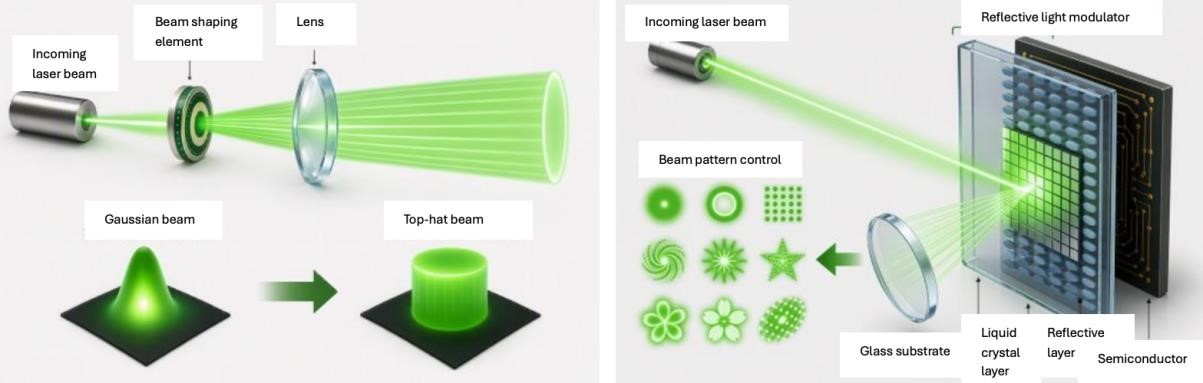
- Yukita designs peripheral wiring systems (branch cables, connectors, junction boxes) to support a variety of PSC installation applications, such as semi-indoor and BIPV (Building-Integrated Photovoltaics) installations.
- SIDE DEVELOPMENT:
- Epson invests in inkjet tech for PSC production
- (Company statement, July 23)
- Seiko Epson Corp and Epson X Investment Corp made an additional investment in Gosan Tech Co through a joint fund, EP-GB L.P.
- Gosan Tech is a South Korean startup developing inkjet technology including for OLED (Organic Light-Emitting Diode), which enables highly uniform and precise ink droplet deposition, including for PSC manufacturing.
- TAKEAWAY: Large-scale PSC production requires formation of a highly uniform perovskite layer over large surface areas, a prerequisite for industrial-scale manufacturing beyond small demo-scale production. These investments illustrate the growing competition not only among solar panel manufacturers, but also further upstream across the supply chain.
Hexa Energy signs 20-year tolling deal with Tokyo Gas
(Company statement, July 28)
- Hexa Energy Services signed a 20-year offtake / tolling agreement with Tokyo Gas for a grid-scale BESS project in Fukushima Pref.
- The project will have a capacity of 50 MW / 202 MWh and is scheduled to begin operations in 2029.
- Under the agreement, Hexa will develop, own and maintain the BESS, while Tokyo Gas will obtain long-term operating rights and dispatch the asset according to power market conditions.
- CONTEXT: Hexa has been awarded 13 BESS projects under the LTDA, including 11 in Round 1 and two in Round 3. Tokyo Gas has been steadily expanding its BESS offtake portfolio. In June 2025, it said it had six grid-scale BESS projects totaling 300 MW planned for operation, including three offtake contracts totaling 110 MW. Those included contracts with Renova and Equis Development.
- TAKEAWAY: Tolling agreements remain relatively rare in Japan’s BESS market. These agreements, which separate ownership from operation, can improve bankability for BESS developers by reducing merchant exposure. For offtakers such as Tokyo Gas, they provide access to flexible capacity without having to develop and own every project directly.
Pacific Consultants demo to compare PSC and silicon performance
(Company statement, July 28)
- Pacific Consultants launched a PSC demo at a dam reservoir in Nagano Pref.
- The MoE chose the project under its program for technologies utilizing the spatial potential of water infrastructure.
- The demo aims to:
- compare the power generation performance of PSCs, conventional silicon solar cells, and thin-film silicon solar cells;
- identify solutions to technical issues related to design, installation, and operation of floating PV systems.
Rising and Tensor Energy to develop low-voltage BESS
(Company statement, July 27)
- Solar and BESS solution provider Rising launched sales and installation services for low-voltage BESS and will partner with Tensor Energy, an aggregator operating the “Tensor Cloud” platform.
- Rising aims to deploy 500 units by 2028 and 1,000 by 2030.
- SIDE DEVELOPMENT:
- TSP launches simulation service for low-voltage BESS in solar facilities
- (Company statement, July 27)
- Solar and BESS solution provider TSP launched an AI-based simulation support service to compare operational models for low-voltage BESS aimed at owners of FIT low-voltage solar power plants, and to choose the best depending on installations.
- The AI compares two operational models:
- Charge a BESS with electricity generated by the solar plant and trade that electricity in the balancing market.
- Install an independent BESS in an unused area on the solar plant site.
- TAKEAWAY: METI recently decided to allow low-voltage BESS to participate in the balancing market, enabling these assets to be aggregated into VPPs. Low-voltage BESS is expected to gain momentum thanks to shorter grid connection timelines and smaller land requirements than HV and EHV projects.
ABB supplies ultra-fast chargers to e-Mobility Power for EVs
(Company statement, July 24)
- ABB supplied ultra-fast chargers with capacities of up to 150 kW for charging networks operated by e-Mobility Power, supporting the transition from traditional time-based pricing to pay-as-you-go billing.
- CONTEXT: Traditional time-based pricing charges users according to the duration of a charging session, even though the vehicle’s state of charge, charging power, and ambient temperature may vary during the session. By contrast, a pay-as-you-go system bills users solely on the amount of electricity consumed. METI has been promoting this approach since last year because it provides greater pricing transparency for users and ensures that charging fees are directly linked to actual electricity consumption.
NEWS: WIND POWER AND OTHER RENEWABLES

MLIT selects projects for promoting floating offshore wind power
(Organization statement, July 24)
- The MLIT selected seven projects for the Technology Development Program to Establish Offshore Construction for Floating Offshore Wind Power Generation.
- The projects include:
- The Floating Offshore Wind Power Construction Technology Research Association will develop construction methods using offshore work bases.
- Tadano Infra Solutions will develop a system for domestic RLC (Ring Lift Crane) production suitable for base port usage.
- Toda Construction and Kumamoto University will develop seafloor bedrock excavation technology using pulse power impact crushing technology.
- The Environmental GIS Research Institute and Meteorological Engineering Research Institute will develop a work advisability prediction system for construction using high-precision weather and oceanic condition forecasts.
Marubeni, etc submit preliminary assessment for Yuza offshore wind project
(Company statement, July 16)
- With Marubeni as the lead partner, Yamagata Yuza Offshore Wind submitted its preliminary environmental assessment for its project in the region.
- CONTEXT: Starting April 2028, the company will build a 450 MW fixed-bottom offshore wind power plant over about 42 km2, consisting of 30 Siemens Gamesa turbines (each 15 MW); operation will start in June 2030.
Okishin to make CTVs for offshore wind facilities
(Company statement, Nikkei, July 28)
- Okishin Ship Building in Sasebo, Nagasaki Pref, will enter the offshore wind support vessel market.
- The company aims to begin work on two small crew transfer vessels (CTVs) by August, with delivery planned between March and June 2027.
- One vessel will be used at the Offshore Wind Personnel Training Center in Nagasaki.
- The other was ordered by a private company for use at offshore wind facilities.
- CONTEXT: CTVs are used to transport technicians and workers to offshore wind facilities for construction, inspection and maintenance. MLIT estimates Japan could need around 50–80 CTVs by 2047 as offshore wind projects expand. Medium and small shipbuilders, including Kosaba Shipbuilding, have already begun receiving related orders.
- TAKEAWAY: CTV construction is a relatively practical entry point for Japan’s domestic offshore wind supply chain. Unlike large turbines, foundations or installation vessels, small support vessels are closer to the capabilities of regional shipbuilders and can create steady demand as projects move from development into construction and operations. The market will still depend on offshore wind deployment actually progressing.
- SIDE DEVELOPMENT:
- Japan launches first vessel to transport offshore wind components
- (Nikkei, July 29)
- Japan’s first vessel for transporting offshore wind power generation parts was unveiled at Nagasaki port.
- The vessel will transport monopiles made by JFE in Kasaoka City (Okayama Pref) to offshore wind power project sites in Akita Pref.
Sanyo launches offshore wind construction equipment sales and rental business
(Company statement, Nikkei, July 27)
- Sanyo Trading launched a sales and rental business for equipment used in offshore wind foundation works.
- Its subsidiary Cosmos signed a sales and rental contract with Kajima Corp. for construction equipment to be used at the Oga–Katagami–Akita offshore wind project.
- The contract value was not disclosed, but Nikkei cited it as several tens of billions of yen to around ¥100 billion.
- CONTEXT: The project will install 21 offshore wind turbines directly from the seabed, with construction scheduled to begin in 2027.
- Cosmos will procure specialized equipment from European manufacturers, including an 800-ton German hydraulic hammer for driving large piles into the seabed, equipment for lifting horizontal piles upright, and large aluminum covers to protect electrical equipment from rain and wind.
- The hydraulic hammer will be rented and returned to the manufacturer after construction.
- Cosmos received orders for most of the large equipment to be used in the project’s foundation works, and plans to expand its offshore wind business into subsea cables and inspection services.
- TAKEAWAY: The bottlenecks in Japan’s offshore wind supply chain are not limited to turbines and installation vessels. Specialized construction equipment for foundation works is also an issue. Sanyo is solving this gap by sourcing large foundation-work equipment from Europe and supplying it to domestic construction companies. That kind of trading, rental and technical-support function may become increasingly important as more offshore wind projects move from planning into construction.
NGK launches service to support local renewable energy projects
(Company statement, July 24)
- NGK launched “NGK eneloco,” to support renewable energy in a local production-for-localconsumption model.
- The service supports the entire project lifecycle, from early-stage investment and development through operation.
- Targeting ¥10 billion in profit by 2030, the company has already secured an order for a solar and BESS project in Shimane Pref.
- TAKEAWAY: The Shimane project, in collaboration with JA Mitsui Leasing, will install low-voltage solar PV systems and BESS units (under 100 kW). Last October, NGK phased out the production and commercialization of its sodium-sulfur stationary batteries due to rising material costs and increasing competition from lithium-ion BESS. This new business is part of the company’s strategy to reposition itself as a provider of energy services, focusing on project support rather than the manufacturing of stationary BESS.
GeoAgent launches service to recruit professionals in geothermal energy
(Company statement, July 27)
- Talent acquisition firm GeoAgent launched “Geocareer,” a recruitment service for the geothermal industry, with a focus on mid-career professionals.
- Sectors covered include:
- O&M professionals with experience in thermal power plants;
- drilling and civil engineering, including geothermal resource surveys;
- back-office and management functions;
- young professionals with no prior industry experience.
- CONTEXT: As METI aims to increase geothermal’s share of the national energy mix from 0.1% to 1-3% by 2040, a growing number of geothermal power plants are expected to be commissioned, driving demand for recruitment across the sector.
NEWS: NUCLEAR ENERGY

Govt targets replacement of nuclear reactors by 2040s
(NHK, July 31)
- The govt officially pledged to rebuild up to five nuclear reactors by the 2040s, with a longer-term target of 11 to 14 reactors by the 2050s.
- The govt plans to open a cross-sector human resource command center to counter the workers shortage, and will also fund next-gen reactor research.
- Another goal is to support domestic companies active in overseas projects, such as SMRs in the U.S.
- TAKEAWAY: The govt has a plan to secure 20% of its power from nuclear energy by 2040. To this end, replacements are necessary to avoid a deficit of 5.5 GW by 2040 and 16 GW by 2050. But reaching this goal is difficult. One of the main challenges is the lack of workers. Around 70% of nuclear-related companies face critical recruitment difficulties. Also, since the 2011 Fukushima disaster, reactor construction sales have halved, leaving specialized manufacturing technologies at risk of disappearing. For more information, see the Analysis section in Japan NRG’s July 6 issue.
Kumamoto earthquakes didn’t impact Kyushu Electric’s NPPs
(Company statement, July 28)
- Two earthquakes hit Kumamoto Pref on July 28 – a 7.1 quake at 16:27, followed by a 6.1 quake at 17:08. Kyushu Electric confirmed no abnormalities at Sendai and Genkai NPPs.
Tohoku Electric delays construction for Onagawa NPP fuel dry storage facility
(Company statement, July 27)
- Tohoku Electric delayed until September the start of construction for the first spent nuclear fuel dry storage at Onagawa NPP.
- This is the second delay; construction was originally due to begin in May.
- The ongoing review of the design and construction plan requires more time for explanations and approval.
- The start for the first building remains unchanged, to begin in March 2028.
- CONTEXT: The dry storage facility will store spent nuclear fuel on premises, holding the fuel in specialized radiation-shielding containers cooled via air circulation. A second storage building is also planned; construction should begin in August 2030, with operations to start in June 2032.
TEPCO cancels transport of spent nuclear fuel to Mutsu
(Company statement, July 28)
- TEPCO cancelled a plan to transport spent nuclear fuel from Kashiwazaki-Kariwa NPP to the intermediate storage facility in Mutsu City, Aomori Pref.
- The plan involved moving 138 spent fuel assemblies – about 24 tons of uranium.
- TEPCO still intends to transport 36 tons of spent nuclear fuel from Kashiwazaki-Kariwa NPP later in FY2026.
- CONTEXT: In late March, Aomori Governor Miyashita Soichiro said the prefecture would not accept spent fuel shipments due to the uncertain timeline for completion of the Rokkasho reprocessing plant. TEPCO chose to cancel the planned shipment to respect local wishes.
Fusion energy proponents form promo organization
(Nikkei, July 30)
- J-LiFE (Japan Laser Inertial Fusion Industry Promotion Organisation) launched to drive commercialization of laser-based inertial confinement nuclear fusion.
- Members – established corporations and startups – will coordinate commercial specifications and formulate policy proposals.
- More than 10 firms, including Mitsubishi Electric and EX-Fusion, will likely join.
- CONTEXT: Fusion energy replicates solar reactions to generate immense power. Magnetic confinement is the traditional mainstream. But “laser inertial fusion” is an alternative method that uses lasers to heat and compress fuel to extreme temperature.
NEWS: TRADITIONAL FUELS

Petronas and Hokuriku Electric extend partnership on LNG supply
(Company statement, July 31)
- Petronas LNG and Hokuriku Electric inked two deals to extend their partnership.
- They signed a Heads of Agreement to negotiate a 10-year renewal of their LNG supply contract to begin in 2028. Under this deal, Petronas will continue supplying up to 0.54 Mtpa of LNG to Hokuriku Electric.
- A new MoU focuses on building an LNG supply chain and exploring lower-carbon alternatives such as next-gen fuels like hydrogen and ammonia, renewable energy, and CCS/CCUS.
- CONTEXT: Since 2018, Petronas has served as the sole LNG supplier for Hokuriku Electric, fueling its Toyama-Shinko Thermal Power Station.
LNG stocks down from previous week, up YoY
(Government data, July 29)
- As of July 26, the LNG stocks of the 10 major power utilities were 2.02 Mt, down 19.2% from the previous week (2.51 Mt), up 14.8% from end July 2025 (1.76 Mt), and down 1% from the 5-year average (2.04 Mt).
NEWS: CARBON CAPTURE & SYNTHETIC FUELS

METI advances integration of ETS into electricity markets
(Government statement, July 28)
- METI proposed a framework for reflecting emissions trading system (ETS) costs and revenues in electricity markets.
- For wholesale spot markets, ETS-related costs would be reflected in bidding prices only for power generation units whose emissions exceed the benchmarked free allowance.
- If an operator earns revenue by selling surplus emission allowances, that revenue would not be deducted from bidding prices if the operator commits to using it for future ETS compliance or additional decarbonization investment.
- METI said one objective is to maintain LNG thermal power’s competitiveness while encouraging GX investment.
- For regulated retail electricity rates, ETS-related costs would be incorporated using the total cost method.
- For the baseload market, ETS costs would be included in upper-limit supply prices as part of standard generation costs.
- The baseload market cost calculation would be based on the relevant baseload power source’s share of the operator’s net emission allowance shortfall, multiplied by the ETS price.
- METI proposed postponing the first FY2026 baseload market auction, originally scheduled for August, to autumn to allow time to reflect the new rules.
- CONTEXT: The GX-ETS has entered its mandatory phase; free allowances are being used during the transition before full paid auctions begin. This creates both costs and potential revenues for power generators. METI is therefore developing rules for how those carbon-related costs and revenues should be treated in wholesale spot markets, regulated retail rates and the baseload market. The aim is to reflect emissions costs in electricity pricing while preventing allowance-sale revenues from simply reducing short-term bids if they are meant to support future compliance and decarbonization investment.
- TAKEAWAY: METI’s proposal tries to balance three objectives: reflecting carbon costs in power prices, limiting sudden disruption to thermal generators, and preserving incentives for green / GX investment. The spot-market approach is relatively targeted because ETS costs would be reflected only for generation units whose emissions exceed their benchmarked free allowance. At the same time, allowance-sale revenues would not automatically be used to lower bids if operators commit to using the proceeds for future compliance or decarbonization investment. In other words, the ministry does want carbon costs to enter electricity markets, but it also wants the ETS to support long-term investment rather than simply have a power price impact.
See the earlier Electricity section for details of how the ETS may impact baseload and capacity markets.
ANALYSIS
BY AGLAÉ BANGE
Insurance for BESS: Managing Risk in Japan’s Growing Energy Storage Market
Japan’s rapid deployment of battery energy storage systems (BESS) is creating a new challenge for insurers, as an increasing number of utility-scale projects enter their portfolios. As the market matures, underwriting practices are beginning to evolve alongside it.
Insurance has become an essential component of project financing and operation, while also protecting developers against the operational risks associated with BESS facilities. These gained more prominent attention in January 2025, when a major fire at Vistra’s 300 MW Moss Landing BESS facility in California caused damages estimated at $400 million.
Japan too has such experience, though on a much smaller scale. In March 2024, there was a fire at a BESS facility installed alongside a 1 MW solar plant in Kagoshima Prefecture. The incident prompted METI to issue additional recommendations on equipment inspection and fire protection.
While such incidents remain rare, they are helping shape underwriting standards and risk-management practices for what is still a relatively young industry. How are insurers in Japan dealing with this issue and what factors do they consider when evaluating BESS projects and site selection?
Main risks: “thermal runway”
Compared with conventional solar power plants, BESS facilities are less exposed to a number of risks thanks to their protective containers, which prevent damage from lightning strikes or typhoons. In addition, power cables are buried, eliminating exposure to theft. However, BESS facilities are exposed to flooding, which can result in irreversible damage, as well as from other natural hazards. Finally, there are issues tied to noise-related complaints from locals.
“Thermal runway” is the most common complication associated with BESS. In a lithiumion cell, thermal runaway occurs when a defect compromises the integrity of the separator (the component isolating the anode from the cathode), triggering a selfsustaining thermal reaction. This can also be caused by off-nominal operating conditions: overcharging, repeated over-discharging followed by recharging, or sudden changes in ambient temperature.
Once initiated, thermal runaway releases hazardous gases and metal particles, contaminating the surrounding environment. In California, the incident led to the release of cobalt, nickel and manganese across nearby wetlands.
Sodium-ion batteries: potential changes in insurance practices
The recent unveiling of CATL’s first stationary sodium-ion BESS raises questions about the coverage of thermal runaway risk for insurers. Sodium-ion batteries offer one main advantage – lower risk of thermal runaway due to their lower energy density, and greater thermal stability of the cathode materials.
But will this translate into lower insurance premiums or broader insurance coverage? Not necessarily, according to discussions Japan NRG had with an insurer.
In general, insurers determine pricing and underwriting capacity largely on the basis of historical claims data. Since stationary sodium-ion BESS have only recently appeared on China’s commercial market, insurers are likely to maintain current premium levels until sufficient operational experience and claims history become known.
The issue of business interruption, especially caused by property damage, is another challenge. In this respect, sodium-ion batteries have a vulnerable supply chain due to the limited number of manufacturers able to supply replacement equipment, and their concentration in China.
Such complications are already seen in wind power assets, where similar delays in importing replacement blades and turbines into Japan have significantly increased insurers’ exposure to business interruption claims. So, the lower fire risk associated with sodium-ion batteries could be negated by business interruption underwriting capacity.
Noise and natural hazards
A common recommendation for BESS projects is to locate at least 100 meters from residential areas, both to minimize noise-related complaints causing reputational risks to developers, and to reduce the risk of fire spreading to nearby buildings.
Insurers pay close attention not only to the distance between the BESS and nearby buildings, but also to the site’s emergency response capabilities, such as proximity to a fire station capable of extinguishing a battery fire.
Average wind speed is another factor to consider. One insurer told Japan NRG about cases where strong winds carried noise to nearby residential areas despite the 100-meter limit being respected. Locating BESS facilities even further from residential areas would be a better choice. Another possibility is to install soundproof fences around the station. Developers, however, often avoid this solution in order to keep costs down.
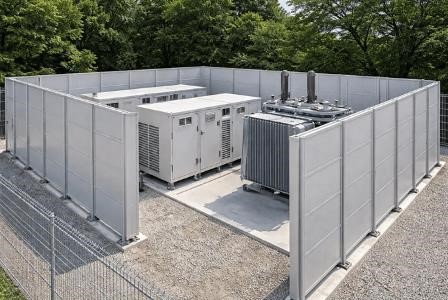
The same applies to areas exposed to natural hazards. Another consultation involved a planned 100 MW BESS, where hazard maps revealed that the proposed site was located within a landslide risk zone. In such cases, insurers charge additional premiums, or require protective infrastructure, or even entirely exclude landslide-related losses from coverage.
A similar situation was reported for a project situated near a river in a flood-prone area. Insurers were willing to underwrite the project under conditions similar to those applied to landslide-exposed sites.
Conclusion
These multi-faceted risks, combined with rapid growth in installed BESS capacity and the occurrence of a fire at the Kagoshima BESS facility has led Japanese insurers to adopt a more cautious underwriting approach.
Rather than accepting large exposures on a single BESS, insurers are spreading underwriting capacity across multiple projects. For example, many now prefer to allocate ¥2 billion of underwriting capacity to three separate projects rather than commit ¥6 billion to a single one.
Similarly, as for extra-high-voltage (EHV) BESS projects, which are expected to overtake high-voltage (HV) projects and dominate the market by 2030, co-insurance is often required, as insurers are not always willing to assume the entirety of the risks. Above 100 MW, co-insurance is unavoidable.
Originally, when so-called “nippachi” projects (2 MW / 8 MWh stations) represented most of the market, the common standard was to retain the full risk on a single project. However, the rapid expansion of grid-scale BESS has led insurers to adopt a more prudent underwriting approach in terms of site selection, and to increasingly rely on coinsurance.
As the market expands, these trends will strengthen. Competition for prime-located BESS sites will intensify, not only because of grid access but also because of the desire to secure a favorable insurance profile which means lower premiums, fewer coverage exclusions, and lower deductibles.
Attractive insurance profiles could then well become another valuable project asset.
ANALYSIS
BY JAPAN NRG TEAM
Japan Adds Another Layer to Offshore Wind Reset
After more than two years without a new round, Japan is preparing to restart its offshore wind tender program. In June, METI and MLIT finalized revised auction rules for three Round 1 areas abandoned by Mitsubishi Corp, as well as for future tenders, thereby clearing a major procedural hurdle.
The reset goes beyond auction scoring. The government has made Round 2 and 3 projects eligible to seek long-term capacity revenue through the Long-Term Decarbonization Power Sources Auction (LTDA), while also trying to improve the technical information available before bids are submitted.
Since April 1, the Environment Ministry (MoE) has had a new statutory role in surveying the marine environment around prospective offshore wind areas. It joins METI, MLIT, JOGMEC and local governments in a widening public framework designed to give bidders a common baseline, reduce repeated investigations and make projects easier to design and price.
A government review of why Round 1 projects were abandoned found that pre-bid ground data covered only one or two points in each promotion zone. Further surveys after the developer selection revealed complex seabed topography and geological strata that required changes to foundation designs. The projects failed for several reasons – including inflation, yen weakness, higher interest rates and supply-chain constraints – but limited technical information clearly enhanced those risks.
Japan NRG examines how the technical survey framework has developed since then, how responsibilities are currently divided, where its limits lie and when the system will face its first meaningful test.
Building a public baseline
Japan’s original offshore wind framework left developers to conduct similar investigations in the same waters. That raised pre-bid costs, gave bidders different technical baselines and required fisheries and other local actors to accommodate repeated survey requests.
In response, the government began developing its “Central Model” in 2020. It expanded JOGMEC’s legal mandate in 2022 to undertake offshore wind site surveys, and selected the first three survey areas off Hokkaido in January 2023.
The formal operating policy followed in April 2024. Despite its name, the model is not run by a single national body. METI and MLIT oversee area designation and tenders. Prefectures and municipalities lead early regional coordination, while the national government and prefectures jointly administer the statutory councils. JOGMEC handles wind-resource, seabed-ground and meteorological and oceanographic surveys. The MoE is now preparing a separate marine-environment survey stream.
Depending on the area, JOGMEC’s work can include LiDAR and meteorological-mast measurements, waves and currents, bathymetry, seismic work, sediment sampling, boreholes and cone penetration tests.
The official specifications target information needed for basic design, including turbine layout, project scale and foundation selection. Detailed design, certification and additional project-specific investigations remain the developer’s responsibility.
The data are not simply placed online. Companies considering a tender must apply for access and accept confidentiality and security conditions. Public money finances the surveys initially, but the winning developer must later reimburse the survey-cost equivalent.
JOGMEC began supplying the first datasets, covering Hiyama and Iwau–South Shiribeshi, in July 2025. Successive budget requests for JOGMEC’s survey programme have also risen as it has expanded into more areas and floating-wind investigations.
Whether the Central Model would have prevented Mitsubishi’s withdrawal from the Round 1 projects is impossible to know. The government’s post-mortem nevertheless identified the timing and quantity of pre-bid ground data as a weakness in the earlier system, and pointed to the Central Model as a way to improve the common technical baseline for future tenders.
The European playbook
Japan’s current approach draws on established northern European practice, where public bodies conduct early-stage site surveys before tenders, although the institutional arrangements differ.
In the Netherlands, the government commissions extensive site-characterization studies before tenders and packages the information for potential bidders. Denmark conducts preliminary investigations and environmental assessments, with reports and data made available as tender preparation advances. Germany’s maritime agency investigates the marine environment, subsoil, wind and ocean conditions, and assesses whether designated sites are suitable before auction.
Public surveys do not remove exposure to financing costs, supply chains or changes discovered during detailed design. Their advantage is that they create a clearer division of labor. The state establishes a common technical and regulatory starting point, while developers compete over project design, financing, construction and operation.
Japan is moving in that direction, but its program is younger and at present it does not apply nationwide. The Central Model applies only to specifically chosen areas. It should be noted also that selection for a JOGMEC survey does not automatically advance an area to statutory promotion-zone status.
Survey pipeline
The survey portfolio has expanded since 2023, from the first three fixed-bottom areas off
Hokkaido to Sakata, floating areas off Hokkaido and Tokyo, and newer areas off Akita, Chiba and Fukuoka. Progress varies considerably. Data are available for Hiyama and Iwau–South Shiribeshi, while other areas remain in fieldwork, survey planning or local coordination.
The program has also faced problems. Accidents and equipment failures prolonged the floating Hokkaido work into FY2026, while problems with the survey vessel postponed Sakata’s cone penetration tests. Tokyo’s island areas still depend on local coordination, and navigation-route discussions have delayed the final survey scope at Hibikinada. No developer has yet been selected through a tender using Central Survey data.
Hiyama is the clearest candidate for the first complete survey-to-auction test: its data became available in July 2025 and the government designated it a promotion zone later that month. METI and MLIT must still issue the area-specific auction guidelines, and no tender date has been announced.
Next test
During FY2026, JOGMEC plans to complete delayed survey work while advancing newer areas. The MoE is preparing marine-environment survey methods for around three initial areas, with fieldwork expected around the end of FY2026 or early FY2027.
Further JOGMEC survey areas could be announced this autumn if the government follows last year’s timetable, although no official date has been set. Now, the remaining debate concerns how extensive the common baseline should become.
Published industry feedback has requested longer wind observations, methods more closely aligned with certification, English-language reports and easier data access. More detailed public surveys could reduce the danger of costly redesign after an auction, but would also take longer and ultimately increase the amount reimbursed by the winning developer.
A key point is that developer preferences are not uniform. Some would accept broader investigations and higher survey costs in exchange for greater certainty. Others would rather JOGMEC limit generic work that may not fit their intended turbine, foundation or financing strategy, leaving them to commission tailored investigations after selection.
Since the surveys are designed before the winning developer and its project configuration are known, no common package can be optimized for every bidder.
Private businesses must therefore retain some development risk, according to Japan’s energy planners. The state can establish a consistent technical baseline, but it cannot eliminate uncertainty or substitute for detailed engineering, certification, financing and execution.
Perhaps the Central Model is best understood as a negotiated boundary between public preparation and private responsibility.
Will it work?
Japan is closing its pre-bid information gap area by area. But no developer has yet been selected in a tender using Central Survey data. The first meaningful verdict will come only when at least one area has moved through public survey and controlled data access, completed a tender and entered detailed design.
Until then, the system remains a promising but evolving framework that has yet to prove itself in an auction. The test is whether its common baseline can reduce material uncertainty for developers, financiers and certification bodies without becoming a costly one-size-fits-all survey package.
With reporting by Magdalena Osumi.
JOGMEC’s portfolio now spans 11 fixed-bottom and floating survey programs at different stages of technical work and statutory development:
| Area and type | Central Survey status | Sea Area Use Act status |
| Hiyama, fixed-bottom | Controlled data access available since July 2025 | Promotion zone |
| Iwau–South Shiribeshi, fixed-bottom | Controlled data access available since July 2025 | Promising area |
| Shimamaki, fixed-bottom | FY2023 survey cohort; no data-access announcement yet | Promising area |
| Iwau–South Shiribeshi, floating | One-year wind and metocean observations under way; CPT and unfinished seabed work planned for FY2026 | Preparatory area |
| Shimamaki, floating | One-year wind and metocean observations under way; CPT and remaining microtremor work planned for FY2026 | Preparatory area |
| Sakata City, fixed-bottom | Wind and metocean observations and boreholes completed; CPT carried into FY2026 | Promising area |
| Niijima Village, floating | Survey start pending finalization of the survey area | Preparatory area |
| Kozushima Village, floating | Survey start pending finalization of the survey area | Preparatory area |
| Akita City | Wind/metocean and initial seabed-survey contracts awarded in April 2026 | Promising area |
Source: JOGMEC survey plans, data-access notices and procurement results; METI and MLIT area-status releases. Status as of July 2026.
ASIA ENERGY REVIEW
BY JOHN VAROLI
A brief overview of the region’s main energy events from the past week
Australia / Data centers
1414 Degrees, an energy storage company, inked an agreement with an unnamed data center operator to develop 1 GW of AI data center infrastructure at its Aurora Energy Precinct in South Australia.
Australia / Data centers
The govt says new AI data centers will be required to deliver “at least as much energy” into the grid as they take out under mandatory rules for AI regulation.
China / LNG
S&P Global Energy and Wood Mackenzie cut their projections for China’s LNG demand growth in the early 2030s. They now see demand increase slowing to between 20 Mt and 53 Mt new consumption through the early 2030s, down from a higher range of 34 Mt to 75 Mt.
China / Renewables
China’s power mix shifted further toward cleaner sources in H1, with renewables supplying more than 40% of the nation’s electricity for the first time. Meanwhile, also for the first time, coal-fired power accounted for less than half of total electricity generation.
China / Solar
Tajikistan is discussing construction of a 200 MW solar power plant with China Energy Overseas Investment, said the Ministry of Energy and Water Resources.
India / Oil & gas
The govt approved an $8.8 billion offshore oil and gas exploration plan, a move described “as a landmark step towards strengthening India’s energy security.”
India / Renewables
Brookfield launched Lumara, a renewable energy platform, and will invest $600 million in India’s clean power sector. The platform aims for a portfolio of 6 GW across solar, wind and battery energy storage systems.
South Korea / Supply chain
During a meeting in Buenos Aires, President Lee Myung and Argentine leader Milei agreed to cooperation in energy supply chains, including critical minerals and crude oil.
Taiwan / LNG
Taiwan suspended 500,000 tons of LNG purchases from Papua New Guinea every six months. But Taiwan’s long-term LNG supply contract is untouched and will continue importing 1.2 Mtpa of LNG through 2030, one-third of PNG’s total LNG exports.
Taiwan / Offshore wind
Taiwan set a target to expand offshore wind capacity eightfold by 2039, targeting 18 to 20 GW of installed capacity by 2035, and as much as 28 GW by 2039. The current target for 2035 is 18.4 GW. Taiwan currently has 3.4 GW of installed capacity.
Disclaimer
This communication has been prepared for information purposes only, is confidential and may be legally privileged. This is a subscription-only service and is directed at those who have expressly asked K.K. Yuri Group or one of its representatives to be added to the mailing list. This document may not be onwardly circulated or reproduced without prior written consent from Yuri Group, which retains all copyright to the content of this report.
Yuri Group is not registered as an investment advisor in any jurisdiction. Our research and all the content express our opinions, which are generally based on available public information, field studies and own analysis. Content is limited to general comment upon general political, economic and market issues, asset classes and types of investments. The report and all of its content does not constitute a recommendation or solicitation to buy, sell, subscribe for or underwrite any product or physical commodity, or a financial instrument.
The information contained in this report is obtained from sources believed to be reliable and in good faith. No representation or warranty is made that it is accurate or complete. Opinions and views expressed are subject to change without notice, as are prices and availability, which are indicative only. There is no obligation to notify recipients of any changes to this data or to do so in the future. No responsibility is accepted for the use of or reliance on the information provided. In no circumstances will Yuri Group be liable for any indirect or direct loss, or consequential loss or damages arising from the use of, any inability to use, or any inaccuracy in the information.
K.K. Yuri Group: Hulic Ochanomizu Bldg. 3F, 2-3-11, Surugadai, Kanda, Chiyoda-ku, Tokyo, Japan, 101-0062.