
WEEKLY
November 16, 2026
ANALYSIS
JAPAN’S UTILITIES RACE TO POWER DATA CENTERS WITHOUT DERAILING NET-ZERO GOALS
- The AI-driven data center boom has reversed a decade of falling electricity demand, compelling the EPCOs to move quickly to add power generation capacity. The challenge, however, is how to achieve this without abandoning net-zero goals.
- Some EPCOs are trying to leverage thermal plants to bypass grid bottlenecks. Others find ways to monetize carbon-free sources, such as renewables and nuclear power, to supply baseload power.
ENERGY JOBS IN JAPAN: BESS AT AN INFLECTION POINT
- Japan’s battery energy storage market has been one of the most talked-about segments in the power sector. The early development phase is giving way to a harder phase that rewards delivery capability and the ability to operate in multiple markets.
- This shift is reshaping which projects get built, which companies survive, and which people are in demand.
ASIA PACIFIC REVIEW
This column provides a brief overview of the region’s main energy events from the past week
NEWS
- Japan puts oil security at center of expanded AZEC framework
- Japan, Chile deepen critical-minerals cooperation
- Murakami-linked activist fund takes 3% stake in Chugoku Electric
- Kansai spot prices surge to four-year high, but forward curve stays broadly stable
- JEPX spot price hits FY2026 high
- OCCTO gives utilities more flexibility on aging-grid replacement
- NYK unveils world-first ammonia-powered carrier
- Toyota advances liquid-hydrogen pump technology
- KEPCO makes first overseas BESS investment
- Osaka Gas, Sonnedix start 30 MW co-located BESS
- Ray8 Energy acquires four HV BESS stations
- Resonac exits lithium-ion battery anode materials
WIND POWER AND OTHER RENEWABLES
- Mitsui-backed Hai Long completes Taiwan offshore wind construction
- Renova secures ¥10.3 billion green loan for renewables
- Vena launches Hokuriku’s largest onshore wind farm
- TEPCO Unit 7 restart risks slipping beyond 2030
- METI, ADB sign nuclear cooperation MoU for Asia
- Japan and Saudi Arabia triple joint crude storage capacity
- Japan ethylene output weak despite naphtha recovery
- INPEX starts gas production at Malaysian field
- METI moves to end equipment subsidies in rental LPG market
CARBON CAPTURE & SYNTHETIC FUELS
- Planet Savers raises ¥1.08 billion for DAC expansion
- Mazda targets 2028 road tests for onboard carbon capture
- Idemitsu, Shin-Etsu develop PVC using captured CO2
EVENTS
Nov 25-27 Factory Innovation Week @ Aichi Sky
Expo C~F, Nagoya
Nov 28 Taiwan Local Elections
Dec 1-3 DeCarbon Tokyo 2026 @ Tokyo Marriott Hotel
Dec 14-15 G20 Summit @ Miami
Feb 17-19 Factory Innovation Week 2027 @ Tokyo Big Sight
Mar 24-26 Smart Energy Week @ Tokyo Big Sight
PUBLISHER
K. K. Yuri Group
Editorial Team
Yuriy Humber (Chief Editor)
John Varoli (Senior Editor, Americas)
Kyoko Fukuda (Data, Events)
Filippo Pedretti (Thermal, CCS, Nuclear)
Tetsuji Tomita (Power Market, Hydrogen)
Aglaé Bange (Renewables, Biomass & Energy Storage)
Gillian Sawyer (Renewables)
George Hoffman (Sales, Business Development)
Rada Kuznetsova (Clients Accounts, Website)
Tim Young (Design)
SUBSCRIPTIONS & ADVERTISING
Japan NRG offers individual, corporate and academic subscription plans. Basic details are our website or write to subscriptions@japan-nrg.com
For marketing, advertising, or collaboration opportunities, contact sales@japan-nrg.com. For all other inquiries, write to info@japan-nrg.com
NEWS: GENERAL OUTLOOK AND TRENDS

Japan puts oil security at center of expanded AZEC framework
(Government statements, November 17)
- Japan and its AZEC partners agreed to expand their regional framework into “AZEC 2.0,” adding economic and energy resilience as a new pillar alongside decarbonization, energy security and economic growth.
- The revised action plan covers oil stockpiling, diversified energy supplies, critical minerals and more resilient industrial supply chains.
- One new initiative is the Asia Oil Security Task Force, which will collect and analyze oil-market data, strengthen stockpiling systems and consider rules for coordinating emergency responses and fuel releases across participating Asian countries.
- Japan and the IEA also agreed to set up an IEA-Japan Oil Security Hub for Asia at JOGMEC in Tokyo to support stockpiling infrastructure, market analysis and emergency-response frameworks, drawing on IEA expertise in Paris and Singapore.
- Japan proposed allowing Asian countries to store emergency petroleum reserves in idle tanks in Japan, including infrastructure at closed refineries. This would be coordinated with the Philippinesled ASEAN regional stockpiling initiative.
- Tokyo also wants closer coordination between Asian consuming countries and Gulf producers under its separate POWERR Gulf initiative.
- AZEC leaders reiterated the principle of “one goal, various pathways,” allowing countries to pursue different routes to net zero. They also backed deeper cooperation on carbon markets, transition finance and the ASEAN Power Grid.
- CONTEXT: Timor-Leste, which joined ASEAN in 2025, was welcomed as an AZEC “interested country;” India and South Korea were invited guests. AZEC members also emphasized the JCM as a way to mobilize regional decarbonization investment.
- TAKEAWAY: AZEC started as a Japan-led effort to present “Asian” decarbonization as a more localization-friendly alternative to the EU’s renewables-first approach. This year’s Iran war and disruptions to hydrocarbon flows, however, have pushed the initiative toward more immediate concerns, including how to strengthen SE Asian supply chains against oil and gas supply shocks. Japan’s stockpiling system helped it avoid physical shortages, even if the cost of securing alternative supplies was high. Helping to coordinate a regional, hub-like response could support Japan’s trading partners while potentially lowering the cost of energy security across the region. Another important element from Japan’s standpoint is the future development of high-quality, interconnected carbon markets.
- SIDE DEVELOPMENT:
- Quad leaders deepen critical minerals cooperation
- (Government statements, media reports, November 17)
- At the Quad summit in Manila, leaders of Japan, the U.S., Australia and India agreed to deepen cooperation on critical-mineral supply chains, citing the need to reduce vulnerability to economic coercion and export restrictions.
- President Trump said the four countries reached several new critical-mineral deals, although details of agreements were not disclosed in the joint statement.
- CONTEXT: In May, the Quad adopted a Critical Minerals Initiative to mobilize up to $20 billion in state and private-sector support for mining, processing and recycling, including through loans, guarantees, equity, subsidies and offtake agreements.
- TAKEAWAY: Critical minerals are one of the Quad’s main areas of economic-security cooperation. Australia offers large upstream resources, while Japan, the U.S. and India seek to expand processing, recycling and new supply chains that reduce dependence on China.
Japan and Chile deepen cooperation on critical minerals, ICT and defense
(Japan NRG, Nov 20)
- Japan and Chile agreed to strengthen cooperation on critical minerals and economic security during a Nov 20 summit in Tokyo between PM Takaichi and Chilean President José Antonio Kast.
- The leaders pledged to strengthen cooperation particularly on copper, to improve the resilience and stability of global supply chains. They also emphasized the importance of maintaining trade measures consistent with international commitments.
- The two countries already have a bilateral mining cooperation framework covering technology, sustainable mining and information exchange.
- Japan has substantial interests in Chile’s copper and lithium industries, which are increasingly important for electrification and battery manufacturing.
- The leaders welcomed progress on a joint project launched earlier this year involving NTT DOCOMO BUSINESS, NTT DATA and Chile’s state-owned copper producer CODELCO. The project is testing Japanese next-gen optical communications technology to enable remote operations at copper mines.
- Also, defense ministers Koizumi Shinjiro and Fernando Barros signed a Letter of Intent covering naval cooperation, personnel exchanges, humanitarian assistance and disaster relief, and defense equipment and technology.
- TAKEAWAY: The summit reinforces Japan’s efforts to diversify critical-mineral supply chains through closer relations with resource-rich partners. Chile is important as a supplier of copper and lithium, while Japan can offer mining technology, investment, and advanced telecom systems. The NTT–CODELCO project is an example of this cooperation, but the latest summit produced no new mineral supply or financing commitments.
Daibiru to invest in data center aiming to utilize 100% renewable energy
(Company statement, November 18)
- Real estate developer Daibiru will invest in the Ishikari Renewable Energy Data Center 1 project in Ishikari City, Hokkaido advanced by Flower Communications and Tokyu Land Corp.
- Construction of the data center was completed on March 27; when operational it will be 100% powered by renewable energy, requiring 15 MW of electricity.
- This is the first data center project Daibiru participates in and is positioned as one strategy for expanding domestic and international capital gain investment as part of Phase 2 of their “Build Next” medium- and long-term management plan 2035.
Asuene and Kanematsu Thailand to develop AI energy management system
(Company statement, November 13)
- Asuene Thailand agreed with Kanematsu Thailand to expand Asuene’s AI energy management cloud, NZero.
- Focusing first on manufacturing players, they plan to expand into commercial facilities, logistics, and retail, and support firms in managing electricity costs and improving energy efficiency, while leveraging Kanematsu’s customer base.
- TAKEAWAY: Japanese firms have invested in Thailand’s data center sector, with KDDI opening its first facility in Bangkok as early as 2023. NTT recently announced its fourth project in Chonburi Province, in eastern Thailand. These investments reflect the rapid expansion of Thailand’s data center market, with 36 data center projects approved in 2025, for a total investment of over ¥3 trillion.
NEWS: ELECTRICITY MARKETS

Murakami-linked fund takes 3% stake in Chugoku Electric
(Company filing, market reports, November 10-15)
- City Index Fifth, an investment firm linked to Murakami Yoshiaki – one of Japan’s most infamous activist investors – emerged as a major shareholder in Chugoku Electric. As of Sept 30, it held 10.813 million shares, equal to 3% of shares outstanding excluding treasury stock.
- The investment comes as Chugoku Electric trades at around 0.5x book value, while the utility has made improving capital efficiency and eventually lifting PBR above 1x an explicit management goal.
- Chugoku Electric has also raised its FY2026 dividend forecast to ¥40/ share and adopted a Dividend on Equity (DOE)-based policy as it rebuilds its financial position.
- CONTEXT: Murakami has a history of pushing consolidation in structurally challenged industries. He played an important intermediary role in the 2018 deal to merge Idemitsu Kosan and Showa Shell, after Murakami-linked entities had acquired an Idemitsu stake.
- TAKEAWAY: Japanese utilities remain unusually cheap on conventional valuation measures despite owning large generation, network, and other infrastructure assets. This is a topic Japan NRG has covered several times in past editions. A Murakami-linked fund taking a meaningful position in Chugoku Electric fits the broader case for growing activist interest in the sector: low PBRs, improving cash flow and scope for stronger capital discipline. Whether this develops into a consolidation story is still speculative, but Murakami has argued that industries with too many listed players should consolidate. He reportedly helped break the deadlock that led to the Idemitsu–Showa Shell merger. The presence of an activist-style investor may now sharpen questions around asset sales, shareholder returns, and ultimately the structure of the domestic regional utility sector.
- SIDE DEVELOPMENT:
- Activist and event-driven investors circle around weakened Chubu Electric
- (Japan NRG, Oct-November 20)
- U.S. hedge fund Blue Orca Capital disclosed a long position in Chubu Electric in October, arguing that the utility is undervalued because the market gives insufficient credit to its indirect stake in Toshiba. Blue Orca estimates the Toshiba-related investment could represent a large share of Chubu’s current market value.
- The investment comes as a number of activist and event-driven investors show interest in the power utility. In 2025, Japanese media also reported that U.S. fund Elliott Investment Management had quietly accumulated Chubu shares, although no subsequent filing established it.
- CONTEXT: Investors must disclose their equity stakes once they reach 5%. o The investor attention comes at a difficult time for Chubu. Its participation in Mitsubishi Corp-led offshore wind projects ended in 2025 with an estimated ¥17 billion loss after the consortium withdrew from three projects.
- Chubu has since been hit by the Hamaoka nuclear scandal. The company withdrew its regulatory applications for Units 3 and 4, booked ¥370.3 billion of impairment and nuclearfuel valuation losses, and expects around ¥380 billion of extraordinary losses for FY2026.
- Its CEO and chair resigned to take responsibility for the scandal.
- METI also issued a business-improvement order in November, requiring stronger governance, clearer executive accountability and compliance system reform.
- TAKEAWAY: Chubu is becoming the kind of situation that attracts event-driven and activist investors. It’s a company trading at a low valuation with valuable assets and also noticeable non-core assets. (See the Nov 9 Analysis section for more details on the non-core assets held by major power utilities.) With Hamaoka’s restart pushed further out and management credibility damaged, outside investors have more leverage than they’d have had a year ago.
Kansai spot prices surge to four-year high, but forward curve stays broadly stable
(Japan NRG, exchange and weather data, November 20)
- In November, Kansai and wider JEPX spot prices remained elevated, with daily system prices repeatedly moving above ¥30/ kWh and swinging between roughly ¥17–35/ kWh during Nov 1–20.
- This compares with a much narrower range of about ¥8–14/ kWh during the same period last year, pointing to substantially greater day-to-day volatility.
- Colder weather contributed to higher heating demand earlier in November, while variable solar output and tighter supply have fostered individual price spikes.
- The forward market has moved much less. Kansai November baseload rose ¥2/ kWh between Nov 12 and Nov 19 to ¥23.75, according to Tullett Prebon data, but December was little changed and January–February contracts actually declined.
- The curve still falls sharply into spring, with Kansai baseload at ¥16.50 in March and ¥15.15 in April–May.
- TAKEAWAY: The market appears to be pricing November’s tightness as a near-term problem rather than the start of a sustained winter re-pricing. Spot prices are much higher and more volatile than a year ago, but most of the forward curve has barely moved. That gap suggests weather, renewable output and short-term plant availability are driving sharp daily swings without materially changing expectations for supply-demand conditions later in the winter.
- SIDE DEVELOPMENT:
- JEPX spot price hits FY2026 high
- (Exchange data, Denki Shimbun, November 17)
- The JEPX day-ahead system price for Nov 17 delivery averaged ¥35.37/ kWh, the highest level of FY2026 and the third period-end record since late October.
- Peak-hour prices averaged ¥41.92/ kWh between 13:00–16:00, while area prices rose sharply across most of Japan.
- The 24-hour average exceeded ¥32/ kWh in Hokkaido, Tohoku, Tokyo, Chubu, Hokuriku and Kansai; Chugoku and Shikoku averaged ¥29.25; Kyushu ¥25.99.
- The spike reflected a deterioration in weather conditions, including a forecast drop of over 5°C in daytime in Tokyo and Nagoya, together with lower solar output.
- Supply was limited by inspections and unplanned outages at thermal and hydro plants.
OCCTO revises guidelines for replacement of aging facilities
(Agency statement, November 11)
- OCCTO revised its Guidelines for Replacement of Highly Aged Facilities, which provide the common framework used by T&D operators to assess asset risks and determine renewal needs under the revenue-cap system.
- The revised guidelines will apply to asset-maintenance planning for the second regulatory period, FY2028–32. Risk is assessed over the mid- to long term, while renewal volumes are set for each fiveyear regulatory period.
- OCCTO changed the risk target from keeping asset risk at or below the level at the start of each regulatory period to managing it within a defined acceptable range over the longer term. The change reflects differences in asset age profiles as well as constraints on construction and manufacturing capacity.
- Five-year renewal volumes will be based on projected changes in asset risk during each regulatory period, with the aim of preventing excessive deterioration while smoothing replacement work over time.
- The framework now covers 17 asset types, up from nine. Cubicles and pole-mounted air switches are newly subject to quantitative risk assessment, while additional equipment categories will be managed through coordinated renewal or other asset-specific approaches.
- CONTEXT: OCCTO introduced the guidelines in December 2021 as part of the long-term cross-regional grid plan. Japan faces a growing replacement burden as large volumes of transmission and distribution equipment installed from the 1960s onward age simultaneously. At historical replacement rates, OCCTO estimates it would take around 120 years to renew all overhead lines and 250 years for transmission towers.
- TAKEAWAY: OCCTO is giving TSOs more flexibility to prioritize replacements over the long term rather than forcing risk back to a fixed starting-point level every five years. The change recognizes that construction crews and manufacturers cannot necessarily replace aging assets as quickly as they accumulate, making risk-based prioritization and smoothing of investment increasingly important.
ANRE reviews criteria for revoking retail electricity licenses
(Government statement, November 18)
- ANRE proposed screening criteria for applying new powers to revoke the registration of retail electricity businesses that remain inactive for extended periods.
- Regulators would determine whether a retailer has effectively suspended operations using regulatory filings and market data, including supply plans, monthly generation and procurement reports, electricity transaction reports and JEPX trading activity.
- JEPX participation will also be considered for companies that no longer directly supply end-users but remain active in wholesale electricity trading.
- Registration would not normally be revoked where inactivity resulted from unavoidable circumstances that arose after registration and the retailer can demonstrate a realistic plan to resume operations.
- CONTEXT: Amendments to the Electricity Business Act added new grounds for cancellation where, without justifiable reason, a registered retailer fails to begin operations within one year or remains inactive for at least one year. The reform followed concerns that dormant registrations create administrative costs and can provide a basis for improper activity.
- TAKEAWAY: The inclusion of JEPX trading is an important concession to companies that hold retail licenses primarily to participate in wholesale markets. ANRE appears willing to treat genuine trading activity as evidence that a registered business remains active, even where it is not supplying end-users. That should reduce the risk that the new revocation powers inadvertently remove licenses from firms that entered the retail framework mainly because it was the administrative route available to electricity traders.
- SIDE DEVELOPMENT:
- ANRE details advance power procurement rules for retailers
- (Government statement, November 18)
- ANRE proposed detailed rules for calculating whether electricity retailers have secured enough power in advance to meet new procurement requirements.
- The calculation would generally use the retailer’s electricity sales in the previous fiscal year as the starting point, rather than a forecast of future demand. ANRE says this would simplify the system and reduce cases where retailers appear substantially over-procured because their customer demand subsequently falls.
- Retailers facing declining demand could choose to adjust the calculation using either their recent rate of demand decline or the lowest sales level in a specified historical period. No upward adjustment would be required where demand is growing.
- Electricity futures would not themselves count as secured physical supply. However, ANRE is considering allowing hedging through futures and similar instruments to cover around 10–20% of the required amount when assessing compliance.
- CONTEXT: Japan plans to require electricity retailers to secure part of their expected annual power needs ahead of delivery, rather than relying heavily on the spot market. The framework envisages procurement equivalent to 50% of demand three years ahead and 70% one year ahead, with lower thresholds of 25% and 50% for smaller retailers. The govt expects compliance checks to begin with the FY2030 supply plans submitted in FY2029.
- TAKEAWAY: ANRE is trying to push retailers toward longer-term physical procurement without forcing them to contract power they may no longer need – especially if demand falls. The proposed adjustments make the obligation more workable for retailers with volatile customer bases, while the welcome but limited recognition of financial hedges acknowledges that price risk can also be managed without owning or contracting every kWh physically. The broader effect should still be to reduce reliance on the spot market and increase demand for longer-term power contracts.
ANRE to correct two points in recently amended baseload market rules
(Government statement, November 18)
- ANRE plans two further revisions to the Baseload Market Guidelines, which were amended only last month to reflect the Long-Term Decarbonization Auction (LTDA) and GX-ETS.
- The first concerns how the maximum offer price is calculated for power plants receiving LTDA support. The October rules added the local wholesale power price and the cost of non-fossil certificates when estimating the market value of electricity from these plants. ANRE now plans to remove the non-fossil certificate component because baseload-market transactions cover electricity only, without the associated environmental value.
- The change avoids applying an LTDA pricing convention to a market where non-fossil value is traded separately.
- The second revision is largely technical. For GX-ETS costs, the guidelines will use the ETS term “expected baseline activity level” instead of “expected electricity generation” when calculating the emissions allowances attributable to a power plant.
- The changes will undergo another public consultation. The existing rules will remain in place for the third auction in November, with the revised guidelines expected to apply from the fourth auction in January 2027.
- CONTEXT: ANRE amended the guidelines on Oct 5 to reflect two developments: LTDA-supported plants beginning to enter the market, requiring adjustments to avoid recovering the same fixed costs twice, and the start of GX-ETS, which added carbon costs not previously reflected in baseload-market offer-price calculations.
- TAKEAWAY: The October changes solved the immediate problem of incorporating capacity payments and carbon costs, but also imported assumptions that do not fit neatly with the baseload market. The latest corrections are narrow, but underline the growing complexity of making Japan’s overlapping electricity markets and support schemes work together.
NEWS: HYDROGEN

NYK unveils world-first ammonia-powered carrier
(Company statement, November 18)
- NYK unveiled Izanami, a 40,000 m³ ammonia carrier equipped with ammonia-fueled engines for both propulsion and onboard power generation, a world first.
- The vessel was developed with Japan Engine, IHI Power Systems and Nihon Shipyard under NEDO’s Green Innovation Fund and will now move to field testing.
- After delivery, it will be chartered to Yara Clean Ammonia, with demo voyages to verify performance, safety and emissions reductions under operating conditions.
- TAKEAWAY: Izanami should provide practical data on whether ammonia can work safely and reliably as both cargo and marine fuel.
Iwatani launches fuel-flexible hydrogen burner
(Company statement, November 16)
- Iwatani and Sumitomo Electric group company Sunray Reinetsu launched an industrial high-speed burner that can operate on city gas, LPG or hydrogen, including blended fuels.
- The same burner nozzle can be used across the different fuels, allowing industrial users to introduce hydrogen gradually without replacing the combustion system.
- Three models are available with rated outputs of 116–349 kW.
- TAKEAWAY: Fuel-flexible equipment reduces one of the risks of adopting hydrogen before supply and pricing are settled. Industrial users can invest in equipment now while retaining the option to increase hydrogen use later.
Toyota develops new pump for liquid-hydrogen Corolla
(Asia Nikkei, November 17)
- Toyota unveiled a prototype linear-drive system for the liquid-hydrogen fuel pump used in its hydrogen-engine GR Corolla.
- The system uses magnetic force to move the pump directly, eliminating gears and reducing friction and heat that can cause liquid hydrogen to evaporate. Toyota is developing the technology with Kyoto University.
- Toyota aims to use the system in the 2027 Fuji 24-hour endurance race. Removing mechanical wear and heat from the pump could improve reliability and fuel retention.
SOLAR AND BATTERIES

KEPCO acquires minority share in 150 MW BESS project in Virginia
(Company statement, November 16)
- ArcLight Capital and Elevate Infrastructure said KEPCO acquired a minority stake in Prospect Power Storage, a 150 MW / 600 MWh BESS facility in Virginia, U.S.
- CONTEXT: Elevate is an energy infrastructure developer and operator backed by ArcLight Capital. The BESS facility is the largest in commercial operation within the PJM Interconnection, the regional transmission operator covering the Mid-Atlantic and Midwest regions. It was built to support the grid amid rapidly growing electricity demand driven by electrification and AI data centers.
- KEPCO, through its U.S. subsidiary KPIC USA, holds a 49.99% stake; ArcLight Capital retains a majority stake of 50.01%. It is KEPCO’s first overseas BESS project.
Osaka Gas and Sonnedix start operation of a 30 MW co-located BESS
(Company statement, November 16)
- Osaka Gas and Sonnedix started operation of a 30 MW / 125 MWh BESS station co-located with a 39 MW solar power plant in Oita City.
- Construction was handled by Toshiba; remote control of the station will be managed by Osaka Gas.
- TAKEAWAY: The fact that the station is an extra-high-voltage (EHV) project is significant for a solar co-located BESS, as the vast majority of such projects consist of 2 MW high-voltage stations. This suggests co-located projects are beginning to scale beyond the typical 2 MW high-voltage format and confirms that co-location is a convenient pathway for transitioning from FIT to FIP.
Ray8 Energy acquires four HV BESS stations
(Company statement, November 17)
- Ray8 Energy acquired four high-voltage BESS assets from Second Foundation, which will continue to act as the aggregator.
- Each asset has a 2 MW capacity and is located in a different part of Japan. They were initially developed by Japan Obuno, a subsidiary of Second Foundation.
- CONTEXT: Japan Obuno currently has about 400 MW of BESS projects.
- TAKEAWAY: Since 2025, BESS asset acquisitions have become more common in Japan, offering an easy route for new players to enter the market or for existing players to expand portfolios. Buyers range from renewable energy and BESS developers and real estate firms to businesses with no direct involvement in the BESS sector; the latter are increasingly entering the market in search of an additional source of revenue and electricity supply.
Resonac to exit lithium-ion battery anode materials
(Company statement, November 12)
- Resonac will withdraw from the lithium-ion battery anode material business, with production to end in December 2027.
- The company cited slower EV-market growth, automakers delaying or revising investment plans, project postponements and price competition. The impact on consolidated earnings is expected to be immaterial.
- CONTEXT: Battery-material suppliers are facing mounting pressure from slower EV growth and substantial excess capacity, particularly in China, which accounted for more than 90% of global anode active-material production in 2025; also, aggressive pricing is making it difficult for non-Chinese suppliers to compete.
- TAKEAWAY: Resonac’s exit highlights Japan’s struggles to compete with the economics of Chinese battery material capacity and thus maintain an independent supply chain. The strategic case for diversifying anode supply away from China remains strong, but companies cannot do it purely out of national pride.
Kyocera, Shizuoka Gas launch swappable battery demo
(Company statement, November 10)
- Kyocera Communication Systems, Shizuoka Gas and Shizuoka City launched a demo project involving swappable batteries for EVs and electric motorcycles.
- Selected by METI, the demo aims to:
- Develop safe, low-cost methods for battery reuse;
- Evaluate the performance and cost of batteries repurposed for stationary ESS after being used in mobility applications.
- The demo, featuring Honda’s Mobile Power Pack e:, runs until the end of next month.
- TAKEAWAY: Battery swapping is not widely deployed in Japan. Honda is a pioneer in this field and made Gachaco a consolidated subsidiary in 2026. Gachaco operates a network of battery-swapping stations for electric motorcycles, and operates 54 stations nationwide, although the network remains limited due to infrastructure costs, compatibility issues between batteries and vehicles, and low density that discourages potential users. The network remains heavily concentrated in Tokyo, although Gachaco begsn expanding into Osaka.
Ecostyle launches component range for low-voltage BESS units
(Company statement, November 18)
- EcoStyle launched a range of components for low-voltage BESS targeting EPCs, construction companies and electricity businesses.
- A 100-kWh package for FIP conversion and co-location starts at ¥9.5 million, while a 200-kWh package for stand-alone grid batteries starts at ¥13 million, excluding VAT.
- Prices cover equipment only; construction, installation and grid-connection applications are excluded. The standard package includes the battery unit itself, PCS, power receiving and transformation equipment, EMS, and a full set of cables.
- Depending on the installation environment and site conditions, customers can choose between solutions from BESS providers Sungrow, Sigenergy and GoodWe.
- CONTEXT: EcoStyle has a strong track record in solar power development, with about 1.4 GW of installed capacity across over 21,000 projects.
WIND POWER AND OTHER RENEWABLES

Mitsui, Northland Power, and Gentari complete Taiwan offshore wind facility construction
(Company statement, November 17)
- A consortium of Mitsui, Canadian power producer Northland Power and Malaysian clean energy firm Gentari completed construction and grid connection of the Hai Long Offshore Wind Project in Taiwan.
- Hai Long is the largest single offshore wind project in Asia, with more than 1 GW of capacity connected to Taiwan’s grid.
- The project combines three wind farms into a single development with 73 turbines and was the first project in Asia-Pacific to contract 14 MW offshore wind turbines.
- Hai Long secured a record NT$117 billion in project financing in 2023 and a further NT$55 billion in 2026, with participation from 35 domestic and international financial institutions.
- Hai Long 2A has signed a CPPA and is expected to transition from Taiwan’s FIT-backed power purchase arrangement to corporate power purchasing. Full commercial operations are targeted for 2027.
- TAKEAWAY: As Japan’s offshore-wind pipeline slows, overseas projects are becoming more important for Japanese companies seeking to retain expertise in the sector. Mitsui’s participation in Hai Long, like Tokyo Gas’s continued investment in Europe, shows that companies can still build operating experience and renewable portfolios abroad even as domestic project economics become more difficult.
Renova signs ¥10.3 billion green loan to develop renewables
(Company statement, November 16)
- Renova signed a seven-year, ¥10.3 billion green loan with Mizuho Bank, Mitsubishi UFJ Bank and Sumitomo Mitsui Banking Corporation (SMBC) to finance solar, wind and BESS projects.
- The loan was certified as green by the Japan Credit Rating Agency and allows for phased drawdowns over the first three years, enabling projects to be developed more quickly while minimizing interest costs.
- The agreement is part of Renova’s 2030 strategy to reach 5 GW of installed renewable energy capacity by that year.
- CONTEXT: At present, Renova has almost 390 MW of BESS capacity operational or under construction. In 2025, it reached the 1 GW milestone in total installed renewable energy capacity.
Vena launches largest onshore wind farm in Hokuriku
(Company statement, November 13)
- Vena Group began commercial operations of the 50 MW Nimaida Wind Farm in Fukui City, the largest onshore wind farm in the Hokuriku region.
- Electricity and environmental value from the project will be supplied to Murata Manufacturing through Hokuriku Electric under a physical PPA.
- A portion of the electricity sales revenue will be returned for agricultural industry promotion and regional revitalization.
Cabinet selects IHI and Toyo Engineering offshore wind drone project
(Company statement, November 16)
- The Cabinet Office selected an offshore-wind marine-drone project led by Toyo Engineering with IHI, Itochu, Oki Electric, Nippon Steel Engineering and FullDepth.
- The group will develop a model for using marine drones in offshore-wind maintenance around 2030 and prepare a longer-term technology and regulatory roadmap.
- CONTEXT: Marine drones could become a major technology for visualizing ocean conditions, reducing personnel needs, and improving productivity for offshore wind facility operations. But much more R&D is needed.
- SIDE DEVELOPMENT:
- Cabinet selects Toda offshore wind facility drone project
- (Company statement, November 20)
- The Cabinet Office chose a marine drone project by Toda Construction, IDEA Consultants, University of Tokyo, Tokyo University of Marine Science and Technology, and the Kyushu Institute of Technology.
- The project builds on offshore tests of autonomous underwater vehicles conducted in FY2024 and FY2025.
- The FY2026 work will examine seabed-cable inspection methods and develop an implementation and business roadmap aimed at launching offshore-wind inspection services around 2030.
Taiyo Oil to conduct demo to produce bioethanol from Okinawa-grown feedstocks
(Company statement, November 12)
- NEDO chose Taiyo Oil to conduct a biofuel production demo in Okinawa using sweet sorghum juice and sugarcane-derived molasses grown on abandoned farmland.
- The demo will test high-sugar fermentation and purification processes for bioethanol production, and new varieties of sweet sorghum.
- In the future, this could help in production of bioethanol including E10 gasoline (conventional gasoline blended with 10% bioethanol) and SAF.
- TAKEAWAY: As Japan’s leading sugarcane-producing region with about 750,000 tons produced in 2025, Okinawa could become a key region for domestic biobased products, including sugar-derived bioethanol. Similarly to Taiyo Oil, following a demo in 2025 J-OIL MILLS produced 100% bio-based SAF from oils extracted from Okinawa-grown pongamia and evergreen plant tamanu.
NUCLEAR ENERGY
TEPCO may delay Unit 7 counter-terrorism facility beyond 2029
(Asahi, Nikkei, Company statement, November 19-20)
- TEPCO may delay completion of the counter-terrorism facility at Kashiwazaki-Kariwa Unit 7 beyond its current August 2029 target. Media reported that a delay of around one year is under consideration, although the schedule could slip further.
- Unit 7 cannot restart until the facility is completed and cleared for use. Its regulatory installation deadline expired in October 2025, after which the reactor was required to remain shut.
- TEPCO said on Nov. 20 that it had not formally announced a revised completion date, but acknowledged that it is considering changes to the construction schedule.
- CONTEXT: Unit 6 resumed commercial operations in April 2026 and is currently TEPCO’s only operating nuclear reactor. Its own counter-terrorism facility has a September 2029 installation deadline; TEPCO currently assumes completion in September 2031, meaning Unit 6 would have to shut if the facility is not ready by the deadline.
- TAKEAWAY: A further delay would make a Unit 7 restart this decade increasingly unlikely. That would leave TEPCO dependent on Unit 6 until its own counter-terrorism facility deadline in September 2029. If Unit 7 is still unavailable and Unit 6 must then shut for unfinished work, TEPCO could again have no operating nuclear reactors – undermining plans to keep at least one Kashiwazaki-Kariwa unit online to support earnings and its broader restructuring.
METI and ADB sign MoU on nuclear cooperation in Asia
(Nippon.com, November 17)
- METI and the Asian Development Bank signed an MoU to cooperate on nuclear power development across Asia.
- METI Minister Akazawa and ADB President Kanda Masato signed the agreement in Manila on Nov 16.
- The cooperation is intended to support Asian countries considering nuclear power while creating opportunities for Japanese nuclear suppliers. Countries including the Philippines and Vietnam are considering new nuclear capacity, including SMRs.
Evacuation drill held at Shimane NPP
(Kyodo, November 15)
- Shimane and Tottori Prefs – along with six cities within a 30-kilometer radius – held a joint evacuation drill, simulating an emergency at Chugoku Electric’s Shimane NPP.
- The Self-Defense Forces made vehicle decontamination. Staff from Kansai and Hokuriku Electric also assisted with radiation screenings on evacuees.
- CONTEXT: Shimane NPP Unit 2 restarted in December 2024, while Unit 3 remains under safety review for operation.
NEWS: TRADITIONAL FUELS

METI agrees with Saudi Arabia to triple joint crude oil storage capacity
(Jiji Press, November 20)
- METI agreed with Saudi Arabia to triple joint crude oil storage capacity in Japan.
- Saudi Arabia’s leased tank capacity will increase from 8 million to 24 million barrels. Japan will lease an extra 16 million barrels of tank space. The latter became empty after Japan released some of its state and private reserves due to Middle East tensions.
- The “joint storage” system allows Saudi Arabia to use Japanese tanks as an export base for Asia during peacetime. In exchange, Japan gains priority purchasing rights during emergencies. The condition is that a certain amount of oil remains in the tanks.
- Japan will buy up to 8 million barrels of crude oil from Saudi Arabia to restock its national reserves. JOGMEC will handle the bidding process.
- CONTEXT: Currently, the UAE and Kuwait also take part in this joint storage program. As of late September, Japan held about 11 million barrels under this system, equating to a six-day supply of domestic consumption.
Japan ethylene output remains weak despite naphtha recovery
(Industry data, Asia Nikkei, November 19 20)
- In October, Japan produced 413,000 tons of ethylene (made from naphtha), down 8.7% YoY, while plant utilization remained low at 71.5%.
- Naphtha procurement has normalized following the Iran war supply disruption, but weak domestic demand and competition from imports still suppress production.
- China’s rapid capacity expansion is adding structural pressure. This year its ethylene capacity is expected to reach about 68 million tons, rising through 2030.
- CONTEXT: Japan’s petrochemical trade balance has weakened significantly this year as imports increased and exports fell, adding pressure on domestic crackers even after feedstock availability improved.
- TAKEAWAY: The persistence of low utilization since naphtha supplies normalized indicates that Japan’s domestic petrochemical problem is structural rather than due to the war supply shock. Weak domestic demand and Chinese overcapacity are bigger constraints.
INPEX begins gas production at Malaysian gas field
(Company statement, November 17)
- INPEX began gas production at the Marjoram gas field off the coast of Bintulu, Sarawak. This is the company’s first participating project in Malaysia.
- Discovered in 2014 across two offshore blocks, INPEX acquired an 85% stake in July. Petronas has the other 15%.
- SIDE DEVELOPMENT:
- INPEX signs MoU with Larrakia people on Ichthys LNG project
- (Company statement, November 19)
- INPEX inked an MoU on the Ichthys LNG project with the Larrakia people, indigenous owners of Australia’s Northern Territory.
- The deal establishes a lasting framework for cultural heritage management and community contributions, bringing benefits to the Larrakia.
METI to ban LP gas firms from shouldering equipment costs for rental properties
(Nikkei, November 19)
- New METI rules, to take effect in 2027, will ban LP gas companies from shouldering equipment costs for rental properties, such as paying for items like water heaters and air conditioners.
- CONTEXT: LP gas is a vital utility for over 20 million households, particularly in areas lacking city gas infrastructure. Some gas companies cover the cost of equipment (such as water heaters and air conditioners) that landlords would normally pay for. This is to secure supply rights for entire rental buildings.
- Since tenants cannot choose a gas provider, they are a captive market, forced to pay off the landlord’s equipment through inflated gas bills.
LNG stocks flat from previous week, down YoY
(Government data, November 18)
- As of Nov 15, the LNG stocks of 10 power utilities were 1.94 Mt; no change from the previous week (1.94 Mt); down 6.3% from end November 2025 (2.07 Mt), and down 8.9% from the 5-year average of 2.13 Mt.
October Oil/ Gas/ Coal trade statistics
(Government data, November 18)
| Imports Volume YoY Value (Yen) YoY | ||||
| Crude oil | 11.3 million kiloliters (70.9 million barrels) | -0.7% | 1,274.5 billion | 60.5% |
| LNG | 4.3 million tons | -26.1% | 531.3 billion | 12.5% |
| Thermal coal | 7.4 million tons | -20.1% | 174.6 billion | 1.2% |
NEWS: CARBON CAPTURE & SYNTHETIC FUELS

Tohoku Univ and partners to develop zero-carbon regional hub in Fukushima
(University statement, November 10)
- Tohoku Univ, Nitto Boseki (Nittobo), and NanoFrontier’s proposal for a zero-carbon regional cocreation hub using innovative nanomaterials was selected for the Japan Science and Technology Agency’s COI-NEXT program.
- The project aims to advance carbon neutrality through the FUKUSHIMA Science Park Concept, leveraging Namie Town’s 2035 target as a model to scale local energy production and consumption across Fukushima by 2040 and Japan by 2050.
- The following are four key challenges through innovative nanomaterials:
- Establishing technology to remove radioactive substances from biomass;
- Developing ultra-long-life, high-capacity, and safe stationary batteries;
- Establishing efficient and highly durable CO2 capture methods;
- Developing efficient and energy-saving e-methane production methods using hydrogen from FH2R (Fukushima Hydrogen Energy Research Field).
- CONTEXT: NanoFrontier is a Tohoku Univ spin-off founded in April 2025, developing nanomaterial purification and organic nanoparticle technologies. In November 2025, Tohoku Univ, NanoFrontier, and Nittobo established a joint research center to advance nanomaterial production, design, and commercialization.
- TAKEAWAY: The project integrates Fukushima’s post-disaster reconstruction with climate action, aiming to translate research into practical solutions by developing four functional nanomaterials. A project unique to Namie will leverage FH2R, one of the world’s largest green hydrogen production facilities, to produce e-methane using renewable hydrogen and CO2 captured from seawater, with innovative nanomaterials and catalysts. By integrating CO2 capture and hydrogen utilization, the project realizes carbon recycling in Fukushima.
Planet Savers raises ¥1.08 billion for its DAC tech
(Nikkei, November 20)
- Planet Savers raised ¥1.08 billion in Pre-Series A funding to scale its Direct Air Capture (DAC) technology, aiming to build its first commercial carbon-capture facility as early as 2029, able to capture 1,000 tons a year.
- The funding came via a third-party share allotment from six venture capital firms, including ANRI, JAFCO, and DBJ Capital. This is alongside ¥600 million in public funding from METI and the Tokyo Metropolitan Govt.
- By 2027, the firm aims to build a commercial-sized demo unit (the size of two 20-foot containers) capable of capturing 20 tons of CO2 per year, with trials to begin in Fukushima Pref in summer 2027.
- The goal is to improve adsorbent efficiency and reduce power consumption.
- CONTEXT: Founded in 2023, Planet Savers captures CO2 from the atmosphere using zeolite, a porous adsorbent material. In 2025, the firm built a 1-ton/year prototype and conducted field tests this year to test performance under varying conditions.
Mazda to begin road testing for vehicle with CO2 capture system
(Nikkei Asia, November 17)
- In 2028, Mazda plans to begin public road testing for a vehicle equipped with a proprietary carboncapture system, targeting full commercialization by 2035.
- The system cools exhaust gases and uses zeolite – a microporous material – to absorb CO2 before storing it in a swappable tank. Hydrotreated vegetable oil, a biodiesel that emits 90% less CO2 than conventional diesel, powers the vehicle. The system aims to capture an extra 20% to 40% of its remaining emissions.
- The 2028 road trials will test the system in everyday conditions. Mazda said that economic feasibility is a major hurdle for mass production.
- TAKEAWAY: Mazda is extending the Japanese auto industry’s multi-pathway approach to decarbonization beyond alternative fuels and hybrids into onboard carbon capture. The technology could reduce residual emissions from combustion vehicles that are difficult to eliminate through fuel switching alone, but commercialization will depend less on whether CO2 can be captured technically than on whether the system can be made cheap, compact, and practical enough for everyday use.
Idemitsu Kosan and Shin-Etsu Chemical develop PVC material using CO2
(Company statement, November 19)
- Idemitsu Kosan and Shin-Etsu Chemical developed a polyvinyl chloride (PVC) material using captured CO2 that blends 10% of synthetic calcium carbonate Calcarbo into PVC. Idemitsu Kosan makes it from captured CO2 and calcium byproducts from concrete production. Idemitsu aims to scale production to tens of thousands of tons per year.
ANALYSIS
BY FILIPPO PEDRETTI
Japan’s Utilities Race to Power Data Centers Without Derailing Net-Zero Goals
The AI-driven data center boom has reversed a decade of falling electricity demand, compelling major Japanese utilities, the EPCOs, to move quickly to add power generation capacity. The challenge, however, is how to achieve this without abandoning net-zero goals.
The EPCOs are embracing two different strategies. First, some are trying to leverage thermal plants to bypass grid bottlenecks. Second, others are finding ways to monetize carbon-free sources, such as renewables and nuclear power, to supply baseload power.
After peaking in 2007–2011, Japan’s domestic electricity demand entered a period of decline due to a number of factors – from population decline to the emergence of new energy-saving technologies. That changed in 2023, when domestic electricity demand began an upward trend driven by growing electrification, digitalization and new energyintensive industries.
The 7th Strategic Energy Plan, approved in February 2025, was among the first official documents to forecast rising electricity demand through FY2034, riding a wave of digital infrastructure expansion. That document is now the blueprint for the domestic power sector.
This plan, however, also sets demanding decarbonization targets. By FY2040, the national power mix must show significant reductions in thermal power, and renewable energy must rise to roughly 40–50% of the national total and nuclear power to roughly 20%.
This puts the EPCOs, especially the country’s largest power generator, JERA, in a bind. For the first time in more than a decade, they must add supply to meet growing demand, and they must do so without relying on fossil fuel sources that may be the quickest to deploy at scale – but which would be incompatible with the green goals.
Data centers drive the new demand
According to the Organization for Cross-regional Coordination of Transmission Operators (OCCTO), peak data center electricity demand, estimated at 470 MW in 2025, could expand 13-fold to over 6 GW in FY2034.
Established in 2015, OCCTO is Japan’s central grid authority, overseeing national supply and demand, coordinating emergency power sharing between regions, managing grid development and operating wholesale capacity markets.
While national electricity demand is expected to increase by a modest 6% over ten years, regions with concentrated data centers (DCs) will see a significant surge; those without DCs will see little change. The government estimates the number of DCs at about 200, with key clusters in the Tokyo area and the Kansai region.
That growth, however, must comply with decarbonization policies. Tokyo, for example, has a 2050 carbon neutrality goal, along with a commitment to raise its decarbonized power ratio by FY2040.
In other words, the demand surge is happening precisely where climate targets have a high profile and priority.
Utilities move into digital infrastructure
To deal with the power demand surge, several EPCOs are building their own DCs or attracting DC developers as partners and direct clients. For example, KEPCO is working with DC developer and operator CyrusOne to build a 48 MW facility in Kyoto by 2028, alongside the urban facilities run by its subsidiary OPTAGE.
Meanwhile, TEPCO treats DC development as a core business, committing ¥200 billion through TEPCO Power Grid to upgrade transmission infrastructure in Chiba Prefecture for large AI loads.
Also, Tohoku Electric is collaborating with NTT East and the Development Bank of Japan to attract data center projects across Niigata and the Tohoku region.
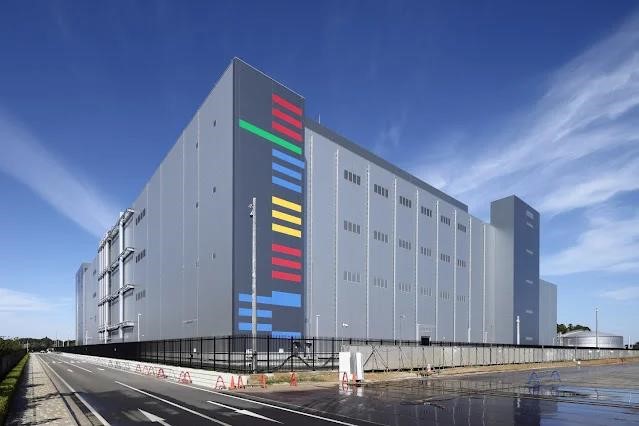
JERA, the power generator jointly owned by TEPCO and Chubu Electric, is targeting what may be the biggest bottleneck for the DC rollout: grid access. Grid connection studies and grid reinforcement work can take up to ten years. JERA’s solution is the socalled power plant-adjacent data center. Located within or next to a thermal power plant, such facilities do not depend on the transmission grid.
On the premises of its LNG-fueled Chiba Thermal Power Station, JERA plans to build a ¥2.3 trillion AI data center with a capacity of 400 MW. Operations could launch as early as 2028 and reach full capacity soon after. According to this plan, an existing thermal power plant becomes the tool to bypass grid congestion.
Electricity from LNG-fired thermal plants can help launch AI computing infrastructure quickly, but it won’t solve the net-zero problem, which is why the national roadmap envisions a shift to hydrogen and ammonia co-firing and to carbon capture and storage (CCS).
These technologies, however, are not yet deployed at commercial scale in Japan. DCs built on unabated thermal power run the risk of locking in emissions if the transition is slower than planned. The alternative is to plan for co-firing or CCS introduction over time, yet many of the cost items associated with those technologies are high and tricky to forecast a decade out.
The green route: nuclear/ hydro PPAs and NFCs
In July, KEPCO set up a service desk for physical power purchase agreements (PPAs) using electricity from its nuclear and hydro plants, the first such offering in Japan. For DC operators that need large volumes of stable, low-carbon electricity, nuclear and hydro PPAs can be a compelling option.
KEPCO allows corporate buyers to choose nuclear power through physical PPAs:
electricity is packaged with Non-Fossil Certificates (NFCs) and delivered to designated customers over the general grid under long-term fixed-price contracts.
For buyers, this locks in procurement costs and shields them from fuel price swings and spot market volatility.
The scheme has shortcomings, however. It reallocates existing power rather than bringing new clean capacity online. In addition, global initiatives such as RE100 don’t accept nuclear power, so technology companies and export manufacturers committed to those targets cannot fully benefit. Still, this is one alternative to JERA’s approach described above.
This is an example of a wider trend, as utilities seek ways to generate more revenue from carbon-free power. By 2030, electricity retailers selling 500 GWh or more a year must ensure that non-fossil sources account for at least 44% of the electricity they supply.
Retailers without enough non-fossil assets must buy NFCs through the Japan Electric Power Exchange (JEPX) or other channels. This creates a market for utilities that own nuclear and hydro plants.
In FY2025, Kyushu Electric, for example, earned ¥22.3 billion in annual revenue from selling NFCs, or 1% of total sales. The proceeds were invested in maintaining and expanding non-fossil power sources, including hydroelectric upgrades and nuclear safety measures.
Conclusion
Japan’s utilities have recently found themselves at the intersection of decarbonization mandates and rising electricity demand. In the short term, JERA’s plan to place DCs next to its thermal power plants may be the most effective option.
The demand is here, now, and the solution avoids years of waiting for grid upgrades. It does, however, raise problems in the mid to long term since it depends on emissionsreduction technologies not yet proven at scale and with their full costs unknown.
Kyushu Electric and KEPCO embrace an entirely different approach. Kyushu monetizes NFCs and recycles the proceeds into its non-fossil assets, creating a source of income aligned with green goals. KEPCO’s nuclear and hydro PPAs offer DCs carbon-free baseload power.
Yet constraints in battery storage and in nuclear deployment limit how far those models can go, and they may fall short of meeting fast-growing demand. Technological and regulatory progress may make greener options more competitive at a later date – but when is unclear.
An old folk wisdom says that “a bird in the hand is worth two in the bush. In this case, the opposite may be true. Net-zero goals have softened under the urgency of energy security and new energy-intensive sectors, making a focus on meeting immediate demand the easiest path. Privately, industry players in the DC space say they’ll take speed over low emissions and CO2 is a ‘tomorrow problem’.
Climate commitments, however, are not going away. Those utilities that prove themselves able to meet new demand while adhering to those climate goals will likely have made the better choice in the long run.
ANALYSIS
BY ANDREW STATTER
Energy Jobs in Japan: BESS at an Inflection Point
For the last three years, Japan’s battery energy storage (BESS) market has been one of the most talked-about segments in the power sector. Land has been acquired, grid connection requests have been filed in huge volumes, and large amounts of capital have been raised.
The BESS market is now at an inflection point. The early development phase, which rewarded speed and volume in early-stage development, is giving way to a harder one that rewards delivery capability, strong structuring and the ability to operate in multiple markets.
This shift is reshaping which BESS projects get built, which companies survive, driving increased M&A and also shifting which people are in demand.
Context and welcome change
Japan has a national ambition of 10 GW of energy storage capacity by 2030. Like the offshore wind goal, pundits don’t see that happening quite so fast. At the top of the issue list is a grid connection queue that has reportedly reached 172 GW of batteries, while less than 1 GW of grid-scale storage is currently operating.
That is a gap of more than two orders of magnitude. This is somewhat reactively being corrected with new rules that limit the number of projects one entity can submit and also stricter regulations around site control for a connection request to be valid.
Much of the BESS queue was never going to be built. Applications were cheap to file and valuable as options, which encouraged some developers to file over a thousand grid applications at a time. There are a ton of BESS projects on the market that are not viable because the project itself doesn’t make sense, or because the developer who currently owns it is not able to get the offtake they need to satisfy their investors.
Those same investors are uncomfortable taking on merchant risk. Talent in the BESS space, especially those focused on origination, permitting, and grid connection, should take a close look at the organization they’re working for and understand whether that company is going to be able to bring projects to commercial operation or whether they will become an acquisition target.
The third LTDA: fewer bids, tighter rules
Exacerbating the above point is the evolution of the LTDA. The third round, with results published earlier this year, awarded about 1.25 GW across 19 battery projects. Though this is still a healthy amount, these awards are going to more complex, longer-duration projects than in earlier rounds.
Bid volumes dropped significantly after the rules changed. Systems with a duration below six hours were excluded, and procurement and cybersecurity requirements were tightened.
A developer with success early on in the game via the LTDA scheme is not necessarily going to be the player who continues to succeed as we move into a more market-driven landscape. Talent mobility rose as companies who initially got a foothold via the LTDA have subsequently won tolling agreements or deployed best projects that are now trading on merchant markets.
Consolidation once capex is required
The early stage of the BESS market has been marked by a sort of ‘gold rush’ to acquire land and slap your name on as many grid connections as possible. Today there are many projects on the market, but from our conversations with potential buyers, well over 90% of them are not viable.
Of the quality projects, many were developed by companies without the experience or ability to deliver them. Others assumed the market would be more favorable by the time they reached RTB than it is today. The core issue is returns. Offtake revenue is often not high enough to meet investor requirements, and those investors are not comfortable taking merchant risk. That leaves some good, well-developed, high-quality assets at risk of being stranded.
The result is a wave of M&A. Buyers are acquiring semi-developed BESS assets, and in an increasing number of cases entire platforms. Capex is the great filter. Once big money has to be committed, the developers without strong delivery capability or a credible route to returns have to partner, sell or exit.
We expect this consolidation to continue and to reshuffle teams along with assets. Entire teams can be acquired or made redundant. Take for example when Second Foundation bought Trina, and Energy Vault bought Baywa. The teams came with those deals, but new leadership, new investors and the existing team may already have some of that talent. So there are opportunities and dangers for people who are being acquired.
Projects, and talent, move into the next phase
In a predictable and healthy development, the type of talent in the industry in highest demand is shifting. Most of the greenfield work has now been done and good projects are reaching FID and RTB. As the industry pipeline moves toward construction, demand for talent has moved.
Project management, site management and construction expertise are now the scarce skills rather than land origination, permitting, and grid connection. Procurement and supply chain management have also become a much bigger requirement as projects reach a later phase, amplified by JC-STAR requirements. For employers, this changes the hiring plan. Just as many companies are experiencing a bottleneck in trying to acquire JC STAR-certified components, likewise, there’s a huge bottleneck trying to acquire construction managers and project managers.
If you have projects getting closer to RTB you’ll need to strengthen your team on this side. It is better to start early and be prepared to bid for the top talent. Hiring in the BESS sector is going to get messy.
Andrew Statter is a Partner at Titan GreenTech, an executive recruitment agency focused on the clean energy space.
ASIA ENERGY REVIEW
BY JOHN VAROLI
A brief overview of the region’s main energy events from the past week
Australia / BESS
EDF acquired the Holloway BESS project, which will have a 250 MW energy storage system with 1 GWh capacity, equivalent to four hours of storage.
Australia / Data centers
Australia’s rapid data center (DC) rollout could release 39 million tons of GHGs if allowed to be powered primarily by fossil fuels, the Climate Council warned. This is based on nine proposed DCs that the report identifies as the biggest potential polluters due to their electricity demand.
China / LNG
Russia’s Novatek said it will redirect LNG supplies away from Europe to other markets, primarily to China. Meanwhile, China Gas inked a deal with Venture Global (U.S.) for a total purchase of 1 Mtpa of LNG for two decades starting in 2030.
Energy security
Energy security is now a capital allocation challenge. Net energy importers – such as China, Japan, South Korea and Vietnam – face huge investment requirements to replace imported fuels with domestic generation, grid infrastructure and storage. Cumulatively, they’ll need to invest $1.5 to $1.8 trillion annually.
India / Renewables
International asset manager KKR said it acquired a minority stake in Gentari Renewables India, the local subsidiary of clean energy solutions provider Gentari. In India it has about 8 GW of operating, under-construction and contracted renewable energy capacity that span solar, wind, hybrid and BESS.
India / Renewables
Amazon will invest $7 billion in renewable energy projects in India, and will buy some of the electricity generated to power its operations, such as data centers. In 2025, Amazon’s global emissions rose 16% on DC expansion.
Philippines / Solar
Meralco PowerGen Corp’s MTerra Solar project in northern Philippines is using BESS to extend solar power beyond daylight hours, allowing the facility to supply 600 MW of electricity continuously, even after the sun goes down.
South Korea / COP31
At COP31, Australia and South Korea inked an MoU on decarbonization, aiming to connect Australian renewable energy and resources with Korean industrial demand. The agreement covers investment in clean energy and net-zero industries, more secure supply chains, and cooperation on green shipping, and hydrogen.
South Korea / Energy security
The IEA said that South Korea, which relies on imports for about 80% of its energy, must stay on track to deploy 100 GW of renewable energy by 2030 to guarantee energy security.
Vietnam / Energy security
In 2025, net energy imports accounted for 44% of Vietnam’s total energy supply, said the govt. Securing stable fuel supplies is a major challenge for national energy security as demand for imported coal remains high, domestic gas production declines and LNG plays a growing role in the supply mix.
Disclaimer
This communication has been prepared for information purposes only, is confidential and may be legally privileged. This is a subscription-only service and is directed at those who have expressly asked K.K. Yuri Group or one of its representatives to be added to the mailing list. This document may not be onwardly circulated or reproduced without prior written consent from Yuri Group, which retains all copyright to the content of this report.
Yuri Group is not registered as an investment advisor in any jurisdiction. Our research and all the content express our opinions, which are generally based on available public information, field studies and own analysis. Content is limited to general comment upon general political, economic and market issues, asset classes and types of investments. The report and all of its content does not constitute a recommendation or solicitation to buy, sell, subscribe for or underwrite any product or physical commodity, or a financial instrument.
The information contained in this report is obtained from sources believed to be reliable and in good faith. No representation or warranty is made that it is accurate or complete. Opinions and views expressed are subject to change without notice, as are prices and availability, which are indicative only. There is no obligation to notify recipients of any changes to this data or to do so in the future. No responsibility is accepted for the use of or reliance on the information provided. In no circumstances will Yuri Group be liable for any indirect or direct loss, or consequential loss or damages arising from the use of, any inability to use, or any inaccuracy in the information.
K.K. Yuri Group: Hulic Ochanomizu Bldg. 3F, 2-3-11, Surugadai, Kanda, Chiyoda-ku, Tokyo, Japan, 101-0062.