
JAPAN NRG WEEKLY
NOV. 01, 2021
JAPAN NRG WEEKLY
Nov. 01, 2021
NEWS
TOP
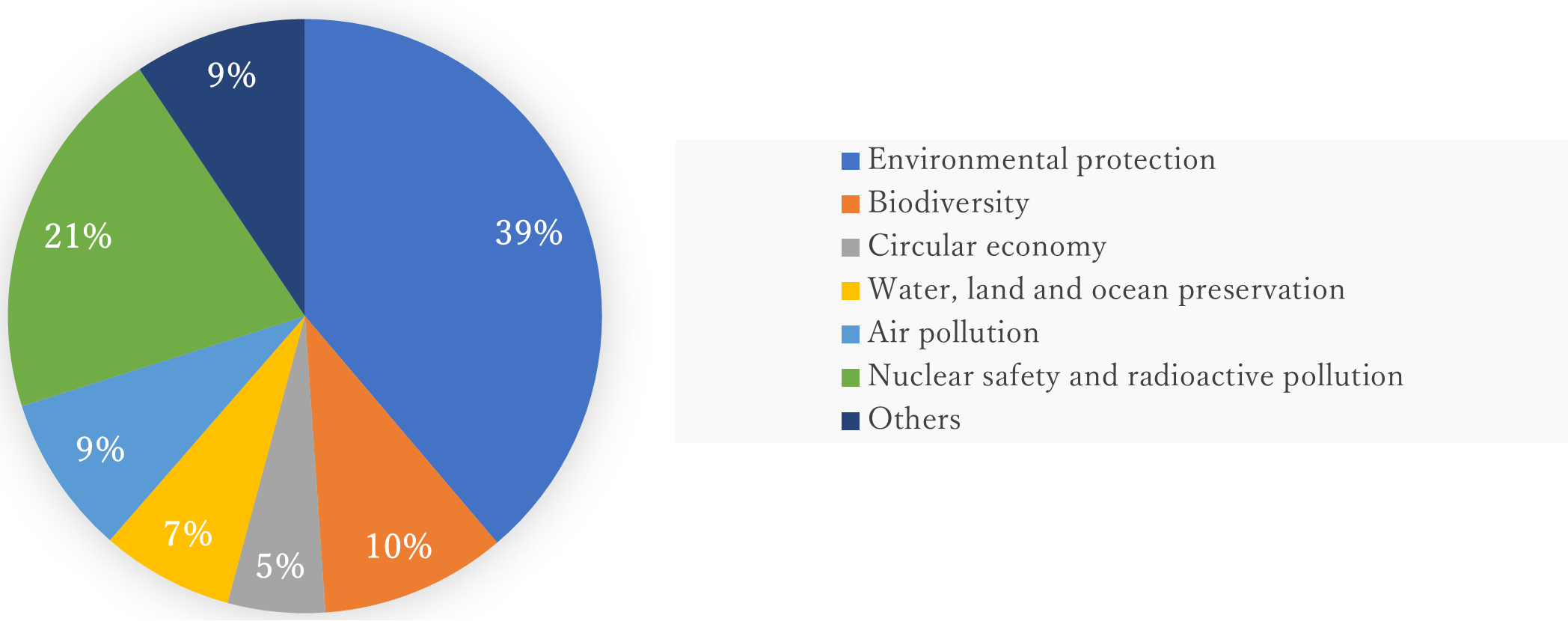
- Govt. wants ¥1.8 trillion ($15.8 bn) budget for sustainability works next fiscal year; environmental protection makes up 39% of total
- Seven of 10 major power utilities cut profit forecasts; TEPCO sees first loss in nine years on rising coal, gas and oil prices
- Market share of new power retailers breaks 20% level; challengers to the major power utilities now control over 30% of Tokyo market
ENERGY TRANSITION & POLICY
- Japan to expand fuel stockpile rules from LNG to oil and coal
- METI minister asks UAE counterpart about increase in oil output
- Opposition parties tone down anti-nuclear stance for the election
- PM Kishida’s energy vision: focus on batteries and the consumers
- Japan vows to lend ASEAN more support to measure emissions
- Govt. investing in science to suppress cattle burps to cut methane
- Green Innovation Fund releases green concept for connected cars
- Solar industry group gives qualified praise for Basic Energy Plan
- NEDO to invest ¥32 billion in hydrogen/ammonia powered ships
- Tokyo bids to remake itself as global green finance hub… [MORE]
ELECTRICITY MARKETS
- Renewable operators ask govt. to keep tariffs fixed until FY2025
- METI says cold snap will mean tight electricity supply this winter
- Chubu Electric, partners to build one of Japan’s biggest biomass plants; Shikoku Electric invests in Erex biomass power project
- Osaka Gas and Sky Solar to develop tens of MWs of solar capacity
- Hokkaido Electric teams up with Mitsubishi on new hydro plants
- Marubeni wins 940 MW cogeneration plant order in Saudi Arabia
- J-Power to pursue onshore wind farm in Hokkaido … [MORE]
OIL, GAS & MINING
- Number of firms using “carbon neutral” LNG or gas jumps to 78
- Japan’s trading houses swap coal for gas and pursue CCUS tech
- INPEX joins Idemitsu in Norway oil project as Osaka Gas exits; Meanwhile, INPEX divests from Congolese oil project
ANALYSIS
JAPAN AT COP26:
KEY FOCUS POINTS AND EXPECTATIONS
The Japanese delegation at this week’s UN Climate Change Conference (COP26) in Scotland will have three main focuses: Coal; How to value and trade carbon; and, Rules for measuring emissions. Some members of the delegation expect the climate talks to be tense and stretch beyond COP26’s Nov. 12 closing date. Nevertheless, they feel there’s broad consensus among the nearly 200 participating countries on certain topics, especially the need to kickstart an international market mechanism for carbon credits.
JAPAN’S 2030 ENERGY PLAN FOR LNG WILL HAVE SIGNIFICANT IMPACT ON GLOBAL LNG MARKET
By approving the sixth iteration of the Basic Energy Plan, Japan has cemented its medium to long-term policy shift away from coal and gas (LNG) in power generation in favor of renewables. That strategy will likely have a major impact not only on Japan’s purchases but also on the global LNG industry as a significant part of global supply may need to look for a new home.
Japanese officials counter that the nation will continue to be a major buyer, envisioning that the nation’s companies will become top LNG suppliers to developing Asian economies. But managing order flow based on multiple national dynamics will be a new challenge for Japanese LNG buyers.
GLOBAL VIEW
Australian researchers patent bricks that can store energy for 30 years. France to announce plans for six new nuclear reactors. Tidal energy could meet 10% of UK’s power demand. BMW to start buying “green” steel in 2025. Investor demands that Shell splits off oil assets. Details on this and more in the global wrap.
WEATHER OUTLOOK
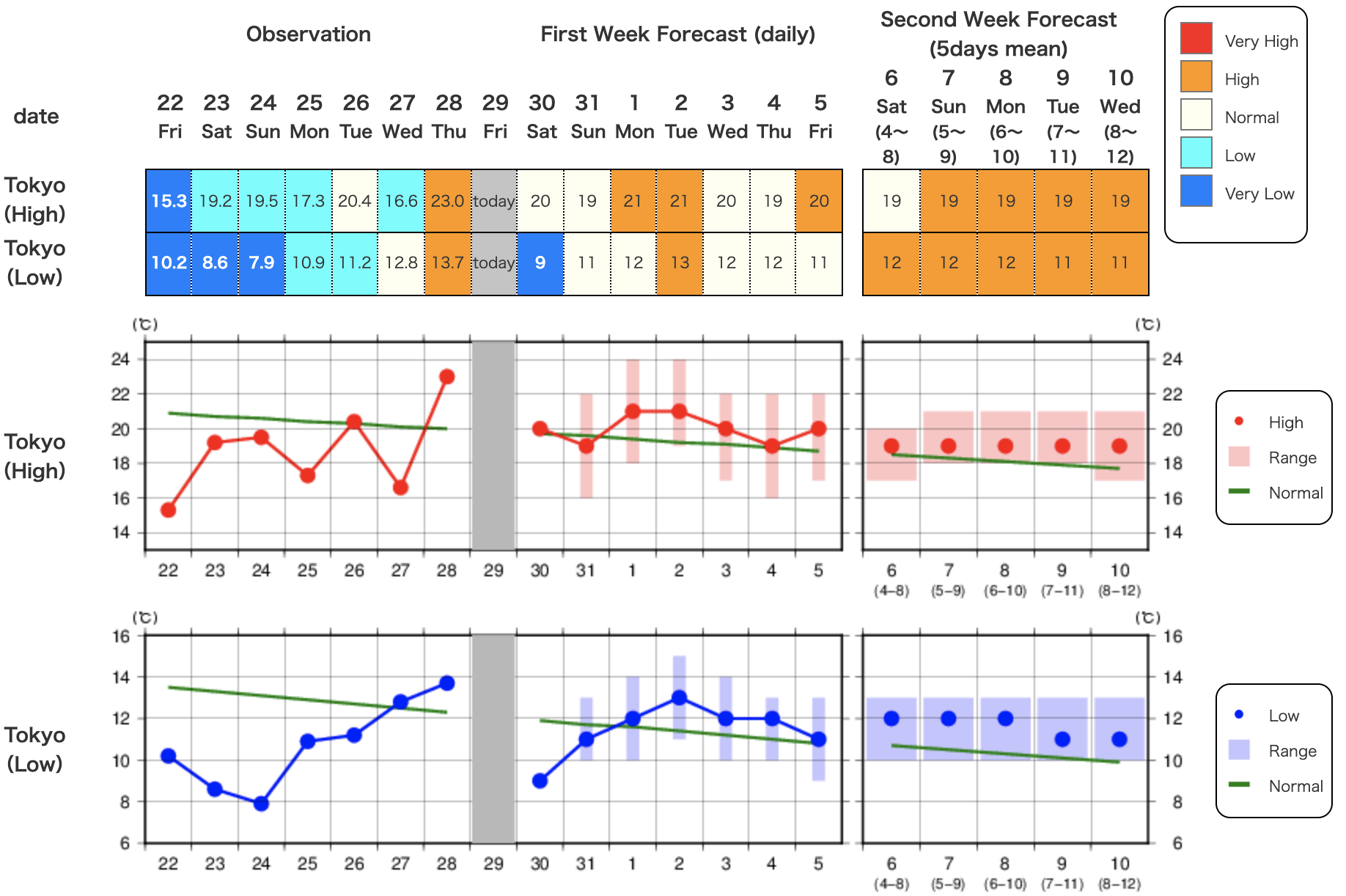
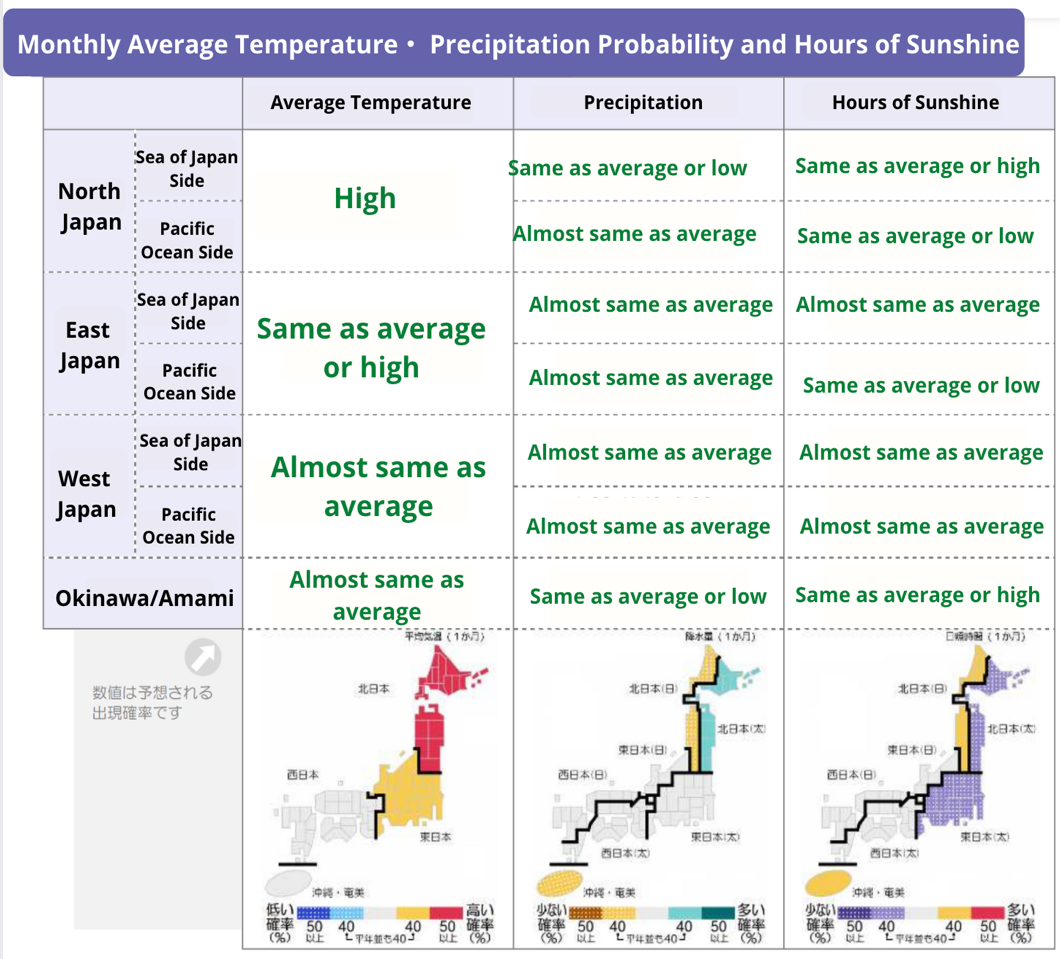
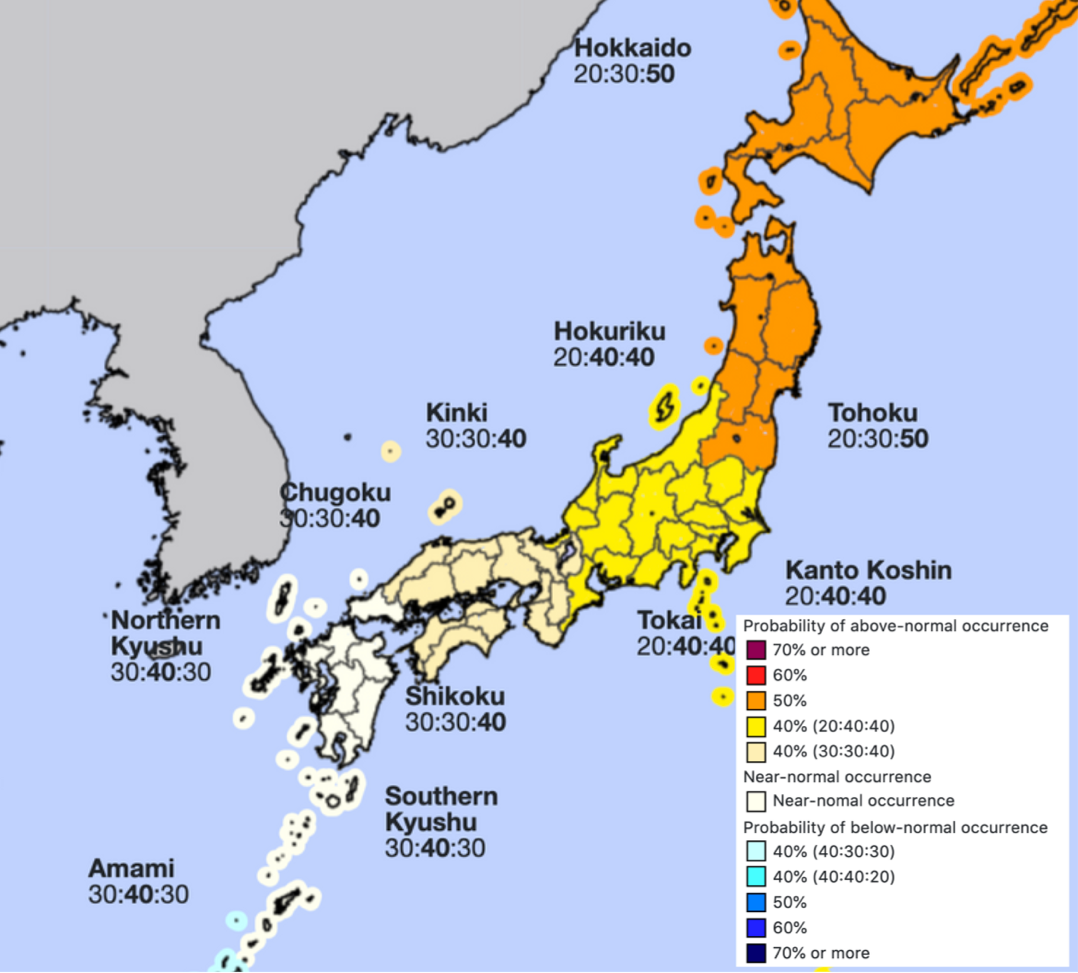
A warmer than usual November is on the cards.
JAPAN NRG WEEKLY
PUBLISHER
K. K. Yuri Group
Sponsored
Editorial Team
Yuriy Humber (Editor-in-Chief)
Tom O’Sullivan (Japan, Middle East, Africa)
John Varoli (Americas)
Regular Contributors
Mayumi Watanabe (Japan)
Daniel Shulman (Japan)
Takehiro Masutomo (Japan)
Art & Design
22 Graphics Inc.
SUBSCRIPTIONS & ADVERTISING
Japan NRG offers individual, corporate and academic subscription plans. Basic details are our website or write to subscriptions@japan-nrg.com
For marketing, advertising, or collaboration opportunities, contact sales@japan-nrg.com
For all other inquiries, write to info@japan-nrg.com
OFTEN USED ACRONYMS
METI The Ministry of Energy, Trade and Industry
MOE Ministry of Environment
ANRE Agency for Natural Resources and Energy
NEDO New Energy and Industrial Technology Development Organization
TEPCO Tokyo Electric Power Company
KEPCO Kansai Electric Power Company
EPCO Electric Power Company
JCC Japan Crude Cocktail
JKM Japan Korea Market, the Platt’s LNG benchmark
CCUS Carbon Capture, Utilization and Storage
mmbtu Million British Thermal Units
mb/d Million barrels per day
mtoe Million Tons of Oil Equivalent
kWh Kilowatt hours (electricity generation volume)
NEWS: ENERGY TRANSITION & POLICY
Government requests ¥1.8 trillion sustainability budget for fiscal 2022
(Japan NRG, Oct. 22)
- The government will request a ¥1.8 trillion budget for sustainability projects in fiscal 2022, up 14.8% from the current term; 12 ministries and agencies made the request.
- Budget items consist of environmental protection measures such as subsidies for renewable and zero-emission homes and cars, biodiversity, recycling and other projects for the circular economy, water, land and ocean resource preservation, clean air measures including car emission measures, chemical pollution, budget for nuclear safety and mitigating radioactive pollution, and others.
- Environmental protection measures accounted for 38.8% out of the total sustainability budget, followed by biodiversity at 10.1%, and circular economy at 5.3%.
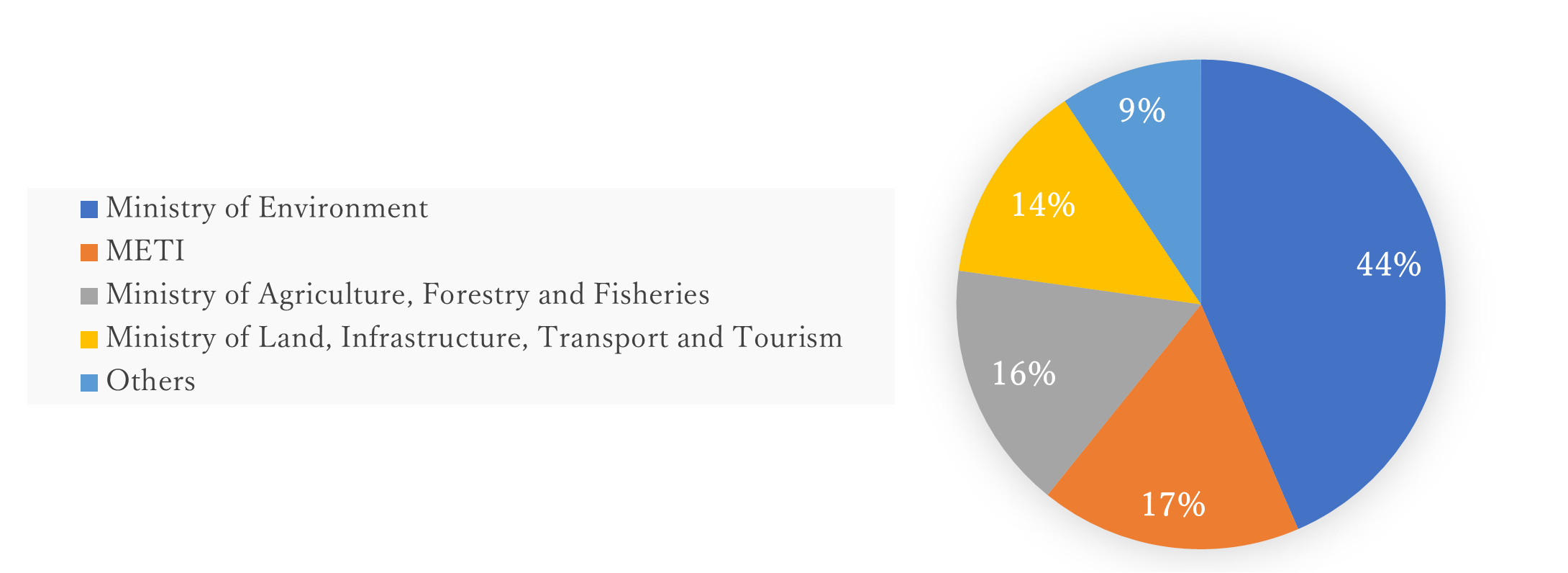
- Among the 12 ministries, the MoE made the biggest request, ¥801 billion, accounting for 43.5% of the total; followed by METI at ¥319 billion, or 17.3%; the Ministry of Agriculture, Forestry and Fisheries at ¥303 billion, or 16.4%; and the Ministry of Land, Infrastructure, Transport and Tourism at 13.4%. The four ministries accounted for over 90% of the total budget requested.
Breakdown of the sustainability budget request, FY2022
Breakdown by ministry
Japan to expand fuel stockpile guidelines to oil and coal
(Japan NRG, Oct. 26)
- On Oct. 25, fuel guidelines took effect that require power utilities to keep sufficient LNG in reserve and to share data on this.
- METI now plans to expand the guidelines to oil and coal.
- METI fears a potential power crunch could hit Japan this winter. The power reserve rate in Tokyo is marginally above the 3% threshold level in the first quarter of 2022, METI warned.
- As one of the countermeasures, the ministry has commissioned the Electricity and Gas Market Surveillance Commission (EGC) to write new rules that will ensure non-discriminatory terms for independent players to acquire power supply from regional power grid.
- Other measures include strengthening the accuracy of forecasts around excess capacity and power generation, and closely monitoring the spot electricity market as well as the actions of regional grid operators.
METI minister asks UAE energy minister to raise oil output
(Japan NRG, Oct. 26)
- METI Minister Hagiuda asked United Arab Emirates Energy Minister Suhail Mohamed Al Mazrouei to raise crude oil output to help stabilize rising prices.
- The ministers also discussed expanding cooperation in hydrogen.
- CONTEXT: The UAE is Japan’s largest crude oil supplier, accounting for 40% of its imports. Saudi Arabia is the second largest supplier, followed by Kuwait, Qatar and Russia.
- CONTEXT: In April, Japan and UAE signed a Memorandum of Cooperation on hydrogen. Toyota Motor is also taking part in hydrogen project studies in the UAE.
Opposition parties skip voicing anti-nuclear views ahead of general election
(Mainichi Shimbun, Oct. 25)
- Of the ten Japanese nuclear reactors restarted since the Fukushima disaster, four are on the island of Kyushu. Possibly because of the high concentration of nuclear facilities, Kyushu has seen little debate on nuclear policy in the lead up to the Oct. 31 lower house election.
- A local coalition of opposition parties established at the end of 2020 and comprised of the Constitutional Democratic Party of Japan, the Japanese Communist Party and the Social Democratic Party, initially opposed operating nuclear reactors after the end of their 40-year design lives.
- However, references to opposition to nuclear restarts were deleted in the most recent version of the coalition’s joint manifesto, which had a watered-down promise to consider the effects on jobs and the local economy while reducing reliance on nuclear energy.
- A local city councilor who supports the CDP says almost everyone is related to someone working in the nuclear energy and there’s little support for policies to divest from nuclear energy.
PM Kishida’s energy vision revealed; focus is on batteries and consumers
(Diamond, Oct. 28)
- Details of the policies planned by new PM Kishida Fumio and his cabinet obtained by Diamond reveal that the new government will continue many of the initiatives of his predecessor Suga.
- In addition to Suga’s 46% emission reduction target and the planned phase out of sales of new gasoline-engine cars by 2035, Kishida wants to add tax legislation that encourages investment in green initiatives.
- Kishida will also focus on subsidies for EVs, investment in charging infrastructure and grid storage batteries, and consumer-facing initiatives such as a points-based scheme to encourage people to insulate their homes.
Japan elaborates support programs to ASEAN ahead of COP26
(Japan NRG, Oct. 27)
- Japan’s support programs to ASEAN for combating climate change were elaborated on during the Oct. 27 Japan-ASEAN leaders meeting.
- According to the disclosure, there is a need for more transparency and clarity in data, which means better emission measurement and reporting, the building of inventories, the use of satellite data, disclosure by financial institutions and wider use of life cycle assessments.
- Mitigation includes setting long term strategies and policies, identifying decarbonization roadmaps for each sector, spreading decarbonization technologies through the Joint Credit Mechanism (JCM) system, and building zero-carbon smart cities.
- Adaptation is about building platforms, disaster prevention programs, and utilizing satellite meteorological data.
Government investing in science to suppress cattle burps
(Jiji, Oct. 24)
- Japan became one of over 30 countries to join The Global Methane Pledge, due to be officially launched at the COP26 summit, is an initiative to reduce global methane emissions 30% by 2030.
- As part of efforts to reduce its methane emissions, Japan will ramp up research into new types of cattle feed that suppress belching, which is a major cause of methane emissions.
- Local farmers are well versed in methane-reducing techniques such as the periodic draining of paddy fields to suppress levels of anaerobic bacteria in the soil. The government will share this expertise with other nations.
- CONTEXT: Methane accounts for 17% of total global GHG emissions. Japan has already made some progress in methane reduction, with its methane emission levels 23 times lower than the U.S.
Green Innovation Fund WG releases concept of green connected cars
(Japan NRG, Oct. 26)
- The Green Innovation Fund working group released an overview of how connected cars help to cut emissions and the technology needed to realize such smart vehicles, according to a METI report.
- Automated driving could improve traffic congestion and reduce car accidents, and cut carbon emissions potentially by 1.69 million tons by 2030 and 1.32 million tons by 2050, METI said.
- If data is processed at cloud data centers, however, the data centers may not be able to accommodate the expected surge in data volumes of around 30% per year. This may cause power issues in the cloud network.
- The Green Innovation Fund said it aims for storage batteries with energy intensity of 135 kWh, efficient power trains and systems capable of sustaining continuous battery hours of 13.5 hours. This will require a 70% energy saving of automated driving system devices. A pilot run of green-connected cars should take place before 2030.
- The Green Innovation working group proposes spending ¥151 billion to develop storage batteries and engines. The budget to develop connectivity technology was provided separately under the MaaS (Mobility as a Service) project run with the Ministry of Land, Infrastructure, Transport and Tourism.
- CONTEXT: In addition to increasing battery capacity, temperature control of batteries mounted on vehicles requires a major technological breakthrough as overheated devices cause safety issues.
Solar group gives qualified praise for Basic Energy Plan
(New Energy Business News, Oct. 29)
- ASPEn, an association of small and medium-sized solar generators, released an official opinion on the government’s sixth basic energy plan.
- While praising the government’s target to install 120 GW of generation capacity by 2030, the group called for more detailed statistics on progress against this target, investment in transmission infrastructure, and tougher measures against those building solar farms on inappropriate sites.
- ASPEn says that in many parts of Japan there are no signs the chronic shortage of transmission capacity will improve in the near future. Even in greater Tokyo, some operators of large farms are told they’ll to wait until 2030 at the earliest for suitable grid connections.
NEDO invests ¥32 billion into hydrogen/ammonia powered ships
(New Energy Business News, Oct. 27)
- The state-backed research hub NEDO has decided to fund four projects to research alternative shipping fuels. NEDO’s Green Innovation fund will invest ¥32 billion in the projects.
- Selected for funding are: a project to develop a hydrogen powered marine engine and fuel system, a project to develop an ammonia fueled marine engine, a project to develop a commercially viable ammonia powered ships, and a project to use catalysts and engine improvements to reduce ‘methane slip’ from LNG-powered marine engines.
Tokyo bids to remake itself as global hub for green, sustainable finance
(Asia Nikkei, Oct. 25)
- Tokyo Govenor Koike said that promoting sustainable finance will be at the core of the city’s updated strategy to become a global financial center under the Tokyo Global Financial Center concept.
- Developing finance for decarbonization “will lead to our increased presence as an international financial city,” Koike said at the Nikkei Virtual Global Forum. Tokyo will support the issuance of green bonds by covering some costs, and also attract fund managers and fintech startups with expertise in green finance.
- Koike hopes to lure more financial players and support their growth in Japan. One initiative set up this month will assist with costs that foreign green finance companies face when opening shop in Tokyo.
TEPCO to receive ¥12.3 trillion grants for Fukushima compensation
(Japan NRG, Oct. 26)
- METI announced that the Nuclear Damage Compensation and Decommissioning Facilitation Corporation (NDF) plans to provide ¥12.5 trillion to Tokyo Electric (TEPCO) in order to make compensations payments for damages to the community after the Fukushima accident.
- TEPCO was asking for ¥13.5 trillion in state funds for this and has already received ¥0.2 trillion for such compensation payments.
Aircon major Daikin bets on next-generation cooling tech to improve EVs
(Asia Nikkei, Oct. 27)
- A remark by Tesla CEO Elon Musk that he’d love to get into home heating, ventilation and air conditioning (HVAC) systems has inspired Japan’s Daikin Industries to start working on next-generation cooling technologies.
- Daikin is working on magnetic cooling technology that won’t need to use refrigerants or a compression, which account for the majority of the GHG emissions and power consumption.
- Daikin sees commercialization around 2025.
- The Japanese manufacturer also seeks to commercialize by fiscal 2025 a power-saving refrigerant for automotive air conditioners that extends the range of EVs by up to 50%.
Oji Paper sets sights on carbon neutrality
(Nikkei, Oct. 28)
- Oji Holdings pledged to reduce GHG gas emissions to zero by 2050.
- To this end, the company will reduce emissions by over 70% by 2030.
- Oji is aggressively expanding forestry holdings in Brazil and New Zealand, and plans to add 1.5 million hectares by 2030.
- By selecting fast-growing tree varieties better able to efficiently store carbon dioxide, Oji says it can further reduce its carbon footprint.
- However, a bidding war for New Zealand farm land suitable for forestry conversion means that Oji may have to spend far more on land acquisition than the ¥100 billion it has allocated.
Mitsui & Co partners with US carbon solutions firm on CCUS
(Nikkan Kogyo Shimbun, Oct. 29)
- Mitsui & Co has invested an undisclosed amount in U.S.-based Denbury Carbon Solutions to develop a technology to efficiently capture and store CO2 while at the same time enhancing the recovery of oil from oilfields.
- Denbury is preparing for the commercial rollout of its technology.
- Mitsui says the technology delivers a 771 kg reduction in CO2 emissions for every barrel of oil produced.
BASF starts using NGK storage battery
(Kankyo Business, Oct. 22)
- NGK Spark Plugs said that a containerized storage battery it delivered to a BASF factory in Antwerp is now operating.
- The sodium sulphur battery is rated at 5,800 kWh and has a maximum output of 1 MW.
- BASF will evaluate the battery on a long-term basis and then decide the optimum business model for storage battery use.
Ford, Denso back standardized metric for EV battery health
(Kankyo Business, Oct. 22)
- Over 100 prominent corporations and organizations including Ford, Denso, BMW, Honda, Toyota, and Itochu have joined the Mobility Open Blockchain Initiative (MOBI), which aims to create a standard metric for measuring the degradation of electric vehicle batteries.
- MOBI gathers data on battery age, kilometers covered, temperature response and voltage, which is maintained using a distributed record-keeping system.
- Participants hope the MOBI system will enable prospective buyers of used cars to make better informed decisions.
- The global EV battery market is expected to be worth ¥7 trillion by 2030.
One-Dot News:
- (MHI) received an order from Snowy Hydro Limited, an Australian power utility, to supply power generation equipment, including two M701F gas turbines that can run both gas and hydrogen, for the Hunter Power Project, a 660 MW thermal power plant to be constructed in New South Wales, Australia (New Energy Business News, Oct. 26).
- KDDI and SBI Investment, a unit of SBI Holdings, announced the establishment of a ¥5 billion “KDDI Green Partners Fund” which will invest in start-ups working on issues related to climate change (Kankyo Business, Oct. 29).
- Toda Corporation said that its 27 MW onshore wind farm in Brazil, which was developed and constructed by its local subsidiary, has started commercial operation (Kankyo Business, Oct. 29).
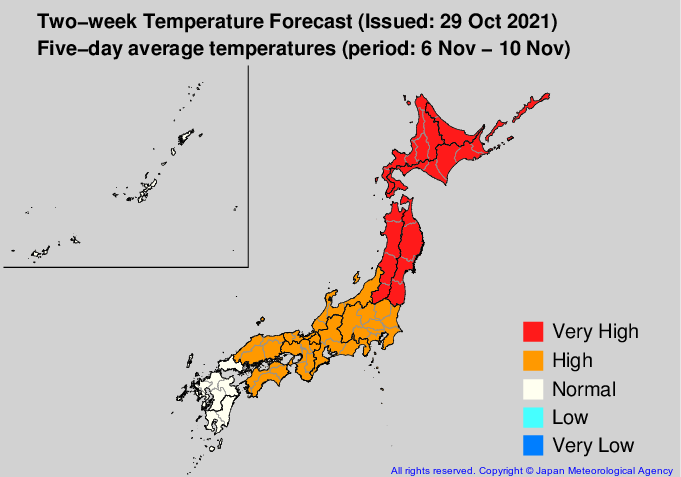
TWO-WEEK TEMPERATURE FORECASTS (OCT. 29 ~ NOV. 10)
Nation-wide
Tokyo area
- North Japan: Very high temperatures from Nov. 4.
- East/West Japan: Higher than average.
- Okinawa/Amami region: In line with the average.
ONE-MONTH SEASONAL FORECAST (OCT. 30~ NOV. 29)
NEWS: POWER MARKETS
| No. of operable nuclear reactors | 33 | Electricity Price | Friday, Oct. 29 | % Change WoW | ||
| Of which | restarted | 10 | JEPX 24-Hour Spot | ¥13.54/ kWh | -12.9% | |
| in operation today | 7 | TOCOM Nov. baseload (Tokyo area) | ¥19.50/ kWh | -3.1% | ||
Source: Company websites, JANSI and JAIF, as of Oct 31, 2021
Seven of 10 major power utilities cut profit forecasts; TEPCO sees first loss in nine years
(Nikkei, Oct. 29)
- Seven of Japan’s top 10 power utilities have revised their full-year financial forecasts downward, citing rising fuel costs and greater competition in electricity retail.
- TEPCO, Japan’s biggest power company, forecasts a ¥16 billion ($140 million) loss in fiscal year ending March 2022, its first in nine years. The previous forecast was a ¥67 billion profit.
- TEPCO says business will suffer if commodity prices continue rising.
- CONTEXT: Power firms can raise electricity prices to account for higher cost of procuring fossil fuels as part of a so-called fuel adjustment system. However, the time lag between increased fuel costs and rising consumer tariff rates means companies must manage the interim based on the strength of their own finances.
- Chugoku Electric is another utility that expects to be deeply in the red this fiscal year, with a projected loss of ¥14 billion.
- Other utilities to lower profit forecasts are:
- Chubu, Hokkaido, Shikoku, Hokuriku, and Okinawa Electric. The first three have a high ratio of thermal power generation and cut their forecasts significantly.
- There’s strong competition from new power companies that entered the market after the full deregulation of electricity retailing in 2016. The more than 700 electricity retailers have gained just over 20% of the market by undercutting the price plans of the big players.
Market share of new power retailers breaks 20% level for first time
(Japan NRG, Oct. 28)
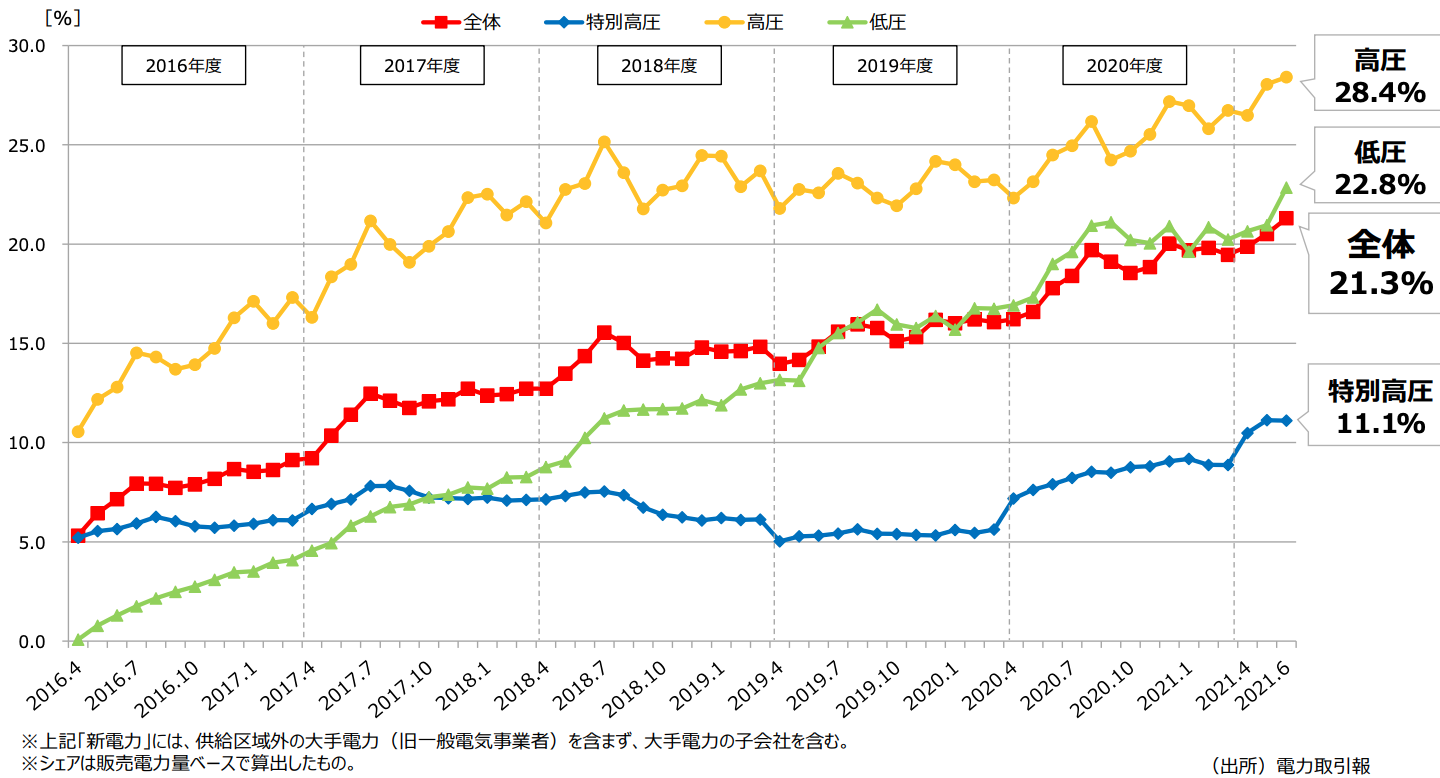
- The market share of “new power companies”, most of which joined the electricity retail market since 2016, has broken through the 20% level for the first time. See chart below published by the Basic Gas Policy sub-committee.
- New entrant in the power market held a 21.3% market share of the total market at the end of June this year, while the share for low-voltage power (i.e., mostly households) was up to 22.8%.
- CONTEXT: The rest of the market is mostly in the hands of the 10 legacy power utilities, the EPCOs, such as TEPCO and Kansai Electric.
- “New power companies” accounted for 19.1% of Japanese electricity sales in September 2020, while their share of the low-voltage market was 21.1% (up from zero as of April 2016).
- New market challengers have made the most gains in the Tokyo region (30.1%), followed by Hokkaido (24.3%) and Kansai (23.6%). Okinawa had the least penetration (10%) from new players.
LEGEND:
Red: Total electricity sales;
Blue: Special High-Voltage;
Yellow: High-Voltage;
Green: Low-Voltage.
Renewable operators ask govt. to keep tariffs fixed for several more years
(Japan NRG, Oct. 29)
- The Power Tariff Committee held a hearing on renewable pricing and regulatory issues. Japan Photovoltaic Energy Association said solar capacity growth is likely to slow in the coming years as there are fewer plans for large installations to supply businesses and new home constructions are decreasing.
- The shift to Feed-in-Premium from Feed-in-Tariff systems is also slow as only a few operators have actual plans in place to make the shift due to a lack of visibility on how the new scheme will affect their earnings.
- The association asked for pricing to stay fixed at the current level until fiscal 2025 to motivate an expansion in solar power capacity.
METI says cold snap will mean tight electricity supply
(Asahi Shimbun, Oct. 27)
- METI says winter demand for electricity in many regions will exceed 96% of capacity, making this winter the worst in 10 years in terms of power scarcity.
- While the Ministry says it currently has no plans to demand consumers to reduce electricity use, it will encourage residential and commercial users to make reductions if this is possible without making sacrifices.
- According to METI projections, a one in ten years cold snap in February would cause demand in areas served by TEPCO to reach 97% of capacity.
- SIDE DEVELOPMENT:
TEPCO Grid holds public bid to secure reserve capacity for winter
(Denki Shimbun, Oct. 27)- Tokyo Electric Power Grid (PG) announced the results of its public solicitation for additional power capacity for the winter (January-February 2022). The winning bid was for 631,000 kilowatts, of which 52,000 kilowatts was for Demand Response (DR).
- The highest bid was ¥15,530 per kilowatt of capacity; the average bid was ¥14,440 per kilowatt; and the average bid for DR was ¥2,323 per kilowatt.
- CONTEXT: The process was conducted to secure a reserve ratio of 3%, which is seen as the minimum requirement for stable power supply in the Tokyo area.
Chubu Electric, partners to build one of Japan’s biggest biomass power plants
(New Energy Business News, Oct. 28)
- JFE Engineering, Chubu Electric, Toho Gas, and Century Tokyo agreed to invest in Tahara Biomass Power Godo Kaisha, established by JFE Engineering, in order to build a 112 MW woody biomass-fired power plant in Tahara City, Aichi Prefecture. This would be one of Japan’s largest biomass power plants.
- Construction begins in June 2022, with operation scheduled to start in September 2025.
- The plant will annually use 420,000 to 440,000 tons of wood pellets from Vietnam and the U.S. The electricity generated will be sold to Chubu Electric for 19 years and 3 months at a price of ¥24/ kWh based on the FIT system.
- Tahara Biomass Power will be 40% owned by JFE Engineering, 40% by Chubu Electric, 10% by Toho Gas, and 10% by Century Tokyo.
- SIDE DEVELOPMENT:
Shikoku Electric, Tokyo Gas invest in Erex biomass power project
(New Energy Business News, Oct. 25)- Shikoku Electric, Ando Hazama, Tokyo Gas, Erex, Shinko Denso, and Sakaide Yusen Gumi will build a 75 MW biomass power project in Sakaide City, Kagawa Prefecture.
- This will be one of Japan’s largest biomass generators and use imported wood pellets.
- Construction of the power plant is planned to start in November 2022 and commercial operation in June 2025. Using the FIT system, all the electricity generated will be sold to Shikoku Electric at ¥24/ kWh for 20 years. The t cost for construction is about ¥50 billion.
- Shikoku Electric will own 36% of the project.
IEA says cost of solar-generated electricity to fall below ¥2/ kWh
(Nikkei XTech, Oct. 25)
- The International Energy Agency’s World Energy Outlook 2020 says that cost input reductions in the past decade mean the cost of solar-generated electricity in most countries is now lower than that from newly-built coal or gas-fired power stations.
- The IEA predicts that by 2035 the cost of energy from renewable sources, even when combined with storage batteries, will be lower than that from fully depreciated coal or gas power stations.
- When we interpret expert predictions in light of recent trends in solar panel efficiency, we see that by 2050 the cost of electricity from solar farms will be less than ¥2 yen/ kWh, and maybe closer to ¥1yen/ kWh.
Osaka Gas and Sky Solar Japan to collaborate on solar
(PR Times, Oct. 27)
- Osaka Gas signed a memorandum of understanding with Sky Solar Japan on the development and joint ownership of solar farms. The goal is to install tens of megawatts of additional generation capacity every year for the next few years.
- Osaka Gas’ decision to work with Sky Solar reflects the increasing scarcity of large sites suitable for solar farms.
- The Daigas Group pledged to install 5 GW of renewable capacity internationally by 2030, including that sourced from partners.
Hokkaido Electric partners with Mitsubishi on hydro
(Denki Shimbun, Oct. 29)
- Hokkaido Electric and Mitsubishi Corporation will cooperate to build new hydropower stations.
- The companies will either construct or rebuild five hydropower stations in Hokkaido via a newly established subsidiary, in which each corporation owns a 50% stake.
- The new power stations will have a combined output of 17 MW.
J Power and SymEnergy start work on Hokkaido wind farm
(Denki Shimbun, Oct. 25)
- J Power began work on a 21 MW wind farm in Esashi, Hokkaido.
- The farm will comprise five 4.2 MW GE turbines and is scheduled to begin feeding the grid in December 2022.
- The farm will replace an older farm that comprised 28 smaller turbines. The operators hope wider spacing of turbines will result in greater yields.
Marubeni to build cogeneration plant in Saudi Arabia
(Kankyo Business, Oct. 26)
- Marubeni agreed with TAQA (the Abu Dhabi National Energy Company PJSC) to construct a 940 MW cogeneration plant and desalination plant in Tanajib on Saudi Arabia’s east coast.
- Under the agreement, the plants will supply Saudi Aramco’s oil and gas facilities with electricity, steam, and fresh water for 20 years.
NUCLEAR REACTOR NEWS ROUND-UP:
- NRA warns operators on impact of pumice stones from volcano on nuclear power plants
- (Mainichi, Oct. 28)
- CONTEXT: The biggest underwater volcanic eruption in the Ogasawara Islands chain has covered shores with pumice in Okinawa, Kagoshima and Amami.
- NRA warns operators on the possibility of clogging caused by pumice stones at the facility required to cool down the reactor.
- Kyushu Electric says there is currently no problems at its Sendai NPP.
NEWS: OIL, GAS & MINING
Japan Oil Price: $73.81/ barrel
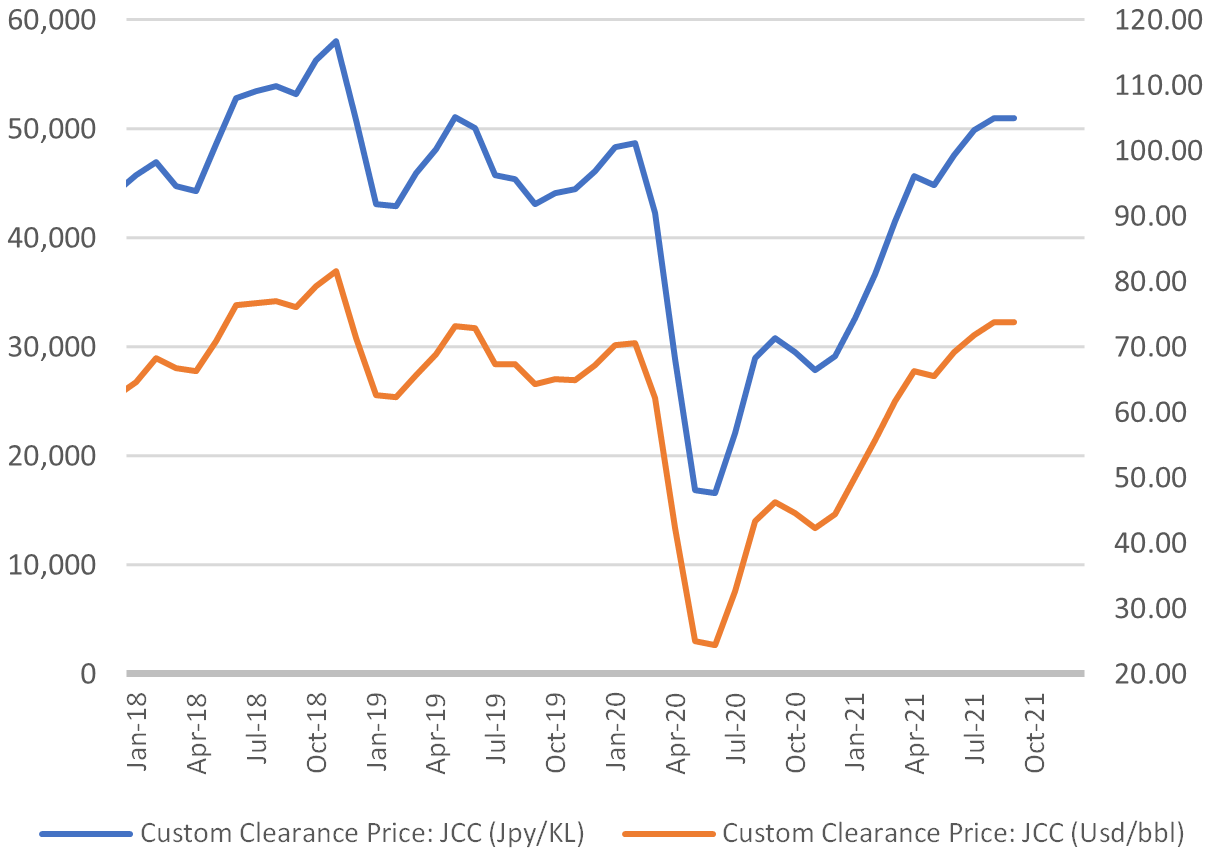
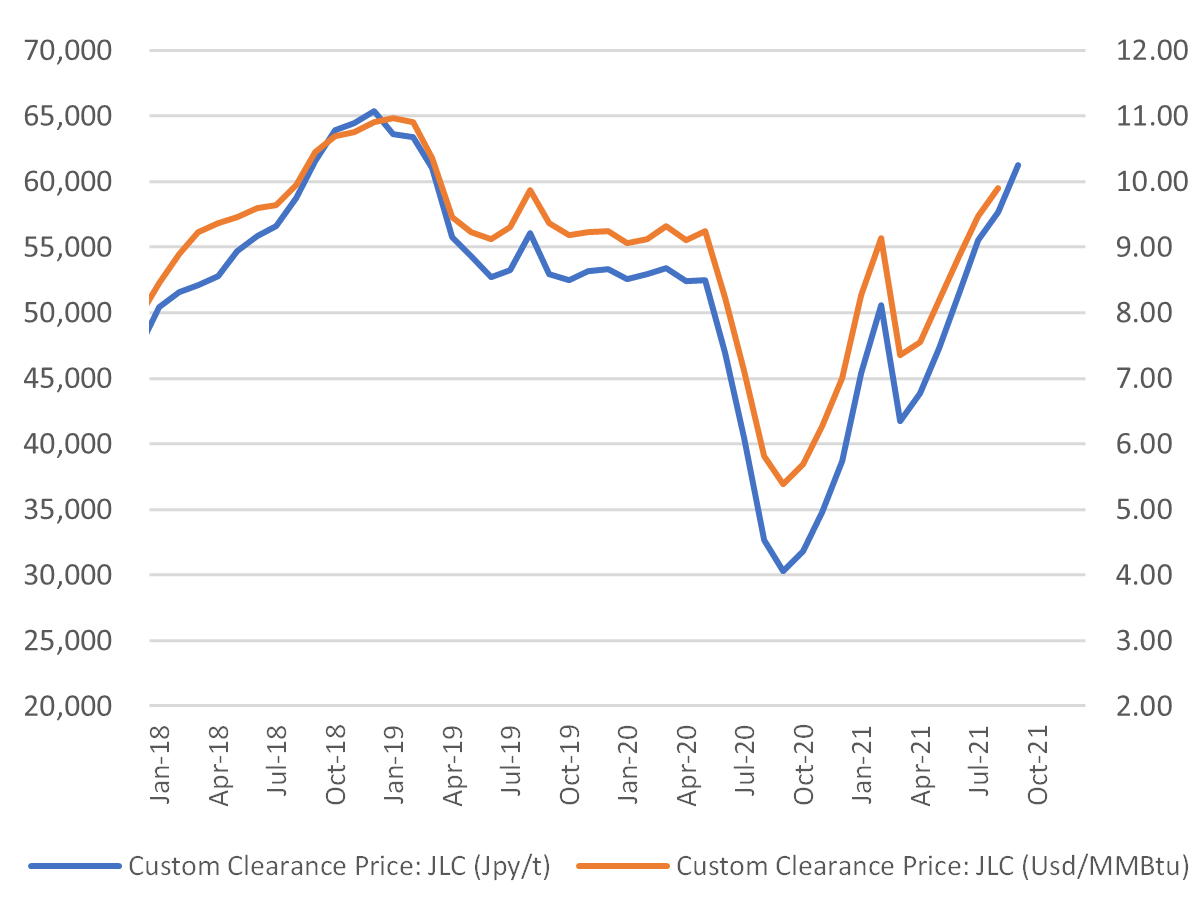
Japan (JLC) LNG Price: $9.90/ mmbtu
Number of firms using “carbon neutral” gas in Japan jumps to 78
(Gas Energy News, Oct. 25)
- The number of city gas companies in Japan that have introduced “carbon neutral” LNG or gas has increased rapidly since the summer and now counts at least 31.
- In an effort to decarbonize, manufacturers and others are actively switching to “carbon neutral” gas supplies for use in factories and other facilities. The number of clients buying “carbon neutral” volumes from just the three major gas suppliers now counts 78. Inquiries from new firms are also coming in.
- The credits used to offset the gas emissions come from different sources. Tokai Gas, for example, is using the domestic J-Credits system.
- The biggest supplier of “carbon neutral” gas in Japan is Tokyo Gas, procuring about 205,000 tons so far for 43 domestic buyers. Osaka Gas has procured one LNG carrier’s worth (about 70,000 tons) of “carbon neutral” LNG for 19 clients. Toho Gas has produced two cargos (about 132,000 tons) to supply 16 clients.
- End users include manufacturers like Aichi Steel.
- SIDE DEVELOPMENT:
Japan imports first “carbon neutral” LNG cargo from Russia
(Denki Shimbun, Oct. 26)- Sakhalin Energy, which operates Sakhalin-2 off the coast of Sakhalin, Russia, supplied Toho Gas with the project’s first “carbon-neutral” LNG. This is the first time that a “carbon-neutral” LNG cargo was delivered from a Russian producer to an Asia-Pacific buyer.
- The cargo was delivered on Oct. 13 at the Chita terminal. The carbon credits to offset GHG emissions were procured from Gazprom Marketing & Trading, the parent group of Sakhalin Energy.
- Sakhalin Energy is studying how to ensure a continuous supply of carbon-neutral LNG.
- CONTEXT: Sakhalin Energy ships just over half of its LNG to Japan.
Japan’s trading houses swap coal for gas, target CCUS
(Nikkan Kogyo Shimbun, Oct. 27)
- Japan’s trading houses are withdrawing from coal and thermal power assets, while aggressively investing in natural gas, which is expected to be in high demand, especially in electric power and steel industries.
- The firms are also rushing to promote carbon capture, utilization, and storage (CCUS) during production and “carbon-neutral” LNG.
- Mitsubishi Corporation has stressed it will contribute to the stable supply of LNG. Mitsui & Co. sees LNG as a “transitional fuel” with the future more likely to feature renewable energy, hydrogen and ammonia.
- In the Tangguh LNG Project in Indonesia, which is being developed and operated by Mitsubishi, Mitsui, Sumitomo Corporation, Sojitz Corporation, and others, there are plans to introduce CCUS, which will capture 25 million tons of CO2 emitted during the production of natural gas and re-inject and store it in the gas fields under development, thereby reducing CO2 emissions and increasing natural gas production.
INPEX joins Idemitsu in Norway oil project as Osaka Gas exits
(Company statements, various, Oct. 28)
- INPEX said it reached an agreement with Idemitsu Kosan and Osaka Gas Summit Resources (OSR), a joint venture between Osaka Gas and Sumitomo Corporation, to acquire 50.5 percent (50.5%) of shares in Idemitsu Snorre Oil Development Co., which is developing oil deposits in Norway.
- INPEX will buy one percent of the 50.5% of shares held by Idemitsu and all the shares held by OSR (49.5%), to acquire a total of 50.5 percent in the project. The deal will be closed at the start of next year.
- CONTEXT: INPEX and Idemitsu have worked together on offshore gas fields in Vietnam and a geothermal power business in Japan.
- Idemitsu Snorre Oil Development owns 11 oil and natural gas assets in production and/or under development, including the Norwegian state-controlled Equinor-led Snorre Project, as well as interests in multiple discovered but undeveloped oil and gas fields and exploration licenses.
- That flagship Snorre Project is expected to draw 35% of its entire power from the Hywind Tampen floating wind farm currently under construction.
- With this sale, Osaka Gas will withdraw from the oil exploration and production business, which it entered in 2005, in order to focus on gas and renewables.
- SIDE DEVELOPMENT:
INPEX divests from Congolese oil
(Sekiyu Tsushin, Oct. 29)- INPEX is selling its 32% stake in Perenco Energies International, which operates oil rigs off the coast of the Congo region.
- INPEX has been producing oil in the region since 1975 but decided to sell its stake in Perenco on the basis of projections of significant declines in output and poor prospects for development of nearby fields.
- INPEX says the sale will have a negligible impact on its financial results.
ANALYSIS
BY MAYUMI WATANABE
Japan at COP26:
Adapting to Great Expectations
The Japanese delegation at this week’s UN Climate Change Conference (COP26) in Scotland will have three main focuses: Coal; How to value and trade carbon; and, Rules for measuring emissions.
Some members of the delegation expect the climate talks to be tense and stretch beyond COP26’s Nov. 12 closing date. Nevertheless, they feel there’s broad consensus among the nearly 200 participating countries on certain topics, especially the need to kickstart an international market mechanism for carbon credits.
In recent years an international climate event would have filled Japanese negotiators with dread. The country was routinely slammed for supporting coal-fired generation, with one environmental NGO twice crowning Japan with its satirical “Fossil of the Day” award. Previous Environment Minister Koizumi even claimed such criticism was a catalyst for the country’s net-zero emissions pledge.
A year on from Japan’s commitment, however, and attitudes towards coal power plants are shifting. The G7 recently narrowed its criticism of coal to “unabated” thermal stations, while touting the potential of carbon capture and co-firing systems. There’s also a growing interest globally in some form of carbon credits both to offset the CO2 that cannot be avoided and to encourage efforts that does avoid it.
For Japan, the position change on coal and greater global interest in international mechanism for carbon credit offer hope of solutions that can act in concert with a turn to renewable energy. While Japan has committed to doubling the ratio of renewables in its power mix by 2030, that move alone wouldn’t curb emissions by the amount specified in its NDC pledge.
Equally important for Japan will be to direct the global conversation during COP26 towards how to measure CO2 and other greenhouse gases at the local, corporate and national level. At stake is Japan’s ability to carry out decarbonization not only at home but also to lead the effort across Asia.
Changing attitudes to coal
International criticism of Japan’s coal use finally pushed METI to announce in July 2020 that it would look to scrap all “inefficient” coal-fired power plants by 2030. At the time, local media reported that as many as 114 out of 140 coal power units in the country would be scrapped.
After a year of debates around what constitutes “inefficient,” Japan finds itself in a somewhat more amenable policy environment. The 2018 Paris Rulebook was somewhat ambiguous on coal but in May the G7 Environment and Climate Ministers Meeting clarified the extent of the push against coal. The G7 communiqué noted that aid will be stopped only for new coal plants that are “unabated” (i.e., there is no effort made to curb their emissions), while leaving the possibility of building new plants that have carbon capture systems and allow for co-firing of coal and either biomass, hydrogen or ammonia.
This idea that only unabated coal-fired plants should be eliminated is backed by the International Energy Agency (IEA).
Of course, criticism of Japan’s coal policy has not stopped completely. Only this month, Gonzalo Munoz, the UN High-Level Climate Champion, spoke at the Japan Climate Initiative Online Conference to call for an entire phase-out of coal-fired generation by 2030. On a practical level, however, it’s known that both Japanese industry and the government don’t see this as feasible and they’ll never agree to it at COP26.
In fact, Japan’s negotiators feel the country can stand taller at this week’s event in Glasgow. The country has “caught up” with the global environmental agenda over the last year, said Tamura Kentaro, director of the Institute for Global Environmental Strategies (IGES). Japan’s broader COP26 negotiation team includes staff from IGES.
Out of the 197 jurisdictions attending COP26, only 59 have declared carbon neutrality by 2050-2060 as a goal. Japan is among them, but even more significant, the country is one of eight jurisdictions to have written the goal into law, and is one of only a dozen or so to have increased the size of its emissions reduction program as per the Nationally Determined Contributions (NDC).
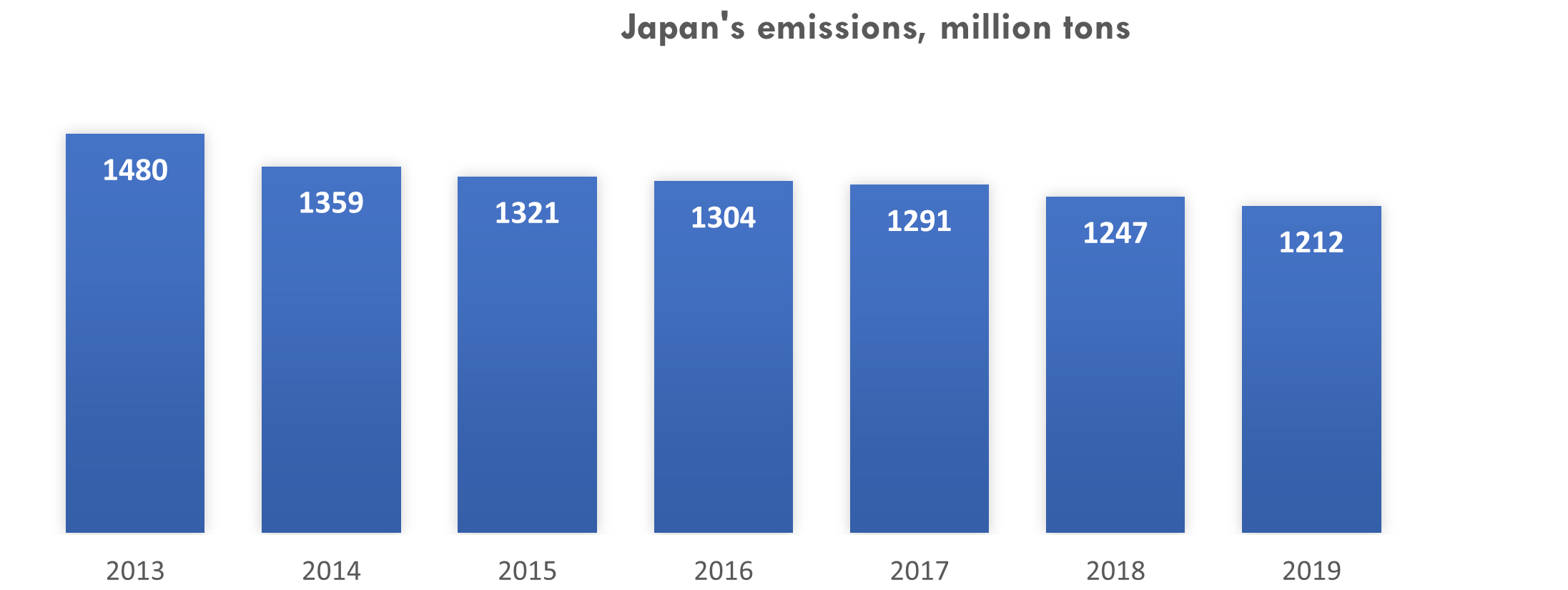
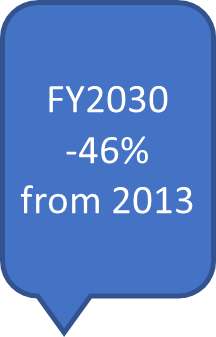
Japan’s Oct. 22 NDC filing said that in FY2030 emissions will drop by 46% (and maybe as much as 50%) from FY2013 levels. The previous NDC from 2016 aimed for a 26% reduction.
How to cut CO2?
Given that Japan still expects to rely on coal for 19% of its power at the end of the decade, down from twice that currently, critics have questioned how emissions would drop by so much.
IGES explains that this is possible if Japan’s industries change their mindset from only thinking about energy efficiency to including the ideas around energy transition. According to IGES, Japan needs to double the speed of its energy transition by replacing fossil fuel energy with renewables at a pace of 2% per year. So far, it has only been 1.2%/ year at most. IGES calculations for meeting the 46% emissions reduction factor in economic growth of 1.3%/ year and energy efficiency improvements of 1.5%/ year. As far as renewables-for-fossil fuels replacement, Japan should be able to slash 3.5% of its emissions on an annual basis, according to IGES.
The transition will come in stages and is unlikely to be linear, but it should unfold as follows:
- New coal plant construction plans are scrapped in Japan and overseas
- Co-firing and CCUS technologies are introduced
- Renewable energy sources become stronger
- Coal producers are helped to retire their capacity
The gradual approach is also gaining support across many countries as concerns about energy shortages and over-reliance on other fuels such as natural gas grow on the back of recent price spikes in energy commodities around the world.
Coal power dependency, 2020)
| Japan | 29% | France | 1% |
| US | 19% | Italy | 5% |
| Germany | 24% | Canada | 7% |
| UK | 2% | Australia | 54% |
Source: IGES
Article 6 of the Paris Rulebook
Japan has always favored a market-driven approach to climate change, claiming that regulatory pressures will discourage innovation. As a host of the Kyoto Protocol that founded the CDM scheme, it engaged with developing countries for emission-reduction projects, generating offset credits that Japan could claim against its own CO2 total.
Since 2013, Japan has carried out 203 projects in 17 countries, earning offset credits for 2.2 million tons of carbon.
By 2030, Japan needs to cut approximately 452 million tons of carbon from its total. Of that, 352 million tons will be from the energy transition and better energy efficiency, while another 100 million tons will come through offsets, according to Japan’s NDC document.
The successful launch of an international credit trading mechanism is essential for Japan to achieve its NDC goals, according to IGES.
International consensus, however, is still lacking on how to manage the proceeds from credit trades; on the accounting rules needed to avoid double-counting; and around credits earned from the Clean Development Mechanism programs.
Climate speaks for itself
Japan may be feeling less of a target at COP26 than it has in the past, but pressure will not stop with the summit. December 2022 is the deadline for the first progress report on the updated NDCs. In 2023, Japan will also host the G7 summit, with climate issues high on the agenda.
Behind the scenes, METI and state-backed JOGMEC are soliciting utilities, energy companies and trading houses to honor the IEA roadmap, to shift to LNG-powered stations instead of coal, and to deploy either co-firing or CCUS technologies at “unabated” coal power plants.
Once the amended Japanese climate law takes effect in April 2022, the Environment Ministry will start requesting municipalities to create “renewable energy promotion zones”, as well as zones that cannot host any power stations, to make sure the decarbonization agenda takes root at local level.
In a way, such regulatory strong-arming of industry and municipalities is a change of approach for Japan, which had mostly relied on market mechanisms and voluntary contributions to tackle climate change.
One reason for the tactical change could be the warning signs from the climate itself. Japan’s air temperature has risen 1.2 degrees Celsius in the last 100 years, more than the global average increase of 0.8 degrees, according to the Japan Meteorological Research Institute. Sea temperatures are up 1.16 degrees locally compared with a global 0.5-degree bump.
As a result, Japanese sea levels are up 10 centimeters in the last century and hot and cold extreme swings in temperature are on the rise. Meteorologists point to stronger winds and heavier precipitations, and as a result more frequent natural disasters that have destroyed infrastructure, including solar farms and other renewable facilities.
Higher sea temperatures are also changing Japan’s fishing catch and, in turn, the local food chain. Rather than COP26, the climate itself will ultimately determine if Japan’s actions are sufficiently sustainable.
ANALYSIS
BY ANDY FLOWER
INDEPENDENT CONSULTANT
FLOWER LNG
METI’s Ambitious Outlook for Power Generation in Japan:
How Will it Impact the Global LNG Market?
By approving the sixth iteration of the Basic Energy Plan on Oct. 22, Japan has cemented its medium to long-term policy shift away from coal and gas in power generation in favor of renewables. That strategy will likely cause a major impact not only on Japan’s purchases but also on the global LNG industry as a significant part of global LNG supply may need to look for a new home.
The new Plan charts a trajectory for LNG’s share of the power mix to fall from 37% in 2019 to 20% in 2030. Based on 2019 import numbers and government data, that would free up a volume that’s equivalent to 6.6% of global imports, or close to India’s total imports in that year.
If Japanese power and city gas consumption remains around the 2019 level, then the country’s LNG imports would drop to around 50 million tons in 2030, just under 10% of the forecasted global demand. The ratio was at 22% in 2019.
So far, Japanese officials in charge of oil and gas say that rather than curtailing purchases on the global market, the nation’s companies will buy more cargoes come the end of the decade. Such confidence suggests Japan sees LNG playing a major role in Southeast Asia’s energy developments over the course of the decade. Perhaps it also shows a belief that natural gas will remain relevant well into the future.
Background
The 6th Basic Energy Plan makes some significant changes to the targets in the previous plan, which was released in 2016 and approved by the Cabinet in July 2018. METI describes the update as an “ambitious outlook” for energy supply in 2030 on a pathway to achieving the government’s announced target of net-zero carbon emissions by 2050. It is certainly an ambitious outlook for the electricity generation sector, which is one of Japan’s main sources of green-house gas emissions since the Fukushima disaster, when subsequently power from nuclear reactors was mostly replaced with thermal capacity.
The new 2030 Plan targets a reduction in GHG emissions of 46% compared with a baseline of 2013, which is a major upgrade on the previously cited 26% reduction. This is to be achieved largely through increasing the share of carbon free sources of power (renewables, nuclear and, to a minor extent, hydrogen and ammonia) from 24% in 2019 to between 57% and 71% in 2030 at the expense of fossil-fuels, where a decline from 76% in 2019 to 41% in 2030 is targeted.
Nuclear’s share remains unchanged from the 2016 Plan despite continued opposition from the public and the technical, safety and security problems that power utilities have faced in restarting most of the 33 potentially operable nuclear plants.
The more than doubling of renewables, currently 40% of which is from hydro, is similarly challenging, given the difficulty of finding suitable locations for solar power and onshore and offshore wind turbines.
LNG is the fossil fuel facing the largest reduction in its share of the power mix, with a decline from the actual 37% in 2019 (and the envisaged 27% according to the previous plan) to 20% in the new plan.
Looking at what that means in terms of import numbers, in 2019, Japan brought in 77.23 million tons (mt) of LNG, according to official figures. Of that, 50.63 mt was ordered by the power utilities.
If LNG had met 20% of electricity demand in 2019 rather than the actual 37%, the power companies would have imported 27.3 mt, or 23.3 mt less. That’s equivalent to 6.6% of global imports.
METI Targets for Shares of Fuels in Power Generation in 2030
| Source | Actual 2019 | 2030 | |
| Current Target | Ambitious Outlook | ||
| Renewables | 18% | 22%-24% | 36% – 38% |
| Hydrogen/Ammonia | 0% | 0% | 1% |
| Nuclear | 6% | 20%-22% | 20% – 22% |
| LNG | 37% | 27% | 20% |
| Coal | 32% | 26% | 19% |
| Oil | 7% | 3% | 2% |
| Reduction in GHG Emissions | 14% | 26% | 46% |
Japan’s LNG pedigree
Japan has been the world’s largest and most influential LNG player over the last 50 years. It started importing LNG from Alaska in 1969. By the mid-70s, it was the world’s largest importer, and by the mid-80s Japan accounted for 75% of global LNG imports.
Most of the LNG projects in the Pacific basin were launched with Japan as the main market and, in the Middle East both ADNOC LNG and Qatargas phase 1 were developed to supply the growing Japanese market.
The traditional Japan Crude Cocktail (JCC) indexed LNG price formula was negotiated by Japanese buyers and was adopted by other buyers in Asia. Many LNG developers have targeted contracts with Japanese buyers because they are reliable, experienced and creditworthy partners, which supported the raising of project finance and put them in a position to take a final investment decision (FID).
This year, however, Japan’s hegemony was challenged. China became the largest LNG importer having taken delivery of around 2 mt more than Japan in the first nine months of the year. The gap will further widen rapidly as Chinese appetite for LNG grows while Japan’s domestic demand stagnates along the lines of the new energy plan.
Japanese buyers have been largely absent from the market for new supply in the last two years, signing no new long-term contracts in 2020 and committing to only around 1.5 million tons per annum (mtpa) in 2019. Long-term contracts with ADNOC LNG and Malaysia LNG have been renewed in reduced volumes, and negotiations over the extension of the 6 mtpa of contracts with Qatargas, which expire at the end of 2021, have not yet been concluded. The outcome, at best, will probably be a reduction of the volumes. But it’s possible that some of the contracts will be allowed to expire.
As a result, Japan will likely become a price follower in the Asian market rather than being a price setter. Japanese officials have often urged LNG producers to accept pricing based on the country’s demand-supply dynamics, but with a 10% global market share it will be that much harder for the country to use its market conditions as benchmarks for the wider Asia market.
What’s more, even METI’s own calculations indicate that as existing gas fields around the world are depleted, from 2028 there will be more tightness in the market unless new projects get the green light. That will make procurement even harder and if Japanese firms are not some of the key investors in the new projects, their volume demands will slip down the pecking order.
Future outlook
The upside for LNG demand in Japan could come from nuclear and renewables failing to reach the ambitious targets in the new plan. That would put pressure on Japan to make sure that what it uses to generate power is as low in emissions as possible, favoring regasified LNG over coal.
In that sense, recent comments by Hosaka Shin, Commissioner of ANRE (Agency for Natural Resources and Energy, part of METI) has probably given producers some hope that there is upside to imports beyond the decline envisaged in the targets for power generation.
“LNG is an essential balancing fuel to achieve carbon neutrality even as the country leans more on renewables,” Hosaka said at the METI-hosted annual Producer-Consumer conference on October 5. “Natural gas/LNG as the source material for hydrogen and ammonia will remain important even beyond carbon neutrality in 2050.”
Furthermore, Hosaka’s statement that “the goal remains for Japanese companies to be buying 100 million tons of LNG year by 2030 to meet domestic and overseas demand” suggests that Japan’s LNG buyers will have a wider role in the Asian market than just securing LNG supply to meet demand in Japan.
Japan clearly hopes to retain its influence on LNG pricing and contracts as the fuel remains a significant part of its own energy mix and as a basis for infrastructure exports. Managing that influence while being in control of the demand for only half of its import volumes (i.e., the domestic market) will prove a new challenge for Japan, albeit one which opens new opportunities.
GLOBAL VIEW
BY JOHN VAROLI
Below are some of last week’s most important international energy developments monitored by the Japan NRG team because of their potential to impact energy supply and demand, as well as prices. We see the following as relevant to Japanese and international energy investors.
Australia/ Renewable energy
AC Energy Corporation (ACEN) obtained board approval to increase ownership in UPC\AC Renewables Australia to 100%, giving the company full control over a pipeline of renewable energy projects that includes Australia’s largest solar farm. The $243 million acquisition needs regulatory approval, which if given, would be ACEN’s first wholly-owned development and operations platform outside of its home in the Philippines.
Battery storage/ breakthrough
Engineers at University of Newcastle in Australia have patented a material that stores thermal energy in a block that weighs about 6 kilos. The bricks are known as Miscibility Gap Alloys (MGAs), and are made from aluminum and graphite. Each block can store about 1 kWh of energy generated from renewable sources, and is said to be functional and durable for about 30 years.
“Green” steel/ BMW
Starting in 2025, BMW Group will purchase steel from Swedish startup H2 Green Steel for its factories in Europe. The German automaker’s goal is to reduce CO2 emissions in its steel supply chain by about 2 million tons by 2030. H2 Green Steel uses hydrogen and clean energy to make steel; mass production begins in 2024. The production of ‘green steel’ has about 95% less GHG emissions than steel made using coal.
Climate finance/ investment fund
Former U.S. Vice President Al Gore and former Goldman Sachs executive David Blood have launched a new management firm, named Just Climate, to finance net-zero carbon projects. The firm has financial backing from Microsoft and Ireland’s sovereign wealth fund, and will invest in solutions to help limit increases in global temperatures. This isn’t the duo’s first environmental financial venture. In 2004, Gore and Blood set up Generation Investment Management.
ESG/ Royal Dutch Shell
Activist hedge fund Third Point, led by billionaire Daniel Loeb, has accused Royal Dutch Shell of having an “incoherent” strategy on how to decarbonize operations and transition to clean energy. Loeb is urging the company to split itself into “multiple standalone companies”, including one that’s focused on oil and gas. Third Point is reported to have an estimated $750 million stake in Shell, which itself has an approximate $190 billion market cap.
France/ Nuclear
In a report on how to meet future electricity demand, France’s grid operator, RTE, said next-gen nuclear reactors can play a crucial role in transitioning the country’s energy sector away from fossil fuels. “Building new nuclear reactors is economically viable… and it’s possible to maintain a fleet of around 40 GW in 2050,” said the RTE report. It’s expected that by year’s end President Macron will announce the construction of six new EPR nuclear reactors.
Indonesia/ Coal
Thanks to surging Chinese power demand, Indonesia is enjoying record coal prices that have soared to $150 per ton, up from about $90 per ton in early June. Southeast Asia’s biggest economy is now China’s leading overseas supplier of coal, with imports hitting a record of more than 21 million tons in September, up from 17 million tons in August. Last year, China banned Australian coal and instead agreed to buy $1.5 billion of coal from Indonesia this year.
UK/ Tidal energy
The £1.7 billion Blue Eden tidal lagoon project in Swansea will have modern underwater turbines with a capacity of 320 MW, as well as floating solar power. A battery facility will store the renewable energy and power the entire site. Construction starts in early 2023. Blue Eden will be the world’s largest facility of its kind when fully operational by 2032. The Tidal Range Alliance says that tidal power generation could supply 5% to 10% of the UK’s energy needs.
U.S./ Offshore wind
Spain’s wind turbine giant, Siemens Gamesa Renewable Energy, and Dominion Energy will invest $200 million to build a blade factory in the State of Virginia. The blades will be used to build the offshore Coastal Virginia Offshore Wind project (CVOW). Expected to be finished in 2025, the 32-hectare CVOW will have 180 turbines, each 245 meters in height, and will generate 2.6 GW. It will be the largest offshore wind farm in the U.S.
U.S./ Wind
Enel Green Power North America, a leading developer, owner and operator of renewable energy plants, has started building the 25 Mile Creek wind farm in the State of Oklahoma. The 250 MW facility consists of 60 turbines that will be operational in late 2022. This is Enel Green’s twelfth wind farm in Oklahoma, where it has a wind portfolio worth more than $3 billion. Across the U.S., the company has over 2.5 GW of new wind and solar capacity under construction.
EVENTS CALENDAR
A selection of domestic and international events we believe will have an impact on Japanese energy.
| February | Approval of Fiscal 2021 Budget by Japanese parliament including energy funding projects;
CMC LNG Conference |
| March | 10th Anniversary of Fukushima Nuclear Accident;
Smart Energy Week – Tokyo; Quarterly OPEC Meeting; Japan LPG Annual Conference; Full completion of all aspects of the multi-year deregulation of Japan’s electricity market; End of 2020/21 Fiscal Year in Japan; |
| April | Japan Atomic Industrial Forum – Annual Nuclear Power Conference;
38th ASEAN Annual Conference-Brunei; Japan LNG & Gas Virtual Summit (DMG)-Tokyo Three crucial by-elections in Hokkaido, Nagano & Hiroshima – April 25th |
| May | Bids close in first tender for commercial offshore wind projects in Japan;
Prime Minister Suga to visit the U.S. |
| June | Release of New Japan National Basic Energy Plan-2021;
G7 Meeting – U.K. Presidents Biden and Putin are due to meet at a summit in Geneva Forum for China-Africa Cooperation Summit (Senegal) |
| July | Tokyo Metropolitan Govt. Assembly Elections;
Commencement of 2020 Tokyo Olympics |
| August | METI committee approves draft of Japan’s 6th Basic Energy Plan |
| September | Ruling LDP Presidential Election;
UN General Assembly Annual Meeting that is expected to address energy/climate challenges; IMF/World Bank Annual Meetings (multilateral and central banks expected to take further action on emissions disclosures and lending to fossil fuel projects); End of H1 FY2021 Fiscal Year in Japan; Japan-Russia: Eastern Economic Forum (Vladivostok)-tentative |
| October | Japan’s 2021 General Election; Hydrogen Ministerial Conference in conjunction with IEA METI Sponsored LNG Producer/Consumer Conference; Innovation for Cool Earth Forum – Tokyo Conference; Task Force on Climate-Related Financial Disclosure (TCFD) – Tokyo Conference; G20 Meeting-Italy |
| November | COP26 (Glasgow);
Asian Development Bank (‘ADB’) Annual Conference; Japan-Canada Energy Forum; East Asia Summit (EAS) – Brunei |
| December | Asia Pacific Economic Cooperation (APEC) Forum – New Zealand;
Final details expected from METI on proposed unbundling of natural gas pipeline network scheduled for 2022. |
Disclaimer
This communication has been prepared for information purposes only, is confidential and may be legally privileged. This is a subscription-only service and is directed at those who have expressly asked K.K. Yuri Group or one of its representatives to be added to the mailing list. This document may not be onwardly circulated or reproduced without prior written consent from Yuri Group, which retains all copyright to the content of this report.
Yuri Group is not registered as an investment advisor in any jurisdiction. Our research and all the content express our opinions, which are generally based on available public information, field studies and own analysis. Content is limited to general comment upon general political, economic and market issues, asset classes and types of investments. The report and all of its content does not constitute a recommendation or solicitation to buy, sell, subscribe for or underwrite any product or physical commodity, or a financial instrument.
The information contained in this report is obtained from sources believed to be reliable and in good faith. No representation or warranty is made that it is accurate or complete. Opinions and views expressed are subject to change without notice, as are prices and availability, which are indicative only. There is no obligation to notify recipients of any changes to this data or to do so in the future. No responsibility is accepted for the use of or reliance on the information provided. In no circumstances will Yuri Group be liable for any indirect or direct loss, or consequential loss or damages arising from the use of, any inability to use, or any inaccuracy in the information.
K.K. Yuri Group: Oonoya Building 8F, Yotsuya 1-18, Shinjuku-ku, Tokyo, Japan, 160-0004.