
JAPAN NRG WEEKLY
JULY 19, 2022
JAPAN NRG WEEKLY
July 19, 2022
NEWS
TOP
- Kishida tells METI to run more nuclear, thermal units this winter; the PM outlines measures as a way to deal with power crunch
- Top wind turbine makers reconsider entry into Japan market as auction rule change proposals signal profits may be insufficient
- Japan asks U.S. and Australia to boost LNG output and supply hoping to secure more alternatives to Russian gas to the market
ENERGY TRANSITION & POLICY
- Offshore wind auction panel proposes limit on capacity not bids
- Govt. mulls income guarantee program to boost nuclear power
- METI pushes “user-driven alliances” to develop mini-solar sites
- Weather agency to work with grid to improve renewables forecast
- China closes in on Japan’s hydrogen technology patent lead
- Panasonic to build a second, $4 bn EV battery factory in the U.S.
- Toyota-led group starts planning hydrogen engines for large vans
- Mitsui unit to start offering online purchase of carbon offsets
- Kansai Electric, ORIX to build battery storage plant in Wakayama
- Marubeni and Osaka Gas join methanation venture in Peru
ELECTRICITY MARKETS
- Kansai and Kyushu utilities restart nuclear reactors to ease crunch
- New Toshiba Energy boss sees future in VPP, hydrogen fuel cells
- Ministry submits opinion on Influx’s 1 GW offshore wind project
- Sumitomo and Shikoku Electric join forces on Kochi wind farm
- Idemitsu partners with Skye to expand renewables in S.E. Asia
- Court orders ex-TEPCO execs to pay ¥13 tln in Fukushima claims
- Kansai Electric invests in startup for decentralized power in Africa
- Hitachi Energy to supply Chinese wind farms with transformers
OIL, GAS & MINING
- Cosmo reveals three decades of petrochemical testing breaches
- METI calls on commercial users to conserve natural gas use
- LNG stockpiles drop close to 10% below the five-year average
ANALYSIS
TOKYO AVOIDS A POWER CRUNCH, BUT SYSTEM IN PLACE TO PREVENT CRISES FALLS SHORT
In late June, Tokyo faced a severe power crunch, the second in four months. Foreseeing the problems that the hottest June record would create with electricity supply, the government made an impassioned plea to both businesses and households to conserve energy to avoid blackouts. The response was heartening and the danger passed. But in fact, Japan already has a market-based mechanism to cope with times of power crises. Worryingly, it failed to deliver. When the Tokyo grid operator turned to the market for help, none was forthcoming.
BRACING FOR LOSS OF RUSSIAN LNG,
JAPAN STEPS UP GAS CONSERVATION
Power crunches are increasingly common in Japan, and shortages of natural gas are the new reality. For the first time ever, the government has embarked on a review on what measures can be taken to conserve use of the fuel. METI hasn’t elaborated on the reasons why Japan is suddenly taking such a course. The ministry’s external advisors, however, have been more forthcoming: there’s a risk of Japan losing access to Russian supplies of LNG, which are about 10% of the nation’s total. But devising gas conservation measures isn’t straightforward.
GLOBAL VIEW
U.S. prepares for new oil lease auctions. Saudi Arabia boosts Russian oil imports to free more of own crude for export. Trafigura sells Russian oil firm stake. OPEC may struggle to meet 2023 demand. Hungary declares state of emergency over energy supply disruptions. Algeria plans 15 GW of renewables. Details on these and more in our global wrap.
EVENTS SCHEDULE
JAPAN NRG WEEKLY
PUBLISHER
K. K. Yuri Group
Editorial Team
Yuriy Humber (Editor-in-Chief)
John Varoli (Senior Editor, Americas)
Mayumi Watanabe (Japan)
Wilfried Goossens (Japan, Events)
Events

Regular Contributors
Chisaki Watanabe (Japan)
Takehiro Masutomo (Japan)
Daniel Shulman (Japan)
Art & Design
22 Graphics Inc.
SUBSCRIPTIONS & ADVERTISING
Japan NRG offers individual, corporate and academic subscription plans. Basic details are our website or write to subscriptions@japan-nrg.com
For marketing, advertising, or collaboration opportunities, contact sales@japan-nrg.com For all other inquiries, write to info@japan-nrg.com
OFTEN USED ACRONYMS
METI The Ministry of Energy, Trade and Industry
MOE Ministry of Environment
ANRE Agency for Natural Resources and Energy
NEDO New Energy and Industrial Technology Development Organization
TEPCO Tokyo Electric Power Company
KEPCO Kansai Electric Power Company
EPCO Electric Power Company
JCC Japan Crude Cocktail
JKM Japan Korea Market, the Platt’s LNG benchmark
CCUS Carbon Capture, Utilization and Storage
mmbtu Million British Thermal Units
mb/d Million barrels per day
mtoe Million Tons of Oil Equivalent
kWh Kilowatt hours (electricity generation volume)
NEWS: ENERGY TRANSITION & POLICY

Kishida tells METI to run more nuclear and thermal plants this winter
(Japan NRG, July 14)
- Prime Minister Kishida asked the METI minister to run more nuclear and thermal plants in winter to avoid a power crunch. METI will restart nuclear power plants so that up to nine will be operational, supplying 10% of the country’s power. Presently five nuclear power plants are operational, supplying around 4% of Japan’s power.
- METI will also restart 10 more thermal power plants.
- For the coming summer months, Kishida said there’s enough power capacity on hand to beat summer heat waves as over 10 thermal power plants had recently restarted.
- Kishida also plans a new framework to reduce power cost burdens on consumers.
- CONTEXT: In March, nuclear plants supplied 4 billion kWh and thermal plants 59 billion kWh, out of the national total of 72 billion kWh.
TAKEAWAY: Initially, Kishida’s announcement was interpreted as the prime minister ordering the restart of nine more reactors – something that he is not at liberty to do. On closer inspection, however, his comments simply refer to the government expecting to have “up to nine” nuclear reactors operating in Japan during the winter months. That corresponds exactly with the operating and maintenance schedules of power utilities for their nuclear facilities. The nine units would be online in the Kansai, Shikoku and Kyushu regions by the time the winter peak demand season of January 2023 arrives.
It may be possible for utilities to accelerate some restarts. Normally, that would not be necessary as it would make little impact on meeting peak power demand. However, the summer power peak came early, with June temperatures the hottest on record. The government and utilities may be mindful of the need to prepare for an unusually early cold snap.
Presently, Ohi No. 3, Ikata No. 3, Genkai No. 4, Sendai No.1 and No.2 nuclear reactors are in operation.
Offshore wind auction panel proposes to limit award capacity, not bids
(Japan NRG, July 13)
- Heads of the Ministry of Land, Infrastructure, Transport and Tourism advisory panel, and that of METI, jointly discussed offshore wind auction rule changes and processed a final proposal after panel members failed to reach a consensus.
- The panel heads suggested limiting the capacity to be awarded to a single consortium, while not restricting a consortium’s capacity to place bids.
- CONTEXT: In response to criticisms of the Mitsubishi consortium winning all three major projects in the recent auction round, METI proposed to set a cap on the capacity of a single consortium to participate in one auction bundling several projects.
- The proposed rule changes will be open for public discussion later this month and will be finalized in August-September.
TAKEAWAY: Auction rule committee panelists are divided on every item, even on the need to change the rules as well as the process of rule changes. Public comments may also be similarly divided. Major issues include: fair and competitive auction vs. robust sectoral growth; speedy rollout vs quality and safety guarantee; the level of information disclosure. This sector requires patience as there will clearly be an adjustment period before the next auction takes place.
Govt. mulls the introduction of income guarantee program to boost nuclear power
(Nikkei, July 18)
- The government needs to address issues such as the long payback period for investment in nuclear power, according to an advisory panel to METI. To do that, the panel proposed to consider introducing an income guarantee scheme to stabilize the revenue from nuclear power plants.
- Such a system would support new nuclear capacity that might find itself not able to compete in the electricity market with more agile renewable energy projects.
- According to METI officials, a similar approach is being taken in the UK and shows the need to think about energy security outside of power prices.
- Public response to this will be key.
METI to push “user-driven alliances” to help mini-solar operators
(Japan NRG, July 13)
- METI is pushing “user-driven alliances” where users cooperate to develop renewable power sources. As renewable project sizes get smaller, the chances of power operators closing are greater if financial prospects turn grim.
- METI will provide an annual total of ¥26 billion to user groups that commit to 20-years of renewable power. Long-term user commitment could motivate small solar operators, mostly individuals, to continue to run their plants.
TAKEAWAY: Japan is in the world’s top three in terms of solar power installed, but 34% of that is from units of less than 50 kW. Individuals account for 64% of the ownership in the 10-50 kW category and 95% for units of below 10 kW. User-driven alliances and aggregators may not be effective at keeping these small plants running until 2050. There is a risk that as owners pass away no one takes over. The cost of identifying new owners is not negligible. Hence some experts argue that in order to improve the overall operating costs, the launch of mini-power stations should be restricted.
JMA to work closer with grids to improve renewable output forecast
(Government Statement, July 13)
- The Japan Meteorological Agency will work closer with national grids to improve the renewable output forecast.
- The cost of backing up potential low renewable power generation due to weather is weighing on the grids. A more accurate forecast would alleviate the backup cost, but JMA data fed into grid forecast systems don’t have sufficient local details and grids have limited capacity to improve data accuracy, said the Organization for Cross-Regional Coordination of Transmission Operators (OCCTO).
China closes in on Japan’s hydrogen technology patent lead
(Nikkei Asia, July 13)
- The pace of Japanese new patent filings for hydrogen has slowed in the last decade, according to Nikkei and a related research firm, Astamuse. Meanwhile, China’s R&D has accelerated since the middle of the last decade.
- Japan still leads overall and is strong in areas such as fuel-cell patents, as it is mainly considered for applications in mobility. China is now ahead in patents for the manufacture, storage, and safety controls, among others.
- Of the world’s 20 most competitive companies and organizations on hydrogen technology, eight are Japanese. Toyota was ranked first.
- Following a tenfold increase in its patents between 2001 and 2010, China came in second over the U.S., South Korea and Germany.
Opinion: Government can’t keep delaying energy decisions
(Nikkei, July 11)
- CONTEXT: This is an opinion piece by climate change editor Hanawa Kazunari.
- Energy policy is the greatest challenge faced by the Kishida government after the election on Sunday.
- Record temperatures mean energy suppliers continue to walk a tightrope, while the Ukraine crisis reveals the risks involved in relying on fossil fuels.
- The government can’t delay debate on nuclear policy or carbon planning.
- While the government identified the need to upgrade energy storage and transmission infrastructure, it’s done little to improve the situation.
- No progress was made in restarting idle nuclear reactors, with only 10 of the 17 reactors given the restart green light by the Regulation Authority.
- PM Kishida must step in to persuade communities living near nuclear power stations to give approval to reactor restarts.
Panasonic to build a second, $4bn EV battery plant in the U.S.
(Company Statement, July 14)
- Panasonic will build a $4 billion EV battery factory in Kansas, its second such plant in the U.S. It will focus on lithium ion batteries.
- The firm already has a facility in Nevada.
- CONTEXT: Panasonic plans to triple EV battery production capacity by FY2028 from today’s roughly 50 Gwh/ year. Its main client is Tesla.
Toyota-led group starts planning hydrogen engines for large commercial vehicles
(New Energy Business News, July 12)
- Isuzu Motors, Denso, Toyota Motor, Hino Motors, and Commercial Japan Partnership Technologies (CJPT) began planning and basic research on hydrogen engines for large commercial vehicles.
- The group will consider further utilization of the internal combustion engines as an option to achieve carbon neutrality. It believes that hydrogen engines for heavy-duty commercial vehicles is a viable option.
- The five companies believe that not only electrification but also hydrogen engines are options for decarbonization of transport.
Mitsui subsidiary to start offering online purchase of carbon offsets
(New Energy Business News, July 14)
- e-dash, a subsidiary of Mitsui & Co., formed a business alliance with Patch Technologies, a U.S. climate change tech firm, to become the first Japanese company to offer online purchase of carbon offsets.
- The e-dash Carbon Offset service allows purchase of voluntary carbon credits in small amounts, for example, of less than one ton, depending on the situation.
- e-dash is developing a SaaS for visualization and reduction of CO2 emissions, but its carbon offset service will be offered with no membership or monthly fee. The program is not linked to government-led schemes such as J-credits.
Kansai Electric and ORIX to build a battery storage plant in Wakayama area
(New Energy Business News, July 15)
- Kansai Electric and ORIX will build a storage battery power plant in Kinokawa City, Wakayama Prefecture.
- With an output of 48 MW and a capacity of 113 MWh, it will be used for trading in the electricity market, including the supply-demand balancing market, the Japan Electric Power Exchange (JEPX), and the capacity market.
- Construction will cost about ¥8 billion, and installation will begin in August, with the aim of starting operations in April 2024.
- The storage system is made by Toshiba Mitsubishi Electric Industrial Systems.
Shiseido and others to build a recycling system for plastic cosmetic containers
(Kankyo Business, July 11)
- Shiseido, Sumitomo Chemical, and Sekisui Chemical will build a recycling system for plastic cosmetic containers and then make new ones.
- Shiseido will collect plastic cosmetic containers in storefronts and utilize recycled polyolefin for new cosmetic containers.
- Sekisui Chemical will use its biorefinery ethanol technology (it gasifies used plastic and combustible waste without sorting, and converts it into ethanol using microbial power) to convert the raw material of plastic into ethanol resources.
University invents highly-efficient sunlight hydrogen technology
(Newswitch, July 6)
- Niigata University researchers developed a system that combines PV cells and electrolytics to produce hydrogen from sunlight, achieving a record 13.9% efficiency.
- The team wants to boost efficiency to 25%.
- Featuring a cathode made from oxides of ferro tungsten nickel alloy and an anode made from platinum, the system can generate hydrogen at voltages as low as 240 mV — around 24% lower than existing technology.
Kyushu plant prepares for glut of discarded panels
(Newswitch, July 11)
- A recycling plant opened in Kitakyushu with capacity to annually process 1,400 metric tons of used solar panels, the equivalent of 90,000 panels.
- By firing panels at high temperature, the plastic supporting the material is burnt off, enabling panels to be separated into glass silicon and copper. Heat yielded from the burning plastic is used to drive the reaction.
- The plant can also process broken panels, something formerly considered impracticable, with sifting and air-current based separation techniques developed by Waseda University.
- Plant operator Shinryo says the number of PV panels discarded each year will increase starting in 2030.
Marubeni and Osaka Gas join methanation venture in Peru
(Nikkei, July 14)
- Marubeni agreed with Peru LNG SRL (a JV with Marubeni) and Osaka Gas to study the feasibility of methanation in Peru.
- Methanation can reduce the carbon footprint of gas use. In the latest energy roadmap, Japan’s government aims to make synthetic methane 1% of reticulated gas supply by 2030, increasing to 90% by 2050.
NEWS: POWER MARKETS

Top wind turbine makers reconsider entry into Japan market after rule changes
(Nikkei, July 15)
- Top manufacturers of wind turbines used for offshore wind power generation are reviewing their entry into the Japanese market. Denmark’s Vestas has canceled plans to build a local factory in Nagasaki Prefecture, and Siemens Gamesa told operators in Japan that it will not supply offshore wind turbines to Japan.
- CONTEXT: Mitsubishi Corp.’s win in all three of last year’s fixed bottom wind tenders led to intense industry lobbying for rule changes to new project auctions. The government has complied, with some proposed changes seeking to put a limit on how much capacity one firm can win.
- The new rules make overseas makers fear for profitability of their Japan-based business. It is considered cheaper to import equipment than to build locally.
TAKEAWAY: Outside of Chinese turbine makers, which mostly supply their home market, Vestas, Gamesa and GE are the big global players. GE partnered with Toshiba to make turbine parts in Japan, but the others have yet to establish a local production base.
Mitsubishi picked GE’s turbines for all three of its offshore wind projects.
Kyushu and Kansai utilities restart nuclear reactors to ease power crunch
(Japan NRG, July 18)
- Kansai Electric restarted Unit 4 of the Ohi nuclear power plant on July 17, about 10 days later than initially planned after leaks were discovered during maintenance.
- Kyushu Electric restarted Unit 4 of the Genkai NPP on July 10 after regular maintenance. The utility now has three of its four units online.
- CONTEXT: The Kansai area’s power crunch is among the most severe in the nation. Even after the restart of Ohi Unit 4, Kansai Electric has just two of its seven reactors online. The utility does, however, expect most of its nuclear units to be operational in time for the winter peak demand period.
TAKEAWAY: PM Kishida has called for more nuclear power to be brought online to cope with various energy shortages. This has yet to translate into major changes in the nuclear industry as the only three utilities to run NPPs in the country remain Kansai, Kyushu and Shikoku Electric.
Toshiba Energy Systems sees future in VPP business, hydrogen fuel cells
(Denki Shimbun, July 15)
- New Toshiba Energy Systems president Yotsuyanagi Tadasu took over in June. In an interview he said: “power generation, transmission, and substations are our core business. Profits from these operations are the source of investment in new businesses. We need to balance R&D with existing business.”
- “Our core business will not suddenly decline, but it also will not grow rapidly. The company’s vision is … to achieve sales of ¥1 trillion in FY2030.”
- Toshiba’s management policy is now focused on data. For the energy sector, that means “VPP is the key. Matching electricity supply and demand is an important part of our energy data business.”
- “To support stable operation of thermal power and other power sources, we also propose switching from time-based periodic inspections to operations that repair equipment according to its condition. We want to improve the operating rate of power plants by using data to identify the cause of problems and propose better ways to deal with them.”
- New hardware products: “We want to expand our hydrogen fuel cell business.”
Ministry gives opinion on Influx’s 1 GW Ishikari Bay offshore wind project
(New Energy Business News, July 14)
- The MoE submitted its Environmental Assessment for an offshore wind power farm planned by Ishikari Bay Offshore Wind Farm LLC. It requests the zoning area be based on Ishikari City’s “Wind Power Generation Zoning Plan” while hearing opinions from Hokkaido and Ishikari City, and that the project content reflect public opinions.
- The project could grow to 1 GW and involves the installation of 108 wind turbines on 31 ha of ocean area off the coast of Ishikari City and Otaru City, Hokkaido. The foundations will be either monopile or jacketed. Influx Inc. is the owner.
Sumitomo, Shikoku Electric group to develop 193 MW wind farm in Kochi
(New Energy Business News, July 13)
- Imanoyama Wind Power GK submitted an environmental assessment for a 193 MW wind farm in Tosashimizu City, Kochi Prefecture, and other locations.
- The company is owned by Japan Wind Engineering, Sumitomo Corp, Shikoku Electric, and Hokutaku.
- Construction begins in April 2024, with trials to start in January 2027.
Hitachi Zosen to develop a large wind project in Fukushima region
(New Energy Business News, July 12)
- Hitachi Zosen plans to develop a 183 MW wind power plant in Showamura, Onuma-gun, Fukushima Prefecture.
- The project area is about 27 km2 — in Showa Village, Aizu Misato Town, Minamiaizu County, Shimogo Town, and Minamiaizu Town. About 40 wind turbines will be installed.
- Construction is expected to be about 3 years. There are no other wind power projects within a 10-km perimeter.
Idemitsu partners with Skye to expand renewable energy in Southeast Asia
(Company Statement, July 12)
- Idemitsu Kosan and Skye Renewables of Singapore will promote renewable energy development in Southeast Asian countries.
- Idemitsu will develop commercial and industrial (C&I) solar projects across Southeast Asia with Skye, focusing on Singapore, Malaysia, Philippines and Vietnam. The companies will soon announce signing solar power purchase agreements (“PPAs”) with a number of blue-chip clients in the region.
Court orders ex-Tepco executives to pay ¥13 trillion in damages for accident
(TV Asahi, July 14)
- The Tokyo District Court ordered four former executives of TEPCO to pay the utility about ¥13 trillion in damages for failing to take tsunami countermeasures. The case against ex-TEPCO executives was filed by company shareholders.
- This is the first time a court has held management personally responsible for a nuclear accident. It is also Japan’s highest award in a civil court case.
- The Tokyo District Court ruled that the company lacked safety awareness and a sense of responsibility. This negligence, it was argued, led to the accident and its consequences, including massive losses for the company and shareholders.
- CONTEXT: The plaintiffs claimed that five TEPCO executives, led by then chair Katsumata, ignored tsunami calculations made by their own subsidiary in 2008 based on earthquake forecasts released by a government agency in 2002.
TAKEAWAY: In the eyes of Japan’s public, both the government and TEPCO avoided responsibility for Fukushima. This led to much frustration and may have added to the post-accident distrust of nuclear power. It has taken over 10 years and soaring electricity prices to win back majority support for nuclear plant restarts. This court decision will surely make some utilities nervous about operating reactors going forward. Executive liability can be capped with special insurance schemes.
- SIDE DEVELOPMENT:
Fukushima evacuees praise TEPCO decision
(Chunichi Shimbun, July 14)- Former residents of Fukushima, who fled to the Chubu region after the disaster, have praised the court’s decision to fine former TEPCO executives.
- Evacuee Aota Katsuhiko, who fled to the Ootsu municipality with his family after the disaster, criticized the way the former executive attempted to place all blame for the accident on the record-sized tsunami.
- Fellow evacuee Igarashi Hiroko hopes the decision will embolden groups around Japan that are lobbying to stop the restart of idle reactors.
- Igarashi says that unforeseen events can no longer be used as an excuse for failing to ensure the safety of reactors; the government needs to rethink the role of nuclear power.
JAPEX begins work on biomass plant
(Sekiyu Shimbun, July 11)
- Joint-investors Chofu Bio-Power, JAPEX, Tokyo Energy & Systems, the MOT Research Institute, Chofu, and Kawasaki Kinkai Kisen marked the start of work on a new biomass plant in Yamaguchi.
- The 74 MW plant will be fueled entirely by biomass pellets.
- All electricity generated will be sold to Chugoku Electric under the feed-in tariff system.
Kansai Electric invests in startup that provides decentralized power in Africa
(New Energy Business News, July 12)
- Kansai Electric invested in Sucrecube Japon Inc., a startup that provides decentralized power and telco services in Africa with little or no electrification.
- Kansai Electric and Sucrecube are building power and communication networks in Senegal that combine solar power panels and communication devices.
- Kansai Electric will strengthen ties with Sucrecube and support growth and service expansion to other African countries.
Green Power wins financing for 80 MW onshore wind farm in Aomori
(Kankyo Business, July 11)
- The Development Bank of Japan will finance an 80 MW onshore wind farm that Green Power Investment plans in Aomori Prefecture.
- The total project cost is approximately ¥42 billion, and will start operation in February 2024. The project is near the town of Fukaura.
Hitachi Energy to supply Chinese wind farms with transformers
(Nikkei, July 13)
- Hitachi Energy will supply China’s offshore wind farm equipment producer HZ Windpower with switching equipment and transformers from its OceaniQ portfolio.
- The Hitachi equipment will be used in a 280 MW project comprising 35 offshore turbines.
- Power generated will be sent to shore via 66kV undersea cables.
NEWS: OIL, GAS & MINING

Japan aims to keep stakes in Russia’s Sakhalin-2 LNG project
(Kyodo, July 18)
- Japan has decided to maintain its interests in the Sakhalin-2 oil and LNG project in Russia, with the government coordinating with Mitsui & Co. and Mitsubishi Corp. on how to do so, according to government sources. PM Kishida has met with METI Minister Hagiuda and communicated the decision.
- CONTEXT: A recent decree by President Putin will wrest the assets of Sakhalin-2 and put them into a newly created Russian state holding. Foreign investors were told to re-apply to maintain ownership of the Sakhalin-2 assets.
- SIDE DEVELOPMENT:
Japan to ask U.S. and Australia to boost LNG supply
(Reuters, July 12)- Japan will again ask the US and Australia to boost LNG supply to help stabilize a global shortage, METI Minister Hagiuda said.
- Japan was due to make the request during a meeting of the Quad group of nations in Australia amid fear that Russian supply will be disrupted.
Cosmo reveals testing breaches from three decades ago
(NHK, July 13)
- Cosmo Energy said that three companies in its group failed to perform mandatory testing of some petrochemical products since the early 1990s.
- The breach came to light in May.
- Testing practices did not conform to the Japan Industrial Standard.
- Products affected include fuel oil and gasoline from Cosmo’s Chiba refinery.
- Quality wasn’t affected and Cosmo won’t recall products made before May.
- The announcement comes after revelations about similar breaches by competitor Idemitsu.
METI calls on commercial users to conserve gas
(Reuters, July 11)
- METI began deliberating on legislation to allow the government to order commercial reticulated gas users to cut consumption when supply is tight.
- The move comes amid forecasts for gas shortages in winter, with the future of Russian-produced gas still uncertain.
- Around 35% of LNG imported by Japan is supplied to consumers of reticulated gas, with the remainder used to generate electricity.
TAKEAWAY: See the Analysis section for a detailed writeup on this.
LNG stocks drop to 1.94 million tons
(Government Data, July 13)
- LNG stocks stood at 1.94 million tons as of July 10, down from 2.11 million tons a week earlier. The end-July stocks last year were 2.26 million tons. The five-year average of end-July stocks is 2.03 million tons.
ANALYSIS
BY YOSHIHISA OHNO
Tokyo Avoids a Power Crunch (So Far);
But System in Place to Prevent Crises Falls Short
In late June, Tokyo faced a severe power crunch, the second in four months. Foreseeing the problems that the hottest June record would create with electricity supply, the government made an impassioned plea to both businesses and households to conserve energy to avoid blackouts.
The response was heartening and the danger passed. But in fact, Japan already has a market-based mechanism to cope with times of power crises.
Rather than appealing to the social consciousness of citizens, the government should have been able to rely on the so-called Balancing Market set up to cope with exactly this kind of emergency. Worryingly, the Balancing Market failed to deliver. When the Tokyo area grid operator turned to the market for help, none was forthcoming.
The mechanism’s failure to resolve power crunches must be addressed. An initial assessment suggests that its modus operandi no longer fits with on-the-ground reality.
Spare capacity eroded
Before Japan liberalized its electricity market in 2016, regional power companies were fully responsible for all facets of power supply. They ran operations with a view of maintaining some power plants in reserve to make sure there was at least 7% of spare capacity to deal with emergencies.
As a result, Japan boasted the world’s lowest rate of power outages.
After the 2011 Fukushima disaster, the majority of the nation’s nuclear baseload power was taken offline. Even today, none of the nuclear plants in the country’s east, which covers the home territories of TEPCO, Tohoku Electric and Hokkaido Electric, have been able to restart.
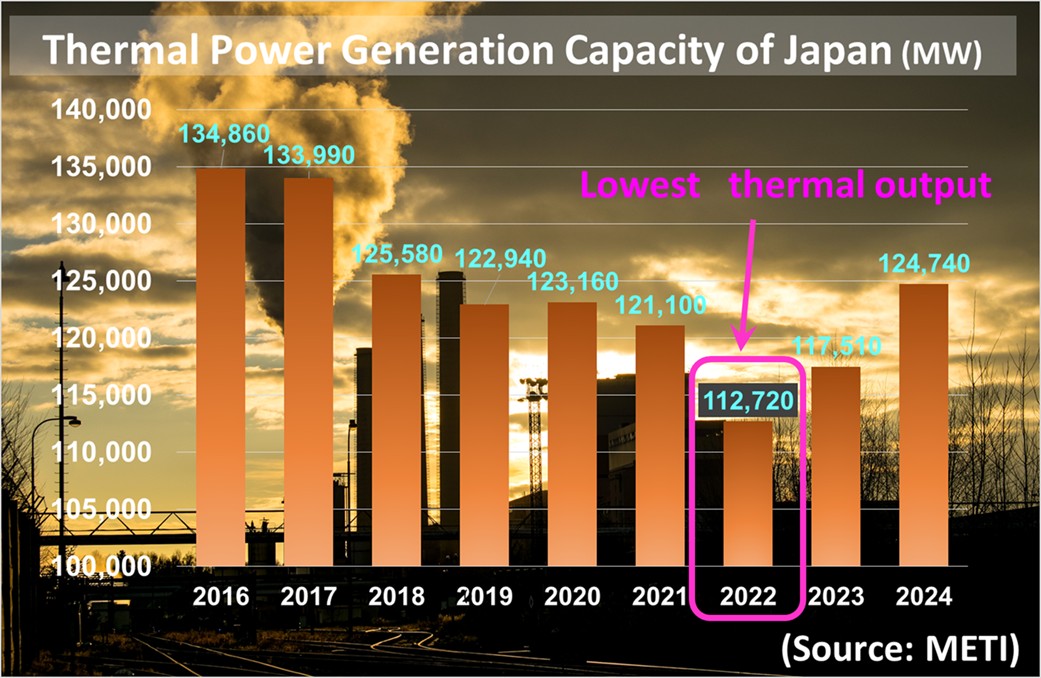
Saddled with maintaining and upgrading non-operating nuclear reactors while trying to compete in a newly liberalized electricity industry, the big utilities have mothballed many of their older and inefficient thermal power plants, eroding the spare capacity available to the power system. This year, Japan faces its lowest level of thermal power generation capacity available in years.
To make sure Japan’s power system could at least maintain some buffer for times of need, the government set up several mechanisms, chief among them the Balancing Market. The market allowed power companies and other businesses that own generation assets to contract some of their capacity to this market, receiving compensation for keeping it available for emergencies.
The adjustment mechanism splits power plants and power conservation services into several categories. The top one was Power Source I, which largely refers to power plants that can be started up very quickly (i.e., within 5 minutes) and are owned by large utilities close to the grid operators and, thus, quick to answer the call to action.
Other categories encompass power generation that’s less susceptible to grid company command and / or plants that take time to ramp up and down, such as nuclear reactors.
A key category to note, however, is Power Source Ⅰ‘. In addition to some thermal and pumped hydro generation, it relies on “demand-response” services. The latter refer to ways that power providers can encourage consumers to lower electricity use during a crunch period with incentives.
There are few demand-response service providers in Japan. The niche was pioneered in Japan by a French company, Energy Pool, around the middle of the last decade. But, the popularity of demand-response services in Japan is growing. Its providers help mostly industrial and commercial users set clearly defined roadmaps to reduce energy use in response to a call from the power system operator.
The impact of demand-response measures can be significant, but the way that Power Source I‘ contracts are ordered in Japan proved a key reason why the adjustment failed to provide support for the Tokyo area during the June shortages. These contracts specify that power conservation measures and / or additional capacity must only be made available during the two peak summer and the two peak winter months.
| Power Source I | Capacity that is always secured by transmission and distribution operators (likely belongs to the generation firm closely aligned with the local grid company); can be made available within 5 minutes |
| Power Source I‘ | Capacity that can be made available in extremely harsh conditions, such as once-in-a-decade crises; can be made available within 3 hours
Contract period is limited to 9:00 to 20:00, July to September (summer), and December to February (winter) peak seasons |
| Power Source II | Capacity that may be secured by transmission and distribution operators but which may also belong to others in the local power industry (utilities or industrial users); can be made available within 15 minutes
Refers to surplus electricity that can be supplied after gate close (i.e. after 17:00, which is the deadline for submitting power supply plans for the next day) |
| Power Source III | Capacity beyond all control of transmission and distribution operators |
(Source: METI and Japan NRG)
June was too soon
This year’s first power crunch came in March, after a major earthquake offshore from the Fukushima and Miyagi prefectures, as well as Tokyo’s unusually severe cold weather and snow, cut available supply and increased demand. The government was slow to issue an alert to notify the public about the risks, with the official announcement coming after 21:00 the night before the day of expected shortages.
Still, Tokyo’s power grid scored a lucky win. Despite the late call, Energy Pool Japan via its demand-response clients managed to shave off 300 MW to 500 MW of demand from the system, easing the burden on supply. Equally, strong public support in cutting electricity use in homes helped demand in the Tokyo area drop by a third in the afternoon of March 21, the most critical period.
While the response was good, it was clear that potential summer shortages would be more prolonged. The government adjusted the alerts system so as to warn users about a crunch two nights before it was due.
Despite the extra warning, when it came to the crunch in late June, TEPCO got no support from Power Source I‘ clients whatsoever. In other words, no factories or businesses cut demand according to contract rules, because it was still June and their contracts kicked in only in July.
The system designed to deal with “extremely harsh conditions, such as occur once in a decade” failed because no one was ready to deal with a power crunch outside of the usual power crunch season.
TEPCO filled the gaps in other ways, such as additional supply from industrial firms with in-house power plants. Starting this month, around 7 GW of capacity is scheduled back online after maintenance work – just in time for the official peak power demand season.
Still, one obvious conclusion is that Japan’s changing climate patterns show that crises can occur at any time. The government and power industry need to prepare demand-responses and other conservation strategies to engage at any time of year.
The entrenched notion of ‘peak season’ is being shaken. The legal and market frameworks need to adjust once again to make sure that Japan’s official mechanisms are relevant going forward and that the country doesn’t have to rely on social consciousness alone to navigate difficult times.
ANALYSIS
BY MAYUMI WATANABE
Bracing for Loss of Russian LNG, Japan Steps Up Gas Conservation
Power crunches are increasingly common in Japan, and shortages of natural gas are the new reality. For the first time ever, the government has embarked on a review on what measures can be taken to conserve use of the fuel.
METI hasn’t elaborated on the reasons why Japan is suddenly taking such a course. The ministry’s external advisors, however, have been more forthcoming: there’s a risk of Japan losing access to Russian supplies of LNG, which are about 10% of the nation’s total.
Devising gas conservation measures isn’t straightforward. In the past decade, the rising frequency of short-term shortages of electricity supply have helped forge an evolving government, business and now even household response. The topic even airs on morning chat shows.
The regulatory basis for gas is quite different than for electricity.
| Gas Business Act | Gas operators need to coordinate/collaborate to maintain gas pipeline networks and to enhance users’ benefit (58th article) |
| Electricity Business Act | Power operators need to coordinate/collaborate to serve public interest and to ensure supply security (28th article) |
Legal framework needs to be amended
Japan’s gas sector is regulated under the Gas Business Act, which unlike the Electricity Business Act does not have a clause that empowers the state to intervene in case of emergencies. For this reason, METI can only hope that voluntary actions from industry users are good enough to overcome a crisis.
Hope is not enough, though, and one of the most influential METI advisors, Prof. Kikkawa Takeo of International University, is calling for the Gas Business Act to be amended before the heating demand season arrives in January.
While METI’s official position is that Japan is not currently facing a threat to its gas supply, the launch of a public-private debate around gas conservation in recent months has set off some anxiety among major gas consumers.
For now, METI is asking users to voluntarily conserve gas. If further consumption cuts are needed, then it will file direct requests to large consumers. Businesses account for 70% of national city gas consumption. METI says it would focus conservation requests on users that have the capacity to switch to other sources.
As such, the government is asking all firms to rewrite business continuity plans to include gas supply cuts in risk scenarios. METI’s current thinking is to form an alert system in times of supply crunch similar to that used in the electricity sector. There would be warnings of different levels relative to the degree of shortages.
Substitution options?
Gas and power are both essential national energy infrastructure, complementing one another. Last January, when gas heating systems were in short supply due to cuts in imports of semiconductors, home builders shifted to electric central heating systems.
After the recent June power crunch, end-users are again shifting back to gas. This symbiosis suggests that power and gas conservation policy making should be centralized, rather than split between two separate METI regulator bodies. Ultimately, a shortage in one of the two areas can stall the entire energy system.
Substitution of gas with oil or coal are also no longer seen as the easy, go-to solution due to their high prices. While Japan’s import price for LNG is up 121% YoY, coal prices are up 227% in the same period.
“At the end of the day, energy conservation is critical for national security,” said one METI gas panel member.
Big differences between power and gas
The power sector was able to build up a national power conservation structure following the Fukushima crisis and other earthquakes that damaged thermal power plants in subsequent years.
“Gas supply cuts were not seen as a risk… thanks to gas utilities managing their resources extremely well. You can never thank them enough,” Tokyo University professor Matsumura Toshihiro told the METI gas panel.
METI is not able to oversee gas and power sectors single-handedly, as the room for active state intervention is limited for gas due to the legal framework. In addition, while any power contracts with large business users tend to include a clause that allows grid operators to curtail supply in times of emergencies, very few gas contracts have similar clauses.
Gas and power are structured differently. While the power sector is dominated by the 10 former regional monopolies, also known as EPCos, Japan’s gas supply is split between 193 mostly small enterprises with just four major firms in the industry. In rural areas with less than 50,000 inhabitants, there is no city gas operator. Power grid companies have to cover even the smallest communities.
The 10 regional electricity grids publish supply and demand forecasts on their websites; data that is updated daily. Such disclosure may not be possible for all gas suppliers. And yet, without clear data, it will be difficult to push consumers to make significant savings.
In addition, while power saving can make a difference by being enacted for just a few hours at certain peak consumption times of the day, gas conservation requires days, weeks or even months of continuous effort until the next LNG cargo arrives.
The demand response system, where users adjust consumption patterns to match supply and are compensated for this, may not work as well in the gas sector. Some suppliers are too small to manage such programs.
Lastly, due to the spread of smart meters, grids can gauge power consumption and supply on a real time basis. It takes time for the gas system to grasp real-time consumption trends.
One thing is clear. The gas and power facilities need to work closely together so that ministry action – from non-legally binding conservation requests and guidelines, to ordinances and ministerial orders – improve total energy efficiency.
In a worst-case scenario, the gas industry will repeat the mistakes of its power sector cousin by shutting all the old, inefficient facilities used as a buffer in times of crises. Unlike electricity, which has at least several sources of generation, there are few alternatives to gas for heating and industrial use.
GLOBAL VIEW
BY JOHN VAROLI
Below are some of last week’s most important international energy developments monitored by the Japan NRG team because of their potential to impact energy supply and demand, as well as prices. We see the following as relevant to Japanese and international energy investors.
Algeria/ Solar power
The first electricity from the 1 GW “Solar 1,000” project is expected in late 2023 when a 30 MW solar park in Bechar province goes online. International investors are invited to join the project. Algeria plans 15 GW of renewable energy capacity by 2035.
Germany/ Natural gas
Uniper, Europe’s largest buyer of Russian gas, seeks a state rescue as it faces insolvency due to a drastic reduction in Russian gas. Uniper has been losing tens of millions of euros a day as it has to buy expensive gas on spot markets but is unable to pass on the extra cost to customers.
Hungary/ Energy crisis
The government declared a “state of emergency” over supply disruptions and rising energy prices, and it plans to increase domestic energy production to ensure supply. The government of Prime Minister Viktor Orbán blames the war in Ukraine and western sanctions on Russia for the energy crisis.
Kazakhstan/ Oil pipeline
Last week, a Russian court ordered a 30-day stoppage on operations of the Caspian Pipeline Consortium, which sends oil from Kazakhstan via Russia to Black Sea ports, due to concerns about spills. CPC’s shareholders include Shell, ExxonMobil and Chevron. This week, that decision was overturned, ending the threat of disruption.
Malaysia/ Oil legal case
Two Luxembourg-based subsidiaries of state oil company Petronas were seized by descendants of a late sultan in a dispute over an agreement dating to 1878. The subsidiaries — Petronas Azerbaijan and Petronas South Caucasus — had gas interests in Azerbaijan worth more than $2 billion. In March, an arbitrator in France ruled that Malaysia must pay the heirs $15 billion.
OPEC/ Oil demand
In 2023, global oil demand will rise to levels that OPEC will struggle to meet. The amount of oil that the group must pump to meet global demand, also known as the “call on Opec crude”, could rise to 32 mbpd by the end of 2023.
Russia/ Gas pipeline
Russia’s main gas pipeline to Germany went offline for scheduled maintenance, amid fears whether Gazprom will restart deliveries through Nord Stream 1 once those repairs end on July 21.
Russia/ Oil assets
Commodity trader Trafigura sold a multibillion-dollar 10% stake in Vostok Oil, which is in Russia’s Arctic region, to Hong Kong-based Nord Axis Ltd. Corporate filings show Nord Axis was incorporated on Feb. 15, a week before Russia launched a full-scale attack on Ukraine.
Saudi Arabia/ Oil
Reuters reports that the world’s largest oil exporter more than doubled Russian oil imports in Q2 in order to feed power stations to meet summer cooling demand and free up the kingdom’s own crude for export. Russia is selling fuel at discounted prices following international sanctions.
U.S./ Oil leases
The White House is preparing proposals for new oil lease auctions in federal waters over the next five years. Options range from 10 lease sales in the Gulf, plus another off Alaska, to no new lease sales at all. In related news, Houston-based Pickering Energy Partners, with an unnamed institutional investor, will spend $300 million to acquire and develop oil and gas assets in the Permian Basin.
U.S./ Power generation
Power generation from utility-scale renewables reached 85.3 million MWh in April, down from 87.1 million MWh in March, supplying 28% of U.S. power for the month. Wind generation supplied 46.2 million MWh, accounting for over half of the total renewable output; while utility-scale solar supplied 13.5 million MWh, or 15.8%.
UK/ BHP lawsuit
A £5 billion lawsuit against BHP by 202,600 Brazilian claimants will go ahead in an English court. The judges overturned a 2018 decision that the courts should not hear the case. The lawsuit centers on Brazil’s worst environmental disaster, when the Fundão Dam collapsed in 2015, releasing 40 million cubic meters of tailings from iron ore mining.
2022 EVENTS CALENDAR
A selection of domestic and international events we believe will have an impact on Japanese energy
| January | OPEC quarterly meeting;
JCCP Petroleum Conference – Tokyo; EU Taxonomy Climate Delegated Act activates; Regional Comprehensive Economic Partnership (RCEP) Trade Agreement that includes ASEAN countries, China and Japan activates; Indonesia to temporarily ban coal exports for one month; Regional bloc developments: Cambodia assumes presidency of ASEAN; Thailand assumes presidency of APEC; Germany assumes presidency of G7; France assumes presidency of EU; Indonesia assumes presidency of G20; and Senegal assumes presidency of African Union; Japan-U.S. two-plus-two meeting; Japan’s parliament convenes on Jan. 17 for 150 days; Prime Minister Kishida visits Australia (tentative) |
| February | Chinese New Year (Jan. 31 to Feb. 6);
Beijing Winter Olympics; South Korea joins RCEP trade agreement |
| March | Renewable Energy Institute annual conference;
Smart Energy Week – Tokyo; Japan Atomic Industrial Forum annual conference – Tokyo; World Hydrogen Summit – Netherlands; EU New strategy on international energy engagement published; End of 2021/22 Japanese Fiscal Year; South Korean presidential election |
| April | Japan Energy Summit – Tokyo;
MARPOL Convention on Emissions reductions for containerships and LNG carriers activates; Japan Feed-in-Premium system commences as Energy Resilience Act takes effect; Launch of Prime Section of Japan Stock Exchange with TFCD climate reporting requirement; Convention on Biological Diversity Conference for post-2020 biodiversity framework – China; Elections: French presidential election; Hungarian general election |
| May | World Natural Gas Conference WCG2022 – South Korea;
Elections: Australian general election; Philippines general and presidential elections |
| June | Happo-Noshiro offshore wind project auction closes;
Annual IEA Global Conference on Energy Efficiency – Denmark; UNEP Environment Day, Environment Ministers Meeting – Sweden; G7 meeting – Germany |
| July | Japan to finalize economic security policies as part of natl. security strategy review;
China connects to grid 2nd 200 MW SMR at Shidao Bay Nuclear Plant, Shandong; Czech Republic assumes presidency of EU; Elections: Japan’s Upper House Elections; Indian presidential election |
| August | Japan: Africa (TICAD 8) Summit – Tunisia;
Kenyan general election |
| September | IPCC to release Assessment and Synthesis Report;
Clean Energy Ministerial and the Mission Innovation Summit – Pittsburg, U.S.; Japan LNG Producer/Consumer Conference – Tokyo; IMF/World Bank annual meetings – Washington; Annual UN General Assembly meetings; METI to set safety standards for ammonia and hydrogen-fired power plants; End of 1H FY2022 Fiscal Year in Japan; Swedish general election |
| October | EU Review of CO2 emission standards for heavy-duty vehicles published;
Chinese Communist Party 20th quinquennial National Party Congress; G20 Meeting – Bali, Indonesia; Innovation for Cool Earth TCFD & Annual Forums – Tokyo; Elections: Okinawa gubernational election; Brazilian presidential election; |
| November | COP27 – Egypt;
U.S. mid-term elections; Soccer World Cup – Qatar; |
| December | Germany to eliminate nuclear power from energy mix;
Happo-Noshiro offshore wind project auction result released; Japan submits revised 2030 CO2 reduction goal following Glasgow’s COP26; Japan-Canada Annual Energy Forum (tentative); Tesla expected to achieve 1.3 million EV deliveries for full year 2022 |
Disclaimer
This communication has been prepared for information purposes only, is confidential and may be legally privileged. This is a subscription-only service and is directed at those who have expressly asked K.K. Yuri Group or one of its representatives to be added to the mailing list. This document may not be onwardly circulated or reproduced without prior written consent from Yuri Group, which retains all copyright to the content of this report.
Yuri Group is not registered as an investment advisor in any jurisdiction. Our research and all the content express our opinions, which are generally based on available public information, field studies and own analysis. Content is limited to general comment upon general political, economic and market issues, asset classes and types of investments. The report and all of its content does not constitute a recommendation or solicitation to buy, sell, subscribe for or underwrite any product or physical commodity, or a financial instrument.
The information contained in this report is obtained from sources believed to be reliable and in good faith. No representation or warranty is made that it is accurate or complete. Opinions and views expressed are subject to change without notice, as are prices and availability, which are indicative only. There is no obligation to notify recipients of any changes to this data or to do so in the future. No responsibility is accepted for the use of or reliance on the information provided. In no circumstances will Yuri Group be liable for any indirect or direct loss, or consequential loss or damages arising from the use of, any inability to use, or any inaccuracy in the information.
K.K. Yuri Group: Oonoya Building 8F, Yotsuya 1-18, Shinjuku-ku, Tokyo, Japan, 160-0004.