After a slow start, Japan’s efforts to build offshore wind power capacity – literally from the ground up – are gaining traction. With six years remaining to meet 2030 interim clean energy goals, the government seeks to accelerate wind energy’s rollout and will need to provide plenty of support. With costs for offshore wind rising, and projects canceled in other countries, Japan must find a way to buck that trend and implement cost efficient solutions.
A few years ago, perovskite solar cells (PSC) were confined to technical papers. Yet in 2023, this bendable, lightweight material swiftly progressed from the lab to demo tests. Today Japan faces great aspirations and challenges in seeking to commercialize the PSC sector within two years. Consultants at various projects discuss how the technology is performing and what issues have emerged.
ASIA ENERGY VIEW
A wrap of top energy news that impacts other Asian countries.
EVENTS SCHEDULE
A selection of events to keep an eye on in 2024.
JAPAN NRG WEEKLY
PUBLISHER K. K. Yuri Group
Editorial Team Yuriy Humber (Editor-in-Chief) John Varoli (Senior Editor, Americas) Mayumi Watanabe (Japan) Wilfried Goossens (Events, global) Kyoko Fukuda (Japan) Magdalena Osumi (Japan Filippo Pedretti (Japan) Tim Young (Japan)
The Japan Fair Trade Commission published research on the power sector, citing practices that may violate the Antimonopoly Act (AMA). Former regional power monopolies (EPCOs) hold a 70% share of the electricity market, and the balance by new market entrants, also known as independent power providers (IPPs).
EPCOs prohibiting IPPs from re-selling EPCO power to third parties may restrain competition and violate the AMA. EPCOs retailing power to customers below cost is also a possible AMA violation, the Commission pronounced.
The JFTC proposal included allowing IPPs wider access to EPCO power resources and data. EPCO power facilities were not built on EPCO funds alone but were financed by various sources, the Commission said.
The IPPs should negotiate with the EPCO generating unit to secure power contracts, rather than the EPCO retail unit that’s in direct competition with the IPPs.
CONTEXT: The JFTC launched the research in 2022. During that time, a separate JFTC team exposed an alleged cartel by four EPCOs – Kansai Electric, Chubu Electric, Chugoku Electric and Kyushu Electric.
TAKEAWAY: Companies cited for possible antitrust violations during the course of the research are not fined but are expected to rectify their practices. The JFTC clarifying some EPCO behavior as potential AMA violations would improve competition among the IPPs, which have complained of EPCO dumping for over a decade but have not been able to provide sufficient evidence. Many IPPs also say JFTC has been too slow to take action.
METI approved power distribution and transmission fees to be charged by regional electric power utilities (EPCOs) to end-users and independent power providers.
METI proposed a revision of the Basic Ocean Strategy that addresses subsea mining for methane and mineral resources. The govt seeks to retrieve methane hydrate solids in the sea, as well as encourage subsea natural gas and oil production.
During FY2023-2027, the govt will undertake exploration, data analysis, technology development, production tests and environmental impact assessments. And then it will hand over the projects to the private sector by FY2030.
METI will choose sites for exploring potential of shallow type methane hydrate along the coast of Sakata (Yamagata Pref), Joetsu (Niigata Pref), etc.
METI also plans to spur oil and natural gas production in the Sea of Japan and will continue exploration.
CONTEXT: Methane hydrate is an ice-like solid containing massive amounts of methane, and found in the sea around Japan. There are two types of methane hydrate: shallow type and pore-filling type.
The MoE is conducting a preliminary survey of offshore wind power development in the Exclusive Economic Zone (EEZ), especially regarding the risk of bird strikes on turbine blades and impact on the nearby area.
CONTEXT: Globally, Japan’s EEZ ranks sixth in terms of area. Under the Renewable Energy Sea Area Utilization Act, the govt designates promotion areas for offshore wind power and selects power generation operators via tenders. Application of this law, however, is limited to territorial waters, and excludes the EEZ.
TAKEAWAY: While the govt is eager to expand offshore wind power into the Exclusive Economic Zone, which extends beyond territorial waters, the costs to build the necessary infrastructure currently make it doubtful that such distant wind farms would be economically viable.
New solar power plant operators will be required to use panels registered with the Japan Photovoltaic Energy Association, which should clarify if the equipment includes hazardous substances.
Panel producers will need to state whether their modules contain substances such as cadmium, lead, arsenic and selenium, and when the panels were made.
The change is planned as part of an amendment to Japan’s Act on Renewable Energy Special Measures planned for this spring.
METI and MoE plan similar recycling schemes for wind and other renewables.
CONTEXT: The move comes as Japan aims to address disposal of solar panels and pushes for their recycling. So far, recycling companies have been struggling with processing PVs due to a lack of information on components and their composition.
The Cabinet announced 19 founding members for the Fusion Industry Council. Launch is set for March.
Founding members span manufacturing, trading, and communication companies, along with venture firms. The goal is to promote the domestic fusion industry.
The council expects over 50 participants to advance fusion R&D and markets. It will make proposals to the govt on safety regulations and technology standardization.
Furukawa Electric invested around £10 million in Tokamak Energy, a UK fusion energy company.
CONTEXT: Tokamak Energy has proposed to the United Kingdom Atomic Energy Authority (UKAEA) a small fusion reactor consisting of an ultra-high magnetic field and superconducting magnets of its own design. The UK firm’s design relies on a yttrium-based high-temperature superconducting (HTS) wire made by SuperPower Inc, a Furukawa Electric group company based in the U.S.
The three companies now aim to focus on further R&D to commercialize small-scale fusion reactors. They’ll also develop high-field electromagnets. The partnership will explore new markets for the products, including Japan.
On the GX League website, 372 out of the 568 member companies disclosed long term Scope 1 and 2 emission goals and past records.
The FY2021 total that was reported for Scope I emissions accounted for over half of the national total, METI said. The 2025 Scope 1 reduction goal is 620 million tons, and 480 million tons for 2030.
The data will be updated on a monthly basis.
TAKEAWAY: The GX League is a group of companies collaborating with METI to design and run the carbon credit exchange. League participation and emission disclosures are on a voluntary basis, which creates data inconsistencies. For example, Japan’s major emitter Nippon Steel reported its FY2013 emissions, but not FY2021. Nippon Steel is also selective in its inclusion of assets for the emission reporting. For example, it did not include Nippon Steel Stainless Steel, which operated a coal-fired blast furnace until last year. Itochu, whose affiliate ENEX Electric Power runs coal power plants, gave FY2021 figures but on a non-consolidated basis. The lack of data uniformity makes comparative analysis difficult.
METI clarified biomass power operators won’t be able to use rice husks and straw, as well as wheat straw, as fuel, since they conflict with the food supply chains. This rule applies to operators in both Feed-in-Tariff and Feed-in-Premium schemes.
TAKEAWAY: Husks and straw are livestock feeds. Japan even imports straws as domestic supplies are not enough. The govt is trying to raise the self-sufficiency of food, just like energy. Meanwhile, some farms are considering growing crops for energy as well as food, depending on market prices.
Obayashi Corp launched a hydrogen trial in Namie (Fukushima Pref) to test truck transport in the 70 MPa high pressure environment instead of the usual 19.6 MPa.
The trial will also include a pipeline network to evaluate a new approach – using electrical cable trenches.
CONTEXT: Hydrogen compresses at higher pressure, improving transport efficiency. This is Japan’s first attempt to test its transport at 70 MPa. Obayashi will apply high pressure handling technologies developed by Toyota Motor.
TAKEAWAY: Obayashi produces green hydrogen at its Oita geothermal plant and has been tasked with finding applications for green hydrogen produced at the Fukushima Hydrogen Energy Research Field (FH2R) in Namie. FH2R produces 200 tons /year of green hydrogen for research and plans to offer it to the market.
Obayashi Corp, which produces green hydrogen at its geothermal plant in Oita Pref, reported emission cuts of 82% by switching to railways from trucks.
Transporting hydrogen from the production site in Oita to the Iwatani Corp facility in Kobe City (Hyogo Pref.) by rail incurred emissions of just 0.062 tons of CO2 for one journey. Truck transport emits 0.347 tons.
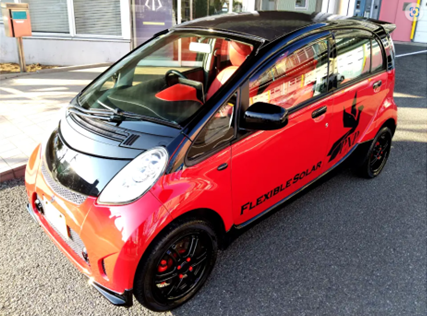
PXP Corp, a perovskite startup, created a solar Electric Vehicle (EV) prototype with bendable modules made of copper alloy chalcopyrite on its rooftop. PXP is still adjusting the prototype as it conducts outdoor driving tests, and plans to upgrade the setup by placing a perovskite layer on top of the chalcopyrite.
Chalcopyrite modules have a 18% power efficiency, and with a perovskite layer, the efficiency reaches 28%, enough for a vehicle to drive 37 km/day on solar power.
PXP chose chalcopyrite because it’s pitch black and hides the white linings around the cells, improving vehicle appearance.
TAKEAWAY: This is Japan’s second solar-EV prototype with bendable thin modules. Last year, Sharp unveiled the first Toyota hybrid vehicle with bendable thin solar modules made of silicon. Sharp’s modules achieved the world’s highest power efficiency of 33.7%. The modules were tested on Nissan EVs as well. Storage battery systems are key to realizing solar EV commercialization, or cars won’t drive on rainy days.
Chugai Ro has developed manufacturing equipment for electrode materials and solid electrolytes for all-solid-state batteries, and plans to start sales to battery parts manufacturers by 2026.
CONTEXT: Compared to lithium-ion batteries that use liquid electrolyte which possibly leaks, all-solid-state batteries are safer, operate under a wider range of temperatures, etc. When used in EVs, they are expected to improve cruising range.
TAKEAWAY: Sales of all-solid-state-lithium ion batteries at limited volumes already started last year. One of the manufacturers, Hitachi Zosen, told Japan NRG that it aims to launch mass production around 2026.
Renova will underwrite convertible notes with a total value of $25 million to be issued by Pathway Power Holdings, a U.S. developer and operator of solar power facilities, storage batteries used for power grids and renewables facilities in the U.S.
RENOVA will also have the right to make an equity investment of up to 49% in individual projects with capacity of up to 1 GW.
The bonds are convertible to common shares after 3 years.
Renova expects to acquire a 25% equity stake in Pathway Power.
In Feb, Kawasaki Heavy Industries will issue transition bonds worth ¥10 billion to finance its R&D for liquefied hydrogen carriers, storage tanks, gas turbines, etc. The bonds mature in five years.
Research on installation of water intake pipes by Mitsui O.S.K. Lines in Mauritius was selected by METI to be part of a feasibility study for deep-ocean water applications to commercialize ocean thermal energy conversion (OTEC).
OTEC uses the temperature difference between warm water in the surface layer and cold water in the deep sea to generate electricity.
CONTEXT: Since OTEC is not impacted much by weather conditions, it can ensure stable and predictable power output 24/7. Mitsui aims to commercialize OTEC in Japan and overseas, including Mauritius. The project was included in METI’s FY2023 Infrastructure Development Program for the Joint Crediting Mechanism.
Nippon Yusen in talks with Kyushu Electric, Sojitz on Indian ammonia project
(Japan NRG, Jan 19)
Nippon Yusen is in talks with Kyushu Electric, Sojitz and Singapore-based Sembcorp Industries to produce green ammonia in India.
This follows Kyushu Electric, Sojitz and Sembcorp signing an MoU in Dec on future ammonia production. Nippon Yusen has not made a final decision on its role in the project, the company spokesman told Japan NRG. However, Denki Shimbun reported that the company decided to invest in the ammonia JV.
The Niseko ski resort area in Hokkaido is being used as a renewable energy generation site. A group led by Tokyu Land, a major real estate development company, joined a move to produce power using snow.
Power is produced as the engine is driven by the temperature difference between the snow and heat source. Specifically, antifreeze added to water is circulated around the hut through pipes, and the difference between the antifreeze solution cooled by the snow and the heat from the biomass boiler is used to generate electricity.
CONTEXT: The group has chosen Niseko to draw more attention to the project given the location’s popularity with tourists from overseas.
IHI developed the world’s first electric motor for aircraft with a generation capacity of over 1 MW. The motor is installed inside the engine tail cone and partly electrifies aircraft systems.
TAKEAWAY: Japan imports almost all its civilian aircraft. IHI is likely to seek overseas partners to develop electric aircraft components and technologies for aircraft manufacturing.
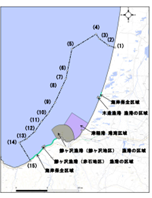
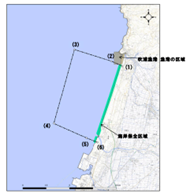
METI and MLIT began soliciting bids for two wind power projects off the coast of Yuza, Yamagata Pref and the southern side of the Sea of Japan, off the coast of Tsugaru City and Ajigasawa Town in southwestern Aomori Pref.
The govt is offering the opportunity to build a wind farm with capacity of as much as 450 MW at the Yamagata site and as much as 600 MW at the Aomori site. Occupancy is up to 30 years.
The sites were designated as “promotion zones,” deemed suitable for an offshore wind farm because they meet certain criteria, including weather and land conditions.
The govt welcomed public feedback on the sites from Nov 17 to Dec 17. Tender bids will be accepted until July 19, 2024.
CONTEXT: To ensure coexistence with the fishing industry, offshore wind turbines can’t be installed in waters one nautical mile from the coastline.
TAKEAWAY: METI’s swift decision to start soliciting for Round 3 soon after concluding most of Round 2 shows a desire to speed up the expansion of offshore wind. Only areas that are designated as “promotion zones” are allowed to go to auction and time is of the essence, given that so far only 3.5 GW capacity has been tendered. Those wind farms, however, might only be operational in FY2029, if there are no unexpected problems. For an in-depth look at the state of the offshore wind auctions, see this week’s Analysis section.
Maps of areas selected for Round 3 public tender: site off Aomori Pref (left) and off Yuza, Yamagata (right) Source: METI
Market research firm Fuji Keizai forecasts that the domestic retail market for electricity derived from renewable power sources, such as solar power, will grow by around 13.5 times in FY2040 compared to FY2022. Domestic sales of such power in FY2023 was expected to increase 27% from FY2022 to ¥429 billion.
The firm predicts the market will significantly grow especially for solar and biomass power generation. Estimated revenue for FY2040 is ¥4.5 trillion with 25% of total electricity sales expected to switch to renewable energy sources.
For corporate PPAs, the market for solar power is projected to reach ¥410 billion in FY2040, around 10 times the FY2022 level.
Eurus Energy launched its 64 MW Kawanishi Wind Farm in Hokkaido.
The plant, one of Japan’s largest, is the third built under the firm’s Dohoku Wind Power Generation Project, which will have a total of 107 turbines across six wind farms.
The project uses 15 Siemens Gamesa turbines (each 4.3 MW). The electricity generated will be sold to Hokkaido Electric.
CONTEXT: Last year, due to Hokkaido’s insufficient transmission line capacity, Eurus and partners set up North Hokkaido Wind Energy Transmission to operate govt-subsidized, large-scale power grid and storage battery facilities in the area.
The MoE minister advised J-Power to take note of noise, water, and bird life impact at the site for the 129 MW Hisatsu wind farm in Kumamoto and Kagoshima prefs.
J-Power plans to build 30 turbines (each 4.3 MW). Turbine No. 14 and No. 16 were identified as planned in locations potentially harmful to black eagles.
CONTEXT: The Hisatsu project environmental impact assessment started in 2020. Last month, the Kumamoto governor asked J-Power to revise the project as the measures to prevent floods and impact of heavy rain were absent in the preparatory impact report. The company needs to file a formal report reflecting these comments. METI will make a final decision based on the final report.
J-POWER is exploring a number of options to revamp its coal-fired Matsushima Thermal Power Plant, which sits on the island of Saikai, Nagasaki Pref, about 2km from the mainland.
The utility will shutter the two coal-firing units by the end of FY2024. The first unit (500 MW) will be decommissioned.
The second 500-MW unit will be revamped using Integrated Coal Gasification Combined Cycle (IGCC) technology, which involves steaming and burning coal to extract a mixture of carbon monoxide and hydrogen gas, which is then used to rotate turbines to generate electricity. A boiler upgrade will utilize waste heat to further cut coal use and emissions by 10%. The facility will restart in FY2028.
As a next step, J-Power will explore co-firing at the site using biomass alongside coal, and also installing carbon capture.
Finally, the utility will look at the potential to process the recovered hydrogen into a fuel and shipping it.
SIDE DEVELOPMENT: Families start moving into Tokyo’s Harumi Flag “hydrogen” town (Japan NRG, Jan 19)
On Jan 19, families started to move into Harumi Flag “hydrogen” town, a 18-ha residential complex built on the former Olympic Village by Mitsui Fudosan.
The area has the country’s largest fuel cell station operated by ENEOS and pipelines supplying hydrogen to generators. Fuel cell vehicles are available for sharing.
The TOCOM electricity futures market volume for Nov 2023 fell 47% from the previous month to 3.34 GWh, with 480 contracts traded; 65% were off-bourse.
Mild winter forecasts led to sluggish trading. LNG and other fuel prices softened, which dampened demand for hedging.
TOCOM also listed a deal with fixed prices for West Area Baseload and East Area Baseload for winter (Dec 2023-Feb 2024), at ¥13.5 and ¥17.75, respectively.
Tokyu Land, a major real estate developer, released a preparatory environmental impact assessment for its planned 51.6 MW onshore wind project in Matsumae Twp. Public feedback is solicited until Feb 13.
The project involves construction of 12 turbines (4.3 MW each). The report identifies noise levels, areas which may have noise and shadow impacts, study on wildlife, etc.
Tokyu Land operates a 41 MW wind plant nearby. Three more wind farms with a total of 198 turbines are planned in the area.
Tohoku Electric aims to restart the No. 2 reactor at Onagawa NPP. A consultative meeting was held to exchange opinions with the NRA and local authorities.
Miyagi Pref governor emphasized the need for safety measures based on new insights from inspections. Mayors called to strengthen disaster response measures.
The NRA said improvements based on the recent earthquake should be considered.
TAKEAWAY: Tohoku Electric announced a delay in the restart due to improvement works on safety measures. The govt, which seeks more nuclear power, now faces a setback as the NPP’s restart is delayed for the second time since gaining regulatory approval in 2020. It follows a previous setback in Sept 2023. Restarting the Onagawa NPP has great significance; it would be the first to resume operations in eastern Japan since the Fukushima disaster.
On Jan 18, KEPCO resumed operations at Mihama NPP Unit 3. Actual power supply started on Jan 20, entering the final stage of regular inspection.
Unit 3’s capacity is 826 MW. It has been undergoing regular inspections since Oct 25. After completing inspection on Feb 14, the plant will resume full-scale operation.
CONTEXT: With the restart of Mihama NPP Unit 3, KEPCO has six operating reactors.
Hokuriku Electric completed repairs on the Akasumi feeder line of Shiga NPP Unit 1 that was damaged by the Noto earthquake. Three out of five of the plant’s external power supply lines are operational.
The Akasumi Line’s damaged insulators and jumper wires were repaired.
The Shiga Naganoto Line remains unusable due to transformer damage. At least six months are needed for repairs.
Global Business Partner (GBP), a provider of green solutions, is assisting with repair of large-scale solar power facilities in areas hit by the earthquake on Jan 1.
GBP replaces damaged solar modules, redesigns mounts and provides missing CVT cables to reduce the scale of damages.
CONTEXT: Since solar PVs used in the affected facilities are from older lots, operators struggle to procure matching parts for replacement, whereas new parts are often unsuitable for existing mounts. Normally, redesigning mounts to adjust for new types of modules is costly but so is disposal of damaged modules.
In October, climate activists Kiko Network and Japan Environmental Lawyers Federation (JELF) filed a complaint to the Japan Advertising Review Organization (JARO) accusing JERA of misleading advertising around its ammonia-coal co-firing.
The groups demanded JARO suspend the advertising, claiming that co-firing is not an established technology and can’t be called a key climate solution.
TAKEAWAY: The activists are making an impact. During the December ANRE panel meeting on the next basic energy strategy, panelist Murakami Chisato, a consumer advisor, cast doubts about ammonia co-firing being a climate solution.
Mitsubishi Heavy Industries (MHI) and KEPCO agreed to install a CO2 capture pilot plant at Himeji No.2 Power Station. The goal is to start operation in FY2025.
The pilot, with a capture capacity of 5 tons/day, will use flue gas from the gas turbine at Himeji No 2.
CONTEXT: MHI says it has installed its CC technology at 16 power plants already and is working on the same at two more facilities.
NEWS:OIL, GAS & MINING
Japan moving away from Russian energy: Analyst
(Japan NRG, Jan 17)
In 2024, energy commodity prices will ease from 2023 but supply uncertainties will limit their fall. Meanwhile, Japan is expected to buy less energy from Russia, said Ito Toshinori of Ito Research & Advisory at a Tokyo Commodity Exchange event.
Ito noted a sharp decrease in energy imports from Russia, whose 2021 crude oil sales to Japan were 5.242 mln kiloliters (33 mln barrels or 3.6% of total Japan imports) but fell to 2.287 mln kiloliters (1.5%) in 2022.
Russian thermal coal imports halved — 13.7 Mt (12.2%) in 2021 became 7.87 Mt (6.8%) in 2022. As for LNG, 2021 imports from Russia were 6.57 Mt (8.8%), while in 2022 they rose to 6.87 Mt (9.5%).
CONTEXT: At the end of 2023, Russian thermal coal was 3% of Japan’s total coal imports. Japan relies mostly on Australia for coal, but due to high prices, Japan will try to balance that more with purchases from countries like Indonesia. Japan’s need for LNG will also largely depend on whether it will manage to fully restart its nuclear facilities.
The Ministry of Energy of the Kyrgyz Republic and Sento Group signed an MoU on collaboration in coal deposit exploration and building a coal processing plant.
Also, Japan showed interest in developing joint hydropower projects in Kyrgyzstan.
CONTEXT: Kyrgyzstan reported a bituminous coal production of 703,700 tons from Jan to Nov 2023, reflecting a 40.7% YoY growth.
LNG stocks of 10 major power utilities stood at 2.58 mln tons as of Jan 14, up 2.8% from 2.51 mln tons a week earlier. This is 4.4% down since the end of Dec (2.7 mln tons).
The stocks were 2.39 mln tons at the end of Jan 2022 and the historical average for the month of Jan was 1.91 mln tons.
ANALYSIS
BY MAGDALENA OSUMI
Japan’s Offshore Wind Sector Poised for Fast Growth Amid Unexpected Obstacles
After a slow start and some early setbacks, Japan’s efforts to build offshore wind power generation – literally from the ground up – are finally gaining traction. With only six years remaining to meet 2030 interim clean energy goals, the government is seeking to accelerate the rollout of wind energy.
It took over two years to host Round 1 wind auctions (1.7 GW) and then adjust the tender rules to satisfy most industry players. In contrast, by the end of this year METI hopes to have selected developers for over 2.4 GW of capacity within 13 months.
Equally important, the industry’s reaction to the Round 2 results, announced last month, was strong enough to start the bidding process for Round 3 a month later. On Friday, January 19, METI began soliciting bids for two areas off Yamagata and Aomori Prefectures, with a total capacity of 1.05 GW.
While officials hesitate to put a timeframe on subsequent tenders beyond this year’s Round 3, preparatory work on zoning and other regulations is in progress. Also, the frequency of policy meetings at METI on offshore wind has increased, mainly to cover floating offshore wind tech that will be vital for the development of deeper waters to which the industry will shift focus in the 2030s.
To maintain the momentum, Japan’s government will need to provide offshore wind projects plenty of support as the industry finds itself in a challenging position. Supply chain disruptions, high interest rates and rising costs for steel and critical metals have stalled projects across the globe. Japanese firms active in offshore wind in Taiwan have recently announced project exits or hinted at such action.
In this complex environment, METI and industry players find themselves dependent on each other for the success of the local wind sector. Officials need to hit their target of auctioning 10 GW of offshore wind capacity by FY2030 and hope that a portion will be operational. Japanese waters offer the industry a fresh start in a country short of green electricity options.
Source: ANRE
Slow start
In 2022, Japan’s installed power capacity was estimated at 335 GW. Renewables accounted for about 22.7% of that, up from 16% of the total in 2015. In terms of volume, however, solar’s share was 10% of the nation’s mix, while wind power provided less than 1%.
By 2030, the current national strategy states that renewables are due to account for 36-38% of Japan’s energy mix. That target looks increasingly doubtful, but the government believes that progress in offshore wind and next-generation solar tech will put the country in a position to quickly build up its renewable energy portfolio in the latter part of this decade.
The rollout of offshore wind alone is supposed to accelerate from 10 GW in 2030 to as much as 45 GW in 2040 – should floating wind turbines become a commercial reality. To expand the pipeline, METI plans to boost the capacity it auctions each year to an average of 2-3 GW from about 2030.
The current status of the sector, however, is anemic. At the end of 2022, Japan had just 4.8 GW of total wind capacity, of which 98% was onshore. Offshore facilities totalled just 135 MW, data by the Japan Wind Power Association show.
The offshore wind sector was supposed to take off back in 2021 when METI hosted Round 1 auctions, but the fact that officials awarded all three fixed-bottom turbine tenders to consortia led by Mitsubishi Corp led to an uproar. Accusations of favoritism prompted the government to revise the rules in order to ensure a fair playing field, a discussion with industry and academic experts that lasted over a year.
The winners of the three tenders from Round 2, announced in December 2023, were a lot more varied, with a non-Japanese company part of a winning consortium for the first time. A fourth tender for a project in Aomori Prefecture, with 350 MW in capacity, will be announced in March.
More good news followed on January 1 when JERA and Green Power Investment (GPI) announced the commercial launch of the country’s first large-scale offshore wind farm, off Hokkaido coast, in Ishikari Bay (112 MW. Hokkaido Electric will buy the project’s entire output over 20 years. Shimizu Corp and Nippon Steel Engineering were responsible for the construction.
Promising zones vs. Promotion zones
Zoning is the key to the next stage. Site selection and feasibility studies are the first steps in building an offshore wind farm. The government identifies potential locations with favorable wind conditions, and conducts feasibility studies to assess the site’s environmental, technical, and economic viability. These include currents, depth and condition of the sea bottom. Also, the interests of local stakeholders, such as fishermen and nearby ports with their maritime traffic, must be considered.
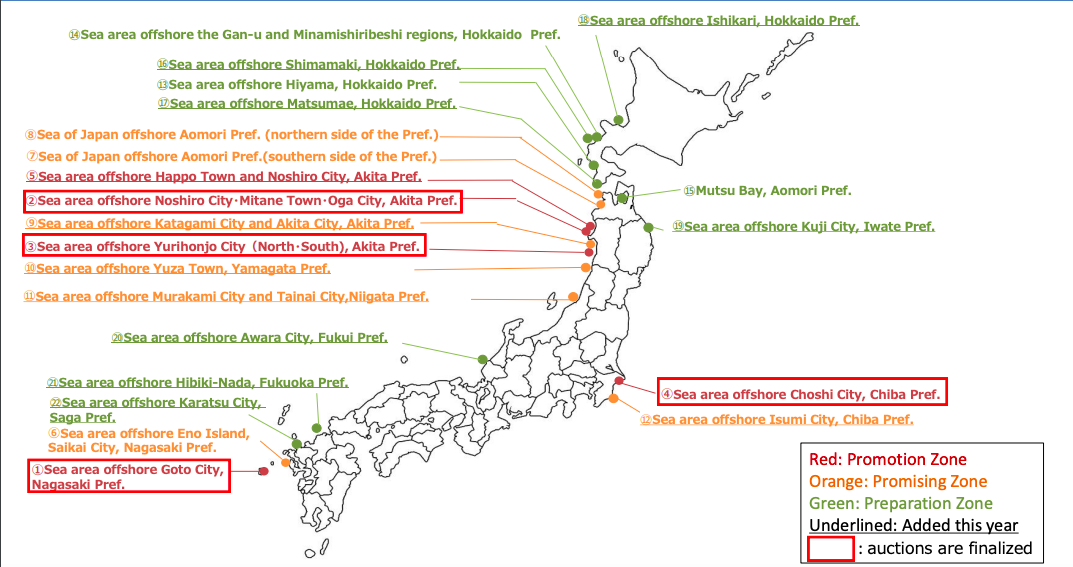
To this end, the government designates marine areas suitable for offshore wind power generation and assigns them into three categories:
Preparation zones
Promising zones, and
Promotion zones.
Only promotion zones can be offered for offshore wind projects and, currently, all of Japan’s existing “promotion zones” have been auctioned via Round 1 and Round 2, or are attracting bidders in Round 3. A successful auction bidder has the right to exclusively use their specified area for up to 30 years.
Today, there are nine zones in the category immediately preceding “promotion”. To make sure there are enough projects for the next auctions, METI began to speed up the elevation of “promising” areas into “promotion” ones.
ANRE, the energy agency under METI’s auspices, recently upgraded the status of five areas to “promising,” one step ahead of the “promotion” stage. These are waters off the coast of Ganu-Minamishiribeshi, Hiyama, Ishikari, Shimamaki and Matsumae – all towns and cities on the island of Hokkaido. The government concluded that there’s sufficient grid capacity to accept connections from wind farms in those zones.
Promotion zones placed up for auction in Round 1, 2 and 3:
Zones
Prefecture
Area
Capacity (MW)
Status
Planned start of operation
Promotion zones
Chiba
Choshi
390.6
Round 1 finalized
2028
Akita
Yurihonjo (North & South)
819
2030
Akita
Noshiro-Mitane-Ogashi
478.8
2028
Nagasaki
Goto
16.8
2026
Akita
Oga-Katagami-Akita
315
Round 2
finalized
2028
Nagasaki
Enoshima-Saikai
420
2029
Niigata
Murakami-Tainai
684
2029
Aomori
Happo-Noshiro
356
Round 2 pending
Unknown
Yamagata
Yuza
450
Round 3
Unknown
Aomori
Southern side of the Sea of Japan
600
Unknown
Facing the obstacles
Once the likely zones are established, operators need to carry out their own assessment of the sea, wind and other conditions to consider whether they can create a profitable wind farm in the area. One other consideration, however, is which ports the developer will need to use to build the project.
With so many of the initial promising zones clustered in nearby areas of northern Japan, the number of ports that they can use is limited. Already, one of the tenders from Round 2 (the Happo-Noshiro project in Akita Prefecture) was delayed from December 2023 to March 2024 after officials saw that its construction schedule and port utilization plans overlapped with that of other wind farms. The ports in question are Akita Port and Noshiro Port, which could serve ships working in the Happo-Noshiro and Oga-Katagami-Akita areas.
As a result, METI has asked the bidders for the Happo-Noshiro project to revise their plans to take into account the logistical constraints.
Securing qualified and motivated workers is another critical issue for the industry. In 2030 alone it’s estimated that wind farm operators will need to hire as many as 15,700 engineers and other highly skilled staff. By 2040, that figure will rise to over 38,200 qualified operators.
The government is aware of the problem. To address it, it has contracted a consortium comprising shipping firm Nippon Yusen and Nippon Kaiyo, a surveying services provider, to establish a training center for marine crew and operators of offshore wind power plants in Oga, Akita Prefecture. The center, which will accept 1,000 trainees per year, is slated to open in April.
Other obstacles are still awaiting resolution, especially around permitting. In order for more offshore wind projects to come online by 2030, the government may need to shorten the bidding and assessment periods to allow vendors more time to meet other requirements and gain approvals from local communities.
Each project already requires as much as eight years to execute even after a bid is finalized. The preliminary review alone takes more than one year and the environmental impact assessment may take between four to six years.
Round 3
After the Round 2 announcement, Japan quickly moved into Round 3 tenders, which focus on the south side of the Sea of Japan – off Aomori Prefecture, and the seas off Yuza Town in Yamagata Prefecture. The total capacity of those projects is 1.05 GW.
Draft guidelines for Round 3 were released in November and the government opened it to public comment. Developers will be able to submit plans until July 19, 2024; results are expected this calendar year. Most results of the previous rounds were announced in December.
The level of interest in Round 3 will be a significant factor in understanding just how much risk domestic and international wind developers are willing to take. With costs for offshore wind rising, and projects canceled in other countries, Japan will have to find a way to buck that trend and find cost efficient solutions.
The government won’t be able to act solely as judge and arbiter. As developers pioneer offshore wind’s unchartered waters, the burden will be on government officials to stimulate construction and reassure investors about the sector’s long-term viability.
Offshore wind capacity rollout in Japan (Cumulative MW totals by year)
2021
2022
2023
2024
2025
2026
2027
2028
2029
2030
Auctioned capacity
1,705
3,480
4,530
5,530
6,530
7,530
8,530
9,530
10,000~
Total capacity installed from the auctions
–
–
–
–
16.8
16.8
1,201
2.305
3,124
max 4,530*
Total capacity installed in port areas (outside auctions)
**
–
139
251
528
528
688
688
688
* – The max figure includes capacity rolled out for the projects pending in Round 2 and Round 3.
** Source: JWPA
ANALYSIS
BY MAYUMI WATANABE
What You Need to Know Before Trialing Perovskite Solar Tech
A few years ago, Perovskite solar cells (PSC) were a technology confined to technical papers. Yet in 2023, this bendable, lightweight material swiftly progressed from the lab stage to demonstration tests, the success of which should allow it to emerge as a viable and commercial option for decarbonization.
Interest in PSC has emerged at a wide range of Japanese firms. Companies as diverse as Toyota Motor and new-age farming startup Notas are sourcing PSC modules to explore how they can be integrated into the business, and what impact it will have on their green power portfolio and emissions.
However, the rush to revolutionize industry through this more flexible next-generation solar technology is also uncovering some of the limitations of PSC, at least in the form that it exists today. Much like the AI revolution in business processes, there are great aspirations but also great challenges in achieving Japan’s goal of commercializing the PSC sector within two years.
As the number of field trials of glass-mounted PSC modules rises, Japan NRG spoke to consultants at various projects to discuss how the technology was performing and what issues have emerged.
(See the table below for a list of major PSC field trials).
Major PSC field trials
JERA, Sekisui Chemical
Thermal power plant, eyeing PSC solar power supplies
NTT Data, Sekisui Chemical
PSC-equipped data centers
Tokyo Metropolitan Govt, Sekisui Chemical
PSC-equipped water recycling systems
Tokyu Group, Toshiba Energy Systems & Solutions
PSC-equipped railway station
JR West, Sekisui Chemical
Toyota Motor, EneCoat
PSC-equipped cars
Toyoda Gosei, EneCoat
PSC-equipped cars
Notas, Peccell Technologies
Farms (to power fences and camera systems, from spring 2024)
TEPCO Holdings, Sekisui Chemical
PSC-equipped buildings
Mitsui Fudosan Residential, EneCoat
PSC-equipped condominium (from 2024)
Panasonic
PSC-equipped homes
Macnica, Peccell Technologies
Ports
JGC, EneCoat
Logistic facilities (from 2024)
Aisin
PSC-powered manufacturing plant (from 2025)
Yokohama City, Toshiba Energy Systems
Temporary installation in an exhibition hall
Macnica, Tokyo metropolitan govt, EneCoat
PSC-powered air quality monitoring system
Marubeni Eneble
Glass-mounted PSC panels in condominiums
Mitsui Fudosan, Takenaka, Toshiba Energy Systems & Solutions
PSC-equipped wooden high-rise building
PXP Corporation
PSC-chalcopyrite tandem modules on EV
PSC impact on buildings
A year ago, there was just one PSC demo, and companies were helping the demos as a corporate social initiative. Today, demo projects are proliferating and certain trends have become clear.
Walls are popular spots for PSC installations; at least 13 out of 19 demo projects in Japan use building and facility walls and windows. PSC modules are light, and prototype modules that are over one-meter squared in size are now being developed, allowing installations in wide areas.
Construction consultants, however, point out that wall installations may be at odds with energy efficiency measures currently in place. That’s partly because of the heat released during power generation. Whether PSC modules are printed on thin films, or mounted on glass or metal sheets, they release heat when generating electricity.
One scientist told Japan NRG that the temperatures of PSC modules will be the same, or lower than those of other commercially available solar modules made of silicon. This means that module temperatures could rise to 80°C on hot summer days when outdoor air temperature is in the mid-30s°C.
The 80°C threshold suggests that direct installations of PSC-printed films on walls may require caution, depending on what the wall is made of. Many buildings deploy thermal insulation materials made of petrochemicals. The melting point for polyurethane foam, which is used for wall insulation, is 200°C, but at around 92°C it already starts to degrade quickly. Some consultants at PSC projects today say that at 80°C the performance of building materials tends to suffer.
Wooden commercial buildings are rare today, but their numbers are rising due to concern about concrete’s environmental impact. Japan is keen to promote the consumption of cross-laminated timber (CLT) as a concrete alternative, thus reducing construction’s carbon footprint. When combined with PSC, however, the results are troubling.
Wood rots faster when exposed to heat. Depending on the heat intensity, PSC modules placed on walls, for example, may speed up wall erosion, which in a worst-case scenario could lead to the collapse of the entire building.
In most current demos, PSC is mounted on metal or glass sheets to fix its module in position. Although PSC modules are lightweight, it cannot be assumed that they have no impact on the building’s structural integrity.
Meanwhile, glass-integrated PSC modules may block direct sunlight into a building, requiring more power for indoor lighting.
What happens if PSC breaks?
During demos, some modules break and the broken pieces are gathered for analysis. If the pieces and chemical elements are blown or washed away by rain this is a problem because PSCs contain lead. The impact on the environment is still not clear.
Disposal of the end-of-life PSC modules is another gray area. Sigma Aldrich Japan, a supplier of perovskite raw materials, says that users need to consult with municipalities on disposal.
Some researchers said they follow guidelines for chemical disposals at their respective institutions. Such guidelines say the material should be separated according to types and sent to contracted waste processing companies for disposal.
No data, no life
The biggest concern is a lack of data. Most of the research into PSC properties so far has been in lab conditions or with a narrow focus, and that has limited application in outdoor operating environments.
For example, several PSC researchers said they did not measure and monitor module temperatures during power generation because this aspect was outside of their R&D focus – which was to improve power efficiency.
For researchers, the main scope of work has been to find ways to scale up the module sizes, make PSC more efficient, explore automated production processes, and improve module endurance.
On the other hand, as the technology moves into practical use companies want information about best installation practices, system deployment, and operational know-how.
The government’s desire to protect Japanese IP in this burgeoning sector is leading to other kinds of information gaps. One construction firm was approached by an affiliate of a company developing PSC modules to ask about collaborating on demo projects. But the affiliate couldn’t disclose much about the modules in question, making evaluation of joint work nearly impossible.
“We were not shown the actual PSC modules. We were not given data. So, how do they expect us to make a project agreement without knowing what it is?” said an official at the construction firm.
Japan faces a fine balancing act in PSC development. METI’s desire to promote it as a sector of national importance, with restrictions on information sharing related to module manufacturing, makes sense due to intense international competition.
But it’s also important to offer technical transparency, for example, regarding installation in order to ensure healthy industry growth.
As with a lot of technologies, certain data sharing will be needed to encourage wide adoption of PSC across business sectors. It will benefit society if the results of field trials are disclosed and shared with the public.
ASIA ENERGY REVIEW
BY JOHN VAROLI
This weekly column focuses on energy events in Asia and the Pacific, and all that impact markets in the region.
ASEAN / Wind and solar
The operating utility-scale solar and wind capacity of ASEAN countries rose 20% YoY in 2023 to reach over 28 GW, led by Vietnam that had the largest operating utility-scale solar and wind capacity with 19 GW, followed by the Philippines and Thailand, with 3 GW each, reports Global Energy Monitor.
China / CRMs
EV maker BYD has held talks about a potential takeover of Brazilian lithium producer, Sigma Lithium, in a deal valued at $2.9 billion. Backed by Warren Buffett, BYD recently overtook Tesla as the world’s largest EV manufacturer.
India / Wind and solar power
Avaada Group and the Gujarat govt signed a MoU to develop 6 GW of hybrid wind and solar power projects with an investment of around $4.8 billion. Avaada said the projects will be built mostly in the underdeveloped wastelands of Kutch.
Indonesia / EVs
BYD will invest $1.3 billion in an EV factory in Indonesia. The Chinese carmaker unveiled three new models with the aim of becoming Indonesia’s biggest EV brand. The site would be the sixth auto plant planned outside China — following Brazil, Hungary, Mexico, Thailand and Uzbekistan.
LNG
Projects capable of producing 140 mtpa are set to come onstream between 2025 and 2027, according to Bernstein. That’s more than 30% of the current market. A further 190 mtpa of gas projects is also under consideration well into the next decade.
Nuclear power
Asia Pacific’s nuclear power sector expanded, reaching 132 GW of capacity in operation; also 48 GW of capacity is under construction, and 91 GW is in the planning stage. APAC is followed by Europe with 119 GW in operational capacity, 10 GW in construction, and 37 GW in planning.
Offshore wind
Total offshore wind investments that closed in 2023 reached a record 12.3 GW, a rebound from the 0.8 GW that reached a final investment decision (FID) in 2022. Asia Pacific accounted for 2.3 GW of projects that reached FID, mostly in Taiwan and South Korea.
Oman / Solar power
The govt has issued a tender for the 500 MW Ibri III Solar IPP farm. The project will need investment of about $403 million, and is expected to start operations by Q1 of 2024.
Philippines and Indonesia
President Marcos and President Widodo signed a MoU to boost cooperation in the energy sector amidst supply constraints on coal and LNG. The Philippines depends on Indonesia for coal, sourcing 98% of its total from the country in 2022.
Shipping
The re-routing of a growing number of ships around Africa to avoid attacks in the Red Sea is altering refueling patterns. Ships are topping up more at the ports of Singapore and Rotterdam, the two busiest bunkering ports and where fuel is competitively priced.
2024 EVENTS CALENDAR
A selection of domestic and international events we believe will have an impact on Japanese energy
January
First market trading day (Jan 4)
Japan’s Diet convenes (January)
The first Long-Term Decarbonization Power Source Auction
Renewable Energy Exhibition (Jan 31 – Feb 2)
Taiwan presidential election (Jan 13)
February
India Energy Week 2024 (Feb 6-9)
Smart Energy Week (Feb 28-Mar 1)
Lunar New Year (Feb 10-17)
CFAA International Symposium (Feb 2)
Indonesia presidential election (Feb 14)
FIT/FIP solar auction (Feb 19 – March 1)
Japan-Ukraine Conference for Promotion of Economic Reconstruction (Feb 19)
March
Announcement of the last auction result for Offshore Wind Round 2 (for Akita Happo-Noshiro area)
Onshore wind auctions (March 4-15; results on March 22)
International LNG Congress (LNGCON) 2024, Milan (March 11-12)
Russian presidential election (March 15-17)
Ukraine presidential election (due before March 31)
World Petrochemical Conference, Houston, TX, (March 18-22)
End of Japan’s fiscal year 2023 (Mar 31)
April
Details of 2024 capacity auction results released
Japan Atomic Industrial Forum (JAIF) Annual Conference
Global LNG Forum (Apr 15-16), Madrid, Spain
Global Hydrogen & CCS Forum (Apr 17-18), Madrid, Spain
World Energy Council (WEC), Rotterdam, Netherlands (Apr 22-25)
May
May Golden Week holidays (May 3-6)
World Hydrogen Summit (May 13-15)
June
Japan Energy Summit & Exhibition (June 3-5)
G7 Summit in Italy
International Conference on Oilfield Chemistry and Chemical Engineering (IOCCE), Tokyo (June 10-11)
American Nuclear Society (ANS) Annual Conference, Las Vegas (June 9-12)
Happo Noshiro, Murakami-Tainai, Oga-Katagami-Akita and Saikai-Eshima wind project auctions close (June 30)
July
Tokyo governor election (July 7)
7th Basic (Strategic) Energy Plan draft published (expected)
August
7th Basic (Strategic) Energy Plan draft presented to Cabinet (expected)
September
The United Nations Summit of the Future (Sept 22-23)
Gastech 2024, Houston, TX, USA (Sep 17-20)
IAEA General Conference
GX Week in Tokyo (expected late Sept to October)
Asia Green Growth Partnership Ministerial Meeting
Asia CCUS Network Forum
International Conference on Carbon Recycling
International Conference on Fuel Ammonia
GGX x TCFD Summit
October
IEA World Energy Outlook 2024 Release
BP Energy Outlook 2024 Release
Innovation for Cool Earth Forum (expected)
Connecting Green Hydrogen Japan 2024 (Oct 16-17)
Japan Wind Energy 2024 Summit (Oct 16-17)
Solar Energy Future Japan 2024 (Oct 16-17)
Japan Mobility Show (Oct 25-Nov 5)
November
U.S. presidential elections (Nov 5)
COP 29 in Azerbaijan (Nov 11-22)
Abu Dhabi International Petroleum Exhibition Conference (ADIPEC) 2024, Abu Dhabi, UAE (Nov 11-14)
International Conference on Nuclear Decommissioning (TBD)
G20 Rio de Janeiro Summit (Nov 18-19)
Biomass & BioEnergy Asia Conference (TBD)
European Biomethane Week 2024
December
Last market trading day (December 30)
Disclaimer
This communication has been prepared for information purposes only, is confidential and may be legally privileged. This is a subscription-only service and is directed at those who have expressly asked K.K. Yuri Group or one of its representatives to be added to the mailing list. This document may not be onwardly circulated or reproduced without prior written consent from Yuri Group, which retains all copyright to the content of this report.
Yuri Group is not registered as an investment advisor in any jurisdiction. Our research and all the content express our opinions, which are generally based on available public information, field studies and own analysis. Content is limited to general comment upon general political, economic and market issues, asset classes and types of investments. The report and all of its content does not constitute a recommendation or solicitation to buy, sell, subscribe for or underwrite any product or physical commodity, or a financial instrument.
The information contained in this report is obtained from sources believed to be reliable and in good faith. No representation or warranty is made that it is accurate or complete. Opinions and views expressed are subject to change without notice, as are prices and availability, which are indicative only. There is no obligation to notify recipients of any changes to this data or to do so in the future. No responsibility is accepted for the use of or reliance on the information provided. In no circumstances will Yuri Group be liable for any indirect or direct loss, or consequential loss or damages arising from the use of, any inability to use, or any inaccuracy in the information.