Ohbayashi Mika, director of the Renewable Energy Institute, resigned from a state task force on the energy transition after the unauthorized appearance of a Chinese energy firm’s digital logo prompted questions over unfriendly foreign influence. Ohbayashi’s digital presentation somehow used documents with a watermark of the State Grid Corporation of China that was then sent to Japanese expert panels and bodies such as METI. Officials are investigating.
Japan is betting big on Carbon Capture and Storage (CCS) to help reduce GHG emissions in hard-to-abate industries such as cement and steel production. However, Japan faces challenges in CCS deployment — its geology has limited storage potential and is vulnerable to high seismic activity. Enter Australia, which has ambitions to become a top CCS player in Asia-Pacific. Despite the potential, Japan and Australia face significant obstacles in terms of economic viability and legislation, especially over rules for seaborne transport of liquid CO2.
ASIA ENERGY VIEW
A wrap of top energy news that impacts other Asian countries.
EVENTS SCHEDULE
A selection of events to keep an eye on in 2024.
JAPAN NRG WEEKLY
PUBLISHER K. K. Yuri Group
Editorial Team Yuriy Humber (Editor-in-Chief) John Varoli (Senior Editor, Americas) Mayumi Watanabe (Japan) Wilfried Goossens (Events, global) Kyoko Fukuda (Japan) Magdalena Osumi (Japan Filippo Pedretti (Japan) Tim Young (Japan)
METI plans to launch indices for avoided emissions and reduced emissions of products. These figures, along with carbon footprints, are designed to promote climate-ethical spending.
The avoided emissions are to be based on Scope 1, 2 and 3 figures; while the reduced emissions will be based on Scope 1 and 2, and if applicable, Scope 3.
The ministry will write the basic structure of the indices in 2025, and the guidelines in 2026 to avoid double counting.
TAKEAWAY: Scope 3 includes all indirect emissions from a company’s activities that fall outside its direct operations. They are a large part of its carbon footprint, often exceeding 75%. Addressing Scope 3 emissions is important for assessing a company’s environmental impact. Yet, managing and indexing these emissions is particularly difficult. There are challenges in collecting data across the value chain and reduction methods.
The Cabinet’s Secretariat for Science, Technology and Innovation announced the launch of the “Fusion Energy Industry Association,” simply known as J-Fusion.
Some 21 companies are members. Kyoto Fusioneering was tapped as chair of the board. Helical Fusion and Sumitomo Corp were appointed as vice-chair, and Furukawa Electric and JGC were appointed as permanent directors.
CONTEXT: The council has set out to establish a national strategy for nuclear fusion and plans to accelerate the creation of nuclear fusion industries and businesses, as well as to engage in activities such as technology standardization and policy recommendations to the government, including safety regulations.
Startup MiRESSO has raised ¥250 million from Genecia Ventures, JGC Mirai Innovation Fund, and Mitsui Sumitomo Insurance Venture Capital.
By 2027, the company plans to build a 10,000 tons / year beryllium production plant, using a combination of microwave and chemical processing technologies to smelt the metal at 300°C instead of the current process, which works at 2,000°C.
Beryllium is used to induce nuclear fusion.
TAKEAWAY: Studies of microwaves for metal smelting at low temperatures is gaining traction. Last year, Osaka-based Microwave Chemical and Tokyo-based Pacific Metals studied nickel production using microwaves instead of furnaces and kilns powered by electricity.
Sekisui Chemical and Senko Group began testing Perovskite solar cell (PSC) modules installed on the walls of a warehouse at Senko’s logistic center in Ibaraki Pref.
On March 22, some 16 units of 1-m2 modules were put on a wall made of autoclaved lightweight aerated concrete (ALC). The studies will run for one year, assessing power efficiencies and module durability in varied weather conditions, notably wind.
CONTEXT: Solar panels are installed on rooftops rather than walls because the angle for receiving sunlight is optimal on top areas. Walls, however, provide more space to install modules, and access to a large installation area is important for PSC modules with low power efficiencies of around 15%. Warehouse and factory walls have less windows compared to commercial buildings and offer larger installation space.
TAKEAWAY: If film-like PSC modules are easy to install on walls, roofs, cars, etc, then they could be a success. Sekisui claims it took just six hours to install the module films on a protective frame, put it on the wall and connect to power cables. Another issue is building safety because the modules will release heat that may erode walls, depending on what they’re made of. This is included in the Sekisui-Senko studies.
To realize domestic aircraft production by 2035, METI will finance R&D, support international technical standards, and set up reliable component supply chains.
For example, METI will focus on next-gen aircraft powered by hydrogen. It forecasts as much as ¥5 trillion in public and private investment over the next decade.
METI will work with manufacturers in various areas rather than one aircraft maker, and will expand collaboration, including with foreign businesses.
Previously, METI provided ¥50 billion in R&D subsidies to Mitsubishi SpaceJet, but the company suspended the project in 2023.
TAKEAWAY: Presently, Japan imports aircraft. By 2025, METI plans to set up standardization task forces for electric aircraft, hydrogen aircraft and lightweight materials. The ministry aims to strengthen Japanese competitiveness in composite materials, components, and engines through the localization of aircraft production.
A METI director in charge of aviation told Japan NRG in an interview published in the Jan 29, 2024 edition that the govt is keen to promote Japanese aircraft component maker’s ambitions to help build new planes fueled by electrons or hydrogen. Japan is open to collaboration with the world’s top aviation companies, but instead of acting simply as a parts supplier, Japan wants to provide entire systems for aircraft and has the industrial base to achieve it, the director told Japan NRG.
JERA and ExxonMobil inked an agreement to develop the Baytown Complex in Texas with its nameplate capacities of 900,000 tons a year of ‘blue’ hydrogen and one mln tons / year of low-carbon ammonia.
Exxon plans to extract ‘blue hydrogen’ from natural gas; the CO2 emitted during the process would be captured and stored.
The companies will further discuss JERA’s ownership in the project and the possibility of a 500,000 tons / year of ammonia offtake contract to meet demand in Japan.
An investment decision on the multi-billion-dollar project, expected to be the world’s largest of its kind, will be made next year, depending on commercial feasibility. If approved, the project is slated to begin production in 2028.
CONTEXT: The natural gas for the hydrogen will come from Exxon’s operations in the Permian basin in west Texas. Hydrogen and ammonia do not emit CO2 when burned, but their production process can result in emissions when fossil fuels are involved.
TAKEAWAY: As big as the project itself is the size of the offtake contract that JERA is considering. There are very few commercial contracts of that size for ammonia outside of its use to make fertilizer. However, JERA’s demand picture requires big volumes. The Japanese utility has just started co-firing ammonia at one of the units of its Hekinan coal power plant at a ratio of 20%-ammonia-80%-coal, and for that alone it had put out a contract offer in 2022 for 500,000 tons/ year.
The issue with the Baytown development, however, is that Exxon has previously said that it will require tax credits to make it work. Such credits are available under the U.S. government’s Inflation Reduction Act (IRA), but they favor green hydrogen (i.e., a process that relies on electrolysis technology and renewable energy, rather than the steam reforming of natural gas). According to the IRA, the amount of tax credit declines as the amount of CO2 emissions increases in the production process. Exxon said just last week that it needs the IRA to treat ‘blue’ hydrogen and ‘green’ hydrogen the same for the economics to work. Whether the U.S. govt will be sympathetic to Exxon’s arguments is as yet unclear.
Iwatani Corp plans to build hydrogen production plants in Kawasaki (Kanagawa Pref) and Toyota (Aichi Pref), doubling its nationwide output to 240 million Nm3 by 2027. Investment is projected to be ¥50 billion.
The company currently runs three plants, in Chiba, Osaka and Yamaguchi prefectures.
The Japan Atomic Energy Agency conducted a safety test at the High Temperature Test Reactor (HTTR). It confirmed that even in accident scenarios, core meltdown does not occur in high-temperature gas reactors.
CONTEXT: The HTTR is a graphite-moderated, gas-cooled research reactor in Ōarai, Ibaraki that uses long hexagonal fuel assemblies, unlike competing pebble bed reactor designs. HTTR’s primary coolant is helium gas. The fuel is uranium oxide.
The test demonstrated its unique safety feature for the first time, and is a major milestone. The HTTR decreases power output and maintains stability even when cooling is lost during operation at full power.
TAKEAWAY: The HTTR technology is one of Japan’s most eye-catching nuclear power innovations, but its progress was stalled after the Fukushima accident. This technology is also said to be highly suitable for powering hydrogen production. Still, the speed at which HTTR could enter commercial operation is moot. METI’s most recent nuclear sector roadmap does not see the start of construction of a larger scale HTTR unit until the end of this decade, and forecasts operations to begin at an undefined point “in the 2030s”. For all that, this is the most advanced timetable of all the next-gen reactor technologies METI is promoting.
Niterra developed a compact “reversible” solid oxide cell (SOC) system integrating hydrogen production through electrolysis (SOEC), and fuel cell power generation (SOFC) units into a single-cell stack.
The stack can switch between hydrogen production and power generation. To enable these properties, Niterra has a “hot module structure” to maintain the stack at 700°C.
The system produces 0.9 Nm3 / hour of hydrogen and 740 W power. The company plans to commercialize it in FY2025 after field studies.
TAKEAWAY: Compact SOCs are in high demand from railway and construction companies that have operations in off-grid areas. Businesses plan to introduce FC systems to reduce carbon footprints; they also want to test with compact systems first. The challenge is securing and carrying water for electrolysis. This system might not be useful in dry remote locations.
UBE Mitsubishi Cement (MUCC) and Osaka Gas will explore cooperation on CCUS value chains, to capture CO2 emissions from cement production.
They will study the separation, recovery, liquefaction and storage, and will consider offshore transportation of liquefied CO2, underground storage of CO2.
The study aims to capture and store CO2 emitted from MUCC’s Kyushu Plant cement kilns, and also look at reusing it to make e-methane.
CONTEXT: In May 2023, Osaka Gas inked a joint study with Shell to implement CCS projects. Their goal is to collect CO2 from domestic factories such as chemical and steel plants, liquefy it, transport it by ship, and store it underground.
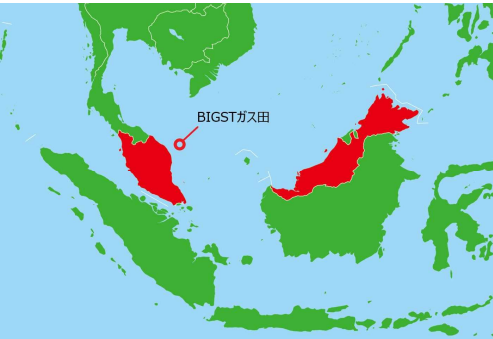
JX Nippon Oil and Gas Exploration (JX), with Petronas and Petronas Carigali, inked a Production Sharing Contract (PSC) to develop high CO2 gas fields in Malaysia.
JX acquired a 50% interest in the project, while Carigali has the remaining 50%.
Also, JX inked an operating agreement with Carigali for field development.
The project will use CCS tech to manage CO2 emissions.
Emulsion Flow Technologies, a startup founded by Japan Atomic Energy Agency researchers, will apply a solvent extraction method to separate metallic lithium, cobalt and nickel substances from spent EV battery solutions.
The process requires less chemicals and processes, and improves recycling rate by five times, said Suzuki Hiroshi, the company CEO in an interview. He plans to commercialize the system in 2026.
TAKEAWAY: JAEA actively licenses its technologies to businesses and more startups to commercialize its R&D results are likely to emerge. Last year, it announced the development of a vacuum system which would not require any power sources, eyeing its application in the transport of liquefied hydrogen.
In April, Japan and the European Union (EU) will establish a new framework for collaboration in the development of advanced materials needed for next-generation technologies.
Discussions will focus on areas such as sodium ion batteries, which can be used to power electric vehicles (EVs), and materials for semiconductors. The aim is to cut reliance on Chinese supply chains.
IHI and Yara Clean Ammonia Norge signed a MoU to explore marine transportation of ammonia from IHI suppliers in India and other countries; as well as to set up joint transport systems and to produce ammonia with low carbon footprint.
CONTEXT: IHI is now in talks with the ACME group of India on 400,000 tons / year of green ammonia supplies, to begin starting 2028.
MOL Coastal Shipping, Asahi Tanker and IKOUS began a concept study of a coastal ammonia carrier with a 10,000 m3 transport capacity. They’ve set a target date of 2028-2029 to launch operations.
Present coastal ammonia vessels have 1,000 m3 capacities.
Itochu and Taiwan’s U-Ming Marine Transport signed a MoU on joint ownership and operation of vessels fueled by ammonia.
Itochu and four other companies are developing the ships and setting up international ammonia supply chain systems. The project has Green Innovation Fund financing.
Tokyo Gas plans to decarbonize 50% of its gas and electricity sales by 2040. It will increase use of synthetic methane and renewable energy sources while reducing fossil fuel usage.
Synthetic methane, produced from hydrogen and CO2, will be blended into city gas, aiming for over 10% of sales volume by 2040. Renewable energy will constitute 30% of electricity by 2030. The company also has plans for offshore wind power and hydrogen-based thermal power.
The company aims to cut CO2 emissions from operations by 2050, and also plans to reduce total CO2 emissions 20% by 2030, and 60% by 2040. These percentages encompass both manufacturing and customer-related emissions.
CONTEXT: Synthetic methane is also known as e-methane.
Ventyr, a consortium including Parkwind, a JERA subsidiary, and Ingka Investments, won a bid to develop the Southern North Sea Phase 1 area.
The 1.5 GW project is a critical step in Norway’s goal of awarding 30 GW of offshore wind power permits by 2040. The first turbines will be operational by 2030.
Parkwind is JERA’s 100% owned subsidiary, which it acquired in July 2023 from Virya Energy. Ingka Investments is the investment arm of Ingka Group.
CONTEXT: Ventyr was chosen from five participating consortiums. The other four were: Aker Offshore Wind, BP and Statkraft; Equinor and RWE; Norseman Wind, a subsidiary of German energy giant EnBW; and Shell, Lyse and Eviny. The bid was part of a Norwegian govt offering with total capacity of 3 GW across two areas – 1.5 GW at Southern North Sea II and 1.5 GW at Utsira Nord.
KEPCO signed a stock subscription agreement and will invest in Odfjell Oceanwind (OOW), a firm developing floating foundation tech for offshore wind turbines.
The Norway-based OOW designs, builds and operates floating foundations for offshore wind turbines (with individual output 15 MW or larger).
CONTEXT: In 2023, Mitsui O.S.K. Lines took a stake in Odfjell Oceanwind. The deal followed a partnership for the Utsira Nord seabed lease competition with Kansai Electric, IKEA’s investment arm Ingka, and Source Galileo, a platform for investments in renewable infrastructure. Earlier this month, OOW, Source Galileo Norge and Kansai Electric were awarded a grant of about $190 million by Enova, a Norwegian state-owned entity that promotes clean energy for the 75 MW GoliatVIND floating wind project in the Barents Sea. It will feature five 15-MW turbines.
Image of OOW’s original semi-submersible floating wind foundation Deepsea Star™
Fukushima Pref selected Mitsubishi Research Institute to study offshore wind power potential off the region’s coast.
The prefecture also intends to study the potential for the EEZ, and to examine the creation of a new base of operations to service any offshore wind power capacity.
SMFL MIRAI Partners completed the first stage of a large aquaculture solar power project run concurrently with shrimp farming in southwestern Taiwan.
The project is run in cooperation with a Taiwanese subsidiary of trading house Sumitomo, a shareholder of SMFL. It covers more than 60 separate sites with a total capacity of 121 MW, and is eligible for the FIT system.
The firm will also participate in phase 2. Total capacity will be 242 MW.
CONTEXT: By 2030, Taiwan plans to increase its solar power generation capacity to 30 GW, and the govt is promoting aquaculture integrated solar power tech as one of solutions that will help achieve the 2030 target.
TAKEAWAY: Taiwan’s growing renewable energy market has attracted big players such as JRE, as well as financial support from major Japanese banks such as MUFG Bank, Sumitomo Mitsui Banking and Mizuho Bank.
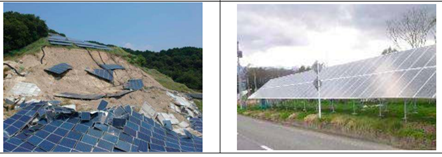
The Ministry of Internal Affairs and Communication (MIC) reported that over 40% of municipalities had problems with installation of solar power generation equipment.
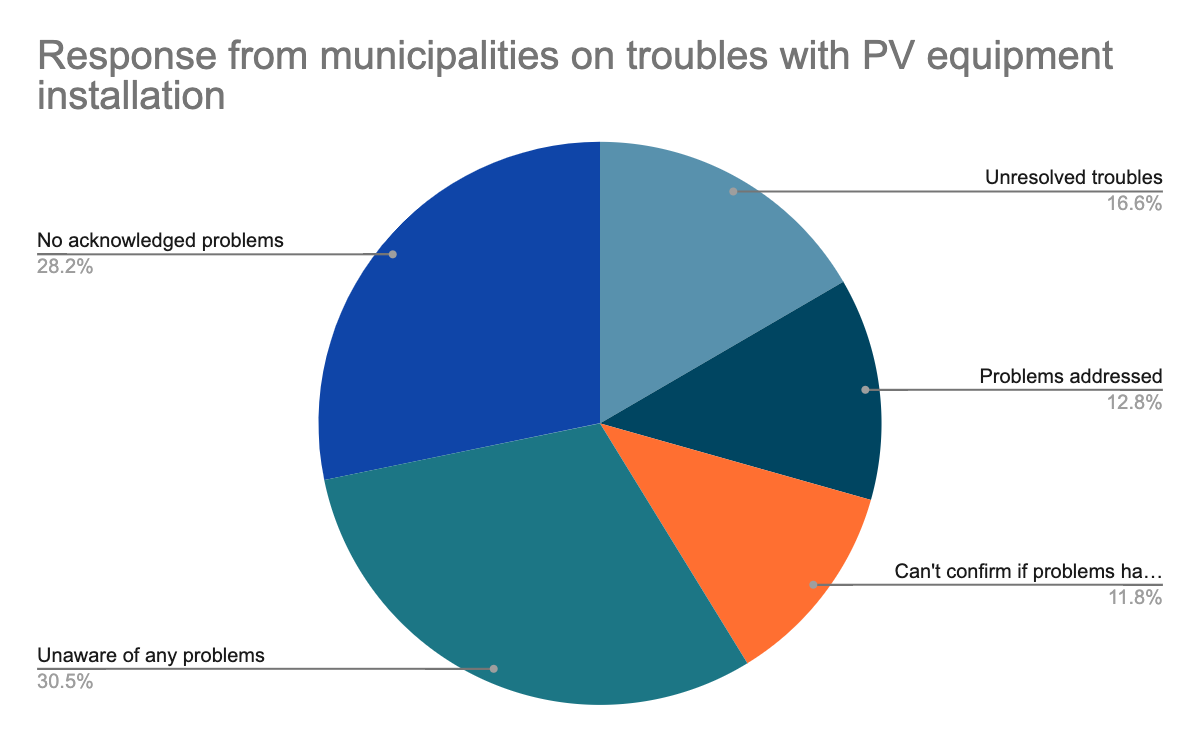
Troubles occurred in 355 municipalities, or 41.2% of the 861 municipalities nationwide that responded. Of these, 143 (16.6%) are still unresolved. Another 102 (11.8%) could not confirm if the problems were addressed. Only 243 (28.2%) were confident that problems had not occurred or were not reported.
The main problems identified included: 1) the flow of sediment and muddy water into a nearby river from the site under construction; 2) insufficient explanation of work by the operator to local residents; 3) construction work differing from permit conditions; 4) and no contact with the operator after the project was operational.
However, there were also cases where METI’s Bureau of Economy, Trade and Industry, did not take sufficient action.
CONTEXT: According to MIC, since 2012 some 735,000 commercial solar facilities with an output of at least 10 kW have been built. In April, new regulations will take effect that will tighten solar farm construction regulations.
The Japan Bank for International Cooperation and other lenders will provide up to ¥20 billion ($130 million) to Indian state-owned hydropower company NHPC.
The syndicated loan is co-financed by MUFG Bank and Bank of Yokohama. State-backed JBIC will contribute ¥12 billion of the total.
Last week, JBIC announced similar syndicated financing for NTPC, India’s largest state-owned power company, to fund pollution control equipment at power plants.
JBIC seeks to build ties with Indian power companies, with an eye to promote expansion by Japanese businesses with strength in green tech.
CONTEXT: The Indian govt, facing a trade deficit that stems partly from imports of crude oil, has set a target of achieving net-zero GHGs emissions by 2070. With demand for renewables expected to grow, NHPC has expanded into solar alongside its mainstay hydropower business.
METI experts have proposed a plan to the ministry to help boost liquidity of futures trading on the TOCOM exchange (owned by Japan Stock Exchange, JPX). The plan centers on strengthening the link between futures and spot transactions and wants the change to take place from 2025.
CONTEXT: The spot or wholesale market is run by the Japan Electric Power Exchange (JEPX), a public interest incorporated organization. JPX is part of the Japan Exchange Group, a listed entity that owns the Tokyo and Osaka stock exchanges, and the Tokyo Commodity Exchange, which is known as TOCOM.
The expert group, chaired by Prof. Ohashi Hiroshi of the Graduate School of the University of Tokyo, says the introduction of a one-stop trading scheme will increase liquidity in the futures market, make pricing more transparent, and boost efficiency of power trading as a whole. It suggests the consolidated bids to be made to TOCOM.
Currently, bids for spot electricity and its derivative futures contracts are made separately.
Also, the expert group suggests clarification on how market participants should treat their futures contracts within Japanese accounting standards. One of the reasons large power utilities have been hesitant about engaging in futures trading is due to concerns over how to apply hedge accounting.
CONTEXT: To apply hedge accounting, it’s necessary to prove that cash and futures contracts are linked. This will require understanding from those with oversight of the accounting standards.
TOCOM President Ishizaki attended the experts meeting ans said his exchange is ready to set up the linkage mechanism, which is tentatively named the JJ-Link, and seek clarification on the accounting side.
A new system with linked trades would only apply to orders. Margins and deposits will still have to be paid under the current arrangements with each market platform.
TAKEAWAY: As covered in last months issues of the Weekly, an expert group under METI is charged with reviewing all the power industry reforms and electricity market platforms that are in place today, and suggest improvements. One of the themes that keeps emerging from these discussions is the desire by the govt and those it has drafted in as expert advisors to combine / syncronize the various market platforms. The result may create a more efficient system for the bigger market players. However, the thinking seems to ignore that there are now two futures platforms in Japan, with TOCOM currenrly by far the smaller of the two. Also, there are other platforms that provide aggregation services for the Japanese market. So, while the consolidation of spot and futures bids on the TOCOM may help traders and also big utilities, it also raises questions over competition in the business of power market platforms.
METI expects sufficient power supplies during July to Sept – the summer peak demand period. Under the worst case scenario of the hottest summer in a decade, the power reserve rates are forecast to hold above the minimum threshold of 3%.
However, if serious technical problems occur at power stations, electricity supplies will be tight. Thus, the ministry said there’s a continued need to closely monitor the supply-demand balance.
In July, power supplies will decrease in the Chubu, Hokuriku, Kansai, Chugoku and Shikoku regions compared to over a year ago. But demand is also forecast to decline.
While winter reserve rates are forecast above 10%, the Tokyo area is vulnerable to supply risks as its power sources are concentrated in the bay area.
After a meeting with ANRE officials, the Kashiwazaki and Kariwa town councils urged an early restart of the Kashiwazaki-Kariwa NPP. Both councils sent a request letter to the govt, with support from local economic groups.
The final decision, however, rests with Niigata Governor Hanasumi, who will consider evacuation plans and safety measures before announcing his say on the restart.
TEPCO plans to load nuclear fuel into Unit 7 at Kashiwazaki-Kariwa NPP.
Work begins on April 15, installing 872 fuel assemblies inside the reactor. Approval from the NRA is pending. After fuel loading, if local consent is obtained, preparations will be made to resume operations.
CONTEXT: Fuel loading is the final step before resuming operation. Once control rods are withdrawn, nuclear fission reaction starts.
CONTEXT: This is an opinion piece by Matsumoto Junichi, head of the Project Management Office and chief officer of ALPS-treated water management at TEPCO.
Matsumoto emphasizes transparency in the cleanup at Fukushima Daiichi NPP.
He highlights the monitoring of seawater near the NPP, and that tritium concentrations remain below regulatory thresholds.
It has been over 13 years since the Fukushima disaster in 2011, yet the once preeminent TEPCO still struggles to win over public trust. The situation around the restart of Kashiwazaki-Kariwa NPP is a case in point.
Hokkaido Electric will build a new seawall at the Tomari NPP as a safety measure. Construction will cost about ¥180 billion and take three years.
The seawall will stand 19 meters above sea level and stretch about 1.2 km.
CONTEXT: Tomari NPP is under review by the NRA for restart. The review process has been extended, especially due to review of tsunami countermeasures. The company currently assumes that all units will be operational by FY2030.
Hitachi Energy and Grid United, an independent electrical transmission firm, announced plans to deliver HVDC tech for Grid United transmission projects that will interconnect the U.S. eastern and western regional power grids.
These projects are expected to boost transmission capacity especially at a time of drastically increasing demand for electricity.
As part of a capacity reservation agreement under a multi-contract framework, Hitachi Energy will provide HVDC tech to support the development of multiple Grid United HVDC interconnections that will help mitigate the impact of extreme events and accommodate a growing demand for electricity.
CONTEXT: Long-distance energy transmission is one of the biggest challenges in the U.S. Hitachi Energy has provided HVDC solutions to North American clients since 1970 and now has more than 20 projects in the U.S. and Canada.
A group of researchers with support from NEDO has developed a control system for an Organic Rankine Cycle (ORC) power generation system using waste heat and lithium-ion batteries with a max capacity of over 10 kWh.
The 5kW-class stand-alone ORC system achieves the world’s highest generation efficiency and energy conservation, and is designed for off-grid operation, using electricity stored in LiBs as startup power.
The system was developed as power generation / storage that can be charged and discharged at any time. The company plans to commercialize it in FY2025.
Chubu Electric Power Grid, NGK Insulators and Ena City, Gifu Pref, launched a self-sufficient microgrid that can be used in the event of a large-scale power outage.
The microgrid will provide electricity to the area, including evacuation shelters, from large-capacity NAS storage batteries installed in the Kirami district of Ena City and PV generation equipment.
The NAS battery’s self-supporting function will automatically adjust the area’s supply-demand power balance.
Mitsui & Co will invest $560 million to develop a gas field in south Vietnam.
The Block B project in Kien Giang province includes field development as well as a pipeline connecting to a gas-fired power plant. Overall costs will exceed $10 billion.
State-backed Vietnam Oil and Gas Group, (PetroVietnam), is leading the project. Production is slated to begin in late 2026.
Mitsui Oil Exploration holds a 23% interest in the project’s upstream gas field business and a 15% stake in the midstream pipeline business.
The project was initially expected to go into operation in 2020 but is likely to be delayed by more than six years. Negotiations with the Vietnamese govt have bogged down over long-term gas purchase guarantees and prices.
CONTEXT: Over recent decades Vietnam has emerged as an important oil and natural gas producer in Southeast Asia, increasing exploration and allowing for greater foreign investment and cooperation. In 2016, Vietnam held 24.7 trillion cubic feet of natural gas reserves, and produced 375 billion cubic feet. All production is consumed domestically. Half of the reserves are located in the northern deepwater areas of the Song Hong basin and have high CO2 content. Major new developments are expected from ExxonMobil’s Ca Voi Xanh field, PetroVietnam’s Block B project, and an overlapping basin with Malaysia.
METI Minister Saito said the govt will extend subsidies to ease the impact of price hikes for oil products.
However, power and gas subsidies will end in May as LNG and coal import prices have eased to pre-2022 levels.
The minister added that there’s a need to assess the price risks triggered by geopolitical uncertainties in the Middle East, and that oil subsidies will continue for “a certain period.”
CONTEXT: State energy subsidies started in Jan 2022 and cover products including fuel oil, gasoline, power and gas. This is the govt’s third extension since deciding in October last year to continue the subsidy system until April 2024.
LNG stocks held by the 10 major power utilities stood at 1.52 mln tons as of March 24, down 5% from 1.6 mln tons a week earlier.
This is 34.8% down from the end of March 2023, and 29% lower than the past 5-year average of 2.14 mln tons.
Stock levels have steadily decreased since early March due to the end of peak winter demand. However, March weather has been unexpectedly cold, with regular rain, pushing back initial Sakura bloom forecasts by several days.
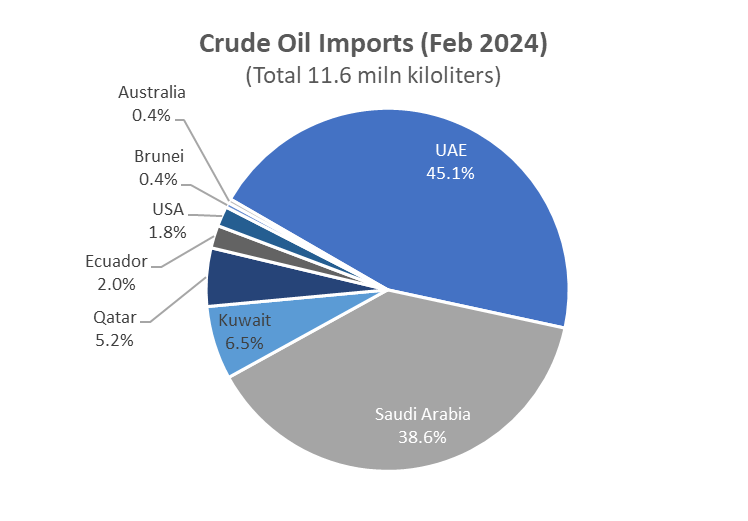
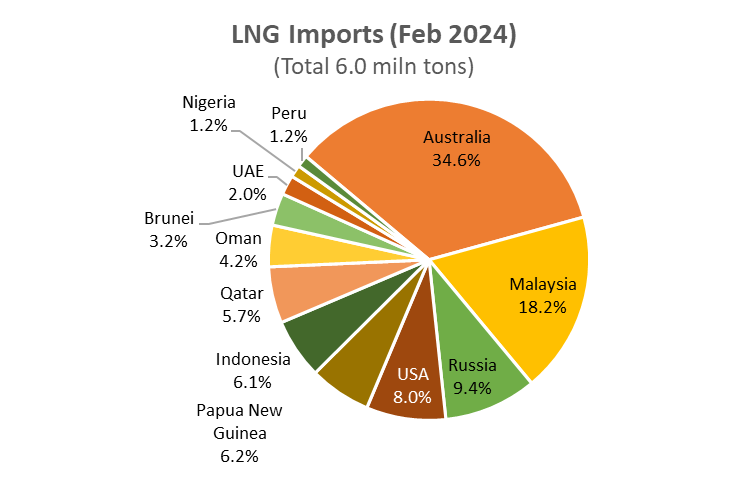
In February, more than 95% of Japan’s 11.6 mln kiloliters of crude oil came from the Middle East. The highest volume came from the UAE, followed by Saudi Arabia. Despite disruptions in Red Sea shipping, imported volumes over the past three months have been stable.
The Asia-Pacific remains the dominant supplier of Japan’s LNG, with nearly 70% of the total. The U.S. has been one of the biggest gainers in Japan’s LNG portfolio in recent years, while Qatar’s share has declined.
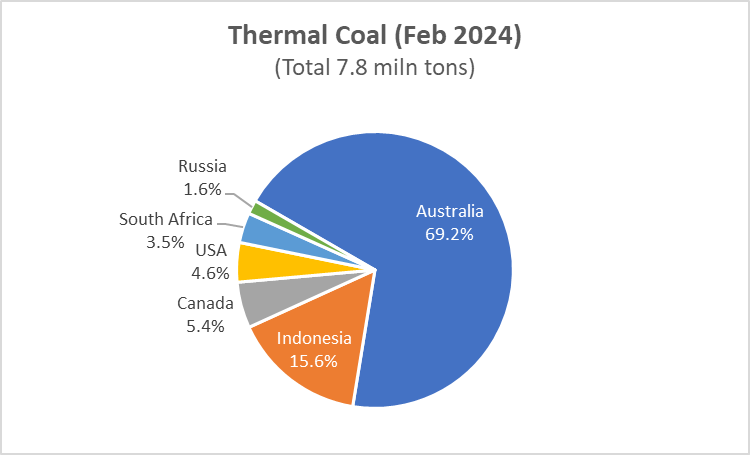
Meanwhile, Australia continues to dominate thermal coal imports, with about 70% of February’s 7.8 mln ton total. Indonesia retains its position as No. 2 supplier, while the curtailment of Russian purchases has boosted sales of North American suppliers.
ANALYSIS
BY MAGDALENA OSUMI
Mishap Over Use of Chinese Logo at REI Triggers Uproar
A senior energy researcher has resigned from a government-appointed task force on Japan’s energy transition after the unauthorized use of a Chinese energy firm’s digital logo prompted questions over unfriendly foreign influence.
On March 27, Ohbayashi Mika, director of the Renewable Energy Institute (REI), a Tokyo think tank that promotes renewable energy, announced her resignation from the Cabinet Office-led panel that’s supervised by Minister for Digital Transformation Kono Taro.
Ohbayashi found herself in hot water after it emerged that during her digital presentation she somehow used documents with a watermark of the State Grid Corporation of China and subsequently reused the documents as REI’s template on numerous occasions. These documents were sent to government expert panels and bodies such as METI and the Financial Services Agency.
While REI is not an official advisory body under the Cabinet Office, its opinions and research may be taken as official advice that can influence the implementation of government energy policies.
The fact that Ohbayashi’s Chinese blunder went unnoticed for so long is rather disturbing. This has led many pundits and experts to question the competence of the national task force on Japan’s energy transition.
Ohbayashi is REI’s founding member and had previously worked for the International Renewable Energy Agency (IRENA). Her mishap only became widely known last week when it went viral in public forums such as X, (formerly known as Twitter), which is one of Japan’s most popular social media platforms. It has also since been covered by media outlets ranging from right-wing Sankei Shimbun to left-wing Asahi Shimbun.
During a news conference in Tokyo on March 27, Ohbayashi apologized but said that she was not aware of the Chinese logo in question, claiming that the incident caught her by surprise upon return from an overseas trip on March 25.
On March 26, REI had issued a statement saying that the logo of the SGCC was originally included in presentation materials for a workshop on international power grids that REI hosted in Seoul in 2016. The SGCC was among guests invited to the event by Mongolia’s energy ministry.
The same year, REI set up a study group for a pan-Asia power grid consisting of domestic energy experts. The documents with the SGCC’s logo were used in discussions held by REI’s study group on the power grid. The institute said that Ohbayashi used a map provided by the SGCC and deleted the logo from the header but hadn’t noticed the watermark.
Even though Ohbayashi and REI claim that the use of the SGCC’s logo was a careless mistake, since 2016 the organization has pushed the pan-Asia grid idea in what could be interpreted as the ideal solution for Japan, China and other regional neighbors.
In 2020, a presentation with Ohbayashi’s name was submitted to the United Nations Economic and Social Commission for Asia and the Pacific. It described the so-called Asia Super Grid that would enable several Asian countries to share both their infrastructure and renewable energy across the region.
Ohbayashi explained that the idea was to connect Japan with China, South Korea and Russia via an international power grid using solar and wind power generated in Mongolia as the main power supply. The content is still available for viewing with the logo in question.
Ohbayashi, however, rebuffed the theory of REI’s potential link with China. “The institute’s policy recommendations do not reflect the wishes of the Chinese government, but were purely aimed at solutions to decarbonize Japan and the world,” she says.
Nevertheless, such a connection would be highly beneficial for China, which dominates the global solar PV supply chain as well as the production of essential rare earths. REI said its involvement with the SGCC is through the Global Energy Interconnection Development and Cooperation Organization (GEIDCO), an international organization comprising energy research institutes, universities and other prominent organizations.
According to REI, the group proposed building an international power grid in Asia as a measure to address Japan’s energy problems in the wake of the March 2011 earthquake and Fukushima Daiichi NPP disaster. The Asian grid idea was conceived by Son Masayoshi, founder of Softbank Group, and also founder of REI.
Although REI remained a member of GEIDCO’s board of directors, its connections with the SGCC grew weak after the start of the Covid-19 pandemic in early 2020. REI even decided to withdraw from GEIDCO to avoid any misunderstandings.
Also, another matter that has sparked controversy is that three of the nine energy transition task force members represent REI. Ohbayashi said that when she was appointed to the task force, she had been recommended by Minister Kono. The two remain close.
Known for his anti-nuclear stance, Kono’s expertise on energy has also faced scrutiny since he’s never been in charge of Japan’s energy policy. Also, in autumn 2021, Kono was in the race against Kishida to be prime minister and is still seen as a likely future PM.
The REI controversy has prompted political experts to voice concerns over Japan’s energy security, which, of course, is national security. While the use of China’s logo may have been a mere mistake, experts point out that regardless of whether it was intentional or not, Ohbayashi “has undoubtedly brought in China’s agenda to Japan’s strategy on energy security.” Indeed, the issue may further undermine Ohbayashi and REI’s credibility.
Professor Iida Yasuyuki of Meiji University’s School of Political Science and Economics told President Online magazine that “the logo mixing is considered a ‘clerical error,’ but this is not such a small incident.”
Ohbayashi’s error has also drawn strong reactions from lawmakers, especially those in opposition parties. Tamaki Yuichiro, member of Democratic Party for the People, said that if foreign governments were allowed to get involved in debates over national energy policies, “it would have a tremendous effect from an economic security perspective.”
On March 28, Chief Cabinet Secretary Hayashi Yoshimasa said that an investigation will be conducted into Ohbayashi and the documents in question, including whether there had been any improper influence by the Chinese government.
The results of such an investigation won’t have a major impact on Japan’s energy transition policies, but one thing is highly likely – Ohbayashi’s credibility and influence, as well as that of REI, will wane and might not recover their previous authority for some time.
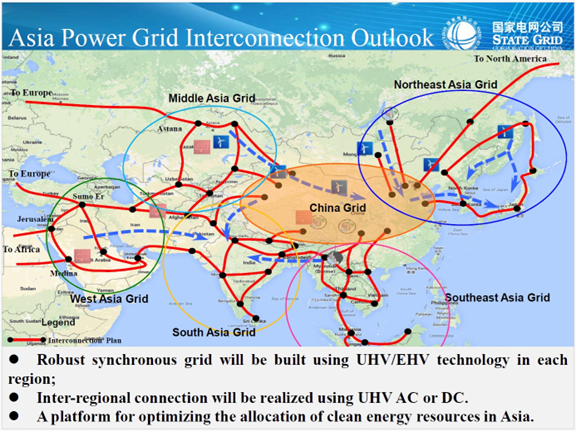
A slide with a conceptual map of an international power grid from Europe to East Asia in the China National Grid document from the May 26, 2016 workshop.
Source: Renewable Energy Institute was highlighted, along with several other examples.
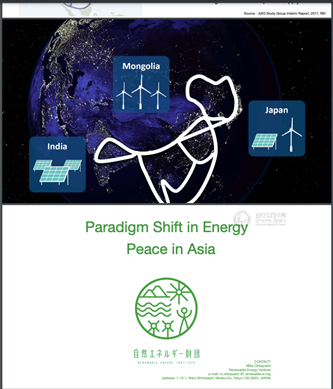
Screenshot of a website with Ohbayashi’s presentation from 2020 on the pan-Asia power grid.Available on UNESCAP’s website.
ANALYSIS
BY FILIPPO PEDRETTI
What’s the Outlook for Japanese-Australian Collaboration on CCS?
No other country among the G7 nations is betting so big on Carbon Capture and Storage (CCS) as Japan to help reduce GHG emissions in hard-to-abate industries such as cement and steel production, as well as power generation.
However, Japan faces challenges in CCS deployment within its borders due to a domestic expert assessment that says its geology has limited storage potential and is vulnerable to high seismic activity. Enter Australia, which has ambitions to become the top CCS player in the Asia-Pacific after China, and wants to partner with Japan in developing this fledgling industry.
Australia’s advantageous geological storage basins, strategically located near emitting industries, provide a significant asset for CCS implementation. The country plans to deploy about 175 million tons per annum (mtpa) of CO2 storage capacity by 2035 and has identified CCS as a high priority within its national emissions reduction plan. Australia, much like Japan, is also keen to lead the way in creating international legislation for the new sector.
Despite the potential for the two countries, realizing a CCS value chain between Japan and Australia is not straightforward. There are significant obstacles in terms of economic viability and legislation, especially over liabilities and rules for seaborne transport of liquid CO2. Integrating CCS technology with other clean energy initiatives will be key in developing a Japanese-Australian partnership in this sector.
Current projects
A few CCS projects involving Japanese companies have emerged in Asia Pacific. One is the INPEX CCS Darwin Project in Australia, which is still in early stages of development and slated for operation by 2026. INPEX will invest up to ¥100 billion, aiming to integrate CCS technology into the Ichthys LNG export projects in north Australia. This entails injecting 2 million tons of CO2 annually from Ichthys. The project has a Greenhouse Gas Storage Assessment Permit in the Bonaparte Gulf.
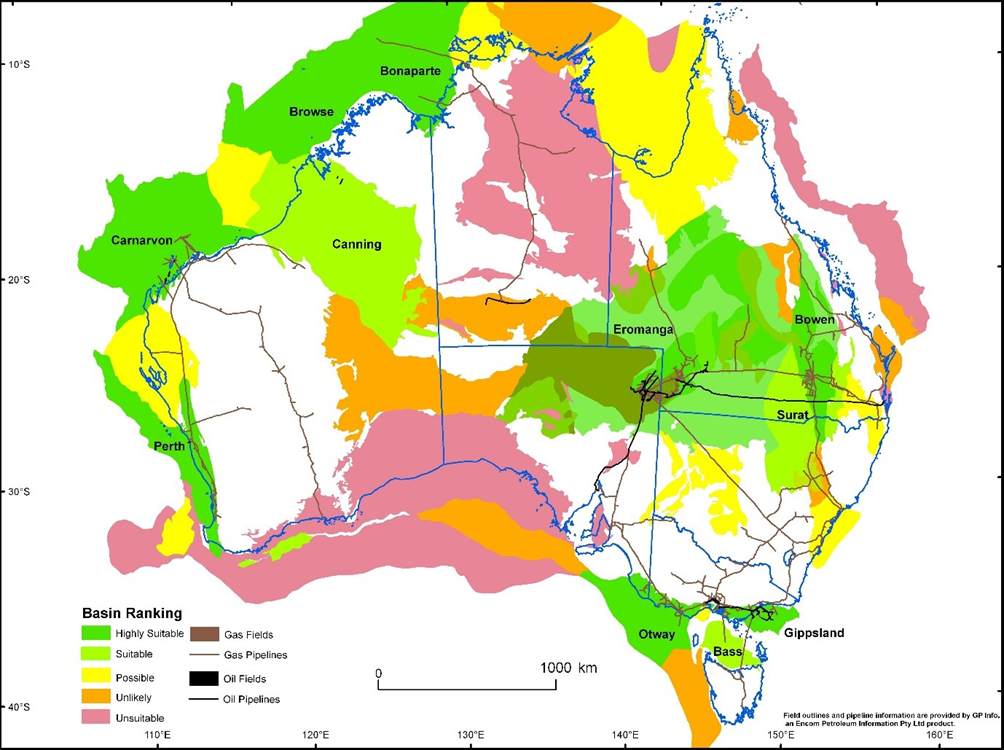
Australia’s basins ranked for CO2 storage potential.
Source: Geoscience Australia
The Woodside Angel project is another commercial CCS facility in the early development phase. Led by Woodside Energy, the project also involves BP and Japan Australia LNG (a JV between Japan’s top two trading houses, Mitsubishi Corp. and Mitsui & Co). FEED studies are underway for this CCS Hub.
These studies focus on assessing the technical and commercial feasibility of capturing CO2 emissions from industries in the Karratha and Burrup Peninsula areas. The chosen storage site is the depleted gas field of Angel in the Northern Carnarvon Basin that’s offshore Western Australia.
Finally, there’s the Sumitomo Hydrogen Energy Supply Chain (HESC) project in Victoria, which is undergoing evaluation for operational readiness. Spearheaded by Japan Suiso Energy, the HESC initiative selected J-Power and trading house Sumitomo Corp as producers of hydrogen. The fuel is to be made using coal mined in Latrobe Valley, but with the addition of carbon capture, utilization and storage (CCUS) in the Bass Strait.
The project secured funding of ¥220 billion from Japan’s Green Innovation Fund. With an initial goal of producing 30,000 to 40,000 tons of hydrogen annually, the project envisions future expansion to 225,000 tons per year. Pilot hydrogen production is due in the late 2020s, with plans for liquefaction and shipping of the fuel to Japan.
Recently signed MoUs
Late 2023 and early 2024 saw a number of CCS agreements concluded between major Japanese and Australian companies. This flurry of CCS activity is indicative of Tokyo’s determination to find a large-scale solution for GHG emissions that can be applied to hard-to-abate industries such as steel, cement, ceramics, and glass production, which also employ a significant portion of the nation’s manufacturing workforce.
On December 19, Woodside Energy inked a non-binding MoU with Sumitomo Corp, JFE Steel, Sumitomo Osaka Cement, and Kawasaki Kisen Kaisha to explore a CCS value chain between Japan and Australia, targeting CO2 emissions from Setouchi and Shikoku regions. The plans call for transportation and injection in Australia.
The day before, on December 18, Santos unveiled expansion plans for the Moomba CCS project in partnership with ENEOS and JX Nippon Oil & Gas Exploration (JX). This entails a feasibility study for transporting captured CO2 from Japan. An MoU was signed for the potential importation of up to 5 mtpa of CO2 by 2030, to be raised to 10 mtpa by 2035, and 20 mtpa by 2040, likely via Port Bonython in South Australia and/or Gladstone in Queensland.
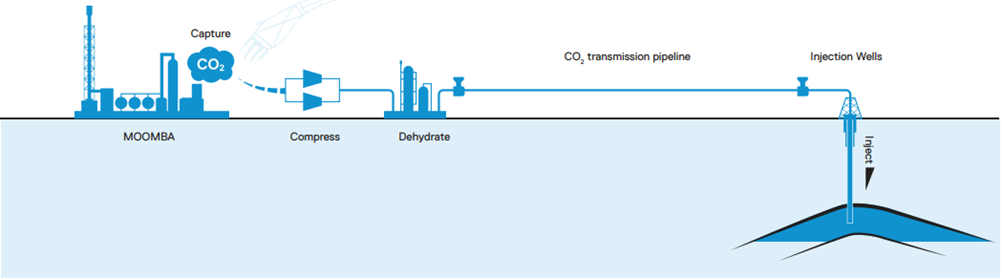
Additionally, Santos Energy Solutions, with Tokyo Gas and Osaka Gas, is exploring e-methane production in the Cooper Basin. E-methane is produced using green hydrogen and captured CO2. The Moomba project aims to store 1.7 mtpa of CO2, and mostly captures CO2 separated from natural gas at the Moomba Gas Plant (South Australia).
Plans also include storing CO2 captured from other sources and support for hydrogen production. CO2 injection trials started in 2020, and the Cooper and Eromanga Basins are estimated to offer potential storage capacities of more than 20 mtpa of CO2 over 50 years.
In late February, the first phase of the project was reported to be 80% complete, with Santos aiming for about US$24 per ton lifecycle breakeven storage costs.
Moomba CCS project.
Source: Santos.
On January 25, 2024, Nippon Steel, Mitsubishi Corp, and ExxonMobil Asia Pacific also inked an MoU to explore CCS value chains in Asia Pacific. This initiative focuses on capturing CO2 emissions from Nippon Steel’s Japanese steelworks. Storage sites under consideration are located in Australia, Indonesia, and Malaysia.
The value chain plans are an extension of the Oceania CCS project announced by JOGMEC in June 2023 as one of Japan’s first seven potential CCS hubs. The Oceania CCS project envisions storing 2 mtpa of CO2 in Australia. The CO2 would come from industries in the Nagoya and Yokkaichi ports vicinity.
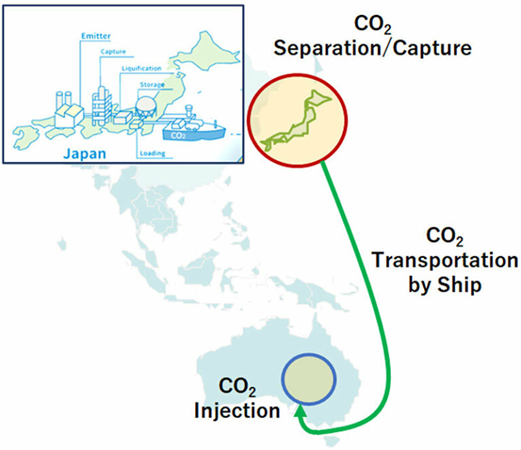
Finally, on February 5, Mitsui O.S.K. Lines (MOL) and JX inked an MoU to develop a CCS value chain between Japan and Australia through marine transport of CO2. The plan involves capturing CO2 emissions from ENEOS refineries and other industrial sites in Japan.
Subsequently, the captured CO2 will be transported via a specially outfitted carrier to Port Bonython, where it will be injected and stored. MOL will select a CO2 carrier while evaluating factors such as transport distance, volume, and associated costs. Meanwhile, JX will assess the cost of running the value chain.
Source: MOL
Challenges and opportunities
Despite Australia’s advantageous position in terms of geophysical traits, challenges persist in establishing the necessary CCS infrastructure. Most concerning is the substantial absence of long-term subsidy support for the industry. The limited funding, provided, for example, by the Australian Renewable Energy Agency, is primarily directed towards small-scale pre-operational projects.
A partial alleviation of this financial burden may come from funds such as “Powering the Regions” (a little over A$400 million), or initiatives like the CCUS Hubs and Technologies program (A$250 million).
Furthermore, most operational CCS projects focus on Enhanced Oil Recovery (EOR), a method involving CO2 injection into existing oil fields to boost their output. As for the transportation of CO2 by ship, things are at a more exploratory stage. Building that to a commercial level will require creating large-scale CO2 liquefaction, storage and transportation infrastructure – all within economically feasible parameters.
At the moment, transporting CO2 incurs costs without significant returns for operators. Discussions about regulatory frameworks and technological advancements are ongoing to ensure economic viability in CO2 handling.
In terms of a legal framework, in 2023 a bill passed by Australia’s parliament proposed changes in sea dumping regulations, a significant step facilitating the nascent industry. The success of the international CO2 movement, however, hinges on frameworks set up by Australia with emitting countries to facilitate CO2 export, import, and geological sequestration. In short, bilateral agreements are needed to develop CO2 sea-transport as a commercial business.
Currently, most offshore CCS projects in Australia assume that the CO2 would be stored on the nation’s territory, but recently signed MoUs such as the Oceania CCS project are aimed at cross-border CO2 movement under long-term contracts. For that to work, CO2 will need to become a useful commodity, a feedstock for other materials or products, rather than merely waste to be disposed of.
In short, both Australia and Japan will need to simultaneously work on creating a CCS value chain and develop a new economy based on CO2 feed, such as through the proliferation of synthetic or carbon-neutral fuels. These combine CO2 with other elements, such as hydrogen, putting a value on the carbon. Just how soon this new demand arrives will likely determine the pace of CCS development.
Incidentally, Australia’s first synthetic fuel plant is due to come online in 2026.
ASIA ENERGY REVIEW
BY JOHN VAROLI
This weekly column focuses on energy events in Asia and the Pacific, and all that impact markets in the region.
Australia / LNG
Woodside Energy plans to increase LNG purchases from North America, as rising costs and other issues make procurement in its home market more difficult. By 2029, Woodside expects to source 4.7 mln tons of LNG annually from North America, five times the current levels and equal to almost half the capacity of the production rights it holds in Australia.
Hydropower
Global hydropower generation reached a record 4.36 TWh in 2020, according to the Energy Institute. Since 1965, global generation rose at an annual rate of +2.9%, with China (+7.7% annually) posting the fastest growth. In 2020, China accounted for 30% of global generation.
Indonesia / Renewable energy
The National Energy Council will trim the target for renewables in the national energy mix to 17%-19% in 2025, and 19%-21% by 2030. The original target was to have 23% in 2025. While setting an ambitious goal of 70% renewables by 2060, the Council claims that the original target is not realistic.
Malaysia / Hydropower
The oil and gas region of Sarawak seeks a new identity as a green energy powerhouse. Sarawak is betting on hydropower and estimates a potential of 20 GW over about 50 sites, of which 3.45 GW has already been developed.
Philippines / Solar power
Aboitiz Solar Power will partner with AFRY to build a 172 MW-peak solar PV plant in the Negros Occidental province. It will occupy around 143 hectares of “relatively flat terrain” and will start sending power to the grid by late 2024.
Sri Lanka / Oil refinery
The world’s largest refiner, China’s Sinopec, plans to start work on a refinery in Sri Lanka by June. Sinopec will double the refinery’s capacity from the original proposal. Work will begin by June 2024 on the $4.5 billion facility.
South Korea / Electricity
Reliance on fossil fuel especially LNG, along with a delayed energy transition, hiked electricity prices since 2022, resulting in an additional $17 billion in electricity costs, said tInstitute for Energy Economics and Financial Analysis. LNG comprised 27.5% of the country’s energy mix in 2022, declining to 26.8% in 2023.
Taiwan / Floating solar power
Aster Renewable Energy secured $258 financing with MUFG Bank to fund the development of floating solar and battery energy storage systems projects in Changhua, Taiwan. The global floating solar industry is expected to grow at a rate of 15% between 2022 and 2031, with Asia Pacific expected to lead in its deployment.
Thailand / Nuclear energy
Thailand plans to launch its first nuclear reactors by the next decade, which would be Southeast Asia’s first. In September, Thailand will unveil a national energy plan through 2037 that’s expected to incorporate small modular reactors (SMRs). The govt will look into sites; the SMRs could account for 70 MW in capacity.
Vietnam / Coal power
CO2 emissions from coal-fired power plants jumped to a new high for the first month of 2024 as the country’s power producers increased output to avert a repeat of 2023’s power outages. So far this year, Vietnam has nearly doubled imports of thermal coal YoY as the govt seeks to reassure foreign businesses that power supplies will remain uninterrupted.
2024 EVENTS CALENDAR
A selection of domestic and international events we believe will have an impact on Japanese energy
January
First market trading day (Jan 4)
IEA “Renewables 2023: Analysis and Market Forecast to 2028” released (Jan 11)
Renewable Energy Exhibition (Jan 31 – Feb 2)
Taiwan presidential election (Jan 13)
Japan’s Diet convenes
IEA “Electricity 2024 / Analysis and Forecast to 2026” released (Jan 24)
February
CFAA International Symposium (Feb 2)
India Energy Week 2024 (Feb 6-9)
Lunar New Year (Feb 10-17)
Indonesia presidential election (Feb 14)
Japan-Ukraine Conference for Promotion of Economic Reconstruction (Feb 19)
FIT/FIP solar auction (Feb 19 – March 1)
Smart Energy Week (Feb 28-Mar 1)
March
Announcement of auction result for Offshore Wind Round 2 (for Akita Happo-Noshiro Project)
Onshore wind auctions (March 4-15; results on March 22)
International LNG Congress (LNGCON) 2024, Milan, Italy (March 11-12)
Russian president election (March 15-17)
World Petrochemical Conference, Houston, TX, USA (March 18-22)
IAEA Nuclear Energy Summit @ Belgium (March 21)
Ukraine presidential election (due before March 31)
Happo Noshiro, Murakami-Tainai, Oga-Katagami-Akita and Saikai-Eshima wind project auctions close (June 30)
July
Tokyo governor election (July 7)
7th Basic (Strategic) Energy Plan draft published (expected)
August
7th Basic (Strategic) Energy Plan draft presented to Cabinet (expected)
September
Global Offshore Wind Summit Japan 2024, Sapporo, Hokkaido (Sept 3-4)
The United Nations Summit of the Future (Sept 22-23)
Gastech 2024, Houston, TX (Sept 17-20)
IAEA General Conference
GX Week in Tokyo (expected late Sept to October)
Asia Green Growth Partnership Ministerial Meeting
Asia CCUS Network Forum
International Conference on Carbon Recycling
International Conference on Fuel Ammonia
GGX x TCFD Summit
October
IEA World Energy Outlook 2024 Release
BP Energy Outlook 2024 Release
Innovation for Cool Earth Forum (expected)
Connecting Green Hydrogen Japan 2024 (Oct 16-17)
Japan Wind Energy 2024 Summit (Oct 16-17)
Solar Energy Future Japan 2024 (Oct 16-17)
Japan Mobility Show (Oct 25-Nov 5)
November
US presidential election (Nov 5)
COP 29 in Azerbaijan (Nov 11-22)
Abu Dhabi International Petroleum Exhibition Conference (ADIPEC) 2024, Abu Dhabi, UAE (Nov 11-14)
APEC 2024 @ Lima, Peru
International Conference on Nuclear Decommissioning (TBD)
G20 Rio de Janeiro Summit (Nov 18-19)
Offshore Energy Exhibition & Conference (OEEC) 2024, Amsterdam, the Netherlands (Nov 26-27)
Biomass & BioEnergy Asia Conference (TBD)
European Biomethane Week 2024
December
Last market trading day (December 30)
Disclaimer
This communication has been prepared for information purposes only, is confidential and may be legally privileged. This is a subscription-only service and is directed at those who have expressly asked K.K. Yuri Group or one of its representatives to be added to the mailing list. This document may not be onwardly circulated or reproduced without prior written consent from Yuri Group, which retains all copyright to the content of this report.
Yuri Group is not registered as an investment advisor in any jurisdiction. Our research and all the content express our opinions, which are generally based on available public information, field studies and own analysis. Content is limited to general comment upon general political, economic and market issues, asset classes and types of investments. The report and all of its content does not constitute a recommendation or solicitation to buy, sell, subscribe for or underwrite any product or physical commodity, or a financial instrument.
The information contained in this report is obtained from sources believed to be reliable and in good faith. No representation or warranty is made that it is accurate or complete. Opinions and views expressed are subject to change without notice, as are prices and availability, which are indicative only. There is no obligation to notify recipients of any changes to this data or to do so in the future. No responsibility is accepted for the use of or reliance on the information provided. In no circumstances will Yuri Group be liable for any indirect or direct loss, or consequential loss or damages arising from the use of, any inability to use, or any inaccuracy in the information.