Last week, a delegation of Norway’s major offshore wind companies visited Tokyo to meet with METI officials and leading energy companies to showcase Norwegian technology and solutions. Japan and Norway share a number of approaches in energy. Both committed to net zero policies but also will continue exploring hydrocarbon resources. Offshore wind power, however, is their most prominent touchpoint, and both countries are determined to forge ahead with ambitious plans for cooperation.
Japan’s interest and demand for ammonia as a clean-burning fuel has been focused on power generation. But another major user of ammonia in Japan has emerged. In February, Idemitsu Kosan announced Japan’s first success running a naphtha cracker facility with a fuel mix that was 20% based on ammonia. This was largely unexpected. Such a use case is years ahead of the government’s net-zero roadmap for the sector that’s vital for the chemicals industry.
ASIA ENERGY VIEW
A wrap of top energy news that impacts other Asian countries.
EVENTS SCHEDULE
A selection of events to keep an eye on in 2024.
JAPAN NRG WEEKLY
PUBLISHER K. K. Yuri Group
Editorial Team Yuriy Humber (Editor-in-Chief) John Varoli (Senior Editor, Americas) Mayumi Watanabe (Japan) Wilfried Goossens (Events, global) Kyoko Fukuda (Japan) Magdalena Osumi (Japan Filippo Pedretti (Japan) Tim Young (Japan)
The Kishida-Biden summit talks in Washington deepened energy security ties:
They launched the bilateral Strategic Partnership to Accelerate Fusion Energy Demonstration and Commercialization;
The U.S. will continue to support allied energy security with LNG supplies;
Collaborate on critical mineral projects;
They will increase supply of SAF and ethanol feedstock;
The leaders expressed concerns over China’s activities in the South China Sea and efforts to disrupt other countries’ offshore resource exploration that are not compliant to the UN Convention on the Law of the Sea.
TAKEAWAY: The bilateral commitment to SAF and ethanol feedstock growth was toned down compared to the 2022 joint statement that said Japan plans to double bioethanol demand by 2030. The statements on China’s activities in the South China Sea and critical mineral supplies were more or less similar.
METI Minister Saito spoke with the U.S. Presidential senior advisor John Podesta in Washington D.C. to seek synergies between the GX Promotion Strategy and the Inflation Reduction Act.
The two agreed to pursue collaborative development in offshore wind, solar PV including perovskites, hydrogen and electrolyzers, ammonia, heat pumps, advanced nuclear reactors and carbon management technologies.
They agreed it’s important to create regulatory measures to facilitate investment.
MLIT designated Aomori and Sakata ports as logistical hubs for offshore wind and other renewables projects.
A total of ¥120 billion will be equally allocated for reconstruction work that includes strengthening the ground near quays, developing berths to accommodate cargo ships and SEP vessels.
Aomori Port, which is expected to service the Sea of Japan’s southern area, was selected for offshore wind power (600 MW) in the Round 3 auction.
Sakata Port will support a 450 MW wind power project off Yusa Town’s coast for Round 3. The port is the main maritime logistics hub of Yamagata Pref.
CONTEXT: Sites designated as ‘base ports’ can be leased to power companies for 30 years. Japan has five such port areas – Akita and Noshiro (Akita Pref), Kashima (Ibaraki Pref), Kitakyushu (Fukuoka Pref) and Niigata (Niigata Pref). Aomori port is an important base for goods and passenger transport, with about a quarter of the ferry traffic between Honshu and Hokkaido.
NEDO awarded projects for developing next-gen aircraft to four companies; funding will come from the Green Innovation Fund (GIF) and be dispensed over FY2024 to FY2030.
GIF will provide ¥30.6 billion in total, in addition to the ¥21 billion granted to five projects in 2021.
The new projects are:
Developing a 4 MW hydrogen fuel cell-based propulsion system – IHI Aerospace
Heat resistant, high strength hydrogen fuel cell systems – Toray
Air and heat management systems for electric airplanes – IHI
The aviation industry is witnessing a paradigm shift amid climate change, digitalization, the need to boost resilience, etc. This opens up opportunities for Japanese businesses, said an aviation and space industry sub-committee.
Japanese firms need to evolve: develop a capability to integrate input from various parties, rather than being a single component supplier. Such capability will allow global players to choose Japan as the site of aircraft assembly plants.
The MoE suspended the Renewable Energy Institute (REI) as one of its official research centers amid growing public concerns over possible illicit connections with China.
At an April 9 meeting in the Diet, Environment Minister Ito said it will cease using the institute as an advisory body.
CONTEXT: It recently emerged that a REI official filed presentations to govt agencies that contained the logo of a Chinese state-owned power firm. REI says the use of the logo was an IT mishap and entirely accidental; an investigation is ongoing.
Questions were raised that REI may be pushing China’s agenda, steering Japan’s energy policy to incorporate the strategies of its neighbor.
Several REI members also served on a Cabinet Office-appointed energy task force.
CONTEXT: Last month, it became known that REI used, on various occasions, documents containing the China State Grid’s watermark. The mishap has raised questions over whether what REI calls “an IT error” had any impact on regulations, including the MoE’s stance on carbon pricing. Ito denied any foreign govt influence on decisions regarding carbon pricing and other policies.
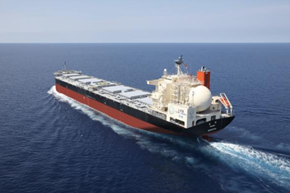
This month, Nippon Yusen Kaisha (NYK) will issue its No. 47 transition bonds and its No. 48 green bonds. This marks NYK’s second green bond issuance since May 2018, and its third transition bond issuance since July 2023.
The funds raised will be used for projects such as LNG-fueled vessels. Proceeds from the green bonds will go towards projects such as development of ammonia-fueled vessels. The latter will be built with help from the Green Innovation Fund.
The maturity period is five years for transition bonds and 10 years for green bonds. The largest issue is ¥200 billion for transition bonds, and ¥100 billion for green bonds.
DNV Business Assurance Japan K.K provides a second-party opinion on NYK’s financial framework and the use of proceeds.
CONTEXT: NYK issued the first green bonds in the shipping industry in 2018, and Japan’s first transition bonds in 2021.
TAKEAWAY: LNG-fueled vessels are seen as low-carbon, intermediate solutions on the path to developing zero-emission ships. Thus, funding through transition bonds is an option. The conversion of vessels from running on LNG fuel to ammonia fuel requires extra costs and modification of ship tanks and ventilation systems. Thus the two bond categories can be said to work together, offering different scopes but connected by a single trend narrative.
On April 3, Sekisui Chemical, in conjunction with engineering consultancy MM Bridge and solar power operator Koei-Densetsu, began testing floating perovskite solar cell (PSC) modules that lack any water-proofing.
This is Japan’s first floating PSC study. The panels were installed in an old school swimming pool. The study will run for one year.
CONTEXT: All power systems and batteries, notably PSCs, are vulnerable to moisture. In this study, the PSC panels are floated on water without protection to identify any challenges, as well as their potential. This is Sekisui’s first collaboration with a solar power operator.
TAKEAWAY: Many solar operators are looking for offshore potential since Japan has limited land. However, commercializing a floating PSC system may be more challenging than PSC-integrated buildings, due to difficulties maintaining systems on water and direct exposure to moisture.
World’s first ammonia-fueled ship to sail near Yokohama
(Japan NRG, April 11)
Sakigake, the world’s first ammonia-fueled ship, will sail from Yokohama in June. Sakigake is a tugboat (272 tons) owned by NYK Lines.
The boat was originally a LNG-fueled vessel, which was converted to ammonia specifications by IHI Power Systems. Marine diesel oil (grade-A heavy oil) will be used to ignite the four-stroke engine but the boat will be fueled entirely by ammonia.
Sakigake’s crew will be two or three people.
TAKEAWAY: Ammonia lags behind methanol in the race to replace fossil ship fuel. The world’s first methanol-fueled vessel was built in Europe in 2023. Japan’s first methanol ship will be delivered to Nihon Shipyard in 2026.
Kawasaki Kisan Kaisha, Itochu, Nihon Shipyard, MAN Energy Solutions, Mitsui E&S, and NS United Kaiun Kaisha inked a MoU to develop ammonia-fueled ships.
Nihon Shipyard will build 200,000 ton-class bulk carriers with ammonia engines developed by MAN. Others will focus on analysis and data collection.
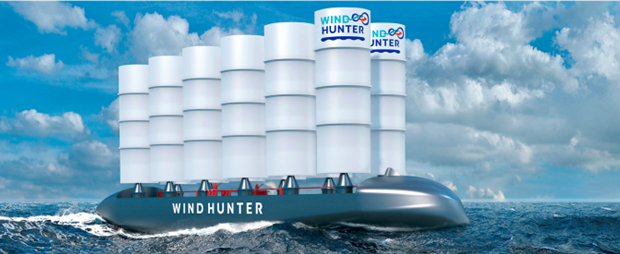
MOL to build hydrogen-producing ship, Wind Hunter, by 2026
(Japan NRG, April 11)
Mitsui OSK Lines will build a hydrogen-producing ship, Wind Hunter.
Wind Hunter is planned for launch in 2026, to sail in areas with strong wind, producing hydrogen using wind energy to electrolyze water, and then convert hydrogen into methylcyclohexane (MCH) for storage and delivery.
MOL is working on the ship design and has yet to decide whether to carry water for electrolysis on the ship or process seawater on board.
CONTEXT: The company built a pilot ship by converting a yacht carrying electrolysis-ready water supplies and metal hydride plates to store hydrogen.
METI and MLIT will standardize hydrogen safety rules for trains; METI has oversight on gas storage, while MLIT has on transport systems.
MLIT will set up an expert committee to rewrite the rules.
CONTEXT: JR East plans to commercialize a hybrid fuel cell train service by 2030. Other railway operators plan to start testing small fuel cell systems this year, first at construction sites and then on board trains.
ENEOS and Japan Airport Terminal Co inked a partnership to study the use of hydrogen cogeneration systems at the passenger terminal. They’ll also explore a hydrogen supply base in the Keihin coastal area.
They’ll assess if a 100% hydrogen-fueled system, to supply both heat and electricity, is practical. If all goes well, then such a system could be operational by 2030.
If there are technical challenges, then hydrogen will be mixed with other fuel.
Suntory Spirits distilled whiskey using equipment fully fueled by hydrogen, achieving the same quality and taste as when fueled by natural gas.
The technology will be used at the Hakushu Distillery (Yamanashi Pref.), which will also have a 16 MW electrolyzer for producing hydrogen using solar power.
KEPCO will join a field study for CO2 shipping. CO2 separated and recovered at the Maizuru Thermal Power Station (Kyoto Pref) will be liquefied and stored in tanks.
KEPCO will dispatch personnel to the CCUS study led by Japan CCS Survey, which will transport (by ship) liquefied CO2 to a base in Tomakomai City, Hokkaido, and then store it on-site. The CCUS trial begins in October.
JX Nippon Oil & Gas Exploration Corp (JX) and Sumitomo Corp partnered on a SAF and Bioenergy with Carbon Capture and Storage (BECCS) project in Louisiana.
The project will produce SAF and renewable naphtha from woody biomass waste, with an annual production capacity of 32 million gallons (120,000 kiloliters). The facility is set to begin commercial operation in 2029.
Heidelberg Materials North America awarded a FEED for its Edmonton CCUS project, selecting carbon capture technology and a contractor for CO2 separation.
MHI Low Carbon Solutions Canada, ULC, and Kiewit Energy were chosen. The study will use MHI’s CO2 recovery process, developed in collaboration with KEPCO.
The latest predictions of Japan’s data consumption show a nearly 40% rise by 2050 due to the growing use of generative AI, which requires a large amount of data storage. This could significantly impact Japan’s decarbonization strategy.
CRIEPI, a think-tank, predicts that Japan’s electricity consumption will increase 37% in 50 years, from over 924 GWh in 2021. RITE’s estimates also show up to a 30% increase by 2050 over 2019, mainly due to generative AI use.
CRIEPI drafted three scenarios for estimates of electricity required for data centers:
The demand for data centers will increase more than tenfold, and the amount of electricity will need to increase by 20%.
Another scenario was based on a possibility that the power required for data processing will be reduced; NTT is developing communication tech that seeks to reduce power consumption to 1/100th.
Japan’s growth in total electricity demand is only about 1%, in large part due to improving energy conservation.
The gap between predicting growth in data center power consumption and cases with no growth was about 168 GWh.
CONTEXT: Geopolitical changes and conflicts make it difficult to use overseas data centers. This has prompted overseas firms to invest in and build their own data centers in Japan. For instance, Microsoft plans to invest $2.9 billion to build data centers in Japan. Softbank and investment firm Asia Pacific Land also plan to expand into Japan with data centers.
TAKEAWAY: Japan’s current net zero strategy by 2050 was drafted on the assumption that electricity demand won’t increase dramatically. Now, the discussion will shift to whether the stable supply of electricity can be met only by expanding the use of renewables and restarting nuclear power plants.
ANRE plans to make major changes to the ”partial supply” system that was instituted in 2013 for new power sources that lack access to their own generation facilities. The agency is considering going as far as to abolish the system altogether.
CONTEXT: Under this system, major power utilities (EPCOs) sell part of their volume on the wholesale market so that new market players (known as shin denryoku or PPSs) are able to complement their own resources to meet contract commitments to clients.
Since the system’s introduction, however, demand from new market players has declined and there are cases where retailers utilize the mechanism in a way that’s different from its original purpose, according to ANRE findings. For example, there have been cases when retailers asked an EPCO to provide more electricity when prices are low and sell their own when prices are high, ANRE said.
Based on market surveys, ANRE believes it may make sense to abolish the “partial supply” system in principle. The agency will also consider whether any transitional measures would be necessary in such a scenario.
The officials noted that the environment for procuring electricity supply has improved with the expansion of the wholesale power market, which is another reason to discontinue “partial supply”.
In Muroran, Hokkaido, ENEOS Power installed the group’s first grid storage battery, (output 50 MW and storage capacity 88 MWh); it’s one of Japan’s largest.
The firm plans to use the BESS in multiple markets, utilizing its optimal operation control algorithm that can participate in wholesale electricity markets, supply and demand adjustment markets, and capacity markets.
In the future, ENEOS plans to develop a business that utilizes the resources of storage batteries, power generation facilities and demand facilities owned by customers.
February spot price oversupply reflects warm winter
(Japan NRG, April 12)
Daily average offered volumes on the JEPX spot market were up 3.3% MoM in February at 1.2 TWh. However, buying bids, also up 5.3% MoM, were at only 893 GWh in the month, leading to oversupply in the market.
The winter was unusually warm and heating demand continued to decline.
The total amount put up for sale in February was 35.5 TWh, down from the previous month, while bids to buy totalled 25.9 TWh.
The average offer per product increased by 3.3% to 25.5 GWh.
The JEPX Intraday Market saw its average daily volume in February fall for the first time in 4 months to 18.8 GWh, down 1.3% from January. The average price also fell by about ¥1 from the previous month due to the warm winter.
The monthly contract volume fell by 7.7% to 545 GWh and the monthly number of contracts fell by 17.5% to 178,978.
The monthly average contract price was ¥10.11, which is ¥0.92 lower than the same period last year. This is ¥0.75 higher than the system price on the spot market.
The TOCOM electricity futures market saw volumes increase 21.5% MoM in February to 18.5 GWh. January had the lowest figures since the futures contracts were launched on the exchange.
Large contracts were executed off-auction, which boosted the overall trading volume. Auction and off-auction trading accounted for 50% each of total contract volume.
Prices were higher in the east and lower in the west.
Liberaware utilized its narrow space inspection drone for internal research of the reactor primary containment vessel (PCV) at Fukushima Daiichi NPP’s Unit 1.
This is the first aerial investigation inside the PCV since the 2011 earthquake.
Over two days, the company used four drones to photograph the interior of the pedestal and the area around the X-6 penetration (an opening on the reactor’s PCV).
Toyota Tsusho set up AEOLUS SAS to promote renewable energy in Africa. Based in France, the JV is owned by Toyota Tsusho’s subsidiaries – CFAO, and Eurus Energy.
The companies have already been working on renewables projects in Africa, but now their activities will be consolidated.
AEOLUS will develop and expand renewable power sources, such as solar and wind power, and adjust for conditions in each African country.
Aizawa Concrete (Hokkaido) will form a consortium of about 50 firms to build equipment for use in floating offshore wind projects.
The goal is to develop equipment that’s easier to store and transport, as well as produce new technology for structures supporting floating wind turbines.
They aim to complete the first floating offshore wind turbine by 2028.
Firms set to join the consortium will specialize in floating concrete parts without steel.
Kyoto Fusion Engineering (KF) secured ¥1.56 billion in its Series C round extension. Investors include Mitsui Fudosan, Kyoto Capital Partners and Fujikura.
This brings total Series C funding to ¥12.06 billion; overall funding to ¥13.74 billion.
Mitsubishi Power secured an order to supply gas-fired turbine combined cycle (GTCC) power generation equipment for Unit 13 of the Lamma Power Station owned by HK Electric, Hong Kong’s electricity provider.
The unit (380 MW capacity) will start operation in early 2029. This order follows previous ones for Units 10, 11, and 12 in past years.
Osaka Gas, Sumitomo Corp and others will make additional investments of about $370 million in AG&P LNG Marketing in India.
Osaka Gas will work with local companies to speed up LNG infrastructure development, such as pipelines for urban gas and supply points for automobiles.
Osaka Gas will provide $240 million of the investment.
CONTEXT: In 2021, Osaka Gas, together with Japan Overseas Infrastructure Investment Corporation for Transport & Urban Development (JOIN), had previously invested about $120 million in a predecessor company of AG&P. It was one of the first investments for a Japanese company in urban gas in India.
In the wake of the Baltimore bridge collapse, the Energy Information Administration (EIA) said that April exports from the U.S. will decrease 33% compared to previous estimates. May exports will decrease 20% due to shipment restrictions.
The EIA expects U.S. coal exports to recover in late summer or early autumn.
CONTEXT: Baltimore Port accounted for 28% of U.S. coal exports in 2023. As far as destinations, Japan was in the top spot; followed by China and Brazil.
TAKEAWAY: Ever since Japan decided to phase out coal imports from Russia, imports from other countries (notably Australia) have grown. In recent months, coal imports from the U.S. were about 7-9% of the total, thus it’s unlikely that a decrease in U.S. coal exports will have a major impact on Japan.
Hitachi Zosen, Mitsui O.S.K. Lines (M.O.L.), and Yanmar Power Technology already achieved a 93.8% reduction in methane slip from LNG-fueled ship engines.
NEDO funded this effort to reduce methane slip by 70% or more by FY2026.
Field studies will begin in autumn on a MOL-operated vessel.
LNG stocks of 10 power utilities were 1.6 mln tons as of April 7, up 8.1% from 1.48 mln tons a week earlier. But this is down 31.3% from end March (2.33 mln tons) in 2023, and down 20.8% from the past 5-year average of 2.02 mln tons.
CONTEXT: Japan is expecting warm weather in the coming weeks, and demand from heating devices is expected to decline.
ANALYSIS
BY JOHN VAROLI
Energy Transition Focus: Norway and Japan Bet Big on Offshore Wind
Last week, a delegation of Norway’s major offshore wind companies visited Tokyo to meet with METI officials, the Japan Wind Power Association and leading energy companies such as TEPCO Renewable Power, Tokyo Gas, Kansai Electric, etc, in order to showcase Norwegian technology and solutions.
This high profile meeting came just several months after Norway’s Prime Minister Jonas Gahr Støre visited Tokyo to meet Prime Minister Kishida Fumio and discuss ways to expand cooperation in renewables and clean energy technologies.
Japan and Norway share a number of approaches in energy. Both have committed to net zero policies, but also firmly believe in the right to continue exploring hydrocarbon resources for the sake of energy security. The two countries are also in lockstep when it comes to subsea mining, a practice that targets raw materials below the seafloor that are critical for clean tech such as EV batteries and more.
During his Tokyo visit, PM Støre conveyed to PM Kishida Norway’s interest in cooperation in decarbonizing the countries’ maritime sectors, developing hydrogen fuel for hard-to-abate industries, as well as ramping up battery production, and carbon capture and storage projects.
But perhaps the most prominent and immediate touchpoint between the two countries will be in wind power. Among a flurry of recent Japan-Norway energy deals, the most significant deal was JERA’s subsidiary, Parkwind, joining a European consortium last month to develop a 1.5 GW wind farm off Norway’s southern coast.
Even the offshore wind capacity targets of Norway and Japan are similar: the former seeks 30 GW by 2040; the latter — 35 to 45 GW by the same deadline.
Leaving oil and gas behind
Norway and Japan are mountainous countries with some of the longest coastlines in the northern hemisphere. Both have long been maritime powers that are highly dependent on trade and shipping.
Situated at opposite ends of the Eurasian landmass, Norway and Japan are also bound geopolitically through alliances with the U.S., especially in wake of current efforts to contain and weaken Russia through a myriad of sanctions especially targeting Moscow’s energy sector. While Norway is energy self-sufficient, Japan is highly dependent on energy imports, including natural gas from Russia.
Norway’s economic miracle of the past 60 years has come in large part thanks to crude oil and natural gas production, which accounts for nearly half of the country’s export revenue and about 24% of its GDP. But the need to find alternatives to oil and gas and transition to sustainable energy is leading the country to seek like-minded allies to navigate the shift in a pragmatic way. During that December 2023 meeting in Tokyo, PM Støre described offshore wind power as “an obvious opportunity” for collaboration.
Norway is investing heavily to develop offshore wind and other clean energy tech. The country will allocate licenses for a potential 30 GW of offshore wind by 2040, which is about 75% of the capacity of the current Norwegian power system. Japan is slated to become a major partner in these efforts.
Norway, however, has competition; it’s not the only suitable partner for Japan. In October 2023, the Danish PM visited Tokyo to meet PM Kishida. The two countries said they’ll also cooperate on floating offshore wind power generation, and want to come up with global standards for the sector. Home to giants like wind turbine maker Vestas, and Orsted, the world’s leading wind turbine operator, Denmark is an offshore wind powerhouse that also seeks to develop cooperation with Japan.
Norway’s offshore wind power
Last week, April 8-11, Norwegian Offshore Wind (NOW), a trade group with almost 400 members, visited Japan. Gunnar Birkeland, the NOW chair and CEO of Source Galileo Norway, sees “huge potential for Japan-Norway cooperation specifically in future floating wind projects.”
Kishida’s government agrees and it’s eyeing the vast waters of the country’s Exclusive Economic Zone (EEZ) to tap into the potential of floating wind power. In January, METI and the Ministry of Land, Infrastructure, Transport and Tourism wrote a draft framework for managing stakeholder interests in EEZ offshore wind projects. While floating offshore wind platforms will be located further from shore than stationary offshore wind farms, allowing them to harness more powerful winds, the technology is still experimental and in its nascent stage.
Norway hopes that floating offshore wind will help cut emissions at sites of oil and gas production by replacing gas turbines as a source of power supply. For example, in 2023, Hywind Tampen, the world’s largest floating wind farm, was launched by Equinor, INPEX Idemitsu and Wintershall Dea. Anchored to the sea floor at depths of almost 300 meters, the project’s 11 floating turbines have a total of 88 MW capacity that should meet about 35% of the power needs of Equinor’s oil and gas fields in the North Sea.
Another significant development came in early March, when state funding to the tune of 2 billion Norwegian crowns ($193 million) was granted to GoliatVind in the Barents Sea. The project consists of five 15 MW turbines that will supply power to the Arctic town of Hammerfest. GoliatVind is owned by Irish renewables developer Source Galileo and Odfjell Oceanwind, a Norwegian firm developing floating foundations for offshore wind turbines.
Late last year, Kansai Electric (KEPCO) joined GoliatVind when it signed an agreement to invest in Odfjell Oceanwind. KEPCO is not the only Japanese shareholder; earlier in 2023, Mitsui O.S.K. Lines also acquired a stake in Odfjell Oceanwind.
Currently, however, the most lucrative opportunity is in fixed-bottom offshore wind farms. Japanese firms are finding opportunities for collaboration on such projects in Norway. In March, offshore wind developer Ventyr, which is an alliance of Parkwind, IKEA-linked Ingka Investments, and NorSea Group, won a bid to develop the 1.5 GW Southern North Sea II project. The first turbines are expected to be operational by 2030.
Parkwind is Belgium’s largest offshore wind platform, operating four offshore wind projects in that country, totaling 771 MW. JERA acquired Parkwind in July 2023 from Virya Energy.
Japan’s offshore wind sector
Similar size opportunities exist in Japan’s sector, where the government seeks to distribute licenses for 10 GW of wind capacity by 2030 and up to 40 GW by 2040.
With an eye to expand in Japanese waters, Norway’s legacy oil and gas company Equinor is teaming up with JERA and power utility J-Power, which is Japan’s second largest wind power producer. J-Power has operated onshore wind power projects in Akita for several years and was awarded the Kitakyushu Hibikinada 220 MW offshore wind project in 2017.
Equinor opened its Tokyo office in 2018 betting on Japan as a growth market with high potential for both bottom fixed and floating offshore wind. With nearly 20 years of offshore wind experience, Equinor already has a strong offshore wind portfolio with assets in key markets including the UK, Poland, Germany and South Korea.
Breaking into Japan’s burgeoning offshore wind industry, however, is as yet proving difficult. Round 1 results didn’t see a single international firm among the winners. Equinor had teamed up with JERA and J-Power to bid on two offshore wind farms (819 MW Yurihonjo City, and 479 MW Noshiro City) in Akita Prefecture. However, they lost to a consortium led by Mitsubishi Corp, which vacuumed up all the fixed-bottom licenses in the Round 1 tenders.
In Round 2, Germany’s RWE was part of a winning consortium for one of the wind farms – the 684 MW wind farm auction off the coast of Murakami-Tainai in Niigata Pref. Spain’s Iberdrola was part of the group that won the tender for a 375 MW project off the coast of Happo-Noshiro in Akita prefecture.
With so much in common in terms of geography and energy transition needs, Norway and Japan are slated to become key partners in each’s plans to decarbonize their economies, especially since companies from both countries are also deeply involved in ammonia / hydrogen projects, and have common interests in the contentious niche of subsea mining.
This is where reciprocity is likely to play a role in the bilateral relation. JERA’s success in Norway’s offshore wind sector makes one wonder if Tokyo may feel obliged to respond in kind. The Round 3 offshore wind tender in Japan is already open, with results expected towards the end of this year.
A failure to award at least one contract to a group involving a Norwegian player might be construed as a snub, and could stall other bilateral projects in clean energy.
ANALYSIS
BY MAYUMI WATANABE
How Idemitsu’s Ammonia-fueled Naphtha Cracker Impacts Net Zero
In the past two years, Japan’s interest and demand for ammonia as a clean-burning fuel has been squarely focused on the power generation sector. But another significant user of ammonia in Japan may have recently emerged.
In February, oil refining major Idemitsu Kosan announced the country’s first success at running a commercial naphtha cracker facility with a fuel mix that was 20% based on ammonia. The development was largely unexpected. Such a use case is years ahead of the government’s net-zero roadmap for the sector that’s vital for the chemicals industry.
Now that one industrial facility that requires very high temperatures has been shown to work on an alternative to fossil fuel-derived gases, what’s stopping other industrial furnaces from making the switch? High heat is usually produced by burning methane, and other hydrocarbons. But Idemitsu’s trial shows that ‘hard-to-abate’ industries may not be as far away from decarbonization solutions as their moniker suggests.
More importantly, the result positions Japan among the leaders in cleaning up the chemicals and plastics sector, which accounts for a significant part of the economy and is one of the nation’s top employers. Although domestic consumption of petrochemicals has declined, Japan’s refining companies have long since expanded into regional markets and have plants all over Southeast Asia. Thus, the reach of the solution – and the impact on ammonia demand – could be significant.
Life in plastic, not so fantastic
In the 1990’s, Japan’s production of ethylene – a basic feedstock of plastics made from naphtha, which is originally made from crude oil – hit a record high of above 7 million tons per year, thanks to robust exports to Asia.
Presently, annual ethylene output is under 6 million tons. Competition with China and Southeast Asia, as well as climate change and possible carbon import duties overseas, are forcing the sector to rethink its strategy and find new ways to survive.
Japan is keen to protect its domestic chemicals sector much like it does the automotive companies. The chemicals and plastic products industries employ close to 800,000 people, or about a tenth of all manufacturing jobs in the country. However, it’s clear that a shift away from fossil fuels will require a strategy based on a transition to new clean materials, and high value-added products with little or no carbon footprint.
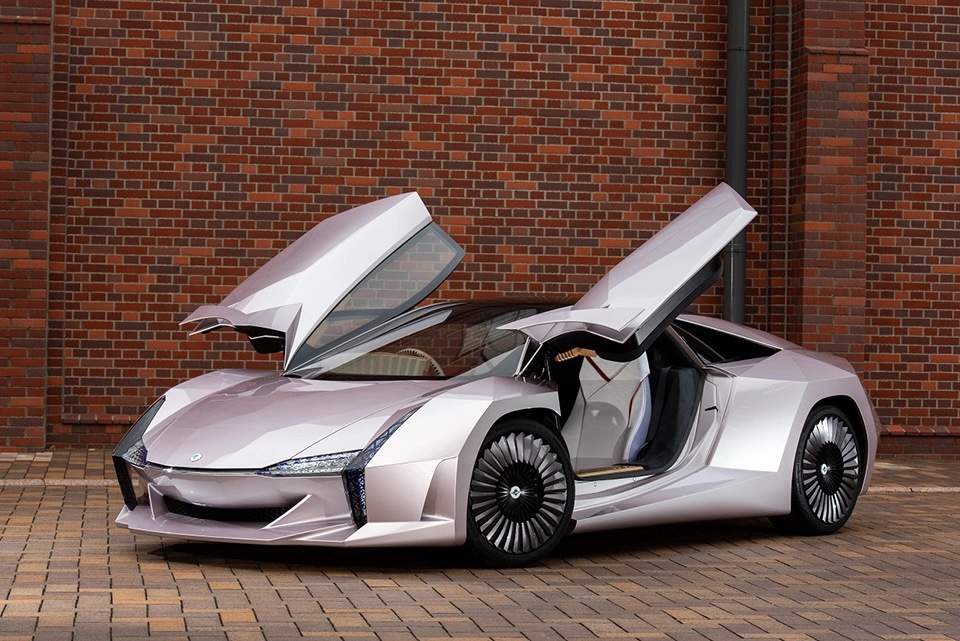
One highly aspirational example of this strategy is a sports car built with components made from plant-derived cellulose fibers. The Nano Cellulose Vehicle (NCV) project backed by MoE funds produced a concept car in 2019 that boasted a number of parts, including the hood, that could be recycled. Among the firms involved were those that make plastics from crude oil (via naphtha and ethylene, etc.).
Source: Govt of Japan’s Kizuna magazine
Until the costs to make such materials are reduced, the petrochemicals sector will have to find other ways to manage its CO2 footprint. In FY2022, petrochemical emissions (excluding cement) were 55 million CO2-equivalent tons, or about 22% of Japan’s non-power industrial emissions. The sector was the worst emitter after power generation and steel.
One approach to combat emissions is to subsidize the installation of CCS technology at petrochem plants. But the government is asking industry to come up with structural solutions: shift its energy sources to clean-burning ammonia/hydrogen from fossil fuels; develop new chemical feeds to replace ethylene; establish a chemical recycling ecosystem; and focus on niche products where Japan can retain high market shares.
Out of the 55 million tons CO2e that the chemical sector emits, 10 million tons are from producing ethylene (the foundation block for most household and industrial chemicals). Ethylene is made by breaking up naphtha molecules through a process called “cracking”. The latter requires a furnace that’s heated to 850ºC. The fuel most commonly used to achieve this temperature today is methane, which when released into the atmosphere is multiple times more damaging than CO2.
Japan’s naphtha market
There are 12 naphtha crackers owned by six business groups in the country, with a total ethylene output capacity of around 61 million tons / year.
Naphtha cracker capacities as of July 2022 (thousand tons / year)
Company
Ethylene output capacity (location)
Maruzen Petroleum
690 (Keiyo Ethylene, Chiba)
480 (Chiba)
Mitsubishi Chemical Group
485 (Kashima)
496 (Mizushima)
493 (Yokkaichi)
Idemitsu Kosan
623 (Tokuyama)
374 (Chiba)
Resonac
618 (Oita)
Mitsui Chemical
455 (Osaka)
553 (Chiba)
ENEOS
404 (Kawasaki)
491 (Tonen General, Kawasaki)
Source: Japan Petrochemical Industry Association
Idemitsu’s ammonia test
Idemitsu Kosan has been a strong ammonia proponent, even as its domestic peers focused on other hydrogen carriers: ENEOS – methylcyclohexane (MCH); Cosmo Oil – liquefied hydrogen.
Idemitsu wants to turn its Tokuyama refinery (Yamaguchi Pref) into an ammonia supply base, importing 1 million tons a year from the U.S. Oil product storage tanks would be converted into ammonia tanks and pipelines installed to deliver ammonia to consumers.
Other ammonia advocates are Mitsui Chemicals and Maruzen Petrochemical that are studying ammonia as a full methane replacement in naphtha crackers. The government is funding ¥16.6 billion or 70% of the 100% ammonia-fueled naphtha cracking project cost through the Green Innovation Fund (GIF).
Idemitsu is not receiving GIF funds for its R&D into ammonia fuel in naphtha crackers, but it is logical for the company to explore this technology as it already has access to ammonia supply.
Over Feb 6-8, Idemitsu tested the operation of a naphtha cracker at its Tokuyama refinery fueled by 20% ammonia and the rest from “off gases”. The country’s second largest naphtha cracker had just undergone a major revamp, carried out by IHI Plant Engineering, which boosted its performance and energy efficiency. The work also included installing an ammonia burner to diversify the fuel mix.
According to Idemitsu, the final fuel mix had ammonia at above 20% but below 30% of the total. Unlike Mitsui Chemicals, Idemitsu is not looking to run its cracker on 100% ammonia fuel, because development costs would be higher, a company spokeswoman told Japan NRG. She added that 700 kg / hour of ammonia was used, but declined to give the actual consumption figure, or the cracker run rate during the test.
Idemitsu said the test was successful as the cracker operated normally despite the updated fuel mix. The NOx release from burning ammonia was also within environmental norms. Full details of the test, such as the composition of the off-gases, the amount of ethylene produced, etc, were not available. But the results imply that ammonia is good enough to start replacing some methane at naphtha crackers.
Rivals Mitsui Chemicals, Maruzen Petrochemical, Toyo Engineering and Sojitz Machinery are hoping to go one (or several) step better. They are focused on tech that would allow for the use of ammonia as the sole fuel, but this will require more time. At present, the group plans to create a test ammonia burner for a naphtha cracker that would produce 10,000 tons of ethylene a year by around 2025. This wouldn’t be upgraded to a commercial size furnace until 2030, which would mean that commercial operations of a full-size ammonia cracker may not be available until 2040.
Possible impact on ammonia demand
According to METI, 6.7 million tons / year of ammonia are required if three 1-million-ton-per-year naphtha crackers run at full capacity and use ammonia. That translates into 2.23 million tons of ammonia for each million tons of ethylene.
Japan NRG calculated the potential ammonia demand from existing naphtha crackers based on this figure, as shown in the table below. If by 2030 ammonia replaces cracker fuel entirely, the industry will require over 13 million tons / year of ammonia. If there is a 20% shift across plants, that demand level would still be at 2.75 million
tons / year.
If only Idemitsu’s Tokuyama shifts to 20% ammonia, demand would be around 280,000 tons / year.
Potential ammonia demand (million tons)
Company
Capacity (location)
Ammonia demand (20% mix)
Ammonia demand (100%)
Maruzen Petroleum
0.69 (Keiyo Ethylene, Chiba)
0.31
1.54
0.48(Chiba)
0.21
1.07
Mitsubishi Chemical Group
0.485 (Kashima)
0.21
1.08
0.496 (Mizushima)
0.22
1.11
0.493 (Yokkaichi)
0.22
1.10
Idemitsu Kosan
0.623 (Tokuyama)
0.28
1.39
0.374 (Chiba)
0.17
0.83
Resonac
0.618 (Oita)
0.28
1.38
Mitsui Chemical
0.455 (Osaka)
0.20
1.01
0.553 (Chiba)
0.25
1.23
ENEOS
0.404 (Kawasaki)
0.18
0.9
0.491 (ex-Tonen General, Kawasaki)
0.22
1.09
TOTAL
6.12
2.75
13.73
Disclaimer: Actual ammonia consumption may be lower than the METI scenario.
2030 naphtha cracker ammonia demand scenarios
Scenarios
Ammonia demand projection (million tons / year)
All naphtha crackers shift to full ammonia fuel
13
All crackers use 20% ammonia
2.75
Mitsui Chemical’s Osaka cracker shifts to full ammonia fuel, Idemitsu’s Tokuyama cracker to 20% ammonia
1.29
Only Idemitsu’s Tokuyama shifts to 20% ammonia
0.28
Conclusion
Japan NRG sent a questionnaire to companies running naphtha crackers to ask if they plan to shift to ammonia fuel. So far, ENEOS has replied they have no such plans. Idemitsu says there’s a “possibility” that 20% ammonia use could be introduced at its other cracker, in Chiba. Other firms were less forthcoming with answers.
According to METI’s scenario, ammonia demand in 2030 will triple to 3 million tons / year from the present 1 million ton / year, thanks to demand from power generation, shipping, industrial furnaces and fuel cell segments. The ministry, however, has not elaborated on exactly how much will come from each segment.
Idemitsu’s success has provided clarity to METI’s vague forecast. The power sector is seen generating the largest demand, of up to 1.3 million tons / year by 2030, provided there are two 1-GW-sized units co-firing at 20% and three smaller (100 MW) plants.
Naphtha cracking and other industrial furnaces could well be the second-largest demand center, with at least 200,000 tons / year. While concrete use cases in shipping and elsewhere are yet to appear, the chemical industry is starting to show more than potential – it is offering solid data and momentum.
ASIA ENERGY REVIEW
BY JOHN VAROLI
This weekly column focuses on energy events in Asia and the Pacific, and all that impact markets in the region.
ASEAN / Energy demand
Energy demand in the ASEAN countries could increase 21% this year over 2021, with fossil fuels to dominate. The ASEAN Centre for Energy said oil will hold the largest share in energy consumption at 45.8%.
Bangladesh / Natural gas
Total electricity generation from natural gas is expected to grow to 93 TWh by 2032, up from 70 TWh in 2023. It will be driven by state plans to build more gas-fired power plants. The power sector is Bangladesh’s largest natural gas consumer, comprising 39% of total consumption last year.
China / Coal
The state planner finalized a rule to set up a domestic coal reserve system by 2027 in order to stabilize thermal coal prices and supplies to power plants. The rule calls for 300 MMT of dispatchable annual coal production by 2030, equal to about 6% of last year’s output.
Coal
In 2023, total global coal power plant capacity saw a net increase of 48.4 GW, the highest growth since 2016, bringing the total to 2.13 TW, said Global Energy Monitor. About 69.5 GW of coal power came online last year, two-thirds of which, or around 47 GW, were from China; meanwhile, 21 GW was retired during that period.
India / Hydropower
India has 15 GW of hydroelectric power projects under construction; if realized, it would increase the country’s total hydro capacity by over 50% to 67 GW by 2032, up from the current total of 42 GW.
India / Pumped storage
Pumped storage capacity might reach 55 GW by 2032, up from today’s 4.7 GW. India has 2.5 GW of pumped storage capacity under construction; an additional 48 GW of such projects are in the planning stage.
Indonesia / LNG-fueled station
PT Jawa Satu Power started operations of an LNG-fueled power plant (1.76 GW) that’s 100 km east of Jakarta. This is significant because Indonesia relies on coal-fired power generation to meet 60% of its energy needs.
Myanmar / Natural gas
Chevron has quit the Yadana natural gas field. Rather than being sold, Chevron’s 41.1% stake was redistributed to the other shareholders — Thailand’s PTT Exploration and Production and state-owned Myanma Oil and Gas Enterprise. PTTEP, the gas field’s operator, said its Yadana stake had increased to 62.96%.
Natural gas demand
By 2050, the global power sector will account for 40% to 50% of natural gas demand, with Asia to account for the largest growth, said McKinsey, adding that power sector demand growth is driven by increasing electrification requirements in building and industry.
Philippines / Power
Power company First Gen said it targets to reach 13 GW of total power capacity by 2030 but it will need investment of $20 billion; this includes work on the 1.2 GW Santa Maria natural gas power station in Batangas province.
2024 EVENTS CALENDAR
A selection of domestic and international events we believe will have an impact on Japanese energy
January
First market trading day (Jan 4)
IEA “Renewables 2023: Analysis and Market Forecast to 2028” released (Jan 11)
Renewable Energy Exhibition (Jan 31 – Feb 2)
Taiwan presidential election (Jan 13)
Japan’s Diet convenes
IEA “Electricity 2024 / Analysis and Forecast to 2026” released (Jan 24)
February
CFAA International Symposium (Feb 2)
India Energy Week 2024 (Feb 6-9)
Lunar New Year (Feb 10-17)
Indonesia presidential election (Feb 14)
Japan-Ukraine Conference for Promotion of Economic Reconstruction (Feb 19)
FIT/FIP solar auction (Feb 19 – March 1)
Smart Energy Week (Feb 28-Mar 1)
March
Announcement of auction result for Offshore Wind Round 2 (for Akita Happo-Noshiro Project)
Onshore wind auctions (March 4-15; results on March 22)
International LNG Congress (LNGCON) 2024, Milan, Italy (March 11-12)
Russian president election (March 15-17)
World Petrochemical Conference, Houston, TX, USA (March 18-22)
IAEA Nuclear Energy Summit @ Belgium (March 21)
Ukraine presidential election (due before March 31)
Happo Noshiro, Murakami-Tainai, Oga-Katagami-Akita and Saikai-Eshima wind project auctions close (June 30)
July
Tokyo governor election (July 7)
7th Basic (Strategic) Energy Plan draft published (expected)
August
7th Basic (Strategic) Energy Plan draft presented to Cabinet (expected)
September
Global Offshore Wind Summit Japan 2024, Sapporo, Hokkaido (Sept 3-4)
The United Nations Summit of the Future (Sept 22-23)
Gastech 2024, Houston, TX (Sept 17-20)
IAEA General Conference
GX Week in Tokyo (expected late Sept to October)
Asia Green Growth Partnership Ministerial Meeting
Asia CCUS Network Forum
International Conference on Carbon Recycling
International Conference on Fuel Ammonia
GGX x TCFD Summit
October
IEA World Energy Outlook 2024 Release
BP Energy Outlook 2024 Release
Innovation for Cool Earth Forum (expected)
Connecting Green Hydrogen Japan 2024 (Oct 16-17)
Japan Wind Energy 2024 Summit (Oct 16-17)
Solar Energy Future Japan 2024 (Oct 16-17)
Japan Mobility Show (Oct 25-Nov 5)
November
US presidential election (Nov 5)
COP 29 in Azerbaijan (Nov 11-22)
Abu Dhabi International Petroleum Exhibition Conference (ADIPEC) 2024, Abu Dhabi, UAE (Nov 11-14)
APEC 2024 @ Lima, Peru
International Conference on Nuclear Decommissioning (TBD)
G20 Rio de Janeiro Summit (Nov 18-19)
Offshore Energy Exhibition & Conference (OEEC) 2024, Amsterdam, the Netherlands (Nov 26-27)
Biomass & BioEnergy Asia Conference (TBD)
European Biomethane Week 2024
December
Last market trading day (December 30)
Disclaimer
This communication has been prepared for information purposes only, is confidential and may be legally privileged. This is a subscription-only service and is directed at those who have expressly asked K.K. Yuri Group or one of its representatives to be added to the mailing list. This document may not be onwardly circulated or reproduced without prior written consent from Yuri Group, which retains all copyright to the content of this report.
Yuri Group is not registered as an investment advisor in any jurisdiction. Our research and all the content express our opinions, which are generally based on available public information, field studies and own analysis. Content is limited to general comment upon general political, economic and market issues, asset classes and types of investments. The report and all of its content does not constitute a recommendation or solicitation to buy, sell, subscribe for or underwrite any product or physical commodity, or a financial instrument.
The information contained in this report is obtained from sources believed to be reliable and in good faith. No representation or warranty is made that it is accurate or complete. Opinions and views expressed are subject to change without notice, as are prices and availability, which are indicative only. There is no obligation to notify recipients of any changes to this data or to do so in the future. No responsibility is accepted for the use of or reliance on the information provided. In no circumstances will Yuri Group be liable for any indirect or direct loss, or consequential loss or damages arising from the use of, any inability to use, or any inaccuracy in the information.