Chubu Electric is one of Japan’s biggest power utilities, and after full liberalization of the power market in 2016, the utility expanded into new sectors such as the carbon capture industry and investments into renewable energy. The utility is also growing its business internationally, and two years ago set up a Global Business Division to develop worldwide opportunities in energy. Japan NRG spoke to Sato Hiroki, Senior Managing Executive Officer, Division CEO of the Global Business Division.
Peer-to-peer energy trading, in which consumers and businesses produce and sell electricity among themselves, is set to take off in Japan. Due to Japan’s high population density and rapid expansion of solar power after the Fukushima disaster, there’s a high potential for P2P energy trading, especially as solar capacity installations have slowed since the 2022 phase-out of the FIT. New initiatives are bringing together consumers, EVs, factories and agricultural facilities.
ASIA ENERGY VIEW
A wrap of top energy news that impacts other Asian countries.
EVENTS SCHEDULE
A selection of events to keep an eye on in 2024.
JAPAN NRG WEEKLY
PUBLISHER K. K. Yuri Group
Editorial Team Yuriy Humber (Editor-in-Chief) John Varoli (Senior Editor, Americas) Kyoko Fukuda (Japan) Magdalena Osumi (Japan Filippo Pedretti (Japan) Tim Young (Japan) Tetsuji Tomita (Japan)
CONTEXT: The following rating was conducted by one of Japan’s most prominent climate NGOs, Kiko Network, which has campaigned for years to phase out coal use. It also promotes the use of international frameworks for reducing GHG emissions and seeks a transition away from nuclear power.
Kiko Network analyzed energy policies of each political party ahead of the Diet’s House of Representatives general election on Oct 27, assigning -1 to +5 points for each party’s program on key energy and climate issues. Policies that were deemed the most detailed and favorable to the climate were awarded higher points.
Party
2030 GHG reduction targets
Transition away from coal power
Hydrogen, ammonia, CCUS
Renewable energy rollout
Transition away from nuclear
Total score
Liberal Democratic Party (LDP)
1
-1
-1
0
-1
-2
Komeito
0
0
0
0
0
0
Constitutional Democratic Party (CDP)
3
1
1
5
1
11
Japan Restoration Association
0
-1
1
0
1
1
Japanese Communist Party (JCP)
5
5
5
5
5
25
Democratic Party For the People (DPP)
0
-1
-1
1
-1
-2
Reiwa Shinsengumi
3
5
5
5
5
23
Social Democratic Party (SDP)
3
5
0
5
5
18
Party of Do It Yourself
0
0
0
-1
0
-1
Kiko awarded the most points to the JCP for its proposal to reduce emissions 50-60% compared to 2013 levels. This contrasts with the LDP’s 46% in the same period. Parties like the SDP and Reiwa Shinsengumi propose even higher goals (60-70%). Parties offering no commitments and goals performed the worst.
The most points went to opposition parties calling for a total coal phase-out; those that didn’t mention such a goal were penalized. Kiko’s evaluation reflected its critical stance on technologies such as CCUS and hydrogen. Still, it favored Reiwa Shinsegumi’s support for green hydrogen.
Parties like CDP, JCP, Reiwa Shinsengumi and DPP that set goals for renewables expansion (from 40% to 80% of the total power mix, depending on the party) were ranked favorably. In contrast, the LDP and Komeito were penalized for not setting any clear target. For nuclear power, parties were rated highly for stating goals to phase out NPPs; the LDP was penalized for seeking ways to utilize nuclear power.
TAKEAWAY: As an NGO with clearly stated antipathy to thermal and nuclear power, Kiko’s ratings are not a surprise. Beyond a quick reminder of each party’s stance on energy policies, however, they are also useful as an indicator of how the domestic climate activist community views both LDP’s policies and those of its potential coalition partners. While a LDP victory on Oct 27 is highly likely, the party looks set to lose seats. And, although the left-leaning parties that Kiko favors have almost zero chance of joining an LDP-led coalition, they will have more influence in the Diet should the ruling party have a weakened position.
PM Ishiba attended the second Asia Zero-Emission Community (AZEC) Leaders Meeting in Laos.
Partner countries confirmed a statement to promote energy transition and decarbonization through diverse and realistic pathways responding to each country’s situation and to contribute to global decarbonization. They also agreed on an “Action Plan for Next Decade” with the following three main points:
Promoting “AZEC solutions”, such as visualization of GHG emissions throughout the supply chain, transition financing, decarbonization of each industrial sector, etc.
Launching sectoral initiatives, including the Zero Emission Power Initiative and activities of the Asia Zero Emission Center in the Economic Research Institute for ASEAN and East Asia;
Promoting tangible projects led by Japan and Australia
CONTEXT: AZEC is a framework for decarbonization founded by Japan, and that includes ASEAN countries (excluding Myanmar), as well as Australia, and which aims to develop technologies and rules to meet the increased electricity demand resulting from economic growth, and to reduce CO2 emissions. It was set up in early 2023 by former PM Kishida.
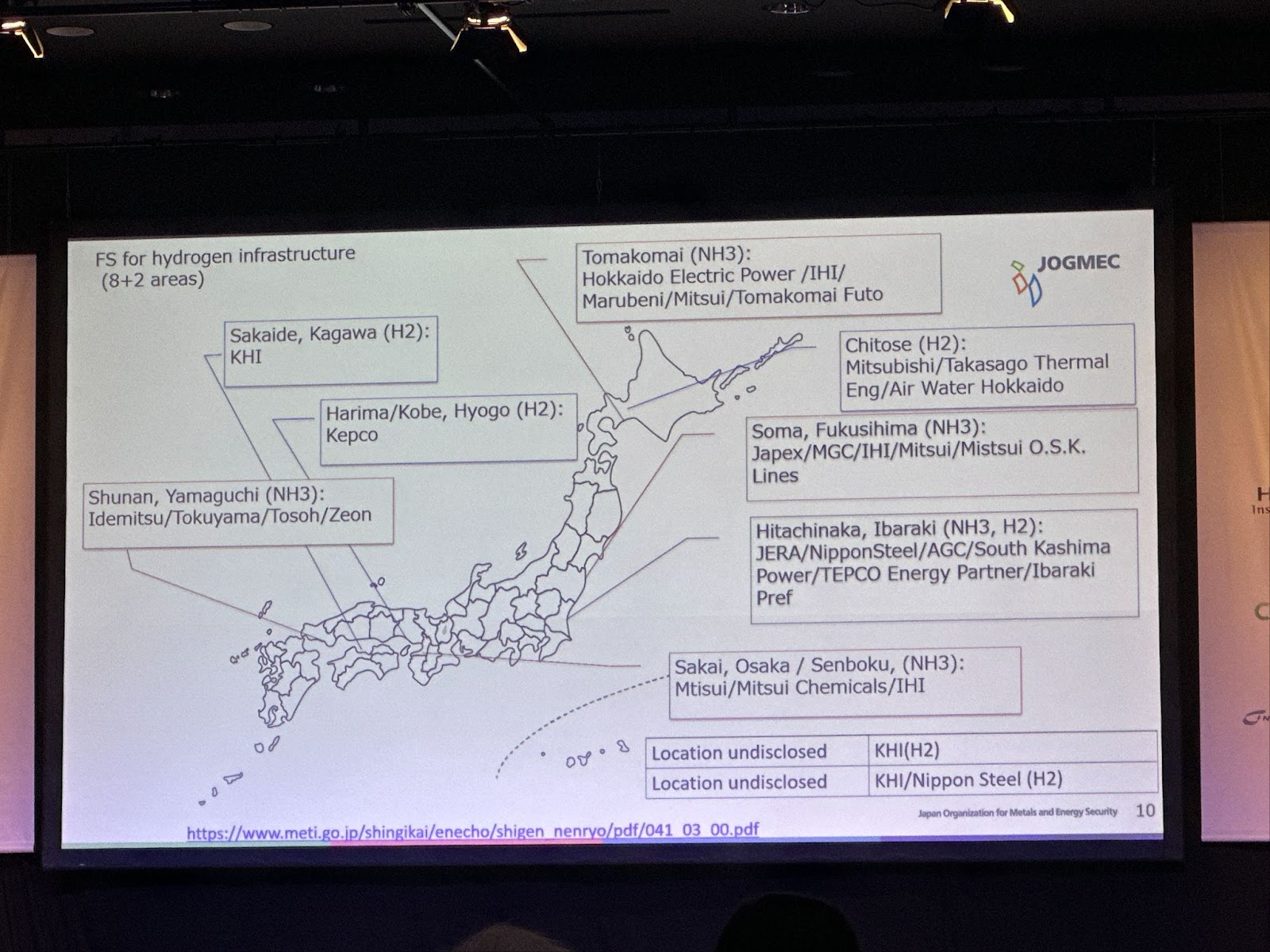
CONTEXT: Japan has set a target to increase the supply of hydrogen and ammonia to 3 million tons each by 2030, and designated 10 candidate sites to serve as hubs. Of these, three might be near big cities and five in the regions, with the other two as yet undecided. This article discusses the status of these supply chain projects.
Ibaraki Pref, Hitachinaka hydrogen and ammonia hub:
JERA aims to receive hydrogen and ammonia imports at its Hitachinaka thermal power plant. Nearby ports, like Ibaraki and Kashima, may be deployed.
The area’s demand for hydrogen (including ammonia) is projected to reach 1.25 million tons annually by 2030.
Since May, JERA has been conducting a field study, with state support, in collaboration with AGC and Nippon Steel to assess local hydrogen demand and infrastructure requirements, such as storage tanks and pipelines.
Aichi Pref; ammonia hub:
JERA plans an ammonia import hub around its Hekinan power plant in Aichi.
By 2040, Chubu region’s local demand could reach 2.5 million tons annually.
JERA aims to distribute ammonia to nearby factories via trucks and ships.
Kansai Pref; hydrogen hub:
KEPCO is developing a hydrogen supply hub in the Himeji area, where it plans to import 100,000 tons of hydrogen annually starting in 2030.
Collaborating with JR West and NTT, pipelines are planned along railways to transport hydrogen from Himeji to urban areas, and a gas distribution network to supply energy to offices and commercial facilities.
Hokkaido Pref; ammonia hub:
Hokkaido Electric, in partnership with Mitsui Chemicals and Marubeni, plans to build an ammonia import and storage base in Tomakomai by 2030. This will supply ammonia to nearby power plants and food factories as a heat source.
CONTEXT: JERA’s broader goal is to increase the handling of hydrogen and ammonia to 7 million tons annually by 2035, including projects in North America with ExxonMobil and CF Industries. KEPCO also plans hydrogen production, focusing on Australia and the Middle East.
During the 7th Tokyo Green Hydrogen Round Table, Tokyo Governor Koike engaged with executives from Iwatani, NTT Anode Energy, ENEOS, Toyota Motor, and JR East to promote hydrogen energy.
Hydrogen hubs at the feasibility stage around Japan
Source: JOGMEC
Each company presented its efforts on FC commercial vehicles and urban planning, hydrogen supply chain, and the Hydrogen Society Promotion Act.
CONTEXT: To ensure stable energy supply and decarbonization, the Tokyo Metropolitan Govt aims to expand hydrogen demand. As part of these efforts, the Tokyo Green Hydrogen Round Table has been held since August 2022.
ENEOS exec says state subsidy fund for hydrogen insufficient to meet targets
(Japan NRG, Oct 16)
The ¥3 trillion that Japan allocated earlier this year to subsidize the production of low-carbon hydrogen won’t be a sufficient incentive, said Tanaka Hideaki, head of Hydrogen Business Development at ENEOS.
The amount set aside is supposed to subsidize domestic hydrogen production as well as the import of clean hydrogen from abroad over 15 years. However, this money would only allow the purchase of about 0.5 million tons of the fuel, Tanaka said during the Connecting Green Hydrogen conference in Tokyo. Meanwhile, Japan’s target is 3 million tons of hydrogen by 2030.
Securing qualified personnel to develop hydrogen projects in Japan is a challenge, Tanaka said, casting doubt on the country’s ability to have enough monetary and human resources to go ahead with all of its hydrogen/ ammonia projects.
CONTEXT: The current plan calls for creating up to 10 hydrogen/ ammonia hubs around Japan. JOGMEC is in charge of feasibility studies on each project.
TAKEAWAY: Companies naturally seek to maximize the amount of state subsidies they can get for large-scale infrastructure projects. Still, ENEOS’ position reveals a growing concern among firms involved in hydrogen hub projects — that the state won’t be as generous as was first presumed, especially since with the recent change of the PM and government. What’s more, the rising cost of infrastructure construction in the last two years has further eroded how much hydrogen development the government can sponsor. From the state’s perspective, giving funding to all parties is not efficient. Bureaucrats are aware that the subsidies won’t support all projects, but they believe that the amount allocated is already substantial and cannot be expanded for now. The state wants at least some hubs to go ahead and will encourage others to approach their projects on a more commercial basis. The big sticking point, however, is that few firms in Japan today are willing to sign long-term offtake for hydrogen or ammonia as the pricing mechanisms and future market developments are unclear.
NEDO-led P2G project in Yamanashi Pref hopes to gain traction
(Japan NRG, Oct 17)
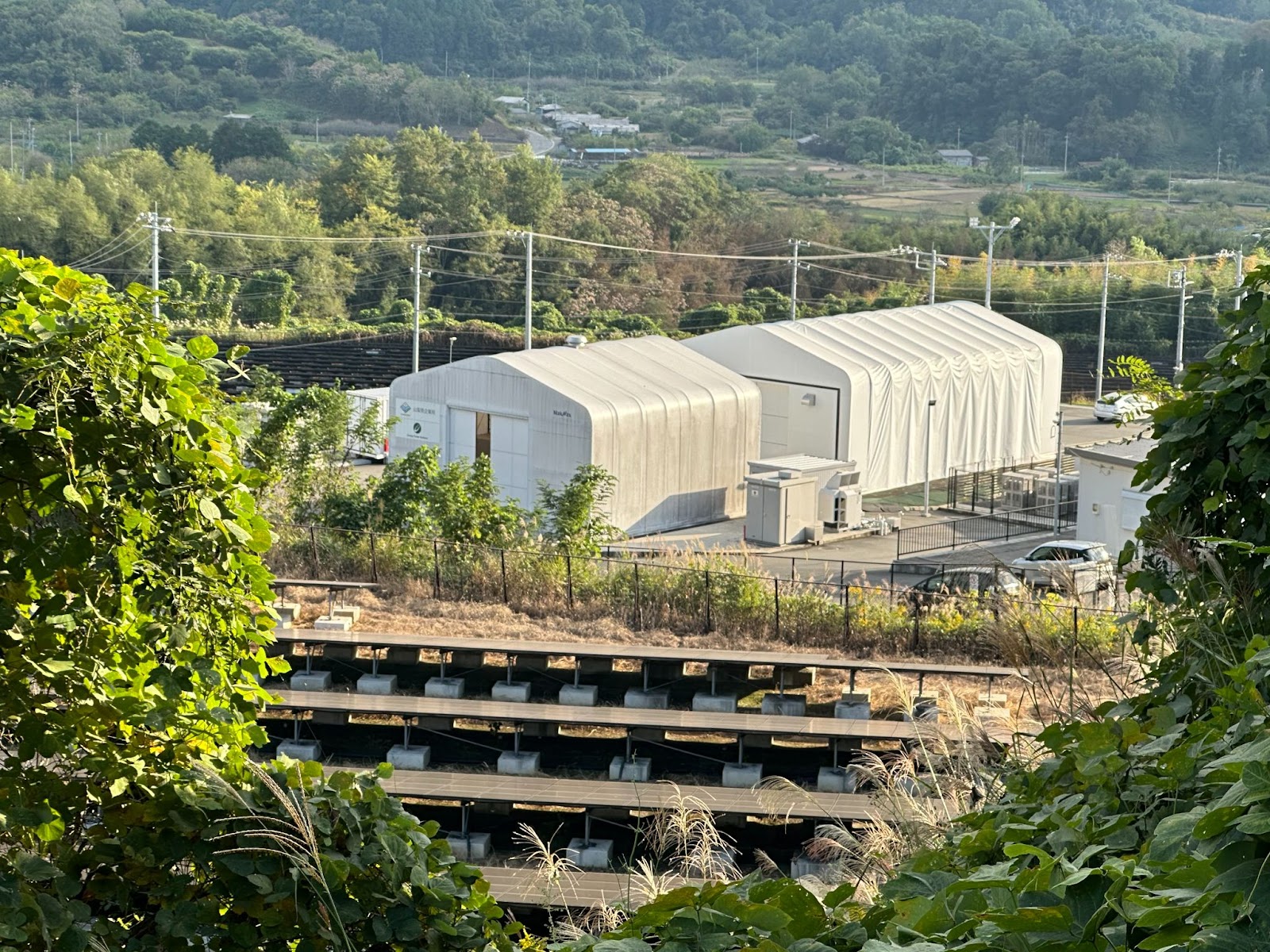
Yamanashi Hydrogen Co (YHC) seeks to expand use of hydrogen and application of its power-to-gas (P2G) system.
The firm was set up in 2022 to explore producing, supplying, selling, and providing services for hydrogen that’s derived from renewables.
The hydrogen has been used by Hitachi Power Semiconductor Device, and other local firms. The operators also offer hydrogen to local shops and small businesses via fuel cell batteries on a trial basis.
The Yamanashi Model P2G System is run in cooperation with TEPCO, Toray Industries, Hitachi Zosen (renamed as Kanadevia on Oct 1), and Siemens Energy. The project is managed and sponsored by NEDO.
CONTEXT: YHC utilizes a solar PV facility that was built in 2012 on Mount Komekura in Kofu City, Yamanashi to power polymer electrolyte membrane (PEM) water electrolyzers.
TAKEAWAY: The P2G System was launched to much fanfare about creating domestic trials for green hydrogen production. However, due to the high cost of production, the company has struggled to find buyers. With local demand well below capacity, YHC has looked to Tokyo industrial clients for offtake, but even that has not been enough to sustain production on a daily basis. With some encouragement from the local authorities, Suntory agreed to switch a local Yamanashi whiskey distillery to hydrogen boilers and to set up an on-site electrolyzer facility with ten times the capacity of the YHC site. In that sense, YHC is conducting a promotional role, but moving to a commercial basis continues to be a challenge.
By 2027, in partnership with Pertamina, TEPCO plans to produce hydrogen from geothermal energy in Indonesia, targeting an initial capacity of 140 tons per year.
This hydrogen will be stored in tanks and shipped to petrochemical plants to be used as raw material for chemical products.
TEPCO also wants to improve the efficiency of extracting heat from geothermal sources to heat water.
Obayashi is increasing geothermal-powered hydrogen production in New Zealand, currently at 180-200 tons per year, with plans to export to Japan by the 2030s.
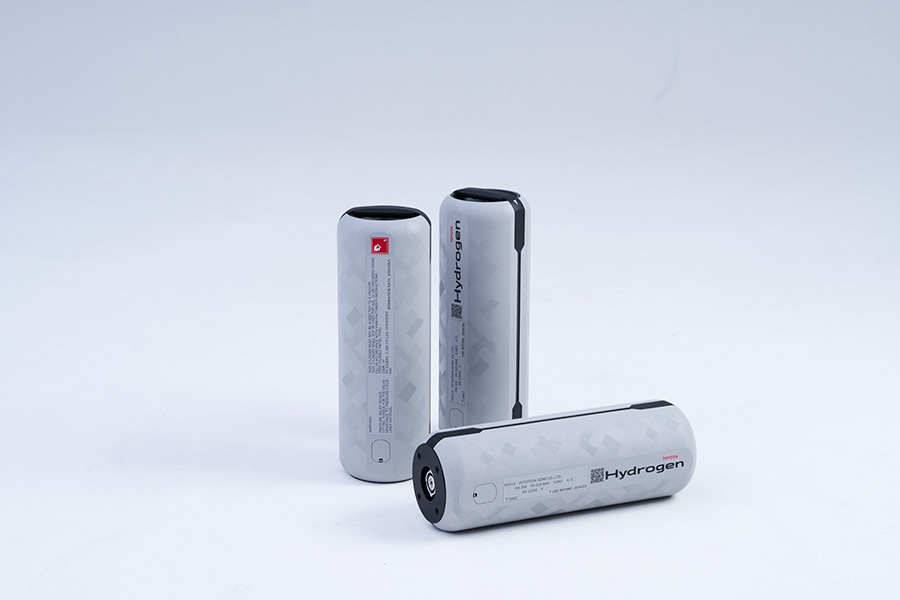
Toyota debuted its portable hydrogen cartridges at the Japan Mobility Show 2024, held from Oct 15 to 18. The cartridges are designed to reduce the size and weight of traditional hydrogen tanks, making them easy to carry by hand.
The cartridges use Toyota’s fuel cell electric vehicle (FCEV) technology, allowing hydrogen to be used as a combustion fuel or to generate electricity, with no CO2 emissions during use.
Source:Toyota
A hydrogen-powered cooker, developed with Rinnai, was also demonstrated, showcasing the cartridges’ versatility for everyday applications such as cooking.
Toyota said it aims to collaborate with startups and companies to expand the use of portable hydrogen cartridges.
Airbus and Toshiba will explore integrating Toshiba’s superconducting motor into Airbus’ hydrogen fuel cell technology.
CONTEXT: Superconducting motors, which have zero electrical resistance at extremely low temperatures, can efficiently handle high current with low voltage. The liquid hydrogen used in hydrogen aircraft operates at -253°C, making it suitable for this technology.
This collaboration aims to create lighter, more fuel-efficient aircraft. Toshiba developed its compact and lightweight high-output superconducting motor in 2022.
Sumitomo sets up JV to develop renewable energy projects in the U.S.
(Company statement, Oct 15)
Sumitomo Corp of America, and its subsidiary Perennial Power Holdings, set up a JV firm with CEP Solar to develop renewable energy projects in the State of Virginia.
The goal is to develop solar power and storage battery projects with a generation capacity of over 1.5 GW. Construction is slated to start in late 2025.
CONTEXT: Virginia is viewed as one of the fastest-growing markets for renewable energy in the U.S. The Virginia Clean Economy Act passed in 2020 mandates that 100% of the electricity supplied in the state must come from renewable energy sources by 2050. The state is also home to a large concentration of data centers.
Sojitz, via its U.S. subsidiary, has invested in Freestate Electric, a major provider of electrical installation and maintenance services for educational institutions, data centers, hospitals, and public facilities in the U.S.
The company aims to strengthen its energy solution business through a delivery system that includes conversion to non-fossil energy, including electrification.
CONTEXT: In the U.S., demand for electrical installation and maintenance services is increasing due to the growing number of facilities and equipment upgrades due to aging and an increasing number of decarbonization initiatives in various sectors. Freestate Electric has a strong presence in the metro Washington D.C. area.
Nissan will introduce a new Vehicle-to-Grid (V2G) technology in the UK by 2026, allowing an EV to handle AC/DC conversion itself.
This innovation eliminates the need for an external conversion unit, reducing costs associated with V2G systems and enabling direct power supply from EVs to the grid.
CONTEXT: Nissan recently became the first global automaker to obtain the UK’s G99 grid certification, allowing direct power transmission from EVs to the grid.
The Institute for Energy Economics and Financial Analysis (IEEFA) said that Santos, the Australian oil and gas company, faces transparency challenges with its Bayu-Undan project that aims to convert a near-depleted gas field in the Timor Sea into the world’s largest CCS facility.
Santos has not disclosed the costs and technical details. Also, it did not report potential emissions offsets related to its Barossa gas project.
CONTEXT: The IEEFA is an NPO focused on the energy transition. It is skeptical about CCS as a technology.
CONTEXT: Santos plans to sequester up to 10 MtCO2/ year. It sees Bayu-Undan as part of a carbon trading hub, including CO2 imports from Japan and South Korea.
The Bayu-Undan project crosses maritime boundaries, raising legal and regulatory issues related to CO2-leak liability between Australia and Timor-Leste. It involves moving CO2 over 800 km.
Chubu Electric and Santos inked an MoU on decarbonization initiatives, to study the feasibility of transporting CO2 from Nagoya Port to Santos’ Moomba CCS Project in Australia. The project converts depleted gas fields into CO2 storage sites.
They’ll explore using renewable energy, such as geothermal, in the Cooper Basin.
JOGMEC agreed with ENEOS, JX Nippon Oil & Gas Exploration, J-Power, and West Japan Carbon Dioxide Storage to do engineering design work on a CCS project.
The CO2 will be stored in offshore saline aquifers near west Kyushu. The goal is to store about 1.7 million tons of CO2 a year from ENEOS refineries and J-Power’s thermal power plants in Setouchi and Kyushu.
JAPEX, Idemitsu Kosan, and Hokkaido Electric inked a deal with JOGMEC to start engineering design work for a CCS project in the Tomakomai area. The goal is to assess CO2 storage potential, and prepare for launching CCS operations by FY2030.
Idemitsu and Hokkaido Electric will handle CO2 separation and capture, and JAPEX will focus on transport, storage, and monitoring. The goal is to store 1.5 to 2 million tons of CO2 per year by 2030.
MOL was contracted to study the transportation of liquefied CO2 via ships as part of a CCS project off western Kyushu. Contractors include West Japan Carbon Dioxide Storage Survey Co., ENEOS, J-Power, and JX Nippon Oil & Gas Exploration.
JX Nippon Oil & Gas Exploration Corporation inked a MoU with University of Wyoming and Japan Coal Energy Center to collaborate on CO2 mineralization.
CONTEXT: This process involves the chemical reaction of CO2 with water and rocks. It turns the CO2 into solid minerals for safe underground storage, offering an alternative to CCS. JX is advancing its “two-pronged” strategy. It involves both traditional oil and gas exploration, and expanding into businesses like CCS/CCUS.
CONTEXT: Japan has the potential to store about 1.47 billion tons of CO2 in basaltic rocks. This equates to 30 times the CO2 absorbed by its forests in 2022.
METI is also backing a project to inject CO2 into decommissioned natural gas fields, aiming for launch by 2030.
Startup OOYOO raised ¥430 million in seed funding. Key investors include Kyoto University Innovation Capital (KU-iCAP), Energy & Environment Investment (EEI), UTokyo Innovation Platform, and Kyoto Capital Partners (KCAP). The funding will allow OOYOO to scale its technology.
CONTEXT: OOYOO focuses on developing gas separation membranes designed to capture and separate CO2; this technology can be used in fossil-fuel power plants and manufacturing and other industries. The company says there is the possibility to expand into oxygen, methane, ammonia, and hydrogen separation.
CONTEXT: The startup had raised ¥1 billion in subsidies and loans. It partners with Sumitomo Chemical, TOPPAN, and GS Yuasa. OOYOO was one of ten Japanese companies to showcase its technology at COP28 in December 2023.
Idemitsu Kosan, Mitsui O.S.K. Lines (MOL), etc are joining forces in a blue carbon project that aims to absorb CO2 through seaweed cultivation. About 10 companies, including steelmakers and local banks, will form a study group.
The initiative focuses on cost reduction and sharing experience on negotiating with fishing cooperatives.
The study will explore automated technology for monitoring seaweed growth to reduce costs.
CONTEXT: Blue carbon refers to the process by which seaweed and seagrass absorb CO2, which happens during photosynthesis, and then stores it on the ocean floor after they die. The CO2 absorbed can then be sold as carbon credits. While the concept is gaining attention, current high production costs limit expansion.
Kuramoto Manufacturing will discontinue its main LCD glass substrate processing and sales business in Ichinoseki City, Iwate Pref. It will instead focus on the production of perovskite cells.
The substrate business had accounted for nearly 40% of net sales in 2023.
The firm will keep staff at the Ichinoseki plant that will produce PCS in the future.
EDF Trading Japan, a subsidiary of France’s EDF, became the first foreign company to obtain a trade member status for the TOCOM Electricity Futures Trading.
Electricity futures trading has grown over the need to hedge fuel price volatility and the entry of major foreign companies; but a lack of liquidity has been a problem.
TOCOM now aims to increase liquidity and convenience for international investors.
CONTEXT: EDF Trading entered the Japanese power market in July 2020.
TAKEAWAY: The Japanese electricity futures market has come to be dominated by the EEX with TOCOM holding barely a few percent of the market share in terms of volume of trading. There are multiple reasons for EEX surging ahead, including its faster response to client demands in terms of products and trading structures, and a more international clientele and communication style. Still, many in the industry believe it is important to have competition among trading marketplaces. Equally, overseas firms wish to have the flexibility to trade on both the EEX and TOCOM, where the major power utilities have a big presence. EDF’s entry will likely be followed by others in the sector, with several more international companies in the process of obtaining their license to trade on TOCOM.
J-Power plans to divest from its U.S. fossil-fuel power generation business, and will sell as many as nine of 11 stakes in plants that it holds.
The funds earned from those sales will go to develop renewable energy projects outside Japan.
CONTEXT: Fossil-fuel assets account for 90% of J-Power’s overseas generation capacity. The company holds stakes in a total capacity of 2.5 GW in the U.S. which in April announced new rules that require fossil-fuel plants to reduce GHG emissions.
J-Power will retain stakes in two new fossil fuel-fired plants — one in Pennsylvania (launched in 2018), and one in Illinois (launched in 2022). These two have a high generation efficiency.
TAKEAWAY: Another factor that’s motivating J-Power’s decision to sell is soaring electricity demand from data centers due to the generative AI boom. Major tech companies plan to power their operations with carbon-free energy, and in this context, fossil-fueled power plants are a liability.
The Electricity and Gas Market Surveillance Commission (EGC) reported on operators that are likely to have a significant impact on electricity trading; these utilities are required to offer their power supply on the spot market at a marginal cost.
They were assessed in October 2023, and again this year. Among these operators are major EPCOs and their group companies, including Hokkaido Electric, Tohoku Electric, TEPCO Energy Partner, JERA, Chubu Electric Miraiz, Hokuriku Electric, KEPCO, Chugoku Electric, Shikoku Electric, and Kyushu Electric.
The assessment is based on power generation share and supply capacity. But the power regular noted that it is discussing changing the current methodology.
CONTEXT: Under the “Guidelines for Appropriate Electricity Trading”, those listed as “operators with a high likelihood of market dominance” are required to sell their surplus electricity on the JEPX spot market at a price based on marginal cost.
The EGC verified that Kyushu Electric showed no unfair practices internally or to clients unrelated to its group in the wholesale electricity trading for FY2024.
For FY2025 and beyond, eight companies plan to supply the majority of their supply capacity to the wholesale market.
In addition, they will allocate about 10-20% or more of their sales volume to long-term wholesale, and plan to increase this ratio in the future.
The next follow-up verification is scheduled in the first half of FY2025.
CONTEXT: The large utilities’ policy of “no discrimination to buyers whether inside or outside the group” is key to fair competition in the electricity market. EGC requires that the generation divisions of large utilities treat their group retail divisions or companies and external business partners (as in, new power companies) equally.
The EGC begins reviewing the C and D values of the correctional imbalance fee for FY2025 and beyond.
Regarding the C-value, the limit for imbalance fee, generation companies and TSOs have requested that the current value of ¥200/ kW be increased, as this would provide an incentive to ensure that planned values for simultaneous generation are met, but retail electricity companies have expressed caution about the increase.
The D-value, the standard for the imbalance fee when supply/ demand starts to tighten, will be discussed to determine whether it is an appropriate level from the perspective of incentives to achieve the same amount as the planned value.
CONTEXT: The imbalance fee is a unit price used by TSOs to adjust for excesses or shortages in electricity supply / demand, and is normally the marginal price of balancing capacity. However, during periods of tight supply/ demand, the imbalance fee increases as costs are loaded to secure additional emergency supply capacity.
The following values are used to calculate the correctional imbalance fee during periods of tight supply/demand:
A-value: Set at 3% as the minimum level of supply capacity;
B-value: Set at 10% as the level in preparation for the risk of a decline in supply capacity;
B-dash-value: Set at 8% as the standard for tight supply/demand;
C-value: This is the maximum price of the imbalance fee calculated as the cost of securing an additional 1 kWh of supply on an emergency basis. The price for DR is estimated at ¥600 yen/ kWh, but ¥200/ kWh is applied based on the highest price of past wholesale power market contracts;
D-value: This is the marginal price for B-dash and is set at ¥45/ kWh as the cost of securing the Power Source 1-dash.
Renewables and green hydrogen developer Amp Energy secured $145 million (¥20 billion) in equity funding for Amp Japan, its wholly-owned subsidiary.
The investors are Asia-Pacific Sustainable & Decarbonisation Infrastructure Equity, a fund sponsored by Aravest and Sumitomo Mitsui Financial Group, and Banpu NEXT, a subsidiary of Thailand’s energy firm Banpu.
The funds will support Amp Japan’s utility and small-scale solar, as well as onshore wind and battery storage projects, and new acquisitions.
CONTEXT: Amp Japan was founded in 2016, and it has since developed and built over 300 MW of solar PV nationwide and is developing an additional 800 MW. Amp Japan was one of the first to scale in the corporate PPA and other non-FIT markets in solar, onshore wind and battery storage.
Girasol Energy, a startup at the University of Tokyo, is revitalizing aging solar PV plants operating for nearly 30 years. Girasol works with the Yamanashi Pref and uses proprietary analysis tech to locate areas that need repairs and restoration of power generation without replacing PV cells.
The firm worked on a facility in Hokuto City, Yamanashi that was launched in 1994 but shut in 2022 due to deterioration and breakdowns. Girasol restored it using digital tech to reconfigure wiring to improve power generation performance.
CONTEXT: Concerns are rising that after agreements under the FIT expire, operators will give up on maintaining and operating solar power plants, and the facilities will be abandoned. Girasol hopes to extend facilities’ performance up to 50 years. The company will operate 18 power plants, with a capacity totaling about 1 MW.
Sharing Energy raised a total of ¥2 billion from Dai-ichi Life Insurance, 77 Bank and Mizuho Bank by arranging finance for a rooftop solar power generation business.
To date, Sharing Energy has raised a total of ¥15.44 billion.
CONTEXT: Sharing Energy’s “Share Denki” service allows customers to install solar power systems on their roofs at no initial cost, and offers cheaper electricity than utilities.
Eurus Energy plans an onshore wind farm with an installed capacity of 160 MW near Mutsu City and Higashidori Village in Aomori Pref.
Plans call for about 30 turbines, each with a 4 MW to 6 MW capacity.
Eurus Energy currently runs a 13 MW wind farm in Higashidori that has operated since Oct 2004 and is scheduled to close in July 2025. The firm is building a 43 MW plant to replace it, and the start of operation is planned for March 2027.
Cosmo Eco Power, Tokyo Metro and TEPCO Energy Partner signed a virtual PPA to use onshore wind power for operation of railways.
Under the agreement, Tokyo Metro will be able to purchase the environmental value of some 21 GWh/ year generated from the Himegami Wind Park operated by Cosmo Eco Power as non-fossil certificates for around 15 years.
Tokyo Metro will be able to convert a portion of the electricity used on the Ginza Line to virtually renewable energy, aiming to reduce CO2 emissions by 8,190 tons/ year.
This is the first time that a virtual PPA utilizing onshore wind power has been introduced in Japan’s railroad industry.
Seiko Electric, a producer of electric power control systems, will build an R&D center for storage batteries and inspection robots in the Kitakyushu Science and Research Park in Fukuoka Pref. Construction will run through April 2026.
The firm will invest ¥4.1 billion to develop large-scale stationary redox flow batteries and a demo project to store power from renewables connected to the power grid.
The company will cooperate with the Kyushu Institute of Technology to develop patrol inspection robots for use at power plants and factories.
JERA submitted a draft Environmental Impact Assessment (EIA) for the Chita Thermal Power Station Units 7-8 construction plan. It involves decommissioning units 1-5 among the existing six units.
New units 7 and 8, with an expected gross thermal efficiency of 64%, will be built.
The draft details environmental surveys, evaluations, and conservation measures, and will be available for public inspection starting Oct 18.
CONTEXT: JERA won an LTDA (long-term decarbonization power capacity auction) contract for this power plant back in January, but soon after hinted that it might withdraw as realized that the deal might not be favorable. LTDA guarantees winners a certain income but gives little upside for additional profits.
TAKEAWAY: The news suggests that JERA still hasn’t decided to go ahead with the two units at Chita or not, and it seems to want to keep options open; so, it proceeded with the EIA for now. This uncertainty is not ideal for either the plant operator or regulator OCCTO, as it makes longer term capacity planning difficult. JERA may be holding out for some concessions, but it’s not clear what these could be.
KEPCO will decommission Ako Power Plant Units 1 and 2 (Hyogo Pref) by July 31, 2025. Launched in 1987, the plant runs on heavy oil/crude oil.
KEPCO said it’s difficult to maintain the aging power generation equipment. Also, the utility is considering use of the site as a zero-carbon energy source.
CONTEXT: KEPCO is also transitioning to low-CO2 emission equipment at Osaka’s Nanko Power Plant. And there are plans to co-fire hydrogen and natural gas at Himeji Power Plant Units 1 and 2 in Hyogo Pref by 2030.
KEPCO won NRA approval for changes at Takahama NPP Unit 1 that relate to safety regulations for aging.
CONTEXT: An aging evaluation is required at Takahama Unit 1 before it reaches 50 years since launch (November 1974). The company must formulate a long-term management plan for an extra 10 years beyond the 50-year mark.
TAKEAWAY: This would be the first time that a Japanese NPP receives approval to operate beyond the 50 years mark. Globally there are only about 30 NPPs in operation for more than five decades. When dealing with old plants, operators face equipment deterioration. Thus, KEPCO is trying to be as careful as possible. This is seen in the recent manual shut down at the NPP after discovering holes in the plant’s piping.
Shikoku Electric announced resumption of power transmission from Unit 3 of the Ikata NPP (Ehime Pref).
CONTEXT: The reactor was scheduled to restart on Sept 29 and resume power transmission on Oct 1. There was a malfunction in the device that measures the fuel output distribution. As a result, the company halted the reactor’s restart on Oct 7. Regular inspection will end about Nov 12.
Hokkaido Electric said safety investment costs for the Tomari NPP’s Unit 3 will rise to ¥515 billion by March 2027, up from a previous estimate of over ¥400 billion.
In 2011, the company estimated safety costs for all three units at ¥20-30 billion, but new regulatory standards have driven costs higher. Hokkaido Electric’s total capital investment for FY2024 is expected to double to ¥240 billion, its highest ever; ¥100 billion will go for safety measures at Tomari.
Key items include tsunami and seismic estimates now under review.
TAKEAWAY: The most critical issue is the construction of a new seawall. A 19 meter-high seawall will cost ¥180 billion; and take at least three years to complete. The ongoing safety works suggest costs might continue to grow. The plant is still idle.
Ubitus, a Tokyo-based cloud services firm with investment from Nvidia Corp, said it’s interested in building a new data center provided it will be located near a nuclear power plant.
Ubitus is searching for land in Kyoto, Shimane or Kyushu primarily because these regions have operating NPPs. The company wants to build a third data center to support generative AI applications.
CEO Wesley Kuo said that he believes nuclear power is most suitable for industrial use, such as AI, in terms of cost and scale of supply.
CONTEXT: A week earlier, Google CEO Sundar Pichai said, during a visit to Japan, that the company is considering buying electricity from NPPs for its data centers.
The Niigata Pref Chamber of Commerce and Industry sent a request to the governor titled “Proposals for Industrial Promotion Policies in Niigata Pref”. It calls for restarting NPPs, with safety as the top priority.
It emphasized that in the past Kashiwazaki-Kariwa NPP contributed to the national economic revival, and that nuclear power can provide stable and low-cost electricity.
Kyushu Electric signed a contract with MHI for the supply of MOX fuel for use in its Genkai NPP No. 3 reactor. MHI will commission France’s Orano to manufacture 40 MOX fuel assemblies.
Orano will use Kyushu Electric’s plutonium in France. After this manufacturing process, Kyushu Electric will no longer hold plutonium overseas.
CONTEXT: MOX fuel is made by mixing uranium and plutonium extracted from spent nuclear fuel. Genkai Unit 3 began using MOX fuel in 2009. Kyushu Electric was using fuel processed in France but its plutonium stocks in the country ran short. So, the utility halted plu-thermal power generation in Nov 2011. Kyushu Electric obtained the plutonium by a book-keeping exchange, swapping its plutonium holdings in the UK with plutonium held in France by Tohoku Electric and others.
TAKEAWAY: While MOX usage is limited due to technical difficulties and, most of all, the absence of a proper facility in Japan, its adoption remains a pillar of Japan’s nuclear close cycle. Having to resort to overseas facilities adds to the challenges.
KEPCO said it will send low-level radioactive waste from Mihama NPP to Japan Nuclear Fuel’s low-level radioactive waste center in Rokkasho (Aomori Pref).
The specialized transport ship, Seieimaru, will arrive at Mihama on Oct 21 and leave on Oct 22. It consists of 50 containers of homogeneous solidified waste and 400 drums of solidified filler waste.
KEPCO applied for approval for its long-term management plan for Mihama NPP Unit 3 in accordance with the Reactor Regulation Act.
The utility said it can maintain the reactor’s integrity for more than 40 years.
The Reactor Regulation Act takes effect on June 6, 2025. KEPCO must set up a long-term management plan focused on safety to win NRA approval. This will allow for operations beyond the 40-year mark.
CONTEXT: Mihama NPP Unit 3 launched in December 1976; its planned restart would mark the country’s first nuclear unit to operate beyond the initial 40-year service period and following a 10-year outage.
On Oct 15, KEPCO began the shut down of Mihama NPP Unit 3.
On Oct 5, salt deposits were discovered on the seawater return header of the primary water cooler in the C system. Thickness measurements revealed minor holes and reduction around these areas.
The NRA met to assess nearby volcanoes on Hokuriku Electric’s Shika NPP Unit 2.
The regulator accepted Hokuriku Electric’s claim that the risk of pyroclastic flows and lava reaching the plant from volcanoes within a 160 km radius is sufficiently low.
Hokuriku Electric identified 17 volcanoes that could potentially affect the plant, but investigations showed that major volcanic threats like pyroclastic flows are unlikely.
The NRA mostly agreed with Hokuriku’s assessment but requested clarification on certain documents related to volcanic ash and gas, which the plant can handle.
TEPSCO, a TEPCO subsidiary, will help develop a wide-area power grid system in south and west Africa, developing power supply and interconnection line expansion based on power grid demand forecasts.
The project seeks to help resolve power supply shortages and frequent power outages.
Commissioned by the Japan International Cooperation Agency, a total of 26 countries have joined the program that runs through September 2027.
Takaoka Toko began the proof-of-concept for a monitoring service for single-person households based on electricity usage data in Kitakyushu City.
The service collects data on daily electricity usage every minute through smart meters, and uses AI to analyze it, so it can detect changes in residents’ physical condition by understanding their daily rhythms and patterns.
CONTEXT: As a member of TEPCO Group, Takaoka Toko is involved in providing power distribution systems, developing services that help improve the quality of life and create new value by using various energy data such as electricity, gas and water.
Osaka Gas has invested in Koloma, a U.S. startup focused on the exploration, development, and production of naturally found hydrogen. Koloma is supported by the U.S. Dept of Energy.
CONTEXT: This source of hydrogen, also known as “white hydrogen,” is found in underground deposits and is gaining attention as an alternative to producing the gas via applying power and heat to fossil fuels or water. The extraction itself could potentially use drilling techniques from the oil and gas industries.
Koloma is working towards the commercialization of natural hydrogen using its own proprietary data. This collaboration will help Osaka Gas deepen expertise in hydrogen and explore its application in clean energy solutions like e-methane.
The Japan Gas Association inked an MoU with the Australian Gas Industry Trust to collaborate on achieving carbon neutrality and stable LNG trade.
The partnership aims to support e-methane projects and discussions on CO2 counting.
CONTEXT: This MOU will help Japan’s future imports of e-methane from Australia, and will also help Australia to develop new gas businesses while strengthening LNG trade with Japan.
The LNG stocks of 10 power utilities were 2.08 million tons as of Oct 13, rising 3% from the previous week (2.02 million tons). This is down 5% from late October 2023 (2.19 million tons), and down 5% from the past 5-year average (2.02 million tons).
CONTEXT: Mild weather is forecasted for the rest of October and November.
Interview with Sato Hiroki, Senior Managing Executive Officer, Division CEO of Global Business Division, Chubu Electric Power Co, Inc.
Chubu Electric is one of Japan’s biggest power utilities, serving the central region that’s home to major automakers including Toyota Motor. The utility is also a 50% owner of JERA, Japan’s top operator of thermal power plants and the world’s biggest LNG importer.
With the full liberalization of Japan’s power market in 2016, Chubu Electric has expanded its business outside of the central areas and into new sectors. These include entry into the burgeoning carbon capture industry and investments into renewable energy. The company is also putting more effort to grow its business internationally, and two years ago set up a Global Business Division to seize on worldwide opportunities in energy.
Q: How important is the international business for Chubu Electric?
A: The Global Business Division currently has around 90 members, both here and overseas; there are 50 in Nagoya, and 20 each in Tokyo and overseas.
When I transferred from JERA in 2021, Chubu Electric had just announced a long-term strategy, called “Management Vision 2.0,” that aimed at consolidated profits of ¥250 billion by 2030. It was clear that only half of this could come from its domestic power generation business. The rest would need to be from new businesses and from overseas. That’s why this division was created.
Our focus is on two main areas: investment and consulting. All overseas business activities are managed by this division. Some projects, like the CCS (Carbon dioxide Capture and Storage) initiative at Nagoya Port, are based in Japan but linked to the global value chains, so we also handle those. By 2030, this division will take an important role in generating half of Chubu Electric’s consolidated profits.
Our goal is to make strategic investments of ¥400 billion by 2030. Of course, there’s a time lag between investment and returns, so in the near term, our division seeks to generate profits of ¥10 billion by the second half of the 2020s. So far, things are progressing very smoothly.
We currently have 12 investment projects (including the CCS project under consideration, and NuScale for which a final investment decision has been made), and 8 consulting projects. Of these, the majority were initiated since the establishment of the Global Business Division in 2022.
It’s not always smooth sailing. For example, we decided to invest in a small modular reactor developer, NuScale Power in the U.S., but shortly after they had to walk away from their first project, and their stock plummeted. But overall, we’ve managed to participate in the projects that we really wanted to pursue.
And the other important thing to say is, all our overseas projects will be related to decarbonization.
Q: Which overseas projects seem particularly promising?
A: There are three that, if we can see them through, could become real game-changers and contribute to global decarbonization.
Carbon Capture
The first is a CCS project at Nagoya Port that we are currently advancing with BP. This involves capturing CO2 from various industrial facilities around the port, transporting it overseas, then storing and monitoring it. This is a “blue” project, to borrow global phraseology. What’s interesting is that European countries, which previously would not accept anything other than “green” (i.e., renewables-based) energy, have started to adopt a more pragmatic view since the Russian invasion of Ukraine and are now less interested in the color-based definitions.
While the U.S. never had an issue with it, Europe seemed to outrightly dismiss CCS technology as an excuse for extending the lifetime of fossil fuels. Now, look at the UK’s North Sea: CCS projects are lining up there! We can’t achieve decarbonization only through renewables. I firmly believe that we need to include physical carbon capture and storage in our strategies.
At the Nagoya Port site, we’ve completed the feasibility study (FS), but we still don’t have all the necessary components for the project to become a full-fledged business. Japan’s government said it will impose carbon taxes starting 2028, and there’s also talk of forming an emissions trading system similar to the one in the EU starting 2026. Without these [components], CCS won’t be viable as a business. Ideally, we’d like all the costs to be covered by subsidies, but that’s not realistic. So, in order for CCS to work on a commercial level, we need carbon to have value.
Q: How much investment is currently anticipated for the CCS project in Indonesia?
A: We believe that by 2050 about 20 ships with tank capacities of 50,000 to 80,000 cubic meters of CO2 will be needed. Just that alone is a quite substantial investment. It’s certainly not a project on the scale of several billions or tens of billions of yen. It will be larger, possibly with two more digits. This is why it’s crucial to see how far the government’s carbon pricing mechanisms will support the value of carbon. To put it simply, if emitters are asked to pay a carbon tax of ¥10,000 per ton, but they have an option to pay Chubu Electric ¥8,000 per ton to handle CCS, they’d naturally choose the latter, right? Without such a comparison point, this project cannot move forward. However, the government is concerned that introducing a ¥10,000 carbon tax right away might negatively impact the economic condition of industries. That is a bit frustrating. In the EU, they don’t bother with such debates anymore — they’ve already mandated fines for companies that don’t adopt CCS. If Japan is serious about decarbonization, legal frameworks like these are essential.
Q: Will you require state subsidies to make the CCS business work?
A: I don’t want to ask for subsidies from the start. I want to run this as a business within a mechanism that properly addresses both global environmental issues and Japan’s NDC (Nationally Determined Contribution) target. What we need instead is a well-designed system.
There is also responsibility for us as operators to structure the project well. For example, if we can get several entities to share the use of the CO2 carriers, operating rates will increase, and costs go down. So, if others want to join us and work together, we’re open to that. It doesn’t matter if they’re domestic or international entities.
Our cooperation agreement with Indonesia is non-exclusive, meaning it’s not a restrictive contract. We’ve completed the FS with BP, but as for dividing the roles and responsibilities moving forward, that’s still to be decided. We might also work with partners other than BP. Regarding storage locations, I believe it’s essential to secure more than just the Tangguh site. Relying on a single point of storage isn’t good for security. That storage may involve BP or others.
Nuclear
The second potential game-changer is the SMR (Small Module Reactor) project with NuScale. We had decided on the investment, but the actual remittance hasn’t happened. That’s because approval is still pending from CFIUS (the Committee on Foreign Investment in the U.S.). Once that approval comes through, we’ll invest. I see nuclear energy as a clean energy source, so I consider it essential. It’s extremely difficult for Japan to survive without nuclear power, and to make a difference we need to adopt safer, more advanced nuclear tech options like SMRs.
Chubu Electric is the only utility globally to have decided on an investment in SMRs. The others that have invested in SMRs are not power utilities. [NOTE: Chubu Electric’s only nuclear facility is the Hamaoka NPP, which the government asked the company to shut down shortly after the Fukushima disaster, claiming it could pose a risk in case of an accident. Chubu has invested billions of yen into upgrading the Hamaoka NPP safety measures, but it has yet to win approval for a restart].
At Chubu Electric, we believe both traditional nuclear tech and new options like SMRs should coexist. It’s also valuable to have optionality.
Geothermal
Our third game-changer is a geothermal project with EAVOR, a startup from Calgary, Canada, established in 2017. We became the first Japanese company to invest in them in 2022. I think EAVOR’s geothermal technology is revolutionary.
Geothermal has traditionally been considered a risky business. The chances of drilling into the ground and finding steam is about one in three. The cost of failure is expensive. EAVOR’s technology, however, doesn’t rely on steam; it requires heat. Their closed-loop system circulates water, capturing heat without depending on the geological layers, which reduces the risk of missing the target to a negligible level. The project we’re working on with EAVOR in Geretsried, Germany, leverages this tech, utilizing geological data from another company’s failed attempt at a conventional geothermal project on the same site.
Despite being the third-largest geothermal resource holder globally, after the U.S. and Indonesia, Japan generates less than 1% of its power from this energy source. There are also many restrictions to new developments, but this closed-loop system allows the energy projects not to compete with the hot springs owners for the steam. With the German project underway, we hope to bring the tech to Japan.
Big tech companies are demanding only clean energy supplies, but their data centers, etc need reliable and stable electricity. I think nuclear or geothermal are the solution. By the way, Microsoft has also invested in EAVOR, and recently, [Japanese construction major] Kajima also joined as an investor.
We’re looking at scaling this new geothermal technology to hit 10 GW of installed capacity. That’s equivalent to 10 conventional nuclear reactors. I can’t give a breakdown of how much of that will be in Japan, but we’d like to hit this target globally.
In Japan, two local governments have already shown significant interest in this technology and are asking us to develop projects in their regions. One municipality has even conducted an on-site inspection.
Q: What are your plans for the consulting business? You have projects in that space in Africa.
A: Africa is not just the next market but the market after the next market, so we’re keeping a close eye on that region. Currently, we’re only involved in consulting in Uganda and Mozambique, which are JICA projects related to ODA. But we want to link consulting work to making investments, and everyone is working with that mindset. If things go well, I hope to announce something soon.
Q: How do you view your relationship with JERA — are they a competitor or a partner?
A: While we have a capital relationship, JERA is a separate entity, so they’re a competitor. To put it bluntly, we see them as competitors, and ultimately, we want to win. It’s an arm’s-length relationship. But, just like with other entities around the world, there will be cases where we form a consortium and work together.
Q: The next Basic Energy Plan is expected before April 2025. What are your expectations?
A: I expect it to reflect trends in data center/ AI power demand growth and electrification. A recent IEA report shows that the global electricity demand of data centers in 2026 will be equivalent to something like the power consumption of Japan. Also, the current global electrification ratio is 20%, but the IEA and other major energy outlooks estimate that for net zero by 2050 it needs to reach 50%. In short, decarbonization requires more electricity. If we don’t address these two things in the supply side, we won’t be able to keep up.
I also hope the new Plan has a more realistic outlook on the cost of power. Recently, people are talking more about the system’s cost of electricity, rather than the cost of generation as a standalone. So, a photovoltaic facility by itself may achieve costs of ¥3/ kWh. But as we use more solar, the cost of power transmission and battery storage also needs to be accounted for. As such, we need to look at the cost of integrating new facilities into the system.
Finally, I hope the offered energy mix will be more realistic. Nuclear power is part of that. The current target for nuclear power is 20-22% of the mix, but in reality, we have a lot less. The government needs to broaden its commitment so that its targets become more achievable.
ANALYSIS
BY THOMAS SHOMAKER
Solar Developers Look to Nascent P2P Trading to Revive Flagging Profits
Peer-to-peer energy trading, in which consumers and businesses produce and sell electricity between themselves, appears poised to take off in Japan. Two peer-to-peer (P2P) initiatives, one already underway in Gunma Prefecture and another kicking off next month in Ehime Prefecture, have brought Toshiba Corp, the JA Group and Itochu Corp into collaboration with local governments and dozens of homeowners with solar panels.
The common thread for these separate initiatives is TRENDE, a solar installation and energy trading company set up by TEPCO six years ago, but now owned by Itochu. The startup has developed a blockchain technology that facilitates P2P transactions.
Due to Japan’s high population density and rapid expansion of solar power in the years after the March 2011 Fukushima disaster, there is a high potential for P2P energy trading to assist the country in meeting carbon-reduction targets, especially as solar power installations have slowed since the 2022 phase-out of the Feed-in Tariff (FIT). As selling excess energy directly to users via a P2P platform is generally more profitable than selling it back to the grid, P2P trading could help stimulate another wave of solar energy expansion.
While there have been previous P2P projects in Japan, they mostly focused on developing the microgrids and blockchain technologies that support the system. These new initiatives stand out as practical pilot projects that bring together consumers, EVs, factories and agricultural facilities. And both of the new projects have been designed for scalability.
Background on P2P energy trading
The 2012 introduction of Japan’s renewable energy FIT vastly expanded domestic solar power capacity, which in 2011 provided just 0.5% of the country’s total energy. By 2023, this figure was nearly 11% and Japan had reached the world’s third-largest installed solar capacity.
As of March 2024, three-quarters of these installations were sub-10 kW systems on top of private homes or on small plots of land, meaning a vast network of Distributed Energy Resources (DER). Because of this, new domestic energy retailers and start-ups began eying P2P energy trading soon after the concept took off in the later 2010s. (Fig. A)
As the FIT transitioned to a Feed-in Premium (FIP) model in 2022, renewable energy generators began to see diminishing returns from power sales. The recent excitement around P2P trading is largely because it potentially offers a way to maintain revenue from power sales while re-incentivising solar installations.
Japan’s earlier P2P initiatives were generally proof-of-concept experiments, like in 2019-20 when TRENDE teamed up with Toyota and the University of Tokyo in connecting 19 Shizuoka Prefecture households with nine plug-in hybrid vehicles to see if P2P transactions could both lower electricity bills and provide reliable power.
The Ehime and Gunma Pref projects
The Ehime project could be described as a larger version of the 2019-20 experiment. Under the prefecture’s “Try Angle Ehime Initiative,” TRENDE and Toshiba have been awarded a grant to connect 30 solar power-equipped homes with six EVs that will commute to a Toshiba factory in Matsuyama City. The verification period will run from the end of November to the end of February 2025.
The EVs will be Vehicle-to-Everything (V2X) cars that can share information with the other V2Xs while exchanging power with the P2P trading platform. Excess energy will therefore be purchased by the factory during times of high demand when it’s most expensive. The direct P2P transactions means the households will obtain higher profits than they would ordinarily get from grid sales while the factory procures energy at below-market rates.
The ongoing Gunma project is a commercial energy trading service born out of a collaboration between trading house Itochu and the Japan Agricultural (JA) Group, the nation’s top farmers cooperative, to find decarbonization solutions.
TRENDE, which became a consolidated subsidiary of Itochu in 2023, is again providing the platform for the P2P transactions. In collaboration with the JA Group’s electricity retailing firm, ZEN-NOH Energy, solar power is generated at various JA facilities, including A-COOP supermarkets, gas stations, agrivoltaic installations, offices and farmers’ homes. It is then distributed via the TRENDE’S P2P exchange hosted by ZEN-NOH Energy. (Fig. B)
That platform uses AI to forecast demand and blockchain technology to facilitate direct energy transactions between these “prosumers”, meaning individuals, stores and facilities that both produce and consume power. This is done in communication with batteries from Itochu’s “Smart Star” series that also use AI software to optimize charging and discharging by learning consumption patterns. Further energy exchange is carried out by the EVs, which may be stationed at various JA facilities.
Potential to scale
Both the Ehime and Gunma projects have scalability in mind.
The Try Angle Ehime Initiative has the goal of solving regional issues through digital solutions, and if the P2P project’s verification period is deemed a success, the target recipients will expand in Matsuyama City and then across the prefecture.
The Gunma initiative is already a commercial energy trading service, albeit with a relatively small footprint. TRENDE told JapanNRG that the results are checked monthly and that the intention is to scale nationwide via the ZEN-NOH network.
The ultimate goal is to have commercial P2P energy trading microgrids connect communities across the country with JA Group’s roughly 1,000 A-COOP supermarkets and 36,000 JA Cooperative organizations with roughly 10 million official and associate members.
If such a scale is achieved, it would essentially mean that everyone in Japan will be not far away from such an energy hub. At the very least, in cases of a local grid failure at times of a natural disaster or similar, these facilities underpinning the P2P hubs could become lifelines for local communities. Furthermore, energy could be brought into distant areas by EVs or battery-equipped mobile supermarket vehicles. (Fig. C)
This vision is in line with the national government’s recent efforts to push localities to introduce renewable energy in public facilities that can be used in times of disaster.
Challenges remain
Because of the success of earlier P2P proof-of-concept experiments, all entities involved in these two initiatives are confident of their ability to scale. But some challenges to P2P growth in Japan remain.
For one, while Japan has a high density of DERs, they are concentrated in peri-urban areas outside of the country’s urban cores, which are dominated by highrises and have limited options for solar PV installation. Therefore, the flow of energy will remain one-sided in many parts of Japan, although city dwellers should still be able to procure power at below-grid prices if their energy retailers host P2P platforms.
Another challenge is Japan’s slow adoption of EVs, which accounted for just 2.2% of new car sales in 2023, far behind China, the U.S. and Europe. Despite the sluggish growth of the EV market, the sales trend is upward and the nearly 90,000 EVs sold during 2023 was an annual record.
A final hurdle is that the 10 major power utilities, EPCOs, which control most of the national power grid, have varying degrees of openness to innovative electricity trading. These P2P projects have essentially sidestepped such negotiations, securing prefectural support in Ehime and by working with the JA Group-backed ZEN-NOH Energy in Gunma.
A METI report in June showed that 103 new local power companies — which tend to be more open to market innovation — have been established since 2010. But large parts of Japan still have limited energy options.
While P2P energy trading is a relatively new concept, the idea of decentralized power grids has been around since DERs first began to provide meaningful amounts of energy. The concept had previously relied on traditional gatekeepers to provide the market. Should Ehime and Gunma projects expand as planned, however, P2P energy trading may spread in Japan faster than the solar installations that have made it possible.
ASIA ENERGY REVIEW
BY JOHN VAROLI
This weekly column focuses on energy events in Asia and the Pacific
Australia / Wind power and BESS
Sweden’s OX2 acquired a proposed 1 GW onshore wind farm in West Australia that includes a 100 MW co-located BESS. Planned to be built near Perth, the project is in the early stages and its size is not finalized. This is OX2’s first onshore wind project in Australia.
China / LNG trucks
Analysts said the swift rise of natural gas-powered trucks, particularly heavy-duty vehicles of 14 tons and more, is thrusting China past peak diesel demand. China Securities estimated the country’s LNG truck fleet would displace about 9.2 million tons of diesel consumption in 2024, equivalent to 4% of last year’s demand.
Data centers
Delta Electronics plans to build its own energy plants in India and Thailand, as the world’s leading provider of power management technologies aims to decarbonize its global supply chain. The company said that Thailand and India are the two most challenging countries to access enough green power.
India / Energy plan
India seeks to be a global energy leader, aiming to reach 2,100 GW of capacity by 2047. Towards that goal, the Central Electricity Authority launched a National Electricity Plan that calls for 500 GW of renewable energy capacity by 2030, reaching 600 GW by 2032.
India / Renewable energy
As of October, India’s energy sector recorded 201 GW of renewable generation capacity, accounting for 46% of the nation’s total installed capacity of 453 GW. Solar accounted for 91 GW of new installed capacity, wind for 47 GW, large hydro 47 GW, small hydro power 5 GW, and biopower added 11 GW.
South Korea / LNG
To strengthen its LNG supply chain, South Korea inked a MoU with Singapore for an LNG swap agreement to leverage their complementary seasonal demand patterns and enhance pricing power through joint purchases.
Taiwan / Clean energy
The Minister of Economic Affairs proposed to invest in renewables in the Philippines and transport the electricity back to Taiwan via submarine cables in order to address domestic energy supply constraints and meet growing demand for green energy from international technology manufacturers.
Vietnam / Data centers
South Korea’s Hyosung plans to double its investment in Vietnam, with an additional $4 billion slated for data center expansion. Hyosung also has stakes in Vietnam’s renewable energy, power grids and power equipment sectors. South Korea is the country’s leading foreign investor.
Vietnam / Electricity
Thailand’s Central Group is adding solar panels, electric forklifts and EV charging to supermarkets in Vietnam. The retailer inked a deal with Tona Syntegra Solar, which also will procure electric trucks and energy storage. Central Group is one of the biggest mall and market operators in Vietnam.
Vietnam / Grid
The development of Vietnam’s direct energy purchase policy amid the push for renewable energy is hampered by grid connectivity’s inability to accommodate a surge in capacity, said the ASEAN Centre for Energy. By 2030, wind, solar, hydropower and biomass will have provided 48% of the nation’s installed capacity.
2024 EVENTS CALENDAR
A selection of domestic and international events we believe will have an impact on Japanese energy
January
First market trading day (Jan 4)
IEA “Renewables 2023: Analysis and Market Forecast to 2028” released (Jan 11)
Renewable Energy Exhibition (Jan 31 – Feb 2)
Taiwan presidential election (Jan 13)
Japan’s Diet convenes
IEA “Electricity 2024 / Analysis and Forecast to 2026” released (Jan 24)
February
CFAA International Symposium (Feb 2)
India Energy Week 2024 (Feb 6-9)
Lunar New Year (Feb 10-17)
Indonesia presidential election (Feb 14)
Japan-Ukraine Conference for Promotion of Economic Reconstruction (Feb 19)
FIT/FIP solar auction (Feb 19 – March 1)
Smart Energy Week (Feb 28-Mar 1)
March
Announcement of auction result for Offshore Wind Round 2 (for Akita Happo-Noshiro Project)
Onshore wind auctions (March 4-15; results on March 22)
International LNG Congress (LNGCON) 2024, Milan, Italy (March 11-12)
Russian president election (March 15-17)
World Petrochemical Conference, Houston, TX, USA (March 18-22)
IAEA Nuclear Energy Summit @ Belgium (March 21)
Ukraine presidential election (due before March 31)
Happo Noshiro, Murakami-Tainai, Oga-Katagami-Akita and Saikai-Eshima wind project auctions close (June 30)
July
Tokyo governor election (July 7)
7th Basic (Strategic) Energy Plan draft published (expected)
August
7th Basic (Strategic) Energy Plan draft presented to Cabinet (expected)
September
Global Offshore Wind Summit Japan 2024, Sapporo, Hokkaido (Sept 3-4)
The United Nations Summit of the Future (Sept 22-23)
Gastech 2024, Houston, TX (Sept 17-20)
IAEA General Conference
GX Week in Tokyo (expected late Sept to October)
Asia Green Growth Partnership Ministerial Meeting
Asia CCUS Network Forum
International Conference on Carbon Recycling
International Conference on Fuel Ammonia
GGX x TCFD Summit
October
IEA World Energy Outlook 2024 Release
BP Energy Outlook 2024 Release
Innovation for Cool Earth Forum (expected)
Connecting Green Hydrogen Japan 2024 (Oct 16-17)
Japan Wind Energy 2024 Summit (Oct 16-17)
Solar Energy Future Japan 2024 (Oct 16-17)
Japan Mobility Show (Oct 25-Nov 5)
November
US presidential election (Nov 5)
COP 29 in Azerbaijan (Nov 11-22)
Abu Dhabi International Petroleum Exhibition Conference (ADIPEC) 2024, Abu Dhabi, UAE (Nov 11-14)
APEC 2024 @ Lima, Peru
International Conference on Nuclear Decommissioning (TBD)
G20 Rio de Janeiro Summit (Nov 18-19)
Offshore Energy Exhibition & Conference (OEEC) 2024, Amsterdam, the Netherlands (Nov 26-27)
Biomass & BioEnergy Asia Conference (TBD)
European Biomethane Week 2024
December
Last market trading day (December 30)
Disclaimer
This communication has been prepared for information purposes only, is confidential and may be legally privileged. This is a subscription-only service and is directed at those who have expressly asked K.K. Yuri Group or one of its representatives to be added to the mailing list. This document may not be onwardly circulated or reproduced without prior written consent from Yuri Group, which retains all copyright to the content of this report.
Yuri Group is not registered as an investment advisor in any jurisdiction. Our research and all the content express our opinions, which are generally based on available public information, field studies and own analysis. Content is limited to general comment upon general political, economic and market issues, asset classes and types of investments. The report and all of its content does not constitute a recommendation or solicitation to buy, sell, subscribe for or underwrite any product or physical commodity, or a financial instrument.
The information contained in this report is obtained from sources believed to be reliable and in good faith. No representation or warranty is made that it is accurate or complete. Opinions and views expressed are subject to change without notice, as are prices and availability, which are indicative only. There is no obligation to notify recipients of any changes to this data or to do so in the future. No responsibility is accepted for the use of or reliance on the information provided. In no circumstances will Yuri Group be liable for any indirect or direct loss, or consequential loss or damages arising from the use of, any inability to use, or any inaccuracy in the information.
NEWS
・Political parties’ energy policies rated ahead of general election; Climate NPO scores the ruling LDP 1 out of 5
・Regional hydrogen projects take off as companies work on details of 10 candidate hubs
・EDF Trading becomes first foreign member in TOCOM futures market


 NEDO-led P2G project in Yamanashi Pref hopes to gain traction