Trump 2.0 will be a far more aggressive nationalist president than during his first term. He wants to “unleash American energy,” centered on oil. But while Trump’s energy plan signals a rollback of climate-focused policies, the economic momentum of renewables, buttressed by the state-level and industry initiatives, will temper the impact of policies in favor of fossil fuels.
Japan’s wind power sector remains tethered to a labyrinthine approval process. While the country’s solar industry has surged since the introduction of FIT in 2012, wind power has struggled to keep pace. The good news is, Japan’s pipeline of onshore and offshore wind projects is more than full. Regulation will play a major role in determining how quickly the wind power sector will scale up and make a meaningful contribution to the nation’s power mix.
ASIA PACIFIC REVIEW
This column gives a brief overview of last week’s top energy stories from across the region
EVENTS SCHEDULE
A selection of events to keep an eye on in 2025.
JAPAN NRG WEEKLY
PUBLISHER K. K. Yuri Group
Editorial Team Yuriy Humber (Editor-in-Chief) John Varoli (Senior Editor, Americas) Kyoko Fukuda (Japan) Magdalena Osumi (Japan Filippo Pedretti (Japan) Tim Young (Japan) Tetsuji Tomita (Japan)
The govt is revising its Basic Energy Plan to clarify a shift toward increased reliance on nuclear power. The new draft, prepared by METI, will remove the post-Fukushima commitment to “reduce nuclear dependency as much as possible.” It will also emphasize diversification of energy sources.
A draft version of the Plan may be presented to an expert panel as soon as the week starting Dec 16.
The Plan will call for nuclear energy to be utilized as much as possible. Conditions for building reactors as a replacement for aging units will also be relaxed. This should allow utilities to add reactors not only on the sites of decommissioned plants but also at other sites owned by utilities.
Overall, the goal is to keep nuclear energy’s share of the power mix at 20% by 2040. That’s the same as the goal for 2030, but still less than the 30% share that the sector enjoyed pre-Fukushima.
The power mix for 2040 will turn further toward renewables. The target will be set at 40-50% of the total power mix, up from 36-38% in 2030 as set out in the current Plan.
METI will likely say that power demand will increase 20% by the end of the next decade due to building more data centers and semiconductor factories.
TAKEAWAY: Most of the next Plan’s key parameters have been leaked to the media, which is the usual way to prepare the ground for an important decision. Part of the progress is due to political negotiations. PM Ishiba was able to work with the opposition to gain approval for next year’s budget, a major success given that his minority govt and party (LDP) no longer control Diet’s budget committee. Also, he’s won support from enough rival parties to build a consensus on allowing construction of new reactors to replace aging units. How much electricity NPPs can deliver in 10 or more years, when older units will start being retired, is an important piece of the equation. But the ambitious goals for renewables arguably deserve as much if not more attention.
(Party statement, Government statement, Dec 11-12)
On Dec 12, the supplementary budget bill for FY2024 passed the House of Representatives after the minority govt led by PM Ishiba agreed to concessions with opposition parties. These included a reduction in the gasoline tax.
CONTEXT: The current gasoline tax is split into several components. The ‘top up’ section is ¥25.1/ liter. Total taxation on gasoline stands at ¥53.8/ liter. The elimination of the ‘top up’ via these reforms will cut the gasoline tax almost in half.
LDP won support from Komeito, Democratic Party for the People (DPFP), and Nippon Ishin (Japan Innovation Party) for the bill’s passage.
TAKEAWAY: The ruling coalition, LDP and Komeito, cannot pass budget bills and legislation on their own because they do not have a majority in the lower house. For each legislation, PM Ishiba will need to horsetrade, which brings into play additional demands from opposition parties that may be quite different from the government’s program. This could affect the national energy strategy as revenue streams from taxes will be more vulnerable to populist politicians that seek wins in the eyes of the electorate.
METI and MoE drafted a system for the disposal and recycling of solar power panels, and proposed mandatory recycling.
Solar power operators will have to promptly dismount spent solar panels and send them to recycling companies.
Plant owners will be responsible for dismantling costs. Panel manufacturers and importers will be responsible for recycling costs.
CONTEXT: Currently, there is no mandatory recycling rule for solar cell modules. The amount of solar panel waste is expected to increase rapidly in the mid-2030s to about 500,000 tons per year.
METI issued a report with feedback on a large onshore wind farm project in Wakkanai, at the northern tip of Hokkaido. The project was started by Japan Renewables Energy Corp (JRE) and listed at a maximum capacity of 354 MW.
CONTEXT: The Wakkanai South project has now received the opinions of the MoE and METI as part of the environmental impact assessment, but it has yet to make much headway in the four-phase process. The original phase 1 application was made in Sept 2023, but officials asked for revisions across several areas.
The project has multiple proposals around location and scale. The assumed project implementation area also overlaps with forests that are vital for conserving water sources and as a way to prevent sediment runoff. As such, the minister asked for careful study of facility structures and layout, as well as effective mitigation measures to protect biodiversity, water resources and to foster community engagement.
TAKEAWAY: The EIA process is one of the most time-consuming in developing wind power. In Japan, it can account for more than half the time needed to bring the project to commercial operation. For a detailed review of the EIA process, see this week’s Analysis section.
The MoE Minister gave feedback on the environmental assessment for Mitsubishi’s offshore wind power project near Choshi City, Chiba Pref.
Recommendations include installing cameras to monitor bird strikes, and assessing the impact of underwater noise on marine life during construction and operation.
Mitsubishi plans a 403 MW offshore wind farm with 31 turbines, each 13 MW. Construction is set to start in Dec 2026; operations to begin in Sept 2028.
Osaka Gas will expand renewable energy supply to data centers and semiconductor plants, emphasizing corporate PPAs.
The company will focus on large customers, targeting to build 5 GW of renewable capacity by FY2030 (compared to 3.2 GW today), particularly solar, biomass, and battery storage development.
The utility also plans to import e-methane from the U.S. to support ‘carbon-neutral’ city gas. The company said it can leverage its upstream-to-downstream expertise and adapt to rising costs by investing in strategic e-methane projects.
Prologis, a major U.S. logistics facility company, plans to build a container-type data center powered by renewables; this is for a logistics facility in Ogori City, Fukuoka.
The rooftop solar system will directly power the servers. About 30% of the power will come from solar; the remainder will be covered by FIT non-fossil certificates, making the data center 100% covered by renewables.
CONTEXT: Prologis currently supplies electricity (67 MW nationwide) generated by rooftop solar PV of its logistics facilities, but now it seeks to make effective use of the electricity that can’t be consumed within its logistics facilities.
Trading house Toyota Tsusho is expanding its battery-related business in the U.S. for EVs and other applications. In addition to its under-construction vehicle battery plant, the company plans to localize production of components such as copper foil for anodes and battery cases.
Toyota Tsusho president Ichiro Kashitani said, “We aspire to become a global leader in battery materials.” The goal is to supply battery materials broadly, including to companies outside the Toyota Group.
CONTEXT: Toyota Tsusho, together with Toyota Motor, is building its first U.S. vehicle battery plant in North Carolina, set to begin operations by March 2025, with plans to scale annual production capacity to over 30 GWh by 2030. Toyota Tsusho has committed $750 million, while Toyota will invest $13.15 billion in the facility.
Toyota Tsusho holds lithium mining rights in Argentina, where it produces 17,000 tons annually, aiming to increase output to 40,000 tons by FY2026.
Toyota Tsusho is accelerating its battery business expansion in anticipation of widespread EV adoption, planning to invest ¥450 billion by fiscal year 2030.
A JV between Kawasaki Heavy Industries (KHI) and a Chinese cement company claims the stable recovery of high-purity lithium carbonate (Li2CO3), of 99.5% or more, from waste lithium-ion batteries (LIBs).
This recycling combines calcination tech developed by KHI at cement plants and the leaching tech developed at chemical plants.
CONTEXT: The Chinese partner is China Conch Venture. Since 1995, KHI has supplied waste heat power generation systems to Conch Group cement factories.
TAKEAWAY: With growing demand for LIBs, there are concerns about supplies of key rare metals such as lithium, cobalt and nickel. Thus, Japan promotes recycling, especially as the amount of battery waste will increase rapidly in coming years.
KEPCO, along with its subsidiary Kansai Energy Solutions Indonesia (KESI), was tapped for the equipment subsidy program under the Joint Crediting Mechanism.
KEPCO has subsidiaries in Thailand and Vietnam that provide energy solutions; it launched KESI in Indonesia in November to offer solar power system rentals.
KESI is Kansai Electric’s third overseas subsidiary aimed at providing energy utilization solutions. It will install an 0.8 MW rooftop solar power system at a Japanese automotive parts factory in Indonesia.
On Jan 6, 2025, the Tokyo Stock Exchange will start trading carbon credits for two new segments in the agricultural category.
One is for “Extension of mid-season drainage period in rice cultivation” (mid-season drainage); the other is “application of biochar to agricultural land” (bio char).
Up until now, these two segments were categorized under “Others”.
Since the number of J-Credit project registrations and approvals are increasing in the agricultural category, MAFF created two new segments to promote liquidity.
In the first trading session on Jan 6, the reference price of “mid-season drainage” will be ¥5,000, and “bio-char” at ¥40,000.
Toyota Motor will launch a new EV model, Urban Cruiser, across various European countries starting in mid-2025.
The new EV is a compact SUV designed to seat five people and will be manufactured at Suzuki’s factory in Gujarat, India. The vehicle’s platform and other components were jointly developed by Toyota, Suzuki, and Daihatsu Motor.
It features lithium iron phosphate (LFP) batteries that don’t rely on rare metals, with two battery capacity options: 49 kWh and 61 kWh.
CONTEXT: Toyota aims to introduce six EV models in Europe by 2026 and envisions EVs making up 20% of its new car sales in the region by that year. Toyota’s European division described the initiative as “an important step in our multi-pathway strategy to offer customers a diverse range of electrified vehicles.”
The National Institute of Advanced Industrial Science and Technology (AIST) has developed a bench-scale plant for integrated production of liquid synthetic fuels.
This process combines SOEC (Solid Oxide Electrolysis Cell) co-electrolysis and Fischer-Tropsch synthesis to achieve high energy efficiency, and enables the integrated production of liquid synthetic fuels from CO2 and water.
CONTEXT: Liquid synthetic fuels can be used as alternatives to fuels for internal combustion engines, such as gasoline, diesel fuel, and jet fuel, making effective use of existing infrastructure.
E-Flow, a Kansai Electric subsidiary, is collaborating with Renova on a virtual power purchase agreement (PPA) for solar energy, trading only environmental value.
Renova will develop and operate dedicated non-FIT solar plants, while E-Flow will manage supply-demand and sell power through the wholesale market.
E-Flow is also exploring battery storage services to expand its renewable energy aggregation business.
JERA, and bp agreed to pool most of their offshore wind assets into a new company that plans to develop as much as 13 GW of capacity globally.
The 50/50 venture, JERA Nex bp, will be London-based and take ownership of about 916 MW of operating capacity, with the rest of the assets either under development or in planning stages (7.5 GW under development; 4.5 GW early stage). The CEO will be nominated by JERA and CFO by bp.
The two firms believe the JV will have better access to cheaper financing due to its scale. Meanwhile, JERA and bp will together provide capital funding for investments committed before the end of 2030 (up to $5.8 billion).
CONTEXT: JERA entered the offshore wind sector in 2019 with investments in the UK and Taiwan. In 2023, it acquired Belgian offshore wind firm, Parkwind, the basis for its renewables vehicle, JERA Nex, also based in London. It owns and operates wind farms in Belgium, Germany, Japan and Taiwan; bp’s stakes in offshore wind in South Korea won’t be included in the JV.
The JV must clear regulatory approval, with completion expected by Q3 of 2025.
For Japan’s offshore wind sector, JERA’s global focus could be a double-edged sword. While its international stature might encourage expedited domestic wind development and supply chain growth, a stronger emphasis on local projects would better align with Japan’s energy needs.
A future IPO of JERA represents a crucial opportunity for TEPCO and the govt to recoup Fukushima-related losses while reinvesting in the region’s revitalization.
TAKEAWAY: This deal positions JERA as a global leader in wind power, contrasting sharply with the slower progress of its parent companies, TEPCO and Chubu Electric, in renewables. This success should spur METI and state officials to accelerate power sector reforms, potentially revisiting the dismantling of TEPCO Holdings. The deal will also help JERA in its plans to conduct an IPO, possibly as soon as next year.
KEPCO inked a share purchase agreement with Iberdrola to participate in the Vindanker offshore wind power project in Germany. KEPCO will own 49%.
The project envisions installing 21 fixed-bottom turbines (15 MW) for a total capacity of 315 MW in the Baltic Sea. Commercial operations will start in 2026.
CONTEXT: This is KEPCO’s fifth offshore wind power project overseas, bringing its pro-rata share to just over 3 GW of wind capacity.
TAKEAWAY: In Japan, Iberdrola has partnered with Tohoku Electric and ENEOS to develop offshore wind. The consortium won a project offered in Round 2 tenders. However, project management has not been smooth sailing. Working with different Japanese partners outside of the country allows Iberdrola to win allies with several parties and offers optionality for future tenders. KEPCO’s activity abroad contrasts with a lack of active projects in Japan. It does, however, have a number of Japanese wind projects in the pipeline, and the investments with Iberdrola and others shows a commitment to learning more about the wind power business and its operating environment.
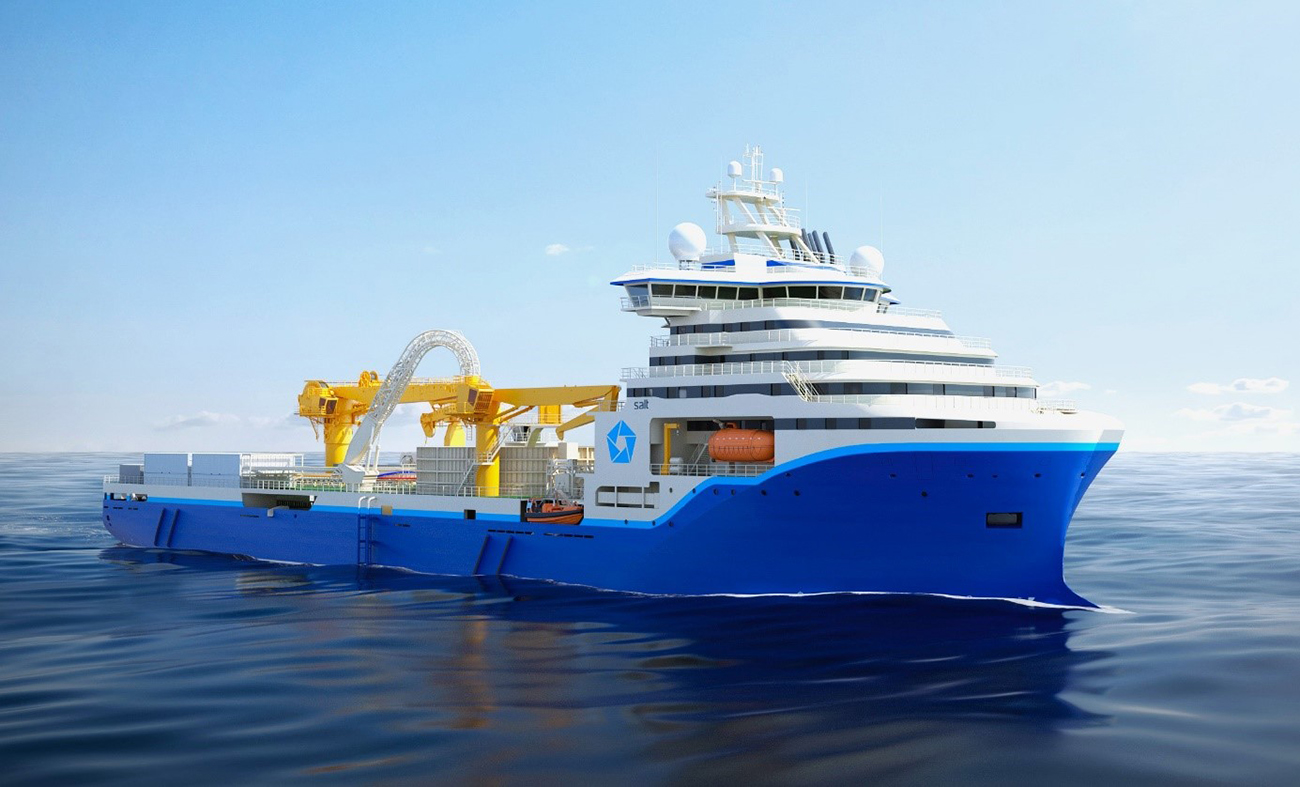
Penta-Ocean agreed with PaxOcean Group to build one of the world’s largest cable-laying vessels for offshore wind power projects in Japan.
Equipped with advanced trenchers and ROVs, the vessel will support both fixed-bottom and floating wind farms, as well as subsea HVDC cable installations.
With an investment of ¥36.5 billion, the vessel is slated for completion in February 2028 and will bolster Japan’s offshore wind construction capabilities.
Shikoku Electric withdrew from the 193 MW Imano-yama onshore wind farm planned near Tosashimizu City and Mihara Village in Tosa, Kochi Pref.
In addition to the rising cost of materials and prolonged construction period, the projected amount of electricity generated was about 30% less than initially expected, making it difficult to turn a profit.
Shikoku Electric invested in the operating entity, “Imano-yama Wind Power,” established in 2021 by Sumitomo, Japan Wind Engineering, and Hokutaku.
The initial plan was to begin construction in 2024 and start operations in 2027. The current plan is for construction to start in 2025 and operations in 2029.
ENEOS Renewable Energy plans a 270 MW onshore wind farm in Hokkaido.
On Dec 10, the firm submitted the scoping document as part of the environmental impact assessment. The planned area spans 3,600 hectares across Wakkanai City, Sarufutsu Village and Toyotomi Town.
Up to 45 wind turbines, each 4.2 MW to 6 MW, are under consideration. Construction is set to begin in FY2027, with operations starting in FY2032.
The Intercontinental Exchange (ICE) launched a platform for trading power futures in Japan.
CONTEXT: ICE is the owner of the NY Stock Exchange and the fourth exchange to offer trading in Japanese electricity derivatives. The others are Germany’s EEX, Japan’s TOCOM, and the Chicago Mercantile Exchange (CME).
ICE is offering four Japanese Power Financial Baseload and Peakload Futures contracts, covering the Tokyo and Kansai areas.
Contracts will be offered on a monthly, quarterly, seasonal, calendar and fiscal year basis, for up to about three years in advance. ICE wants customers to trade spreads between Tokyo and Kansai to cover regional price exposure.
Trading will, however, be limited to off-market bilateral transactions.
CONTEXT: Power futures are derivatives that involve making a commitment to buy or sell electricity at a fixed price in the future and settling the difference with the actual product. Due to geopolitical risks and other factors, the volatility of electricity and fuel prices has increased, as has the demand for hedging.
TAKEAWAY: ICE joins a crowded market, where the EEX seeks to attract large volumes. Some advantages that ICE brings, however, are the depth of its commodity coverage across fuels used in power generation: futures contracts for LNG, crude oil, and coal. That gives clients the opportunity to trade ‘spark spreads’ and similar arbitrage, in which a generator can ‘fix’ its profits by locking in fuel procurement costs and electricity sales prices via derivatives contracts. That ability to cross-manage and cross-margin trading between, say, JKM contracts for LNG and Japanese power futures, will be ICE’s biggest calling card for now. The other exchanges are also rolling out LNG or gas-based futures contracts, but these are less developed or less liquid. Either way, the demand for Japanese power futures is expected to grow strongly due to increasing sector volatility and weather issues, as well as the broadening of the market with the arrival of new overseas traders. Assisting customers to combine trading across commodities and regions will likely be ICE’s priority in 2025.
In October, Electricity futures traded on TOCOM dropped 21.6% to 34.5 GWh, reflecting reduced hedging demand due to stable winter power supply forecasts.
Key trades focused on December and January contracts in East and West base load areas, with prices trending upward.
For the first time, 2025 fiscal contracts were executed. Combined open interest fell 16.5%, below 2 GWh for the first time in six months.
LNG futures also saw modest activity, continuing a three-month streak of trades.
The EEX will add Japanese Power Monthly Options for the Tokyo and Kansai market areas starting Feb 3, 2025.
These will be the first average price options on the EEX power derivatives markets.
The new instruments will be settled against the average of the JEPX spot prices for the Tokyo and Kansai market areas during the respective delivery month.
JERA revealed plans to consider building new gas-fired power plants near data centers, or attracting data centers to existing plant sites. The goal is to ink PPAs with corporate clients.
JERA CEO Okuda said financing may shift to corporate PPAs, sharing risk with customers, etc amid concerns over surging gas turbine costs, which are rising among major suppliers (MHI, GE, Siemens).
JERA is addressing CO2 emissions from gas power with a new in-house unit, JERA Cross, which will review decarbonization options and explore faster repowering options for older plants.
Okuda also raised concerns about uncertainties in Japan’s carbon pricing policy and its implications for JERA’s operations.
CONTEXT: JERA Cross was created in June this year to provide energy, digital and business solutions to accelerate decarbonization.
KEPCO, McDonald’s Japan, and KDS Solar announced an offsite corporate PPA to supply renewable electricity to 130 McDonald’s outlets in the Kansai region.
KDS Solar will develop ~80 solar sites with a total capacity of 4 MW. Operations start in February 2025.
TAKEAWAY: PPAs were created as an instrument reserved for renewable energy power sources, mainly due to the way that solar and wind farm projects were financed. The fact that Japan’s biggest power utilities, JERA and KEPCO, are also utilizing PPAs and even for gas-fired power plants, shows the increased risks all operators face in today’s market. Investment in new capacity is risky and the outlook for gas power plants varies by nation and company. That makes financing expensive, and pushes even major utilities to share risks by finding anchor customers for new facilities.
Toyoda Gosei inked an offsite PPA with retail electricity provider Chubu Electric Power Miraiz to procure renewable energy generated by a floating solar power plant to be built in Mie Pref and to begin operations in June 2025.
Toyoda Gosei will purchase about 1.63 GWh of solar-generated electricity annually through Chubu Electric Power Miraiz over 20 years.
The chances of restarting Kashiwazaki-Kariwa NPP Unit 7 in FY2024 are slim. No petition was submitted during Niigata Pref’s assembly session. The February session will be critical if there’s any hope of a restart by summer 2025.
The Niigata Governor continues to call for a cautious approach, prioritizing disaster preparedness and evacuation planning.
CONTEXT: The national govt and TEPCO see a restart as part of the utility’s overall recovery plan. Key hurdles include completion of anti-terrorism measures for Unit 7, required by Oct 2025. The Governor, however, sees little advantage in allowing the restart since he is not in charge of electricity supply and prices – only the issues that may arise in case of problems.
TEPCO has set a goal to complete anti-terrorist measures by March 2025, but that seems unlikely. The 2025 House of Councillors election and 2026 Niigata gubernatorial election add uncertainty.
TAKEAWAY: TEPCO’s financial stability is at stake. While its performance is improving, investments in reactor restarts and Fukushima decommissioning costs have resulted in a ¥1.2 trillion net cash flow deficit over six years through FY2024. In April–Sept 2024, despite a ¥189.5 billion profit, net cash flow was negative ¥340 billion.
TEPCO notified the NRA about changes in the building plan at Kashiwazaki-Kariwa NPP Unit 6, regarding the third permanent on-site DC power supply system.
The new schedule sets construction from Oct 2026 to March 2027.
CONTEXT: This power supply system provides electricity to equipment in case of accidents. It complements existing on-site battery-powered DC systems and portable DC power systems.
On Dec 14, KEPCO began a periodic inspection for Oi NPP Unit 4; it will last about three months and cover key facilities – reactor core, fuel handling and storage systems and cooling systems.
The utility will also replace 73 of the reactor’s 193 fuel assemblies.
Reactor startup is planned for mid-February. Full operation in mid-March.
KEPCO will build an emergency response facility at its nuclear power division HQ.
It will serve as a centralized hub for managing accident containment activities at the Mihama, Takahama, and Oi NPPs. It’s expected to begin operations in 2029.
Shikoku and Kansai Power Transmission Operators (TSOs) submitted a report on a blackout on Nov 9, citing miscommunication about system controls as the main cause.
Both acknowledged insufficient preparation for unexpected scenarios and said they’ll revise operational agreements, enhance training, and upgrade control systems.
Executive pay cuts (10-20% of Dec salaries) are among the accountability measures.
New measures include clarifying command terms and modifying equipment to prevent similar misinterpretations, with updates planned by March 2025.
CONTEXT: The outage was due to a failure of the two TSOs to match frequencies of connecting lines. While one line went down due to maintenance, another was taken offline due to a misunderstanding.
TAKEAWAY: Blackouts in Japan are rare as the utilities pride themselves in maintaining stability and safety above all else (including price considerations). TEPCO boasts a record of one blackout per decade for a household. The weaknesses, however, are in the region’s interconnections. The regional grids were not built with the idea of frequent power transfers outside of their networks, and communications between TSOs tends to flow via OCCTO.
KEPCO will replace Himeji No.1 Power Plant Units 5 and 6 with three new combined-cycle units (650 MW each), boosting total output to 1.95 GW by FY2033.
The upgrade aims to enhance generation efficiency from 54% to 63%, and reduce CO2 emissions by about 10%.
CONTEXT: Himeji No. 1 Power Plant has been operational since 1955. It has transitioned its fuel from heavy oil to LNG.
Japan’s contracts with the Sakhalin-2 LNG project end in 2026-2033, which means a pivotal shift in its energy strategy.
Sakhalin-2 faces its own challenges, with its main gas field, Lunskoye, nearing depletion by 2033. Gazprom seeks to develop the Yuzhno-Kirinskoe field, but sanctions and logistical delays have hampered progress.
CONTEXT: Sakhalin-2 supplies 5 million tons of LNG a year to Japan, 9% of its total LNG imports.
TAKEAWAY: Japan’s move to reduce reliance on Russian energy aligns with G7 commitments. This includes cutting gas use in power generation from 33% to 20%, and boosting renewables’ share from 26% to 38%. An overall decline in domestic power demand also weakens the case for renewing Sakhalin-2 contracts. Meanwhile, rival LNG suppliers in the U.S. and Australia are eager to fill the gap in supplies. Still, Russian LNG is the closest available supplier to Japan and the value of that cannot be ignored. While at least some of the Japanese contracts are likely to be renewed, utilities will look at the options elsewhere before making a decision.
As of Dec 8, the LNG stocks of ten power utilities were 2.11 Mt, up 11.6% from the previous week (1.89 Mt), down 21.9% from end Dec 2023 (2.7 Mt), and 2.3% down from the 5-year average of 2.16 Mt.
CONTEXT: After METI recently corrected the past data of LNG stocks, the publication of such data has returned to its regular basis. Updates on monthly numbers are not yet available.
When Donald Trump takes office on January 20, it’s clear that he will be a far more aggressive and determined nationalist president, on all major issues, than during his first term in office from January 2017 to January 2021. In addition, he is eager to take revenge on his political enemies and to severely weaken the legacy of the outgoing Biden administration.
Topping his list of priorities is energy, due to its pivotal role in boosting American economic competitiveness in global markets. This is especially crucial in the context of the revolution in Artificial Intelligence and growing demand for semiconductor chips, as well as ambitious plans to reindustrialize America after decades of industrial production moving overseas.
Trump is calling for “unleashing American energy,” centered around oil which he describes as “liquid gold.” There will be a drastic pivot away from the Democratic Party’s climate-centric policies. Instead, the main emphasis will be on a return to the primacy of fossil fuels, cooperating with the private sector to boost oil and gas production and undoing state regulations that Trump perceives as too restrictive and injurious to economic growth.
Nevertheless, while Trump’s energy plan signals a rollback of climate-focused policies, the economic momentum of renewables, buttressed by the many state-level and industry initiatives, will temper the impact of policies favoring fossil fuels. The traditional U.S. oil and gas majors also see the need to build new businesses aligned with net zero world aspirations.
Global economic dominance is the ultimate goal of Trump’s populist “Make America Great Again” agenda, especially with an eye to staying ahead of China. However, even staunch allies such as Japan will have to be on their toes since all aspects of China-related investments and cooperation – of which Japanese energy firms have quite a few, especially in hydrogen – will be reexamined by the Trump 2.0 White House.
New federal agency
Even while campaigning for president, Trump made it clear that he would expand oil and gas drilling, and accelerate the approval permits for energy projects. He has promised to tackle what he deems “unnecessary regulation,” to further his campaign mantra to “drill, baby, drill.”
More specifically, this will include approving new LNG export permits and reviving offshore drilling projects, as well as replenishing the Strategic Petroleum Reserve that was depleted during the Biden administration. According to federal records, five U.S. LNG export projects have been approved by the Federal Energy Regulatory Commission, but are still awaiting permit approvals at the Department of Energy. Biden had put these on hold earlier this year.
As far as drilling activity on federal lands and waters, such locations account for about 25% of U.S. oil production and 12% of gas output. The average time to complete a drilling permit on federal and/or Native American lands averaged 258 days under Biden, up from 172 days during Trump’s first presidency.
Despite the mixed signals to the oil and gas industry from the Biden White House, the sector has grown in global influence and financial strength. Today, the West Texas Intermediate (WTI) blend of U.S. light sweet crude that’s delivered in Cushing, Oklahoma is starting to challenge the supremacy of the Brent marker. The latter, based on oil production in Europe’s North Sea, is used to set the price of nearly three-quarters of the world’s crude. As North Sea volumes decline and U.S. production rises, the emergence of WTI as a global force offers America pricing power not only over oil but also LNG.
Trump’s energy policy will be in the hands of the newly-created National Energy Council (NEC), tasked with establishing American “energy dominance” worldwide. The NEC will be headed by North Dakota Governor Doug Burgum, a strong supporter of oil and gas.
While Trump’s ambitions are bold, they still will face hurdles. First, the American federal system gives a lot of power to individual states. Democratic strongholds, such as New York, California and Massachusetts have already made it clear that they will ignore the White House on all major issues, including energy.
Second, let’s not forget market forces. If global oil and gas demand begins to taper, companies naturally won’t drill. Under Biden, U.S. oil production reached record levels despite his green energy policy focus.
Leading American oil companies are wasting no time. On December 11, ExxonMobil announced plans to boost oil production 18% by 2030, investing as much as $33 billion toward that goal. This would grow production by about 20% from the current 4.58 million barrels of oil per day to 5.4 million barrels of oil per day, focusing mostly on the Permian Basin in West Texas and the deep waters offshore of Guyana in South America.
Moreover, Trump’s proposed strategy of import tariffs is unlikely to make domestic energy more competitive. The incoming president wants 25% tariffs on imports from North American neighbors Canada and Mexico, both of which are key U.S. energy suppliers. Unless domestic production steps in to replace these imports, which is nigh impossible in the short term, the net result will be higher U.S. energy prices and a knock-on inflation kick for groceries and other goods. It’s no wonder that the American Petroleum Institute has voiced opposition to the energy tariffs and instead backs free trade in energy within North America.
Tempering climate skepticism
Trump’s climate skepticism will manifest itself in plans to rescind unused funds from Biden’s landmark climate legislation, Inflation Reduction Act (IRA), as well as a second withdrawal from the Paris Accord, and a potential halt of offshore wind projects.
And yet, there are clear signs that Trump’s policies won’t significantly impede America’s clear energy pathway:
Big Tech has already committed to net zero by 2030 and is incentivizing more CO2-free electricity sources on the grid.
Wall Street and the greater financial world has more than the ESG label to restrain excessive enthusiasm for more oil and gas investment – it won’t support a surge in domestic production if that means a drop in global prices.
U.S. oil majors want to move into carbon storage and synthetic fuels, but that won’t be possible without an acknowledgment of the need for an energy transition.
Another important factor is Trump’s alliance with the world’s richest man, Elon Musk, whose $250 million in support for his presidential campaign was crucial to the election victory. This means that renewable energy will have a strong advocate in the White House.
Musk will find plenty of support among green-minded local conservatives, who are driven by the desire to keep and increase jobs and taxes enabled by the IRA program. The majority of wind power in the U.S. sits in Republican-led states. New projects supported by the IRA, such as solar and battery plants in Georgia and Kentucky, are creating jobs and boosting local economies.
The juxtaposition of oil pumpjacks and wind turbines in Nolan, Texas, serve as a vivid metaphor of the dual trajectories in the U.S. energy landscape. On one hand, the oil industry is poised for a record-breaking year; on the other, renewables are also growing rapidly and the U.S. will not want to relinquish sector leadership to China.
“All of the above”
This duality reflects a broader policy watershed, particularly within conservative circles, about a so-called “all-of-the-above” energy strategy that would find a balance between fossil fuels and the development of clean energy.
Trump’s selection of nominees for energy posts shows that his administration is ready to work with all forms of power generation. For example, Chris Wright, the nominee for Secretary of Energy, is a supporter of fracking, but also nuclear energy and geothermal power.
Trump’s energy council (the NEC) also seeks to address emerging challenges, such as the growing energy demands of AI and data centers. Meeting this rising demand underscores the need for a pragmatic, diversified energy portfolio.
Burgum (head of the NEC) has emphasized the importance of ensuring reliable baseload power to support AI development, which Trump believes is vital for national security and economic growth.
Whether Trump’s goal of “energy dominance” materializes depends on balancing economic, environmental, and geopolitical considerations. The U.S. energy landscape will remain a complex and evolving domain where ideological goals and the pursuit of profit intersect with economic and environmental imperatives.
How will Japanese firms adapt? For now, they seek clarity on tariffs, especially around Mexico and Canada, and intelligence on the stance that Trump’s White House will take on carbon credits and CO2 transport and storage. Interest in U.S. investments remains strong, but the risks are rising. If no one is friend or foe – only a commercial partner – then the terms of the deal will be of prime importance.
ANALYSIS
BY JAPAN NRG TEAM
The Impact of Environmental Regulation on Japan’s Wind Farms
Japan’s wind power sector, despite its vast potential, remains tethered to a labyrinthine approval process. While the country’s solar industry has surged since the introduction of feed-in tariffs in 2012 – adding over 70 GW of capacity – wind power has struggled to keep pace. As of late 2023, Japan’s installed wind capacity stood at just 5.2 GW, spread across 2,600 turbines.
For a country keen on reducing its reliance on imported fossil fuels, this underwhelming result stems largely from a lack of time limits in the regulatory process, particularly the Environmental Impact Assessment (EIA). More than one wind project in Japan has required over 3,000 days (i.e. close to 8.5 years) to gain final EIA approval, according to a new report by Japan NRG.
The good news is that Japan’s pipeline of onshore and offshore wind projects is more than full. Close to 100 GW of capacity is registered in the EIA system at present. And while some of the projects overlap in terms of siting, or face tricky community and technical issues, Japan NRG’s research indicates that about a third of that capacity should be able to navigate the EIA process by the end of this decade.
Securing EIA is only half the battle. Wind developers also face difficulties in finding qualified staff, securing supply chains, prices, and more. Still, regulation will play a significant role in determining how quickly the wind power sector will scale up and make a meaningful contribution to the nation’s electricity mix (vs. 1.1% in FY2023). Understanding the timelines of each EIA stage is key.
Most of the figures in this analysis are taken from the recently published Japan NRG special report, “Environmental Impact Assessment for Wind Power in Japan.”
Background
The EIA, a prerequisite for most large-scale wind projects, is no small undertaking. Introduced in its current form in 2013, it’s both rigorous and protracted. Developers navigate a four-phase process involving preliminary consultations, public disclosures, multiple rounds of feedback from local and national authorities, and detailed environmental studies.
This framework aims to balance renewable energy ambitions with environmental and community considerations. Yet, it often acts as a bottleneck, consuming up to half the time required to bring a wind project from conception to operation.
The inclusion of wind power projects under Japan’s EIA law in the early 2010s can be traced back to heightened concerns over environmental and biodiversity impacts, particularly related to bird species. Advocacy by groups like the Wild Bird Society of Japan played a significant role in pushing for more stringent regulations to protect avian habitats.
This led to amendments to the EIA law in 2011, which mandated assessments for wind projects of 10 MW or larger, primarily to mitigate risks such as bird strikes involving endangered species like the golden eagle and mountain hawk-eagle.
The 2011 amendment aimed to enhance transparency and early-stage public participation in environmental assessments. It introduced requirements for developers to consider impacts on biodiversity and adopt measures to prevent harm. For example, turbine placements and operational restrictions during bird migration seasons became key in the planning process.
Time flies by
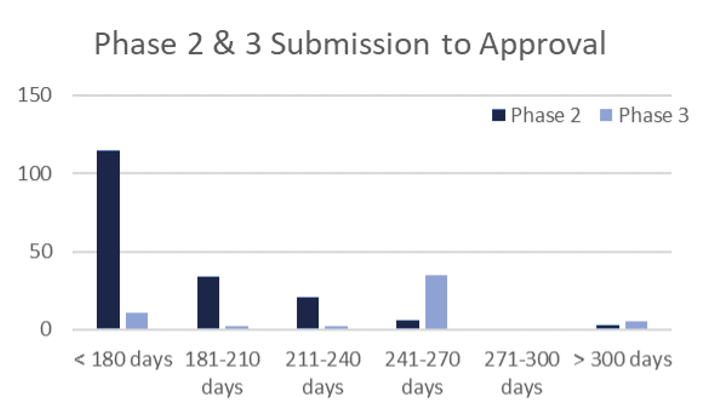
A closer examination of the EIA timeline reveals the scale of the challenge. From the initial submission of Phase 1 documents to final approval in Phase 4, projects can languish for years. On average, navigating the first and final phases is relatively short, taking several months. However, stages 2 and 3 are both lengthy and can easily consume close to a couple of years each.
Developers are asked to evaluate turbine noise, low-frequency sound levels, vibrations, visual impact, and the direct impact on nature. In densely populated or ecologically sensitive areas, such as Hokkaido and Tohoku – home to nearly half of Japan’s wind projects – the process becomes even more arduous.
For offshore wind projects, the hurdles multiply. Developers must assess impacts on fisheries, marine ecosystems, and coastal dynamics, often encountering resistance from local fishing communities. Despite the promise of offshore wind – with nearly 64 GW of capacity currently in planning, more than half that of onshore – the majority of these projects remain stuck in early EIA phases. As of August, 72% of offshore capacity had yet to progress beyond Phase 1.
There is progress – albeit slow. Data collected from METI, and cleaned up by Japan NRG indicate that, between 2012 and 2019, only ten projects annually reached Phase 1. By 2022, that number had quadrupled, reflecting growing developer interest. However, the journey through subsequent phases remains fraught. For example, while 95% of projects cleared Phase 2 within nine months, fewer than half moved seamlessly to Phase 3. The time between phases can stretch alarmingly – one offshore project spent over eight years transitioning from Phase 2 to Phase 3.
Source: “Environmental Impact Assessment for Wind Power in Japan,” Japan NRG, based on METI data and own research
The challenges are not purely procedural. Japan’s EIA process demands acute attention to environmental conservation. Projects must demonstrate measures to mitigate avian collision risks, often requiring redesigns of turbine layouts or operational curtailments during migration seasons. Offshore projects face analogous scrutiny over their effects on marine life.
Another hurdle lies in community engagement. Public consultations – a cornerstone of the EIA – reveal local opposition rooted in concerns over noise, aesthetics, and land use. In some cases, projects have been canceled outright following public pushback. The Wild Bird Society of Japan, for instance, successfully lobbied against a wind farm during Phase 2 of the EIA, citing unacceptable risks to avian habitats.
Will it get easier?
In 2021, former administrative reform minister Kono Taro tried to relax the EIA rules and raise their application to wind farms of 50 MW and higher, in line with the norms in many other jurisdictions. Wildlife groups again intervened, and influential media such as Asahi Shimbun took their side.
The reality of Japan’s emissions targets, however, indicates that the government cannot allow the wind sector development to flounder. Japan has pledged to cut its carbon footprint by 46% in FY2030, compared with FY2013 levels, and will raise that target to a reduction of 60% just five years on. By FY2040, emission will have to be 73% lower than in FY2013. Even should the solar sector’s momentum revive from the recent slump, those numbers will be nigh impossible to meet without a significant contribution from wind power generation.
For now, METI and the transport ministry (MILT) have focused on setting up an annual auction process for offshore wind areas to ensure a steady supply of developments. In preparing marine areas for auction, the government has also agreed to take on the preliminary EIA work. This saves time and money for operators, as well as lessening the impact on local communities.
Private-sector conversations with the government and local authorities will likely streamline the EIA and other regulatory steps further. Although the offshore segment has attracted significant foreign investment, it will likely be major local players such as trading houses and power utilities that can utilize their sizable manpower to forge the documentary and process templates that others will follow.
It may be no surprise to see that Phase 2 of the EIA process is packed with nearly 100 firms, but those with the most projects are EPCOs from Hokuriku, Kansai, and Tohoku, and TEPCO RE, as well as trading houses Mitsubishi and Sumitomo. Railway operator JR East is another company to feature prominently in Phase 3 of the process.
The latest corporate news should boost the leverage of the wind sector even further. The UK’s bp last week agreed with JERA to pool their offshore wind assets into a JV with a targeted 13 GW of potential capacity. This elevates Japan’s biggest thermal power utility to be a co-owner of – potentially – one of the world’s top five wind companies. Were JERA’s global ambitions pegged by regulatory constraints at home, it would embarrass the government. And there is little that cannot be achieved when national pride is at stake.
For further details of the nearly 600 projects registered in Japan’s EIA process and analysis of the data, please contact us for more information. Japan NRG subscribers can purchase “Environmental Impact Assessment for Wind Power in Japan: 2014” at a discount.
.
ASIA ENERGY REVIEW
BY JOHN VAROLI
This column provides a brief overview of the region’s main energy events from the past week
Australia / Renewable energy
The Ministry for Climate Change and Energy announced 19 projects that will add 6.4 GW of clean energy. Solar projects amounted to 1.65 GW, while wind accounted for 3 GW. Some storage systems were awarded, with one wind plus BESS of 585 MW/ 800 MWh, and seven solar plus BESS with a combined capacity of 1.1 GW/ 2.76 GWh. Most are expected to begin operating between 2026 and 2028.
Cambodia / Oil and gas
The Thai and Cambodian governments restarted efforts to settle a dispute over a 27,000-km2 area in the Gulf of Thailand in order to reduce dependence on oil and gas imports. Nearly 11 trillion cubic feet of natural gas and 300 million barrels of oil are estimated to lie in the area where their borders meet.
China / Energy transition
Globally, China leads the energy transition. The country is on track to source half of its power from low-carbon energy including hydro, solar, wind, nuclear and energy storage by 2028, according to Wood Mackenzie.
India / Nuclear power
Nuclear power capacity doubled in a decade, rising from 4.78 GW ten years ago to 8.18 GW today, according to the Department of Atomic Energy.
India / Renewable energy
As of November, installed renewable energy capacity has reached 214 GW, up 14% from 187 GW a year ago, said the Ministry of New and Renewable Energy. From Jan to Nov, 14.9 GW of new renewable capacity was added.
Geothermal
China and India could become leaders in geothermal energy, as new technology offers an exit from dependence on coal power, said the International Energy Agency in a report.
Pakistan / Wind power
London-based Oracle Power is in talks with investors to build a $1.4 billion hybrid renewable energy plant in Pakistan’s Gharo-Jhimpir wind corridor next year, said its CEO.
Philippines / Battery storage
Terra Solar Philippines, a unit of MGEN Renewable Energy, inked a battery energy storage systems supply agreement with Huawei International for the 3.5 GW MTerra Solar project. The deal covers the entire 4.5 GWh battery capacity of the world’s largest solar project.
Taiwan / Hydrogen
Delta Electronics launched Taiwan’s first MW-scale hydrogen production and fuel cell testing facility – the Delta Net-Zero Science Laboratory – at Tainan Science Park.
Vietnam / Renewable energy
The government seeks to resolve bureaucratic hurdles facing renewable energy projects by January 31, 2025, said Prime Minister Pham Minh Chinh.
2025 EVENTS CALENDAR
A selection of domestic and international events we believe will have an impact on Japanese energy
Month
Date
Event
January
6
First market trading
6-24
FIT/FIP solar auction #23
21-22
World Forum Offshore Wind (WFO) Global Summit 2025, Barcelona, Spain
29-31
ENEX 2025 / DER Microgrid Japan 2025 / Renewable Energy 2025 / Offshore Tech Japan 2025 / InterAqua 2025 / Green Infrastructure Industry @ Tokyo Big Sight
February
19-21
Smart Energy Week 2025 / H2 & FC Expo / PV Expo / Battery Japan / Smart Grid Expo / Wind Expo / Biomass Expo / Zero-E Thermal Expo / GX Management Week / Decarbonization Expo / Circular Economy Expo @ Tokyo Big Sight
Disclaimer
This communication has been prepared for information purposes only, is confidential and may be legally privileged. This is a subscription-only service and is directed at those who have expressly asked K.K. Yuri Group or one of its representatives to be added to the mailing list. This document may not be onwardly circulated or reproduced without prior written consent from Yuri Group, which retains all copyright to the content of this report.
Yuri Group is not registered as an investment advisor in any jurisdiction. Our research and all the content express our opinions, which are generally based on available public information, field studies and own analysis. Content is limited to general comment upon general political, economic and market issues, asset classes and types of investments. The report and all of its content does not constitute a recommendation or solicitation to buy, sell, subscribe for or underwrite any product or physical commodity, or a financial instrument.
The information contained in this report is obtained from sources believed to be reliable and in good faith. No representation or warranty is made that it is accurate or complete. Opinions and views expressed are subject to change without notice, as are prices and availability, which are indicative only. There is no obligation to notify recipients of any changes to this data or to do so in the future. No responsibility is accepted for the use of or reliance on the information provided. In no circumstances will Yuri Group be liable for any indirect or direct loss, or consequential loss or damages arising from the use of, any inability to use, or any inaccuracy in the information.
• METI announces Cabinet approval of 7th Basic Energy Plan and related documents
• PM to launch council to coordinate development of data centers and power plants