
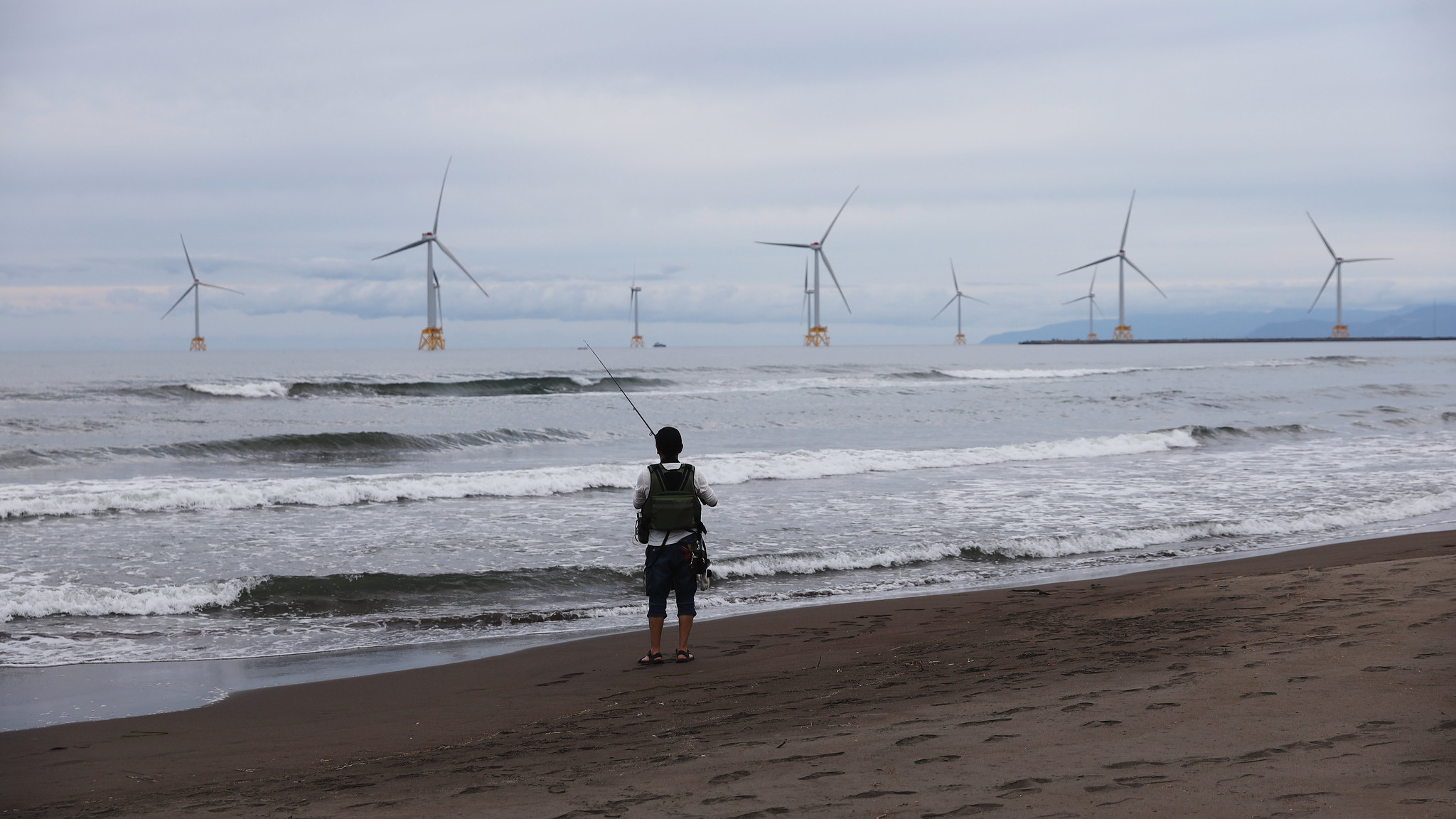
The offshore wind sector, touted as a cornerstone of Japan’s 2050 decarbonization strategy, is in turmoil. At the center of the crisis is Mitsubishi Corp’s potential withdrawal from three flagship offshore wind projects, a move that could trigger a wider collapse of investor confidence, supply chain momentum, and future auctions.
In a significant move to regain momentum, on July 30, METI and MLIT designated the areas of Matsumae and Hiyama, located off the coast of Hokkaido, as “promotion zones”. This is the first such designation in the waters off Hokkaido, a region known for strong winds. The two areas are expected to feature in a public tender as early as this fall.
Officials hope the announcement will excite project-starved developers, given the parameters at stake. The Matsumae area has been expanded to 3,710 hectares and is expected to offer 250–310 MW of capacity. The Hiyama plot is one of Japan’s largest offshore wind allocations and is projected to accommodate capacities of 910 MW to 1.14 GW.
Designation of the new areas does not come a minute too soon. Mitsubishi has set the end of summer as its deadline for resolving talks with METI and other state entities over how – or whether – it continues to develop offshore wind farms. The discussions have grown complicated, with other wind players sensitive to any signs of favoritism or rule changes. The outcome is seen impacting projects in other auction rounds.
With the mercury level in talks and on the streets rising, authorities are determined to salvage their renewables strategies, and the national CO2 reductions associated with them. Hokkaido areas, a new EEZ Law, and advances in floating wind are just some positive steps that officials believe support their stance.
The offshore wind sector is in pain, but it’s not terminal.