
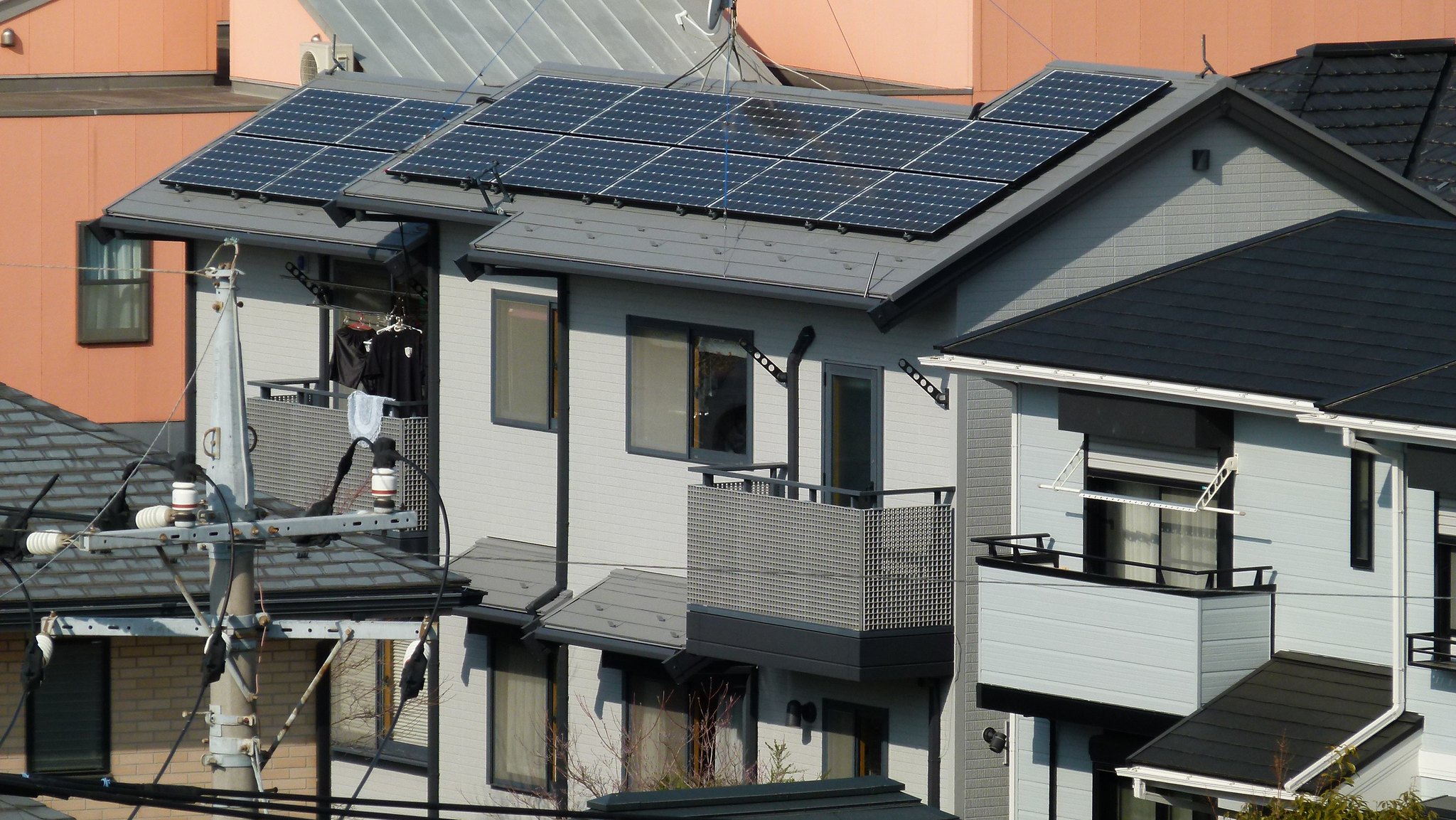
Japan’s solar industry is entering a new phase. After a decade of steady expansion under the feed-in tariff (FIT), growth is shifting toward corporate PPAs, self-consumption, and digitalized energy management. The sector rollout may have slowed in capacity terms, but its direction is unmistakably moving closer to the consumer – rooftops, batteries, and algorithms that shape how and when electricity is used.
To understand what this shift means in practice, in collaboration with Japan NRG we conducted a behind-the-meter cost-benefit study on how commercial consumers can lower energy bills through a combination of market-based procurement and on-site generation. The findings demonstrate how distributed power resources – once treated mainly as grid feed-in assets – are becoming useful cost-control tools for businesses.
Of the 5.6 GW of solar PV installed during 2024, about 1.2 GW – or over 20% – came from residential rooftops, with the rest via industrial and utility-scale systems, according to research firm RTS. Japan’s total capacity is now estimated at around 97 GW (dc), the world’s fifth-largest. But phasing out the FIT is moving the sector to a more marketoriented state, which invites consumers to consider broader choices.
The transformation is reinforced by the rapid proliferation of energy storage projects and the growing number of energy aggregators – businesses that integrate distributed energy resources (DERs) such as rooftop solar, storage, and flexible loads to trade electricity directly or as virtual power plants (VPPs). With both the BESS and aggregation trends expected to accelerate, behind-the-meter technologies are sure to gain more interest.