JAPAN ENERGY WEEKLY
June 27 to July 3, 2020
| NEWS >Japan signals shift away from coal to renewables >Japan secures 1.5 trillion yen for Mozambique LNG >NTT joins renewable sector with USD 9 billion plan >Renewables to get preferential access to Japan grid >Hitachi completes acquisition of ABB grid business >COSMO turns Japan’s top vehicle lessor to diversify >Premium gasoline scandal: rival brands shared tanks >Idemitsu switches refinery to make low-sulphur fuel >INPEX and JAPEX sink along with oil price collapse >ENEOS, Kansai Electric launch renewables fund >Onagawa nuclear restart edges closer >Looop gets ENEOS, others funding for solar venture >Japan fuel prices inch higher tracking Arabian light >Sales of gas appliances boom, helping Tokyo Gas >Kansai Electric creates hydro-only electricity plan >Chubu Electric sells 20 billion yen in bonds >Kansai Electric overcharged 1,000 households >J-Power venture starts new coal-fired plant >Chubu Electric plans 450MW offshore wind farm >Chubu Electric to offer clients smart meters | ANALYSIS / CONTEXT Japan to scrap coal power? Not in the next decade (or two).The biggest energy news in Japan last week was the Ministry for Energy, Industry and Trade (METI) announcement of plans to “fade out” inefficient coal-fired plants. Local media reports said 100 older units (out of 140 coal-fired units) might close in the next decade. The news is not as green as it seems. All media cited Japan’s number of coal-fired units as 140. Yet, looking closely, Japan only has 108 coal units that can be called “operating,” according to Kiko Network, a Japanese group that runs a Japan Coal Plant Tracker and promote climate-friendly policies. The rest are too small, old and inefficient to be in operation. The reason these units are not decommissioned already is because utilities need to keep 8% of their total generation capacity as a reserve fund in case of natural disaster. Old units literally help to make up the numbers (and earn utilities money for keeping them). It’s worth paying attention to what METI minister Kajiyama Hiroshi actually said … [continue to Analysis] |
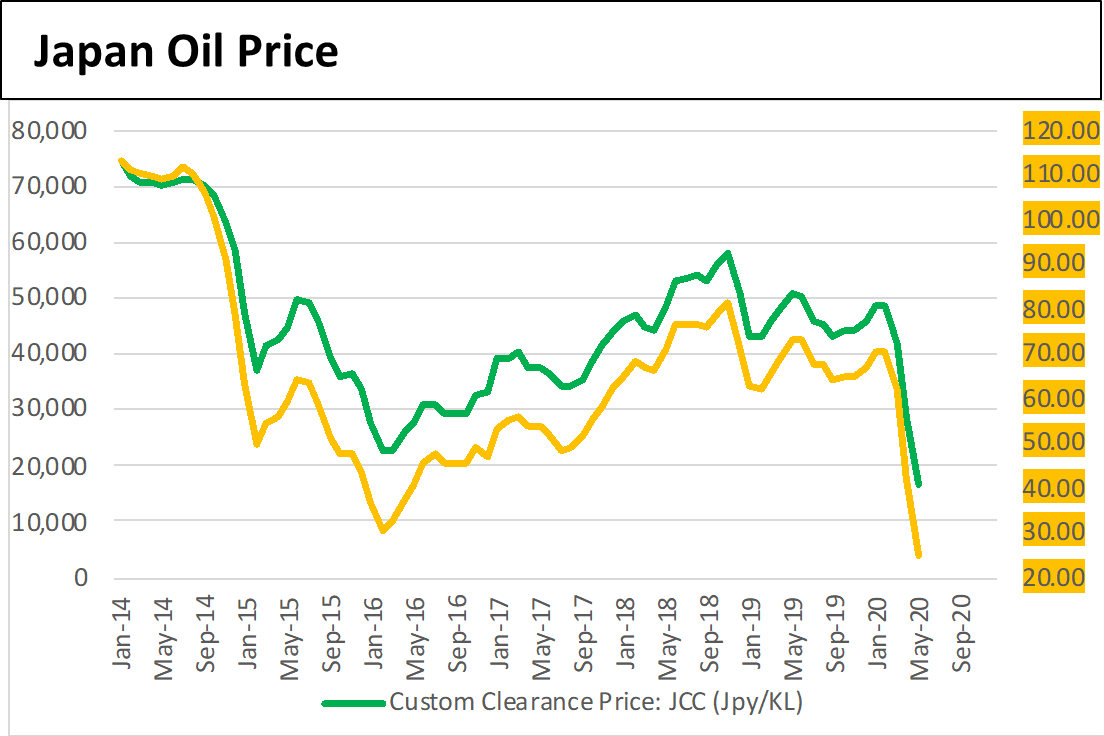
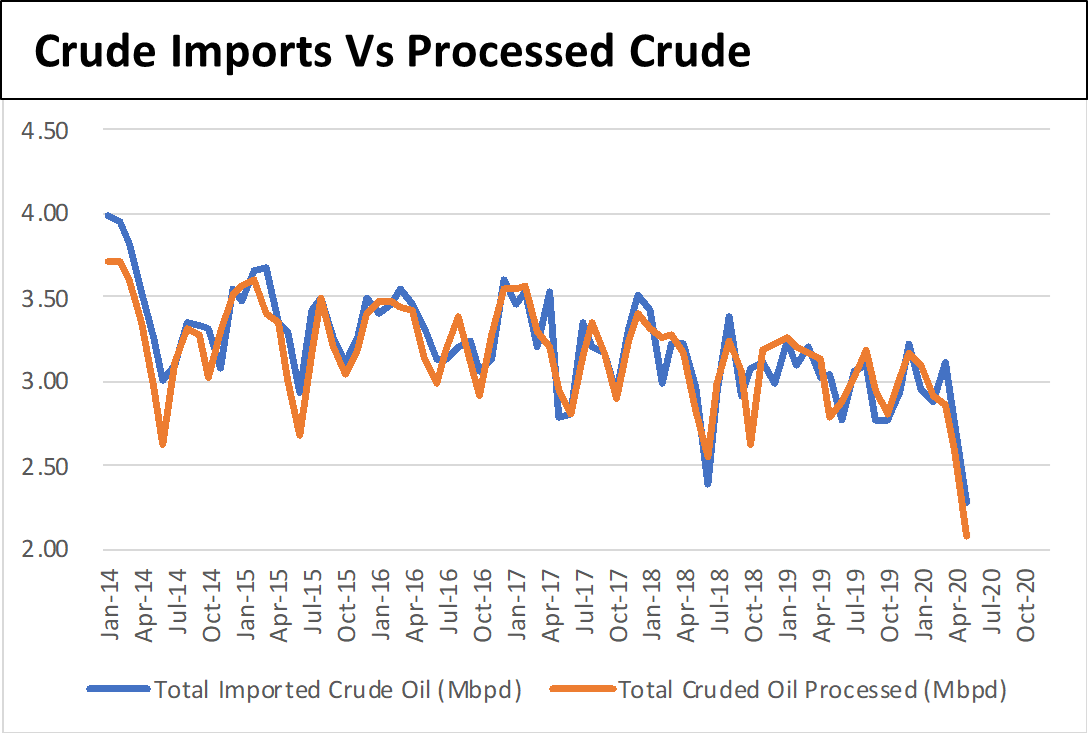
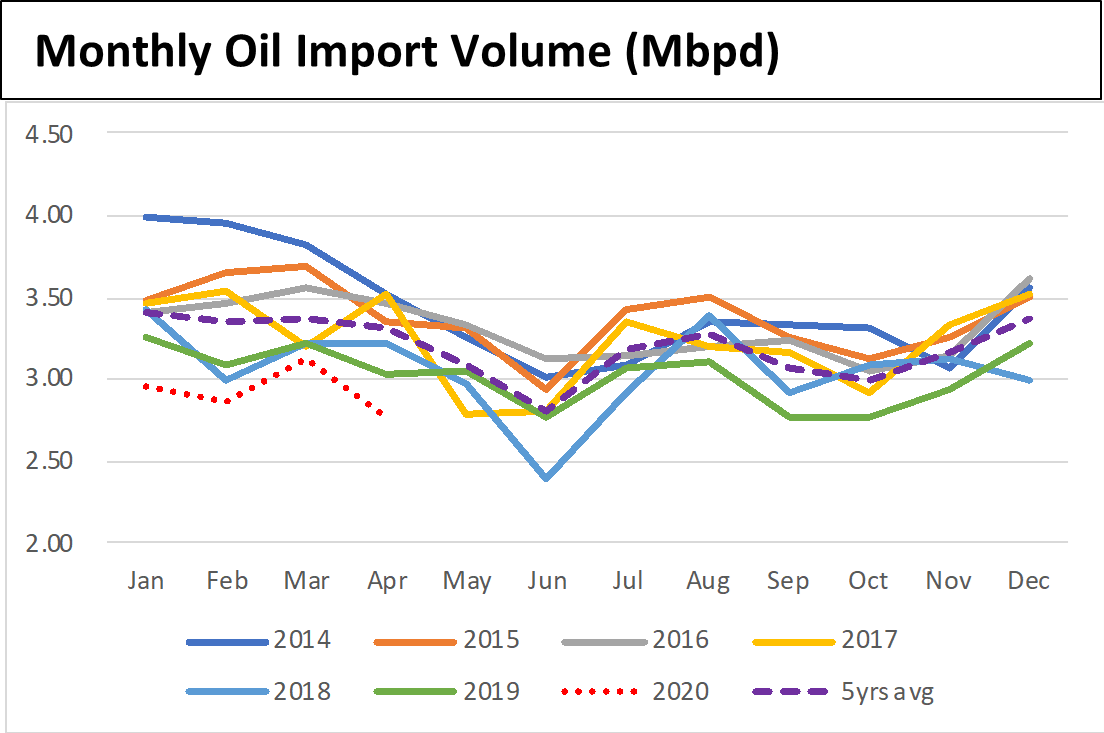
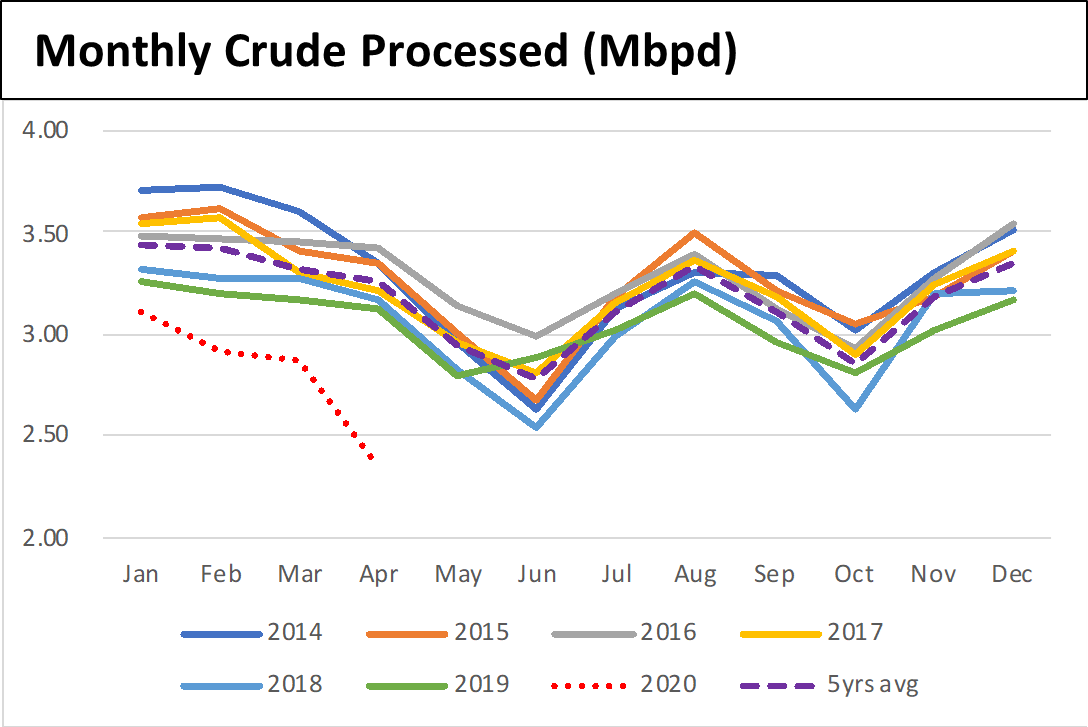
| DATA on Japan oil imports and price, LNG imports and prices (historical and broken down by company, electricity demand, pricing and fuel imports of power utilities, and more. | |
CONTACT US nrgnews@yuri-invest-research.com
NEWS
OIL
COSMO turns into Japan’s top vehicle lessor in shift away from gasoline sales (Nikkan Kogyo Shimbun, July 3)
- COSMO Oil Marketing has now leased over 74,000 cars to individuals since its lease operation began in 2011, making it Japan’s top private lessor. Such a feat is unheard of for a petrochemical company.
- COSMO Oil Marketing CEO Ishimoto Koji says the firm decided to enter the leasing business when it realized that selling gasoline alone would one day cease to be viable as a business model. Ishimoto says gas station employees need to become experts in all aspects of automobiles.
Probe reveals rival Japan gasoline brands all came from same tank (Mainichi Shimbun, June 28)
- The Mainichi Shimbun has ascertained that competing gas station chains ENEOS, Idemitsu, COSMO, Kygnus, and Solato, each of which had claimed to sell their own unique blend of high-octane fuel, have in fact shared storage tanks for over 20 years.
- The newspaper’s probe revealed that the chains also swapped in-house brands for competitor products in some bartering arrangements.
- The difficulty of verifying claims about fuel properties meant that the practice went on undetected. Even the Agency for Natural Resources and Energy said it had believed each chain sold its own unique blend of super gasoline.
- SIDE DEVELOPMENT: Super gasoline fans feel betrayed by false labelling (also Mainichi Shimbun, June 28); Story looks at how clients were willing to pay the high premium for high-octane gas in belief it improved performance.
INPEX and JAPEX sink along with oil price collapse (ZAITEN, July issue)
- INPEX and JAPEX, the two Japanese oil firms backed by the govt, are in trouble. INPEX earnings for fiscal year ending Dec 2020 have dropped by over 90% vs forecast. JAPEX posted a loss for its fiscal year, which ended in March, and expects a 3.1-billion-yen loss for this fiscal year.
- A merger of JAPEX and INPEX has been mentioned, but the pride of former president and chairman of JAPEX Tanahashi Yuji is what prevents this.
- Both companies continue to serve up cushy jobs for retired ministry officials, but have no plan on how to escape their problems. INPEX left its dividends unchanged and the pay of its directors will not be cut (to take responsibility for the losses).
- Magazine writer says the two co., which receive state funds, are being irresponsible by not properly planning for the future and blaming the current downturn on the uncertainty of commodity prices.
- Article cites bank analyst as saying that if Inpex President Ueda was at a fully private firm, he would already be fired. However, a high-ranking ex INPEX official tells the magazine that people inside INPEX are not concerned about their jobs because the company is supported by the state, no matter how much money it loses on overseas projects.
Idemitsu boosts output of low-sulfur fuel oil to meet stricter fuel norms for ships (Sekiyu Tsushin, July 2)
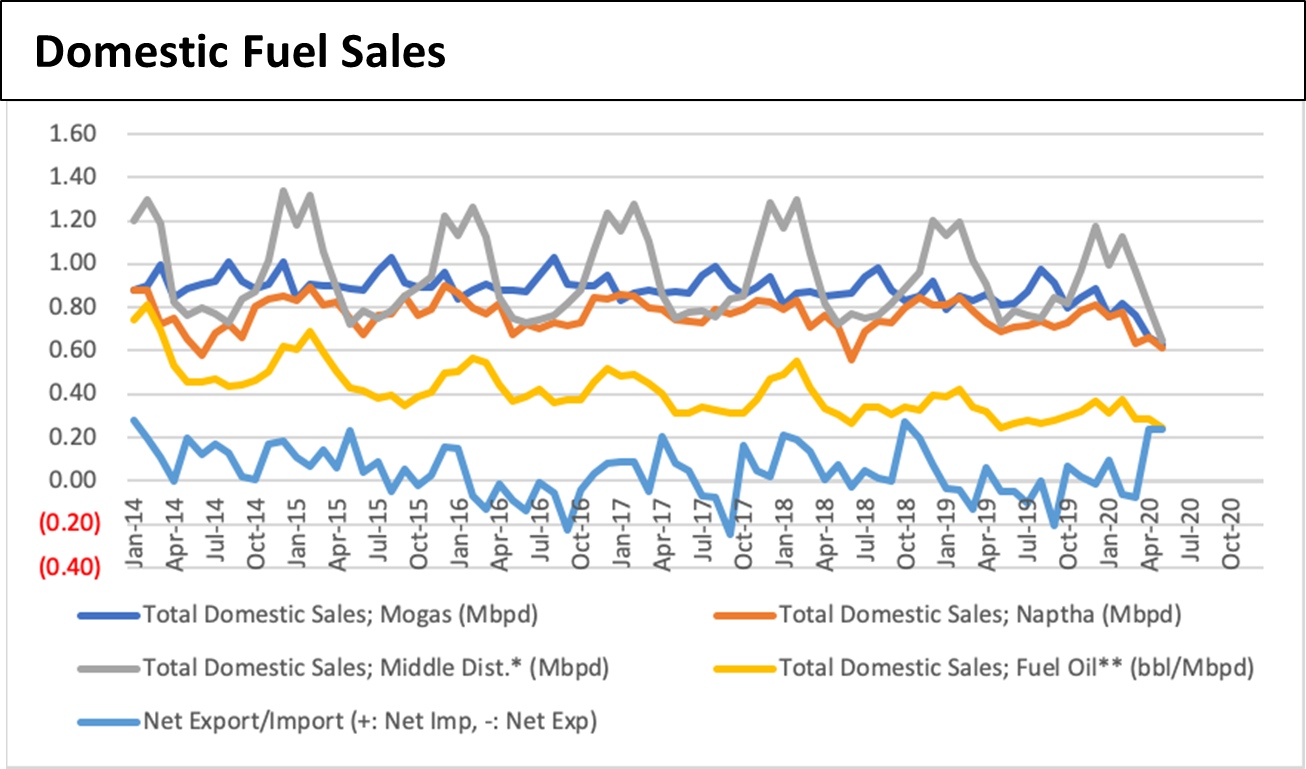
- Idemitsu recently modified the direct desulfurization process at its Chiba refinery to boost output of low-sulfur fuel oil by 500,000 kL a year. This will cut output of high sulfur fuel oil at the refinery by 600,000 kL per year.
- The move reflects International Maritime Organization regulations requiring ships to burn cleaner fuel.
Japan oil firms, tracking Arabian light crude, inch fuel prices higher for 2nd week (Sekiyu Tsushin, July 2)
- ENEOS and Idemitsu raised fuel prices by 1.0 yen on all fuel products for the second consecutive week. It is believed that COSMO will also follow suit.
- Some analysts believe the oil companies began using the price of Saudi-produced Arabian light crude as a reference.
GAS
Public-private venture borrows 1.5 trillion yen for Mozambique LNG project (Nikkei, July 2)
- A project being pursued by the Japanese government in conjunction with the private sector to exploit gas fields in Mozambique for LNG has secured a total of 1.5 trillion yen in financing.
- The Japan Bank for International Cooperation has provided USD 3 billion in financing. Other lenders include the African Development Bank, Mitsubishi UFJ Financial Group, Mizuho Bank, and Sumitomo Mitsui Banking Corp.
- The venture aims to produce 12 million metric tons of LNG by 2024. Purchasers include JERA, Tokyo Gas, and Tohoku Electric Power.
- CONTEXT: Japanese buyers believe shipments from Mozambique would be less exposed to geopolitical risk as they do not travel via the Strait of Hormuz.
Consumers stay home, buy gas appliances (Denki Shimbun, July 3)
- Tokyo Gas recorded a 9-fold jump in online sales in May compared with a year earlier. Co. officials say they were “shocked” by the result.
- As consumers stayed home during Japan’s nationwide State of Emergency, there was more interest in and time to cook, which spurred purchases of new gas hobs and dishwashers, according to Tokyo Gas analysis.
POWER
Minister signals Japan shift away from coal (Yomiuri Shimbun, July 3)
- At a July 2 meeting with power company CEOs, the Minister for the Economy, Trade and Industry (METI), Kajiyama Hiroshi, said most of Japan’s inefficient coal-fired power stations would be decommissioned between now and 2030.
- Describing the move as “unavoidable”, the Minister said Japan needed to make renewables its main source of electricity.
- In response to the Minister’s comments, some CEOs requested the government to provide financial support to utilities affected by power station closures, an indication of how significant a blow this will be to power companies.
- SIDE DEVELOPMENT: Most of Chugoku Electric’s power stations inefficient (Nikkei, July 3); Five of Chugoku Electric Power’s six coal stations, which make up almost half of its 2.6 GW in coal-fired capacity, are categorized as inefficient by METI.
- SIDE DEVELOPMENT: Environmental Minister Koizumi fails to tame coal generation and is expected to be kicked out of cabinet in the next reshuffle (Sentaku, July); Article speculates Koizumi lost out the power game to METI minister Kajiyama and is on the way out.
Renewable energy to get preferred grid access in new plan (Nikkei Shimbun, July 4)
- The Ministry of Economy, Trade and Industry seeks to reduce the burden on renewable energy operators to establish and maintain a transmission network by revising grid access rules. Renewable energy operators to get preferential access.
- Japan wants to put emphasis on renewable energy and avoid international criticism of its coal-fired power.
- Cost of grid access to become even for all generation times and is expected to be at 150 yen per kilowatt.
Hitachi completes purchase of power grid business from ABB (Denki Shimbun, July 3)
- Hitachi spent approximately 740 billion yen, its most expensive acquisition, for the grid business of Europe’s ABB.
- At a press conference, Hitachi CEO Higashihara Toshiaki said the deal will help the co. to transform its energy business to a global, rather than domestic-focused one.
- CONTEXT: The acquisition completes Hitachi’s withdrawal from power generation and shift to the power distribution business. The biggest reason to enter the latter may be the influx of renewables, which require grids to be more flexible. This gives Hitachi an edge –if it can use its IoT system (Lumada) to improve grid management. Ex-ABB unit will now account for 15% of Hitachi sales.
KEPCO releases hydroelectric-only plan for corporate clients (Nikkan Kogyo Shimbun, July 1)
- KEPCO has launched an electricity plan for corporate clients who wish to be supplied exclusively by power generated from hydroelectric stations.
- By switching to the plan, clients are able to reduce their carbon footprint from electricty to zero.
- SIDE DEVELOPMENT: This month several other power retailers launched contracts based primarily on electricity generated with FIT (Feed-In Tariffs) that support renewable energy.
> Tokyo Gas launched a plan that allows clients to buy electricity generated only via non-fossil-fuels. Tokyo Gas signed its first buyer to contract – Daito Trust Construction Ltd.
> Minna Denryoku Ltd. started a service that allows electricity buyers to source power from FIT-based projects.
Chubu Electric announces 20-billion-yen bond issue (Denki Shimbun, July 3)
- Chubu Electric Power says it will issue 20-billion-yen worth of five-year bonds to Japanese institutional investors, as part of its plan to raise 300 billion yen in the current financial year.
- The bonds pay annual interest of 0.12%.
Chubu Electric to offer smart metering for commercial clients (Denki Shimbun, July 2)
- Affiliates of Chubu Electric Power have launched a new service that enables tenants in commercial facilities to use smart electricity meters which provide more detailed data on electricity usage.
- Subscribers pay a small fee to use the meters. Chubu aims to install several thousand meters each year.
KEPCO Overcharges 1,000 households
- KEPCO said on July 1 that it had overcharged 1,026 subscribers for electricity between September 2018 and June 2020 due to a technical error.
COAL
Second Ibaraki coal-fired plant goes online (Denki Shimbun, July 2)
- The station at Kashima, Ibaraki, which has 640MW capacity, began to supply the grid with electricity.
- It is jointly operated by J Power and Nippon Steel and some of the electricity generated is purchased by TEPCO.
OTHER
NTT to join Japan’s renewable-energy sector with $9bn investment (Nikkei Asian Review, June 29)
- Japanese telecommunications group Nippon Telegraph & Telephone will enter the country’s market for renewable energy, investing more than 1 trillion yen ($9.3 billion) by 2030.
- NTT aims to generate 7.5 million kilowatts of electricity — the equivalent of 12% of the nation’s renewable-energy capacity as of 2019.
- Japanese regional utilities have priority for use of existing transmission lines, creating a barrier to entry. NTT will get around this by creating its own transmission network.
- NTT will sell directly to customers. Most of the company’s 7,300 telephone exchanges nationwide will be used as “mini generators” and be equipped with storage batteries for renewable energy. From there, power will be provided to factories and offices nearby through existing grids or NTT’s own lines.
- SIDE DEVELOPMENT: Mitsubishi Corp. signed a partnership with NTT at the end of June to make joint investments in renewable energy business in Japan and overseas, support power supply to NTT Group, and work together on EV, micro grids combined with storage batteries, and energy solutions.
ENEOS and Kansai Electric Power (KEPCO) launch renewables fund (Nikkei, July 3)
- ENEOS, KEPCO, Tokyu Land, and Renewable Japan established an investment fund to support renewable energy generation. Companies recognize they need to jump on global trend of moving away from carbon-based fuels.
- The fund aims to have 400 billion yen of assets under management in five years.
Fukui Governor ready to approve restart of Onagawa nuclear power plant unit 2 (Nikkei Shimbun, June 6)
- Governor Murai said expected govt. changes to lower reliance on coal-fired generation not related to his decision.
- Tohoku Electric runs Onagawa station, and aimed to restart it by 2022 provided it could get local govt approval.
Looop gets 2.83-billion-yen investment from 6 firms including ENEOS, NEC, Sojitz (Denki Shimbun, July 1)
- New energy co. Looop said June 30 it raised money from companies including ENEOS (formerly JXTG Energy), NEC Capital Solutions, Sojitz, and Japan Green Power Development. The investment ratio of individual companies was not disclosed.
- With ENEOS help, Looop seeks to install solar panels for free on roofs of houses and other buildings. Among these will be houses of ENEOS customers and the oil firm’s gas stations.
Chubu Electric planning 450MW offshore wind farm (Yomiuri Shimbun, July 1)
- Chubu Electric Power announced plans to construct a wind farm off the coast of Yamagata Prefecture.
- Consisting of up to 47 windmills, the farm will have a maximum capacity of 450MW, making it comparable to a mid-size thermal power station.
- No date has been set for the farm’s completion.
OIL DATA
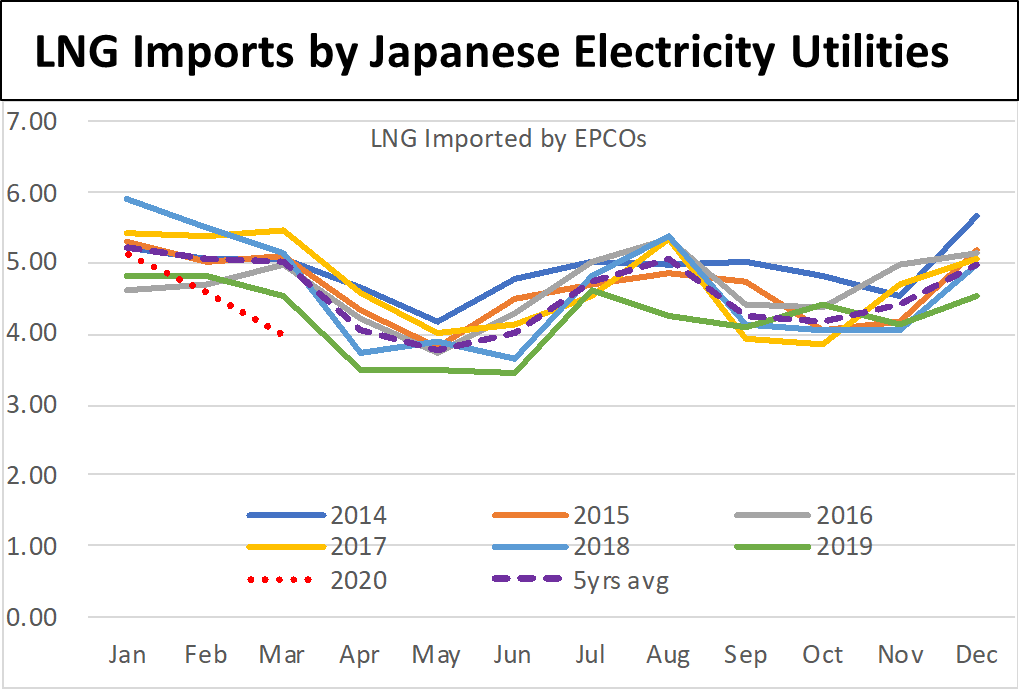
GAS DATA
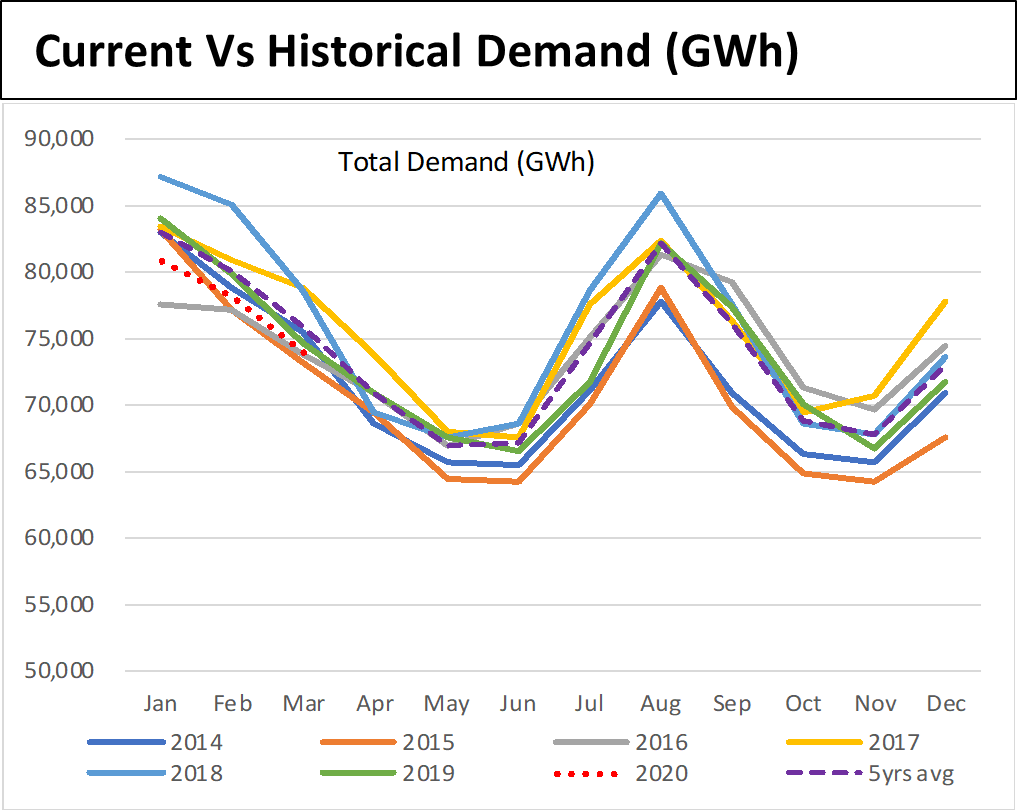
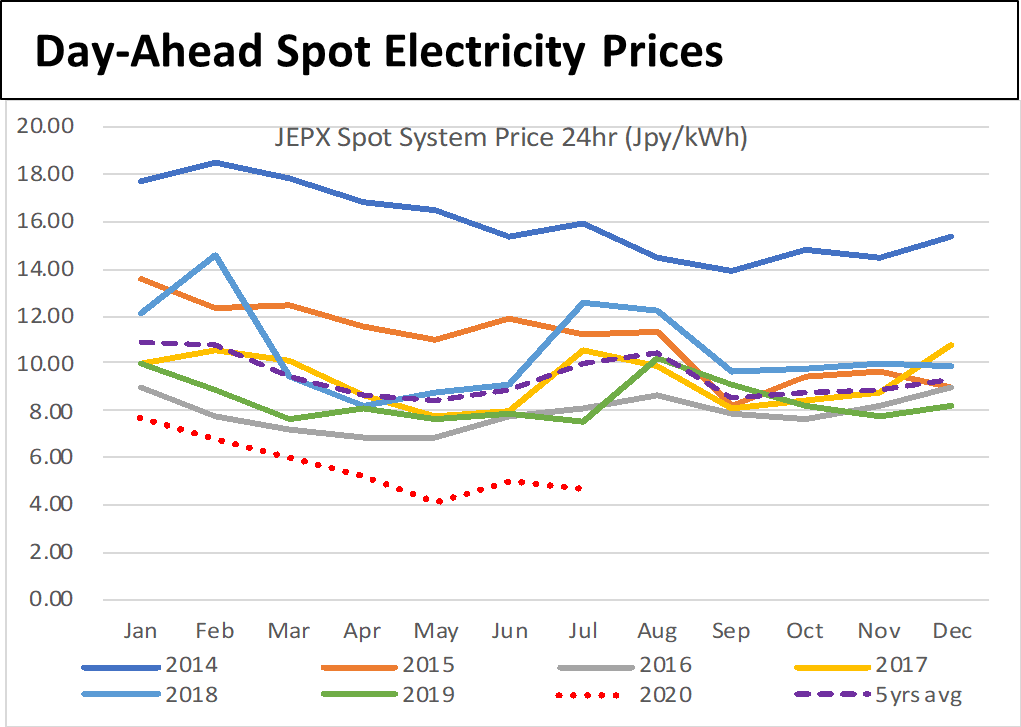
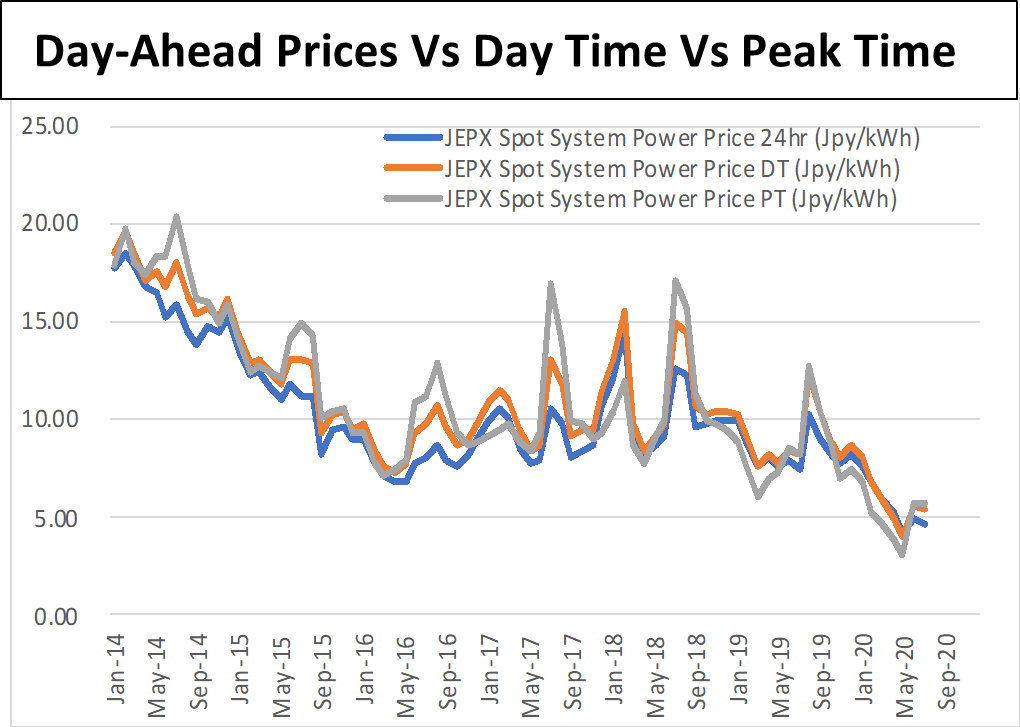
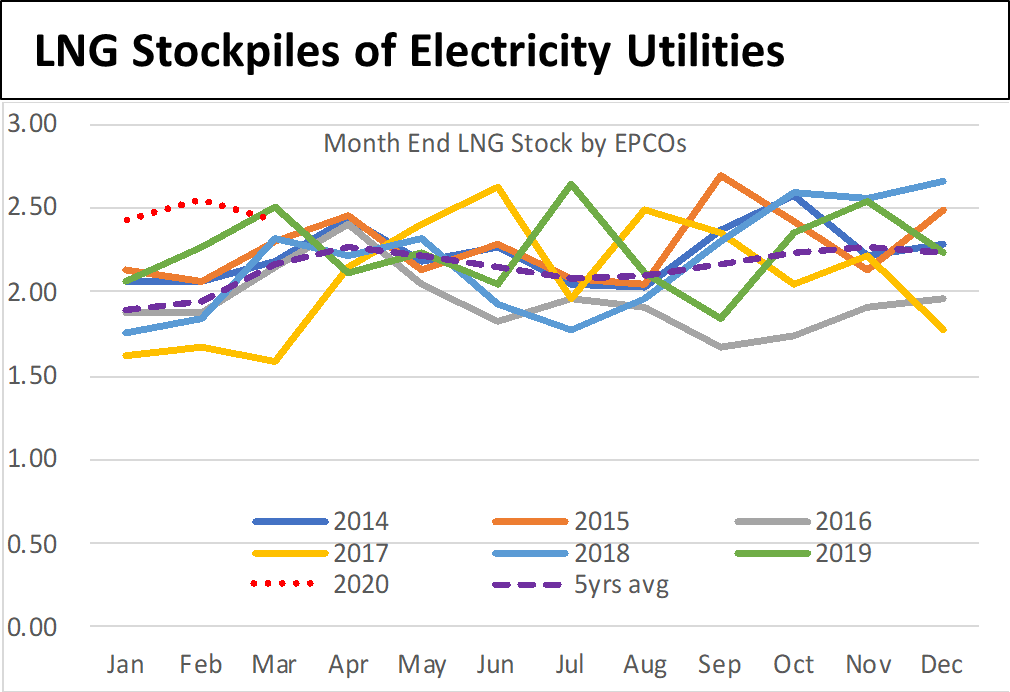
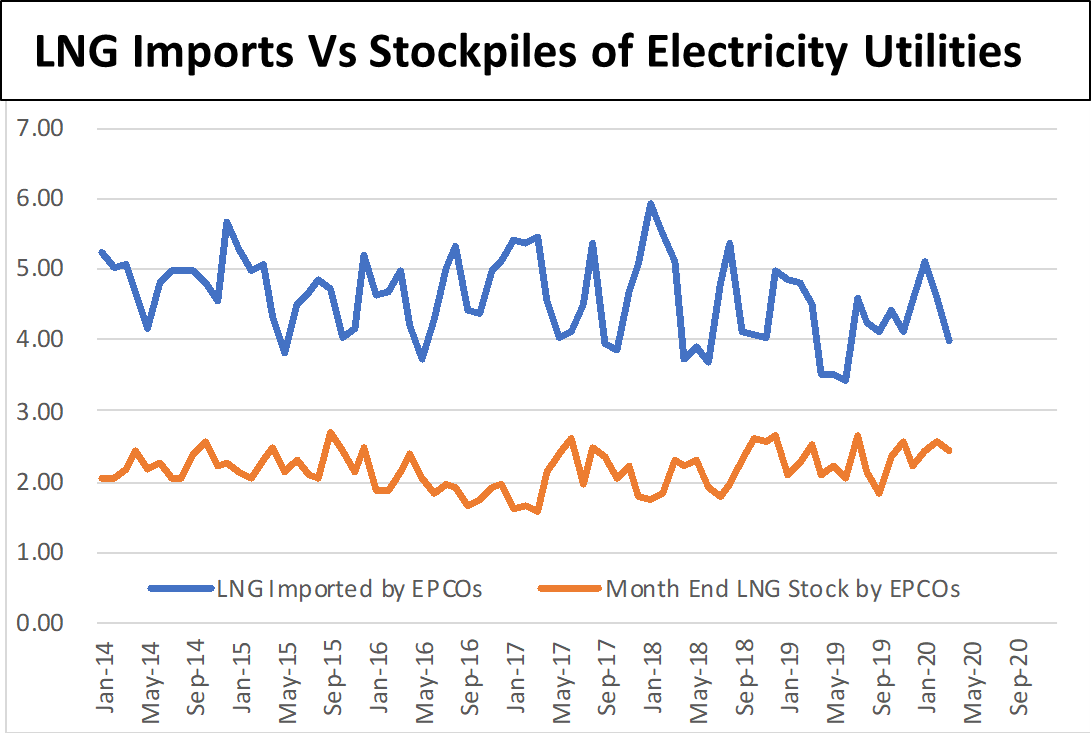
ELECTRICITY DATA
ANALYSIS
| COMMENT | Japan scrapping coal generation? Not for the next decade (or two) |
| The biggest energy news in Japan last week was the Ministry for Energy, Industry and Trade (METI) announcement of plans to “fade out” inefficient coal-fired plants. Local media reports said 100 older units (out of 140 coal-fired units) might close in the next decade.The news is not as green as it seems. All media cited Japan’s number of coal-fired units as 140. Yet, looking closely, Japan only has 108 coal units that can be called “operating,” according to Kiko Network, Even among the 108 units online, 92 were built before the Kyoto Protocol went into effect in Feb. 2005 and close to half are under 200MW capacity. METI minister Kajiyama Hiroshi, speaking to the media on July 3, * coal remains a “baseload energy source” for Japan Kajiyama would not commit to the 100-unit figure for closures, but that number is less important than where Japan’s overall energy mix is heading. Of course, the coal target may yet change. METI also said it will alter rules (as soon as this month) that would east grid access for renewable energy projects, That rule change would have the most impact, however, if Japan adds enough renewable capacity to push thermal power aside. And, therein lies the issue. In the recent month or so, many of Japan’s major electricity utilities announced plans to invest heavily in green energy. New entrant NTT, the state-backed telecom group, last week announced plans to invest close to USD 1 billion in the next five years to add 7.5GW of renewables capacity. The numbers are impressive until one considers that with the 16 new coal-fired units under construction, Does this mean Japan is moving away from coal? Certainly. Will Japan phase out coal? Not in the next decade (or two). |