JAPAN ENERGY WEEKLY
July 11 to July 20, 2020
|
NEWS TOPJapan plans to close older coal-fired ignites debate: Closure seen hurting up to 50% of utility profits J-Power, Okinawa, engineering firms to lose out Japan power prices seen rising on the move JBIC loans ¥1.5 trillion for Mozambique LNG project Japan to add 1GW of offshore wind capacity each year: Foreign operators excluded from offshore wind Idemitsu aims to commercialize CO2 storage in 5 years OIL & GAS POWER & RENEWABLES NUCLEAR, OTHER |
ANALYSIS
DEREGULATION OF JAPAN’S POWER MARKET DID NOT TURN OUT AS PLANNED Switching of power providers proved less frequent than was advertised due to a nuance in the reporting methodology.
DATA
… AND MORE |
CONTACT US nrgnews@yuri-invest-research.com
NEWS
OIL & GAS
ENEOS to convert idled oil refinery to solar power station (Kabushiki.jp, July 17)
- ENEOS has formed an agreement in principle with Shizuoka Prefecture, central Japan, to convert a local decommissioned oil refinery into a hub for renewable energy, featuring a solar power station.
- Investors met the news positively. ENEOS shares rose to a one-month high.
- TAKEAWAY: Japan’s refineries are under-utilized and more capacity will need to shutter in the near to mid-term as demand for refined products declines. Finding new uses for idled facilities, especially if these are in renewables, will be welcomed by the market.
Price of bunker C fuel oil drops 60% in 5 years as oil-fired power stations stay offline (Nikkei, July 16)
- As domestic consumption of bunker C fuel oil [used for power generation] continues to fall (down 18% on last year), prices are at an all-time low.
- The low prices are due in part to a spate of temporary and permanent closures of oil-fired power stations, most recently in Wakayama and Yamaguchi.
- Bucking the trend is the Hokkaido Electric Power Co., which has no plans to discontinue oil-fired generation.
Japan fuel prices frozen for first time in six months on OPEC easing (Sekiyu Tsushin, July 16)
- Neither ENEOS nor Idemitsu have made any change to their wholesale fuel prices this week, and Cosmo is believed to follow suit.
- This is the first time that none of Japan’s major petrochemical companies have changed their weekly prices in six months.
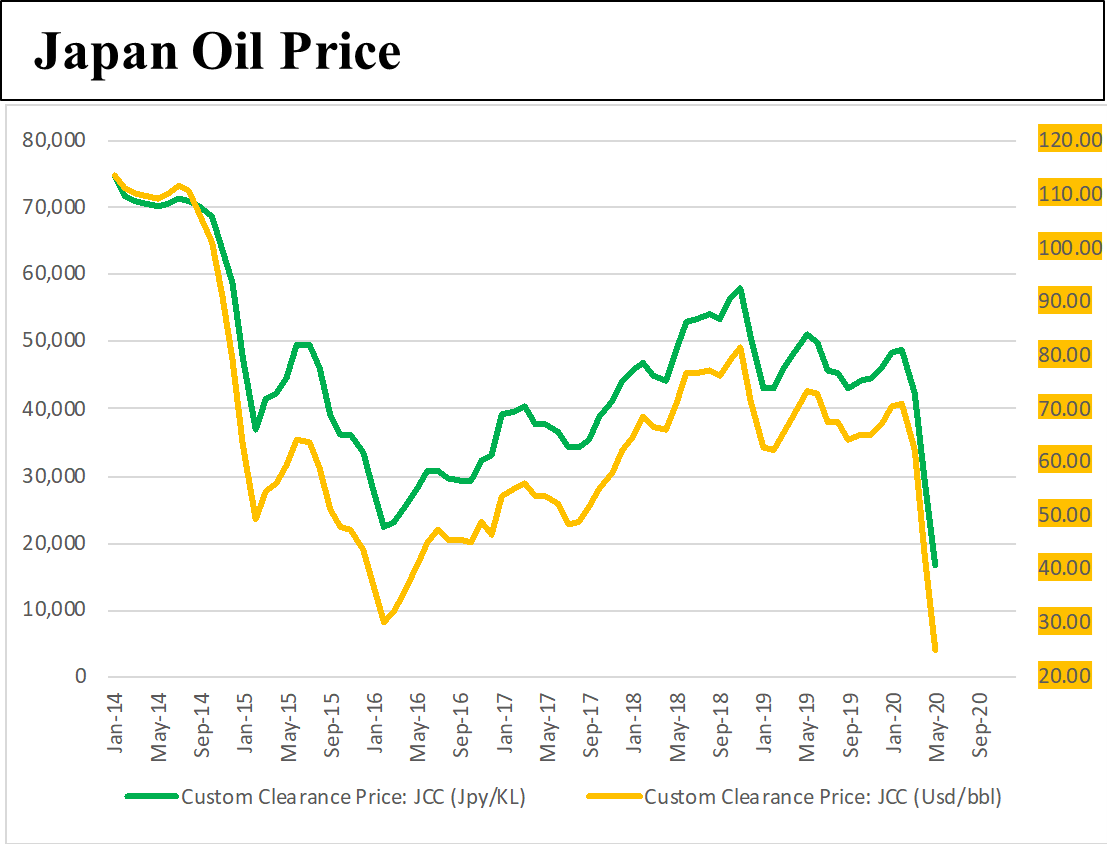
- OPEC’s decision not to extend its historic 937 barrel/day production cut beyond July has placed downward pressure on oil prices.
Tokyo Gas supplying electricity and heat in Miyazaki (Sekiyu Tsushin, July 17)
- Tokyo Gas subsidiary Tokyo Gas Engineering Solutions and Miyazaki Gas began supplying electricity and heat to hospitals in central Miyazaki.
- Both services are supplied by a natural gas-powered cogeneration system installed on hospital grounds. The system also serves as a backup electricity source in the event of a power cut.
- TAKEAWAY: Since power and gas market deregulation in 2016, major utilities that once operated only in the power or gas market have tried to capture the other market. Tokyo Gas has been one of the most successful in crossing over to the electricity market.
JBIC loans 1.5 trillion yen for Mozambique LNG project (Nikkei, July 2)
- Japan Bank for International Cooperation provided 14.4 billion USD in financing for a project being pursued by the Japanese government in conjunction with the country’s private companies to exploit gas fields in Mozambique for LNG.
- The project will be operated by Total S.A. and Mitsui & Co. and Japan’s state-owned JOGMEC will hold a 20% stake.
- Other lenders include the African Development Bank and Japan’s three major (“mega”) banks.
- The venture aims to produce 12 million metric tons of LNG by 2024, with 30% going to the JERA, the TEPCO and Chubu Electric Power Co. joint venture, as well as to Tokyo Gas and Tohoku Electric Power Co.
- CONTEXT: The Mozambique field is estimated to hold over 10 times Japan’s annual LNG demand.
- TAKEAWAY: Japan’s biggest investment in Africa is aimed at diversifying LNG supply sources, which currently rely on Australia, Russia, the Middle East and the US.
JERA wins 69B yen financing for Bangladesh LNG-to-power project (Nikkei Shimbun, July 15)
- Japan Bank for International Cooperation (JBIC) and three major Japanese lenders will provide the financing.
- Project seen as good example of Japan’s efficient gas-fired power technology and will result in 718MW power station that lies 40 km from the capital, Dhaka.
- Commercial operations due in 2022.
POWER & RENEWABLES
Japan’s closure of old coal plants and switch to LNG would wipe out 50% of utility profits (Nikkei, July 17)
- Low-efficiency coal fired power plants are a cheap option for Japan utilities as they average a generation cost per kWh of just 4 yen. In comparison, it costs 3 yen more to generate the same 1 kWh of electricity using LPG.
- These inefficient coal-fired plants account for about 102 billion kWh, which is 15% of Japan’s electricity generation. If all of that capacity switched to gas (via LNG) the cost per kWh would jump to 7 yen, creating an additional cost of over 300 billion yen, according to an analysis by Daiwa Securities.
- Additional costs would wipe out 50% of current net profits of Japanese power utilities.
- SIDE DEVELOPMENT: KEPCO CEO criticized government decision to phase out inefficient coal-powered plants (Jiji, July 16)
- CEO Morimoto calls the decision “abrupt,” says power companies in some regions need to retain coal-fired capacity
- SIDE DEVELOPMENT: Why phasing out 90% of inefficient coal-fired power stations will not reduce reliance on coal (J Cast News via Yahoo News, July 12)
- An Op-Ed claims that the decision to close old coal-fired power stations won’t be supported by many EPCOs, which see coal as a cheap and reliable alternative to nuclear, and the author fears a profit squeeze from this move
- Lack of nuclear restarts means utilities likely to dig in on coal closures
- SIDE DEVELOPMENT: Coal plant closures may hurt Japan utility credit ratings: S&P
- SIDE DEVELOPMENT: Okinawa most reliant on inefficient coal fired power (Ryukyu Shimpo via Yahoo Japan, July 14)
- Of Japan’s leading power utilities Okinawa Electric Power Co. is the most reliant on low-efficiency coal generation with 55% reliance.
- Locals are concerned that a transition to more environmentally friendly options will cause power bills to rise.
- CONTEXT: Okinawa has one of Japan’s weakest regional economies and is highly reliant on tourism, which is currently in a major slump.
- SIDE DEVELOPMENT: Almost half J-Power’s generation is coal-fired (FujiSankei, July 14)
- Electric Power Development Co. has 8 units that would be designated as inefficient under current METI guidelines
- SIDE DEVELOPMENT: Coal plant closures will lead to higher electricity prices in Japan (Japan Times, July 16)
- J-Power says it won’t switch to gas from coal based on current state policy
- SIDE DEVELOPMENT: Coal plant closures to hurt Mitsubishi Heavy (MHI) and other Japanese equipment suppliers (Nikkei Shimbun, July 17)
- MHI earns steady profit from maintenance of old coal-fired plants and the shuttering of so many will have a “significant” impact on business.
- MHI thermal power unit, MHPS, earns 40% of sales from maintenance
- TAKEAWAY: Utilities will lobby the government not to kill their profit margins with the closures, and they argue that coal use improves Japan’s energy security, since much of the country’s oil and LNG imports come from the historically volatile Middle East region. These arguments will likely be accepted and result in some dilution of the current 100-plant closure idea. Note: METI Minister Kajiyama has not officially endorsed the “100” figure. That gives METI wiggle room to consider each utility’s situation and, at the very least, roll back on the 2030 coal-plant closures timeline to give EPCOs more time to put in replacement capacity.
Japan to target adding per year 1GW of offshore wind capacity (Kyodo News, July 17)
- The Ministry of Economy, Trade and Industry (METI) and the Ministry of Land, Infrastructure, Transport and Tourism held the first meeting of a public-private council on July 17 to examine development of offshore wind power generation in Japan.
- METI Minister Kajiyama said he wants Japan to add 1GW of offshore wind power capacity a year for the next 10 years, and to eventually build up 30GW of such generation capacity by 2040.
- METI wants to make offshore wind the “key main power source among renewable energy.”
- CONTEXT: Offshore wind construction costs in Japan are still around three times that of Europe. Part of the reason is that the ocean floor around Japan is deeper.
- SIDE DEVELOPMENT: Foreign operators excluded from Japan offshore wind plan (Yomiuri Shimbun, July 14)
- Japan insists that offshore wind station operators are domestic entities to prevent information leaks on its territorial waters; concern centered on China
- Operators would also need to notify the state if they use foreign vessels for offshore research
- TAKEAWAY: The ability to build large blocks of capacity appeals to Japan’s key METI ministry much more than a large collection of small/smart stations that solve local energy solutions. What’s more, METI sees offshore wind as a technology around which it can build a bigger manufacturing ecosystem in Japan. Currently, more than half of the parts necessary for offshore wind stations are made outside Japan, yet the country does have a wind turbine manufacturer that is globally competitive (Mitsubishi Heavy Industry). In comparison, Japanese makers of solar equipment have long been overtaken by Chinese brands.
Idemitsu aims to commercialize CO2 storage within 5 years (Sekiyu Tsushin, July 17)
- Idemitsu Kosan and a group of partner companies that includes Ube Kosan and Seikei University is developing a system that sequesters carbon dioxide by accelerated carbonation of calcium sourced from concrete and other industrial by-products.
- The project was selected for implementation by Japan’s New Energy and Industrial Technology Development Organization (NEDO). Idemitsu and its partners aim to commercialize the process in five years.
- The process produces calcium carbonate and recycled aggregate, both of which have industrial applications for factories and thermal power stations.
- SIDE DEVELOPMENT: Japan grants Nippon Steel ~$190M to research using CO2 to make paraxylene (Nikkan Kogyo Shimbun, July 15)
- Nippon Steel is among those companies researching use of waste CO2 to produce paraxylene, a raw ingredient in polyesters and resins.
- NEDO has granted the consortium 20 billion yen to research the technology over the next four years.
- CONTEXT: If this method was used to manufacture the 49 million metric tons of paraxylene required globally each year, it would need 160 million tons of CO2 to be sequestered annually.
- TAKEAWAY: Japan continues to pour significant R&D and state funds into development of carbon capture technology. This is one way to retain coal-fired generation under the premise that its CO2 emissions are not only contained but recycled.
KEPCO to revise mid-term profit plan [Link unavailable] (Asahi Shimbun, July 16)
- Kansai Electric Power Co CEO Morimoto Takashi told Asahi Shimbun that he intends to revise the utility’s mid-term plan for the three-year period through 2021/22 as soon as possible in light of the effects of the coronavirus pandemic on fiscal targets.
- A pronounced slump in demand from commercial clients may mean KEPCO’s target of average recurring annual profit of at least 20 million yen during the three-year period may need to be replaced with a new target, Morimoto said.
- SIDE DEVELOPMENT: KEPCO to restart Takahama nuclear plant as soon as October: Morimoto (Jiji, July 16)
- The plant is currently closed for inspection
CD Energy accelerates Tokyo expansion, increases workforce by 50% (Denki Shimbun, July 14)
- CD Energy Direct, a joint venture between Chubu Electric and Osaka Gas, is aiming to achieve annual retail electricity sales in the greater Tokyo area worth 60 billion yen.
- A series of TV advertisements that went on air in October helped boost CD Energy’s profile. CD Energy signed its 200,000th customer in April.
- In 2021, CD Energy plans to launch a gas cogeneration facility in Tokyo in partnership with INPEX and Iruma Gas.
Hokkaido Electric Network pushes up cost to revamp grid for renewables access by 50% (Nikkei Shimbun, July 17)
- Co. says needs to spend 46.7 billion yen for the grid to accept new renewable energy stations. Three regions in the northern prefecture of Hokkaido need grid investments, the grid operator told METI officials at a July 16 meeting.
- Grid operator’s costs are 50% higher than its own estimates from Oct 2019 due to a recent internal review that found a need to move location of some equipment and the route of transmission lines.
- Hokkaido is estimated to have capacity for 2GW of renewable power generation as of March this year, but needs 5+ years to install new equipment to improve grid access.
Fukushima boosts solar capacity to be second-largest solar generation area in Japan (Nikkei Shimbun, July 14)
- In March installed solar capacity jumped 29% YoY, making the prefecture the 2nd biggest in this energy source in Japan. Ibaraki is first; Hokkaido prefecture is now 3rd.
- Fukushima has 684MW of solar capacity installed. This comes from 100 stations with a capacity of at least 1MW, which is up from 27 such stations a year earlier.
- The prefecture added 53 km of power lines exclusively for renewable energy just in the last year.
- Active solar investors in Fukushima include Ichigo Construction Co., Fuyo General Leasing and Mitsubishi UFJ Leasing, as well the Japan unit of Thailand’s Banpu Power.
- TAKEAWAY: More than the overall capacity of solar, the mere fact that the region has progressed so rapidly in building renewable power supplies since the 2011 disaster at the Fukushima Dai-Ichi nuclear power station could make it a prominent example for climate friendly energy proponents in Japan. The nation’s major EPCOs believe renewables can be a complementary source to thermal power. Fukushima’s success casts doubts on such aspersions. Importantly, Fukushima supplies excess power to the Tokyo-centric Kanto region.
Japan utilities, refiners pour into the bond market (Denki Shimbun, July 13)
- TEPCO Power Grid sold 290 billion yen in 5-year, 10-year and 15-year bonds
- Biggest issue of bonds by TEPCO at one time.
- Power Grid unit of TEPCO aims to sell 700 billion yen of bonds this year
- Seibu Gas sold 10 billion yen in 20-year unsecured bonds to repay debt
- ENEOS to sell 10 billion yen in 5-year and 10-year bonds
KEPCO bribery scandal revelations continue [Link unavailable] Asahi Shimbun, July 15)
- It was revealed that disgraced KEPCO executive Mori Shosuke was allowed to keep his company car for three months even after his departure in June.
- KEPCO decided to revoke Mori’s access to the car in light of the fact that he was a party to litigation.
- SIDE DEVELOPMENT: KEPCO pledges to rebuild reputation (Jiji, July 16)
- CEO Morimoto pledged to regain the trust of the local community that had been lost over the recent bribery scandal at the utility.
- SIDE DEVELOPMENT: State energy agency boss who ignored KEPCO bribery allegation is demoted [Original link unavailable] (Shukan Economist, July 21)
- Yoshino Shigehiro, the former head of the policy team at the Agency for Natural Resources and Energy, was moved to be a director at the Nuclear Damage Compensation and Decommissioning Facilitation Corp, in what is seen as a clear demotion.
- Yoshino and his team is accused of ignoring advice from the electricity and gas business oversight committee in relation to the KEPCO bribery allegations.
NUCLEAR & OTHER
Nuclear regulator stalls TEPCO plans to build new reactor at Kashiwazaki plant (Denki Shimbun, July 17)
- The Nuclear Regulation Authority has told TEPCO Holdings that further discussion is required on four aspects of its plan for constructing a seventh reactor at its Kashiwazaki-Kariwa nuclear plant.
- The most significant of the issues concerns fire safety measures in the reactor’s control room.
- CONTEXT: The world’s largest nuclear plant by capacity, and central to TEPCO’s profit margins, Kashiwazaki-Kariwa has not restarted any of its units since the 2011 Fukushima disaster rocked the country. One of the biggest obstacles to the restart has been local opposition.
TEPCO, Hitachi and others to develop multi-cable DC transmission system for offshore wind farms (Denki Shimbun; July 15, 2020)
- TEPCO will develop technology for a multi-purpose, multi-cable DC power transmission system that will enable power transmission over long distances, as well as between regions.
- The project was commissioned by the quasi-state agency, the New Energy and Industrial Technology Development Organization (NEDO).
- The system will be developed by Hitachi, TEPCO, TEPCO Power Grid, Mitsubishi Electric, and Toshiba Energy Systems, and is scheduled for completion in February 2024.
KEPCO launches tracking system for children and the elderly (Denki Shimbun, July 17)
- Kansai Electric Power Co. (KEPCO) has developed a locator beacon that can be tracked by base stations fitted to utility poles.
- The beacon weighs just 10 grams and has a battery life of one year.
- KEPCO will initially trial the beacons on 2,000 elementary school students in the Kansai region. Later the beacons will also be offered to elderly residents.
- KEPCO eventually plans to roll out the service to other major centers.
DATA: OIL
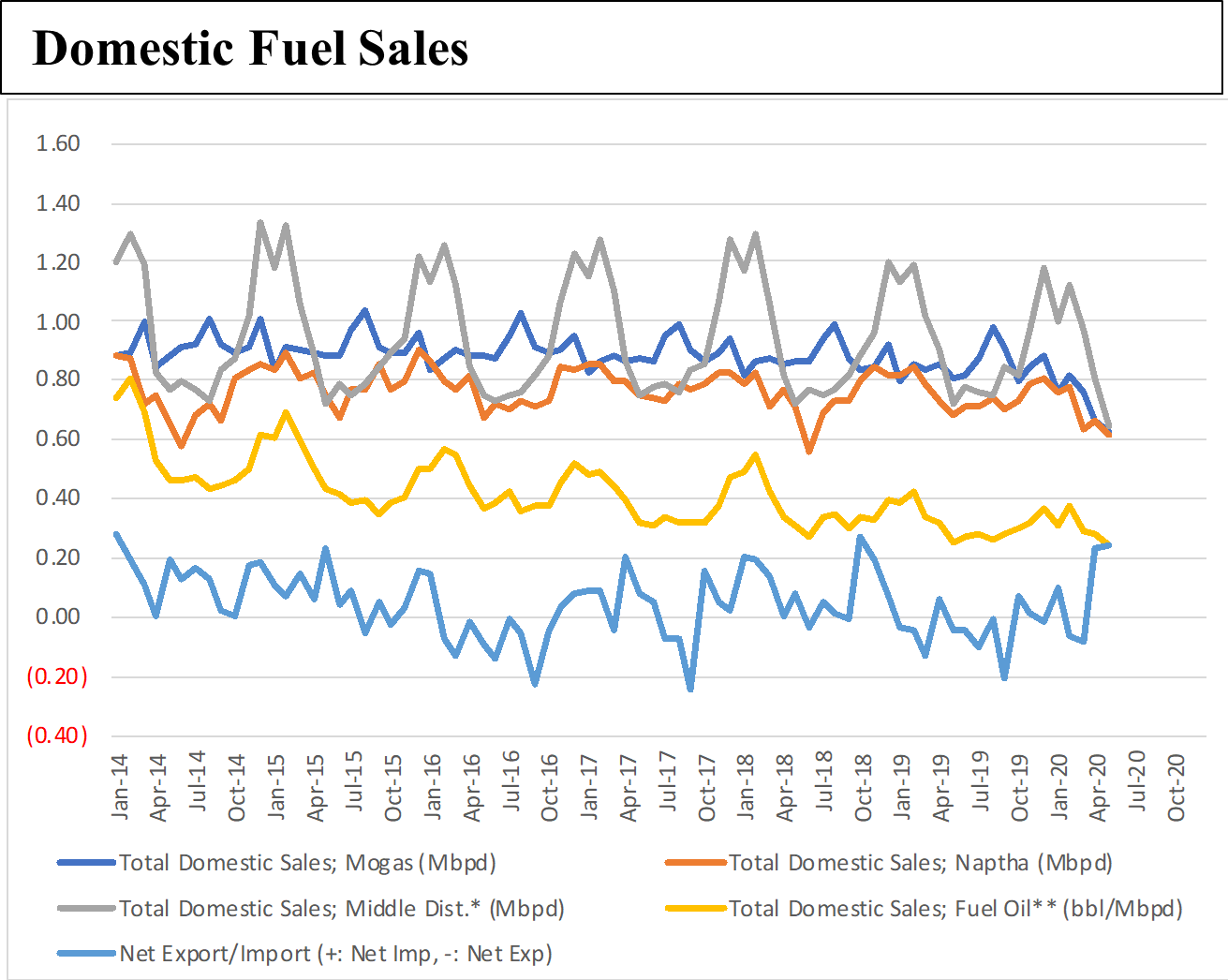
SOURCES: the Ministry of Economy, Trade, and Industry (METI), Ministry of Finance, and the Petroleum Association of Japan
DATA: GAS
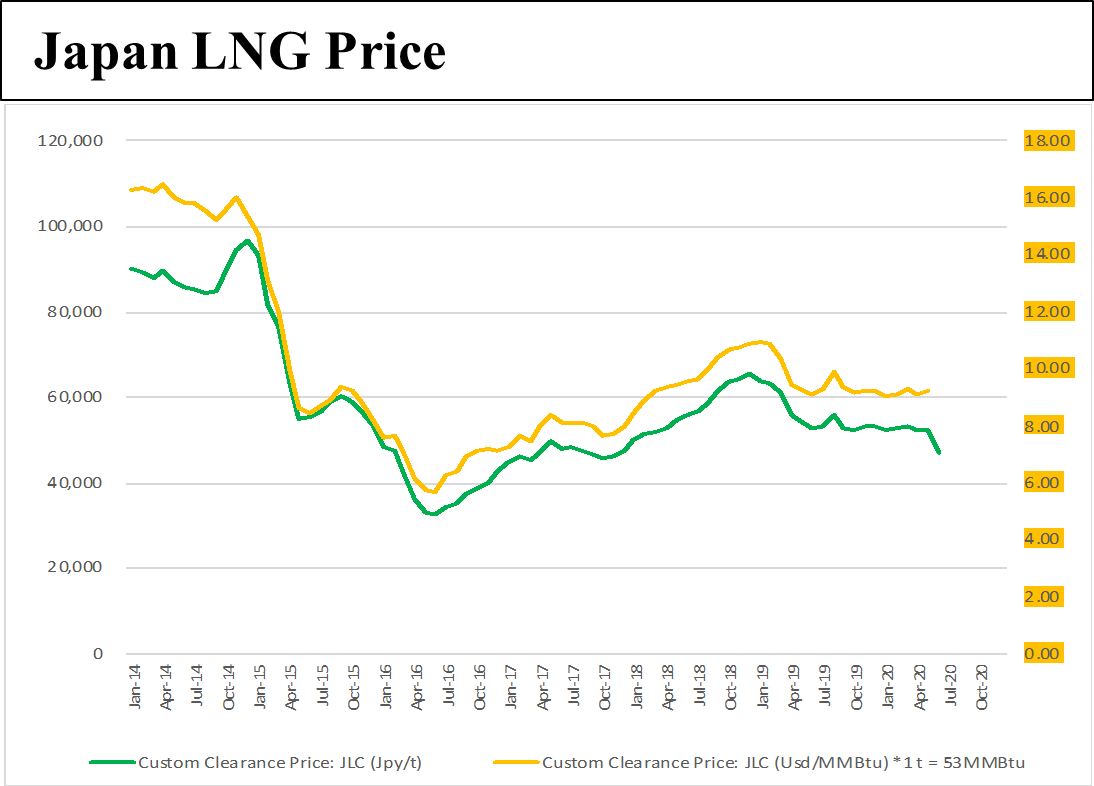
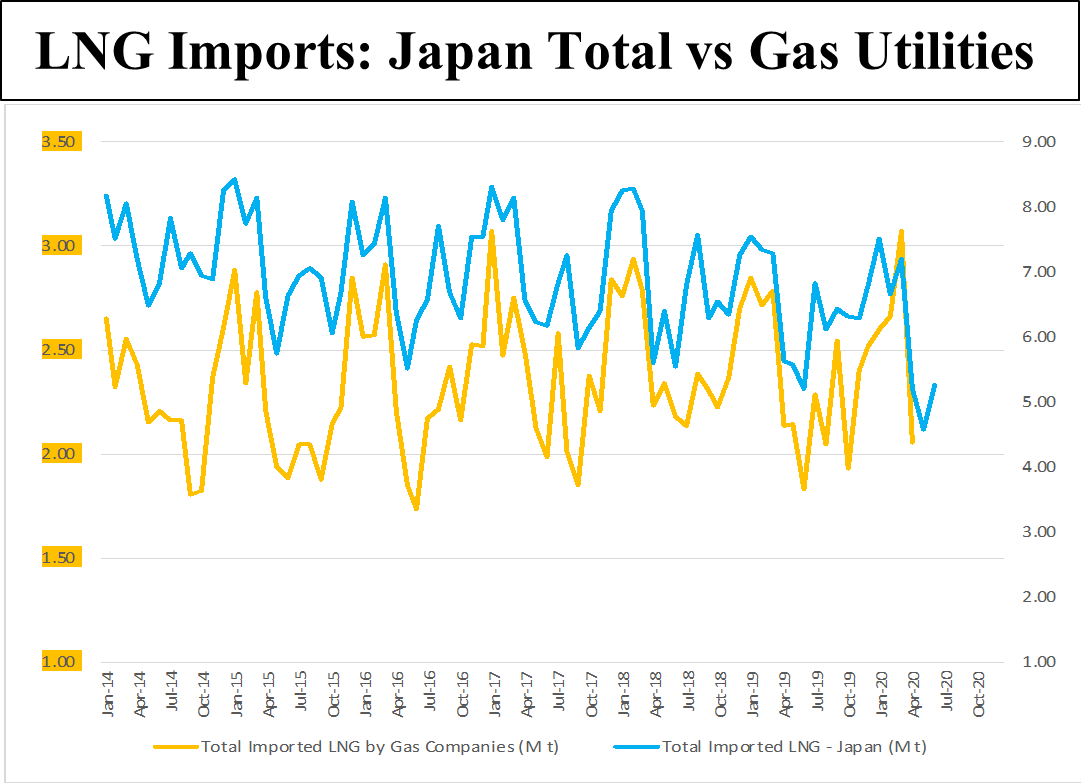
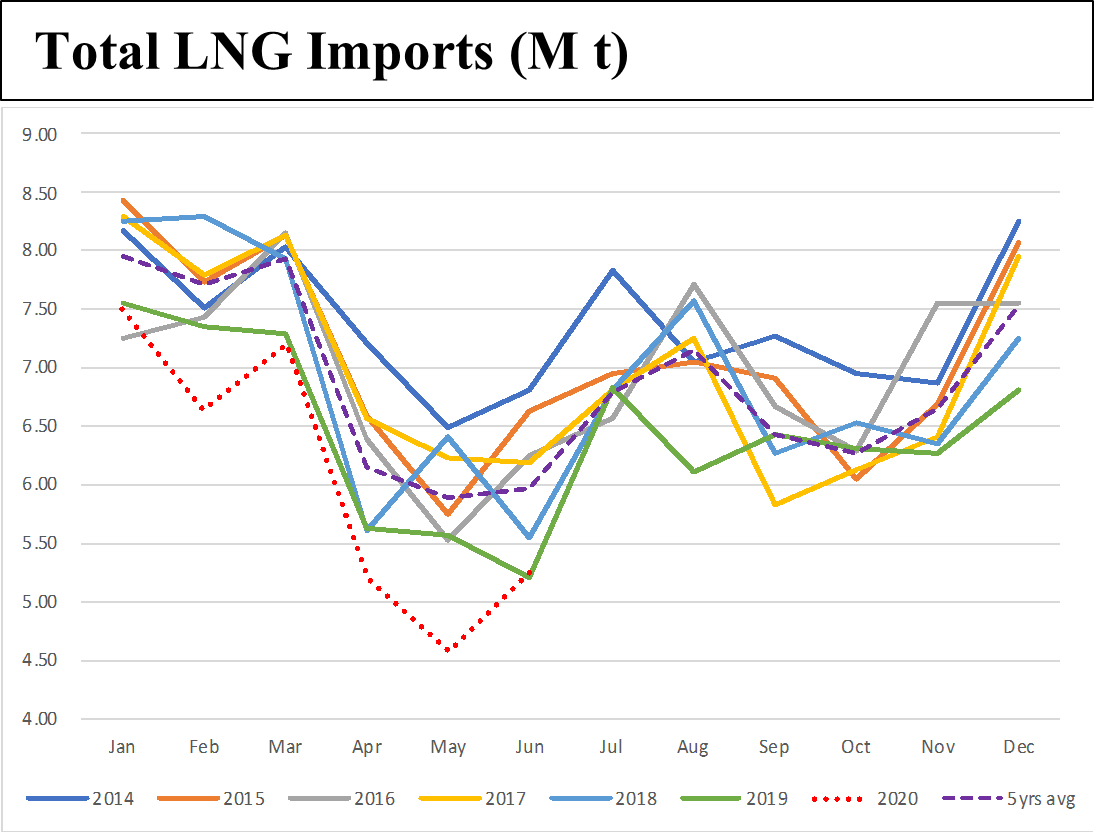
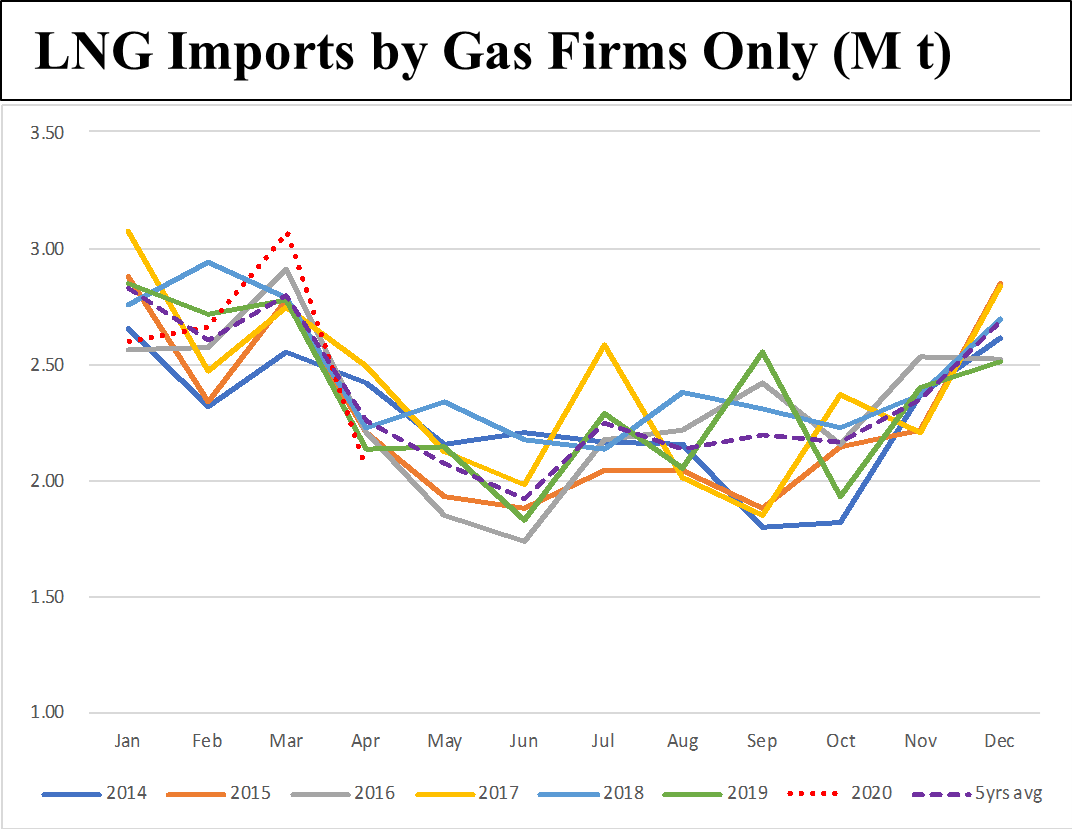
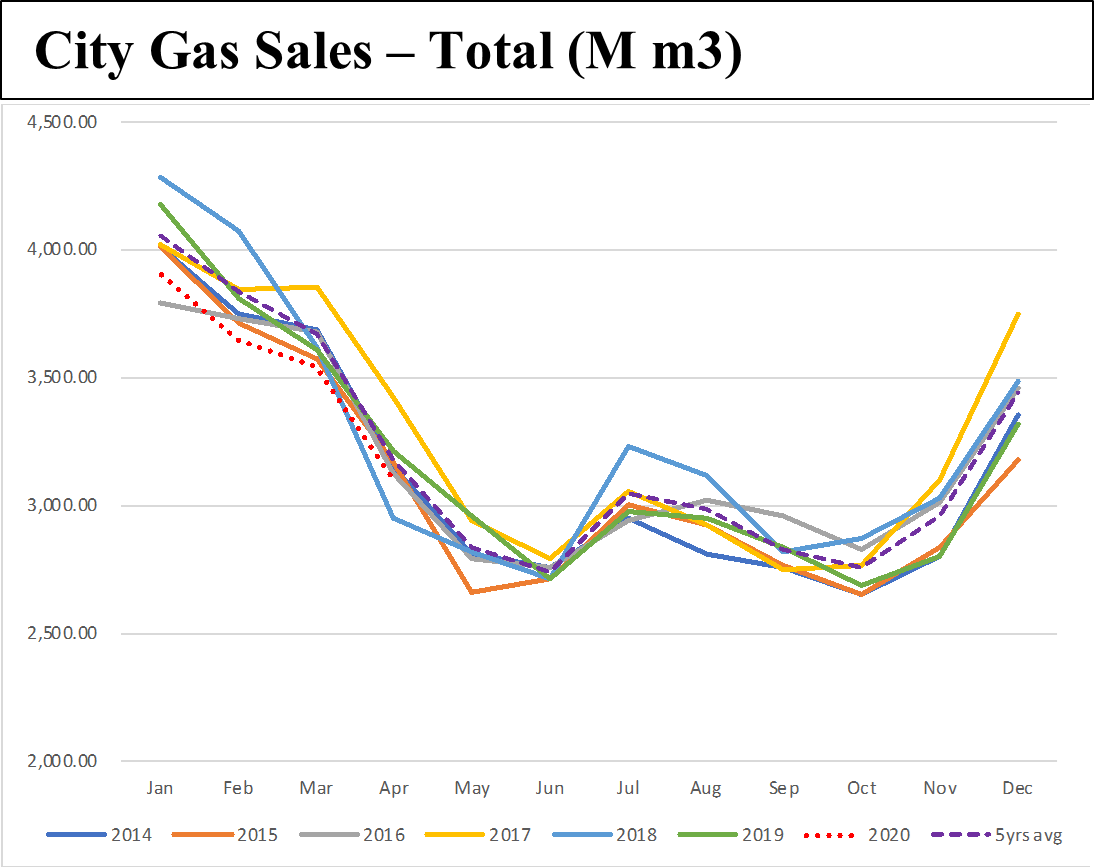
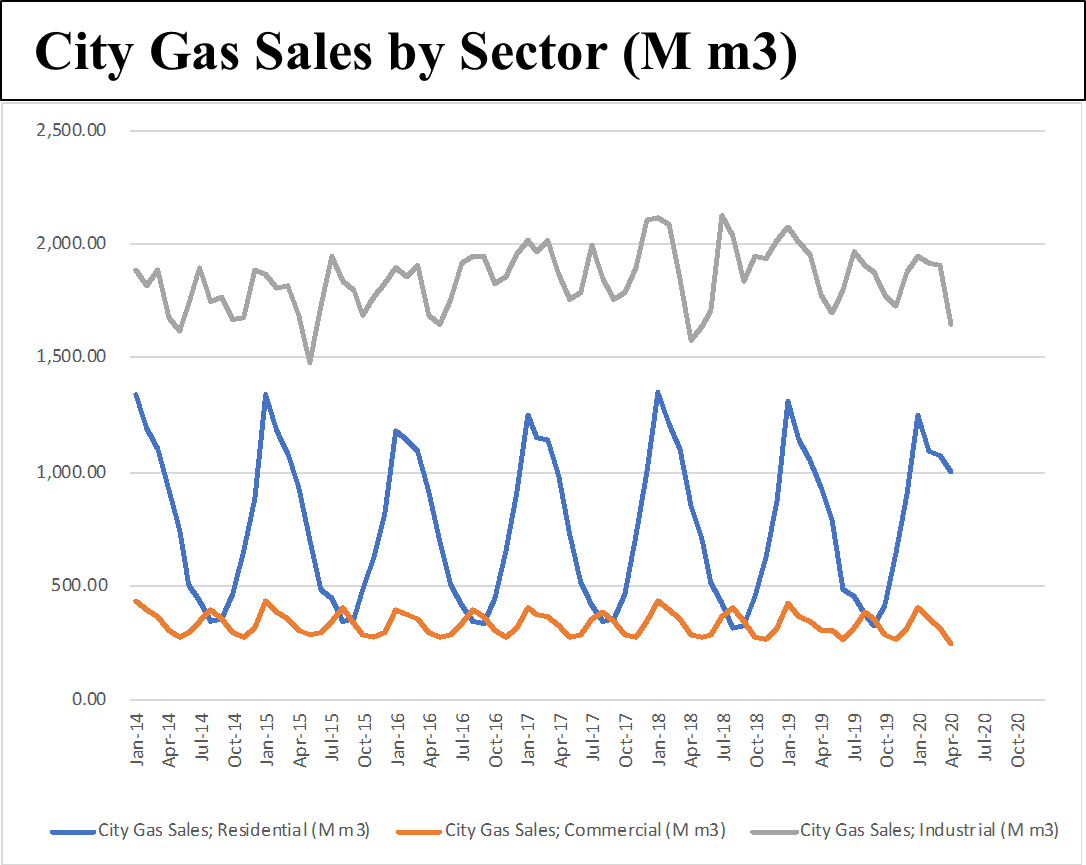
SOURCES: the Ministry of Economy, Trade, and Industry (METI), and the Ministry of Finance.
DATA: ELECTRICITY
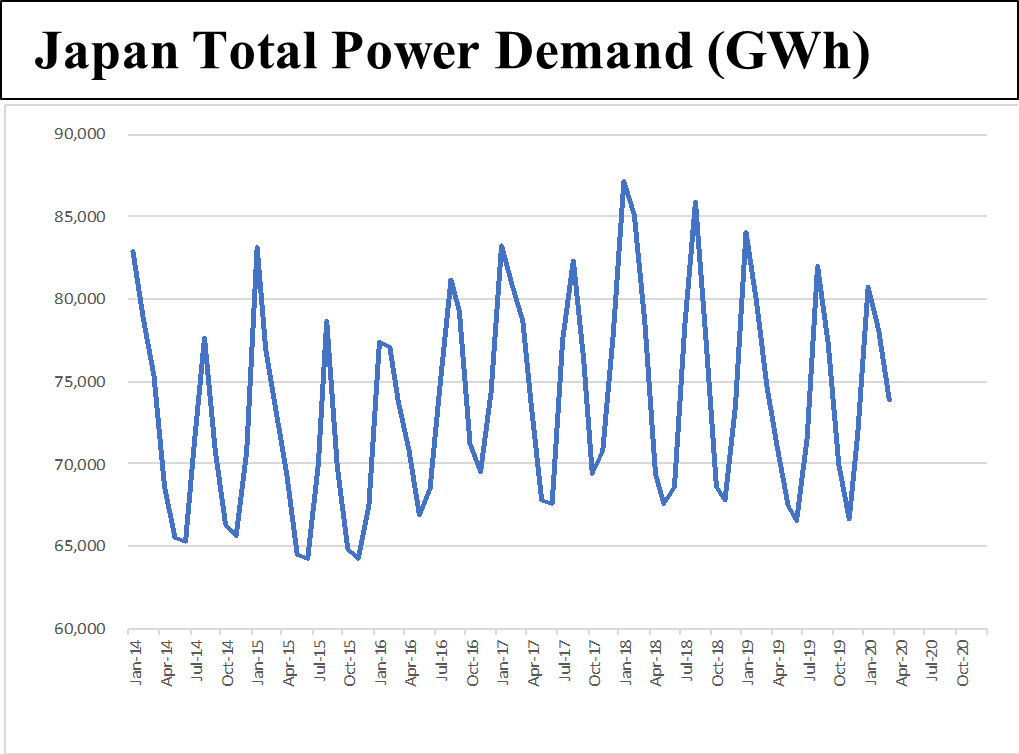
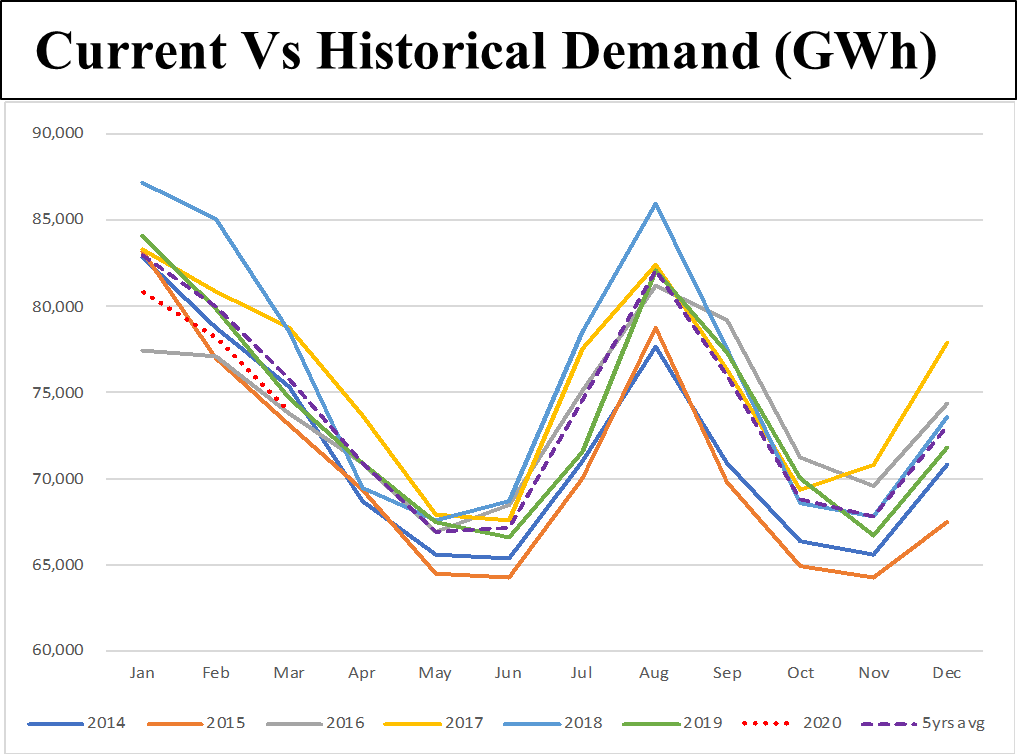
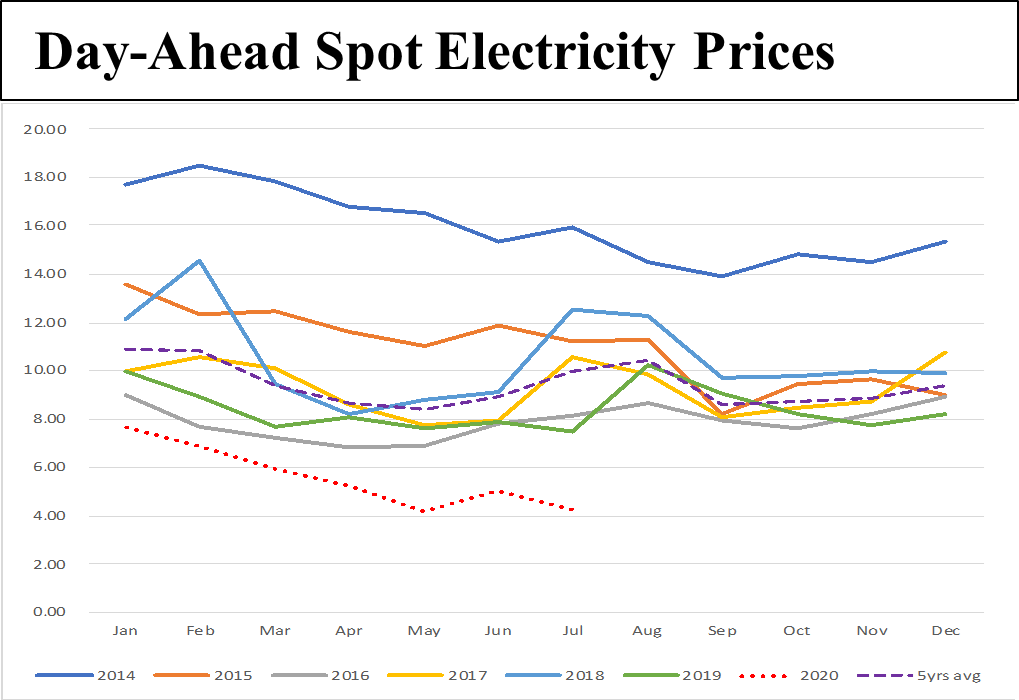
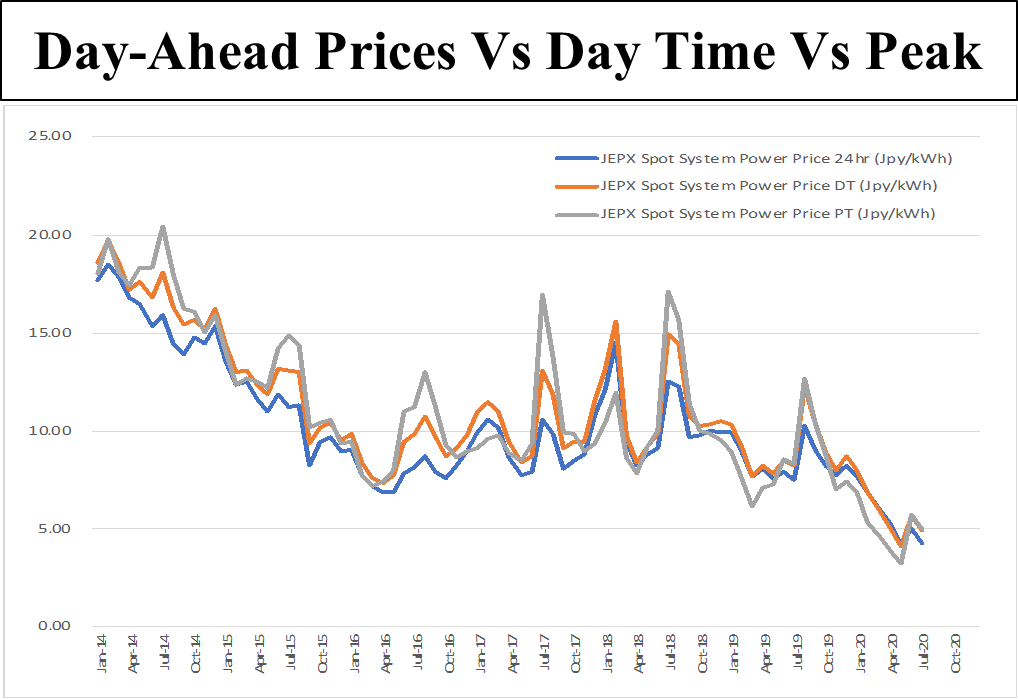
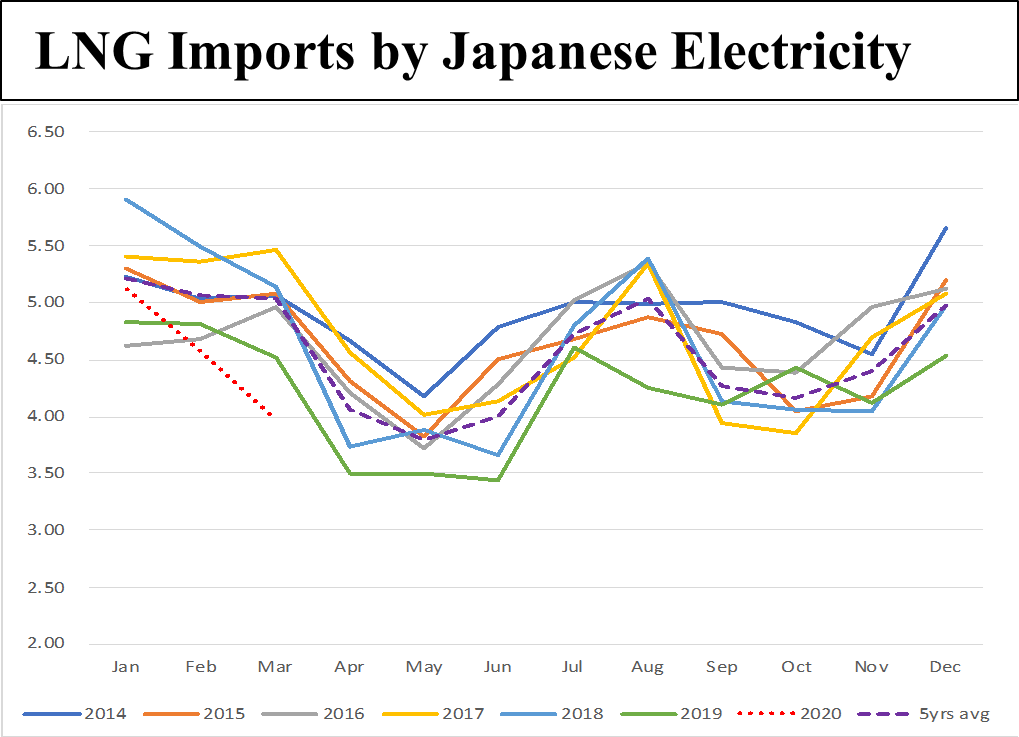
SOURCES: the Ministry of Economy, Trade, and Industry (METI), and the Japan Electric Power Exchange
ANALYSIS & COMMENTARY
| COMMENTARY | Japan’s Deregulated Power Market: Plans vs. Actual Outcome |
| DANIEL SHULMAN,PRINCIPAL,SHULMAN ADVISORY |
Since Japan deregulated its electricity market on April 1, 2016, not everything the country set out to do has worked out. Let’s take a look at some of the discrepancies that remain a challenge for existing and new players. Plan: Foster competition by encouraging switching of electricity retailer The idea was that having alternative power retailers would bring in a flurry of clients switching to other electricity providers. Official data initially suggested that this indeed was the case. Japan’s Ministry of Economy, Trade and Industry (METI) announced that 20% of the country had switched their power plan as of end 2018. The headline figure masked a less favorable picture. Of those that made the switch, almost 40% were customers replacing a regulated tariff with a deregulated plan from the same, incumbent power company. What’s more, due to numerous infrastructure issues even as recently as last year power retailers said they saw switching rejection rates in the range of 10%, which led to bloated staffing costs. Plan: Create a liquid power market on the Japan Electric Power Exchange (JEPX) And yet, the liquidity of JEPX has prospered. The market’s trades account for as much as 31% of power delivered in Japan. Contracted volumes on JEPX have gone from being relatively flat before deregulation to clearly reflecting demand patterns, and there has been an overall downward trend in average wholesale prices. Plan: Create a quick and easy process to get a power trading license The government was suddenly in a situation where it had to tighten licensing procedures, which led to application times growing from three months to a year. METI’s best intentions had the effect of causing a number of serious new entrants, which may have launched successful businesses, to burn through more cash than they budgeted while waiting for the license to come through. In the end, these players no longer had the resources to develop their businesses. As a result, the majority of the half dozen or so American retailers that entered the market have sold their assets to other entities and essentially pulled out. Today, the number of licensed power retails exceeds 700. More has not necessarily meant better. It turned out that over 150 of the licensed retailers have yet to deliver a single kilowatt. METI has begun talk of revoking licenses from “bad actors” and dormant licensees. The above challenges are part and parcel of development in any new market, so we do not see them as signs of despair or failure. There are also several growth factors in Japan’s electricity market, which we will discuss in our next commentary. This is an abridged version of the commentary in a new publication, the J-Enerlytics Power Market Monitor, which is an in-depth monthly report on the Japanese electricity market from Tokyo-based Shulman Advisory. |