JAPAN ENERGY WEEKLY
July 21 to August 2, 2020
NEWSTOP Japan traders win ~$1.9B Myanmar LNG / power plant deal Marubeni also moves into Vietnam gas-fired sector KEPCO nuclear scandal grows, unveils LNG graft scheme Japan aims to re-start nuclear processing plant in 2021 OIL & GAS Tokyo Gas pays ~$660M for control of US shale gas, solar farm Major gas utilities report predictably bad 1Q results Refiners group apologies for false gasoline fuel claims POWER & NUCLEAR Utilities ask for ~$22.6B to cover Fukushima cleanup costs Saibu Gas phasing out coal won’t help gas-fired generation Kyushu Electric digs in on coal, but touts e-infrastructure Japan to introduce revenue cap on power transmission Power utilities to cut tariffs in September Central Japan power demand fell 9% in June RENEWABLES & OTHER Mitsubishi Heavy sets up Hokkaido offshore wind JV and prepares to take control of thermal power JV Mitsubishi Corp, Shell to co-invest in Dutch offshore wind TEPCO claims oil price drop doesn’t hurt renewables push With Japan power prices falling, can solar still turn a profit? Chubu Electric unveils cheap smart home system CONTACT US |
ANALYSISRENEWABLE PROJECT FINANCING PUT ON HOLD AMID REGULATORY CHANGES Most financing decisions on renewables projects in Japan are currently on-hold, according to several market participants. Recent government policy changes (and proposed changes) have left financiers and developers afraid that a new scheme to weed out “bad actors” in the sector could see some renewable solar and wind projects lose their license — through no fault of their own. Delay could spell major hurdle to Japan meeting renewable energy targets... [CONTINUE TO STORY] MASS WRITE-DOWNS IN JAPAN OIL AND GAS MAY SEE RUSH TO SECURE FUNDS We believe Japanese energy investors may be forced to take write-downs to their upstream oil and gas portfolios in excess of $10 billion when Q1 results are announced over the next two weeks. What’s more, many Japanese power and gas utilities have direct upstream exposure in gas... [CONTINUE TO STORY] HOUSE VIEW The debate in Japan over closing older coal-fired plants is clearly not over, and neither is LNG a guaranteed winner. This could be the time that renewable energy makes a claim to be a bedrock power source, but solar and wind projects are riddled with issues beyond developers’ reach. Meanwhile, as the US wrestles with its own nuclear plant scandal in Ohio, Japan’s nuclear future struggles to shine through the mistake of the past. |
NEWS
OIL & GAS
Marubeni group wins ¥200 billion Myanmar LNG power plant deal (Nikkei Shimbun, July 24)
- The Myanmar government approved plans by Marubeni and rival trading firms Sumitomo Corp and Mitsui & Co to build locally an LNG-fired power plant near the city of Yangon. This would be one of Japan’s largest investments in the SE Asian country.
- The trading firms expect to spend the next 1-2 years in negotiations on design and power sale contracts for the project, which is estimated to require ¥150 billion to ¥200 billion in investments. Start of operation expected in 2025.
- Sumitomo said the power plant will have 1,250MW capacity and there will be an onshore LNG storage / regasification facility. State power firm to buy electricity from the power plant on 25-year agreement.
- SIDE DEVELOPMENT: Marubeni enters Vietnam LNG power generation sector (NNA Asia, July 31)
- Marubeni, which is presently involved in the generation of approximately 10% of all Vietnam’s electricity needs, now plans to get into the LNG-fired generation sector in that country.
- In January, Marubeni and Tokyo Gas signed a memorandum with Vietnamese petrochemical company PV Power regarding the construction of LNG-fired power stations.
- Marubeni also plans to support the restructuring of Japan’s manufacturing supply chain in the wake of the coronavirus pandemic by working with, and acquiring the operations of, local corporations.
- TAKEAWAY: Marubeni was one of the biggest sellers of coal-fired generation stations in Southeast Asia. Winning business with gas-fired plants may give Japanese trading firms confidence that they can afford to ease off from promoting coal-fired generation exports. What’s more, working with gas-fired generation will allow Marubeni and other Japanese traders to win additional contracts in related infrastructure works. For example, Vietnam currently has no LNG terminal able to receive the fuel.
Tokyo Gas spends ¥70 billion to boost stake in US shale gas asset, buy Texas solar project (Nikkei Shimbun, July 30)
- Co. will spend about ¥20 billion to increase it stake in Castleton Resources shale developer in Texas to more than 70% from its current 46%. The original stake was bought in May 2017 and increased to 46% in 2019.
- Tokyo Gas wants to boost profits from non-Japan and non-fossil-fuel sources.
- Castleton Resources’ natural gas output is set to increase 1.6 times to 4.7 billion cubic meters per day. The gas will be sold domestically in the US, not sent to Japan.
- Tokyo Gas will spend a further ¥49 billion to set up a unit in Delaware and use that to acquire the 630 MW Aktina solar power project in Texas from Hecate Energy.
- The solar plant is due to start operations during 2021.
- CONTEXT: Tokyo Gas plans to build 5GW of renewables capacity globally by 2030.
- TAKEAWAY: While global opinions on the best way to move towards decarbonization are split, the common view among Japanese utilities and energy officials is that solar, wind and other green generation must be coupled with gas-fired stations to provide system stability and scale. The twin acquisition by Tokyo Gas in Texas is a perfect example of this approach.
Osaka Gas 1Q profits slump 24% as businesses buy less (Nikkei Shimbun, Others, July 30)
- Osaka Gas announced a profit of ¥21.6 billion in the three months to June, down 24% YoY. Co. said this is due to low demand from corporate clients as the coronavirus pandemic rages.
- Closures of gym chains in the Osaka Gas corporate group further compounded the poor performance.
- While gas sales to hotels and shops dropped, electricity sales were up 18%.
- SIDE DEVELOPMENT: Osaka Gas stocks rally despite cut in full year forecast (DZH Financial Research)
- Co. cut full-year consolidated profit forecast by 2.1% to ¥71.5 billion
- Investors were more favorable on Co. results vs rival Tokyo Gas
- SIDE DEVELOPMENT: Toho Gas 1Q profits down 46% (Chubu Keizai Shimbun, July 17)
- Profit for the April-June quarter fell 46% YoY to ¥6.7 billion
- Co. blamed drop in industrial demand, saying May gas sales were at levels not seen since the global financial crisis of 2007-2008
- SIDE DEVELOPMENT: Saibu Gas expects this year’s profit to drop 68% (Nikkei Shimbun, July 29)
- Profit for the April 2020 to March 2021 year is forecasted to decline by 68% YoY to ¥1.5 billion
- Co. expects gas sales to be more or less flat over last year
- Saibu Gas also said it will invest in a Korean beef bowl restaurant chain in its local prefecture to gain better data on how kitchens utilize gas (Nikkei Shimbun, August 1)
- SIDE DEVELOPMENT: Hokkaido Gas 1Q profits down 20% (Nikkei Shimbun, July 29)
- Profit for the April-June quarter fell 20% YoY to ¥1.5 billion
- Co. declined to give forecasts for this financial year
- SIDE DEVELOPMENT: Tokyo Gas drops to 4-month low on outlook (Nikkei Shimbun, July 30)
- Co. expects April 2020 to March 2021 profit to drop 28% YoY to ¥73 billion
- Closure and shorter operating hours of restaurants and karaoke bars blamed for poor sales outlook, which could “continue for a long time”
Petroleum Association releases statement on hi-octane scandal (Mainichi Shimbun via Yahoo Japan, July 30)
- BACK STORY: A probe by the Mainichi Shimbun revealed that Japanese gasoline chains were sourcing their high-octane fuel from the same tank, negating promotional claims of uniqueness made by each brand.
- The Petroleum Association of Japan posted a statement on its website apologising to consumers for erroneously stating that high octane gasoline supplied by major Japanese fuel chains was sourced independently by the companies in question.
- The Association’s website previously stated that only lower octane gasoline was bartered between petrochemical companies. In fact, high-octane fuel was routinely bartered as well. The Association did not provide any explanation as to why erroneous information came to be posted.
- TAKEAWAY: With the recent industry consolidation, domestic consumers will find it hard to express their dissatisfaction with this case heard. Still, sales of the high-margin product will likely be affected, which will push fuel suppliers to offer discounts.
POWER & NUCLEAR
KEPCO nuclear kickbacks scandal grows, unveils a graft scheme around LNG terminal (FACTA, August 2020 edition)
- BACK STORY: In September 2019 it was uncovered that Kansai Electric Power Co. BACK STORY: In September 2019 it was uncovered that Kansai Electric Power Co. (KEPCO) executives involved in the nuclear business were receiving kickbacks from the then deputy mayor of Takahama City, Fukui prefecture, which hosted the company’s Takahama Nuclear Plant. The matter was investigated by the National Tax Agency and there was even an internal probe on the issue, but this was never reported to the company’s directors, auditors, or made public.
- The unprecedented scandal has resulted in mass punishment of over 90 executives and the removal of former chairman Makoto Yagi. KEPCO tried to draw a line over the affair with a trial at the Osaka District Court led by an independent committee of third-party lawyers, which requested five former KEPCO executives including Yagi to return ¥1.93 billion (USD 18.2 million) as compensation.
- Many retail investors were not satisfied with the proposed punishment. They want to pursue a separate shareholder lawsuit against 22 KEPCO executives and auditors, including current directors and President Takashi Morimoto, seeking compensation of ¥9.2 billion.
- A third-party investigation revealed that KEPCO ordered construction work for the Takahama plant from companies that have a “close relationship” to President Morimoto. The investigators believe Morimoto was paying cash to various parties as a thank-you for winning business. The total value of inappropriate cash/goods received was around ¥360 million, distributed among more than 75 people.
- In addition, investigators found that KEPCO was paying management extra to make up for pay cuts that many took after the 2011 Great East Japan Earthquake. The cuts were meant to show that KEPCO executives were taking responsibility for poor corporate performance.
- Former chairman Yagi and others facing the court charges are enrolled in a directors’ and executives’ liability insurance. Even if they lose the trial, their payments will be covered by the insurance.
- Article tells of a separate corruption practice by KEPCO around the LNG terminal in Sakai City (Osaka). A KEPCO official had allowed firms established by local fishermen to win business at their preferred pricing to get these fishermen to agree to terminal construction. However, the fishermen kept asking for more and the scheme was then discovered internally.
- The official in charge was let go, but remained as a “consultant” to KEPCO to act as the middleman to fishermen groups. The fixer then made sure all business between KEPCO and the fishermen went only via his own company.
- TAKEAWAY: The article says that the LNG terminal scandal has yet to be reviewed by KEPCO’s new compliance committee. In the face of so much public scrutiny over the nuclear scandal, the committee cannot downplay the new allegations, which if true will likely bring further turmoil for KEPCO. Still, state sanctions for such behavior are rare in Japan. The real issue is how much power local interest groups have over new developments in Japan, which is often what leads to such appeasement schemes. Expect this problem to be mentioned by virtually no one.
Japan aims to re-start nuclear processing plant in 2021 after safety checks passed (Nikkei Shimbun, July 29)
- The Rokkasho plant, which stores and processes used nuclear fuel, finally passed the safety checks introduced after the 2011 Fukushima disaster. The plant operator seeks to restart processing of spent nuclear fuel during fiscal 2021 (which starts April 2021).
- The plant is operated by Japan Nuclear Fuel Ltd. and it was designed to recycle used fuel rods to extract unburned uranium and plutonium, which could then be mixed to create a mixed-oxide, or MOX, fuel. The latter can only be used by fast-breeder reactors or specially retrofitted light-water reactors.
- CONTEXT: Japan had only one fast-breeder reactor, Monju, yet it was decided to close it in 2016 due to cost overruns. The other Japanese nuclear reactors have yet to be retrofitted to accept MOX or have yet to receive permission to operate with MOX fuel, which is seen as more difficult to handle.
- CONTEXT: Japan has outsourced most of its nuclear processing so far to Europe. In the process of fuel processing, Japan has built up a plutonium stockpile that’s estimated to be over 45 metric tons.
- Additional checks are still necessary for Rokkasho’s operation plans, which could delay the restart beyond Japan Nuclear Fuel’s timeline.
- TAKEAWAY: The entire nuclear fuel cycle in Japan is struggling and not only due to the 2011 disaster at the Fukushima Dai-Ichi nuclear station. Cost overruns and numerous delays to key pillars of the nuclear cycle, including the Rokkasho project, have cast doubt on the feasibility and practicality of the country’s nuclear policies. Meanwhile, it has amassed the world’s 4th largest plutonium stockpile without a clear long-term storage plan. This has other nations concerned about the security implications, though Japan has not faced much public criticism on this of late.
Fukushima disaster: Generators request ¥2.4 trillion for cleanup (Kyodo Tsushin via Yahoo News, July 31)
- Japan’s nine nuclear power station operators have requested that electricity retailers levy subscribers a total of ¥2.4 trillion over the next 40 years to pay the cost of compensating for the Fukushima disaster.
- The levy applies to new power retailers in addition to established ones.
- While companies are generally expected to make advance provisions for such liabilities, TEPCO did not, which is why the money needs to be recouped from subscribers.
- TAKEAWAY: Were it not for Covid-19, this would be one of the top news in Japan and sure to feed into the public’s aversion to restarting nuclear power plants. Since this levy goes onto every person’s electricity bill, it is bound to act almost as an ongoing “advertisement” of nuclear power risks.
Saibu Gas CEO says phase out of coal will not help gas-fired plants (Denki Shimbun, July 31)
- Saibu Gas CEO Michinaga Yukinori said Japanese government’s phasing-out of inefficient coal-fired power stations will not benefit gas-fired stations due to the emergence of renewable energy.
- Michinaga did, however, say it was conceivable Saibu Gas, the dominant gas utility in the Kyushu areas, could start selling electricity to parties other than the territory’s dominant electricity utility – Kyushu Electric Power.
- TAKEAWAY: The southern island of Kyushu is the area in Japan most likely to be affected by closures of older coal-fired plants. Kyushu Electric has some 1.7GW in older, “inefficient” capacity that would have to close under current guidelines. The utility was also the most reliant of the domestic electricity utilities on nuclear, which generated over 25% of Kyushu’s power demand in 2018. With opposition to nuclear power within Japan not abating, losing coal-fired capacity would notably weaken Kyushu Electric Power Co. Sensing this impending fragility, local gas utility Saibu Gas has hinted that it might bypass its fellow utility when trading electricity.
Kyushu Electric CEO defends use of coal-fired power, but supports greater use of electrically-operated infrastructure (Denki Shimbun, July 31)
- New Kyushu Electric Power Company CEO Ikebe Kazuhiro said combating global warming is his top priority and called for a transition to electrically-driven infrastructure to reduce carbon emissions.
- Mr. Ikebe said the role performed by Japan’s Federation of Electric Power Companies, which he chairs, will remain unchanged in the new environment, and called for the public to be more appreciative of the work done by power companies to ensure a consistent electricity supply.
- Mr Ikebe said coal-fired plants needed to continue in order to keep power prices low enough to support the transition to an electrically-driven infrastructure.
Japan to set revenue cap on power transmission business (Denki Shimbun, July 31)
- The Electricity and Gas Market Surveillance Commission has begun discussing details of Japan’s new transmission pricing scheme.
- A “revenue cap” will be imposed on charges for power transmission in April 2023, with the aim of establishing renewable energy as a major electricity source.
- The Commission has presented the expert panel with a list of issues for consideration.
- SIDE DEVELOPMENT: METI allows power transmission companies to revise terms (Kankyo Business Online, July 15)
- The Ministry of Economy, Trade and Industry has allowed 10 power transmission companies, including TEPCO Power Grid, to revise the terms of the transmission agreements filed with the Ministry on June 19.
- The change is part of revisions to terms necessitated by new rules regarding cybersecurity and access to the grid.
Electric utilities agree to cut tariffs further in September (Okinawa Times, July 31)
- Japan’s 10 main power companies announced their September domestic tariffs on July 30. All tariffs are lower than those for August, due to ongoing low fuel prices.
- The largest cut was made by Okinawa Electric Power, which will cut monthly tariffs by ¥213, followed by Hokkaido EPCO, TEPCO and Chugoku EPCO.
Power utilities in central Japan see demand drop 9% in June (Chubu Keizai Shimbun, July 31)
- Electricity providers in central Japan saw demand fall almost 10% in June YoY.
- This represents eight consecutive months of lower than usual demand for electricity.
- SIDE DEVELOPMENT: Chubu Electric affiliate Escon Japan withdraws mid-term plan in response to drastic changes (Denki Shimbun, July 31)
- Chubu Electric’s real estate affiliate company Escon Japan has withdrawn its previously announced mid-term business plan, saying it needs to be radically revised.
- The revision may mean that shareholders no longer receive dividends.
RENEWABLES & OTHER
Mitsubishi Heavy sets up JV to develop Hokkaido offshore wind project (Japan Maritime Daily, July 31)
- Mitsubishi Heavy Industries (MHI) said on July 30 that it agreed to work with Danish asset management firm Copenhagen Infrastructure Partners (CIP) to develop an offshore wind project off the coast of Japan’s northern island of Hokkaido.
- CIP has been in the Japan market since 2018 and manages 10 billion euros in assets.
- SIDE DEVELOPMENT: MHI to make its thermal power JV with Hitachi a full subsidiary from Sept 1 (Nikkei Shimbun, July 31)
- Hitachi will transfer its 35% stake in MHPS, the JV, to MHI, which plans to rename the firm “Mitsubishi Power”
- MHI wants to make the business more competitive in gas turbines for thermal power plants
- CONTEXT: Last month the Japanese government identified 10 areas around the country as suitable for offshore wind projects, and a further six areas, including two in Hokkaido, as holding promise for the future.
- SIDE DEVELOPMENT: Japan makes strong push to develop offshore wind, but targets still unclear (Toyo Keizai, August 1 edition)
- Japan set up a private-public council to find ways to develop offshore wind, and the council held its first meeting on July 17
- The market is waiting to hear government targets for new offshore capacity building, which will determine how serious the efforts are and whether they are attractive for investors
Mitsubishi Corp, Shell to co-invest ¥100 billion in offshore wind project in Netherlands (Nikkei Shimbun, July 30)
- Total project capacity seen at 760MW and investment is likely to exceed ¥100 billion.
- Operation is due to start in 2023.
- Chubu Electric Power and a unit of Mitsubishi Corp have invested in Dutch power utility Eneco, which won the rights to develop a large-scale offshore wind project in the west part of Netherlands. Construction will start in September 2021.
This will be one of the biggest wind projects in the Netherlands.
TEPCO says drop in oil, gas, coal prices does not take shine away from renewables (Toyo Keizai, August 1)
- Tokyo Electric Power Co. (TEPCO) denies that recent lower fossil fuel prices make it less attractive to invest in renewable energy.
- In April, TEPCO established a separate subsidiary named TEPCO Renewable Power, which invests in renewable energy. TEPCO says the new entity facilitates speedy decision-making.
- CONTEXT: TEPCO recently announced plans to install an additional 7GW of renewable generation capacity by the mid-2030s. It also has plans to make its hydroelectric plants more efficient, and invest in offshore wind farms.
- SIDE DEVELOPMENT: Nisshin moves to create own green energy supply because Japan utilities are too slow in moving to cut environmental impact (Toyo Keizai, August 1)
- The CEOs of Japanese companies are becoming more serious about reducing their impact on the environment and environmental social governance.
- Nisshin Holdings now supplies 50% of the electricity needs of its Tokyo headquarters from the incineration of waste.
- Despite efforts by some Japanese companies to combat deforestation and other environmental destruction, Japanese companies are lagging globally in their environmental policies, according to a former Nisshin executive.
As electricity prices plummet, is there any money to be made from solar power? (Gold Online via Yahoo News, July 30)
- While utilities pay up to ¥40 per kilowatt hour for electricity generated by solar installations approved in 2012, the tariff for projects approved in 2020 is just ¥13.
- However, photovoltaic panels themselves have also got much cheaper, and the nominal rate of return on solar projects remains unchanged at around 10%
- Solar generation projects are more suited to prudent investors who carefully weigh up the advantages and risks of their investment. Investment in solar does not carry any of the volatility associated with foreign currencies or financial products.
Chubu Electric Power Miraiz Releases intelligent remote (Dempa Digital, July 31)
- Chubu Electric Power Miraiz has released an intelligent infrared remote control that can be paired with a smartphone to control household appliances.
- The remote control learns behaviour patterns to enable it to more intelligently control air-conditioners and other devices.
- It represents a convenient and low-outlay solution for those wanting to turn their household into “smart homes”.
ANALYSIS & COMMENTARY
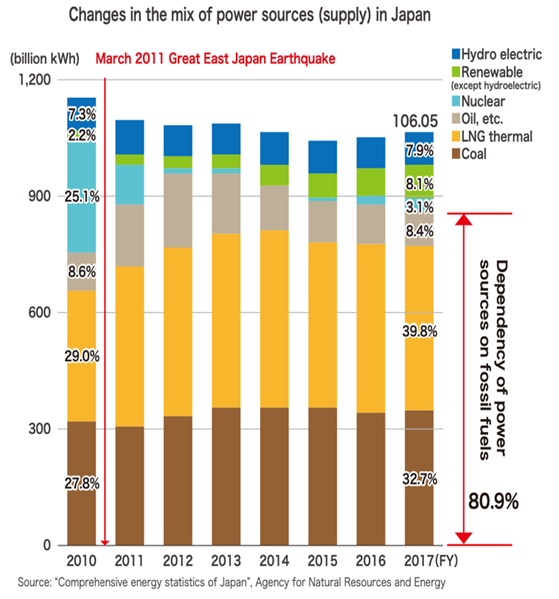
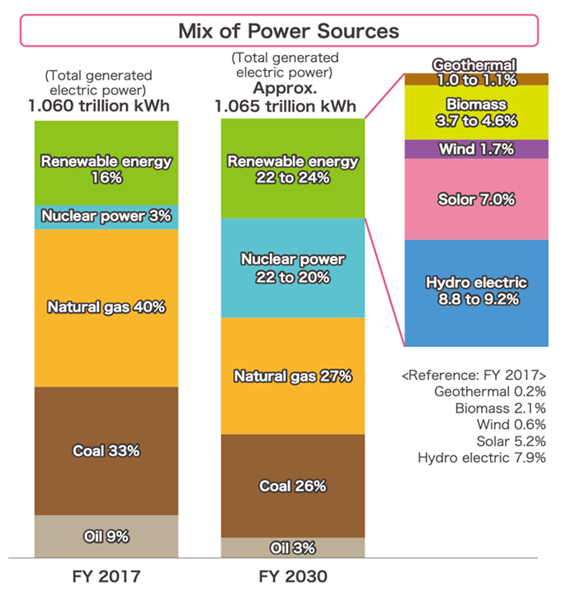
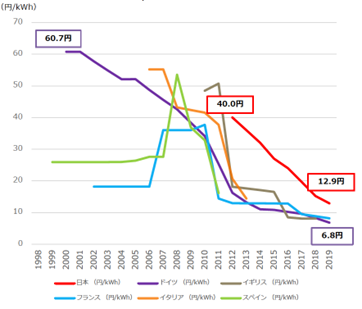
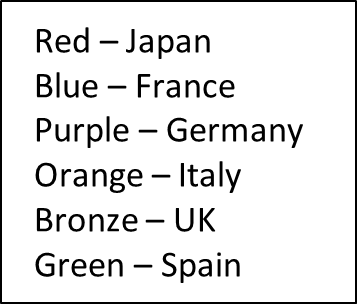
DATA
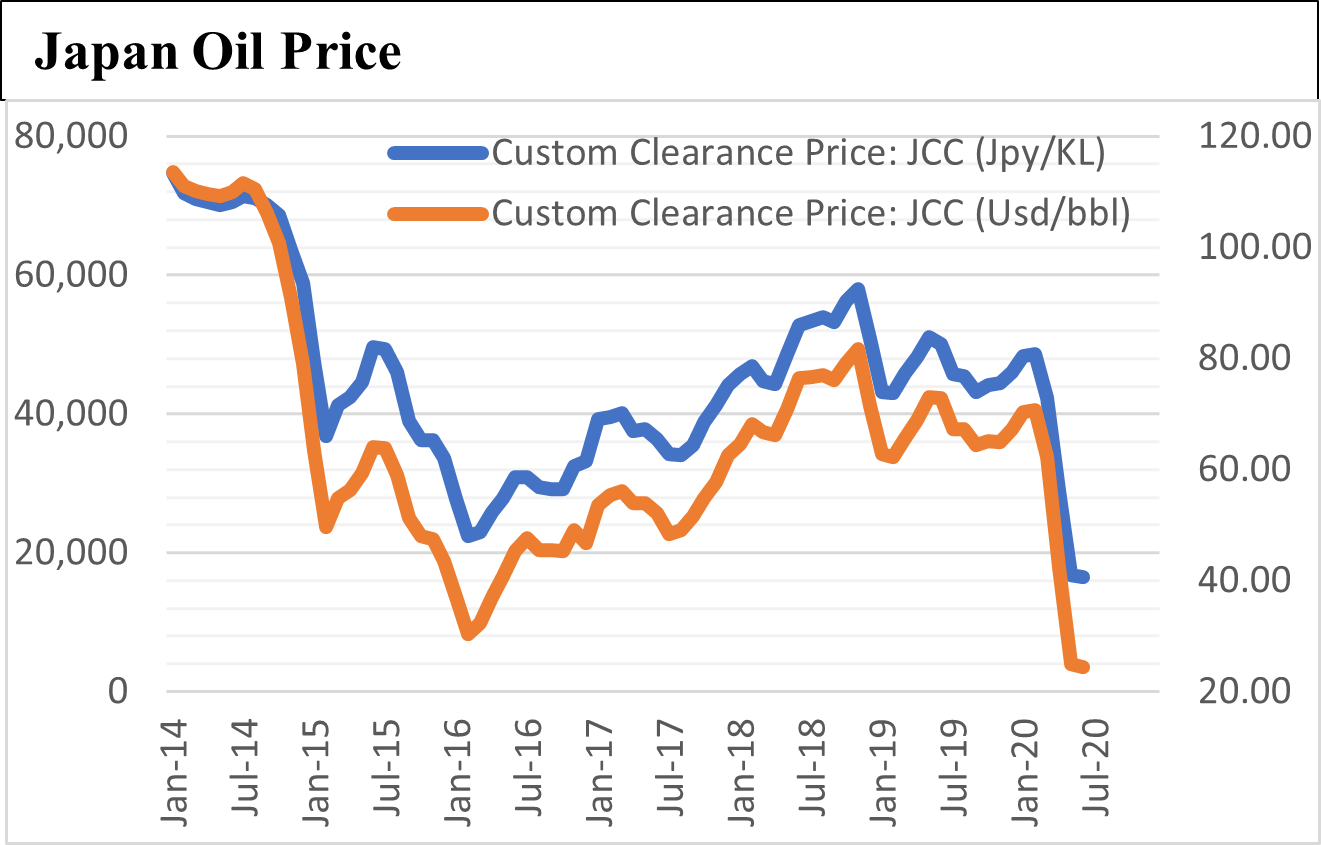
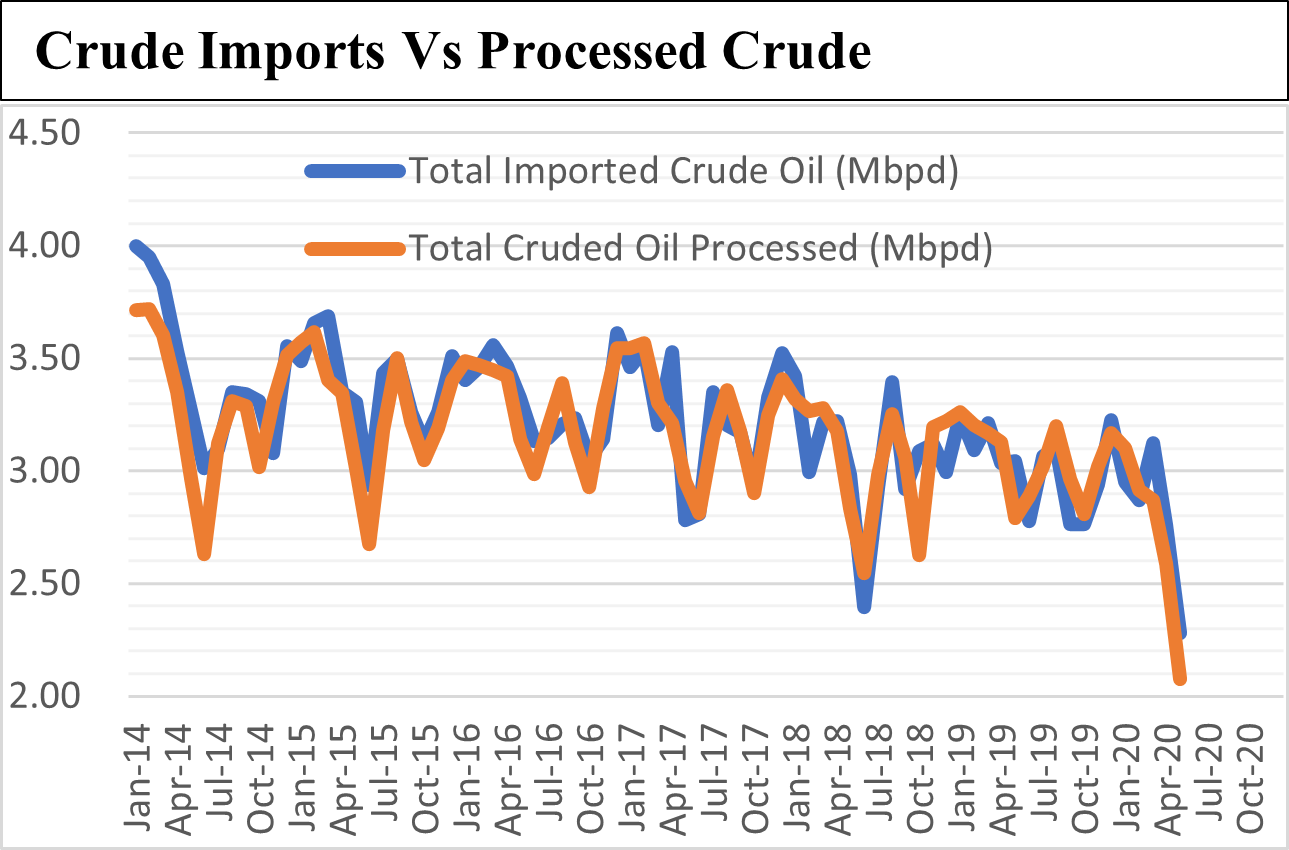
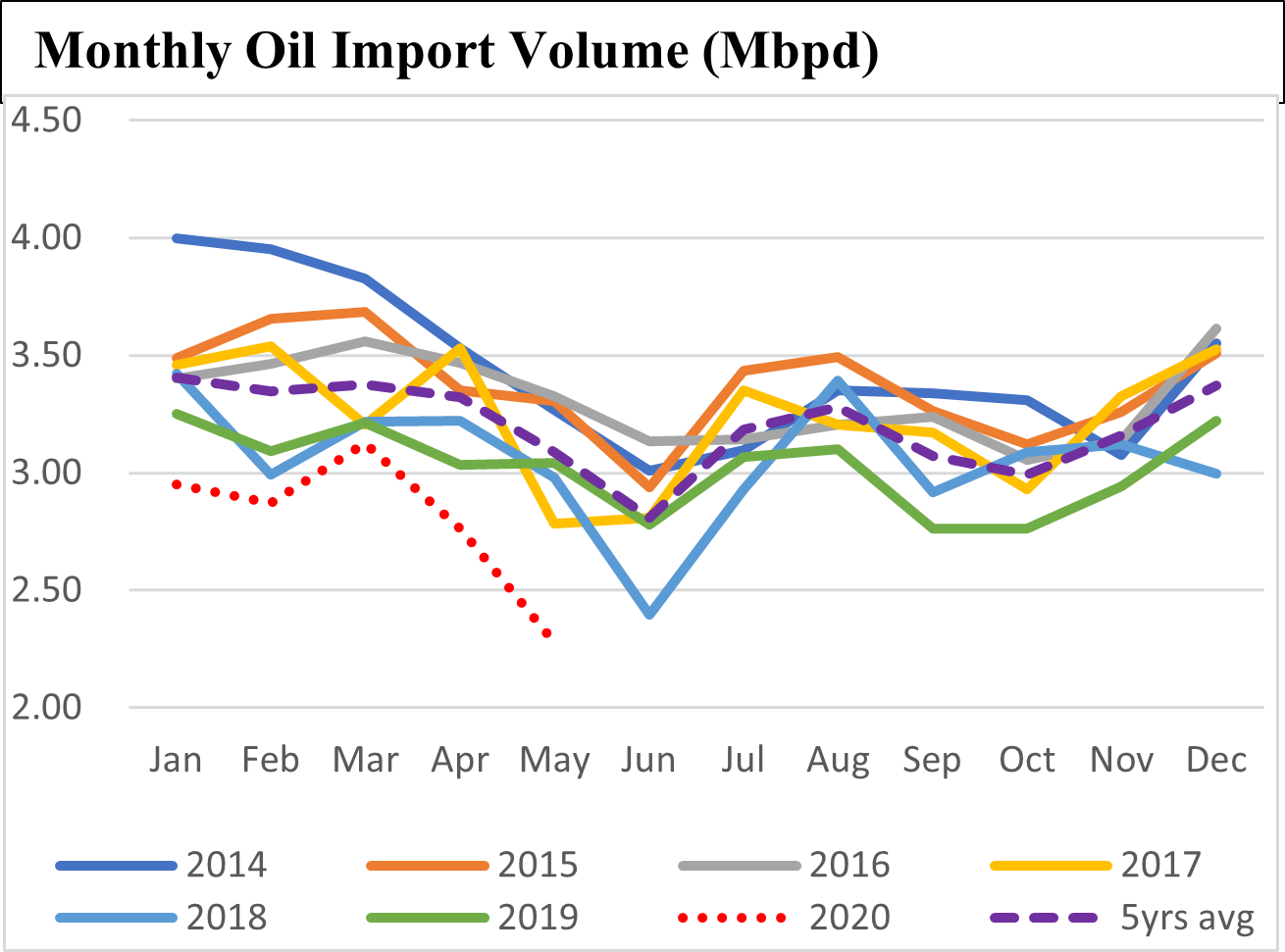
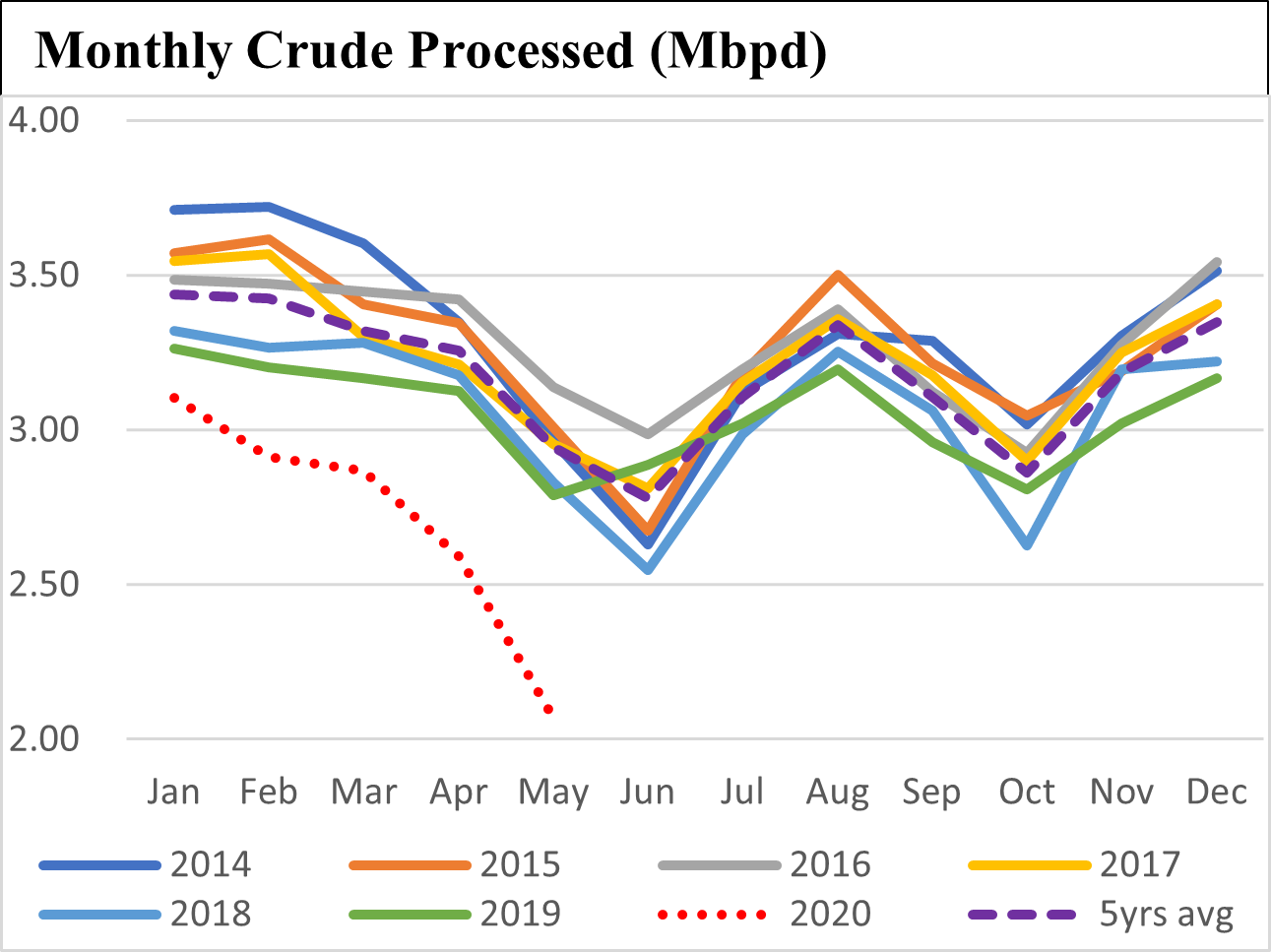
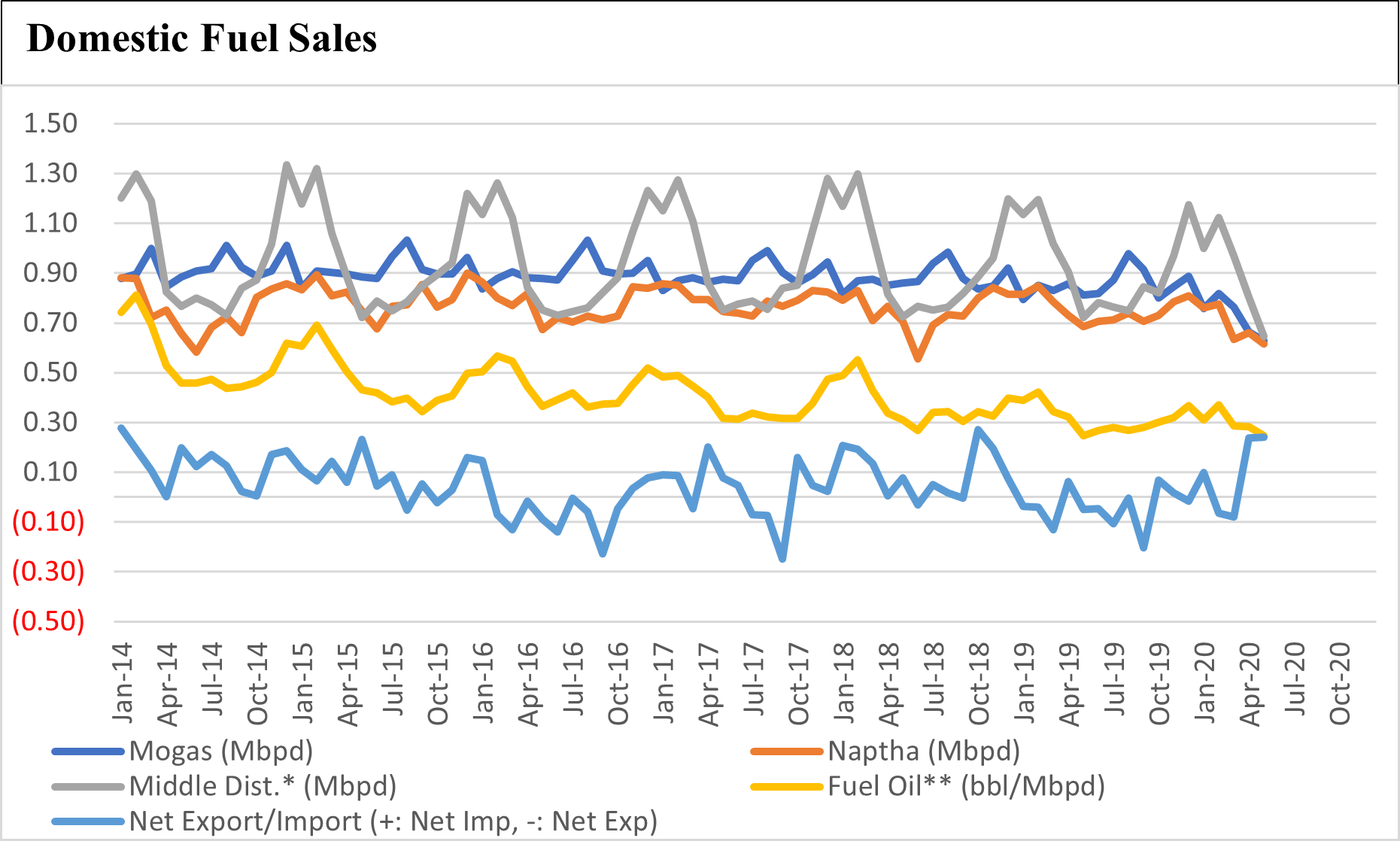
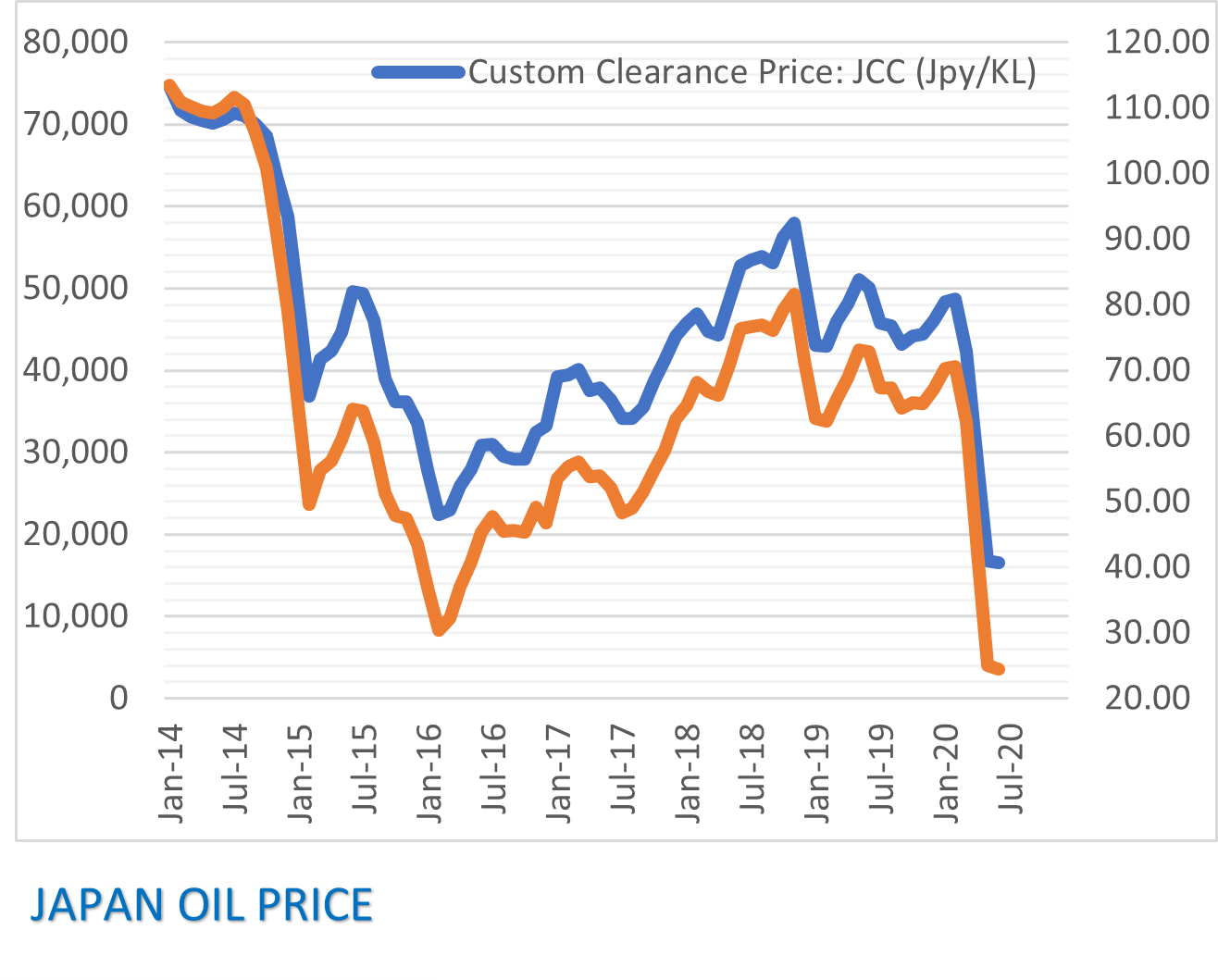
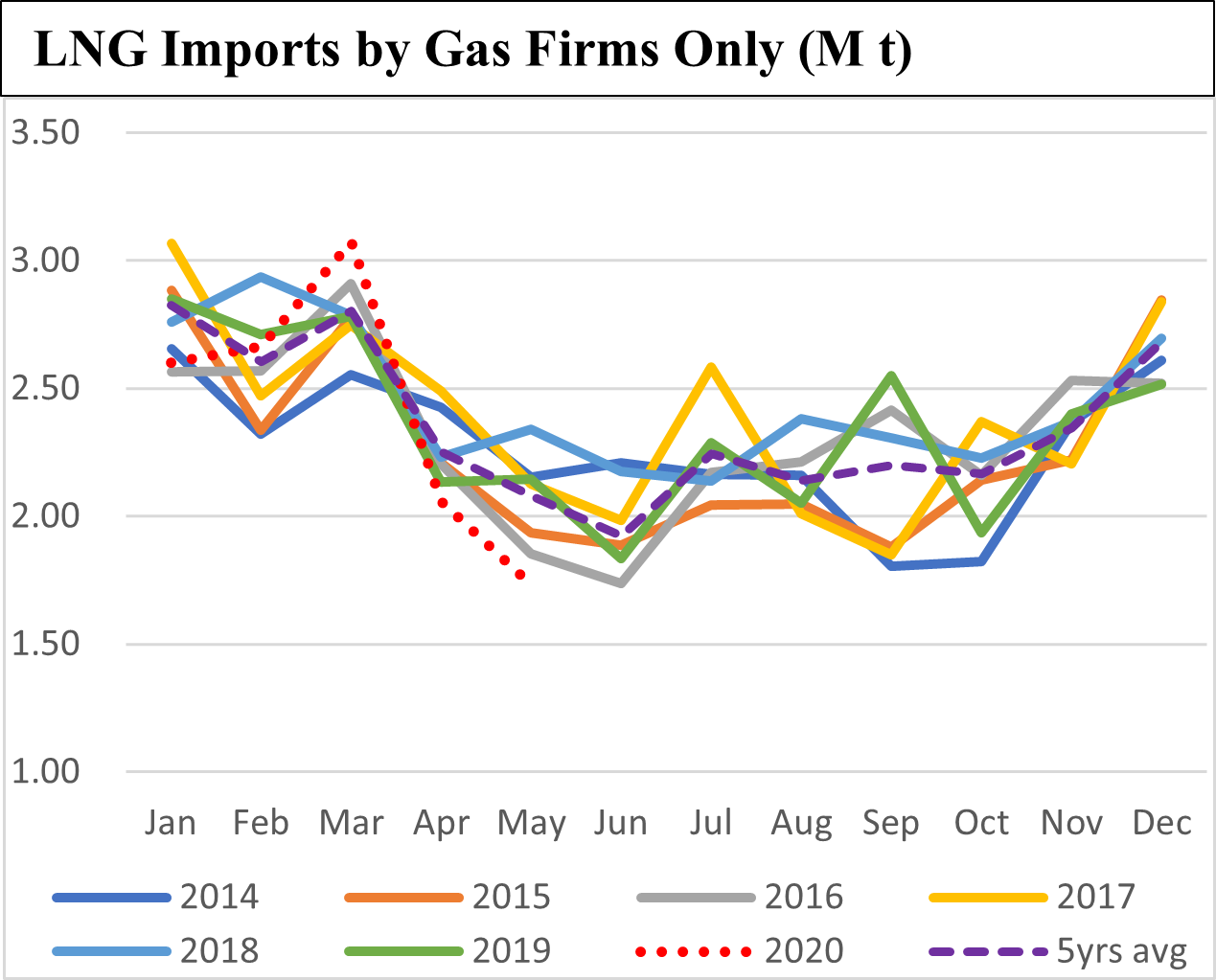
SOURCES: the Ministry of Economy, Trade, and Industry (METI), Ministry of Finance, and the Petroleum Association of Japan
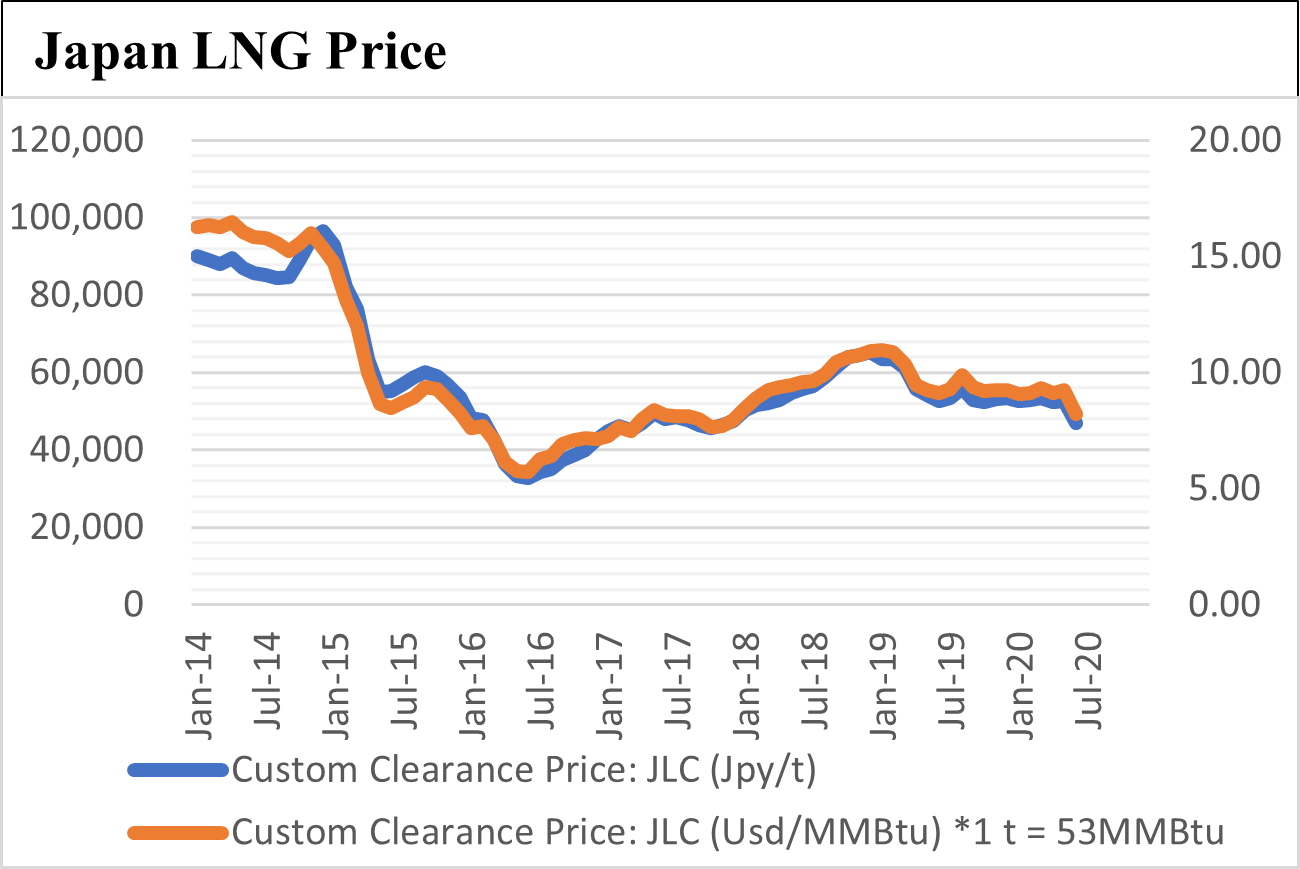
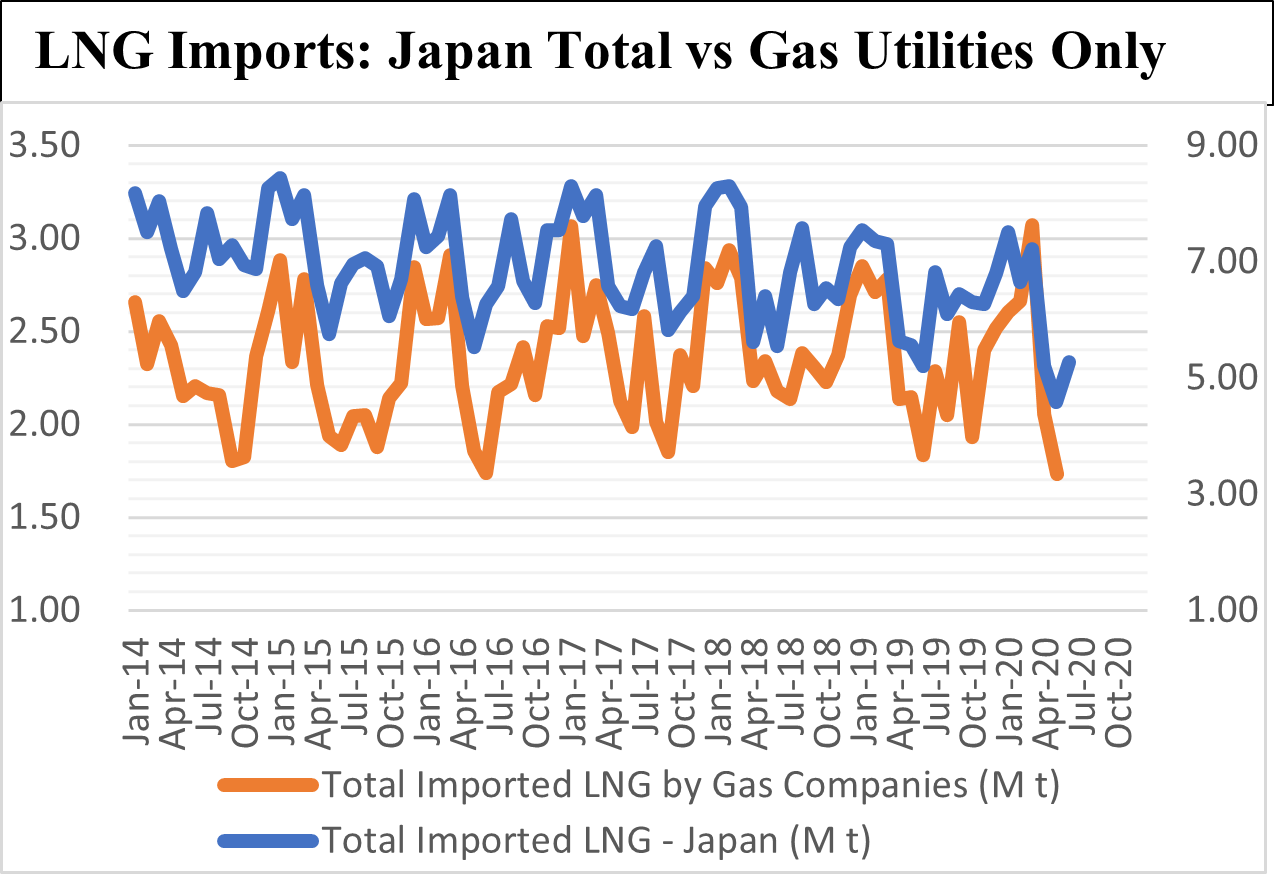
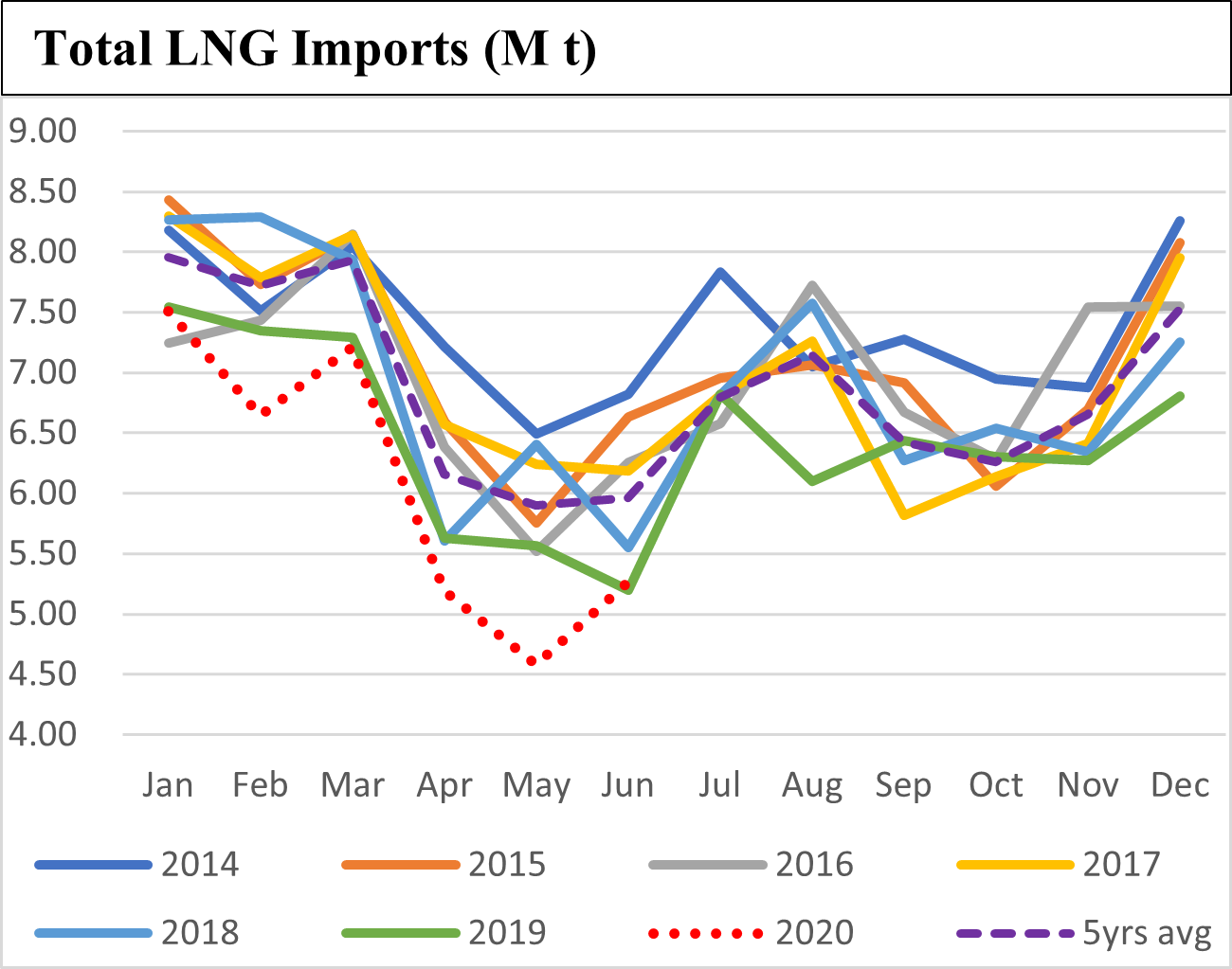
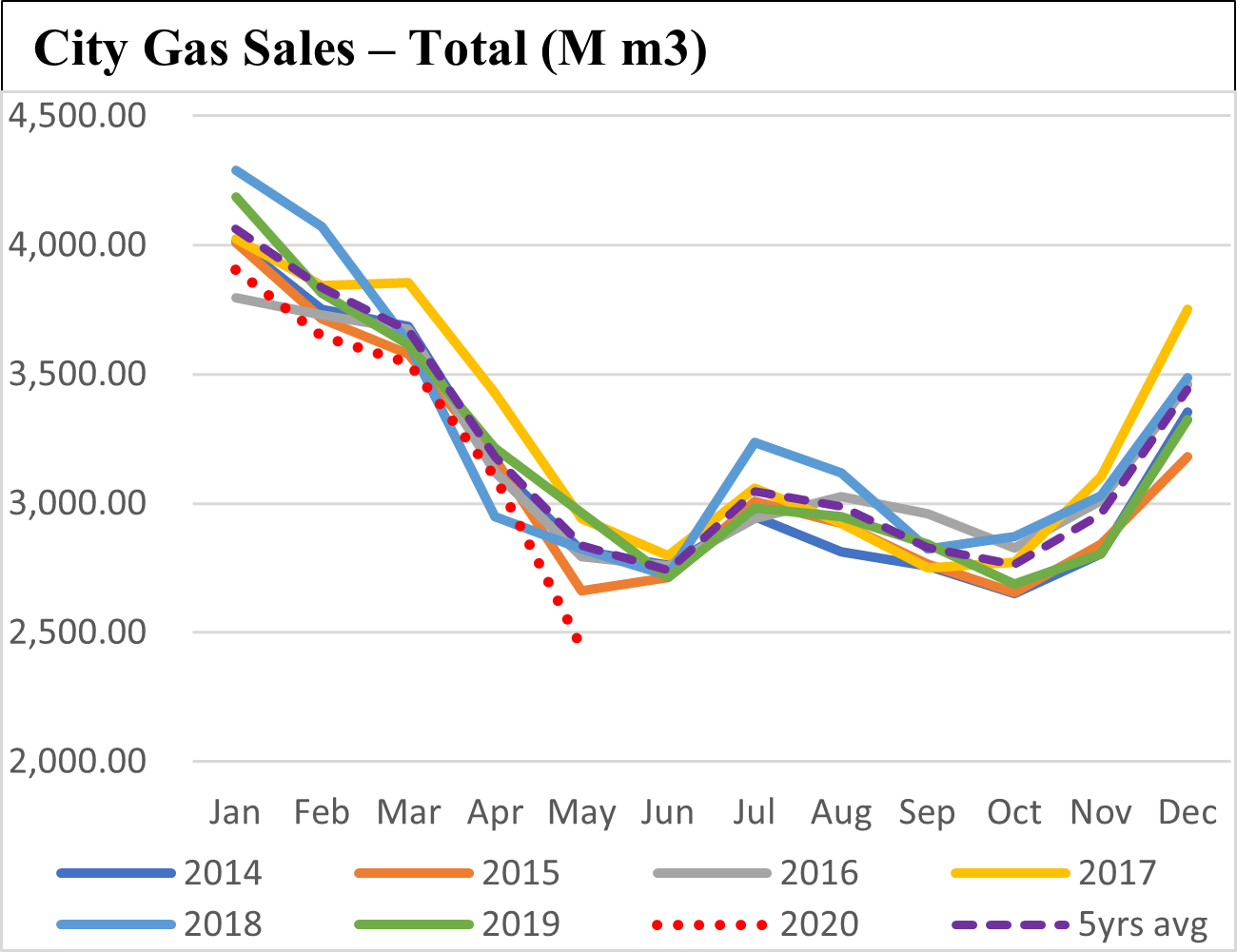
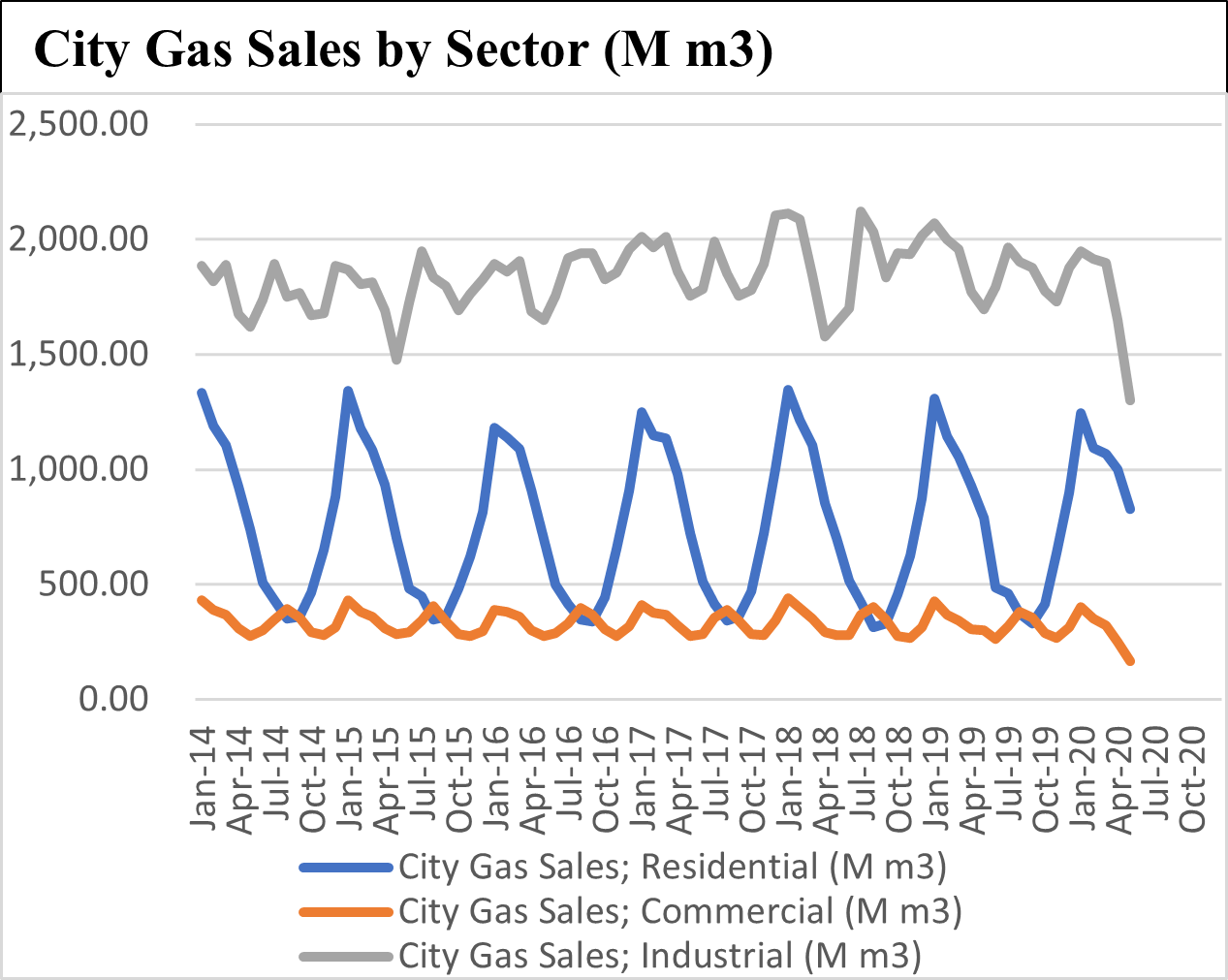
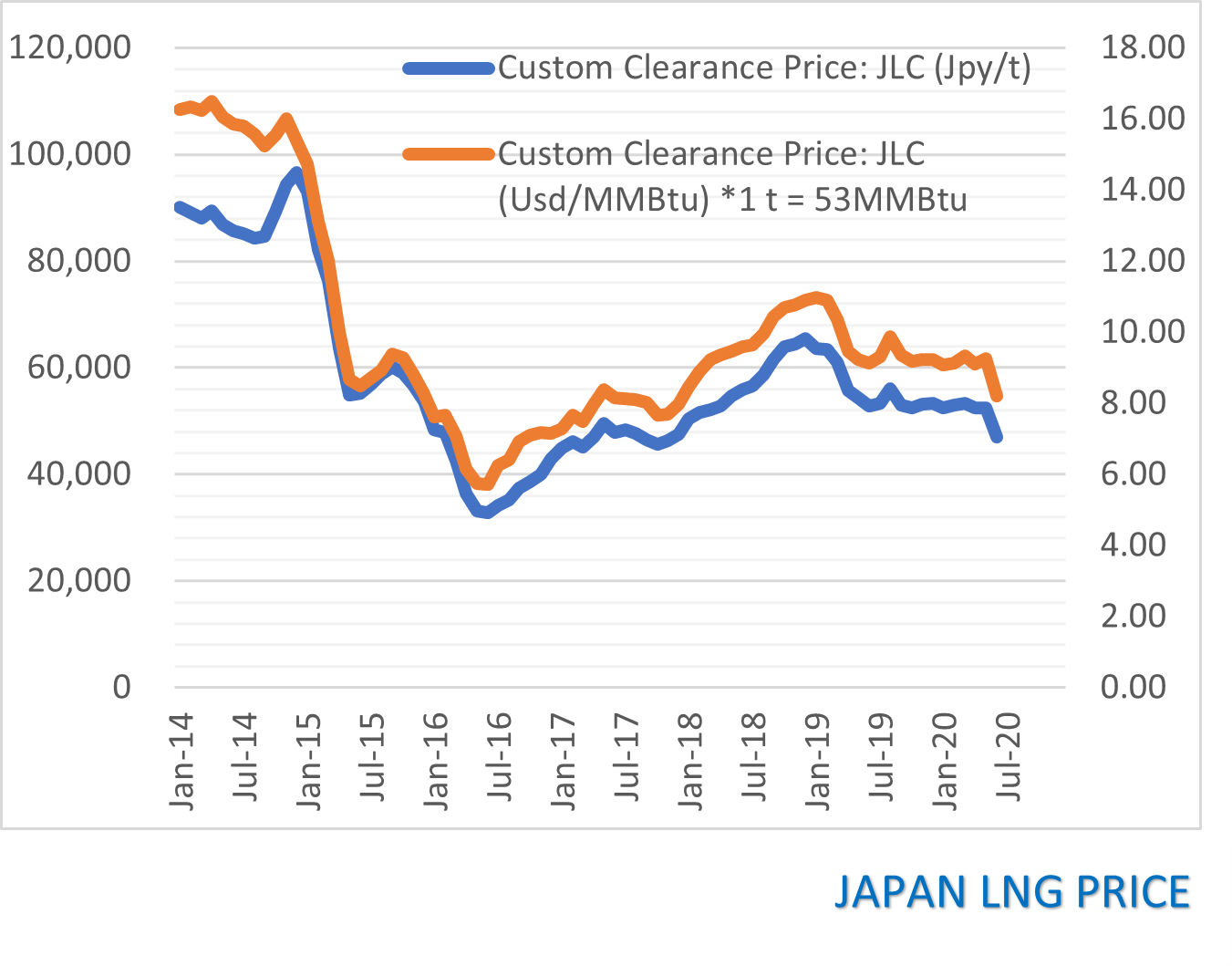
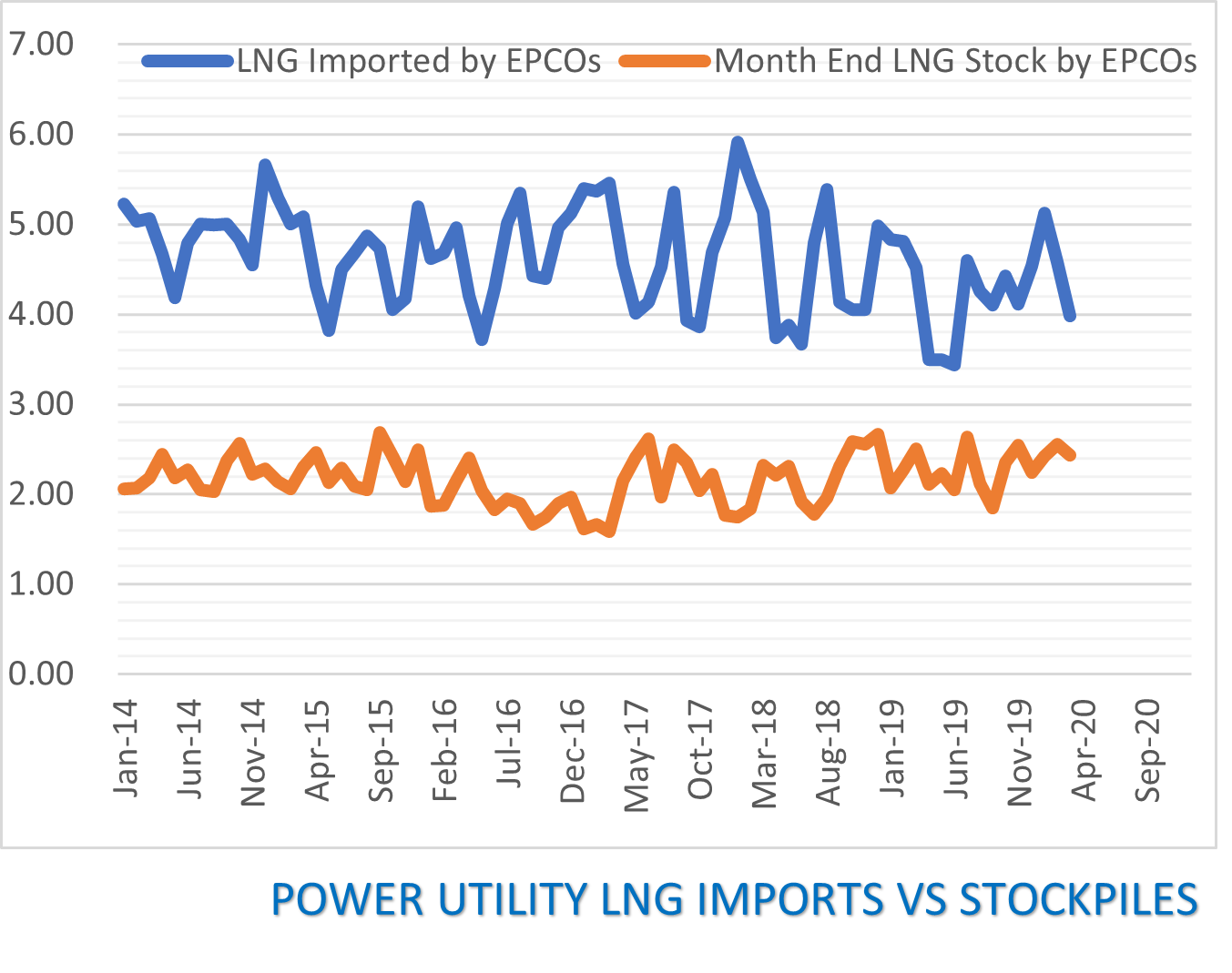
SOURCES: the Ministry of Economy, Trade, and Industry (METI), and the Ministry of Finance.
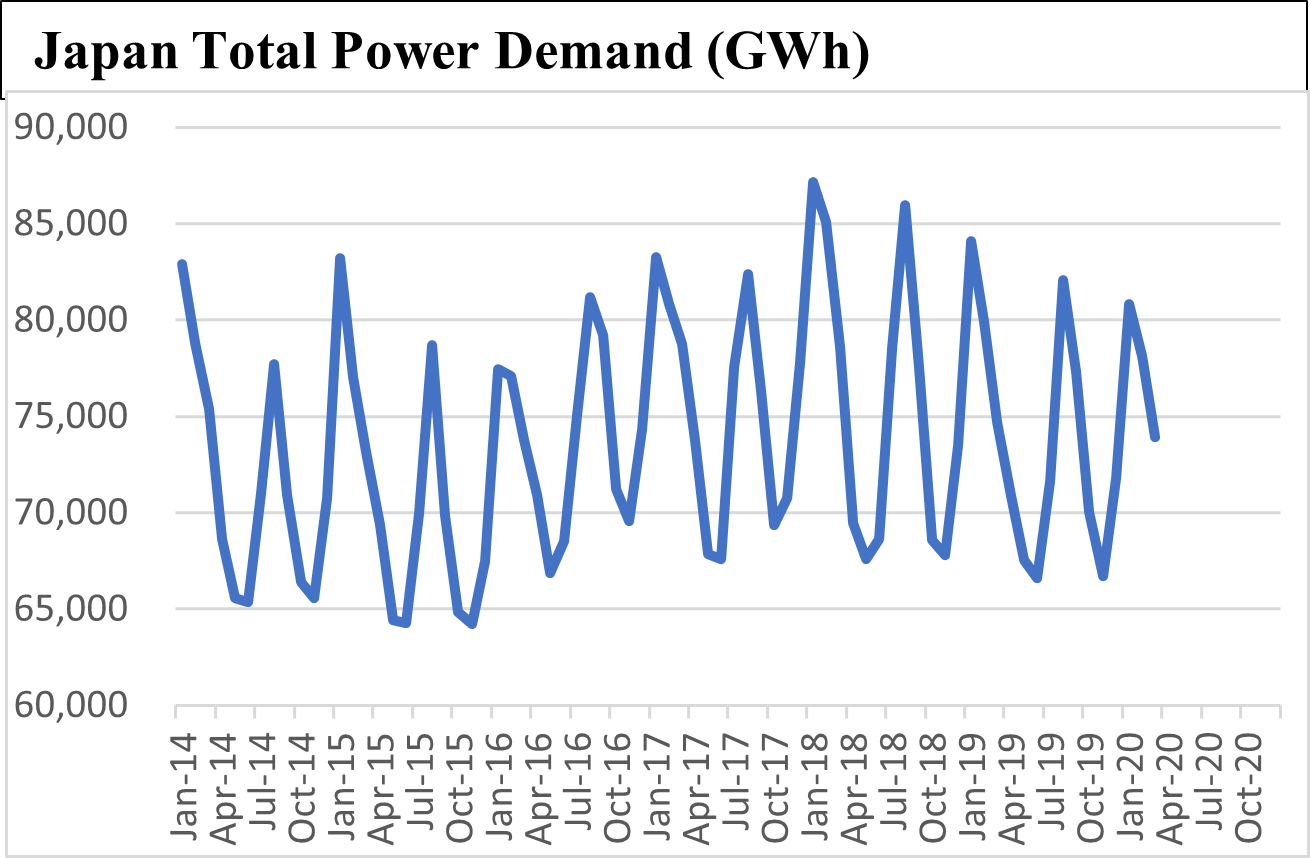
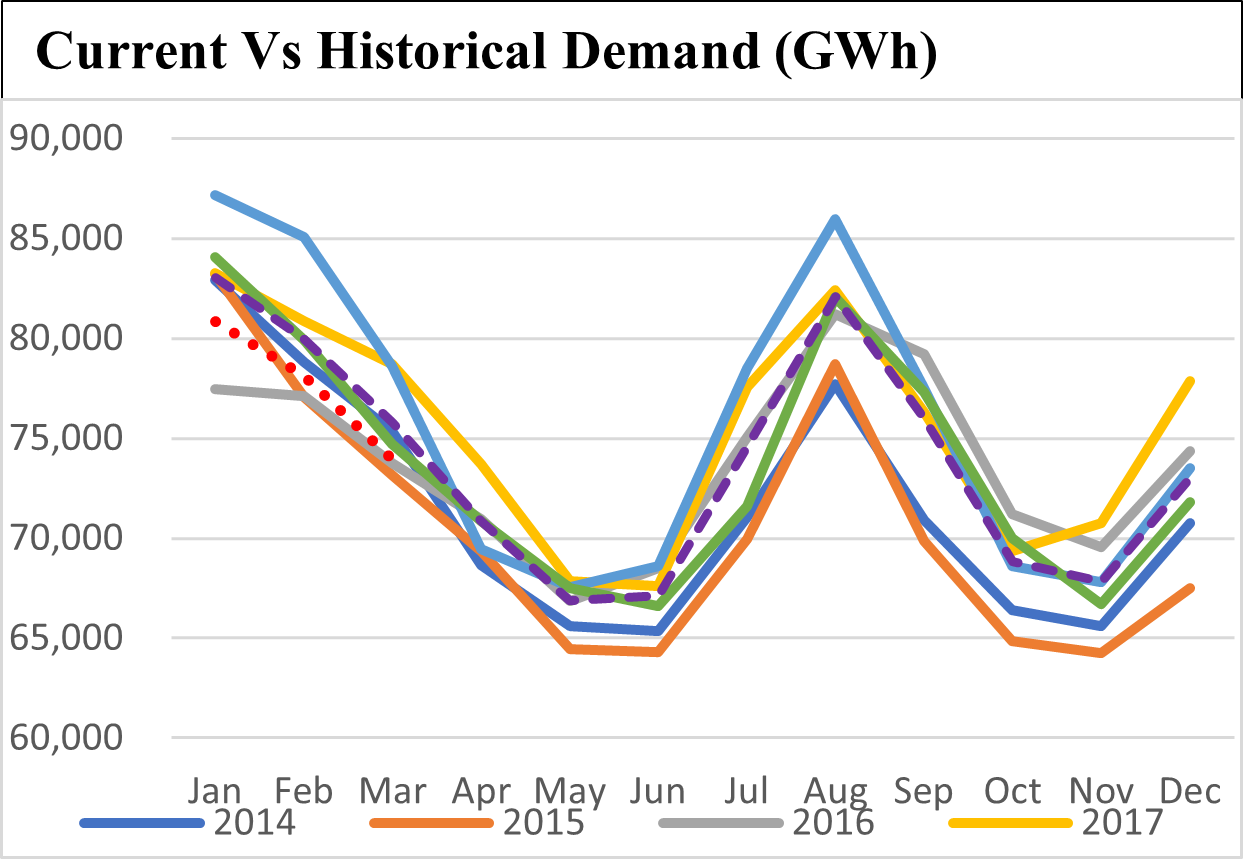
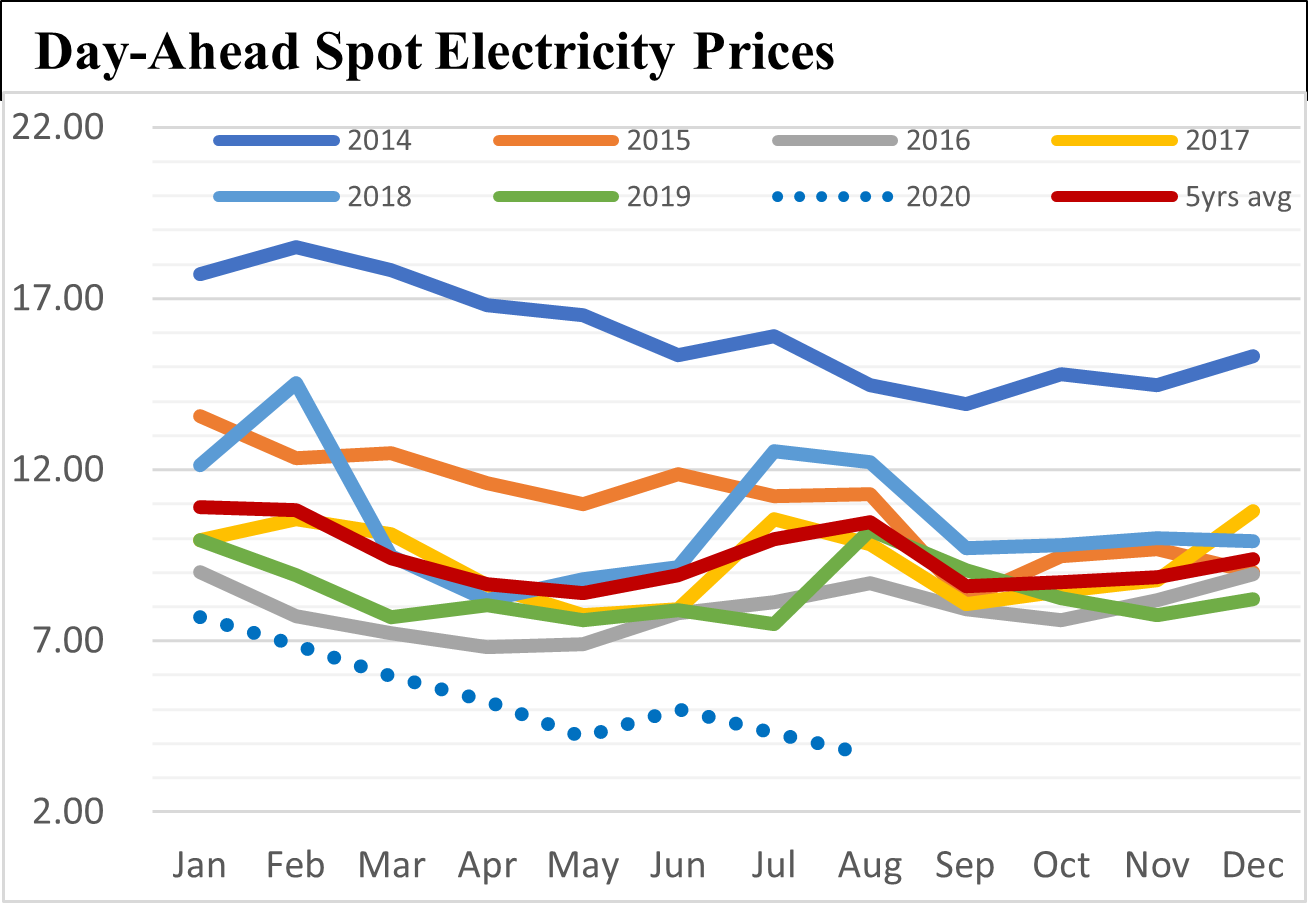
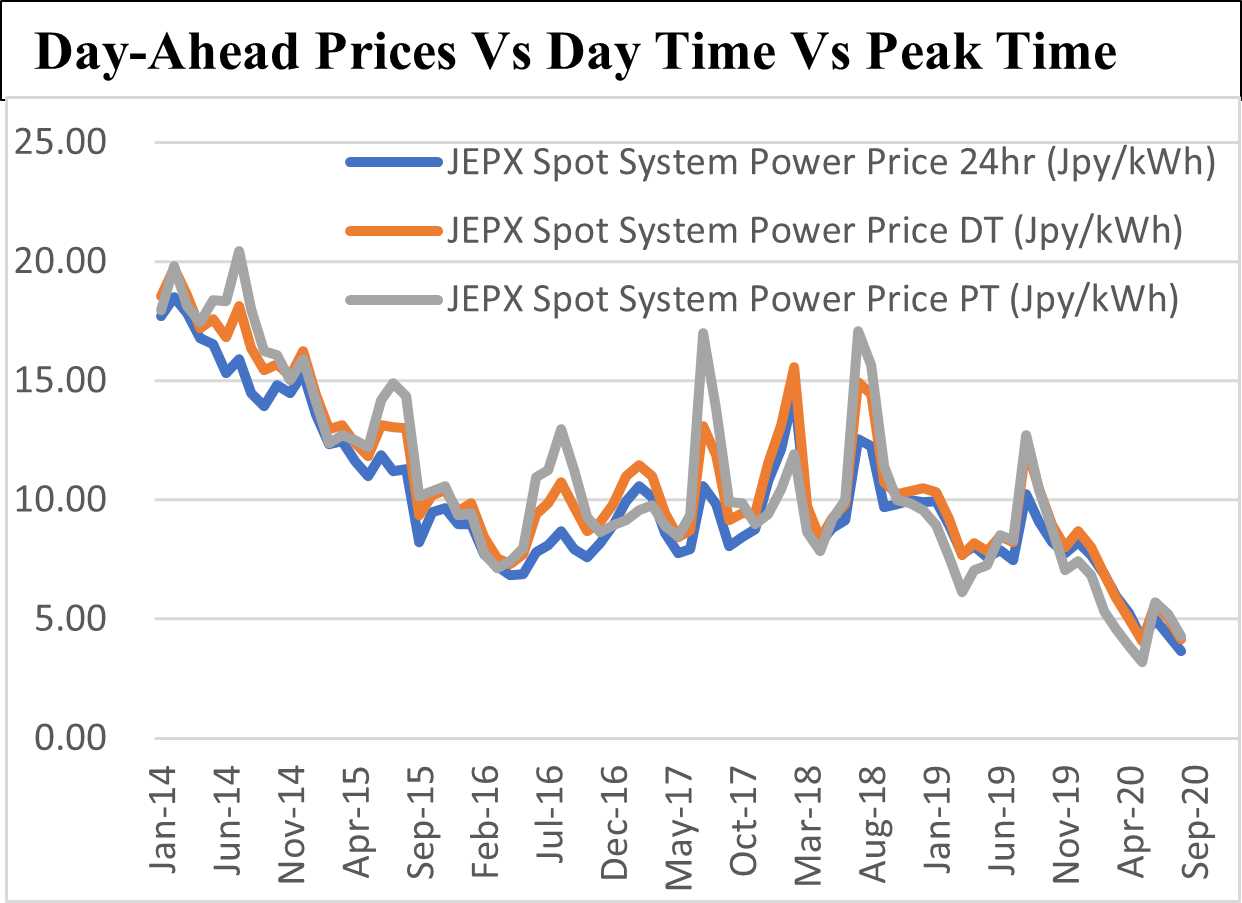
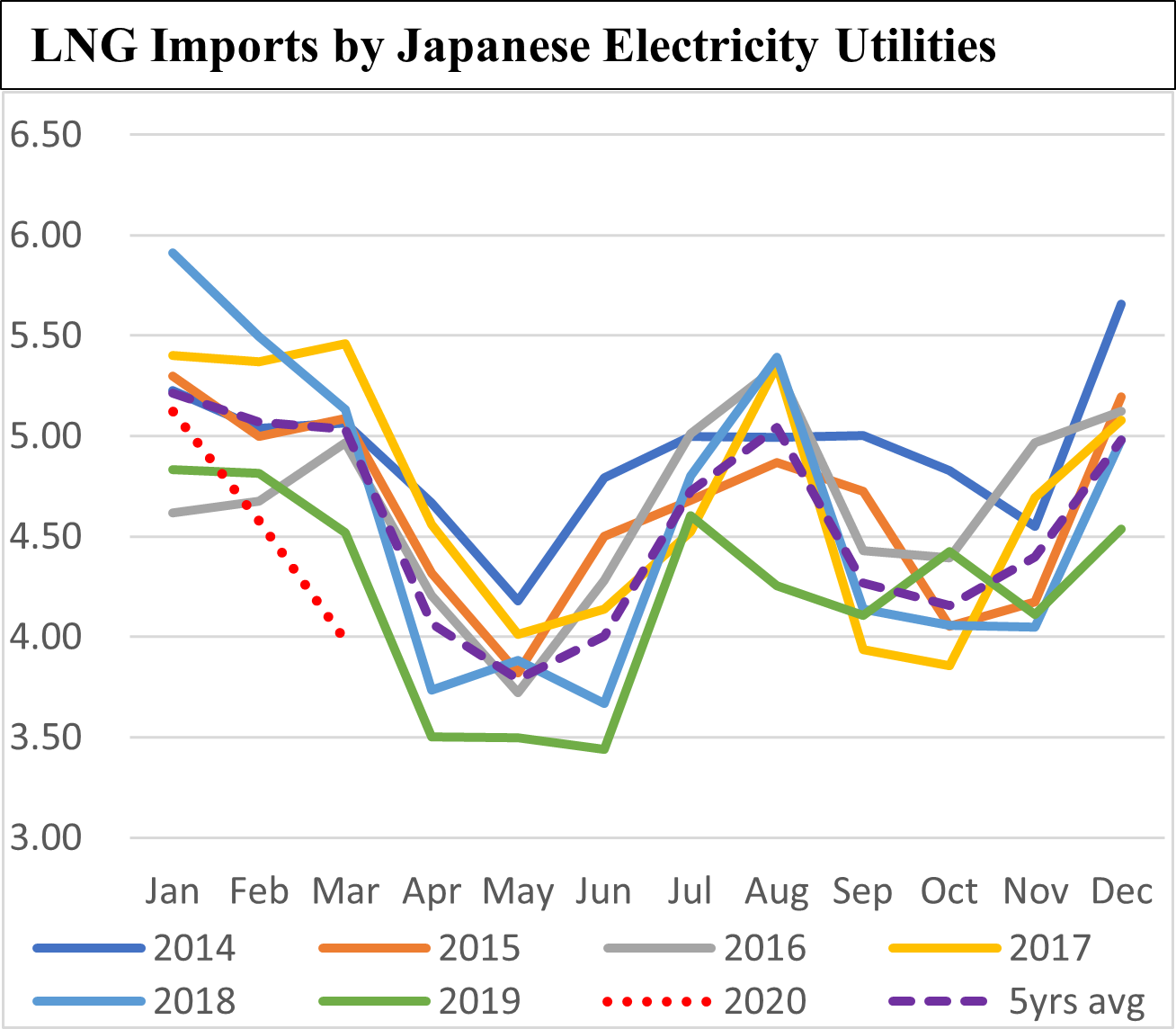
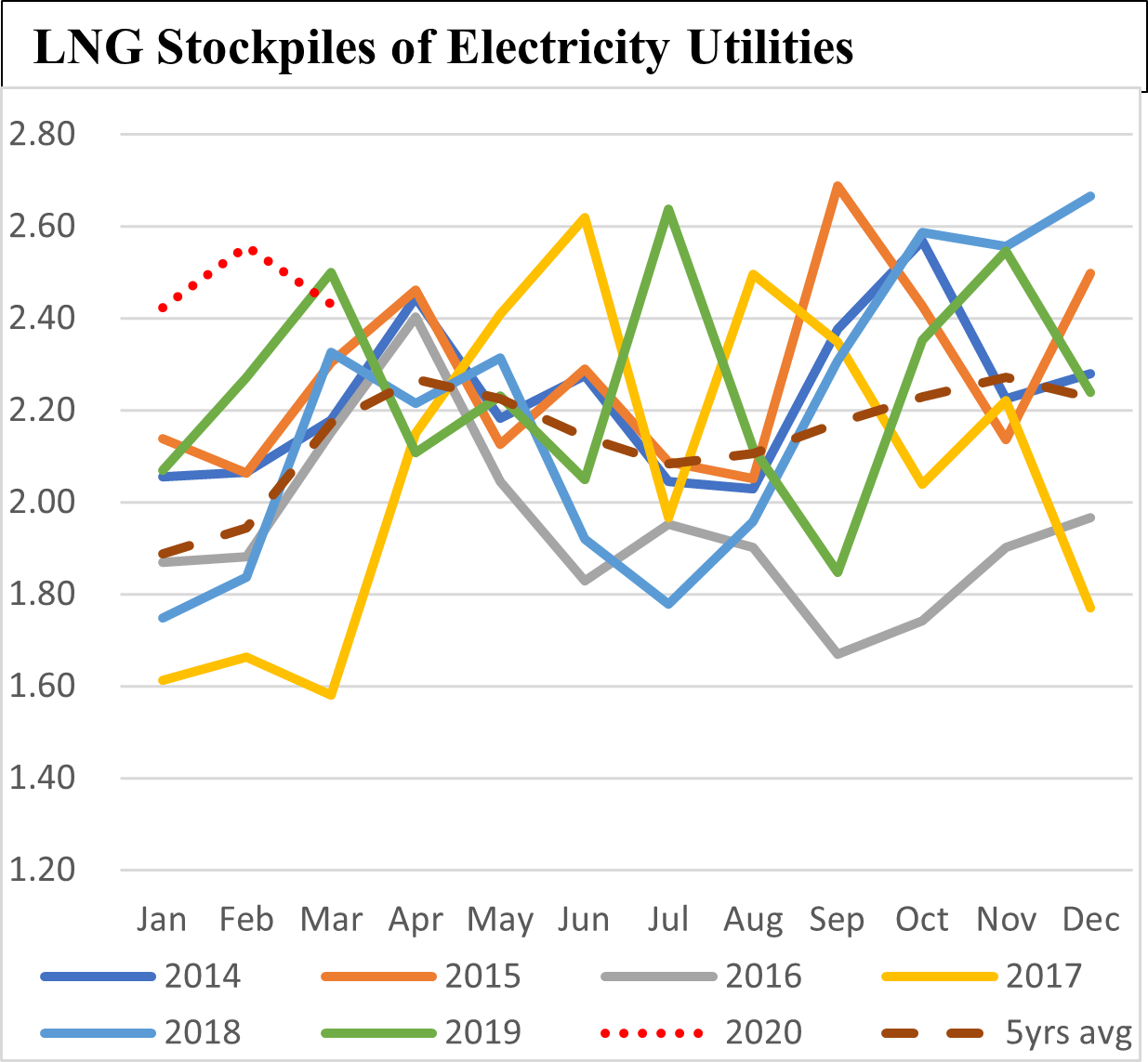
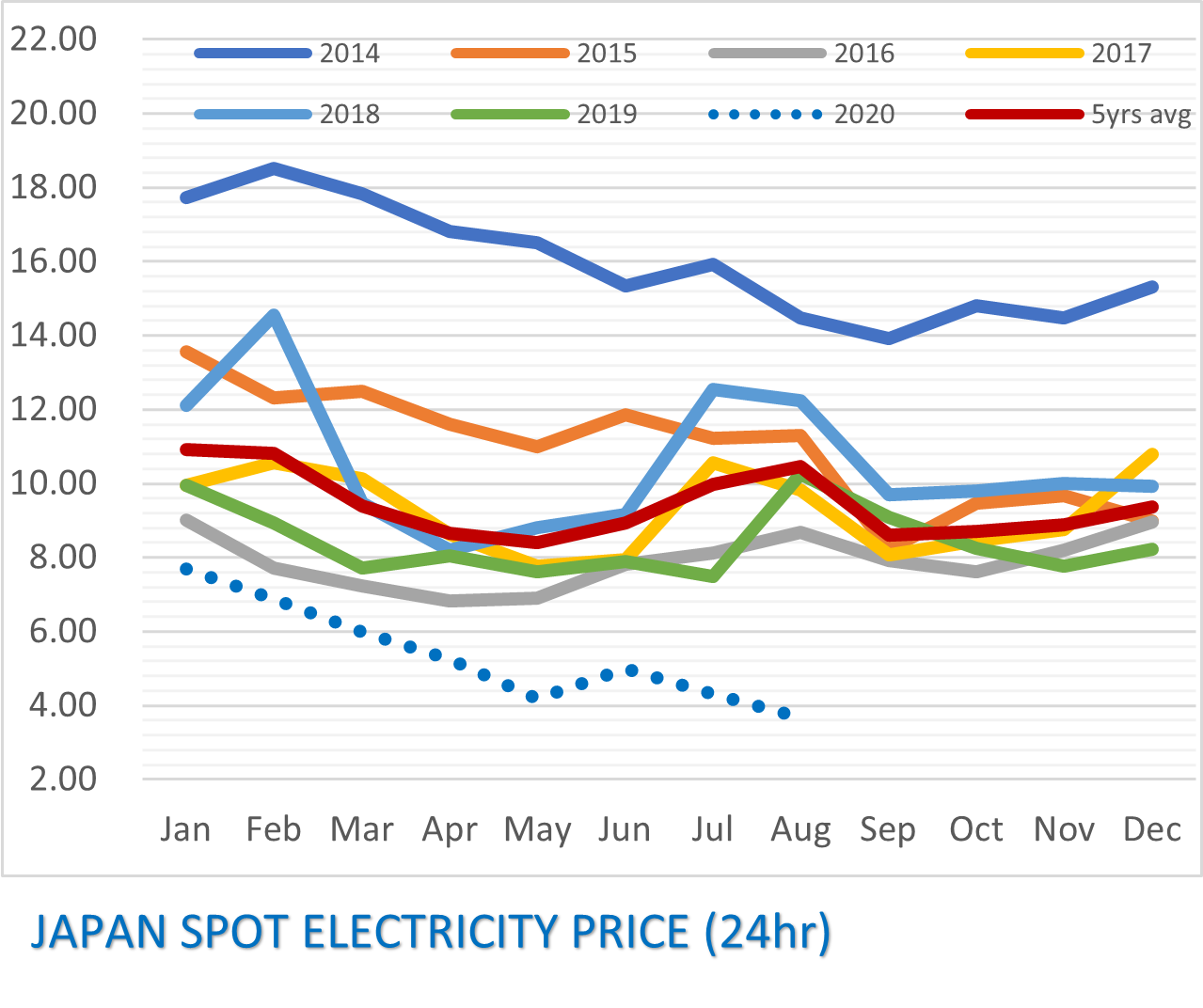
SOURCES: the Ministry of Economy, Trade, and Industry (METI), and the Japan Electric Power Exchange
DISCLAIMER
This communication has been prepared for information purposes only, is confidential and may be legally privileged.
This is a subscription-only service and is directed at those who have expressly asked Yuri Invest Research Ltd. or one of its representatives to be added to the mailing list. This document may not be onwardly circulated or reproduced without the prior written consent of Yuri Invest Research Ltd., which retains all copyright to the content of this report.
Yuri Invest Research Ltd. is not registered as an investment advisor in any jurisdiction. Our research and all the content of our reports express our opinions, which are generally based on available public information, field studies and own analysis. Content is limited to general comment upon general political, economic and market issues, asset classes and types of investments. The report and all of its content does not constitute a recommendation or solicitation to buy, sell, subscribe for or underwrite any product or physical commodity, or a financial instrument.
Recipients of this report should ensure that they fully understand the legal, tax and accounting implications before making an investment decision and independently determine that the transaction is appropriate based on their own objectives, experience and resources.
The information contained in this report is obtained from sources believed to be reliable and in good faith. No representation or warranty is made that it is accurate or complete. Opinions and views expressed are subject to change without notice, as are prices and availability, which are indicative only. There is no obligation to notify recipients of any changes to this data or to do so in the future. No responsibility is accepted for the use of or reliance on the information provided.
In no circumstances will Yuri Invest Research Ltd. or its partner K.K Yuri Group be liable for any indirect or direct loss, or consequential loss or damages including without limitation, loss of business or profits arising from the use of, any inability to use, or any inaccuracy in the information.
Yuri Invest Research Ltd.: Room 602, Wah Yuen Building, 149 Queen’s Road Central, Central, Hong Kong.
K.K. Yuri Group: Oonoya Building 8F, Yotsuya 1-18, Shinjuku-ku, Tokyo, Japan, 160-0004.