NUCLEAR PLANTS: RESTART OR NO RESTART, THAT IS THE QUESTION
Nuclear power is supposed to account for 20%-22% of Japan’s energy mix by 2030. This assumes Japan returns to a pre-Fukushima reliance on nuclear, minus the shuttering of older plants. The reality of the last decade suggests otherwise. We see its role in the energy mix revised to 15%-20% next year. In practice, nuclear might supply only about 10% of Japan’s power by 2030.
This is part one of two commentaries, in which we look at the bull and the bear case for nuclear generation in Japan. [CONTINUE TO STORY]
ELECTRICITY TRADING VOLUMES SURGE TO RECORD DESPITE PANDEMIC
Kilowatt-hours (kWh) traded on Japan’s Electric Power Exchange (JEPX) hit a daily turnover of one billion units in recent days, an all-time high, which is over 10 times the levels traded one decade ago before the Fukushima accident that significantly disrupted Japan’s heavily protected electricity industry. We see this offering good opportunities for investment.
A hurricane left about 100,000 residents in the New York area without power most of last week. As probes into who is at fault begin, Japanese utilities might say that their ability to provide stable power despite the many natural disasters that affect the country has been overlooked. Now as Japan looks to revise its energy mix, its utilities are concerned whether they can keep supply stable in the new environment.
Panama-flagged Wakashio bulk carrier is owned by Nagashiki Shipping and chartered by Mitsui OSK. It ran aground on a reef off Mauritious on July 25, but the leaks started in earnest only a week later. It was carrying about 3,800 tons of oil and 200 tons of diesel from China to Brazil.
Leaked oil has already spread as far as the coast. Only 50 tons have been recovered so far. The local environment faces heavy damage. Concern now over the rest of oil in ship leaking out.
Mauritius has declared a state of environmental emergency after efforts to pump fuel from the hold failed. It has appealed to France and the UN for help. Mitsui OSK and Nagashiki Shipping staff, as well as a team of Japanese disaster relief specialists were sent to the site.
Chemicals normally used to break up heavy oil could also hurt local reefs, Nagashiki Shipping executive told Nikkei.
CONTEXT: Russian-flagged tanker Nakhodka sank in the Sea of Japan in 1997 and spilled about 6,200 tons of oil. This led to damage payments of 26.1 billion yen.While the vessel owner would be responsible for the damages, their liability would be capped under 7 billion yen due to maritime claims rules, experts told Nikkei.
TAKEAWAY: Should all of the oil spill, around 4,000 tons would end up in the ocean. As terrible as that is, it barely makes the Top 100 confirmed oil spills. However, it would be the worst spill by a Japanese flag-carrier. We would expect the shipper and Mitsui to face fines and reparation payments. We don’t currently expect further impact on Japan or the firms involved.
Covid-19 causes significant downturn in demand for jet fuel (Sekiyu Shimbun, August 5)
The Covid-19 pandemic has had a significant impact on fuel prices in Japan.
Demand for jet fuel has been hit hardest, with 70% of domestic flights and 90% of international flights cancelled overnight in the wake of the pandemic.
While the government’s “Go To” campaign to encourage domestic tourism will boost local sales, air travel continues to be significantly influenced by the pandemic.
Jet fuel demand in 2020/21 is expected to be 53% down on last year at 2.4 billion litres.
This contrasts markedly with kerosene. While the overall trend to reduced kerosene use continues as consumers switch to electric heating, demand for kerosene jumped as the public was asked to stay home. Overall, demand for the year is expected to be 5% down on last year.
Demand for diesel is expected to be 7% down on last year. While increased online purchases due to coronavirus have boosted demand from delivery services, the overall slowdown in economic activity, as well as declining birth rates and an aging population, account for the decrease.
TAKEAWAY: As we explained in our July 20 edition, jet fuel demand translated into as much as 10% of Japan’s oil imports. Not only is this hurting import volumes, it is also putting refiners into a bind since gasoline demand is not down dramatically. Whether refineries increase throughput and risk further stockpiling of jet fuel or rely on more imports of fuel products, their profits will suffer.
Service station numbers drop below 30,000 for first time in half century (Sekiyu Tsushin, August 5)
As of April 2020, Japan officially has 29,637 service stations.
This is the lowest level since 1967 and reflects falling demand for gasoline.
While the decrease in the number of service stations has also meant an increase in average revenue for service stations in urban areas, those in rural areas are struggling amid shrinking populations.
The number of service stations peaked in 1994 at 60,421 as deregulation increased competition in the market.
SIDE DEVELOPMENT: Wholesale crude oil prices drop for first time in a month and a half, mirroring a softening of crude oil costs; the expectation is for further price declines in Japan (Sekiyu Tsushin, August 6)
SIDE DEVELOPMENT: Labour shortages accelerate shift to self-service pumps (Sekiyu Tsushin, August 7)
As of June 30, there were 8,300 self-service petrol browsers in Japan, an increase of 200 over the previous year.
Consumers concerned with performance are recommended by the magazine to buy Shell V-Power branded gasoline (from Idemitsu Showa Shell), the only variety not implicated in bartering allegations.
Many consumers have switched to Shell V-Power in the wake of the allegations.
Japan receives first shipment of Yamal LNG via the North Sea (Gas Energy Shimbun, July 30)
An icebreaking LNG tanker owned by Mitsui OSK Lines has completed the first voyage to Japan via an Arctic shipping route. The LNG cargo was delivered to Yokohama.
The gas came from Russia’s Yamal LNG project, which currently produces 17 million metric tons of LNG.
The use of an icebreaker enables LNG to be transported directly (Eastward) to Japan via the North Sea in the warmer months, a journey of just 15 days. The new route will make Yamal gas more competitive in Asian markets.
TAKEAWAY: Russia has tried to diversify its supplies to Japanese customers for decades; however, until last year Japan only sourced Russian LNG from Sakhalin projects, which first shipped product to Japan in 2009. As talk of a Russo-Japanese investment in a Vladivostok LNG project faded, Yamal remains the main asset for Russians to expand Japan sales. Yamal started sending cargo to Japan in the summer of 2019, but using the Northern Sea Route makes better economic and logistical sense for both parties.
Co. to enter city gas supply business for households after winning a permit to do so from the relevant state committee, said people familiar with the situation.
Co. considers sourcing the gas from Hokkaido Gas, the dominant local gas utility, as well as using supplies from LNG storage facilities.
TAKEAWAY: Japan liberalized its electricity market in 2016 and the gas market in 2017. Whether it was the one-year lag that afforded gas companies an extra cushion, or the problems electricity firms faced post Fukushima with nuclear generation, the fact is that since the gates were opened to invade each others’ space the gas utilities have been by far more active. Hokkaido Electric is finally joining TEPCO, Kansai Electric and other power firms in fighting for gas market share. We’re not convinced it will have sufficient firepower to make a dent in the new space.
Minister of Economym Trade and Industry’s announcement on shutting old coal plants has made the Federation of Electric Power Companies nervous. They know that their members, the 10 dominant powers utilities will now be pressured to reorganize their asset portfolios.
Clearly, Hokkaido and Okinawa Electric Power Companies (EPCOs) are the most reliant on coal, but they will likely both get a pass and rule exceptions as they are separated from the mainland and have few immediate alternatives.
This leaves Hokuriku and Chugoku as the most exposed. Without old coal plants, both EPCOs lose about 20% of their thermal generation capacity. Hokuriku had already embarked on refurbishment of its older plants before the announcement, which leaves it facing financial difficulties if the assets must close.
It’s possible that by 2030 Hokuriku will merge with Chubu EPCO and Chugoku will be swallowed by Kansai EPCO, according to an executive in the power industry.
J-Power holds the most coal-fired capacity, but it also earns more than half of its profit from overseas assets. Closures would shave off at most 15% of its income even if lost 30% of Japanese power assets.
The greater concern for J-Power is the fate of Oma nuclear power station. It was in construction, but work stopped due to the 2011 Fukushima disaster. By taking away the coal assets, the government may also need to take on the reorganization of the nuclear power industry.
It’s likely a new organization will be set up to finish building Oma and the other mid-construction nuclear plant, the Higashidori station. The latter is currently owned by TEPCO. A new entity would run these nuclear plants.
Japan is currently revising its future energy mix. Without coal, continuing to use nuclear is inevitable if the nation is to meet its emission reduction targets. Even so, nuclear’s ratio may drop to 15%. That would still require 20 nuclear reactors to be operating. Completion of Oma and Higashidori is seen as the key to achieving that goal, as well as the construction of a 4th reactor at the Mihama station and a 3rd at Tsuruga.
What complicates the issue further is that at the COP26 meeting [in November 2021] it will be a new Japanese prime minister speaking.
We cannot review a policy on coal-fired stations without rethinking our energy policy as a whole. As well as lagging the rest of the world in energy self-sufficiency, Japan also has some of the world’s highest electricity prices.
If Japan’s nuclear plants remain dormant, the only way for Japan to fulfil its pledge to reduce CO2 emissions by 26% against 2013 levels is to reduce reliance on coal and increase renewable energy.
It is still relatively expensive to build renewable energy infrastructure in Japan. Until prices come down Japan is better off utilizing its dormant nuclear power plants than rushing to implement renewable solutions.
However, there is still significant public mistrust in nuclear energy. Safety issues must be overcome before nuclear can again be part of Japan’s energy strategy.
JERA said it agreed with lenders led by the Japan Bank for International Cooperation (JBIC) to provide USD 642 million (about 67 billion yen) in financing for a gas-fired power generation project in Bangladesh.
The 745.5MW plant, in which JERA has a 49% stake, is due to start commercial operations in October 2022. India’s largest private power generation firm, Reliance Power, has the rest of the shares.
The two partners will build, own and run the combined cycle station, which is located approximately 40 kilometers southeast of the capital Dhaka.
TAKEAWAY: This is the latest LNG-to-power Asian project pursued by Japanese firms. Marubeni, Sumitomo Corp., Tokyo Gas, Mitsui & Co. are just a few of compatriot firms in this space. With an eye on the shrinking domestic market, Japanese companies are building up their overseas LNG portfolios. Meanwhile, funding from JBIC and coverage from state-owned Nippon Export and Investment Insurance protects them from most of the downside.
J-Power executive Sugano Hitoshi says eight of its coal-fired power plants, with a total capacity of 3.5 GW, are classified as inefficient under the government’s new rules.
Sugano says while it is only natural that older plants will be replaced, he believes the phasing out of plants should be tailored to the conditions in the region in question.
Inefficient coal-fired plants could be converted to burn syngas (gas synthesized from coal), he said.
SIDE DEVELOPMENT: Chair of Federation of Electric Power Companies says exceptions need to be made to coal ban (Nikkei Sangyo Shimbun, August 7)
The Chair of Japan’s Federation of Electric Power Companies, Ikebe Kazuhiro, said exceptions need to be made to the government’s plans to phase out inefficient coal-fired power plants.
Ikebe said the phase-out needed to be applied flexibly, with consideration for regional characteristics. He said small-scale operators such as the Okinawa Electric Power Company would be unable to comply with the new rules while still turning a profit.
Ikebe said it was possible to achieve reductions in CO2 emissions at coal-fired power stations by blending biomass with the coal.
Ikebe was also critical of new laws that give generators of renewable energy access to the grid, saying failure by generators to control their output could cause imbalances in the energy transmission network.
SIDE DEVELOPMENT: Hokuriku Electric Power sees profits jump 180% but faces coal headache (Nikkei Sangyo Shimbun, August 6)
Three of Hokuriku Electric Power Company’s six thermal power plants, representing about a quarter of the utility’s generation capacity, are classified as inefficient under the new rules.
TAKEAWAY: For the rest of the year, we expect many of the CEOs that own coal-fired capacity to lobby for leeway in Japan’s plans to shutter old coal capacity. J-Power seems to be the first to float the idea of using syngas. The power utilities lobby is asking for a blend of biomass and coal. Expect more creative solutions from the industry to appear in the media until the government publishes concrete plans to retire old coal capacity.
TEPCO, Kansai and Chubu Electric the worst hit power utilities in 1Q (Nikkan Kogyo, Aug 3)
All but one of Japan’s dominant electricity utilities posted a drop in revenue in 1Q due to impact of the coronavirus pandemic. However, half of the 10 utilities also made higher operating profit and only one company fell into the red.
Kyushu Electric was the only to post rising sales as it claimed more customers outside of its original home territory. Kansai Electric saw the biggest sales drop.
Details of revenue cap to be finalized by June (Gas Energy Shimbun, August 3)
The Electricity and Gas Market Surveillance Commission has begun discussing details of the “revenue cap” that will be imposed on charges for power transmission starting April 2023, with the aim of establishing renewable energy as a major electricity source.
CONTEXT: The revenue cap represents a major overhaul of the current system which has been in place since before World War II.
In the scheme, a cap is set on revenue that may be earned by a given transmission operator over a given period. Caps are likely to be subject to review every five years.
There is significant debate on how the new scheme should provide for cases in which demand falls far short of forecast, resulting in revenue far lower than the maximum allowable.
Construction is well underway on the 570 MW Joetsu LNG-fired power station.
The gas turbine combined cycle plant will use state-of-the-art turbines jointly developed with Mitsubishi Hitachi Power Systems, and aims to achieve 63% efficiency.
The plant is scheduled to go online in 2022.
RENEWABLES & OTHER
Idemitsu to develop lightweight solar panel (Denki Shimbun, August 6)
Idemitsu said has been commissioned by the New Energy and Industrial Technology Development Organization (NEDO) to develop lighter solar panels.
Idemitsu aims to achieve a two-thirds weight reduction by 2024/25.
Lightweight panels have a range of applications including vehicles and walls of buildings.
SIDE DEVELOPMENT: Idemitsu in solar panel recycling trial (Denki Shimbun, August 6)
Idemitsu said it has been commissioned by the New Energy and Industrial Technology Development Organization (NEDO) to develop new methods of recycling solar panels.
Idemitsu will construct an experimental plant with an annual capacity of 600 metric tons (50 MW) to evaluate recycling and materials recovery technologies.
Some 30,000 metric tons of solar panels are currently disposed of in Japan every year. NEDO estimates this figure could be as high as 280,000 tons by the late 2030s.
TAKEAWAY: Japanese solar panel makers were once the world leaders. Sharp had the top market share until the mid 2000s. By 2017, the combined global share of Japanese manufacturers fell to under 1%. Chinese firms now dominate, accounting for 7 of the top 10 sellers. For a while, domestic producers such as Sharp, Kyocera, Panasonic and Mitsubishi Electric still held sway in the Japanese market, but in recent years imports from China, South Korea and even Canada have taken over. Once again, Japanese firms have gone to the high-end niche markets to regain competitive advantage knowing that in terms of cost they cannot match imports. Whether Idemitsu will become the new leader among solar developers in Japan remains to be seen, but its target areas for the new lightweight panels do not immediately inspire confidence for major revenue streams.
The Ministry of Economy, Trade and Industry has begun work on amending legislation to enable better grid access for renewably-generated electricity, a response to international criticism of Japan’s high CO2 emissions.
Under the current rules, coal-fired and other legacy power stations receive preferential access to the grid.
The new rules, which will take effect in 2021, will allow new electricity sources to feed the grid at off-peak times, as well as ensuring that renewable providers are not disadvantaged when output exceeds grid capacity.
SoftBank’s subsidiary SB Power announced on August 6 that it will supply renewable energy to the SoftBank mobile phone base stations starting in September.
SoftBank has 230,000 base stations in Japan. SB’s energy unit aims to have renewable energy meet 30% of the electricity needs of its mobile base units this year, and raise that to over 70% by 2022.
TAKEAWAY: SoftBank founder, Son Masayoshi, invested heavily in solar and wind soon after the 2011 Fukushima nuclear disaster. This positioned SoftBank as one of the biggest players in renewables in Japan, yet many saw the move as another example of Son throwing large sums at an issue that in reality needs time to germinate. While the jury on the overall investment is still out, today Son’s move looks prescient. NTT, the telco group that owns SoftBank rival NTT Docomo, recently unveiled a $9B investment plan for renewables. Major corporates outside telco, such as Nisshin, are also investing in green power. This in turn is starting to persuade the big electricity utilities that unless they bring online more renewable capacity, their clients will bypass them and do it themselves.
TAKEAWAY: It seems that the investment from the Japanese side is just AUD25 million (US$18m) – a low-cost entry into several renewable projects in a major power market. Provided Genex secures infrastructure financing, J-Power will immediately double its overseas renewable portfolio (not including hydro) at a snip. For a company so heavily reliant on coal generation, this is more than CSR work.
Energy companies are looking to wind farms and hydrogen as they move away from fossil fuels.
In December, TOA Oil took delivery of a shipment of metal cyclohexane that had been synthesized using hydrogen extracted from natural gas (produced in Brunei). TOA’s refinery then separated the metal cyclohexane into hydrogen and toluene. The hydrogen was used to power fuel cells in the refinery, while the toluene was shipped back to Brunei.
Unlike liquid hydrogen, metal cyclohexane does not have to be transported in a super cold state, making it easy to handle.
Toride (Ibaraki) has become the first municipality in Japan to declare a climate emergency.
The move comes after the region was battered by a slew of extreme weather events, including major typhoons and torrential rain.
TAKEAWAY: This could be a small local event. That said, even a local government edict holds more legal status than national government white papers. Expect opponents of fossil fuels to borrow this to build a larger civil case against future introductions of new coal or other fossil fuel burning generation.
Hitachi Power Solutions, Hioki Energy, and Kyocera have executed a joint-research contract for microgrid energy management in Hioki City, Kagoshima Prefecture (south-west Japan).
The project aims to decarbonize the region through local production and consumption of renewable energy, expand the regional circular economy, and provide power during disasters.
ANALYSIS & COMMENTARY
COMMENTARY
Nuclear: Restart or No Restart,
That is the Question
YURIY HUMBER, DIRECTOR, YURI INVEST RESEARCH
Nuclear power is supposed to account for 20-22% of Japan’s energy mix by 2030. This assumes Japan returns to a pre-Fukushima reliance on nuclear, minus the shuttering of older stations. The reality of the last decade suggests otherwise. We see its role in the energy mix being revised down to 15%-20% next year. In practice, nuclear might supply only around 10% of Japan’s power by 2030.
We present a two-part series looking at both the bull and the bear case for the restart of nuclear generation in Japan.
THE BACK STORY AND CURRENT STATUS The country has 33 operable commercial reactors, according to the Japan Atomic Industrial Forum Inc. That’s down from 54 in 2011, when they collectively provided some 30% of Japan’s electricity. In March 2011, a record tsunami and earthquake in northern Japan debilitated the Fukushima Dai-Ichi nuclear station, causing the worst disaster for the industry in a quarter of a century. All of Japan’s reactors were promptly idled.
While the public promptly turned anti-nuclear, PM Abe’s government and the 10 Japanese power utilities with nuclear assets never gave up hope of a return to the pre-Fukushima normal. Japan’s big business lobby, Keidanren, has not wavered in its backing.
As such, Japan’s energy mix for 2030 sees nuclear delivering as much as 22% of Japan’s power. Backers of nuclear power maintain that it is the cheapest available energy source (as per 2014 METI calculations), does not emit CO2, and holds the key to greater energy independence. For a country that went to war in 1941 to secure its energy supplies, that’s no small thing.
And yet, since 2011, only 9 reactors have been restarted and that number whittled down to 5 by May 2020 due to maintenance works. No nuclear capacity has restarted in eastern or northern Japan at all. Nuclear now accounts for about 3% of Japan’s electricity.
OPERATING NOW Shikoku EPCO – Ikata 3 (890MW) Kyushu EPCO – Genkai 3 (1,180MW) and Genkai 4 (1,180MW) Kansai EPCO – Ohi 3 (1,180MW) and Ohi 4 (1,180MW)
THE DEBATE WITHIN
As the energy expert panel met for the first time in more than 10 months in July, it was ostensibly due to discuss revisions to Japan’s energy mix. Yet a large portion of the 31st meeting of the Advisory Committee for Natural Resources and Energy, which helps energy officials plot future strategy, was spent advocating the need for Japan to restart more nuclear stations.
Committee members and presiding government energy officials agreed that nuclear power was vital if Japan is to have a chance of meeting international pledges on emissions cuts. All agreed that shutting coal plants will make it key for nuclear to plug (at least part of) the gap.
The discussion was going smoothly until, towards the end of the meeting, one committee member finally pointed to the elephant in the room.
“There’s been a lot of talk about nuclear, but … I believe [for that] we need to recover public trust, and obtain public approval,” Ms. Chisato Murakami said, noting that opinion polls remain largely anti-nuclear. “I wonder what my esteemed colleagues think about this.”
The esteemed colleague saw “a thorough discussion” as the key to breaking the deadlock. If only there was more time….
As the meeting edged to a close, one more factor was raised as potentially having a positive impact on regaining public trust: the imminent start of operations at Rokkasho.
THE BULL CASE
On July 29, the Nuclear Regulation Authority approved new safety measures at the Rokkasho facility in northern Japan. In effect, this paves the way for the start of a spent fuel processing plant at the complex, which is seen as the heart of Japan’s nuclear fuel cycle. Rokkasho, which also hosts nuclear waste, is designated as the national hub for fabricating next-gen MOX fuel, and even as a uranium enrichment center.
Rokkasho, which waited more than 6 years to get this latest set of approvals, still needs to get a green light for its design and work plans. And yet, most people in the industry see the NRA’s recent decision as effectively putting the long-suffering project onto the home straight.
In theory, Rokkasho’s reprocessing plant is one domino that could help topple other barriers to the mass restart of nuclear generation in Japan.
Why?
Even before the Fukushima accident in 2011, the country had a problem with what to do with spent nuclear fuel rods. The two main storage spaces, cooling pools inside nuclear stations and Rokkasho, were close to full. As of today, Japan is estimated to have 18,000 metric tons of spent fuel and there is little space to house more. The start of Rokkasho’s facility will process 800 tons of spent fuel a year and thus free space for rods that will be coming from the restarted reactors.
A working Rokkasho plant will be a major psychological win for the domestic nuclear industry, seeking to draw a line under decades of massive cost overruns and failures.
Rokkasho’s reprocessing plant started construction in 1993. It is already 22 years beyond the project completion date and has cost about ¥14 trillion (USD 130 billion) to date.
It would seek to show that Japan’s ambition to construct a full nuclear fuel cycle is intact. The ambition is to master the intricate art of re-using uranium so that the volume of nuclear waste is shrunk and the reliance on foreign suppliers of energy raw materials is lessened. So, this is about energy security.
It would send a ray of hope to domestic companies and nuclear engineers that the sector is still worth fighting for, avoiding a brain drain.
This would be a minor PR coup for the industry, which has had little to smile about since the Fukushima disaster.
TAKEAWAY: The nuclear industry has government support and with the shutdown of coal plants feels it has a stronger case for pushing through with restarts.
ANALYSIS
Electricity Trading in Japan Hits Records
Despite the Pandemic
TOM O’SULLIVAN, DIRECTOR, K.K. MATHYOS
Power trading in Japan hit record highs in recent weeks as power generators ramped up generation and retail demand remained resilient despite the economic downturn.
Kilowatt-hours (kWh) traded on Japan’s Electric Power Exchange (JEPX) hit a daily turnover of one billion units in recent days, an all-time high, which is over 10 times the levels traded one decade ago before the Fukushima accident that significantly disrupted Japan’s heavily protected electricity industry.
The daily value of electricity traded on JEPX averaged $100m in July using a kWh rate of Y10/kWh. While this turnover may be small relative to the daily turnover of US$24 billion on the Japan Stock Exchange for equities or daily JPY/US$ foreign exchange turnover of US$900 billion, we believe this increased turnover may represent a transformational liquidity breakthrough for the JEPX platform.
Japan’s total electricity market is estimated to be worth almost $140 billion, with the JEPX wholesale market recently swelling to an estimated annualized $30 billion turnover based on July volumes and prices. Peak electricity demand was 156 GW in fiscal 2017, the latest figure published by JEPIC.
JEPX was established in 2003 and its main member firms are Japan’s legacy electricity companies and its large oil, gas, and steel companies. Recently, many global power traders are also taking a very close look at the trading and broking opportunities that JEPX presents.
The global electricity sector has remained relatively resilient during the pandemic with revenues and profits largely undiminished for the power companies, especially when compared with the recent wild turbulence in the global oil and gas industry. Retail demand for power due to the teleworking transition appears to have partially covered for the diminished demand from the industrial sector. Japan’s electricity demand during the pandemic has not dropped below 90% of normal demand. Exceptionally high summer temperatures this year are also likely to create more demand for additional kWhs in Japan in the weeks ahead.
The Tokyo Commodity Exchange (TOCOM) also introduced power futures trading in September 2019 using 12 forward monthly contracts. TOCOM was acquired by the Japan Stock Exchange (JSE) in March 2019 and recently announced a reorganization of its energy and metals businesses. The power futures contracts traded by TOCOM have almost 3,000 open interest contracts in August.
Japan’s 10 listed power companies generate around 70 TWh of power a month with around 20% of that now estimated to be sold into the JEPX wholesale market.
Japan fully deregulated its power sector in 2016 opening up the retail electricity market to over 600 new entrants. These retail companies source most of their power on JEPX’s wholesale market. JEPX has signed cooperation agreements with the European Power Exchange and with the Indian Energy Exchange.
About 12% of Japanese power consumers have switched electricity providers over the last four years since deregulation. However, the failure to create a neutral nationwide power grid that might facilitate greater flows of power across the 10 geographies dominated by the incumbent Japanese utilities might possibly be inhibiting the operation of a fully functional power market in Japan. Over 80% of the market is still controlled by the incumbents and there remains a significant problem with curtailment of renewable energy generation. What’s more, retail electricity in Japan continues to be among the most expensive in the world, more than twice US rates, and three times that of Canada and France.
Overseas, the main electricity liquidity pools are at the European Energy Exchange in Leipzig, Germany and Nord Pool in Oslo, Norway, and ERCOT in Texas, US.
Japan’s wholesale market has also been buffeted by the increasing amounts of variable intermittent renewable energy output since the Fukushima accident in 2011. Japan now has 56GW of installed solar power, the third largest solar base in the world. The increased output from renewable energy sources is contributing to the improved liquidity on JEPX, but it’s also depressing Japanese wholesale power rates, which have occasionally approached zero in recent months.
TAKEAWAY: We believe the improved trading environment in electricity in Japan represents a good investment opportunity for global power traders in what otherwise might be a very challenging business environment for brokers and traders.
STOCK MARKET PERFORMANCE
As of close on August 7, 2020
Ticker
Market Cap
1W (%)
MTD (%)
YTD (%)
billions of yen
Energy
COSMO ENERGY HOLD.
5021 JP
137.75
5.18
-31.96
9.87
ENEOS HOLDINGS INC
5020 JP
1246.89
4.92
-20.16
2.99
IDEMITSU KOSAN CO LTD
5019 JP
668.71
3.31
-23.51
-0.13
INPEX CORP
1605 JP
973.91
9.92
-40.33
11.33
JAPAN PETROLEUM EXPL.
1662 JP
102.71
5.77
-38.34
0.84
Industrials
CHIYODA CORP
6366 JP
71.33
4.58
-3.18
3.79
JGC HOLDINGS CORP
1963 JP
301.09
6.61
-32.88
6.22
MITSUBISHI CORP
8058 JP
3285.68
3.9
-21.56
-1.34
MITSUI & CO LTD
8031 JP
2849.76
2
-12.52
6.41
Utilities
CHUBU ELECTRIC POWER
9502 JP
937.65
-1.2
-18.47
-7.31
KANSAI ELECTRIC POWER
9503 JP
953.75
0.89
-18.01
-4.15
KYUSHU ELECTRIC POWER
9508 JP
433.88
-1.4
-1.54
2.46
J-POWER
9513 JP
279.70
4.66
-41.28
-13.13
TOKYO GAS CO
9531 JP
955.66
-5.24
-17.61
-15.9
OSAKA GAS CO
9532 JP
828.36
-1.88
-3.79
-5.87
TOHO GAS CO
9533 JP
492.65
-2.91
5.15
-12.97
SAIBU GAS CO
9536 JP
87.65
0.08
-6.07
-5.42
SHIZUOKA GAS CO
9543 JP
64.69
-4.18
-9.94
-3.08
TOKYO ELECTRIC POWER
9501 JP
486.93
6.32
-35.12
-0.66
DATA
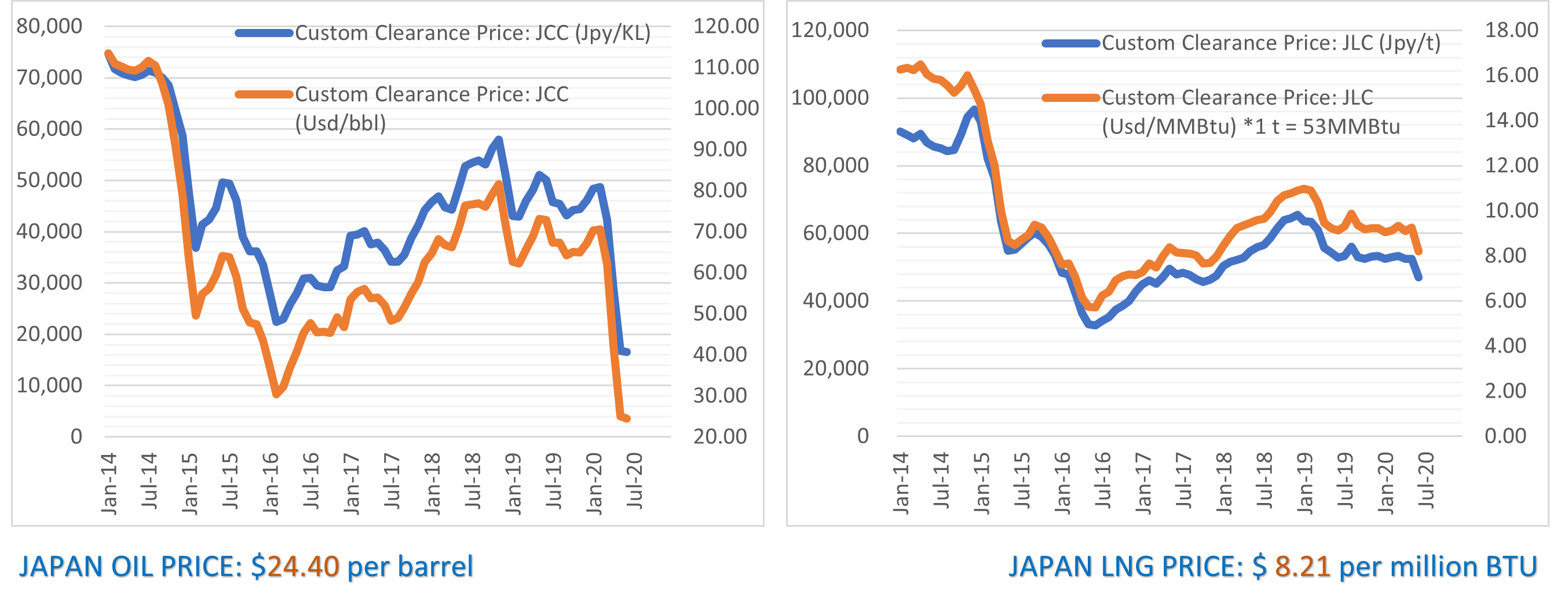
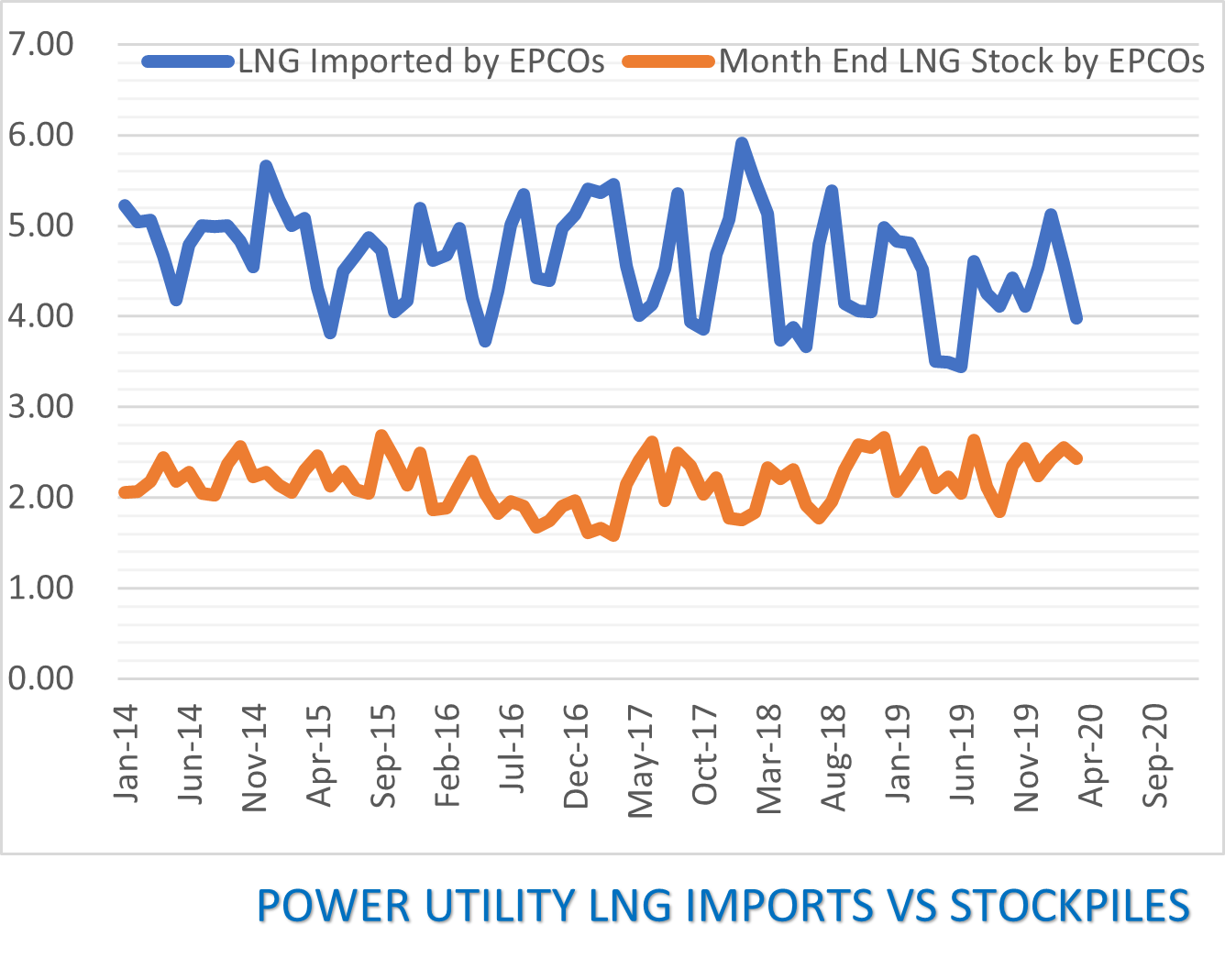
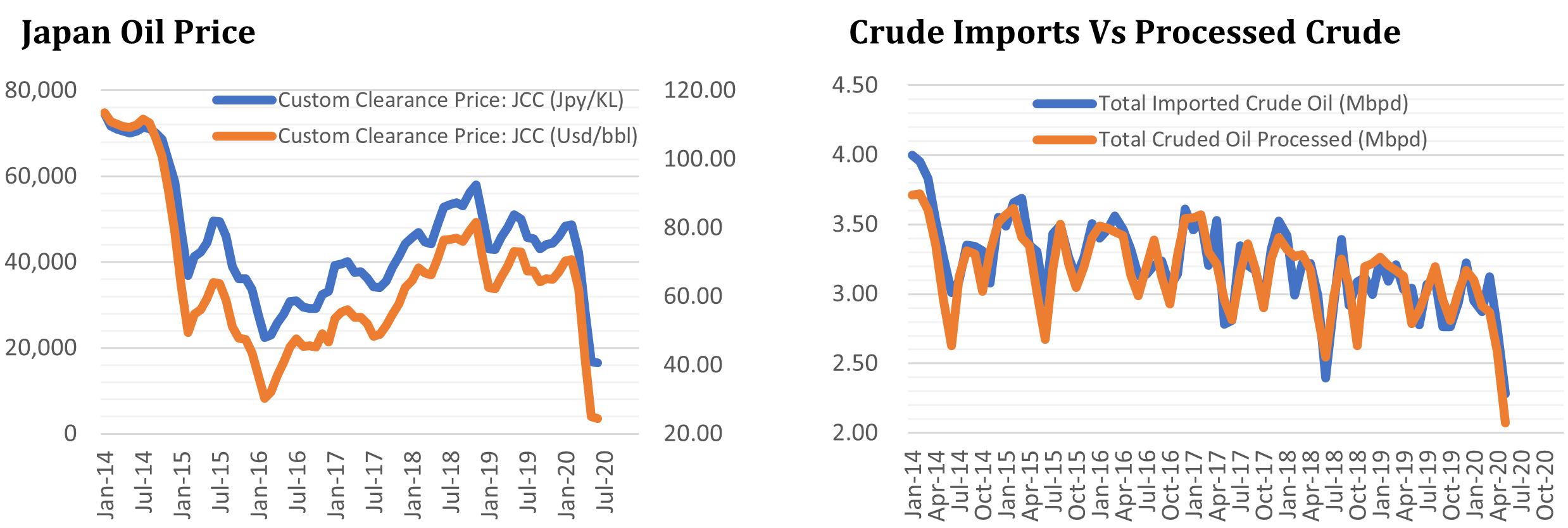
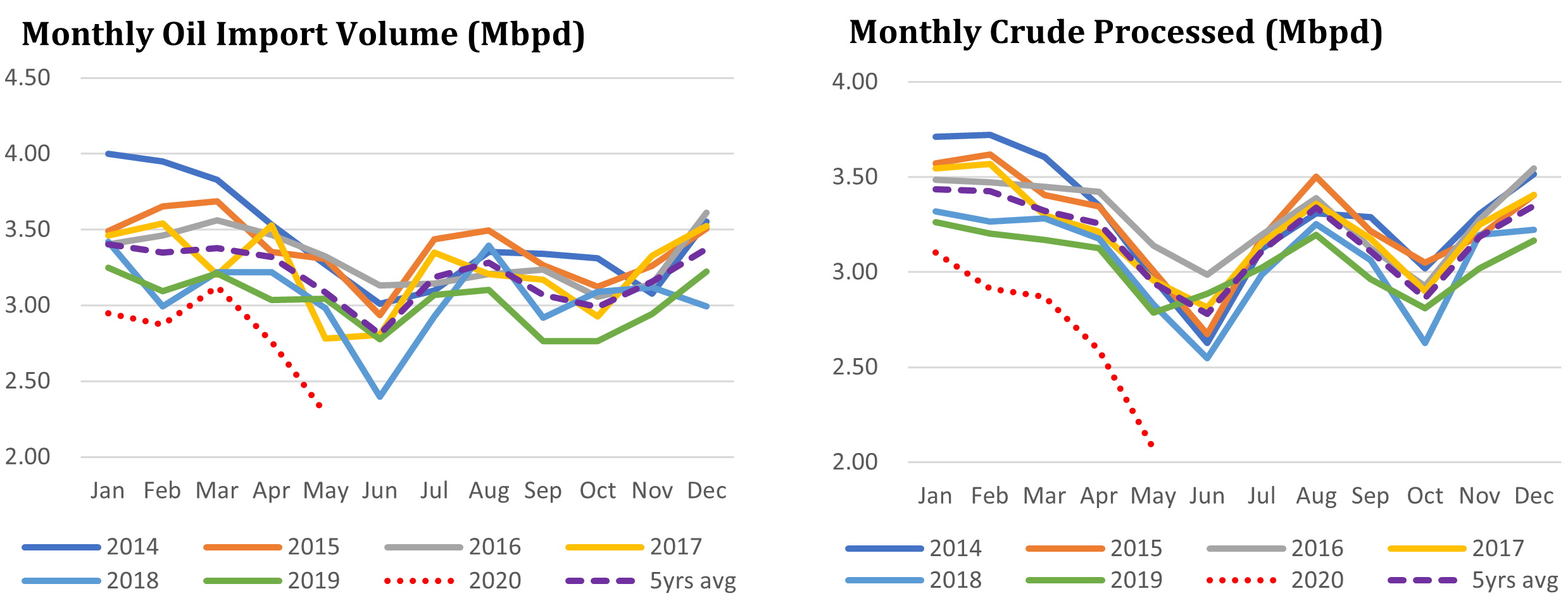
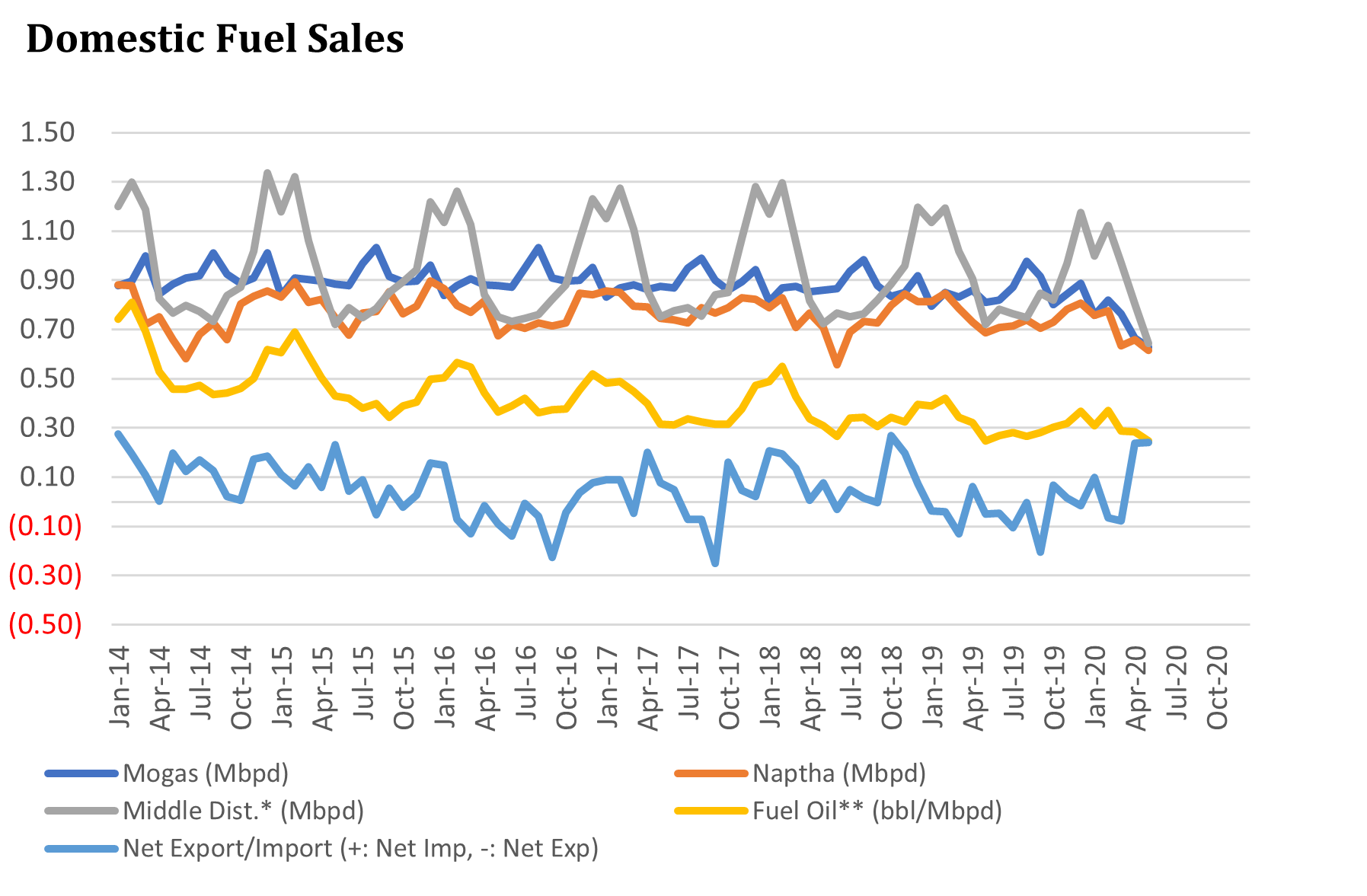
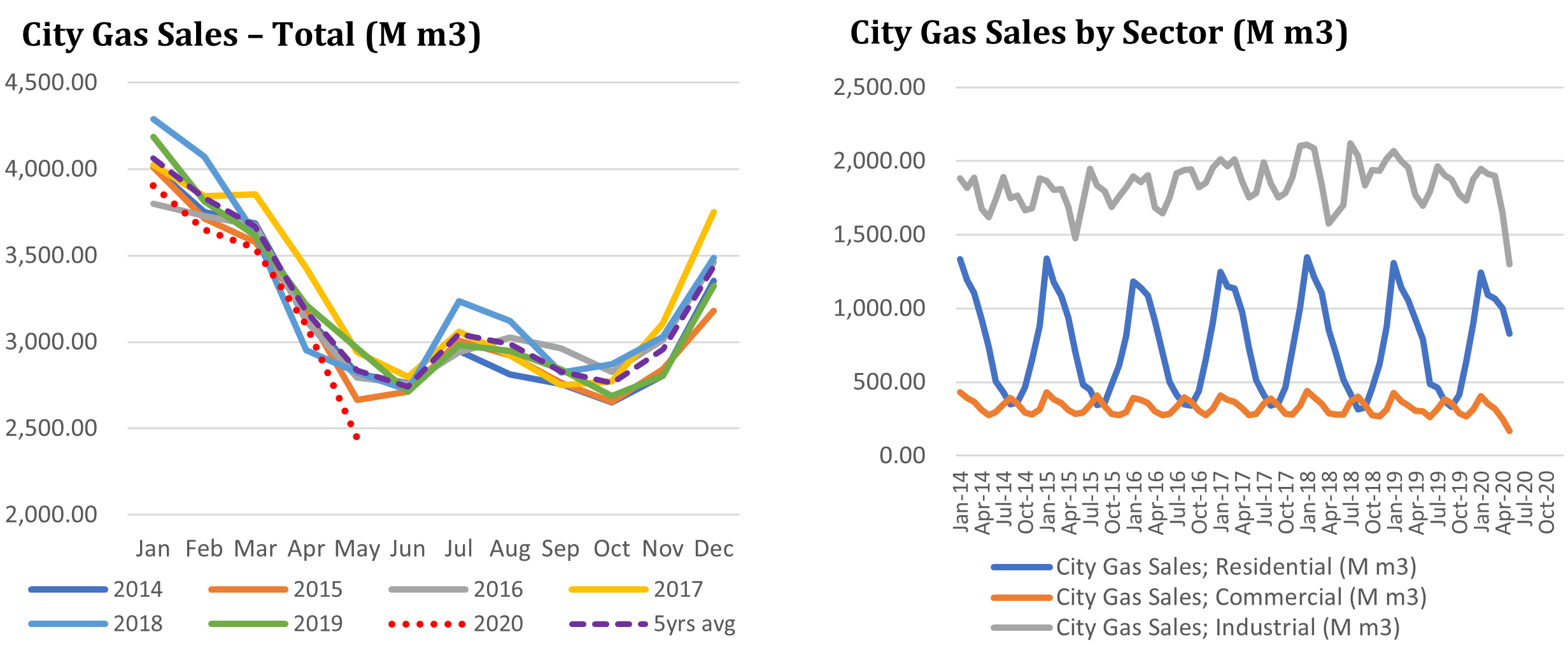
SOURCES: the Ministry of Economy, Trade, and Industry (METI), Ministry of Finance, and the Petroleum Association of Japan
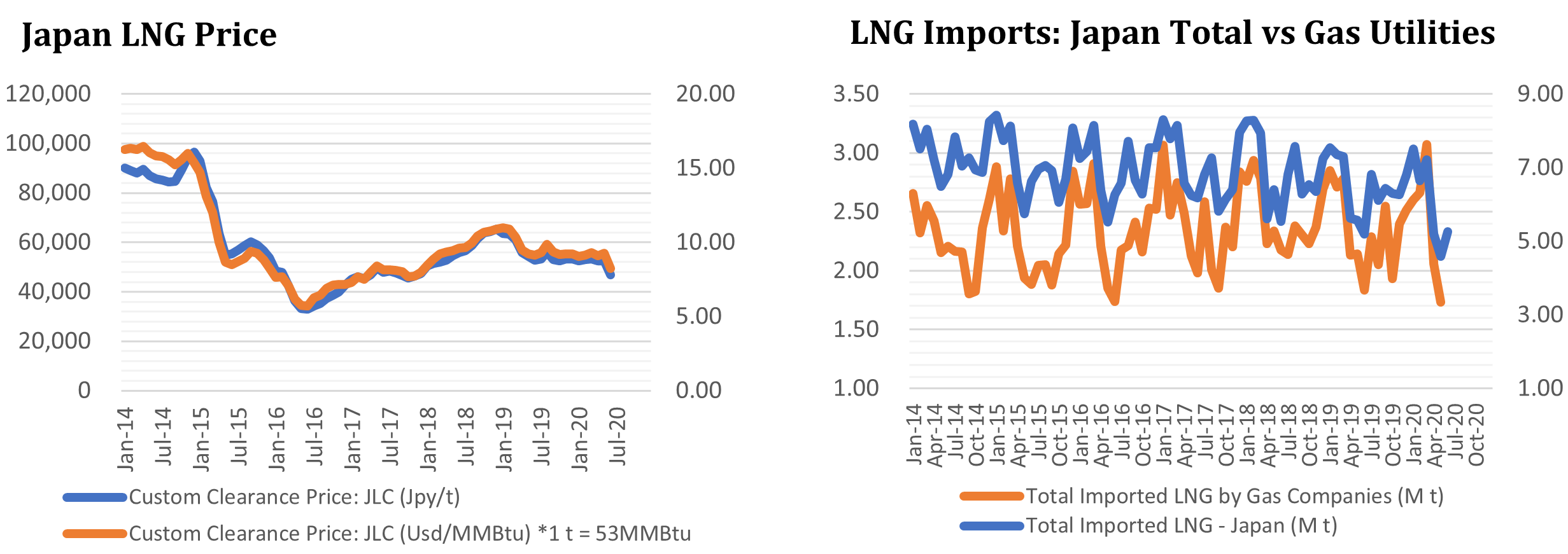
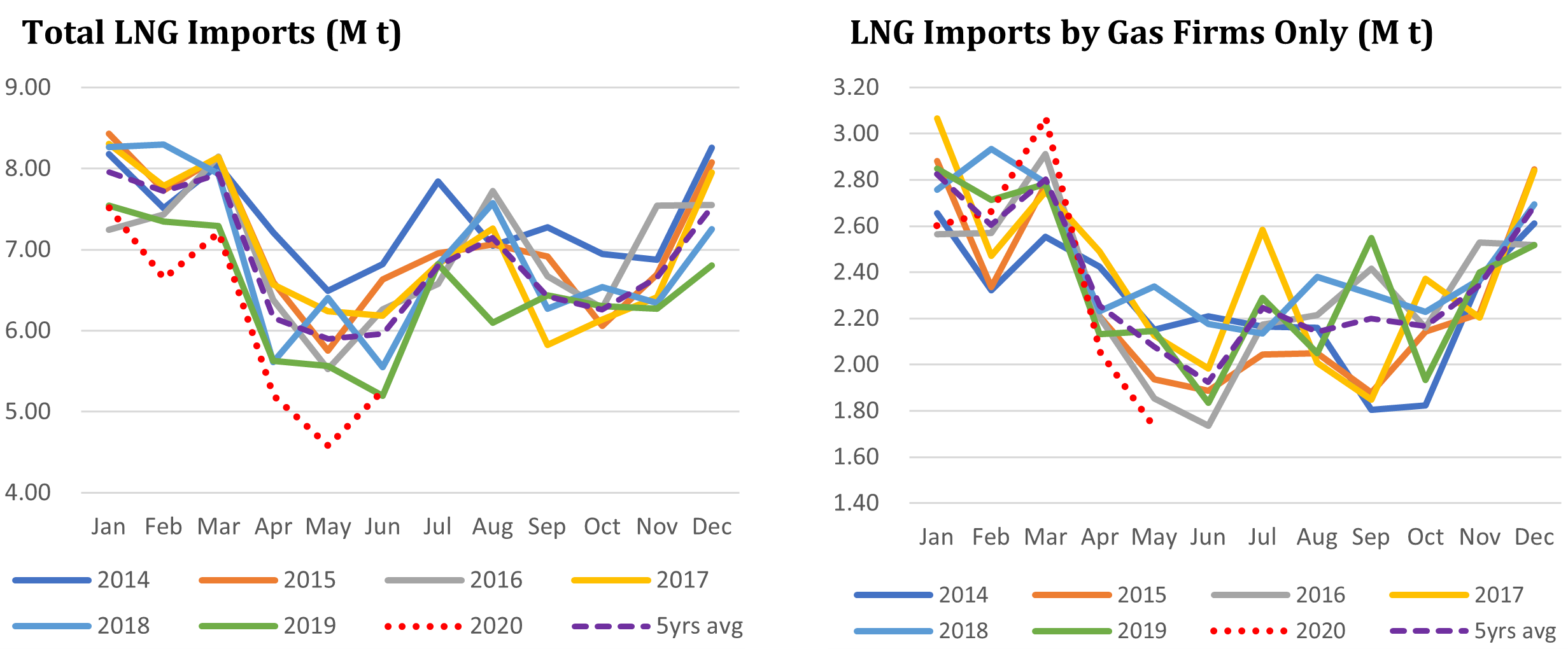
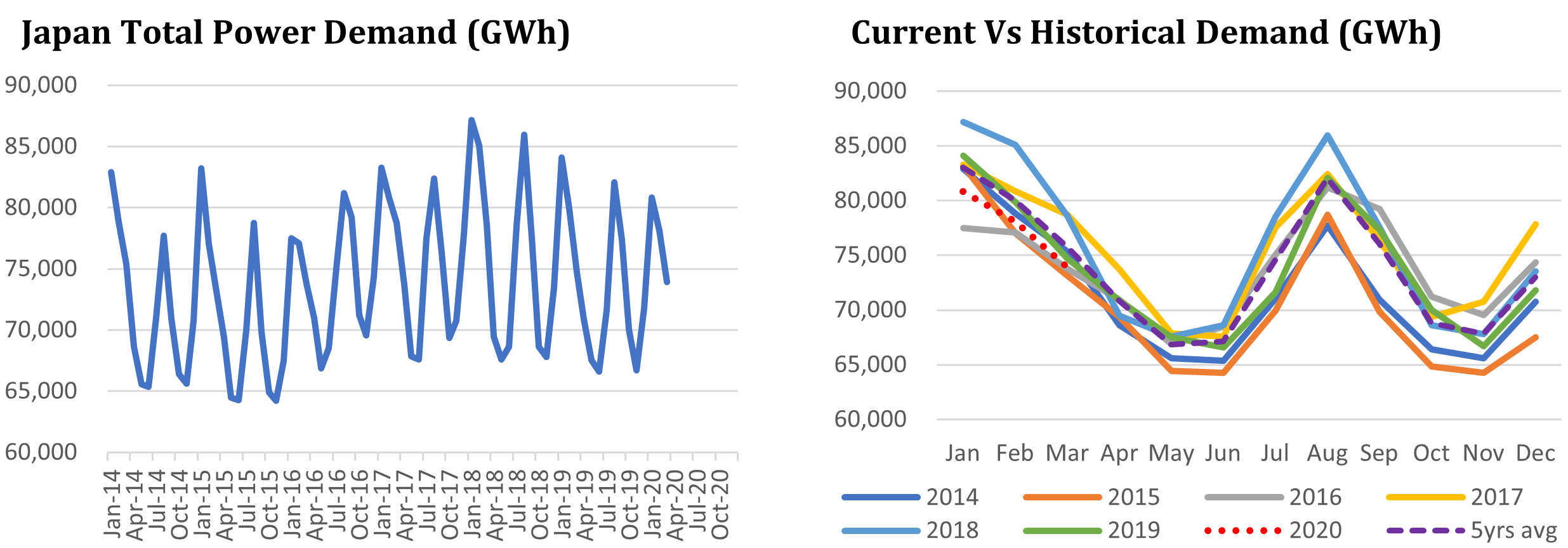
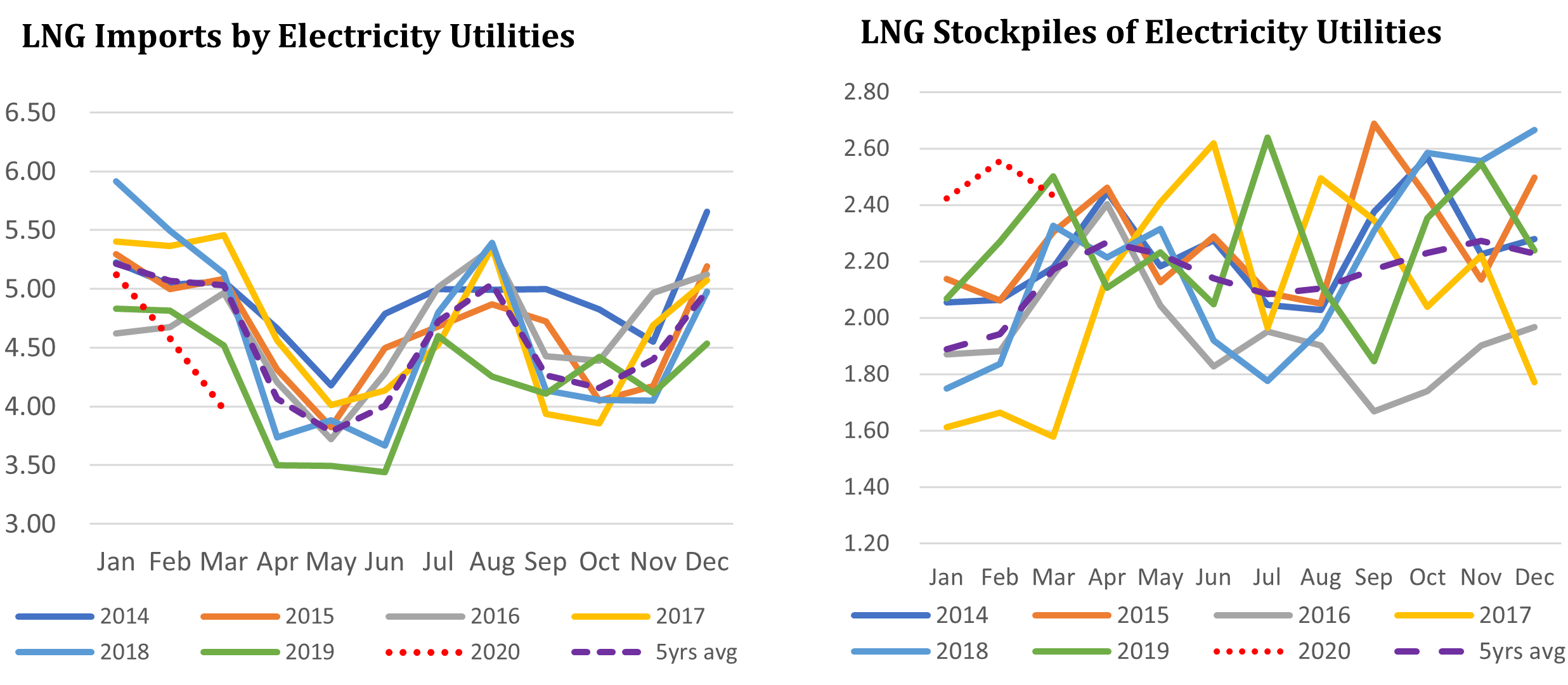
SOURCES: the Ministry of Economy, Trade, and Industry (METI), and the Ministry of Finance.
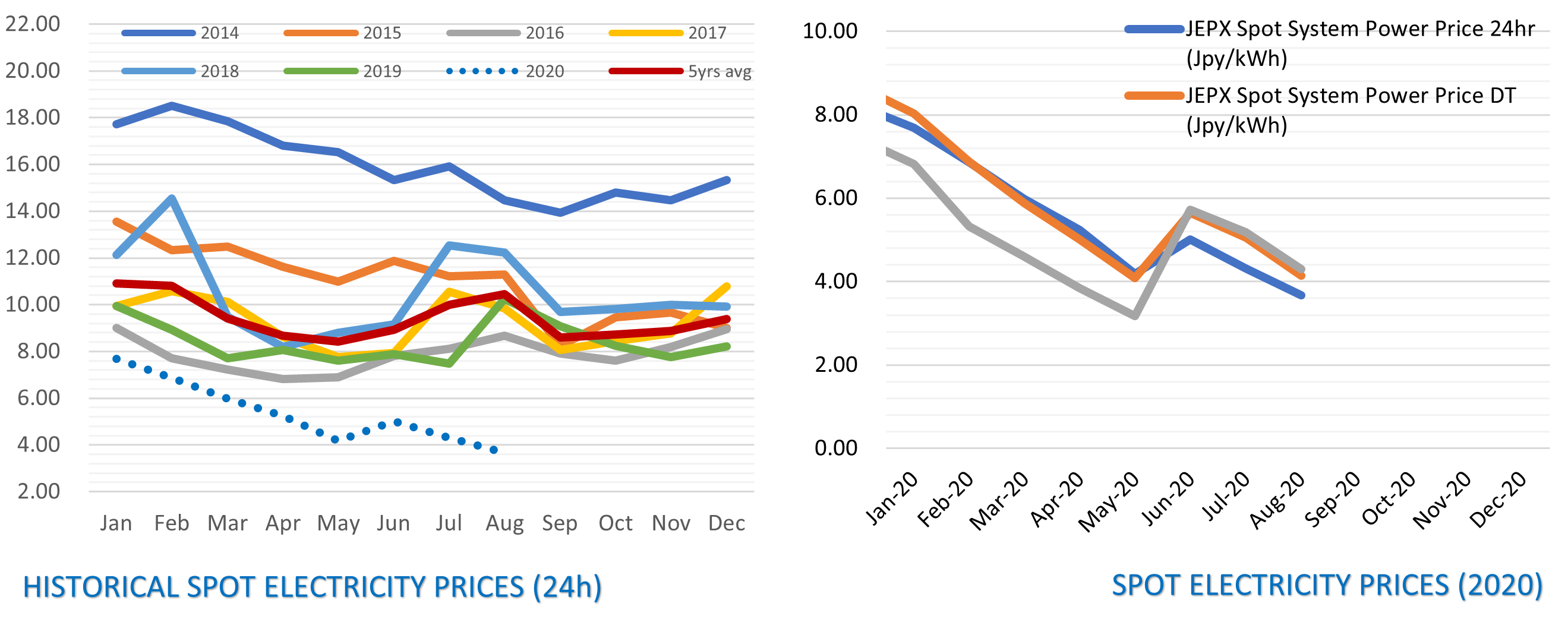
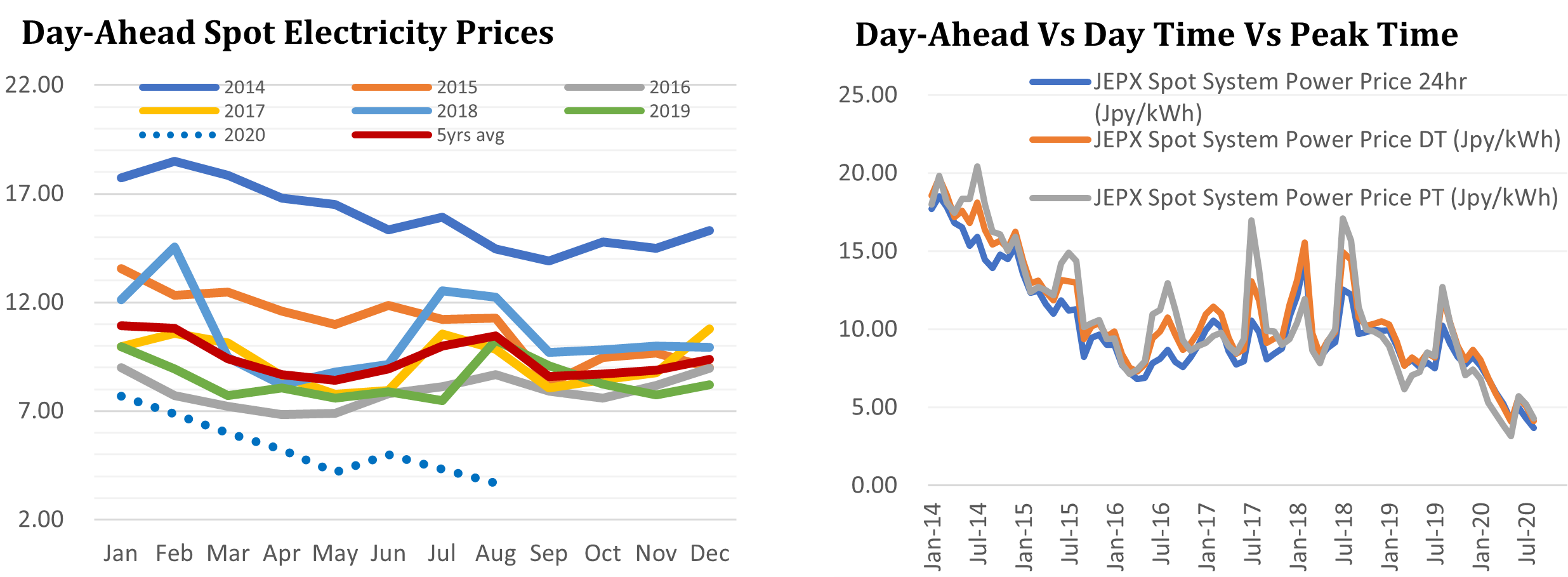
SOURCES: the Ministry of Economy, Trade, and Industry (METI), and the Japan Electric Power Exchange
DISCLAIMER
This communication has been prepared for information purposes only, is confidential and may be legally privileged.
This is a subscription-only service and is directed at those who have expressly asked Yuri Invest Research Ltd. or one of its representatives to be added to the mailing list. This document may not be onwardly circulated or reproduced without the prior written consent of Yuri Invest Research Ltd., which retains all copyright to the content of this report.
Yuri Invest Research Ltd. is not registered as an investment advisor in any jurisdiction. Our research and all the content of our reports express our opinions, which are generally based on available public information, field studies and own analysis. Content is limited to general comment upon general political, economic and market issues, asset classes and types of investments. The report and all of its content does not constitute a recommendation or solicitation to buy, sell, subscribe for or underwrite any product or physical commodity, or a financial instrument.
Recipients of this report should ensure that they fully understand the legal, tax and accounting implications before making an investment decision and independently determine that the transaction is appropriate based on their own objectives, experience and resources.
The information contained in this report is obtained from sources believed to be reliable and in good faith. No representation or warranty is made that it is accurate or complete. Opinions and views expressed are subject to change without notice, as are prices and availability, which are indicative only. There is no obligation to notify recipients of any changes to this data or to do so in the future. No responsibility is accepted for the use of or reliance on the information provided.
In no circumstances will Yuri Invest Research Ltd. or its partner K.K Yuri Group be liable for any indirect or direct loss, or consequential loss or damages including without limitation, loss of business or profits arising from the use of, any inability to use, or any inaccuracy in the information.
Yuri Invest Research Ltd.: Room 602, Wah Yuen Building, 149 Queen’s Road Central, Central, Hong Kong.
K.K. Yuri Group: Oonoya Building 8F, Yotsuya 1-18, Shinjuku-ku, Tokyo, Japan, 160-0004.
JAPAN NRG WEEKLY August 3 to August 10, 2020 NEWS TOP Japanese tanker spills 1,000+ tons of oil near Mauritius Utility mergers; Nuclear revamp – fallout from coal abolition Idemitsu to develop lightweight solar panel OIL & GAS Covid-19 causes significant downturn in demand for jet fuel No. of gas stations drops to lowest in […]