
JAPAN NRG WEEKLY
APRIL 05, 2021
JAPAN NRG WEEKLY
April 5, 2021
NEWS
TOP
- Japan seeks to become the global hub for rare metals recycling
- Chugoku Electric and JFE scrap plans to build LNG-fired power plant, questioning the economics; Chugoku Electric makes its first ever overseas investment with an eye on more renewables
- Hokkaido accepts first carbon-neutral LNG shipment; Osaka Gas to promote CO2-neutral LNG; Tokyo Gas gets a new customer
ENERGY TRANSITION & POLICY
- Japan and EU ally to promote CO2 cuts in developing Asia
- Toshiba makes foray into green hydrogen developing generator that needs less electricity to produce the fuel
- Japan’s average household emissions fall 6.2% in FY2019
- Tokyo offers new grants for households to install storage batteries
- Euglena, Seiko Epson, NEC form group to promote bioplastic
- Nissan aims for low-cost EV battery with no cobalt by late 2020s
- Biomass use growing in Shikoku region due to extensive forests
- Tokyo Gas to trial EVs; Toshiba to trial green hydrogen in Fukui; Toyota commissions first green hydrogen project in Australia
- Mitsubishi Heavy wins bid to convert UK gas plant to hydrogen
- Saudi Aramco, ENEOS to make CO2-free hydrogen supply chain
ELECTRICITY MARKETS
- Major utilities in Japan will raise prices in May; TEPCO most of all
- Angry locals tell TEPCO to “give up and leave” nuclear industry; Japan Nuclear Fuel CEO slams TEPCO failings as unacceptable
- Sumitomo Corp wins electricity retail license; begins construction of 112 MW biomass plant in Sendai; starts testing EV car sharing
- More electricity retailers face bankruptcy; and, January’s power spike was caused by TEPCO abandoning its retail unit TCS
- Etrion sells most of its Japan solar portfolio to local consortium
OIL, GAS & MINING
- Toho Gas to push more clients into LNG as a cleaner alternative
- Chugoku Electric forecasts its LNG demand to wane in near future
- Kyushu Electric to supply LNG for ferries
ANALYSIS
JAPAN’S PRIME MINISTER TRAVELS TO THE U.S.
HOPING TO WIN BIDEN OVER WITH GREEN DEALS
Next week, Prime Minister Suga will position Japan as on-board with plans to accelerate the transition to clean energy when he becomes the first overseas leader to meet U.S. President Biden in person at the White House. As proof, Suga is expected to announce Japan’s exit from financing of coal-fired power plants overseas and outline tougher national emissions target. The PM hopes these will find favor with America’s ardent green energy president, cementing a relationship that’s vital for Japan’s security and more recently, for vaccine supply.
This will be President Biden’s first face-to-face with a foreign leader in Washington and Suga’s first overseas trip to a G7 country since taking office.
ENHANCED SUPPLY CHAIN AND AMMONIA MAY RETURN JAPAN AS HYDROGEN FRONT-RUNNER
As the global race for carbon neutrality intensifies, Japan’s hydrogen ambitions are once again in the spotlight. Japan surprised the world when in 2017 the government announced the Basic Hydrogen Strategy, a first of its kind in the world. Three years on, Japan is closing in on the commercialization of the hydrogen supply chain, while hailing ammonia as its next big baseload power source. While neighboring China leads in solar, and the EU is leading in offshore wind, Japan is determined to stake a claim in energy transition leadership via hydrogen.
GLOBAL VIEW
OPEC+ agrees to bring back some output but oil prices stay steady. Volkswagen’s EV output may rise sevenfold in two years. And, Bitcoin may be using 0.4% of world’s energy. Details on these stories and more in our global wrap of major energy-related developments.
2021 EVENT CALENDAR
DATA SECTION
JAPAN NRG WEEKLY
PUBLISHER
K. K. Yuri Group
Editorial Team
Yuriy Humber (Editor-in-Chief)
Tom O’Sullivan (Japan, Middle East, Africa)
John Varoli (Americas)
Regular Contributors
Mayumi Watanabe (Japan)
Daniel Shulman (Japan)
Takehiro Masutomo (Japan)
Art & Design
22 Graphics Inc.
Sponsored
SUBSCRIPTIONS & ADVERTISING
Japan NRG offers individual, corporate and academic subscription plans. Basic details are our website or write to subscriptions@japan-nrg.com
For marketing, advertising, or collaboration opportunities, contact sales@japan-nrg.com
For all other inquiries, write to info@japan-nrg.com
OFTEN USED ACRONYMS
METI The Ministry of Energy, Trade and Industry
ANRE Agency for Natural Resources and Energy
NEDO New Energy and Industrial Technology Development Organization
TEPCO Tokyo Electric Power Company
KEPCO Kansai Electric Power Company
EPCO Electric Power Company
JCC Japan Crude Cocktail
JKM Japan Korea Market, the Platt’s LNG benchmark
CCUS Carbon Capture, Utilization and Storage
mmbtu Million British Thermal Units
mb/d Million barrels per day
mtoe Million Tons of Oil Equivalent
kWh Kilowatt hours (electricity generation volume)
NEWS: ENERGY TRANSITION & POLICY
Government bid to make Japan rare metals recycling hub
(Yomiuri Shimbun, METI panel documents, March 29)
- The Japanese government says it will establish facilities for recycling rare metals in Japan in a bid to reduce reliance on Chinese rare earth exports.
- The government will provide support to Japanese nonferrous metal dealers, including JX Nippon Mining & Materials, Mitsubishi Materials, and Sumitomo Metal Mining, to enable them to recover and reuse rare metals in a commercially viable manner.
- Rare metals will be extracted from rechargeable batteries contained in electronic appliances sourced from both within Japan and overseas.
- CONTEXT: Japan is currently reliant on China for 60% of its rare metals imports, which means that China is able to use the commodities as diplomatic “bargaining chips”.
- State-backed JOGMEC plans to survey scrap rare earth, nickel, cobalt, lithium in addition to primary resources.
TAKEAWAY: There are many issues with proposing recycling as the only solution for Japan in terms of critical raw materials supply. One is that recycled volumes are tiny compared with surging demand. Another is that Japan also needs to comply with terms of the Basel Treaty, and importing batteries to recover rare metals for recycling will increase environmental hazards. It will help for Japan to clarify what industrial waste levels it may incur through reprocessing and how this can be minimized. A JOGMEC survey will also be useful for setting up a new pricing mechanism. Currently, recycled metal is priced on the basis of the primary metal material, but in the future that primary material will likely factor in a carbon cost.
Japan and EU to ally in promoting CO2 cuts in developing Asia economies
(Nikkei Asia, March 30)
- Japan and the European Union plan to force an alliance to combat climate change to help emerging Asian economics cut CO2 levels.
- The two will offer development assistance and try to promote new technologies to help Southeast and South Asian nations switch from coal-fired generation to green energy sources.
- Japan’s main contribution may be in encouraging more use of batteries, CCS and ammonia.
- This is part of Japan’s plans to engage with Asian economies after it announces a stop to exporting and financing for coal-fired power projects abroad.
Toshiba makes foray into green hydrogen with less power-intensive technology
(Nikkei, April 2)
- Toshiba Energy Systems is developing a hydrogen generator that is capable of synthesizing hydrogen using 30% less electricity than conventional technologies.
- In a departure from the two main established methods of electrolyzing water to create hydrogen—the polymer electrolyte membrane (PEM) method and the alkaline water method—Toshiba is developing solid oxide electrolysis cells (SOEC), which operate like fuel cells in reverse. Toshiba says that SOEC are superior to legacy technologies and that it aims to make the technology commercially viable by the late 2020s.
- Competitor Hitachi Zosen, on the other hand, is concentrating on developing a low-cost PEM system, reducing unit manufacturing costs by reducing complexity.
Japan’s household CO2 emissions fall 6.2% in 2019/20
(Kankyo Business, March 29)
- On March 29, the Ministry of the Environment released its report on domestic CO2 emissions for 2019/2020.
- According to the report, average household CO2 emissions for the period were 2.7 metric tons down on the previous year, a decrease of 6.2%.
- The report also found that nearly two thirds of household CO2 emissions are attributable to electricity use. The remaining 33.8% is attributable to reticulated gas (14.7%), kerosene (13.2%), and LPG (5.9%).
- According to the report, 7% of Japanese households are fitted with photovoltaic panels, and around 15% are fitted with heat-pump based water heating systems.
Tokyo Government offers new grants for domestic storage batteries
(Kankyo Business, March 29)
- On March 25, the Tokyo Metropolitan government said it will begin accepting applications on April 1 for subsidies from householders to install storage batteries.
- The government will subsidize 50% of installation costs, up to a maximum of ¥420,000 per house.
- To be eligible, householders need to have installed solar panels, and agree to share data on their consumption and generation of electricity.
- The government has earmarked ¥744 billion for the grants in 2021/22.
Euglena in consortium to promote bioplastic
(New Energy Business News, March 31)
- Euglena, Seiko Epson, and NEC, in conjunction with a team of researchers from the University of Tokyo, have established the Pararesin Japan Consortium, an organization which aims to develop bioplastics from the carbohydrate paramylon.
- Paramylon is synthesized by the euglena bacterium with which Euglena has considerable expertise.
- The consortium members hope that in the future bacteria fed on a diet of paper waste and other cellulose sources will be able to synthesize the raw materials for bioplastics manufacture on a commercially viable scale.
Nissan aims for low-cost EV battery with no cobalt content by late 2020s
(Nikkei, April 1)
- Nissan is aiming to develop an electric vehicle battery that does not contain cobalt by the latter half of the decade. The new battery will trade cost reductions for range, however.
- Batteries account for around 30% of the cost of an electric vehicle, with anodes accounting for around 20% of total battery cost.
- While anodes usually contain 20% cobalt, Nissan’s recently released Aria features a battery with a 10% cobalt content. Nissan plans to remove cobalt completely by increasing the percentage of manganese and other anode materials.
- Currently, the lithium iron phosphate battery (LFP) is the only non-cobalt battery suitable for electric vehicle use. While this technology has been commercialized in China, these batteries offer reduced range.
Biomass use growing in Shikoku as region touts its extensive forests
(Nikkei, March 30)
- The island of Shikoku enjoys abundant biomass reserves due to its extensive forests and the presence of a pulp industry, and a growing number of businesses are taking advantage of this resource.
- The municipality of Uchiko in Ehime Prefecture declared itself a “biomass hub”. Already self-sufficient in renewable electricity, the local government is working with industry to construct another biomass-fired power station. A trial is also underway to use the ash generated when wood pallets are burnt as fertilizer.
- The government’s roadmap for decarbonizing Japan’s regions, announced last year, calls for more use of biomass sourced from the forestry and livestock sectors.
Tokyo Gas in electric vehicle trial
(New Energy Business News, April 1)
- Tokyo Gas has partnered with Smart Drive and Nippon Car Solutions to support corporations and local bodies that are considering switching to an electric fleet.
- Under the scheme, entities trialing electric vehicles receive analysis of trip data and support with optimizing their charging schedules. By quantifying the benefits of EV use, the service enables entities to better understand the effects of switching to an electric fleet.
Toshiba in hydrogen trial in Fukui
(New Energy Business News, April 1)
- Toshiba Energy Systems has launched a trial of what it calls the H2One Multistation in Fukui.
- The filling station provides consumers with “green” hydrogen that has been produced by electrolysis using renewably-generated electricity. The local body envisages the use of hydrogen to power fuel-cell equipped forklifts and eventually fuel-cell equipped road vehicles.
- The station is also able to convert stored hydrogen back into electricity using fuel cells when the supply of electricity is tight.
Toyota commissions its first green hydrogen project in Victoria, Australia
(Company statement, March 29)
- Toyota has commissioned Victoria’s first commercial-grade permanent hydrogen production, storage and refueling facility at its former manufacturing site at Altona in Melbourne’s west.
- The 200kW solar-powered hydrogen production facility will produce up to 80kg of hydrogen per day.
- It will also host a commercial-grade refueling outlet for commercial and passenger fuel cell electric vehicles.
Mitsubishi Heavy group wins bid to convert 1.2 GW gas plant in UK to hydrogen
(Company statement, March 26)
- Co. said it is part of a group that won government funding to decarbonize a large industrial cluster around UK’s River Humber.
- The project involves 12 companies and institutions including Equinor ASA and involves looking at ways to utilize hydrogen produced from natural gas and the introduction of CO2 capture / removal technology.
- As part of the plans, Mitsubishi Heavy is studying the feasibility of switching the CTCC gas-burning Saltend power plant, owned by Triton Power, to using hydrogen as fuel.
Saudi Aramco, ENEOS sign MoU to develop CO2-free hydrogen supply
(Nikkan Sangyo Shimbun, March 29)
- ENEOS said it signed a memorandum of understanding with Saudi Aramco to collaborate on building a supply chain for carbon-dioxide-free hydrogen and ammonia.
- An economic study will be conducted on the production of hydrogen derived from Saudi Aramco’s fossil resources, the capture and storage of CO2 generated during production, and transportation of hydrogen in the form of ammonia to Japan and other regions
Tokyo Metro pledges zero net CO2 emissions by 2050
(Kankyo Business, March 29)
- On March 25, Tokyo Metro declared that it would aim to reduce its net CO2 emissions to zero by 2050.
- The company said it would achieve this goal by sourcing electricity from renewable sources as well as making its operations more energy-efficient.
- This comes in the wake of Tokyo Metro’s announcement in September of nine commitments to sustainability.
Daito Trust Construction announces greener rental accommodation
(Kankyo Business, March 29)
- On March 25, major residential landlord Daito Trust said it had developed a new “life-cycle carbon negative” building design for rental dwellings that boast a negative carbon footprint over its lifetime (construction through demolition).
- The timber design maximizes the area of roof mounted photovoltaic panels and increases thermal insulation to maximize energy efficiency.
- Daito Trust says it will actively promote its life-cycle carbon negative range to reduce CO2 emissions from its rental properties 16% by 2030.
NEWS: POWER MARKETS
|
No. of operable nuclear reactors |
33 | |||
|
of which |
applied for restart |
25 | ||
|
approved by regulator |
16 | |||
|
restarted |
9 | |||
|
in operation today |
6 | |||
|
|
able to use MOX fuel |
4 | ||
|
No. of nuclear reactors under construction |
3 | |||
|
No. of reactors slated for decommissioning |
27 | |||
|
of which |
completed work |
1 | ||
|
started process |
4 | |||
|
|
yet to start / not known |
22 | ||
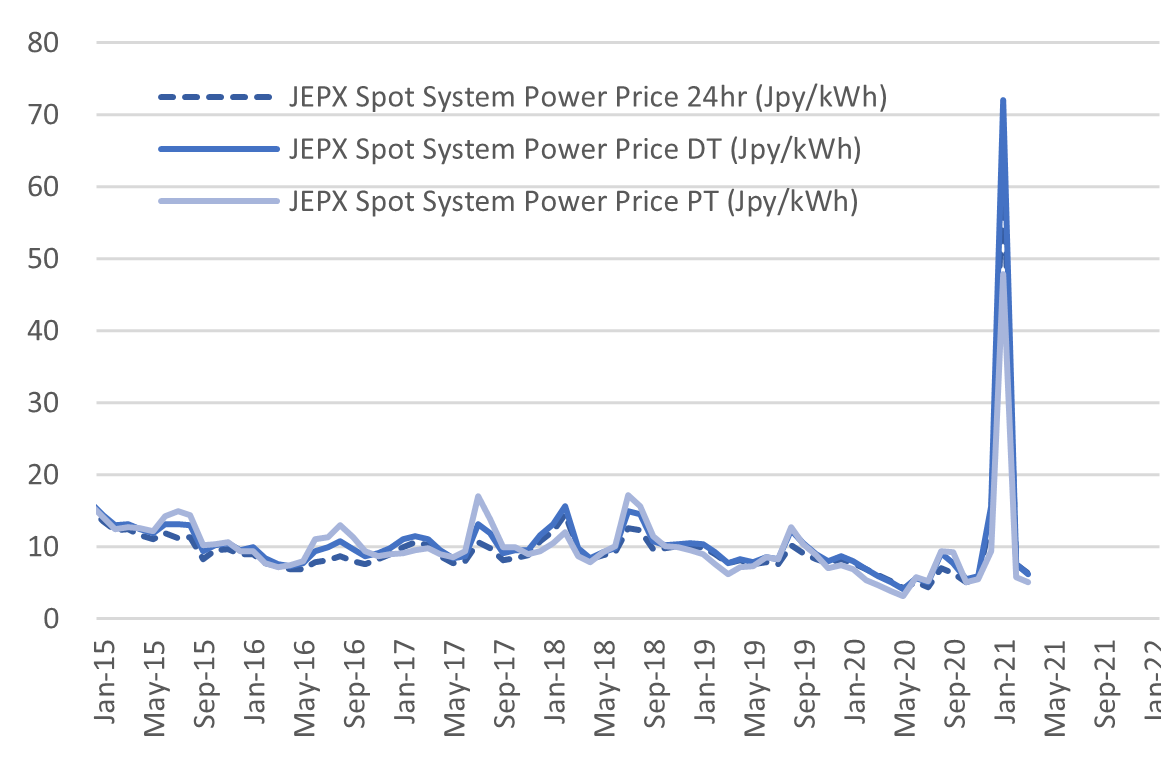
Spot Electricity Prices, Monthly Avg.
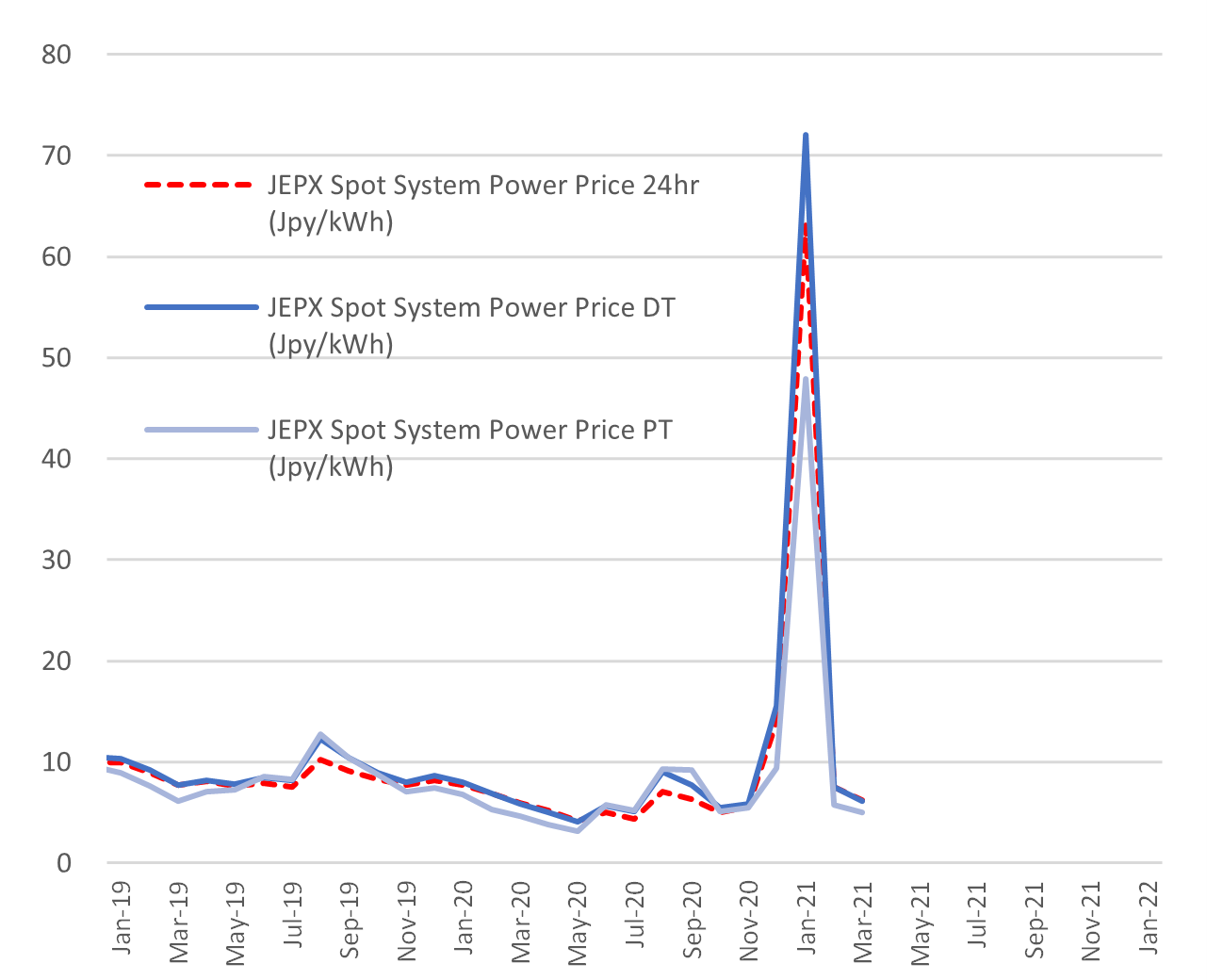
Source: Company websites, JANSI and JAIF, as of March. 29, 2021
Chugoku Electric and JFE scrap plan to build gas-fired power station
(Nikkei, March 31)
- It was revealed on March 31 that the Chugoku Electric Power Company and JFE Steel will scrap plans to construct an LPG-fired thermal power station in Chiba.
- The parties are believed to have called off the investment in the face of intensifying opposition to fossil fuels internationally.
- The companies had initially planned to build a 1 GW coal-fired station, before opting for a gas-fired station instead, citing commercial reasons. Now, even gas-fired generation is seen as not feasible.
- SIDE DEVELOPMENT:
Chugoku Electric makes first overseas investment with 44% in Energy Fiji
(New Energy Finance, March 31)- Chugoku Electric’s newly established Singapore unit will invest in Energy Fiji Ltd. and has signed an accord with the Fiji govt. to this end. This is the Japanese utility’s first overseas investment.
- The investment will be made jointly with the Japan Bank for International Cooperation.
- EFL is a vertically integrated power company with generating assets of 329 MW. Of this, internal combustion power generation facilities account for 181 MW, and renewables for 138 MW.
- Chugoku Electric will work with the main shareholder, Fiji govt., to add more solar and hydro resources to make the local utility 100% renewable by 2035.
TAKEAWAY: To date, with the exception of Kansai and TEPCO, there’s not been a lot of major announcements by top Japanese power utilities on how they will fulfill the country’s and their own net-carbon pledges. However, this is starting to change and we are seeing a lot of diversity of approach. Scrapping plans for coal and gas generation has not been part of the playbook, but various factors, including bankability, are starting to change the decision-making at EPCOs. It is also forcing companies to be more creative. This is a “sandbox” period for the EPCOs. Those that enjoy the most success in the next two-three years will likely end up acquiring those that don’t.
All utilities raise electricity prices in May; TEPCO – the most
(47 News, March 30)
- All Japan’s major utilities have said they will raise domestic tariffs in May to absorb increases in the cost of investing in renewables and increases in the cost of LNG.
- The largest hike was by TEPCO, whose consumers will have to pay an average ¥276 more than in April. TEPCO was followed by Chubu, Tohoku, and Chugoku.
- According to the Ministry of Economy, Trade and Industry, the feed-in tariffs paid by electricity companies to generators of renewable electricity have increased by ¥0.38 per kilowatt hour. This translates to an average increase of ¥99 per household per month.
Kashiwazaki-Kariwa: angry residents say TEPCO should “give up and leave”
(Tokyo Shimbun, March 27)
- As Niigata Governor Hanazumi expresses doubts as to whether TEPCO is fit to run a nuclear power plant, even local LDP councilor and usually loyal TEPCO supporter Ono Mineo said the Niigata government should now treat TEPCO’s withdrawal from Niigata as a real option.
- At the same time, politicians from Kashiwazaki and Kariwa, the local bodies that host the plant, have rushed to TEPCO’s defense, believing that restarting the plant will be good for their local economy.
- SIDE DEVELOPMENT:
Japan Nuclear Fuel CEO slams TEPCO failings
(To-o Press, March 31)- In a March 30 press conference, Japan Nuclear Fuel CEO and former TEPCO employee Masuda said he took the recent revelations of safety failings at TEPCO’s Kashiwazaki-Kariwa nuclear power station very seriously, and described the incident as completely unacceptable.
- In light of the revelations, Masuda performed an audit of security arrangements at the JNF nuclear fuel reprocessing facility in Rokkasho, but found that all security systems were operating normally.
- While TEPCO has attempted to rebuild a culture of safety across its operations, Masuda expressed his concerns as to whether this was actually happening.
Sumitomo gets license to retail power, raising Japan’s number of retailers to 713
(New Energy Business, March 30)
- METI released the latest figures for the number of gas and power retailers in the country. Japan now has 713 companies registered to retail electricity. Among the latest entrants is Sumitomo Corp., one of the country’s biggest trading houses.
- SIDE DEVELOPMENT:
Sumitomo begins construction of 112 MW biomass plant in Sendai
(New Energy Business, April 2)- Sumitomo Corp. began construction of a biomass-only power plant in Sendai City, Miyagi prefecture, through Sendai Port Biomass Power LLC.
- It will have 112 MW of capacity, enough to power 260,000 homes. It will use domestic timber and imported pellets as fuel.
- Total construction cost is about ¥90 billion. Commercial operation is scheduled to start in October 2025.
- CONTEXT: Sumitomo’s Summit Energy unit already owns three biomass plants with a total capacity of 175 MW.
- SIDE DEVELOPMENT:
Sumitomo Corp group to test EV car sharing and energy management
(New Energy Business, April 1)- Sumitomo Corp., Nippon Gas and REVEX will test EV car sharing and energy management using EV at their offices.
Could more power retailers go to the wall?
(Energy Shift, March 29)
- There are fears that F-Power will not be the only electricity retailer to go into receivership as a result of a spike in wholesale electricity prices in January. After sustaining significant losses, F-Power was forced to file for protection under the Company Rehabilitation Act.
- Dedicated electricity retailers that do not own their own generation facilities forked out around ¥560 billion to purchase electricity on the wholesale market in January, a whopping 10 times more than usual.
- The first installment of imbalance charges, which are levied to settle differences arising between traded energy volumes and metered volumes, is due for payment on April 5.
- There has been criticism of the fact that the actual imbalance charges levied were significantly higher than METI’s provisional forecasts.
- Before the price surge, the highest imbalance charge ever levied was ¥7.9 per kilowatt hour, recorded on Dec. 1, 2020. However, on Jan. 11, imbalance charges reached a dizzying ¥511 per kilowatt hour.
- During a METI select committee on March 26 to discuss gas and electricity policy, one small electricity retailer said while it wanted to stay in business, it was struggling to achieve the necessary cash flow.
- Another said that while its January losses had wiped out 70 months of profits, it had a responsibility to its customers, and was not considering closing.
- Yet another retailer said financial difficulties were forcing it to pay its imbalance charges in installments.
January power price spike was caused by TEPCO abandoning its retail unit, TCS;
(SENTAKU, March edition)
- January’s spike in electricity price was started by Tepco Customer Service (TCS), one of TEPCO’s retail firms that operates outside of the company’s traditional Kanto area.
- On Jan. 3, TCS asked its parent company to boost power supply per client requests. Instead, TEPCO Energy Partners (EP) cut its supply volume to TCS, which then had to jump into the wholesale market to make up the volumes.
- Most utilities wanted METI to issue a request to industrial customers to conserve power. The ministry refused, fearing it’d be taken badly by industry on top of the COVID restrictions and then ongoing state of emergency.
- TCS has grown to be a top player in the industry with 5 GW of capacity. It normally procures 20% of its volumes from JEPX and 30% from households. At least half usually comes from TEPCO. However, in this case, TCS had to rush to the market to procure 70% of its volumes wholesale.
- By the time TEPCO reversed course and started to help Kansai Electric and Kyushu Electric, the power price was already on a runaway rally. That’s when METI had to step in and set ¥200 as the limit.
- METI could have asked JEPX to stop trading, as it did after the 2011 accident. It didn’t and as a result of the imbalance fees, distribution companies profited greatly at the expense of retail companies.
- TCS is one example of a big retailer hurt by the actions of an EPCO, which in this case is its own parent company. Even as TEPCO EP abandoned TCS, it continued to supply wholesale power to clients such as Softbank, Erex, and Nippon Gas, and even increased volumes to them. Those three companies simply resold the excess volumes on the JEPX.
- A defender of the new electricity companies, as the power retailers set up following the 2016 market deregulation are known, is Minister Kono, who is in charge of administrative reform. He has brought back former METI official Yamada Masato and is using his own task force to push back against the EPCOs, the legacy regional power monopolies.
- Market liberalization has opened up the electricity business to this kind of price speculation, and public and private company officials are only now starting to grasp this reality. METI officials said the January price spike was not an accident but a “man-made” disaster.
Etrion sells most of its Japan solar portfolio to local consortium for ~$75 million
(Japan NRG, March 31)
- Etrion Corp., a solar-focused IPP, said it sold three of its Japanese solar power projects, with a combined capacity of 47.2 MW, to a local consortium for ¥8.25 billion.
- The Japanese consortium, Solar Resources Holding Sàrl, consists of three local companies: GK Komatsu Solar, GK Shizukuishi Solar and GK MITO Solar. They will take over Etrion’s 13.2 MW Komatsu, 24.7 MW Shizukuishi and 9.3 MW Mito operating solar energy projects.
- Etrion said it is still negotiating the sale of its fourth and last Japanese solar project, which is currently undergoing repairs from winter storms. The potential buyer is also associated with the Solar Resources consortium.
- The transaction is due to close by end of June.
- CONTEXT: Etrion was one of early investors in Japan’s renewables field after the introduction of the Feed-In Tariff scheme in 2012. The company is listed in Toronto and Stockholm.
NEWS: OIL, GAS & MINING
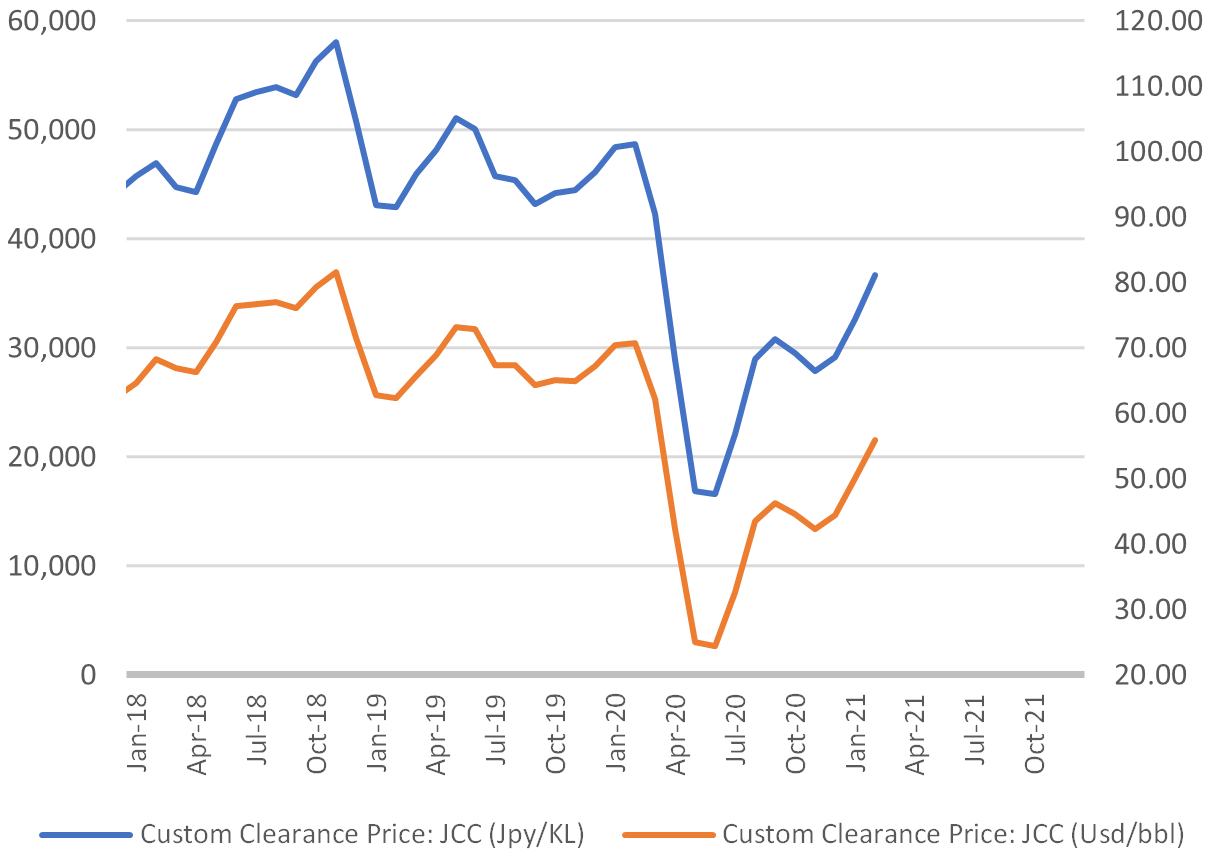
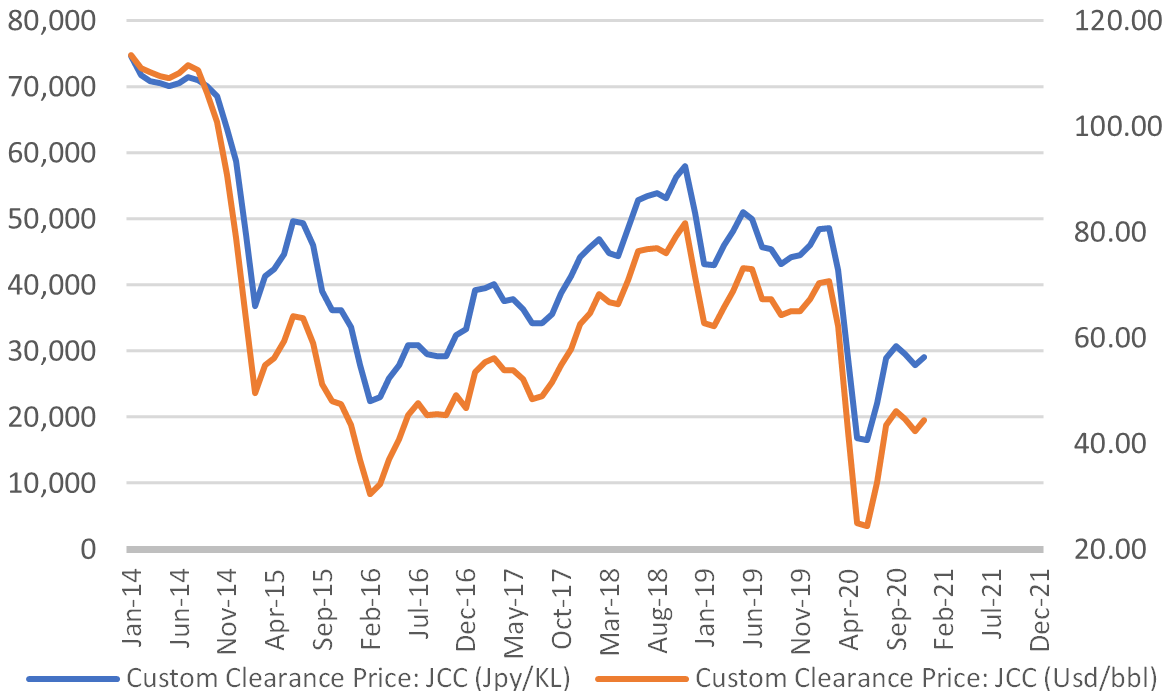
Japan Oil Price: $55.80/ barrel
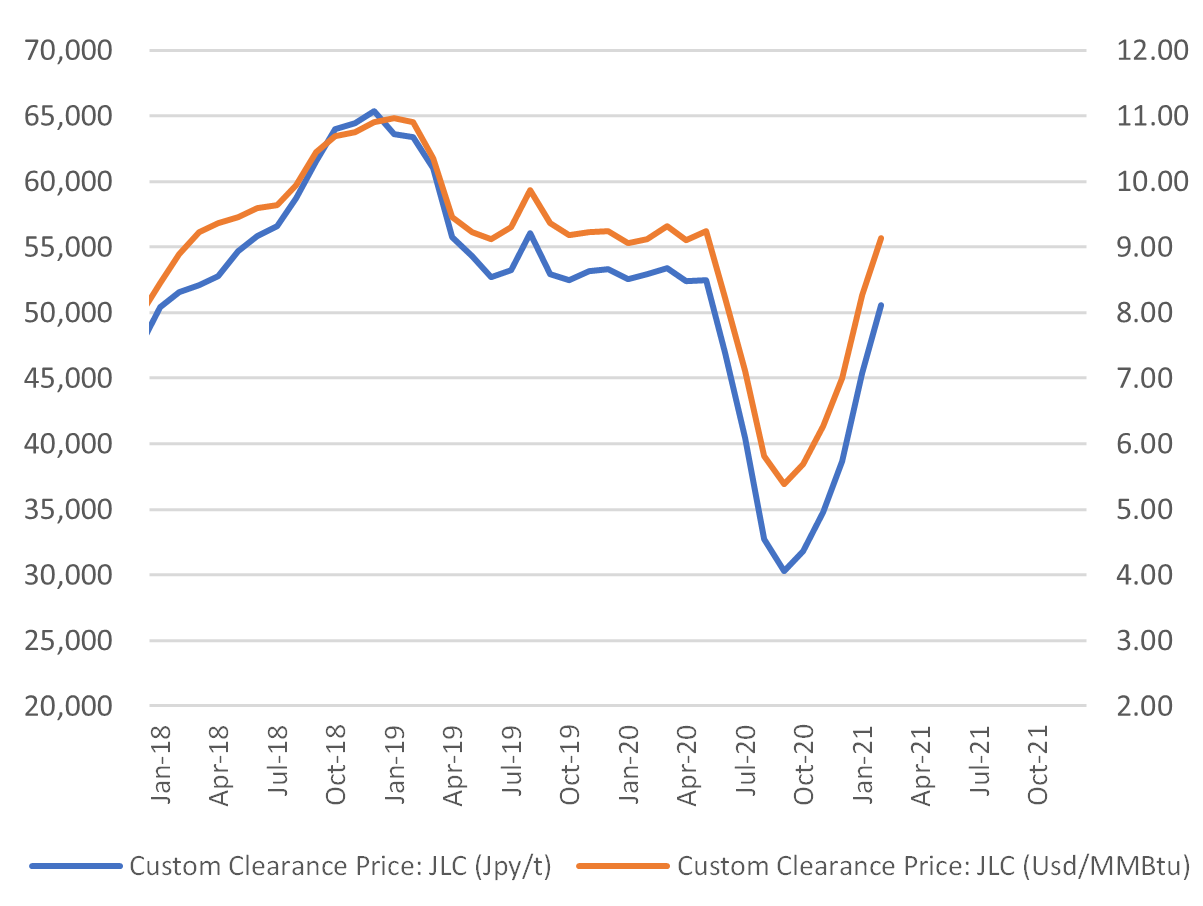
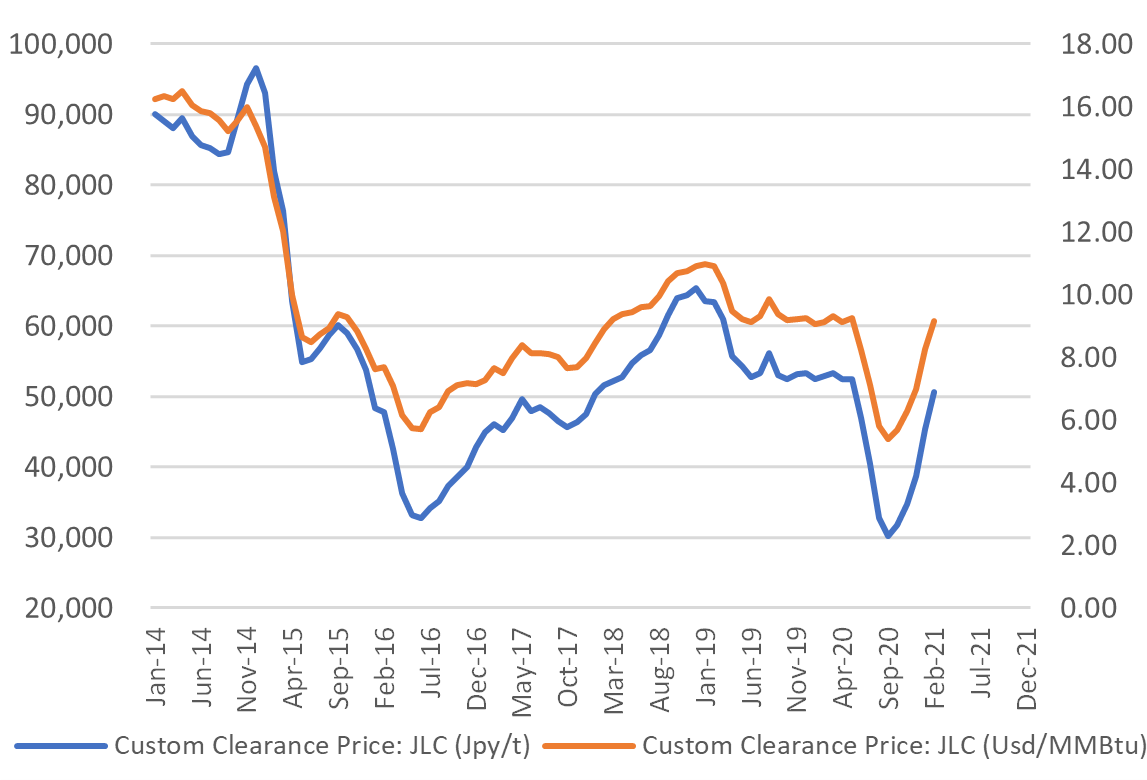
Japan (JLC) LNG Price: $9.14/ mmbtu
Hokkaido Gas accepts first shipment of carbon-neutral LNG
(New Energy Business News, April 1)
- Hokkaido Gas has accepted its first shipment of carbon-neutral LNG at its Ishikari terminal.
- The LNG was supplied by Mitsui & Co. The use of carbon credits enables it to be accredited carbon-neutral.
- The shipment represents 10% of the utility’s annual LNG consumption. The arrangement will enable Hokkaido Gas to effectively neutralize the CO2 emissions of 210,000 subscribers.
- SIDE DEVELOPMENT:
Osaka Gas to push carbon-neutral LNG to corporate clients
(Nikkei, March 30)- Co. said it will start offering LNG packaged with CO2 offsets purchased from the LNG supplier. Applications from commercial and industrial customers will be open from April.
- SIDE DEVELOPMENT:
Tokyo Gas seals first carbon-neutral LNG sale to shopping mall
(Sekiyu Tsushin, March 29)- JR East, a rail operator, signed a basic agreement to buy carbon-neutral LNG from Tokyo Gas for use at its Lumine shopping malls at railway stations.
- The first one will be at Omiya station and will spread to six other locations. The Lumine contract is for three years.
TAKEAWAY: As we reported in detail in the last few months, the market for carbon-neutral LNG is rapidly evolving in Japan, driven mainly by the sense that it’s a “quick fix” for companies that need to show immediate action on decarbonization. The volumes are small, but the buyers are all major firms with the ability to scale up quickly if they see this as a feasible way to bring down attributable emissions.
Toho Gas to push more clients into LNG, sets aside ~$300M for renewables, hydrogen
(Chemical Daily, April 2)
- Toho Gas CEO Tominari Yoshiro said on March 31 that the utility would encourage more industrial clients to switch from less environmentally friendly fuels to LNG, as a step on the road to carbon neutrality.
- Toho, which supplies mostly commercial clients, is seeking to diversify its LNG client base.
- Tominari also said the utility would invest ¥34 billion ($307 million) in non-gas operations including solar, wind, hydrogen and biomass in the coming year.
Chugoku Electric says its demand for LNG will decline due to coal, nuclear
(Bloomberg, April 1)
- Co. spokesman told Bloomberg it has let a 1.4 million tons/ year LNG contract with North West Shelf in Australia expire last month.
- Chugoku Electric will commission a new coal-fired unit in Nov. 2022 at Misumi power plant and expects its Shimane NPP to restart in the coming years.
- The utility plans to rely on other long-term deals and spot market forward.
Kyushu Electric to supply LNG for ferries
(Nikkei, April 2)
- The Kyushu Electric Power Company said that in 2022 it will begin supplying Mitsui OSK Lines’ car ferry, The Sunflower, with LNG fuel.
- Under the arrangement, Kyushu Electric will transport around 50 metric tons per day of LNG to the ferry in tankers.
- Fueling will be performed by Osaka Gas.
Santos’ Barossa gas field emissions a risk for shareholders/buyers: IEEFA
(IEEFA, March 31)
- CONTEXT: Santos, the operator of the Barossa gas and LNG project, announced on March 30 that the final investment decision has been taken, and that it will proceed with the $3.6 billion development that will supply 3.7 million tons of LNG a year.
- Santos’ proposed offshore Barossa field near Darwin, Australia, contains more CO2 than any gas to LNG project in operation, according to a new report from the Institute for Energy Economics and Financial Analysis (IEEFA).
- The IEEFA assessment notes that the gas contains three times more CO2 than can be handled by the Darwin LNG plant. This means the surplus CO2 will have to be separated and vented offshore.
- The unprecedented scale of the Barossa emissions relative to the LNG production creates major risks for shareholders: IEEFA.
- Santos signed a 10-year LNG supply agreement with Mitsubishi Corporation’s Diamond Gas International late last year.
ANALYSIS
BY JOHN VAROLI
Japan’s Prime Minister Visits Washington Next Week;
Energy and Climate Policies Expected to Top the Agenda
Next week, Prime Minister Suga will position Japan as on-board with plans to accelerate the transition to clean energy when he becomes the first overseas leader to meet U.S. President Biden in person at the White House.
As proof, Suga is expected to announce Japan’s exit from financing of coal-fired power plants overseas and outline tougher national emissions target. The PM hopes these will find favor with America’s ardent green energy president, cementing a relationship that’s vital for Japan’s security and more recently, for vaccine supply.
The fact that Suga will be the first foreign leader to meet Biden also underlines Japan’s strategic importance for the new U.S. administration. After all, Biden has held numerous video calls with other global leaders in the past two months, yet this meeting was arranged (and re-arranged) as a face-to-face.
This will also be Suga’s first overseas trip to a G7 country since taking office last September and will be the first significant test of his diplomatic skills. Currently, his popularity is trailing due to a slow response to the pandemic and poor leadership skills. The PM is visiting Washington in a very weak position.
Part of Suga’s troubles stem from concerns about slow vaccination, and the Tokyo Summer Olympics opens in less than three months. Suga is expected to personally invite Biden for the Games, and may have eyes on the large vaccine stockpile that the U.S. has built and may soon not need. Biden has vowed to complete all vaccinations in the U.S. by July 4. Japan has so far administered shots to 0.1% of the population.
Showing support for the green agenda
Suga and Biden’s main discussion topics are predictably aimed at strengthening the bilateral relationship, such as reaffirming a commitment to freedom of the seas in the Indian and Pacific oceans as well as a coordinated approach to China. Tokyo insisted early in the Biden administration on specific security guarantees in the East China Sea which the new president delivered. Now, it may be Suga’s turn to deliver, supporting not only the U.S. geopolitical position, but also Biden’s green ambitions by showing that the world’s No.3 economy is moving in lockstep on decarbonization.
On Earth Day, April 22, Biden will preside over a virtual summit with 40 world leaders to discuss climate goals and commit to a strategy to limit global warming to 1.5 degrees Celsius by 2050.
Japan’s support for Biden’s agenda during the Earth Day summit will help the U.S. leader press for more climate action from China, which has in recent years emerged as the biggest financier of coal-fired power generation, overtaking Japan and South Korea. Up until now, Japan has resisted ending its financing of coal, but Suga is reportedly ready to commit the country to an exit.
Other climate and energy issues will feature prominently in the Biden-Suga face-to-face bilateral. Tokyo has been slow to embrace ambitious carbon-emission reduction goals. Last month, Suga’s government flagged its intention to intensify its carbon emission reduction goal for 2030, primarily by updating its energy-mix target. The details, however, have yet to be announced, and Washington has reasons to suspect that Japan’s commitment to these goals is lukewarm.
So far, Japan has been cautious about adopting a wholesale shift to renewable energy and has framed its emission reduction strategy around a future development of a so-called hydrogen (and ammonia) society, as well as carbon-capture and storage technology, all of which are yet to be fully tested and competitive on a commercial level. Japan’s main nod to renewable energy development is an aspiration to build 45 GW of offshore wind by 2040. The country has less than 5 GW of wind power today, which is almost entirely on land.
Biden’s climate agenda indicates that he is looking for more immediate targets and a faster timeframe. He may want to see if Suga and his government have the political will to force through ambitious CO2 reduction targets within this decade in the face of reticence by some major industrial and power corporations.
About 70% of Japanese companies in the RE100, which is a group of businesses committed to using 100% renewable energy, have pledged to meet that target by 2050. In Europe and the U.S., an estimated 80% of major corporations plan to achieve similar goals by 2030.
On this front, Biden achieved a major breakthrough last month when he spoke with top executives at the major fossil fuel companies – ExxonMobil, BP, Chevron and ConocoPhillips – and secured support for market-based carbon pricing, a deal sweetened with the promise of federal funding for advanced technologies to process cleaner fuels.
The American Petroleum Institute (API), the oil and natural gas industry’s most powerful association, was also in on that video call with Biden. After a decade of resistance, the API finally relented and also accepted market-based carbon pricing. With Biden in the White House and the Democrats in control of Congress, the API saw the writing on the wall.
Massive investment plans
Like Suga, Biden is now counting on the magic of his Central Bank’s printing press. The American president has unveiled a $2 trillion initiative to rebuild the country’s infrastructure as part of efforts to propel the U.S. toward a future of net-zero emissions by 2050. Nearly $400 billion will finance clean energy development and innovation. The Federal Reserve’s balance sheet is now $7 trillion while the Bank of Japan’s balance sheet is $6 trillion; debt monetization and zero interest rates have crossed the Pacific.
Biden’s energy transformation plans call for building highly efficient electric power lines that deliver more renewable energy, setting up EV charging stations across the country, capping oil and gas wells to reduce emissions, as well as investments in advanced battery production.
Wind power is one area where Suga and Biden should find common ground. The new U.S. administration hopes that its capacity will double by 2030 and is promoting the Ocean Wind project in the Atlantic Ocean off the coast of New Jersey. This would be the third commercial-scale offshore wind project in the U.S., with annual production of about 1.1 GW, enough to power 500,000 homes.
A carbon tax is expected to help pay for Biden’s approximate $2 trillion plan, and the Tax Foundation estimates that a tax of $50-per-metric ton on carbon emissions, if coupled with annual GDP growth of 5%, could generate as much as $1.9 trillion in revenue for the federal budget over the next decade.
On the nuclear front, Japan and the U.S. are also likely to find common ground. Michael Greenstone, a University of Chicago professor of economics, said Biden’s energy plan will include nuclear and hydropower. Greenstone advocates for a policy that treats all carbon-free sources equally, noting that this structure performs more efficiently.
With climate change and clean energy top priorities for the Biden administration, Tokyo will want to show that it is on the same page.
|
Japan |
U.S. | |
|
Proposed carbon tax rates |
TBD; One leading industry group has proposed ¥5,000/ ton ($46) |
$50/ ton |
|
Green infrastructure spending plans |
No single package for infrastructure; however, PM Suga has identified green energy and digitalization as the two pillars of his policy |
$2 trillion |
|
Zero carbon reduction goals |
Zero emissions by 2050 |
Zero emissions by 2050 |
|
EV target |
All new passenger car sales to be EVs by 2035 (approximately 5 million vehicles per annum) |
90% of all cars must be EVs by 2050 to meet U.S. net-zero climate goals |
|
Renewables (current % of total power) |
25.8% (*includes hydro) |
22% |
|
Coal (current % of total electricity) |
38% |
15% |
|
Nuclear (current % of total electricity) |
10% |
21% |
|
Gas (current % of total electricity) |
23% |
41% |
Source: Japan’s figures are for 2018. U.S. figures are for Q1, 2020. Both are the latest figures available via the IEA.
ANALYSIS
BY TAKEHIRO MASUTOMO
& YOHEI TANAKA
Combined Enhanced Supply Chain and Ammonia
May Return Japan as the Hydrogen Frontrunner
As the global race for carbon neutrality intensifies, Japan’s hydrogen ambitions are once again in the spotlight.
Japan surprised the world when in 2017 the government announced the Basic Hydrogen Strategy, a first of its kind in the world. Three years on, Japan is closing in on the commercialization of the hydrogen supply chain, while hailing ammonia as its next big baseload power source.
While neighboring China leads in solar, and the EU is leading in offshore wind, Japan is determined to stake a claim in energy tradition leadership via hydrogen.
Stage 1: Putting in place the supply chain
In the past year, Japan has moved from policy outline to building the supply chain. In this regard, two major pilot projects are of note.
First, in February 2021, Australia launched a demonstration-scale pilot project to produce hydrogen from coal. As the world’s first Hydrogen Energy Supply Chain (HESC) project, it spans the entire process from production, storage and transportation, to end-use in Japan.
J-Power is responsible for producing the hydrogen. Kawasaki Heavy Industries manufactures the equipment to liquefy, store and transport the hydrogen. Kawasaki Kisen Kaisha is in charge of marine transportation to Kobe Airport Island, Japan. Other Japanese firms involved include hydrogen specialist Iwatani Corp, Shell Japan, oil refiner ENEOS, and trading houses Marubeni and Sumitomo.
Australia’s brown coal is relatively low in sulfur and has high calorific value. At present, it is mostly an unused resource and therefore cheap. The coal is steamed under high heat to produce hydrogen, with Carbon Capture and Storage (CCS) technology in place to remove some of the emissions. Still, despite the coal’s low cost this supply chain is costly, because liquefying hydrogen for transportation requires bringing its temperature below -252.87 °C.
The second pilot supply chain project involves Japan and Brunei. Participants include NEDO and Advanced Hydrogen Energy Chain Association for Technology Development (AHEAD) that consists of Chiyoda Corp, Nippon Yusen, Mitsubishi Corp, and Mitsui. The project has completed its 10-month trial run at the end of 2020, producing and storing about 100 tons of hydrogen in that time.
The facilities in Brunei combine hydrogen and toluene to produce methylcyclohexane (MCH), which reduces the hydrogen content but allows the compound to travel at normal temperature and pressure. It is transported by sea in containers, with the hydrogen component then re-extracted at a dehydrogenation plant in Kawasaki city, Japan. The final part of the chainsaw the fuel delivered to a gas turbine at Toa Oil’s Mizue Power Plant located nearby.
After hydrogen is extracted from MCH, the remaining toluene is sent back to Brunei for reuse in the next MCH cargo. The project’s consortium plans to commercialize this supply chain by the mid-2020s.
The benefit of turning hydrogen into MCH is that the latter is easy to handle. It can use existing ship carriers and can be stored in existing standard ISO tank containers for a long time.
NEDO expects this chain’s operating cost to lower with mass use of dehydrogenation technology and large-scale supply. Bigger-scale ships and tanks can also help. Kawasaki Heavy Industry is building 160,000 m3-class ships for hydrogen transport.
Step 2: adapting hydrogen’s form to end-use case
In time, ammonia – a compound of hydrogen and nitrogen – is considered by Japan to be more suitable for commercialization than pure hydrogen in liquified form or its MCH format.
In part, this is because the world’s ammonia supply chain and trading is already in place. The gas is mostly used as an fertilizer, and its storage, transportation, and trading methods are well established. What’s more, ammonia is well-suited as a fuel for thermal power plants, where it can be mixed (co-fired) with coal.
Hydrogen, via ammonia, could thus be a savior for Japan’s thermal generation, which currently carries about 70% of the nation’s electricity needs. Switching existing coal- and gas-fired power plants, which emit greenhouse gases, to ammonia would alleviate upheaval from job losses, mass write-down of assets, decommissioning costs, and grid reconfiguration costs. This makes it an attractive solution in the eyes of the government and major utilities.
However, switching fossil fuel generation to ammonia requires making hydrogen cost-competitive with coal or gas. Currently, hydrogen costs approximately ¥100/Nm3, and Japan’s goal is to bring that down to ¥30/Nm3 by 2030, and to ¥20/Nm3 by 2050.
On calorific value basis, hydrogen’s current costs equate to LNG at $24 to $43 per mmbtu. That is more than three times higher than the average LNG price Japan paid for cargos delivered in January. To be a realistic competitor to LNG, hydrogen needs to be priced at about ¥13.3/Nm3.
To accelerate the increase in the usage of hydrogen for power generation, it’s likely that the price will need to drop below equivalent costs for oil or natural gas. That suggests hydrogen cost will need to drop as low as ¥11/Nm3.
Japanese utilities seem bullish on the prospect of this price trend. Event before Prime Minister Suga pledged carbon neutrality in Japan by 2050, JERA, a joint venture between two of Japan’s major electric power companies, TEPCO and Chubu Electric, published a roadmap showing plans to suspend all its inefficient coal-fired power plants by 2030. JERA’s ultimate goal, however, is not to lose these plants as stranded assets. The utility hopes to gradually increase the co-firing ratio of its coal generation by bringing ammonia into the mix.
Step 3: ramping up volumes
Japan’s Green Growth Strategy, announced in December 2020, reiterated the country’s overall timetable toward hydrogen hegemony. By 2030, Japan expects annual domestic consumption to reach as much as 3 million tons of hydrogen, up 1 million from the current level. That would put Japan ahead of Germany in terms of clean hydrogen use.
Outside power generation, Japan is working to develop trucks, trains, airplanes and ships that run on hydrogen fuel cell.
Reflecting the momentum for the hydrogen business in Japan, the country’s biggest upstream oil and gas company, INPEX Corp recently announced it will change its Japanese name (which is currently “International Petroleum Exploration-Teikoku Oil”) to INPEX. The idea is to downplay the “petroleum exploration” part of the business.
An upcoming revised Basic Hydrogen Strategy is expected to further clarify the government’s target for a mass rollout of hydrogen. Early reports indicate the new 2030 target could be as high as 10 million tons by 2030, which will be enough to support 10% of Japan’s electricity production if used in the power sector. This would also make hydrogen central to steel production, transport, and the broader decarbonization initiative.
The government has said it will establish a new fund worth ¥2 trillion ($18.9 billion) and add tax incentives to support relevant capital investment.
Meanwhile, Japan is experimenting with production of hydrogen at home via renewables and the electrolysis process. One of the world’s largest electrolysis facilities is located in Namie, Fukushima. Yet, this facility can produce only 900 tons of hydrogen per year.
Sensing opportunity, many of Japan’s biggest firms are moving into this space including Nikki Holdings, Toyo Engineering, IHI, and Mitsubishi Heavy Industry.
In December 2020, nearly 90 companies, including Toyota and Iwatani Corp, launched “the Hydrogen Value Chain Promotion Council” to support the development of hydrogen infrastructure. METI Minister Kajiyama, who attended the inaugural press conference, vowed to “involve a wide range of players to promote cost reduction.”
Chubu and Kansai regions also set up their own councils to promote the use of hydrogen.
On a global stage, Japan is keen to define the international standard of clean hydrogen while also working to hammer out the international rules for maritime transportation of liquified hydrogen. For these purposes, the Hydrogen Energy Ministerial Meeting, initiated and launched by Japan in 2018, may come in handy in the years to come.
GLOBAL VIEW
BY TOM O’SULLIVAN
Below are some of last week’s most important international energy developments monitored by the Japan NRG team because of their potential to impact energy supply and demand, as well as prices.
Oil/OPEC+:
WTI and Brent oil prices closed the week at $62 and $65 despite the Thursday OPEC+ meeting that agreed to reinstate two million barrels of oil production between May and July. OPEC+ will add 350,000 bpd in May, 350,000 in June and 400,000 in July.
Oil futures and traditional energy soared to be among the world’s best-performing investments for the quarter ended March 31. The S&P 500 Energy index comprised mainly of oil and gas companies rose 30% in the period making traditional energy the best performing S&P sector, significantly outperforming clean energy investments.
Natural Gas:
Royal Dutch Shell’s acquisition of BG Group in 2016 for $54 billion may require write-downs following Shell’s decision last month to halve global gas demand growth forecast to 1% and its expectation that peak global natural gas demand could be reached in the 2030s. Significant questions are now being raised about the effectiveness of natural gas as a transition fuel. Methane emissions in the U.S. may also be approaching pre-pandemic levels as oil and gas production ramps up.
Nuclear:
The U.S. infrastructure plan includes funding for the development of advanced nuclear reactors and for a clean electricity standard to leverage and incentivize more efficient use of the existing fleet of U.S. nuclear reactors.
EVs:
1). The U.S. infrastructure plan includes plans to build out 500,000 EV charging stations across the U.S. at an estimated cost of $5 billion.
2). Volkswagen’s (VW) annualized EV production could hit 1.5 million units by the end of 2022, a seven-fold increase compared with 2020. This compares with Tesla’s 500,000 production in 2020. VW’s share price increased by 80% in Q1. VW has also agreed to buy green car credits from Tesla in China to help meet local rules.
3). Xiaomi, the Chinese smartphone maker, will commit $10 billion to EV development.
Shipping:
1). NATO Secretary General Jens Stoltenberg has warned of a new cold war in the Arctic as Russia and China increase activity there and melting ice caps open new routes for oil and gas. Russia’s Northern Sea Route (NSR) shipped 33 million tons of cargo last year compared to Suez Canal volumes of three million tons per day. Year-round navigation on the NSR is expected to become feasible between 2025 and 2030. Much of the shipping traffic south to Asia from the Bering Strait/NSR will transit the seas around Japan.
2). Egyptian authorities in the Suez Canal Authority are refusing to release the Ever Given vessel unless they receive compensation exceeding $1 billion from the Japanese owners, Shoei Kisen Kaisha, or the Taiwanese operators, Ever Green. The owner’s insurer is Japan’s MS&AD. The total insurance cover on the vessel is estimated at $3 billion.
Critical Raw Materials (CRMs):
Samsung, BMW, Volvo and Google said they will not buy any CRMs produced from deep sea mining without a clear assessment of the marine environmental impact.
Bitcoin:
As the price of the crypto currency soared to almost $60,000 a new report from Bank of America estimated Bitcoin’s total energy consumption at 0.4% of global energy demand, with CO2 emissions growing by 40 million tons in the last two years. About 50% of crypto-mining is believed to be based in China, which relies heavily on coal.
Emissions Disclosures:
Unilever said it will disclose carbon-footprint details on all 70,000 of its products.
Climate:
John Kerry is due to visit the UAE and India this week ahead of the Earth Day Summit on Apr. 22 as the U.S. climate envoy ramps up regional pressure ahead of the summit.
China:
China’s top two refiners and chemical companies, Sinochem and China National Chemical Corporation (ChemChina), will merge to create an ‘SOE’ with sales of $150 billion. ChemChina had also bought Switzerland’s Syngenta for $43 billion in 2017.
Indonesia:
Petramina, the state-owned oil and gas company, shut the Balongan oil refinery in West Java following a massive fire. The refinery’s output averaged 125,000 barrels per day. Indonesian oil consumption is 1.9 million bpd.
Myanmar:
Japan has suspended all ODA to the country. In FY2019 Japan’s ODA to Myanmar reached almost $2 billion. Two of Myanmar states, Kachin in the north and Kayin in the east, have suffered air strikes in recent days, and the likelihood of a full-fledged civil war in the heart of Asia looks increasingly probable. The UN is also warning of a bloodbath. Energy flows in the country may suffer significant disruption.
Abu Dhabi:
The Abu Dhabi National Oil Company started trading Murban oil futures on the local exchange, the ICE Futures Abu Dhabi. The opening trades were conducted at $64, and the new futures contract will compete with the Dubai and Oman oil futures contracts that are traded on the Dubai Mercantile Exchange.
Iran:
Chinese imports of Iranian oil are now thought to be 1 million bpd. China announced a $400 billion 25-year strategic partnership agreement with Iran last week.
Qatar:
Qatar said it will become 100% owner of the Qatargas Liquefied Natural Gas Company, the country’s main gas producing asset, effective 2022. Qatar Petroleum holds a 65% stake in the LNG venture. ExxonMobil and Total have another 10% stakes each. Japan’s Mitsui and Marubeni also have 7.5% each.
Lebanon:
Lebanon’s Zahrani power plant closed operation after it ran out of gas oil. The plant, in the south of Lebanon, is one of four main power generation plants in the country and power outages are worsening the nation’s economic crisis.
Ukraine:
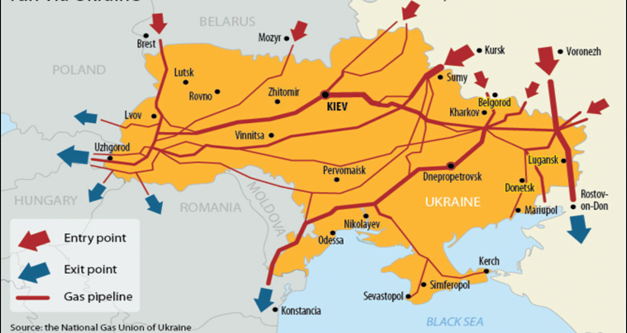
Tensions between Russia and Ukraine could significantly disrupt gas supplies into Europe as Russia’s top diplomat says relations with the U.S. and its NATO allies are the worst in decades. A significant presence of Russian troops has gathered in recent days on the border with Ukraine. Ukraine also recorded a daily jump in COVID-19 infections of 20,000, the highest since the beginning of the pandemic. The country is also struggling with vaccine supplies.
Mozambique:
Total, the French oil and gas major, announced that it will reduce its workforce at the $20 billion LNG plant in Cabo Delgado to an absolute minimum following the insurgency two weeks ago that resulted in multiple fatalities. The $20 billion project is the largest ever investment in Africa and is partially financed by Japan. The Islamic insurgency that commenced in 2017 has claimed 2,600 lives so far and the insurgents are now thought to control Palma, the base-town for the LNG operation.
Exxon has delayed a decision on another $30 billion LNG project in Cabo Delgado.
Switzerland:
Gunvor, the independent oil trader, will invest $500 million in renewables over the next three years through a new subsidiary called Nyera.
Malta:
Investigators are probing Shanghai Electric Power’s $400 million investment in Malta in connection with a 2017 assassination of journalist Daphne Caruana Galizia.
U.S.:
1). Pioneer National Resources will buy Double-Point Energy, another Permian Basin producer, for $6.4 billion. This follows Pioneer’s $7.6 billion acquisition of Parsley Energy in January. The combined company will have oil production of 500,000 bpd.
2). Royal Dutch Shell’s CFO, Jessica Uhl, will join the board of Goldman Sachs in April.
3). Exxon will incur losses of $800 million from the Texas Freeze.
Colombia:
Ecopetrol, Colombia’s largest oil and gas company, is diversifying into electricity following the $4 billion acquisition of a controlling stake in Grupo ISA, South America’s largest electricity transmission utility. Grupo ISA has transmission assets in Colombia, Peru, Chile, and Brazil.
EVENTS CALENDAR
A selection of domestic and international events we believe will have an impact on Japanese energy.
|
February |
Approval of Fiscal 2021 Budget by Japanese parliament including energy funding projects; CMC LNG Conference |
|
March |
10th Anniversary of Fukushima Nuclear Accident; Smart Energy Week – Tokyo; Quarterly OPEC Meeting; Japan LPG Annual Conference; Full completion of all aspects of the multi-year deregulation of Japan’s electricity market; End of 2020/21 Fiscal Year in Japan; |
|
April |
Japan Atomic Industrial Forum – Annual Nuclear Power Conference; 38th ASEAN Annual Conference-Brunei; Japan LNG & Gas Virtual Summit (DMG)-Tokyo Three crucial by-elections in Hokkaido, Nagano & Hiroshima – April 25th |
|
May |
Bids close in first tender for commercial offshore wind projects in Japan; Prime Minister Suga to visit the U.S.-tentative |
|
June |
Release of New Japan National Basic Energy Plan-2021; G7 Meeting – U.K. Forum for China-Africa Cooperation Summit (Senegal) |
|
July |
Tokyo Metropolitan Govt. Assembly Elections; Commencement of 2020 Tokyo Olympics |
|
August |
Hydrogen Ministerial Conference in conjunction with IEA |
|
September |
Ruling LDP Presidential Election; UN General Assembly Annual Meeting that is expected to address energy/climate challenges; IMF/World Bank Annual Meetings (multilateral and central banks expected to take further action on emissions disclosures and lending to fossil fuel projects); End of H1 FY2021 Fiscal Year in Japan; Japan-Russia: Eastern Economic Forum (Vladivostok)-tentative |
|
October |
Last possible month for holding Japan’s 2021 General Election; METI Sponsored LNG Producer/Consumer Conference; Innovation for Cool Earth Forum – Tokyo Conference; Task Force on Climate-Related Financial Disclosure (TCFD) – Tokyo Conference; G20 Meeting-Italy |
|
November |
COP26 (Glasgow); Asian Development Bank (‘ADB’) Annual Conference; Japan-Canada Energy Forum; East Asia Summit (EAS) – Brunei |
|
December |
Asia Pacific Economic Cooperation (APEC) Forum – New Zealand; Final details expected from METI on proposed unbundling of natural gas pipeline network scheduled for 2022. |
DATA
Japan Oil Price
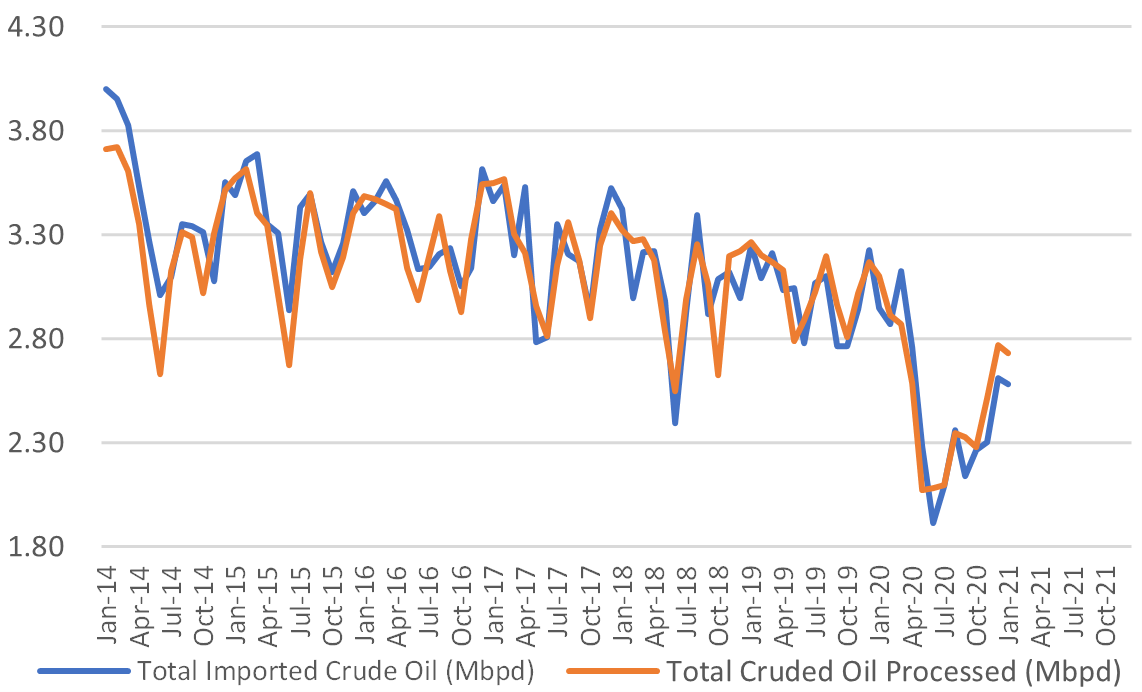
Crude Imports Vs Processed Crude
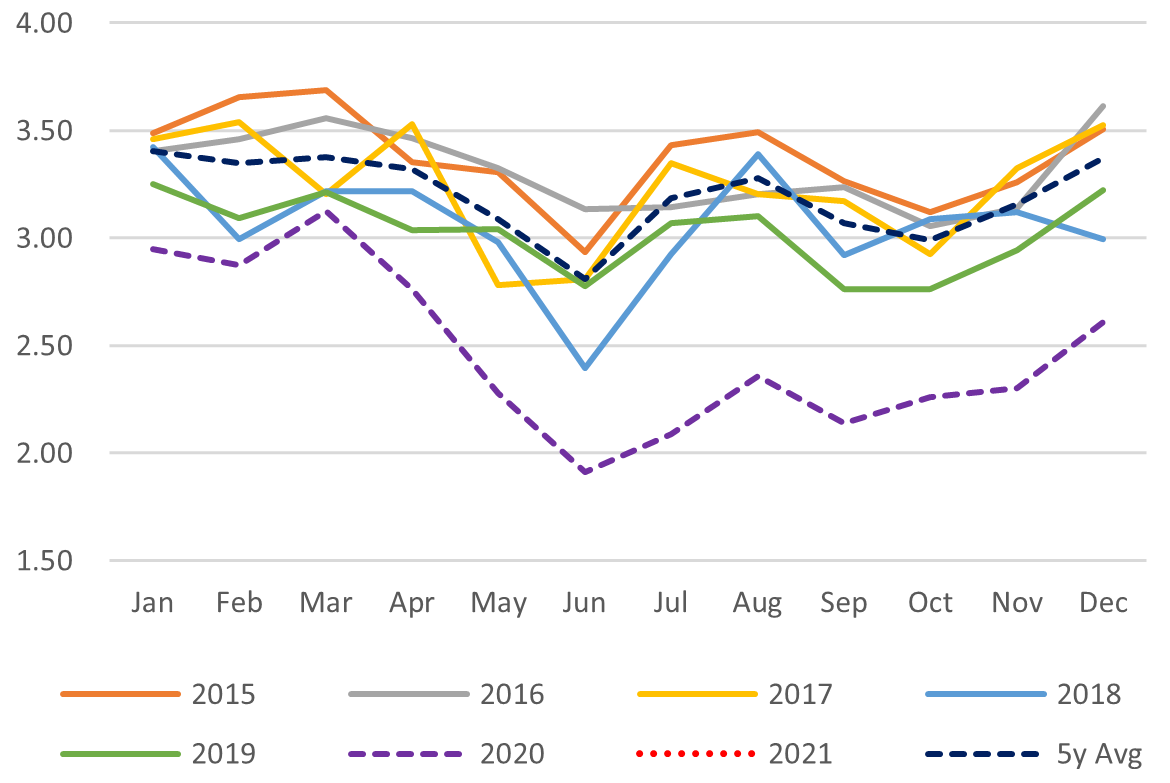
Monthly Oil Import Volume (Mbpd)
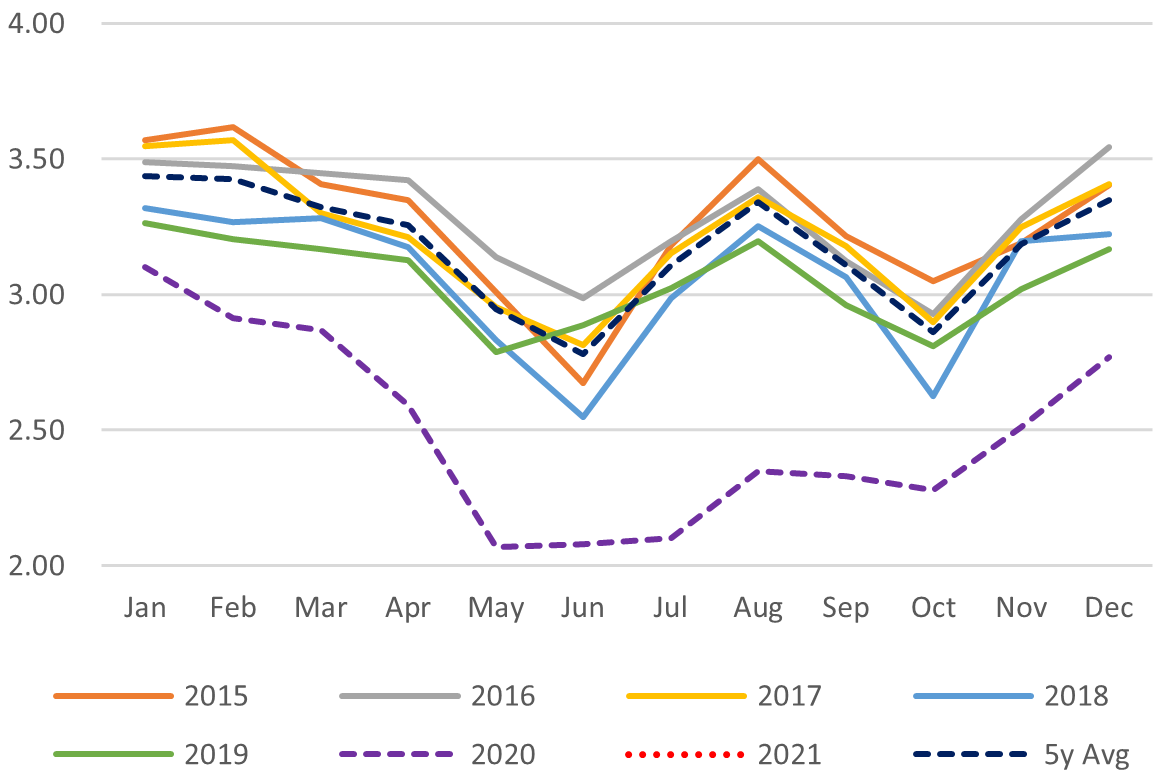
Monthly Crude Processed (Mbpd)
Domestic Fuel Sales
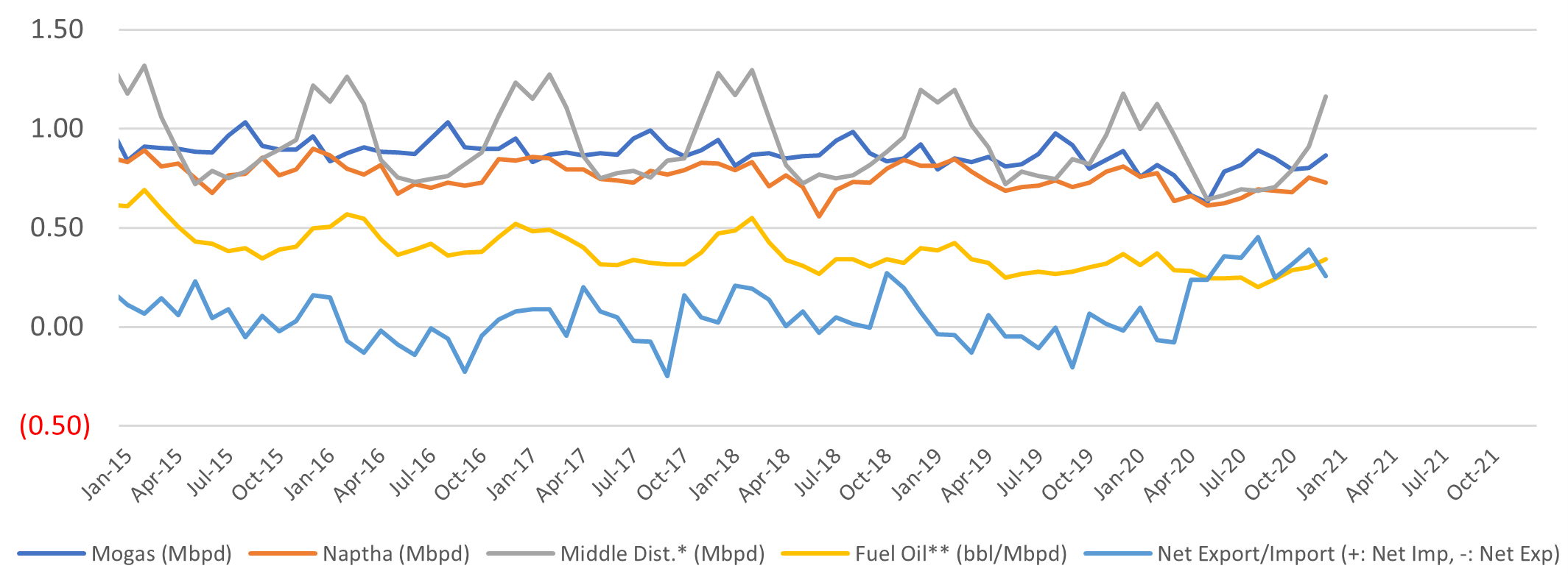
SOURCES: Ministry of Economy, Trade, and Industry (METI), Ministry of Finance, and the Petroleum Association of Japan
Japan LNG Price
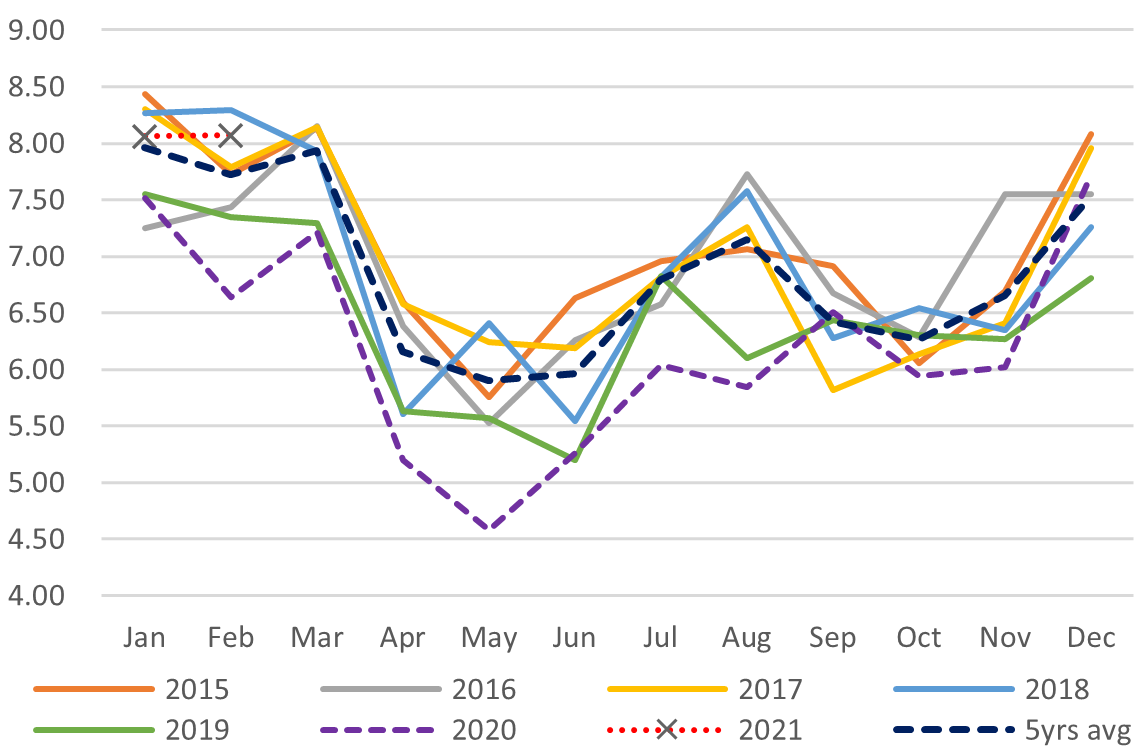
LNG Imports: Japan Total vs Gas Utilities Only
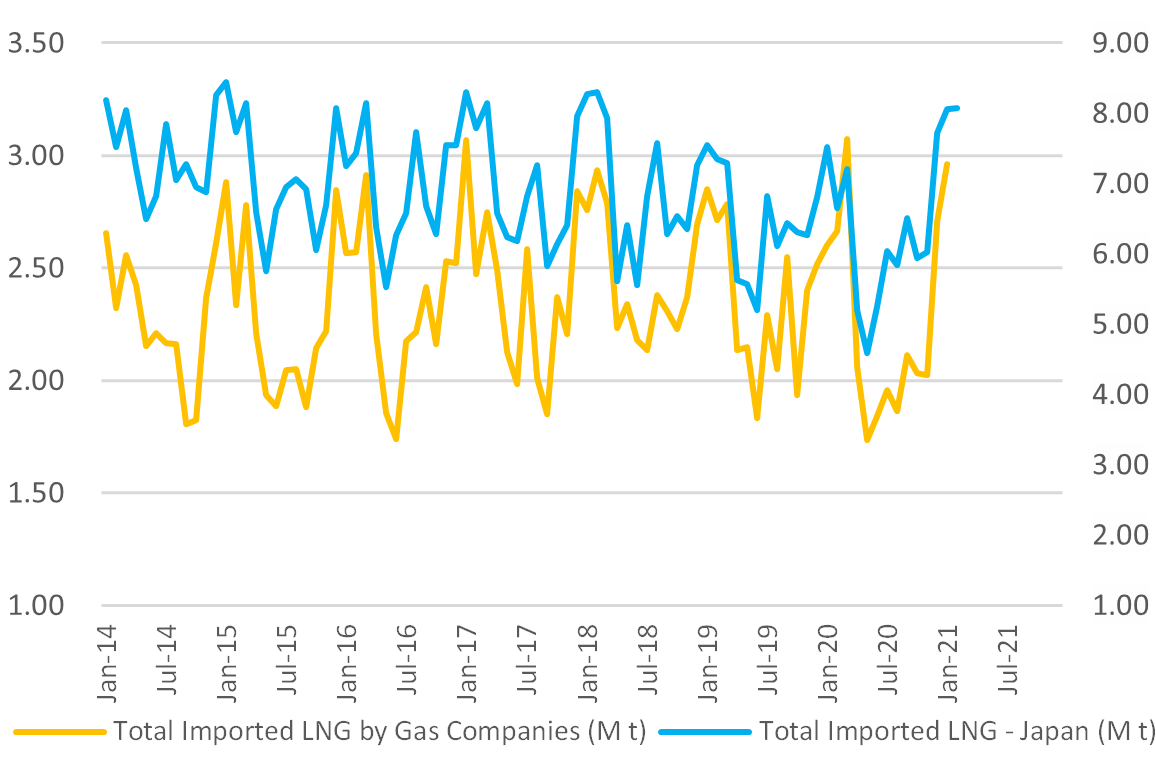
Total LNG Imports (M t)
LNG Imports by Gas Firms Only (M t)
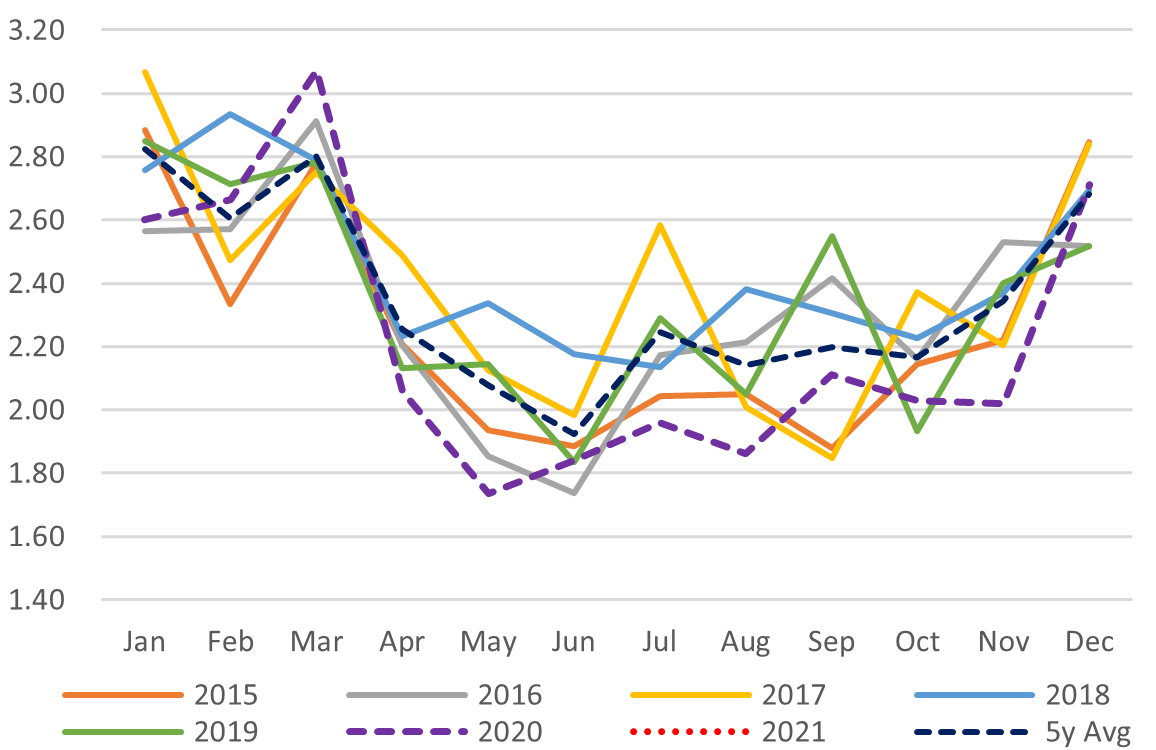
City Gas Sales – Total (M m3)
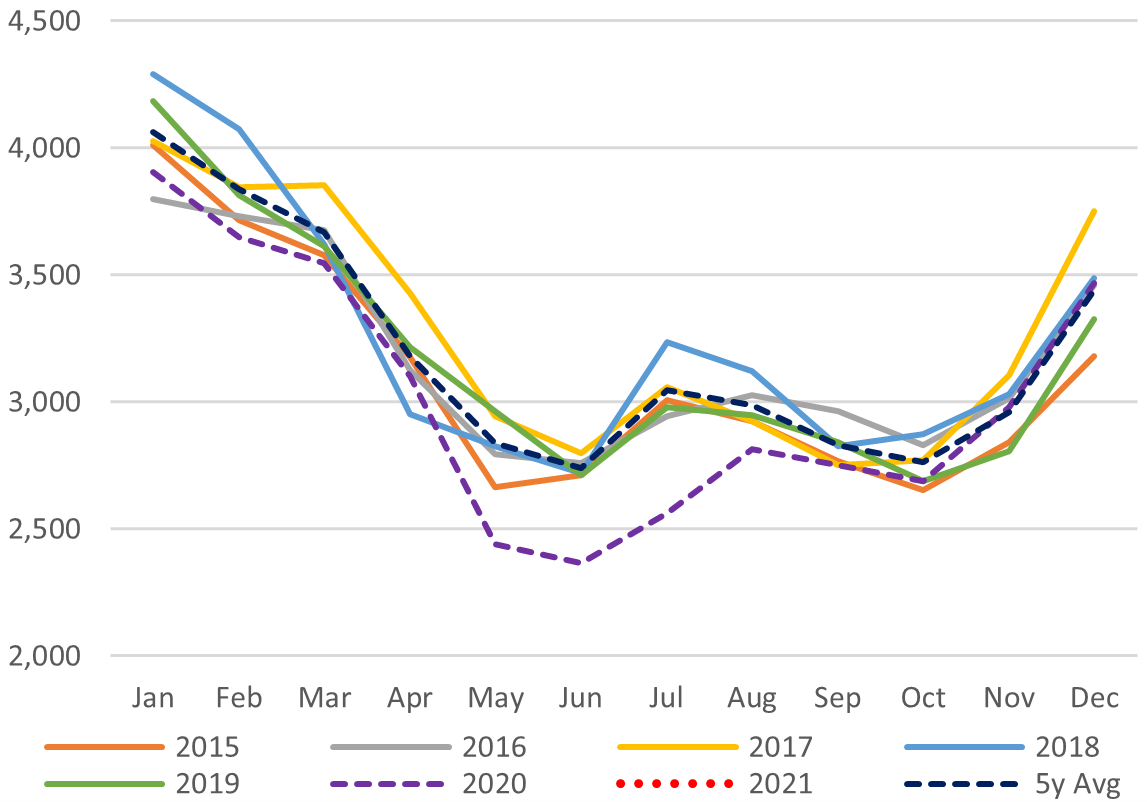
City Gas Sales by Sector (M m3)
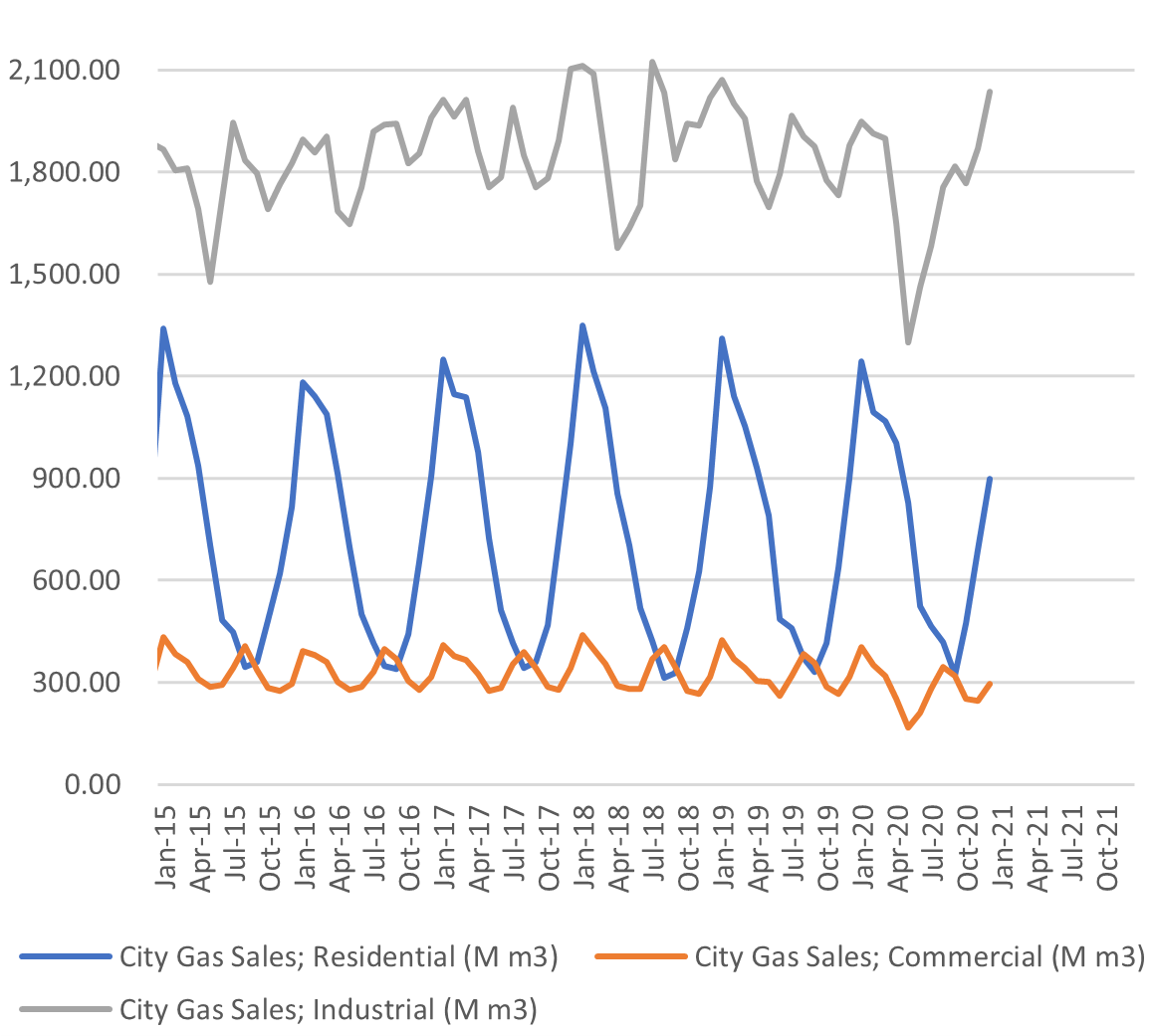
SOURCES: Ministry of Economy, Trade, and Industry (METI),
Ministry of Finance
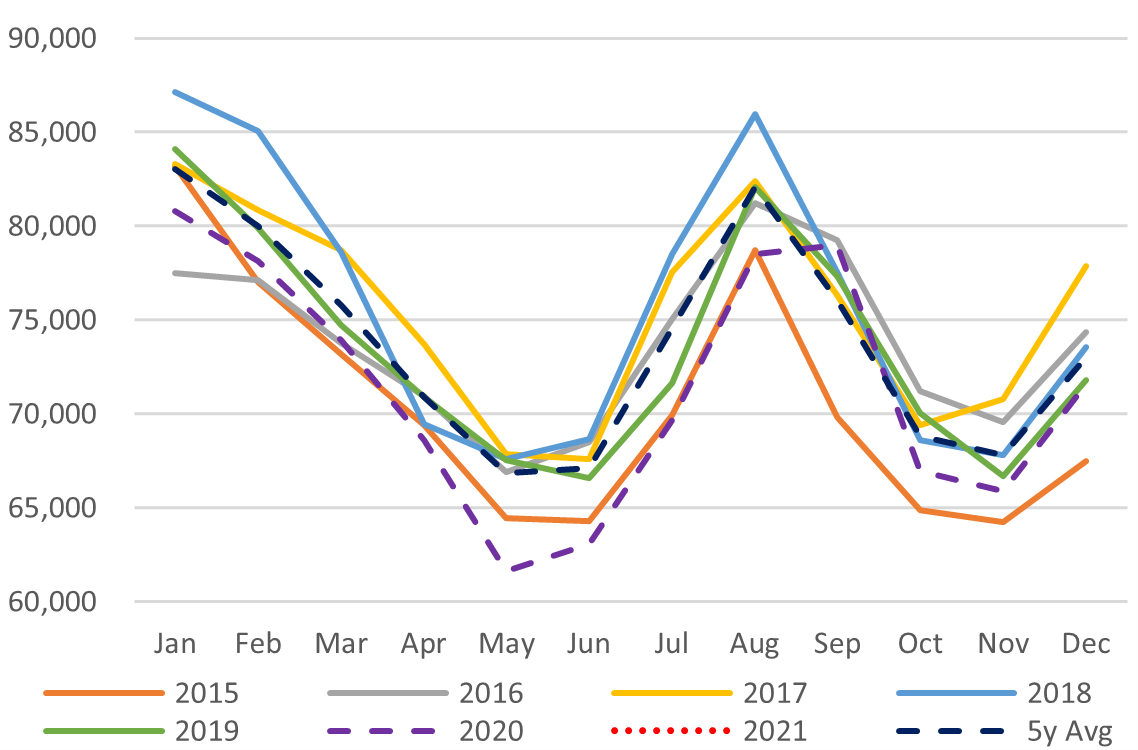
Japan Total Power Demand (GWh)
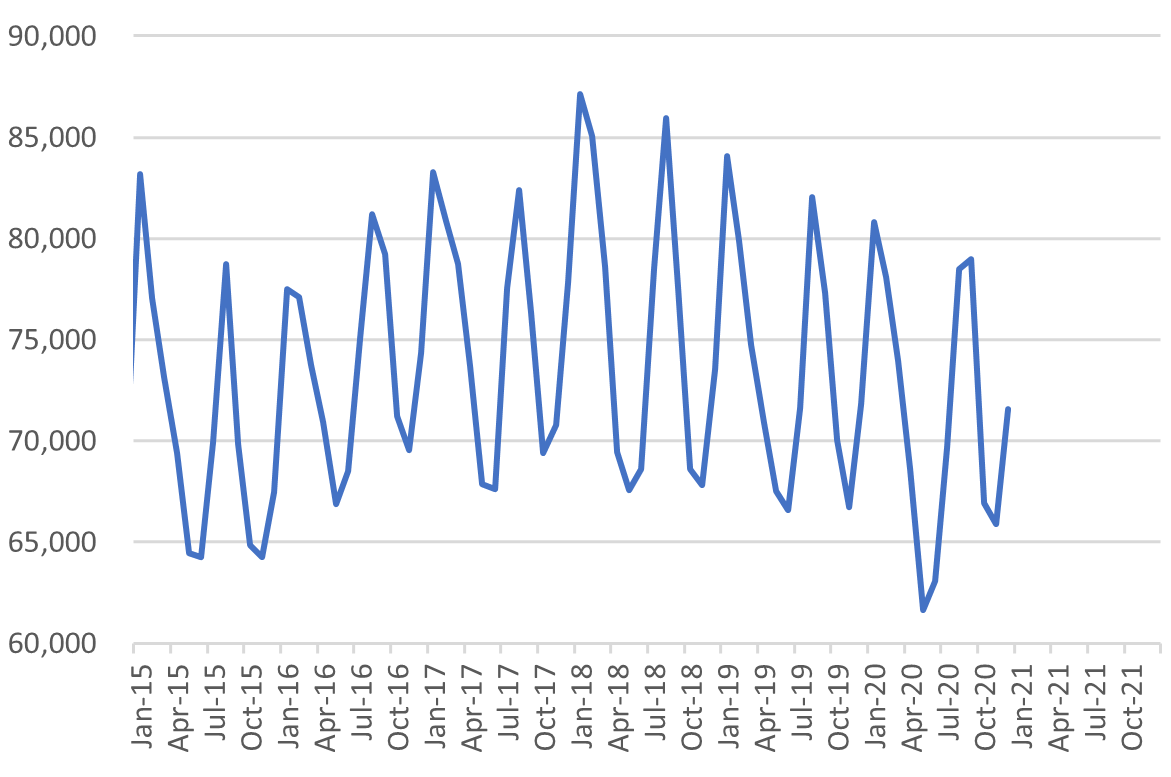
Current Vs Historical Demand (GWh)
Day-Ahead Spot Electricity Prices
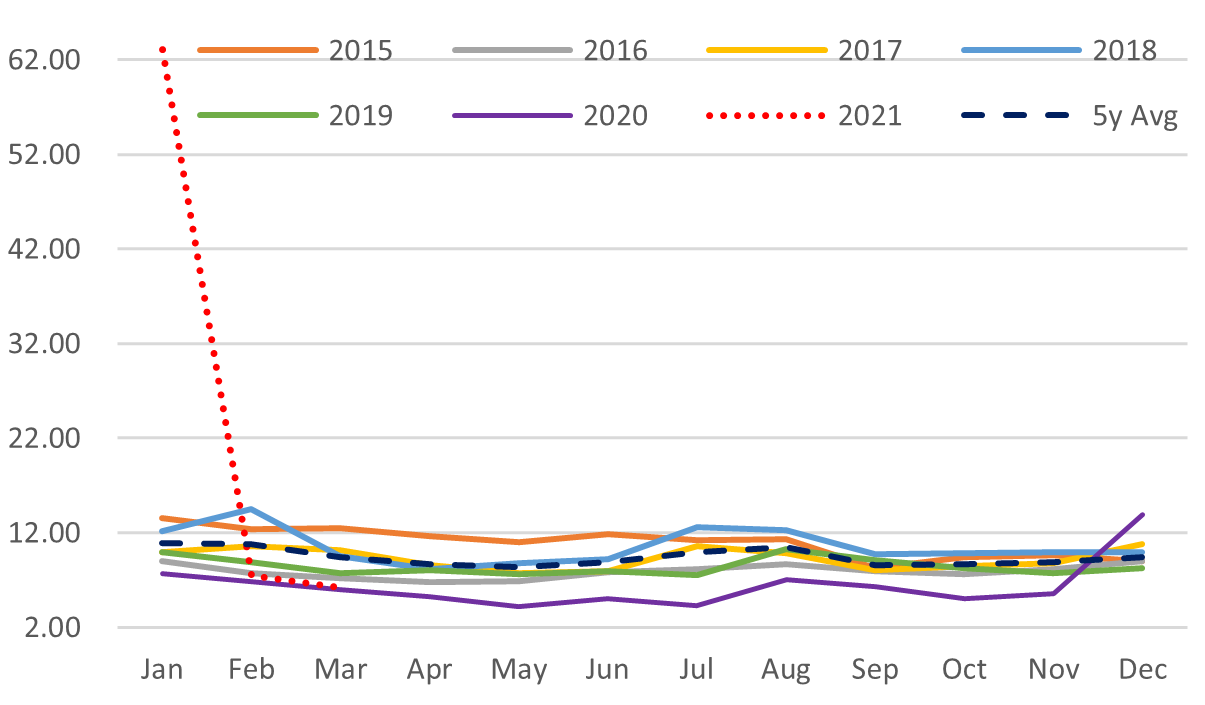
Day-Ahead Vs Day Time Vs Peak Time
LNG Imports by Electricity Utilities
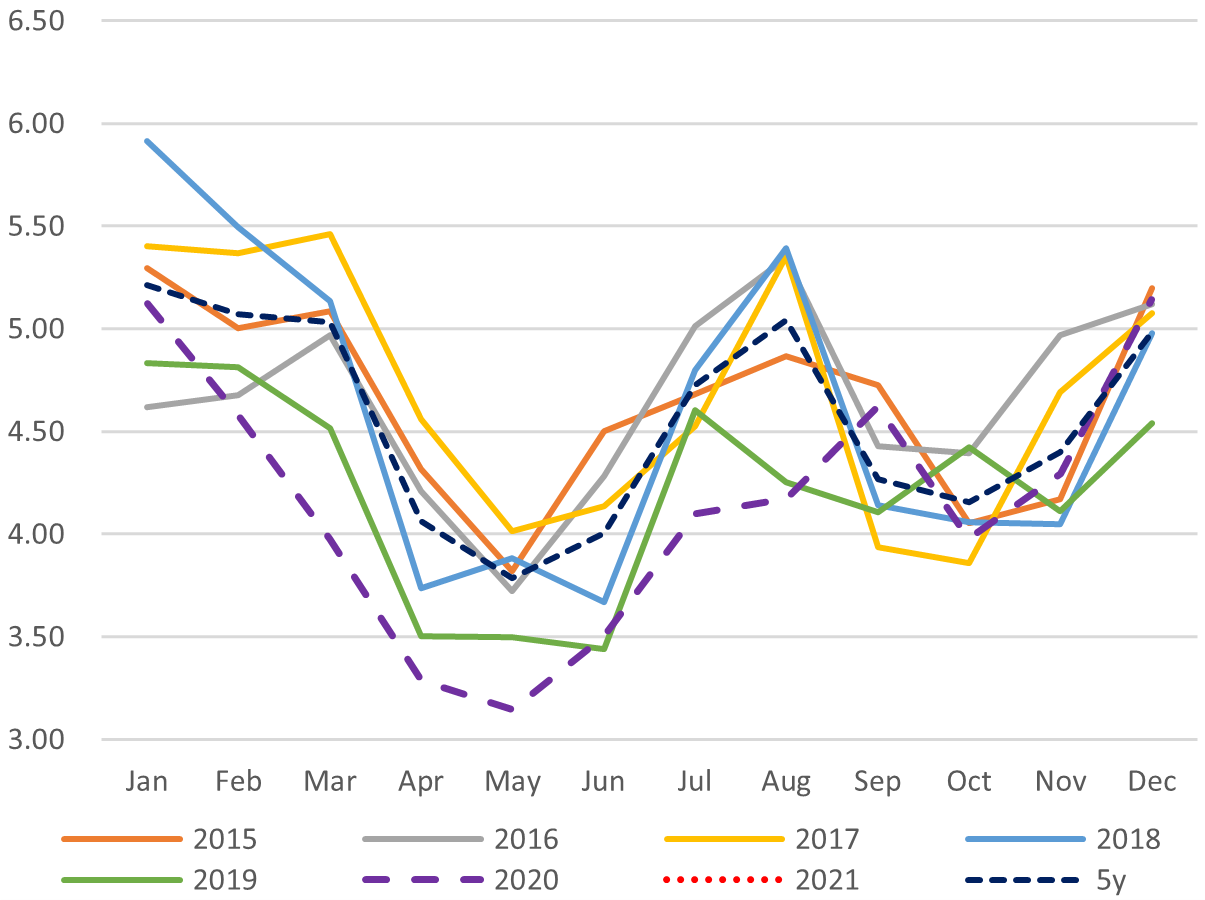
LNG Stockpiles of Electricity Utilities
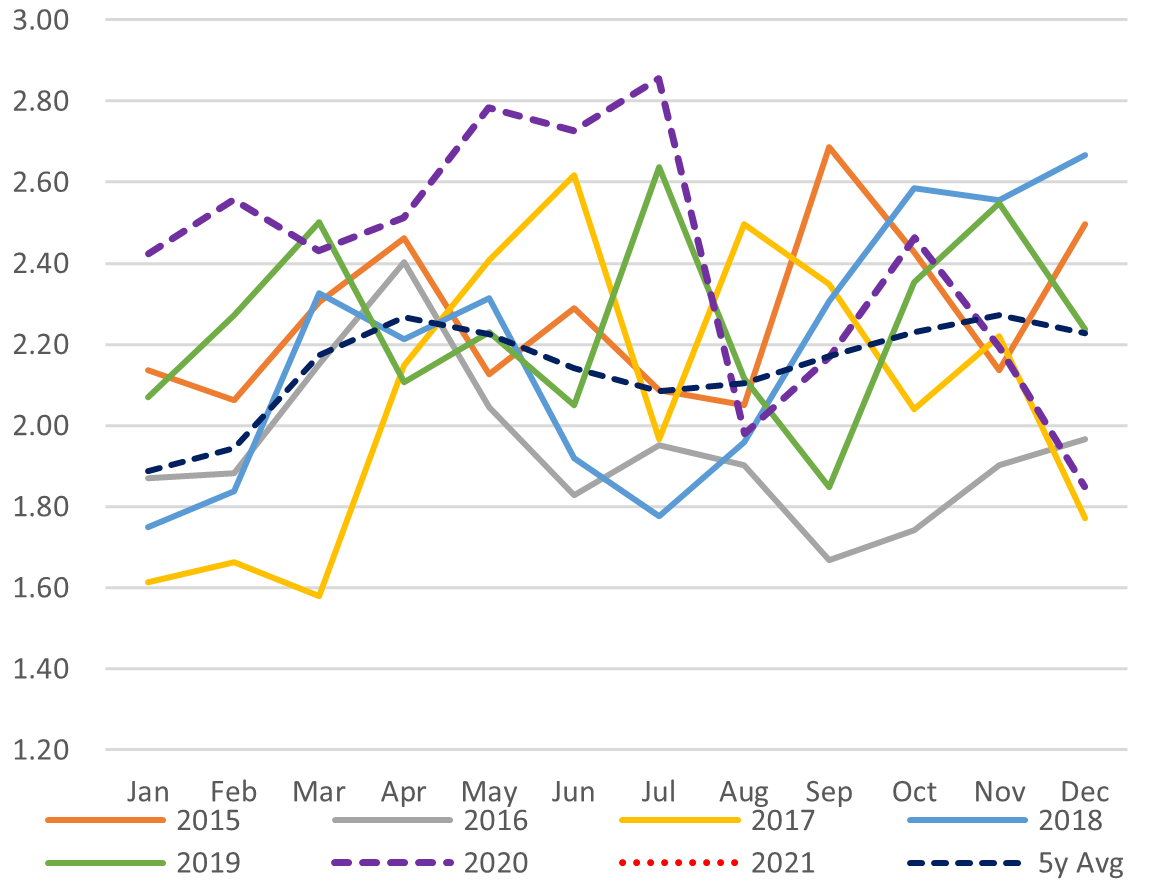
SOURCES: Ministry of Economy, Trade, and Industry (METI), and the Japan Electric Power Exchange
Disclaimer
This communication has been prepared for information purposes only, is confidential and may be legally privileged. This is a subscription-only service and is directed at those who have expressly asked K.K. Yuri Group or one of its representatives to be added to the mailing list. This document may not be onwardly circulated or reproduced without prior written consent from Yuri Group, which retains all copyright to the content of this report.
Yuri Group is not registered as an investment advisor in any jurisdiction. Our research and all the content express our opinions, which are generally based on available public information, field studies and own analysis. Content is limited to general comment upon general political, economic and market issues, asset classes and types of investments. The report and all of its content does not constitute a recommendation or solicitation to buy, sell, subscribe for or underwrite any product or physical commodity, or a financial instrument.
The information contained in this report is obtained from sources believed to be reliable and in good faith. No representation or warranty is made that it is accurate or complete. Opinions and views expressed are subject to change without notice, as are prices and availability, which are indicative only. There is no obligation to notify recipients of any changes to this data or to do so in the future. No responsibility is accepted for the use of or reliance on the information provided. In no circumstances will Yuri Group be liable for any indirect or direct loss, or consequential loss or damages arising from the use of, any inability to use, or any inaccuracy in the information.
K.K. Yuri Group: Oonoya Building 8F, Yotsuya 1-18, Shinjuku-ku, Tokyo, Japan, 160-0004.