
JAPAN NRG WEEKLY
JUNE 28, 2021
JAPAN NRG WEEKLY
June 28, 2021
NEWS
TOP
- Japan leads 100 Asian companies to forge Asian CCUS Network: Australia, Indonesia carbon capture projects under consideration; MHI seeks to create world’s first negative emissions power plant
- First nuclear reactor over 40 years old restarts in Japan: Kansai restarts Mihama No.3 and targets new nuclear construction; Chugoku gets approval for restart but faces local hurdles
- METI reveals energy transition roadmap for power, steel sectors
ENERGY TRANSITION & POLICY
- METI warns renewables firms to brace for tighter power supply
- Ministry wins approval for “green growth” strategy for forestry
- JERA-led group to supply sustainable biofuel for commercial jets
- Iwatec to open pilot green hydrogen plant in Nagasaki “soon”
- MOL, Yanmar to develop ships that run on hydrogen and biofuels
- Aisin, Toho Gas trial hydrogen-fired industrial burners for car parts
- IHI, GE are keen on commercial ammonia-fueled gas turbines
- Mitsubishi Motor readies cheap EV; Mazda to switch to EV, hybrid
- ENEOS partners with Ample to trail EV battery swapping business
- Mori Building, TEPCO to use sewage heat recovery … [MORE]
ELECTRICITY MARKETS
- Nuclear development remains divisive: Yomiuri rallies Japan to catch up with new nuclear tech abroad to get ahead in SMRs, while Asahi lambasts the restart of older reactors; local govt. is stuck in the middle on Chubu’s Hamaoka NPP future
- Mitsui divests from Indonesian coal power plant operators
- Japanese firms begin developing solar panels for ship sails
- JWD turns in assessment for 180 MW wind farm in Aomori
- Hitachi teams up with Norwegian partner on floating wind tech
- Etrion sells solar assets to Kansai Electric and Osaka Gas group
- Hokkaido Electric to expand geothermal plant by tapping waste hot water
OIL, GAS & MINING
- Tokyo Gas, Osaka Gas to lose restrictions on domestic sales price
ANALYSIS
GOVERNMENT MULLS MORE LOCAL FUNDING TO REVIVE SOLAR PUSH STALLED BY NIMBY
Almost one in 11 towns and villages in Japan restrict or altogether ban development of utility-scale solar on their territory. Such caution is increasingly at odds with the national strategy to put renewables at the core of Japan’s future energy mix. As the central government adds new laws and targets that mandate local progress towards decarbonization, regional populations are pushing back. Locals claim some solar developments are an eyesore and a burden in times of natural disasters. With under-staffed and under-funded local governments caught in the middle, something will have to give if Japan is to keep its solar growth rate.
JAPAN’S OFFSHORE WIND IN PIVOTAL YEAR
TOWARD A MASS DEPLOYMENT
Japan announced the results of its first commercial-scale offshore wind tender as the country starts to build a key pillar of its future energy strategy almost from scratch. This is a historical step for Japan, a relative late-comer to offshore wind despite boasting one of the world’s longest coastlines. Whether Japan’s planned scale-up in offshore wind takes place, however, depends on several factors including access to key infrastructure. Should the early entrants find success, offshore wind carries the potential to take over as one of the biggest capacity contributors to Japan’s energy mix.
GLOBAL VIEW
Leaked UN report suggests climate warming is on course for a 3-degree rise. Top U.S. tech firms account for 30% of all clean energy purchases. Gas prices are at 13-year highs. Higher input costs sink solar market 20% this year. Landfills may emit more methane than all fossil fuels. JP Morgan buys trees.
Details on these and more in our global wrap.
EVENT CALENDAR / DATA SECTION
JAPAN NRG WEEKLY
PUBLISHER
K. K. Yuri Group
Editorial Team
Yuriy Humber (Editor-in-Chief)
Tom O’Sullivan (Japan, Middle East, Africa)
John Varoli (Americas)
Sponsored
Regular Contributors
Mayumi Watanabe (Japan)
Daniel Shulman (Japan)
Takehiro Masutomo (Japan)
Art & Design
22 Graphics Inc.
SUBSCRIPTIONS & ADVERTISING
Japan NRG offers individual, corporate and academic subscription plans. Basic details are our website or write to subscriptions@japan-nrg.com
For marketing, advertising, or collaboration opportunities, contact sales@japan-nrg.com
For all other inquiries, write to info@japan-nrg.com
OFTEN USED ACRONYMS
METI The Ministry of Energy, Trade and Industry
ANRE Agency for Natural Resources and Energy
NEDO New Energy and Industrial Technology Development Organization
TEPCO Tokyo Electric Power Company
KEPCO Kansai Electric Power Company
EPCO Electric Power Company
JCC Japan Crude Cocktail
JKM Japan Korea Market, the Platt’s LNG benchmark
CCUS Carbon Capture, Utilization and Storage
mmbtu Million British Thermal Units
mb/d Million barrels per day
mtoe Million Tons of Oil Equivalent
kWh Kilowatt hours (electricity generation volume)
NEWS: ENERGY TRANSITION & POLICY
Japan leads 100 Asian companies to jointly develop carbon storage industry
(Nikkei, METI statement, June 22)
- Japan launched an Asia-wide public-private initiative to develop carbon storage technology, and over 100 companies in the region agreed to take part.
- The goal of the Asia CCUS Network, according to METI, is to lower the cost of the technology and bring it closer to commercial reality. This should create a forum to swap technological know-how with companies from the Association of Southeast Asian Nations, Australia and the U.S. The first meeting will be in August, with financing also due to be discussed.
- Studies show the CCUS requires investment of over $1 billion annually.
- From Japan, leading members include INPEX, Mitsubishi Corp, Sumitomo Corp., Tokyo Gas, Mitsui OSK (MOL), Nippon Steel, JGC and MUFG Bank.
- Asia has the geology to create underground storage for at least 10 billion tons of CO2. Annually, the region could see 35 million tons of CO2 captured by 2030, which would grow to 200 million tons by 2050. The gas would be collected at emissions point, liquified, and then shipped to storage location.
- One of the first projects will be in Indonesia, where Japanese firms are preparing a feasibility study to collect CO2 from gas fields. About 300,000 tons of CO2 might be removed, to count towards Japan’s CO2 reduction targets.
- There are currently no commercial scale CCUS projects in Southeast Asia.
- SIDE DEVELOPMENT:
Mitsubishi licenses CO2 recovery technology to Drax
(New Energy Business News, June 22)- Mitsubishi Heavy Industries Engineering inked an agreement with UK utility Drax for use of its proprietary CO2 recovery technology at biomass-fired power stations in north Yorkshire with a total capacity of 2.6 GW, in what’s known as a Bio Energy with Carbon dioxide Capture and Storage, or BECCS, project.
- By combining carbon-neutral, plant-based fuels with CO2 recovery, the project aims to create the world’s first commercial scale “negative emission” plant.
- This is Drax’s first foray into BECCS; the company hopes to have a negative carbon emissions profile by 2030.
TAKEAWAY: Carbon Capture (and Storage or Recycle) figures very highly on the priority list for energy transition of Japan and many other governments. Japan has decided that it can and must take the lead on carbon capture and there is no better market for its energy tech than Southeast Asia and the wider Pacific region. It’s not clear how seriously technological development will proceed within such a large and largely corporate network. However, the Asia CCUS Network could act as an alliance for lobbying in favor of the technology’s introduction and widespread adoption. It may also help Japan stay on top of the regional development and build up a power base for CCUS in Asia to compete with similar technology from the U.S., Europe and elsewhere.
METI group reveals energy transition roadmap for power, steel sectors
(Japan NRG, June 22)
- On June 22, a METI working group on energy transition presented roadmaps to replace fossil fuel with ammonia and hydrogen in the power and steel sectors. The roadmap is for 2021-2030.
- Ammonia is seen as the ideal replacement for coal at power plants since it allows utilities to retain existing facilities. Carbon could be cut 10% if USC coal-fired power plants, which account for 57% of Japan’s coal power plants, used ammonia as 20% of their feedstock.
- Hydrogen is seen replacing coking coal as an iron ore reduction agent used in steel blast furnaces.
- While the greater share of Japan’s ammonia demand – estimated to be 3 million tons/ year by 2030 – will be imported, Japan is also exploring alternative production technologies for both blue and green ammonia. R&D has started on manufacturing ammonia at normal temperature and pressure conditions, which would replace the conventional Haber Bosche process.
- Work is also underway to discover new catalysts such as molybdenum, used in oil refining, that could be used in the green ammonia manufacture process.
- Another major R&D focus is reducing nitrogen compounds during the combustion process, as well as establishing a practical way to transport and store large volumes of ammonia safely and economically.
- Japan expects to start moving into ammonia combustion at its power plants in around 2023 to 2024. Development of new catalysts for blue ammonia should take till 2023, with a test phase seen from 2024 and then pilot testing from 2027. Green ammonia development may follow a similar timescale.
TAKEAWAY: Progress towards a shift from coal to gas (ammonia or hydrogen) is happening much faster than was imagined by most a year ago. Steelmakers are already testing hydrogen reduction technology with small pilot furnaces — see Japan NRG Weekly’s June 21 issue for details. Still, commercial and mass-scale rollout of these technologies is years away. Commercial scale operations of hydrogen steelmaking, for example, are not expected until around 2030. In the power sector, ammonia/hydrogen is unlikely to offer more than 1% to 2% of the total energy mix by the end of this decade, but will likely ramp up quickly after that.
METI tells renewables to brace for tightening power supplies
(Japan NRG, June 21)
- On June 21, METI sent a notice to renewable energy operators urging them to brace for a tighter power supply balance in upcoming peak-demand seasons.
- The ministry believes that power shortage concerns have eased after the restart of the Mihama NPP plant last week, but METI’s message is that the renewables sector still needs to stay alert.
- CONTEXT: Many electricity retailers source power from spot or wholesale markets. A lot of these new retailers are also primarily focused on electricity from renewable sources.
- METI warned market players of a need to brace for volatile market prices and a rise in power imbalancing rates. The ministry urged participants to understand market risks and secure power supplies not linked to the spot market, as well as securing a demand response that could be activated when market prices rise, conduct hedging in futures market, and subscribe to insurance policies for renewables issued by municipalities.
- Renewables operators and retailers will have more choices next year with a new aggregator system due to take effect from 2022. But for the current year, they’re urged to take part in a training session that METI will organize soon.
Government signals “green growth” for forestry sector
(Kankyo Business, June 18)
- The Ministry of Agriculture, Forestry and Fisheries said the Diet approved its new basic plan for forestry and the timber industry.
- Pledging ‘green growth’, the plan will improve the sustainability of the forestry and timber industries, and contribute to Japan’s goal of carbon neutrality by 2050.
JERA-led group to supply sustainable biofuel for commercial flights
(New Energy Business, June 23)
- A group comprising Mitsubishi Power, JERA, Toyo Engineering, JAXA, and IHI supplied wood-sourced aviation fuel for use in a commercial flight in a contract with the government-backed New Energy and Industrial Technology Development Organization.
- The fuel was made from gasified cellulose using the Fischer-Tropsch process.
- NEDO has worked on jet fuel manufacturing technologies since 2017, aiming to set up a supply chain that supports every stage, from procurement of wood chips to the farming of bacteria and the production of highly pure bio jet fuel.
- Testing verified that a blend of the biofuel with JET A-1 satisfied the requirements of Japan’s ASTM D7566 Annex 7 standard for jet fuel.
Iwatec opens renewably-powered hydrogen pilot plant in Nagasaki
(Kankyo Business, June 23)
- Nagasaki-based Iwatec said its pilot hydrogen plant, capable of producing five normal cubic meters of hydrogen per hour, would soon begin operating.
- Thanks to the plant’s 50 kW solar installation, the electricity used to generate the hydrogen is carbon neutral.
- The plant also sports over 64 kWh of storage batteries.
- During the trial, Iwatec will evaluate the best way to distribute the hydrogen generated for use in fuel cells in other applications.
Mitsui OSK and Yanmar to work on hydrogen-biofuels hybrid maritime transport
(New Energy Business News, June 24)
- A consortium including MOL Techno-Trade, Kanmon-Kisen, Yanmar Power Technology, and Tokyo Marine & Nichido Fire Insurance has agreed to work together on hybrid commercial shipping solutions that will enable operators to use both hydrogen and biofuels to power commercial vessels.
- The employment of a “carbon neutral powertrain” has the potential to make zero-emission voyages a reality.
- The trial will take place at Moji port in Fukuoka, and the group plans to join forces with local bodies on the creation of a carbon neutral port.
Aisin and Toho Gas to trial hydrogen-fired industrial burners
(Nikkei, June 24)
- Aichi-based automotive manufacturer Aisin and Toho Gas launched a joint trial to assess the performance of hydrogen in firing Aisin’s radiant tube burners, which are used to heat treat car parts.
- Aisin will assess any effects on product quality resulting from the transition from reticulated gas to hydrogen.
- Aisin will also trial hydrogen in direct burners used to melt recycled aluminum.
IHI, GE seem to commercialize ammonia-fueled gas turbines
(New Energy Business News, June 24)
- IHI and GE Gas Power aim to commercialize carbon-free ammonia-fueled gas turbines, and conduct joint marketing activities for the product development.
- The two will survey the market for ammonia as a fuel and assess demand for ammonia gas turbines in Japan and Asia. Further, the companies will do a feasibility study that explores innovative ways to employ ammonia as the leading fuel for thermal power plants.
Mitsubishi Motors readies an EV for less than $18,000 as competition heats up
(Asia Nikkei, June 25)
- Cheaper batteries and subsidies are making EVs more affordable.
- Global competition among automakers is heating up and Mitsubishi Motors has become the latest to promise a cheaper, electric mini-vehicle for under ¥2 million ($18,100) in Japan by fiscal 2023.
- EVs are more expensive than gas-fueled autos. However, the gap is closing. Mitsubishi’s cheapest gas-powered model sold in Japan for around $15,000.
- SIDE DEVELOPMENT:
All Mazda cars to be hybrid or electric by 2030
(Kankyo Business, June 21)- Mazda released its long-term vision for technological development, dubbed ‘Sustainable Zoom-Zoom Declaration 2030’.
- By 2030, Mazda envisages that 25% of its cars will be EVs and the rest will be hybrids.
- Mazda plans to release five new hybrids, five new plug-in hybrids, and three new EVs by 2025.
ENEOS partners with Ample in trial of battery swapping technology
(Kankyo Business, June 18)
- ENEOS Holdings invested in North American start-up Ample, collaborating on a rollout of battery swapping technology for EVs.
- ENEOS will commence its trial of Ample’s proprietary battery swapping robot later in 2021/22 on operators of taxis and other EVs.
- The trial hopes to speed up the battery swapping process and improve vehicle utilisation, as well as evaluating operating costs and compliance issues.
Mori Building and TEPCO EP to use sewage heat recovery
(Nikkan Kogyo Shimbun, June 25)
- A joint venture between the Mori Building company and TEPCO Energy Partners agreed with the Tokyo Bureau of Sewerage to employ sewage heat recovery technology when installing heating and air conditioning systems for a new office complex in Tokyo that is scheduled to open in 2023.
- Heat recovery pipes inside sewer pipes will connect to heat exchangers to recover thermal energy from sewage, which is warm in winter and cool in summer.
- The initiative is the first of its kind in Japan, and promises to reduce CO2 emissions from the complex by 70 metric tons per year.
KEPCO, Kyocera to conduct feasibility study on DER management
(New Energy Business News, June 23)
- A group including the Mitsubishi Research Institute, KEPCO, Kyocera, TEPCO Power Grid, and Waseda University has been selected to conduct a feasibility study on distributed energy resource (DER) management by the government-backed New Energy and Industrial Technology Development Organization.
- The study runs until March 2022 and aims to identify obstacles to the rapid deployment of systems to improve DER flexibility, thus reducing transmission grid congestion during times of high output from solar farms and other renewable generation infrastructure.
NEWS: POWER MARKETS
| No. of operable nuclear reactors | 33 | |
| of which | applied for restart | 25 |
| approved by regulator | 16 | |
| restarted | 9 | |
| in operation today | 8 | |
| able to use MOX fuel | 4 | |
| No. of nuclear reactors under construction | 3 | |
| No. of reactors slated for decommissioning | 27 | |
| of which | completed work | 1 |
| started process | 4 | |
| yet to start / not known | 22 | |
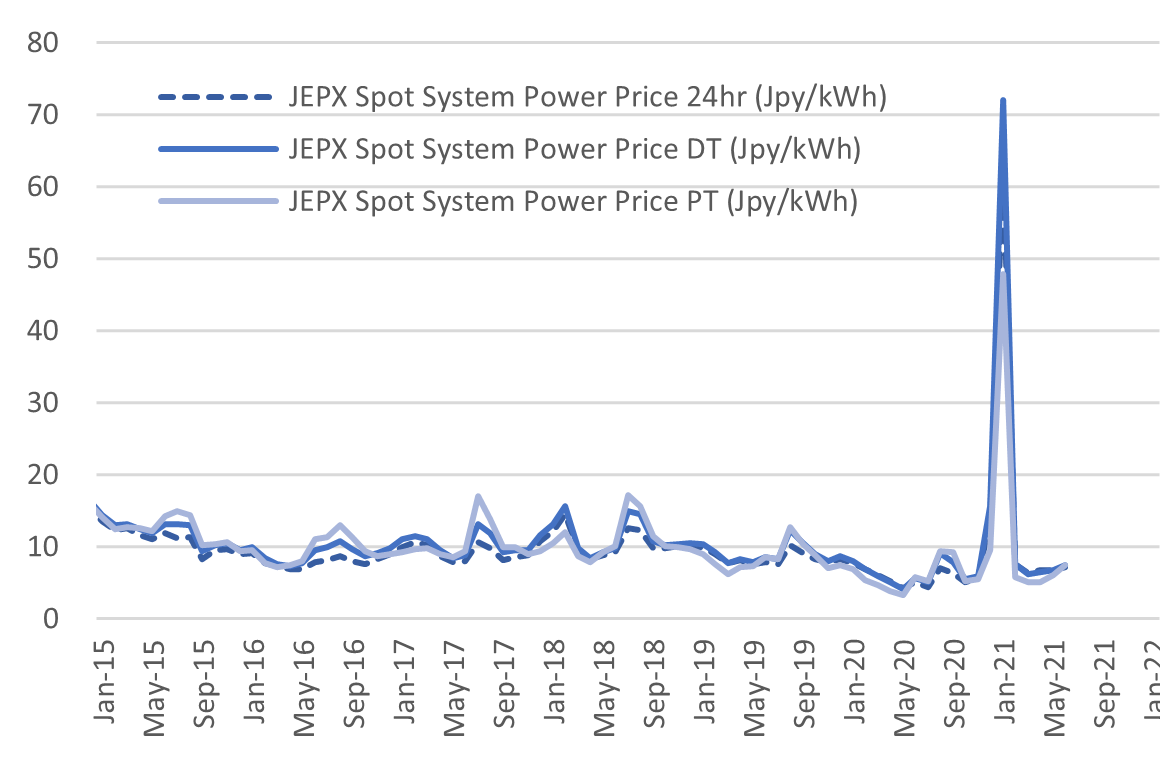
Spot Electricity Prices, Monthly Avg.
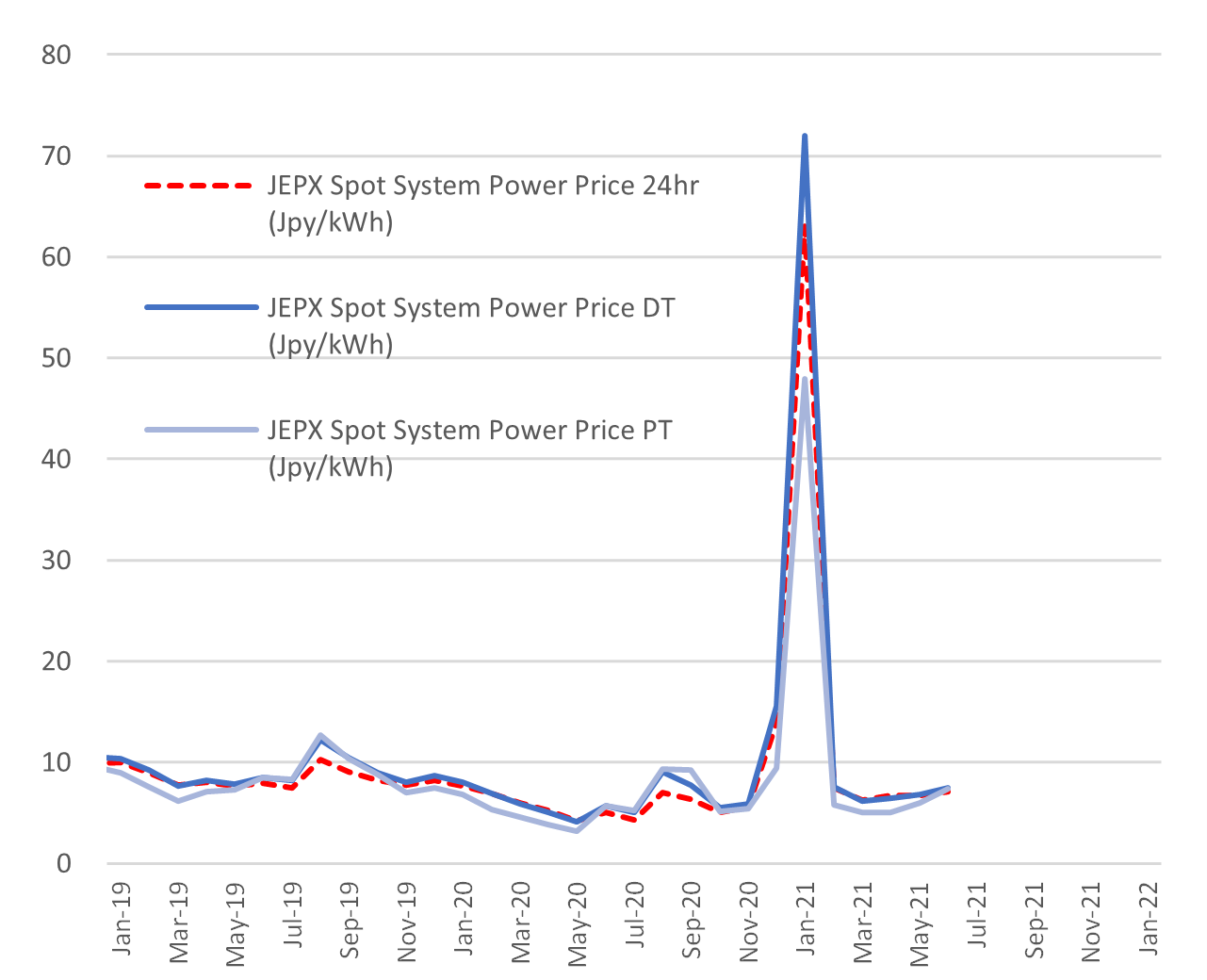
Source: Company websites, JANSI and JAIF, as of June. 23, 2021
Milestone for older nuclear plants in Japan as Kansai Electric’s Mihama NPP Unit 3 restart
(Nikkei, June 23)
- KEPCO restarted the Unit 3 reactor at the Mihama nuclear power station.
- The restart was plagued by delays and comes 18 months later than scheduled.
- The reactor, which was opened 44 years ago, was idle for 10 years.
- After the Fukushima disaster, the govt. passed legislation requiring nuclear reactors to be decommissioned after 40 years, though allowing service lives to be extended by up to 20 years in exceptional cases if reactors meet safety criteria.
- Mihama Unit 3 is the first reactor over 40 to be restarted since the “40 year rule” was introduced.
- While Unit 3 will boost KEPCO’s revenue by ¥2.5 billion/month, maintenance costs will be high, and the utility doesn’t yet know how the restart will impact its bottom line.
- CONTEXT: The unit must still complete some mandatory upgrades to its anti-terrorism measures and has until October to do so. Kansai Electric said it needs to power down the unit and wait for the work to be completed before restart.
TAKEAWAY: This is the 10th reactor to restart in Japan after the country mandated tougher sector regulations post Fukushima, and the first restart in about three years. There are several more reasons why it is significant. As well as taking the restarts into double digits and continuing the nuclear sector’s positive momentum since the start of this year, Mihama is widely reported in all Japanese media as the first “over 40” year old unit to get a green light. Originally, all reactors in Japan receive a 40-year operating license. Several recently won a 20-year extension and the rest of the fleet will need to do the same if Japan is to have its existing nuclear plants in operation by 2050. A good operating record for Mihama NPP may ease public concerns about extending more 40-year permits.
- SIDE DEVELOPMENT:
Nuclear regulator approves restart of Shimane NPP Unit 2
(Nikkei, June 23)- NRA, the industry regulator, approved the restart of Chugoku Electric’s Unit 2 at the Shimane NPP.
- This could see the facility restart as soon as fiscal year April 2022.
- This is the 17th reactor to receive a NRA permit to switch back on.
- Shimane still needs to upgrade safety measures and receive local approval.
- CONTEXT: Shimane NPP is a BWR model, the same technology used at the Fukushima Dai-Ichi NPP. This association has prevented restarts of BWR facilities in Japan, although Shimane is not the first approved by the regulator.
- CONTEXT: To upgrade safety measures at Shimane NPP, the operator, Chugoku Electric, is expected to spend about ¥600 billion ($5.8B)
- SIDE DEVELOPMENT:
Kansai Electric CEO says considering building new nuclear power plants
(MBS News, June 26)- Kansai Electric President Morimoto said he will consider the construction of a new nuclear power plant in preparation for the time when existing nuclear power plant reach their maximum operations period of 60 years.
- President Morimoto wants to replace the utility’s existing assets, all of which will reach the age of 60 around mid-2030s. He also said he’d like to look at new reactor types.
Nuclear development remains divisive in Japan:
- While right-leaning Yomiuri prints a story talking up nuclear development abroad to fire up domestic competitive spirit to catch up, left-leaning Asahi sticks to its strongly anti-nuclear stance and lambasts the life extensions of older facilities.
- These stances are not a surprise, but it is a timely reminder of how problematic the nuclear energy issue remains in Japan.
- Meanwhile, local governments are stuck in the middle but are supposed to act as neutral referees, giving the final go-ahead to nuclear reactor restarts. In some cases, local governments even have small equity stake in the regional utilities.
- We expect this topic to remain top energy news in Japan throughout the rest of the year.
- SIDE DEVELOPMENT:
Western nations press on with small modular reactor development
(Yomiuri Shimbun, June 21)- Recent improvements in the safety and economy of small modular reactor technology being developed in the U.S. and Europe mean the technology is likely to be commercially viable by the latter half of the decade.
- Japanese reactor manufacturers are hoping the SMR boom will breathe much-needed life into their industry.
- Most SMR’s have an output in the order of tens to hundreds of megawatts. Proponents claim they are safer than traditional designs because they envelop a light water reactor in a pool of water.
- By prefabricating reactor components in factories for assembly on site, it is possible to keep construction costs down to around 10 of 20% of traditional levels.
- In addition to a joint development project between Hitachi and General Electric, Mitsubishi Heavy Industries is also researching relocatable SMR technology.
- SIDE DEVELOPMENT:
Shizuoka government refuses to be drawn on anti-reactor proposals against Chubu
(Shizuoka Shimbun, June 25)- Shizuoka City will cast blank votes on four shareholder proposals that include a commitment to decommissioning the Hamaoka nuclear power plant in Chubu Electric’s articles of incorporation.
- Shizuoka City said it didn’t have enough information to make a decision on the proposals, which has implications for electricity supply.
- SIDE DEVELOPMENT:
EDITORIAL: Why aging nuclear plants should be shut down
(Asahi Shimbun editorial, June 23)- The left-leaning newspaper prints an editorial castigating Kansai Electric for restarting the Mihama Unit 3 reactor, claiming that one lesson of Fukushima is that older reactors cause problems.
- The editorial cites comments from the Nuclear Regulation Authority as criticizing the more basic safety aspects of older reactor designs. Asahi acknowledges that parts of the facility have been upgraded, but stands firm that this is not enough.
- Finally, the newspaper laments that fighting climate change with nuclear power could inhibit the development of renewable energy, in which Japan already lags.
Mitsui trading house divests from Indonesian coal power plant operator
(Nikkei, June 23)
- Mitsui & Co. trading house will sell its entire 45.5% stake in Paiton Energy, an operator of Indonesian coal-fired power plants, as it continues to exit coal-related power investments.
- RH International (Singapore), a subsidiary of Thai power producer Ratch Group, bought Mitsui’s shares in a deal that includes a transfer of shares in two other affiliated businesses.
- The transaction is set to close by March next year. The deal’s value wasn’t disclosed.
- Paiton now runs three coal-fired plants at the Paiton Power Complex in East Java. The sale will cut the share of coal plants in Mitsui’s power profile to 11% from 18%.
Eco-Marine Power and F-Wave cooperate on solar sail project
(New Energy Business News, June 25)
- Fukuoka-based Eco Marine Power and Tokyo-based F-Wave began developing a revolutionary ship integrated photovoltaic (SIPV) solution, in which flexible solar panels are applied to networks of sails.
- The companies can draw on F-Wave’s expertise with flexible photovoltaic cells and Eco-Marine Power’s expertise with marine solar generation systems.
- F-Wave’s flexible photovoltaic cells employ a unique structure referred to as “series-connection through apertures formed on film”.
Japan Wind Development submits assessment for 180 MW wind farm in Aomori
(New Energy Business News, June 22)
- Japan Wind Development published its environmental assessment for the proposed 180 MW Sobe Okuse windfarm in Aomori.
- It describes a 1,600-ha wind farm with 43 turbines, each producing up to 4.2 MW.
- Japan Wind Development plans to begin commercial operation by July 2029.
Hitachi teams up with Norwegian company for offshore wind substation development
(Nikkei, June 25, 2021)
- Hitachi ABB Power Grids has teamed up with floating wind technology developer BW Ideol to develop scalable floating substations for offshore wind.
- Said to be an industry-first collaboration, the scalable floating substations will help in the development of commercial-scale floating offshore wind farms.
- BW Ideol is working on the foundation for installing power generation equipment.
- According to the Global Wind Energy Council (GWEC), additions to global offshore wind power capacity in 2019 were 6.1 million kilowatts, which is equivalent to about six nuclear power plants.
KEPCO, Osaka Gas, DBJ acquire Etrion’s 47 MW of solar capacity
(New Energy Business News, June 24)
- KEPCO, Osaka Gas, and the Development Bank of Japan acquired three solar farms located in Iwate, Ibaraki and Ishikawa from Canada’s Etrion Corporation.
- The farms have total capacity of 47 MW and were opened between 2015 and 2018.
Hokkaido Electric and partners to expand geothermal plant by tapping into waste hot water
(Kankyo Business, June 24)
- Hokkaido Electric, JFE Engineering, and Tokyo Century will study how to expand capacity at a geothermal power plant in the town of Mori, Hokkaido prefecture.
- Binary geothermal technology can be used to tap the energy in waste hot water at the 25 MW Mori Geothermal Power Station owned by Hokkaido Electric. The add-on facility will be an air-cooled binary power generation system with 2 MW of capacity.
- Construction is scheduled to begin in August 2022, and commercial operation will begin in November 2023.
- CONTEXT: Traditional geothermal power plants pump high-temperature steam from deep underground and use that to turn a turbine and generate electricity before returning hot water into the ground through a well. Binary technology turns the hot water into steam that’s sent into another turbine.
NEWS: OIL, GAS & MINING
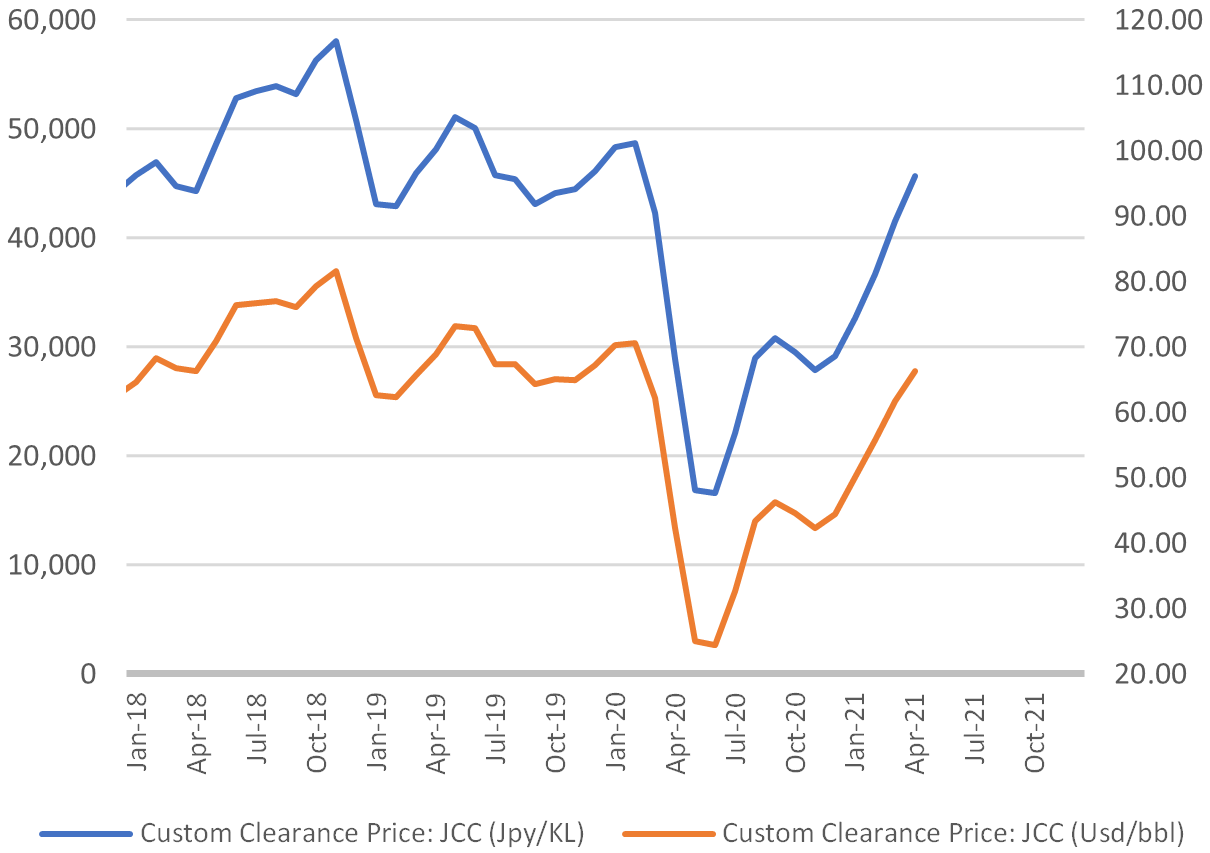
Japan Oil Price: $66.26/ barrel
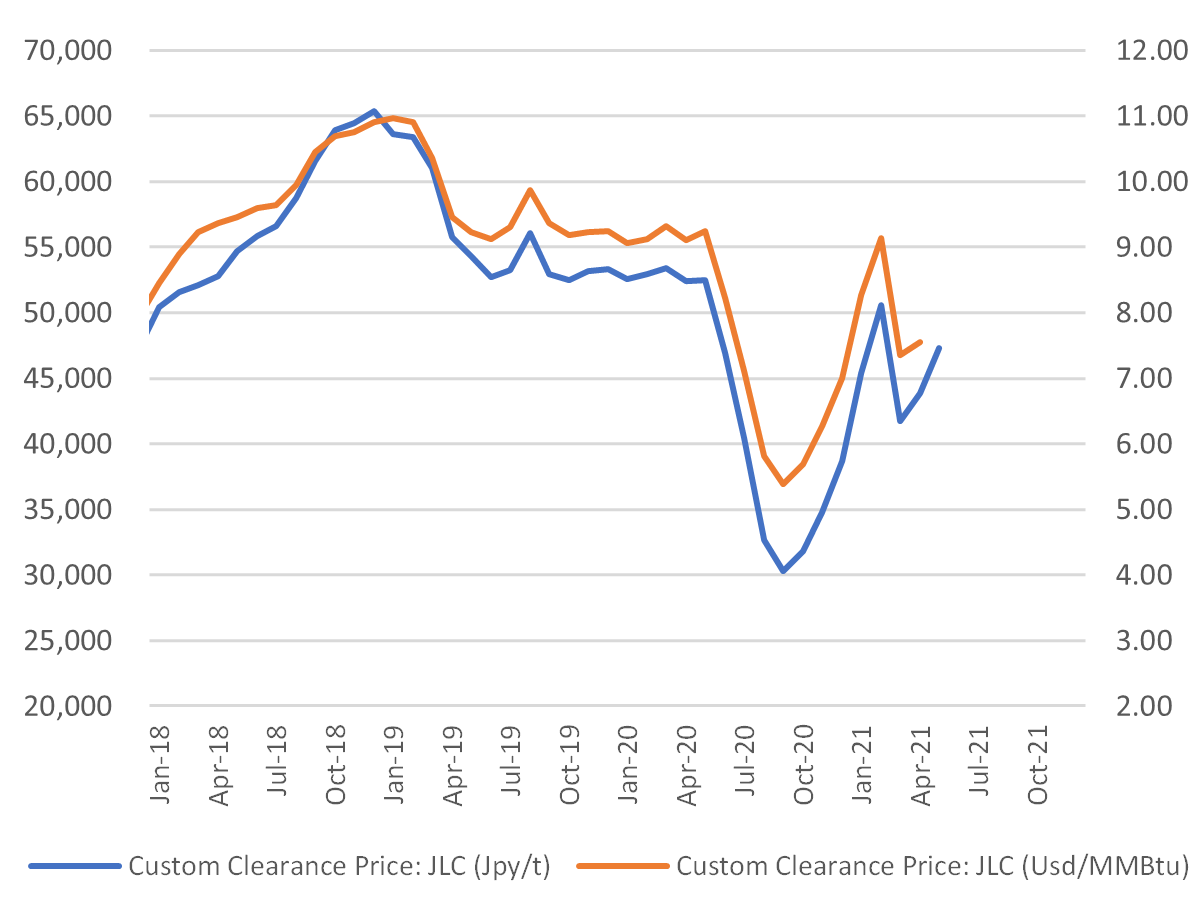
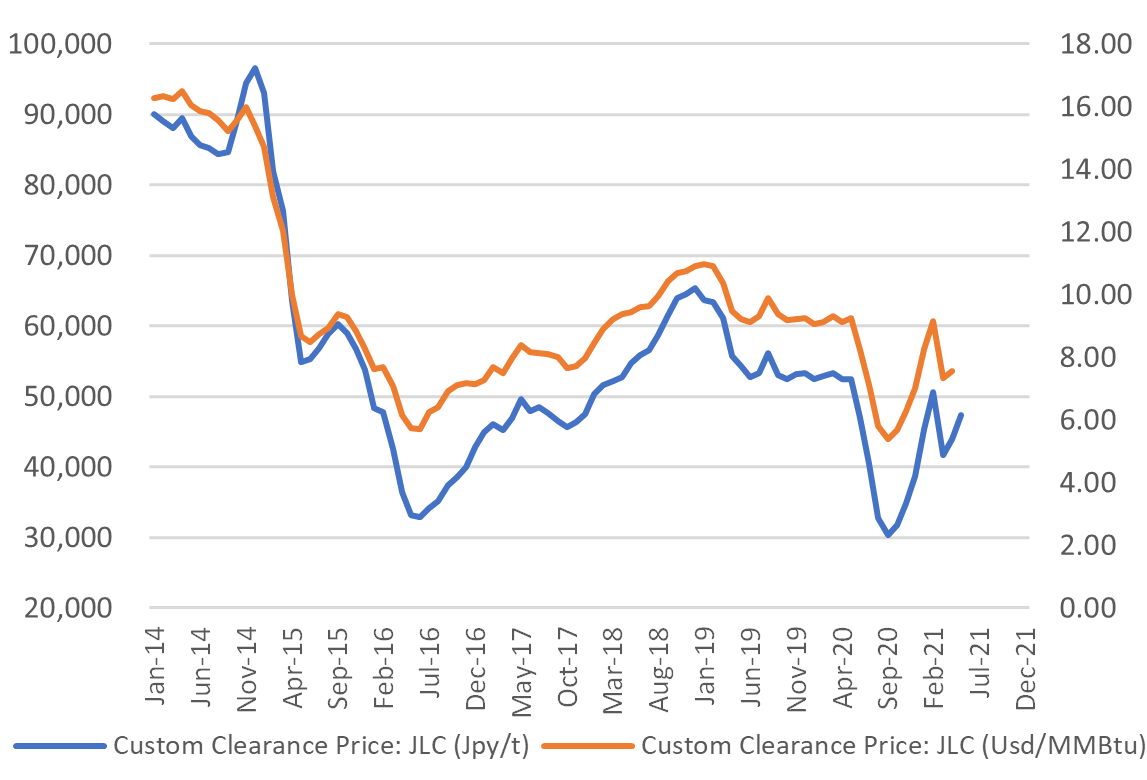
Japan (JLC) LNG Price: $7.56/ mmbtu
Government cancels transition gas price restrain on Tokyo Gas and Osaka Gas
(Denki Shimbun, May 25)
- METI said that from Oct. 1 transitional regulation of rates for the country’s two biggest city gas companies will be removed.
- Other gas retailers are increasing their share of the market and have sufficient supply capacity, so can withstand competition, according to the judgment of the Electricity and Gas Basic Policy Subcommittee.
- As with electricity, gas retailers are free to set prices after the market was fully liberalized several years ago. However, the government kept in place retail regulation fees for major city gas companies as a transitional measure.
ANALYSIS
BY CHISAKI WATANABE
Stalled Solar Push Has Government Mulling More Financing
To Localities to Overcome NIMBY Protests
Almost one in 11 towns and villages in Japan restrict or altogether ban development of utility-scale solar on their territory. Such caution is increasingly at odds with the national strategy to put renewables at the core of Japan’s future energy mix.
As the central government adds new laws and targets that mandate local progress towards decarbonization, regional populations are pushing back. Locals claim some solar developments are an eyesore and a burden in times of natural disasters.
With under-staffed and under-funded local governments caught in the middle, something will have to give – and soon – if Japan is to maintain its renewables growth rate. The pace of growth in solar projects is already starting to lag.
The Last 10 Years in Solar: an Overview
- Japan introduced a feed-in tariff (FIT) program for renewables in July 2012 to establish which was then the world’s highest guaranteed payments for electricity. This led to a rapid expansion of capacity, especially in solar.
- FIT was introduced to promote five types of renewables – solar, wind, geothermal, biomass and small hydropower.
- Solar expanded the fastest because it can be set up faster than other renewable projects and no environmental impact assessment was required by the central government until recently.
- In 2011, solar accounted for just 0.4% of Japan’s electricity generation. In seven years, its share increased to 6%, the largest renewable power source after hydro.
Not in my back yard (NIMBY)
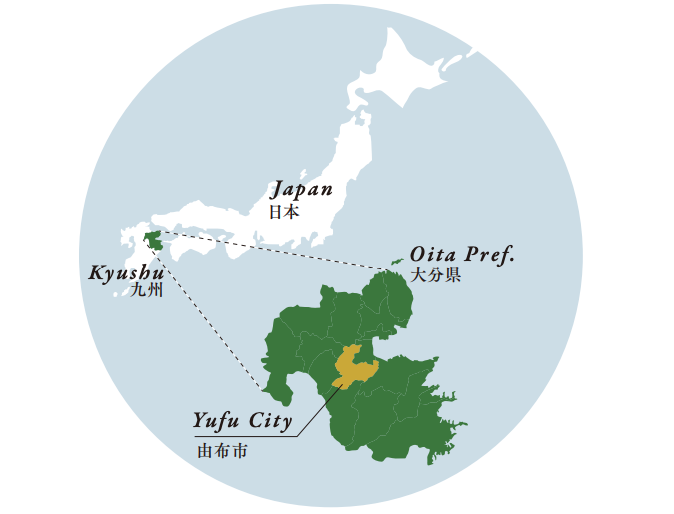
Yufu City, in the southwestern prefecture of Oita, is a popular tourist destination famous for hot springs. The city became Japan’s first municipality to pass an ordinance to limit development of solar power stations in January 2014, less than 2 years after the FIT program began.
‘’This ordinance was introduced to strike a balance between natural beauty, the development and preservation of scenic views and pleasant living environment, and the rapid development of renewable projects,’’ according to the city’s website.
The expansion of renewables projects throughout Japan has prompted more and more local governments to follow in restricting installations of photovoltaic panels in scenic towns and at sites of historic importance.
Nearly 150 local governments – including three whole prefectures, and 145 cities and towns – followed Yufu City and issued ordinances to restrict solar development, according to a report by the Research Institute for Local Government released in April. The ordinances vary in degrees of restrictions and requirements. Some simply require project developers to notify authorities about their plans, and most don’t charge penalties on violations, according to the report.
Still, dealing with local red tape has been a constant headache for developers. It is becoming even more so despite encouragements for local governments to achieve ambitious climate change targets.
As well as dealing with complaints from locals, regional authorities are concerned about the availability and security of local land. Incidents of destroyed solar panels after heavy rains and other natural disasters have gained local and national media attention.
Many prefectures are also concerned about the additional burden that solar farms place on their personnel, who lack experience overseeing renewables projects. For local governments, this is simply another cost.
‘’We call on the central government to provide the utmost support by presenting us with clear criteria and guidelines, providing manpower, and covering all the cost for local governments to set targets and promotion zones for renewable energy,’’ a group comprising 34 prefectures said in a statement this month.
National vs Local Viewpoint
The view from Tokyo is different. Prime Minister Suga announced in October that Japan will achieve carbon neutrality by 2050 and then in April drastically raised the country’s emissions reduction target for FY2030. The new target dictates that Japan will cut emissions by 46% from FY2013 levels.
Since Japan relies on natural gas and coal for over 70% of its electricity, the national emissions targets will require a drastic revamp of the electricity mix. Irrespective of what happens to the nation’s nuclear reactors, renewables are expected to play a growing and possibly dominant role.
How Japan will achieve such a rapid and wholesale overhaul, however, is less clear.
In the decade since the Fukushima disaster, Japan has amassed 56 GW of solar capacity, the world’s third-largest. That could increase to 88 GW by 2030 if current policies to support solar are maintained and the current rate of installation – 1.5GW a year – continues, according to an estimate by METI.
A METI task force is reviewing how much more solar can be added via more aggressive policies. In the near future, the government is expected to introduce a standard that would mandate all public buildings to install rooftop photovoltaics.
Solar panels on public properties could add as much as 19 GW of capacity, according to a Nikkei report, but this is far shy of what Japan would need if renewables were at the core of its long-term net-zero policy. METI estimates that the country’s solar capacity may need to reach 260 GW by 2050 if the share of renewables is set at 50% to 60% in the power mix. Also, 90 GW of wind and a further 60 GW from hydro, biomass and geothermal power would be required by 2050, according to METI.
Therefore, it’s no surprise that the central government is increasingly counting on local officials to favor renewables. According to the roadmap for regional decarbonization, released earlier this month, the Ministry of the Environment will pick at least 100 ‘’leading decarbonization areas.’’ Governments, businesses, and financial institutions in such designated areas will provide support to adopt more renewables and energy saving measures in buildings and promote electrification.
The roadmap comes on top of Japan’s global warming law, passed in May. The revised law mandates that prefectures and cities with large population set their own renewable energy targets, and urges smaller municipalities to set similar goals.
Putting money where the mouth is
If the national government wants targets to be met, it must provide clear financial support and human resources that lead to the creation of more clean energy businesses led by locals, Yamashita Noriaki, a senior researcher at the Institute for Sustainable Energy Policies, wrote in a report in December.
Yamashita also recommended setting up an organization for dispute settlement, similar to Germany’s Kompetenzzentrum Naturschutz und Energiewende (KNE).
The message is finally starting to get through to the national government. This month, Environment Minister Koizumi Shinjiro signaled for the first time that Japan is considering a subsidy scheme for local governments that host solar and wind projects.
A similar system has operated for nuclear power plants for years. Now, renewables need the same if they are to become a major source of Japan’s electricity, Koizumi said.
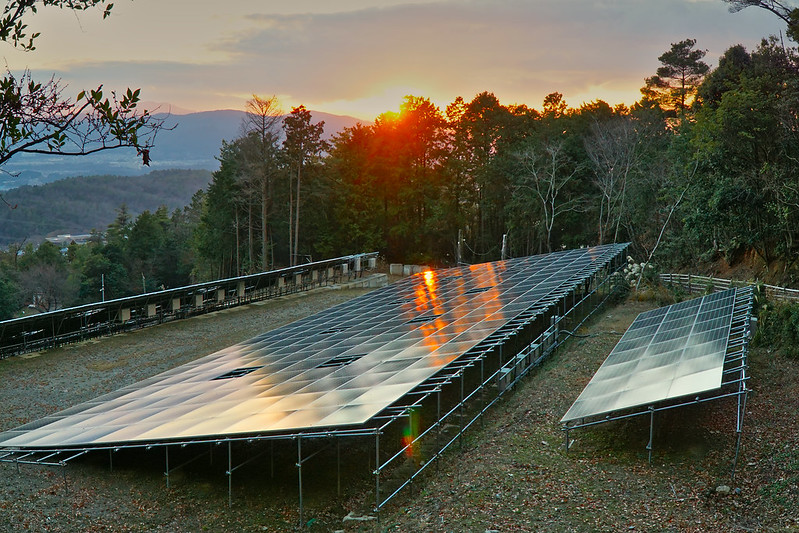
“Solar Panels at Sunset” by kaeru.my is licensed under CC BY 2.0
ANALYSIS
BY MIKA KUDO
SENIOR RESEARCHER
RENEWABLE ENERGY INSTITUTE (REI)
Japan’s Offshore Wind in Pivotal Year Towards a Mass Deployment
On June 11, the METI announced the results of Japan’s first commercial-scale offshore wind tender as the country starts to build a key pillar of its future energy strategy almost from scratch.
This is a historical step for Japan, a relative late-comer to offshore wind despite boasting one of the world’s longest coastlines. The government has set ambitious targets of 10 GW in offshore wind capacity in 2030, and between 30 GW and 45 GW in 2040. The tender result is one of the first major steps to hitting those goals.
Whether the planned scale-up takes place, however, depends on several factors. As domestic and foreign companies pour into the new industry, the government will be required to ensure a fair and competitive environment – including access to key infrastructure and other support. What’s more, Japan’s ports and grid systems will need major upgrades to facilitate offshore wind projects.
Should the market entrants from Europe and the U.S., as well as domestic players, find early success in Japanese seas, offshore wind carries the potential to take over as one of the biggest capacity contributors to the country’s energy mix. Outsized problems, however, may deter future investment and impact not only wind but green hydrogen and other wind-related energy strategies.
This year will be a pivotal one for offshore wind in Japan.
Installed offshore wind power in Europe and Japan as of 2020
| Country | Installed capacity (MW) |
| United Kingdom | 10,200 |
| Germany | 7,700 |
| Netherlands | 2,600 |
| Belgium | 2,300 |
| Denmark | 1,700 |
| Japan | 7.7 |
Source: Global Wind Energy Council, METI
Offshore Wind Tender Result: Round 1
The first tender’s winner, for the wind promotion zone in Goto City, Nagasaki prefecture, was a consortium led by Toda Corporation of Japan. The all-Japan group of six, which includes big energy companies and power utilities, was the only bidder.
The apparent lack of rival interest is mainly because this is the only one of the first-round sea areas focused on floating offshore wind technology. The winner is guaranteed a feed-in tariff (FIT) price of ¥36/ kWh, higher than in the other three sea zones. However, floating wind technology is less developed at this point. This makes the eight-turbine, 16.8 MW capacity Nagasaki project more about the operator group refining the feasibility of the technology and accumulating the skills, supply chains and so on for larger deployments in the future.
Toda, a construction company, has a unique position in Nagasaki. It was involved in a local pilot scheme for floating wind turbines that started in 2010. This pilot project matured into a commercial operation and now accounts for 2 MW of Japan’s 7.4 MW total in offshore wind capacity, METI data show. Toda’s experience and good relations with the local community turned potential competitors into partners.
As far as the other three sea areas offered in the first round of tenders, the winners are expected to be announced later in the year. The areas (Akita Yurihonjo North and South, Akita Noshiro, and Chiba Choshi) are based on fixed-bottom offshore wind turbines and have a FIT price ceiling of ¥29/ kWh.
Status Key:
(P) Primary Environmental Impact Consideration
(S) Scoping Document
(D) Draft Environmental Impact Statement
(E) Environmental Impact Statement
Status of Potential Bidders in the Offshore Wind Tenders
| Interests | Environmental Impact Assessment | ||
| Starting year | Status | ||
| Chiba: Choshi | |||
| TEPCO Renewable Power, Ørsted | 2019 | P | |
| Chubu EPCO, Mitsubishi Corporation Energy Solutions | 2020 | P | |
| Akita: Yurihonjo (North/South) | |||
| Renova, Cosmo Eco power, JR-East Energy Development, Tohoku EPCO | 2017 | D | |
| Chubu EPCO, Mitsubishi Corporation Energy Solutions, Venti Japan | 2020 | P | |
| Japan Wind Development, Ørsted, Eurus Energy | 2020 | S | |
| Kyuden Mirai Energy, RWE | 2020 | P | |
| JERA, J-Power, Equinor | – | – | |
| Akita: Noshiro | |||
| Obayashi Corporation, Kansai EPCO, Tohoku EPCO | 2016 | D | |
| Japan Wind Development, Ørsted, Eurus Energy | 2019 | S | |
| Sumitomo Corporation, Venti Japan, INPEX, JAPEXJR-East Energy Development, TEPCO Renewable Power | 2019 | S | |
| Chubu EPCO, Mitsubishi Corporation Energy Solutions | 2020 | P | |
| JERA, J-Power, Equinor | – | – | |
| Nagasaki: Goto | |||
| Toda Corporation, ENEOS, Osaka Gas, INPEX, Kansai Electric, Chubu Electric | 2016 | E | |
Source: The EIA Case Database provided by the Ministry of Environment, company press releases, METI
What offshore wind needs: Power grid upgrades
On May 31, the Organization for Cross-regional Coordination of Transmission Operators (OCCTO) released an interim report for upgrades to the power grid, a so-called “Master Plan”. The report provides a provisional cost-benefit analysis of what it would take to upgrade the grid to support 30 GW and 45 GW of offshore wind capacity, respectively.
OCCTO proposes the construction of a new 4 GW high-voltage direct current (HVDC) submarine cable from Hokkaido to the Tokyo metropolitan area (approx. 900 kilometers) and a 2.8 GW link between Kyushu and Shikoku. This “Master Plan” will be completed in FY2022 and align with the country’s Basic Energy Plan that’s currently under discussion. The Plan, due for released this fall, will paint a picture of Japan’s energy mix for 2030 and beyond.
What comes next?
In this “Round 1” of tenders, less than 2 GW of projects were auctioned, which means that more than 8 GW still needs allocating. The government set its 10 GW by 2030 target in consultation with industry, and the number will not necessarily need to be all in operation by the end of the decade. Still, even to reach the advanced planning and construction phase for 10 GW from the current 0.01 GW, a lot of processes need to accelerate. This includes speeding up the sea zone designations and tender winner selection.
Transparency is also essential. Information disclosure will contribute to creating an attractive market and a level playing field for all developers, plus increase trust in offshore wind from all stakeholders, including local communities. In the case of the Nagasaki project tender, the score of the winning project was made public, but the names of the expert committee members who made the decision were not.
A further development to watch this fall will be the experimental start of a centralized auction system. The model is well established in European offshore wind tenders, but it is still under trial in Japan with some modifications. It will apply to three offshore wind zones that have yet to be selected.
Experience in countries such as the Netherlands and Denmark shows that a centralized tender system should reduce costs and time for each bidding process by streamlining administration and avoiding the duplication of preliminary investigations or environmental impact assessments.
Of course, there is also the possibility of new projects outside of the zones that the government is promoting under the Renewable Energy Sea Utilization Act. A number of companies have explored those options, but at present the FIT prices seem unattractive.
The industry’s pioneers in Japan hope to turn around the economics of offshore wind and unlock more of the country’s 715 GW[1] potential capacity identified by the REI. That would go a long way to helping Japan meet its target of carbon neutrality in 2050[2].
GLOBAL VIEW
BY TOM O’SULLIVAN
Below are some of last week’s most important international energy developments monitored by the Japan NRG team because of their potential to impact energy supply and demand, as well as prices. We see the following as relevant to Japanese and international energy investors.
Clean Energy:
1). Amazon will buy an additional 1.5 GW of electricity capacity from 14 new solar and wind projects around the world. Amazon, Google, Facebook and Microsoft account for almost 30% of all clean energy capacity purchasing. Amazon’s cumulative capacity is now 10 GW.
2). The IEA presented its analysis of clean energy investments for 2020, which totaled 280 GW, the highest YoY increase since 1999. China accounted for 40% of that. IEA projects 270 GW of global clean energy investments for 2021, and 280 GW for 2022.
Climate Change/Weather:
1). A leaked 4,000-page draft IPCC report on climate change due to be released in 2022 indicates that the impact of climate change may be much worse than previously anticipated, with the temperature rise now estimated at three degrees Celsius, twice the level recommended in the Paris Agreement. This would also seem to confirm a recent World Meteorological Organization analysis. The report warns of over two billion people impacted by severe heat waves.
2). Record heat waves are being recorded in the Northwest of the U.S., in Seattle and Portland, coupled with droughts that are reducing hydropower output, thus creating significant pressure on power providers on the U.S. West Coast. Temperatures in Portland are expected to reach 108 Fahrenheit, an all-time record high.
Tesla:
Tesla’s stock price climbed another 10% last week, or $60 billion, on stronger U.S. market performance despite the disclosure that Panasonic sold all of its $3.7 billion stake. Tesla has now recorded stock market gains of over 250% in the last 12 months.
Natural Gas/Oil:
1). Global natural gas prices have doubled YoY, and are hitting 13-year highs due to hotter temperatures, lower levels of investment, and lower inventories in most geographies. Russian natural gas exports to Europe are also down by almost 20% YoY. JKM Asian prices are now $12 mmbtu. China is expected to overtake Japan as the largest importer of LNG in FY2021.
2). Brent oil prices hit $76 for the first time in two years as oil demand recovers, ahead of an OPEC meeting this week.
Solar Energy:
1). Higher steel, polysilicon, and freight costs are impacting the solar industry with stock market prices down almost 20% YTD. Steel input prices for solar projects have doubled from Q1 2020.
2). The U.S. has placed five Chinese solar companies that make polysilicon on its sanctioned “entity list” due to issues around forced labor in Xinjiang.
Nuclear Power:
1). Unit 5 of the Hongyanhe nuclear power plant in China’s Liaoning province was connected to the electricity grid last week. The 1080 MW domestically-designed ACPR1000 pressurized water reactor is scheduled to enter commercial operation later in 2021.
2). In the U.S., Exelon notified PJM Interconnection of its plan to deactivate two Byron nuclear reactors in Illinois after state lawmakers adjourned without reaching an agreement on clean energy legislation that would have allowed the plants to continue operating.
Shipping:
European shipping industry executives warned that EU goals to reduce CO2 emissions 55% by 2030 could end up creating more shipping capacity as ship speeds are reduced to meet stricter emissions targets in the absence of carbon neutral fuels. This could be counterproductive.
Aviation:
U.S. airports are set to receive $ 8 billion in Covid-19 financial assistance.
Methane Emissions:
A recent research survey in California found that waste landfills may be emitting more methane than the fossil fuel or the agricultural sectors.
ESG:
Microsoft and Google are resisting calls for more disclosure on ESG metrics in SEC 10k filings due to legal risks. Gary Gensler met with President Biden and Treasury Secretary Yellen last week to discuss SEC ESG disclosures.
Trees:
JP Morgan will acquire Campbell Global, a U.S. manager of timberland and forest carbon offsets, for $5.3 billion.
China:
Next week during the CCP’s 100th celebration, China will inaugurate the Baihetan Dam on the Jinsha River in Sichuan Province which will be the world’s largest arch dam with 16 one GW hydro turbine generators making it the second largest dam project after China’s Three Gorges Dam which is 22.5 GW.
South Korea:
As part of its 2050 net-zero pledge, South Korea is indicating that it may decide to halt all coal-powered generation by 2050.
Singapore:
Lim Oon Kuin, the founder of Hin Leong Trading, the bankrupt Singapore oil trading company, is facing 105 new charges including forgery and cheating.
Australia:
The government rejected an application to build the world’s largest renewable energy project, worth $38 billion, a hydrogen export project in Western Australia dubbed the Asian Renewable Energy Hub.. Australia has yet to commit to a net-zero CO2 emissions timetable.
India:
Reliance Industries, the Indian oil refiner and conglomerate with a market capitalization of $185 billion, committed to a carbon-zero goal by 2035. Reliance also appointed Yasir-al-Rumayyan, the head of Saudi Arabia’s Public Investment Fund, to its board and is expecting a $15 billion investment from Saudi Arabia.
Pakistan:
In July, Saudi Arabia will resume $1.5 billion of oil aid to Pakistan that was suspended due to Pakistan’s close ties with Turkey and Iran.
Russia:
Rosatom, which operates 36 nuclear reactors in 12 countries, will boost development of and investments in small-scale reactors, floating nuclear power stations, wind energy, energy storage and hydrogen projects. Rosatom wants to triple revenues by 2030 to $55 billion.
Belarus Sanctions:
As part of a sanctions regime effective June 25th, EU entities are not allowed to import, purchase or transport petroleum products originated, located or exported from Belarus, ranging from motor fuels to specialized products such as petroleum coke, as well as LPG. Crude oil is excluded from the EU sanctions. The provision of technical assistance, brokering services, financing or financial assistance, as well as insurance and re-insurance for Belarusian oil products is also prohibited.
Iran:
Ebrahim Raisi, the head of Iran’s judiciary, was elected president on June 19th and will take office in the first week of August replacing Hassan Rouhani. The JCPOA nuclear negotiations are due to resume on Sunday. Success may free up oil exports to Japan and other Asian countries. Sanctions have crippled the economy. Raisi was placed on a U.S. sanctions list for human rights violations in 2019. Raisi is also refusing to include ballistic missile development in the JCPOA negotiations. Iranian authorities claimed to have foiled at attack on an atomic energy agency building on Wednesday.
Lebanon:
Lebanon is running out of foreign currency to pay for gasoline imports.
Egypt:
The Suez Canal Authority has reportedly agreed to compensation of $200 million with the Japanese owners of the Ever Given that blocked the canal last March.
Sweden:
Ikea and the Rockefeller Foundation will start a $10 billion energy poverty fund to invest in small-scale distributed green energy projects in developing markets.
Spain:
The CEO of Iberdrola, Spain’s largest energy company, third largest global utility, and second largest Spanish listed company, has been placed under criminal investigation for company espionage relating to Respol, another Spanish energy company.
U.S.:
1). Torchlight Energy Resources, an oil and gas group, saw its stock price surge last week following interest from social media platforms.
2). Fifty Republicans in the House of Representatives established a working group to discuss climate change and GHG reductions.
3). Exxon Mobil indicated it may cut its staff by up to 10% every year until 2025.
EVENTS CALENDAR
A selection of domestic and international events we believe will have an impact on Japanese energy.
| February | Approval of Fiscal 2021 Budget by Japanese parliament including energy funding projects;CMC LNG Conference |
| March | 10th Anniversary of Fukushima Nuclear Accident;Smart Energy Week – Tokyo;
Quarterly OPEC Meeting; Japan LPG Annual Conference; Full completion of all aspects of the multi-year deregulation of Japan’s electricity market; End of 2020/21 Fiscal Year in Japan; |
| April | Japan Atomic Industrial Forum – Annual Nuclear Power Conference;38th ASEAN Annual Conference-Brunei;
Japan LNG & Gas Virtual Summit (DMG)-Tokyo Three crucial by-elections in Hokkaido, Nagano & Hiroshima – April 25th |
| May | Bids close in first tender for commercial offshore wind projects in Japan;Prime Minister Suga to visit the U.S. |
| June | Release of New Japan National Basic Energy Plan-2021;G7 Meeting – U.K.
Presidents Biden and Putin are due to meet at a summit in Geneva Forum for China-Africa Cooperation Summit (Senegal) |
| July | Tokyo Metropolitan Govt. Assembly Elections;Commencement of 2020 Tokyo Olympics |
| August | Hydrogen Ministerial Conference in conjunction with IEA |
| September | Ruling LDP Presidential Election;UN General Assembly Annual Meeting that is expected to address energy/climate challenges;
IMF/World Bank Annual Meetings (multilateral and central banks expected to take further action on emissions disclosures and lending to fossil fuel projects); End of H1 FY2021 Fiscal Year in Japan; Japan-Russia: Eastern Economic Forum (Vladivostok)-tentative |
| October | Last possible month for holding Japan’s 2021 General Election;METI Sponsored LNG Producer/Consumer Conference;
Innovation for Cool Earth Forum – Tokyo Conference; Task Force on Climate-Related Financial Disclosure (TCFD) – Tokyo Conference; G20 Meeting-Italy |
| November | COP26 (Glasgow);Asian Development Bank (‘ADB’) Annual Conference;
Japan-Canada Energy Forum; East Asia Summit (EAS) – Brunei |
| December | Asia Pacific Economic Cooperation (APEC) Forum – New Zealand;Final details expected from METI on proposed unbundling of natural gas pipeline network scheduled for 2022. |
DATA
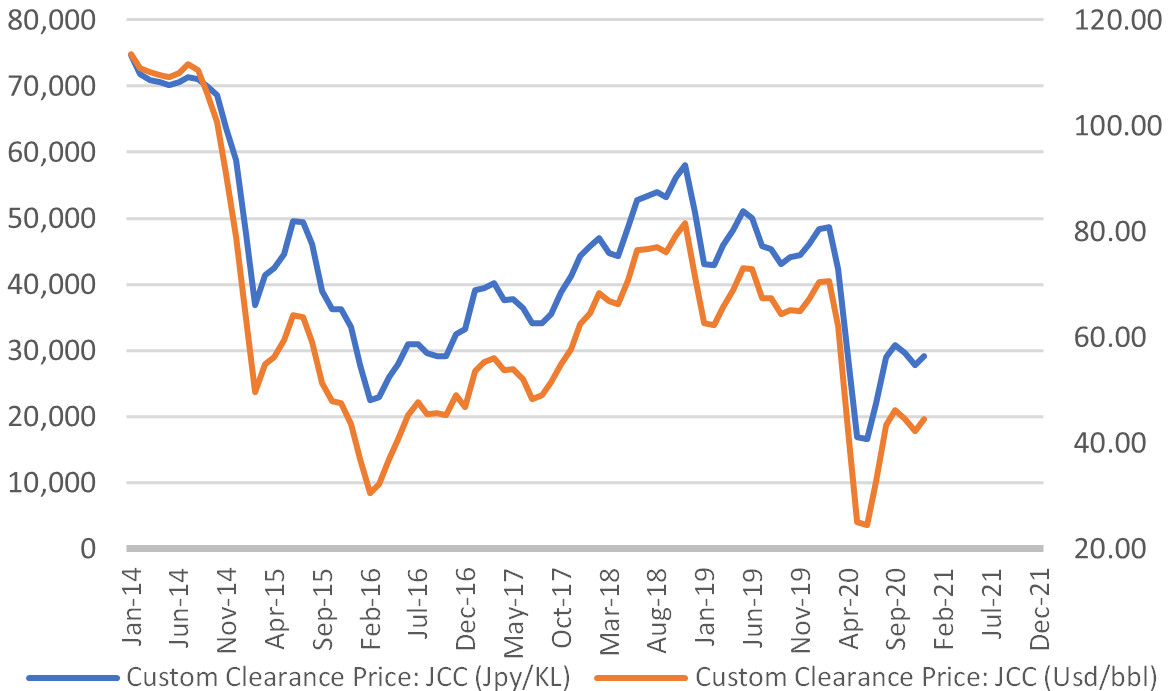
Japan Oil Price
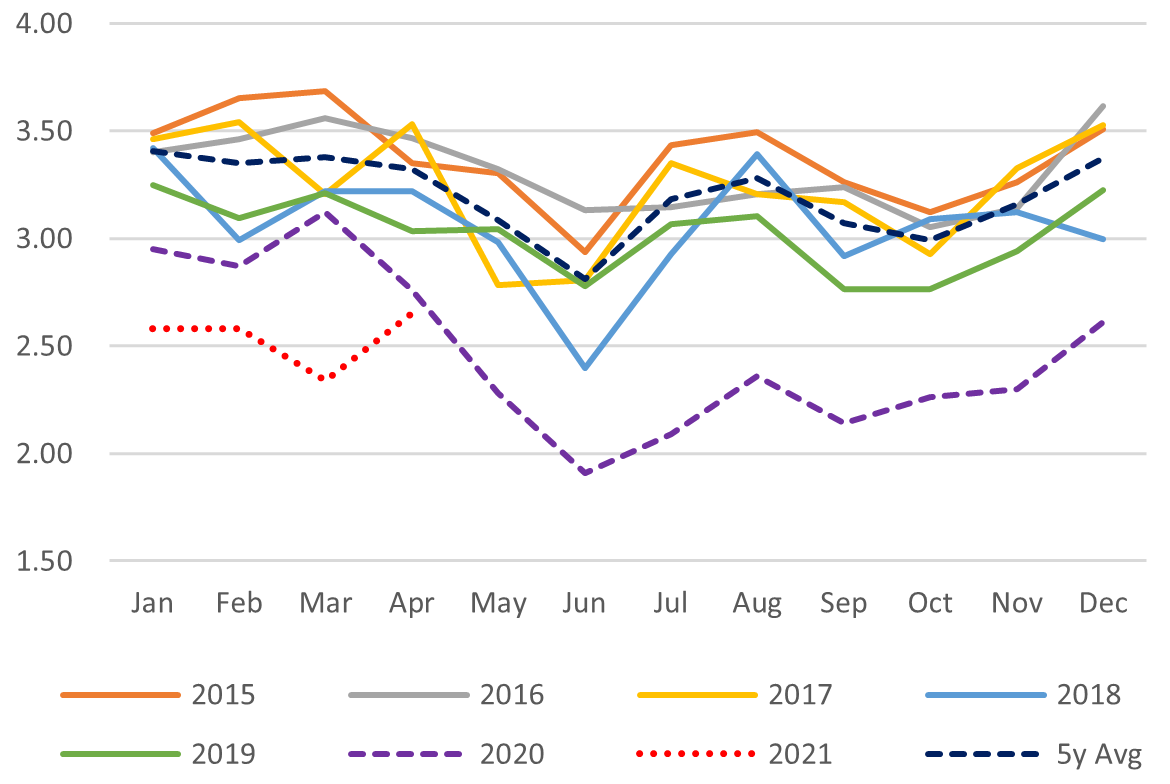
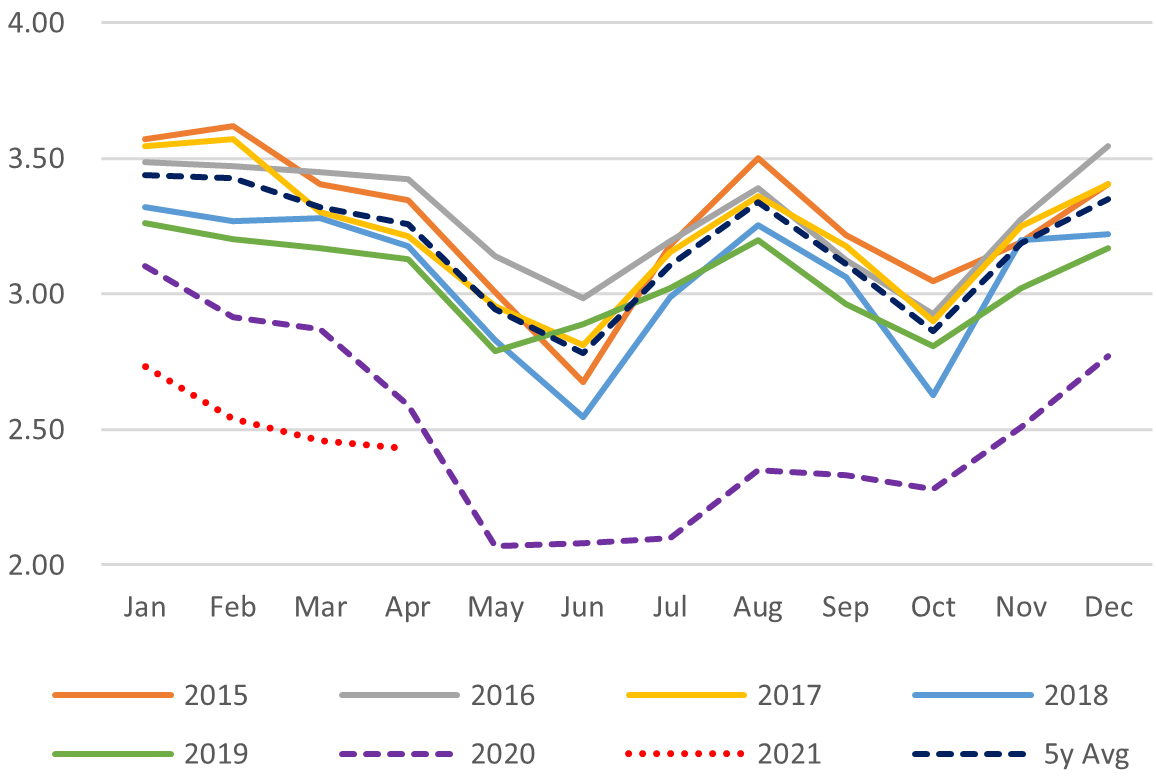
Crude Imports Vs Processed Crude
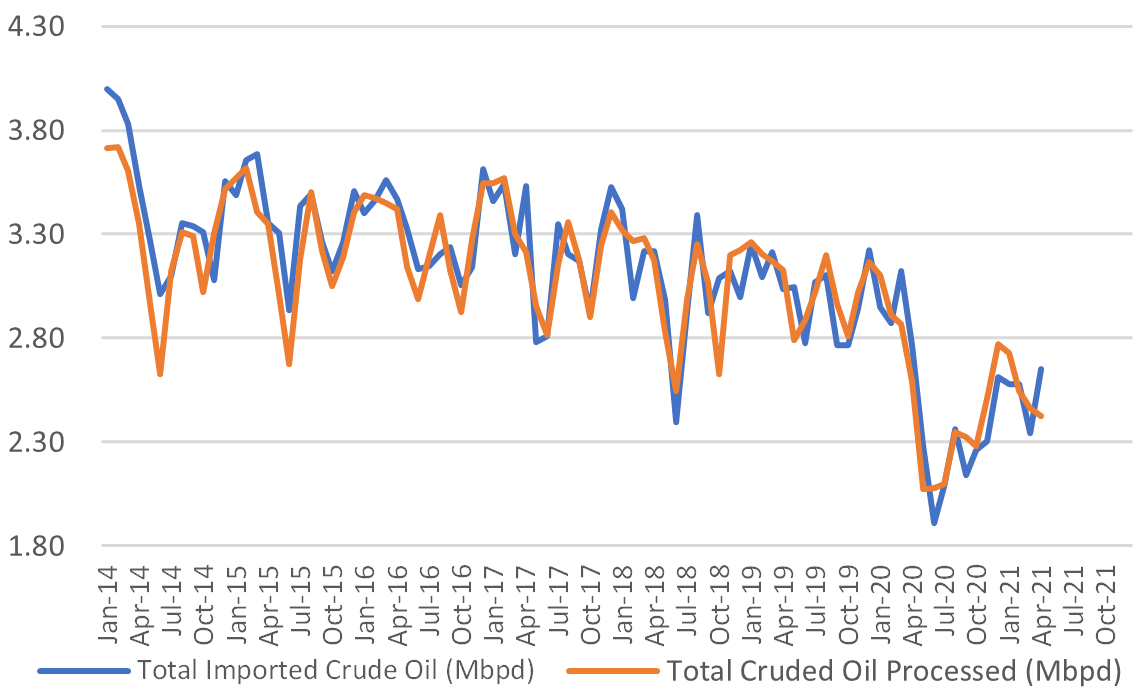
Monthly Oil Import Volume (Mbpd)
Monthly Crude Processed (Mbpd)
Domestic Fuel Sales
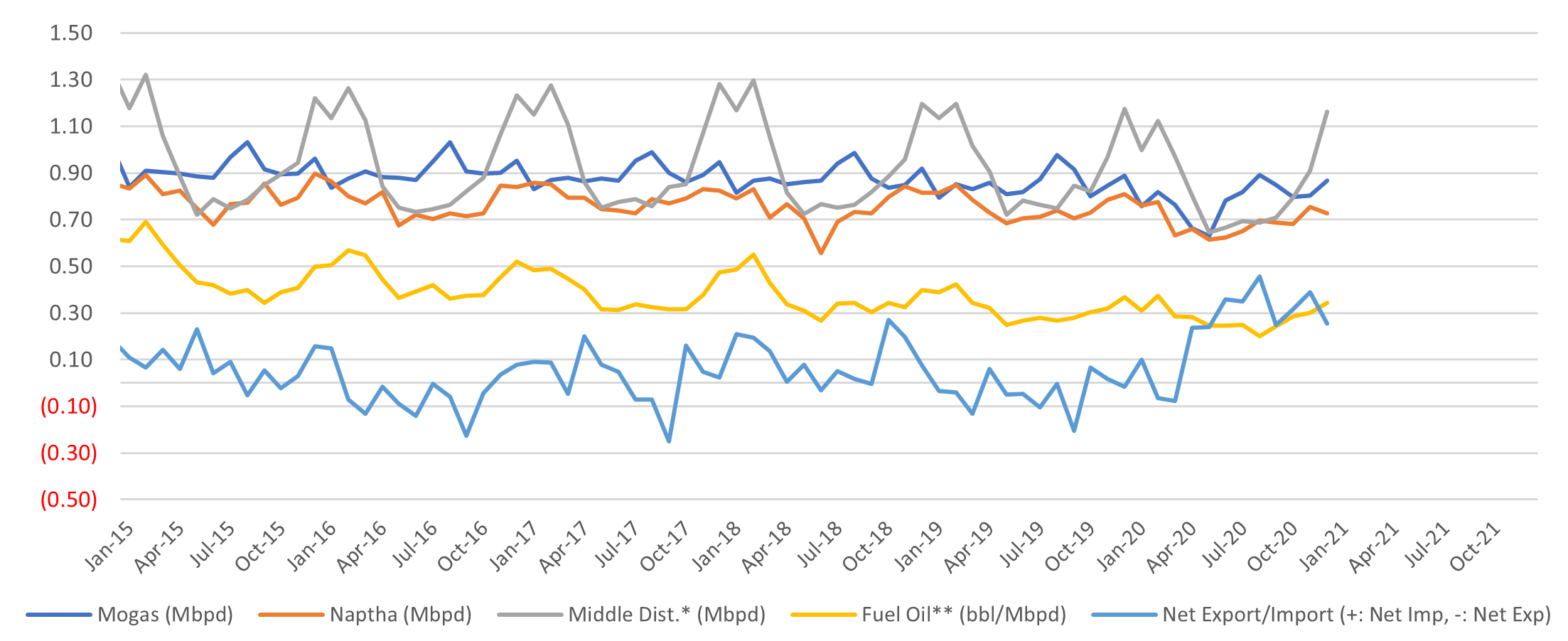
SOURCES: Ministry of Economy, Trade, and Industry (METI), Ministry of Finance, and the Petroleum Association of Japan
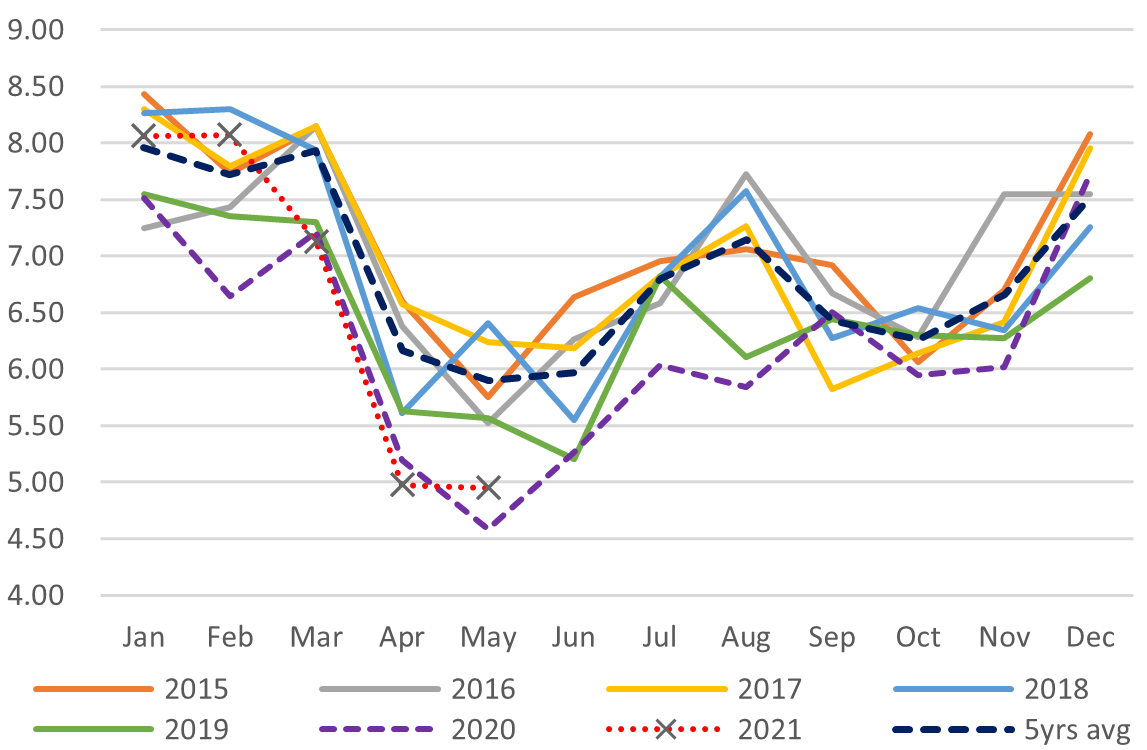
Japan LNG Price
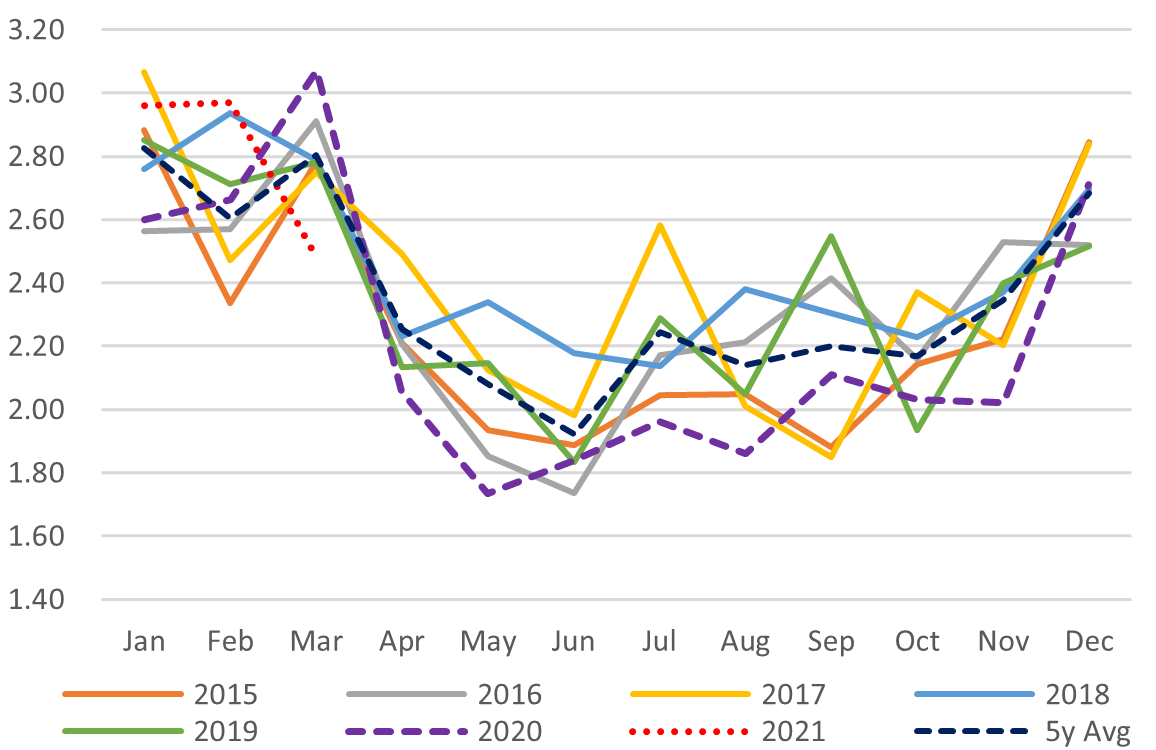
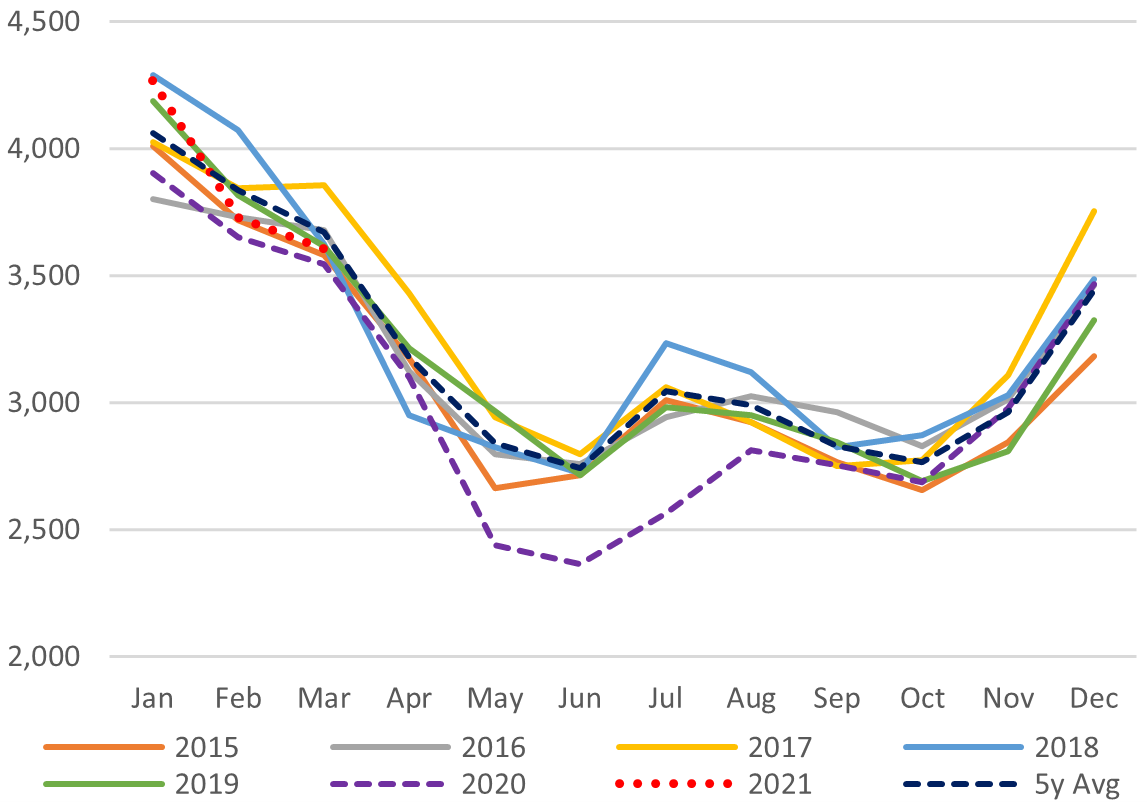
LNG Imports: Japan Total vs Gas Utilities Only
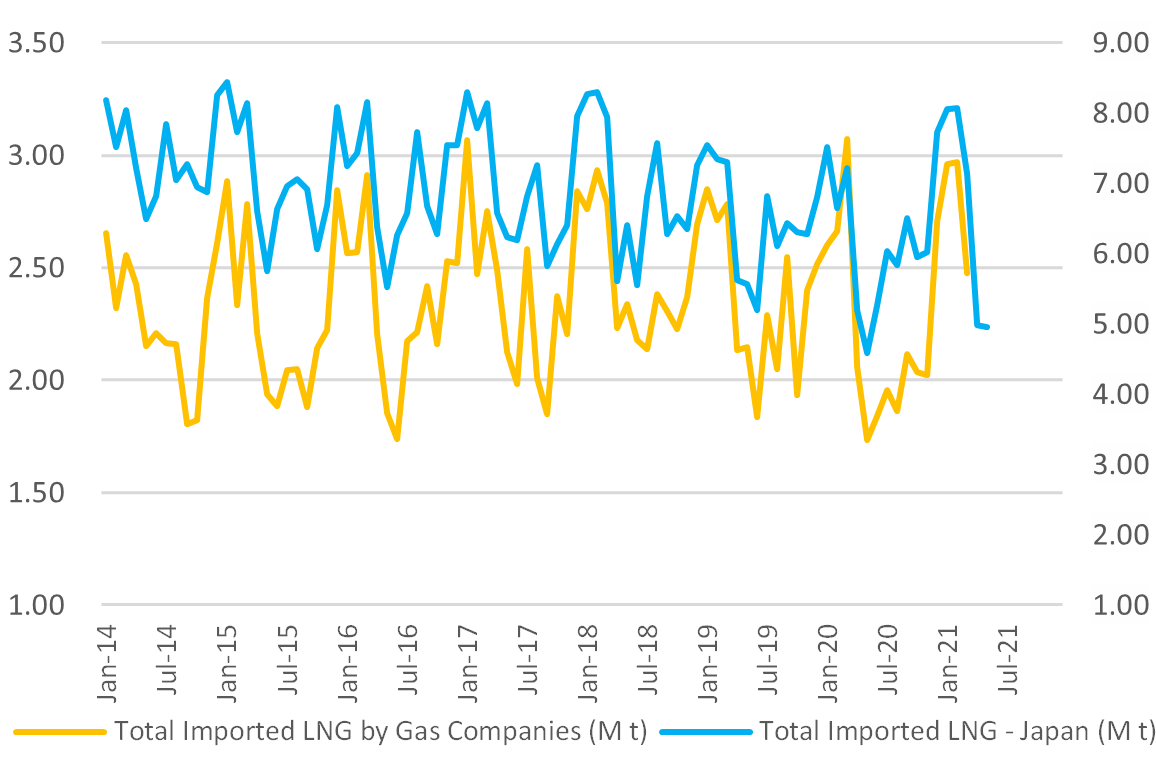
Total LNG Imports (M t)
LNG Imports by Gas Firms Only (M t)
City Gas Sales – Total (M m3)
City Gas Sales by Sector (M m3)
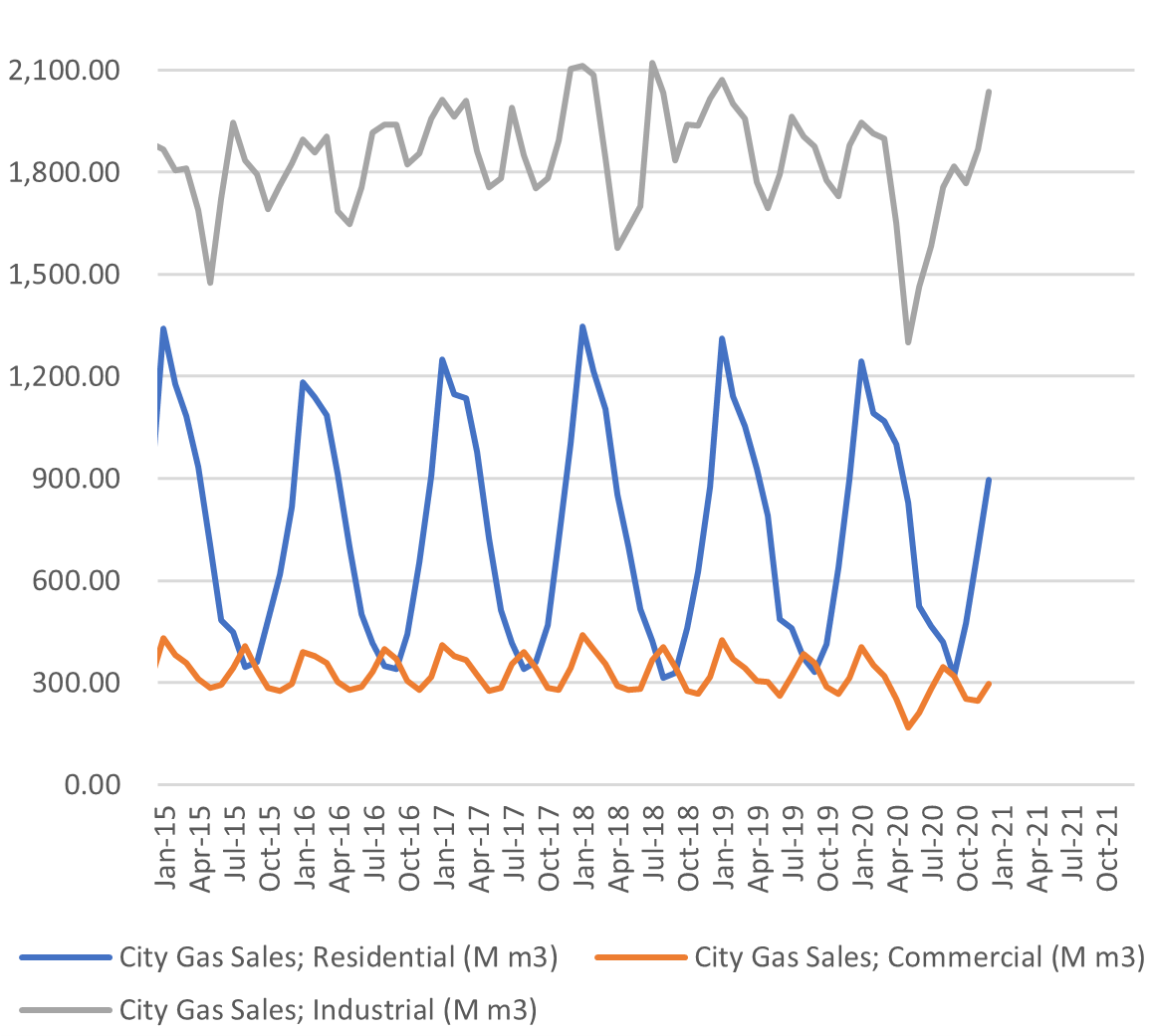
SOURCES: Ministry of Economy, Trade, and Industry (METI),
Ministry of Finance
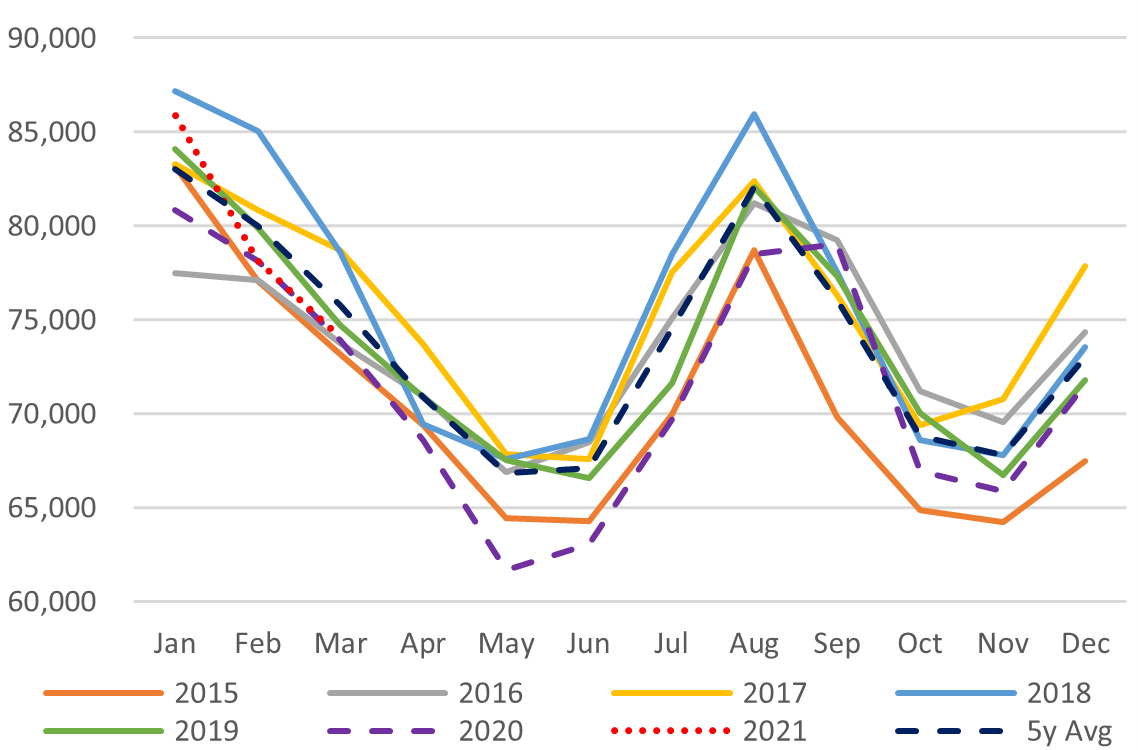
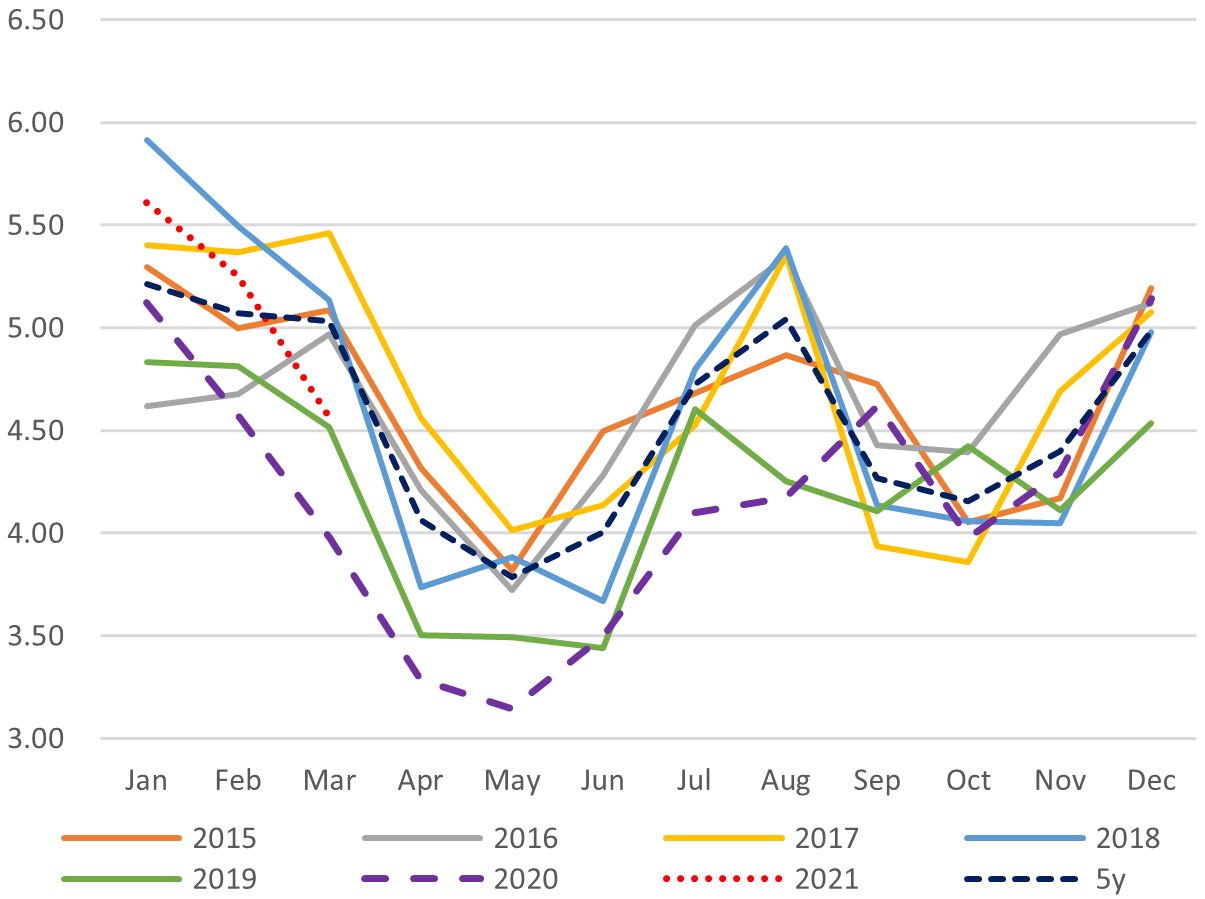
Japan Total Power Demand (GWh)
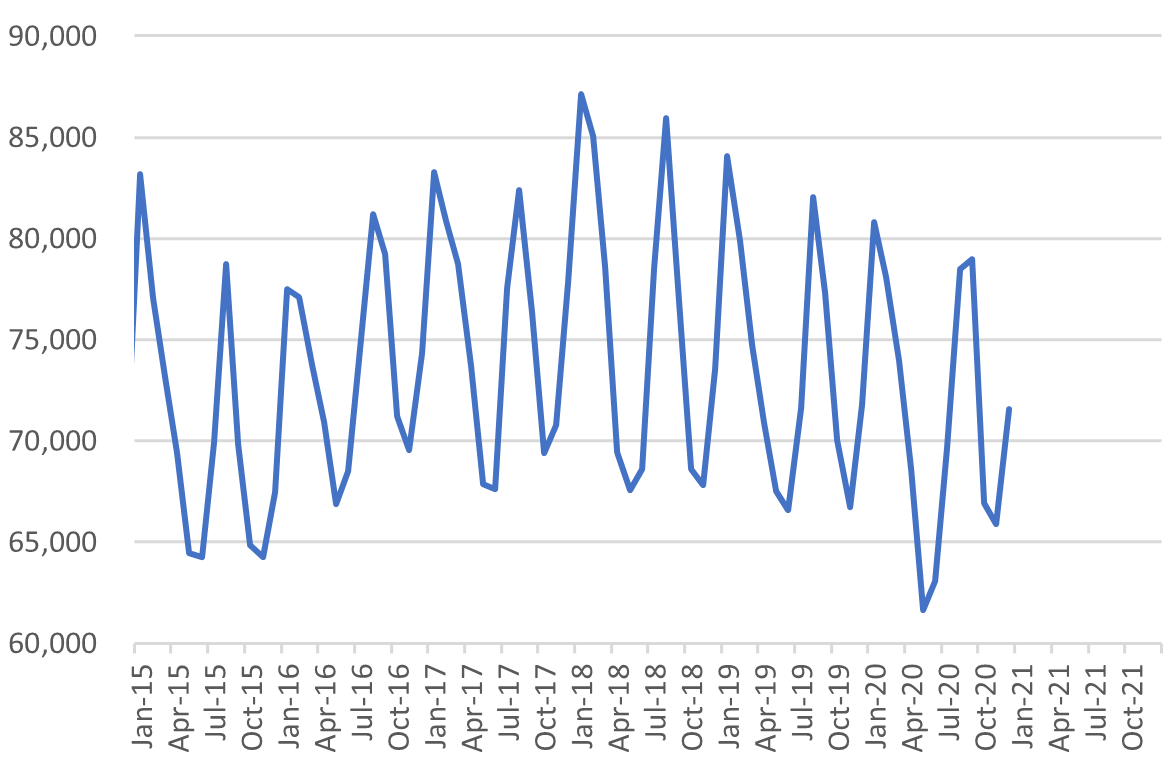
Current Vs Historical Demand (GWh)
Day-Ahead Spot Electricity Prices
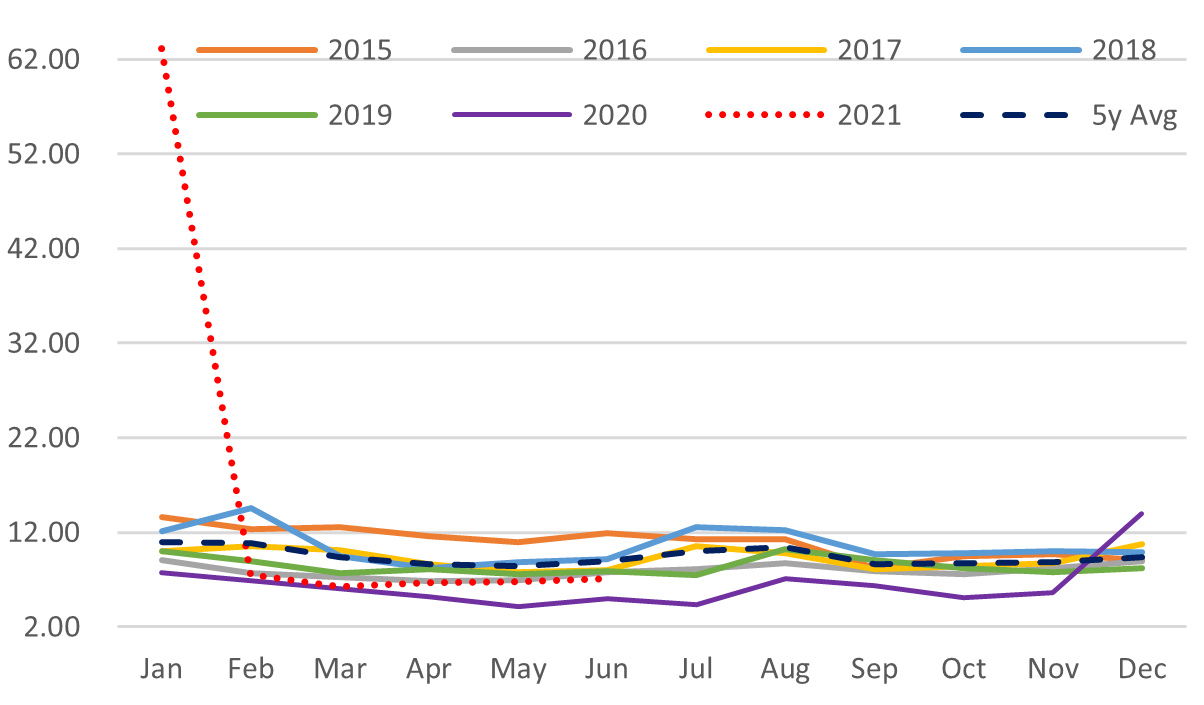
Day-Ahead Vs Day Time Vs Peak Time
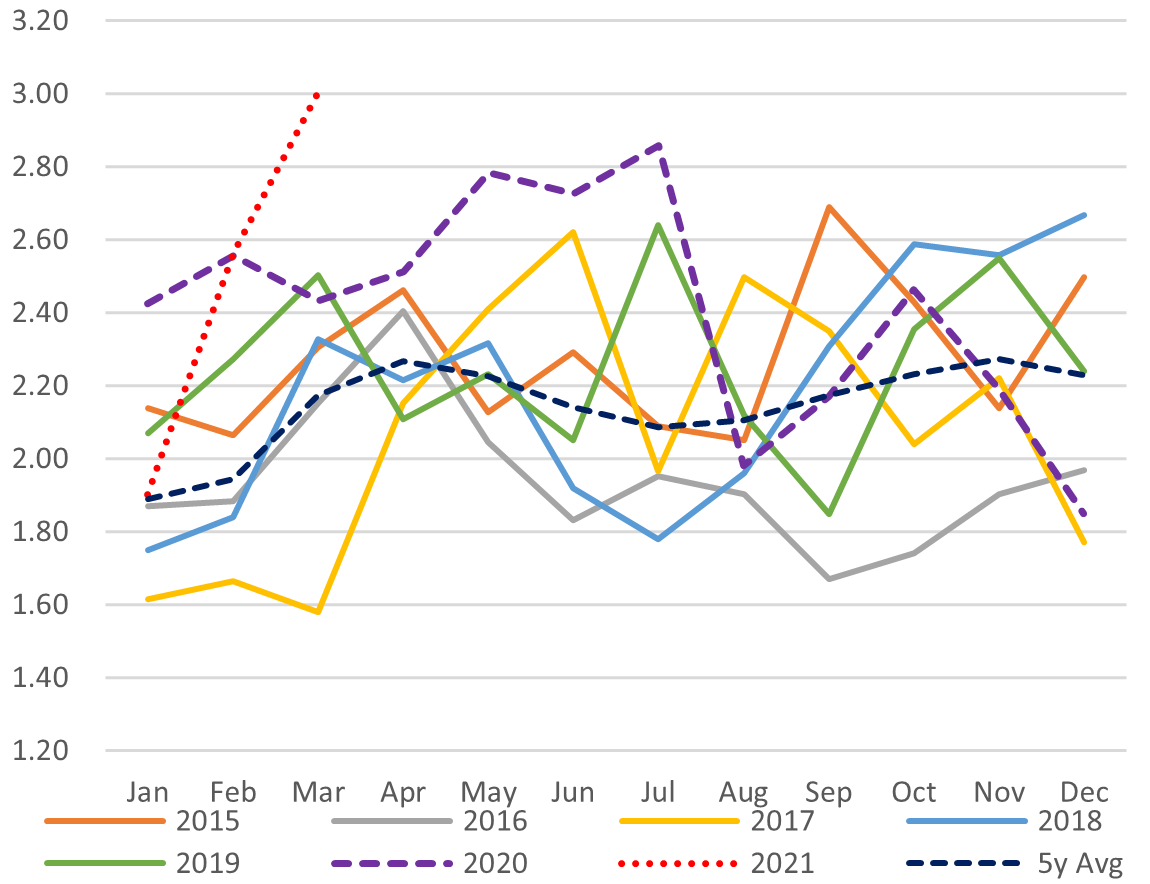
LNG Imports by Electricity Utilities
LNG Stockpiles of Electricity Utilities
SOURCES: Ministry of Economy, Trade, and Industry (METI), and the Japan Electric Power Exchange
Disclaimer
This communication has been prepared for information purposes only, is confidential and may be legally privileged. This is a subscription-only service and is directed at those who have expressly asked K.K. Yuri Group or one of its representatives to be added to the mailing list. This document may not be onwardly circulated or reproduced without prior written consent from Yuri Group, which retains all copyright to the content of this report.
Yuri Group is not registered as an investment advisor in any jurisdiction. Our research and all the content express our opinions, which are generally based on available public information, field studies and own analysis. Content is limited to general comment upon general political, economic and market issues, asset classes and types of investments. The report and all of its content does not constitute a recommendation or solicitation to buy, sell, subscribe for or underwrite any product or physical commodity, or a financial instrument.
The information contained in this report is obtained from sources believed to be reliable and in good faith. No representation or warranty is made that it is accurate or complete. Opinions and views expressed are subject to change without notice, as are prices and availability, which are indicative only. There is no obligation to notify recipients of any changes to this data or to do so in the future. No responsibility is accepted for the use of or reliance on the information provided. In no circumstances will Yuri Group be liable for any indirect or direct loss, or consequential loss or damages arising from the use of, any inability to use, or any inaccuracy in the information.
K.K. Yuri Group: Oonoya Building 8F, Yotsuya 1-18, Shinjuku-ku, Tokyo, Japan, 160-0004.
- This subdivides into 242 GW in fixed bottom and 473 GW in floating capacity. ↑
- REI estimates that Japan would need at least 63 GW of offshore wind capacity to achieve carbon neutrality by 2050, according to joint research conducted with LUT and Agora Energiewende. https://www.renewable-ei.org/en/activities/reports/20210309.php ↑