
JAPAN NRG WEEKLY
OCT. 11, 2021
JAPAN NRG WEEKLY
Oct. 11, 2021
NEWS
TOP
- Prime Minister Kishida forms Cabinet with many pro-nuclear faces; But, METI minister signals no change to current nuclear policies
- State Green Fund allocates $1.5 bn for offshore wind, perovskite solar cell technology developments and publishes R&D timeline
- ENEOS to buy Japan Renewable Energy for ¥200 bn in landmark deal for the renewables sector in Japan as Goldman Sachs exits
ENERGY TRANSITION & POLICY
- Green Fund’s WG wants $1 bn for semiconductor development
- Top Japan firms will need to disclose environmental performance
- Japan tightens rules on foreign investment into key raw materials
- NTT to conduct Japan’s biggest green bond issuance at $2.7 bn
- Toyota Tsusho, Uniper, Siemens work on UK port hydrogen plan
- Hitachi Zosen unveils an unusual two-blade wind turbine design
- Toshiba’s new EV battery can challenge Chinese, Korean rivals
- Asahi Tanker gets order to build world’s first electric oil tankers
- Richoh launches battery-free environmental sensor … [MORE]
ELECTRICITY MARKETS
- METI says closely monitoring surge in global energy prices but Japan unlikely to be strongly affected
- Electric and gas utilities raise prices for third time in three months
- JERA begins co-firing ammonia at Japanese coal power plant
- Shikoku Electric aims to build Japan’s biggest onshore wind farm
- Solar operator bankruptcies rise, reversing course of recent years
- Japan to conduct seabed survey for offshore wind platforms
- NUCLEAR REACTOR WRAP: Audit of TEPCO’s NPP to take a year
- Tohoku Electric donates ¥1 bn to home of nuclear plant [MORE]
OIL, GAS & MINING
- Japan’s LNG Producers & Consumers Conference Notes: Japan signals it is not giving up on LNG sector despite energy transition
- Gasoline prices hit a three-year high
- Japan builds up LNG stockpiles as global supplies remain tight
ANALYSIS
HYDROGEN PLANS REPLACE NUCLEAR DREAMS
IN STRATEGIES OF JAPAN’S HEAVY INDUSTRY
The incoming Kishida administration wants to raise the profile of nuclear power. While the debate over the future of nuclear in Japan continues, however, the industrial giants that once formed the backbone of its development are moving on.
The latest strategies of Japanese heavy machinery and engineering companies ooze details on R&D and investments in hydrogen, carbon capture and CO2 recycling, as well as around synthetic / bio alternatives to fossil fuels. On nuclear, not so much.
JAPAN’S GREEN WORD SHOULD BE ITS BOND:
POTENTIAL AND REALITY OF GREEN FINANCING
Tokyo can become a global financial hub by taking the lead in green financing. It already has a track-record of companies with pioneering bond issuances linked to emissions cuts and sustainability. This summer, the BoJ started the world’s first central bank scheme that rewards banks for cheaper credit to green borrowers.
What’s missing now is the big piece that only PM Kishida can provide. Unlike more than a dozen other nations, Japan has yet to issue a sovereign green bond. That would form a yield curve based on which more issuance by local governments and companies in Japan can follow.
GLOBAL VIEW
Energy crisis bites: India says half its coal power plants have only two days of fuel stocks or less; China vows to expand coal mining; factories across China, India and Europe economies start to curtail output. Romania to double its nuclear facilities. Germany backs hydrogen. Aviation lobby group asks for trillion-dollar support.
Details on these and more in our global wrap.
WEATHER OUTLOOK
Temperature volatility expected across Japan.
JAPAN NRG WEEKLY
PUBLISHER
K. K. Yuri Group
Editorial Team
Yuriy Humber (Editor-in-Chief)
Tom O’Sullivan (Japan, Middle East, Africa)
John Varoli (Americas)
Regular Contributors
Mayumi Watanabe (Japan)
Daniel Shulman (Japan)
Takehiro Masutomo (Japan)
Art & Design
22 Graphics Inc.
Sponsored
SUBSCRIPTIONS & ADVERTISING
Japan NRG offers individual, corporate and academic subscription plans. Basic details are our website or write to subscriptions@japan-nrg.com
For marketing, advertising, or collaboration opportunities, contact sales@japan-nrg.com
For all other inquiries, write to info@japan-nrg.com
OFTEN USED ACRONYMS
METI The Ministry of Energy, Trade and Industry
MOE Ministry of Environment
ANRE Agency for Natural Resources and Energy
NEDO New Energy and Industrial Technology Development Organization
TEPCO Tokyo Electric Power Company
KEPCO Kansai Electric Power Company
EPCO Electric Power Company
JCC Japan Crude Cocktail
JKM Japan Korea Market, the Platt’s LNG benchmark
CCUS Carbon Capture, Utilization and Storage
mmbtu Million British Thermal Units
mb/d Million barrels per day
mtoe Million Tons of Oil Equivalent
kWh Kilowatt hours (electricity generation volume)
NEWS: ENERGY TRANSITION & POLICY
New Prime Minister Kishida forms cabinet, calls general election
- Incoming PM Kishida quickly announced his new Cabinet.
- The Cabinet’s current term will be short. The Diet will be dissolved on Oct. 14 (Thur) for a general election on Oct. 31 (Sunday). Assuming all the ministers are re-elected, they should resume their posts thereafter.
- At least one political commentator has, however, cast doubt on the re-election chance of new METI minister Hagiuda, while noting that Defense Minister Kishi is said to be poor health and he may need to be replaced in the near future.
- PM Kishida started his term with an approval rating of 59% in a Nikkei-TV Tokyo poll, lower than that of his two predecessors.
- Key energy related appointments are below:
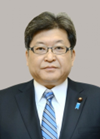
METI: Hagiuda
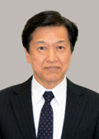
MoE: Yamaguchi
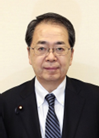
MILT: Saito
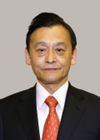
MEXT: Suematsu Economic
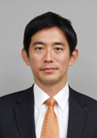
Security: Kobayashi
- Kobayashi, in a newly created ministry role, is expected to focus on steering Japanese supply chains to utilize the resources of allied countries and to ease their reliance on China.
- SIDE DEVELOPMENT:
Profile of Japan PM Kishida’s Cabinet members
(Kyodo, Oct. 4) - SIDE DEVELOPMENT:
Japan tilts toward nuclear energy with METI back in driver’s seat
(Asia Nikkei, Oct. 8)- Energy policy expected to turn more favorable toward nuclear energy as more METI-connected officials join top ranks of PM Kishida’s administration.
- Previous PM Suga had sidelined METI-related officials. Imai Takaya (ex-METI) was kicked out from govt. advisory roles under Suga, but is back as a special advisor to the Cabinet on energy policy.
- Kishida’s welcoming of METI people may extend their influence to foreign policy as economic security becomes a more important topic in energy also.
- New LDP Secretary-General Amari expected to be the biggest cheerleader for nuclear energy in the new administration.
- The Japan-U.S Business Council welcomed the new direction and called for both Tokyo and Washington to recognize the importance of nuclear power in decarbonization.
- SIDE DEVELOPMENT:
New METI, MoE and Agriculture ministers discuss outlook for nuclear, renewables, and land
(Kyodo and Nikkei, Oct. 10)- Hagiuda (METI) on building new nuclear reactors: “It has been the government’s policy up to now not to build new nuclear power plants or replace existing ones, and there is no change in that policy.”
- On the Cabinet confirming the new Basic Energy Plan draft: “We are aiming for a cabinet decision in time for COP26”. There will be no major changes to the draft, including in the section on nuclear power.
- What’s the future of renewables? “It is necessary to take measures as soon as possible to promote the maximum introduction of renewable energy. We think it will be effective to improve the accuracy of predicting power output and to use storage batteries and other means to utilize surplus electricity.”
- Yamaguchi (MoE): Renewables should be used to the maximum extent possible, while reliance on nuclear power should be reduced. “New types of nuclear reactors, which are in development today, and which are expected to have a high safety standard, should not be dismissed outright, but they are to be considered in the context of reducing the reliance on nuclear power as much as possible.”
- On state involvement in energy innovation: “Private companies alone cannot take risks, so we need to encourage them as a national strategy.”
- On carbon tax: METI and MoE panels are holding discussions about how to move forward and a way forward will be agreed on by the end of the year. “It will probably be a mix of multiple measures such as carbon tax and the trading of carbon credits.” Carbon pricing could help solve the issue of how to finance innovation.
- Kaneko (Agriculture ministry): asked whether the govt. will support the giving out of farm land to corporations, he was noncommittal, saying that he will study the issue and listen to the voices on the ground.
- SIDE DEVELOPMENT:
Takaichi, Amari appointments signal more nuclear in Japan’s power mix
(Mainichi Shimbun, Oct. 4)- The appointment of SMR advocate Takaichi Sanae to the role of LDP Chair is also seen as positive for the nuclear power industry. During the leadership race, Takaichi promised to amend the basic energy plan to explicitly mention nuclear energy, prompting opposition from then Environment Minister Koizumi.
Japan offers Green Fund money for offshore wind and perovskite solar cell projects
(Japan NRG, Oct 1)
- METI opened applications to companies and consortiums seeking funding from the state’s Green Innovation Fund to develop perovskite solar batteries and offshore wind power stations. A total of ¥49.8 billion will be provided for next-generation solar cells and ¥119.5 billion for offshore wind infrastructures.
- CONTEXT: Perovskite cells are made from iodine and other chemical compounds that are less costly to manufacture compared to existing silicon-based batteries.
- The Green Innovation Fund sees cell development running from 2021 to 2030 as a three-stage process. The first would run to 2025 to establish basic technological elements and identify optimal combination of chemical compounds. Up to ¥8 billion of financing will be provided for this.
- The second stage, also to 2025, will look for practical applications for basic technologies with a focus on high power conversion rates and durability. The goal is to develop modules sized 900 square centimeters that generate power at a cost of ¥20/ kWh. The Fund will provide ¥12 billion for this.
- The third and the final stage, from around 2023 to 2030, sees a commercial rollout of perovskite modules already integrated into building materials. By then, the cells should have reached a technology readiness level of 6-7 out of 7, according to METI. The ultimate cost target is ¥14/ kWh. ¥29.8 billion will be provided for this stage.
- Regarding offshore wind, METI maintained that its goal is to support developments that would help drop the cost of offshore wind power from its present level of ¥29 kWh to ¥8-¥9 kWh (bottom-fixed turbines) by 2030.
- A target cost level for floating turbines has not been specified and is referred to as being “internationally competitive”. That is around ¥36 kWh today.
- Out of the ¥119.5 billion allotted from the Green Innovation Fund, at least ¥85 billion will go to developments in floating wind tech. Other funding areas will be power systems and equipment maintenance.
- Applications will be accepted till Nov. 15 and winners announced in January 2022.
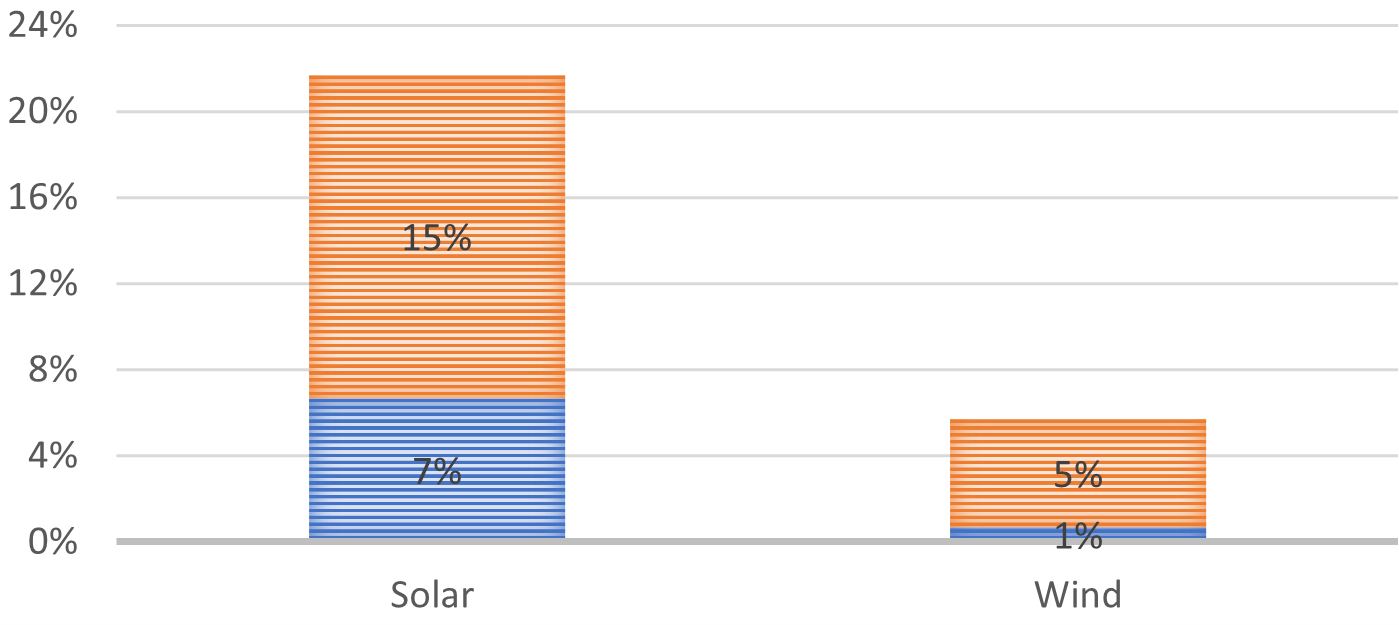
- CONTEXT: Japan’s latest Basic Energy Plan draft calls for solar generation to account for 14%-16% of the nation’s power mix by in 2030, double its 2020 share. The 2030 share for wind power is 5%, which would be seven times more than in 2020.
- CONTEXT: The perovskite cost target of ¥14/ kWh is still significantly higher than the ¥7/ kWh cost target for solar power plants, meaning competition with the traditional silicon-based products may pose a major challenge for the new technology.
Share of power generation, 2020 vs 2030
Green Innovation Fund outlines roadmaps for semiconductors and network systems
(Japan NRG, Oct. 1)
- The Green Innovation Fund working group has outlined objectives and roadmaps for developing semiconductors that convert electricity and energy efficient network systems. Upgrades in power semiconductors could potentially raise electric vehicle efficiency by 20%.
- Data processing by artificial intelligence programs is increasing power consumption at data centers and the market for power semiconductors, which convert electricity and control its consumption, is growing. Presently the global market is \3 trillion, which may grow to ¥5 trillion in 2030 and to ¥10 trillion in 2050, according to NEDO.
- The group suggests funding up to ¥51.8 billion to speed up development of power semiconductor devices and new silicon carbide (SiC), gallium nitride (GaN) and gallium trioxide (GaO3) wafers that are power efficient and could potentially replace present silicon wafers.
- The group also wants ¥50.2 billion allocated to reducing energy consumption of data networks by 40% through the development of opto-electronics technologies and devices.
TAKEKAWAY: Gallium, mined mostly in China, is one of Japan’s 34 strategically important minerals in a national stockpile. Its prices are highly volatile due to limited supplies and unstable demand. SIC supplies are abundant. Steelmakers use low-grade SIC in large volumes for deoxidization of pig iron.
Japan hosts inaugural Asian Green Growth Partnership Ministerial Meeting
(Japan NRG, Oct. 8)
- METI hosted the inaugural Asian Green Growth Partnership Ministerial Meeting to help energy transition in Asian countries and share breakthrough technologies developed by Green Innovation Fund projects.
- Japan said it will help establish energy transition roadmaps, transition finance frameworks, and offer $10 billion in financing for renewable, energy efficiency and CCUS projects, which would allow it to pass on breakthrough technologies and speed up decarbonization.
TAKEAWAT: The meeting attracted broad participations from South and Central Asia and the Middle East, in addition to the U.S., Australia, India and the ASEAN members, but China or South Korea were not included. A METI official said the two countries did not clarify their intent to participate, but declined to comment when asked if METI extended an invitation.
METI plans to run the partnership framework over the long term, as Green Innovation Fund projects are not expected to yield results immediately. These green growth ministerial meetings will be held annually.
FSA to mandate reporting of environmental risks
(Nikkei, Oct 6)
- The Financial Services Agency plans to require about 4,000 companies to disclose information on environmental performance, as well as filing projections of GHG emissions and estimated global warming impacts.
- The new requirements would initially only apply to companies listed on the ‘Prime’ section of the exchange, which will be created as part of a reorganisation in April, but would later be rolled out to all listed companies.
- At the TCFD Summit hosted by METI on Oct. 5, Bank of Japan Governor Kuroda said the new rules would play an important role to encourage investment in initiatives to combat global warming.
Japan to tighten foreign investment into critical raw materials
(Japan NRG, Oct. 4)
- METI said foreign investment into critical raw material exploration companies, metal producers, companies offering vessels, analysis, equipment maintenance and other goods and services relevant to exploration, and contractors of port and other facilities in remote islands will require notification to the government starting Nov. 4.
- This follows the recent amendments to the Foreign Exchange and Foreign Trade Act for strengthening economic security.
Japan to set caps for next biomass auction
(Japan NRG, Oct. 4)
- The Power Tariff Committee will set price caps for biomass power generation ahead of the sector’s fourth capacity auction held during Oct. 18-29. The price level will not be disclosed to the public.
- The caps were set at ¥19.6/ kWh in the previous auctions. The auctions have been held annually since 2018.
- The first and second auctions had no bidders; the third last year attracted one bidder.
NTT seeks Japan’s biggest green bond issuance with $2.7 Bn fundraising
(Asia Nikkei, Oct. 5)
- NTT will issue a “green bond” to help meet GHG reduction targets and increase investment in renewable energy.
- The telecom company will issue about ¥300 billion ($2.7 billion) of green bonds, thought to be the largest single issuance of such debt in Japan by an operating company. Green bonds limit the use of the funds raised to environmentally friendly ends.
- NTT as a group issued ¥40 billion of environmental bonds in 2020, making the coming issuance a sharp increase. An official announcement is due soon.
- NTT is set to issue three tranches of bonds with maturities of three, five and 10 years. Details, such as the coupon rate are expected to be decided soon. Nomura Securities and Mizuho Securities will serve as lead managers.
- CONTEXT: NTT announced plans to invest a total of about ¥450 billion in renewable energy power plants to fiscal 2030.
TAKEAWAY: NTT’s data centers and interest in renewables make this issuance significant not only for its size. See our Analysis section for a detailed look at green financing in Japan.
Toyota trading firm ties up with Uniper, Siemens in UK port hydrogen project
(Company Statement, Oct. 5)
- Toyota Motor affiliated trading house, Toyota Tsusho, is working with partners in the UK to conduct a feasibility study on the decarbonization potential of hydrogen at the Port of Immingham, the UK’s largest cargo port.
- The study will look at the potential options for hydrogen production, transport and storage and as a replacement fuel source for diesel and heavy fuel oil used for transport, through conversion to fuel cells.
- The study will run from September 2021 to March 2022; starting in 2022 the partners will look for a path to commercialization, including financing for commercial-basis production of 20 MW of green hydrogen for use at the port.
- Toyota Tsusho’s partners include Germany’s Uniper and Siemens Energy, as well as Associated British Ports (ABP), the UK’s leading port owner and operator.
- The project at the Immingham port is funded by the UK Government’s Department for Transport and delivered in partnership with Innovate UK.
- Toyota Tsusho’s interest lies in investigating a model of local production for local hydrogen consumption, aiming to eventually convert equipment to fuel cells.
Hitachi Zosen unveils twin blade wind turbine
(Nikkei, Oct. 6)
- Hitachi Zosen unveiled its experimental twin blade turbine on Oct. 6. The turbine features two 100-meter blades affixed to a 70-meter pylon.
- The prototype turbine was commissioned by government backed NEDO and developed in conjunction with the Japan Wind Power Association. Development began in May 2019.
- Hitachi Zosen will now begin to establish how far manufacturing costs can be reduced with a view to commercialization.
Toshiba’s new EV battery might be able to take on Chinese and S. Korean competition
(Economist Online; Oct. 6)
- EV Motors Japan will use Toshiba’s new lithium-ion batteries in its electric buses, the first time that an electric bus is powered with a Japan-made battery.
- Even after 20,000 charges, these Toshiba-made batteries don’t degrade.
- China’s CATL and BYD and S. Korea’s LG Chem and Samsung EV collectively control 60% of the global EV battery market.
- New Japan-made batteries, however, might be able to beat Chinese and S. Korean rivals in terms of durability, safety, and cost from production to disposal.
TEPCO EP taps Asahi Tanker to build world’s first electric tankers
(New Energy Business News, Oct. 4)
- Asahi Tanker and TEPCO Energy Partners signed a basic agreement that seeks to have the world’s first electric propulsion tankers (EV tankers) operate at the Kawasaki Port, Kanagawa prefecture. The agreement is centered on promoting electric propulsion vessels and establishing new maritime infrastructure services to support them.
- Asahi Tanker will build two EV tankers, the first of which is scheduled to start operation around April 2022 and the second around May 2023.
- The heavy oil tankers, with a gross tonnage of 499 tons, will be equipped with a 3,480-kWh battery. In case of emergencies, the tanker would also be able to supply power from its batteries externally in the volume that’s equivalent to about 100 EVs.
- The tankers be charged at night to operate 12 hours on a fully powered battery. TEPCO is preparing a 300kVA high-capacity power systems for the tankers at the port so that two ships can be charged simultaneously.
Ricoh Launches New Battery-free and Wiring-free Environmental Sensor
(Sankyo Business, Oct. 4)
- Ricoh launched a new environmental sensor that can acquire information such as indoor temperature, humidity, illumination, and air pressure without changing batteries or requiring wiring.
- It can be used in frozen, high temperature, and high humidity environments, and can be used at food processing and manufacturing industries, and at retail stores.
EDITORIAL: Obstacles line path to renewable future
(Newswitch editorial, Sept. 30)
- CONTEXT: This is an editorial that showcases the stories of Nikkan Kogyo Shimbun, the top manufacturing and industry voice in Japan and one that’s often aligned with the Keidanren, the big business lobby group.
- The sixth revision to Japan’s basic energy plan, which commits the nation to sourcing up to 38% of its electricity needs from renewable sources, will become law in autumn.
- However, the head of the Federation of Electric Power Companies of Japan says he believes the target is extremely ambitious and will see citizens pay more for electricity via FIT levies.
- Japan faces two challenges not experienced by Western nations, namely a lack of redundancy in the power grid, making it more difficult to store surplus power, and a scarcity of available land for solar farms. Japan already leads the world in installed solar capacity by land area.
- Surrounded by deep sea, Japan is also at a disadvantage compared to European nations when it comes to offshore wind farms. The depth of the waters surrounding Japan mean anchored turbines are often uneconomical.
- To overcome these obstacles, Japan needs to make greater use of pumped hydro and to generate more electricity from geothermal and biomass.
One-Dot News:
- Hokkaido Gas acquired an existing 2.3 MW wind power plant in Wakkainai city, Hokkaido, which has been in operation for more than 20 years; the utility says this will bring experience in maintenance and forecasting in the renewable energy field (New Energy Business News, Oct. 5)
- Toyota Tsusho and Prime Planet Energy & Solutions (PPES), a JV between Toyota Motor and Panasonic, signed a MoU with BHP for supply of nickel sulfate for automotive batteries and will consider traceability of raw materials in the supply chain (New Energy Business News, Oct. 6)
- Mitsubishi Corp. and Chiyoda signed a MoU with Semcorp Industries of Singapore to create a hydrogen supply chain, storage and transportation business that would deliver hydrogen to the city state, including gas-fired power plants for co-firing (New Energy Business News, Oct. 6)
- METI will revise energy efficiency measurements and classification of cargo consigners to raise fuel saving awareness among cargo consigners (Japan NRG, Oct. 8)
- Chubu Electric will enter the hydropower generation business in Vietnam by acquiring a 20% stake in Vitexco Power; this is the first time that Chubu has invested in a hydropower business overseas (Yomiuri Shimbun, Oct. 3)
- Itochu Enex, Kyushu Electric and Saibu Gas will study the potential to create a ship-to-ship LNG fueling business, providing a service for vessels in the Kyushu and Setouchi areas of Japan (Nikkan Sangup, Oct. 5)
- Hitachi ABB wins $900 million order for Egypt-Saudi Power link, which will allow the countries to exchange excess power from renewables projects via a 1,350-kilometer cable (Asia Nikkei, Oct. 6)
WEATHER OUTLOOK
TWO-WEEK TEMPERATURE FORECASTS (OCT. 8 ~ OCT. 20)
Nation-wide
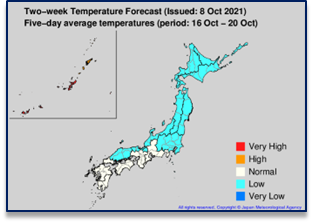
Tokyo area
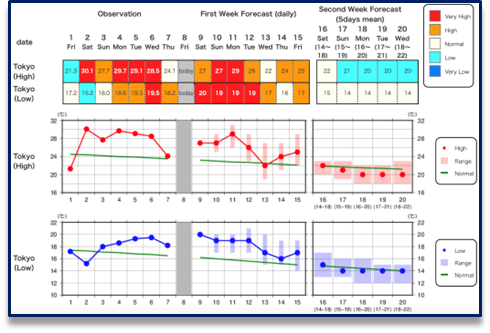
- North Japan: High heat until Oct. 15, then a slight drop in temperature. Drastic changes in temperature expected.
- East/West Japan: Extreme heat until Oct. 15, then a slight drop. Drastic changes in temperature expected.
- Okinawa/Amami region: Extreme heat for the next 2 weeks; heavy rain on Oct.12 due to a typhoon near Laos.
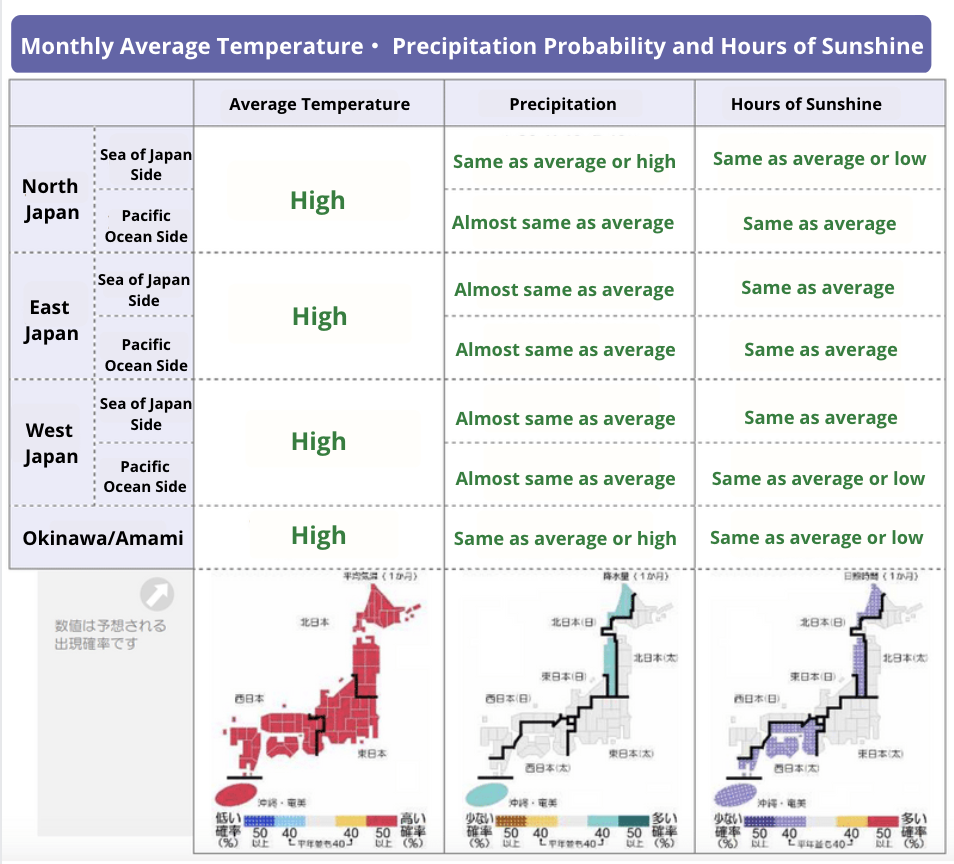
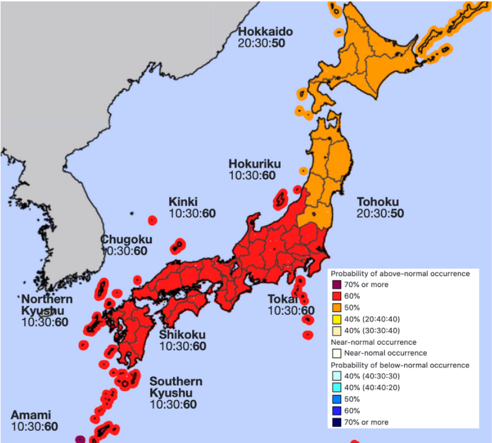
ONE-MONTH SEASONAL FORECAST (OCT. 9~ NOV. 8)
NEWS: POWER MARKETS
| No. of operable nuclear reactors | 33 | Electricity Price | Friday, Oct. 8 | % Change WoW | ||
| Of which | restarted | 10 | JEPX 24-Hour Spot | ¥12.12/ kWh | +38.4% | |
| in operation today | 9 | TOCOM Oct. baseload (Tokyo area) | ¥10.10/ kWh | +22% | ||
Source: Company websites, JANSI and JAIF, as of Sept 24, 2021
Japan says monitoring surge in energy prices
(NHK, Oct. 8)
- New METI minister Hagiuda said Japan is monitoring the surge in global energy prices, including in LNG, but expect this to have limited impact on the country given its long-term supply contracts for fuel.
- Most of Japan’s power and gas utilities lock in fuel purchases based on long-term contracts, which limits the impact of spot commodity prices on Japanese electricity and other energy markets.
- METI will pay close attention to the correlation between Japan’s electricity prices and trends in global LNG prices, Hagiuda said.
- CONTEXT: Japan’s spot power price rose to the highest level since February.
TAKEAWAY: According to METI’s own report on power generation costs, published in August, there is a strong correlation between Japanese power prices and the LNG market. Gas-fired generation accounts for more than a third of the nation’s electricity mix and LNG purchase make up about 60% of the cost of gas-fired capacity. So, a 10% increase in LNG cost should push up thermal power plant electricity prices by ¥0.6/ kWh. Of course, that impact will change based on the LNG price, which is at least 3-4 times higher in the spot market than half a year earlier. According to S&P Global Platts, the Japan-Korea-Marker (JKM), which is used as a spot benchmark in the region, climbed above $56 per mmbtu on Oct. 6 for one cargo delivered into North Asia in November.
Electricity/gas price surge shows no sign of letting up
(Nikkei Sangyo Shimbun, Oct. 6)
- The electricity and gas tariffs set by Japan’s 10 main electricity providers and four main gas providers are scheduled to rise for a third time in three months in November.
- The average TEPCO subscriber now pays 17% more for electricity than 11 months ago.
- Increased demand for fuel in winter means high tariffs could continue for the foreseeable future.
- The likely cause for the high tariffs is Covid-19, which caused demand for fossil fuels to fall across the board in 2020 on surplus supply. Supply is now tightening amid optimistic economic forecasts as the pandemic subsides.
- SIDE DEVELOPMENT:
EDITORIAL: Government must take action now to prevent power shortages
(Yomiuri Shimbun editorial, Oct. 4)- CONTEXT: Yomiuri is Japan’s biggest newspaper.
- Moves to divest from coal have resulted in a scramble to buy LNG, which is seen as a transitional fuel by nations trying to cut their carbon footprints.
- LNG evaporates readily, making it difficult to store for extended periods. This has caused Japanese utilities to be dependent on ‘spot’ contracts.
- Japan is currently reliant on Australia for nearly 40% of its LNG needs, and most of Japan’s LNG imports are sourced via Asian hubs.
- To prevent future electricity shortages, Japanese utilities should diversify their suppliers, such as by buying U.S.-produced shale gas.
- The govt. needs to do more to support the restart of idle nuclear reactors.
TAKEAWAY: How the recent search in energy prices impacts policy is different from country to country. In Japan, the media has put forward a line of thinking popular prior to the recent focus on decarbonization; namely, the need for long-term fuel supply contracts and to restart nuclear power. Japan’s major LNG importers, however, will be in two minds about committing to more long-term contracts in coming years. After all, the Basic Energy Plan says LNG’s role in Japan’s power mix will drop by half by 2030.
ENEOS buys JRE, renewable energy operator backed by Goldman for ¥200B
(Nikkei, Oct. 7)
- ENEOS Holdings agreed to purchase Tokyo-based Japan Renewable Energy in a deal expected to be worth around ¥200 billion.
- ENEOS is signaling an acceleration in its transition away from fossil fuels.
- While ENEOS will pay a significant premium in relation to JRE’s current turnover, the company believes JRE has significant potential for growth.
- Established in 2012, JRE currently operates 60 solar and wind farms and biomass generation plants both in Japan and overseas.
- JRE’s shareholders are currently Goldman Sachs and the Singaporean sovereign wealth fund.
TAKEAWAY: This is a landmark deal for Japan’s renewables sector, for the first time setting up a major domestic player in the solar and wind space with much capacity already in operation and more in the pipeline. While the power utilities have been wary of big moves into renewables, ENEOS has made the leap and will night fight in the green corner against EPCOs on future policy issues. This will surely change the nature of the discussions inside METI about the future energy mix.
JERA begins co-firing ammonia at Japanese power plant
(Denki Shimbun, Asahi, Oct. 7)
- Power utility JERA started to test co-firing generation by mixing ammonia with coal at its Hekinan thermal power station (Aichi prefecture).
- Ammonia doesn’t generate CO2 even when burned. The trial will run until March 2022.
- At this point, only 0.02% of the fuel mix will be ammonia.
- JERA expects to use about 200 tons of ammonia during the trial period to generate about 400,000 kilowatt-hours of CO2-free electricity.
- IHI Corp is the engineering company supporting JERA’s experiment. A part of the combustion equipment at the Hekinan station was remodeled to allow co-firing. The process took longer than expected, pushing back the initial launch from August.
- JERA’s target is 20% ammonia co-firing by FY2024.
TAKEAWAY: Co-firing is possibly the biggest energy development in Japan’s power sector at the moment and one well-supported by politics, industry, and consumers. See the Analysis section for what it means for the heavy machinery companies in Japan.
Shikoku Electric, Sumitomo Corporation seek to build Japan’s biggest onshore wind farm
(New Energy Business News, Oct. 4)
- Shikoku Electric joins the Konnoyama wind power project being developed in Kochi prefecture by Sumitomo Corporation, Japan Wind Engineering (JWE), and Hokutaku.
- Construction is scheduled to begin in 2024, with operation to begin in 2027.
- Shikoku Electric has set a goal of developing 500 MW of renewable energy by FY2030, and has developed 170 MW so far since 2000.
Solar operator bankruptcies rise, reversing course of recent years
(Teikoku Databank, Oct. 8)
- The number of solar power plant operator bankruptcies hit 39 in first half of FY2021 (April to Sept.), higher than in the prior period, breaking with 3.5 years of declines.
- The total debt of operators increased 244% from a year earlier.
- The highest number of business failures occurred in the Tokyo-led Kanto region (15 cases). Notably, the bankruptcy numbers included more larger operators than usual.
- CONTEXT: Since Teikoku Databank started its survey of solar plants in April 2006, and 601 operators have folded with a debt load of over ¥10 million.
Japan to conduct survey of six seabed areas suitable for offshore wind
(New Energy Business, Oct. 8)
- State-backed research hub NEDO selected Oyo Corp. to conduct a two-year survey of the seabed in six areas of Japan, including the coasts of Hokkaido, Honshu and Kyushu.
- The ¥2 billion project will collect and publish seabed ground data necessary for the basic design of offshore wind turbine installations, thereby reducing risks for businesses and contributing to the expansion of the industry.
- Oyo signed a partnership with NYK Line, Fugro Singapore Marine, a subsidiary of Dutch company Fugro, and Fugro Japan. It expects more business opportunities from offshore wind industry development in Japan, especially as more waters deeper than 30 meters are explored.
- Oyo holds the top market share of seabed surveys for offshore wind power generation in Japan.
U.S. ban of Uighur area silicon hikes up prices for solar
(Nikkei Business, Oct. 5)
- The U.S. recently imposed import sanctions on Chinese produced silicon on the grounds that forced Uighur labor was used in its production.
- China supplies nearly 80% of the world’s silicon needs.
- While all manufacturers targeted insist that they don’t source silicon from areas populated by Uighur, the move caused the price of silicon to more than double amid emphasis on sustainable development goals in the industry.
JAPEX invests in Hokkaido biomass power plant
(Sekiyu Tsushin, Oct. 5)
- JAPEX will participate in a biomass generation operation in Abashiri, Hokkaido, launched by Tokyo-based Wind-Smile.
- The operation will comprise three biomass plants generating 20 MW.
- JAPEX decided to participate because it is a renewable energy initiative that makes a contribution to the community.
Tohoku Electric donates ¥1 billion to home of nuclear reprocessing plant
(Nikkan Gendai, Oct. 7)
- Tohoku Electric once again takes advantage of a 2016 law that enables corporations to donate to local bodies in exchange for tax breaks.
- The utility donated ¥1 billion to Higashidori (Aomori prefecture), home of the Rokkashomura nuclear reprocessing plant.
- Japanese corporations donated a total of ¥11 billion under the scheme in fiscal 2020, a threefold increase on the year before.
Atomic Agency suspends waste vitrification
(NHK, Oct. 5, 2021)
- Japan Atomic Energy Agency suspended activity at its Ibaraki reprocessing plant to encase high-level nuclear waste in glass for long-term storage.
- JAEA decided this after finding levels of metallic residue in melting furnaces that were higher than expected.
- This is the third such problem in the process since it began 5 years ago.
NUCLEAR REACTOR NEWS ROUND-UP:
- Ikata NPP finishes anti-terrorism measures, but restart to be delayed
- (Asahi Shimbun, Oct. 6)
- Ikata NPP Units 3 (Shikoku Eletric) finished work on anti-terrorism measures. However, the plant’s restart scheduled for Oct. 12 is delayed.
- CONTEXT: In September, Shikoku received warning from NRA after its plant operators left his post several times while on standby duty.
- The local govt. and city council will now debate on this matter and must come to a resolution before a restart can go ahead.
- SIDE DEVELOPMENT:
Emergency Diesel Generator at Mihama nuclear plant stops after detecting abnormalities
(NHK, Oct. 6)- The emergency diesel generator at Mihama NPP Unit 3 (Kansai Electric) stopped during test operation. Abnormalities in the rotation speed of the diesel generator were detected.
- The utility said this had no impact on the plant’s operation and is investigating.
- SIDE DEVELOPMENT:
NRA inspects Tsuruga nuclear power plant after concerns of data credibility
(NHK, Oct. 4)- CONTEXT: On Aug. 18, NRA suspended the safety evaluation required for restarting Tsuruga Unit 2, after the operator (JAPC) was found guilty of tampering with key geological data related to a fault underneath the facility.
- NRA said the operator’s handling of the data was inappropriate and began a two-day inspection at the company’s Tokyo HQ.
- This is the 7th such inspection at JAPC’s HQ.
- SIDE DEVELOPMENT:
NRA examines Tomari nuclear power plant’s new tsunami measures
(NHK, Oct. 1)- NRA began the examination of Hokkaido Electric’s new seawall to protect the Tomari NPP against potential tsunami.
- This area of examination is one of the key criteria for the plant’s restart.
- Other aspects of the plant’s safety are also still under examination by the NRA and no end data for the completion of the checks has been set.
- SIDE DEVELOPMENT:
NRA says Kashiwazaki NPP audit will take a year
(NHK, Sept. 30)- The Nuclear Regulation Agency says it will take around a year to perform a thorough audit into TEPCO’s operations at its Kashiwazaki-Kariwa NPP in the wake of recent revelations about compliance breaches.
- As well as verifying that steps have been taken to prevent re-occurrence, the Agency needs to satisfy itself that TEPCO reformed its corporate culture and won’t slipped back into bad habits, said Agency head Fuketa Toyoshi.
NEWS: OIL, GAS & MINING
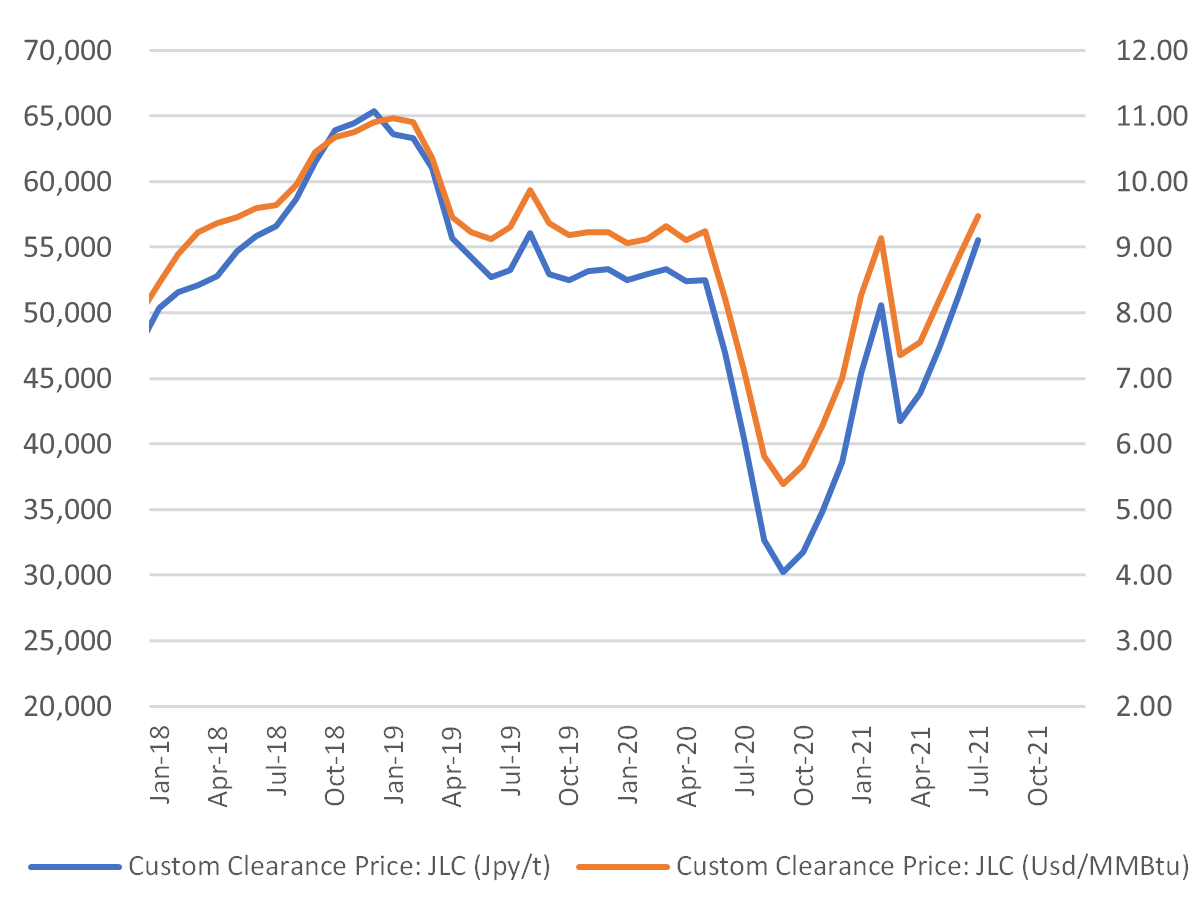
Japan Oil Price: $71.72/ barrel
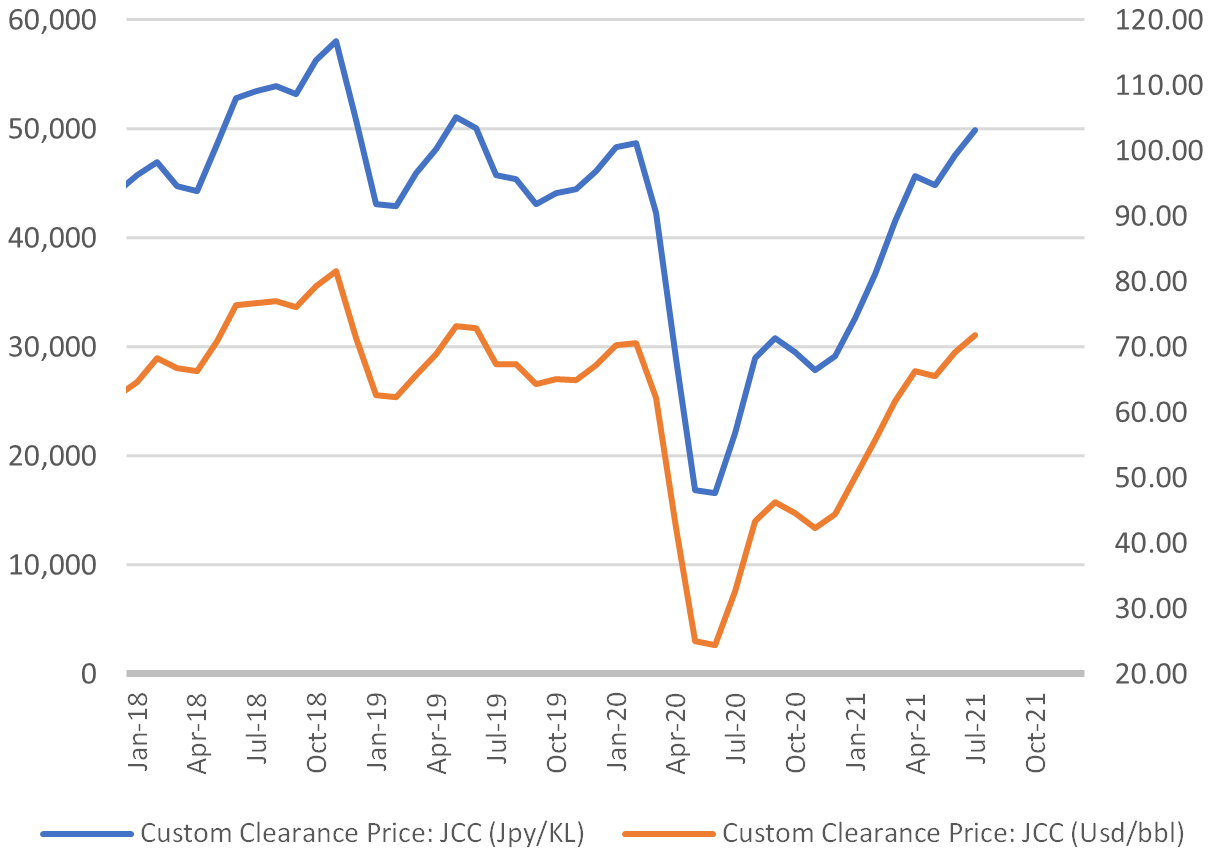
Japan (JLC) LNG Price: $9.47/ mmbtu
Japan’s LNG Producers and Consumers Conference Notes:
(Japan NRG, Oct. 10)
- CONTEXT: Japan’s METI hosted its most important LNG industry conference of the year, bringing together consumers and producers to exchange views on the market. Below are some notes from the event.
- Hosaka Shin, Commissioner at ANRE, said the carbon-neutral era has tapered off investments into upstream and made LNG and gas markets extremely unstable. The industry must stabilize supply and prices for LNG.
- Hosaka: U.S. exports since 2016 have brought “immeasurable” stability of supply to the market.
Hosaka: Japan’s new Basic Energy Plan positions LNG as an “essential balancing fuel to achieve carbon neutrality” even as the country leans more on renewables. Natural gas / LNG as the source material for hydrogen and ammonia will remain important even beyond carbon neutrality in 2050. - Hosaka: Goal remains for Japanese companies to be buying 100 million tons of LNG year by 2030 to meet domestic and overseas demand.
- Hosaka: Percentage of Japanese contracts with a destination clause has dropped since 2017, when Japan’s antitrust authorities investigated the matter and found it to be against the nation’s rules.
- Hosaka: “LNG is essential to the energy transition in Japan and Asia.”
- Hosaka: Japan wants to work with industry to make the LNG value chain cleaner.
- Qatar’s energy minister: LNG spot prices are at a record high due to a lack of investment and supply disruptions, as well as a demand rebound from the pandemic and weather.
- Several Asian LNG buyers: LNG infrastructure needs to be more regional and shared so that we can cut the cost of using LNG.
- SIDE DEVELOPMENT:
- 10th LNG Producer-Consumer Conference launches energy transition initiatives
- (Japan NRG, Oct. 6)
- The 10th LNG Producer-Consumer Conference kicked off new energy transition initiatives, METI said.
- Asia Natural Gas and Energy Association (ANGEA) was launched by the private sector members to provide support for introduction of renewable energy and energy-saving resources, and LNG in Asia.
- The businesses and International Emission Trading Association (IETA) will also start discussions on issues surrounding CCS/CCUS and carbon credit schemes.
Gasoline prices hit three-year high
(Asahi Shimbun, Oct. 6)
- The Oil Information Center said the average price of gasoline had reached ¥160 per liter after five consecutive weeks of increases.
- There is no end in sight to the price increases, with the Center projecting that price will continue to rise for weeks.
- OPEC+ agreed on Oct. 4 not to increase production.
Japan builds up LNG stocks as supply remains tight on Chinese demand surge
(Nikkei, Oct. 5)
- The Agency for Natural Resources and Energy says as of the end of August Japan’s major power producers had LNG reserves about 50% greater than at the same time last year. However, this does not preclude the risk of another price surge if there is another cold snap this winter.
- China’s rush to divest from coal caused it to greatly increase imports of LNG. As of August, China had imported nearly 52 million metric tons of LNG since the year’s start, slightly more than Japan (51 million tons). This is the first time China has overtaken Japan as the world’s largest LNG importer.
- European demand for LNG also increased amid difficulty in sourcing Russian gas.
Shares of INPEX and Mitsui Matsushima plunge on global energy trend
(Asahi Shimbun, Oct. 6)
- The share price of coal importer Mitsui Matsushima Holdings fell nearly 17% overnight. INPEX also saw its share price fall by nearly 9%.
- The fall is attributed to an accelerating trend for investors to pull money out of the energy sector in a reversal of the recent energy buzz, amid news that China will recommence the import of coal from Australia and after Russian President Putin said his country will increase natural gas exports.
ANALYSIS
BY TAKEHIRO MASUTOMO
Hydrogen Plans Replace Nuclear Dreams for Japan’s Heavy Industry
Recent political campaigns have reignited the debate over the future of nuclear power in Japan. Beyond the rhetoric, however, lies a tough reality for nuclear. The industrial giants that once formed the backbone of its development in Japan are moving on.
The latest strategies of Japanese heavy machinery and engineering firms ooze details on R&D and investments in hydrogen, carbon capture and CO2 recycling, as well as around synthetic or bio alternatives to fossil fuels. On nuclear, not so much.
Over the past three years, Japanese companies have quit every overseas new nuclear construction bid they were involved in. All new domestic atomic power projects froze in 2011. Several of the top players left the field entirely. Last year, Kawasaki Heavy Industries said it plans to sell its nuclear business, while IHI and Toshiba dissolved a nuclear venture. Talk of forming a domestic nuclear champion has stalled.
While earlier this year engineering firms IHI and JGC invested in a U.S. small modular reactor (SMR) maker, NuScale, the sums are modest, far less than what Japan’s heavy industry is channeling into other CO2-free technologies.
Should the government back construction of new nuclear plants, then the course might change. But this is not on the near-term agenda, according to incoming METI minister Hagiuda, which may be a reason for concern. By the time new nuclear orders arrive, Japan’s top engineers may already be too invested elsewhere.
Mitsubishi Heavy Industries
For decades Mitsubishi Heavy Industries (MHI) benefited from sales of gas turbines, boilers, and nuclear infrastructure as one of the main pillars of its energy business. Aside from an ill-managed foray into wind turbines, the company stuck to traditional energy and enjoyed good returns until the decarbonization tsunami hit.
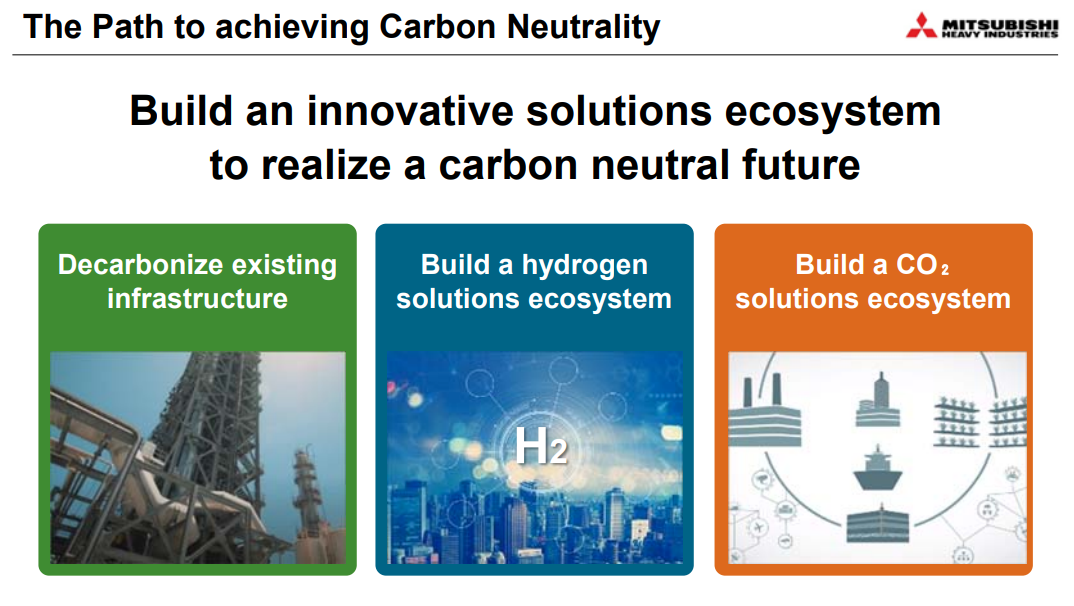 The 150-year-old conglomerate finally mustered a response to the net-zero era late last year in a new business strategy that was further refined in its May 2021 presentation. The tenets of the MHI’s energy businesses will now be based on:
- Decarbonizing existing infrastructure
- Hydrogen
- Carbon capture, and the further transport, storage and recycling of CO2
Source: MHI
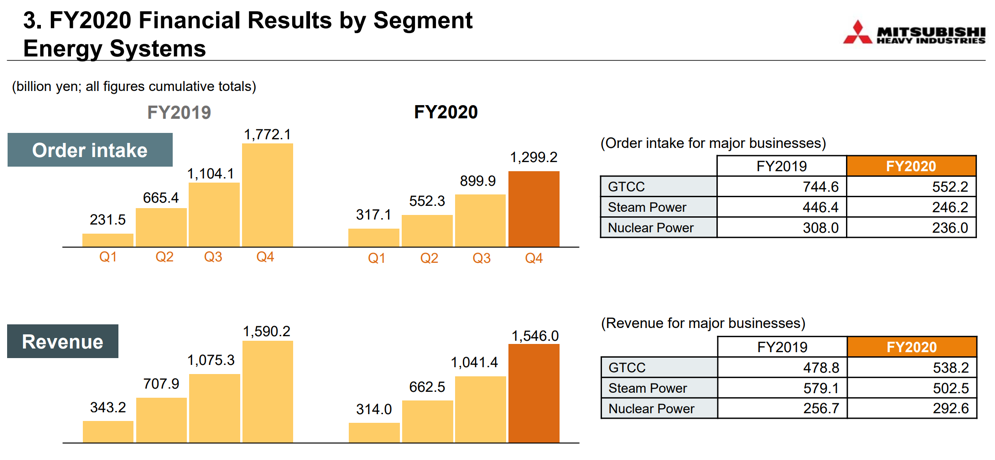 Of those core directions, nuclear is one small sub-division. The bulk of its commercial prospects are described as maintenance work and the completion of fuel processing facilities. Talk of new reactors is short and vague.
The outlook for the rest of MHI’s ¥180 billion ($1.6 billion) “Energy Transition” program receives far more attention.
MHI sees the commercialization of 100% ammonia or hydrogen-fired generation as early as 2025. This applies to both the building of new power plants tailored to burning the CO2-free fuels and to the retrofitting of existing thermal power stations.
Before the end of the decade, MHI expects to have the broad range of gas turbines and boilers converted and customer-ready to run on hydrogen and ammonia. This suggests that the current government forecast for those two fuels to account for 1% of Japan’s electricity mix by 2030 is, if anything, conservative.
Source: MHI
MHI has already tested the co-firing of hydrogen and solved various issues related to the deployment of the gas, such as the “reverse flame” phenomenon, in which the flame flows backward when the fuel is injected.
Within the next two years the conglomerate expects to unveil a multi-gas carrier that can ship ammonia, and also to trial steelmaking technology based on hydrogen.
In addition to work in-house, MHI also recently invested in H2U Investments, the Australian green hydrogen and ammonia project developer.
A similar level of detail comes across in MHI’s plans for carbon capture. The company and its partner, Kansai Electric, have developed KS-1, a liquid that boasts high CO2 absorption capacity. With it, MHI is offering a carbon capture system that consists of a cooling tower, an absorption tower and a regeneration tower.
By 2023, MHI expects to have a wide range of carbon capture systems for industry and power generation. In addition, the company is working on a CO2 transport vessel and a clean fuel created from the captured CO2, both of which should reach market around the same time. While current revenue from hydrogen and CO2 products is close to zero, by 2030 MHI forecasts sales of ¥300 billion from the two.
Kawasaki Heavy Industries
After selling its nuclear maintenance business last November, Kawasaki is going full steam ahead on hydrogen. The company has been a hydrogen true believer for years and spent the last decade lobbying the government to create rules around the shipping of liquid hydrogen. Around 30 years ago the company pioneered a storage tank technology for liquid hydrogen, delivering it to Japan’s Tanegashima Space Center.
Today, Kawasaki is the leader in hydrogen carrier ships, and it has designed tankers that later this year will deliver a test batch of fuel from a brown coal hydrogen project in Australia to Kobe. The CO2 captured from the coal-to-hydrogen process is due to be injected and stored between rock layers deep under the sea.
Further, Kawasaki has allocated ¥60 billion to develop and build large-scale hydrogen-powered carriers. The vessels are due for delivery in 2026, with the government subsidizing half the costs of the project for three years.
IHI Corporation
IHI is possibly the most diversified of the Big Three heavy industry players in Japan, yet it covers similar ground to MHI and Kawasaki. It’s also keen on business opportunities in the decarbonization of transport and alternative fuel development.
In power generation, IHI’s R&D is focused on ammonia-fueled boilers and turbines. A year ago, the firm’s Yokohama office began to test co-firing that uses 50% ammonia and the same amount of natural gas. By 2025, IHI expects to deliver ammonia co-firing at the ration of 60%, up from the 20% or so achieved in early tests.
To make sure ammonia fuel will be available for power generating sources that want to switch, IHI has partnered with Saudi Aramco and the Institute of Energy Economics, Japan (IEEJ) to build a supply chain in “blue” ammonia.
While IHI’s gas turbine development lags MHI’s optimistic prognosis, it has stolen a march on domestic rivals in green hydrogen. Last year, IHI launched Japan’s first hydrogen production facility in Kitakyushu that uses multiple renewable energy sources for power.
When exactly green hydrogen will become commercially viable in Japan is not yet clear, but IHI’s estimates put the date at around 2030. Meanwhile, the firm is also experimenting with e-fuels and sustainable aviation fuel (SAF), as well as electrical aviation engines and rocket systems based on SAF and hydrogen.
IHI is also involved in developing electric turbochargers for fuel cell systems for hydrogen-powered commercial vehicles, giving the company an incentive to further support the hydrogen economy.
Summary
Japan’s top engineering firms have built major businesses on the back of oil and coal, and then gas related infrastructure. As the decarbonization trend accelerates, they are switching focus to hydrogen/ ammonia and carbon capture technologies, while exploring opportunities from the energy transition in transport to design ships, planes, vehicles, and their fuels.
For now, Japan’s heavy industry players have not entirely shuttered their nuclear business because plant maintenance fees are a stable source of income. But, beyond that, R&D in nuclear has stalled and state policy on the sector remains uncertain. The big engineering firms are not out of nuclear, but they are not fully invested in it either.
Continued lack of clarity on the industry’s future role from the government will only bring about a slow-motion disintegration of this critical industrial base that took decades to build. Once that human capital and infrastructure are gone, they are unlikely to return.
ANALYSIS
BY ESWAR MANI
MANAGING PARTNER
MANI KAPITAL
Japan’s Green Word Should be Its Bond
One of the now-forgotten goals of former Prime minister Suga’s administration was to reclaim Tokyo’s status as a global financial hub. Kishida, the new PM, will likely bring in his own set of targets, but he should include Suga’s lesser-known idea and marry it with one that’s better known – decarbonization.
Tokyo can become a global financial hub by taking the lead in green financing. It already has a track-record of companies pioneering new forms of bond issuance linked to emissions cuts and sustainability. This summer, the Bank of Japan started the world’s first central bank facility to reward banks for allocating cheaper credit to green borrowers.
Last month, the Financial Service Agency (FSA) said it will help the Tokyo Stock Exchange create a platform for investors and issuers to access information on green bonds, as well as set up a better scheme to certify green bonds.
These and other elements are in place. What’s missing is the big piece that only PM Kishida can provide. Unlike over a dozen other nations, Japan has yet to issue a sovereign green bond. That’s important because it would form a yield curve based on which more issuance by local governments and companies in Japan can follow.
A new Japanese sovereign green bond would unleash far greater capital inflows into the country’s energy transition than the government’s flagship ¥2 trillion Green Growth Fund. It would also offer ESG-conscious investors the assurance they need.
From an ESG perspective, no investor should be allocating to Japan for its continued buildout of coal-fired power capacity. To be in line with the UN’s Sustainability Development Goals, and global pension investors’ ESG considerations, Japan needs to signal its continued decarbonization commitment in line with the positive momentum created by the previous administration.
For Kishida, who’s voiced concern about Japan’s state debt levels, tapping into the global financial pool hungry for green investments should be too attractive to ignore.
What is green financing?
A green bond uses its proceeds to fund activity that meets pre-agreed conditions of contributing to decarbonization. If an issuer meets their stated goals, and their financials are as expected, the interest rate on such green bonds are lower than market terms.
These bonds also serve as a way to measure how well a company is executing its green strategy. The difference between the interest rate on a green bond and a traditional bond, called a greenium (from “green + premium”) shows the market’s confidence in an issuer’s execution of its green strategy.
There are still significant PR brownie points that issuers can gain from issuing a green bond. More importantly, it offers a wider pool of capital as more and more investors seek to deploy funds into firms embracing decarbonization and sustainability.
The European Investment Bank initiated the green bond market in 2007, selling the first such financial product under the label of Climate Awareness Bond. Only in 2013 did the world’s first green corporate bond emerge, care of Vasakronan, Sweden’s largest property company.
Since then, the market has blossomed.
Trends in the annual issuance of green bonds
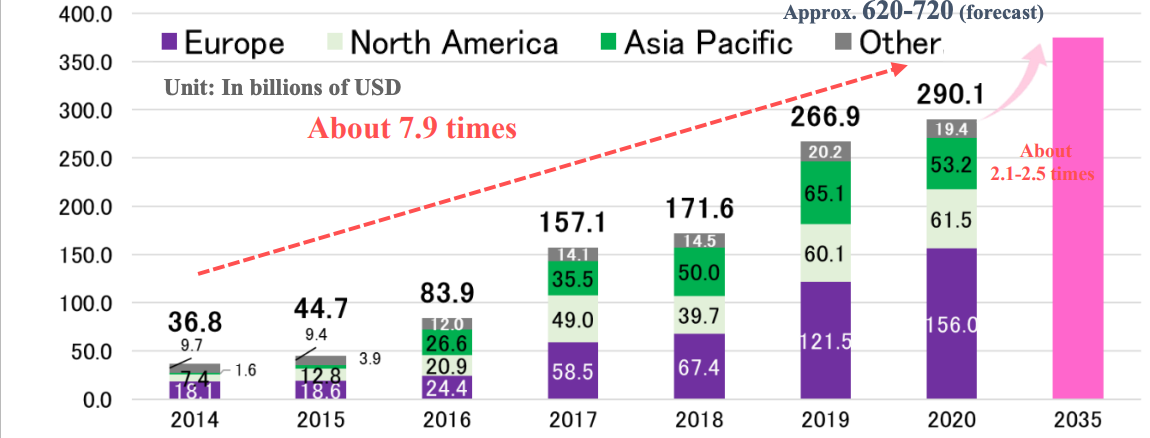
Source: Market Data Platform, Climate Bonds Initiative, OECD, Analysing Potential Bond Contributions in a Low-Carbon Transition, all care of the Tokyo Metropolitan Government
Japan’s (small) green finance revolution
While there have been some notable moments, Japan’s overall contribution to the finance revolution has been sporadic and meager. After a period of private placements on the sustainability theme between 2010 and 2012, the government and Ministry of Environment (MoE) pushed for the first green bond issuance in 2014
- 2014 : Development Bank of Japan (DBJ) becomes Japan’s first issuer of green bonds
- 2014 : Toyota Motor’s U.S. financing arm, Toyota Financial Services, issues first asset-backed green bonds in the auto industry and the first associated with a Japanese group
- 2015 : SMBC becomes first Japanese entity to issue green bonds in October 2015
- 2017 : MoE launches green bond guidelines for Japanese issuers, and Tokyo Metropolitan Government sells Japan’s first municipal green bond
- 2018 : Japan International Cooperation Agency (JICA), the funding arm for major infrastructure projects abroad, sells the first of its 15 series of green and social bonds to date
- 2021 : The BoJ starts a lending scheme to banks that allows them to get capital at zero interest rates (0.2 percent higher than the current deposit rate with the central bank), thus incentivizing private banks to allocate capital to green projects
- 2021 : NYK Line, the shipping firm, sells Japan’s first transition bonds to fund initiatives that will cut emissions but which may not be entirely green (such as investing in ships that run on LNG fuel)
- 2021 : NTT Group reportedly planning ¥300 billion ($2.7 billion) sale of green bonds in three maturities, Japan’s largest single issuance by an operating company
The Japanese market has also developed other kinds of ESG-linked bonds. Some have rate metrics tied to broader social and sustainability guidelines, such as workforce diversity, labor rights (e.g., not employing child labor), and even based on firms taking a balanced corporate tax policy, which emphasizes the importance of tax payment.
The beauty of these various bonds is that it quantifies the positive impact that purpose-driven business has on the risk resilience of the issuer, basically the credit risk. It assumes that if a company has clean energy powering its factories and data centers, then an exogenous energy shock (say, oil nations stop exporting) will have less of an impact on its operations and cash flow.
Trends in ESG bonds issued publicly in Japan
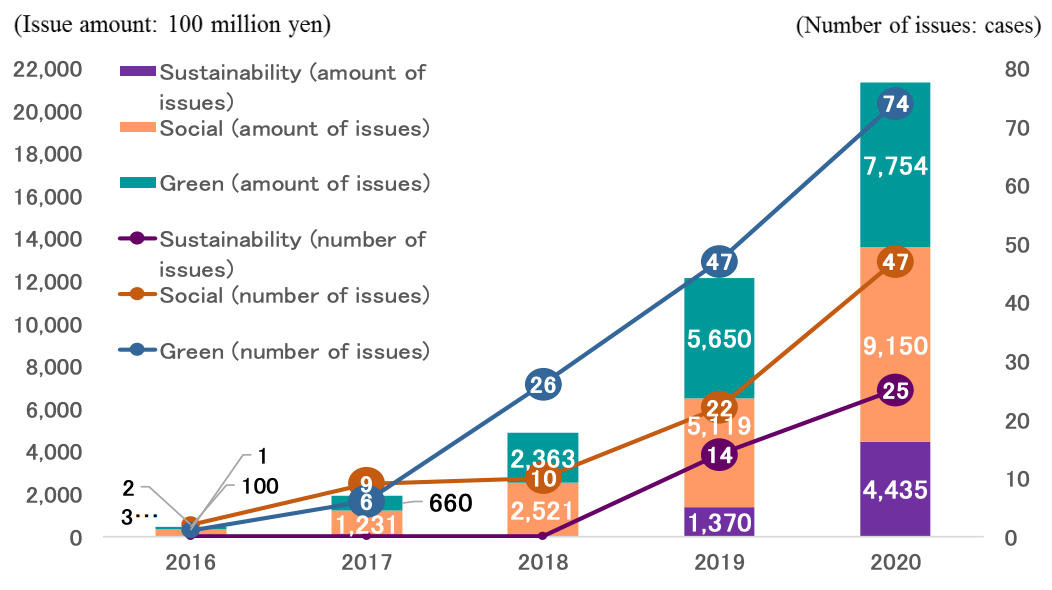
Source: Tokyo Metropolitan Government
In Japan, the number of institutional investors that signed up to the Principles for Responsible Investment went up by a factor of seven between 2010 and 2019, according to FinCity Tokyo, an entity formed to promote the idea of Tokyo as a global financial hub and supported by the city government and private businesses.
As of June, this year, 428 Japanese companies and organizations were committed to climate-related financial disclosure, in accordance with the Task Force on Climate-Related Financial Disclosures, according to FinCity Tokyo. This number was the most of any other country.
Despite all of that, the size of Japan’s green financing market is relatively small on a global basis. In 2020, domestic issuers sold close to $10 billion in green bonds, which is less than the money raised by just the supranational organizations in the same year.
The global market for green bonds exceeded $312 billion in 2020.
Refinance Japan’s government debt with “green” bonds
For Japan to catch up in green financing, and to have global ESG driven funds consider Tokyo a serious financial hub, the government must step in.
Issuing a sovereign green bond immediately would send a signal to the global market that Japan is in solidarity with its carbon neutral commitments, and that the government acknowledges that its green subsidies can be financed by green sources.
The bond could even have a catchy name, like Shizen (nature), similar to how the Samurai is used to denote yen-denominated issuances by non-Japanese companies.
Japan’s reticence to issue a green sovereign bond so far has apparently been due to the complicated procedures. According to guidance, sovereigns must create a green bond policy framework, a governance structure of decision makers, engage with external parties for verification, review, certification, and post-issuance monitoring and reporting.
Some of those tasks are already in-progress, but it makes sense for Kishida’s government to speed them up. After all, many countries have managed it, including almost half of the OECD nations, selling sovereign debt with maturities ranging from 40 to 100 years. For example, Austria, Argentina, Belgium, Ireland, and Mexico have issued century bonds to alleviate medium-term refinancing risk.
Japan should join the green elite and take it a step further.
PM Kishida could make a major splash at COP26 and back the decarbonization commitment by announcing that his government will issue sustainably-linked bonds to refinance current debt. That would also open up a more conducive environment for establishing carbon pricing, tradeable carbon permits, and other carbon taxation revenue.
To test the impact, as PM Kishida mulls a new wave of government stimulus to revive the Covid-hit economy, Japan could issue two longer-duration bonds simultaneously with one of these being “green”. The market would quickly price the greeenium and offer a space for Japanese municipalities to do the same as they look to raise funds for renewable energy and other sustainability projects.
For years, the Finance Ministry has bemoaned the lack of interest among the Japanese public for buying more government debt (JGBs). Green government bonds would offer the population a chance to invest in their own sustainable future. That’s surely a more exciting proposition, especially for the younger demographic, than seeing a cute mascot or a famous comedian on JGB advertising campaigns. The only thing that’s funny about JGBs today is their returns.
Financial Ministry’s JGB advertising campaign featuring comedian Imoto Ayako.
GLOBAL VIEW
BY JOHN VAROLI
Below are some of last week’s most important international energy developments monitored by the Japan NRG team because of their potential to impact energy supply and demand, as well as prices. We see the following as relevant to Japanese and international energy investors.
Chile/ Wind
Norway’s state-owned renewables company, Statkraft, began construction on the 102 MW Torsa wind power project off the coast of central Chile. The project consists of three wind farms, totaling 19 wind turbines, which will be enough to power 100,000 homes. The first turbines are expected to start operation in October 2022 and the project will be fully completed by the end of 2023. Chile has pledged that renewable sources will generate nearly 70 per cent of its electricity by 2030.
China/ Oil and Gas
The Communist Party’s Five-Year Plan for 2021-2025 emphasizes fossil fuels, boosting known reserves and increasing oil and gas production, according to the Institute for Energy Research. China wants to drill 118,000 wells, which would see the country’s oil companies spending over $120 billion on drilling and well services. In 2020, domestic oil production met just 26% of China’s needs. The share of imports was at its highest ever. Domestic oil production has declined to 1.43 billion barrels in 2020, down from 1.55 billion barrels in 2014.
China/ Coal
China has told its coal mines to boost production with officials in Inner Mongolia approving a 100-million-ton capacity expansion. These measures are meant to remedy dire power shortages over recent weeks that saw operations at factories across the country severely curtailed, and also reflect serious concerns that the energy crisis will hit critical industries such as food production.
ESG/ Aviation
The International Air Transport Association said the airline industry needs $2 trillion to switch from jet fuel derived from hydrocarbons to clean options. The industry lobby group wants to make its member’s net-zero targets more ambitious and commit to the elimination of CO2 emissions by 2050, but it warned that airlines will need government support, including in subsidies, to achieve this.
ESG/ Food
McDonald’s Corporation announced its embrace of the United Nations Race to Zero campaign and vowed that the company will reach net-zero emissions across its entire global operations by 2050. This entails working with suppliers and other partners for full decarbonization across the supply chain. In the mid-term, the global hamburger giant will continue to aim to slash levels of greenhouse gas emissions 36% by 2030 from its 2015 base year.
Germany/ Hydrogen
The government will support green hydrogen projects abroad by investing €350 million through 2024. Each project can apply for grants of up to €15 million. Germany wants to spark a global green hydrogen revolution as part of its national hydrogen strategy, and believes the world’s cheapest source of green hydrogen, at a price of $1.8/ kg, can be found in former colony, Namibia. In total, Germany has promised to spend €9 billion on the hydrogen sector at home and abroad.
India/ Coal
Looming electricity shortages in coming months might cause major disruption in India. Coal stocks at most power plants have dropped to critically low levels; as many as 63 of the country’s 135 coal-fired power plants have two days or less of fuel supply. Coal stocks at 17 of these plants are down to zero. Coal accounts for almost 70% of India’s electricity generation. In total, 75 plants are running with five days supply of coal or less, which is the level that the government deems to be “super critical.”
Romania/ Nuclear
Plans were approved to build two new CANDU reactors at the Cernavoda nuclear power station, which will double the country’s nuclear facilities. The two existing Cernavoda reactors were completed in 1996 and 2007, and today supply about 20% of the country’s electricity. CANDU reactors were developed in the 1960s in a partnership between Atomic Energy of Canada Limited (AECL), the Hydro-Electric Power Commission of Ontario, and Canadian General Electric. Cernavoda’s new units – 3 and 4 – will start in 2030 and 2031, respectively, each with a capacity of 675 MW.
Saudi Arabia/ Oil
Higher oil prices have pushed the valuation of state-controlled oil company Aramco to almost $2 trillion. It now ranks as the world’s third most valuable company, behind Microsoft and Apple. At week’s end, global benchmark Brent crude oil prices traded at $82-$83 a barrel, which is the highest since 2018. Brent is up more than 50% this year.
Vietnam/ Wind
Hanoi-based BIM Group and AC Energy, the Philippines’ oldest conglomerate, began operation of a $155 million, 88 MW wind farm in Ninh Thuan province. This is the companies’ second project together. They also developed the Ninh Thuan solar farm that came online in 2019. AC Energy is developing other projects in Vietnam that will bring its total renewable energy capacity in the country to about 1 GW.
EVENTS CALENDAR
A selection of domestic and international events we believe will have an impact on Japanese energy.
| February | Approval of Fiscal 2021 Budget by Japanese parliament including energy funding projects;
CMC LNG Conference |
| March | 10th Anniversary of Fukushima Nuclear Accident;
Smart Energy Week – Tokyo; Quarterly OPEC Meeting; Japan LPG Annual Conference; Full completion of all aspects of the multi-year deregulation of Japan’s electricity market; End of 2020/21 Fiscal Year in Japan; |
| April | Japan Atomic Industrial Forum – Annual Nuclear Power Conference;
38th ASEAN Annual Conference-Brunei; Japan LNG & Gas Virtual Summit (DMG)-Tokyo Three crucial by-elections in Hokkaido, Nagano & Hiroshima – April 25th |
| May | Bids close in first tender for commercial offshore wind projects in Japan;
Prime Minister Suga to visit the U.S. |
| June | Release of New Japan National Basic Energy Plan-2021;
G7 Meeting – U.K. Presidents Biden and Putin are due to meet at a summit in Geneva Forum for China-Africa Cooperation Summit (Senegal) |
| July | Tokyo Metropolitan Govt. Assembly Elections;
Commencement of 2020 Tokyo Olympics |
| August | METI committee approves draft of Japan’s 6th Basic Energy Plan |
| September | Ruling LDP Presidential Election;
UN General Assembly Annual Meeting that is expected to address energy/climate challenges; IMF/World Bank Annual Meetings (multilateral and central banks expected to take further action on emissions disclosures and lending to fossil fuel projects); End of H1 FY2021 Fiscal Year in Japan; Japan-Russia: Eastern Economic Forum (Vladivostok)-tentative |
| October | Japan’s 2021 General Election; Hydrogen Ministerial Conference in conjunction with IEA METI Sponsored LNG Producer/Consumer Conference; Innovation for Cool Earth Forum – Tokyo Conference; Task Force on Climate-Related Financial Disclosure (TCFD) – Tokyo Conference; G20 Meeting-Italy |
| November | COP26 (Glasgow);
Asian Development Bank (‘ADB’) Annual Conference; Japan-Canada Energy Forum; East Asia Summit (EAS) – Brunei |
| December | Asia Pacific Economic Cooperation (APEC) Forum – New Zealand;
Final details expected from METI on proposed unbundling of natural gas pipeline network scheduled for 2022. |
Disclaimer
This communication has been prepared for information purposes only, is confidential and may be legally privileged. This is a subscription-only service and is directed at those who have expressly asked K.K. Yuri Group or one of its representatives to be added to the mailing list. This document may not be onwardly circulated or reproduced without prior written consent from Yuri Group, which retains all copyright to the content of this report.
Yuri Group is not registered as an investment advisor in any jurisdiction. Our research and all the content express our opinions, which are generally based on available public information, field studies and own analysis. Content is limited to general comment upon general political, economic and market issues, asset classes and types of investments. The report and all of its content does not constitute a recommendation or solicitation to buy, sell, subscribe for or underwrite any product or physical commodity, or a financial instrument.
The information contained in this report is obtained from sources believed to be reliable and in good faith. No representation or warranty is made that it is accurate or complete. Opinions and views expressed are subject to change without notice, as are prices and availability, which are indicative only. There is no obligation to notify recipients of any changes to this data or to do so in the future. No responsibility is accepted for the use of or reliance on the information provided. In no circumstances will Yuri Group be liable for any indirect or direct loss, or consequential loss or damages arising from the use of, any inability to use, or any inaccuracy in the information.
K.K. Yuri Group: Oonoya Building 8F, Yotsuya 1-18, Shinjuku-ku, Tokyo, Japan, 160-0004.