
JAPAN NRG WEEKLY
NOV. 08, 2021
JAPAN NRG WEEKLY
Nov. 08, 2021
NEWS
TOP
- Japan proposes idea to trade emissions credits with developing countries: U.S. and EU oppose the approach at COP26
- Power grid oversight body to create new division for renewables and international coordination ahead of FIP system launch
- METI calls for more power conservation efforts; the ministry is concerned about low reserve capacity this winter
ENERGY TRANSITION & POLICY
- Japan to reopen borders to business travelers from today, Nov. 8
- Ministries start review of low-emission housing, building standards
- METI offers support to SMEs hit by surging energy costs
- Japanese biomass market to be worth ¥1.7 trillion by 2035: Yano
- Editorial: Japan must do more to win storage battery advantage
- Japan among major nations missing from COP26 coal pledge
- PM Kishida’s comments earn another “Fossil of the Day” award
- Asian Development Bank slaps stringent rules over energy loans
- Tokyo Gas develops hydrogen-fired furnace for auto components
- JBIC to use green bonds to help move away from coal … [MORE]
ELECTRICITY MARKETS
- UK’s SSE invests $208M in Pacifico to enter Japan’s wind market
- Hokkaido Electric issues first green bonds to finance renewables
- TEPCO Power Grid bids to operate UK offshore wind power lines
- TEPCO wins maintenance contract for Vestas equipment in Japan
- Hokuriku Electric signs PPA deal with top convenience store firm
- NTT affiliate plans Hokkaido biogas plant to cut CO2 from cattle
- NUCLEAR REACTOR WRAP: Court rejects bid to halt Ikata restart
- Regulator issues strong warning to Japan Atomic Power.. [MORE]
OIL, GAS & MINING
- Japan’s concerns about access to raw materials starting to mount
- Japan’s September diesel oil, jet fuel exports continue to surge
- Renewables company G3 to start Japan urban mine for rare metals
ANALYSIS
SPECIAL REPORT:
THE HIGHLIGHTS FROM COP26 AND JAPAN IMPACT
Given the unprecedented attention on the 26th UN Climate Change Conference of the Parties (COP26), and its outsized impact on Japan and other nations,
we are dedicating this week’s Analysis section entirely to the gathering in Glasgow.
We picked out seven significant items or decisions from the opening week of COP26 and added the potential impact that each one may have on Japan. These include:
- Japan’s pledge of an additional $10 billion in climate financing
- PM Kishida’s promise to lead the clean energy transition with a focus on Asia
- Over 90 countries signing up to the 30% methane emissions pledge by 2030
- 100 leaders agreeing to end deforestation
- India’s vow to add as much as 400 GW of renewable capacity by 2030
- A pledge to phase out coal (and the many nuances around that)
- African leaders ask for previous finance promises to be fulfilled
- Global financial commitments for net zero
We will return to our regular analysis features next week.
GLOBAL VIEW
China to build more nuclear reactors in the next 15 years than the rest of the world in the past 35. Oil price likely to jump higher, BoA forecasts. Pakistan will switch to renewable energy. Russia offers Europe more gas on certain conditions. Romania to build small modular reactors with help from the U.S. Details on these and more in our global wrap.
WEATHER OUTLOOK
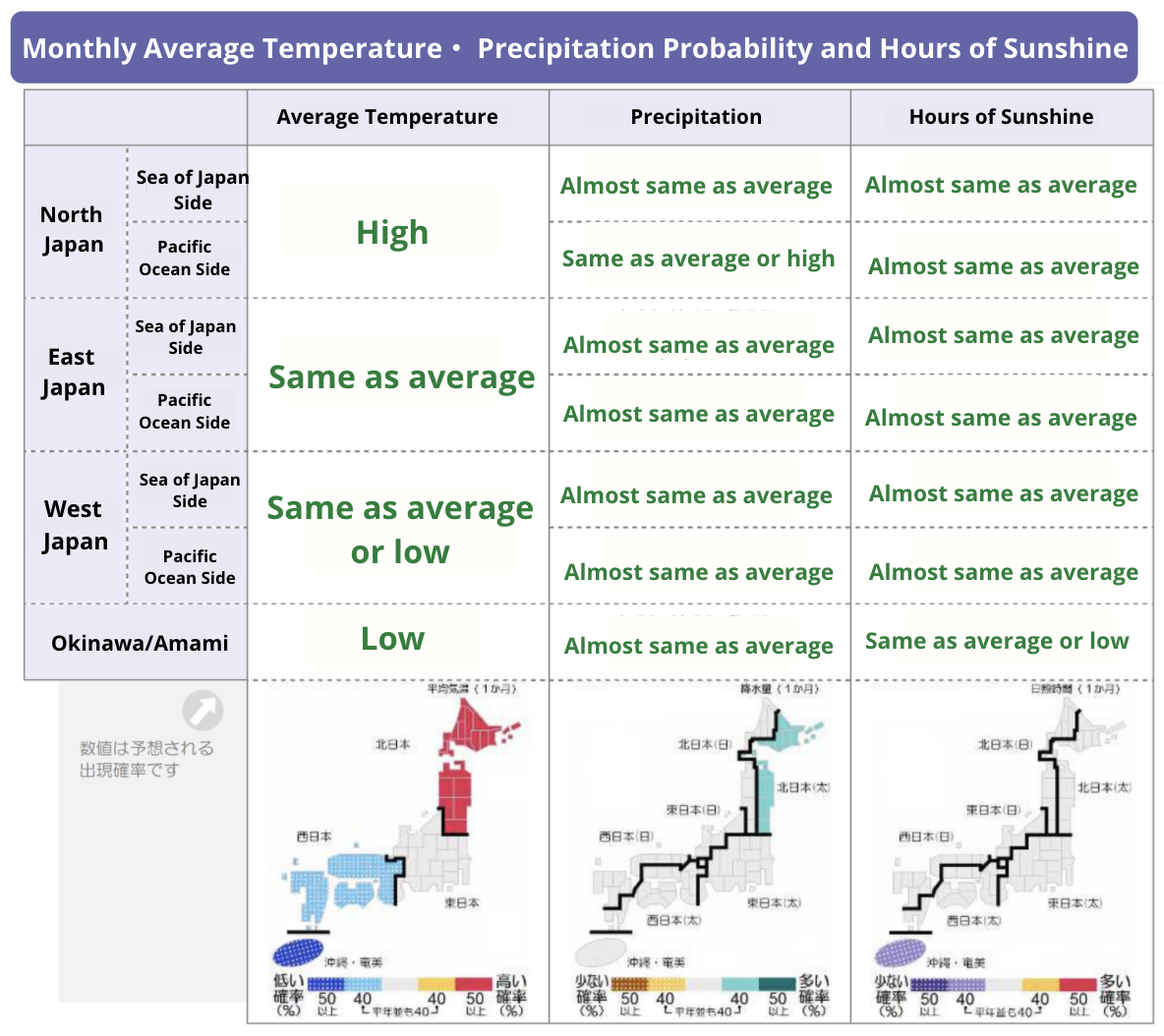
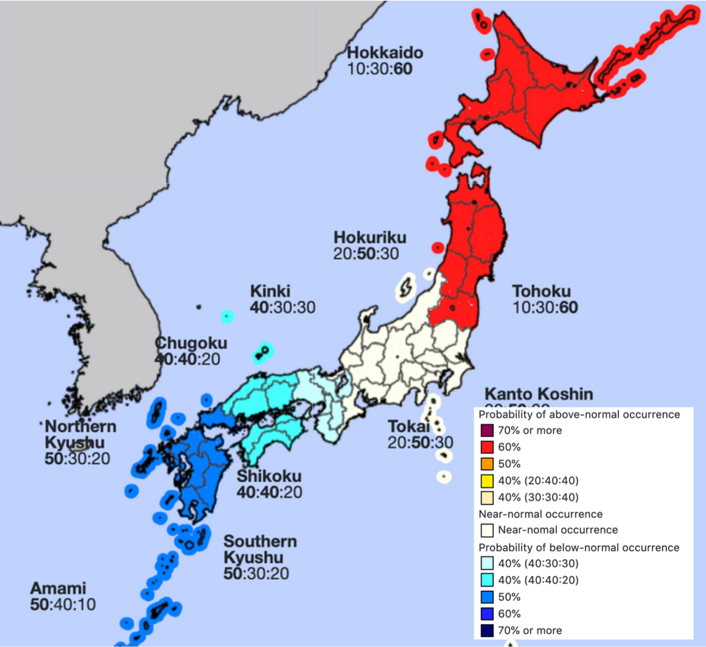
While the northeast heats up, central and southern Japan prepare for a cold spell.
JAPAN NRG WEEKLY
PUBLISHER
K. K. Yuri Group
Sponsored
Editorial Team
Yuriy Humber (Editor-in-Chief)
Tom O’Sullivan (Japan, Middle East, Africa)
John Varoli (Americas)
Regular Contributors
Mayumi Watanabe (Japan)
Daniel Shulman (Japan)
Takehiro Masutomo (Japan)
Art & Design
22 Graphics Inc.
SUBSCRIPTIONS & ADVERTISING
Japan NRG offers individual, corporate and academic subscription plans. Basic details are our website or write to subscriptions@japan-nrg.com
For marketing, advertising, or collaboration opportunities, contact sales@japan-nrg.com
For all other inquiries, write to info@japan-nrg.com
OFTEN USED ACRONYMS
METI The Ministry of Energy, Trade and Industry
MOE Ministry of Environment
ANRE Agency for Natural Resources and Energy
NEDO New Energy and Industrial Technology Development Organization
TEPCO Tokyo Electric Power Company
KEPCO Kansai Electric Power Company
EPCO Electric Power Company
JCC Japan Crude Cocktail
JKM Japan Korea Market, the Platt’s LNG benchmark
CCUS Carbon Capture, Utilization and Storage
mmbtu Million British Thermal Units
mb/d Million barrels per day
mtoe Million Tons of Oil Equivalent
kWh Kilowatt hours (electricity generation volume)
NEWS: ENERGY TRANSITION & POLICY
Japan to reopen borders partially from today, Nov. 8
(Various, Nov. 7)
- The government said it will ease restrictions on entry of foreign nationals into Japan from Nov. 8, Monday. However, the opening of the borders, at this time, only applies for business people and students, not to tourists or leisure travel.
- The new rules will cut the mandatory quarantine period to three days from 10-14 for those who are fully vaccinated with shots approved by the Japanese government.
- The receiving parties in Japan will need to take steps to make sure business visitors and students follow protocol for infection prevention.
- CONTEXT: Japan tightening its borders in January in response to the spread of new Covid-19 variants. The number of local transmissions has dropped severely in recent months.
Grid oversight body to establish new division for renewables and international coordination
(Japan NRG, Nov. 2)
- In February 2022, the Organization for Cross-regional Coordination of Transmission Operators (OCCTO), the power grid oversight body, will launch a new division for renewables and international coordination, according to an update from the electricity and gas policy panel.
- This will come two months ahead of the launch of the feed-in-premium (FIP) system. With the FIP launch, collection and distribution of tariff fees under the FIP and the Feed-In Tariff systems will move to OCCTO from the Green Investment Promotion Organization.
- The international office will integrate into the renewable division.
- OCCTO, which oversees nationwide power transmission network operations, will also have expanded roles to write rules that ensure fair access to the grid.
- It will also form new approaches to oversee national power supply and demand after the launch of the capacity market in 2024.
- CONTEXT: Similar to the Electricity and Gas Market Surveillance Commission (EGC) that sets guidelines and monitors power to wholesalers and retailers, OCCTO needs to be independent from METI and the regional grids in order to be held accountable by independent renewable operators. To date, OCCTO has relied on regional grids for staffing but it will now increase own recruitment. At the same time, OCCTO seeks to relax rules for its senior officials to allow them to join grid companies after retirement from its posts, something that’s currently banned.
METI and MLIT start review of low-emission housing and building standards
(Japan NRG, Nov. 4)
- METI and the Ministry of Land, Infrastructure, Transport and Tourism started a review of low-emission housing and building standards. The review was launched to meet the 2030 goal to cut national emissions by 46% from 2013 levels.
- The new goal will require homes and buildings to reduce energy consumption equivalent to 8.9 million KL of oil. Japan needs overall cuts of 62.4 million KL.
- To date, 53,561 structures, mostly stand-alone homes, have cleared the standards and enjoyed tax breaks and subsidies. They make use of heat insulator materials and have energy saving features.
- The new standards will be more specific to different building purposes. Schools and shopping malls will have different building energy index levels to target. There will be more elaborate criteria for the use and recycling of water, installation of solar panels and storage battery systems, the use of wood and cement that recycle fly ash and slag waste generated from steelmaking.
TAKEAWAY: As Japan NRG has reported in the Analysis section in previous months, the housing sector will be one of the biggest contributors to the decarbonization drive over the course of this decade, according to estimates from government officials.
Households accounted for 15% of nationwide carbon emissions in 2019. Energy consumption was equivalent to 47 million KL of crude oil, resulting in 159 million tons of carbon. A household average was 3.97 tons of carbon. The biggest source of carbon was lighting and other electrical appliances, followed by cars and room heating systems.
Target energy consumption cuts by 2030
| Equivalent to 1,000 KL of crude oil | |
| New buildings | 4,030 |
| Building reforms | 1,430 |
| New homes | 2,530 |
| Home reforms | 910 |
| Total | 8,890 |
METI offers support to SMEs hit by surging energy costs
(Japan NRG, Nov. 2)
- METI will offer financial support to small and medium sized enterprises capitalized below ¥100 million that have been hit by surging crude oil prices. METI will provide Safety Net Loans, which are low-interest loans of 1.06-1.81%, to companies suffering over 5% sales declines in the last three-months compared to the same period last year or the year before.
- CONTEXT: Over 40,000 businesses close each year in Japan. A lack of heirs to a family business is one reason, but the impact of rising energy costs may emerge as another driver. Fostering SME growth is a METI policy priority amid the shrinking share of Japanese multinationals in global markets.
Post-2020 biodiversity framework launched in Japan
(Japan NRG, Nov. 5)
- MoE launched the Japanese chapter of Global Biodiversity Framework — aiming to preserve 30% of the earth planet by 2030, a goal set during the COP10 meeting in Aichi in 2010. The organization is headed by the Japan Business Federation chairman and joined by business association and nature conservation groups.
Japanese biomass market to be worth ¥1.7 trillion by 2035
(New Energy Business News, Nov. 1)
- According to the Yano Research Institute, Japan’s biomass energy market is currently worth ¥726 billion.
- The Institute projects the market will grow to over ¥1.7 trillion by 2035 as demand for biofuels, in particular bio jet fuel, increases.
- HEFA (Hydroprocessed Esters and Fatty Acids) biological aviation fuels are already produced commercially. In future, the commercialization of novel processes, such as the ethanol to jet fuel process and increased uptake of dry methane fermentation, is likely to further boost bio jet fuel supply.
EDITORIAL: Japan must aim to make its storage batteries globally competitive
(Nikkan Kogyo Shimbun, Nov. 5)
- CONTEXT: The newspaper is the top media for the manufacturing industry in Japan.
- Future of Japan’s auto and other manufacturing industries depend on the country improving the performance and reducing the cost of storage batteries. Strategic efforts must be made to develop a storage battery industry that can compete on the global stage while securing its R&D and production in Japan.
- The government plans to provide up to ¥151 billion in support for next-generation storage batteries and motors over the next 10 years from the Green Innovation Fund, which has a total of ¥2 trillion in funds.
- The governments of the U.S., Europe, and China have also announced large-scale support for the development of storage batteries. In the future, the selection of targets that the government supports with funding will need to be handled in a manner that clearly identifies areas of competition and areas of cooperation.
- Support for the development and mass production of next-generation batteries will be positioned as an area that emphasizes competition, with emphasis placed on promising technologies and companies that are willing to invest, rather than on a broad and shallow scope.
- Japan has a technological advantage in next-generation batteries such as all-solid-state batteries, but China is rapidly catching up. The government wants to encourage domestic companies to compete and make the strongest ones stronger.
- Equally, it is necessary to create business models and rules for securing resources such as rare metals and for recycling in cooperation with the public and private sectors. Storage batteries are expected to be used in a wider range of applications than before, which will strain resources.
- Japan has been slow to take action around raw materials. It plans to recover nickel and cobalt from used lithium-ion batteries, but not lithium. Most of the Japanese business models for reuse are still in the demonstration stage.
- Japanese firms will need to cooperate in order to catch up with global peers in storage batteries.
COP26: Japan proposes trading emissions credits with developing countries
(Kankyo Business, Oct. 29)
- Sources say the Japanese delegation to COP26 will propose a novel emissions trading scheme designed to benefit industrialized countries that provide technological assistance to developing nations.
- Under the scheme, industrialized countries would be able to credit a portion of emissions reductions in partner countries resulting from technological assistance as their own.
- The idea is opposed by the U.S. and the EU, which say that if industrialized countries can take credit for emissions reductions elsewhere then that would reduce motivation for them to cut their own emissions.
TAKEAWAY: Japan has been a major proponent of the Joint Crediting Mechanism (JCM) and believes it is vital for this kind of bilateral system to be in place in order to meet its own emissions goal for 2030. We expect Japan’s COP26 negotiators to fight for this item most of all.
Please see the Analysis section for more details on COP26.
Japan, U.S., China missing from COP coal pledge
(Nikkei, Nov. 5)
- At COP26 in Glasgow, 46 nations pledged to phase out coal-fired power generation by 2040. Japan, as well as the U.S., China and India didn’t sign the pledge.
- Japan is reliant on coal for 30% of its electricity needs. In China this figure is 67%, and in India the number is 73%. By contrast, in France and Singapore, the figure is just 1%.
PM Kishida’s comments earn another ‘Fossil of the Day’ award
(Asahi Shimbun, Nov. 3)
- Climate Action Network International awarded its ‘Fossil of the Day’ award to Norway, Japan and Australia, in criticism of these nations’ climate policy.
- Japan was included after PM Kishida said Japan would continue to invest in thermal power plants as part of development aid to poorer Asian countries.
- SIDE DEVELOPMENT:
Ditching Japan’s ‘fossil’ label
(Alterna opinion, Nov 5)- If Kishida wants to avoid receiving satirical awards for environmentally unfriendly policies, he should rethink the government’s strategy on ammonia.
- At COP26, Kishida stressed Japan’s $100 million investment to convert thermal power stations to run on ammonia, hydrogen and other zero-emission fuels.
- However, ammonia is only viable as a fuel if blended with coal.
- While ammonia combustion doesn’t generate CO2, the manufacturing of ammonia from lignite gives off CO2. The high cost of manufacturing ammonia and the need for its import are also negative in terms of economics and energy self-sufficiency.
- Despite the fanfare about the ammonia economy, under the government’s 6th basic energy plan ammonia and hydrogen will only account for 1% of total electricity generation in 2030.
- The government should ditch its ammonia strategy, which only risks international isolation.
TAKEAWAY: In last week’s report we described the Fossil of the Day context and how Japan is often on the receiving end of this satirical away. However, it is not usual for the award to receive much local coverage. The fact that it did this time may indicate growing interest in Japanese media over how Japan is perceived on climate issues abroad.
Asian Development Bank slaps stringent requirements on energy loans
(Nikkei, Nov. 4)
- The Asian Development Bank (ADB) revised lending terms for energy projects.
- Coal-fired plants are already subject to stringent lending restrictions.
- The ABD requires countries that borrow to finance gas-fired power plants to demonstrate that the proposed plants are efficient, will perform only a transitional role, will result in GHG reductions, and will be economically viable.
- Borrowers are also required to demonstrate that no comparably-priced or cheaper options are available for reducing their carbon footprint.
- The new, stricter requirements mean it will take an average of 18 more years before energy projects pay for themselves.
- The efficiency requirement is good news for manufacturers like Mitsubishi Heavy Industries, whose newest gas turbine combined cycle plant can achieve efficiencies of up to 64%.
- The stricter rules will rekindle debate about global inequality. While Japan’s annual per capita electricity consumption is around 8 MWh, in the Philippines this figure is a mere 1 MWh, meaning that total per capita emissions are much lower, even when the relative inefficiency of Filipino power plants is considered.
- Developing countries don’t want to be lectured by industrialized nations on carbon footprints.
Coca-Cola Japan to halve GHG emissions by 2030
(Kankyo Business, Oct. 29)
- By 2030, Coca-Cola Japan will reduce net GHG emissions, including at bottling plants, to half of 2015 levels.
- The company also aims to reduce total GHG emissions across the supply chain by 30% in the same period.
- To this end, Coca Cola will be using more renewably generated electricity at its factories and manufacturing bottles from 100% recycled plastic.
Tokyo Gas develops hydrogen-fired calcining furnace
(Nikkei, Nov. 4)
- Tokyo Gas Engineering Solutions has developed a hydrogen-fired calcining furnace that produces virtually no CO2.
- Calcining furnaces are used in manufacturing battery anodes and automotive components.
- The furnace can also run on electricity, or a blend of hydrogen and natural gas.
- While the use of hydrogen faced challenges in terms of temperature control and NOx emissions, these were overcome by using a heating system provided by Noritake, Tokyo Gas’ partner.
Japanese companies are global leaders in decarbonization tech: Tokyo firm says
(Nikkei; November 5)
- Tokyo-based data-analysis company astamuse ranks global companies’ decarbonization tech and patents based on carbon reduction expected by 2050.
- According to its research, half of the top 10 players are Japanese with Toyota Motor leading the way thanks to its Fuel Cell Vehicles, hydrogen infrastructure and EVs, and Mitsubishi Heavy Industries at No. 3 dur to CO2-absorbing materials and high-efficiency thermal power generation equipment.
- Hitachi and Toshiba are ranked 6th and 7th respectively due to the former’s transmission and power conductors and the latter’s CO2-absorbing materials and hydroelectric power tech.
- SIDE DEVELOPMENT:
Toyota ranks last among automakers on environmental action, Greenpeace says
(Jiji News, Nov. 5)- Toyota Motor ranked last among 10 major automakers in terms of decarbonization efforts in a report released by Greenpeace during the COP26 climate summit
- The ranking was based on the number of vehicles sold worldwide and looks at efforts made by each company to transition sales away from internal combustion engine vehicles and actions taken to decarbonize their supply chains, as well as resource sustainability.
TAKEAWAY: There are many rankings and it’s not always clear how important some of them are. Still, while a Tokyo-based data company is unlikely to make global waves, Greenpeace is a global brand and its comments may gain traction with a section of the general consumer. Indeed, the report by Greenpeace was picked by in mainstream Japanese media, which shows that Toyota and other domestic firms cannot simply ignore them and bask in the praise of other rankings.
Toyota has always said that electric vehicles are not a silver bullet for many reasons including the fact that much of the electricity generated in Japan today comes from burning fossil fuels. Still, after PM Suga’s government pledged, that Japan will start to consider life-cycle emissions from vehicles the domestic industry has been very quiet and few details on how that will be achieved have emerged. With GHG emissions reporting becoming mandatory in the next few years, Japanese auto giants will need to get ahead of this issue soon to make sure they are not seen as “anti-climate,” which is how Greenpeace describes Toyota.
Japan lender turns to green bonds to meet climate finance demand
(Nikkei Asia, Nov. 2)
- The Japan Bank for International Cooperation Director-General Sekine Hiroki gives an interview in which he outlines how the bank plans to work with Southeast Asian countries to help provide green financing that will shift the region away from coal to CO2-free power sources.
- The bank plans to begin issuing green bonds to finance renewable energy, clean transportation and energy-efficient real estate projects overseas, Sekine said.
- Sekine also said that natural gas as well as renewable energy will be a “realistic plan” for the region to move away from coal.
One-Dot News:
- Honda Motor announced the launch of a battery-sharing service for electric three-wheeled cabs (rickshaws) in India using its new removable battery; the business is scheduled to start in the first half of 2022. The service will allow drivers to exchange their depleted battery for a fully charged one at the nearest battery exchange station. (Kankyo Business, Nov. 4)
WEATHER OUTLOOK
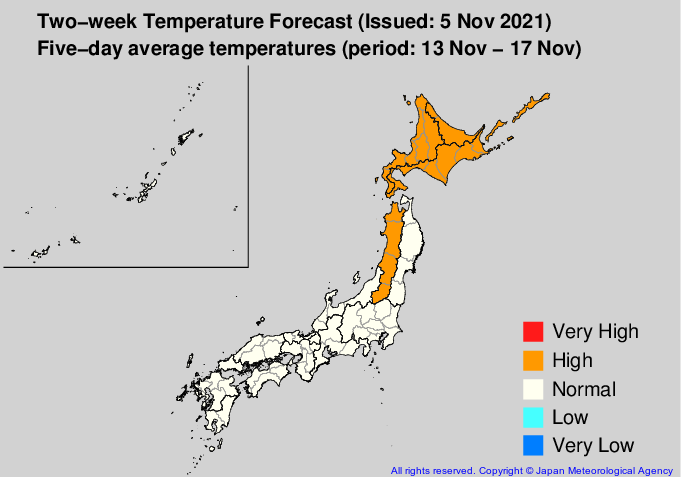
TWO-WEEK TEMPERATURE FORECASTS (NOV. 05 ~ NOV. 17)
Nation-wide
Tokyo area
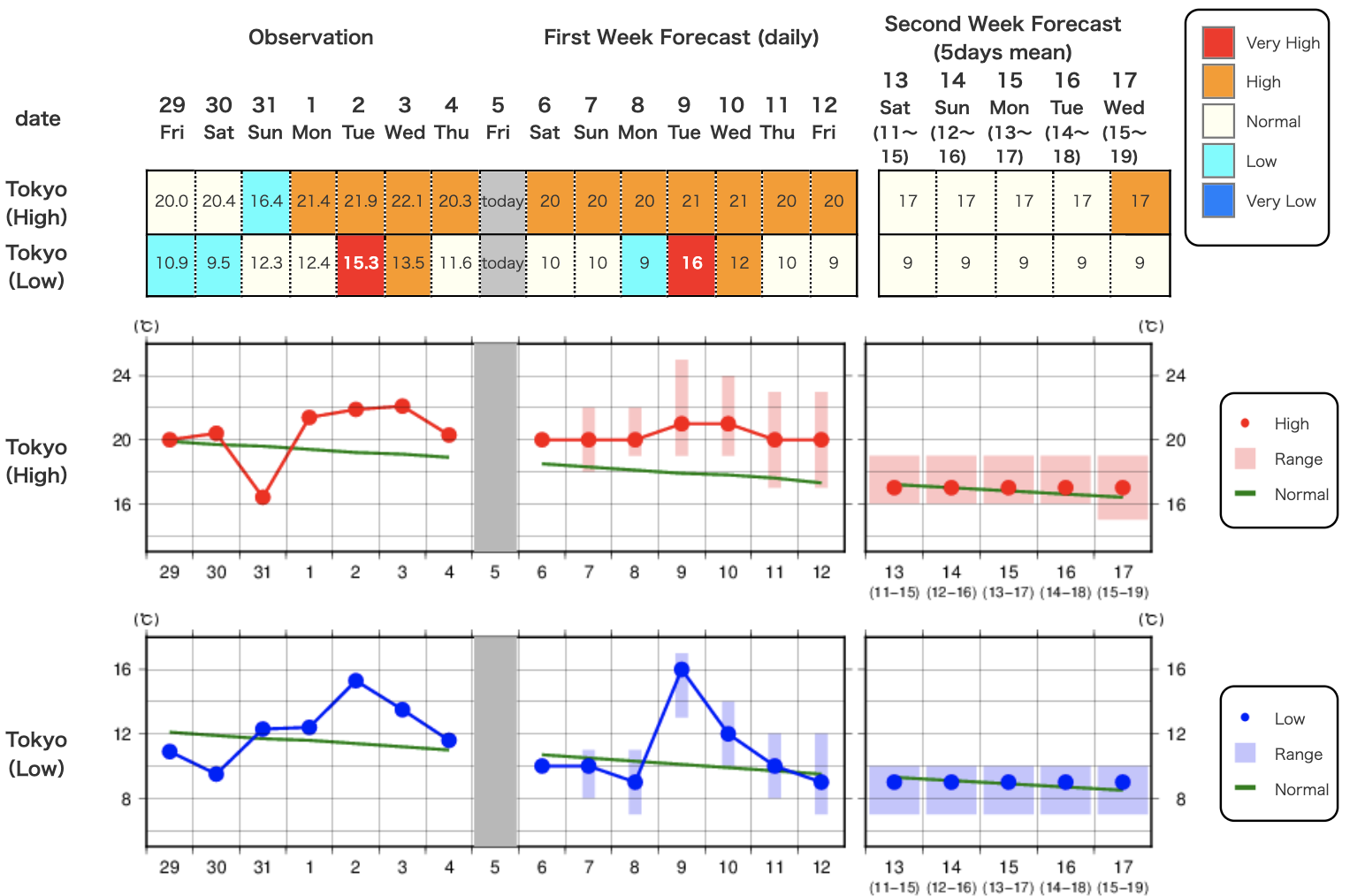
- Northern Japan: Very high temperatures from Nov. 9.
- Eastern Japan/the Kinki region: High temperatures until Nov.9, then a return to average temperatures.
- Chugoku/Shikoku/Kyushu regions: Low temperatures from Nov. 10.
- Okinawa/Amami region: Very low temperatures from Nov. 9
ONE-MONTH SEASONAL FORECAST (NOV. 06~ DEC. 05)
NEWS: POWER MARKETS
| No. of operable nuclear reactors | 33 | Electricity Price | Friday, Nov 5 | % Change WoW | ||
| Of which | restarted | 10 | JEPX 24-Hour Spot | ¥14.02/ kWh | +7.2% | |
| in operation today | 7 | TOCOM Nov. baseload (Tokyo area) | ¥17.93/ kWh | -8.1% | ||
Source: Company websites, JANSI and JAIF, as of Nov 5, 2021
METI calls for more energy conservation efforts
(Japan NRG, Nov. 5)
- Energy supplies this winter period may be the most critical in the past 10 years amid low power reserve rates.
TAKEAWAY: We have written extensively on the issue in previous editions and this report (link in headline) does not contain a lot of completely new material, but it is interesting to note that METI continues to provide updates in the same alarming tone. It’s more likely to be aimed at keeping the market participants on their tones than to enact real change with most LNG, coal and oil purchases for the next three months or more already secured by the major domestic utilities.
UK’s SSE invests $208 million in Pacifico unit to enter Japanese wind market
(Nikkei, Nov. 1)
- UK’s SSE is entering the Japanese offshore wind market. Through its subsidiary SSE Renewables, SSE has acquired 80% of an offshore wind company affiliated with Japanese renewable energy developer Pacifico Energy for $208 million (about ¥23.7 billion).
- The development of offshore wind power generation in Japan is expected to develop quickly and this makes the market attractive to SSE.
- Pacifico Energy has been conducting surveys and other activities with the aim of constructing an offshore wind farm in Japan. SSE wants to work with Pacifico to have at least one of its projects in Japan up and running by 2030.
Hokkaido Electric issues first green bond to finance renewables investment
(Kankyo Business, Nov. 4)
- Hokkaido Electric will issue its first green bond in order to raise funds to develop renewable energy. The amount is ¥5 billion with a 10-year term. It is scheduled to be issued in December.
- The lead underwriters are Mizuho Securities, Mitsubishi UFJ Morgan Stanley Securities, and SMBC Nikko Securities.
TEPCO PG in talks to operate UK offshore wind project power lines
(Kankyo Business, Nov. 5)
- Tokyo Electric Power Grid (TEPCO Power Grid) said on November 1 that on October 28 it acquired a preferential negotiating right for the maintenance and operation of transmission lines at the 860 MW Triton Knoll offshore wind farm in the UK, jointly with Equitix, a UK-based infrastructure fund.
- This is the company’s first investment in an overseas power transmission business.
- If the deal goes through, TEPCO Power Grid will acquire ownership and operation rights to the offshore and onshore (underground) transmission lines and the associated offshore and onshore substation facilities (asset value of around ¥86.5 billion) from spring of 2022.
- The Japanese company plans to operate the local power transmission and substation facilities for 23 years, picking up knowledge that it could use to run similar operations in Japan.
- The offshore wind power transmission business would be 20% owned by TEPCO Power Grid and 80% by Equitix.
TEPCO wins maintenance contract for Vestas wind power equipment in Japan
(New Energy Business news, Nov. 4)
- Tokyo Power Technology, a wholly owned subsidiary of TEPCO, signed an Authorized Service Provider Agreement with Vestas Japan. As a result of this agreement, Tokyo Power Tech will undertake a portion of the maintenance and operation services for Vestas wind power generation equipment in Japan.
- Tokyo Power Technology performs maintenance at thermal and nuclear power plants, but would like to expand its business field to onshore and offshore wind power. The company provides services such as monitoring, initial response to abnormalities, and repairs.
Hokuriku Electric signs PPA with Japan’s top convenience store chain 7-11
(New Energy Business News, Nov. 1)
- Hokuriku Electric and 7-11, Japan’s biggest convenience store chain, signed an agreement to source 100% of the electricity used by its stores in the Hokuriku region from renewable energy sources.
- Hokuriku plans to build two 3 MW solar farms in Fukui to supply the power for the region’s nearly 300 7-11 outlets.
Japanese energy firms look to Denmark’s Orsted as an example
(Nikkei Business feature, Nov. 4)
- Many Japanese energy companies look to Denmark’s Ørsted as an example.
- Ørsted (formerly DONG Energy) started out as an oil and gas company, but now the bulk of its revenue comes from wind farms.
- Ørsted is the world’s largest operator of offshore wind farms.
- Fellow energy majors, such as Shell and BP, have been unable to match Ørsted’s technical expertise or scale.
NTT-affiliated firm works on Hokkaido biogas plant to reduce dairy waste, emissions
(New Energy Business News, Nov. 4)
- Hokkaido-based Biostock, which is a joint subsidiary of NTT East Japan and Biomass Research, is building a biogas plant to convert effluent from dairy farms into electricity.
- The biogas plant, which is scheduled to begin operating in 2025, will be able to process effluent equivalent to the output of around 3,400 cows.
- The associated generation plant will produce around 1 MW of electricity.
Looop raises ¥850 million for new renewables and batteries investments
(Kankyo Business, Nov. 2)
- Tokyo-based Looop raised ¥850 million from Tokyu Land Corporation, construction giant Toda, coffee trader Bird Feather Nobu and the Hokuriku Electric Power company, in order to finance solar farms, grid batteries, and other new energy management services.
- Tokyu Land Corporation aims to bolster its strategy for solar operations not covered by the feed-in-tariff (FIT) scheme, thereby reducing its reliance on FIT.
NUCLEAR REACTOR NEWS ROUND-UP:
- Japan court reject bids to halt Ikata nuclear power plant
(Nasdaq, Nov. 4)- The Hiroshima High Court dismissed a resident’s petition to halt operations at the Ikata NPP’s Unit 3 reactor (Shikoku Electric).
- Residents said the reactor was vulnerable to major earthquakes, but the court accepted Shikoku Electric’s safety assurances.
- SIDE DEVELOPMENT:
Regulator strongly warns Japan Atomic Power over Tsuruga misconduct
(Tokyo Shimbun, Nov. 2)- Nuclear Regulation Agency chair Fuketa Toyoshi criticized Tsuruga nuclear power plant operator Japan Atomic Power for failure to make improvements following revelations that seismological data for the Unit 2 reactor was falsified.
- “Perhaps they should withdraw their application [for certification]”, said Fuketa.
NEWS: OIL, GAS & MINING
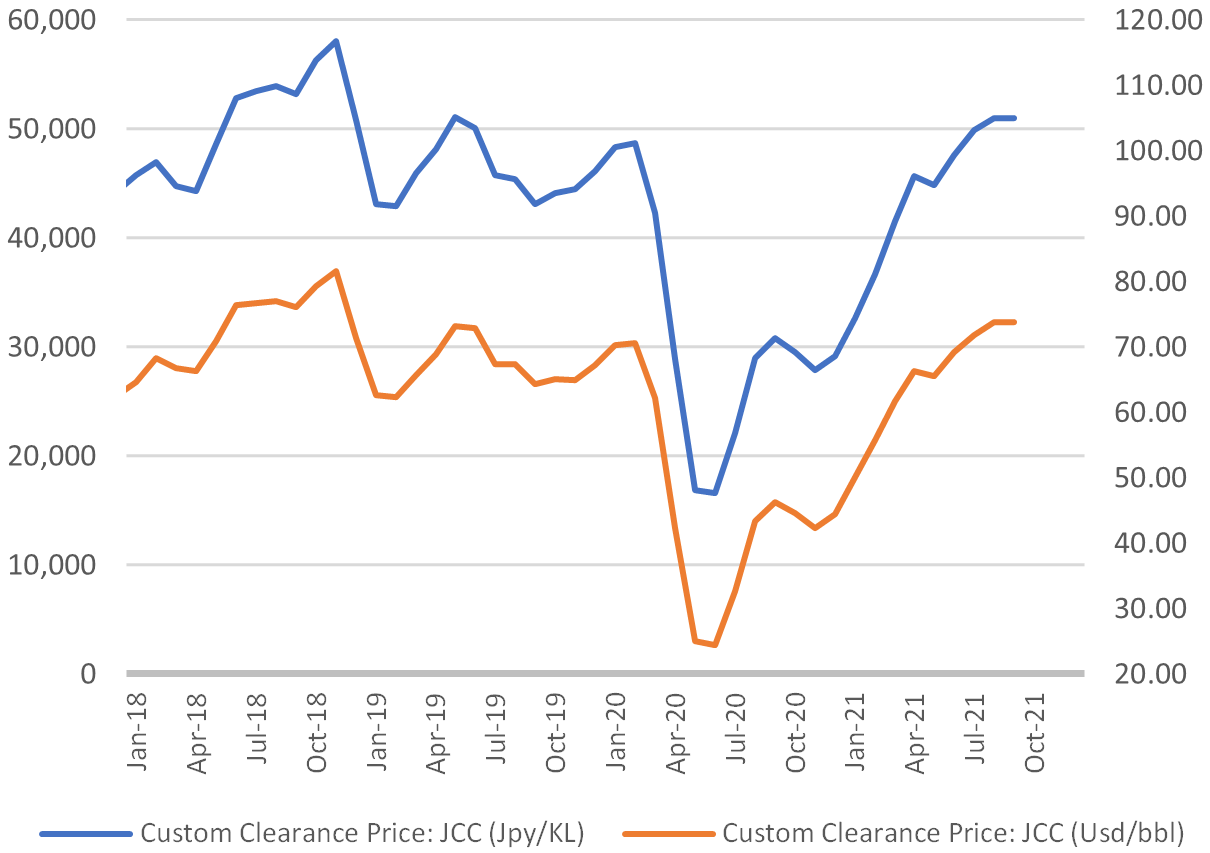
Japan Oil Price: $73.81/ barrel
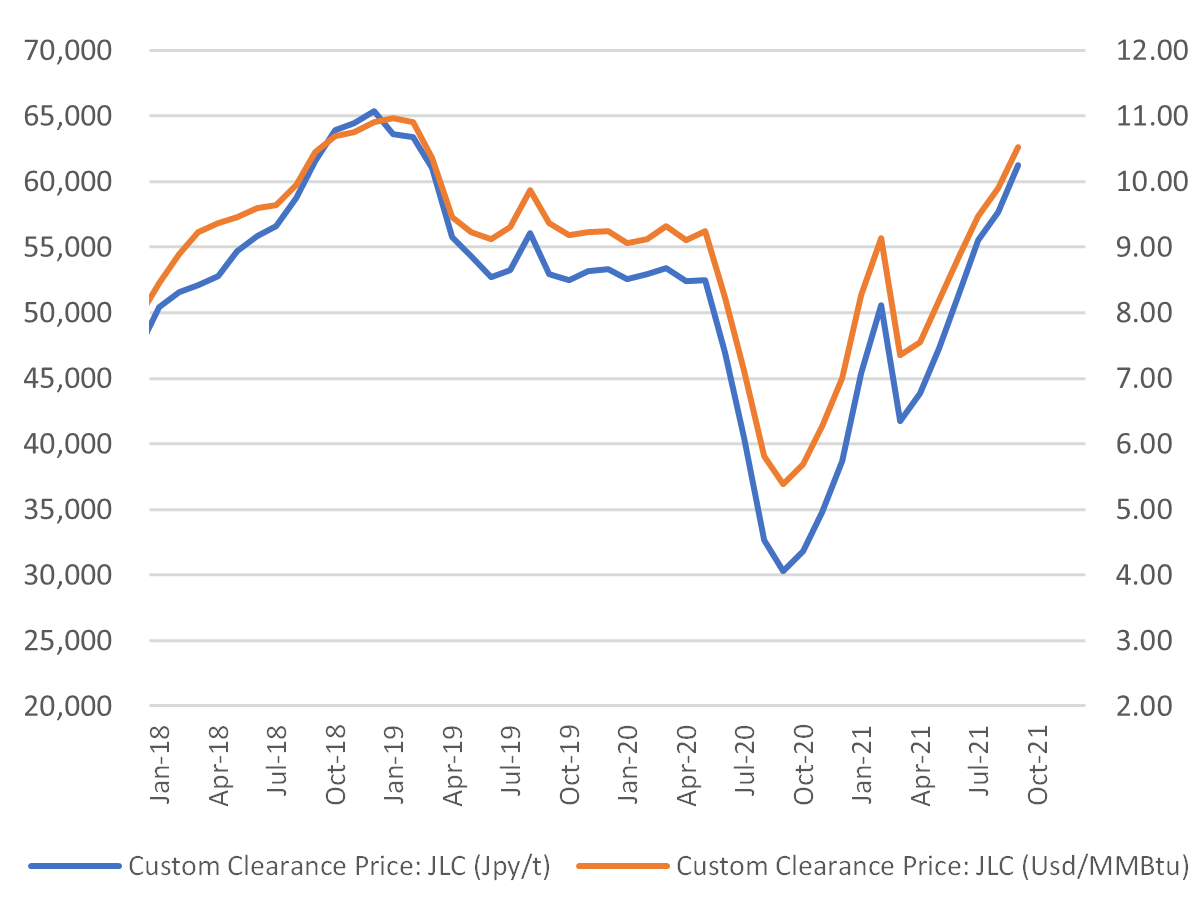
Japan (JLC) LNG Price: $10.52/ mmbtu
Mineral oligopoly overshadows world’s drive to decarbonization
(Asia Nikkei, Nov. 4)
- Concerns are mounting in Japan over its access to materials considered key in the push toward decarbonization, with most production of mineral resources such as lithium and cobalt concentrated in just a handful of countries.
- Any threat to supplies of metals used to churn out everything from batteries for electric vehicles to electricity poles could stall the drive for a greener society in Japan and other places such as Europe and the U.S.
Japan’s Sep diesel oil, jet fuel exports continue to surge
(Japan NRG, Oct. 29)
- Japan’s exports of diesel oil and fuel oil continued to surge in September after posting three-digit YoY increases in the previous months, according to METI.
- Diesel oil exports were 761,768 KL, up 113.2% YoY. Production was 3,225,203 KL, up 19.9%. Domestic sales were 2,727,054 KL, flat from a year ago.
- Diesel oil exports started to rise from June, posting a 125.1% YoY growth. Exports in July were up 144.6% and in August by 429.1%.
- Jet fuel exports are rising at a slower pace: June exports were up 21.3%, July 63.5%, and August 105.1%. September exports were up 142.9% to 564,195 KL. Local demand was 307,407 KL, up 49%. Production was 879,598 KL, up 72.5%.
Renewables developer G3 to start urban mine for rare metals
(New Energy Business News, Nov. 2)
- G3 Holdings Corp. will start an urban mining business this month to recover rare metal resources from waste circuit boards. Urban mines are defined as industrial products accumulated on the ground that are regarded as resources, and are positioned as one of the terrestrial resources.
- The company emphasizes that the recovery of rare metals from discarded circuit boards is a part of environmental conservation and is highly significant in Japan, where natural resources are scarce.
- Unlike conventional methods of processing waste substrates such as pulverization and carbonization, the technology adopted by G3 for its urban mining business uses a “reactive liberation method” that reduces the amount of metal scattered by pulverization to an absolute minimum, improves the recovery rate of rare metals, and emits less than one-thirtieth the amount of CO2 compared to conventional methods.
- G3 wants to develop a business recovering and selling rare metals such as gold, silver, and copper.
- With the CO2 it produces, G3 wants to cultivate microalgae.
- CONTEXT: G3 is a relatively small renewables firms but it is a listed company. Among others things it runs solar farm operations and maintenance. It is led by Kasahara Hirokazu, a qualified clinical laboratory technician.
ANALYSIS
BY JOHN VAROLI
SPECIAL REPORT:
THE HIGHLIGHTS FROM WEEK 1 OF COP26 AND JAPAN IMPACT
Given the unprecedented attention on the 26th UN Climate Change Conference of the Parties (COP26), and its outsized impact on Japan and others, we are dedicating this week’s Analysis section entirely to the gathering in Glasgow.
Below are seven significant items or decisions from the opening week of COP26. We add the potential impact that each one may have on Japan.
Over the course of the second week of COP26, we expect the pace of declarations to slow, although the very biggest agreements are expected either at the very end or in the days immediately after the event.
Context and public reception
Whatever your views on the matter, COP26 has definitively showed that climate change is no longer a niche topic. Once the dominion of scientists and left-wing crusaders, climate change now occupies center stage as the most important political, social, scientific, financial and economic issue in the world today. It may not be every person’s No. 1, but on a global level there seems to be no bigger concern.
COP26 also demonstrated how many different interpretations now exist about what constitutes climate change and the clashing time periods involved. Present-day needs sat uneasy alongside long-term plans, contrasting expectations and perceived realities. During the event, India announced possibly the most distant national net-zero target yet in pledging to decarbonize by 2070.
A less favorable contrast emerged between content and public perception. Hundreds of world leaders and CEOs descended on Glasgow in private jets. The tabloids, as well as major business media, had a field day with headlines such as: “Hypocrite airways? Jeff Bezos’s £48m Gulf Stream leads parade of 400 private jets to COP26”, blared the U.K.’s populist Daily Mail.
GHG emissions of private jets are a small fraction of the total emitted each year, but many media chastised the elite for forgetting the power of personal example when it comes to consumption and one’s carbon footprint.
President Joe Biden, as expected, drew probably the biggest attention, but initially for the wrong reasons as pictured emerged of him dozing off during the summit. Casting off the jetlag, Biden went on to make some passionate speeches, including a rebuke for his peers from China and Russia for not attending. He ended his visit by saying: “I can’t think of two days where more has been accomplished dealing with climate than these past two days.” China later responded to say its “concrete actions” speak louder than “empty words.”
Outside the COP26 venues, tens of thousands of activists poured into the streets of Glasgow to complain that not enough was being done to protect the climate. Greta Thunberg was the most prominently featured voice of the activists, labeling the entire event a “failure” and a publicity exercise. Even before COP26 started she had labeled government and corporate actions as the equivalent of “blah, blah, blah” – slow, hypocritical, and tantamount to greenwashing.
COP26 Highlights
1) Japan pledges an additional $10 billion in climate financing
Prime Minister Kishida promised $10 billion more in climate financing over the next five years on top of the $60 billion in public and private financing that has already been pledged to showcase how Japan will play a leading role in Asia to combat climate change. The PM said that this would “include our contribution to the launch of an innovative financial facility for climate, as we partner with the Asian Development Bank and others to support the decarbonization of Asia and beyond.”
Also, Japan will double foreign assistance to about $15 billion in order to help other countries adapt to the deleterious effects of climate change.
In another example of climate financing, Kishida said that Japan’s Green Innovation Fund, which has about $17.6 billion in resources, would be used to develop next-generation batteries and motors, as well as hydrogen and synthetic fuels to accelerate the transition to clean energy. “Japan plans to stand at the center of Asia, introducing renewable energy as much as possible in Asia,” said Kishida. “We plan to support the transition to clean and renewable energy, to make a carbon-free society.”
2) Pledge to cut methane emissions
The number of countries agreeing to a 30% cut in global methane emissions by 2030 has surpassed 90, and COP26 plans to grow that number during its final week. First announced in September, the Global Methane Pledge still needs Brazil, China, India and Russia to get on board. Brazil is expected to join, and much pressure is being exerted behind the scenes to get China, India and Russia to sign. Japan, one of the world’s top two LNG markets, joined the pledge in mid October.
Methane accounts for nearly 25% of all heat trapped in the atmosphere in the past two centuries. However, since methane breaks down quicker, combating it is considered ‘low-lying fruit’ in the sense that action taken today can do much to limit projected global warming. The problem for Japan is that the majority of its attributed methane emissions come from farming and animal husbandry. Coincidentally or not, Japan’s ministry of agriculture also published a new climate action plan last week, which detailed plans to reduce methane in rice paddies through water draining techniques and discussing research into alternative feeds for cattle that could lead to lower emissions.
3) Pledge to end deforestation
About 100 leaders from countries accounting for 85% of the world’s forests pledged almost $20 billion of public and private funds to end and reverse deforestation globally by 2030. Approximately 50% of the planet’s forests have been cut down. Importantly, one of the signees of the pledge is Brazil, which has long faced international criticism over forest management in the Amazon region. As host nation for COP26, the UK also pledged $2 billion. Other major forestry countries behind the pledge include Canada, China, Congo, Indonesia, Russia, and the U.S.
As a major importer of timber from China, Southeast Asia, and South America, Japan vowed to do more to address how its consumption impacts those nations. At COP26, PM Kishida pledged about $240 million in aid for global forestry conservation.
4) India will expand in renewable energy
Prime Minister Narendra Modi said India would be net-zero by 2070, two decades after most countries and 10 years after China and Saudi Arabia. Still, Modi also said India is committed to the energy transition in the short term and would build 500 GW of renewable capacity to power half of the country’s demand by 2030. Weaning India off coal, which provides most of its electricity, will be a major challenge. Currently, India’s renewable energy capacity is at about 100 GW; so, the country would need to add another 400 GW by 2030. Of this target, Indian officials said 280 GW would come from solar, 140 GW from wind, and the remaining from hybrid energy sources.
PM Kishida’s announcement about Japan’s focus on helping Asia to transition to clean energy certainly bodes well for energy cooperation with India, and the two countries are already starting to cooperate on a wide range of areas from LNG infrastructure development to storage batteries and hydrogen. Japanese firms see India’s clean energy revolution as a major business opportunity.
5) Coal’s time is ending
The UK said 190 nations and organizations vowed to end the use of coal, which is the single biggest contributor to climate change. Among these are major coal users including Poland, Vietnam and Chile. The headline, however, suggest more than the pledge details. In principle, the signatories agreed to phase out coal power generation in the 2030s for major economies and in the 2040s for poorer nations. Yet some countries like Indonesia were able to secure opt-outs from certain clauses, which allows them to continue to build new unabated coal-fired power plants. Others like Poland signed up but plan to stick to their original timeline to phaseout coal, which in Poland’s case is the late 2040s.
Some of the world’s biggest coal-dependent countries, including Australia, India, China and the U.S., have yet to sign the pledge. Furthermore, an estimated 243 GW of coal capacity remains in the planning or construction phase in developing economies, which say they need financing and alternatives before such plans can be abandoned. How much impact this pledge will have therefore remains to be seen.
Japan is one of those countries that has a complicated relationship with coal. So far, Japan has agreed to stop financing unabated coal-fired generation abroad but knows that without credible local alternatives this will mean little. PM Kishida said that his government plans to promote Japanese clean tech across Asia, noting that his can include co-firing of ammonia with coal in thermal power plants to reduce emissions. He also touted the role of the Asia Energy Transition Initiative. “Converting existing thermal power to zero-emission power generation is necessary” to stabilize volatile electricity supply that often accompanies renewable energy, Kishida said at COP26.
6) African countries want aid promises to be kept
About two dozen African leaders pressed wealthier nations to make good on pledges to help the continent to combat climate change. “We want to know if the promises made will be kept,” said Akinwumi Adesina, president of the African Development Bank, referring to pledges of $100 billion a year in climate finance for developing countries that were made during UN climate talks in 2009.
While Africa is responsible for only about 3% of global GHG emissions, it’s highly vulnerable to global warming. For example, Madagascar now faces one of the modern world’s first climate change-induced famines. For their part, some African nations have joined wealthy industrial nations by making their own GHG emissions pledges. For example, Nigeria, Africa’s largest crude oil producer, pledged to reach net zero by 2060.
Japan has historically been one of the top donors and investors in Africa until the more recent arrival of Chinese interests. In certain energy areas, such as geothermal generation and LNG, Japan will likely stay involved. However, PM Kishida’s comments suggest that Africa may play a lesser role for his government than for one of his predecessors, Abe Shinzo. Tokyo will “lead the way in the clean energy transition, with a particular focus on Asia,” Kishida said.
7) The world of finance takes up arms against climate change
Comments by U.S. Secretary of the Treasury Janet Yellen are revealing: “It is not common for finance ministers to attend COP. In fact I am the first U.S. Treasury secretary to do so.” Indeed, the world of finance is now one of the main fronts in the war against climate change. About 20 countries, including the U.S., made commitments to stop financing all fossil fuels — coal, oil and natural gas — domestically and abroad by the end of 2022, “except in limited and clearly defined circumstances that are consistent with a 1.5°C warming limit and the goals of the Paris Agreement.”
Another financial commitment raised eyebrows. The Glasgow Financial Alliance for Net Zero (GFANZ), which was launched in April, announced that it now has “over $130 trillion of private capital committed to transforming the economy for net zero”, and which involves over 450 investment firms in 45 countries. GFANZ accounts for 40% of the world’s financial assets, up from $90 trillion in early October, and it also said “$100 trillion is needed for net zero over the next three decades”. GFANZ is the brainchild of Mark Carney, former Governor of the Bank of England and UN Special Envoy for Climate Action and Finance.
Meanwhile, the Bezos Earth Fund, Ikea Foundation, Rockefeller Foundation and several investment banks announced their new alliance, Global Energy Alliance for People and Planet, to utilize $100 billion for renewable energy, low-carbon green tech and jobs in the clean energy sector.
For Japan, green finance seems like a great opportunity and indeed Tokyo’s government has pushed the idea that the nation’s capital could become a regional or even a global hub for sustainable finance. However, with Japan’s central government yet to embark on a sovereign green bond issuance and with the nation’s borders slow to open due to the Covid-19 pandemic, Tokyo’s chances of overseeing the flows of green finance look challenging.
GLOBAL VIEW
BY JOHN VAROLI
Below are some of last week’s most important international energy developments monitored by the Japan NRG team because of their potential to impact energy supply and demand, as well as prices. We see the following as relevant to Japanese and international energy investors.
China/ Nuclear
Over the next 15 years, China will build up to 150 new nuclear reactors, more than the total built by the rest of the world in the past 35 years. The price tag could reach $440 billion. This decision comes as China has experienced power shortages and blackouts. Uranium prices have jumped on this news. By 2025, China is expected to surpass the U.S. as the world’s largest generator of nuclear power.
Oil price forecast
Bank of America predicts that the price of Brent crude oil will soar 45% in the next 7 months, reaching $120 a barrel by June 2022. Last week, Brent traded at about $83 a barrel. Bank of America bases this prediction on its belief in continued economic growth following the release of pent-up consumer demand as the pandemic ends. But it also points to oil demand being boosted by rapidly rising natural gas prices, which will force some utilities and factories to switch to cheaper gas alternatives, such as oil.
Nigeria/ Solar
Nigeria, Africa’s most populous country and largest economy, will team up with London-based Bboxx to install its pay-as-you-go solar systems in millions of low-income households over the next 10 years. Bboxx will bring energy to as many as 20 million people. About 47% of Nigerians, equal to 85 million people, don’t have access to the power grid. The British government is helping to finance the project.
Nuclear/ Emissions
Since 1970, nuclear reactors have cut 72 billion tons in CO2 emissions worldwide, according to the World Nuclear Performance Report 2021. The world’s 441 operational nuclear reactors provide 10 percent of global electricity, and almost one third of all low-carbon electricity. Nuclear electricity generation must double between 2020 and 2050 if the world is to meet net-zero goals, the report said.
Pakistan/ Renewable energy
By 2030, renewables will account for about 60 percent of Pakistan’s energy supply, of which nearly half will come from solar and wind. Currently, only about 7% of Pakistan’s total installed power capacity comes from renewable energy. A World Bank study found seven sites in Pakistan with tremendous solar-wind hybrid potential.
Romania/ Nuclear
John Kerry, the U.S. Presidential Envoy for Climate, met with Romanian President Klaus Iohannis to announce that country’s plan to build small modular reactors (SMR). For starters, Romania will receive over $2 million in U.S. technical assistance to turn the country into an SMR educational and training hub for Eastern Europe. Also, the U.S. Export–Import Bank signed an MoU with Romania to explore options around as much as $7 billion in financing.
Russia/ Gas
Gazprom won’t book additional transit capacity via its natural gas pipelines through Ukraine and Poland for January-September 2022. This sends a clear signal that Russia won’t supply Europe with more than current contractual volumes, at least via those two routes. However, Russia said it could start sending additional gas to Europe once its own domestic storage tanks are replenished. Europe relies on Russia for about one-third of its gas supplies.
Turkey/Wind
By 2030, the country will triple wind power capacity from today’s 8.8 GW to about 25 GW. Turkey’s generation capacity consists of 3,600 turbines at 274 power plants. In terms of overall renewable energy capacity, Turkey ranks fifth in Europe; more specifically, Turkey ranks first in Europe in geothermal energy, and second in hydropower, of which it has about 26 GW of installed capacity. On Oct. 7, the Turkish parliament ratified the Paris climate agreement.
UAE/ Renewables
Starting next year, Abu Dhabi National Oil Company (ADNOC) will use renewable energy to power its operations. Toward that goal, ADNOC signed a deal with the Emirates Water and Electricity Company (EWEC) to receive 100% of its power from either nuclear and solar generation facilities starting January 2022. This partnership will make ADNOC the first major oil and gas company to decarbonize its power at scale. This could save the company as much as 9 million metric tons of CO2 emissions each year.
UK/ Fossil fuels
New research from Friends of the Earth slammed the UK for 40 fossil fuel projects that are in the works — 30 offshore oil and gas projects, seven onshore developments and three coal mines. Over their projected lifespan, these 40 projects might emit almost triple the UK’s yearly GHG emissions, or approximately equivalent to 1.3 billion metric tons of CO2, the environmental group said.
EVENTS CALENDAR
A selection of domestic and international events we believe will have an impact on Japanese energy.
| February | Approval of Fiscal 2021 Budget by Japanese parliament including energy funding projects; CMC LNG Conference |
| March | 10th Anniversary of Fukushima Nuclear Accident; Smart Energy Week – Tokyo; Quarterly OPEC Meeting; Japan LPG Annual Conference; Full completion of all aspects of the multi-year deregulation of Japan’s electricity market; End of 2020/21 Fiscal Year in Japan; |
| April | Japan Atomic Industrial Forum – Annual Nuclear Power Conference; 38th ASEAN Annual Conference-Brunei; Japan LNG & Gas Virtual Summit (DMG)-Tokyo Three crucial by-elections in Hokkaido, Nagano & Hiroshima – April 25th |
| May | Bids close in first tender for commercial offshore wind projects in Japan; Prime Minister Suga to visit the U.S. |
| June | Release of New Japan National Basic Energy Plan-2021; G7 Meeting – U.K. Presidents Biden and Putin are due to meet at a summit in Geneva Forum for China-Africa Cooperation Summit (Senegal) |
| July | Tokyo Metropolitan Govt. Assembly Elections; Commencement of 2020 Tokyo Olympics |
| August | METI committee approves draft of Japan’s 6th Basic Energy Plan |
| September | Ruling LDP Presidential Election; UN General Assembly Annual Meeting that is expected to address energy/climate challenges; IMF/World Bank Annual Meetings (multilateral and central banks expected to take further action on emissions disclosures and lending to fossil fuel projects); End of H1 FY2021 Fiscal Year in Japan; Japan-Russia: Eastern Economic Forum (Vladivostok)-tentative |
| October | Potentially, Japan’s 2021 General Election; Hydrogen Ministerial Conference in conjunction with IEA METI Sponsored LNG Producer/Consumer Conference; Innovation for Cool Earth Forum – Tokyo Conference; Task Force on Climate-Related Financial Disclosure (TCFD) – Tokyo Conference; G20 Meeting-Italy |
| November | COP26 (Glasgow); Asian Development Bank (‘ADB’) Annual Conference; Japan-Canada Energy Forum; East Asia Summit (EAS) – Brunei |
| December | Asia Pacific Economic Cooperation (APEC) Forum – New Zealand; Final details expected from METI on proposed unbundling of natural gas pipeline network scheduled for 2022. |
Disclaimer
This communication has been prepared for information purposes only, is confidential and may be legally privileged. This is a subscription-only service and is directed at those who have expressly asked K.K. Yuri Group or one of its representatives to be added to the mailing list. This document may not be onwardly circulated or reproduced without prior written consent from Yuri Group, which retains all copyright to the content of this report.
Yuri Group is not registered as an investment advisor in any jurisdiction. Our research and all the content express our opinions, which are generally based on available public information, field studies and own analysis. Content is limited to general comment upon general political, economic and market issues, asset classes and types of investments. The report and all of its content does not constitute a recommendation or solicitation to buy, sell, subscribe for or underwrite any product or physical commodity, or a financial instrument.
The information contained in this report is obtained from sources believed to be reliable and in good faith. No representation or warranty is made that it is accurate or complete. Opinions and views expressed are subject to change without notice, as are prices and availability, which are indicative only. There is no obligation to notify recipients of any changes to this data or to do so in the future. No responsibility is accepted for the use of or reliance on the information provided. In no circumstances will Yuri Group be liable for any indirect or direct loss, or consequential loss or damages arising from the use of, any inability to use, or any inaccuracy in the information.
K.K. Yuri Group: Oonoya Building 8F, Yotsuya 1-18, Shinjuku-ku, Tokyo, Japan, 160-0004.