
JAPAN NRG WEEKLY
APRIL 25, 2022
JAPAN NRG WEEKLY
April 25, 2022
NEWS
TOP
- Solar panel tax proposal in the balance as ministry begins review of the controversial scheme despite strong industry pushback
- Four ministries set up panel to resolve conflicts in renewables sector as number of complaints against operators on the rise
- Large firms led by Tokyo Gas see rush of new power subscribers as customers worry smaller electricity retailers may exit market
ENERGY TRANSITION & POLICY
- Govt. emphasizes hydrogen in R&D push for next-gen nuclear; MHI plans to build micro-nuclear reactors that can fit on a truck
- METI announces cost estimates for hydrogen storage and supply
- 14 battery projects win ¥121 bln from Green Innovation Fund
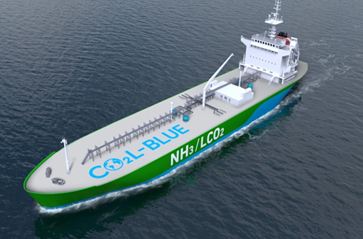
- Mitsubishi group unveils concept for a ship to carry liquid CO2
- Under EU pressure, Asahi Kasei to disclose emissions from resins
- 10-year trial of CO2 capture at Japan coal power plant nears end
- Osaka Gas to build sizeable test methanation plant by 2030
- Mitsubishi Corp and ENEOS to jointly mass-produce bio jet fuel
- J-Power forges carbon credits from investment in marine plants
- Japan firm becomes first to make float glass using 100% biofuels
ELECTRICITY MARKETS
- Half the big power utilities, all big gas firms to raise prices in June
- TEPCO unit to adjust pricing ahead of next offshore wind auction
- JERA, Kyushu, and Chugoku Electric mull jointly buying ammonia
- Japan rail firm becomes first to use EV batteries as backup power
- Tokyu Land and CIP unit plan 600 MW offshore wind project
- Marubeni Corp starts electricity futures trading on the EEX
- Chubu Electric plans its second issuance of green bonds
OIL, GAS & MINING
- March LNG imports from Russia up 11%; oil, coal volumes down
- JERA views expanding LNG operations, investments to China
- Japan to release 5 mln barrels of oil from strategic stockpiles
- ENEOS says fuel oil demand for power plants jumps due to LNG
ANALYSIS
AS WIND TURBINES GROW IN SIZE,
QUESTIONS OVER SUSTAINABILITY ALSO ARISE
The expansion of large-scale wind farms, especially those built off the coast, is further raising hopes that the energy transition can succeed within the next few decades. As equipment becomes larger with more technological advances, the wind power industry is increasingly under pressure to integrate into the circular economy and minimize its impact on the environment. Though wind power capacity in Japan is as yet small, the issue cannot be ignored as the nation prepares to make offshore wind a vital part of its decarbonization strategy.
MAJOR UTILITIES ALLY WITH HOME BUILDERS TO PROFIT FROM EXPECTED BOOM IN ROOFTOP SOLAR
Until now, Japan’s major power utilities haven’t been big solar generation enthusiasts, only building a tiny fraction of the country’s solar farms. However, the companies are now taking a different position, specifically on residential solar. With rooftop solar a major component of government plans to boost Japan’s renewables capacity, regional power firms are forming alliances with local homebuilders and construction companies. The goal is to expand the use of solar generation at the residential level and to make rooftop solar an attractive proposition. It also signals steady returns for decades.
GLOBAL VIEW
Philippines could install 21 GW of offshore wind. CIP and Madoqua pursue $1 bn green hydrogen project in Portugal. LG Energy Solution will invest billions in a mines-to-manufacturing EV supply chain in Indonesia. Taiwan’s first offshore wind farm begins operation. U.S. utilities to invest $140 bn a year. Details on these items and more in our global wrap.
JAPAN NRG WEEKLY
PUBLISHER
K. K. Yuri Group
Events
Editorial Team
Yuriy Humber (Editor-in-Chief)
John Varoli (Senior Editor, Americas)
Mayumi Watanabe (Japan)
Wilfried Goossens (Japan, Events)
Regular Contributors
Chisaki Watanabe (Japan)
Takehiro Masutomo (Japan)
Daniel Shulman (Japan)
Art & Design
22 Graphics Inc.
SUBSCRIPTIONS & ADVERTISING
Japan NRG offers individual, corporate and academic subscription plans. Basic details are our website or write to subscriptions@japan-nrg.com
For marketing, advertising, or collaboration opportunities, contact sales@japan-nrg.com
For all other inquiries, write to info@japan-nrg.com
OFTEN USED ACRONYMS
METI The Ministry of Energy, Trade and Industry
MOE Ministry of Environment
ANRE Agency for Natural Resources and Energy
NEDO New Energy and Industrial Technology Development Organization
TEPCO Tokyo Electric Power Company
KEPCO Kansai Electric Power Company
EPCO Electric Power Company
JCC Japan Crude Cocktail
JKM Japan Korea Market, the Platt’s LNG benchmark
CCUS Carbon Capture, Utilization and Storage
mmbtu Million British Thermal Units
mb/d Million barrels per day
mtoe Million Tons of Oil Equivalent
kWh Kilowatt hours (electricity generation volume)
NEWS: ENERGY TRANSITION & POLICY

Generators unhappy as Okayama poised to impose Japan’s first solar tax
(Japan NRG, April 20)
- In December, the city of Mimasaka passed a bylaw that seeks to tax commercial solar farm operators a rate of ¥50/ m2 of installed PV panels.
- The Ministry of Internal Affairs and Communications is reviewing the new scheme.
- Mimasaka authorities hope for federal government approval by the end of this year.
- The solar industry association, ASPEn, is opposing the new tax, saying this bylaw will make it harder for generators to stay in business.
- According to ASPEn, solar generators make a profit of around ¥1/ kWh, while the new tax will cost around ¥0.3/ kWh.
TAKEAWAY: This is a momentous case that could change the economics of solar and other renewables in Japan. The topic was covered in detail in the Japan NRG webinar in January 2022, the recording of which and its presentations are available on the website.
The Mimasaka decision will complicate tax calculations around solar as tax incentives were introduced at the national level to propel an expansion of renewable energy capacity. Solar panels are subject to property tax, which is a local tax. In the first three years of service, solar, geothermal, biomass, wind and hydro power operators nationwide are eligible for 25-30% cuts in property tax over 2022-2023.
Four ministries join to tackle renewable and community conflicts
(Japan NRG, April 21)
- METI, the MoE, Agriculture Ministry (MAFF) and Ministry of Land, Infrastructure, Transport and Tourism (MLIT) launched a joint panel to resolve increasing conflicts between renewable operators and communities. 850 complaints against renewable operators were filed to METI from October 2016 to February 2022, and 10% of municipalities legislated ordinances that limit renewable installations. The panel will work with the ministries that have oversight on laws applicable to renewable projects.
- The 14-member panel is chaired by Yamaji Kenji, president of Research Institute of Innovative Technology for the Earth (RITE). Members include Takamura Yukari, Tokyo University professor who presently chairs the METI Power Tariff Committee, Amamiya Toshihiko, official of Yamanashi Prefecture that launched the country’s first power to gas project using solar power, and Yunoki Shigeo, an agricultural policy expert.
- At the inaugural meeting, METI described the conflicts in three project phases, followed by other ministries describing some regulations under their oversight that affect renewables. While clean energy is encouraged, renewable operators do not have easy access to project sites due to housing, safety, nature conservation and farmland regulations, MoE, MAFF and MLIT officials told the panel.
| Project phase | Conflicts | Actions |
| Planning | Conflicts over property use, environment conservation, protection of arable land, deforestation and a lack of communication with community stakeholders | Linkages in the enforcement of different laws on environment, farming and forestry conservation |
| Operation | Violations to safety regulations, a lack of facility maintenance | Law enforcement actions to prevent disasters |
| Termination | Abandoned facilities | Sharing recycling related data |
TAKEAWAY: While the panel’s stated role is to improve communications between operators and communities, the inaugural discussion touched on sensitive intra-ministry issues such as energy vs food security. Productive farmland needs to be protected from renewable projects since it takes a long time to convert land used for non-farm purposes to grow crops, a MAFF official stressed. A MLIT official said a blanket national regulation that restricts soil mounds, regardless of purpose, is needed to prevent landslides. The MoE cited an example of a renewable project that both MoE and METI disqualified based on the conclusion that it would cause more environmental harm than benefit.
METI puts emphasis on hydrogen in R&D for next-gen nuclear technology
(Nikkei Shimbun, April 20)
- METI held its first expert meeting on next-generation nuclear power plants, and plans to emphasize on technology that can produce hydrogen from nuclear heat. The expert group will also explore new ways to use hydrogen.
- CONTEXT: The group sits under the nuclear energy Subcommittee of the Advisory Committee for Natural Resources and Energy (an advisory body to METI).
- The committee aims to formulate a development timetable for nuclear tech and will set out its direction by the summer. Its recommendations will also be reflected in the next Clean Energy Strategy that PM Kishida plans to unveil in the summer.
- Next-gen nuclear tech under consideration are: high-temperature gas-cooled reactors (HTGRs), small modular reactors (SMRs), fast reactors, and reactors with enhanced safety features.
- CONTEXT: Japan’s existing HTGR program is able to produce heat of 950°C Celsius, which is enough to allow for manufacture of hydrogen in large amounts.
- SIDE DEVELOPMENT:
Mitsubishi Heavy plans to build micro nuclear reactors that can fit on a truck
(Asia Nikkei, April 19)- Mitsubishi Heavy Industries plans to develop and commercialize in the 2030s nuclear reactors that are small enough to be delivered on a truck.
- The microreactors, with a maximum output of 500 kW, will be three meters tall and four meters wide, and weigh less than 40 tons. This means both the reactor and power generating equipment will fit inside a container truck, enabling it to be delivered to remote or disaster-hit areas.
- The tech will be small enough to be buried underground, mitigating the risk of an accident, according to MHI. The technology could also be used in space exploration.
METI announces cost estimates for hydrogen storage and supply infrastructure
(Japan NRG, April 18)
- In a bid to identify areas of support for quick and efficient build-up of zero carbon energy systems, METI revealed rough cost estimates of hydrogen storage and supply infrastructure components for different carrier technologies. The base assumptions are that the pipelines will be used for 40 years, tanks will store 20 consumption days-equivalent molecules, and tank trunks redemption matures in 12 years.
- During a METI meeting, a Tokyo gas official advised it was difficult to forecast which technology will provide breakthrough solutions. Also, when assessing technologies, new ones tend to attract more attention and there’s a risk of overlooking the benefits of upgrading legacy technologies.
Cost estimate table
| Liquid hydrogen | MCH | Ammonia | |
| Pipelines at supply terminals | ¥145 million/km | ¥278 million/km | ¥66 million/km |
| Tank | ¥38.4 billion for storing 36,000 tons of H2 | ¥4.2 billion for 61,600 tons of toluene | ¥11.6 billion for 56,700 tons of ammonia |
| High pressure pipeline | ¥60 million | ¥120 million | ¥30 million |
| Low pressure pipeline | ¥36 million | — | — |
| Tank truck | ¥20 million | ¥20 million | ¥20 million |
TAKEAWAY: METI recognizes that the government’s role in growing the new industry is challenging since it can’t please every player. It is weighing two options: to support a select few players at a risk of limiting hydrogen’s market potential, or to reach out to a wide range of players, which may result in complicated programs.
Green Innovation Fund picks 14 battery R&D projects
(NEDO Statement, April 19)
- The Green Innovation Fund selected 14 battery research and development projects subject to fund total grants of ¥120.5 billion from 2022 to 2030. The key objectives are to develop enhanced batteries, battery materials and recycling technologies.
TAKEAWAY: The 10 battery projects are equally split between two competing technologies — solid-state batteries and next-generation lithium-ion batteries.
While Tesla just released the model Y mounted with Panasonic’s advanced “4680” lithium-ion batteries, Japanese automakers are betting on solid state batteries. Among the solid-battery adapters, Toyota Motor paces ahead by launching a test drive of an all-solid-state battery vehicle in 2020 and plans to commercialize it by 2025. Nissan Motor eyes its vehicle launch by 2028, and Honda by 2030.
| R&D PROJECT DESCRIPTION | COMPANIES |
| All-solid-state battery | Honda Motor group |
| All-solid-state battery production process | Nissan Motor |
| Water resistant solid electrolyte, cathode with minimum cobalt content, high-capacity anode for solid-state battery; mass battery production process | GS Yuasa |
| High-capacity lithium-ion-storage battery | Panasonic Energy |
| High-capacity lithium-ion battery | Mazda Motor |
| All polymer battery | APB Corporation |
| Cathode material for next generation storage battery | Sumitomo Metal Mining |
| Mass production process of lithium metal anode | Ulvac |
| Mass production process of sulfide solid electrolyte | Idemitsu Kosan |
| High ion conductive polymer electrolytes for all solid-state battery | Osaka Soda |
| Storage battery recycling process and its testing | Sumitomo Metal Mining, Kanto Denka Kogyo |
| Re-use of automotive lithium-ion battery in closed loops | JX Nippon Mining & Metals |
| Low-impact lithium-ion battery recycling process | JERA, Sumitomo Chemical |
| Low-impact battery recycling systems | Nissan Motor |
Safety and cost are challenges for moving liquefied CO2 at sea: Mitsubishi Heavy
(Japan NRG, April 18)
- CONTEXT: Mitsubishi Shipbuilding Corporation said on April 18 that it has completed a concept study for a ship that will be capable of transporting both ammonia and liquefied CO2 (LCO2). The study was conducted in cooperation with Mitsui O.S.K. Lines (MOL), based on a ship type that could become mainstream in the LCO2 ship market.
- Safety management and lower cost of transport will be the technology challenges to commercialize liquefied CO2 transport by sea, a Mitsubishi Heavy Industries spokesman told Japan NRG. Together with Mitsubishi Shipbuilding, the company has completed a concept study of vessels to transport ammonia one way and liquefied carbon on a return trip, to avoid empty ship travels.
Source: MHI
- MHI also told Japan NRG that current port facilities can be used to load and offload ammonia and liquefied carbon, but new facilities need to be built to accommodate much larger shipments. This carbon transport technology will likely be established by 2030 as the government targets the start of CCUS by then.
TAKEAWAY: The liquefied CO2 transport market is heating up. Mitsui OSK Lines (MOL) and Mitsubishi Shipbuilding completed a similar study last month. MOL invested into Norway’s Larvik Shipping that has experience in liquefied CO2 transport. In January, NYK established Knutsen NYK Carbon Carriers with Norway’s Knutsen.
Kansai Electric, INPEX agree to partner in hydrogen, ammonia and CCS
(Company Statement, April 19)
- Kansai Electric and INPEX signed an MOU to collaborate in the areas of zero-carbon fuels such as hydrogen and ammonia, and carbon capture and storage (CCS). The two companies will start with a desk study to determine what kind of projects they can cooperate on.
Under growing regulatory pressure from EU, Asahi Kasei to disclose emissions
(Asia Nikkei, April 19)
- Chemical maker Asahi Kasei will disclose CO2 emissions from procurement and production of about half of its resin products to customers starting in May. The company is acting amid growing regulatory pressure from the EU.
- CONTEXT: The EU plans to ban imports of batteries and other products for electric vehicles with excessive emissions from 2027.
- Asahi Kasei will calculate the emissions of the entire production process, including not only its own processes but also those of its contractors that process chemical raw materials. The disclosure will cover 10,000 resin products used in cars and home appliances.
METI compiles overview of new CCS legislation
(Japan NRG, April 20)
- METI compiled a preliminary overview of new legislation required for CCS projects. They’ll need to cover definitions of the rights over underground spaces, both offshore and onshore and the responsibilities of CCS operators. The laws also need to clarify state oversight over offshore exclusive economic zones, and establish a regulatory framework to allow carbon exports for storage overseas.
Hiroshima’s 10-year carbon capture trial nears completion
(Nikkei, April 19)
- Osaki Coolgen reached the final stage in a multi-stage trial in Hiroshima Prefecture that promises to significantly reduce CO2 emissions from coal-fired plants.
- Researchers experimented with technology for combusting coal in a gasification furnace together with oxygen and steam. The CO2 produced is isolated and stored, while the hydrogen yielded is used to power a gas turbine and a steam turbine.
- The final phase, which kicked off on April 18, will add two 600 kW fuel cells to the system, allowing some of the hydrogen gas to be converted into electricity.
- CONTEXT: The latest coal-fired generation technology allows for about 40% energy efficiency. This experimental system promises to bump that number to 47% while also recovering 90% of CO2 emissions.
- The trial, which began in 2012, is performed in conjunction with the government-backed national R&D hub NEDO. Osaki Coolgen is a JV between Chugoku Electric and J-Power.
Osaka Gas to build test facility for methanation, move to commercialization
(Nikkei, April 19)
- Osaka Gas will build a test facility for methanation at its R&D headquarters in Osaka City. The utility will use proprietary technology to make methane, a raw material for city gas, more efficiently.
- The first test phase will see output at levels that are enough to supply just 200 households, but this will be expanded to 10,000 households by FY2030. The company aims to cut costs and commercialize the technology around 2040.
- The ¥25 billion test facility will receive state assistance and be managed together with the National Institute of Advanced Industrial Science and Technology (AIST).
- CONTEXT: Methanation is considered to be a clean energy solution for natural gas in heating. Osaka Gas’ technology uses waste heat generated during the production of methane to make hydrogen.
METI boosts support for green initiatives in materials sector
(Nikkei, April 17)
- METI announced its vision for the materials sector, which needs over ¥20 trillion to finance green technology to achieve zero net carbon emissions by 2050.
- CONTEXT: The materials sector is responsible for 80% of Japan’s total industrial emissions.
- The government will fund R&D, as well as plant upgrades.
- The government must also reduce electricity tariffs paid by industrial subscribers, and assist the private sector to establish hydrogen production infrastructure and implement CCUS initiatives.
- Particularly carbon-intensive are the steel and chemical industries, which together are responsible for over half of Japan’s total industrial emissions.
METI, MLIT to co-launch government- private sector SAF council
(Japan NRG, April 22)
- METI and the Ministry of Land, Infrastructure, Transport and Tourism will jointly establish a new government-private sector consultation body for sustainable aviation fuel.
Mitsubishi Corp and ENEOS to mass-produce cleaner jet fuel
(Nikkei Shimbun, April 18)
- Trading house Mitsubishi Corp. and oil refinery major ENEOS plan to produce sustainable aviation fuel (SAF) as soon as 2027. The two will establish a domestic supply chain that will span everything from procurement of raw materials to large-scale manufacture of the bio jet fuel and its distribution.
- CONTEXT: SAF is derived from biomass, such as used cooking oil and plants. It is mixed with jet fuel derived from crude oil. Using it, CO2 emissions from aircraft can be reduced by 70% to 90% compared to conventional fuel.
- The two companies currently import SAF but see demand picking up in Japan due to stringent decarbonization regulations in global aviation. Mitsubishi owns grain and chemicals businesses, which will help it with procurement of raw materials.
J-Power among Japanese firms buying carbon credits based on marine work
(Asia Nikkei, April 22)
- An increasing number of companies are interested in the ability of algae and other marine plants to capture the perilous emissions released into the atmosphere.
- J-Power utility has begun using carbon credits gained by raising algae in the sea near its facility in Kitakyushu, Fukuoka Prefecture, in the southwest of Japan.
- This so-called “blue carbon” could become a key weapon in the fight against global warming. According to one estimate, coastal ecosystems might have the same or even higher carbon absorption power as forests.
- J-Power recently used 16 tons worth of carbon credits it gained by nurturing a sea grass bed — the company’s first blue carbon program — near the Kitakyushu plant. J-Power will not sell the credits but use them to offset its own CO2 emissions.
Mitsubishi to invest $100 million in Bill Gates’ clean tech program
(Nikkei Asia, April 22)
- Mitsubishi Corp. will contribute $100 million to a program supported by Bill Gates that aims to accelerate the deployment of clean energy innovations like hydrogen that are close to ready for market.
- The trading house will be the first core Asian partner in the Breakthrough Energy Catalyst program.
Japan firm succeeds in world’s first production of float glass using 100% biofuel
(Kankyo Business, April 18)
- Nippon Sheet Glass succeeded in the world’s first test of float glass production using 100% biofuel at the Greengate site (St. Helens, UK) of Pilkington UK.
- The experiment was part of an initiative to study the introduction of sustainable, low-carbon fuels to replace natural gas, currently the primary fuel source. The company has confirmed an 80% reduction in CO2 emissions from the new process.
Indonesia the latest country to embrace resource nationalism
(Nikkei, April 16)
- A global surge in resource nationalism is stoking fears over supply.
- Indonesia, which supplies 30% of global nickel demand and 7% of global coal demand, has recently imposed restrictions on export of these commodities.
- By requiring exporters to add value to nickel and coal exports, the new law aims to encourage investment in local value-added processing facilities.
- Indonesia is the latest in a series of countries to impose controls on exports of resources: Chile, Peru, Mexico, Congo and Mongolia hold significant reserves of copper, gold and cobalt, and all implemented similar legislation.
- Similar rises in resource nationalism came during the 1970s oil shock and in the early 2000s.
NEWS: POWER MARKETS

Three million switch to Tokyo Gas amid electricity market chaos
(Nikkei, April 21)
- Tokyo Gas is on track to sign over 3 million new electricity subscribers in April, after a raft of energy start-ups went out of business, leaving customers stranded.
- More subscribers switched to larger providers, fearing theirs “could be next”.
- Tokyo Gas owns several power stations, and can undercut small energy companies.
- Meanwhile, No.1 mobile phone operator NTT DoCoMo, which launched its electricity retail service in March, received over 100,000 applications in its first month of operation.
- SIDE DEVELOPMENT:
Commercial subscribers flock to energy safety net
(San-in Chuo Shimpo, April 22)- METI said that over 4,000 commercial electricity subscribers had so far signed up for a government scheme to guarantee businesses service in the event that they’re unable to find a new power provider.
- To allay fears that the safety net will jeopardize competition or become permanent, METI made changes so that tariffs paid by subscribers better reflect market rates.
TAKEAWAY: Due to high price volatility, a number of smaller electricity retailers have exited the market, some due to bankruptcy, in the last month or so. The situation is exacerbated further by a shortage of power capacity in key urban hubs, which means the big generation companies seek to retain as much of their output as they can for direct sales, rather than putting it up for sale on the wholesale exchange.
Half of major power utilities, all gas utilities to raise prices in June
(Mainichi Shimbun, April 21)
- Five of the ten major power companies are expected to raise electricity rates for households in June due to soaring import prices of crude oil, LNG, and other commodities.
- The other five companies have already reached the upper limit under the fuel cost adjustment system, which allows them to pass on higher fuel prices, and will need to leave their prices unchanged.
- All four major city gas companies are expected to raise their prices.
- SIDE DEVELOPMENT:
Power market oversight body to review fuel adjustment tariff due to high prices
(Gas Energy News, April 18)- The Electricity and Gas Basic Policy Subcommittee of the Agency for Natural Resources and Energy is considering a review of the raw fuel cost adjustment system for gas and electricity rates against the backdrop of soaring prices of LNG and other raw fuels.
- Some believe that it would be desirable to eliminate the caps on adjustments, but the Energy Agency is cautious because this would lead to an increase in the burden on consumers.
TEPCO renewables unit confirms it will bid in next offshore wind auction
(Jiji Press, April 22)
- Nagasawa Masashi, the new president of TEPCO Renewable Power (RP), said the company will bid in the next government tender for offshore wind power, and will aim to lower its offered prices.
- “We are examining how far we can go in terms of price,” he said, noting that if TEPCO RP can compete on price, then it will gain advantage in subsequent projects.
- The company will rethink its offshore wind power strategy, including how it should collaborate with other companies, Nagasawa said.
JERA, Kyushu Electric, and Chugoku Electric mull partnering in hydrogen and ammonia
(Company Statement, April 20)
- JERA, Kyushu Electric, and Chugoku Electric signed an MOU for collaboration on the adoption of hydrogen and ammonia as fuel for power generation.
- The three will discuss the potential for joint procurement of the fuels, the establishment of transportation and storage standards, and seek to widen the cooperation to include other Japanese power utilities.
- SIDE DEVELOPMENT:
ENEOS, JERA, JFE to look at creating hydrogen hub in Kawasaki City
(Company Statement, April 21)- ENEOS, JERA, and steelmaker JFE began to discuss in detail the establishment of a hydrogen and ammonia receiving and supply base, and developing a supply project at the Keihin Waterfront area in Kanagawa Prefecture.
Japan rail firm to use recycled EV batteries to create backup power source
(Kankyo Business, April 18)
- Railway operator JR East announced the start of full-scale introduction of recycled EV batteries in the railroad sector.
- Recycled batteries from the Nissan LEAF EVs have been trialed as backup power sources for streetlights and stores, but this is the first time they’ll be introduced on a full-scale basis in the railroad sector.
- JR East has installed batteries in level crossing security devices so that they can continue to operate even in the event of a temporary power outage. Tests show that the batteries can be expected to last 10 years.
Tokyu Land and CIP plan 600 MW offshore wind project in Aomori
(New Energy Business News, April 19)
- Tokyu Land Corporation and a subsidiary of Copenhagen Infrastructure Partners (CIP), a Danish investment fund, plan to develop offshore wind power generation off the coast of Tsugaru City, Aomori Prefecture. The maximum output is 600 MW.
- The partners submitted an Environmental Assessment Consideration Report for the project, which will be located off the coast of Tsugaru City and Ajigasawa Town, Nishitsugaru County, Aomori Prefecture. The maximum number of turbines to be installed is 63 units, ranging from 9.5 MW to 15 MW. Construction is expected to take 3 years.
Osaka Gas invested Wakayama biomass plant to go online in 2025
(Mainichi Shimbun, April 22)
- Tokyo-based JAG Energy plans to build a 50 MW biomass-fired power station in an industrial park in Bogo, Wakayama.
- The plant, which will be one of Wakayama’s largest, will be operated by a consortium comprising JAG Energy, Osaka Gas, and SMFL MIRAI Partners.
Marubeni starts electricity futures trading on the EEX
(Exchange Statement, April 21)
- The Trading house brokered its first deal in EEX Japanese Power Futures, the exchange said.
Chubu Electric to issue its second green bond
(Denki Shimbun, April 18)
- Chubu Electric will issue its second green bond in May. The amount to be issued is ¥20 billion. The funds raised will be used for the development, construction, operation, and renovation of renewable energy.
- Lead managing underwriters are Mizuho Securities, Nomura Securities, Tokai Tokyo Securities, and Shinkin Securities.
- Chubu Electric issued its first green bond for ¥10 billion in July 2021.
JV between Hitachi Energy and Scatec wins power storage contract in Philippines
(Nikkan Kogyo Shimbun; April 19)
- A JV between Hitachi Energy and Norwegian renewables energy systems provider Scatec was awarded an engineering, procurement, and construction (EPC) contract to supply a 2MW battery energy storage system (BESS), which will be connected to the Magat Hydroelectric Power Plant in the Philippines.
- The deal is for an undisclosed amount, and the system will go online in 2024.
NEWS: OIL, GAS & MINING

WAR IN UKRAINE:
March LNG imports from Russia up 10.9%, oil down 13.5%, coal down 17.4%
(Government Statement, April 20)
-
- Japan’s LNG imports from Russia increased 10.9%, YoY, to 0.7 million tons while crude oil decreased 13.5% to 0.3 million kiloliters, and thermal coal was also down 17.4% to 0.8 million tons, said Japanese customs. The value of oil imports was ¥24.2 billion, up 12.9%, LNG ¥50.6 billion, up 27%, and coal ¥24.2 billion, up 12.9%.
- Japan’s total LNG imports in March were 6.5 million tons, down 8.7%, crude oil 12.9 million kl, up 5.4%, and thermal coal 10.7 million tons, up 25.6%. Meanwhile, the value of crude oil imports soared 69.7% to ¥865.1 billion, LNG to ¥566.7 billion by 89.2% and thermal coal to ¥253. 6 billion, up 196.8%.
- The Russian share of Japan’s LNG imports in terms of quantity was 10.9%, crude oil 2.6%, and thermal coal 7.8%.
JERA mulls Chinese expansion
(Nikkei, April 17)
- JERA established a Chinese subsidiary, based in Beijing, with a view to expanding its LNG operations to China.
- JERA is researching the feasibility of building LNG terminals in China and commencing LNG trading in the country.
- Last year, China surpassed Japan as the world’s largest consumer of LNG.
Japan to release 5 million barrels of oil from strategic stockpile: METI minister
(Japan NRG, April 22)
- Japan will release 5 million barrels of oil from its strategic stockpile via tenders, METI minister Koichi said.
ENEOS sees fuel oil demand for power doubling due to high LNG prices
(S&P Global, April 20)
- Power utilities in Japan are asking for more fuel oil to burn at thermal plants as an alternative to high LNG prices. Top refiner ENEOS is uncertain it can meet the full expected demand in the April to Sept. period, chairman Sugimori said.
- Demand for the previous six-month period (Oct. 2021 to March 2022) was up 60% YoY, he said.
LNG stocks rise to 1.76 million tons on April 17
(Government Statement, April 20)
- LNG stocks on April 17 stood at 1.76 million tons, up from 1.66 million tons a week ago. The level was lower than 2.01 million tons at the end of last April and the four-year average of 1.9 million tons.
Activist investor raises stake in Cosmo Energy Holdings to 8.28% from 7.09%
(Kabutan; April 11)
- Murakami’s City Index Eleventh and a joint investor hold the shares.
ANALYSIS
BY CHISAKI WATANABE
As Wind Turbines Gain in Height and Power,
Sustainability Questions Also Arise
The expansion of large-scale wind farms, especially those built off the coast, is further raising hopes that the energy transition can succeed within the next few decades. As equipment becomes larger with more technological advances, the wind power industry is increasingly under pressure to integrate into the circular economy and minimize its environmental impact.
The issue of what to do with old wind equipment is a global challenge and must be confronted now just as the wind power sector is poised to boom. But first, the industry must find a solution for those wind power units that’ll soon face their expiration date. The Global Wind Energy Council says that by 2030 nearly 200 GW of onshore wind projects, mainly in the EU and the U.S., will conclude their operational lifespan.
Currently, there’s not much discussion in Japan about what to do with aging wind turbines, primarily because Japan’s wind capacity – 4.5 GW as of March 2021 – accounts for less than 1% of the national power mix. By comparison, solar has 62 GW of capacity.
Nevertheless, these sustainability questions will be a major issue as Japan pushes to make offshore wind power a key part of decarbonizing the country’s industry. By 2030, the government plans to increase wind capacity more than five-fold to 23.6 GW, or 5% of the total generation, according to the Sixth Basic Energy Plan.
Source: DOE
Upward and onward
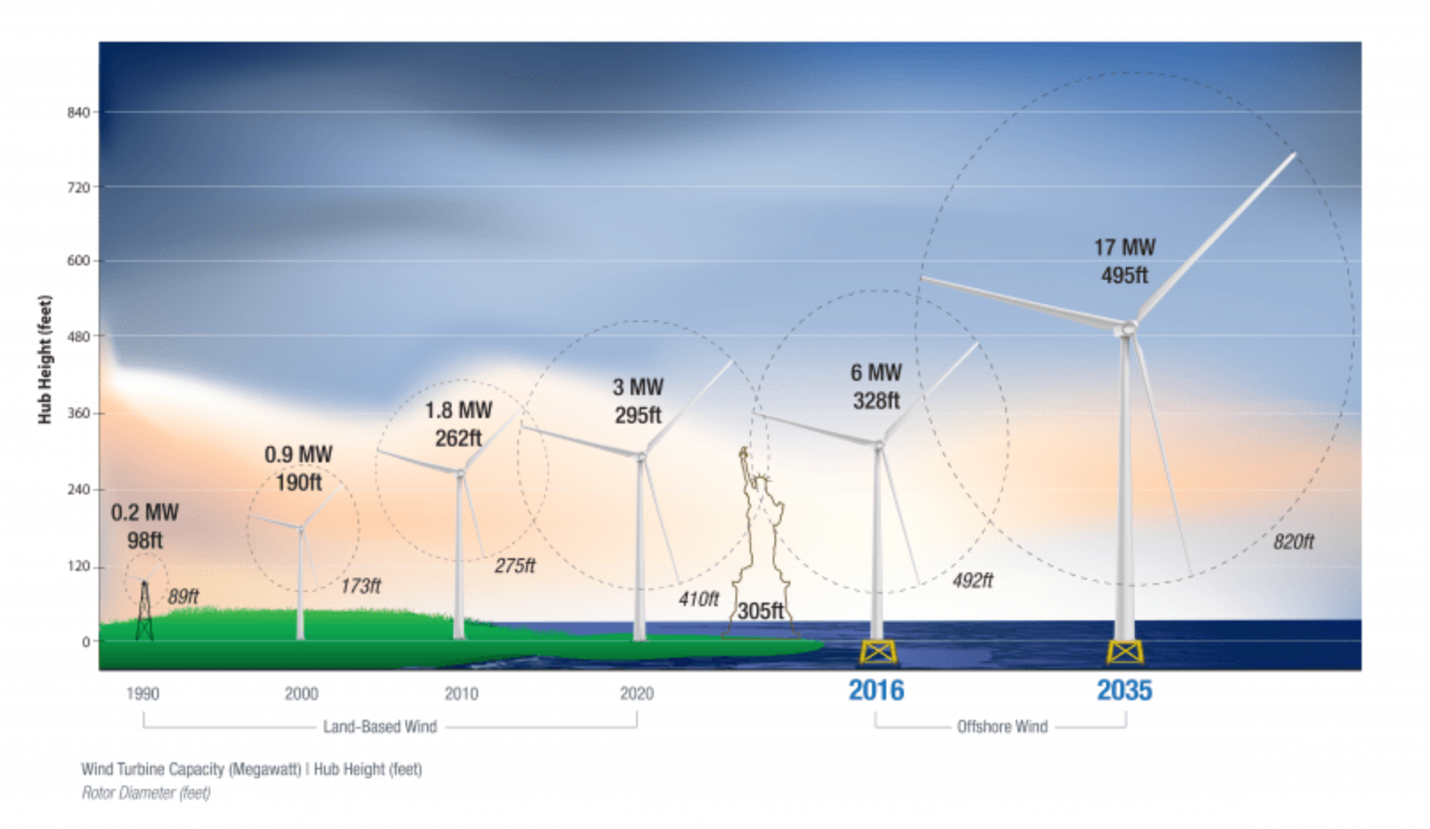
Wind power presents different types of recycling challenges to solar. While solar doesn’t have much variation in the size of PV panels, with wind, turbine sizes vary greatly and they have been growing larger. For land-based turbines the hub height (distance from the ground to the rotor’s middle) has increased nearly 60% since 1999, to about 90 meters in 2020, according to the U.S. Department of Energy.
The average hub height for offshore wind turbines in the U.S. is projected to increase from 100 meters in 2016 to 150 meters in 2035. Larger turbines mean more electricity, but also larger and heavier components.
GE’s Haliade-X 14-MW prototype turbine, which started generating power in October 2021, has a tip height of 260 meters with 107-meter-long blades. Vestas plans to install its 15-MW offshore prototype turbine later this year, which will be 20 meters taller than GE’s largest turbine.
Once wind farms reach the end of normal operational life, typically after 20 years, there are three options:
- lifetime extension
- decommissioning
- repowering (replacing old turbines with more powerful and efficient models).
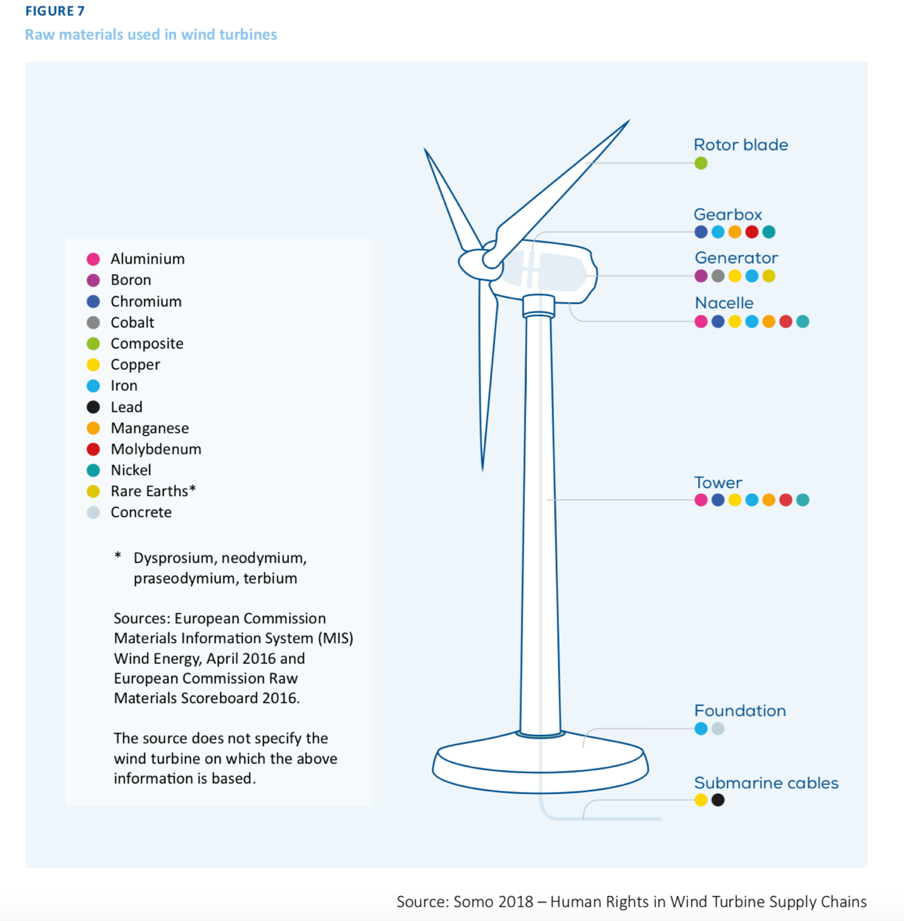
What are wind turbines made of?
Source: WindEurope (May 2020 report)
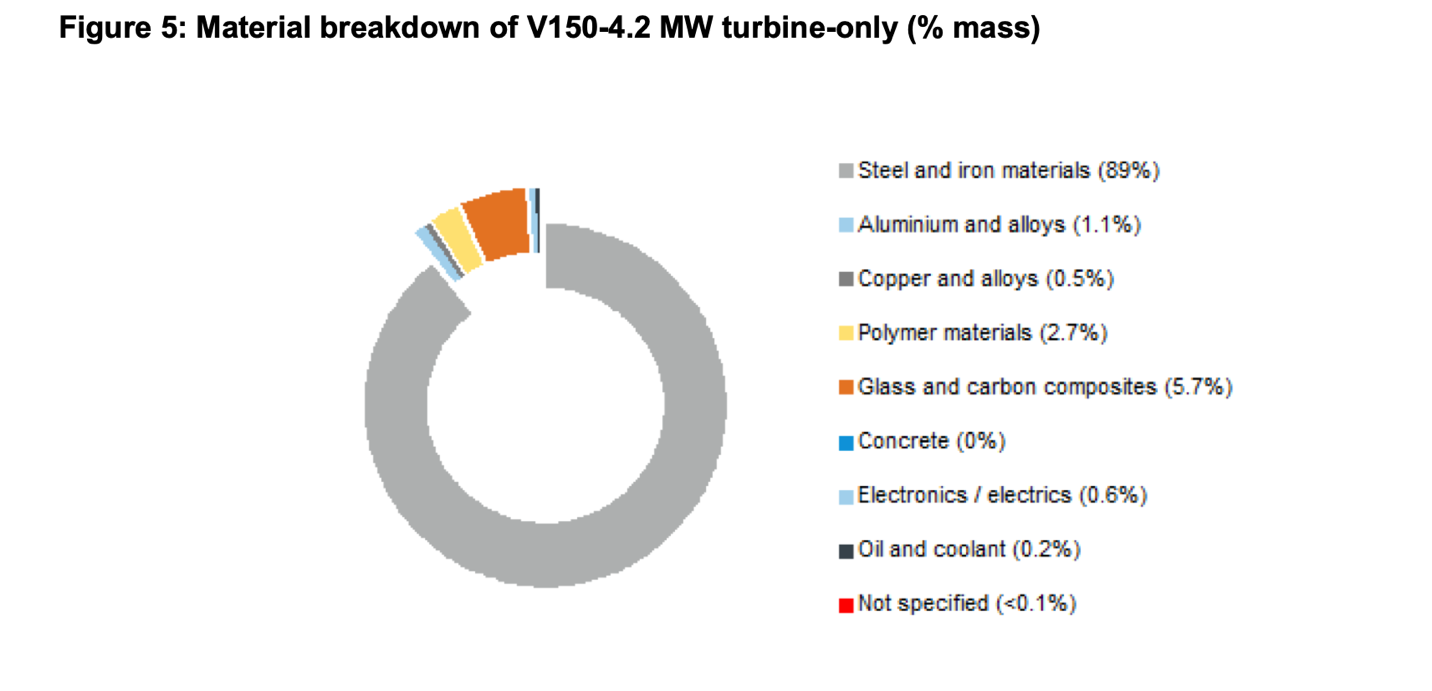
About 90% of wind turbine material can be recycled because the foundation, components of the nacelle and the tower are made with materials such as steel, reinforced cement, copper wire and electronics with established recycling technologies. The problem is that the remaining 10% — turbine blades made with composite materials — are difficult to recycle and often end up in landfills.
Some European countries have introduced landfill disposal bans on fiber-reinforced composite, as well as requirements for the recyclability of the entire turbine, including the blades. Last year, WindEurope, a wind energy industry group, called for a landfill ban on decommissioned wind turbine blades by 2025.
Source: WindEurope
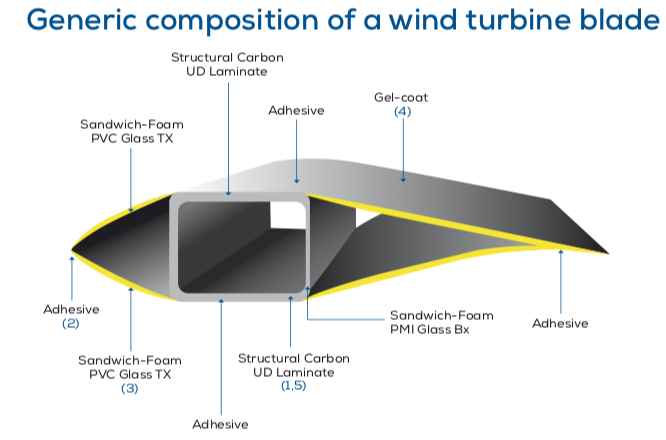
Wind turbine blades are made of:
1) Reinforced fiber (glass, carbon, aramid or basalt)
2) Polymer matrix (thermosets such as epoxies, polyesters, vinyl esters, or thermoplastics)
3) Sandwich core (balsa wood or foams such as polyvinyl PVC, PET)
4) Coatings (PE, PUR)
5) Metal (copper wiring, steel bolts, etc.).
“The main challenge is not a lack of blade recycling technology, but the economics and scalability of the required composite recycling technologies,” said GWEC in a recent annual report. “These are not yet commercially viable to factor into project lifetime and decommissioning costs – especially as the industry faces increased pricing pressures, both from downward pressure in markets and from sharp increases in raw material and logistics costs.”
According to Wind Europe, composite materials used in blades boost the performance of wind energy by allowing lighter and longer blades. About 2.5 million tons of composite materials are in use in the wind industry globally. They are recycled through the process called cement co-processing, which replaces cement raw materials with the composite’s glass fibers and fillers. This process can reduce CO2 emissions in cement manufacturing by 16% if composites represent 75% of cement raw materials.
In September 2021, Siemens Gamesa announced the world’s first recyclable turbine blades ready for commercial use in offshore wind farms. The company has reached agreements to install the recyclable turbines for current and future projects with three of its major customers: RWE, EDF Renewables and wdp. The first six – each 81 meters long – were produced in Denmark.
The company says its new resin’s chemical structure can efficiently separate it from other materials. The blade can be immersed in a heated mild acidic solution to separate the resin from the fiberglass, plastic, wood and metals. The materials can then be reused in new applications such as in the auto industry or in consumer goods like suitcases and flat screen casings.
Industry-wide initiatives
The initiative, Circular Economy for Thermosets Epoxy Composites (CETEC), is led by Danish wind turbine maker Vestas, which aims to produce zero-waste turbines by 2040. This coalition is comprised of Vestas, Olin, Danish Technological Institute, and Aarhus University. In 2021, it announced the development of a new resin technology.
In a two-step process, thermoset composites are disassembled into fiber and epoxy, and the epoxy is further broken up into base components similar to virgin materials. Vestas says these materials can be reintroduced into the manufacturing of new turbine blades.
Vestas is also participating in the three-year DecomBlades project established in 2021 with 10 partners, including turbine makers Siemens Gamesa, LM Wind Power (GE subsidiary), and wind power developer Ørsted. The goal is to commercialize the value chain for turbine recycling: Blade manufacturers provide materials to the recycling partners which process and test the materials.
Zero wastE Blade ReseArch (ZEBRA) is a consortium launched in 2020 and led by French research center IRT Jules Verne. Members include Arkema, CANOE, Engie, LM Wind Power, Owens Corning and SUEZ. In March, the first prototype of its 100% recyclable turbine blade was completed and LM Wind Power will start full-scale structural lifetime testing at its center in Denmark.
While the recycling of wind turbine blades is important in making the industry more circular, another area of focus gaining importance is how to recover nonferrous metal such as rare earth elements and copper in nacelles. The Japan Society of Newer Metals set up a study group in November to promote the recovery of nonferrous metal.
A 4.2-MW turbine by Vestas material breakdown is as follows, according to a company brochure.
Source: Vestas
Decisions must be made today
Meanwhile, some companies are moving away from the use of traditional materials. Take for example, Modvion, a Swedish company that counts Vestas among its shareholders, and which is building wind turbines with wood, rather than steel. The first tower – 30-meter-high – was delivered in 2020.
Modvion says its turbine is made with a laminated wood tower that’s stronger than steel at the same weight. These turbines can be built in modules, which are easier to transport and therefore, they can rise even higher than current towers.
While Europe is actively seeking solutions to these sustainability challenges, in Japan there’s a serious lack of interest to discuss what to do with aging wind turbines. This lack of concern is especially startling when compared to the greater willingness of Japan’s solar industry to recycle solar panels.
This issue can only be muted for so long. The unavoidable fact is that thousands of turbines which will be installed onshore and offshore in the coming years, and one day they will all need to be retired. That might be in 2040 or in 2050, but the decisions regarding sustainability need to be made today. The industry cannot afford to delay these pertinent questions any longer.
ANALYSIS
BASED ON MATERIAL OF
SHIN ENERGY SHIMPO
Major Power Utilities Ally with Home Builders
Seeking Steady Profits from an Expected Boom in Rooftop Solar
Up until now, Japan’s major power utilities haven’t been big solar generation enthusiasts, only building a tiny fraction of the country’s solar farms. However, the companies are now taking a different position specifically on residential solar.
Since rooftop solar is a major component of government plans to boost Japan’s renewable energy capacity, legacy regional power utilities are forming alliances with local and large homebuilders and construction companies.
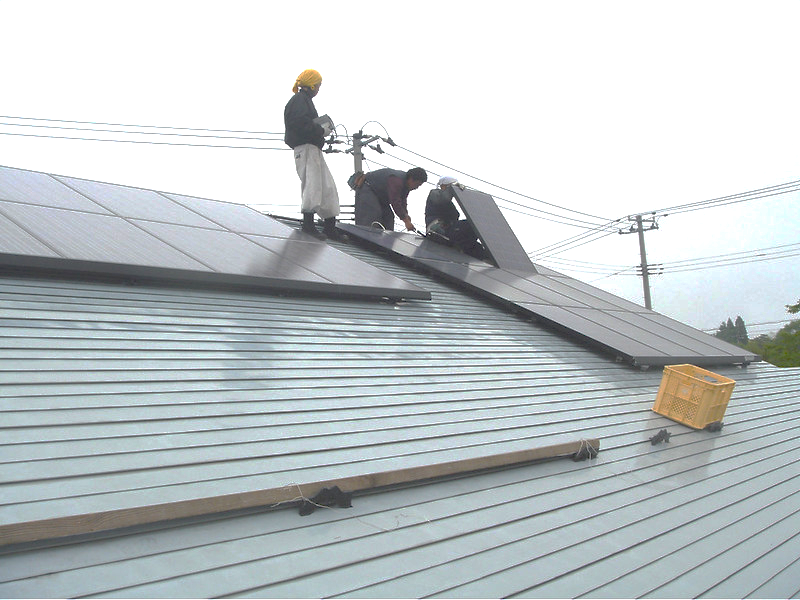
The goal is to expand the use of solar generation at the residential level and to make rooftop solar an attractive proposition. The utilities are especially focusing on the “no-upfront-costs” pricing plans.
As the government moves to make solar panels mandatory for new homes, while also committing to installing the equipment on public buildings, solar capacity is poised for renewed growth due to factors different than those which drove the sector to triple in the past decade.
For the major electric power companies, the EPCos, this presents an attractive opportunity to lock in consumers to multi-decade plans, while also guaranteeing steady returns.
Central Japan
Chubu Electric Power Miraize, a unit of Chubu Electric group, now offers “Kanaeru Solar,” a solar power generation and self-consumption service for buyers of new homes built by Ichijo Corporation. This reduces the initial cost of installing a large-capacity solar generation system and storage batteries. The service has rolled out across the country and will soon expand to Hokuriku and Shikoku, making Okinawa the only exception.
Under this service, Chubu Electric will pay the initial installation costs of PV and storage systems. The house buyer then pays a monthly service fee based on the consumption of electricity generated by the home system, while also transferring any surplus power to Chubu Electric. The utility is then free to sell the electricity under the Feed-In Tariff (FIT) system. The contract term is 15 years.
Another selling point is that in the event of a power outage due to a natural disaster, the home system should be able to maintain electricity supply thanks to installed storage batteries.
Chubu Electric estimates that over the contract period consumers will face expenses that are at least the same as if the solar PV and batteries were not installed. In some cases, the households may even see an annual savings of about ¥9,300.
This estimate is based on a model all-electric household in Nagoya City, with annual electricity consumption of 6,829 kWh, solar panel output of 10.0 kW, annual electricity generation of 12,938 kWh, and storage batteries that charge from surplus electricity generated by the panels and discharge it at night. The electricity rates are based on Chubu Electric’s “Smart Life Plan”, with a contracted capacity of 10kVA.
Source: “Solar Panel install” by Richard Masoner / Cyclelicious is marked with CC BY-SA 2.0
Northeast Japan
Hokuriku Electric signed a new business alliance agreement with at least five house-builders in the Hokuriku area to provide a service called “Easy Solar with House-builders”, which is aimed at newly built detached houses. This also offers a fixed monthly fee plan after an initial outlay of zero yen for the homeowner.
Households that build or purchase a new detached house from a builder affiliated with Hokuriku Electric will be able to use solar electricity without incurring the initial cost of installing panels. The service period is set at 10 years, with ownership of the generation equipment due to transfer to the household free of charge after that.
The utility has made this service available for vertical metal roofs, horizontal metal roofs, and tiled roofs; it applies to all of its service area, including regions with heavy snowfall; and it can be applied to a range of panel capacities, from 4kW to 6kW.
What’s more, Tohoku Electric Power Solar e-Charge, a subsidiary of the utility, signed a similar business partnership agreement with five housing construction companies in Sado City, Niigata Prefecture. The partners will offer a third-party solar and storage battery service for residential customers that buy a newly built home on Sado Island, making it the prefecture’s first island to offer such a service.
Northern Isle of Hokkaido
A similar service to those mentioned above was launched by Hokkaido Electric under the name “Flat Solar.” It also allows new detached houses to have solar generation equipment installed at no initial cost, with homeowners paying a fixed monthly fee.
Hokkaido Electric has agreements with Japan House Holdings and Universal Home. The number of partners is set to grow as home systems with batteries are seen to provide more power supply security in areas with heavy snowfall, like Hokkaido, Tohoku, and Hokuriku.
Tokyo area
TEPCO Energy Partners and Sumitomo Realty & Development agreed last year to plan and implement projects that lead the way in decarbonization. Sumitomo will offer the “Sumifu x Enekari” plan to buyers of its new detached houses. Residential PV power generation equipment and storage batteries will be installed at zero initial cost.
The partners also provide support for repair and renewal of equipment and claim that subscribers will receive income from the sale of their surplus electricity.
TEPCO is the first major infrastructure company that provides long-term support for equipment maintenance and repairs. “Enekari” is an energy service provided by TEPCO Home Tech, a group company of TEPCO Energy Partners. It allows customers to use the latest energy-saving equipment for a fixed monthly fee, also with zero upfront costs.
New profit models
For consumers, reducing another bulky price tag from a new home is attractive and the potential energy security of the system makes for a good sell. But the utilities also see this service as having multiple profit channels. In addition to selling surplus electricity that the service users generate at a guaranteed FIT level, there’s also scope to claim carbon credits.
TEPCO Energy Partners, for example, plans to calculate the “environmental value” from all the homes that switch to renewables through its services, aggregate this, and then apply for the J-Credit carbon crediting system operated by METI, MoE and the Ministry of Agriculture, Forestry and Fisheries.
With the launch of Japan’s first ever national carbon credit exchange this April, which is expected to allow for the trading of instruments including J-Credits, the utilities may see another profit channel by helping new home owners go green.
GLOBAL VIEW
BY JOHN VAROLI
Below are some of last week’s most important international energy developments monitored by the Japan NRG team because of their potential to impact energy supply and demand, as well as prices. We see the following as relevant to Japanese and international energy investors.
Australia/ Green hydrogen
The Financial Times raised questions about the billions of dollars pledged to green hydrogen energy projects in Australia. It ran the subtitle: “Vaunted $188bn pipeline of projects is yet to translate to a single molecule being sold”, and added that investors are sitting on “the sidelines waiting for a shift in policy from the fossil-fuel friendly government.”
Brazil/ Solar and wind power
Enel plans to build as much as 3 GW of solar and wind generation power capacity. The company already operates more than 4.7 GW of renewable power in Brazil, which accounts for 40% of Enel’s growth in Latin America’s renewable market.
Canada/ Wind power
Boralex, Energir and Hydro-Quebec will join forces to develop three wind projects with a total capacity of 1.2 GW. The partnership is part of Hydro-Quebec’s plans to develop a portfolio of wind energy projects in the region.
India/ Renewable energy
Tata Power Co. said BlackRock Real Assets and Abu Dhabi’s Mubadala Investment Co. will invest $525 million in its renewable energy unit for a 10.5% stake. Tata Power wants to build a portfolio of over 20 GW of renewable capacity over the next five years, up from today’s 4.9 GW.
Morocco/ Solar power
Morocco launched the first phase of Nor II, its 333 MW solar energy initiative that covers 14 projects stretching over seven locations. Thirteen of the 14 projects have already been awarded to private companies.
Philippines/ Offshore wind
The country has the potential to install 21 GW of offshore wind power by 2040, about a fifth of its electricity supply by then, according to the Department of Energy and the World Bank. Fossil fuels now account for about 79% of the Philippines’ power generation mix. Renewable energy only had a 21% share of the energy mix in 2020, down from 34% in 2008.
Portugal/ Green hydrogen
Copenhagen Infrastructure Partners’ Energy Transition Fund (CIP) will team up with Madoqua Renewables to create a €1 billion green hydrogen and ammonia plant. The industrial-scale MadoquaPower2X project will use renewable energy and 500 MW of electrolysis capacity.
South Korea/ EV supply chain
A consortium led by LG Energy Solution will invest $9 billion in Indonesia to build a mines-to-manufacturing EV supply chain, in order to reduce reliance on Chinese suppliers. Indonesia is the world’s largest nickel producer, with about 21 million tons of reserves.
Taiwan/ Offshore wind
Denmark’s Ørsted made successful delivery of the first power from the 900 MW Greater Changhua 1&2a offshore wind farm. A total of 111 Siemens Gamesa wind turbines will be installed at Changhua 1&2a, making it Taiwan’s largest offshore wind project and the developer’s first large-scale offshore wind farm in the Asia-Pacific region.
U.S./ Energy transition
Edison Electric Institute said that U.S. utilities will invest roughly $140 billion each year in 2022 and 2023, to upgrade aging grids, to prepare for wider use of EVs and to make the transition to renewable energy.
U.S./ Renewable energy
California’s main grid ran on 97% renewable energy on April 3, breaking a previous record of 96.4% set just a week earlier. Power production from the sun and wind peak in the spring due to mild temperatures and the sun’s angle, allowing for strong solar production.
Disclaimer
This communication has been prepared for information purposes only, is confidential and may be legally privileged. This is a subscription-only service and is directed at those who have expressly asked K.K. Yuri Group or one of its representatives to be added to the mailing list. This document may not be onwardly circulated or reproduced without prior written consent from Yuri Group, which retains all copyright to the content of this report.
Yuri Group is not registered as an investment advisor in any jurisdiction. Our research and all the content express our opinions, which are generally based on available public information, field studies and own analysis. Content is limited to general comment upon general political, economic and market issues, asset classes and types of investments. The report and all of its content does not constitute a recommendation or solicitation to buy, sell, subscribe for or underwrite any product or physical commodity, or a financial instrument.
The information contained in this report is obtained from sources believed to be reliable and in good faith. No representation or warranty is made that it is accurate or complete. Opinions and views expressed are subject to change without notice, as are prices and availability, which are indicative only. There is no obligation to notify recipients of any changes to this data or to do so in the future. No responsibility is accepted for the use of or reliance on the information provided. In no circumstances will Yuri Group be liable for any indirect or direct loss, or consequential loss or damages arising from the use of, any inability to use, or any inaccuracy in the information.
K.K. Yuri Group: Oonoya Building 8F, Yotsuya 1-18, Shinjuku-ku, Tokyo, Japan, 160-0004.