
JAPAN NRG WEEKLY
MAY 23, 2022
JAPAN NRG WEEKLY
May 23, 2022
NEWS
TOP
- Japan to create new decarbonization index for businesses to better motivate companies to invest in lower emissions
- METI to issue power crunch warning two days in advance giving users more time to adjust in case reserves are running low
- Japan’s ESG bond issuance more than tripled in April
even as the sector faces numerous headwinds
ENERGY TRANSITION & POLICY
- Space agency finds a way to make methane without hydrogen
- JFE considers converting steelworks into a hydrogen hub
- Japan to set up Public Benefit Corporations for climate issues
- ENEOS plans to sell Japan’s first transition-linked bonds
- Nuclear regulator approves Fukushima site’s treated water release
- NEDO offers funding to tech that extracts CO2 from exhaust gas
- MHI to engineer small and mid-sized carbon capture systems
- Tokyu successfully tests “world’s first hydrogen-powered hotel”
ELECTRICITY MARKETS
- Mitsubishi used new pricing system to win offshore wind auctions
- Tohoku Electric and France’s Ideal tie up on floating wind project
- Invenergy plans 195 MW onshore wind farm in northern Japan
- Kyushu Electric to abolish cap on power tariffs
- Osaka power retailer files for bankruptcy; Business survey finds that most don’t plan to switch accounts to a major power utility
- First Solar sells 293 MW of Japan solar capacity to PAG Group
- JERA and Osaka Gas curb output at facilities over water issues
OIL, GAS & MINING
- April LNG imports jump 12% in volume, more than double in cost helping increase stockpiles above the four-year average
- Japan’s export of refined oil products rose 16% in March
- Tokyo Gas hits tariff cap due to speed of gas price increases
- Cosmo Energy to cut Scope 1 & 2 emissions 30% this decade
ANALYSIS
ONCE TRASH, USED COOKING OIL NOW CENTER OF TUG-OF-WAR BETWEEN FOOD AND BIO JET FUEL
The battle for resources between food and energy is decades old. Yet the latest iteration of the food-versus-fuel debate has taken a new twist in Japan as the country’s attempts to clean up its aviation are colliding with a parallel need both to feed its livestock and lower their associated emissions. What’s even more uncanny: The material agonized over in this moral dilemma was considered trash just a decade ago. Now, producers of sustainable aviation fuel (SAF) and makers of animal feed claim used cooking oil (UCO) is essential to their decarbonization strategies and want their supply protected.
RENEWABLE ENERGY PROCUREMENT OPTIONS
IN JAPAN: A QUICK OVERVIEW
Anyone looking to procure renewable energy for a business in Japan has four basic options: purchasing renewable energy certificates, signing up for one of the renewable energy plans offered by power retailers, building your own generation capacity, or signing a corporate PPA with a power generator. Naturally, each option comes with advantages and disadvantages.
We go through each of the options, weighing up the suitability of these to business needs.
GLOBAL VIEW
Synthetic fuel could replace petroleum and plant-based biofuels by the mid-2030s. The EU plans to raise €20 billion by selling extra carbon emissions permits. Belgium, Denmark, Germany, and the Netherlands say they’ll build at least 150 GW of offshore wind capacity. Post-pandemic recovery blamed for India’s power crisis. Details on these and more in our global wrap.
EVENTS SCHEDULE
JAPAN NRG WEEKLY
PUBLISHER
K. K. Yuri Group
Editorial Team
Yuriy Humber (Editor-in-Chief)
John Varoli (Senior Editor, Americas)
Mayumi Watanabe (Japan)
Wilfried Goossens (Japan, Events)
Regular Contributors
Chisaki Watanabe (Japan)
Takehiro Masutomo (Japan)
Daniel Shulman (Japan)
Art & Design
22 Graphics Inc.
Events


SUBSCRIPTIONS & ADVERTISING
Japan NRG offers individual, corporate and academic subscription plans. Basic details are our website or write to subscriptions@japan-nrg.com
For marketing, advertising, or collaboration opportunities, contact sales@japan-nrg.com
For all other inquiries, write to info@japan-nrg.com
OFTEN USED ACRONYMS
METI The Ministry of Energy, Trade and Industry
MOE Ministry of Environment
ANRE Agency for Natural Resources and Energy
NEDO New Energy and Industrial Technology Development Organization
TEPCO Tokyo Electric Power Company
KEPCO Kansai Electric Power Company
EPCO Electric Power Company
JCC Japan Crude Cocktail
JKM Japan Korea Market, the Platt’s LNG benchmark
CCUS Carbon Capture, Utilization and Storage
mmbtu Million British Thermal Units
mb/d Million barrels per day
mtoe Million Tons of Oil Equivalent
kWh Kilowatt hours (electricity generation volume)
NEWS: ENERGY TRANSITION & POLICY

Tokyo Gas, JAXA develop prototype of methane production that doesn’t require hydrogen
(Japan NRG, May 17)
- Tokyo Gas reported to the Methanation Government-Private Sector Council that the company has developed a prototype that produces methane from carbon and water, and won’t require hydrogen.
- The system, called the hybrid Sabatier device, was based on technologies developed by the Japan Aerospace Exploration Agency (JAXA) for application in space exploration. They combined polymer electrolysis membrane technologies to electrolyze water, and a low-temperature Sabatier reaction at 220°C in a single module to produce synthetic methane. Tokyo Gas and JAXA will scale up the module in the next phase.
TAKEAWAY: The new process promises to be more energy efficient and could open up a new fuel option for a range of industries.
JFE considers converting steelworks into hydrogen hub
(Nikkei, May 16)
- JFE Holdings is considering converting Nippon Steel’s Kawasaki steel works, which will cease operations in 2023, into a port terminal for hydrogen and ammonia, and possibly even a hydrogen-fired steel foundry.
- The terminal would be built in conjunction with ENEOS.
- The 700-ha site is located on an artificial island.
- SIDE DEVELOPMENT:
Tokyu Hotels successfully tests “world’s first hydrogen-powered hotel”
(Kankyo Business, May 16)- Tokyo Hotels said that one of its properties in Kawasaki successfully completed a trial started in 2018 to have hydrogen fuel cells generate 30% of the facilities’ demand, making it the “world’s first hydrogen hotel.”
- The Kawasaki King Skyfront Tokyu REI Hotel used Showa Denko’s plastic chemical recycling facility to supply low-carbon hydrogen, produced from used plastic collected locally, directly to the hotel via a hydrogen pipeline.
- The hotel plans to move to the “social verification” stage of using hydrogen-fueled electricity from January 2023.
METI to create new decarbonization index for businesses
(Japan NRG, May 13)
- METI plans to set up a new decarbonization index for businesses as the present GHG emission reduction figures do not motivate business growth and companies are not making enough investment. The ministry sees “dynamic capability” that captures market changes and “dynamic creativity” that internalizes the changes and drives new products.
- Structure of industries must change as well, to encourage more startups and to decentralize corporate decision systems, METI told the Green Transformation panel. The index reflects decarbonization efforts and dynamic capabilities.
TAKEAWAY: METI is concerned about companies’ low level of R&D spending compared to other major economies, as growth potentials decline. A lack of standards associated with decarbonization is also blamed for a lack of investment, while some experts warn standards established too early will limit competition-driven growth. METI minister told the Green Transformation Panel that the priority is to be first in the world to establish a new market framework.
Japan to create Public Benefit Corporations to help tackle environmental issues
(Asia Nikkei, May 16)
- PM Kishida plans a new structure to tackle environmental and social issues. It will be modeled on the Public Benefit Corporation (PBC) in the U.S. and elsewhere, and act as a tool to implement the PM’s “new capitalism” vision.
- PBCs pursue longer term rewards and aim to work in the public interest, as well as for its shareholders. PBCs also invest in businesses and startups that seek to solve social issues more than seek short-term profits.
- Ministry discussions on the legal framework begin this summer and the relevant laws are expected in 2023.
Japan’s ESG bond issuance more than triples despite headwinds
(Denki Shimbun, May 17)
- Japan’s ESG bond issuance exceeded ¥500 billion in April, more than 3.5 times the level of April 2021, when the amount was around ¥140 billion.
- Although there was no shortage of negative factors, such as the Ukraine war and the U.S. interest rate hike, the momentum for bond issuance didn’t wane. In the energy industry, Kansai Electric issued green bonds, and several energy companies plan to issue bonds in May.
- April saw 20 ESG bond issuances. The breakdown according to Mitsubishi UFJ Morgan Stanley Securities was: 2 environmental bonds, 9 social bonds, 5 sustainability bonds, and 4 sustainability-linked bonds. Sustainability Bonds, and 4 Sustainability Linked Bonds.
- SIDE DEVELOPMENT:
ENEOS sells Japan’s first transition-linked bonds with unspecified use
(Sekiyu Tsushin, May 17)- ENEOS Holdings plans to issue transition-linked bonds to realize its plan for carbon neutrality. The bonds will be the first of their kind in Japan with unspecified use of funds.
- CONTEXT: Transition bonds help fund a firm’s transition towards a reduced environmental impact or to reduce carbon emissions. NYK Line, the shipping firm, claimed in July 2021 that it was the first to issue transition bonds in Japan.
- The terms of ENEOS’ bonds vary depending on the status of achievement of its decarbonization goals. The group has a 2040 low-carbon, recycling-oriented vision.
Nuclear regulation authority approves Fukushima water release
(NRA statement, May 18)
- The Nuclear Regulation Authority (NRA) approved the plan by Tokyo Electric (TEPCO) to release thorium-contaminated waste water from the Fukushima nuclear power plant into the sea. The decision followed 13 reviews after TEPCO Holdings filed the plan details last December.
- CONTEXT: TEPCO still needs to gain consent from local municipalities to start building the facilities to carry out the discharge. The public will also be able to submit its views to the regulator about the release of treated radioactive water. The final approval comes after those public submissions are heard.
TAKEAWAY: Little has changed since the plan was first mooted in the media several years ago, drawing inevitable opposition from local fishermen and neighbors, South Korea and China. The Japanese government can point to this approval by the regulator and the green light from the International Atomic Energy Agency inspectors as evidence that the water release plan is sound from a scientific perspective. However, the issue will likely continue receiving negative publicity regardless.
- SIDE DEVELOPMENT:
METI minister, IAEA’s Grossi to deepen Fukushima water release engagement
(Government Statement, May 18)- METI minister Hagiuda and the IAEA’s secretary general Mariano Grossi agreed to continue reviews of nuclear contaminated water released from the Fukushima power plant and to keep the public informed. Japan also decided to provide a million euro fund for IAEA’s educational programs.
Federation chair calls for serious debate on future of nuclear energy
(Reuters, May 20)
- Ikebe Kazuhiro, head of the Federation of Electric Power Companies, said that serious debate is needed on Japan’s nuclear energy policy.
- Ikebe, who is also CEO of Kyushu Electric, said that unlike gas and coal-fired plants, fuel at nuclear plants is responsible only for a small proportion of total running costs. As such, nuclear plants are less susceptible to fluctuations in commodity prices and can help cut the power bills.
- SIDE DEVELOPMENT:
IEE chair calls for serious debate on future of nuclear energy
(Nikkei, May 19)- CONTEXT: This is an opinion piece by Institute of Energy Economics Chief Economist Koyama Ken.
- Japan needs to reduce reliance on Russian commodities by building more renewable generation, electrifying infrastructure, and making greater use of hydrogen.
- But, nuclear power also has a role. Japan needs to recognize nuclear plants as a source of baseload energy. The UK and France have already begun building new reactors. And similar developments will be seen in Eastern Europe.
- Japan should bear in mind that Russia can cut fuel supplies at some point, and it must stockpile more oil.
TAKEAWAY: Calls for a debate are one way to have the public change its mind on nuclear power. And, it seems to be working, according to recent poll results. The public is increasingly supporting of the idea of nuclear power as an essential energy source and as a decarbonization measure. When this translates into new reactor restarts is another matter.
NEDO offers green funding to tech that extracts CO2 from exhaust gas
(Denki Shimbun, May 16)
- NEDO will sponsor development of low-cost technologies to extract low-density CO2 from exhaust gas as part of the state research hub’s Green Innovation Fund project.
- NEDO selected seven themes to focus on, including exhaust gas from natural gas-fired power plants, to be conducted by Chiyoda Corporation, JERA, and others. A total of ¥38.2 billion will be invested in the project from until FY2030.
- CONTEXT: The lower CO2 concentration and pressure in exhaust gas, much more energy and cost are required for CO2 separation and recovery. This project targets exhaust gas with a CO2 concentration of 10% or less, aiming to achieve by 2030 a cost of ¥2,000/ ton of CO2 extracted.
- Fund recipients also include the Research Institute of Innovative Technology for the Earth (RITE), which will help develop a new solid absorber and test it.
- SIDE DEVELOPMENT:
Toho Gas trials CO2 isolation from factory exhaust
(Denki Shimbun, May 18)- Later this month Toho Gas will commence a trial to isolate and recover CO2 from factory emissions.
- The facility in Aichi uses both membrane separation and physical absorption processes to isolate CO2.
- Toho Gas hopes the technology will be widely implemented in factories by the mid-2020s.
MHI to launch small and mid-sized CCS
(Denki Shimbun, May 13)
- In 2024, Mitsubishi Heavy Industries will launch a module-type small- and medium-sized system for CO2 capture.
- Large custom-made systems for power plants and chemical plants are the mainstream, but the company assumes that a wide range of industries will require such systems. The new system will also include functions such as automatic operation and remote monitoring of equipment.
- A demo will be ready in FY2023. MHI is working on CC trials with Kawasaki Kisen Kaisha for ships, Tokuyama for cement, and Tokyo Gas for waste incineration facilities.
Toshiba to collaborate with Irish company to develop water electrolyzer
(Company Statement, May 19)
- Toshiba Energy Systems (TES) agreed with Fusion Fuel Green PLC to collaborate on procuring, manufacturing, and selling electrolyzers in the EU and Australia.
- The companies will conclude an alliance by late 2022. TES doesn’t yet sell water electrolyzers in Japan but hopes to enter the business with this alliance. It also plans to develop MEA, a core component for water electrolyzers by the end of FY2022.
Bio recycling plant begins feeding grid
(Nikkan Kogyo Shimbun, May 20)
- A food waste recycling plant operated by Sendai-based Tohoku Bio Food Recycle (partially owned by JFE Engineering) has launched.
- With a daily food waste processing capacity of up to 40 tons, the plant can generate up to 6.5 GWh/ year at peak output, resulting in a 3,000 ton reduction in CO2 emissions.
- The plant uses bacteria to create methane gas from food waste.
IHI wins contract to study off-grid community decarbonization in Australia
(New Energy Business News, May 17)
- IHI was commissioned by Ergon Energy Network, Queensland’s state-owned electricity company, to study the decarbonization of communities in northern Queensland that are not connected to the grid (microgrids).
- IHI will study the feasibility of power generation methods (solar, wind, batteries) that contribute to carbon neutrality in Bamaga and Thursday Island in northern Queensland.
- The goal is to build a decarbonized power generation network after the evaluation. Renova will work on the study with IHI.
NEWS: POWER MARKETS

METI to issue power crunch warning two days in advance
(Japan NRG, May 17)
- METI will issue power crunch warnings to consumers two days in advance, instead of at 16:00 the day before the projected shortage. A forecast two days in advance, however, is not accurate since the weather changes; thus, the warning is merely for reference and will not require energy conservation. The warning will be issued when the area power reserve rate is likely to hit 5% or less.
- CONTEXT: For July, the Tohoku, Chubu and Tokyo areas’ projected reserve rates are 3.1%; and 5% for Kansai, Chugoku, Shikoku, Kyushu and Hokuriku areas. For August, it is 4.9% for these eight areas. This means that all of Japan, except Hokkaido and Okinawa, will possibly be subject to power shortage warnings over July and August, and in that case it would be announced via the internet and media.
- Some METI advisors propose to expand the warning system to city gas.
Mitsubishi Corp relied on new pricing system to beat competition at offshore wind auctions
(Diamond, May 17)
- Mitsubishi Corp managed to offer lower prices in last year’s offshore wind auctions partly because its business model includes income from a new pricing system.
- The “FIT Specific Wholesale Supply” program (Japanese name: FIT特定卸供給) allows power companies to earn a premium for guaranteeing to a customer that their electricity comes from specific sources of renewable energy. This premium is paid on top of the feed-in tariff (FIT).
- The new system opens up a second income stream to Mitsubishi five years after the offshore wind projects are operational. As this system is new and its application deemed uncertain, other bidders did not consider making it part of their business plan.
- Other factors that helped Mitsubishi offer a lower auction price: project management know-how and cost-cutting skills of Dutch power giant Eneco, which the Japanese firm bought several years ago; making a bulk order to GE for 134 wind turbines (for all three auction in which Mitsubishi competed); and offering the three projects as a one-package deal to the construction consortium, led by Kajima and Van Oord.
- SIDE DEVELOPMENT:
TEPCO exec “shocked” by low wind bid
(Asahi Shimbun, May 17)- TEPCO Renewable Power CEO Nagasawa Masashi said his consortium lost its bid to win a lucrative government contract to build offshore wind farms in Akita and Chiba because of the very low price tendered by the Mitsubishi consortium, which he said would be competitive even in Europe.
- Nagasawa was “shocked” by Mitsubishi’s bid and is skeptical whether the rival consortium can actually deliver the project for the tendered price.
- He said that while TEPCO Renewable Power could have reduced its bid through cost-cutting measures, the company isn’t certain if it could have matched Mitsubishi’s bid.
Tohoku Electric and France’s Ideol consider floating offshore wind farm in Iwate area
(New Energy Business News, May 17)
- Tohoku Electric and France-based BW Ideol will study a commercial-scale floating offshore wind farm off the coast of Kuji City, Iwate Prefecture. A feasibility study will be done by March 2023, based on the use of Ideol’s floating foundation technology.
- The area off the coast of Kuji City is classified as an “area that has progressed to a certain preparatory stage” under the Renewable Energy Sea Area Utilization Law. In addition, Kuji City has established the “Kuji City Floating Offshore Wind Power Generation Study Committee” to conduct surveys and build consensus in the community.
- Ideol’s technology suppresses the swaying of a floating structure by hollowing out the center to make a doughnut shape.
Invenergy plans onshore wind project in Hokkaido area
(New Energy Business News, May 19)
- Invenergy plans to develop a wind power plant in the town of Sesana, Kuso County, Hokkaido. The maximum output is 195.2 MW, according to its Environmental Assessment Consideration Report.
- The project area is approximately 7,361.3 ha in size, which would fit 32 wind turbines with outputs ranging from 4.2 MW to 6.1 MW. Commercial operation is expected to begin in May 2030.
Kyushu Electric to abolish cap on power tariffs, others may follow
(Asahi Shimbun, May 18)
- The Kyushu Electric will do away with the cap on power tariffs charged to some domestic subscribers.
- The extent to which the utility can pass on higher fuel costs is limited by a scheme that protects consumers; but as of October, some Kyushu Electric subscribers will no longer be protected by that. There is speculation that other utilities will follow Kyushu’s lead.
- Kyushu Electric is also phasing out a discount for subscribers who pay power bills by direct debit.
Osaka power retailer files for bankruptcy
(Gas Energy News, May 16)
- Electricity retailer IS Energy filed for bankruptcy with the Osaka District Court. With the termination of the electricity retail business, the company’s customers, ordinary households, will have to switch contracts to other power providers.
- The retailer’s city gas business will be transferred to Insomnia, a telecom venture of the company’s parent company, which will continue to supply gas in the Toho Gas area. Customers in the Tokyo Gas and Osaka Gas areas will be transferred to Saisan.
Most clients to stick with their electricity retailer, survey finds
(Kankyo Business, May 18)
- Corporate clients surveyed by Teikoku Databank said that 70% intend to stick with their “new power company”, the electricity retail firms that appeared post 2016 market liberalization.
- Another 20% of the companies are considering switching to a major power utility, according to the survey of 1902 companies.
First Solar sells Japan solar portfolio to investment fund
(Company Statement, May 16)
- First Solar will sell 293 MW of solar power project capacity developed in Japan to funds managed by PAG Group, an Asia-Pacific investment fund manager with $50 AUM.
- The U.S. solar company will also sell its platform for the operation and maintenance (O&M) in Japan, which handles 665 MW of projects.
- PAG Group expects to complete the acquisition this year. It will expand PAG Group’s total project portfolio in Japan to more than 600 MW.
- The fund manager acquired 50 MW of projects from First Solar in 2021.
Kyushu Electric and Shizen Energy tie up to expand renewables in Southeast Asia
(Company Statement, May 13)
- Shizen International entered into a capital alliance with Kyuden International Corporation, the overseas business arm of the Kyushu Electric, to jointly develop the renewable energy business, primarily in Southeast Asia.
J-Power partners with Australia’s Genex on 200 MW onshore wind plant
(Company Statement, May 16)
- Electric Power Development Co., also known as J-Power, agreed with Genex Power, a renewable energy company in Australia, to jointly develop the Kidston Stage-3 Wind Project. The two aim to start construction for the Australian project in 2023 and begin operations in 2025.
- J-Power and Genex have completed the initial assessments, including wind and environmental surveys, as well as land negotiations for the candidate sites.
- CONTEXT: K3W is an onshore wind farm in Queensland with a maximum output of 200 MW.
JERA curbs output at power plant due to local water shortages
(Denki Shimbun, May 20)
- The nation’s top power utility, JERA, has curbed output by half at its coal-fired Hekinan Thermal Power Plant in Aichi Prefecture so as to limit the use of industrial water stored in tanks at the site.
- The curbs took place on May 18 after a leak was discovered at a local industrial water intake facility.
- Local power supply was not badly affected due to low seasonal demand.
Osaka Gas shuts down hydropower plants over leak
(Mainichi Shimbun, May 18)
- Osaka Gas shutdown a hydroelectric power station in Nagoya at 1pm on May 18 and said it was preparing to shut down another at 9 pm in response to major leaks at the facilities.
- The utility does not know when the plants will be back online.
NEWS: OIL, GAS & MINING

Japan’s April LNG imports up 12%, value soars 151% from a year ago
(Government Data, May 19)
- Japan imported 5.57 million tons of LNG in April, up 12.1% from April 2021; while its import value was ¥557 billion, up 151.6%. Thermal coal imports were 8.2 million tons, up 7.4%; while their import value was ¥253 billion, up 201%. Crude oil imports were 14.1 million kl, up 9.4%; while their value was ¥1.18 trillion, up 99.3%.
Japan’s LNG stocks rise to 2.13 mil tons
(METI Statement, May 18)
- Japan’s LNG stocks on May 15 stood at 2.13 million tons, up from 2.02 million tons a week earlier. End of May stocks last year were 1.94 million tons, and the four-year end May average was 1.98 million tons.
- CONTEXT: While LNG stocks by power utilities are above average levels, those of gas utilities are below, METI told the gas and power panel.
TAKEAWAY: European gas storage is filling up at faster than usual rates. The relative abstention by the Japanese buyers in the spot market especially indicates they are waiting for European demand to ease before stepping in to secure their own volumes, thus easing head-to-head competition for cargos.
Exports of refined oil products rise 16.11% in March
(METI Statement, May 18)
- Japan exported 2.4 million kiloliters of refined oil products in March, up 16.11% year-on-year. Gasoline exports rose 51.9% to 0.55 million kl; gas oil up 50.8% to 0.62 million kl; and jet fuel up 7.2% to 0.7 million kl.
Tokyo Gas hits tariff cap
(Nikkei, May 20)
- Tokyo Gas has “maxed out” the level of fuel cost increases that it can pass on to subscribers.
- A consumer protection scheme prevents the utility from passing on fuel costs to around a third of its subscribers once fuel costs exceed standard levels by over 60%.
- Tokyo Gas will therefore have to absorb any future increase in fuel costs when supplying subscribers covered by the scheme.
- The weak yen and high gas prices have hit Japan’s energy companies hard.
Cosmo Energy outlines decarbonization plan for next decades
(Kankyo Business, May 16)
- Cosmo Energy Holdings announced a roadmap to reach net zero carbon emissions by 2050. It focuses on six key themes, aiming for a 30% reduction in net GHG emissions (Scope 1 and 2) from own operations by 2030 (compared to 2013) and net zero emissions by 2050.
- The themes are: conversion to decarbonized energy sources such as hydrogen and ammonia; utilization of negative emission technologies to capture and utilize CO2; expansion of renewables, especially wind power; manufacture and procurement of raw materials for SAF (Sustainable Aviation Fuel); expansion of mobility services; and carbon credits.
JX Nippon Mining sells LS Nikko Copper smelter in South Korea
(Company Statement, May 19)
- Japan’s largest copper smelter JX Nippon MIning will sell its 49.9% stake in the LS Nikko Copper smelter in South Korea to its joint venture partner, LS Corporation. JX plans to shift its business focus to downstream products.
- CONTEXT: Despite record-high copper prices, the margin from producing copper ingots from copper ore concentrate has stalled due to tight concentrate supply.
ANALYSIS
BY MAYUMI WATANABE
Once Trash, Used Cooking Oil Now Center of Tug-of-War
Between Food and Jet Fuel
The battle for resources between food and energy is decades old. Yet the latest iteration of the food-versus-fuel debate has taken a new twist in Japan as the country’s attempts to clean up its aviation are colliding with a parallel need both to feed its livestock and lower their associated emissions.
What’s even more uncanny: The material agonized over in this moral dilemma was considered trash just a decade ago. Now, producers of sustainable aviation fuel (SAF) and makers of animal feed claim used cooking oil (UCO) is essential to their decarbonization strategies and want their supply protected.
The complex relationships between food materials and energy are coming to light in a new way since the start of the war in Ukraine, which is one of the world’s top grain exporters. A myriad of industries across the globe are in flux, with major players clashing and scrambling to secure resources amidst ever-tightening supplies of just about everything.
This new economics of deficit is leading to a fundamental restructuring of the global economy that will be felt for years if not decades to come.
Sizzling hot export
Each year, Japan generates around 400,000 tons of UCO from food manufacturers, which generate over 30% of the total, followed by restaurants, supermarkets and convenience stores. Japan’s total surpasses that of Germany, which is Europe’s largest UCO producer.
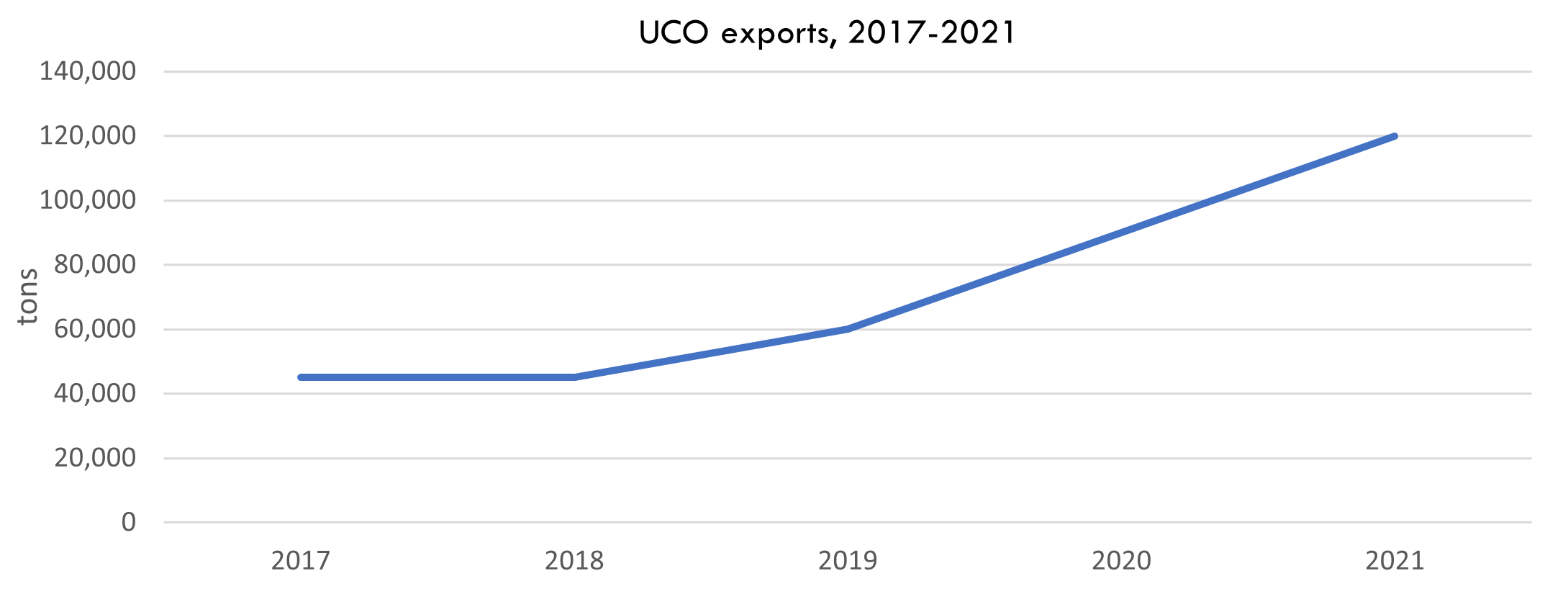
In 2021, Japan annually exported an estimated 120,000 tons of UCO to Singapore, Malaysia and elsewhere. But from there, the cooking oil was often re-exported to Europe to be used as renewable fuel. Finland’s Nesta Oil, a major renewable fuel supplier, is believed to be the largest buyer, although it declined to elaborate on its UCO sourcing.
Source: Japan UCO Business Federation
In addition, due to the recent rise in palm oil prices, some Japanese biomass operators are reportedly eyeing a switch to UCO despite the ¥7/ kWh lower feed-in-tariff rates of the latter. The renewables energy players see this as an affordable alternative feedstock.
And then there are the airline companies, which seek UCO as a potential raw material to make SAF, a bio fuel that mixes biomass with regular jet fuel from crude oil to lower end-user emissions. The push to ‘green’ the aviation industry comes on the back of recent tightening of global regulations for the sector.
Earlier this year, Japan’s government set a goal of replacing 10% of aviation fuel used by domestic firms (which is around 1.3 billion liters) with SAF by 2030. The plans include the creation of a test hub for SAF at Chubu International Airport later this year. And several domestic firms including top oil refiner ENEOS are due to roll out domestic manufacturing of SAF from around 2025 to 2027. But until then, Japan’s top two airlines, All Nippon Airways (ANA) and Japan Airlines (JAL), are reliant on imports or small-scale domestic production projects.
With so many big companies with considerable financial resources showing interest in used cooking oil, the traditional buyers from the agriculture sector are getting squeezed out.
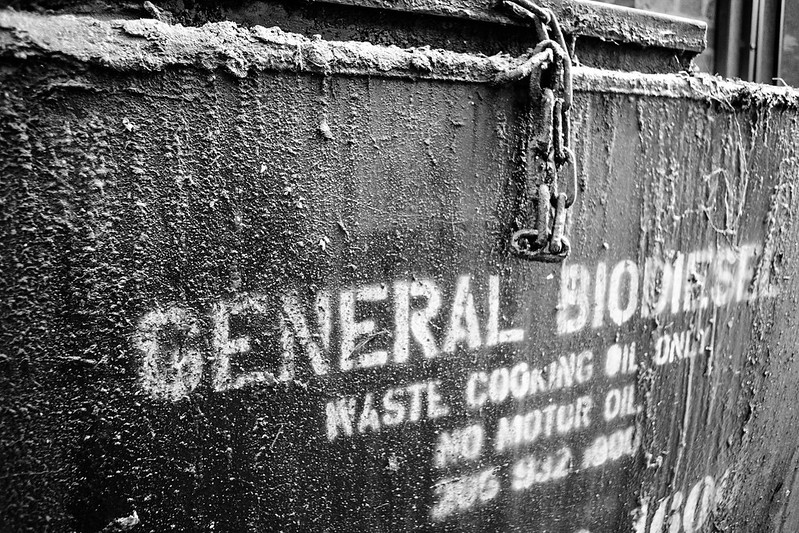
Source: “Waste cooking oil container” by andyleonard is licensed under CC BY-NC-ND 2.0
Animal feed manufacturers and farms are getting hit from left, right and center, said one feed manufacturer official.
“Since UCO is short, we need to buy more expensive raw materials, but it’s difficult to pass on the cost rises to food,” said the official, adding that PM Kishida’s government is driven more by energy security issues with food security in second place. The official said he feels the hierarchy is all wrong.
“If we have no food, we cannot live. Simply put, there will be no question of energy security” if food security is not addressed, he added.
UCO buyers in the energy sector, however, raise their eyebrows at such talk and retort that the feed manufacturers are using the notion of “food security” as a way to pressure suppliers.
Since the Ministry of Agriculture, Forestry and Fisheries has oversight over the UCO supply chain, animal feed is high on suppliers’ priority list. Presently, local UCO buyers in the feed sector are paying much less than overseas buyers, around ¥90-100/ kg. The prices are pegged to the quarterly feedstock price index comprising international grain price benchmarks and exchange rates.
UCO is a cheap resource to raise feed calories in animal feed. (Cow feedstock, which can’t use UCO due to foot and mouth disease control, uses palm oil products mixed with grain.) More oil in feed also reduces methane released from belching, and so its inclusion in animal feed is seen as part of the global effort in reducing agriculture’s GHG emissions.
The feed manufacturers, on the other hand, have argued that vegetable oil products are imports, which in turn raises food security risks at a time when Japan’s food sufficiency is already too low. At the end of the day, local production for the local consumption model needs to spread into all sectors in order to reduce Scope III emissions.
Japan’s clean product
There’s nothing new about the re-use of UCO as fuel in Japan. Since 1997, UCO has been reprocessed as a diesel oil replacement by Kyoto City and a dozen other municipalities. However, the sudden and dramatic rise in global demand due to climate initiatives has been a shock for the agricultural sector, said a METI official.
For decades, UCO was a strong buyer’s market and suppliers were literally begging feed manufacturers to take the oil at any price. This re-use as diesel had limited appeal due to poor cost performance, and before the sustainability boom suppliers had little bargaining power.
In the last two years, the power balance has changed dramatically.
“Japanese UCO was popular overseas because of its high quality,” said Shiomi Masato of Japan’s UCO Business Federation, adding that oil quality used for food production is strictly regulated. In Japan, any company producing UCO needs to fully track the oil until disposal, providing full traceability of the product life cycle.
This strict quality control has played no small part in Japanese UCO’s recent doubling in price, now fetching ¥150/ kg for exports on semi-annual or annual contracts. Shiomi believes overseas buyers can afford to pay high prices since some governments subsidize procurement in an effort to increase renewables. Other experts, however, pointed out that emissions from ship transportation also need to be factored in when determining just how green the fuel truly is.
Suppliers also fear losing robust overseas demand due to unexpected regulatory changes and want to keep their traditional customers happy. In April this year, due to rising costs, Finland lowered the biofuel requirement in road transport fuel to 12% from 19.75%.
Deep-frying to save the planet
As a way to ameliorate conflicts between the energy sector and the animal feed industry, the government has started to look into a new supply source – UCO from homes. It can’t be used for animals due to a lack of traceability; and precisely because of this, some countries don’t recognize UCO from homes as sustainable.
Shiomi estimates 100,000 tons/ year of UCO could be gathered from homes and municipalities. Toward that goal, the MoE has said that it will subsidize companies, universities and municipalities that seek to develop technologies to reprocess UCO from homes into a suitable source of SAF.
If those efforts are successful, that would boost overall Japanese UCO by 25%, to an annual level of around 500,000 tons. This could play a significant role in meeting SAF demand as Japan’s aviation industry tries to green its fuel supply.
However, in the rush to meet SAF demand, Japan’s food security could to some extent be compromised. Finding a balance between the interests of food, power and fuel industries will be crucial if UCO is to continue to play a role in the energy transition.
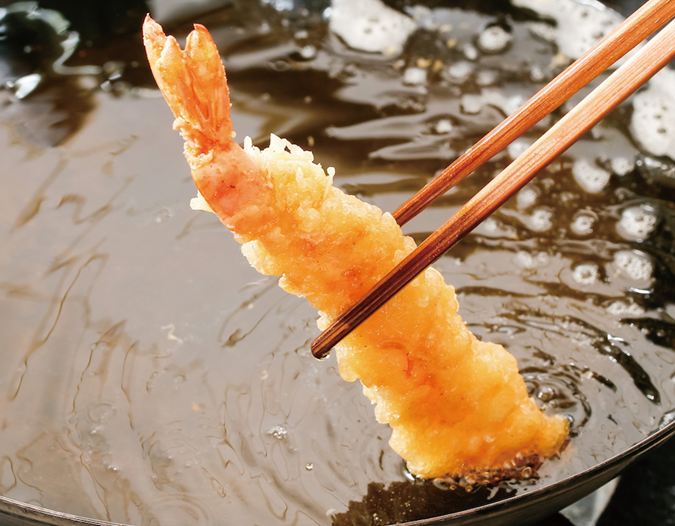
Source: Wonderland Japan WAttention
ANALYSIS
BY DAN SHULMAN
PRINCIPAL
SHULMAN ADVISORY
Renewable Energy Procurement Options in Japan
Anyone looking to procure renewable energy for a business in Japan has four basic options: purchasing renewable energy certificates, signing up for one of the renewable energy plans offered by power retailers, building your own generation capacity, or signing a corporate PPA with a power generator.
Naturally, each option comes with advantages and disadvantages.
Option #1: Purchase of Renewable Energy Certificates
Renewable energy certificates are used by corporate power consumers to offset carbon emissions and to prove they consume “green energy,” at least on paper. The main advantage is the ease of purchase and the flexibility of procured volume.
The downside is that the actual power that the certificate buyer consumes doesn’t necessarily come from a renewable power source. By extension, purchasing certificates doesn’t directly result in new renewable capacity added to the grid.
In Japan, there are three categories of renewable energy certificates:
- non-fossil value certificates issued by METI;
- J-Credits issued by METI, MoE, and MAFF; and
- Green Power certificates issued by certified private companies.
As all generation under the Feed-in Tariff (FIT) scheme results in the creation of non-fossil value certificates, it’s not surprising that this type of certificate is by far the most prevalent. Non-fossil value certificates (NFC) were once the only ones available for purchase by retailers, but the scheme has been broadened to allow end-users to buy certain types of certificates directly, similar to how the J-Credits and Green Power certificates work.
All three certificates are valid for CDP (Carbon Disclosure Project) and SBT (Science Based Targets) schemes. Not all can be used for RE100. In 2020, the Agency for Natural Resources and Energy (ANRE) expanded the scope of NFCs from renewable energy sources as part of the FIT program to all renewable-generated electricity, as well as electricity from other non CO2-emitting sources such as nuclear.
Option #2: Retailers’ Renewable Power Plans
Another easy way to procure green power in Japan is through retailers offering specific “renewables electricity” purchase plans whereby power is bundled with renewable energy certificates. This makes logistics simpler as you won’t have to procure the two separately.
While some retailers have rules that the power they procure must result in new renewable capacity being installed, in general, using this method in Japan does not directly add new renewable capacity to the grid.
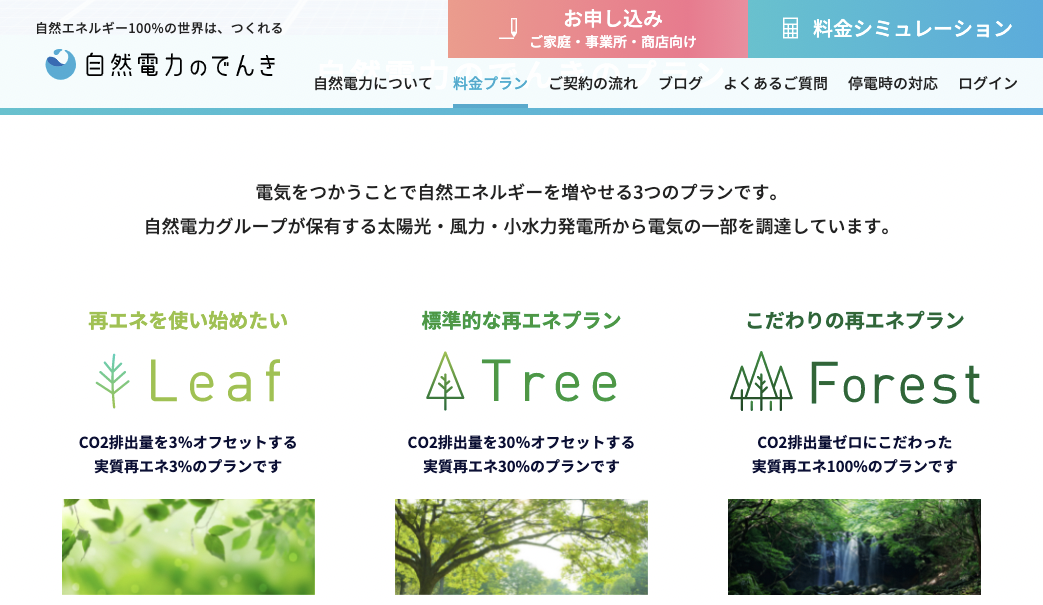
Shizen Energy is one retailer that offers renewable power plans. Customers can choose from plans with renewable certificates covering 3%, 30%, or 100% of consumption.
Option #3: Onsite Self-Generation and Self-Wheeling
The levelized cost of energy (LCOE) for solar in Japan dropped from about ¥40/ kWh a decade ago to below ¥10/ kWh in recent capacity auctions. With the LCOE reaching the price levels of power procured through retailers, installing solar panels on factory rooftops and other similar surfaces is now an economically viable option even for consumers not necessarily looking to utilize self-generation for resiliency purposes.
With the LCOE of solar forecasted to drop to as little as ¥5.8/ kWh by 2030, the popularity of this option is expected to further increase.
Self-generation decreases a company’s dependence on the grid, results in new renewable capacity added into the power generation mix, and requires minimum operating costs. At the same time, it requires a considerable investment up front.
As an example of companies utilizing this method, in 2017, Ikea installed a 1.3 MW solar power plant on the rooftop of one of its retail stores in Aichi Prefecture. It expects the investment to pay for itself within 10 years.
If a company lacks the space to build an onsite power plant then there’s the option of self-wheeling: build the power plant offsite and then deliver the generated power through the public grid for their own consumption.
Two examples of that are Kyocera and Sony. The former self-wheels power from a 150 kW solar power plant to its Shiga factory located two kilometers away, and the latter self-wheels surplus power generated via its 1.7 MW Shizuoka product storage site rooftop solar power plant to one of its factories in Shizuoka.
Option #4: Corporate Power Purchase Agreement (PPA)
The fourth and final major option that companies looking to procure renewable power in Japan have are corporate PPAs. As part of these bilateral agreements, companies agree to offtake power from specific generators for a fixed period of time, typically up to 20 years.
Doing so helps companies minimize the risk associated with power price volatility (PPAs typically have fixed prices), avoid having to pay fixed upfront costs associated with self-generation, and – in cases where a PPA is signed before a certain power plant is developed – add new renewable capacity to the grid.
Corporate PPAs come in three forms: onsite physical, offsite physical, and virtual. While the first two result in physical power supplied from a specific power plant directly to the consumer, virtual PPAs are derivative contracts involving the trade of renewable energy certificates and power via the wholesale market.
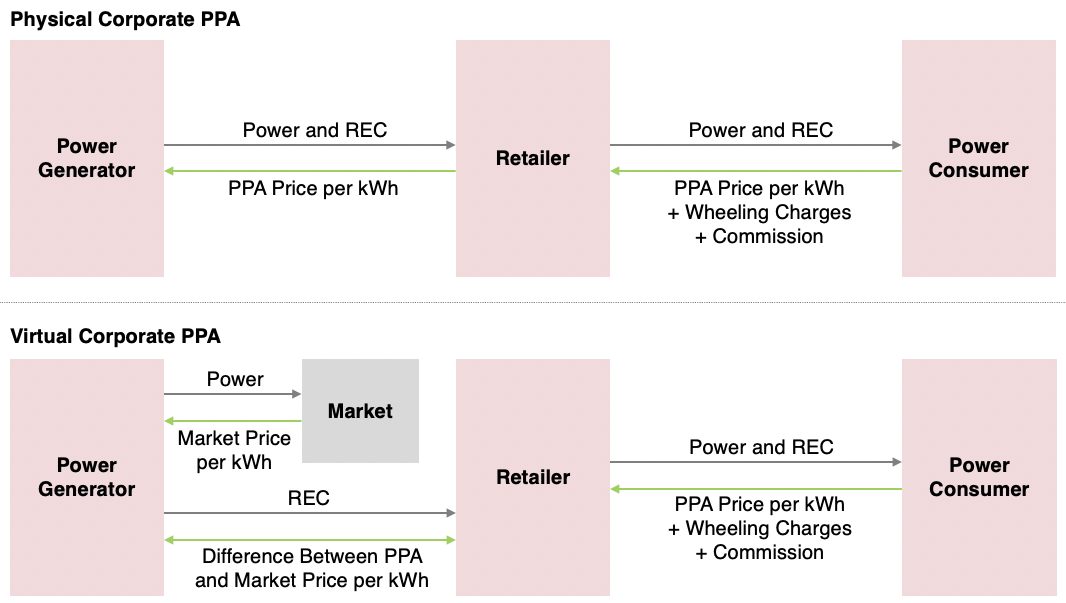
Examples of physical PPAs executed or planned to be executed in Japan include:
- Aeon – Will sign onsite PPA contracts to power 200 of its retail stores over the next couple of years
- Tokyo Gas – Signed a corporate PPA with 65 public elementary and junior high schools; will install 0.06 MW PV panels and storage batteries at each; the schools can also use it as emergency power during outages
- Seven-Eleven – Has an offsite corporate PPA with NTT Anode Energy; NTT will build two solar plants to power 40 convenience stores and one shopping mall
Virtual PPAs have not yet been implemented in Japan.
Choosing the Best Option for Your Company
Overall, the use of renewable energy certificates is by far the most common method of going green in Japan, with corporate PPAs also increasing in popularity.
There are a number of factors to consider before choosing the most appropriate of the four options, such as:
- Level of commitment to go green – Do you want to simply be able to say you use renewable energy, or do you also want your actions to result in new renewable capacity added to the system?
- Participation in sustainability initiatives – Do you need your option to be valid from the point of view of initiatives such as RE100?
- Flexibility of procured volume – Can you commit to a certain, relatively stable level of power consumption for the long term or do you need a degree of flexibility?
- Preferred financial structure – Are you willing to invest considerable resources up front to build your own generation capacity or do you prefer to pay as you go?
GLOBAL VIEW
BY JOHN VAROLI
Below are some of last week’s most important international energy developments monitored by the Japan NRG team because of their potential to impact energy supply and demand, as well as prices. We see the following as relevant to Japanese and international energy investors.
Australia/ CCS
Chevron’s carbon capture and storage (CCS) project at the Gorgon LNG plant in Western Australia has only reached half its capacity during its three years of operation. The project, which is the world’s largest, was designed to store 4 million tons of CO2 annually, but in 2021 it only took in 2 million tons.
Australia/ SAF
Synthetic fuel could replace petroleum and plant-based biofuels by the mid-2030s, according to a Qantas airline official. The airline is investing $50 million to develop sustainable aviation fuel (SAF) that won’t compete with food production (as crop-based biofuel does). This so-called “power-to-liquid technology” could be the holy grail of SAF.
ESG/ Net-zero goals
On the occasion of its first climate report, New York-based financial services company and pension fund TIAA, which has $1.4 trillion in assets under management, announced its net-zero goal by 2050 for its General Account, real estate portfolio and corporate operations. TIAA’s General Account covers about $285 billion in assets.
EU/ Carbon emission permits
Brussels plans to raise €20 billion by selling extra carbon emissions permits. The funds would help EU countries to escape Russian energy dependence. Critics, however, say that more certificates would drive down the carbon price, thereby making it cheaper to use coal, oil and gas, which in turn could discourage the transition to renewables.
EU/ Wind power
Belgium, Denmark, Germany, and the Netherlands say they’ll build at least 150 GW of offshore wind capacity in the North Sea by 2050. Some of this power would be used to make hydrogen and green fuels for heavy industries and transportation.
EVs/ Essential raw materials
Electric vehicles overtook smartphones and PCs as far as demand for cobalt used in lithium-ion batteries, reported the UK-based Cobalt Institute. As sales of EVs and hybrids doubled, the car industry consumed 59,000 tons of cobalt in 2021, 34% of the total. About 26,000 tons of cobalt were used in mobile phones and 16,000 tons in laptops and tablets.
India/ Energy crisis
In a special report, Reuters analyzed why India is facing its worst power crisis in years. A heatwave has hit South Asia, causing widespread power outages due to increased air-conditioning demand. In addition, post-pandemic economic recovery has also pushed power demand to record highs.
Italy/ Gas payments
Eni will open a rubles account in Gazprombank to comply with Kremlin demands for gas sales. Russia accounts for nearly 40% of Italy’s total gas imports. Earlier this month, Poland and Bulgaria decided not to comply and Gazprom soon halted gas supplies to both.
Panama/ SAF
A team of energy companies led by SGP BioEnergy will develop a bio-refinery to produce low-carbon aviation fuel. When completed in late 2026, Biorefineria Ciudad Dorada will be the largest of its kind, annually producing 2.6 billion gallons of sustainable aviation fuel (SAF) and renewable marine diesel.
U.S./ Shale oil
This year, American shale oil companies will have revenues of about $180 billion, according to Rystad Energy. This figure will surpass all that shale drillers have earned over the past 20 years. Industry CEOs, however, are careful about investing in new capacity, and plan to spend the extra cash on dividend payouts, debt reduction, and stock repurchases.
2022 EVENTS CALENDAR
A selection of domestic and international events we believe will have an impact on Japanese energy
| January | OPEC quarterly meeting;
JCCP Petroleum Conference – Tokyo; EU Taxonomy Climate Delegated Act activates; Regional Comprehensive Economic Partnership (RCEP) Trade Agreement that includes ASEAN countries, China and Japan activates; Indonesia to temporarily ban coal exports for one month; Regional bloc developments: Cambodia assumes presidency of ASEAN; Thailand assumes presidency of APEC; Germany assumes presidency of G7; France assumes presidency of EU; Indonesia assumes presidency of G20; and Senegal assumes presidency of African Union; Japan-U.S. two-plus-two meeting; Japan’s parliament convenes on Jan. 17 for 150 days; Prime Minister Kishida visits Australia (tentative) |
| February | Chinese New Year (Jan. 31 to Feb. 6);
Beijing Winter Olympics; South Korea joins RCEP trade agreement |
| March | Renewable Energy Institute annual conference;
Smart Energy Week – Tokyo; Japan Atomic Industrial Forum annual conference – Tokyo; World Hydrogen Summit – Netherlands; EU New strategy on international energy engagement published; End of 2021/22 Japanese Fiscal Year; South Korean presidential election |
| April | Japan Energy Summit – Tokyo;
MARPOL Convention on Emissions reductions for containerships and LNG carriers activates; Japan Feed-in-Premium system commences as Energy Resilience Act takes effect; Launch of Prime Section of Japan Stock Exchange with TFCD climate reporting requirement; Convention on Biological Diversity Conference for post-2020 biodiversity framework – China; Elections: French presidential election; Hungarian general election |
| May | World Natural Gas Conference WCG2022 – South Korea;
Elections: Australian general election; Philippines general and presidential elections |
| June | Happo-Noshiro offshore wind project auction closes;
Annual IEA Global Conference on Energy Efficiency – Denmark; UNEP Environment Day, Environment Ministers Meeting – Sweden; G7 meeting – Germany |
| July | Japan to finalize economic security policies as part of natl. security strategy review;
China connects to grid 2nd 200 MW SMR at Shidao Bay Nuclear Plant, Shandong; Czech Republic assumes presidency of EU; Elections: Japan’s Upper House Elections; Indian presidential election |
| August | Japan: Africa (TICAD 8) Summit – Tunisia;
Kenyan general election |
| September | IPCC to release Assessment and Synthesis Report;
Clean Energy Ministerial and the Mission Innovation Summit – Pittsburg, U.S.; Japan LNG Producer/Consumer Conference – Tokyo; IMF/World Bank annual meetings – Washington; Annual UN General Assembly meetings; METI to set safety standards for ammonia and hydrogen-fired power plants; End of 1H FY2022 Fiscal Year in Japan; Swedish general election |
| October | EU Review of CO2 emission standards for heavy-duty vehicles published;
Chinese Communist Party 20th quinquennial National Party Congress; G20 Meeting – Bali, Indonesia; Innovation for Cool Earth TCFD & Annual Forums – Tokyo; Elections: Okinawa gubernational election; Brazilian presidential election; |
| November | COP27 – Egypt;
U.S. mid-term elections; Soccer World Cup – Qatar; |
| December | Germany to eliminate nuclear power from energy mix;
Happo-Noshiro offshore wind project auction result released; Japan submits revised 2030 CO2 reduction goal following Glasgow’s COP26; Japan-Canada Annual Energy Forum (tentative); Tesla expected to achieve 1.3 million EV deliveries for full year 2022 |
Disclaimer
This communication has been prepared for information purposes only, is confidential and may be legally privileged. This is a subscription-only service and is directed at those who have expressly asked K.K. Yuri Group or one of its representatives to be added to the mailing list. This document may not be onwardly circulated or reproduced without prior written consent from Yuri Group, which retains all copyright to the content of this report.
Yuri Group is not registered as an investment advisor in any jurisdiction. Our research and all the content express our opinions, which are generally based on available public information, field studies and own analysis. Content is limited to general comment upon general political, economic and market issues, asset classes and types of investments. The report and all of its content does not constitute a recommendation or solicitation to buy, sell, subscribe for or underwrite any product or physical commodity, or a financial instrument.
The information contained in this report is obtained from sources believed to be reliable and in good faith. No representation or warranty is made that it is accurate or complete. Opinions and views expressed are subject to change without notice, as are prices and availability, which are indicative only. There is no obligation to notify recipients of any changes to this data or to do so in the future. No responsibility is accepted for the use of or reliance on the information provided. In no circumstances will Yuri Group be liable for any indirect or direct loss, or consequential loss or damages arising from the use of, any inability to use, or any inaccuracy in the information.
K.K. Yuri Group: Oonoya Building 8F, Yotsuya 1-18, Shinjuku-ku, Tokyo, Japan, 160-0004.