Group to develop world’s first offshore ammonia storage hub
Sharp to develop high-capacity zinc-air flow batteries
ANA pledges to phase put fossil fuels from aircraft by 2050
NRA to create parameters for storing nuclear waste underground
ELECTRICITY MARKETS
Toho Gas to install storage battery and start trading its power
Biomass projects nationwide getting scrapped on rising costs; Academics develop new crop that could be a boon for biomass
Osaka Gas to raise electricity prices in November
JERA, MHI to study ammonia-fired power business in Singapore
Nuclear fuel maker to restart output; first one since Fukushima
New Kansai Electric CEO bullish on future of nuclear power
Kansai Electric to shutter thermal plant, switch part to biomass
OIL, GAS & MINING
LNG stockpile remains elevated compared to five-year average
Mitsui to join Russia’s newly formed entity for Sakhalin-2 project
Lithium-ion battery material market to grow by a third in 2025
ANALYSIS
ENERGY EFFICIENT BUILDINGS TO BE VITAL ASPECT OF JAPAN’S NET-ZERO STRATEGY
Recent revisions to Japan’s law on energy efficient buildings are expected to boost efforts to cut energy usage, which in turn will create new opportunities to adopt better technologies and introduce innovative business models. The law changes come amid rising gas and electricity prices that so far have no end in sight. Given the hardship that consumers now face, homeowners and tenants have a strong incentive to use energy more efficiently. In total, buildings account for about 30% of Japan’s energy consumption.
HOW CAN JAPAN OVERCOME OBSTACLES TO EXPANDING ITS RENEWABLE ENERGY SECTOR?
With the power system’s slim reserve margins in the summer and warnings of a potential blackout under grueling temperatures, there’s a lively debate about the roles of renewable energy, fossil fuels, and nuclear energy in Japan’s power mix. While many agree on the long-term shift away from fossil fuels, the exact shape of the future energy system is contested due to several factors unique to Japan.
Guest authors from the University of Tokyo and the The Institute of Energy Economics, Japan (IEEJ) review the challenges and offer potential solutions.
GLOBAL VIEW
Biggest U.S. LNG exporter outlines recovery roadmap. Ukrainian nuclear plant disconnected after shelling. Norway seeks to boost gas output to a record. India plans its biggest clean energy project to date. The IEEFA forecasts coal prices to stay elevated. Details on these and more in our global wrap.
EVENTS SCHEDULE
JAPAN NRG WEEKLY
PUBLISHER K. K. Yuri Group
Events
Editorial Team Yuriy Humber (Editor-in-Chief) John Varoli (Senior Editor, Americas) Mayumi Watanabe (Japan) Wilfried Goossens (Japan, Events)
METI The Ministry of Energy, Trade and Industry
MOE Ministry of Environment
ANRE Agency for Natural Resources and Energy
NEDO New Energy and Industrial Technology Development Organization
TEPCO Tokyo Electric Power Company
KEPCO Kansai Electric Power Company
EPCO Electric Power Company
JCC Japan Crude Cocktail
JKM Japan Korea Market, the Platt’s LNG benchmark
CCUS Carbon Capture, Utilization and Storage
mmbtu Million British Thermal Units
mb/d Million barrels per day
mtoe Million Tons of Oil Equivalent
kWh Kilowatt hours (electricity generation volume)
PM Kishida told the GX Council to design new regulatory mechanisms by year’s end to increase nuclear power by restarting more reactors, prolonging the life of existing nuclear plants, and building new next-gen reactors.
This change of policy was already in the roadmap for innovative nuclear reactors. The PM called for clarifying the specific challenges to achieve this goal by the end of 2022.
Nuclear, like renewables, are essential to realize carbon neutrality, Kishida said, adding that the LNG supply security framework and storage battery strategy will also be established. The Council will propose policies to realize these goals by year’s end.
CONTEXT: It may seem odd that GX Council’s policy research into nuclear, LNG supply security and storage battery expansion overlaps with the work of METI. However, this is nothing new. The Abe and Suga governments created cross-ministry councils that overwrote ministry policies. The dual-structure did, however, lead to political turf wars in the past. Kishida will need to exercise strong leadership.
SIDE DEVELOPMENT: PM calls for discussion on new nuclear plants, restart of seven existing reactors (Mainichi Shimbun, Aug. 24)
SIDE DEVELOPMENT: Komeito supports restarting nuclear plants (Nikkei, Aug. 25)
TAKEAWAY: Kishida’s comments about the need to build new, next-generation nuclear reactors in Japan provoked a flurry of headlines not only in domestic media but across the world. The comments, however, were simply following METI’s announcement of the nuclear roadmap, as reported by Japan NRG Weekly two weeks ago and reviewed in detail in the Analysis section last week.
Of course, a prime minister’s announcement makes the strategy on nuclear seem more definite and the broader media attention is warranted. Still, putting the roadmap into practice will be very difficult and many more steps have to be taken before it can be accepted as a given. Even with recent polls showing that more than 50% of the public support nuclear energy – the first such uptick in over a decade – the path to restarting existing nuclear facilities and building new ones remains littered with challenges.
On the other hand, Kishida’s announcement of restarting another seven reactors by next summer is much bolder. While those units already have a permit to operate, they carry an array of complications. For example, Unit 2 of Onagawa NPP is scheduled to restart only in February 2024, while Units 6 and 7 of Kashiwazaki-Kariwa NPP need to get further NRA approvals due to recently unveiled security. Shimane NPP, like many of the other nuclear facilities, is struggling to gain local government approval for a restart, among other issues.
The key point to watch is how much political capital Kishida and his team are willing to extend to persuading towns and prefectures housing NPPs to accept the restarts. Surely, the biggest battle will be over TEPCO’s Kashiwazaki Kariwa NPP.
The Agency of Natural Resources and Energy, and the Ministry of Land, Infrastructure, Transport and Tourism seek public feedback on a government proposal to expand offshore wind promotion zones by adding three more areas: Murakami-Tainai coast in Niigata Prefecture, Oga-Katagami-Akita coast in Akita Prefecture and Eshima coast in Nagasaki Prefecture. The comment submissions will close on September 8.
METI’s working group on basic power and gas regulatory systems agreed that defining an “emergency” was important in the process of building an effective LNG security framework.
CONTEXT: “Emergency” generally refers to potential supply cuts due to geopolitical tensions, market changes and other causes. The question was, at what point of time should the gas utilities and the government determine they need to involve consumers to curb consumption.
The gas sector is following power utility practices of sharing power and fuel supplies, but some noted that copying power demand response schemes may not be realistic. If LNG tanks are full due to conservation, fresh gas supplies delivered into Japan won’t find storage space.
Some working group members suggested amending the Gas Business Act in the coming parliament session, giving the METI minister the authority to order consumption cuts. However, uncertainties over Sakhalin LNG supplies have made some consumers nervous, and some METI officials appear to be cautious about this hard-liner approach.
Renewable supply-demand balancing costs in 2050 are seen at around ¥353 billion/ year, according to the Organization for Cross-Coordination of Transmission Operators (OCCTO).
By 2050, renewable output is expected to double from the present. OCCTO’s base scenario for this forecast is that power transmission lines won’t expand by 2050 and renewables will suffer output curbs of up to 52%.
At a later date, OCCTO will release another forecast based on a scenario that transmission networks are ramped up.
TAKEAWAY: The cost estimates are very high and that is why METI is now pushing hard to allow the installation of storage battery systems. Already, national and municipal governments are offering three dozen subsidy programs in this space. However, energy storage systems require space and there are limits to their capacities.
Studies by the New Energy Foundation showed that if a 2 GW of storage capacity were added in Kyushu, output curbs would fall by 1% in the region. As of today, the 0.5 GW energy storage system owned by Kyushu Electric is Japan’s largest.
METI’s Green Innovation panel outlined a technology development roadmap to realize carbon neutral air travel. Later in the 2020s, sustainable aviation fuel (SAF) will start to replace jet fuel of all sized aircraft.
Battery-fueled small electric planes (up to 100 passengers, 30-90 minutes flight) will start flying in late 2020’s.
Small planes with hydrogen fuel cells will start flying from 2025 and hydrogen engines will be introduced in about 2035 for bigger planes (100-250 passengers and for 45-150 minute flights).
The Green Innovation fund is supporting development of hydrogen engines and new lightweight materials.
The Global Environment Centre Foundation (GEC) awarded offset credits under the Joint Credit Mechanism framework to Toyota Motor, Tokyo Century, Dole group and Farmland for a total of 52,126 carbon tons.
This was Toyota’s eighth JCM project and 12th for Tokyo Century. Toyota built a 5 MW solar system in Indonesia, earning 3,788 tons; and Tokyo Century a 1.6 MW solar system in Thailand for 595 tons.
A biogas/biomass project of Dole Group in Thailand earned 43,343 tons. Farmland built a 6 MW solar system in Chile for 4,400 tons.
GEC will continue to assess other projects. Applications are open until November.
CONTEXT: Tokyo Century, Toyota, Sharp, Kansai Electric and Marubeni are the top JCM participants, accounting for a quarter of approved projects.
NYK Line, Nihon Shipyard Co. (NSY), ClassNK, and IHI Corp (IHI) agreed on the commercialization of an ammonia floating storage and regasification barge. It would be the world’s first commercial-scale facility of this kind.
An offshore floating platform will be able to receive and store ammonia transported via ship as a liquid, and then regasify the ammonia based on demand, sending it to users such as thermal power plants by pipeline.
TAKEAWAY: The offshore facility eliminates the need to secure land, but construction of underwater pipelines will likely require long regulatory processes as ammonia is defined as a toxic chemical regulated under Marine Pollution Control Act.
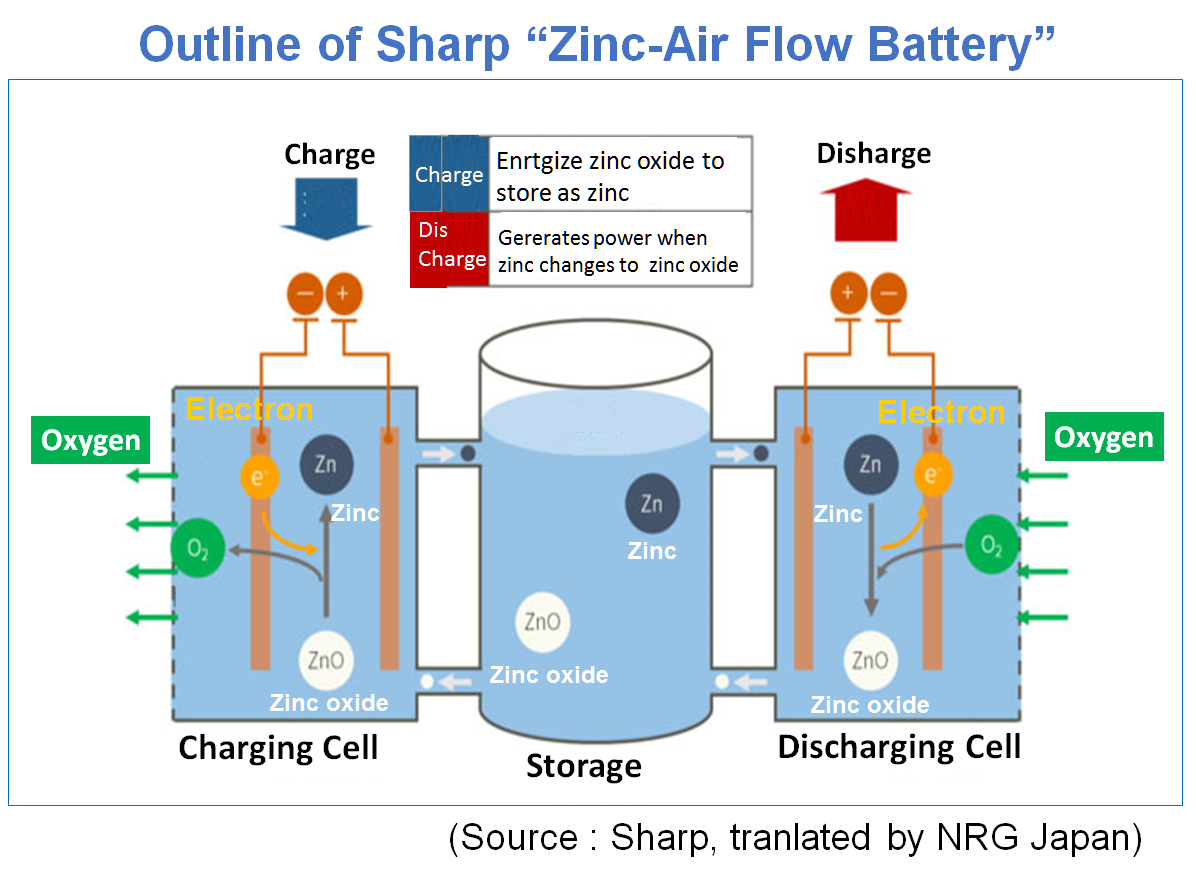
Sharp to develop high-capacity zinc-air flow battery to cut storage costs
(Company Statement, Aug. 24)
Sharp is developing a high-capacity zinc-air flow battery to be released in 2025/26. Such a battery” can store a great amount of electricity generated by variable renewable sources, and discharge it on-demand.
While most conventional batteries share a common part for storage and cell, the zinc-air flow battery is composed of a charging cell, a discharging cell and storage space. The independent units allow large-scale use at low price.
What’s more compared with lithium-ion, zinc is cheaper and easily available.
Sharp’s technology was selected for the MoE’s carbon neutral program.
Sharp has many years of expertise with zinc-air rechargeable batteries.
ANA pledges to phase out fossil fuels by 2050
(NHK, Aug. 22)
ANA Holdings will transition its aircraft to sustainable aviation fuel (SAF) by 2050.
ANA plans to issue “green bonds” to finance expansion of the global SAF supply chain, as well as investing in research to manufacture the fuel domestically.
SAF has a carbon emissions profile around 80% lower than usual fuel.
Researchers say “wind lenses” could be game changer for offshore turbines
(RKB, Aug. 22)
Kyushu University researchers invented a system of circular surrounds that funnel air to arrays of offshore wind turbines.
The “lenses” significantly boost generation capacity, and could be a game changer.
NRA to work on requirement for underground installation of spent nuclear fuel final disposal
(Kyodo News, Aug. 24)
The NRA decided safety requirements for underground disposal of spent nuclear fuel.
Japan has a policy to bury high level nuclear waste (HLW) more than 300 meters underground. The NRA decided to keep HLW away from fault areas cannot a total absence of seismic activity during the last 130,000 years.
With reference to the risk of volcanic eruptions, the NRA also decreed to keep HLW more than 15 km away from volcanoes. Additionally, the NRA noted the need to keep in mind risk from newly formed volcanic mountains.
Toho Gas plans to install a 70 MWH sodium sulfide (NAS) storage battery system for connection to the grid.
The company plans to trade power on the Japan Electricity Power Exchange.
Installation will start this month and the system will be operational in 2025.
TAKEAWAY: 70 MWh is large. In fact, larger than the 51 MWh system of Hokkaido Electric that went operational this year. Lithium-ion batteries are the mainstream technology but NAS and redox flow (RF) systems are gaining traction due to high lithium prices.
NAS batteries use sulfur for cathode, beta-alumina for solid electrolyte and sodium for anode, and do not contain any rare metals such as lithium, nickel or cobalt. NGK Insulators is the world’s sole supplier of NAS storage systems.
A total of around 5 GWh of NAS system capacities have been built in over 10 countries including Japan, South Korea, Germany, the UAE, the U.S. and Canada.
Biomass projects scrapped nationwide on rising costs
(Mainichi Shimbun, Aug. 22)
Japan’s biomass generation industry has been hit by a spate of project cancellations.
Rising prices for imported wood biomass threaten to leave many operations unprofitable.
Nippon Paper informed Yamaguchi Prefecture that it had abandoned plans to build what would have been one of Japan’s largest biomass generation plants.
Nippon Paper said rising fuel costs made the wood-pellet fueled operation unprofitable.
Biomass Fuel also scrapped a plant in Fukui, due to the rising cost of palm kernels.
In November, Osaka Gas will end the high and low limits of fuel cost adjustment. Since electricity costs have passed the high limit, prices will rise for customers.
The electricity price is composed of a basic charge, a power consumption charge and a fuel cost adjustment charge.
TAKEAWAY: Many electric power companies don’t set high limits for fuel cost adjustment systems. As fuel costs have risen sharply, Osaka Gas is following other power companies.
JERA and MHI to study ammonia thermal power business in Singapore
(Denki Shimbun, Aug. 22)
JERA’s subsidiary signed an MoU with Mitsubishi Heavy Industries Asia Pacific and Singapore’s Jurong Port Pte to do a feasibility study for the ammonia thermal power generation.
They’ll study the construction and operation of 60-MW-class ammonia combined-cycle gas turbines, as well as the possibility to supply ammonia to marine vessels.
Singapore is committed to halving CO2 emissions by 2030.
Mitsubishi subsidiary to restart nuclear fuel production after delay
(Nikkei, Aug. 23)
Mitsubishi Nuclear Fuel said its plant passed the NRA’s new, more stringent criteria.
Production will soon recommence, nine months behind schedule.
The plant, which manufactures fuel rod assemblies for pressurized water reactors, is Japan’s first fuel plant to be restarted since the 2011 Fukushima disaster.
New Kansai Electric CEO bullish about nuclear future, calls for more state investment
(Shukan Diamond, Aug. 27)
Mori Nozomu, the newly-appointed CEO of Kansai Electric, said nuclear energy has an essential role to play in achieving Japan’s goal of carbon neutrality by 2050.
When asked about the shape of future nuclear plants, Mori said the utility was currently weighing the pros and cons of small modular reactors and other types.
Referencing the UK’s extension of the FIT scheme to cover nuclear power plants, Mori said Tokyo should establish a similar scheme. There should also be a framework for compensating victims of nuclear accidents, he said.
SIDE DEVELOPMENT: Unit 3 of Takahama NPP begins full operation (Denki Shimbun, Aug. 22)
Kansai Electric to boost DX workforce by 2025
(Nikkei, Aug. 23)
Kansai Electric will hire more data analysts to push forward with digital transformation; from the current 400 to more than 1000 specialists by FY2025.
DX specialists will be trained at KEPCO’s DX sub-company, K4 Digital, which was co-established with Accenture Japan.
Kansai Electric to shut down fossil fuel plant, switch part to biomass
(Denki Shimbun, Aug. 25)
At the end of March, Kansai Electric will shut down two of the three generating units at its gas and oil-fired Aioi thermal power plant in Hyogo.
The remaining generator (Unit 2) will be converted to run on biomass.
Increasing renewables caused the utilization ratio of the Aioi plant to fall below 10%.
Schedule to remove fuel debris from Fukushima NPP postponed for second time
(TV-U FUKUSHIMA, Aug. 25)
Japan and TEPCO said that the removal of fuel debris from units 1, 2 and 3 of Fukushima NPP will be pushed back by as much as 18 months, closer to the end of 2023.
TEPCO has been using robots to investigate the containment vessels where the fuel debris is held. However, in order to maintain safety and reliability, the operation was suspended.
TEPCO also said this won’t affect the overall decommissioning schedule.
A Japan Gas Association official urged removal of destination and sabotage clauses in LNG term purchase contracts to cope with potential supply crunches. The association’s senior managing director, Hayakawa Koki, told METI’s working group on basic power and gas regulatory systems that half of the outstanding contracts signed by Japanese buyers have destination clauses that restrict delivery destination changes.
Sabotage clauses do not allow non-Japanese ships to transport LNG between local ports. Sharing supplies would become easier if these clauses were eliminated, said Hayakawa.
Working group members said the contract parties could negotiate to relax the destination terms aimed to prevent buyers from LNG sales to make profit.
The Minister of Land, Infrastructure, Transport and Tourism could issue orders to allow foreign ships to move cargoes between local ports, they also said.
TAKEAWAY: In 2017, Japan Fair Trade Commission said that destination clauses may conflict with Japan’s Antimonopoly Act, which is milder in tone compared to “potentially infringe the Act”. According to JOGMEC, 23% of fresh contracts signed after 2017 had destination clauses. A lack of follow-up LNG contract probes by the competition watchdog shows it was not easy to establish a link between destination clauses and restraints in competition.
LNG stocks of 10 power grids stood at 2.46 million tons as of Aug. 21, up from 2.4 million tons a week earlier. The end-August stocks in 2021 were 2.43 million tons. The five-year average for this time of year is 1.85 million tons.
Mitsui to join new Sakhalin-2 LNG project entity
(Nikkei, Aug. 20)
Mitsui & Co will join Russia’s new entity that manages the Sakhalin-2 gas project.
Mitsui understood that it won’t be subject to any new, disadvantageous conditions.
Mitsubishi Corp is still considering whether to transfer its stake to the new entity.
Japan’s government wants to remain in the project.
Fuji Keizai forecasts the global lithium-ion battery material market to grow 37% to ¥12.2 trillion in 2025, up from ¥8.9 trillion in 2022.
EV as well as energy storage systems of renewables will continue to drive demand.
Battery materials include nickel, cobalt, manganese, lithium, graphite, separators, electrolytes, and etc.
CONTEXT: The increase in EV battery supply means a decrease in gasoline and oil refining demand, which also means less demand for molybdenum, platinum group metals, and cerium and lanthanum rare earth metals, used as refining catalysts.
ANALYSIS
BY CHISAKI WATANABE
Energy Efficient Buildings To Be a Vital Aspect of Japan’s Net-Zero Strategy
Recent revisions to Japan’s law on energy efficient buildings are expected to boost efforts to cut energy use, which in turn will create new opportunities to adopt better technologies and introduce innovative business models.
The law changes come amid rising gas and electricity prices that so far have no end in sight. Given the hardship consumers currently face, homeowners and tenants have a strong incentive to use energy more efficiently.
In total, buildings account for about 30% of Japan’s energy consumption. Therefore, efforts started years ago to target and decrease the sector’s emissions. For example, it has been mandatory for new construction or renovations of non-residential buildings of mid- and large-size to meet energy efficiency standards.
The impact of energy conservation could be as great as switching much of the power generation system away from fossil fuels. So, the incentives for Japan to make progress in the housing sector is significant.
New amendments
Japan’s housing regulations became even more encompassing in June when Parliament amended the Act on the Improvement of Energy Consumption Performance of Buildings. Beginning 2025, residential and small-size non-residential buildings will also have to meet the same energy efficiency standards. For example, insulation for exterior walls need to be thicker and windows must have double panes.
The amendments to the Act align with Japan’s target to achieve carbon neutrality by 2050. In August 2021, the government set the goal of net zero emissions for all new buildings by 2030, and all new and existing buildings by 2050.
Tokyo has been pushing for energy conservation since 2009 when a study group on net-zero emissions buildings was launched. The government set two criteria: Zero Energy House (ZEH) for residential buildings, and Zero Energy Building (ZEB) for non-residential buildings.
“ZEH” and “ZEB” are used as generic terms for buildings that aim to improve energy efficiency, and do not necessarily mean they’ve achieved zero emissions status. Rather, ZEB and ZEH come in different shades depending on the extent to which energy use is cut and whether a building incorporates renewable energy.
The ZEH and ZEB standards require residential and non-residential buildings to reduce energy use by more than 20% and 50%, respectively. Buildings that produce as much renewable energy as they consume can qualify for the full ZEH and ZEB status.
ZEH, ZEB Categories
Energy Consumption Cut
Energy Independence
(Combined with renewable energy use)
Residential
20% in energy use reduction
(fully) ZEH
100%
Nearly ZEH
75%<100%
ZEH Oriented
20% energy use reduction; No renewables
Non-residential
50% in energy use reduction
(fully) ZEB
100%
Nearly ZEB
75% < 100%
ZEB Ready
50% energy use reduction;
No renewables.
ZEB Oriented
40% energy use reduction (offices, factories, schools)
30% energy use cut (hotels, hospitals, dept stores)
Source: MLIT
Adding hydrogen to the mix
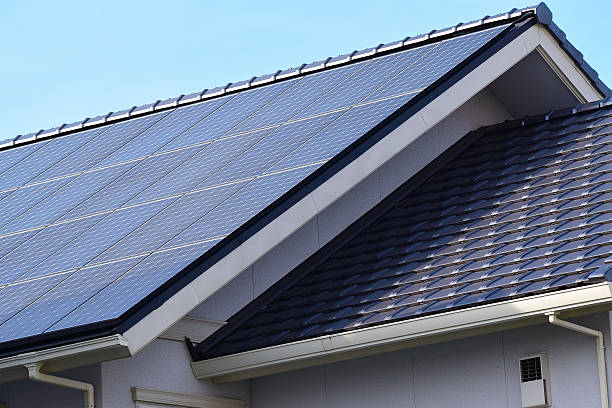
To produce clean energy onsite, many buildings have installed solar panels on rooftops. Builder Shimizu Corporation took a step forward by combining solar power with hydrogen. Last year, its newly built office in Kanazawa city, Ishikawa Prefecture, became the first net-zero emission building in the Hokuriku region.
It installed a system called Hydro Q-BiC to use excess solar power from 140 kW PV panels to produce hydrogen through electrolysis, which will be absorbed in 2,000 kWh metal hydride alloys.
The hydrogen then will be used as electricity through a chemical reaction.
Shimizu says that hydrogen storage alloys are suitable for long-term and large-volume storage. The company is looking into long-term energy management, for example, producing hydrogen in spring and fall when power demand is lower, and using the hydrogen in summer and winter to meet higher demand.
Among the advantages of metal hydride are:
Hydrogen can be compressed to about 1/1000 of its original volume
No self-discharge
Easy to manage since material is not combustible
Fewer regulatory restrictions
Third-party owners and ‘virtual’ solar plants
While solar panels play a key role in achieving the zero emissions status for residential buildings, installation cost remains a concern. As one solution, there’s been an expansion of third-party ownership of PV panels that homeowners can use without paying for installation.
In March 2021, the government broadened the definition of ZEH to include equipment owned by a third-party to qualify for subsidies. In a pilot program the government this year will subsidize third-party owners to install panels on about 200 residential rooftops, providing a million yen each.
Companies are pursuing new business models involving residential buildings amid increasing demand for clean energy certificates. In May, Nomura Real Estate Development and TEPCO Energy Partner (TEPCO’s retail power seller) announced a plan for a 1 MW virtual solar plant that aggregates solar power from the roofs of 300 new homes in the Tokyo area.
A homeowner can use solar power at a fixed rate and receive rooftop panels for free at the end of a 10-year term. TEPCO Energy Partner will sell excess power to retailers and supply Nomura credits and certificates for the rooftop solar’s environmental value.
Insulation first
For many homes, however, the starting point is insulation. Many residential buildings in Japan lack sufficient insulation. They tend to be colder in winter and hotter in summer than homes in other developed countries.
Another item that may have been underutilized is a solar water heater. Local governments less frequently subsidize installing this at home, unlike PV panels. However, solar thermal systems are usually less expensive than solar panels and have a higher energy efficiency rate.
Hot water supply accounts for one-third of energy use at home, and hospitals and hotels also use a lot of hot water. An August 2021 government report on the decarbonization of buildings called for considering more use of solar water heaters to reduce primary energy consumption further.
Energy efficiency is about incremental efforts and there’s not a single winning formula. This means buildings will need to combine different measures currently available. The reward for taking action is not only lower electricity bills, but also better preparedness for blackouts if the building has equipment to produce and store energy.
ANALYSIS
BY MASAHIRO SUGIYAMA AND YUHJI MATSUO
How Can Japan Overcome Obstacles to Adding More Renewables?
With the power system’s slim reserve margins in the summer and warnings of a potential blackout under grueling temperatures, there’s a lively debate about the roles of renewable energy (RE), fossil fuels, and nuclear energy in Japan’s power mix.
Whatever the short-term outcome may be, in the long run the power system will shift away from fossil fuels to clean energy, with RE a main option because potentially it could lead to lower cost and greater availability. But the exact shape of such a system is highly contested primarily because of several factors unique to Japan.
Achieving a 100% RE system is challenging anywhere in the world, but especially in Japan. But how much more difficult? And what are the key barriers, and how to solve these issues?
With these questions in mind, on April 22 we held a panel discussion during a symposium organized by the Japan Society of Energy and Resources. The main issues analyzed were the high costs of RE in the short run, a weak grid system, and the high population density and mountainous terrain.
High costs
First, the costs of renewables capacity are higher in Japan than elsewhere. Since the beginning of the 2010s, the levelized costs of electricity (LCOEs) of solar and wind power have been declining rapidly around the world. However, persistent high costs in Japan slow the adoption of RE and put a burden on consumers.
For example, solar power costs about twice as much as in Germany, according to the Japan Photovoltaic Energy Association (JPEA), which has a roadmap to reduce the cost of solar to the current German level by 2030. But by then, the German price may be even lower.
System integration challenges
While integration issues are a challenge everywhere, Japan’s grid is “weak” when it comes to integration of renewables because of its poor interconnectedness (e.g., the 50 Hz frequency in the east and the 60 Hz frequency in the west), the lack of international interconnection lines, and etc. This can lead to higher integration costs and can be an obstacle to the deployment of RE.
When a large amount of RE is introduced in the grid, costs above the LCOE will be added in the form of grid reinforcement, battery installation, or demand response. Last year, the government estimated the LCOEs of key generating sources for 2030: ¥10.7/ kWh for LNG-fired; ¥11.7 /kWh for nuclear; and ¥11.2 /kWh for solar.
Source: istock
When the system integration cost is taken into account, a different picture emerges for the cost metric called the marginal system LCOEs: ¥10.3 /kWh for LNG; ¥14.5 /kWh for nuclear; and ¥19.9 /kWh for solar.
Thermal power generation, with its high flexibility and adjustability, becomes cheaper than solar PV. Note that these cost estimates depend on the scenario assumption used in the government estimate, and the cost could go up with further introduction of renewables.
The system integration cost depends on a number of factors, including the future cost of demand responses (including vehicle-to-grid or V2G technology), the geographical configuration of renewable development (distributed generation located near demand centers vs. centralized supply transmitted over a long distance), and regulations. Still, there are a number of hurdles. For instance, batteries may continue to be expensive, just like solar, contrary to the global declining trend.
Limited RE potential in a high population-density country In countries with a high population density, the supply of RE may be insufficient to meet total energy demand. Moreover, with a higher population density, renewable capacity will inevitably be placed where residents and stakeholders live. This implies that NIMBY (not-in-my-backyard) issues, including landscape and biodiversity conservation, would be more prominent in Japan in the coming decades.
The Central Research Institute of Electric Power Industry provided a scenario of renewable capacity that takes into account aspects related to social acceptability, including the fishery associations, national parks. In the case of offshore wind, the consideration of such social factors greatly reduces the potential from 1,120 GW, (an estimate by the Ministry of the Environment), to 322 GW, a reduction of roughly a factor of three.
How to use a parcel of land is a societal choice, and none of these values is fixed. Nevertheless, the challenge is deeper in Japan than in the U.S. or Europe. One needs to consider societal implications of wide-scale renewable policy, be it an offshore wind auction or a mandate of solar power installations in an urban area.
What should Japan do?
First, Japan lacks an open database of the costs of RE, and independent assessments of such costs have been rare.
The government presents its cost analysis in the Calculation Committee for Procurement Price. However, no independent and comprehensive analysis exists due to the lack of open data. The government should open renewable-related data such as the cost data of renewables under the FIT scheme.
Such data can be used for independent analyses and assessments of cost trends and policy proposals. These types of analyses would help identify opportunities for cost reductions, particularly with regard to strategic research programs such as the Green Innovation Funds.
Second, in terms of both scenario analysis and societal visions the discussion around a100% RE system should be properly placed in the broader discourse. The purpose of scenario analysis is not to present a single, dominant scenario. Rather, it seeks to inform by presenting a wide range of outcomes.
A better scenario framework would be not to present a single, RE-dominated scenario but to present multiple scenarios with various RE barriers and enablers. A 100% RE scenario should be considered alongside many other scenarios with nuclear, hydrogen, ammonia, carbon capture and storage, among others.
Japan has enacted net zero into law, and the public might be committed, but would the public really be open to a 100% RE system? Here, advocates and stakeholders have to confront the hard reality of public sentiment. A 2021 global survey by Pew Research Center shows that the concern about climate change decreased from 2015 to 2021 in a statistically significant manner only in Japan, among the many surveyed countries.
Of course, public sentiment and understanding can change, and such a change may be desirable. But that is up to the political establishment and public fora. Energy analysts and researchers can help to have an open discussion by clarifying various types of uncertainties, limitations to modeling, and also, inherent value judgments involved in long-term policy analysis.
Overall, Tokyo has an opportunity to take the lead in articulating RE’s future. Independent analysis and open discussion can chart a better course for the role of RE in a high population-density country such as Japan. Since many countries, especially those in Asia, face similar challenges, this is crucial not only in terms of Japan’s energy transition but also in terms of global decarbonization.
Masahiro (Masa) Sugiyama is an Associate Professor at the Institute for Future Initiatives (IFI), the University of Tokyo. His research focuses on scenario analysis of climate action. He is also a lead author of Working Group III’s contribution to the Sixth Assessment Report of the Intergovernmental Panel on Climate Change (IPCC).
Yuhji Matsuo is an Associate Professor at Ritsumeikan Asia Pacific University and Visiting Researcher at the The Institute of Energy Economics, Japan (IEEJ). His research focuses on energy system modeling.
GLOBAL VIEW
BY JOHN VAROLI
Below are some of last week’s most important international energy developments monitored by the Japan NRG team because of their potential to impact energy supply and demand, as well as prices. We see the following as relevant to Japanese and international energy investors.
Brazil/ Solar power
Energy infrastructure company Orion-E and energy trader Bolt plan to build solar power plants with a combined generating capacity of 500 MW. The $628 million project will be located in several states of Brazil.
Canada/ Green hydrogen
Chancellor Scholz and Prime Minister Trudeau signed an agreement in Newfoundland at a site that’ll be the future home of a green hydrogen plant. German energy companies already agreed to import Canadian hydrogen. The first deliveries are expected in three years.
Coal markets
In a new report, the IEEFA predicts that coal prices will stay high due to war-induced changes to trade flows. Also, due to disruptions in shipping schedules, Korea and Japan will buy less Russian coal and instead buy from Indonesia and Australia. Also, the report points out that Indonesian coal companies are not reinvesting in new coal capacity.
India/ Oil
Chennai Petroleum formed a JV with parent company Indian Oil Corp to build a 9 mmt/ year refinery in Tamil Nadu. The $4 billion project will produce liquefied petroleum gas, BS VI quality gasoline, diesel and aviation fuel.
India/ Renewable energy
Clean energy company ReNew agreed with 12 global lenders for a $1 billion loan. The project will include 900 MW of wind capacity and 400 MW of solar PV deployed across three Indian states. This is India’s biggest single-project clean energy deal to date.
Norway/ Gas
Gas production levels will remain high until the end of the decade as Europe ends Russian imports. Norway said that in 2022 it expects to produce 122 bcm of gas, an 8% increase over 2021, and possibly beating a record set five years ago.
Scotland/ Offshore wind power
Renewable energy company Mainstream Renewable Power and Ocean Winds were tapped as the preferred bidder by Crown Estate Scotland to develop an area with the potential to host up to 1.8 GW offshore wind capacity. It will be located off the Shetland Islands.
UK/ Energy crisis
Keith Anderson, head of Scottish Power, one of the Big Six energy suppliers, told government ministers that a plan to protect households from rising energy bills needs funding of more than £100 billion over two years.
Ukraine/ Nuclear power
Rafael Grossi, head of the UN’s nuclear watchdog is “very close” to going to the Russian-held Zaporozhye NPP, Europe’s largest by generating capacity. Media reported that two units were disconnected following Kiev’s shelling of the NPP and nearby area.
U.S./ LNG
Freeport LNG aims to return to 85% of production levels at its Texas plant by December and to achieve full operation by March 2023. One of the largest U.S. LNG exporters, Freeport halted operations in June after an explosion. An over-pressurized pipeline was blamed.
Uzbekistan/ Renewable energy
ACWA Power, the Saudi power generation company, signed energy agreements with the Uzbek government worth a total of $12 billion. These include the development of a 1.5 GW wind farm in Karakalpakstan that could be Central Asia’s largest.
2022 EVENTS CALENDAR
A selection of domestic and international events we believe will have an impact on Japanese energy
January
OPEC quarterly meeting;
JCCP Petroleum Conference – Tokyo;
EU Taxonomy Climate Delegated Act activates;
Regional Comprehensive Economic Partnership (RCEP) Trade Agreement that includes ASEAN countries, China and Japan activates;
Indonesia to temporarily ban coal exports for one month;
Regional bloc developments: Cambodia assumes presidency of ASEAN; Thailand assumes presidency of APEC; Germany assumes presidency of G7; France assumes presidency of EU; Indonesia assumes presidency of G20; and Senegal assumes presidency of African Union;
Japan-U.S. two-plus-two meeting;
Japan’s parliament convenes on Jan. 17 for 150 days;
Prime Minister Kishida visits Australia (tentative)
February
Chinese New Year (Jan. 31 to Feb. 6);
Beijing Winter Olympics;
South Korea joins RCEP trade agreement
March
Renewable Energy Institute annual conference;
Smart Energy Week – Tokyo;
Japan Atomic Industrial Forum annual conference – Tokyo;
World Hydrogen Summit – Netherlands;
EU New strategy on international energy engagement published;
End of 2021/22 Japanese Fiscal Year;
South Korean presidential election
April
Japan Energy Summit – Tokyo;
MARPOL Convention on Emissions reductions for containerships and LNG carriers activates;
Japan Feed-in-Premium system commences as Energy Resilience Act takes effect;
Launch of Prime Section of Japan Stock Exchange with TFCD climate reporting requirement;
Convention on Biological Diversity Conference for post-2020 biodiversity framework – China;
Elections: French presidential election; Hungarian general election
May
World Natural Gas Conference WCG2022 – South Korea;
Elections: Australian general election; Philippines general and presidential elections
Germany to eliminate nuclear power from energy mix;
Happo-Noshiro offshore wind project auction result released;
Japan submits revised 2030 CO2 reduction goal following Glasgow’s COP26;
Japan-Canada Annual Energy Forum (tentative);
Tesla expected to achieve 1.3 million EV deliveries for full year 2022
Disclaimer
This communication has been prepared for information purposes only, is confidential and may be legally privileged. This is a subscription-only service and is directed at those who have expressly asked K.K. Yuri Group or one of its representatives to be added to the mailing list. This document may not be onwardly circulated or reproduced without prior written consent from Yuri Group, which retains all copyright to the content of this report.
Yuri Group is not registered as an investment advisor in any jurisdiction. Our research and all the content express our opinions, which are generally based on available public information, field studies and own analysis. Content is limited to general comment upon general political, economic and market issues, asset classes and types of investments. The report and all of its content does not constitute a recommendation or solicitation to buy, sell, subscribe for or underwrite any product or physical commodity, or a financial instrument.
The information contained in this report is obtained from sources believed to be reliable and in good faith. No representation or warranty is made that it is accurate or complete. Opinions and views expressed are subject to change without notice, as are prices and availability, which are indicative only. There is no obligation to notify recipients of any changes to this data or to do so in the future. No responsibility is accepted for the use of or reliance on the information provided. In no circumstances will Yuri Group be liable for any indirect or direct loss, or consequential loss or damages arising from the use of, any inability to use, or any inaccuracy in the information.
K.K. Yuri Group: Oonoya Building 8F, Yotsuya 1-18, Shinjuku-ku, Tokyo, Japan, 160-0004.
NEWS
・PM Kishida confirms plan to build new nuclear reactors,
while also seeking life extension of existing units, more restarts
・Govt. due to expand number of offshore wind promotion zones as it opens the proposals up for public comment
・Gas lobby urges govt. to help remove LNG contract clauses, allowing local companies to share supplies in times of emerge