Japan revises hydrogen strategy, seeks sixfold increase in the fuel’s supply by 2040
SBI and partner to set up a private exchange for trading carbon credits in Japan and abroad
LNG still exposed to supply risks as China’s demand rises: says Tokyo Gas president
ENERGY TRANSITION & POLICY
Govt publishes white papers on energy and environment
Panasonic to boost battery output for Tesla Gigafactory
INPEX, JIC, DBJ invest in U.S. lithium battery startup
MOL sets up decarbonization tech company in the U.S.
Group tells govt expected cost level for e-methane
Itochu partners with UK’s CFP on emissions trading
Itochu, Osaka Gas launch grid-scale battery project
KHI develops cargo system for large hydrogen carriers
ELECTRICITY MARKETS
Goldman, others to enter Japan’s power trading market
TOCOM: Electricity futures volume decline 38%
Govt issues power saving request for Tokyo
JERA begins hydrogen co-firing at gas-fired plants in U.S.
Proposal to cover maintenance costs of backup generators
JMU starts test for production of floating offshore wind turbines
Renova, Mitsubishi to bid for onshore wind farm in Hokkaido
Kagoshima seeks public feedback on Sendai NPP extension
OIL, GAS & MINING
Kansai Electric plans LNG-fueled vessel to transport fuel
Tightening of LNG supply and demand expected by 2025
S&P proposes new JKM forward price index for LNG
Rengo vows it will stop using coal by 2027
ANALYSIS
VENTURE COMPANIES RUSH TO CREATE NEW TOOLS TO CALCULATE CO2 EMISSIONS
Startups are eager to equip Japanese and international businesses with the tools to measure and subsequently reduce their carbon emissions. In just the last two years, several firms have formed a new market for software tools that claim to be able to identify Scope 1, 2 and 3 emissions for clients, while also presenting data in an easy-to-grasp manner. Based on such strong domestic demand, the market for CO2 measurement and visualization tools is booming in Japan.
ENERGY JOBS IN JAPAN: DOES THE ‘LIFETIME EMPLOYMENT’ MENTALITY STILL EXIST?
Japan is famous for its lifetime employment system. Companies have traditionally stood for social protection of employee wellbeing, offering a job for life. In return, workers pledged a level of loyalty virtually unseen in other countries. But this traditional system is eroding in the face of international companies that offer new opportunities to energy sector professionals. Both Japanese and international companies need to be aware of the changing labor market attitudes.
New Energy and Industrial Technology Development Organization
kWh
Kilowatt hours (electricity generation volume)
TEPCO
Tokyo Electric Power Company
FIT
Feed-in Tariff
KEPCO
Kansai Electric Power Company
FIP
Feed-in Premium
EPCO
Electric Power Company
SAF
Sustainable Aviation Fuel
JCC
Japan Crude Cocktail
NPP
Nuclear power plant
JKM
Japan Korea Market, the Platt’s LNG benchmark
JOGMEC
Japan Organization for Metals and Energy Security
CCUS
Carbon Capture, Utilization and Storage
OCCTO
Organization for Cross-regional Coordination of Transmission Operators
NRA
Nuclear Regulation Authority
GX
Green Transformation
NEWS:ENERGY TRANSITION & POLICY
Japan revises hydrogen strategy, seeks sixfold increase in hydrogen supply by 2040
(Government statement, June 6)
METI unveiled a revised Basic Hydrogen Strategy that will promote hydrogen use and increase the annual supply sixfold, reaching 12 million tons of hydrogen by 2040.
Over the next 15 years, Japan plans to invest more than ¥15 trillion from both public and private sources to support the development of hydrogen-related supply chains. The state sees its contribution as around ¥6-8 trillion.
The revised strategy mentions key areas such as water electrolysis tech, fuel storage batteries and transport tankers. It sets a target for Japanese firms at home and abroad to create 15 gigawatts of electrolyzer capacity by 2030, from less than 1 GW now.
Hydrogen target costs are ¥30/ Nm3 by 2030 and ¥20/ Nm3 by 2050. For ammonia, less than ¥20/ Nm3 by 2030.
It will also support synthetic fuels and ammonia produced using hydrogen, seeking partnership with Australia and the Middle East to set up global supply chains.
CONTEXT: Japan unveiled its first Basic Hydrogen Strategy in 2017. The revised strategy calls to increase hydrogen supply from the current 2 million to 3 million tons by 2030, reaching 20 million tons in 2050. Since the hydrogen industry is still in its initial phase in Japan, there are many steps to take before commercialization, especially in legislation and in infrastructure.
TAKEAWAY: Japan was one of the early countries to adopt hydrogen as a clean source of energy, to fill in the gap of lagging behind decarbonization strategies in the fossil fuel sector. However, in the past several years, due to lack of detailed action plans, other countries and regions moved ahead at faster paces. Now that Japan has finally revised its hydrogen strategy to keep up-to-date with numerical targets in sight. It may be late, but it is never too late to take actions towards achieving net zero emissions by 2050.
Japan’s SBI to set up carbon emissions exchange
(Nikkei Asia, June 7)
SBI Holdings plans to open an exchange for trading carbon credits in Japan and abroad, following a similar move by the Tokyo Stock Exchange. Called Carbon EX, it will be operated by a JV formed by SBI and Asuene.
The goal is to increase price transparency and facilitate trading of CO2 emission rights. Renewable energy companies and forest conservation projects will sell credits, while companies unable to reduce emissions can buy them.
Carbon EX will handle both public-sector and private-sector credits, with a focus on international certification organizations like Verra.
TAKEAWAY It’s uncertain how many companies will participate in the TSE’s exchange for trading carbon credits. One of the main reasons why companies hesitate is the limited number of tradable credits, which under the TSE will be restricted to domestic ones (mainly J-Credit and JCM). Opening the exchange to international credits may be more attractive.
For more details about SBI’s partner, Asuene, see this week’s Anaysis section.
Govt publishes white papers on energy, environment
(Japan NRG, June 9)
ANRE published the 2023 Energy White Paper that analyzes energy in April 2021 to March 2022, and MoE the Environment White Paper. It covered Fukushima’s recovery progress, energy security and green transformation initiatives.
Japan’s energy consumption total was up 1.6% YoY, rising to 12,276 petajoules; but electricity’s share of the consumption remained flat at around 27%.
MoE published the White Paper on Environment, Circular Economy and Biodiversity.
Panasonic to boost EV battery output at Tesla’s Gigafactory in Nevada
(Nikkei Asia, June 6)
Panasonic will expand its EV battery production at Tesla’s Gigafactory in Nevada. Tesla requires increased battery supply, and told Panasonic that it will purchase all the batteries it produces.
Panasonic will add a 15th line by 2025, resulting in a 10% rise in annual production.
Panasonic previously announced an investment in a battery factory in Kansas and plans to quadruple EV battery production capacity by 2030.
CONTEXT: Tesla’s need for more batteries is also driven by U.S. tax credits that incentivize EV and battery manufacturing. Panasonic remains cautious about further investments in Nevada due to the crowded EV market in the U.S.
INPEX, JIC, DBJ, Rakuten invest in U.S. lithium battery startup
(Company statements, June 5)
Six Japanese companies including INPEX, JIC Venture Growth Investments, Development Bank of Japan, and Rakuten Capital invested in the U.S.-based TerraWatt Technology which develops lithium-ion batteries. There are no details on the amount.
Founded in 2020, TerraWatt recently completed a funding round to finance commercialization and mass production of lithium-ion cells.
MOL sets up company in the U.S. to focus on decarbonization tech
(Company statement, May 31)
Mitsui O.S.K. Lines (MOL) set up a company in the U.S. called MOL Switch LLC, which over the next three years will invest $100 million in startups working on decarbonization tech.
MOL Switch will specifically invest in climate tech, which encompasses clean energy, carbon removal, and storage battery tech.
MOL Switch is based in California and plans to open an office in August.
TAKEAWAY: This follows MOL’s collaboration with the U.S. startup, Amogy, that was announced in April to develop ammonia-powered generation tech for vessel usage. The goal is an ammonia-fueled vessel operational as early as 2024.
E-methane costs seen at ¥212/ m3: Chubu group
(Japan NRG, June 6)
Synthetic methane (e-methane) production costs are about ¥212/ m3, says a study by Aisin, Denso and Toho Gas, which run pilot projects in the Chubu area.
Carbon captured at the Aisin and Denso plants is sent by truck to a methanation plant. Carbon is processed into methane using imported hydrogen at ¥30/cubic meter.
Local e-methane production costs are likely to be ¥90/ m3 more than imports.
CONTEXT: The group presented its analysis to METI.
E-methane costs breakdown
Hydrogen import, storage, etc.
¥160
Carbon capture, transport, etc.
¥34
Methanation
¥18
Total
¥212
Itochu partners with CFP on emission trading
(Company statement, June 9)
Itochu announced a partnership with London-based CF Partners (CFP), an environmental solutions company. The goal is to expand emissions trading.
Founded in 2006, CFP specializes in emissions credit trading, with annual trading of over 2.5 billion tons, and about $3 billion in sales in 2022.
Itochu will be the sales channel for emissions credits procured and held by CFP, with a focus on Japan and other Asian countries.
CONTEXT: This alliance anticipates the EU’s Carbon Border Adjustment Mechanism (CBAM), which will levy charges based on carbon emissions of certain imports such as steel, aluminium, cement, and fertilizer into the EU. CBAM begins in 2026.
Itochu, Osaka Gas and Tokyo Century launch grid-scale battery project
(Company statement, June 7)
Itochu, Osaka Gas, and Tokyo Century set up Senri Energy Storage, a JV that seeks to implement a grid-scale battery plant project.
The companies will install large storage batteries on unused land owned by Daigas Group (Osaka Gas). The site will use lithium-ion batteries with an 11 MW output and a 23 MWh capacity.
Construction begins in the first half of 2023, with operations to begin in 2025.
KHI developed a cargo containment system for large liquefied hydrogen carriers
(Company statement, June 6)
Kawasaki Heavy Industries completed development of a cargo containment system (CCS) designed for large liquefied hydrogen carriers.
The efficient transport of hydrogen in large quantities requires it to be liquified at very low temperatures (-253°C), reducing volume significantly. Kawasaki’s CCS was specifically designed for large carriers.
KHI built a test tank that resembles the planned CCS for use in large carriers; to be equipped with four tanks, each with a 40,000 m3 capacity.
CONTEXT: These efforts are part of a demo project for the commercialization of a liquefied hydrogen supply chain that will run until 2030.
JFE Steel teams up with Exxon Mobil to develop high-pressure hydrogen pipelines
(Nikkei Asia, June 9)
JFE Steel will develop high-pressure hydrogen pipeline tech to shape industry standards amid U.S. demand increases. ExxonMobil will have the tech certified under the U.S. industrial standards.
R&D funds for the project in FY2023 will be $180,000, partly subsidized by the Nippon Foundation, a grant-making organization.
The high-pressure pipelines will be designed to carry large amounts of hydrogen long distances, or roughly 200 times the average atmospheric pressure at sea level, withstanding pressure of 20 megapascals. If successful, this will be a world first.
INPEX awarded A$1 million for hydrogen study in Australia
(Company statement, June 7)
INPEX’s local subsidiary was awarded an A$1 million grant from the Australian govt to do a feasibility study on a clean hydrogen market in Darwin. With the Darwin Clean Hydrogen Hub, INPEX will explore clean hydrogen solutions with Xodus and seek to establish hydrogen supply chains with CSIRO.
The 18-month study focuses on demand, hydrogen production infrastructure, raw materials (natural gas), carbon capture and storage (CCS) capacity, bulk and distributed storage, and the domestic and global hydrogen supply chain.
ENEOS, JERA to study hydrogen quality standards
(Company statement, June 9)
ENEOS and JERA will do a study to establish hydrogen quality standards to be used to build hydrogen supply chains. NEDO will fund the project.
ENEOS will explore hydrogen quality criteria for power generation, steelmaking, heat use, methanation, etc; JERA will analyze how aromatic compounds impact the power generation process. The study will be completed by March 2026.
MHI to cooperate with Malaysia’s TNB Genco on hydrogen and ammonia
(Company statement, June 7)
Mitsubishi Heavy Industries (MHI) and Malaysia’s TNB Power Generation signed a MoU to foster collaboration on clean energy tech.
The partnership will focus on three key areas: the hydrogen and ammonia value chain, low carbon fuel co-combustion tech in thermal plants, and CO2 capture.
TAKEAWAY Malaysia aims to achieve carbon neutrality by 2050. Collaborations between Japan and Asian countries on hydrogen and ammonia are on the increase, especially under the auspices of AZEC.
Mitsubishi and WinGD to develop ammonia fuel supply system for marine engines
(Company statement, June 5)
Mitsubishi Shipbuilding (MS) signed a MoU with Winterthur Gas & Diesel (WinGD) of Switzerland to conduct technical studies on a fuel supply system that utilizes ammonia for large, low-speed two-stroke marine engines.
WinGD is developing engines that run on ammonia, and MS will collaborate to explore new technologies for the ammonia fuel supply system.
TAKEAWAY In late May, MS successfully developed an ammonia fuel supply system to Japan Engine Corporation. It allows conducting large-scale tests for a low-speed two-stroke marine engine using ammonia fuel at the MHI Research & Innovation Center in Nagasaki.
JERA, Nippon Shokubai, and Chiyoda develop new ammonia cracking tech
(Company statement, June 9)
JERA, Nippon Shokubai, and Chiyoda are developing new ammonia cracking tech as part of NEDO’s program to build a Competitive Hydrogen Supply Chain to improve efficiency and reduce ammonia cracking costs.
The three companies will utilize their knowledge and experience to improve ammonia cracking to extract hydrogen efficiently so that costs drop by FY2025.
Chiyoda will design a bench-scale testing facility and scale up the production. Nippon Shokubai will develop a catalyst, and JERA will evaluate the performance.
Asahi Kasei and Mitsui establish a supply system for bio-methanol in the U.S.
(Company statement, June 8)
Asahi Kasei and Mitsui will set up a supply system for bio-methanol made in the U.S.
Mitsui will acquire renewable natural gas (RNG) from local waste landfills and utilize the mass-balance approach to make bio-methanol via Fairway Methanol, a local JV.
This project allows Asahi Kasei to procure bio-methanol produced by Mitsui and use it in production of various engineering plastics.
Major oil companies begin domestic production of SAF
(Denki Shimbun, June 7)
Major oil companies plan to conduct demonstration projects of sustainable aviation fuel (SAF) at existing refineries to verify the feasibility and scalability. The oil companies will repurpose certain refining units and incorporate new processing technologies.
The demo projects will test the production process, evaluating the quality and performance of SAF, and assessing environmental impact. The oil companies will also explore partnerships with airlines, airports, and other stakeholders to promote the use of SAF in the aviation industry.
CONTEXT: SAF is an alternative aviation fuel made from sustainable feedstocks such as plant oils, waste oils, and agricultural residues. It has the potential to significantly reduce GHG emissions compared to conventional jet fuel.
SIDE DEVELOPMENT: NEDO project develops ASTM-compliant SAF, a first for Japan (Government statement, June 7)
Environment Energy at the University of Kitakyushu, and HiBD Research Institute successfully produced sustainable aviation fuel (SAF) that complies with the international standard ASTM D7566 Annex 2. This is the first biojet fuel that matches Annex 2 from a R&D project launched by NEDO
This HiJet process uses a new catalyst to produce the SAF from used cooking oil and animal fats at lower pressure and temperature.
Environment Energy plans to provide SAF, bio-naphtha, and biodiesel to customers in partnership with oil refining companies.
Asian Development Bank approves its first JCM project in Indonesia
(Government statement, June 8)
The Asian Development Bank approved the Mount Patuha geothermal plant project in Indonesia, the first bank’s project that earns Joint Crediting Mechanism offset credits.
Construction will be funded by the Japan Fund for the JCM.
The project is expected to cut 274,000 tons/ year of carbon.
NEWS:POWER MARKETS
Goldman to enter Japan’s power trading market; Mizuho mulls the same
(Bloomberg, June 6)
Goldman Sachs is setting up a trading desk to handle Japanese electricity contracts. The bank is the latest to show interest in the power sector in Japan as the government pushes more participants to hedge exposure to volatile energy prices.
One of Japan’s largest banks, Mizuho Financial Group, is also considering the same move. The bank is keeping a close eye on the market.
CONTEXT: Japan’s power market was liberalized in 2016, which led to an influx of new entrants keen to retail and trade electricity. Since 2020, two trading platforms for electricity futures contracts have been set up. The biggest of them, run by the European Energy Exchange, said its trading volumes surged 400% in April, YoY.
TAKEAWAY: There has been a steady increase in the number of new entrants to Japan’s power market in the last year or so, with many international investment, energy and trading companies mulling the idea. Quite a few have committed, but the arrival of Goldman and one of the domestic mega-banks would boost the prestige and liquidity of the Japanese derivatives market considerably. Also, several large overseas power traders are about to enter the market.
TOCOM: Electricity futures decrease by 38% on diminishing hedging
(Exchange report, June 7)
The Tokyo Commodity Exchange (TOCOM) said the volume of electricity futures contracts for April saw a significant decline of 38% compared to the previous month. This indicates a weakening demand for hedging among market participants.
The reduced demand for hedging is due to various factors, including stabilizing electricity prices, favorable weather conditions, etc. Thus, market participants are less inclined to actively engage in hedging activities using electricity futures contracts.
CONTEXT: TOCOM is one of two exchanges in Japan that handles the trading of electricity futures contracts.
TAKEAWAY: Volumes will fluctuate with the season and price volatility, but on the whole the trend for electricity futures in Japan is definitely one of growth. Currently, the larger of the two exchanges for power futures in Japan is the European Energy Exchange (EEX), which claims to have a more than 90% market share in the segment. The EEX said that its volumes jumped almost 400% in April YoY.
Govt issues power saving request for Tokyo
(Kyodo, June 9)
The govt will request households and businesses in the Tokyo area to save electricity during July and August due to a perceived shortage of power supply in the peak-demand summer months.
CONTEXT: The reserve power capacity ratio in the metropolitan area in July could drop to 3.1% in case of extremely hot weather.
Since electricity demand could swing about 3% from the anticipated level, it is necessary to secure at least a 3% reserve, according to METI.
The govt issued a nationwide power saving request from July to September last year, but the latest request only targets the area served by TEPCO.
JERA to begin co-firing hydrogen in U.S. gas-fired power plants
(Denki Shimbun, June 8)
After a six-month delay, JERA began co-firing hydrogen at a gas-fired power plant in the U.S., with plans to achieve a ratio of 40%.
Unit 6 of the 972-MW Linden gas-fired power plant in New Jersey mixes a by-product gas that includes hydrogen supplied from nearby oil refineries, with natural gas to generate electricity.
This is JERA’s first project to implement hydrogen co-firing in a thermal power plant; the knowledge gained from this project can be applied to power plants in Japan.
CONTEXT: JERA holds a 50% stake in Linden Cogeneration Holdings, the operating company of the power plant. The upgrade of the power plant started in October 2021, and was slated to be completed by December 2022, but problems with materials caused the six-month delay.
TAKEAWAY: In Japan, JERA has focused on co-firing ammonia at coal power plants. In the U.S., it is exploring the pairing of hydrogen with natural gas. The company has said in the past that the fuel choices are based on supply options and cost.
Proposal to cover maintenance costs of backup power sources with transmission fees
(Denki Shimbun, June 8)
There is a growing demand for proper implementation of “mid-term adjustments” to reflect additional costs incurred during the regulatory period of the revenue cap system for transmission fees, which started in April and will continue until FY2027.
Mid-term adjustments target unexpected costs that were not accounted for when the revenue cap was established, and therefore cannot be managed as is by transmission and distribution companies (T&D).
A proposal was made to cover the maintenance costs of backup power sources with transmission fees. If this proposal is approved, it will increase expenses for T&D operators. This should allow T&D firms to apply for an increase in the revenue ceiling, based on changes in energy policy or other circumstances.
CONTEXT: If the makeup of the backup power supply system is implemented as currently proposed, the Electricity and Gas Market Surveillance Commission (ESG) will be responsible for overseeing the system and determining the need for mid-term adjustments. The commission’s views indicate that adjustments in the next regulatory period will be based on discrepancies between estimated and actual costs in the current period.
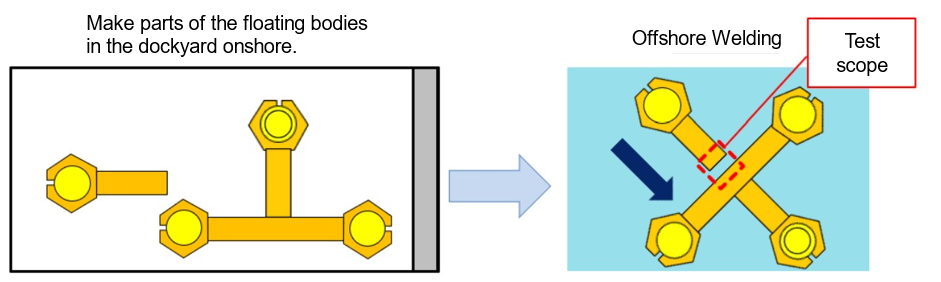
JMU starts test for production of floating offshore wind turbines
(Company statement, June 5)
Japan Marine United (JMU) began a mock-up test of floating offshore wind turbines to establish a better way to bond the floating body at sea. The project is in collaboration with Nihon Shipyard, K-LINE Wind Service, and Toa Construction, and is funded by NEDO’s Green Innovation Fund.
As offshore wind turbines get bigger and taller, few factories can assemble them in Japan. This mock-up test will determine if components can be welded together on water. The companies are preparing a half-size mock-up and will test it in July.
TAKEAWAY: Japan has a goal to procure 60% of offshore wind turbine costs domestically. If this experiment succeeds, companies can produce and assemble floating turbines in Japan, and imports can be curtailed.
Renova and Mitsubishi Material to bid for 110 MW onshore wind in Hokkaido
(New Energy Business, June 8)
Renova and Mitsubishi Material will bid in a tender for the 113 MW Imakane-cho Sumiyoshi Miyajima wind power project in Hokkaido.
The companies published an environmental assessment report for public review. The project will consist of 18-27 turbines, each with 4.2 MW to 6.1 MW capacity.
Construction begins in May 2028 and operation tests start October 2030.
Kagoshima Pref to solicit public feedback on Sendai NPP extension
(Japan NRG, June 6)
Kagoshima Pref seeks public feedback on Kyushu Electric’s plans for a 40-year life extension of Units 1 and 2 of Sendai NPP. The prefecture did a safety review of the reactors from January 2022 to April 2023. It plans to make demands to the utility and has opened the demands for public consultation.
The prefecture will request the NRA to upgrade methodologies to review extension plans. The letter is open to public feedback from June 15 to July 14.
CONTEXT: Sendai’s Unit 1 will be 40 years old in July 2024 and Unit 2 will be 40 in November 2025. The new GX Decarbonization Power Supply Act allows NPPs to extend operation beyond the 40-year limit, provided the NRA approves. Kyushu Electric has applied for extension of the two Sendai units.
TAKEAWAY: The NRA will require more manpower for the increases in NPP restarts and extension requests. This may result in subtle changes in NPP reviews as the agency may streamline processes that have no safety impacts.
Price of SoftBank’s electricity now 10% higher than major power companies
(Nikkei, June 2)
After Japan’s major power companies raised rates in June, new entrants followed their lead. SoftBank, the No. 2 power retailer among new market entrants, raised rates to a level 10% beyond that of major power utilities.
New entrants want to improve profits and decided to follow the majors.
Tokyo Gas to hike low-voltage power rates effective Sept
(Company statement, June 9)
In September, Tokyo Gas will raise rates of low-voltage power services to compensate for higher spot prices and transmission network fees. Monthly charges to an average household subscribing to the Basic Plan are expected to rise 1.9% or by ¥140.
CONTEXT: Tokyo Gas is the largest power retailer outside the major regional EPCOs. The company sold 52.6 GWh of low-voltage power in January 2023.
KEPCO releases results of its first output control initiative
(Yomiuri Shimbun, June 6)
Kansai Electric released the preliminary results of its first “output control” initiative, which involves instructing certain solar and wind power companies to temporarily suspend power generation on June 4 .
These operators halted output, resulting in a reduction of power generation between 330 MW and 570 MW; implemented between 9:00 am and 1:30 pm.
On June 3, KEPCO estimated a need to control an output range of 420 MW to 520 MW to address a potential imbalance between power supply and demand.
SBI Shinsei Bank makes ¥8.4 billion Green Loan to GPSS Holdings
(Company statement, May 31)
SBI Shinsei Bank made a “Shinsei Green Loan” of ¥8.4 billion to a subsidiary of GPSS Holdings, which has interests in solar, wind, hydropower, and biogas.
The funds will help build solar projects (34 solar plants, each 1 MW) and expand renewable energy annually by 34.2 MWh (16-year average).
Announcement of Commercial Operation Start
Period: June 4 – 10, 2023
Project Owner / Operator
Project Name
Location
Type
Capacity
Renova
Hitoyoshi Solar Power Station
Hitoyoshi, Kumamoto
Solar PV
20.8 MW
Eurus Energy
Hamasato Wind Farm
Northern Hokkaido
Wind power
47.5 MW
Eurus Energy
Kawanami wind Farm
Northern Hokkaido
Wind power
80 MW
Saibu Gas / Eneseed Co.
Yamaguchi Hofu #2 Solar Power Station
Hofu, Yamaguchi
Solar PV
2.5 MW
Saibu Gas / Eneseed Co.
Yame #1 Solar Power Station
Yame, Fukuoka
Solar PV
1.4 MW
Saibu Gas / Eneseed Co.
Yame #3 Solar Power Station
Yame, Fukuoka
Solar PV
800 kW
Sanwa Dengyo
The 114 Bank Solar Power Station
Takamatsu, Kagawa
Solar PV
641 kW
Atsugi City / Cosmo Oil
Ogino Athletic Park
Atsugi, Kanagawa
Solar PV
N/A
J&T Environment / JFE Engineering
Bios Komaki Bio-refinery
Komaki, Aichi
Food waste recycle
1.1 MW
NEWS:OIL, GAS & MINING
LNG still exposed to supply risks: Tokyo Gas president
(Bloomberg, June 8)
LNG continues to be exposed to unexpected supply risks as China’s demand rises; the situation will remain tense this year, said Tokyo Gas President Sasayama Shinichi.
Russia will start Sakhalin-2 maintenance on July 1, without technical support from Western countries and gas production might not restart as planned.
He confirmed the interest in acquiring U.S. upstream gas company Rockcliff Energy, but the deal has not advanced beyond preliminary studies.
Also, Tokyo Gas won’t renew its LNG contract with Brunei that expired in March.
The company seeks to acquire renewables assets if the price is right, but takeover bids are on the rise as sellers are topping premiums.
KEPCO plans LNG-fueled vessel to transport fuel to Maizuru Power Station
(Company statement, June 8)
In 2026, Kansai Electric (KEPCO) will use a LNG-fueled vessel to transport fuel to the coal-fired Maizuru Power Station (1.8 GW) in Kyoto Pref.
The new vessel will reduce CO2 emissions 25% compared to conventional ships that use marine fuel oil.
Further tightening of LNG supply and demand expected around 2025: Cabinet
(Denki Shimbun, June 7)
The Energy White Paper was approved by the Cabinet, highlighting the projected increase in the tightening of LNG supply and demand around 2025.
LNG demand rise will be driven by population growth, economic development, and the transition to cleaner energy sources.
The paper emphasizes that 2025 is crucial, when there will be further strain on LNG supply and demand. Factors contributing to this tightening include the growth of LNG-consuming countries, infrastructure limitations, and supply disruptions.
To mitigate the anticipated supply and demand challenges, the white paper calls for diversifying LNG supply sources, promoting energy conservation, and exploring alternative energy options. Also, it’s imperative to strengthen international cooperation and partnerships to enhance energy security and stability.
S&P proposes new JKM forward price index for LNG
(Company statement, June 8)
S&P Global Commodity Insights (Platts) proposes a new LNG price index called JKM Forwards to be a daily index of physical spot cargo that complements the JKM index. JKM Forwards will show cargo prices a month after the JKM front month.
S&P invites feedback on JKM Forwards price assessments.
S&P plans to launch the JKM Forward on Jan 16, 2024, after a public feedback period that closes on July 31.
TAKEAWAY: S&P stressed the need for feedback on the standard cargo size that’s proposed at around 3.4 trillion Btu, and on the number of forward cargoes traded in a single deal with a single party. This could suggest that the market might be divided on these issues. The success of the new index will depend on how well the company communicates its decision on the contract specifications, which need to be simple and clear.
Rengo will stop using coal by 2027
(Company statement, June 5)
Rengo, a packaging company, will stop using coal in its domestic manufacturing plants by 2027, and will switch to LNG. Annually, the company uses 125,000 tons of coal at its two factories.
The company has also been adopting solar PV and biomass capacity to reduce CO2 emissions by nearly 46% by 2030 (over 2013 levels).
LNG stocks fall to 2.39 mln tons
(Government data, June 7)
LNG stocks of 10 power grids stood at 2.39 million tons as of June 4, down 3.6% from 2.48 million tons a week earlier.
The end-June stocks last year were 2.14 million tons. The five-year average for this time of year was 1.95 million tons.
JX takes 2.58% stake in Papua New Guinea LNG
(Company statement, June 2)
JX Nippon Oil & Gas Exploration took a 2.58% stake in the 5.6 million tons/ year Papua LNG project in Papua New Guinea. Shipment might start in late 2027.
On-site facilities will capture carbon and re-inject it into reservoirs.
TotalEnergies is the project operator.
ENEOS charged with violation at Kawasaki oil refinery
(Government statement, June 9)
ENEOS was charged with violating the High-Pressure Gas Safety Act at its Kawasaki oil refinery. METI terminated ENEOS’ gas inspection license.
ANALYSIS
BASED ON MATERIALS IN SHIN ENERGY SHIMPO
Venture Companies Rush to Create New Tools to Calculate CO2 Emissions
A new wave of startups in Japan is emerging, eager to equip domestic and international businesses with the tools to measure and subsequently reduce their carbon emissions.
In just the last two years, several firms have come forward to create a new market for software tools that claim to identify Scope 1, 2 and 3 emissions for clients, while also presenting data in an easy-to-grasp manner. Many of these providers also hope to leverage their data offering into advisory services based on CO2 reduction strategies.
Since the 2015 Paris Agreement, which encourages enhanced transparency and reporting of climate impact by businesses, the private sector has been under increased pressure to provide more info on its carbon footprint. To help with such disclosure, entities such as the Task Force on Climate-related Financial Disclosures (TCFD) were formed. The TCFD, for example, provides guidance on climate-related financial reporting for companies, including how to measure and report greenhouse gas (GHG) emissions. But applying such guidance is tricky.
At present, such reporting in Japan is voluntary. However, more and more of the country’s listed companies are feeling pressure from the Tokyo bourse, their shareholders and other stakeholders all asking them to explain their environmental impact and that of their supply chains. For blue chips with significant global sales, it’s become imperative to align disclosures with internationally recognized frameworks such as the Global Reporting Initiative (GRI) and the Carbon Disclosure Project (CDP).
Based on such circumstances, the market for CO2 measuring and visualization tools is booming.
Knowing where to start?
Software as a Service (SaaS) tools to calculate and visualize CO2 emissions first appeared in Japan around 2021. The tools offered not only to help businesses map their carbon footprint but also to identify which areas can be targeted for CO2 reduction first, bringing a sense of order and priority to a decarbonization agenda.
booost technologies Among the first in the field was booost technologies. Founded in 2015 by Hirokazu Aoi, a former consultant from a top-tier firm, booost started by providing support systems for new entrants to the power market. It later expanded into measuring CO2 emissions and now offers a tool called boost GX.
The company targets major enterprises and blue chips. According to boost, companies that account for 7.3% of Japan’s total emissions now use its platform. Building on this success, in February the startup launched a “Sustainability Cloud” service that covers not only the ‘environment’ but also the other components of ESG, and makes a company’s disclosure visible online. What’s more, the tool shows emissions as monetary values.
Major partners and clients include Persol P&T and NTT East and West. Within three years the company aims to service 30% of all firms listed on Japan’s Prime and Standard markets.
Zero Board
Another startup in this space is Zero Board, established by Michitaka Tokeji. He has a background in finance and energy, having worked for JP Morgan, Mitsui & Co. and A.L.I. Technologies. He was also a member of METI’s Council on the Calculation and Verification of the Carbon Footprint (CFP) for Carbon Neutrality in the Entire Supply Chain.
Zero Board has developed a tool called ‘zeroboard’ that can track both company emissions and CFP on a product basis. The tool is also expanding functions as it gets more data, and it sends out questionnaires to suppliers to collect that information. Many of the startup’s staff used to belong to the ESG departments of large companies.
Zero Board claims that more than 2,300 companies have signed up for its service, and partners and clients include Toyota Tsusho, Kansai Electric, Mitsubishi UFJ Bank, and Iwatani Corp. The company also has a subsidiary in Thailand so that it can help to visualize the supply chain emissions of Japanese manufacturers in that country.
Zero Board is also developing specialized solutions for the construction and logistics industries. With an eye on the enforcement of the Corporate Sustainability Disclosure Directive (CSRD) in Europe, the company will expand service to include solutions for managing overall ESG indicators and consulting.
Asuene
Asuene is headed by Nishiwada Kohei, a Mitsui alumni who used to help the trading house invest in renewables in Japan and overseas. After working on the retail of green electricity, the startup began offering the “As Zero” cloud service in August 2021.
Asuene offers its product through direct sales and via third parties, and claims to have worked with more than 3,000 companies. It is also the only company in Japan to be certified by CDP as a partner in both climate change consulting and scoring. Its emission reduction support service includes solutions such as how to procure renewable electricity, credit offsets, biomass fuel and solar power generation.
In November 2022, the company released the ESG Cloud Rating, an ESG evaluation cloud service for sustainable supply chain procurement, and in February it added a water management function to address wider ESG issues. Water security information disclosure is required by the CDP, TCFD, and SBTi.
Asuene’s CFAO Eto Kazuya explains: “It is extremely difficult to calculate and visualize CO2 emissions, which requires selecting the most appropriate formula from a variety of calculations and performing quantitative analysis.”
The company established a local subsidiary in Singapore, and later formed a partnership with Pavilion Energy, the largest local energy company. In February 2023, the Japanese firm also formed a partnership with Asteria. By integrating Asteria’s Warp, which links all systems with no code, they have built a platform that makes data collection even easier. In the future, the company plans to establish API tie-ups with other system management tools.
e-dash
About two years ago, e-dash was established as a wholly owned subsidiary of Mitsui, which is developing a tool called “LCA Plus” (to make life cycle assessments of a product’s GHG). E-dash specializes in corporate emissions calculations, and it can also provide support for procurement of non-fossil certificates and the introduction of PV solar power generation.
The startup says it counts on more than 140 regional banks and credit unions as its “most important partners”, according to President Yamasaki Toma. It’s focusing on the decarbonization plans of local governments and local SMEs. One of these, the Gifu Shinkin Bank, has adopted the Sustainability Linked Loan (SLL) framework. By using e-dash to track emissions and reporting them to Gifu Shinkin Bank, the lender can structure loans without the cost of doing a third-party evaluation from a rating agency that’s normally required for SLLs.
In addition, clients such as Gifu Shinkin Bank will provide information into a partners portal to eventually help everyone involved calculate Scope 3 emissions.
In February, e-dash announced a one-stop service to create energy efficiency and conservation legal term reports utilizing existing energy data.
Blue Dot Green
Blue Dot Green Inc. does not develop its own tools, but it supports companies in disclosing information such as emissions calculations. The parent company of Blue Dot Green is S-Pool, a business process outsourcing (BPO) company, and it deals with many customers that have tried using CO2 tracking tools but have not been able to get the output they wish.
The company has provided support to about 400 businesses and it also acts as a CDP scoring partner, receiving a particularly large number of requests for this service.
Blue Dot Green intends to get involved in supporting decarbonization plans of local governments. Recently, S-Pool formed an alliance with Kitahiroshima Town in Hiroshima Prefecture, which has declared itself a “zero-carbon town.”
Conclusion
Calculating CO2 emissions is still an evolving area and the companies discussed above are the first to admit that many challenges remain to implementing such systems. This is in part due to data availability and the need to cover not only Scope 1 and 2 emissions but also Scope 3.
Still, the number of service providers in this emerging field is increasing as more firms consider climate reporting a vital part of doing business. And as companies start to get a better grasp of what impact they and their supply chains are having, they are showing an appetite for advice on concrete GHG reduction measures. That seems to be a natural evolution for this rapidly growing niche. X
COLUMN: ENERGY JOBS IN JAPAN
BY ANDREW STATTER
Does the ‘Lifetime Employment’ Mentality Still Exist?
Japan has long been famous for its lifetime employment system. Companies have traditionally stood for social protection of their employees’ wellbeing, offering a job for life and a pension that took care of the family after workers retired. In return, workers pledged a level of loyalty virtually unseen elsewhere in the world, and put work for the company’s benefit above their own personal career goals.
This lifetime employment mentality has been a factor in the design of the highly structured Japanese educational system. The most prestigious, stable Japanese firms tend to hire new graduates en masse from a select few top universities, which in turn accept applicants from select elite high schools. In such a system, one’s position in society can be determined early in life.
Stigma of changing jobs
According to the Japanese Statistics Bureau, the average tenure for a full-time employee is 10 years. This is more than double the average tenure in the U.S., and almost double the average in leading European countries.
Under Japan’s lifetime employment culture, workers are rewarded not only for performance, but also for loyalty and tenure. Salary increases with seniority in the company, and promotions strongly factor in track record within that business. Therefore, it’s a difficult decision for management to promote a mid-career hire over a loyal employee who has contributed to the firm since having joined as a new graduate many years prior.
Due to this cultural landscape within large firms, it has traditionally been difficult for employees to move up the corporate ladder by changing firms. Workers might change companies for personal or family reasons, or leave due to a negative experience or situation, and seek opportunities elsewhere. Not unlike countries with a caste system, it’s easy to move down, but very difficult to move up. In the majority of cases, those joining a new company mid-career had to accept a lower salary, and often position, than in their original firm. And then they had to face the challenge of being seen as an outsider with a slower promotion pathway.
Market shifts and foreign investment brings a tide of change
In recent years, two major changes have been upending long-held views on job change. Firstly, as Japan’s population grew and became more affluent, the market became more attractive for foreign companies. But often they don’t have the ability to conduct many hires, and train new graduates into their system as established domestic firms do. Therefore, they must rely upon their ability to attract mid-career talent. The challenge for foreign companies has often been to prove that they’re stable, and to market themselves as attractive for top candidates.
After all, for top talent who have studied hard since childhood to join one of Japan’s prestigious banks, trading houses or top manufacturers, joining a gaishikei (foreign capital firm) will surely be seen as a step down socially! Multinational companies have had to attract talent by offering higher positions and larger salary packages, therefore creating a market where employees could move up by changing firms mid-career.
Secondly, rapid market shifts have left highly attractive Japanese firms short on potential talent. Though Japan’s corporate giants have a high volume of human resources, when the market shifts faster than their hiring strategy can recruit talent, they’re forced to fill in the gaps with mid-career hires. In the energy market, a clear example is the expansion of the traditional energy and infrastructure businesses into energy technology and distributed energy systems.
As trading houses focus more on investing in energy technologies, commercial decarbonization solutions and AI/IoT areas, they find that to maintain a competitive advantage they need to acquire qualified talent faster than they can train via their new grad hiring structures. Looking at the makeup of mid-career vs original employees in the ‘Energy Solutions’ team of any trading house compared to the ‘Energy & Infrastructure’ team illustrates this point.
Current market status
In contrast to the Japan of the early 2000s, a growing segment of high performing talent is choosing to leave their original companies at a time where they still have a good career path internally. An increasing number of talented employees see an external move as an option to accelerate and advance their careers. From our own data acquired by interviewing thousands of Japanese professionals, common reasons for this are as follows:
Belief that foreign firms promote on a meritocratic basis rather than according to seniority
Dissatisfaction with being rotated into a position not aligned with their goals
Desire to increase the pace of their promotion and earning potential
Interest in gaining exposure to global technologies and honing their specialization
To take on a wider role in a smaller organization to develop management skills
Titan recently supported a Japanese professional in his early 30s with such a case. He correctly recognized that pedigree is still important, and after graduating from a top-level University joined a top tier trading house, where he performed exceptionally well for five years. His intention was always to leverage this and then boost his career in a global environment. After making a move to a global firm and gaining a wider experience in a smaller organization, we helped him land a position of much higher responsibility with a more attractive global firm that offers a wide range of opportunities.
In contrast to Japan from a few years ago, domestic employers are now placing stronger emphasis on an employee’s business experience and results, rather than their academic record or ‘pedigree’. We have noted multiple cases of Japanese professionals, with an average academic record and with a first company of lower status, moving into larger and more attractive firms based on their work experience.
An interesting illustration is Japan’s two resume formats. The rirekishou is simply a list of every educational institution and company someone has been enrolled in and for how long; the shokumou keirekishou lists responsibilities, achievements etc., much like a resume used in the West. The latter is gaining popularity and relevance, while firms that place high importance on the former likely still communicate by fax and employ a small army of office ladies to serve tea….
Moving toward or away?
As a word of advice for companies looking to hire talent from established, high-status Japanese companies – understand the motivation. Are you talking to someone who is interested in your business for the right reasons? Do they buy into your values, mission, the potential of your business, your technology, or do they face some sort of trouble, a demotion, or a glass ceiling in their current firm?
Also, be careful not to confuse pedigree with results. Graduating from a top tier university and gaining employment in a prestigious firm is valuable much in the same way an IQ test is. Both show a candidate’s potential. The world has plenty of underperforming geniuses; we need to look beyond potential and see what each person has done with the gifts they’ve been given.
GLOBAL VIEW
BY JOHN VAROLI
Below are some of last week’s most important international energy developments monitored by the Japan NRG team because of their potential to impact energy supply and demand, as well as prices. We see the following as relevant to Japanese and international energy investors.
Brazil/ Solar power
The European Investment Bank granted a €200 million loan to Sicredi, a cooperative financial institution, for investments in solar energy. Sicredi will use the funds to install solar PV panels in homes, small and medium businesses and rural properties.
California/ Energy transition
The California Energy Commission approved a goal to make available up to 7 GW of electricity through smarter use of existing clean energy resources. This will mostly be a load-shifting goal to encourage customers to shift electricity use to cheaper and cleaner times of the day. The state plans to have 38 GW of clean energy by 2030.
Chile/ Battery storage
On top of 5 GWh already sought for 2027-28, The govt plans to invest an additional $2 billion in large-scale energy storage systems by 2026. Chile is one of the world’s leading renewable energy producers.
EU/ Gas futures
In a sign that LNG markets are tightening with potentially stronger Asian demand, the benchmark month-ahead Dutch TTF natural gas futures settled 20% higher at €28.48/ MWh. Last week it had hit the lowest level in two years. The UK benchmark equivalent soared by 22%.
France/ Electricity
EVs and other technology to cut emissions will drive a surge in French power demand by 2035; thus, France must maintain its nuclear capacity, said grid operator RTE. Annual electricity use is likely to rise by 10 TWh on average over the next decade, to between 580 and 640 TWh in 2035. That compares with 453 TWh in 2022.
India/ Battery storage
Companies will be offered $455 million in incentives to set up battery storage projects totaling 4 GWh. The plan seeks to boost battery projects that will be crucial to India’s goal to grow renewable energy capacity to 500 GW by 2030.
Indonesia/ LNG
State-owned energy firm Pertamina is leading a group of investors to acquire Shell’s 35% stake in the country’s Masela gas project, which will have annual LNG production of 9.5 million tons at its peak.
Kazakhstan/ Oil and gas
The govt seeks $16.5 billion in damages from international oil companies over disputed project costs and won’t settle out-of-court, said Energy Minister Almasadam Satkaliyev. The dispute involves companies developing the Kashagan and Karachaganak oil fields where costs were deducted as part of profit-sharing deals.
Mexico/ Critical minerals
The mining body Camimex warned that changes in the mining code could endanger $9 billions of investment and stall development of metals that are crucial for the energy transition. This will complicate obtaining mineral concessions, possibly inciting litigation by Canadians that control nearly 70% of foreign-owned mining companies in Mexico.
UK/ Energy transition
The state energy regulator will be legally required to push towards net zero carbon emissions. The govt introduced an amendment to the “energy bill” updating Ofgem’s remit to reflect the UK’s legally binding 2050 net zero target that was introduced in 2019.
2023 EVENTS CALENDAR
A selection of domestic and international events we believe will have an impact on Japanese energy
ASEAN-Japan summit to mark 50 years of cooperation
Last market trading day (December 30)
Disclaimer
This communication has been prepared for information purposes only, is confidential and may be legally privileged. This is a subscription-only service and is directed at those who have expressly asked K.K. Yuri Group or one of its representatives to be added to the mailing list. This document may not be onwardly circulated or reproduced without prior written consent from Yuri Group, which retains all copyright to the content of this report.
Yuri Group is not registered as an investment advisor in any jurisdiction. Our research and all the content express our opinions, which are generally based on available public information, field studies and own analysis. Content is limited to general comment upon general political, economic and market issues, asset classes and types of investments. The report and all of its content does not constitute a recommendation or solicitation to buy, sell, subscribe for or underwrite any product or physical commodity, or a financial instrument.
The information contained in this report is obtained from sources believed to be reliable and in good faith. No representation or warranty is made that it is accurate or complete. Opinions and views expressed are subject to change without notice, as are prices and availability, which are indicative only. There is no obligation to notify recipients of any changes to this data or to do so in the future. No responsibility is accepted for the use of or reliance on the information provided. In no circumstances will Yuri Group be liable for any indirect or direct loss, or consequential loss or damages arising from the use of, any inability to use, or any inaccuracy in the information.