Japan, UK energy ministers agree cooperation on critical raw materials, nuclear and clean energy initiatives
Japan and U.S. to deepen cooperation on CCUS
Chubu Electric acquires stake in NuScale Power SMR start-up
ENERGY TRANSITION & POLICY
Govt eyes converting oil refineries into plastic recycling plants
MoE likely to amend and write new laws for offshore wind
METI requests massive increase in PSC development budget
Mitsui Fudosan, JFE among firms raising funds for clean energy
Sumitomo, Toho Gas, to set up CCS in Japan and Australia
JERA supplies U.S.-made blue ammonia to Germany’s Uniper
INPEX, TEPCO consider new ammonia production facilities
Marubeni helps city create carbon offsets for forest management
ELECTRICITY MARKETS
Itochu, Akaysha to invest in large-scale batteries for renewables
Chubu Electric, Looop plan onshore wind farm in Ishikawa area
Toshiba taps five Japan suppliers for wind turbine components
Nuclear restarts help KEPCO post highest profit in 18 years
JERA sees big savings from using AI at thermal power plants
Diamond semiconductors to help in Fukushima decommissioning
As copper power cable thefts increase, startup offers AI guards
Lawmaker Akimoto arrested for alleged offshore wind bribery
OIL, GAS & MINING
JERA says open to new LNG deal with Qatar, if terms are right
Suzuki Motor and Indian dairy farms to build biogas plants
LNG stocks plunge to lowest since Feb 2022
ANALYSIS
JAPAN AND CRMS: SCOURING THE GLOBE FOR FRIENDLY, RELIABLE SOURCES
Since the war in Ukraine divided the global market into two hostile blocs, Japan has had to seek out alternatives to its closest neighbors, Russia and China, for supplies of energy, as well as the metals and critical raw materials (CRMs) that are crucial for the energy transition, which is accelerating with the recent passage of the GX. This new urgency is forcing Japan to look much farther from home for supplies, which in turn increases costs and raises other potential geopolitical risks.
INTERVIEW: DRAX SEEKING TO DOUBLE BIOMASS SALES IN JAPAN
In 2009, UK-based Drax Group was among the first to sell biomass to Japan as the nation sought alternatives to coal-fired generation. Today, the Japanese biomass market is poised for much stronger growth. Okamoto Yasuhisa, Managing Director of Drax Asia, speaks on this and long-term plans to use Japan’s carbon capture technology at its power generation facilities.
New Energy and Industrial Technology Development Organization
kWh
Kilowatt hours (electricity generation volume)
TEPCO
Tokyo Electric Power Company
FIT
Feed-in Tariff
KEPCO
Kansai Electric Power Company
FIP
Feed-in Premium
EPCO
Electric Power Company
SAF
Sustainable Aviation Fuel
JCC
Japan Crude Cocktail
NPP
Nuclear power plant
JKM
Japan Korea Market, the Platt’s LNG benchmark
JOGMEC
Japan Organization for Metals and Energy Security
CCUS
Carbon Capture, Utilization and Storage
OCCTO
Organization for Cross-regional Coordination of Transmission Operators
NRA
Nuclear Regulation Authority
GX
Green Transformation
NEWS: ENERGY TRANSITION & POLICY
Japan, UK energy ministers agree on CRM, nuclear and clean energy initiatives
(Govt statement, Sept 6)
Japanese and UK energy ministers plan to sign a MoU for Critical Raw Materials (CRMs) and increase dialogue to enhance deployment of hydrogen, solar, offshore wind, nuclear, CCUS and other clean energy. They also inked an agreement where state banks will support infrastructure projects in third countries.
METI Minister Nishimura said there’s a need to establish a level playing field in CRM markets, saying one country has become dominant due to state subsidies.
TAKEAWAY: Recent multi-govt efforts to build a safeguard mechanism against CRM supply disruptions have emphasized securing supplies. Any raw material strategy is a combination of supply as well as demand side measures, which include seeking CRM substitutes, reducing usage, recycling and diversifying the material processing chains. The development of cobalt-free batteries is one example of a demand side measure. Relying heavily on supply side measures may result in supply chains that are too expensive to maintain.
For a deeper dive into Japan’s recents moves in the CRM space, see this week’s Analysis section.
SIDE DEVELOPMENT: Japan-UK to cooperate on high-temperature gas reactor project (Govt statement, Sept 6)
Japan Atomic Energy Agency (JAEA) and the UK National Nuclear Laboratory signed a MoU on high-temperature gas reactor development.
They will collaborate in deploying the new reactors, as well as jointly develop nuclear supply chains and train staff.
CONTEXT: The UK began the program for high-temperature gas reactor demos in September 2022, and it plans to have a high-temperature gas reactor demo in operation by the early 2030s. The UK chose high-temperature gas reactors because it has the potential to substantially reduce GHGs reduction.
TAKEAWAY: Japan has been one of the leaders in this kind of reactor technology. Its HTTR reactor uses helium to cool and graphite as a moderator. However, Japan’s R&D progress stalled for a decade after the Fukushima disaster, potentially ceding technological advantage to China.
Japan and U.S. to deepen cooperation on CCUS
(Govt statement, Sept 6)
The Japan-U.S. CCUS working group agreed to deepen cooperation between state-ran initiatives in this field – the U.S. National Carbon Capture Center (NCCC) and Japan’s Osaki Kamijima carbon recycling pilot project.
CONTEXT: The working group consists of NEDO, the U.S. National Energy Technology Laboratory, METI and the U.S. Dept of Energy. The goal is to expand CCUS technology globally and to help the private sector ramp up its project scope.
TAKEAWAY: By role-sharing the collaboration covers the entire CCUS chain from carbon capture to utilization. Japan’s interest is in the Polaris membrane that filters carbon from other gasses; it’s believed to be the world’s most advanced. At Osaki Kamijima’s laboratory, NEDO is developing synthetic fuels and plastics using captured carbon. Meanwhile, NEDO will continue research on its membranes that have been in development since 2011.
Govt eyes converting oil refineries into plastic recycling plants
(Japan NRG, Sept 6)
The govt is studying ways to convert oil refineries into plastic recycling facilities, said Prof. Yoshioka Toshiaki of Tohoku University, speaking at the Japan Analytical and Scientific Instruments Show. He advises Yokkaichi City, which plans to build a “carbon-neutral industrial complex” around a Cosmo Oil refinery.
Distillation units, desulfurization and other equipment in oil refineries can be used to treat plastic waste that can be gasified and turned into industrial alcohol, hydrogen, methanol, and other chemical feeds.
Petrochemical plants are nearby and will collaborate.
CONTEXT: Last year, METI published its “carbon neutral industrial complex” concept, where oil refineries and petrochemical and other heavy industry plants connect via pipelines to share hydrogen and ammonia supplies. ENEOS said its refineries will be used to convert hydrogen carrier methylcyclohexane back to hydrogen. While the METI concept included chemical recycling of plastic wastes at the complexes, it did not elaborate on how the plastics would be recycled.
SIDE DEVELOPMENT: Interim plan announced for ENEOS Wakayama refinery site (Wakayama Pref statement, Sept 5)
ENEOS, METI, and Wakayama Pref announced an interim plan for the ENEOS Wakayama refinery site that ceases operation in October.
The goal is to turn the refinery site into a supply source for next-gen energy.
After the Wakayama oil refinery is closed, ENEOS plans to start producing 300,000 tons (or 400 million liters) of SAF and commercialize production by 2026. In addition to SAF, ENEOS plans to produce other forms of next-gen energy.
MoE likely to amend and write new laws on offshore wind for 2024 parliament
(Japan NRG, Sept 8)
The MoE is considering to amend the Environment Impact Assessment Act to change the assessment process of offshore wind projects. Rather than project operators conducting the assessment, the MoE is proposing that it will conduct the initial impact surveys before deciding whether the area is fit for offshore projects.
METI and MLIT are to consult the MoE before selecting offshore project areas. Presently, METI and MLIT make a final decision. Project operators will conduct separate assessments at later stages.
The MoE also plans to write a new law on the assessments and monitoring of environmental conditions in Exclusive Economic Zones. It will submit the law proposals to the Diet next year.
CONTEXT: On Aug 31, an MoE panel on offshore wind impact assessment published a recommendation that included changes in how the assessment is done. While the proposed new system will likely reduce operators’ time and costs, they’ll have less control of the process to explore new areas for potential projects. Meanwhile, the idea of increasing the MoE’s oversight in project development may gain traction depending on the outcome of the recent offshore wind bribery scandal around lawmaker Akimoto. See the Power Markets section for more details.
METI requests PSC development budget increase to ¥64.8 billion
(Denki Shimbun, Sept 4)
METI plans to increase funding for the development of next-gen perovskite solar cells (PSC) by ¥15 billion to ¥64.8 billion.
For the first time, METI will invite companies from various sectors to conduct PSC performance tests so as to identify issues toward practical application.
Out of the ¥15 billion increase, ¥3 billion will be to develop basic technologies, ¥4 billion to develop prototypes, and ¥8 billion for verification projects.
The govt target is for PSC technology to achieve an operating cost target of ¥20/ kWh in FY2025.
Breakdown of the FY2024 budget request (¥ billion)
FY24 request
FY23
Basic tech development
¥11
¥8
Development of prototypes at ¥20/ kWh cost level
¥16
¥12
Quality verification
¥37.8
¥29.8
Mitsui Fudosan to issue ¥100 billion in green bonds, total reaching ¥700 billion
(Company statement, Sept 7)
Mitsui Fudosan will issue ¥100 billion in green bonds to refinance two properties in Tokyo. This marks the company’s fifth green bonds issue.
Mitsui Fudosan’s total sustainable financing, including green bonds, now exceeds ¥700 billion, the largest by a Japanese real estate company.
The maturity dates are 10, 15 and 20 years; interest rates vary. The issue will take place on Sept 12.
SIDE DEVELOPMENT: Sumitomo issues green bonds for ¥10 billion (Company statement, Aug 31)
Sumitomo issued green bonds in a public offering on Sept 6. This is the company’s second green bonds issue, after one in May 2022.
Issue amount is ¥10 billion, at a rate of 1.012%. The funds will be used for renewable energy, forestry and other goals.
Lead managing underwriters are Daiwa Securities, Mitsubishi UFJ Morgan Stanley Securities and Nomura Securities.
Sumitomo, Toho Gas, etc to establish CCS network in Japan and Australia
(Denki Shimbun, Sept 8)
Sumitomo Corporation, Toho Gas, Kawasaki Kisen Kaisha (K Line) and Australia’s Woodside Energy will begin a study to develop a CCS value chain connecting Japan and Australia. Their goal is to collect CO2 emissions from Chubu Pref, liquefy them, and transport them to Australia on specialized ships.
The study will identify technical challenges related to CO2 separation, capture, transportation, and storage.
The group plans to leverage Toho Gas technology that utilizes unused heat from LNG for CO2 separation and capture. The goal is to commercialize this by 2030.
SIDE DEVELOPMENT: KEPCO, Woodside ink agreement on CCS (Company statement, Sept 5)
Kansai Electric and Australia’s Woodside Energy signed an MoU to study CO2 capture, transport, storage and utilization.
KEPCO will capture carbon at its thermal power stations and transport it to Woodside’s storage sites in Australia. It will inject the CO2 underground and possibly use the gas for synthetic methane production.
TAKEAWAY: Japanese utilities are testing chemical absorption carbon capture technologies at thermal power plants. Carbon separation equipment usually targets the gas industry, which deals with a different emissions mix. Power stations’ capture costs are quite high.
JERA supplies U.S.-made blue ammonia to Germany’s Uniper
(Company statement, Sept 5)
JERA Americas inked a deal to sell blue ammonia produced in the U.S. to Germany’s Uniper. JERA’s plan is to produce approximately 2 million tons annually by the late 2020s, with a portion planned for sale to Uniper.
JERA is also considering directing the remaining blue ammonia to countries in Asia, including Japan.
Currently, JERA Americas and its U.S. partner, ConocoPhillips, are progressing with the basic design of a hydrogen production and ammonia conversion plant. The plant is planned for construction by the Gulf of Mexico.
CONTEXT: Hydrogen, the raw material for ammonia, can be produced from natural gas. Adding CCS technology to capture the emissions qualifies the end product as “blue.” However, in the future, JERA is also considering “green” ammonia production pathways.
INPEX studies building ammonia plants in U.S. and UAE
(Bloomberg, Sept 6)
INPEX is exploring building ammonia production plants in the U.S., eyeing opportunities in hydrogen, ammonia and carbon capture. An ammonia plant in Abu Dhabi is also possible.
The company sees rising demand for ammonia to supply coal co-firing power generation and as fuel for ships.
TEPCO to do survey on green hydrogen and green ammonia in Indonesia
(Denki Shimbun, Sept 7)
TEPCO will begin a survey on R&D for green hydrogen and green ammonia production using surplus electricity and waste heat from geothermal power generation. This was selected by NEDO for a demo project.
TEPCO and Pertamina Power Indonesia (PPI) are working together to commercialize green hydrogen in Indonesia.
TEPCO will oversee the design and development of hydrogen production facilities and customer development outside of Indonesia.
China expands market share in EV supply chains: Nikkei survey
(Nikkei, Sept 4)
Chinese companies are increasing their presence in global EV supply chains, gaining an over 30% market share in batteries and key battery components, according to a Nikkei survey.
In 2022, Chinese companies held a 60% market share in EV lithium-ion batteries (LiB), and a 63% share for LiB insulators. Their combined market share was 27.7%, beating Tesla’s 18.9%.
The Nikkei survey covered 63 core industrial products. Chinese companies had over a 30% share in 13 of these products.
TAKEAWAY: The survey shows it’s becoming more difficult to decouple from Chinese manufacturers as the global EV supply chains remain highly reliant on Asia’s biggest economy. However, most EVs and batteries made in China were produced for the domestic market. Chinese EV and battery components are typically tightly integrated to save space and improve power efficiency, but they are more difficult to recycle. Some policymakers say one way to protect Japanese companies is by implementing stricter recycling standards in Japan. They say high local standards will help improve Japanese tech competitiveness in overseas markets.
JFE to issue new shares, bonds to raise $1.4 billion for its net zero effort
(Company statement, Sept 5)
JFE Holdings will issue new shares worth ¥121.5 billion ($832 million) and bonds of ¥90 billion ($616 million) in overseas markets to finance net zero initiatives.
Major investments include: ¥95 billion for a 3.5-year ramp up of electrical steel sheet production capacity; ¥15 billion to build a new electric arc furnace in Chiba for stainless steel production, ¥15 billion for JVs with India’s JSW Steel, and ¥75 billion for R&D of steel manufacturing processes and business investments.
CONTEXT: Demand for electrical steel, which is composed of iron ore and silicon, is on the rise as it’s used for electromagnetic devices and is essential for EV motors, power distribution, transformers and other components. JFE’s net zero R&D projects include cutting emissions in steelmaking and recycling carbon into methanol.
TAKEAWAY: In the past decade or so, JFE Steel’s product strategy has been to use as little nickel and other critical raw materials as possible to offer less expensive value added steel. While electrical steel hardly contains critical metals, demand for nickel-containing stainless steel will surge for building corrosion-resistant hydrogen, ammonia and carbon recycling infrastructure. It will be interesting to see what kind of products the new Chiba stainless steel plant will offer to meet the new infrastructure demands.
Marubeni, Noshiro City, etc to cooperate in carbon offsets using J-Credits
(Company statement, Sept 5)
Marubeni is collaborating with Noshiro City and Shirakami Forest Union on a carbon offset project using the J-Credit System. The project involves the trading of certified J-Credits for reducing emissions and absorbing carbon through forest management.
About 2,200 hectares of forest will be included, with 200 hectares owned by Noshiro City and 2,000 hectares managed by Shirakami Forest Union.
CONTEXT: The forestry sector faces several challenges, including the fragmentation of small-scale forest properties, uncertainty about forest boundaries, insufficient reforestation efforts after logging, and a lack of profitability for forest owners.
MHI to design hydrogen fluoride production plant in Fukuoka Pref
(Company statement, Sept 4)
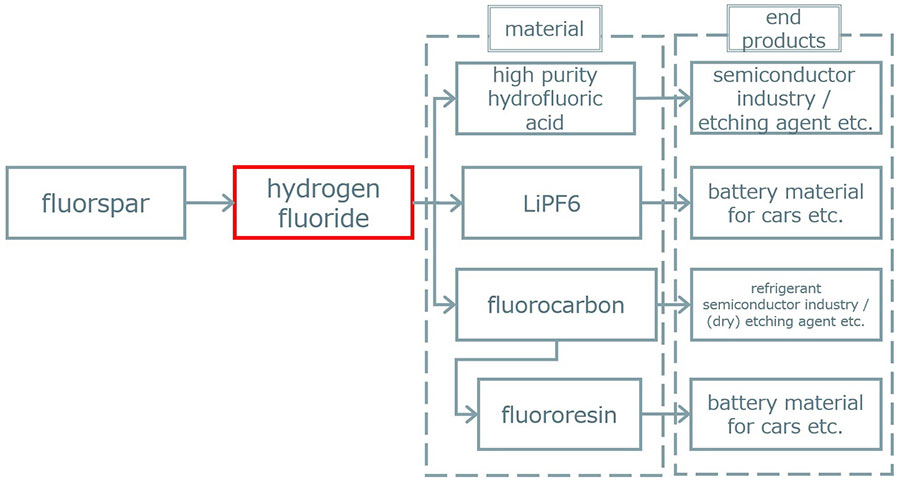
MHI received an order to design a hydrogen fluoride production plant in Kitakyushu City, Fukuoka Pref. The project, a collaboration between Mexichem Fluor Japan and Sojitz, aims to produce hydrogen fluoride from Mexican fluorspar to ensure a stable supply of fluorine compounds in Japan.
This will address growing demand for fluorine compounds used in semiconductor manufacturing, lithium-ion batteries, etc. Currently reliant on imports for fluorine raw materials, Japan seeks to strengthen its domestic supply chain.
CONTEXT: Mexichem Fluor is providing Mexican fluorspar for this project, contributing to various applications, including EVs, energy storage, and medical treatments, with a focus on sustainability and innovation.
KDDI starts Green Digital Solution services to visualize CO2 emissions
(Company statement, Sept 5)
KDDI will offer “KDDI Green Digital Solution”, a one-stop support to materialize carbon neutral for corporate customers. With this solution, the customers can visualize and analyze their CO2 emissions, and try to reduce their CO2 footprint.
KDDI will cooperate on this project with Asuene, a cloud-service company to generate CO2 emissions reports; as well as KPMG Consulting, and Globing, a consulting company to visualize strategies with digital technologies.
Taiyo Oil began testing EV car sharing service in Ehime Pref
(Company statement, Sept 1)
Taiyo Oil’s Shikoku Office began testing EV car sharing service for corporate and local govts using off-grid type solar carport, “SOLATO Car Share”. EVs are fueled by carbon free electricity, partnering with REXEV and Edakin.
REXEV, an e-mobility service company, develops and provides users with web/ smartphone applications for EV car sharing systems dedicated to SOLATO.
Usually, SOLATO stations power EVs, but in case of emergency such as natural disasters, the carport can charge smartphones and other devices using a 100V-tap.
Mitsui invests in Finnish ship system integrator, improving energy efficiency
(Company statement, Sept 1)
Mitsui invested in WE Tech Solutions, a Finnish ship system integrator. It specializes in improving onboard energy efficiency on ships, primarily through the use of permanent magnet synchronous shaft generators.
This technology helps reduce fuel consumption and CO2 emissions on ships, particularly in gas carriers, pure car carriers, and container ships.
Mitsui aims to leverage its industry knowledge and networks to expand WE Tech’s product sales and enhance Japan’s maritime cluster competitiveness by incorporating advanced power electronics tech from Europe.
Osaka Gas UK and Tree Energy Solutions inked an agreement to engage in synthetic methane (e-methane) initiatives, which include tech promotion, supply chains and collaborations with governments on regulations.
Euglena offers Sagawa Express clients biofuel for extra fee
(Company statement, Sept 5)
In June, Euglena began offering customers of Sagawa Express delivery service the option to pay an extra ¥1000 to have their delivery made using biofuel.
In about two months, about 300 customers signed up for the option. Sagawa Express started using Euglena’s biofuel for deliveries on Sept 6.
Japan to allocate ¥20.7 billion to fishery industry over China’s import suspension
(Nikkei Asia, Sept 4)
Japan will allocate ¥20.7 billion in additional relief for its fishery industry, which faces a seafood import ban by China due to concerns over treated water released from the Fukushima NPP.
The goal is to support the fishery industry by increasing domestic consumption, ensuring sustainable seafood production, addressing reputational damage, exploring new overseas markets, and providing compensation. In total, the govt will provide ¥100 billion to the industry through various funds.
Japan also plans to diversify its seafood export channels to reduce dependency on China, while urging China to engage in scientific discussions about the environmental impact of the water discharge.
CONTEXT: Tensions between Japan and China have escalated over the water discharge. Japan argues the water is safe, while China has imposed a blanket import ban on Japanese fishery products.
SIDE DEVELOPMENT:TEPCO responds with measures to China’s food import suspension(Nikkan Kogyo, Sept 5)
TEPCO announced additional measures in light of China’s import suspension of Japanese seafood due to the release of treated water from the Fukushima NPP.
They’ll set up a consultation support center for affected businesses in Miyagi Pref and increase the number of personnel involved in the response from the initially planned 400 people nationwide to 1,000 people by the end of the year.
The company may add further consultation centers in Hokkaido, Kansai, and Kyushu.
TAKEAWAY: Japan submitted a complaint to the WTO regarding the Chinese ban and seeks discussions through the Regional Comprehensive Economic Partnership (a multilateral trade pact in which Japan and China are also members). To diversify domestic seafood exports, Japan has promised incentives to businesses entering new markets other than China. However, this is difficult because along with Hong Kong (which has mirrored mainland China’s actions) China is the leading market for Japanese seafood, comprising about 40% of seafood exports.
NEWS: POWER MARKETS
Chubu Electric acquires stake in NuScale Power SMR start-up
(Japan NRG, Sept 7)
Chubu Electric said it will buy a stake in NuScale Power from the Japan Bank for International Cooperation (JBIC).
“As an equity owner, we want to expand our revenue base through investing in NuScale,” Hiroki Sato, Chubu’s global business division CEO.
Chubu did not disclose the size of the stake or the price, but said it plans to take not more than a majority of JBIC’s holdings.
CONTEXT: NuScale Power is producing SMRs (small modular reactors), and more than 10 countries have expressed interest in the technologies. The company received $1.3 billion from the U. S. Department of Energy to start production at its first commercial scale facility in 2029. The JBIC and two Japanese companies – JGC Holdings Corp and IHI Corp – bought a total of 8.5% in NuScale in 2022, with JBIC spending about $110 million.
Itochu to invest up to ¥100 billion in large-scale batteries for renewables
(Nikkei, Sept. 7)
Itochu plans to invest up to ¥100 billion by 2030 in large-scale batteries for storing electricity from renewable sources, partnering with Akaysha Energy, a subsidiary of BlackRock and a global leader in grid-connected energy storage.
This move is prompted by the need to address growing demand for grid storage due to output control measures in response to renewable energy fluctuations.
The company intends to participate in battery storage projects in 10 to 20 sites in Japan, for a total capacity of 1 GWh.
State subsidies will support this initiative, which can tap into ¥150 trillion in GX funds over the next 10 years.
CONTEXT: Large-scale batteries are crucial to preventing wasted renewable energy and can contribute significantly to renewable energy’s growth in Japan.
Chubu Electric plans a 96 MW onshore wind power station in Ishikawa Pref
(Company statement, Sept 5)
Chubu Electric and its subsidiary Looop submitted an environmental assessment for the Nishi-Noto Wind Farm (Ishikawa Pref). It can be viewed from Sept 6 and Chubu Electric will have town meetings on Sept 23 and 24.
The wind farm will have 96 MW capacity, from 23 turbines (each 4.2 MW). Construction begins in April 2025; test run in July 2027, and commercial operation starts April 2028. Nearby, the Wajima Wind Farm is also planned.
SIDE DEVELOPMENT: Chubu Electric Power Miraiz begins DR service for Sharp’s storage batteries (Company statement, Sept 5)
Chubu Electric Power Miraiz and Sharp Energy Solution will provide a new demand-response service, NACHARGE Link, for owners of Sharp’s residential storage batteries. It has demand-response (DR) functions that enables Chubu Electric to control storage batteries to save energy or shift peak consumption hours.
When the storage batteries are used with Cocoro Energy, Sharp’s cloud home energy management system, AI helps customers efficiently consume electricity generated through roof-top solar panels, and help to reduce electricity bills.
NACHARGE Link automates these DR controls remotely and consumers can gain credits based on their contributions.
Toshiba tapped five suppliers in Akita Pref for wind turbine components
(Company statement, Sept 7)
Toshiba Energy Systems (Toshiba ESS) selected five companies with production facilities in Akita Pref that would supply parts for the nacelle, a key part in offshore wind turbines. The company continues to evaluate the five companies with GE Renewable Energy to decide the supplier(s) towards late FY2024.
Akita Pref has three promising sites for offshore wind power stations – Noshiro city, and the north and south sides of Mitane/Oga/Yuri Honjo. Japan seeks to source wind turbines domestically. Toshiba ESS will assemble the nacelle with GE.
Toshiba ESS will further expedite and establish a supply chain for parts and components of offshore wind turbines in Akita Pref.
KEPCO to post highest profit in 18 years
(Nikkei, Sept 7)
KEPCO’s stock price returned to pre-2011 levels, reaching ¥2,147.50 on Sept 7, driven by the restart of nuclear power plants and cost savings.
The company is expected to post its highest profit in 18 years by March 2024, with a consolidated net profit forecasted at ¥305 billion for the fiscal year.
This surge in stock price follows a period of stability in the range of ¥1,100 to ¥1,300 and a recent announcement of robust financial performance.
TAKEAWAY: Like all nuclear power operators, KEPCO was hit hard by the 2011 Fukushima disaster. However, KEPCO is the most dependent of Japan’s utilities on its nuclear reactors for both electricity volumes, environmental impact and finances. The Kansai utility has had a rough past decade, spending vast sums to import fossil fuels as an alternative. Now, with the state again backing nuclear power and all of its reactors restarted, the company has seen profits return and its stock price has followed.
JERA develops applications to support maintenance of thermal power plants
(Nikkei, Sept 8)
JERA developed digital applications to support the operation and maintenance of thermal power plants. These apps digitize plant operations, allowing data to be stored in the cloud, accessed by workers via smartphones and electronic devices, and managed remotely by administrators.
JERA plans to use AI to analyze accumulated data, detecting issues and optimizing operations. The system will be implemented in multiple power plants, with cost savings estimated at around ¥1 billion per year at one plant.
JERA intends to integrate its system with procurement networks and further leverage AI for decision-making. They also plan to sell this system, recognizing the potential demand for advanced power plant management solutions.
Diamond semiconductors to help TEPCO in NPP decommissioning
(Nikkei, Sept 7)
Okuma Diamond Device (ODD) is working on diamond semiconductors, aiming to start production in Okuma Town (Fukushima Pref) by late FY2026. It’s collaborating with TEPCO and IHI in decommissioning Fukushima Daiichi NPP.
Diamond semiconductors offer superior performance compared to traditional silicon semiconductors, functioning at high temperatures and in high voltage and radiation environments. This technology has potential applications in EVs, high-speed communication, and satellite communication.
ODD’s semiconductors eliminate the need for traditional cooling systems and lead shielding, boosting efficiency of decommissioning work. Project cost is estimated at about ¥5 billion, with support from state incentives and venture capital.
Asilla uses AI to guard against electric cable thefts
(New Energy Business, Sept 4)
Asilla is using AI to take measures against copper electric cable thefts. The company develops behavior recognition AI technology to detect dangers, find lost children, analyze purchasing behavior, and suspicious behavior.
The service consists of advice and support by security experts, as well as more basic consulting for security measures.
CONTEXT: See also Japan NRG Aug 21 issue for copper cable thefts in Gunma Pref, which has less solar power stations than its neighbors but has a high concentration of overhead transmission power lines. Theft cases are spreading nationwide. Recently, Tokyo Infrastructure Energy Investment said their Ushuku 2 MW power station lost 30% of power capacity due to a copper cable theft.
TAKEAWAY: Copper prices ranging above $8,000/ ton are triggering thefts globally. The cut-off cables are sold as scrap at discount prices; but cables with no corrosion may fetch higher prices. Power stations with old equipment are less targeted than new ones.
Green lawmaker Akimoto arrested for alleged offshore wind bribery
(NHK, Facta, Japan NRG, Sept 7)
Lawmaker Akimoto Masatoshi was arrested for allegedly taking ¥60 million in bribes from former Japan Wind Development president Tsukawaki Masayuki.
Akimoto is accused of facilitating JWD’s offshore wind businesses by leading parliamentary debates in favor of JWD in 2019.
Akimoto denied the allegation, saying the money was for a horse owned by the two individuals. Tsukawaki, the former JWD president, has not been arrested yet.
CONTEXT: Since his first election into the House of Representatives in 2012, Akimoto’s focus has been on energy, advocating renewable and anti-nuclear causes. He served as the parliamentary vice minister of MLIT from 2016 to 2018, and has been active in the House committees on METI and MLIT affairs in recent years.
Akimoto is accused of influencing state policies to benefit the company, including advocating for less restrictive regulations on wind projects and asking the govt to revise the evaluation criteria for offshore wind power auctions in which JWD also happened to participate.
TAKEAWAY: If found guilty of receiving bribes and influencing offshore wind rulemaking, he will face a prison term of up to seven years. It remains to be seen if investigative efforts expand outside of the Akimoto-JWD nexus and if there’ll be separate probes by third parties that may lead to a review of wind auction rules.
Chubu Electric to reduce electricity bills for households
(Asahi, Sept 7)
Chubu Electric announced a reduction in electricity bills for the average household over two months (Jan-Feb) next year. This discount, applicable to households with members aged 22 or younger, or 65 or older, amounts to a 10% reduction in electricity fees.
Chubu Electric’s improved financial performance allows them to return around ¥130 billion of the ¥200 billion obtained from a business fee increase to customers, with approximately ¥3 billion allocated for discounts for households.
Additionally, a discount on business fees of ¥2.09/ kWh, already in place from June to Oct, will continue until March.
Shimizu’s jack-up vessel supports offshore wind farm market in Taiwan
(Company statement, Sept 4)
Shimizu signed a charter contract for a self-elevated platform (SEP), Blue Wind, with Norway’s Olsen Windcarrier Operations for Yunlin 640 MW offshore wind power project off the west coast of Taiwan starting in February.
Yunneng Wind Power, founded by eight companies from Japan, Germany, France, and Thailand, will build 80 turbines (8 MW each). As one of the largest SEPs, Blue Wind was selected for its performance on both cost and construction period.
NEWS: OIL, GAS & MINING
JERA open to new LNG deal with Qatar, if terms are right
(Bloomberg, Sept 7)
JERA global CEO Kani said the company is in talks with Qatar about a new long-term LNG deal but is seeking “win-win” terms. Any deal will only happen “if we find some common ground.”
JERA allowed a massive 5.5 million mt/ year contract with Qatar to expire at the end of 2021 because the seller would not offer more flexible terms.
CONTEXT: Typically, Qatar does not allow buyers to dictate changes to agreed supply volumes or the destination at which the cargo must be received, and does not allow re-sale before delivery.
TAKEAWAY: Walking away from a contract that supplies a significant portion of Japan’s 70 million tons of LNG imports each year was not only a major energy and commercial decision, it caused ripples in political relations between Japan and Qatar. The tensions may only have been eased recently after PM Kishida’s visit to the country. But the fact remains: Qatar wants the sales contract to have a high number of parameters fixed in stone, whereas for Japan, and JERA in particular, more flexibility is paramount given weather volatility, uncertainty about future gas demand, and other factors. It would be a major change for Qatar to agree on different terms. But with the U.S. eagerly taking market share thanks to a much greater degree of flexibility by suppliers, Qatar may see a benefit from adjusting its stance.
Suzuki Motor and Indian dairy farms to build biogas plants
(Company statement, Sept 7)
Suzuki Motor group, the National Dairy Development Board and Banas Dairy agreed to build four biogas plants in the Gujarat state of India. The total investment is estimated at ¥4 billion.
The biogas will be generated from fermented cow manure. It will be converted into methane, then into car fuel. “Biogas filling stands” will also be set up at the biogas plants to supply drivers.
The plant operation is set for 2025.
TAKEAWAY: Livestock manure-derived biogas is spreading globally as many govts consider biogas-derived fuel and electricity to be carbon neutral, although emissions are still released in the gas production process (notably, in the heating of the manure and compression of the biogas). Previously, biogas’ main use was electricity generation but it has now expanded to vehicle fuel, hydrogen and methanol production, which are possibly more profitable. Plastic manufacturers are developing biodegradable green plastics using manure-derived methanol, expecting regulatory tightening of non-biodegradable plastic use in consumer goods.
LNG stocks at power utilities plunge to lowest since Feb 2022
(Government data, Sept 6)
LNG stocks of 10 power utilities stood at 1.73 million tons as of Sept 3, down 13.9% from 2.01 million tons a week earlier. The stocks were the lowest since 1.69 million tons in Feb 2022.
The end-September stocks last year were 2.66 million tons. The five-year average for this time of year was 2.06 million tons.
ANALYSIS
BY JOHN VAROLI
Japan and Critical Raw Materials: Scouring the Globe for Friendly and Reliable Sources
Since the war in Ukraine divided the global market into two hostile blocs, Japan has had to seek out alternatives to its closest neighbors, Russia and China, for supplies of energy, as well as the metals and critical raw materials (CRMs) that are crucial for the energy transition, which is accelerating with the recent passage of the GX.
This new urgency is forcing Japan to look much farther from home for supplies, which in turn increases costs and raises other potential geopolitical risks.
Russia is a major global supplier of aluminum, nickel, palladium and vanadium production, while many of the world’s rare earth metals, such as dysprosium and neodymium, are primarily sourced in China. These metals and CRMs are essential for clean energy technologies, such as electric vehicle motors, solar panels and wind turbines.
Sanctions targeting Russia have excluded it from being a big supplier to G7 countries, and growing tensions with China are also leading to supply chain disruptions. Last month, China began to restrict exports of the rare metals gallium and germanium.
Japan and its G7 allies worry that China will restrict other critical minerals in the near future. Therefore, the Japanese government is seeking solutions. JOGMEC is the state company that will lead this search for CRMs abroad. While close allies in North America and Australia are obvious partners, Africa, the Middle East and India are also now of major interest as potential sources of cobalt, copper, lithium, nickel and other CRMs.
In addition, Japan is eyeing projects with ASEAN nations to recover CRMs from industrial and consumer waste. In short, Japan is open to innovative ideas and scouring the globe for CRM supply that not only reduces emissions but also geopolitical risk.
CRM club and rivalry in Africa
As a densely-populated island nation of 125 million people who live on a surface area smaller than California, Japan has to procure most of its natural resources from abroad. Over the past decades, this has made the country highly dependent on both allies and rivals. Such a geographical disadvantage, however, means that Japan has plenty of experience in managing supply chain shocks.
Prime Minister Kishida believes that western-oriented countries should diversify procurement through the Critical Raw Material Club concept, and strengthen communication between consuming and resource-rich countries. Japanese and European companies have pledged to build up inventories and identify potential chokepoints in supply chains. Toward that goal, earlier this year Japan signed bilateral agreements with the EU and the U.S.
In March, Tokyo formalized an agreement with Washington to promote fair competition and market-oriented conditions for trade in CRMs, and to ensure transparent, and equitable critical minerals supply chains. In early July, Japan signed a similar agreement with the EU.
Finally, last week, METI minister Nishimura traveled to the UK to discuss cooperation on developing CRM production, especially in Africa, and strengthening supply chains.
Africa is going to be a region where all three allies – the U.S., EU and Japan – will compete to secure supplies of CRMs. In Africa, Japan is starting a new era of activity focusing on the continent’s mining sector, building on years of diplomacy and pilot investments in Botswana and South Africa. Towards that goal, Nishimura visited five African countries in August.
Japan now plans to collaborate with Zambia, the Democratic Republic of Congo, and Namibia to develop supply chains for cobalt and other materials used in EV batteries. This move will also help counter efforts by Russia and China to control stakes in Africa’s mining industry.
Infrastructure development is crucial for mining economies, requiring collaboration among multiple companies. As the state natural resources corporation, JOGMEC is leading the charge for Japan, for example engaging with African countries to provide remote sensing technology that will identify potential mining sites using satellite imagery.
In Namibia, the goal is to reinforce the supply chain especially for rare earth metals. On August 8, during the METI minister’s visit, Japan agreed with Namibia’s Ministry of Mines and Energy to expand bilateral mining sector cooperation. Next year, both countries plan an event in Tokyo that will focus on Namibia’s mining prospects.
Congo, which is Africa’s top producer of cobalt, copper and lithium, is set to be a major area of competition and geopolitical rivalry. The situation there is complicated by a strong Russian and Chinese presence. China holds a 68% stake in Sicomines, the copper and cobalt joint venture with Congo’s state mining firm Gecamines.
While Africa is a leading growth opportunity, the continent is fraught with challenges. Leaders tend to be charismatic strongmen. Japan’s staid and conservative corporate culture will be tested by the need to form long-term partnerships for high-risk projects. Also, the perennial threat of asset nationalization is stronger in Africa than in many alternative destinations.
Global sourcing
To help ensure stable supplies of CRMs, in mid July, PM Kishida met with Crown Prince Mohammad bin Salman in Saudi Arabia to expand their relationship from one based on fossil fuel sales (mainly, crude oil and natural gas) to close cooperation in clean energy and mining.
Saudi Arabia also has substantial deposits of bauxite, phosphate, copper, gold, iron, and zinc. In 2020, the nation launched the “National Strategy for the Mining Sector,” which has the goal of developing mining into a third pillar of the country’s industrial base after oil and petrochemicals.
PM Kishida was particularly keen to entice Saudi Arabia to jointly invest in rare earths mines and refining facilities in third countries, as well as in the production of hydrogen and ammonia, and e-fuels. In turn, Japan aims to help accelerate the development of resources already mined in Saudi Arabia, such as copper, iron and zinc. Once again, JOGMEC will play a major role, contributing expertise to assist Riyadh in conducting geological surveys.
Meanwhile, in South America, Chile is a major target of Japanese investment. JX Metals group company, Pan Pacific Copper (PPC), continues to develop the Escondida mine in the Atacama Desert; local concentrate is then processed into copper cathodes at the Saganoseki smelter in Japan.
Trading house Mitsubishi Corp is also involved in Chile, recently taking a 5% stake in the Canadian-controlled company, Marimaca Copper, which aims to produce 50,000 tons of copper cathode per year for 15 years. Production will begin by about 2030.
Across the Pacific Ocean, in Australia, Idemitsu Kosan is securing lithium supplies. In mid June the company acquired a 15% stake in Delta Lithium Ltd for A$53 million. The company runs two projects in Western Australia: the Mt. Ida project that holds about 12.7 million tons of lithium reserves and the Yinnethara project.
Recycling
In addition to primary metals production, Japan is exploring the opportunities of urban mining – the recycling of electronic waste. To get scale, the focus of recycling for Japan lies in Southeast Asia.
At the end of August, Japan announced a collaboration with ASEAN countries to extract valuable materials from discarded electronic devices such as smartphones. With electronic waste in ASEAN reaching 3.5 million tons in 2019 and that volume growing, the partnership will establish rules for waste disposal to address environmental and health concerns.
Japan plans to help set up guidelines for waste disposal, including systems for registration and certification of collection and dismantling businesses.
While all the initiatives mentioned above are still in the early stages, the intensity of Japan’s effort to secure the necessary supplies of CRMs is ramping up. Clearly this issue is a top priority for the government, which recognizes that plans for the energy transition will come to naught if the necessary supplies of vital metals are not secured.
However, securing CRMs by setting up the infrastructure and supply chains is only half the battle. The rest will be about the costs involved. Failure to secure competitive supplies will raise the prices of clean energy production, and that would compromise the main tenant of the energy transition – clean, abundant and affordable energy.
INTERVIEW
BY JOHN VAROLI
TOP INTERVIEW: UK Biomass Specialist Drax Speaks on Japan Market and CCS
Drax Group is a renewable energy utility and a supplier of sustainable biomass. It operates a portfolio of biomass, hydro-electric and pumped hydro storage assets across four sites in England and Scotland.
The company also operates a global bioenergy supply business with manufacturing facilities at sites across the U.S. and Canada, producing compressed wood pellets for its own use and for export to Europe and Asia.
Drax has supplied sustainably sourced biomass to Japan for over a decade. It now sees the potential to grow its Japan sales. To learn more about the company’s plans, Japan NRG spoke with Okamoto Yasuhisa, Managing Director of Drax Asia.
Biomass Market in Japan What is Drax’s interest in the Japanese market? What opportunities and scope do you see right now?
Drax has several supply contracts with customers in Japan that involve the supply of millions of tons of biomass over the next decade. The Japanese market provides a great opportunity for Drax.
As a leading sustainable biomass generation and supply business, we are keen to build new partnerships with counterparties that value not only our biomass supply capabilities, but also our technical know-how gained from converting our own coal-fired units to biomass.
Sustainably sourced biomass is a proven technology in efforts to phase down coal – providing a reliable, renewable alternative fuel source. Drax would like to support Japan in its decarbonisation journey.
We have transformed our UK power station from Western Europe’s largest coal-fired power station into one of the continent’s largest decarbonisation projects. We’re also uniquely set up with end-to-end biomass production, supply, generation and sales experience which gives us the ability to support the Japanese industry in coal to biomass transitions. We now have a Tokyo-based team.
Using Japanese Carbon Capture Technology
Drax installed a carbon capture system at Drax Power Station in North Yorkshire. It was made by Mitsubishi Heavy Industries and it was supposed to run as a trial for a year. So, tell us how that trial went and what happens next?
We successfully held a pilot of Mitsubishi Heavy Industries’ (MHI) carbon capture technology at Drax Power Station in Selby, UK, where we tested the technology’s suitability for use with biomass flue gases at Drax.
The pilot captured around 300 kilos of CO2 per day and tested two of MHI’s commercially available solvents. We selected the KS-21 solvent because it proved to be the most compatible with our technology.
Following the pilot, Drax and Mitsubishi Heavy Industries (MHI) agreed a long-term contract for Drax to use MHI’s carbon capture technology in BECCS (bioenergy with carbon capture and storage), which we hope to deliver by 2030. It will see the largest deployment of carbon capture and storage (CCS) in power generation in the world. By 2030, Drax could be the world’s first carbon negative power station, supporting the UK in achieving net zero by 2050.
We’re engaged in formal discussions with the UK Government about the BECCS at Drax Power Station and hope to be able to deliver our first unit by 2030.
Japan Collaboration Projects
Any other collaboration that Drax has with Japanese companies in the UK, Japan or third countries?
Through acquired Canadian assets, Drax was the world’s first company to contract the supply of sustainably sourced biomass to Japan with a modest start in 2009. This has grown to about two million tons per year over the past decade, which we intend to double by 2030.
We’ve worked in partnership with several Japanese companies during this period including technology suppliers, dry bulk carriers, charter vessel suppliers and major trading companies. An example of this is the work we’re doing with MOL Drybulk to reduce the emissions and fuel costs associated with shipping biomass by deploying wind power technology on its vessels.
Biomass Market Dynamics
How have the prospects for biomass power generation changed since the net-zero announcements across the world? The sector seems to be growing, but not as fast as sources like solar and wind. What are the constraints on new biomass developments?
Sustainably sourced biomass is a proven technology for supporting energy security while phasing down coal. The global market for sustainable biomass is forecast to grow significantly as more countries look to phase down coal from their energy systems, creating growth opportunities to sell pellets to customers in Asia and Europe.
Drax is well placed to meet that increased demand, with 18 operational pellet plants offering capacity of c. 5Mt/ year and access to global markets in Europe and Asia from ports in western Canada and the US south. Our goal is to increase our capacity to 8MT by 2030.
In Japan specifically, achieving the aim of carbon-neutrality by 2050 will require the country to substantially accelerate the deployment of low-carbon technologies, address regulatory and institutional barriers, and further enhance competition in its energy markets.
Biomass generation has different constraints than wind and solar, such as infrastructure, logistics and fuel sourcing requirements, however biomass is also unique because it is a flexible, reliable renewable energy which can be turned up or down to maintain a secure grid.
Intermittent renewable technologies such as wind and solar cannot do this. Intermittent technologies also rely on baseload energy generation, such as sustainable biomass, to support the grid when they are not generating.
Countries need multiple solutions to achieve Net Zero while maintaining energy security. Realising those goals will depend on investment in innovative green technologies across the renewables spectrum, which baseload biomass power can support.
Are there any other technologies that you feel work well with / pair with biomass? Is it batteries, or other renewables, or gas-fired generation, etc?
Drax has plans to pair its biomass generation with carbon capture and storage, BECCS, Bioenergy with Carbon Capture and Storage (BECCS). BECCS is the world’s only shovel-ready, industrial scale, carbon removals technology. Carbon removals will be needed to compensate for sectors with harder to abate emissions like construction and aviation if we are going to achieve our Net Zero goals.
A recent University of Oxford study, “The State of Carbon Dioxide Removals” showed that nearly all realistic global pathways to limit warming to 1.5C require developing and deploying carbon removal technology and more renewable power – BECCS does both. Drax is well placed to retrofit and build new BECCS facilities, making us ready to support the global transition to net zero.
We’re accelerating our plans for global BECCS projects and have the goal to deliver 14 million tonnes of carbon removals per year by 2030.
GLOBAL VIEW
BY JOHN VAROLI
Below are some of last week’s most important international energy developments monitored by the Japan NRG team because of their potential to impact energy supply and demand, as well as prices. We see the following as relevant to Japanese and international energy investors.
Australia/ Coal
Australia will face electricity shortfalls in the next ten years as 62% of its coal fleet, which supplies most of its power, will be retired. Power demand is expected to continue growing along with the population and economy.
Australia/ Natural gas
Workers at Chevron Australia have gone on partial strike, threatening as much as 7% of global LNG supplies. News of the strike sent European natural gas prices rising almost 10%. A total strike is due to begin on Sept 14.
Brazil/ Carbon credits
State-owned oil company Petrobras made its first carbon credit purchase, buying 175,000 carbon credits from Projeto Envira Amazonia in the Amazon rainforest. The company said it plans to spend at least $120 million in carbon credits by 2027.
China/ Coal
Since last year, China has approved 152 GW of new coal plants, more than all the coal in the EU combined. The country’s largest coal companies are eager to build more coal plants before 2025 since the government has prioritized energy security.
North America/ Natural gas
Canada’s Enbridge will buy three utilities from Dominion Energy for $14 billion, creating North America’s largest natural gas provider and doubling its gas distribution business.
Norway/ oil and gas
Eni’s local subsidiary, Vaar Energi, will increase exploration in the Arctic Barents Sea to boost oil and gas production. Such plans have been met with criticism by environmentalists, but in 2020, Norway’s Supreme Court rejected a motion to stop Arctic drilling.
Pakistan/ Mining
Barrick Gold wants to invest $7 billion to revive the Reko Diq mine that’s believed to contain one of the world’s largest untapped reserves of copper and gold. An estimated $118 billion of investment by 2030 is needed to plug a supply gap that will be equivalent to 35 Reko Diq-sized projects by next decade, says CRU Group.
South Africa/ Power outages
South Africa, which relies on coal for 80% of its power, is suffering from its worst outages ever because the state-owned utility’s poorly-maintained and aging power stations can’t meet demand. South Africa must move towards renewable energy to avoid levies from the EU.
UK/ Wind power
An annual auction for offshore wind power failed to secure a single contract; major companies stayed away, saying that the auction price was too low and costs have soared 40% in the past year. About 3.7 GW of new clean energy projects secured a contract, but these were for solar and onshore wind. In last year’s auction, a total of 11 GW in new clean energy secured contracts.
U.S./ Oil drilling
The Interior Dept will cancel oil and gas leases in a federal wildlife refuge that were bought by an Alaska state development agency in the last days of President Donald Trump. Joe Biden had pledged to protect the 7.7 million hectares habitat.
2023 EVENTS CALENDAR
A selection of domestic and international events we believe will have an impact on Japanese energy
ASEAN-Japan summit to mark 50 years of cooperation
Last market trading day (December 30)
Disclaimer
This communication has been prepared for information purposes only, is confidential and may be legally privileged. This is a subscription-only service and is directed at those who have expressly asked K.K. Yuri Group or one of its representatives to be added to the mailing list. This document may not be onwardly circulated or reproduced without prior written consent from Yuri Group, which retains all copyright to the content of this report.
Yuri Group is not registered as an investment advisor in any jurisdiction. Our research and all the content express our opinions, which are generally based on available public information, field studies and own analysis. Content is limited to general comment upon general political, economic and market issues, asset classes and types of investments. The report and all of its content does not constitute a recommendation or solicitation to buy, sell, subscribe for or underwrite any product or physical commodity, or a financial instrument.
The information contained in this report is obtained from sources believed to be reliable and in good faith. No representation or warranty is made that it is accurate or complete. Opinions and views expressed are subject to change without notice, as are prices and availability, which are indicative only. There is no obligation to notify recipients of any changes to this data or to do so in the future. No responsibility is accepted for the use of or reliance on the information provided. In no circumstances will Yuri Group be liable for any indirect or direct loss, or consequential loss or damages arising from the use of, any inability to use, or any inaccuracy in the information.