To transport hydrogen on ships it must be converted into a state known as a liquid organic hydrogen carrier (LOHC). Japan sees three ways to do this: converting H2 gas into a liquid; combining it with a special chemical to create methylcyclohexane (MCH); or transporting it as ammonia. The IEA estimates that ammonia will account for 80% of H2 carrier volumes by 2030. But ammonia can’t be used in all applications. So, where does that leave the other LOHCs? Recent advances in liquid H2 and MCH technology suggest these carriers could also play a significant role.
As the energy transition gains steam, demand for storage batteries is increasing. But clean energy supply chains are complex. The EV sector alone will require 30-40 times more lithium, nickel and graphite, etc. This is why there’s growing interest to recycle and/or reuse vehicle batteries. JERA and Toyota have achieved a major breakthrough. In a world first, they launched a demo of an energy storage system that deploys a wide range of old EV batteries that connect to the grid. This holds potential to extend the life of batteries and can help to partly insulate Japan from disruptions in international supply chains.
GLOBAL VIEW
A wrap of top energy news from around the world.
EVENTS SCHEDULE
A selection of events to keep an eye on in 2023.
JAPAN NRG WEEKLY
PUBLISHER K. K. Yuri Group
Editorial Team Yuriy Humber (Editor-in-Chief) John Varoli (Senior Editor, Americas) Mayumi Watanabe (Japan) Wilfried Goossens (Events, global) Kyoko Fukuda (Japan) Magdalena Osumi (Japan) Filippo Pedretti (Japan) Tim Young (Japan)
Following a COP28 pledge to triple renewables by 2030, Environment Minister Ito said “I don’t think Japan has the capacity” to achieve that. Ito said Japan already leads the world in acreage used for solar projects and is third in solar power generation.
He told broadcaster NHK: “While cooperation is needed to triple renewables by 2030 globally, it is not necessary for Japan to aim for the same goal on its own [territory].”
Japan is committed to cooperate with other countries, he added.
CONTEXT: PM Kishida used the COP28 appearance to state that from now on, Japan will not build any more coal-fired power plants without emission reduction measures in place. The govt has not clarified when it will decommission existing coal plants.
TAKEAWAY: Ito’s comments are trying to strike a note of realism. The nation installed about 70 GW of solar in the past 10-12 years, but progress on new solar and onshore wind projects has been slowed by issues that are often beyond the national government’s control. A tripling of renewables capacity in Japan by 2030 seems highly unlikely for technical, societal and economic reasons. But, the national govt also has a Basic Energy Plan that says the ratio of renewables will climb to 36-38% by 2030. In 2022, renewables provided about 22% of the total electricity. In a best case scenario, the ratio will climb to about 30-31%, according to some industry estimates. Which leads to the question of what will fill the gap? Since it cannot be power plants that emit CO2, a large group of lawmakers from the ruling LDP are calling for more support around nuclear power.
METI minister Nishimura reiterated Japan’s support of the goal to triple global nuclear energy capacity by 2050, a pledge made at COP28 with 20 plus nations, adding that Japan’s nuclear sector goal is a 20-22% share of the power mix in 2030.
This will entail building resilient supply chains of NPP components and helping other countries introduce advanced nuclear reactors.
CONTEXT: Nuclear energy had a 5.6% share of Japan’s total power mix in FY2022.
ANRE selected perovskite solar cell (PSC) and floating offshore wind power technologies as priority areas for the energy transition. It set a new goal to create a PSC production capacity of 1 GW or more by 2030.
Sekisui Chemical is expected to start commercial PSC production in 2025.
ANRE will support development of automated PSC mass production technologies, large demo projects, and technologies for cost efficiency. It sees public and private sector investments in PSC rising to ¥31 trillion in the next ten years.
For floating offshore wind, ANRE will promote collaborations with overseas businesses and will build an ecosystem to enhance business ties. Like PSC, floating offshore wind is expected to fuel ¥31 trillion in investments in the next ten years.
TAKEAWAY: METI funds PSC development but requires companies to safeguard their technologies. This protectionist approach may need to change, as more market entries are needed to raise PSC output capacity to 1 GW from zero in just six years. To compare, hydrogen fuel cell and power combustion development is becoming robust as component and chip makers start to make their own systems.
The Japan Climate Initiative (JCI) proposed effective carbon pricing plans, including a shift to a cap-and-trade system, to help Japan meet its 2030 GHG emission goals.
To avoid being subject to the EU’s Carbon Border Adjustment Measure (CBAM), it is necessary to design a basic system, including uniformity and breadth of coverage with the international norm, the JCI said.
The group’s statement also suggests a cap-and-trade type emissions trading format, with a cap on total emissions in targeted sectors, as well as a tentative target for carbon price by 2030 at around $130 / t-CO2 as indicated by the IEA.
The proposal is backed by a total of 186 groups, firms and municipalities such as Fujifilm and the Tokyo Metropolitan Govt.
The new president of Japan Wind Development, Matsushima Satoshi, apologized to assembly members of Rokkasho Village, Aomori Pref.
Former president Tsukawaki Masayuki,who resigned in September, admitted to bribery charges in exchange for help to promote offshore wind power generation. He is under house arrest as he awaits the court’s decision.
As the scandal lingers, there’s speculation the firm might be sold by year’s end, as parent company Bain Capital has reportedly begun restructuring the organization and laying off people close to Tsukawaki.
Matsushima attended the assembly meeting to explain the cause of a local wind turbine collapse accident in March. Following an investigation, the firm removed a cracked turbine, one of 21 units on the site. JWD will now replace all the units with more powerful turbines.
CONTEXT: On behalf of JWD, lawmaker Akimoto (who has since left the LDP) demanded revisions to selection criteria in offshore wind auctions. Also, JWD had apparently attempted to pressure lawmakers after Aomori Pref concluded that parts of its coast were unfit for wind power due to the risk of interference with navy drills.
TAKEAWAY: The scandal has cast a shadow on the wind sector, which already faces some local opposition to large on-shore projects. Industry group Japan Wind Power Association is presently conducting a probe on how the JWD may have influenced its activities and is expected to release the findings by the end of the month. JWD’s former vice president Kato Jin had served as the Association’s vice chairman.
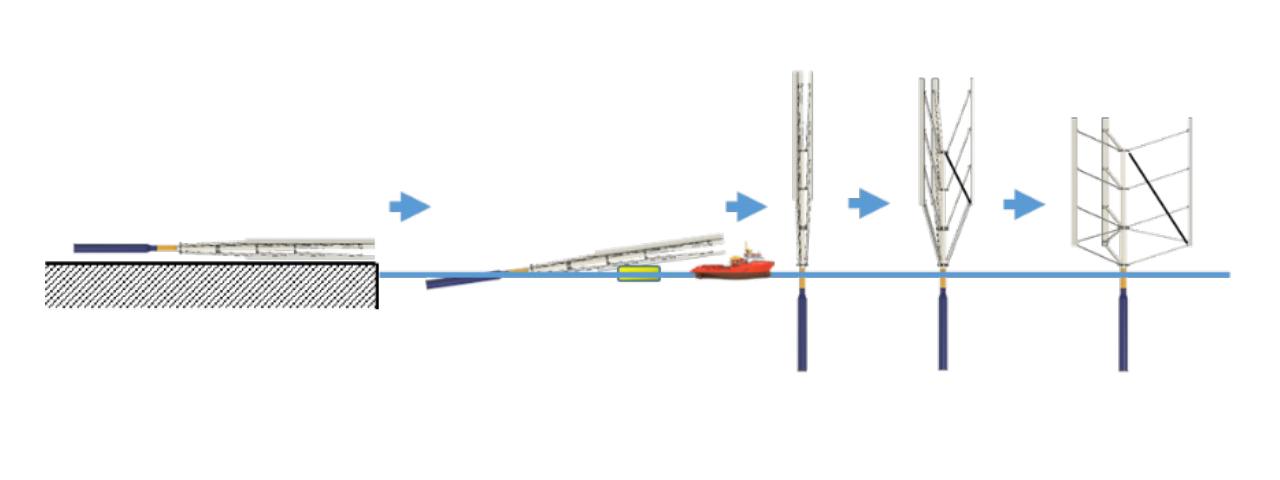
Tokyo-based ocean renewable power tech company Albatross Technology has raised ¥420 million in an A-series round to develop its low-cost floating axis wind turbines.
Albatross is developing tech suitable for geological and meteorological conditions where the only way to benefit from strong winds is to use moored floating structures.
Albatross will fix a small system to the seabed next year as a pilot.
Investors include the Development Bank of Japan, Mitsui Sumitomo Insurance VC, and Mitsubishi UFJ Capital. Since 2022, about ¥520 million has been raised.
CONTEXT: Albatross aims to build a stable domestic supply chain, without reliance on overseas firms. In addition to ensuring supply chain security, this would also reduce the cost of installation of offshore wind systems.
KEPCO joined a floating offshore wind power demo project in Norway. They aim for operation in 2027, with a total capacity of 75 MW.
The project is with Source Galileo (UK) and Odfjell Oceanwind (Norway), and is 85 kilometers northwest of Hammerfest; it will consist of five 15 MW wind turbines. Construction might start in 2025.
CONTEXT: This is KEPCO’s second floating offshore wind project outside Japan; the first one is deployed in northern Spain.
TAKEAWAY: In Spain, the project utilizes a “barge-type” system, where wind turbines are mounted on barges with flat bottoms. The Norway project uses a “semi-submersible type” of floating foundation. While this method results in a more intricate structure, it reduces the swaying of the floating base.
Itochu and the UK’s Gore Street Capital (GSC) will co-manage a new fund for utility scale energy storage.
The Tokyo Metropolitan Govt will contribute ¥2 billion to the fund. More investment will come from private entities, including Itochu.
This is Japan’s first dedicated fund for utility scale energy storage. It provides power grids with the capacity to adjust supply according to the fluctuating demand of renewables. Itochu, along with GSC, will focus on increasing utility scale energy storage systems in the Kanto area.
CONTEXT: Itochu operates many utility scale energy storage sites in Japan, developing projects with a total output of over 100 MWh. GSC manages one of the world’s largest listed utility-scale energy storage funds, with assets in Europe and U.S.
ANRE unveiled a draft interim report on carbon capture and storage (CCS) regulatory framework, ahead of submission of the draft CCS law to the Diet for debate.
The CCS operation could be divided into six phases: Storage site screening, evaluation, infrastructure construction, CO2 compression and injection, storage site closure and transfer of site management liability to relevant authorities.
Measures to support a fair market include maintaining a balance of bargaining power between players. For example, if there is only one CO2 pipeline, the operator would have a dominant market position.
In the CO2 storage business, “exploratory drilling rights” and “storage rights” have been established as rights that allow exclusive use of the area where exploration drilling and storage will be done.
After the storage project is completed, management operations will be transferred to JOGMEC. However, if CO2 leaks and liability for damages arises, the company responsible will bear the burden.
Lummus Technology and Toshiba Energy Systems & Solutions will partner on carbon capture. Lummus offers post-combustion carbon capture technology; Toshiba – amine-based solvents and system design guidelines.
ANRE disclosed a draft interim report on hydrogen policies which included:
Requirements for price subsidies, such as starting hydrogen supplies before 2030; and that supplies will continue 10 years after the subsidies are terminated, etc.
Approaches to increase low-carbon hydrogen consumption
Roles of the national and local govts in safety regulations, which will include management of electrolyzers
Schemes to grow various hydrogen markets
The report emphasized the importance of building up local hydrogen supplies first, rather than totally relying on imports from the start.
To encourage the spread of low-carbon hydrogen, there’ll be a regulatory scheme mandating large consumers to use hydrogen with a low carbon footprint.
ANRE is writing safety rules on ammonia-coal co-firing, which will focus on safety standards before co-firing, welding of facility components, and regular inspections.
Tokyo Gas Network and Italy’s Italgas inked a MoU to develop transport technologies for synthetic methane (e-methane), hydrogen, biomethane and other green gases.
The two will also share seismic resilience and digitalization technologies.
Höegh Autoliners (HA) and Sumitomo signed a letter of intent on greener maritime transportation. They aim to use clean ammonia as a bunker fuel for transporting cargo like cars, heavy machinery, and breakbulk. The goal is to start in 2027 in the ports of Singapore and Jacksonville, USA.
They’ll use clean ammonia as fuel for HA’s upcoming Aurora Class PCTC vessels that will operate on zero-carbon ammonia or carbon-neutral methanol.
HA and Sumitomo are also working on maritime decarbonization with Mærsk Mc-Kinney Møller’s Center for Zero Carbon Shipping.
Mitsui signed a charter contract with shipper NYK Line for a vessel to transport ammonia fuel. The vessel will deliver ammonia for JERA’s Hekinan Thermal Power Station, where Unit 4 is engaged in tests of co-firing technology.
Japan Aerospace Exploration Agency (JAXA) tapped JGC Group to build a demo plant on the Moon to produce liquefied hydrogen and oxygen by extracting the elements from regolith on the surface.
JGC will design the system and conduct tests on Earth in the 2020’s, study the Moon’s surface and build the demo plant in the 2030’s and launch operation in the 2040’s.
JAXA held a public auction for the project in October.
TAKEAWAY: JAXA has been focused on liquid hydrogen for its rocket launches to save on component development costs. The aerospace industry hopes that, long-term, JAXA will be open to new types of fuel to send spacecraft to the Moon, Mars and elsewhere in space.
Asahi Kasei acquired a stake in startup Ionomr Innovations (Canada), which makes anion exchange membranes for electrolyzers that produce green hydrogen.
Asahi Kasei said Ionomer’s membranes could improve cost performance and scalability of green hydrogen production, as its system won’t require iridium.
CONTEXT: Asahi Kasei focuses on iridium-free alkaline water electrolyzers (AWE). The proton-exchange membrane (PEM) systems use iridium. AWE is believed to be effective for large systems of 10 MW, but PEM tends to accommodate variable renewable power better.
TAKEAWAY: This investment complements Asahi Kasei’s plan to expand its international businesses since large green hydrogen projects are more likely overseas than in Japan.
Cosmo Oil will partner with Thai fuel producer Bangchak to study importing and using three products made by the Bangkok-based firm – SAF and its by-product bio-naphtha, and bioethanol.
The firms will explore ways to exchange tech solutions in future decarbonization projects such as low-carbon hydrogen, and lubricant-related base oils.
ANRE seeks to speed up the building of power transmission systems that connect Hokkaido-Tohoku-Tokyo areas, and in the Nakanishi areas, amid growing offshore wind capacity expectations and other renewable forms of power.
ANRE plans to ask OCCTO to launch transmission network planning, without waiting for details on the nationwide master plan. OCCTO completed writing the general master plan in March 2023 and is presently writing the details.
ANRE aims to finalize the Hokkaido-Tohoku-Tokyo interconnection scheme by the end of FY2024, including the selection of project operators. The basic specifications of the Nakanishi network will be identified by the end of FY2023.
CONTEXT: According to the OCCTO master plan, high voltage direct current (HVDC) submarine cables will interconnect Hokkaido with Tohoku and to greater Tokyo, and between the Chugoku and Kyushu areas. The east Japan network will bring renewable power in Hokkaido to the Honshu island while the Nakanishi network will carry renewable power from Kyushu island to the greater Nagoya area.
ANRE released power reserve margin forecast for FY2024, which showed the tight supply situation of recent peak periods will ease from this year.
In summer peak demand season, the reserve margins, (available supply against demand), are forecast to be over 7.9%. The margins will be in double digits in winter.
Reserve margin forecast for FY2024 ending in March 2025 (%)
July
Aug
Sep
Dec
Jan
Feb
Mar
Hokkaido
8.7
13.3
22.5
21.0
10.8
11.0
18.3
Tohoku
10.1
11.2
Tokyo
11.6
8.3
10.3
Chubu
12.4
11.9
16.4
Chugoku
16.1
Shikoku
Kyushu
Okinawa
22.9
19.4
22.3
49.9
41.3
39.2
57.5
In July, Tokyo’s reserve margin was 3.1%, just above the critical rate of 3%.
ANRE, however, warned that power shortage risks remain as 10% of thermal power stations are over 40 years old and may face technical issues.
Renewable energy had a 21.7% share of the national power mix in FY2022, rising from 20.3% in FY2021. Total renewables power volume was 218.9 TWh. Solar had the largest gain, increasing its share to 9.2% from 8.3%.
The govt’s 2030 goal is to make renewables the main power source with a 36-38% share of the nationwide power mix, generating 335-353 TWh of power.
Share of power supplies (%)
FY2022
FY2021
FY2030 goal
Total renewables
21.7
20.3
36-38
Solar
9.2
8.3
14-16
Wind
0.9
0.9
5
Hydro
7.6
7.5
11
Geothermal
0.3
0.3
1
Biomass
3.7
3.2
5
TAKEAWAY: Japan has made little to no splash at COP28, and the speech by PM Kishida, which was constrained to three minutes, delivered little new information about the govt’s agenda. However, the key point that Japanese officials stressed was missed by the COP28 audience; it was that Japan is continuing to hit its emission reduction targets. That’s no small feat given the upheaval in global economics and geopolitics. The latest figures for renewable forms of power generation suggest the optimism is justified. Solar, wind and nuclear facilities delivered more non-fossil electricity in FY2022 than at any time in the last decade.
Japan’s energy consumption in FY2022 (April 2022-March 2023) decreased 2.9% YoY, according to preliminary METI figures. Down were coal consumption 8.5%, city gas 2.6%, oil 2.5% and power 1.8%.
These declines were due to slow business activity amid inflationary pressures. The transport sector, however, posted a 4% increase due to recovery from COVID, and household energy consumption was up 0.5%.
Commercial power consumption fell 4.5%, while that of households increased 5%.
Ten transmission and distribution companies applied to METI to amend their tolling service agreements that will entail changes to electricity rates and partial financial burden on power producers under new govt rules.
The unit price proposals submitted by each firm range from ¥0.43 to ¥0.64/ kWh for the generation side. The burden on the power generation companies will be around 10% of total projected revenues.
After a review by METI, the new rates go into effect on April 1, 2024. The unit price in the toll rates reflect the changes to the revenue forecast under the revenue cap system approved on Nov 24.
CONTEXT: The revision aims to ensure fair distribution of the costs of construction and expansion of transmission and distribution facilities amid transition to renewables. Under the current system, grid enhancement costs associated with the introduction of renewables are borne by local customers through a consignment charge levied on retail suppliers.
In October, the electricity futures market volume on the Tokyo Commodity Exchange (TOCOM) reached 63 GWh, which is 2.3 times greater than the previous month. The volume of power futures trading on the EEX bourse hit a record in October, rising 47% to 1,547 GWh.
Futures power prices have been rising over concern that an escalation of the fighting between Israel and Hamas could impact fuel markets.
TAKEAWAY: After a sudden dip in early autumn, the power futures market has continued its fast growth trajectory. Traders are more confident to execute now since the govt announced its winter power demand forecasts and the situation around spare capacity. The recent wild swings in FX and fuel markets are also encouraging the market to lock in future prices.
Kansai Electric (KEPCO) will review its standard rate menu for special high voltage and high voltage markets to introduce a new mechanism that reflects fluctuations in monthly power and fuel prices. The new system will start in April 2024.
The change comes as KEPCO moves to increase the volume of power it offers on the wholesale market to ensure that there is more electricity available on a non-discriminatory basis to third-parties.
The current unit price will be adjusted by the average fuel price (July-Sept), and will become the new electricity rate unit price.
CONTEXT: Market price linked adjustments have already entered the standard menu in almost all other regions of the country. KEPCO trialed a market-linked price menu from March 2023 and is now moving to adopt it permanently. In December 2022, KEPCO resumed accepting applications for the standard electricity rate menu for extra high-voltage and high-voltage power.
Leading EPCOs will continue to discount electricity bills until June thanks to state subsidies introduced to shield the population from high global fuel prices.
The discount will be applied to bills for May usage. The discount for households will be ¥3.5/ kWh for February to May usage.
CONTEXT: These cost reduction measures began in response to rising electricity prices, starting with the bills for February 2023. The original end date for the subsidies was originally set for January 2024 bills.
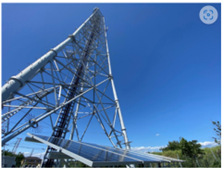
KDDI, KDDI Research and EneCoat Technologies, a perovskite startup, will conduct a demo of bendable solar modules mounted on base stations of mobile telecom networks. They’ll test perovskite solar cells (PSC) and copper-indium-gallium-selenium (CIGS) modules.
The modules will be wrapped around eight poles set up around the base station. Cables will connect the poles to the main baseband units during the demo that will take place in Gunma Pref starting in February, and will last for a year.
CONTEXT: KDDI Group is a shareholder of EneCoat Technologies. The telecom operator’s aim is to build zero-carbon mobile base stations using bendable solar cells to save space. Base stations account for half of KDDI’s power consumption.
TAKEAWAY: CIGS is the first generation of bendable silicon-free solar cells, commercialized over a decade ago amid mounting expectations for Japan to be self-sufficient in solar modules. Japan has local production of all the CIGS raw materials. However, the CIGS market did not take off due to the cell’s low performance. CIGS and PSCs have almost equal energy efficiencies but CIGS are cheaper, can be mass produced and do not contain lead. The KDDI test result will be interesting, to see if CIGS will make a comeback, and if the two technologies can complement each other.
Image of a base station with bendable solar modules
The NRA met to review anti-terrorism upgrades at the Kashiwazaki-Kariwa NPP (Niigata Pref), which is currently under an operating ban since April 2021.
The NRA reviewed issues such as unauthorized use of ID cards and malfunctions in the intrusion detection systems. After reviewing the improvements and TEPCO’s ability as a nuclear operator, the NRA’s conditions to lift the ban are almost met.
The final decision will be made after more inspections and discussions.
TAKEAWAY: The restart would help TEPCO boost profits from its only operable NPP. This is also important for the govt, which is pushing for more reactor restarts ahead of winter. However, the chance for Kashiwazaki-Kariwa to be back online before April 2024 is slim. With winter power system reserves forecast to be better than in previous years, there is little incentive to rush the restart of a facility that is likely to generate an outsized level of public scrutiny.
TEPCO EP acquires full control of PinT
(Denki Shimbun, Dec 5)
TEPCO Energy Partners (EP) has acquired total ownership of power retail company PinT. Before, PinT was 60% owned by TEPCO and 40% by the new power company Paneil, which dissolved the JV.
PinT was established in 2018, and has been expanding its business in the electricity and gas retail business, teleco business and operational efficiency services for rental management companies.
CONTEXT: PinT once attracted attention in the energy industry when it developed an automated system for electricity supply and demand operations. Yet, the company’s business deteriorated recently due to price hikes in the wholesale electricity market.
TEPCO Power Grid will begin operating an online control system for renewable energy in April 2024 to improve control over solar output surges. The firm is the only regional grid not to have output controls.
TEPCO PG said it’s likely to implement the new system by the Golden Week holiday next year (end-April-early May).
CONTEXT: The reserve ratio for supply-demand this winter in eastern Japan, including Hokkaido and Tohoku, is expected to remain above 5%. But even a 1° C drop in temperature on the coldest winter days will lead to an upward swing in demand of 800 MW.
TEPCO Power Grid launched a subsea power transmission link for an offshore wind farm in the UK that it will operate for 23 years.
This is a JV with Equitix, a British infrastructure fund, and it’s TEPCO PG’s first partnership with an overseas power transmission business.
The system comprises subsea cables, land cables, offshore substations, and an onshore substation that connect with the 857 MW Triton Knoll offshore wind farm about 32 km off the coast of Lincolnshire.
CONTEXT: The project is 80% owned by Equitix and 20% by a local subsidiary of TEPCO PG. Triton Knoll comprises 90 Vestas 9.5 MW wind turbines.
The MoE urged JRE to thoroughly evaluate the impact of its planned onshore wind farm in Kuromatsunai, Hokkaido, on the local ecosystem and biodiversity.
CONTEXT: The plan envisages up to 18 turbines that cover 1,320 hectares, with total capacity of about 75 MW. Operations are slated to start in 2031.
TAKEAWAY: The MoE’s remarks come amid growing local opposition against onshore wind projects in Hokkaido and other regions. The MoE recently ordered revisions to wind projects in Kagoshima and Kochi Prefs for potential negative impact on the local ecosystem.
A group of residents from Akaigawa Village, Hokkaido, filed a petition urging HSE to cancel plans for a local wind farm, citing a large volume of natural vegetation that would be affected. This is one of the criteria that the MoE considers.
According to the project plan, up to 10 wind turbines would be installed in state-owned forests around the village, and nearby Yoichi Town and Otaru City.
The Bank of Yokohama will install a captive solar power plant in Yamato City, Kanagawa Pref, to supply electricity to its own branches and other sites.
The plant will be installed on unused land owned by the bank and is expected to generate 94 MWh of electricity per year.
TAKEAWAY: The bank is not the first to set up its own power facilities, but it’s interesting to see non-industrial companies starting to create their own generation capacity. Solar energy offers more flexibility for non-industrials.
BCPG, a major renewables developer in Asia-Pacific, will exit the Japanese market by the end of Q1 2024.
In a ¥43 billion deal, BCPG sold its Japan subsidiary and nine solar power projects (117 MW capacity) to Obton, a Danish solar investment and development company.
Central Japan Railway, a JR group company, plans to install an estimated 2.7 MW solar system on the slopes alongside its tracks. JR expects to produce 2.7 GWh per year. Bullet trains will use the electricity.
The system will be installed on a 3.5 km stretch between Yokohama and Nagoya. Construction begins next summer. This is a first for Japan.
METI and ANRE held a public-private liaison meeting to discuss a stable supply of electricity and gas this winter.
ANRE said the reserve ratio for this winter is expected to be 5.2% in January and 5.7% in February in the Hokkaido, Tohoku, and Tokyo areas; the minimum required level is 3% for stable supply.
The Federation of Electric Power Companies of Japan (FEPCJ) stressed the need to boost public-private cooperation to secure a strategic surplus LNG (SBL) reserve. They said it would be too late to respond to a large fuel supply disruption in an emergency.
JERA said it’s making progress in securing stable electricity supply, but it was necessary to further deepen discussions in the public and private sectors regarding the amount of fuel that should be secured and how the cost should be borne.
CONTEXT: METI has designated combustible natural gas, including LNG, as a critical commodity under the The Economic Security Promotion Act. The system is designed to prepare for contingencies by certifying businesses with procurement capabilities and having them operate SBLs. JERA is the first company to be certified by METI as an operator that secures SBLs in Japan.
INPEX got approval for a revised plan for the Abadi LNG Project in Indonesia, which now has a CCS component. Partners include INPEX Masela, PT Pertamina Hulu Energi Masela, and PETRONAS Masela.
CCS-related costs can be recovered under a production sharing contract, the first such project in Indonesia, according to the companies.
The Abadi LNG Project is expected to produce 9.5 million tons of LNG a year, which would account for over 10% of Japan’s annual LNG imports.
TAKEAWAY: This project has survived major problems and if it finally goes ahead, it will cap over two decades of efforts by INPEX, whose team helped to discover the gas resources. To this day, INPEX is the only Japanese firm to take a leading role in operating an LNG facility thanks to their Ichthys development in Australia. It would be a major step to run two projects simultaneously. For Japan, it would unlock new LNG supply at a time when the global market is tight and clouds remain over the ability to continue sourcing the fuel from Russia.
The Japan Bank for International Cooperation (JBIC) will apply its insurance to a ¥100 billion loan facility set up by Sumitomo Mitsui Banking Corp for JERA.
This is the first time trade insurance is applied to domestic corporate loans in Japan. The move aims to support the procurement of LNG for power generation and strengthen the supply chain.
Previously, JBIC’s insurance covered loans to client’s overseas subsidiaries. A revision in July expanded eligibility to include loans to Japanese companies.
Mitsubishi Materials will invest ¥2 billion to build a demo facility for lithium-ion battery recycling on the territory of the Onahama Smelting Plant (Fukushima Pref).
Launch is planned in 2025; the plant will focus on recovering and refining rare metals like lithium, cobalt, and nickel from used EV lithium-ion batteries.
LNG stocks of 10 power utilities fell to 2.19 million tons as of Dec 3, down 6.8% from 2.35 million tons a week earlier. This is 14.1% down from late November in 2022, but 3.3% higher than the 5-year average of 2.12 million tons.
ANALYSIS
BY MAYUMI WATANABE
How are Less-loved Hydrogen Carriers — Liquefied Hydrogen and MHC — Developing?
Hydrogen is a lonely element. It can’t exist by itself and needs to combine with a partner such as oxygen, transforming into water. Because the gas is far from stable, in order to transport it on ships over long distances it must be converted into a liquid to reach a state known as a liquid organic hydrogen carrier (LOHC).
Among the various pathways to transport hydrogen (H2), the Japanese government has picked out three as the most promising: converting H2 gas into a liquid, combining it with a special chemical to create methylcyclohexane (MCH), or moving it as ammonia, a compound of H2 and nitrogen. Methanol, another H2 carrier option, has been ruled out for now since it releases CO2 when combusted.
Selecting the carrier option is important. It determines the technology that will be installed to produce the fuel; what transportation and storage infrastructure must be built; and, even what kind of consumers the fuel will attract. After all, applications such as space rockets require only the purest form of liquid H2. This form of H2 is very versatile, but expensive. Most of the global demand today is satisfied with a standard form of ammonia, which is added to CO2 to create the widely used fertilizer: urea.
For Japan, all LOHCs have certain merits, but the one most likely to dominate at least the initial period of hydrogen market development is ammonia. The latter is being tested today to become a major fuel for power generation. Top power utility JERA has set the goal of commercializing the firing of ammonia by 2030.
So it may be no surprise that the IEA estimates that ammonia is expected to account for 80% of H2 carrier volumes by 2030. But ammonia cannot be used in all applications, while turning it back into hydrogen (a process known as cracking) is inefficient. So, where does that leave the other LOHCs? Recent advances in liquid H2 and MCH technology suggest these carriers could also play a significant role.
Advantages and disadvantages of liquefied hydrogen and MCH
Volume reduction after conversion
Energy losses due to conversions
Key challenges
Benefits
Liquefied hydrogen
1/800
25-35%
Scaling up ships, tanks, re-use of LNG infrastructure to liquefy and gasify H2;
Reduce energy loss
Retain high purity of 99.99%, and can be used directly in all applications
MCH
1/500
35-40%
Results in lower purity H2 due to residue left over from a chemical reaction with toluene; thus needs to be refined before use
Can use legacy oil tanker and refineries; MCH is stored at normal temperatures and pressure
Source: METI
Successful liquefied hydrogen transport
Hydrogen turns to liquid at -253 C, and its volume is reduced by 1/800, making it more efficient to transport. However, it requires storage tanks and ships specifically designed to maintain the -253 C temperatures.
Hydrogen gases in normal temperatures are stored in gas tanks that are covered by layers of carbon fiber to provide the tank more strength and to minimize spills. In the case of liquefied hydrogen, thick walls of carbon fiber will be required to isolate the tank from air, which is impractical for ships with limited space.
A consortium called HySTRA (CO2 Free Hydrogen Energy Supply Chain Technology Association) is focusing on liquefied hydrogen technology development – from production, liquefaction, transport, storage, gasification and to application. HySTRA consists of Shell, Iwatani Corp, Kawasaki Heavy Industries, J-Power, Marubeni, ENEOS, and Kawasaki Kisen Kaisha (K-Line).
KHI built the world’s first ship for liquefied hydrogen. Rather than wrapping the tank with carbon fibers, KHI applied vacuum engineering. One tank was stacked over the bigger tank, and the space between was a vacuum to protect from outside air that could cause the inner tank to heat up.
The tanks could either be titanium or nickel-chrome stainless steel, but the latter was chosen. Specially designed “saddles” were put on the tank bottoms where most of the heat came from. Covered by reinforced glass fiber plastics, the saddles provided extra protection from heat and gave the entire tank more structural strength.
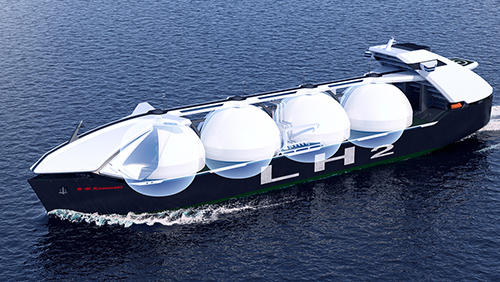
In 2021, KHI’s first liquefied hydrogen carrier, Suiso Frontier, sailed to Australia loaded with 75 tons of liquefied hydrogen in a 1,250 cubic meter tank. While that’s a good start, for the purposes of industrial consumers the ships need to be 100 times larger.
In June, KHI completed the development of a tank system that’s 160,000 cubic meters in size. Called CC61H, it comprises four sphere-shaped 40,000 cubic meter tanks loaded on a single vessel. Like Suiso Frontier, the tanks have two-layers.
Source: KHI
The ship project will enter engineering, procurement and construction phase next year and the company will conduct demo sails by around 2027.
As importantly, HySTRA is making advances in adjacent infrastructure. In March, it reported the successful transfer of liquefied H2 from the ship to an on-shore facility, using the world’s first rigid-type loading arm system (LAS). The challenges were keeping temperatures low throughout the transport process while maintaining smooth mobility of the liquid. Like the tank, the loading arm had double-layered vacuum pipes made of stainless steel.
MCH is cheaper but applications limited
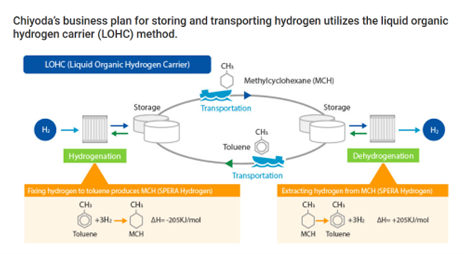
The MCH approach makes use of toluene, a hydrocarbon extracted from gasoline, and a nickel-based catalyst to convert H2 into an MCH liquid that can be stored and carried at room temperatures and pressures.
The MCH compounds can be moved by chemical tankers and container vessels. The solution is stable and can keep for 100 years without any significant change in its chemical properties. However, the technology to convert MCH back to hydrogen wasn’t established until 2004.
In 2004, Chiyoda Corp developed a platinum-alumina based catalyst, dubbed Spera, to convert MCH back to hydrogen. Platinum and alumina particle sizes were key to this success. In 2017, Chiyoda formed a consortium called AHEAD, which was joined by Mitsubishi Corp, Mitsui & Co, and NYK Line. The first ship carrying MCH sailed from Brunei to Japan in 2019.
The beauty of this method is that legacy oil refinery equipment can be used for the chemical conversions known as dehydrogenation. However, the cost of Spera itself was a burden, as the catalyst had a short life-cycle of about a year, and utilized expensive platinum metal.
Chiyoda says it’s now close to doubling the life cycle of the catalyst, a company official told Japan NRG. In November, Dr. Okada Yoshimi, a company research fellow who developed Spera, said the cost of hydrogen supply via the MCH system has dropped to ¥30-45/nm3, close to the government target of ¥30/nm3 by 2030.
The MCH system’s lean cost structure is its main advantage, but it’s not easy to use. H2 extracted from MCH has a purity of 99% or less, compared to liquefied H2’s 99.999%. That means the MCH-derived molecules need to go through another refining process to reach 99.97%, the grade required for fuel cell vehicles.
To resolve this challenge, AHEAD and ENEOS are exploring the potential to use MCH directly, without converting it back to hydrogen. In spring 2023, ENEOS launched studies to see if MCH can be used directly as a fuel in power generation.
In July, ENEOS and Waseda University said they proved that MCH could be used as a feedstock for fuel cells. The university succeeded in generating power from solid oxide fuel cells (SOFC), using MCH as feed. The researchers are still trying to understand the processes and practical application is years away. But this advance could reduce H2 supply chain costs further as this approach eliminates the need for H2 storage tanks.
New solutions beget new challenges
For shipping liquefied H2, power supply could be a headache. Air seeps through stainless steel plates no matter how thick, and pumps are needed to keep the air out. They require power to run and as tanks and ships become bigger, they’ll need more energy. Another feat is improving the liquefaction processes, which results in evaporation of the gas when compressed.
The HySTRA consortium is developing new liquefaction technologies by reaching out to LNG facility operators. Meanwhile, the challenges for the MCH team are to develop H2 refining processes and systems to boost the gas purity from 99% to 99.97%, as well as methods to remove chemical impurities in the MCH solution and to efficiently recover toluene for re-use. The long-term goal to develop MCH-fuel cells could take 10 to 20 years, said Okada of Chiyoda.
The new technologies should help to open numerous doors, and not only in energy. For example, the use of vacuum in double-layered containers has not been limited to liquefied hydrogen temperature control but has also been applied to quantum computing to prevent processing units from overheating.
This method is also being applied for next-gen nuclear energy research. Any significant breakthrough will have manifold repercussions beyond H2 transport, and can only help to accelerate the energy transition.
ANALYSIS
BY FILIPPO PEDRETTI
A New Life for Old EV Batteries: Toyota and JERA Start Sweep Energy Storage
As the energy transition leads to more renewable energy and electrification of transport, demand for storage batteries is increasing. Manufacturing such batteries, however, requires a wide array of raw materials that Japan must import, often competing with both allies and rivals.
Once again, just like with fossil fuels, Japan is highly dependent on international supply chains and hence, vulnerable to disruptions. But the challenge is even greater because clean energy supply chains are more complex than those for fossil fuels. Rather than targeting just three basic hydrocarbons, Japan will now need to manage – and scale up – the sourcing of dozens of critical elements. The EV sector alone will require 30-40 times more lithium, nickel and graphite, among others, by 2040 to meet global climate targets, the IEA forecasts.
To alleviate the supply chain challenge, there’s been growing interest in ways to recycle and/or reuse vehicle batteries. And at the end of October, JERA and Toyota achieved what could become a major breakthrough in the field. In a world first, the two companies launched a demonstration of an energy storage system that deploys a wide range of old EV batteries which can connect to the grid.
This development holds potential to extend the life of batteries, and as a result can help to partly insulate Japan from disruptions in international supply chains. Plus, with the cost of recycling and battery disposal high, there’s likely to be no shortage of those willing to hand over aging batteries.
Rare materials sources and their forecast
While the spread of EVs in Japan has so far been lackluster, stronger growth is expected in the coming decade as the country plans to end sales of combustion engine vehicles by 2035.
As growing demand for cobalt, lithium and nickel could soon outstrip current supply, the recycling and optimization of battery usage is crucial. By FY2030, Japan plans to eventually achieve a recycling ratio of 70% for lithium, 95% for nickel, and 95% for cobalt.
Although Japan used to be a notable copper producer and mined coal, among other elements, it has almost no domestic mining today. This leaves investments in overseas mines and the domestic recycling of batteries as the main strategies for supply chain management. The first of these will always be prone to price volatility, local and regional politics, and transportation bottlenecks. And so, Japan is hoping that it will be able to rely much more on recycling and reuse of batteries in the future.
By 2040, the government expects batteries made with recycled materials to exceed the number of entirely new units.
That’s no easy task given the ramp up in battery production also in the works. According to METI, by 2030, Japan’s domestic annual production of lithium-ion batteries will grow to 150 GWh, up from today’s level of 20 GWh. To realize this plan, Japan will need to secure 100,000 tons of lithium, 90,000 tons of nickel and 20,000 tons of cobalt a year.
Globally, Japan’s annual output for lithium-ion batteries is expected to reach 600 GWh in 2030, up from 40 GWh currently. This expansion will need 380,000 tons of lithium, 310,000 tons of nickel, 600,000 tons of graphite, 60,000 tons of cobalt, and 50,000 tons of manganese.
With these numbers in mind, more state support has started to flow into recycling and reuse projects. Last year, a few companies, including JERA, Toyota Motor and Sumitomo, received NEDO funding for exploring ways to extract rare metals from EVs batteries.
Toyota and JERA’s Sweep Energy Storage System
At the end of October, JERA and Toyota began a demonstration to operate a large-scale energy storage system using repurposed EV batteries. This project is a world first that allows the connection of the system to an extra-high-voltage transmission grid.
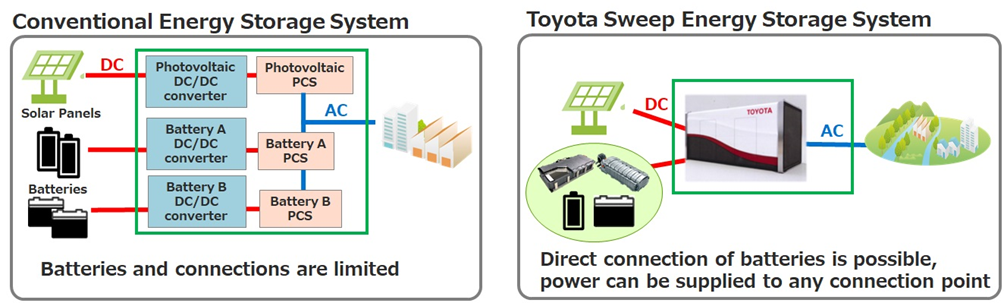
The MoE approved the project under its renewable energy grant program. The goal is to gather reclaimed batteries on a large scale and promote their reuse. Unlike other systems, the one developed by JERA and Toyota allows batteries of various chemistries – lithium-ion, nickel-hydrogen and lead-acid – and from different kinds of vehicles (HEVs, BEVs, FCEVs etc) to be connected in the same system irrespective of each unit’s performance and capacity.
JERA and Toyota have been developing such a system since at least 2018, and their effort reached a milestone last year with the demonstration of Toyota’s “Sweep Energy Storage System”. This original “sweep” function was developed by Toyota Central R&D Labs. It controls energy discharge by switching electricity flow on and off, bypassing each battery connected in series in microseconds. This controls the amount of charge and discharge.
A fast response in regulation of flow allows output to be tailored to the desired level. Also, the “sweep” system obviates the need to convert DC output from batteries to AC power. In traditional battery systems, it’s necessary to install special equipment for conversion, such as rectifiers and inverters. The new system, in effect, allows for direct AC output from batteries. Thus, it lowers cost and prevents power loss from conversion.
The new battery system has already begun operation at JERA’s Yokkaichi Thermal Power Plant in Mie Pref. It has a capacity of 1.26 MWh and a maximum output of 485 kW.
One other major advantage for the system developers is that they’re likely to have a steady stream of reclaimed batteries available free of charge. In fact, they might be able to charge a fee to collect them. By the late 2020s, Toyota and JERA aim for annual power production of 100 MWh using the sweep system.
Related projects
In another project that has support from NEDO’s Green Innovation Found, JERA and Sumitomo Chemical are developing a new method for recycling EV lithium-ion batteries, seeking a non-roasting method for battery material separation. JERA will use its high-voltage pulse technology, while Sumitomo Chemical will upgrade direct recycling, hoping to allow cathode materials to be recycled without reverting them to metal.
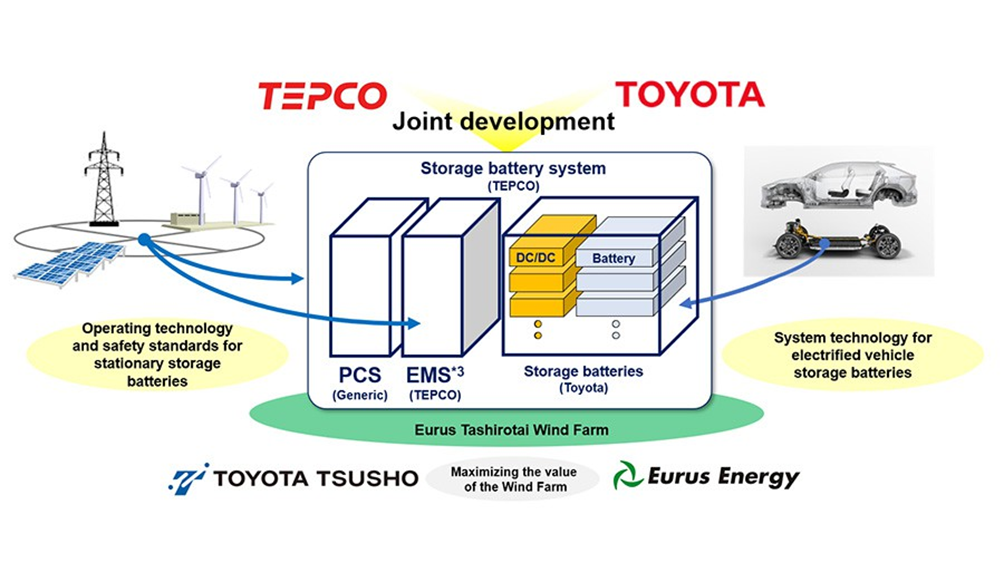
Also, in May, TEPCO and Toyota Motor announced a collaboration to develop a stationary storage battery system that has a 1 MW output and 3 MWh capacity. It will connect storage batteries for EVs to existing Power Conditioning Systems (PCS). The system will operate in sync with the grid and other standard electrical equipment, making it easier to deploy with existing infrastructure.
The two companies plan to analyze the system’s operation and business feasibility. The implementation structure comprises an Energy Management System (EMS) and PCS; it connects the DC power from storage batteries to supply AC power to the electricity grid.
Size is all
One issue that all these projects face, however, is space and scalability. Stacking batteries requires ample space for ventilation. Meanwhile, building on single-digit megawatt systems facilities that could work in tandem with regular baseload generation would require in the order of half a million 1-kWh batteries (as used in hybrid vehicles). The logistics of spacing these units, installing and maintaining them, and replacing them efficiently will not be easy.
Should the challenges be overcome through engineering ingenuity, reused battery systems will help Japan implement steps towards a circular economy and potentially cut its reliance on imports, at least to a point. It could also incentivize better recycling practices at consumer level and in corporations.
How much innovation in reuse and recycling can contribute to stabilizing Japan’s energy security, or hedge against volatility in metal prices and supply, is too early to say. Still, in an increasingly competitive global EV market, Japan has all the incentives to solve this challenge.
ASIA ENERGY REVIEW
BY JOHN VAROLI
This new weekly column will replace Global View and will focus on energy events in Asia and those that directly impact markets in the region.
Australia / Solar
Construction of the 380 MW Aldoga Solar Farm will start in early 2024 and take 18 months to complete. The project is on land leased from the Economic Development Queensland for 30 years. The power generated will be used for hydrogen production that could be consumed domestically, as well as exported to Japan.
Clean Electricity
Since 2015, Asia has boosted clean electricity output and slashed its share of fossil fuels faster than North America and Europe, Reuters data shows; this in turn feeds Asian nations’ pushback against efforts by the West to end private financing for coal-fired power.
Energy transition
ReNew Energy Global (ReNew) signed a MOU with the Asian Development Bank for deals worth $5.3 billion for climate change mitigation projects through 2028. These include renewable energy power, carbon offsets, decarbonisation tech, green hydrogen, etc. ReNew currently has a portfolio of 14 GW of clean energy capacity.
China / Renewables
Wind turbine maker Envision Energy believes “it’s easy” to meet an international pledge made at COP28 to triple renewables by 2030. CEO Lei Zhang said in Dubai: “If you look at the wind and solar growth rate, you see that triple is not difficult because all renewables have lower cost than fossil fuel.”
India / Power transmission
Tata Power acquired the Bikaner-III Neemrana-II Transmission Project in an auction led by the Ministry of Power. The project will transfer 7.7 GW of renewable energy from the Bikaner Complex in Rajasthan through the 340 km transmission corridor.
India / Renewables
Renewable energy capacity in India is expected to reach 170 GW by March 2025, up from 132 GW in October.
Kyrgyzstan / Renewables
Abu Dhabi Future Energy (Masdar) and EDF Energy inked an MoU with the Ministry of Energy of the Kyrgyz Republic to develop hydropower and renewables projects with a total capacity of 3.6 GW. This is Masdar’s first venture into hydropower.
New Zealand / Renewables
Genesis Energy will support a $1.1 billion program with the profits from its Kupe gas field to develop renewable power generation and grid-scale battery storage. This will give a 160% increase in Genesis’ current 3,200 GWh of renewable capacity.
Philippines / Coal
The Rockefeller Foundation is backing the world’s first ‘coal-to-clean’ pilot project in the Philippines that will use carbon credits to enable early decommissioning of a coal-fired power plant. The Coal to Clean Credit Initiative was announced at COP28.
Vietnam / Energy transition
Vietnam needs $135 billion to develop renewable energy capacity by 2030. At COP28, Vietnam and International Partners Group (IPG) announced their Resource Mobilization Plan. However, the commitment by IPG and Glasgow Financial Alliance for Net Zero (GFANZ) to help Vietnam mobilize US$15.5 billion is a small part of the required capital.
2023 EVENTS CALENDAR
A selection of domestic and international events we believe will have an impact on Japanese energy
ASEAN-Japan summit to mark 50 years of cooperation
Last market trading day (December 30)
Disclaimer
This communication has been prepared for information purposes only, is confidential and may be legally privileged. This is a subscription-only service and is directed at those who have expressly asked K.K. Yuri Group or one of its representatives to be added to the mailing list. This document may not be onwardly circulated or reproduced without prior written consent from Yuri Group, which retains all copyright to the content of this report.
Yuri Group is not registered as an investment advisor in any jurisdiction. Our research and all the content express our opinions, which are generally based on available public information, field studies and own analysis. Content is limited to general comment upon general political, economic and market issues, asset classes and types of investments. The report and all of its content does not constitute a recommendation or solicitation to buy, sell, subscribe for or underwrite any product or physical commodity, or a financial instrument.
The information contained in this report is obtained from sources believed to be reliable and in good faith. No representation or warranty is made that it is accurate or complete. Opinions and views expressed are subject to change without notice, as are prices and availability, which are indicative only. There is no obligation to notify recipients of any changes to this data or to do so in the future. No responsibility is accepted for the use of or reliance on the information provided. In no circumstances will Yuri Group be liable for any indirect or direct loss, or consequential loss or damages arising from the use of, any inability to use, or any inaccuracy in the information.