
JAPAN NRG WEEKLY
FEB 13, 2024
JAPAN NRG WEEKLY
FEB 13, 2024
NEWS
TOP
- Hydrogen hub municipalities finalize FY2024 budget plans, Tokyo leads with ¥20 bln
- Japan’s total installed wind power capacity surpasses 5 GW, northern regions lead the nation
- JOGMEC makes early repayment of loans related to the sanctioned Arctic LNG 2 project in Russia
- METI Minister calls to minimize renewables curtailment
- Tokyo Metro Govt, New South Wales ink hydrogen MoU
- JOGMEC, Germany’s H2Global ink clean hydrogen MoU
- METI panel pushes for new tariff for Perovskite generation
- Toyota Motor and Chiyoda partner on scalable electrolyzers
- METI to reorganize metal resource oversight structure in summer
- MOL, JX sign MoU to develop Australia-Japan CCS value chain
- Iwatani, MHI and others to test drive liquified hydrogen trucks
- Digitalization will boost Japan’s power capacity needs: OCCTO
- Chubu Electric invests in offshore wind farm in Netherlands
- EPCOs to revise electricity prices due to rising transmission cost
- Power futures trading hits record monthly volumes on the EEX
- Sparx Group sets up fund to develop battery storage in Japan
- Itochu to develop large solar projects in the U.S.
- Tokyo Century invests in UK’s largest solar acquisition deal
- KEPCO adjusts on-site dry storage plan for spent nuclear fuel
- Japan to impose stricter sanctions on Russian crude oil
- Tokyo Gas expands gas M&T business in North America
- NYK and JERA sign long-term charter contract for LNG carrier
ANALYSIS
WHAT FUTURE FOR KASHIWAZAKI-KARIWA NPP AND PUBLIC TRUST IN TEPCO?
TEPCO is close to bringing back online its last remaining NPP — the Kashiwazaki-Kariwa station has passed inspection and the regulator lifted an operational ban. The restart of Units 6 and 7 would be a financial boon for TEPCO, allowing the utility to cut costs by importing less LNG and coal. The final decision for the restart now rests with local authorities, and that will depend on whether TEPCO can convince public opinion of the NPP’s necessity.
NEW CAPACITY AUCTION SEEKS STABILITY VIA LONG-TERM DEALS FOR CLEAN POWER
In January, Japan’s capacity market marked a significant milestone with the launch of a “long-term power decarbonization auction system” that seeks to partly sponsor construction of new clean electricity generation facilities. If successful, it will help drive investments in clean energy. While the auction system allows dispersing of decarbonization funds beyond renewables, METI is confident it will help to improve grid stability and resilience, and reduce emissions.
ASIA ENERGY VIEW
A wrap of top energy news that impacts other Asian countries.
EVENTS SCHEDULE
A selection of events to keep an eye on in 2024.
JAPAN NRG WEEKLY
PUBLISHER
K. K. Yuri Group
Events
Editorial Team
Yuriy Humber (Editor-in-Chief)
John Varoli (Senior Editor, Americas)
Mayumi Watanabe (Japan)
Wilfried Goossens (Events, global)
Kyoko Fukuda (Japan)
Magdalena Osumi (Japan
Filippo Pedretti (Japan)
Tim Young (Japan)
Regular Contributors
Chisaki Watanabe (Japan)
Takehiro Masutomo (Japan)
SUBSCRIPTIONS & ADVERTISING
Japan NRG offers individual, corporate and academic subscription plans. Basic details are our website or write to subscriptions@japan-nrg.com
For marketing, advertising, or collaboration opportunities, contact sales@japan-nrg.com For all other inquiries, write to info@japan-nrg.com
OFTEN-USED ACRONYMS
|
METI |
The Ministry of Economy, Trade and Industry |
mmbtu |
Million British Thermal Units | |
|
MoE |
Ministry of Environment |
mb/d |
Million barrels per day | |
|
ANRE |
Agency for Natural Resources and Energy |
mtoe |
Million Tons of Oil Equivalent | |
|
NEDO |
New Energy and Industrial Technology Development Organization |
kWh |
Kilowatt hours (electricity generation volume) | |
|
TEPCO |
Tokyo Electric Power Company |
FIT |
Feed-in Tariff | |
|
KEPCO |
Kansai Electric Power Company |
FIP |
Feed-in Premium | |
|
EPCO |
Electric Power Company |
SAF |
Sustainable Aviation Fuel | |
|
JCC |
Japan Crude Cocktail |
NPP |
Nuclear power plant | |
|
JKM |
Japan Korea Market, the Platt’s LNG benchmark |
JOGMEC |
Japan Organization for Metals and Energy Security | |
|
CCUS |
Carbon Capture, Utilization and Storage | |||
|
OCCTO |
Organization for Cross-regional Coordination of Transmission Operators | |||
|
NRA |
Nuclear Regulation Authority | |||
|
GX |
Green Transformation |
NEWS: ENERGY TRANSITION & POLICY

Hydrogen hub municipalities set FY2024 budget plans, Tokyo leads with ¥20 bln
(Government statements, Feb 6)
- Municipalities aiming to be hydrogen hubs — Tokyo Metropolitan govt (TMG), Yokohama City, Kawasaki City, Fukushima Pref — have finalized FY2024 budget plans. The local assemblies are expected to vote before March 31.
- TMG plans to nearly double its hydrogen budget to ¥20.3 billion from ¥11.4 billion;
- Major items include ¥4.2 billion for subsidizing fuel cell (FC) trucks,
- ¥2.4 billion for FC stations,
- ¥1.1 billion for FC garbage collection vehicles.
- Yokohama’s hydrogen hub development and FC subsidies will nearly triple to ¥98 mln from ¥35 mln.
- Subsidies for FC stations and FC buses remain at ¥10 mln for each.
- Kawasaki, however, plans to cut its hydrogen strategy promotion budget to ¥37.5 mln from ¥43.8 mln.
- Fukushima plans ¥418 mln for FC station and FCV subsidies; ¥31.7 mln for hydrogen and carbon neutral tech; and ¥41.4 mln for hydrogen talent resources.
- YoY comparison figures were unavailable.
TAKEAWAY: As much as the budget increases, one point of interest is in the differences between municipalities. For example, Kumamoto Pref, which has no hydrogen hub aspirations, seeks a ¥8 mln budget to remove a prefecture-owned FC station, and plans to slash FCV subsidies. However, it aims to expand the “RE100 Area” renewable project budget to ¥658 mln, from the current ¥3 mln, in order to attract semiconductor investment. The Japanese energy landscape is slowly decentralizing as municipalities develop independent energy strategies.
- SIDE DEVELOPMENT:
Tokyo Metro Govt, New South Wales ink hydrogen MoU
(Government statement, Feb 6)- Tokyo and New South Wales of Australia signed an MoU to collaborate on developing projects in the energy transition, with a focus on hydrogen.
- CONTEXT: Australia is Japan’s leading source of LNG and coal supplies, and New South Wales accounts for over 60% of Japan’s thermal coal supplies. However, both countries are increasingly moving to clean energy projects, especially green hydrogen.
- SIDE DEVELOPMENT:
JOGMEC, Germany’s H2Global ink clean hydrogen MoU
(Government statement, Feb 2)- Japan Organization for Metals and Energy Security (JOGMEC) and Germany’s H2Global signed a MoU to share information and hold seminars on regulation, technology and supply chains for clean hydrogen.
METI Minister calls to minimize curtailment of renewable energy sources
(Minister statement, Feb 6)
- METI Minister Saito called to “maximize the introduction of renewable energy while maintaining stable power supply,” but he emphasized the need to “suppress curtailment levels as much as possible” amid an expected increase in such actions.
- To minimize curtailments, comprehensive measures based on the “Output Control Measures Package” that were compiled in December will be implemented.
- On the demand side, efforts will be made to facilitate introduction of storage batteries and promote new electricity rate menus that encourage demand response (DR).
- On the supply side, measures such as lowering the minimum output of thermal power plants and improving interregional transmission lines will be pursued.
METI panel lists Perovskite tariff policy discussion points
(Government statement, Feb 7)
- METI’s Power Tariff Committee listed discussion points for creating a new category in Feed-in-Tariff and Feed-in-Premium, aiming for a launch of perovskite solar cell-based power supply service as early as 2025.
- By 2025, PSC power suppliers expect to achieve power generation costs of ¥20 / kWh or less. The FIT / FIP schemes should encourage them to be self-sufficient.
- Policy clarity on panel recycling and plant decommissioning, which align with regulations, will be required.
- CONTEXT: Presently, solar power is categorized by the size of solar farms and the target user segment (residential or businesses), but not by the type of solar panel. The METI committee plans to create a separate category for PSC power.
TAKEAWAY: There is another consideration in terms of PSC power commercialization. The METI committee also dismissed claims made by some developers that the amount of lead contained in PSC modules are negligible and will have almost no environmental impact. This decision has triggered PSC developers to launch studies on tin iodide as an alternative raw material. They are also developing technologies to recover lead from the PSC modules as commercialization of tin-based PSC is likely to take several years.
JGC begins field studies of bolt-free Perovskite sheets
(Japan NRG, Feb 7)
- In January, JGC Corp began field studies of plastic sheets with perovskite solar cell (PSC) modules. The modules, which are thin and resemble film, are pasted on a resin sheet. Nuts or bolts are not needed to stabilize the modules.
- JGC developed the sheets and fastened them to the roof of a JGC warehouse in Tomakomai City (Hokkaido) and on its employee dormitory in Yokohama (Kanagawa Pref). In March or April, JGC plans to hang the sheets on building walls.
- The sheets use reinforced woven resin that insulates heat, is lightweight and wind resistant. EneCoat Technologies provided the modules.
- CONTEXT: The field studies will focus on module endurance and power efficiencies in different environments. It will take several more years until the product is ready to market. One application is their installations on end-of-life solar panels, which is spreading in China. Chinese solar farms are using glass-mounted PSC modules.
TAKEAWAY: This is an interesting development that could benefit more than the company involved. JGC provides engineering services for power projects and operates solar and biomass plants of its own. But its business model is to integrate PSC systems at customer sites and to explore the possibility of selling PSC-generated power through purchase agreements (PPA).
RIKEN-led group improves water resistance of ultra-thin solar cells
(Organization statement, Feb 1)
- An international research group led by RIKEN developed an organic solar device that can operate underwater, by improving its water resistance.
- The researchers developed a tech that strengthens the interface adhesion between the anode and the power generation layer.
- The solar cell retains 89% of energy conversion efficiency after immersion in water for 4 hours. Even after 300 cycles of mechanical deformation in water, with repeated compression strain of 30% and restoration, the cell retains 96% of its energy conversion efficiency.
- CONTEXT: These cells are seen as a potential power source for wearable devices (as sensors) or in textiles, due to their flexibility and lightweight nature.
Iwatani, MHI to test drive liquefied hydrogen transport trucks
(Japan NRG, Feb 8)
- Iwatani Corp, Mitsubishi Heavy Industries, gas container manufacturer Koatsu Showa Cylinder and engineering company Musashi Koatsu Giken Co. will conduct field tests of liquefied hydrogen transport trucks in Tokyo.
- The trucks will be equipped with a gasifier and a hydrogen dispenser and will function as a mobile service station. Presently, hydrogen gas is compressed in cylinders and transported on trucks.
- MHI will design the vacuum storage to keep the liquid under -235 C.
- CONTEXT: The Tokyo Metropolitan Govt will finance two-thirds of the study costs as a part of its R&D Support for the New Energy Promotion program.
TAKEAWAY: Other than liquefying, hydrogen can be carried in methylcyclohexane (MCH) chemicals or ammonia. ENEOS is reportedly developing MCH transport on trucks and the conversion of MCH to hydrogen at service stations.
- SIDE DEVELOPMENT:
Govt to test hydrogen-fueled cranes at Yokohama, Kobe ports
(Government statement, Feb 7)- The Ministry of Land, Infrastructure, Transport and Tourism will conduct field trials of gantry cranes, switching to fuel cell batteries or hydrogen engines from diesel engines.
- Trial runs are expected to start this year at Yokohama and Kobe ports.
METI to reorganize metal resource oversight structure in summer
(Nikkei, Feb 7)
- This summer, METI plans to consolidate upstream and downstream policymaking units into one entity, aiming to improve supply chain strategies.
- The Mineral and Natural Resources division in ANRE, which oversees upstream mining, will move to the Manufacturing Industries Bureau.
TAKEAWAY: The new entity might fill in the missing link, which is the mid part in the supply chains. For example, between lithium mining and refining, and battery component manufacturing, there are diversified processes over which Japanese companies have limited control.
MOL and JX sign MoU to develop Australia-Japan CCS value chain
(Company statement, Feb 5)
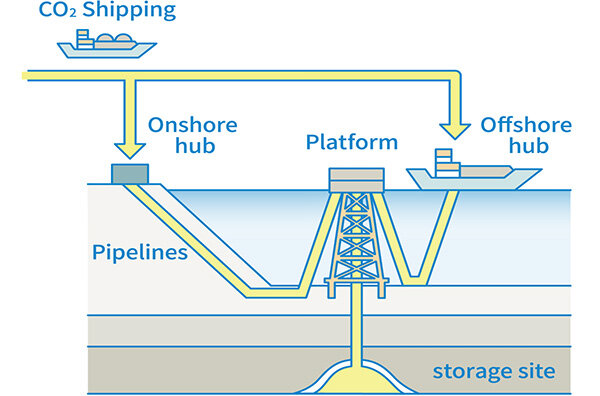
- The focus is on capturing CO2 from ENEOS refineries and nearby industries. A CO2 carrier will take it to Australia, then inject and store it at a special site.
- MOL will seek a suitable liquefied CO2 carrier, and estimate transport costs. JX will focus on estimating the CCS value chain cost.
- SIDE DEVELOPMENT:
MHI wins FEED contract for UK’s first CO2 capture plant at a cement facility
(Company statement, Feb 6)- Mitsubishi Heavy Industries (MHI) was chosen by Heidelberg Materials UK to provide technology for a CO2 capture plant in the UK. This project is part of the HyNet CCUS cluster and aims to capture CO2 emissions from cement manufacturing, and store them in a depleted gas field.
- MHI will use its proprietary carbon technology. Worley, a global professional services company, is partnering with MHI on the project.
- They plan to capture up to 800,000 tons of CO2 / year and begin operations in 2028.
Toyota Motor, Chiyoda Corp ink agreement on scalable electrolyzers
(Company statement, Feb. 5)
- Toyota Motor and Chiyoda Corp signed a development agreement on large electrolyzers, bringing together Toyota’s fuel cell stacks and Chiyoda’s plant construction technologies.
- They plan to combine multiple 5 MW electrolyzers to build large capacities. The base 5 MW unit produces 100 kg / hour hydrogen, and occupies a floor area of 2.5 by 6 meters, which is half the space taken up by typical electrolyzers.
TAKEAWAY: The benefits of scalable module units include easier shipping, speedy construction, and lower costs. This concept was pioneered by Thyssenkrupp Nucera, which developed a base module unit called Scalum with a 20 MW capacity.
- SIDE DEVELOPMENT:
Obayashi Corp launches AEM electrolyzer field study
(Company statement, Feb 6)- Green hydrogen producer Obayashi Corp installed an anion exchange membrane (AEM) electrolyzer at its Technology Research Institute (Tokyo) to compare its performance with a proton exchange membrane (PEM) electrolyzer.
- PEM requires expensive precious metal. Alkaline water electrolysis (AWE) tech does not require precious metals; but, it faces hydrogen quality, safety and power consumption challenges. The emerging AEM tech might be a cheaper alternative.
TAKEAWAY: Obayashi Corp is one of the few companies with direct exposure to both PEM and AWE technologies. It runs PEM electrolyzers at its Oita geothermal plant and at the Kiyose R&D facility. Obayashi does not own AWE systems, but it has been monitoring hydrogen boilers and other equipment using hydrogen produced by the AWE tech.
Sojitz among winning JCM projects in latest round of Financing Support Program
(Government statement, Feb 2)
- The MoE selected five new projects as FY2023 winners in Round 3 of the Joint Crediting Mechanism (JCM) Financing Support Program that aims to reduce CO2 emission in developing countries.
- The new projects are an addition to eight others selected in the first two rounds (Aug and Oct 2023). The total number of subsidized JCM projects has reached 240.
|
Company |
Project |
Country |
Estimated GHG Reduction (tCO2/year) |
|
Sojitz |
Introduction of 196 MWh BESS in Huatacondo PV plant, Tarapaca Region |
Chile |
17,975 |
|
Kanematsu |
11.3 MW mini hydro power plant in Tumauini |
The Philippines |
29,342 |
|
Kyuden International |
10 MW solar power project in San Jose, Luzon Island |
The Philippines |
6,846 |
|
Tokyo Century |
7 MW solar power project in collaboration with power-supply company |
The Philippines |
4,731 |
|
Shibata |
13.5 MW solar power plant project in Kebithigollewa, North Central Province |
Sri Lanka |
6,511 |
- CONTEXT: The JCM program was introduced in 2013 to help reduce GHG emissions in developing countries by promoting advanced decarbonizing tech. The scheme provides support for up to 50% of the initial investment cost. Japan has worked in JCM with 28 countries including Laos, Indonesia, and Kazakhstan. Over 200 projects have been selected.
Osaka Gas subsidiary KRI acquires battery tech startup SEI
(Company statement, Feb 1)
- KRI, a wholly-owned subsidiary of Osaka Gas, acquired shares of battery tech company SEI.
- SEI develops storage batteries for power grids and EVs, mainly prototype production.
NEWS: ELECTRICITY MARKETS

Japan’s total installed wind power capacity surpasses 5 GW, northern regions in the lead
(JWPA statement, Feb 2)
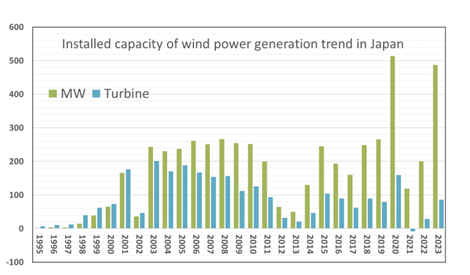
- At the end of 2023, Japan’s total installed wind power (onshore and offshore) reached 5.2 GW, with 2,626 turbines nationwide, said the Japan Wind Power Association.
- In 2023 alone, Japan built 24 wind farms (total capacity 572 MW), but four wind farms were decommissioned in the same period.
- The new wind farm’s average size was 23.8 MW per site, compared to 29.1 MW in 2022.
- Tohoku region, which comprises six northern prefectures, led in terms of installed capacity connected to the grid with 2.1 GW. When ranked solely by prefecture, Hokkaido leads with 683 MW.
- Cumulative installed capacity for offshore wind power was 153.5 MW with 39 turbines at six sites. The offshore farm data does not include wind farms accessible from coastal areas that are categorized as semi-offshore wind farms.
- Vestas (including under the NEG-Micon brand) and GE (including under the brands TACKE and Alstom) have supplied the most wind turbine capacity to Japan, with just over 1 GW each. German suppliers Enercon and Siemens-Gamesa (including under the Bonus brand) are the next-largest with 896 MW and 723 MW respectively.
TAKEAWAY: Despite the great strides made by Japan in solar, which has helped the country install the world’s third-largest solar capacity, progress in wind generation has been slow. The country does not even rank in the top 20 worldwide for wind capacity. The govt hopes that this will change in the coming decades. It has a target of 10 GW in wind power capacity by 2030, by which time total offshore wind power capacity alone is poised to increase by at least 4.53 GW owing to 10 projects awarded or soon to be granted through the Round 1-3 auctions held between 2021 and 2024. Last month, the govt began soliciting bids in the Round 3 auction. Those projects, however, are expected to start operations no sooner than in 2028.
Digitalization to boost Japan’s capacity needs by 5.37 GW within ten years: OCCTO
(Denki Shimbun, Feb 9)
- Introduction of new data centers and semiconductor factors will require a demand boost of at least 5.37 GW in Japan before the end of FY2033, according to OCCTO estimates, based on feedback from the country’s 10 major power transmission companies.
- This equates to an annual growth grade of 0.6-0.7%, with particularly strong interest in new capacity in the Hokkaido, Tokyo and Chugoku areas. Industrial demand growth by itself is expected to average an annual 1.4% in the period, compensating for a decline in household and commercial use, coupled with energy conservation trends.
- This is the first time that the needs of digital centers and chip manufacturers have been factored into local power demand assumptions, and it takes into account the boom in AI and cloud computing. The numbers produced by OCCTO are based on facilities that are deemed to have a certain degree of progress and which have already identified their location and construction costs.
Chubu Electric invests in 760 MW offshore wind farm in the Netherlands
(Company statement, Feb 2)
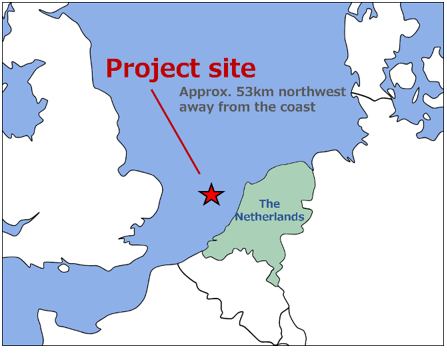
- Chubu Electric joined the Hollandse Kust West Site VI offshore wind farm developed by Shell and Eneco. The utility will acquire a 30% stake in Ecowende, the project’s operator. Shell owns 60%, while Eneco has 10%.
- Located in the North Sea, 53 km off the Dutch coast, construction begins this year on the 760 MW project.
- This is Chubu Electric’s first direct investment in an offshore wind project outside of Japan. Commercial operations will launch in 2026. The power generated will be supplied to the Dutch power grid.
- CONTEXT: In 2022, Shell and Eneco’s consortium won the tender to develop the project. Chubu Electric also holds a 20% stake in Eneco, and Mitsubishi Corp the rest. Chubu Electric and Mitsubishi Corp are partners in three offshore wind projects in Japan.
Tohoku Electric launches operation of wind farm in Aomori Pref
(Japan NRG, Feb 6)
- On Feb 3, Tohoku Electric began commercial operation of its Green Power Fukaura onshore wind farm in Fukaura Town, Aomori Pref. It has almost 80 MW installed capacity and uses 19 GE turbines (4.2 MW each).
- This is the utility’s fifth wind farm to come online. Tohoku Electric is involved in 20 wind power projects, aiming for a 2 GW cumulative capacity nationwide.
- CONTEXT: Green Power Investment is also involved in this project. The deal includes a 10-year full-service contract that could be extended. The project uses turbines with a 117 meter rotor diameter and a hub height of 110 meter. Given the complexity of the site, the turbines are designed to deal with adverse weather and wind conditions.
TAKEAWAY: Tohoku Electric seeks to include renewables in its portfolio, which was detailed in the company’s medium-term plan for FY2023-FY2025. These include wind, solar and geothermal, as well as in renewable energy networks, including grid optimization.
- SIDE DEVELOPMENT:
Recently launched Ishikari Bay wind farm gets subsea cabling
(Company statement, Feb 9)- Furukawa Electric laid a subsea cable system for the Ishikari Bay New Port wind farm in Hokkaido Pref that launched on Jan 1, with voltage at 66kV.
- The 112 MW wind farm is Japan’s largest offshore wind farm.
- As the turbines have jacket-type foundations, the cable system required an array of J-tubes through which the cables were pulled to connect turbines to the substation.
Ten major EPCOs to revise electricity prices due to rising transmission costs
|
Company name |
Planned price hikes |
|
Hokkaido Electric |
¥65 |
|
Chubu Electric |
¥38 |
|
Hokuriku Electric |
¥5 |
|
KEPCO |
¥65 |
|
Chugoku Electric |
¥27 |
|
Kyushu Electric |
¥23 |
|
Okinawa Electric |
¥35 |
(Nikkei, Feb 6)
- The 10 major power firms announced that they’ll revise the unit price of electricity bills starting April due to a review of consignment charges. This change will reflect the rising costs of transmission and maintenance of transmission lines.
- Hokkaido Electric, Chubu Electric, Hokuriku Electric, KEPCO, Chugoku Electric, Kyushu Electric and Okinawa Electric said that bills for monthly use of electricity per household will rise, with the increases ranging from ¥5 to ¥65.
- However, Tohoku Electric, TEPCO and Shikoku Electric will lower prices by ¥24, ¥2 and ¥3, respectively.
December sees highest trading volume on EEX market
(Denki Shimbun, Feb 5)
- In December, the EEX exchange saw electricity futures trading rise by 2.7-times, MoM, to around 18.3 TWh.
- This was the highest monthly volume on record.
- CONTEXT: Since May 2020, the number of firms participating in the EEX market has climbed to 67, of which 33 are Japanese companies. The number of participants is expected to rise to 80 by late 2024.
- SIDE DEVELOPMENT:
December results for TOCOM futures market up 20% from previous month
(Denki Shimbun, Feb 6)- In December, electricity futures trading volume on the TOCOM exchange rose 21.6% MoM to 40.6 GWh.
- The number of executed trades jumped almost 40% to 669. The spot price averaged ¥12.4/ kWh.
- Trading volumes had subsided in previous months due to warmer weather and less volatile fuel prices.
Sparx Group sets up fund to develop battery storage in Japan
(Company statement, Feb 1)
- Asset management firm Sparx Group set up SPARX Green Battery Energy Storage System Fund to invest in and develop energy storage projects in Japan.
- The ¥26 billion fund will be managed for 25 years.
- The firm will be active on the supply-demand adjustment market, decarbonized power supply auctions in the capacity market, and the wholesale power market.
- Sparx Asset Management will operate as the investment agent. Investors include Sumitomo Mitsui Banking, Mizuho Bank, and Ricoh Leasing.
- CONTEXT: Sparx Green Energy & Technology, a subsidiary of Sparx Corp, has a track record in the development and operation of renewable energy projects. In Japan it has assets with a total capacity of 727 MW across 349 solar and wind farms.
Itochu to develop large solar power generation projects in the U.S.
(Nikkei, Feb 5)
- Trading house Itochu is investing in large-scale solar farms in the U.S. In addition to site selection and facility design, Itochu will acquire the land and other assets.
- The firm acquired land for three planned solar farms with a total capacity of 330 MW in the states of Illinois and Arkansas, and obtained development permits. It has signed a power purchase agreement with technology giant Meta.
- CONTEXT: Demand for solar power generation in the U.S. is expected to grow thanks to support from the Inflation Reduction Act (IRA). By 2030, Itochu plans to double the size of its business in the U.S. to around 10 GW. So far, Itochu has developed and sold solar farms with a total capacity of about 5 GW in the U.S.
Tokyo Century invests in UK’s largest solar acquisition deal
(Company statement, Jan 30)
- Leasing firm Tokyo Century, together with asset management firm Schroders Greencoat, will invest in 34 solar farms in the UK that have a 303 MW total capacity.
- Their commercial operation began between 2014 and 2017. The acquisition is deemed as the UK’s “largest-ever”.
- The acquisition marks Tokyo Century’s full-scale entry into the solar power generation business in the UK.
- CONTEXT: Tokyo Century is aiming to expand overseas renewable energy projects as part of its growth strategy, targeting North America and Europe.
KEPCO adjusts on-site dry storage facilities plan for spent nuclear fuel
(Company statement, Feb 8)
- KEPCO is advancing its installation plan of dry storage facilities for used fuel within the premises of the Mihama, Takahama, and Ooi NPPs. It submitted a “Request for Prior Understanding” to Fukui Pref, Mihama Town, Takahama Town, and Ooi Town.
- The facilities will be installed on the NPP’s premises. The company pledged a transition to intermediate storage facilities. It will also provide safe storage without the use of power during the interim period.
- CONTEXT: Dry storage facilities hold used nuclear fuel in containers called casks. They are cooled by air without relying on a power source. The fuel will then be sent to intermediate storage facilities outside of Fukui Pref.
TAKEAWAY: In Oct 2023, KEPCO agreed with Fukui Pref to transport the fuel outside the region. Yet, KEPCO’s plan failed to show an actual interim storage facility outside the prefecture, leaving doubts. Using such on-site facilities might prolong the duration of spent fuel within the region.
- SIDE DEVELOPMENT
METI, NUMO to discuss draft report on final disposal site for nuclear waste
(Nikkei, Feb 7)- On Feb 13, METI will discuss the draft report of the literature survey in the towns of Suttsu and Kamoenai (Hokkaido). The survey is the first stage of the selection of a final disposal site for high-level radioactive waste from NPPs.
- After discussions and explanations to local residents, the Nuclear Waste Management Organization of Japan (NUMO) will make the final decision for site selection.
- CONTEXT: NUMO began its investigations in the two towns in Hokkaido in November 2020. Governor Suzuki expressed opposition to the preliminary investigation. The towns are the only two candidate locations for such a disposal site.
TEPCO detects water leak with radioactive materials at Fukushima NPP
(NHK, Feb 7)
- Around 5.5 tons of water containing radioactive materials leaked from equipment at Fukushima Daiichi NPP. The leak was discovered during an inspection, with water seeping from the outlet of a device used to purify nuclear-contaminated water.
- TEPCO estimated the leaked water may contain 22 billion Bq of radioactive materials like cesium, which is above the national reporting standard of 100 million Bq.
- Most water seeped into the soil; nearby drainage channels showed no major changes in radiation levels. However, TEPCO declared the area a no-go zone.
- SIDE DEVELOPMENT:
METI Minister comments on Fukushima leak incident
(Minister statement, Feb 9)- The METI Minister said the leaks at Fukushima Daiichi NPP occurred before the water treatment in the advanced liquid processing system (ALPS) and will not impact the schedule to release the treated water.
- The Minister also urged TEPCO to speedily disclose data and offer clear explanations to the public.
NEWS: OIL, GAS & MINING

JOGMEC pays lenders €814 million due to Russia LNG project sanctions
(Government statement, Feb 2)
- On Jan 30, the Japan Organization for Metals and Energy Security (JOGMEC) made a €814 million payment to financial institutions on behalf of Japan Arctic LNG B.V.
- CONTEXT: This is a Dutch entity through which JOGMEC and trading house Mitsui & Co. jointly hold a 10% stake in the Russian Arctic LNG 2 project. The project and its operating company have been sanctioned by the U.S.
- JOGMEC is both an investor and the loan guarantor for Japan Arctic LNG. Once the LNG project in Russia was made subject to economic sanctions, the loans that were made to the Japanese entity involved in it (i.e. Japan Arctic LNG) were immediately due to be repaid.
- JOGMEC said it received notice from the lenders for early repayment; and, as the debt guarantor specified in the agreement deed, it executed the money transfer.
- Japan Arctic LNG is owned 75% by JOGMEC and 25% by Mitsui. The Arctic LNG 2 project is supposed to deliver a 19.8 mln tons / year LNG manufacturing capacity.
- SIDE DEVELOPMENT:
U.S. sanctions disrupt Mitsui OSK Lines’ involvement in Russian LNG expansion
(Bloomberg, Feb 6)- Mitsui OSK Lines is facing challenges in delivering specialized ships to a new Russian LNG facility due to U.S. sanctions.
- The company can’t charter three ice-breaker LNG ships to the Arctic LNG 2 because of U.S. restrictions. Selling the vessels could also be difficult due to these sanctions.
- President Hashimoto Takeshi said that they are required to sell the vessels to Arctic 2 if they can’t provide the service. U.S. sanctions complicate this process.
TAKEAWAY: The U.S. has made it clear that it does not want the Arctic LNG 2 facility to become operational as it would significantly expand Russia’s production and export capacity for the fuel. There was an expectation that U.S. pressure would prevent the completion of construction at the site in central-northern Russia, yet project operator Novatek has managed to bring the first phase of the facility online. While Japan, in general, supports the U.S. approach towards Russia in the wake of the incursion into Ukraine, the energy issue is more sensitive. The sanctions against Arctic LNG 2 do not compensate Japanese (or other non-Russian) companies for the losses associated with their investment and deliverables for this project. What’s more, President Biden has recently frozen the permitting of new LNG export projects in the U.S., which allies can argue were a potential alternative to Russian LNG supply. For now, it looks like state-backed entity JOGMEC has settled the liabilities faced by the Japanese banks. How the Japan govt will cover the losses incurred by other domestic firms involved in Arctic LNG 2 is unclear, as is the U.S. appetite for offering some form of compensation to allies.
Japan to impose stricter sanctions on Russian crude
(Government statement, Feb 5)
- Starting Feb 20, the Ministry of Finance will hit Russian crude oil with stricter measures for price caps.
- Importers of Russian crude must get a declaration for each cargo loading to confirm compliance with the price cap.
- Previously, declarations were required for each period of transportation or insurance contract. For importers suspected of exceeding the price cap, the govt will request a breakdown of expenses.
TAKEAWAY: The U.S. has already revised its compliance mechanism for the price ceiling, and is considering harsher sanctions on Russia’s energy sector. The need to revise such mechanisms indicates that sanctions on Russia have not always been ineffective.
Tokyo Gas expands gas M&T business in North America
(Company statement, Feb 6)
- Tokyo Gas will set up two subsidiaries in the U.S. — TGAM Trading and TGARM Investment. They aim to promote gas marketing and trading (M&T) in the region. Tokyo Gas has also entered into a Membership Interest Purchase Agreement with ARM Energy Holdings (AEH).
- AEH is a U.S. energy marketing and infrastructure company. Through the new subsidiaries, Tokyo Gas obtained a 49% stake in ARM Energy Trading.
NYK and JERA sign long-term charter contract for a new LNG carrier
(Company statement, Jan 31)
- NYK and JERA signed a long-term charter contract for a new LNG carrier constructed by Hyundai Samho Heavy Industries in South Korea. The vessel, expected to be delivered in 2027, will transport LNG for JERA.
- CONTEXT: This marks the 11th LNG carrier chartered by NYK for JERA. NYK plans to invest ¥300 billion in LNG carrier construction through FY2026.
JERA and PT PLN ink MoU on LNG value chain in Indonesia
(Company statement, Feb 9)
- JERA inked an MoU with PT PLN Energi Primer to develop the LNG value chain.
- It includes setting up and operation of LNG terminals in Indonesia. Both parties will also explore transitioning to hydrogen and ammonia value chains.
LNG stocks at 2.29 million tons, up 6% from last week
(Government data, Feb 7)
- LNG stocks of 10 power utilities stood at 2.29 mln tons as of Feb 4, up 6% from 2.16 mln tons a week earlier.
- However, this is 7.7% down from 2023 Feb end (2.48 mln tons).
JOGMEC, Brazil’s state of Minas Gerais ink MoU on critical raw materials
(Government statement, Feb 7)
- JOGMEC, the Brazilian state of Minas Gerais and Invest Minais signed a MoU to boost investment into critical raw material mining.
- Minais Gerais has deposits of lithium, tantalum and niobium.
ANALYSIS
BY FILIPPO PEDRETTI
What’s the future for Kashiwazaki-Kariwa NPP and trust in TEPCO?
It’s been a long journey, longer than the zodiac animal cycle, but the stars are finally lining up for Tokyo Electric (TEPCO). The operator behind the Fukushima disaster is closer than ever to bringing back online its last remaining nuclear power plant after the Kashiwazaki-Kariwa station passed a facility inspection and the regulator lifted an operational ban.
With anti-terrorism upgrades deemed satisfactory, at a meeting of the Nuclear Regulation Authority (NRA) on Dec 27, all five authorized officials supported the cancellation of the ban. This is a major step forward in the NPP’s path to a restart after a damning review of the anti-terrorism measures in early 2021, and other failings, made the NRA issue its first ever “red card” to the utility.
Since the announcement came when the media is less active due to the holidays, the event went largely unnoticed. But it promises to be one of the most important for Japan’s energy security this year, and could help TEPCO shed its troubled reputation that has haunted the utility since the March 2011 Fukushima disaster.
Kashiwazaki-Kariwa NPP’s restart of Units 6 and 7 would be a financial boon for TEPCO, bringing online 2.7 GW of power. This would allow the utility to cut costs by importing less LNG and coal, and boost CO2-free power sales to customers. Equally significant, the restart of those two units would increase the Kanto region’s supply reserve ratio, which is lower than other parts of Japan.
The final decision for the Kashiwazaki-Kariwa restart now rests with local authorities, and whether or not it succeeds will depend in large part on whether TEPCO can convince public opinion of the NPP’s necessity. To do this, TEPCO must continue to show that it’s capable of adequately managing the facility. The company has taken early steps to build local support, but faces a tough task to divert public attention from its association with the Fukushima disaster, the impact and costs of which are not yet fully known.
Restarting Units 6 and 7
Comprised of seven reactors that span the towns of Kashiwazaki and Kariwa in Niigata Prefecture, Kashiwazaki-Kariwa NPP was Japan’s and one of the world’s largest nuclear generating station, with a total nameplate capacity of just under 8 GW. Unit 1 was commissioned in 1985, while Unit 6 and Unit 7 were commissioned in 1996 and 1997, respectively.
In July 2007, an earthquake struck only 19 kilometers from Kashiwazaki-Kariwa NPP, leading to its shutdown for about 21 months. Unit 7 restarted in May 2009 after earthquake protection upgrades, followed by units 1, 5, and 6. Units 2, 3, and 4 were not restarted by the time of the March 2011 earthquake, which means about 40% of the plant’s capacity has been inactive for 17 years. A nuclear reactor is initially licensed in Japan for 40 years.
All units of Kashiwazaki-Kariwa NPP were entirely offline following the March 2011 Fukushima earthquake, the one switching off during March 2012, but in 2017, NRA gave approval for restarting Units 6 and 7. TEPCO began the process to obtain approval for its construction work to upgrade safety and antiterrorism features. This work was ongoing at least until 2020.
TEPCO now seeks to restart Units 6 and 7, each with a capacity of 1.356 GW. Both deploy the Advanced BWR design, which is often classified as a Generation III reactor, a step up from the BWR technology of the earlier units. ABWR reactors use a more streamlined and efficient process that boosts capacity, cuts costs, and contains more passive safety features.
Upon the resumption of Units 6 and 7, TEPCO anticipates annual savings of around ¥100-¥120 billion from avoided purchases of fuel for other thermal stations. Operating these two units continuously could cut Japan’s LNG consumption by about 2.7 million tons, or 4% of the 2023 total, according to Japan NRG calculations.
Operational ban
TEPCO’s had to navigate a litany of issues in recent years. In January 2021, problems with the protection of nuclear material were revealed, including damage in intrusion detection equipment and a case of unauthorized use of a plant worker’s identification card. TEPCO also registered malfunctions in Kashiwazaki-Kariwa’s equipment that is there to prevent intrusion at 12 locations.
After classifying those issues as the highest level of risk, in April 2021 the NRA issued a corrective action order. TEPCO was prohibited from transporting nuclear fuel. The company responded by installing intrusion detection equipment and authentication devices.
In May 2023, however, the NRA still wouldn’t lift the order, citing a lack of improvements in the monitoring system and more. In the same month, TEPCO set up a Physical Protection Monitoring Office at the plant to prevent the theft of nuclear materials, as well as sabotage.
TEPCO also facilitated communication opportunities with subcontractor employees to address potential problems. The NRA recognized that such moves enhance the company’s ability to respond to various on-site issues. Other upgrades followed such as new equipment to cope with heavy snowfall.
NRA lifts the ban
On December 6, the NRA released a draft report stating that upgrades and other improvements had indeed taken place, and the pros and cons of lifting the order were discussed. The Kashiwazaki-Kariwa NPP was inspected and a hearing was held with TEPCO President Kobayakawa. Finally, on December 27, the NRA lifted the ban.
Perhaps even more importantly, the NRA also confirmed TEPCO’s suitability to operate a nuclear plant. In other words, the regulator evaluated whether TEPCO possessed the qualifications and the ability to manage the facility. Such doubts are unprecedented for Japan, but they reflect the severity of the problems plaguing the station over the past several years.
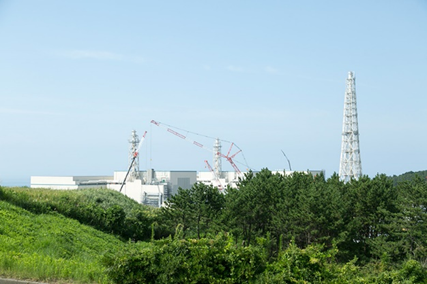
Kashiwazaki Kariwa Units 1-4. Source: TEPCO
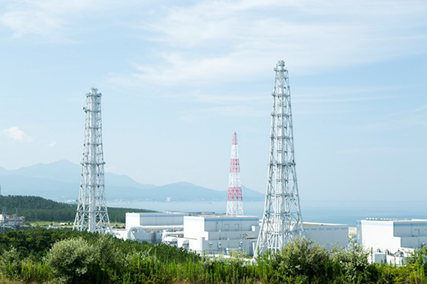
Kashiwazaki Kariwa Units 5-7. Source: TEPCO
Are local elections needed?
With the regulator’s signoff, there is no technical or legal reason for the plant not to restart. However, Japan has another rule rooted in societal acquiescence. The local city authorities and the prefectural government related to the nuclear plant must give their approval before the facility is switched back on. This has proved a major hurdle for some NPPs.
Here, TEPCO has some good news. The mayors of Kashiwazaki, a city of 80,000, and Kariwa, a village with a population of around 4,500, both say that the NPP’s restart is necessary, something they recently made clear during a meeting with the TEPCO President.
There’s widespread consensus that the restart will help the local economy, which is struggling with an aging population, low births, and a shrinking economy. Such reasons were also mentioned in a petition by the Kashiwazaki Chamber of Commerce and Industry in February, pushing for an early restart.
The prefecture’s economy has also been on a downward trend, with its GDP at ¥8.88 trillion in nominal terms. The nominal growth rate has dropped by 3.5% with a real decrease of 4.4%. Prefectural income fell by 6.7% YoY, totaling ¥6.13 trillion. Per capita prefectural income also fell to ¥2.784 million, a decrease of 5.7% YoY.
At the prefectural level, however, things are not as simple. In September, a prefectural committee compiled a list of safety measures for verification, especially related to evacuation, which are needed prior to discussing the restart. Based on such verification and NRA approval, Niigata Governor Hanazumi can move ahead with a decision. But the governor has decided to hedge his bets.
Gov. Hanazumi was elected in 2022 and saw his victory as a sign of popular support for his pro-nuclear stance. However, he’s now proposed holding another election to confirm that the public trust him and his stated desire to see the Kashiwazaki-Kariwa station restart.
From a political standpoint, this could help Hanazumi extend his time in office at a time when pro-nuclear public views are in the ascendance. But the hosting of an election as a surrogate referendum on the nuclear station restart would set an uncomfortable precedent. Other governors or even cities could follow suit. A regulatory decision will become beholden to political and populist action.
Nuclear industry groups are understandably skeptical about setting such a precedent, which could hinder their medium to long term business planning.
|
Candidate |
Party |
Result |
Votes obtained | ||
|
City |
Towns/Villages |
Prefecture | |||
|
Hanazumi Hideyo |
Independent |
Elected |
674,006 |
29,688 |
703,694 |
|
Katagiri Naomi |
Independent |
Not elected |
196,756 |
7,089 |
203,845 |
|
Poll votes |
870,762 |
36,777 |
907,539 | ||
Source: Niigata Prefecture
Restoring credibility
Following a meeting with TEPCO’s president on December 20, METI Minister Saito emphasized the need for the company to restore people’s trust. Scrutiny extends beyond the Kashiwazaki-Kariwa plant, encompassing TEPCO’s overall corporate credibility.
In a recent meeting between TEPCO and local assemblies, concerns were raised about the potential risks of restarting reactors already shut for more than a decade. Also, the company’s representatives were questioned over issues related to protection from nuclear material, which wasn’t directly targeted by the review, and the insights from the recent Noto earthquake.
More specifically, assembly members raised questions about TEPCO’s safety review process, which failed to detect errors in counter-terrorism equipment in the first place, and the effects of the Fukushima-related cost reduction policy on the NPP’s overall structure.
The cost of Fukushima’s accident looms over TEPCO, and the final price tag is projected to rise to ¥23.4 trillion. TEPCO, and other power companies, will cover the compensation costs in part through government bonds. But where those costs end is still unclear. For example, TEPCO is still incurring new compensation claims related to treated water release.
So far, the national government has gambled on the ability of TEPCO to regain public trust and repay the funds associated with its semi-privatization and Fukushima-related costs. More than twelve years on from operating a nuclear power plant, the company needs to show that this faith was justified, or lose its social license to exist in its current form.
ANALYSIS
By MAGDALENA OSUMI
New Capacity Auction Seeks Stability Via Long-Term Deals for Clean Power
In January, Japan marked a significant milestone in the country’s capacity market with the launch of a “long-term power decarbonization auction system” that seeks to partly sponsor construction of new clean electricity generation facilities. If successful, it will help drive investments in clean energy and help Japan reach net-zero climate targets.
The new system’s main feature is providing a guaranteed 20-year cash flow mechanism for power sources such as solar, onshore and offshore wind power, hydrogen, storage batteries, nuclear, hydro, geothermal – and, temporarily, LNG. Such a guaranteed revenue stream is precisely what energy companies need in order to be confident to make further investments in the energy transition.
While an auction system that allows dispersing of decarbonization funds beyond renewables might raise some eyebrows, METI is confident it will help to improve grid stability and resilience in times of shortage, and reduce emissions. The terms of the system ensure that any thermal power that gets funded will find a way to abate its emissions within a certain period.
With 2030 interim decarbonization targets not far on the horizon, the government is keen to jump-start the rollout of cleaner energy capacity while also retaining a way to help replace or revamp Japan’s baseload thermal generators. The new auction was launched less than a year after METI officially announced it in April 2023, indicating the urgency of the matter.
The results of the first auction will show if any energy source is favored above others. Preliminary conditions, however, indicate a strong readiness to support energy storage.
Bidding process
While bids for this capacity were accepted between January 23 and 30, in fact the auction process began earlier. METI and OCCTO had asked interested parties to carry out pre-registration by October 2023 to determine those eligible. Results are expected about three months after the bid registration process is completed on February 7.
Auction participants are required to demonstrate an ability to develop and operate the proposed project, and submit a business and financial plan. The bids themselves must be submitted in the form of bidding “units”, which state the price per kW per year. It should be based on anticipated fixed and maintenance costs, as well as labor and taxes. Fixed costs encompass capital expenditure for construction, grid connection fees, and decommissioning.
The first auction offered 4 GW of capacity via two categories: stable and variable energy sources. “Stable” are: nuclear, geothermal, hydro, biomass, and LNG. Other “thermal power” options in the “stable” section include power plants that will introduce fossil fuel co-firing with ammonia or hydrogen. Stable sources must provide at least 100 MW of capacity that can be connected to the grid.
For variable power sources (solar, and onshore and offshore wind), the minimum capacity is also at 100 MW. This capacity must not be tied to other state tariffs, such as FIT or FIP, which would rule out most solar and wind projects, as well as a large portion of biomass plants. Projects in Okinawa and remote islands are also not eligible.
For pumped storage and battery storage, the capacity requirement is lower – 10 MW or more. However, operators of battery energy storage systems (BESS) will need to demonstrate a capability to operate continuously for more than 3 hours a day.
Curiously, the new system is open to co-firing of fossil fuels with ammonia or hydrogen, but precludes the same when the second fuel is biomass. There are other constraints. While METI has offered 4 GW in total, there is a cap of 1 GW on pumped and battery storage and another 1 GW on thermal plants planning modifications to allow for co-firing. Biomass-only capacity must also fit within the latter total.
This gives a clear indication that at least half of the capacity in the initial FY2023 auction will most likely go to LNG-fired generation. This is part of a three-year plan by METI to allocate up to 6 GW of capacity contracts to LNG power plants – both for new construction and units that will be modified to allow for co-firing of natural gas with hydrogen.
The ministry has indicated that the preference seemingly given to LNG is temporary and will be phased out after this transition period. After taking these various restrictions into account, the government will allocate contracts based on the lowest bid price (¥ / kW / year), evaluating each power unit separately. In this sense, the bid price of the selected power source becomes the price at which it will get the capacity contract: pay-as-bid.
Contracts (known as Capacity Reserve Agreements, with OCCTO as the counterparty) will be awarded until the maximum auction capacity on offer is reached.
How this fits with existing system
The new system is officially an extension to an existing power capacity market platform that sits at the heart of government strategy to ensure security of electricity supply. However, as outlined above, the new auction platform has very different features from the so-called “main capacity auction” that OCCTO introduced in 2020.
The original capacity market was born from the need to add more energy security to an electricity sector that was still adjusting to the post-2016 full liberalization of its retail. The changes had prompted major utilities to accelerate the closure of older, little-used capacity as it was no longer economically feasible to maintain it.
This trend, however, was rapidly shrinking the number of power facilities that could step in during times of emergency or unusually high power demand. Hence, officials set up the capacity market to encourage power utilities to retain additional capacity while covering its basic costs through guaranteed payments.
The effect helped increase the degree of energy security, countering the shrinking pool of power plants able to step in when needed. However, it was largely a holdover measure. The contract length in the main capacity market system is for one year only and the auction is held four years before the actual year of delivery. Since the very first capacity auction was held in FY2020, the first payments will begin from April, the start of fiscal 2024.
Such a short contract length provided little motivation for generators to replace or upgrade their facilities and had no impact on soliciting interest in building new power plants based on cleaner technologies. Thus, as a whole, the main capacity market was not capable of aiding energy planners in terms of forecasting power supply for the coming years and decades.
As a result, the Long-Term Power Decarbonization Auction System was born.
Winners, losers
For Japan, the new auction system could be seen as a new bet on renewable power-derived resources – a successor and an addition to the FIT and now FIP tariff mechanism.
Battery energy storage systems will likely become the main beneficiary of the scheme, which under the current law can be connected to the grid as a stand-alone system. This would not have happened without the 2022 amendments to the Electricity Business Act, which now views discharging electricity from large-scale BESS as a form of power generation.
Prior to the revision, the Act deemed BESS only as components of other electrical facilities such as power stations. In fact, stand-alone battery storage systems play the same role as power plants.
While the new scheme encourages investments in pioneering clean energy sources, the current environment has some structural limitations. The long-term decarbonization auction is open to many power sources, but not all. Those facilities that won contracts in any of the previous main capacity auctions are now not eligible, even if they commit to modifications that would reduce their carbon footprint.
The new auction is also not available for power sources that are used for self-consumption exclusively, in effect blocking applications from industry with captive power supply that does not also feed electricity into the grid. Those that do also provide power to the local grid can bid for that portion only.
The new framework is still in a transitional stage, hence it allows LNG plants and those that burn coal alongside ammonia, etc., to compete. Nuclear generation is also allowed, but it faces its own challenges with availability – not through technology but through the decisions of regulators and local authorities.
The construction of new nuclear plants, the restarting of retired or halted reactors, and the extension of operating licenses for units over 30-years-old is based on NRA approval, which can take time and is impossible to forecast.
The new market continues the work-in-progress nature of Japan’s electricity markets, and may well be adjusted based on the results and industry reactions from the first round of auctions. It will also need to integrate with the other electricity market platforms set up in recent years, such as the balancing market and others.
For project developers, the benefits of this mechanism will need to be weighed with other financing options for new capacity. GX Bonds, FIP, PPAs and more are all options, depending on the nature of the project. It will take time to see whether the decarbonization auction is the better route. But it’s surely an advantage to have one more alternative.
ASIA ENERGY REVIEW
BY JOHN VAROLI
This weekly column focuses on energy events in Asia and the Pacific, and all that impact markets in the region.
Australia / Oil and gas
Woodside Energy and Santos ended plans to create a $52 billion global oil and gas giant. Woodside, which is twice as large as Santos by market cap, said it would only pursue a deal that clearly benefits its shareholders.
Australia / Solar PPA
Vena Energy and Amazon began commercial operations of a 125 MW solar farm in Queensland. The Amazon Solar Project Australia-Wandoan, composed of over 250,000 solar panels, is owned and operated by Vena Energy, and will supply Amazon operations.
India / Energy transition
The govt will invest $67 billion in the energy sector through 2030 to meet the country’s growing energy demand that’s expected to double by 2045. Last week, New Delhi said its capital expenditure for the next fiscal year will rise to $134 billion.
Indonesia / Decarbonization
The Energy and Mineral Resources Ministry signed a MoU with Italy’s Eni to accelerate decarbonization.The deal will develop bio-feedstock for fuels, energy transition initiatives and carbon capture projects.
Natural gas
In 2024, natural gas is expected to grow by 3% or 130 bcm, reports Rystad Energy. Greenfield LNG project investments will slow down YoY but will “remain at a robust level” to meet global demand.
Pakistan / Solar PPA
A 150 MW solar farm in Sukkur launched that will generate about 300 GWh of electricity annually. Renewable energy firm Scatec ASA said the project has a 25-year USD-indexed power purchase agreement with the country’s Central Power Purchasing Agency.
Thailand / Cambodia
Thailand and Cambodia will discuss cooperation on developing hydrocarbon deposits in the Gulf of Thailand in a maritime zone that both countries dispute control of. The 27,000 km2 area is estimated to hold about 11 trillion cubic feet of natural gas and oil deposits.
UAE / Green hydrogen
The Abu Dhabi Department of Economic Development and HYCAP Group signed a MoU to develop the production, storage and transport of green hydrogen. The UAE seeks to be a top 10 green hydrogen producer by 2031 with an output target of 1.4 mln tons annually.
Vietnam / Solar PPA
GreenYellow and Fushan Technology Vietnam, a subsidiary of Foxconn Group, inked a power purchase agreement. The operational solar power system delivers an annual average of 6.5 MW of renewable energy to the factory. The companies will also explore energy optimization, storage systems, electricity storage, and electric vehicle charging stations.
2024 EVENTS CALENDAR
A selection of domestic and international events we believe will have an impact on Japanese energy
|
January |
|
|
February |
|
|
March |
|
|
April |
|
|
May |
|
|
June |
|
|
July |
|
|
August |
|
|
September |
|
|
October |
|
|
November |
|
|
December |
|
Disclaimer
This communication has been prepared for information purposes only, is confidential and may be legally privileged. This is a subscription-only service and is directed at those who have expressly asked K.K. Yuri Group or one of its representatives to be added to the mailing list. This document may not be onwardly circulated or reproduced without prior written consent from Yuri Group, which retains all copyright to the content of this report.
Yuri Group is not registered as an investment advisor in any jurisdiction. Our research and all the content express our opinions, which are generally based on available public information, field studies and own analysis. Content is limited to general comment upon general political, economic and market issues, asset classes and types of investments. The report and all of its content does not constitute a recommendation or solicitation to buy, sell, subscribe for or underwrite any product or physical commodity, or a financial instrument.
The information contained in this report is obtained from sources believed to be reliable and in good faith. No representation or warranty is made that it is accurate or complete. Opinions and views expressed are subject to change without notice, as are prices and availability, which are indicative only. There is no obligation to notify recipients of any changes to this data or to do so in the future. No responsibility is accepted for the use of or reliance on the information provided. In no circumstances will Yuri Group be liable for any indirect or direct loss, or consequential loss or damages arising from the use of, any inability to use, or any inaccuracy in the information.
K.K. Yuri Group: Hulic Ochanomizu Bldg. 3F, 2-3-11, Surugadai, Kanda, Chiyoda-ku, Tokyo, Japan, 101-0062.