
JAPAN NRG WEEKLY
FEB 26, 2024
JAPAN NRG WEEKLY
FEB 26, 2024
NEWS
TOP
- Cabinet approves tax incentives for EVs, semiconductors, green steel, expects Diet approval this session
- Idemitsu joins ENEOS, Hokkaido Electric to help build country’s largest green hydrogen supply chain by 2030
- JERA to pay Woodside $1.4 bln to take 15% stake in Australia’s Scarborough LNG project
- Construction of Japan’s largest green hydrogen plant begins
- Govt to set up working group for stricter climate disclosure rules
- Mitsui, Chugoku Electric sign MoU on Malaysia and Japan CCS
- Startup develops CO2 separation and recovery from air
- NEDO approves Hitachi Zosen’s waste tech and CO2 recovery
- Honda targets U.S. data centers for its fuel cell systems
- Noto earthquake forced Shimizu to suspend blue carbon research
- Taiko Paper to produce SAF from construction waste
- OCCTO mulls new options to secure balancing power in 2030s
- New power market players starting to warm to electricity futures
- Tohoku Electric delays restart of nuclear unit by four months
- Spot market sluggish due to increased supply and warm winter
- NYK to invest ¥43 billion to expand crew transfer vessel fleet
- Xsol introduces lightweight solar panels for rooftop installations
- Kyocera, Trina Solar look to offer more energy storage systems
- China helps Russia foil western sanctions on Arctic LNG 2
- Kyushu Electric waits for clarity on U.S. LNG export policy
- MOL-owned LNG bunkering vessel completes first service
- Third ENEOS executive hit with sexual harassment allegations
ANALYSIS
AOMORI PREFECTURE MOVES FORWARD WITH RENEWABLES TAX PLAN
Japan’s renewable energy sector faces unexpected challenges, with local governments voting into power new leaders who are challenging the industry on issues that impinge upon community interests. Aomori Pref plans to move forward with a new renewables tax, and since it ranks top among Japan’s prefectures in terms of the number of wind power installations and total capacity, the tax and other regulatory measures will have a broader impact on developers and operators across the entire country.
JAPAN INCENTIVIZES BATTERY STORAGE PROJECTS AMID GROWING DEMAND
The ramp up of battery storage projects in Japan continues apace, aided by growing subsidies and rising volumes on various electricity markets, from spot to balancing to capacity. This trend is driven by a sense of urgency on the part of authorities. The need to incentivize more balancing capacity in Japan is strong. Noting the demand and ever-growing renewables curtailment numbers nationwide, more and more firms are tapping into Japan’s battery storage opportunities.
ASIA ENERGY VIEW
A wrap of top energy news that impacts other Asian countries.
EVENTS SCHEDULE
A selection of events to keep an eye on in 2024.
JAPAN NRG WEEKLY
PUBLISHER
K. K. Yuri Group
Events
Editorial Team
Yuriy Humber (Editor-in-Chief)
John Varoli (Senior Editor, Americas)
Mayumi Watanabe (Japan)
Wilfried Goossens (Events, global)
Kyoko Fukuda (Japan)
Magdalena Osumi (Japan
Filippo Pedretti (Japan)
Tim Young (Japan)
Regular Contributors
Chisaki Watanabe (Japan)
Takehiro Masutomo (Japan)
SUBSCRIPTIONS & ADVERTISING
Japan NRG offers individual, corporate and academic subscription plans. Basic details are our website or write to subscriptions@japan-nrg.com
For marketing, advertising, or collaboration opportunities, contact sales@japan-nrg.com For all other inquiries, write to info@japan-nrg.com
OFTEN-USED ACRONYMS
| METI | The Ministry of Economy,
Trade and Industry | mmbtu | Million British Thermal Units | |
| MoE | Ministry of Environment | mb/d | Million barrels per day | |
| ANRE | Agency for Natural Resources and Energy | mtoe | Million Tons of Oil Equivalent | |
| NEDO | New Energy and Industrial Technology Development Organization | kWh | Kilowatt hours (electricity generation volume) | |
| TEPCO | Tokyo Electric Power Company | FIT | Feed-in Tariff | |
| KEPCO | Kansai Electric Power Company | FIP | Feed-in Premium | |
| EPCO | Electric Power Company | SAF | Sustainable Aviation Fuel | |
| JCC | Japan Crude Cocktail | NPP | Nuclear power plant | |
| JKM | Japan Korea Market, the Platt’s LNG benchmark | JOGMEC | Japan Organization for Metals and Energy Security | |
| CCUS | Carbon Capture, Utilization and Storage | |||
| OCCTO | Organization for Cross-regional Coordination of Transmission Operators | |||
| NRA | Nuclear Regulation Authority | |||
| GX | Green Transformation |
NEWS: ENERGY TRANSITION & POLICY

Diet begins debate on 10-year tax break for EVs, green steel, green chemical, SAF
(Parliament statement, Feb 19)
- The House of Representatives began debate on METI’s proposal to provide 10-year tax breaks and loans from state-owned Japan Finance Corporation to the domestic manufacturers of EVs and FCVs, green steel, green chemicals, SAF and semiconductor chips.
- Suggested tax cuts are: Up to ¥400,000 cuts for every EV and FCV produced, ¥20,000 for every ton of green steel, etc.
- The govt proposes to amend the Act on Strengthening Industrial Competitiveness to implement the measures.
Idemitsu joins project to build Japan’s largest green hydrogen supply chain by 2030
(Japan NRG, Feb 20)
- Idemitsu Kosan joined the ENEOS-Hokkaido Electric project to build a green hydrogen plant in Tomakomai city (Hokkaido). The three signed an MoU to build the country’s largest green hydrogen supply chain by 2030.
- They’ll explore building an electrolysis facility of over 100 MW capacity at the industrial zone in the west part of Tomakomai. The final electrolysis capacity will be set after detailed demand studies of over 300 local manufacturers.
- A 100 MW electrolyzer produces 10,000 metric tons / year of hydrogen; demand is forecast at 70,000 tons / year if all fossil fuels and other energy supplies are totally replaced by hydrogen.
- The electrolyzer site has not been decided yet. Possibilities include Idemitsu’s Tomakomai plant and Hokkaido Electric’s site.
TAKEAWAY: Offshore wind would be the key power source, but using fossil fuel power and offsetting the carbon with credits may be a possibility as there are uncertainties over national offshore wind projects, said a Hokkaido Electric official. Five coastal areas in Hokkaido have “offshore promising zone” status. The projects need to advance into the final “promotion zone” phase before construction. In addition, the five “promising zones” are not along the Tomakomai coast but are located several hundred kilometers away.
- SIDE DEVELOPMENT:
Construction of Japan’s largest green hydrogen plant begins at Suntory’s distillery
(Company statement, Feb 20)- A group led by TEPCO and Toray Industries began building a 16 MW P2G system that uses a Proton Exchange Membrane (PEM) electrolyzer at Suntory’s Hakushu distillery in Yamanashi Pref.
- When completed in 2025, it could be Japan’s largest green hydrogen production plant.
- NEDO’s Green Innovation Fund shoulders about 70% of the costs to increase the electrolyzer scalability.
- SIDE DEVELOPMENT:
NYK Bulk Project, Chile’s Enaex ink MoU on green ammonia to fuel ships
(Company statement, Feb 21)- Chile’s Enaex inked a MoU with NYK Bulk Project (NBP) to supply green ammonia to fuel ships transporting copper from Chile to Asia.
- Enaex will supply the ammonia at the Mejillones port of Chile. By the late 2020s, NBP plans to own 10-15 ammonia-fueled bulk vessels.
Govt to set up working group for stricter climate disclosure rules
(Government statement, Feb 19)
- The Financial Services Agency (FSA) will set up a “Sustainability Data Disclosure and Accountability Working Group” to strengthen the climate disclosure rules.
- The discussions will cover possible law amendments, and will start in March with a draft to be published by the Sustainability Standards Board of Japan.
- SIDE DEVELOPMENT:
During METI meeting, JGA’s Honjo discusses future of e-methane rules and mechanisms
(JGA statement, Feb 15)- During a METI subcommittee Working Group to Study the Gas Utility System meeting, Japan Gas Association Chairman Honjo addressed the future of e-methane, stressing the need for mechanisms to support price differentials with existing fuels across short-, medium-, and long-term time frames.
- The committee highlighted the significance of international CO2 accounting rules. The meeting set a target of achieving a 1% e-methane pipeline injection by 2030.
Mitsui, Chugoku Electric sign MoU on CCS value chain between Malaysia and Japan
(Company statement, Feb 19)
- Mitsui & Co and Chugoku Electric inked an MoU to study a commercial-scale CCS value chain between Malaysia and Japan.
- The focus is on capturing, liquefying, and temporarily storing CO2 emitted by Chugoku Electric’s coal-fired thermal power plants in Japan.
- The liquefied CO2 would then be sent to Malaysia for permanent geological storage offshore. The study will also explore floating offshore temporary storage facilities.
- CONTEXT: Mitsui, Petronas and TotalEnergies began collaborating on a CO2 storage site in Malaysia, and plan to launch it around 2030.
Kyushu Univ startup develops method for CO2 separation and recovery from the air
(Nikkei, Feb 19)
- Carbon Xtract developed a technology for separating and recovering CO2 from the atmosphere. Carbon Xtract is a startup originating at Kyushu University.
- The method involves using an ultra-thin membrane, with a thickness of 34 nanometers. It enables the extraction of CO2 with minimal energy requirements.
- The company will develop devices to increase CO2 concentration in greenhouse environments. Then, it will explore applications for the recovered CO2.
- SIDE DEVELOPMENT:
Ooyoo and Toppan seek to mass produce CO2 separation membranes
(Company statement, Feb 21)- Startup Ooyoo and Toppan Holdings agreed to develop and then mass produce CO2 membranes to capture and reuse CO2. Ooyoo specializes in developing such tech.
- The membranes will be used to separate CO2 from various gases emitted by factories. This would allow its reuse in various industries such as fertilizer production.
NEDO approves Hitachi Zosen’s waste incineration tech and CO2 recovery project
(Company statement, Feb 16)
- NEDO’s Green Innovation Fund tapped Hitachi Zosen to develop waste incineration technology to increase CO2 concentration in exhaust gas.
- The research will also look at how to recover carbon from the high-CO2 waste at the Shinagawa Waste Incineration Plant.
- The project will run from FY2023 to FY2030 under NEDO’s oversight.
Honda targets U.S. data centers as consumers of its fuel cell systems
(Nikkei, Feb 22)
- In 2025, Honda Motor plans to commercialize fuel cell systems to power data centers in North America, to expand the use of fuel cell vehicle components and to halve their production cost.
- Currently, in California the company is testing a 500 kW stationery FC system, comprising eight FCV power units. The FC systems were developed with GM.
- CONTEXT: Like Honda using Clarity and CR-V fuel cell units for data center backup power, Toyota Motor’s FCV model Mirai has been the basis of FC generators developed by its group companies.
TAKEAWAY: In December, Honda said that together with Tokuyama Corp and Mitsubishi Corp it had launched a field test of the FC system at a data center in Yamaguchi Pref. If commercialization is realized in 2025, deployment of the system could spread to other Honda manufacturing sites and to those of its partners.
Noto earthquake forces Shimizu to suspend blue carbon research
(Japan NRG, Feb 20)
- Shimizu Corp suspended research on blue carbon resources at the Nyuzen offshore wind site (Toyama Pref) in the wake of the Noto earthquake on Jan 1. The research restart date is not clear as reconstruction takes priority.
- The quake damaged the water pipe that pumps up deep sea water to cultivate the seaweed. The wind turbines and transmission systems, however, were not damaged.
- CONTEXT: The 7.5 MW Nyuzen wind power farm came onstream in September. The research was on seaweed growth on concrete supports of fixed foundation wind turbines. Shimizu plans to develop a high density seaweed forest around the concrete that could potentially be used as blue carbon resources.
Taiko Paper to produce SAF from construction waste
(Company statement, Feb 20)
- Taiko Paper Manufacturing and Biomaterial in Tokyo Co will team up to produce bioethanol from pulp that’s derived from construction waste and other biomass.
- By 2027, the companies plan to produce 20,000 metric tons / year of bioethanol, to be converted into SAF.
- CONTEXT: Japanese companies and municipalities have explored ways to make use of scrap paper, construction and other waste as cellulose bioethanol feedstock, since the country does not grow bioethanol crops extensively. In 2027, Nippon Paper Industries will also bring online a bioethanol plant using wooden biomass as feed.
Hokkaido Univ startup to raise funds for plastic waste-fueled satellite engines
(Japan NRG, Feb 20)
- In September, Letara, a startup developing space satellite engines fueled by plastic waste, will issue new shares, which would be its second round of fundraising since being founded in 2020. Letara is a spinoff of Hokkaido University.
- Plastic-derived fuel is a solid, and is easier and safer to handle compared to liquid hydrogen, oxygen or other fuels. The use of plastic waste as fuel feedstock would cut production costs significantly. Tokyo Metropolitan University is the first satellite engine user.
- Last year, the company issued ¥120 million worth of equity warrants to five venture capitalists. Sakurai Keisuke, the company director, told Japan NRG that there’s interest from about five more Tokyo-based venture capitalists, but he declined to elaborate.
Limno and Aeterlink ship first mass produced long-distance wireless electricity feeders
(Company statement, Feb 16)
- Japanese tablet producer LIMNO and U.S. startup Aeterlink, which provides wireless power transfer tech, shipped their first lot of long-distance wireless electric feeders to a customer.
- The device, which uses Aeterlink’s original tech, was designed for use in buildings to manage electricity supply based on environmental data, such as humidity, light and air conditioning, and human motion.
(Government statement, Feb 19)
- Ukraine became the 29th country to join the Joint Crediting Mechanism to share offset credits issued to Japanese climate mitigation projects in that country.
TAKEAWAY: The terms of their MoC are the same as those with other countries: the framework will terminate if one of the parties gives prior notice six months in advance. The termination will not affect existing projects.
NEWS: ELECTRICITY MARKETS

OCCTO seeks new mechanism for medium- to long-term balancing on capacity market
(Denki Shimbun, Feb 22)
- OCCTO will create a new mechanism to ensure medium- to long-term balancing capacity. The concern is that with a strong expansion of renewables, there might not be enough power capacity online that’s able to provide the adjustment function.
- OCCTO will consider ways to utilize the current capacity market framework to address the issue. The idea will be discussed at a meeting of experts responsible for the institutional design of the capacity market.
- Forecasts made by OCCTO assume that by the first half of the 2030s there will be a shortage of power assets able to play the adjustment role. While the installed power capacity in each area is expected to be adequate, the continued rollout of renewables and retirement of thermal capacity will affect the current power adjustment system.
- At the Committee on Balancing Capacity and Demand-Supply Balance Assessment on Feb 20, OCCTO considered measures to secure balancing capacity for the next 10 years. Three proposals were presented to address the issue:
- (1) Utilization of the capacity market
- (2) Public offering of balancing capacity sources
- (3) Bilateral contract for balancing capacity sources.
New power market players gradually warm to electricity futures
(Denki Shimbun, Feb 22)
- The use of electricity futures trading has begun to spread to new power market players (known in Japanese as the shin denryoku).
- Players like erex Co. and Eneres are taking it even further. In addition to the benefits of being able to hedge the risks associated with electricity procurement, erex has launched a price menu that lets clients fix their rates to those of electricity futures.
- Power futures is no longer seen as only a price-risk management strategy, but a tool for sales.
- CONTEXT: In recent years, some new market players were among the most affected by rising electricity prices because their business model was effectively based on expectations of a gradual decrease in power prices. Meanwhile, power futures trading volumes grew steadily as more and more of the big power utilities joined the market.
- SIDE DEVELOPMENT:
Kansai Electric unit asks for closer links between futures market and spot market
(Government statement, various media, Feb 19)- METI held a meeting of its study group on electricity futures. Among those in attendance was a unit of Kansai Electric (Kanden Energy Solution, or Kenes).
- Kenes said they were using TOCOM’s electricity futures trading in order to hedge risks within the scope of actual demand, and requested institutional support for the application of “hedge accounting” to expand trading.
- The firm said that trading volumes remain at about 20% of the total generated amount due to the difficulty procuring large quantities on the market.
- They stressed the need to strengthen cooperation between TOCOM and JEPX, and requested that the liquidity of TOCOM’s auction trading be improved.
Tohoku Electric delays Onagawa NPP safety work, aims for Sept restart
(Company statement, Feb 19)
- Tohoku Electric will reassess the completion date for safety work on Unit 2 of Onagawa NPP (Miyagi Pref).
- Due to delays in fire protection measure work, the completion date is now aimed for June 2024, instead of this month. The unit’s restart is now planned for Sept 2024.
- CONTEXT: Tohoku first applied to the regulator for a restart of the 796 MW reactor (BWR type) in December 2013.
Spot market sluggish due to increased supply and warm winter
(JEPX data, Feb 19)
- In January, the daily average of power offered on the JEPX spot market was 1.19 TWh, up 7.9% over December; the daily average amount of power purchased was 848 GWh.
- CONTEXT: This weak demand seems to be largely due to a warmer than average winter.
- Supply in late-January was around 9.3 GW higher than at the month’s start. The average daily purchase was 26.7% lower YoY.
NYK to invest ¥43 billion to expand crew transfer vessel fleet for offshore wind
(Company statement, Feb 20)
- NYK ordered its first crew transfer vessel (CTV) from a Japanese shipyard that will be used to transport workers to build and maintain offshore wind power farms. The vessel is set to be delivered by 2026.
- The vessel will be the third NYK-owned CTV and the second used in Japan.
- CONTEXT: In Japan, the construction of offshore wind farms is expected to begin in 2026, and likewise, demand for CTVs is expected to grow. NYK announced in March 2023 that the company plans to invest ¥43 billion in the offshore wind power value chain by FY2026, and the construction of CTVs is part of the plan.
PV service firm Xsol introduces lightweight panels for rooftop installations
(Company statement, Feb 15)
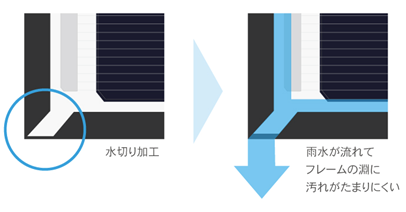
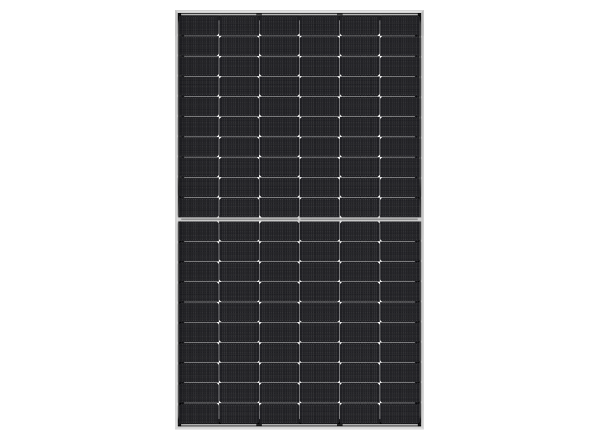
- Xsol, a Kyoto-based solar PV producer and service provider, has developed its new light-weight modules that weigh 26% less than standard panels.
- The new modules weigh 17.8 kg, around 26% less than the same-sized solar panels, reducing the load per square meter on rooftops from around 11.2 kg/m2 to 8.2 kg/m2. This allows solar panels to be placed on buildings originally not intended for such installations, including steel-framed buildings.
- The new panel has cuts into the frame corners, allowing dirt on the panel surface to flow away with rainwater, ensuring stable power generation.
- CONTEXT: Solar panels on rooftops are installed at an angle that matches the roof, making it difficult for accumulated dirt to be washed away by rainwater, and which can result in lower power generation. On top of that, steel-framed buildings, such as warehouses and factories, are usually not designed to allow the installation of any item on their rooftop.
Kyocera has new long-duration backup storage battery system for home use
(Company statement, Feb 19)
- Kyocera will launch its long-duration battery energy storage system that can handle 20,000 charge/ discharge cycles before deteriorating by 60%.
- Kyocera said that the system, named Enerezza® Plus, is the world’s first with built-in, semi-solid-state clay-type lithium-ion storage batteries. It comes in three storage capacity sizes: 5.5 kWh, 11 kWh and 16.5 kWh.
- It’s a multi-input hybrid that can be linked to solar PVs and storage batteries, and also external power from HVs, EVs, generators, portable batteries and other appliances that can be used in a home during power outages.
Govt warns TEPCO after contaminated water leak at Fukushima
(Nikkei Asia, Feb 20)
- The govt issued a warning to TEPCO over the Feb 7 leak of contaminated water from Fukushima Daiichi NPP.
- METI minister Saito stressed the need for TEPCO to ensure safety and retain public trust
- A worker’s mistake in closing a piping valve caused the leak. The NRA criticized TEPCO for its management of the NPP’s decommissioning.
- CONTEXT: The volume of leaked water was originally estimated at 5.5 tons, with radioactive materials believed to be 22 billion Bq. After further examination, TEPCO revised this to 1.5 tons and 6.6 billion Bq.
TAKEAWAY: NRA Chairman Yamanaka told reporters on Feb 21 that he has noted that leakage incidents have increased in the last few months, and found this unusual. He instructed the NRA on-site inspectors to make more rigorous checks.
Tohoku Electric to set up a renewable energy office for businesses
(Company statement, Feb 21)
- Tohoku Electric president Higuchi made these comments at a Feb 21 news conference.
- Higuchi said the company will set up a “Green Energy Project Office” to oversee renewables-related services.
- In 2022, Tohoku Electric set up a department for corporate PPAs, but will introduce a centralized unit that will offer all services, including those related to storage energy batteries and storage battery systems.
Trina Solar seeks to boost sales of energy storage systems in Japan
(Denki Shimbun, Feb 22)
- China’s Trina Solar, a solar cell manufacturer, plans to boost sales of energy storage systems in the Japanese market.
- On Feb 21, the head of Trina Solar Japan said it plans to launch large-scale industrial power storage systems, residential storage batteries, and its proprietary n-type solar modules.
NEWS: OIL, GAS & MINING

JERA to pay Woodside $1.4 bln to take 15% stake in Scarborough LNG project
(Company statement, Feb 23)
- Woodside Energy is selling a 15.1% stake in its offshore Scarborough natural gas project to JERA for about $1.4 billion, marking the Australian energy company’s second stake sale to a Japanese LNG buyer in six months.
- The deal is JERA’s largest overseas LNG acquisition. When completed in the second half of 2024, Woodside will end up with a 74.9% stake in the $12 billion Scarborough project, and continue as its operator. The project plans its first LNG cargo in 2026.
- Scarborough is located 375 km off the Pilbara coast of Western Australia.
- Woodside also inked a non-binding agreement with JERA to annually supply six LNG cargoes from its global portfolio for a decade starting in 2026.
- CONTEXT: Japan is the world’s second-largest LNG importer. Despite cutting imports over the past decade, thanks to nuclear power restarts and renewable energy development, Japan still relies on LNG for about a third of its electricity mix. Japanese companies have been diversifying LNG sources through acquisitions abroad. In August 2023, Woodside sold a 10% stake in Scarborough to LNG Japan (a venture between trading houses Sumitomo and Sojitz) for $500 million. In December, Tokyo Gas bought natural gas producer Rockcliff Energy in Texas in a $2.7 billion deal.
TAKEAWAY: Despite making several high-level Japanese govt and company executive complaints against Australia’s fossil fuel policies last year, JERA has still gone ahead with this very sizable acquisition. One way to look at it is to say that JERA is simply looking for long-term supply stability. Another is to consider that the recent move by the U.S. to pause the issuance of new permits for LNG export facilities has affected several offtake contracts with Japanese buyers.
China helps Russia foil western sanctions on Arctic LNG 2 as shipments soon begin
(Financial Times, Feb 21)
- Chinese technical and logistical expertise have supplanted western partners in the Arctic LNG 2 project, allowing Russia to export its first cargo despite U.S. sanctions.
- For example, the Harbin Guanghan Gas Turbine provided the remaining turbines to operate the first LNG train after a U.S. company terminated a contract to provide 21 turbines for all three LNG trains.
- A former Russian petrochemicals executive said “Chinese turbines are inferior to German or French ones”, but they’re an “acceptable replacement”.
- CONTEXT: In November, the U.S. placed Arctic LNG 2 under direct sanctions, stopping its allies from helping to complete the project and buying its gas when production starts. Located above the Arctic Circle in northern Siberia, Arctic LNG 2 was built to supply the Asian and European markets. Annual production is planned at 19.8 million metric tons. The project is majority-owned by Russia’s Novatek, with TotalEnergies, two Chinese companies and a Japanese JV each holding stakes of 10%. The Japanese JV consists of JOGMEC and Mitsui and Co.
Kyushu Electric waits for clarity on U.S. LNG exports before investment decision
(Reuters, Feb 20)
- Kyushu Electric is waiting for clarity on LNG export policies by the Biden administration before deciding on investing in the Lake Charles gas project in the state of Louisiana.
- Kyushu Electric is considering various other options to secure LNG supplies. However, the company’s overall annual LNG demand has decreased due to nuclear reactor restarts and increased renewable energy use.
- CONTEXT: Lake Charles was affected by President Biden’s decision at the end of January to freeze LNG exports approval. Owned by Energy Transfer, Lake Charles would liquefy natural gas and export it.
MOL-owned LNG bunkering vessel completes first service
(Company statement, Feb 20)
- In Singapore on Feb 16, Mitsui O.S.K. Lines (MOL) LNG bunkering vessel Brassavola completed its first bunkering service for an LNG-fueled bulk carrier.
- This was Singapore’s first membrane-type LNG bunkering vessel. These vessels achieve a reduction in CO2 emissions by 25% to 30% compared to heavy fuel oil-powered vessels. It also reduces SOx and NOx emissions.
- CONTEXT: MOL owns three LNG bunkering vessels, each supplying LNG fuel at bunkering ports globally.

JRE dismisses chairman over sexual harassment, third ENEOS exec in two years
(Company statement, Feb 21)
- Japan Renewable Energy, a unit of oil company ENEOS, said it dismissed its chairman, Yasu Shigeru, over inappropriate behavior during a social gathering.
- Yasu was appointed as representative director of the Japan Wind Power Association (JWPA) on Dec 20, 2023, as part of a review of the organization’s structure.
- CONTEXT: Yasu is the third executive within the ENEOS group to be fired over sexual harassment in two years. His dismissal follows that of Saito Takeshi, former ENEOS president, who was fired in December in an incident with a woman. In 2022, ENEOS chairperson Sugimori Tsutomu resigned after allegedly harassing a woman.
LNG stocks up slightly to 2.13 million tons
(Government data, Feb 21)
- LNG stocks of 10 power utilities totaled 2.13 million tons as of Feb 18, up 3.9% from 2.05 million tons a week earlier. This is 14.1% down from end Feb 2023, and the same as the 5-year average for the month, which is also 2.13 million tons
- CONTEXT: Earlier this month, it snowed briefly in the Tokyo area, which may have prompted discretionary spot purchases by utilities.
January Oil/ Gas/ Coal trade statistics
(Government data, Feb 21)
| Imports | Volume | YoY | Value (Yen) | YoY |
| Crude oil | 11.8 million kiloliters (74.2 million barrels) | -14.2% | ¥916.3 billion | -9.2% |
| LNG | 6.1 million tons | -10.5% | ¥622.4 billion | -28.8% |
| Thermal coal | 10 million tons | -6.8% | ¥243.2 billion | -53.6% |
ANALYSIS
BY MAYUMI WATANABE
Aomori Moves Forward with Renewables Tax Plan
The development of Japan’s renewable energy sector continues to face some unexpected challenges, with local governments voting into power a new generation of leaders who are more willing to challenge the industry on issues that impinge upon community interests. Gone are the days of unfettered renewable energy development.
On February 20, the Aomori prefecture government released an overview of its proposed budget for the next fiscal term that runs from April 2024 to March 2025. It includes funds for writing new renewable regulations, showing that the plan for a new renewables tax, which was first announced in last September, is moving forward.
Since Aomori ranks top among Japan’s prefectures in terms of the number of wind power installations and total capacity, the planned tax and other regulatory measures will have a broader impact on developers and operators across the entire country.
To date, few details have been released, and so, to find out more about the prefecture’s plans, Japan NRG spoke with Aomori officials.
Aomori governor wants “Cohabitation”
Aomori governor Miyashita Soichiro, who took office last June, talks fast and makes speedy decisions. Three months after landing his new job, he announced a plan for a new regulatory scheme on renewable operators including a local tax, specific zones where renewable energy facilities would be prohibited, and a new dialogue framework between an operator and local stakeholders.
Miyashita then attacked the onshore wind operators that many locals see as exploiting Aomori’s natural bounty, claiming that they profit at the expense of communities. He said that he’s going to make them pay their fair share through the new local tax, and that he is marketing his idea under the title of a “Cohabitation Scheme between Nature and Renewables.” (See also “Local Taxes on Renewables Is Now a Trend – Aomori Prefecture the Latest to Step Up” in the Analysis section of the Sept 25, 2023 issue).
The Aomori government had also put out a request for formal quotations for preliminary research around Miyashita’s new cohabitation scheme. The envisioned research scope includes looking into regulations related to off-limit zones, regulatory practices around renewables in other municipalities, and identifying candidates for the “Cohabitation Study Committee” that will advise the Aomori government. The authorities also want a contractor to create the draft of a new communication process between each renewables project and community stakeholders, and drafts for relevant ordinance(s).
Last November, one contractor started on the relevant research and is expected to complete the work on February 29. The research results are meant for internal use only and will not be publicly disclosed, an Aomori official told Japan NRG. However, the official assured that prior to establishing renewables no-go zones, there will be a public consultation process. Since there are various interests at stake on zone setting, the prefectural government will try to make the standards and processes as transparent as possible, the official said.
Information relevant to the scheme will be available after the new fiscal year starts in April, pending the prefectural assembly’s approval of the FY2024 budget plan. The proposed budget included ¥14 million to write the new regulation.
During a February 20 news conference on the FY2024 budget, Miyashita spoke with caution about his planned regulations. In September, he had been clear that all renewables operators – wind, solar, biomass etc., of all sizes, new and long since operational – would be targeted by the new tax.
A month after Miyashita revealed his plan, however, Aomori’s environmental policy director-general told the local assembly that offshore wind won’t be subject to the planned regulations because such projects are covered by the Act on Promoting the Utilization of Sea Areas for Renewables.
This response raised speculation that the Miyashita government may be narrowing down their targets to new operators only – which would be in sync with the approach of Miyagi prefecture. That region introduced a local renewables tax to take effect in April, but its application is limited to new solar, onshore wind and biomass operators tearing down forests.
When asked whether all renewables projects or just new operators would be subject to Aomori’s proposed rules, Miyashita said that this will depend on future discussions. He declined further comment.
Miyashita’s basic energy strategy
Miyashita’s predecessor, Mimura Shingo, had pledged that Aomori would be carbon neutral by 2050. While those carbon neutrality goals remain unchanged, Miyashita is taking a different tack, with self-sufficiency at the core of his basic energy strategy. During the September assembly debate on his cohabitation plan, Miyashita promoted rooftop solar panel installations and the potential for renewables to meet local energy needs.
“I’m for sustainable development of the local economy, driving local production and consumption of energy by setting up renewable energy systems,” Miyashita said, making clear his support for renewable energy but within the context of benefiting the local community.
His FY2024 budget proposal included ¥80 million to subsidize residential rooftop solar systems and ¥167 million to businesses for decarbonizing their processes and introducing energy systems for own-power consumption. To date, only 19.7% of Aomori-based businesses have been actively reducing their carbon footprint, which is why the prefectural government is trying to raise climate awareness.
Aomori is also encouraging market entries into hydrogen, ammonia, carbon capture and 11 other core net zero industries. Carbon capture through blue carbon is one focus, and an offset credit system using seaweed resources is another direction due to be explored.
The Mutsu coastal area once boasted Japan’s largest eelgrass sea forest, of about 7,200 hectares. It’s been shrinking due to industrialization. In addition to protecting the sea forest, the goal is to create new economic value by issuing regional offset credits, which would follow the example of cities like Yokohama and Fukuoka.
Miyashita’s total budget request for the general account amounted to ¥702 billion, down 4.9% year-on-year. The governor said he canceled 275 projects to cut spending, but on the other hand, he hiked by 29% the Nuclear Fuel Tax, a local tax levied on Japan Nuclear Fuel Ltd, which is effective this April. About 18% of the tax proceeds will be provided to municipalities that host such nuclear facilities. This hike alone should bring Aomori an additional ¥1.6 billion in tax revenue in FY2024.
The assembly’s budget committee began to review the budget proposal on February 22. The 47 assembly members are expected to vote on it by March 22.
Key energy and climate budget items in the FY2024 proposal (¥ million)
| Environment category | |
| Resolving renewables-related community and other issues | 23 |
| Cohabitation scheme between nature and renewables | 14 |
| Blue carbon offset crediting system creation | 5 |
| Residential rooftop solar systems | 80 |
| Heat insulator and other energy saving systems for homes | 87 |
| Developing forestry resources | 209 |
| Radioactivity monitoring around nuclear facilities | 414 |
| Shelter facilities to brace for nuclear accidents | 317 |
| Work category | |
| Decarbonization of business processes and solar PV system installation for own power consumption | 167 |
Local assembly time table
The next assembly session after the budget approval is likely to convene in July, followed by another in September and in November. The draft cohabitation ordinance(s) for renewables no-go zones, the new local tax and community engagement rules and procedures will likely be written by mid 2024, to be effective starting April 2025.
After passing the assembly, new local taxes will require the approval of the Minister of Internal Affairs and Communications. The Miyagi tax won approval inside four months.
The FY2024 budget proposal seems to show that Miyashita does not yet have a clear scenario to realize his idea of Aomori as a region with “sustainable” renewables facilities that power local needs. Likewise, local blue carbon won’t be enough to offset Aomori’s carbon footprints.
In practical terms, the region needs to start looking for the “small renewable resources” that Miyashita says he craves, but which are not well defined. This is something the governor and local assembly members will have to address during debates on the new regulation.
ANALYSIS
BY MAGDALENA OSUMI
Japan Incentivizes Battery Storage Projects Amid Growing Demand
The ramp up of battery storage projects in Japan continues apace, aided by growing subsidy avenues and rising volumes on various electricity markets, from spot to balancing to capacity.
As of May 2023, about 1.1 GW of supply has been contracted for grid-scale storage batteries nationwide, with contracts for an additional 12 GW under consideration, according to METI data. Unsurprisingly, the standout areas for projects are Kyushu and Hokkaido, where a strong growth in solar and wind power projects has led to challenges with balancing the grid. But other regions are also attracting developer interest.
This trend is driven by a clear sense of urgency on the part of national and local authorities. It’s no surprise that as METI launched an entirely new “green” capacity auction system this year, officials made sure to allocate up to a quarter of its initial 4 GW on offer to battery and other energy storage projects.
The need to incentivize more balancing capacity in Japan is strong. Renewable energy sources already account for a fifth of domestic electricity volumes, but the sector’s further expansion is focused on solar and wind power, which are intermittent. By 2030, official estimates show variable renewable energy reaching 20% of Japan’s power mix.
Noting the demand case and ever-growing renewables curtailment numbers nationwide, more and more firms are tapping into Japan’s battery storage opportunities. We take a look at some of the prominent projects on the horizon.
The curtailment challenge
Electricity curtailment, which started as a Kyushu-only issue, has grown nationwide. The volume of electricity curtailed in FY2023 in Kyushu alone is estimated at 760 GWh, enough to power a mid-size town in the prefecture for a year. Curtailments were also carried out in the Chubu, Kansai and Hokuriku regions. Kyushu and Hokkaido have seen the largest number of applications to connect the battery energy storage system (BESS) technology to local power grids.
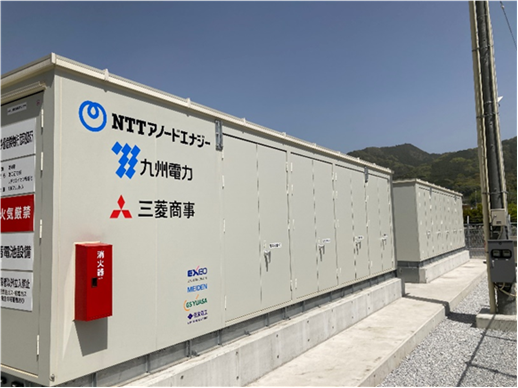
To address the issue, last year NTT Anode Energy, Kyushu Electric (Kyuden), and Mitsubishi Corporation launched a 1.4 MW / 4.2 MWh grid-scale battery storage system in Tagawa, Fukuoka Prefecture (Kyushu). From April to June of 2023, when the amount of solar power curtailment increased, the firms conducted 47 cycles, a total energy charge and discharge of 260 MWh. The developers also plan to be active on the capacity market from FY2025.
A BESS can participate in the balancing market by providing balancing services to the grid. This includes services such as frequency regulation, which helps to balance the supply and demand of energy on the grid. In the capacity market, it can offer its facility as a backup. The grid operator can then call on the BESS to provide energy during peak periods, for instance, to avoid blackouts.
Depending on the local energy system, a BESS can also participate in the transmission and distribution markets, by providing voltage regulation and line loss reduction support.
A battery’s need to charge before being able to offer its electricity naturally lends to arbitrage and financial optimization models. Through arbitrage, developers boost revenue by buying energy during off-peak times when prices are cheaper and releasing it, say, at night when demand and prices are higher.
One of the first firms to embrace a trading-oriented BESS model in Japan is Pacifico Energy. In June 2023, the company launched two separate 2 MW battery storage systems, each with 8 MWh of power output, in Sapporo (Hokkaido), and Itoshima (Fukuoka). Pacifico Energy sourced batteries produced by Chinese firm Zhejiang Narada Power Source, while engaging South Korea’s LS for engineering, procurement and construction of the project.
Incentives
Still, an investment in a standalone battery facility is expensive and until recently, the traded volumes in the electricity balancing, capacity and even futures markets in Japan were small. This is unsurprising since the capacity market was only born in 2020, the balancing market introduced in April 2021, and cost-based imbalance settlements started in 2022.
With the development of the battery storage sector in Japan limited at best, the government started by introducing subsidies.
METI was the first to introduce a system to incentivize projects by allocating grants to 13 battery / BESS projects from its FY2021 supplementary budget, and another 18 projects in the following years 2022 and 2023.
In principle, METI subsidizes a third of the capital investment and half of the technological development expenses. One of the first to make use of this scheme was a group comprising Idemitsu, Renova, Nagase Group and SMFL Mirai Partners (a Sumitomo Mitsui Finance & Leasing group firm). The group is developing a 15 MW lithium-ion battery storage system in Himeji, Hyogo Prefecture, which is slated to begin operation in October 2025.
The Himeji facility is expected to be active with balancing services on the JEPX spot market, the capacity market and the balancing market. The system has been built using GS Yuasa batteries, while JGC is in charge of engineering, procurement and construction.
Further incentives have followed from local authorities. The Tokyo Metropolitan Government has launched its own program for BESS projects over 1 MW (DC), which means they can be connected directly to TEPCO’s grid. In August 2023, it released a list of 26 beneficiaries with projects totaling 50.5 MW and an output of 171.6 MWh. The subsidy amount totaled ¥9.62 billion.
The largest figure awarded by Tokyo, at ¥620 million, went to NTT Anode Energy for its project in Tsurugashima City (Saitama Pref). The recipients list also included Renewable Japan, afterFIT, Looop and JAPEX. Tokyo offers up to ¥2.5 billion per project, as long as the amount does not exceed 80% of the cost.
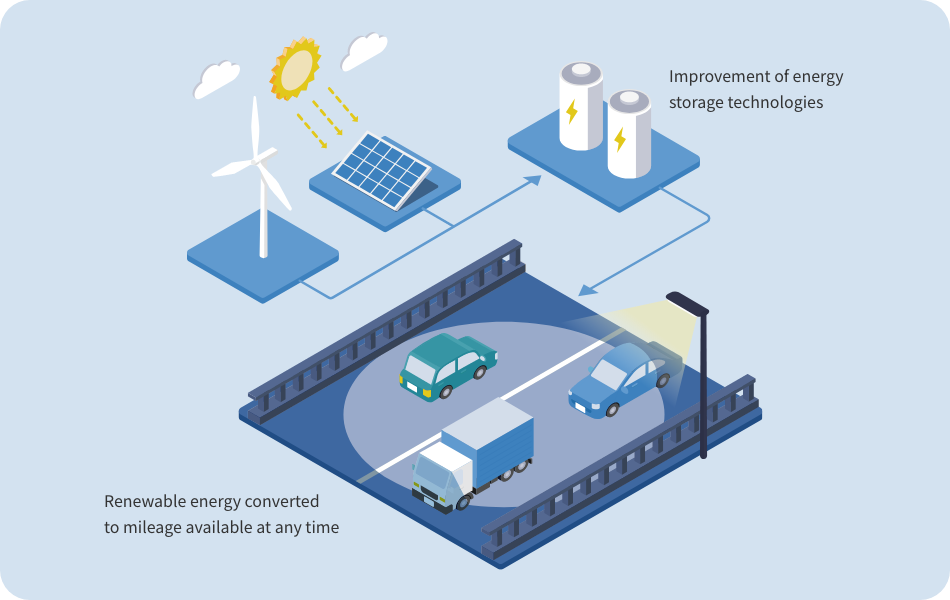
Some operators have even tapped other, non-battery specific state funding channels. Toyota Tsusho-controlled Terras Energy, for example, applied for a METI grant to run Virtual Power Plant (VPP) projects, and secured funding to introduce a battery system in Nagasaki City. In October 2023, it started operating Tesla’s lithium-ion batteries in a 2 MW output system with 5.1 MWh of annual capacity.
The Nagasaki project will provide balancing services to the grid by using IoT to manage several distributed power sources, energy storage units, EVs, and heat pumps.
Source: Terras Energy
Conclusion
Japan’s commitment to renewables has set the stage for the rapid development of the BESS market, which has begun attracting many overseas investors. In December Singapore-based renewables developer Gurīn Energy announced plans to enter the Japanese market, and build and operate the country’s largest project – a 4-hour BESS with a 500 MW capacity capable of storing up to 2 GWh of electricity. It will be the first large-scale project in Japan, helping to avoid some 7 million tons of CO2 emissions.
The market’s growth will not only contribute to Japan’s decarbonization goals, but will also help create new “green” jobs around engineering, maintenance, and power sales. It should also stimulate further maturity and liquidity in the country’s electricity markets, which are already attracting the biggest names in global power trading.
Despite high expectations for growth in the BESS sector, Japan still needs to overcome technological and economic challenges ranging from deployment and maintenance to bankability. Overseas players who are experienced with business models tested elsewhere will likely prove crucial in order for the market to soar.
| Subsidy recipient | Second beneficiary | Third beneficiary | Subsidized amount (JPY) | BESS location | |
| 1 | JAPEX | – | – | 415,580,000 | Chiba City, Chiba Prefecture |
| 2 | Noval Solar | – | – | 262,289,000 | Joso City, Ibaraki Prefecture |
| 3 | Noval Solar | – | – | 187,291,000 | Toride City, Ibaraki Prefecture |
| 4 | TSE | – | – | 514,383,000 | Hokuto City, Yamanashi Prefecture |
| 5 | RJCapital2 | Renewable Japan | – | 484,504,000 | Hidaka City, Saitama Prefecture |
| 6 | au Renewable Energy | – | – | 343,134,000 | Oyama City, Tochigi Prefecture |
| 7 | Tokyu Land | – | – | 363,406,000 | Higashimatsuyama City, Saitama Prefecture |
| 8 | taMEL | Looop | – | 348,306,000 | Ogawa Town, Saitama Prefecture |
| 9 | Tokyu Construction | – | – | 203,963,000 | Sagamihara City, Kanagawa Prefecture |
| 10 | NTT Anode Energy | – | – | 614,286,000 | Miyoshi Town, Saitama Prefecture |
| 11 | NTT Anode Energy | – | – | 619,773,000 | Tsurugashima City, Saitama Prefecture |
| 12 | Sinanen (PV Service Department) Formerly: Taiyoko Support Center | Sinanen | – | 270,893,000 | Asahi City, Chiba Prefecture |
| 13 | Tokyo Chikudenchi Hatsuden | afterFIT | – | 476,900,000 | Kiryu City, Gunma Prefecture |
| 14 | Koyusha | afterFIT | – | 323,123,000 | Kumagaya City, Saitama Prefecture |
| 15 | Joyo Shoji (JYS) | afterFIT | – | 323,123,000 | Kiryu City, Gunma Prefecture |
| 16 | Olympia | – | – | 399,758,000 | Isesaki City, Gunma Prefecture |
| 17 | Olympia | – | – | 397,585,000 | Ota City, Gunma Prefecture |
| 18 | Mediotec | – | – | 224,265,000 | Inzai, Chiba Prefecture |
| 19 | Mediotec | – | – | 224,265,000 | Shisui Town, Chiba Prefecture |
| 20 | JOYO | afterFIT | – | 323,123,000 | Ota City, Gunma Prefecture |
| 21 | Bando Chikuden Ichigo | Green Power Management | Tohoku Electric | 447,810,000 | Isesaki City, Gunma Prefecture |
| 22 | Bando Chikuden Ichigo | Green Power Management | Tohoku Electric | 447,810,000 | Kumagaya City, Saitama Prefecture |
| 23 | Bando Chikuden Ichigo | Green Power Management | Tohoku Electric | 414,950,000 | Ota City, Gunma Prefecture |
| 24 | Joshu Ota Chikudensho | afterFIT | – | 323,155,000 | Ota City, Gunma Prefecture |
| 25 | Joshu Ota Chikudensho | afterFIT | – | 323,155,000 | Ashikaga City, Tochigi Prefecture |
| 26 | Joshu Ota Chikudensho | afterFIT | – | 323,155,000 | Ota City, Gunma Prefecture |
| TOTAL | 50.5 MW |
ASIA ENERGY REVIEW
BY JOHN VAROLI
This weekly column focuses on energy events in Asia and the Pacific, and all that impact markets in the region.
Australia / Green hydrogen
EnergyAustralia commissioned the Tallawarra B Power Station, the first dual-fuel natural gas and green hydrogen plant, and the first gas-fired power station to be built in New South Wales in over a decade. When launched in 2025, it will operate on a blend of 5% (by volume) green hydrogen and natural gas.
China / Energy transition
In 2023, clean energy drove China’s overall economic growth, accounting for a staggering 40% of GDP expansion. Without clean energy sectors, China’s GDP would have fallen short of its target of 5%, with growth expected to have been 3% instead of the achieved 5.2%.
India / Energy storage
In 2024, India will need 12 GW of energy storage capacity, with four hours of storage per GW, in line with the govt’s policy. Along with the renewable purchase targets, the govt will support the goal of installing 500 GW of renewable energy by 2030.
India / Rooftop solar
The govt streamlined the rooftop solar approvals process, making it easier for people to claim subsidies from the $9 billion announced this month to promote the technology. If 45 govt signatures were previously needed to set up a small rooftop solar connection, today it’s almost instantaneous.
Papua New Guinea / Fuel crisis
The country faces a fuel crisis after its major supplier, Puma Energy, said there’s “no fuel supply until further notice”. For almost a year, Puma has been struggling to meet the country’s fuel needs, blaming the lack of foreign exchange to pay for oil imports.
Philippines / Renewable energy
Within the next three years, renewable energy company Enercon Asia Pte plans to invest $40 mln to $100 mln in the Philippines’ clean energy sector. The Singapore-based company is studying potential solar projects.
Singapore / Renewable energy
Singapore-based Vena Energy secured a $600 million sustainability-linked, five-year Revolving Credit Facility (RCF) from ten financial institutions, such as DBS Bank, ING Bank and BNP Paribas. Vena Energy has built solar, wind, and battery projects with a total capacity of 3 GW.
South Korea / Floating offshore wind
Shell will sell its 80% stake in the MunmuBaram floating offshore wind farm to Hexicon, a Swedish floating wind developer. Hexicon has support from Glennmont Partners, one of Europe’s largest clean energy infrastructure funds. Hexicon will take 100% ownership of the $5 billion MunmuBaram project (1.3 GW planned capacity) that launches in 2027.
Taiwan / Floating solar
Renewable energy platform HEXA Renewables, and Ciel & Terre Taiwan launched an additional floating solar project with about 192 MW-peak capacity in the Chanbin industrial zone. The site occupies over 171 hectares of water surface area.
UAE / Solar power
The Dubai Electric and Water Authority, and energy firm Masdar, inked a financial close for the sixth phase of the Mohammed bin Rashid Al Maktoum Solar Park (1.8 GW planned capacity). This phase of the project costs around $1.5 billion.
2024 EVENTS CALENDAR
A selection of domestic and international events we believe will have an impact on Japanese energy
Newly added as of Feb 22, 2024
| January |
|
| February |
|
| March |
|
| April |
|
| May |
|
| June |
|
| July |
|
| August |
|
| September |
|
| October |
|
| November |
|
| December |
|
Disclaimer
This communication has been prepared for information purposes only, is confidential and may be legally privileged. This is a subscription-only service and is directed at those who have expressly asked K.K. Yuri Group or one of its representatives to be added to the mailing list. This document may not be onwardly circulated or reproduced without prior written consent from Yuri Group, which retains all copyright to the content of this report.
Yuri Group is not registered as an investment advisor in any jurisdiction. Our research and all the content express our opinions, which are generally based on available public information, field studies and own analysis. Content is limited to general comment upon general political, economic and market issues, asset classes and types of investments. The report and all of its content does not constitute a recommendation or solicitation to buy, sell, subscribe for or underwrite any product or physical commodity, or a financial instrument.
The information contained in this report is obtained from sources believed to be reliable and in good faith. No representation or warranty is made that it is accurate or complete. Opinions and views expressed are subject to change without notice, as are prices and availability, which are indicative only. There is no obligation to notify recipients of any changes to this data or to do so in the future. No responsibility is accepted for the use of or reliance on the information provided. In no circumstances will Yuri Group be liable for any indirect or direct loss, or consequential loss or damages arising from the use of, any inability to use, or any inaccuracy in the information.
K.K. Yuri Group: Hulic Ochanomizu Bldg. 3F, 2-3-11, Surugadai, Kanda, Chiyoda-ku, Tokyo, Japan, 101-0062.