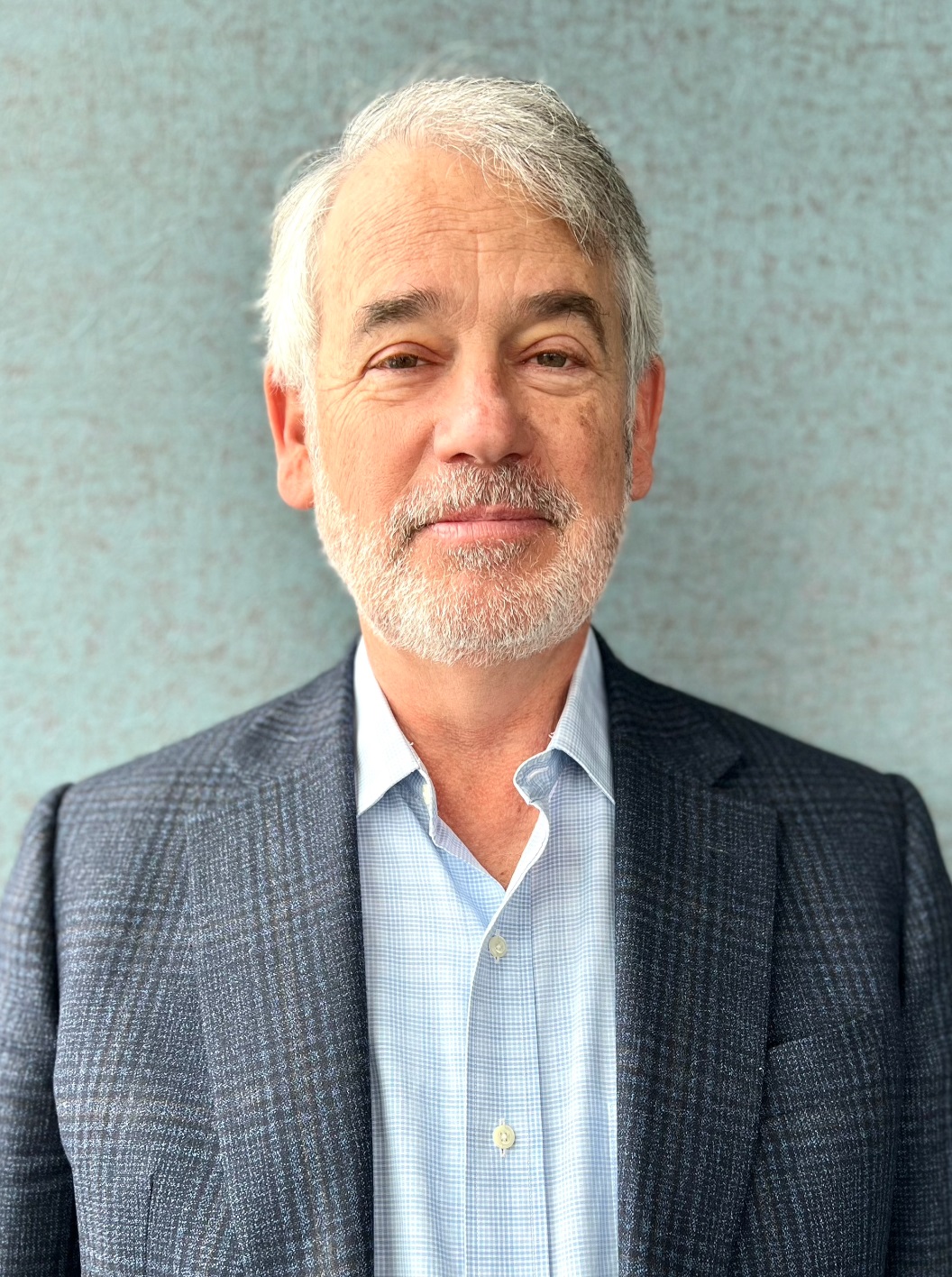
The Climate Bonds Initiative is an international NGO that mobilizes global capital for climate action, and it is the certifying authority for Japan’s first issuance of “Climate Transition Bonds” (GX) whose framework is said to be a world-first. While some are skeptical, Sean Kidney, CEO of Climate Bonds, explains why he believes in Japan and the GX bonds.
After Russia’s incursion into Ukraine, Japan joined its G7 allies on strict sanctions. Energy, however, was the main exception due the value that Russian oil, coal, and most importantly, LNG, have for Japan. This year and next, Japan must make decisions that will determine its future energy ties with Russia. Close to 10% of Japan’s LNG imports is at stake. Finding alternatives has been far from easy.
ASIA ENERGY VIEW
A wrap of top energy news that impacts other Asian countries.
EVENTS SCHEDULE
A selection of events to keep an eye on in 2024.
JAPAN NRG WEEKLY
PUBLISHER K. K. Yuri Group
Editorial Team Yuriy Humber (Editor-in-Chief) John Varoli (Senior Editor, Americas) Mayumi Watanabe (Japan) Wilfried Goossens (Events, global) Kyoko Fukuda (Japan) Magdalena Osumi (Japan Filippo Pedretti (Japan) Tim Young (Japan)
METI has updated the Ocean Energy and Mineral Resource Development Plan.
Highlights:
Conduct trial phase subsea mining of shallow type and pore-filling type methane hydrates by FY2030.
By 2028, conduct 3D sea bottom oil and gas exploration over 50,000 m2.
Identify areas that have potential as CCS sites, and establish systems and frameworks to allow commercial CCS services by 2030.
Explore and assess the potential of submarine hydrothermal deposits.
Explore and quantify cobalt-rich crust resources at 800-2,400 meters below sea level in the EEZ and in the waters managed by the International Seabed Authority (ISA); contribute to international rule making on the subsea cobalt resource development.
Quantify manganese nodule deposits in international waters 4,000-6,000 meters below sea level that’s managed by the ISA; test mining equipment and conduct preliminary studies to brace for environmental impact assessment.
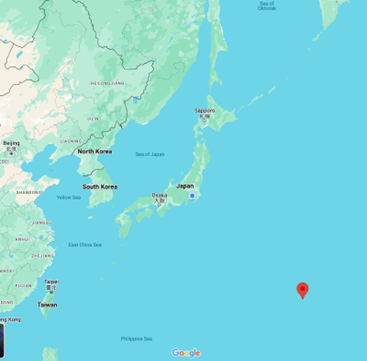
Develop technologies to mine rare earths at 6,000 meters below sea level, to be implemented in the waters around Minami Torishima Island; develop rare earth refining and production processes.
CONTEXT: The plan falls under the Basic Ocean Strategy Act which was legislated in 2007. CCS was added to its scope for the first time.
TAKEAWAY: This is an ambitious plan and speed is important as Japan has exclusive mining rights agreed with the ISA until 2029 for cobalt crusts and 2026 for manganese nodules. On rare earth supply chain development, the plan calls for testing a complete production process, from soil retrieval on the seabed to refining in waters around Minami Torishima Island.
In April, METI will launch Ouranos Ecosystem, an information sharing platform for businesses; its goal is to prepare for the implementation of the European Batteries Regulation (ERB) that takes effect in 2025.
CONTEXT: The ERB will require disclosure of emissions over an entire life cycle. The data will be used for marketing EVs in Europe. The first data to be collected is the GHG of storage batteries. The regulation will initially cover EVs, but will expand to include industrial storage batteries.
About 80 firms, mostly automakers, are expected to join the platform. Since violating the battery regulation could result in a ban on sales in Europe, METI estimates that 200 firms will join the system for storage battery-related products alone.
METI and other ministries involved with J-Credit carbon offsets will change how the credits are released to market participants in order to raise liquidity and strengthen price setting mechanisms.
So far, the credits had been offered via bids at auctions held twice a year. Buyers were selected based on price alone.
From February, the govt started to sell govt-held J-credits to “market makers” whose task is to boost the liquidity by conducting a certain amount of transactions in a given period.
In addition, credit sales will now be done not only based on price but also market supply volume, trading framework, etc. Independent experts will monitor the process.
CONTEXT: A recent trial run of the “market maker system” run by the Tokyo Stock Exchange resulted in increased liquidity. The exchange selected Sumitomo Corp, Daiwa Securities, Mizuho Bank, Marubeni and Mitsui & Co.
The Tokyo Stock Exchange has awarded Sumitomo Corp and Mizuho Bank as the best market makers of J-Credit carbon offset credits, recognizing them for boosting trading liquidity over Nov to Feb this year.
Key participants in the J-Credit trades were named as “market makers”, required to perform a certain transaction volume in a given period to raise liquidity.
Daiwa Securities was given the “good market maker” award.
During the Nov to Feb period, trades of J-Credits in the energy saving category increased 2.4 times, and renewable energy credits 6.1 times.
Nine renewable projects in Vietnam and Tunisia were awarded carbon offset credits under the Joint Crediting Mechanism in the 4th round of project reviews for FY2023.
The credits ranged from 393 to 83,118 tons of CO2 equivalent. The latter were awarded to a 50 MW erex biomass power project in Vietnam.
A green hydrogen project in Mongolia, to be run by the Overseas Environment Cooperation Center, Japan, will receive govt funding and will possibly be granted JCM credits. The project is to install wind turbines to generate green hydrogen that will be used as boiler fuel.
Errors were made in J-Credit GHG emissions inventory data for five projects. This likely occurred when entering the renewable power output in the application form. Corrections were made by March 17.
Since the ownership of the credits associated with these projects has not changed, they were unlikely to have been traded on the Tokyo Stock Exchange.
Tokyo govt to disclose Perovskite field study analysis results
(Japan NRG, March 21)
In June, the Tokyo metropolitan govt (TMG) plans to disclose results of Perovskite solar cell (PSC) field studies. The parties are discussing the scope of the disclosures, a TMG official told JapanNRG.
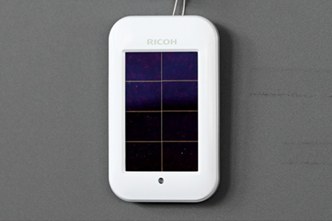
The year-long studies tested the performance of PSC-equipped air monitoring sensors installed in TMG offices. They’ll be completed on May 31. Macnica provided the sensors and EneCoat Technologies the PSC modules.
Power generation efficiencies during different times of the day, and the module endurance data, are likely to be shared with the public.
CONTEXT: The TMG is testing indoor PSC-equipped devices with Macnica and EneCoat. It is also testing outdoor PSC applications at its water treatment facility, using Sekisui Chemical modules.
Ricoh Group launched field studies of air sensors equipped with Perovskite solar cell (PSC) modules at TMG facilities; it will run to April 2025.
Five sensors were installed at the TMG building observatory that’s open to the public. Temperature, humidity, illuminance and carbon intensity data collected by the sensors will be transmitted to a display panel.
Five more sensors will be installed at a condo for senior citizens.
TAKEAWAY: Ricoh declined to give details on its sensors, including power efficiencies. But, in theory, the Ricoh studies are more advanced than Macnica/EneCoat which used a device with a backup lithium-ion battery to run in the absence of light. The Ricoh device will run solely on PSC modules, and it has more functions. In addition to collecting data 24/7, it sends the data to a display device. It would be a breakthrough if stand-alone data collection and transmission could be realized using just the PSC modules, since data transmission is power intensive.
The MoE has revised its guiding principles for carbon offset programs, clarifying that carbon capture is not removal and does not qualify to be an offset method.
The revised guidelines described the procedures required in order to claim that the carbon footprint of a products or service has been offset.
CONTEXT: METI plans to introduce a new “GX Value Index” where companies are able to claim “reduced emissions” of products and services, and label them. An interim report proposing the new index was released last week. A seamless integration of MoE and METI systems will be needed.
Takasago Thermal Engineering has developed an electrolyzer to produce hydrogen and oxygen from water on the Moon. Tokyo-based “ispace Inc” will transport the system to the Moon by late FY2024.
The water feedstock will be shipped to the Moon; energy will be sourced from a solar system installed on the lunar lander.
This will be the world’s first attempt at electrolysis on the Moon. The device is 300 mm x 450 mm x 200 mm; capacity is “very small”.
CONTEXT: The Moon might hold water deposits, and over 30 businesses in Japan are exploring the sourcing of hydrogen there; as well as building a hydrogen plant and a “lunar smart community” of on-site plant engineers.
TAKEAWAY: The Moon’s temperatures swing from minus 170°C to 200°C. The electrolyzer components are made of specialty steel that could withstand temperatures above 200°C, but might be vulnerable to 300°C fluctuations. Thus, the steel used in the components may stretch, and the development of a special steel with strong stretch resistance may be needed, a researcher told Japan NRG.
Tokyo Gas and seven other companies formed a group dedicated to ‘electric’ natural gas (e-NG), better known in Japan as e-methane. They’ll promote the use of e-NG, a synthetic methane made from blending ‘renewable’ hydrogen and CO2.
Other companies in this group include Engie, Mitsubishi, Osaka Gas, Sempra, and Toho Gas.
e-NG / e-methane has the same molecular composition as natural gas, and can be transported and stored using existing infrastructure.
Tokyo Gas and Mitsui & Co will import 40,000 m3 of biomethane from the U.S. Derived from landfill biogas, it has the same methane concentration as natural gas.
In Japan it will be consumed in existing LNG and city gas infrastructure. Tokyo Gas and Mitsui will collaborate further to build a biomethane international supply chain.
CONTEXT: Biomethane is a way to reduce GHG emissions by utilizing organic methane from waste. Under Japanese regulations, CO2 emissions from biomass fuels are excluded from GHG calculations.
Mitsui O.S.K. Lines, Idemitsu Kosan, and HIF USA and HIF Asia Pacific inked an MoU to develop a synthetic fuel (e-fuel) / synthetic methanol (e-methanol) supply chain, including the marine transport of CO2.
These synthetic fuels are produced by synthesizing hydrogen made with the help of renewable energy sources and CO2. The partners will focus on feasibility studies for CO2 marine transport from Japan to HIF’s overseas production plants.
CONTEXT: Methanol is used as base materials in plastic, synthetic fabrics to make clothing, construction materials, and as a chemical agent in pharmaceuticals and agrichemicals. “Its endless myriad applications have made methanol ubiquitous in our lives and throughout society,” according to Mitsubishi.
Local businesses and municipalities in Fukushima prefecture formed an advocacy group for hydrogen fuel cell vehicle service stations.
There are four stationary and one mobile FCV service stations for 446 FCVs in the prefecture. To address high running costs and other challenges, the group will write policy recommendations and engage with state authorities.
Founding members include four service station operators, the municipalities of the FC service station sites, Toyota Motor, Obayashi Corp, etc.
CONTEXT: FCV and EV service stations come and go because in the last six months FCV sales accounted for less than 0.1% of total passenger car sales, and EVs 1-2%. There are about 160 FCV service stations nationwide, and the govt’s goal is to hit 320 next year. To compare, there are over 20,000 EV charging stands but about 100 close every month.
TAKEAWAY: This is Japan’s first cross-sector advocacy group for FCV service stations, lagging behind EV interest groups that have been active for over 10 years. There are prefectures, such as Iwate, which do not yet have any FCV service stations. The Fukushima group will need to look beyond regional issues to have an impact.
Nakamura Koji, CEO of Tsubame BHB, said global ammonia demand will increase 2.2-fold by 2050 to 480 mln tons.
Global population increase and demand for ship fuel will propel growth. Green ammonia will see the fastest growth on the back of the energy transition. However, ammonia supply sources are concentrated in Europe, the U.S. and China.
The BHB ammonia production processes are for small volumes in low temperature and pressure environments, with a lower carbon footprint. INPEX will launch a 500 tons / year plant using BHB technology in 2025.
JX Nippon Oil & Gas Exploration (JX) and Chevron New Energies signed an MoU to collaborate on developing a CCS value chain.
The MoU aims to test the feasibility of capturing CO2 emissions from industries. They intend to transport it to Chevron’s CCS projects in Australia, and to explore transboundary policies and potential CO2 storage sites in Asia-Pacific.
JX, Nippon Yusen Kabushiki Kaisha, and Knutsen NYK Carbon Carriers (KNCC) inked an MoU on CO2 liquefaction and storage. KNCC’s cargo tank cylinders will be able to store and transport liquefied CO2 at higher temperatures and pressures.
The goal is to address challenges in the CCUS value chain. They include capital investment, energy consumption, and environmental impact. They plan to conduct verification by 2024 using KNCC’s demo facility in Norway.
Tokyo startup to market carbon-negative building tiles
(Japan NRG, March 20)
In August, startup Calxcerum plans to sell its carbon-negative building tiles following a two-year study at Starbucks and Patagonia stores that tested their products.
The building tiles are made from lime and carbon that’s sourced at industrial plants. As there is no heating process involved, its carbon footprint is 30% of usual tiles.
On March 19, METI and the U.S. Dept of Energy held the second Clean Energy and Energy Security Initiative meeting ahead of PM Kishida’s visit to the U.S. in April.
They agreed to strengthen cooperation in nuclear, floating offshore wind, PSC, geothermal, hydrogen and ammonia, e-fuels, e-methane and carbon management.
NEWS: ELECTRICITY MARKETS
JRE-Iberdrola-Tohoku Electric consortium wins Happo-Noshiro offshore wind project
(Japan NRG, March 22)
The govt chose a consortium comprising JRE, Iberdrola Renewables and Tohoku Electric as operator of the fourth and final wind power generation project of the Round 2 auction.
The 375 MW wind farm will sit off the coast of Happo-Noshiro (Akita Pref) north Japan.
The facility is scheduled to begin commercial operation in June 2029. With a price set at ¥3/ kWh, it will use a bottom-fixed type foundation and 25 units of 15 MW wind turbines from Danish maker Vestas.
The other bidders were two consortiums: one comprising JERA, trading house Itochu and J-Power; another one comprising TEPCO Renewable Power, Sumitomo and two construction firms Kato Construction and Norshiro-based Narita Construction.
CONTEXT: The capacity auctioned in Round 2 totals 1.8 GW across four projects. The Happo-Noshiro tender result announcement came a couple of months after those for the other three projects in the round. METI and MLIT’s decision regarding the winning bid was delayed as the timing of the use of a port overlapped with another Akita project.
Japan has set targets for 10 GW of offshore wind by 2030, and up to 45 GW by 2040.
TAKEAWAY: Iberdrola’s win follows that of RWE’s in December 2023, making it the second non-Japanese energy company selected to develop wind farms in the country, albeit in partnership with Japanese firms. Project feasibility, particularly the timing of the launch of commercial operation, as well as sufficient measures to protect the environment / biodiversity, and impact on the local communities, were decisive factors for the winning bid in all Round 2 projects.
Bidding companies
Planned start of operation
Total capacity
Turbines
Bid (per kWh)
Score for pricing
(Max 120 pts)
Score for feasibility
(Max 120 pts)
JRE, Iberdrola Renewables Japan, Tohoku Electric
June 30, 2029
375 MW
Vestas V236 (15 MW) × 25
¥3
120
120
JERA, J-Power, Itochu
Dec 31, 2030
375 MW
Vestas V236 (15 MW) × 25
Not disclosed
120
111.88
TEPCO RP, Sumitomo, Kato Construction, Narita Construction
June 30, 2030
390 MW
Vestas V236 (15 MW) × 26
Not disclosed
120
107.55
SIDE DEVELOPMENT: European Commission approves JV between RWE, Mitsui and Osaka Gas (Japan NRG, March 22)
The European Commission approved a JV between Germany’s RWE and Mitsui & Co. and Osaka Gas for the development and operation of a wind project in Murakami and Tainai cities under the EU Merger Regulation.
CONTEXT: The JV won a 684 MW project in the Round 2 auction.
METI announced an update on FY2025 purchase rates for renewables, which lowers the rates for residential and commercial solar power generation (projects not eligible to go through the bidding system), and onshore wind power.
Other rates remained unchanged. Details are as follows:
Type of renewable source
Capacity
Purchase price for FY2024
Purchase price for FY2025
Purchase price for FY2026
Residential solar power generation
Below 10 kW
¥16
¥15
NA
Commercial solar power generation
(Ground-mounted)
10-50 kW
¥10
¥10
NA
Commercial solar power generation
(Ground-mounted)
Over 50 kW
¥9.2
¥8.9
NA
Commercial solar power generation
(Roof-mounted)
10-50 kW; Over 50 kW (not eligible for auctions)
¥12
¥11.5
NA
Onshore wind power
Below 50 kW
¥14
¥13
¥12
The FY2024 purchase price for other commercial solar PV projects will be determined via bidding. Those with 250 kW or more of FIP-qualified projects will be eligible. Roof-mounted projects will be exempted. FY2024 will have four auctions, with maximum per kWh rates of ¥9.20, ¥9.13, ¥9.05, and ¥8.98, respectively.
The purchase price for onshore wind projects of 50 kW or more will be determined through an auction. During FY2024, there will be just one auction round with a cap on the price of ¥14. However, if offered capacity exceeds 1.3 GW, the govt will hold additional auctions during the year; the max price will be the higher of the weighted average bid for the same year, or ¥13.
CONTEXT: Purchase prices for renewables are set by the METI minister every fiscal year before the start of the next one, and are based on costs normally required for efficient supply of renewables-derived electricity with appropriate profit margins.
OCCTO announced that an additional 166 MW of capacity was awarded in the final round for FY2023. The biggest capacity allocation was to facilities operated by Vena Energy (67 MW), and the Kaminokuni Wind Farm in Hokkaido run by J-Power (51 MW).
Some 25 projects were chosen from 31 bids, with results disclosed March 22. The additional auction round had a price cap of ¥14.08 kWh for a cumulative capacity of 166 MW. The total capacity of the projects tendered was 211 MW.
The prices set in the winning bids ranged from ¥10/ kWh to ¥13.98/ kWh. Average bid was ¥12.42/ kWh.
CONTEXT: A total output capacity of 3.3 GW was tendered across three rounds of auctions from FY2021, with roughly 1 GW rolled out each year.
Leasing firm Tokyo Century invested in a 57 MW onshore wind farm in Rokkasho Village, Aomori Pref. Hitachi Zosen and Itochu each hold a 40% stake and Tokyo Century now has a 20% stake.
The project will sell electricity through the FIT system at ¥22/ kWh; and it will use 15 Siemens Gamesa wind turbines (each with a 4.3 MW capacity ).
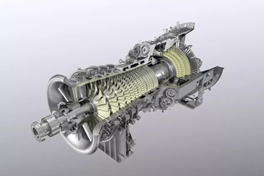
In 2023, Mitsubishi Power secured the top spot for the global gas turbine market, with a 36% share, according to McCoy Power Reports.
This is the second consecutive year of Mitsubishi Power’s leadership in the global gas turbine market. GE Vernova was ranked second with a 27% share, and Siemens Energy was third with a 25% share.
In the category of GTs with an output of 300 MW or more, MHI’s shares rose to 56%, followed by GE Vernova, which was second with 23%.
As for J-class gas turbines, cumulative orders surpassed 120 units. The JAC (J-Series Air-Cooled) gas turbines, capable of operating with hydrogen co-firing, also performed well.
MHI successfully operated a JAC GT with a hydrogen co-firing rate of 30% in November 2023. It plans to develop a hydrogen-dedicated combustion tech by 2030.
ANRE proposed a bidding system in which electricity supply (spot market) and adjustment (balancing, also known as the supply-demand adjustment market) are simultaneously contracted.
Discussions focused on the need to introduce a power supply activation and output allocation system responsible for execution of contracts. The implementation cost has been estimated at ¥81-¥87.5 billion.
The proposal was based on the British nodal scheme adopted in 2022 under which prices are determined on a node-by-node basis, taking into account grid congestion.
ANRE might set three types of necessary parameters: a power supply startup and output allocation system, a price calculation system, and a system for operators.
They also proposed a system that would allow power generators to choose between self-scheduled and pool-scheduled resources, a format similar to that of American grid operator and wholesale market administrator PJM Interconnection.
The EGC met on March 18 to hear opinions from experts on the monitoring scheme for full deregulation of electric power retailing and the state of the wholesale power market, as part of efforts to formulate an organizational policy to be finalized in June.
The Federation of Electric Power Companies of Japan (FEPC) proposed a review of the calculation formula and examination period for state-set electricity tariffs. FEPC director Sasaki Hideaki said that regulated tariffs were lower than market rates, which distorts the competitive environment.
The meeting also drew calls for a reform of the wholesale electricity market, with some saying it has “become increasingly complex.”
Securing qualified human resources for the monitoring of the market is also a pressing issue.
Daiwa Energy & Infrastructure joined with Chinese lithium battery and BESS maker, Gotion High Tech, and renewable energy engineering and O&M firm CO2OS.
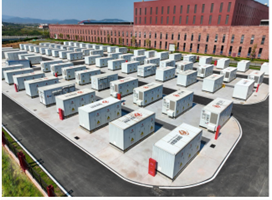
The three aim to develop a large-scale BESS project in Hokkaido. DEI is targeting the deployment of 1 GWh of Gotion BESS solutions within two years. The project is scheduled to come online in 2025.
CO2OS will serve as the EPC partner, providing technical assistance to Gotion, whereas Toshiba ESS will serve as that project’s aggregator.
CONTEXT: The partnership is the second for the Chinese BESS maker in Japan. Gotion entered the Japanese market last year via a deal with developer Edison Energy. DEI specializes in renewables and infrastructure investment and is a member of the Daiwa Securities Group. It is investing in renewable energy assets such as solar and offshore wind power in Japan and abroad, and power transmission projects. The firm invested in a large-scale grid storage battery project in Hokkaido in 2023.
TAKEAWAY: The Japanese BESS market is poised for substantial growth in the next 5-6 years. Earlier this year, the govt introduced a long-term decarbonization auction system that also covers stand-alone battery storage systems. With a growing number of wind and solar projects in the pipeline, Hokkaido and Kyushu are expected to lead the boom in BESS.
Image of BESS installation at Gotion’s factory in Hefei City in Anhui Province, China
Through a subsidiary, Marubeni will join a grid battery storage project in Kitahiroshima City, Hokkaido.
Marubeni will oversee construction and own the BESS that’s expected to launch in FY2025. Generation capacity will be 25 MW; storage capacity – 103.7 MWh.
CONTEXT: This project marks Marubeni’s entrance into the capacity, balancing, wholesale, and related electricity markets.
TEPCO Renewable Power submitted a draft environmental impact statement to the METI minister and Aomori Pref as part of plans to develop a 675 MW offshore wind farm together with Sumitomo Corp.
The site is in the south of the Japan Sea off Aomori Pref, near Tsugaru city.
The letter of consideration will be open for evaluation at administrative agencies from March 14 to April 15.
CONTEXT: The area under consideration was selected in October as a “promotion area”. The site will utilize fixed-bottom structures. The wind farm is expected to start by 2030.
TEPCO completed the fourth release of ALPS-treated water from the Fukushima Daiichi NPP, totaling 7,794 tons. This marked the conclusion of all four planned releases for FY2023.
CONTEXT: Monitoring indicated that all regulatory standards have been met. However, China continues to ban Japanese seafood.
U.S. Secretary of Energy Jennifer Granholm indicated that the freeze on new LNG export permits will be lifted within a year.
CONTEXT: The Biden admin announced the freeze in January. The aim was to assess the impact of LNG production on global warming, but this caused concerns from major customers such as Japan and Europe.
TAKEAWAY: The pause intended to affect pending and future applications for LNG export projects. The measure does not impact already approved business. Still, some Japanese companies have offtake contracts for future LNG projects in the U.S. Japanese concerns reflect persistent dependency on LNG despite the boost of renewables and nuclear power. Japan is the world’s second largest importer of LNG.
The ANRE study group for oil stockpiles released an interim report that included a proposal to trim the national reserve by selling excess oil above the amount required by law, which is equivalent to 138 consumption days.
As nationwide oil demand is falling, excess storage space will appear at the 10 national stockpile facilities. That space could be used to store ammonia, hydrogen and other carbon neutral fuels.
The report said oil demand is declining on the back of the energy transition, but it’s also important to maintain its stockpiling due to geopolitical uncertainties.
LNG stocks of 10 power utilities was 1.6 mln tons as of March 17, down 6.4% from 1.71 mln tons (revised from 1.83 mln tons) a week earlier. This is 31.3% down from end March 2023 (2.33 mln tons), and 25.2% down from the past 5-year average of 2.14 mln tons.
The LNG stock level has been decreasing to the level of early October 2023 despite a slightly colder than average March so far.
CONTEXT: Cherry blossoms are forecast to bloom in Tokyo around March 24.
Exclusive Interview: Sean Kidney, CEO of the Climate Bonds Initiative
The Climate Bonds Initiative (Climate Bonds), is an international NGO that seeks to “mobilize global capital for climate action”. What that means in practice is 1) Reporting on the evolution of the global market for green bonds; 2) Producing standards and certification schemes for bonds that raise funds for investments in the low-carbon economy; and 3) Developing policy proposals for governments, finance, and industry.
Most recently, Climate Bonds came to prominence in Japan as the certifying authority for the Japanese government’s first issuance of “Climate Transition Bonds” (also known as GX Bonds). The framework applied to the GX Bond is said to be a world-first. And while some are skeptical about the Japanese government’s efforts, Sean Kidney, the CEO of the Climate Bonds Initiative, sat down with Japan NRG in Tokyo to explain why he believes in the GX issuance.
There was a lot of caution and skepticism about the Japanese government creating a new kind of bond, as opposed to a “green bond”. Is the GX Bond entirely new? And if so, is it still valid to address climate change?
To be very clear, this is a climate transition bond to finance Japan’s green transformation program (GX). It’s a green bond, it walks and talks and smells like a green bond. It goes in a green bond portfolio, there’s no difference. Except that the nature of the investments it’s focused on is how to support an industrial transition. It’s industrial planning.
We haven’t seen industrial planning bonds before. That’s useful. And we think it’s a significant and important development for the market. But it’s still a green bond. It’s a subset. It’s not a new class. In the sense that, green bonds are about addressing climate from [the standpoint of the International Energy Agency’s] 1.5°C framework. And that’s what this bond does. It’s just that it talks about how we transition things as part of that process.
Congratulations to the Japanese government for tailoring their program to meet our public criteria. We just have a global program of developing status work that meets a 1.5°C trajectory for the purpose of finance. They applied. And it worked.
What was the investor interest like? The bond was three times over-subscribed, but the media coverage around it was at best luke-warm.
From the ministry of finance’s point of view, getting the bond out there is an icebreaker, rather than an endgame. They’re socializing the idea and socializing the effect. Japanese bonds are generally oversubscribed. So, the oversubscription rate for GX bonds was in line with other Japanese bonds that were being done. However, government did get a price benefit with a GX bond – a modest price benefit but significant given how tight Japanese bonds are. But this is because investors are getting a better valuation from secondary market pricing, so a tighter price at primary is still good value. The government got a 0.7% rate on the first one and 1.5% on the second one. That’s a good indicator of demand.
Did the bond sale generate any interest with overseas investors?
We don’t have access to that information (yet), but I would assume that by far the majority of the buyers were local, because they are yen bonds. Not a lot of international investors have yen exposure, but I believe they still got a good uptick of international participation. The Bank of Japan would have been the largest purchaser of the bonds, as it normally is [with state-backed bonds].
My hunch is that it probably got somewhere between 2% and 5% from the international investors. We’ve got a long way to go, but I’d like to see it get to 25%. Because, it’s about big international investors having confidence in the Japanese energy transformation plan.
Do international investors understand what the Japanese GX plan is about?
I’d say there’s growing awareness, there’s interest. The other thing about the green bond market is there’s a lot of unquenched demand, so they’ve got to place the money. Reticence at first will quickly evaporate, as they get a little confidence. And I do expect to see the share of overseas investor interest grow for future GX bonds for that reason, as long as the government maintains globally consistent environmental credentials.
A lot of bond funds have a mandate to address climate change, although the bulk of investor demand comes from mainstream bonds looking to green a portion of their portfolio. It’s someone who has a corporate or an organizational focus on addressing the climate crisis and might have to shift 20% of their portfolio to green. They’re more often looking at the underlying investments than they are at the labeling.
But even for those that are restricted to investing in green bonds, if they explain to their clients what a GX bond is, it works. I know this from speaking to a lot of fund managers. Having said that, clearly, people are saying, What the hell is this? The first question I get from investors is, so what about coal and ammonia?’ That’s the overriding concern as a result of confusing media coverage last year. But it’s not the case.
Let’s clear this one up. METI says the use of ammonia as a fuel for power plants, including the option to burn both coal and ammonia in a power plant (co-firing), are part of the GX program. But you say it is not part of the GX Bond financing scope.
The GX bond is creating funding for government programs, which in this case includes financial support for Research & Development into the utilization of hydrogen and ammonia. Fantastic. We’re very supportive. But, at least in these first two bond issuances, there is no allocation for operational assets in ammonia or hydrogen, or coal-fired plants or any of these areas at this stage. It’s necessary R&D.
METI got a lot of bad press last year about their ammonia co-firing, which was misleading, because that’s only a small slice of what they’re talking about [with the GX program]. It’s like the IRA in the U.S., which gets a lot of good press now, but you know what, there are boondoggles for the gas industry in there.
There’s stuff in the GX program, that I would argue, they are going to have to leave out as time goes on. But there’s so much stuff that’s really good. And, for the purpose of the bond, they trimmed it. They actually took out the controversial stuff, which we couldn’t cover, such as natural gas or anything operational for replacing coal or ammonia.
Would you be open to ammonia or hydrogen projects being included in GX Bonds?
We’ve been very clear that we’re going to need a lot of rollout of hydrogen, ammonia, amongst other things going forward. We’ve published clear criteria for inclusion, including things like emission levels. We’re saying, this is a transition sector, it’s got to get very low carbon by the time we get to 2050. You can’t do that with gray or black hydrogen, they have got to be frozen out. But, blue – yes, for a while. The difficulty with blue is emissions leakage in the gas supply chain. And we’ve got criteria for those as well.
The problem is when we’re mixing [ammonia or hydrogen], like with coal. We’ve still got to be aligned with the IEA net zero pathway. So, our concern, and we said this in a paper we published in October 2023, is that the current thinking in the public statements by JERA – of applying ammonia fuel to coal power plants – is that it looks like they’re still going to burn coal in the 2040s (part of it mixed with ammonia). But, you know, coal usage has to be shut down sooner. The 2040s are too far away.
We’re saying, “tell us how what you’re doing meets the 1.5°C pathway”. The global reference document is the IEA Net Zero Roadmap, which has a very accelerated closeout for coal. If it can be shown that using the ammonia/coal plan meets that roadmap, we’re happy. And it’s possible that ammonia replacing some of the coal will help. But it’s a stretch goal. So, we might need to find another pathway for JERA.
But we’re very happy to support R&D. We need to change things very, very quickly, so we need to invest in a lot of R&D solutions. On the R&D that’s happening with ammonia combustion, my question is: Can [the shift from coal to ammonia] happen sooner than 2050. Could they do it in a way that could change those complexities sooner, and what are the barriers?
JERA argues that the speed of the transition also hinges on the speedy rollout of affordable hydrogen and ammonia supply, which is outside of their control.
I’m very optimistic about that. We now have price points that are revolutionary. In the U.S., the $1 per kilo price point for commercial use will be achieved by the new hydrogen plants that are coming through, with the IRA subsidy making up the difference. In Spain, green hydrogen is being delivered to ArcelorMittal at €1.50 a kilo already. In India, Adani [Group] claims they’re going to be able to deliver hydrogen at 97 cents a kilo in three years to industry in Gujarat province. You can’t trust a single source, but if you see three different sources moving along quite fast, you think: something’s going on. This is looking possible.
So, nothing is certain here. But, at minimum, we expect people to commit to [a transition away from coal by] 2035, which is essentially setting market signals to suppliers.
ENERGY TRANSITION
You seem confident about the move to a hydrogen economy. Aside from power companies, which industries do you expect to embrace hydrogen / ammonia first?
I’m uncertain which demand domino will be pushed over first. I think it’s autos, because there’s this amazing arbitrage in the auto industry. If you buy green steel now, it’s about 40% more costly per kilo than ordinary steel. It’s quite high, right? However, this is only 1% of the retail cost of the car! Could Toyota put out a contract saying they want JFE and Nippon Steel to change their steelmaking by 2028? That would push steelmaking over the line.
Japanese steelmakers are already reconsidering their blast furnaces. About 75% of all blast furnaces in Japan are coming to the end of their operating life. What are they going to do if they’re going to get a green steel contract? My view is: it will be electric arc furnaces here in Japan and bringing in green semi-finished steel products from hydrogen-fuelled blast furnaces in countries that have large renewable energy resources.
We have multiple sources of demand that could be drivers for hydrogen; steel is just one of those. The catalyst could be fertilizer, because of the international fertilizer push to sustainability.
Nuclear power is a big part of Japan’s GX program. What are your views on this?
The GX bond allows for R&D funding for nuclear energy. It doesn’t have operational investments for nuclear. We would not have been able to certify investments for operational nuclear; not because we’re against it, we just don’t have the criteria.
We haven’t set it as a priority, because at the end of the day it’s going to be governments funding new nuclear, wherever you are since, Governments will have to take on all the risk with building new nuclear.
Nuclear power is expensive and long term. What really counts is the next few years. New nuclear is a kind of distraction. As for existing nuclear – I am always at pains to say: Close down fossil fuels before you close down nuclear. Once you’ve done that, close down nuclear.
Nuclear fusion might be different. I am very curious about the rash of fusion startups around the world. But it’s low carbon. So, our view is, nuclear bonds count.
We need to lean in. The most urgent task right now is to close down fossil fuels. Anything beyond tomorrow morning is an ugly compromise. So, I have to be supportive of the Japanese Cabinet’s decision to restart nuclear. But they are not having a lot of success with it. They might have more success if they promised to close down all reactors by the 2030s.
What’s your stance on carbon capture and storage (CCS)?
We are supportive of carbon capture and sequestration. We just don’t think it would be affordable and big enough to be able to solve the issues of the entire energy system. But in certain places like in cement we’re going to need it. Above all, we’re going to need it for Direct Air Capture to remove CO2 from the atmosphere.
If you can get your emissions down, I’m in love with you! So, whatever it takes. But I expect you not to leak any CO2. And we know that CCS plants around the world are leaking like a sieve and the amount of capture has been relatively limited. So, we need to do a lot of work. It’s very hard to see it being commercially viable, especially for energy use, for a long time.
Some CCS technologies look very exciting. I’m a bit dubious about whether we can make storage of a liquid underground for long periods particularly secure. But even if it buys us another 20 years, at the moment it helps. So, I’m a great supporter if you can make it work. I just think that the coal and gas industry’s dream of having CCS as a major industry is a bit of a pipe dream.
ANALYSIS
BY YURIY HUMBER
Imminent LNG Deals Likely to Forge Japan’s Future Stance on Russian Energy
Within about a year, Japan will likely make decisions that will dictate the nature of its energy ties with Russia over the coming decades.
Talks over the future status of a small-scale Russia-Japan LNG contract will have to begin in 2025, at the latest. How those negotiations proceed will impact developments around a number of LNG contracts two years further along, and subsequent deals.
In total, the status of close to 10% of Japan’s imports of the super-chilled fuel is at stake, with decisions on the majority of the volume due well before the end of this decade. What’s more, the two countries are connected via the Arctic LNG 2 project in northern Russia, which has recently been hit by stringent U.S. sanctions, also nullifying Tokyo’s option to tap into those volumes.
After Russia’s incursion into Ukraine two years ago, Japan was quick to join its G7 allies in assigning strict sanctions on trade with the northern neighbor. Energy was the main exception due the value that Russian oil, coal, and most importantly, LNG, have for Japan. Still, Prime Minister Kishida vowed to minimize the energy relationship over time.
Finding alternatives has been far from straightforward. And with the U.S. presidential elections due in November, Tokyo’s uncertainties over whether to shrink its energy relationship with Moscow are increasing. Ordinarily, Japan would try to keep the nuanced status quo, maintaining the current level of ties. But then these are not ordinary times.
Sanctions and impact
In the weeks after Russian troops entered Ukraine, PM Kishida confirmed Japan’s position to support the G7 in sanctioning Moscow’s economic activities. In terms of Japan’s trade with Russia, Kishisa announced plans to phase out purchases of its crude oil (4% of Japan’s total at the time) and, over time, imports of its coal (13% at the time).
Unlike firms from the U.S. and most of Europe, however, Japanese trading houses and the state-backed JOGMEC remained as shareholders in existing Russian oil and gas projects on Sakhalin Island (Sakhalin-1 and Sakhalin-2) and in the northern Arctic area (Arctic LNG-2).
Japanese firms were also involved in the financing and engineering of the Yamal LNG project, which sits close to Arctic LNG-2. Both projects are led by Russia’s Novatek. Aside from a few geological surveys elsewhere in Russia, most of which are now complete, a Japanese group remains involved in an oil exploration and development venture in eastern Siberia (INK-Zapad). Oil upstream firm INPEX was reported in January as ready to sell its stake in INK-Zapad, but the other two firms in the Japanese group, JOGMEC and trading house Itochu, remain invested.
The equity investments are separate – though often associated with – offtake agreements from the projects. Still, in a sanctions environment, even when Japanese end-users are ready to get the fuel, the delivery, insurance, and payment become difficult if not impossible without direct state intervention. As such, Japanese companies have, thus far, mostly curtailed their deliveries of Russian energy products without moving to liquidate the equity stakes.
The result is that last year Russian oil purchases were almost at zero; coal imports were 1% of Japan’s total. Hence, the recent strengthening of U.S. sanctions against Russian energy products, which was followed by Japan’s Ministry of Finance hitting Russian crude oil with stricter measures around price caps, is largely procedural. It will affect very little actual cargo.
Regarding LNG, however, the story is more complicated. Japanese purchases were unchanged last year. In 2023, Russia remained the third-largest supplier of LNG to Japan. Its market share in Japan has stayed in the 9-10% range for the last few years.
All in all, Japan’s assessment of the sanctions is mixed. A recent JOGMEC presentation shows that Russia has likely lost out on about 89% of potential LNG revenues due to its new projects being frozen, but Moscow’s losses in oil are only at about a quarter of its potential sales given the much bigger, more liquid and hard-to-control nature of crude markets.
The exception or the rule?
While Japan won an exception for LNG in the G7 sanctions against Russia, Tokyo was seemingly under the impression that the restrictions would not apply to all ‘current’ projects. What that means in practice is less straightforward.
Nearly all of the Russian LNG delivered to Japan comes from the Sakhalin-2 project. However, at the time of the sanctions writing, Novatek was already working with its international partners, including Japan, to build the Arctic LNG-2 project that was due to start working in late 2023 or early this year.
Japan seemed to assume that Arctic LNG-2 would also be treated as an exception because it was already in the construction phase. In 2020, then METI minister Seko called it the biggest Japan-Russia energy project to date, based on costs. JOGMEC, together with Mitsui as a minority partner, took a 10% equity stake and guaranteed over $1 billion in Japanese bank financing.
Eventually, with three trains (units) completed, Arctic LNG-2 was supposed to provide a massive 19.8 million tons of LNG production a year.
The U.S. administration appeared to see the sanctions remit differently. Once it was clear that Novatek was able to move forward with construction despite the various sanctions in place, in part thanks to Chinese assistance, the U.S. decided to up the ante. Since September 2023, three rounds of sanctions from the U.S. and the UK have fallen on the Arctic LNG-2 project, the latest announced in February 2024.
Seeing no way to proceed, JOGMEC repaid 814 million euros of loans in January this year, indicating that Japanese lenders have mostly pulled out of the project.
The future of Arctic LNG-2 appears as frozen as the nature around it. But selling the Japanese equity now would be financially and politically damaging. The most likely potential buyers would be either Russian entities or Chinese. Neither option would work well from the Japanese side.
And so, almost the entirety of Japan-Russia energy relations now rest firmly on the LNG purchasing contracts between Japanese utilities and the operating entity of Sakhalin-2. But these contracts are coming up for renewal.
Renew or quit?
The first contract due to run out is worth 0.5 million tons per annum (Mtpa) and is held by JERA. It is a 15-year deal signed around the time of the 2011 Fukushima disaster, when Japanese energy needs suddenly jumped to cover the inability to run nuclear power plants. The contract ends in 2026.
It is customary to begin renewal negotiations, which can involve talks over a price update, a year or so before the contract ends.
A number of Sakhalin-2 contracts are then due to expire in 2028. Two of those are with Japanese gas utilities; the rest with non-Japanese parties that have offered part of those volumes in the Japanese market on a spot basis. A second 1.5-Mtpa JERA contract is due to expire in 2029. Five more Japanese offtake deals will conclude between 2030 and 2033.
Looking at the cost and logistics, it is a no-brainer for Japan to roll over the deals. Russia has been one of its cheapest LNG suppliers over the past decade, beating Australia and the U.S. by at least half a dollar per MMbtu.
One of the reasons is that cargoes from Sakhalin can arrive in Japanese ports in 2-3 days. That compares with 25 days for ships traveling from the Gulf of Mexico under normal conditions, as well as issues with both the Panama Canal and the Suez Canal / Red Sea that have made global LNG navigation much more complicated and costly. The shortest ship journey from Australia to Japan is still two weeks.
Given such conditions, and the fact that Sakhalin-2 has been a stable and reliable supplier since its launch 15 years ago, renewing the Japanese offtake contracts will be tempting. But, industry insiders believe that Japan’s power companies like JERA simply won’t want to take on the risks of Russian LNG deliveries as long as Moscow’s military campaigns ensue.
Environmental-leaning voices question whether Japan will even miss these volumes once the current contracts run out. The Institute for Energy Economics and Financial Analysis said in a March report that Japanese utilities may find themselves over-contracted to the tune of 11 Mtpa by the end of this decade.
Conclusions
In terms of long-term resource planning and geopolitical strategy, Japan has good reasons not to break all the energy trade with Russia. After all, no regime lasts forever and having a seedling ready for next spring is pragmatic.
What’s more, if Japan would let go of its investments in Russia, it would not only lose claim to the resources it helped to discover and develop, it would likely receive zero compensation, as well as incur retaliation through other trade means, or worse, see the assets fall into Chinese hands.
Securing similar volumes elsewhere is also far from straightforward given the U.S. has (at least temporarily) paused the issue of new LNG export licenses. Also, the cost of Australia supply is set to rise due to environmental requirements; and Japan’s investments in Mozambique LNG are at the mercy of local insurgents.
But Japan may have an unlikely ally interested in preserving the status quo: Russia itself. For all the saber-rattling and bluster, Moscow is aware of the importance of its LNG exports to Japan. And Russia’s alternatives are also not entirely rosy. For one, Chinese planners are worried about importing much more Russian gas, fearing the same dependency that hampered Europe.
ASIA ENERGY REVIEW
BY JOHN VAROLI
This weekly column focuses on energy events in Asia and the Pacific, and all that impact markets in the region.
China / Wind power
Global wind turbine orders posted a record 155 GW of capacity procured in 2023, up by 16 GW from 2022. China posted the largest annual order intake on record at 100 GW, according to Wood Mackenzie.
Energy / AI
Around 65% of energy and natural resources executives in 2023 believed that artificial intelligence and digital technologies will contribute significantly to their operations by 2030, reports Bain & Company. Also, 70% of the executives think that generative AI will improve maintenance, including predictive maintenance.
Energy transition
The global energy transition remains “off track” despite record-high renewables growth in 2023, according to the International Renewable Energy Agency, adding that the world needs an additional 7.2 TW of renewables capacity to reach 2030 targets.
India / Power
Coal India Ltd and Rajasthan Rajya Vidyut Utpadan Nigam inked an MoU to explore development of 4.1 GW of thermal and renewable power generation.
LNG / Spot market
Buyers from China, India and parts of SE Asia are securing more spot shipments of LNG after prices fell to their lowest level in nearly three years. This price-led demand revival could push LNG imports by China, the world’s top buyer, beyond its record volume of 78.8 MMT, and also raise India’s imports by about 10% this year.
Oil markets / tankers
The world could face a tanker shortage if the geopolitical crisis in the Red Sea persists for another six months, said the head of Kuwait Petroleum Corp.
Philippines / Wind power
The Dept of Energy awarded about 500 MW of wind power service contracts to Repower Energy Development Corp, which covers four onshore and offshore projects in Quezon province.
Singapore / Nuclear power
Singapore is exploring the possible development of nuclear energy, with a main focus on addressing safety issues. Currently, about 95% of Singapore’s electricity is generated from imported LNG.
Taiwan / Offshore wind
In 2023, Taiwan’s total installed offshore wind farm capacity reached 2.25 GW, hitting its 2.03 GW to 2.43 GW target, and making the country Asia Pacific’s leading market, according to the country’s Ministry of Economic Affairs.
Vietnam / Green exports
The U.S. has inked a $500 million deal to boost green exports to Vietnam. These are exports related to renewable energy, the climate, and infrastructure. American companies can receive loans and other backing from the U.S. Export-Import Bank.
2024 EVENTS CALENDAR
A selection of domestic and international events we believe will have an impact on Japanese energy
January
First market trading day (Jan 4)
IEA “Renewables 2023: Analysis and Market Forecast to 2028” released (Jan 11)
Renewable Energy Exhibition (Jan 31 – Feb 2)
Taiwan presidential election (Jan 13)
Japan’s Diet convenes
IEA “Electricity 2024 / Analysis and Forecast to 2026” released (Jan 24)
February
CFAA International Symposium (Feb 2)
India Energy Week 2024 (Feb 6-9)
Lunar New Year (Feb 10-17)
Indonesia presidential election (Feb 14)
Japan-Ukraine Conference for Promotion of Economic Reconstruction (Feb 19)
FIT/FIP solar auction (Feb 19 – March 1)
Smart Energy Week (Feb 28-Mar 1)
March
Announcement of auction result for Offshore Wind Round 2 (for Akita Happo-Noshiro Project)
Onshore wind auctions (March 4-15; results on March 22)
International LNG Congress (LNGCON) 2024, Milan, Italy (March 11-12)
Russian president election (March 15-17)
World Petrochemical Conference, Houston, TX, USA (March 18-22)
IAEA Nuclear Energy Summit @ Belgium (March 21)
Ukraine presidential election (due before March 31)
Happo Noshiro, Murakami-Tainai, Oga-Katagami-Akita and Saikai-Eshima wind project auctions close (June 30)
July
Tokyo governor election (July 7)
7th Basic (Strategic) Energy Plan draft published (expected)
August
7th Basic (Strategic) Energy Plan draft presented to Cabinet (expected)
September
Global Offshore Wind Summit Japan 2024, Sapporo, Hokkaido (Sept 3-4)
The United Nations Summit of the Future (Sept 22-23)
Gastech 2024, Houston, TX (Sept 17-20)
IAEA General Conference
GX Week in Tokyo (expected late Sept to October)
Asia Green Growth Partnership Ministerial Meeting
Asia CCUS Network Forum
International Conference on Carbon Recycling
International Conference on Fuel Ammonia
GGX x TCFD Summit
October
IEA World Energy Outlook 2024 Release
BP Energy Outlook 2024 Release
Innovation for Cool Earth Forum (expected)
Connecting Green Hydrogen Japan 2024 (Oct 16-17)
Japan Wind Energy 2024 Summit (Oct 16-17)
Solar Energy Future Japan 2024 (Oct 16-17)
Japan Mobility Show (Oct 25-Nov 5)
November
US presidential election (Nov 5)
COP 29 in Azerbaijan (Nov 11-22)
Abu Dhabi International Petroleum Exhibition Conference (ADIPEC) 2024, Abu Dhabi, UAE (Nov 11-14)
APEC 2024 @ Lima, Peru
International Conference on Nuclear Decommissioning (TBD)
G20 Rio de Janeiro Summit (Nov 18-19)
Offshore Energy Exhibition & Conference (OEEC) 2024, Amsterdam, the Netherlands (Nov 26-27)
Biomass & BioEnergy Asia Conference (TBD)
European Biomethane Week 2024
December
Last market trading day (December 30)
Disclaimer
This communication has been prepared for information purposes only, is confidential and may be legally privileged. This is a subscription-only service and is directed at those who have expressly asked K.K. Yuri Group or one of its representatives to be added to the mailing list. This document may not be onwardly circulated or reproduced without prior written consent from Yuri Group, which retains all copyright to the content of this report.
Yuri Group is not registered as an investment advisor in any jurisdiction. Our research and all the content express our opinions, which are generally based on available public information, field studies and own analysis. Content is limited to general comment upon general political, economic and market issues, asset classes and types of investments. The report and all of its content does not constitute a recommendation or solicitation to buy, sell, subscribe for or underwrite any product or physical commodity, or a financial instrument.
The information contained in this report is obtained from sources believed to be reliable and in good faith. No representation or warranty is made that it is accurate or complete. Opinions and views expressed are subject to change without notice, as are prices and availability, which are indicative only. There is no obligation to notify recipients of any changes to this data or to do so in the future. No responsibility is accepted for the use of or reliance on the information provided. In no circumstances will Yuri Group be liable for any indirect or direct loss, or consequential loss or damages arising from the use of, any inability to use, or any inaccuracy in the information.