
JAPAN NRG WEEKLY
MAY 13, 2024
JAPAN NRG WEEKLY
MAY 13, 2024
NEWS
TOP
- Japan, Brazil leaders launch green partnership and promote biofuel-fueled hybrid vehicles
- ANRE proposes measures to reduce inefficient coal power, starting with FY2025 auction
- MRI estimates offshore wind power potential at 70 GW fixed-bottom, 2.39 TW floating
- METI mulls amendments to ‘partial supply’ scheme in electricity
- METI minister participates in Japan-EU economic security talks
- Defense Act amendments to affect onshore wind projects
- Firm to launch power system fueled by aluminum-derived H2
- Kyushu Electric to issue ¥20 bln in transition bonds to help NPP
- EVs equipped with wireless charging system begin test-drives
- KEPCO-led group sets up ¥10 bln fund to develop solar power
- J-Power to suspend or decommission five coal-fired power units
- Mitsui to invest in and build large-scale solar project in Texas
- Shizen and Majuperak to develop solar power in Malaysia
- ORIX launches Japan’s largest binary cycle geothermal plant
- Hitachi inks deal with RWE on HVDC to link offshore wind to grid
- SolarDuck, Tokyu Land complete offshore floating solar project
- JEPX Intraday Market hits record average volume in FY2023
- Trading volume surges in TOCOM futures market in April
- METI backs town’s interest in hosting nuclear waste site facility
- MODEC and JGC complete project to quantify GHGs from FPSOs
- Itochu eyes long-term LNG purchases from Canada
- LNG stocks down by double-digits on a YoY basis
ANALYSIS
CONVERTING CO2 TO CEMENT: JAPAN SEEKS TO DECARBONIZE HARD-TO-ABATE INDUSTRIES
While the MoE stresses the need to move away from fossil fuels to achieve net zero, Japan is also testing technologies that can absorb CO2 from the atmosphere. Some will help “hard-to-abate sectors” such as shipping, and steelmaking, and are developed overseas thanks to Japanese investments, hoping that it could later be ‘imported’ and utilized in Japan’s industrial decarbonization strategy. We review some of the current initiatives.
ENERGY JOBS IN JAPAN:
BUILDING A LOCAL BRAND
Building a corporate identity and employer brand is key to attracting top talent. But relying on your good name in your home market won’t get you far in Japan. The country is not short of well capitalized giants investing in the energy transition as well as engineering companies. Considering that more than 90% of the talent pool in the local energy market works for Japanese firms, building a strong brand, highlighting your firm’s fine points and telling a clear story are key to attracting local talent.
ASIA ENERGY VIEW
A wrap of top energy news that impacts other Asian countries.
EVENTS SCHEDULE
A selection of events to keep an eye on in 2024.
JAPAN NRG WEEKLY
PUBLISHER
K. K. Yuri Group
Events
Editorial Team
Yuriy Humber (Editor-in-Chief)
John Varoli (Senior Editor, Americas)
Mayumi Watanabe (Japan)
Wilfried Goossens (Events, global)
Kyoko Fukuda (Japan)
Magdalena Osumi (Japan
Filippo Pedretti (Japan)
Tim Young (Japan)
Regular Contributors
Chisaki Watanabe (Japan)
Takehiro Masutomo (Japan)
SUBSCRIPTIONS & ADVERTISING
Japan NRG offers individual, corporate and academic subscription plans. Basic details are our website or write to subscriptions@japan-nrg.com
For marketing, advertising, or collaboration opportunities, contact sales@japan-nrg.com For all other inquiries, write to info@japan-nrg.com
OFTEN-USED ACRONYMS
|
METI |
The Ministry of Economy, Trade and Industry |
mmbtu |
Million British Thermal Units | |
|
MoE |
Ministry of Environment |
mb/d |
Million barrels per day | |
|
ANRE |
Agency for Natural Resources and Energy |
mtoe |
Million Tons of Oil Equivalent | |
|
NEDO |
New Energy and Industrial Technology Development Organization |
kWh |
Kilowatt hours (electricity generation volume) | |
|
TEPCO |
Tokyo Electric Power Company |
FIT |
Feed-in Tariff | |
|
KEPCO |
Kansai Electric Power Company |
FIP |
Feed-in Premium | |
|
EPCO |
Electric Power Company |
SAF |
Sustainable Aviation Fuel | |
|
JCC |
Japan Crude Cocktail |
NPP |
Nuclear power plant | |
|
JKM |
Japan Korea Market, the Platt’s LNG benchmark |
JOGMEC |
Japan Organization for Metals and Energy Security | |
|
CCUS |
Carbon Capture, Utilization and Storage | |||
|
OCCTO |
Organization for Cross-regional Coordination of Transmission Operators | |||
|
NRA |
Nuclear Regulation Authority | |||
|
GX |
Green Transformation |
NEWS: ENERGY TRANSITION & POLICY

Japan, Brazil leaders launch green partnership and promote biofuel-fueled hybrid vehicles
(Government statement, May 7)
- During a May 3 meeting in Brazil, Prime Minister Kishida and President Lula launched the Initiative for Sustainable Fuel and Mobility (ISFM), a framework to promote biofuels, e-fuels, and hybrid engines.
- They also launched the Japan-Brazil Green Partnership Initiative (GPI), which includes prevention of Amazon deforestation and promoting sustainable agriculture.
- Brazil’s food, energy and mineral resources offer opportunities for Japan. Kishida said he will support investments in digital and green sectors.
- CONTEXT: This agreement, which clarifies hybrid engine-mounted vehicles as climate solutions, may open ways to expand the bioethanol-blended gasoline market in Japan. The bioethanol mix ratio in Japanese gasoline is less than 2%, compared to over 10% in the U.S. and Europe.
TAKEAWAY: In order for Japan’s bioethanol import market to grow, new entries are needed. The market is dominated by Japan Biofuels Supply LLP, a joint venture of oil refineries. The importers will also need to decide the mechanism to price bioethanol. This could be a basket of international price indices, a single Japan-based price, or a combination of the two. This issue becomes important as bioethanol’s share in gasoline increases. In that case, gasoline suppliers will need to explain to end-users the rationale behind price changes.
ANRE proposes measures to reduce inefficient coal power, starting with FY2025 auction
(Government statement, May 8)
- ANRE proposed measures to reduce inefficient coal power, including a cut in capacity auction contract payments to operators supplying power from unabated plants.
- This measure is set to be implemented from the FY2025 auction, with a 20% cut in payments from OCCTO to power operators if unabated plants run above 50% rates.
- The payment reduction for FY2026 onwards will be decided later.
- CONTEXT: This past week’s G7 Climate Summit resolved to phase out existing unabated coal power units in the first half of the 2030s. For its part, Japan plans to phase out “inefficient coal power”, which are coal power plants with less than 43% energy efficiency, and will end the construction of new unabated coal power units.
TAKEAWAY: By FY2030, ANRE forecasts that inefficient coal plants will generate 39.7 TWh, which is down significantly from 103 TWh in FY2022. ANRE also said these plants have average run rates of 67%.
- SIDE DEVELOPMENT:
METI, environment ministers attend G7 Climate Summit
(Government statement, May 1)- METI Minister Saito, Environment Minister Ito, and State Environment Minister Yagi attended the G7 Climate Summit in Italy, with bilateral meetings at the sidelines.
- Saito discussed:
- Net zero path in the transport sector, and nuclear development with the Italian Minister of the Environment and Energy Security;
- Hydrogen, renewables, gas, CCUS, etc with the EU Energy Commissioner;
- Carbon pricing and CBAM with the EU Climate Commissioner.
METI to revise legislation on partial electric power supply for new market players
(Japan NRG, May 9)
- METI and ANRE will create a new scheme to replace the “partial supply” system that effectively obliges a deemed retail power utility (the retail arm of a former general electric utility, EPCO) to make up for any shortfall in supply available to new market entrants (also known as shin denryoku or PPSs).
- The change would allow supply to come from two or more retail electricity providers if customers desire. The proposal for a change comes amid concerns that the existing market will be distorted and the expansion of off-site PPAs may be hindered.
- The current partial supply scheme applies to shin denryoku that lack adequate access to power sources. The system is claimed to be abused by some firms that used EPCO power when JEPX prices in the market were high.
- The system was established to promote renewables from new market players but has resulted in the EPCOs losing money.
- The govt is accepting public comments for the amendment proposal until June 15.
METI minister participates in Japan-EU economic security dialogue
(Government statement, May 2)
- On May 2, METI Minister Saito participated in the 5th Japan-EU High-level Economic Dialogue with focus on reinforcing economic security and resilience.
- The ministers agreed to maintain WTO as the core of international trade rules and to jointly address economic system vulnerabilities and to foster level playing fields.
- Japan and the EU signed a protocol amending the Japan-EU Economic Partnership Agreement to include provision on the free-flow of data.
TAKEAWAY: The data free flow agreement may not seem to be relevant to energy issues, but making it a part of economic security policy may complicate Japan-EU-U.S. ties. The EU and the U.S. have historically been divided on free data flow principles, notably on privacy, and Japan has tried to act as a bridge. Further, data flow may become a bigger issue with an expanded use of AI and data centers to complement complex / decentralized energy systems.
- SIDE DEVELOPMENT:
Defense Act amendments pass Diet, onshore wind affected
(Parliament statement, May 10)- The Act for Establishment of the Ministry of Defense was amended. It will now require onshore wind operators in designated areas to report and hold consultations with the govt on possible impact on radio, radar and other defense systems.
- The consultation period is limited to two years.
Al-Hy-Tec to commercialize power system fueled by aluminum-derived hydrogen
(Nikkei, May 8)
- Al-Hy-Tec, which is based in the city of Takaoka, plans to commercialize a power generation system fueled by hydrogen generated from scrap aluminum. The company also plans to enter the PPA business.
- 320 kWh of power will require 600 tons / year of aluminum. The rates for aluminum-derived hydrogen power are forecast to be at ¥8 to ¥30 / kWh.
- CONTEXT: Al-Hy-Tec is a pioneer of hydrogen production that utilizes feed from household scrap aluminum, dismantled solar panels, etc. The metal emits hydrogen when placed in an alkaline solution. About 9 kg of aluminum generates 1 kg of hydrogen.
TAKEAWAY: The ¥8 to ¥30 / kWh range is wide, and suggests that it won’t be as competitive as nuclear power, seen at ¥7 / kWh. The range also shows a lack of visibility over prices and availability of economical scrap aluminum, the main material. Scrap aluminum is not waste. Japan generates 1.3 mln tons per year of scrap aluminum from households and factories, as well as imports, since this amount is not enough to cater demand from the automotive and housing industries. Establishing strong scrap supply networks and aluminum price hedging mechanisms are key to make this technology work for the PPA business.
- SIDE DEVELOPMENT:
Toyota Motor begins hydrogen production from biogas in California
(Company statement, May 2)- Toyota Motor North America and FuelCell Energy launched the world’s first “Tri-gen” system that uses biogas to power a 2.3-MW renewables facility that manufactures 1,200 kg/ day of hydrogen.
- The system was installed at Toyota Logistics Services in Long Beach, California, which is the company’s largest vehicle processing facility in North America. The electricity will be for on-site consumption.
- SIDE DEVELOPMENT:
Air Water doubles hydrogen supplies in Tokai region
(Company statement, May 7)- Air Water has doubled hydrogen supplies in the Tokai region by opening a new 300 Nm3/ hour production plant in the city of Nagoya.
- Hydrogen with over 99.999% purity will use natural gas as feed.
- Equipment to load the gas onto trailers was also installed at the plant to supply to large users. The plant began operations in April.
Kyushu Electric to issue ¥20 billion in transition bonds to boost NPP safety
(Company statement, May 1)
- Kyushu Electric will issue about ¥20 billion in transition bonds for decarbonization efforts. The funds will help refinance nuclear power plant safety upgrades.
- The lead managers will be five companies, including Mizuho Securities and Mitsubishi UFJ Morgan Stanley Securities.
- CONTEXT: Kyushu Electric operates the Sendai NPP, Units 1 and 2; and Genkai NPP, Units 3 and 4.
KEPCO-led group sets up ¥10 billion fund to develop solar power in Japan
(Company statement, May 1)
- KX Renewable Energy was launched to invest in solar power projects that utilize PPAs. KEPCO helped set up the fund, marking its first investment in renewables.
- The fund will have ¥10 billion at its disposal, and will be managed by KX Renewable Energy, in partnership with Shiga Bank, Sumitomo Mitsui Trust Panasonic Finance, as well as Mitsubishi UFJ Morgan Stanley Securities and PwC Advisory.
- CONTEXT: Solar power took off in Japan shortly after the 2011 Fukushima nuclear disaster, and by 2017 the country had deployed the world’s second largest solar capacity, only trailing China. Today, Japan has about 70 GW of installed solar power, contributing about a tenth of the nation’s electricity. By 2030, Japan aims to build about 108 GW of solar power, and the govt has said the nation may need much more to meet its decarbonization goals.
Consortium with Hitachi Energy signs €4.5 billion deal to build offshore DC platforms
(Company statement, May 2)
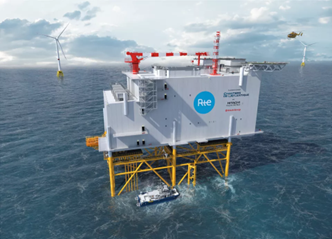
- Chantiers de l’Atlantique and Hitachi Energy agreed with French transmission operator RTE to build the offshore DC platforms and onshore converter stations for three wind farms off Normandy (Centre Manche 1 & 2) and Oléron Island.
- The deal is estimated at €4.5 billion. The HVDC transmission systems will help integrate more than 3.5 GW of renewable power into the RTE network.
- CONTEXT: These offshore wind farms are more powerful and further from the coast, where winds are stronger. To connect these offshore farms to the onshore grid, it’s necessary to use DC, which can transport electricity over very long distances.
Image of the future platform
EVs equipped with wireless charging system begin test-drives on public roads
(Denki Shimbun, May 9)
- The system uses a wireless charging pad installed in a parking space to transmit electricity to an EV equipped with a compatible battery. The vehicle parts are a modification that can be installed in an existing commercial EV.
- SPC Electronics Corp, part of Mitsubishi Electric Group, is testing the system, which also uses control technology that maximizes power collected when the charger is not perfectly aligned, as well as an inverter that can charge at up to 45 kW.
MHI and Chiyoda Corp collaborate on CCUS
(Company statement, May 7)
- MHI and Chiyoda Corp will collaborate to advance CCUS in Japan. MHI will license its CCS technology to Chiyoda. The latter will then provide Engineering, Procurement, and Construction (EPC) services for CO2 capture projects.
- CONTEXT: In collaboration with KEPCO, MHI developed CCS technologies that have already been deployed in several commercial plants.
- SIDE DEVELOPMENT:
Asahi Kasei, Mitsui, Mitsubishi to collaborate to cut carbon
(Company statement, May 8)- Asahi Kasei, Mitsui Chemicals and Mitsubishi Chemical will collaborate to reduce the carbon footprint of ethylene, a basic material for plastics production.
- The three companies run ethylene plants in west Japan. They plan to change the fuel, which is presently gas, as well as the feedstock, which is naphtha.
J-Power, EDF, Yamna secure land for green ammonia plant in Oman
(Company statement, April 30)
- J-Power, Electricité de France and its subsidiary, EDF Renewables, and YamnaCo secured a 341 km2 site in Oman to build a 1 mln tons per year ammonia plant.
- They plan to install 4.5 GW wind and solar capacities with battery storage, a 2.5 GW electrolyser, and an ammonia manufacturing plant.
NEWS: ELECTRICITY MARKETS

MRI estimates offshore wind power potential at 70 GW fixed-bottom, 2.39 TW floating
(Company statement, April 25)
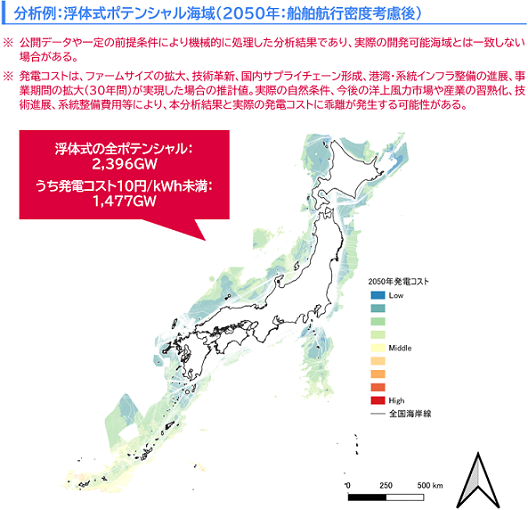
- The Mitsubishi Research Institute estimated Japan’s total offshore wind power potential at 70 GW of fixed-bottom installations and 2.39 TW of floating installations.
- At a power generation cost below ¥10/kWh, the MRI calculated that by 2050 about 70 GW of bottom-fixed wind turbines could possibly be installed. As far as floating wind turbines, it’s estimated that 1.47 TW of capacity is “highly feasible” at that ¥10/kWh generation cost level.
- The study took into account data such as wind speed, water depth, as well as navigation and fishing rights in order to assess the impact on shipping and the fishing industry.
- CONTEXT: The goal of the research was to identify areas for development, and foster mutual understanding between offshore wind developers and the fishing industry. Since the study did not consider all natural and social conditions, the actual potential development area is expected to be limited.
TAKEAWAY: As Japan aims to deploy 30 to 45 GW of offshore wind power by 2040, including floating installations, Japanese firms are keen to lead in the field of floating wind power tech, at least in the APAC region. Earlier this year, a group of 14 Japanese firms, along with major utility providers, launched a consortium to develop mass-production floating wind tech. Japan’s growing offshore wind market will also offer many opportunities for overseas wind power developers, and companies from Northern Europe are busy establishing partnerships with Japanese firms.
This is possibly the first estimate of floating offshore wind capacity potential publicized by a private institute in Japan. MRI’s Mitsubishi connection, and the fact that Mitsubishi Corp swept the awards of the first round of offshore wind tenders, is one reason for the positive outlook in the report. However, it should also resonate with government energy planners and will likely be taken into consideration as METI drafts the latest Basic Energy Plan.
- SIDE DEVELOPMENT:
Commercial operation starts at JRE wind farm in Miyagi Pref
(Company statement, May 2)- A 42 MW wind farm in Kami town, Miyagi Pref, began commercial operation.
- It’s run by a JV of ENEOS Renewable Energy and Tohoku Electric.
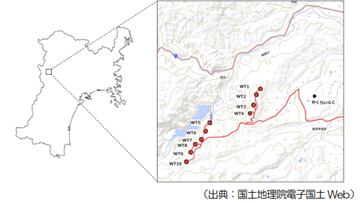
- The farm has 10 Vestas turbines, each with a 4.2 MW capacity. The electricity will be sold to the Tohoku Electric Power Network at a rate of ¥20/ kWh.
- CONTEXT: The project was first launched by JRE whose shares were acquired by ENEOS in January 2021. JRE and Tohoku Electric began working on wind power projects in the area in 2020. Tohoku Electric aims to build wind farms with a total capacity of 2 GW across the six prefs in Tohoku (Aomori, Akita, Iwate, Yamagata, Miyagi, and Fukushima) as well as in Niigata Pref.
J-Power to suspend or decommission five coal-fired power units
(Company statement, May 9)
- J-Power will suspend or decommission five domestic coal-fired units across four power plants by FY2030. A further nine units will be converted to burn a mix of decarbonized fuels with some also installing IGCC systems and CCS technology.
- The post-2030 fuel mix will include hydrogen, ammonia, biomass co-firing with CCS, and the use of coal-derived hydrogen as fuel in IGCC systems with CCS.
- The power utility also envisions building at least one new unit in the 2030s that will run entirely on hydrogen or ammonia.
- CONTEXT: This is the first time that the company has released plans for power plant decommissioning.
- By FY2030, J-Power will decommission Units 1 and 2 of the Takasago Thermal Power Plant; and by late FY2024, Unit 1 of the Matsushima Thermal Power Plant.
- It will either decommission or suspend Unit 3 of Takehara Thermal Power Plant and Unit 1 of Matsura Thermal Power Plant. The five plants have 2.7 GW total capacity.
TAKEAWAY: J-Power was traditionally a wholesale power generator that plugged the gaps in the market and essentially followed the government energy strategy of the day. In this sense, the firm’s transformation plans are a reflection of broader state policy to decarbonize the electricity mix, and it’s interesting to see the portfolio tilt largely to ammonia and hydrogen.
The decommissioned plants represent 30% of J-Power’s domestic thermal power capacity. But J-Power’s vision for the 2030s is not based on a shrinking domestic ‘CO2-free’ generation business – it’s the opposite. In its medium-term management plan until 2027, the utility plans to invest ¥300 billion over three years. Of that amount, ¥200 billion will be allocated to renewable energy sources. There will also be more resources put to the transmission business.
Mitsui to develop 150 MW solar power plant in Texas
(Company statement, May 2)
- Mitsui & Co will develop a solar power plant (capacity 150 MW) in Hill County in central Texas.
- Commercial operation is set for 2026, with investment at about ¥30 billion.
- The power generated will be supplied to the wholesale market and to businesses through Mitsui & Co. Energy Marketing and Services (MEMS), which handles retail and wholesale sales of electricity in the U.S.
- In 2025, MEMS will also operate a storage battery facility in Texas, capacity 300 MWh.
- CONTEXT: MEMS began trading power in the U.S. market in 2018. In 2021, it started solar power offtake in West Texas. In 2023, it obtained a license for a retail electric provider, which adopted a system in which the price of electricity sold to the grid is determined by the location of the power plant. Hill County is close to heavily populated cities like Dallas where electricity can be sold at a relatively high price.
Shizen, Majuperak to develop solar power in Malaysia, including floating projects
(Company statement, April 26)
- Shizen International inked an MoU with Majuperak Holdings, a Malaysian govt-affiliated firm, to develop ground-mounted solar power in Perak State.
- Also, they’ll conduct feasibility studies on floating solar projects.
- In total the firms hope to develop 30 MW to 100 MW of solar power; floating solar plants will be built following a survey of potential sites.
- Shizen International is also considering participating in Malaysia’s large-scale solar power generation auction, LSS5, and the Corporate Green Power Program.
ORIX begins operation of Japan’s largest binary cycle geothermal power plant
(Denki Shimbun, May 1)
- ORIX began commercial operation of the Minami-Kayabe Geothermal Power Plant by Hakodate City, Hokkaido.
- With a 6.5 MW generation capacity, it is Japan’s largest binary cycle geothermal power plant.
- CONTEXT: Most geothermal power plants in Japan are flash steam power plants that directly use steam or hot water extracted from underground. Binary cycle power plants can generate electricity with geothermal resources of lower temperature. It involves vaporizing a working fluid with a boiling point lower than water, using the heat from underground hot water to turn a turbine to generate power.
Hitachi Energy inks deal with RWE on HVDC systems to link offshore wind to grid
(Company statement, May 8)
- Hitachi Energy inked an agreement with Germany’s RWE for three high-voltage direct current (HVDC) systems to integrate offshore wind power into the grid.
- Neither Hitachi nor RWE revealed which exact wind farms will be equipped with these systems. Possible more such orders might be forthcoming.
- CONTEXT: In December, RWE was selected in a consortium with Mitsui & Co. and Osaka Gas to deliver a wind project off the coast of Murakami and Tainai, Niigata Prefecture. Full commissioning of the 684 MW project is scheduled for June 2029.
- Hitachi’s voltage source converter (VSC) changes AC to DC for long-distance transmission to shore, where it’s then converted back to AC for the grid.
- Hitachi Energy, which is a leader in the HVDC market, will execute the three projects along with its global partner Aibel, a Norway-based engineering company.
- SIDE DEVELOPMENT:
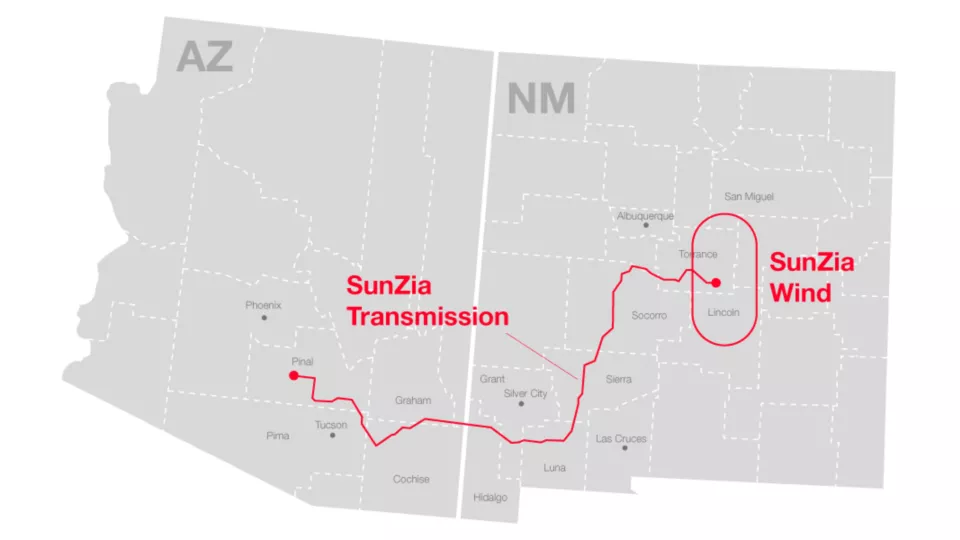
Hitachi Energy to support largest HVDC-connected wind project in U.S.
(Company statement, May 7)- Hitachi Energy signed an agreement with Pattern Energy to support its HVDC system for the SunZia Transmission Project in the U.S.
- Still under construction, the 885 km transmission link will connect the 3.5 GW SunZia wind project in New Mexico to the regional power grid in Arizona.
- It will be one of the world’s largest transmission links delivering renewable power. Commercial operation is expected in 2025.
- The project will use Hitachi Energy’s HVDC Light tech.
SolarDuck and Tokyu Land complete Japan’s first offshore floating solar power plant
(Company statement, May 9)
- Real estate developer Tokyu Land and Solar Duck, a Dutch-Norwegian cleantech firm, completed the installation of Japan’s first offshore floating solar PV power plant (OFPV) on the sea surface.
- The project is an initiative of the Tokyo Metropolitan Govt in the Tokyo Bay Area, in collaboration with Kyocera Communication Systems.
- SolarDuck was selected in 2022 alongside Everblue Technologies. In FY2024, the firms will demonstrate power generation using OFPV facilities, storage of electricity in batteries on land, and transport of the batteries.
- The renewable energy generated will be used for electric mobility.
JEPX Intraday Market hits record average volume in FY2023, average price at ¥11
(Denki Shimbun, May 7)
- In FY2023, the JEPX Intraday Market saw a 24.8% YoY increase in contracted volume to a record 6.16 TWh, with an average daily capacity of 1.68 GWh. High fuel market prices helped to drive the need for alternatives to thermal power sources.
- The largest daily contracted amount was 44.07 GWh, set on Jan 24.
- The daily average number of contracts for FY2023 was 6,059, up 9.2% YoY; and the average contract price for the year was ¥11.70, down 11.20% YoY.
- The price remained below ¥10 during the peak season between April and June, but rose from July to a monthly high of ¥14.47 in September.
In April, JEPX electricity spot market saw high price volatility on favorable solar power
(Japan NRG, May 10)
- In April, the electricity spot market on JEPX saw significant price volatility due to positive trends in solar power generation.
- There were many days when solar power generation was favorable, pushing daytime prices down. Only for five days did prices not hit the lower limit of ¥0.01/kWh.
- Also, prices in April softened for crude oil, but increased for LNG and coal.
- Prices on JEPX were down from the previous month: the 24-hour average per kWh was ¥9.44; the daytime average was ¥8.86; the peak average was ¥6.83.
- The highest price was ¥22.35 on April 3, along the stretch from Kyushu to Tokyo.
- SIDE DEVELOPMENT:
Spot market sees contracted volume drop, highest price in upper ¥30 range in March
(Japan NRG, May 10)- The JEPX spot market in March saw a 5.5% drop MoM in the average daily contract volume, falling to 651 GWh. This was because many power sources faced inspections and repairs, causing a decrease in available supply capacity.
- Monthly contracted volume increased 1% MoM, to 20.19 TWh.
- The monthly average price in March was up more than ¥1 over February. The highest price in March was in the upper ¥30s range.
- The highest price in the nine areas was ¥36.59, at 6:30 – 7:00 p.m. on March 21.
- CONTEXT: A number of power supplies faced inspections during the time of the off-peak demand for electricity. However, demand unexpectedly increased due to lower temperatures, which is thought to have driven up prices.
Trading volume surges in TOCOM futures market in April
(Japan NRG, May 10)
- In April, volume surged in the TOCOM electricity futures market mainly thanks to the introduction of a market making system for the summer power demand period (July-September).
- The system was introduced in April to promote trading and increase liquidity.
- Monthly contracts in April totaled 2,291 lots, which was 8.7 times the previous month’s trading volume, marking the highest-ever intra-auction volume.
- The final settlement prices for April contracts were ¥10.90 for the East Area base load, ¥7.70 for the West Area base load, ¥11.98 for the East Area intraday load, and ¥7.07 for the West Area intraday load.
METI requests Genkai Town to accept survey for nuclear waste final disposal site
(Japan NRG, May 2)
- Genkai Town council (Saga Pref) accepted a petition for a literature survey on the final disposal site for high-level radioactive waste. As the town hosts KEPCO’s Genkai NPP, it would be the first survey in a municipality already hosting an NPP.
- While the mayor supports the survey, the Pref governor is opposed.
- CONTEXT: The govt published a map of potential sites. Most of Genkai Town is indicated as unsuitable, but according to METI the map is not definitive.
TAKEAWAY: The govt request for a literature survey shows the urgency to support the town’s decision-making process. Yet, there are concerns about local opinion and the burdens of hosting a disposal site. The govt offers incentives for municipalities, such as subsidies of up to ¥2 billion for a literature survey and up to ¥7 billion for follow-up surveys.
TEPCO completes fuel loading at Unit 7 of Kashiwazaki-Kariwa NPP
(Company statement, April 26)
- TEPCO completed loading nuclear fuel into Unit 7 of Kashiwazaki-Kariwa NPP (Niigata Pref).
- CONTEXT: TEPCO and some municipalities favor a restart. Still, some communities and officials express caution, and want additional safety assessments and local consent. Experts believe that a restart could lead to a potential boost of ¥440 billion for the local economy over 10 years.
- SIDE DEVELOPMENT:
Chugoku Electric postpones regulator review of Shimane NPP Unit 2
(Company statement, April 30)- Chugoku Electric postponed plans to ask for a regulator preliminary inspection at its Shimane NPP Unit 2, due to additional time required to complete safety improvement work and equipment review.
- The revised completion date for the works was shifted from May to October.
- As a result, the utility expects fuel loading to start in October instead of June. Resumption of commercial operation is planned for January 2025, instead of September 2024.
- SIDE DEVELOPMENT:
KEPCO restarts operation at Oi NPP Unit 3
(Company statement, May 2)- KEPCO restarted Oi NPP Unit 3 (also sometimes written as Ohi or Ōi).
- The 20th regular inspection began on Feb 10. On May 2 the comprehensive load performance test was completed and full-scale operation resumed.
JERA discloses cause of Taketoyo Thermal Power Plant incident
(Nikkei, May 1)
- JERA disclosed the cause of an explosion at the Taketoyo Thermal Power Plant (Aichi Pref) in January.
- The accident resulted from the wrong positioning of a machine that handled biomass fuel, which led to frictional heat and ignition between parts.
- A possible restart date is still unclear.
Osaka Gas wins natural gas power generation project in Himeji
(Company statement, April 26)
- Osaka Gas won the long-term decarbonized power source auction for a natural gas power project in Himeji City, Hyogo Pref.
- This project aims to develop 600 MW of efficient gas turbine combined cycle power generation. Operation is planned to start in FY2030.
NEWS: OIL, GAS & MINING

MODEC and JGC complete project for quantifying GHG emission from FPSOs
(Company statement, May 2)
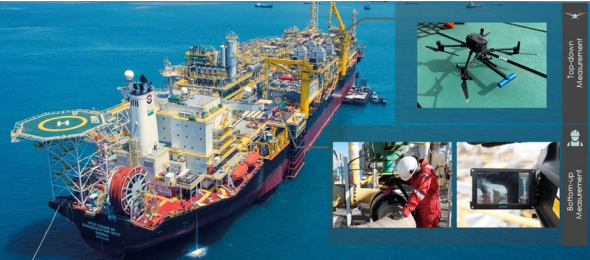
- MODEC and JGC Corp completed a project to measure GHG emissions from floating production, storage, and offloading systems (FPSOs) in Brazil. This includes methane, nitrous oxide, and hydrofluorocarbons (HFCs).
- MODEC aims to become the world’s leading FPSO builder and operator.
- CONTEXT: FPSOs are used in the oil industry to process and store oil until it can be transferred to a tanker. The equivalent for the natural gas industry is known as a floating liquefied natural gas (FLNG) facility.
TAKEAWAY: Measuring GHG emissions from FPSOs is crucial for preventing leakage. Starting 2024, the U.S. will impose fines of $900 per ton of leaked methane. By 2026, fines will rise to $1,500. Energy companies in the EU have to install methane leak prevention measures for imported oil and gas.
Itochu eyes long-term LNG purchases from Canada
(Bloomberg, May 9)
- Itochu Corp is negotiating a long-term agreement to buy LNG from Canada’s proposed Ksi Lisims project along the northwest coast.
- This potential deal may span decades. Shell also has a deal with Ksi Lisim.
- CONTEXT: Japanese trading houses are inking deals for LNG supplies across the globe, eager to maintain Japan’s strong position in the international market. While a significant portion of the LNG supplies will help meet Japan’s needs, a sizable amount will be resold to other markets, such as Southeast Asia, which is boosting its LNG consumption as those countries move away from dirtier fossil fuels.
LNG stocks dropped to 2.01 mln tons, down 17% YoY
(Government data, May 8)
- As of April 28, LNG stocks of 10 power utilities were 2.13 million tons, up 3.9% from April 21 (2.13 million tons). However, this is 12.7% down YoY (2.44 million tons), and 5.5% over the five-year average of 2.02 million tons.
- As of May 5, the stocks were 2.01 million tons, down 5.6% from April 28; down 17.6% YoY; and down 0.5% from the five-year average.
- CONTEXT: Due to moderate weather, LNG supply and demand have been stable. Utility companies, however, will likely stock up on LNG in preparation for the hot summer when air conditioning demand increases.
ANALYSIS
BY FILIPPO PEDRETTI
Converting CO2 to Cement: Japan Seeks to Decarbonize Hard-to-abate Industries
In April, the Ministry of Environment released its 2022 Greenhouse Gas (GHG) inventory report to the United Nations, which, in a world first, included CO2 removal by concrete products. The report said that several innovative concrete variations demonstrated an ability to absorb CO2. Yet others utilized industrial waste as feedstock.
The volume of CO2 removed from the atmosphere was small, just 17 tons across four types of concrete. The impact, however, promises to be orders of magnitude larger as companies in Japan and elsewhere pursue R&D on a new set of materials that can be certified as helping to reduce emissions while providing necessary goods.
In a world that puts a price on a ton of CO2, a carbon-negative product could claim real cost savings. It would also be a major boon for so-called “hard-to-abate sectors”, such as shipping, and steelmaking, etc, that need to find ways to offset the environmental costs of operations. Such sectors collectively account for a quarter of global energy use and a fifth of all emissions. Concrete alone contributes 8% of the world’s total emissions.
While the MoE stresses the need to move away from fossil fuels as the primary means to achieve net zero, Japan is keenly testing technologies that can absorb CO2 from the atmosphere. Some of this tech, which is not limited to cement, is developed overseas thanks to Japanese investments, with the idea that it could later be ‘imported’ and utilized as a key ingredient of Japan’s overall industrial decarbonization strategy.
We review some of the current initiatives in this field.
Itochu sees opportunities
One of the non-Japanese firms benefiting from interest in decarbonizing cement production is Australian startup MCi Carbon. Its investors include Itochu, Mizuho Bank and Sumitomo Mitsui Trust Bank. In March 2023, Mizuho Bank invested $5 million in MCi, with an eye to help commercialize the technology by 2026.
By the end of this year, MCi Carbon plans to complete a new facility in Newcastle, New South Wales that will utilize the company’s flagship technology, known as “mineral carbonation”, which converts CO2 into cement. According to estimates, this process could capture from between 1,000 to 3,000 tons of CO2 a year, producing up to 10,000 tons of materials with low carbon content.
MCi Carbon’s process is split into three steps. First, in the vicinity of its Newcastle facility, CO2 will be captured onsite at a chemical company, Orica, which produces ammonia. (Along with a company called GreenMag Group, Orica founded MCi in 2013.)
Next, the CO2 will react with mineral feedstock gathered from industrial waste. Specifically, use is made of calcium and magnesium, which are a byproduct of the steel slag formed during the steelmaking process. The result is the production of carbonates, which are key ingredients for making cement.
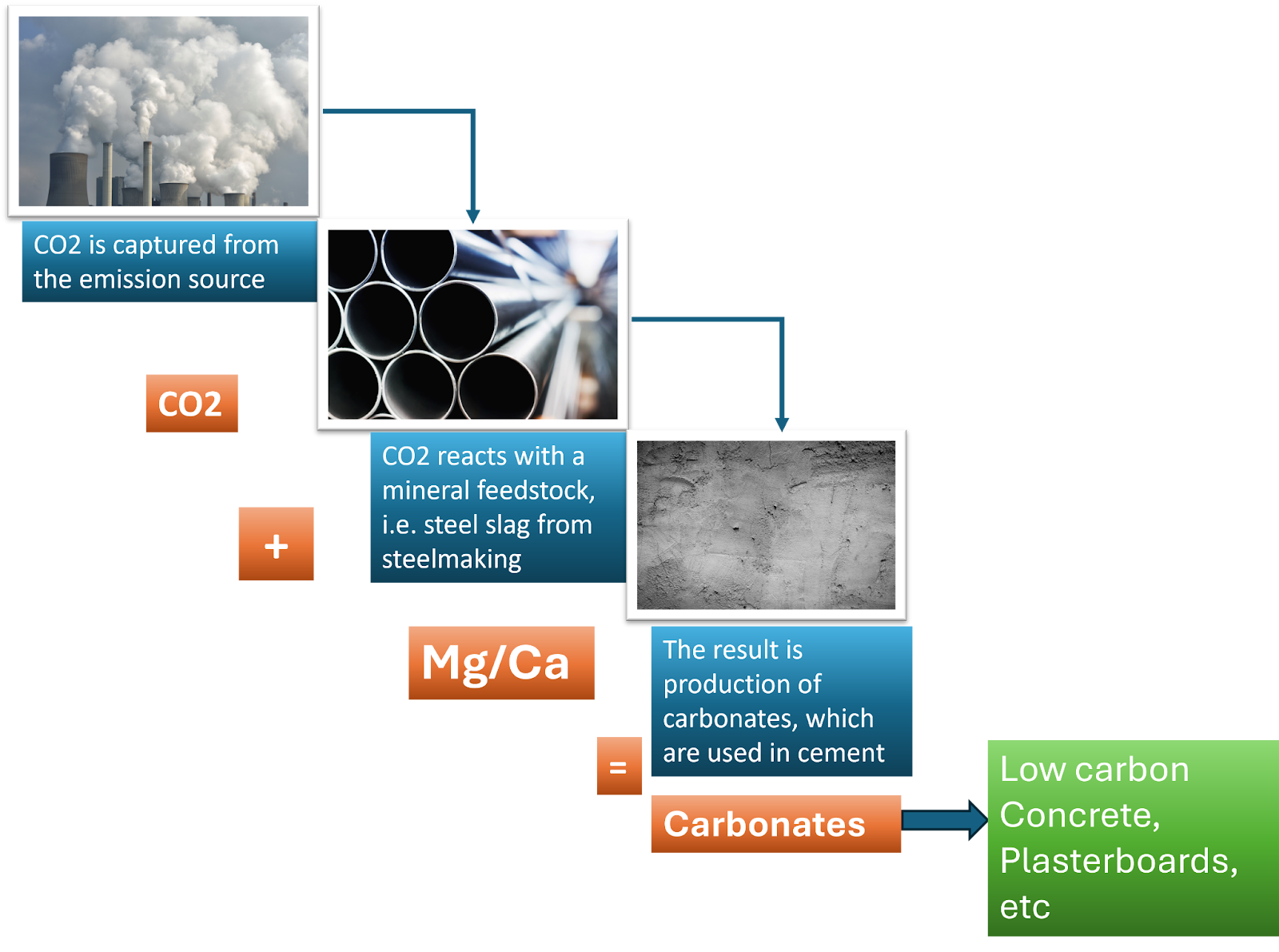
This mineralization process is spontaneous, which means that it doesn’t need any external addition of energy. In nature, this happens when CO2 mixes with certain minerals. The byproduct is the formation of a new mineral, releasing energy. In terms of chemical notation, the process is: MO (Metal Oxide such as calcium and magnesium) + CO2→MCO3 (metallic carbonate) + heat.
MCi believes the technology’s key advantage is that captured CO2 does not need to be of high purity, making it easy for potential customers to integrate the technology. Furthermore, the mineral feedstock to be reacted with CO2 is not limited to steel slag but can also come from mine tailings or raw quarried minerals, coal ash from thermal power plants, etc.
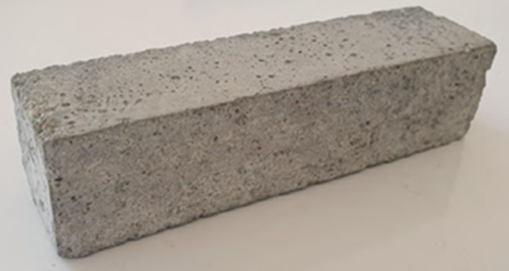
Concrete bar produced using cementitious material from MCi’s technology.
Source: MCi, Itochu
In March 2021, hoping to develop and market the technology in Japan, Itochu inked an MoU with MCi, confident that the startup is closer to commercializing its technology than Japanese companies working on such a potential breakthrough.
Among its obligations, Itochu will select sites for an MCi demonstration plant in Japan, as well as promote products made with the company’s technology. Depending on the extent of the plant’s success, there may be more developments involving Itochu in the future.
R&D directions in Japan
Meanwhile, Japan’s New Energy and Industrial Technology Development Organization (NEDO) is advancing a number of different technologies to capture and utilize CO2 via carbonates and concrete products.
In 2020, five areas related to CO2 recovery R&D were selected. Total funding is approximately ¥4 billion. One of the five areas is the use of cement-based waste materials.
CO2 utilization technology initiatives selected by NEDO
|
Research and development |
Main Companies involved |
|
CO2 recovery using mist technology from fossil fuel emissions/carbonate production |
Sojitz, Tokuyama, NanoMist Technologies |
|
CO2 recovery using seawater and waste brine for co-production of valuable materials |
Waseda University, Sasakura, JGC Corp. |
|
CO2 absorption sintering material using microwaves (CO2-TriCOM) |
Chugoku Electric, Hiroshima University |
|
Accelerated carbonation process using calcium and other elements in industrial waste (waste concrete etc.) |
Idemitsu Kosan, Ube Industries, JGC Global, JGC Corp, Tohoku University |
|
CO2 recovery using cement-based waste materials and use of by-products in construction |
Takenaka Corp |
Source: NEDO
Despite state backing, company R&D in this field has been slow to score results.
In 2019, Idemitsu, Ube Industries and JGC Global established a CCSU study group, aiming to develop technologies to use industrial wastes that are rich in calcium and magnesium for CO2 capture. The goal was to create carbonates for high-value applications. The study group’s activities included R&D of elemental technologies, scale-up, and LCA evaluation.
Furthermore, the group considered exploring potential uses for carbonates and by-products. Also, research with the Japan Carbon Frontier Organization (JCOAL) assessed overseas CO2 capture and calcium/magnesium extraction technologies, with a pilot device technology developed by Columbia University at the Dry Fork coal-fired power plant in Wyoming.
Four years later, JCOAL told Japan NRG that no specific progress has been made involving their company. However, after contacting the test center in Wyoming, it became known that the project is still alive, looking at ways to bind sequestered CO2 with calcium and magnesium in coal fly ash. The methodology will now require field testing.
In 2020, JFE Steel, Taiheiyo Cement, and the Research Institute of Innovative Technology for the Earth (RITE) announced work on a similar technology. Specifically, they’re investigating how to extract alkali-earth metals from materials like steel slag and waste concrete, reacting them with emitted CO2 to produce carbonates.
JFE Steel is also working with RITE and Ehime University to find ways to carbonate high-temperature steel slag using CO2 emitted by the coal industry, which would lead to ways to create concrete, cement, carbonates, carbon, and carbides.
Other possible applications
In addition to a rudimentary mimicking of nature, this technology is now evolving into a way to reuse waste from cement and steelmaking for CO2 capture purposes.
While newly created carbonates will be used to produce cement and steel, the cement industry is just one possible application. Among others are its inclusion into the integrated gasification combined cycle, chemical plants, and thermal power plants.
For example, the Columbia University spinoff, Greenore, extracts calcium from steel slag and captures CO2. The startup collaborates with TBM in Japan to produce precipitated calcium carbonate. This is then used to create a line of plastic-like and paper-line products such as plastic shopping bags, food containers, stationary, cosmetic bottles and even business cards.
Thanks to their extensive use, carbonates, concrete products and structures show potential for carbon sequestration through CO2 utilization technologies. The produced materials from this process are stable.
Unlike CO2 utilization for fuels or chemicals, they don’t require hydrogen as a raw material. Yet, the technology’s widespread adoption would still require significant capex and strategies to ensure profitability.
Advocates of CCS often say there’s no alternative to CO2 capture for decarbonizing sectors such as steel, cement, or glass and chemicals. Yet, aside from carbon credits and other few options, creating value from CCS is currently almost impossible.
Reusing at least part of the sequestered CO2 to create products, such as components of cement, could possibly lower the cost of adopting carbon capture technologies. In other words, while adopting CCS would still be a cost item, it could be offset at least partially by reusing the CO2 through mineralization and turning it into sellable goods.
ANALYSIS
BY ANDREW STATTER
Energy Jobs in Japan: Building a Local Brand
Anywhere in the world, building an attractive corporate identity and employer brand is key to attracting top level talent. In Japan, and by no means unique to this market, is the need to develop a local corporate identity and employer brand. Relying on your household corporate name in your home market won’t get you very far in Japan.
If the results of the first two rounds of Japan’s fixed-bottom offshore wind tenders taught us anything, it’s that the Japanese don’t care about your global track record. The country is not short of well capitalized giants investing in the energy transition, and it has a strong engineering talent base with some of the largest and most globally active EPC firms, not to mention a protectionist government.
Considering that more than 90% of the talent pool in the energy market works for Japanese domestic firms, building a strong brand, highlighting your firm’s attractive points and telling a clear story are key to attracting local talent into your organization.
Communicate a clear vision and commitment to the market
Who are you? What do you do? Why should anyone pay attention? These are the simplest of questions, but many people in Japan have not heard of many firms that might be household names in the U.S. or EU markets.
Showing a clear reason for being in Japan, a long-term commitment and goals that are easy to communicate is also key to gain trust. Culturally, many Japanese have certain fears of multinational firms, such as a market exit risk or that they might fire people easily. In a culture that values stability and certainty, these are important concerns to pre-empt.
Expect to be asked about the time horizon to hit targets, win projects, etc. The vague “we are here for the long run” no longer holds water since too many who have come and gone have claimed the same.
Highlight culture, working style and global opportunities
Large Japanese firms tend to be layered and hierarchical, making decisions by consensus. In some cases, they tie career development to seniority more heavily than merit. This creates stability and safety, and suits many Japanese professionals. There’s an increasing number of younger Japanese whose mentality is moving away from the idea of ‘lifetime employment’ and who wish to take a more active role in their career development. According to a 2023 study by the Japan Management Association, 36% of university educated Japanese plan to work for multiple companies throughout their careers, compared to less than 20% in 2000.
Some of the major positive draw cards for either major foreign firms or Japanese start-ups / scale-ups are soft touch points. If you have a flat organization structure, flexible working structure, close interaction with global colleagues, chance to work or be trained in overseas offices etc, then be sure to highlight and promote these points.
Beyond talent attraction, this can be used to filter the right cultural fit. Describing what kind of people succeed in the organization, who the business is made of, and what’s expected of team members can help to allow talent to qualify or disqualify themselves from your business.
Business introduction > Job description
Job descriptions (JD) are by nature generic. Your project manager likely does work similar to your competitors, so a list of job duties and requirements don’t do anything to attract people to your firm. On top of this, they are often filled with internal jargon, acronyms etc, especially with large firms that advertise internally as well as externally.
Rather than a JD, investing in building a visually appealing slide deck that introduces your firm will engage talent, and have them understand and be excited about your business by the time they even reach the JD section. Here are a couple of examples that have worked well:
European offshore wind developer:
- ‘About us page’ including information on employees, projects, time in market, overview of the wider business.
- APAC presence presented as a map denoting projects and development phases.
- Competitive advantages, listing key technical expertise and track record in floating projects.
- Culture and workplace, sharing some key benefits offered and notes on global opportunities.
- Job description.
Power trading technology firm:
- Introduction and vision.
- Raison d’etre.
- Background and history, demonstrated with figures and timeline.
- What we are looking for, with cultural descriptions built in.
- Description of the opportunity – not a job description, but key selling points of the business around the team, culture, rewards, and impact.
- Job description.
This approach brings talent along on a journey, builds a personality into your firm, and will make you stand out among competitors.
Be honest about your capabilities, and what needs to be built
From a survey of more than 5,000 energy industry professionals in Japan, the #1 point on their wishlist when considering new opportunities was “a role where I can leverage my skills and experience”. This came above learning new skills, working environment, salary levels — though of course these will be major decision-making factors!
Considering this, massive value can be secured in communicating where your organization needs to build capability. By communicating what your team is already strong in (both locally and globally) you will be able to show that your company has a strong base of talent to succeed. However, by illustrating where you have gaps, you allow talent space to find areas where they can come in and add value.
This also helps ‘stickability’ – i.e. new employees getting up to speed faster, onboarding smoothly, and avoiding them leaving or failing fast. Proper management of expectations is key, and must be done before the person comes into your organization.
Your corporate name probably won’t hold as much weight in Japan’s talent market as it does at home. Japanese professionals tend to be more cautious about job hunting, and wish to see more information about a potential employer before considering an application or even a casual introduction.
Taking the time to craft a story and develop a curated candidate journey allows you to tap into the top levels of passive talent rather than compete with other companies over the surface level active talent pool.
Andrew Statter is a Partner at Titan GreenTech, an executive recruitment agency focused on the clean energy space.
ASIA ENERGY REVIEW
BY JOHN VAROLI
This weekly column focuses on energy events in Asia and the Pacific
Asia / LNG prices
Asian spot LNG prices rose this week on stronger demand amid high temperatures in China. This pushed EU buyers to bid at narrow discounts to attract sellers. The average LNG price for June delivery into northeast Asia rose to $10.50 mmBtu, from $10.40/mmBtu in the previous week.
Australia / Natural gas
The govt unveiled a strategy to boost natural gas development, with an eye to demand from key Asian partners. Australia is one of the world’s largest LNG exporters. Resources Minister Madeline King said gas would be needed “through to 2050 and beyond”.
Australia / Renewable energy
Under the Capacity Investment Scheme, the govt has launched a total of 1.7 GW of renewable energy tenders in the states of Victoria and Tasmania.
China / Batteries
Taking heed of U.S. and EU complaints about “Chinese overcapacity”, Beijing has unveiled draft rules that appear aimed at slowing the rapid expansion of its battery industry. The govt has requested feedback on its proposal, which isn’t yet binding.
China / Hydropower
Erratic rainfall in the southwest is thwarting efforts to green China’s aluminium industry that accounts for almost 60% of global output. Insufficient hydropower has meant that only a little over half of the planned aluminium capacity shift has materialized. Some smelters are scaling back plans and others are seeking alternative locations.
Coal phase out
The G7 agreed to “phase out existing unabated coal power generation in energy systems during the first half of 2030s”. It’s the first time that a target has been set on ending coal.
Green steel
Asia’s iron ore and steel industry met this past week in Singapore. While virtually every market player, from iron ore miners to steel mills takes the issue seriously, meeting net-zero emissions by 2050 in Asia appears unrealistic with current technology.
India / Renewable energy
NTPC Green Energy inked a MoU with MAHAPREIT to develop up to 10 GW of renewable energy projects in the state of Maharashtra.
Philippines / Nickel
The govt seeks to add three more processing plants to develop a downstream industry for the country’s abundant nickel resources. China and the U.S. have expressed interest in the country’s mining sector.
Singapore / Naphtha
In May, Russian exports of naphtha to Singapore are set to rise to their highest level — as much as 500,000 tons — as Russian refineries recover from drone attacks.
Vietnam / Coal
The country’s coal power phase-out strategy sees renewables accounting for 67.7%–71.5% of the national energy mix by 2050. Vietnam plans to end coal-power generation by 2050.
2024 EVENTS CALENDAR
A selection of domestic and international events we believe will have an impact on Japanese energy
|
January |
|
|
February |
|
|
March |
|
|
April |
|
|
May |
|
|
June |
|
|
July |
|
|
August |
|
|
September |
|
|
October |
|
|
November |
|
|
December |
|
Disclaimer
This communication has been prepared for information purposes only, is confidential and may be legally privileged. This is a subscription-only service and is directed at those who have expressly asked K.K. Yuri Group or one of its representatives to be added to the mailing list. This document may not be onwardly circulated or reproduced without prior written consent from Yuri Group, which retains all copyright to the content of this report.
Yuri Group is not registered as an investment advisor in any jurisdiction. Our research and all the content express our opinions, which are generally based on available public information, field studies and own analysis. Content is limited to general comment upon general political, economic and market issues, asset classes and types of investments. The report and all of its content does not constitute a recommendation or solicitation to buy, sell, subscribe for or underwrite any product or physical commodity, or a financial instrument.
The information contained in this report is obtained from sources believed to be reliable and in good faith. No representation or warranty is made that it is accurate or complete. Opinions and views expressed are subject to change without notice, as are prices and availability, which are indicative only. There is no obligation to notify recipients of any changes to this data or to do so in the future. No responsibility is accepted for the use of or reliance on the information provided. In no circumstances will Yuri Group be liable for any indirect or direct loss, or consequential loss or damages arising from the use of, any inability to use, or any inaccuracy in the information.
K.K. Yuri Group: Hulic Ochanomizu Bldg. 3F, 2-3-11, Surugadai, Kanda, Chiyoda-ku, Tokyo, Japan, 101-0062.