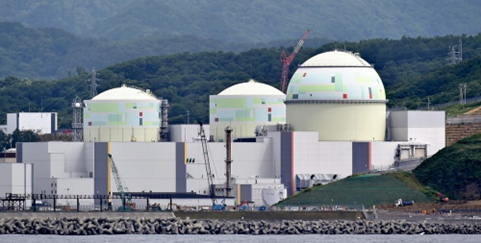
In the last decade, Japan has restarted a third of its nuclear reactors. To hit government targets for the sector within the power mix at least another third of reactors must come back online. PM Kishida has already failed to deliver on quick restarts promised two years ago. This raises the question as to the level of reliance on nuclear energy in 2030 and beyond. Japan NRG reviews the situation around Tomari NPP as a case study into factors that are driving nuclear restarts.
Japan’s national strategy calls for more solar energy in the nation’s power mix. But many small businesses that helped build the sector from scratch a decade ago say the returns are no longer attractive. This year, with the update of the Basic Energy Plan, the future of the solar sector is expected to be reevaluated. For many operators, the main questions will be about price. The government seeks to push solar tariffs lower. But with land availability decreasing and other factors pushing costs upward, can Japan afford to squeeze the smaller firms any further?
ASIA ENERGY VIEW
A wrap of top energy news that impacts other Asian countries.
EVENTS SCHEDULE
A selection of events to keep an eye on in 2024.
JAPAN NRG WEEKLY
PUBLISHER K. K. Yuri Group
Editorial Team Yuriy Humber (Editor-in-Chief) John Varoli (Senior Editor, Americas) Mayumi Watanabe (Japan) Wilfried Goossens (Events, global) Kyoko Fukuda (Japan) Magdalena Osumi (Japan Filippo Pedretti (Japan) Tim Young (Japan)
Japan is exploring legislation to mandate recycling of solar panels that are no longer fit for use. The Diet is expected to deliberate on a proposal next year.
Solar farm operators are obliged by waste disposal laws to transfer spent panels to disposal contractors. These recycle aluminum and other critical materials, but panels usually end up in landfills.
A recycling mandate for solar panels will require owners to pay recycling fees.
The MoE estimates that between 500,000 and 800,000 tons of spent solar panels will be disposed of annually.
CONTEXT: Given that solar farms expanded rapidly after Japan introduced the FIT system in 2012, and the typical lifespan for solar panels is 20 to 30 years, disposal is expected to soar in the mid-2030s.
TAKEAWAY: The MoE says that potential challenges include insufficient capacity to handle waste disposal, and the lack of detailed information on materials used in panels by Chinese manufacturers. The Diet will need to propose measures to overcome these challenges; but at the moment, there is a lack of clarity on the issue. Developers will also need to start taking into account these future recycling fees when creating a cost model for the project.
Nippon Steel began shipment to Qatar of seamless steel tubes made of ‘green steel’, to be used for a 1.2 mln tons/ year blue ammonia plant built by QatarEnergy. The plant goes online in 2026.
The green steel tubes follow the production methodology specified in the NSCarbolex Neutral process developed by the company.
The corrosion resistant seamless tubes will be used for pipelines that transport carbon and other gases to storage sites.
CONTEXT: Nippon Steel’s seamless tubes contain a high ratio of molybdenum, chrome and other rare metals to strengthen the steel, and are more expensive than ordinary steel without these elements. The company says strong steel is needed as the gas mix transported through the pipes contains impurities.
TAKEAWAY: This is Nippon Steel’s first major green steel sale to a CCS customer overseas. This will raise its profile in the energy transition business as the Qatari ammonia plant is the world’s biggest to date. Nippon Steel has a large market share of seamless tubes used for oil and gas pipelines in severe natural conditions.
In return for this contract, it would not be surprising to see Japanese buyers strike deals for offtake from the Ammonia-7 Project. QatarEnergy’s affiliates, QatarEnergy Renewable Solutions and Qatar Fertiliser Company (QAFCO) are the marketing entities in charge of the project. A Qatari ammonia cargo was reportedly delivered to Japan in February.
The Cabinet published the preliminary FY2024 Basic Policy on Economic and Fiscal Management and Reform, also known as the Big-Boned Policy. It said increases in personal spending and business investments are essential to move onto the next “economic stage” where wages and corporate earnings rise in cycles.
Issues such as energy security, population decline, etc could be impetus for future growth. Energy security is about raising energy self-sufficiency, and renewables and nuclear power will not only contribute to security but also mitigate global warming.
The government plans schemes to support Perovskite solar cells and floating wind power tech developments and their social deployment, as well as SAF, storage battery deployment, carbon recycling, etc.
CONTEXT: The FY2023 Big-Boned Policy talked about energy in great length as Green Transformation (GX) was its core. This year, following the successful launch of the GX League and laws on decarbonized power sources, CCS and hydrogen supply chains, the focus shifted to speedy exit from the deflationary economy.
TAKEAWAY: Most energy policy content repeated last year’s policy but there were subtle differences. The FY2024 Big-Boned Policy said clearly renewables were to be the main power source of the future, but added, “it needed to expand as much as possible provided there is harmony with community stakeholders and consumers’ financial burdens are minimized”; The FY2023 policy said renewables were the highest priority. The FY2024 policy made no mention of the pan-Asian framework to jointly run the LNG stockpiles to boost regional energy security that was elaborated on last year.
The long-running program by METI and ANRE to gather views from experts on current and planned power system reforms has entered the final stages.
ANRE plans to begin full-fledged verification of new proposals in July, taking into account the challenges in the business environment.
The current phase of the process began in January, led by a subcommittee chaired by Hirotaka Yamauchi, a professor at Musashino University.
Comments so far include:
Concerns about securing capacity in light of tight supply-demand
The need to discuss the state of power generation firms and whether the capacity market functions properly
Some suggested that the regulated rate for retail electric utilities is distorting the power system reform and called for the abolition of those rates;
During a session on power transmission and distribution, Yokoyama Akihiko, professor emeritus at the University of Tokyo, called for:
technical measures to address power quality issues that have arisen with the increase in solar generation
“coordination between power supply planning and demand planning” to strengthen the power transmission and distribution network
A consortium of Hokkaido Electric, IHI, Marubeni, Mitsui & Co, Hokkaido Mitsui Chemicals and Tomakomai Futo Co will launch ammonia feasibility studies in the Tomakomai region.
The public-private sector fund Consortium for Resilient Omni-Energy Supply System (CROS) will fund up to one-third of the study costs.
CONTEXT: CROS was set up by ANRE and businesses to fund energy transition projects. It will fund 10 ammonia/ hydrogen projects and is presently reviewing more.
A consortium of JAPEX, Mitsubishi Gas Chemical, IHI, Mitsui & Co, Mitsui OSK Lines will hold feasibility studies for ammonia supply chains in the Soma area of Fukushima Pref. CROS will fund the project. Other hydrogen/ ammonia FS funded by CROS are:
NEDO awarded a one-year survey to JERA, JERA Asia and Toyo Engineering to explore the potential of hydrogen supply and applications in Thailand. The project launches later this year.
Together with PTT Public Co, they’ll explore ammonia cracking to extract hydrogen from ammonia and the optimal designs of hydrogen storage facilities.
Asuene, a Tokyo-based climate tech startup, has raised $26.7 million in its Series C round led by Sumitomo Mitsui Banking, etc.
Asuene plans to raise a total of $31.8 million, including the upcoming second close, bringing cumulative funding to $64 million in the Series C. The funding involves third-party allotment to a total of 17 domestic and international investors, including existing shareholders.
Asuene is offering products focused on decarbonization; in particular, its CO2 visualization, reduction, and reporting cloud service.
The company now plans “aggressive” recruitment of top talent, M&A, and capital partnerships with major manufacturing companies.
CONTEXT: Companies are facing pressure to report GHGs. In March, the Sustainability Standards Board of Japan proposed disclosure requirements for supply-chain-wide emissions as well as reduction targets, aimed at businesses listed on the Tokyo Stock Exchange’s Prime market. Prime-listed companies valued at ¥3 trillion or more are expected to be required to provide emissions-related information as early as FY2026.
TAKEAWAY: Asuene has aspirations to become a global leader in GHG tracking and emission reduction solutions and believes it can expand in Southeast Asia and North America due to the already strong presence of Japanese manufacturers in those regions. The latter would form part of its customer base, according to comments made by Asuene executives in recent months. With so few Japanese startups in the business services space going global, it will be interesting to see if Asuene can buck the trend.
JAPEX launched the JAPEX J-Credit Project (Boiler) in partnership with 12 city gas operators. It aims at reducing CO2 emissions through new boilers and fuel conversion from heavy oil to city gas.
The project was recently registered at the 60th J-Credit System Certification Committee. By switching to city gas and upgrading to the new boilers, customers can earn J-Credits, receiving refunds from JAPEX.
Hitachi Zosen Marine Engine tested the use of ‘carbon-neutral’ LNG in a four-cylinder, high-pressure dual-fuel engine.
The test ran for nine days. Calculated CO2 emissions plunged 98% thanks to the carbon-neutral LNG instead of heavy oil. Emissions dropped from 70 tons to 1.4 tons.
CONTEXT: The associated emissions of the LNG used in the test were offset with carbon credits and other means, thus qualifying for the ‘carbon-neutral’ label, according to the company.
Hitachi Zosen said it has also received orders for land-based test engines that use methanol as fuel. In addition to developing engines for new fuels, the company wants to cut CO2 emissions during its manufacturing processes.
In July, automakers Honda Motor and Mitsubishi will establish a JV, to be called ALTNA, to work on EV technology and battery optimization.
The new firm will utilize batteries that are no longer used in cars as secondary storage batteries for the power grid.
EV batteries that hold 60% to 70% of their original charge can still be useful as storage batteries, said the companies.
Honda will remotely monitor these EV batteries, paying attention to the deterioration in their charging capacity. A function will automatically recharge the batteries when electricity costs are low.
The power stored will be offered to the wholesale power market, the supply-demand adjustment market, and capacity market.
The firms also plan to recycle rare metal resources and stabilize the supply and demand of electric power.
Fukui Seiichi, president of Mitsubishi, will also serve as ALTNA’s president. Both firms will have a 50% stake in the JV.
CONTEXT: In October 2022, JERA and Toyota Motor announced construction and launch of the world’s first large-capacity Sweep Energy Storage System. The system was built using different grades of batteries reclaimed from electrified vehicles (HEV, PHEV, BEV, FCEV) and is connected to the consumer electrical power grid.
TAKEAWAY: As demand for storage batteries grows it’s necessary to have supply-stabilizing tools when expanding renewable energy. At the same time, limited supplies of battery materials including cobalt and lithium, mean there is a need for environmentally friendly initiatives, such as reclaiming used EV batteries for use as storage batteries. Although it is hard to see such projects working at scale for now, as the number of electric vehicles increases it could turn into a viable business model.
Nishitetsu Shizen Energy, a JV between Nishi-Nippon Railroad and Shizen Energy, opened a grid-scale BESS hub in Umi Town, Fukuoka Pref.
The operators will trade the energy on the electricity wholesale market.
The firms also plan to generate revenue from the supply-demand adjustment market and capacity market.
The operation of the storage batteries will be handled by Shizen Connect.
SIDE DEVELOPMENT: Cumulative capacity of applications for grid-scale BESS nears 40 GW (Japan NRG, June 14)
Cumulative capacity of grid-scale BESS applications in Japan has reached 40 GW at the end of March, rising threefold YoY.
By late March, ANRE received applications to connect to the grid from a total of 39.97 GW. In May 2023, the installment capacity awaiting approval was 11.89 GW.
Applications with the highest capacity were submitted for the Tohoku region, followed by Hokkaido and Kyushu, with about 9.1 GW, 7.6 GW, and 7 GW, respectively.
CONTEXT: ANRE said during a recent meeting of a renewables working group that batteries with a longer lifespan will be needed to meet growing demand, especially in west Japan, where solar power generation has been subjected to curtailments.
NGK Insulators (NGK), a Japanese ceramics maker, and BASF Stationary Energy Storage, a subsidiary of BASF, unveiled an advanced container-type NAS battery (sodium-sulfur).
The NAS MODEL L24 has a lower degradation rate of less than 1% per year thanks to reduced corrosion in battery cells, compared to existing batteries.
The firms also improved the thermal management system in battery modules, which enables a longer continuous discharge.
CONTEXT: In the past 20 years, NAS batteries have been deployed at over 250 locations worldwide, with a total output of almost 5 GWh. They can be used for stabilizing renewable energy and optimizing its utilization, via peak shaving and load balancing as well as emergency power supply.
NGK Insulators, Ricoh, NR-Power Lab and Daiwa Energy & Infrastructure will develop storage battery system sharing services for renewable operators that are forced to curb output.
NGK and Daiwa Energy & Infrastructure will establish a joint venture to own and manage the storage battery facilities.
Sharing Energy, Sasso use Tesla batteries to trade on power markets
(Denki Shimbun, June 14)
Sharing Energy, a solar operator, and Sasso, which has energy control technology, said they tested using Tesla’s Powerwall batteries to trade power on the market.
The companies controlled five batteries installed at households. While meeting the requirements of the supply and demand adjustment (i.e. balancing) and capacity markets, the firms verified the accuracy of the controls and the business case.
They claimed this was the first such test in Japan utilizing Tesla’s batteries. Sharing Energy said the trial revealed the need to adjust the frequency of data acquisition and the control method for storage batteries in order to meet the requirements of the power markets. The company now wants to create an aggregation business that bundles and controls multiple energy facilities, and run it on a commercial basis.
NEDO selected two consortiums to pilot floating offshore wind projects led by Marubeni and Mitsui O.S.K. Lines (MOL). They will be under the Green Innovation Fund Phase II.
The total budget was capped at ¥85 billion.
The first pilot project is the 30 MW Southern Akita Floating Offshore Wind Demonstration to start this July and run to March 2031; commercial operation could begin in autumn 2029.
Plans call to deploy two 15 MW demonstrator wind turbines with semi-submersible floating foundations about 25 km off the south coast of Akita Pref.
Consortium members include: Marubeni Offshore Wind Development; Tohoku Electric; Kanden Plant (a subsidiary of KEPCO), JFE Engineering, etc.
The second project is run by C-Tech Corp off the coast of Tahara and Toyohashi Cities (Aichi Pref); it will use a hybrid-semi submersive floater, and one unit with a 15 MW turbine. The project will run from July through March 2031.
Consortium members include: C-Tech (a unit of Chubu Electric); Hitachi Zosen; MOL; etc.
CONTEXT: Surrounded by windy oceans, Japan has tremendous floating offshore wind potential. Some recent estimates say that theoretically there could be TW-scale capacity installed in Japan’s ocean waters, more than any current energy source. As of 2023, Japan’s total operating offshore and semi-offshore wind projects was under 190 MW.
Itochu invested in the 211 MW Grandview wind farm in Texas.
It will be the first project of Overland Capital Partners, Itochu group’s investment fund for renewables generation in North America launched in 2023.
Itochu will also set up a JV with Century Tokyo to develop two solar power plants in North America in West Virginia and in Iowa, totaling 256 MW.
CONTEXT: The solar farms are under development by Tyr Energy Development Renewables (TED) established by Itochu’s subsidiary, Tyr Energy. TED has a development portfolio of 27 solar power projects totaling 4 GW.
Electricity futures saw an upward trend, mainly for the July-September contract period; this was due to the rise in European gas prices over concerns about reduced gas supplies from Russia.
Prices also began to spike for July, up some 4.2% from the previous week. The winter contract month also remained high, with the January contract reaching ¥17.
The Japan Atomic Energy Agency (JAEA) said building a new experimental research reactor at the Monju site will cost about ¥150 billion. The agency sees the potential to build a 10 MW or less light-water cooled, heavy-water moderated swimming pool type reactor. The goal is to achieve the highest level of neutron flux.
There are three options, and a decision will be made by year’s end. This includes:
¥60 billion for producing and installing reactor equipment
¥20 billion for construction
¥20 billion for design development
¥8.5 billion for geological surveys
¥20 billion for developing and manufacturing site equipment
¥20 billion for civil engineering works
The timeline from the installation permit application to the start of operations is about 8 years for a HTTR (High Temperature Engineering Test Reactor); and 7 years for STACY (Static Experiment Critical Facility).
CONTEXT: By 2028, the govt plans to test hydrogen production using nuclear power. This follows JAEA’s successful safety test of its HTTR, Japan’s first and only high-temperature gas-cooled reactor. In 2004, it became the world’s first to achieve a reactor outlet coolant temperature of 950°C under full thermal power of 30 MW. In early 2010, the HTTR operated for 50 days at high temperature and full power.
On June 14, Kyushu Electric began a regular inspection of Unit 1 of the Sendai NPP, (Kagoshima Pref).
It’s scheduled to resume operation on Sep 25. The PWR unit’s output is 890 MW.
CONTEXT: Unit 1 will reach 40 years of operation this year. In November 2023, NRA extended the operating period for up to 20 years. The company’s Genkai NPP Unit 4 (Saga Pref) is also under regular inspections, to be completed by late June. Sendai NPP Unit 2 begins inspections in September.
TEPCO said all inspections at Kashiwazaki-Kariwa NPP Unit 7 are completed.
Although there’s a lack of local consent needed for restart, the facilities are technically ready for restart. The NPP director said that local support is essential for the facility to come online.
On the same day, the METI minister met with Niigata Pref Governor who said trust in TEPCO remains low, and the govt should address TEPCO’s shortcomings in management and evacuation plans.
CONTEXT: Fuel loading into the reactor began on April 15.
TAKEAWAY: The governor is clearly stalling, nervous about giving green-light to a TEPCO nuclear power plant after all the history of the past 10-15 years. The ruling LDP party and current PM Kishida have low ratings and cannot afford to exert too much political pressure on Niigata. Publicly stating that it will take on full responsibility for any repercussions from the restart may be one way for the central govt to move this forward. Another driver could be an energy shortage and rising power prices.
JGC Holdings, in partnership with Technip Energies and NMDC Energy, won a contract with ADNOC for the engineering, procurement, and construction (EPC) of the lower-carbon Ruwais LNG project in Abu Dhabi.
It will feature two natural gas liquefaction trains with a combined LNG production capacity of 9.6 MTPA, and will be powered by clean energy using electric-driven motors instead of conventional gas turbines.
This will make it the first LNG export facility in the MENA region to run on clean power. The project aims to more than double ADNOC’s LNG production capacity.
Chiyoda Chemical Engineering and Construction resumed work at the Golden Pass LNG project.
CONTEXT: In May, Chiyoda’s partner, Zachry Holdings, filed for bankruptcy, casting doubt on the project’s viability. Rumors appeared that Japan’s JGC Holding would take over from Zachry, but the company last week denied them.
The project is valued at around $10 billion. Clients have ordered the work to resume, allowing Chiyoda to use Zachry’s equipment for a fee.
As of June 9, the LNG stocks of 10 power utilities were 2.1 million tons, down 5.8% from the previous week (2.23 million tons). This is 4.5% up from late June 2023 (2.01 million tons); and 4.5% up from the five-year average of 2.01 million tons.
For the past two months, LNG stocks have hovered at about 2 million tons. A hot summer is expected and utilities anticipate higher than usual air-cooling demand.
CONTEXT: There’s been an uptick in spot power prices over the last week due to an outage at a coal-fired power plant in the Tohoku region, which has caused a switch to more gas use. Tohoku Electric and Kansai Electric have been among the more active utilities in the LNG spot market recently.
METI Minister Saito and Chile Mining Minister inked a revised Mining MoC updated to include sustainable lithium production, and to hold regular dialogs joined by the government and private sector.
The MoC was first signed in 2014.
ANALYSIS
BY FILIPPO PEDRETTI
Nuclear’s Role in the Power Mix Hangs in the Balance; Tomari NPP as a Case Study
In the last decade, Japan has restarted a third of its nuclear reactors. To hit the government targets for the sector within the power mix, and help play a role in cutting the nation’s emissions, at least another third of the reactors have to come back online.
The problem is, the updated regulatory environment and the need for a social buy-in has arguably made each new restart in Japan harder, not easier. Even a new nuclear facility, such as the third unit of the Tomari NPP, on the northern island of Hokkaido, has spent over three times as long under regulatory review than in operation.
As Japan seeks to overhaul and decarbonize its energy sector, nuclear power has been allocated an important role by the government. The traditionally CO2-free, stable and low-cost electricity from the NPPs is seen by officials as also supporting the recent local revitalization of the semiconductor sector.
While METI is keen to retain nuclear power as ideally providing 20-22% of the nation’s electricity, the deliberations of officials over the next Basic Energy Plan have to take into consideration a stark reality: Restarting an NPP in Japan is not just hard, it’s unpredictable. Prime Minister Kishida has already failed to deliver on the quick restarts promised two years ago. This raises the question as to how much should state and business officials rely on nuclear energy in 2030 and beyond.
Japan NRG will review the situation around the Tomari NPP as a case study into the factors that are driving the nuclear restart story.
Historical context and current status
Before the 2011 Tohoku earthquake and Fukushima Daiichi NPP disaster, nuclear power was a pillar of Japan’s energy mix, at just less than 30% of the total. The nuclear accident led to the halt of all the reactors, bringing nuclear power’s share to zero by 2013. To compensate for the loss, Japan has since relied mostly on coal and natural gas, as well as rapidly developing its solar capacity.
In 2015, Japan restarted the two units of Sendai NPP on the island of Kyushu, under new safety rules. But after an initial spurt of restarts in Kyushu and the Kansai region, progress ground to a halt. Most of the nuclear plants that remain under regulatory review today have some long-standing issues from a technical or community perspective.
The sector’s fortunes, however, took a turn for the better in 2022. After a sharp spike in fossil fuel prices following Russia’s incursion into Ukraine, concern about energy security and costs helped bring public approval of restarts above the 50% level for the first time since the Fukushima disaster. This made it more palatable for local politicians to green-light restarts, and encouraged METI to bring out the first roadmap for building new nuclear plants and technologies in over a decade.
While the share of nuclear in the electricity mix has ticked up close to double digits last year, from about 5.5% in FY2022, and nuclear’s 20-22% share of the 2030 power mix was confirmed by the GX Decarbonization Power Supply Bill, the actual pace of restarts has been painful.
This year, only Shimane NPP Unit 2 and Onagawa NPP Unit 2 are expected to restart; the first in August, the second in September. This will add about 1.6 GW.
Currently, 12 reactors are operational in Japan, with a total capacity of 11.6 GW. Last year, nuclear contributed 81.08 TWh of the total electricity consumption of 851.12 TWh. OCCTO expects power demand to hover around 857 TWh in 2031. For nuclear to hit its 20-22% share, based on today’s consumption figures and average reactor run rate, Japan NRG estimates that another 14.2 GW of capacity needs to be put online.
Depending on reactor size, that can mean the restart of a further 10-16 units. There are only 33 reactors that qualify as operable in the country, although not all of these have even applied for NRA review. Another three units are listed as “under construction”, and one of those recently won funding via the long-term decarbonization power source auction (LTDA).
Today’s hot topic
One of the biggest restart debates today is around TEPCO’s Kashiwazaki-Kariwa NPP. For starters, it is equipped with boiling water reactors (BWRs). The reactors at Fukushima Daiichi were BWRs. Of Japan’s 33 reactors, 17 are BWRs and the rest are pressurized water reactor (PWR) designs. If a unit at Kashiwazaki-Kariwa were to restart, it would be the first BWR to be brought online since the 2011 disaster, and it would also be the first operated by TEPCO.
Other reactors under the microscope include Japan Atomic Power’s Tokai No. 2 in Ibaraki Prefecture and Tsuruga NPP Unit 2 in Fukui Prefecture. For the former, there’s no clear outlook for a restart due to issues with evacuation plans and a halt-of-operations order issued by a district court. The latter has been undergoing NRA reviews since 2015.
Case study: Tomari NPP
Hokkaido’s only nuclear power generation capacity, Tomari NPP, is among those awaiting restart. Units 1 and 2 have a capacity of 579 MW each; Unit 3 has a capacity of 912 MW.
Commissioned in 2009, Unit 3 was in the last phase of regular inspections at the time of the 2011 earthquake and tsunami. In August of that same year, it became the first reactor to restart after the disaster, but after a regular inspection began in 2012 it has remained offline.
Alongside other operators, in 2013 Hokkaido Electric applied to the NRA to review the Tomari facility under the new, improved safety criteria. While many of the Kansai and Kyushu reactors passed the reviews, Tomari remains under regulatory scrutiny 11 years later.
Status of nuclear reactors in Japan
Restarted
Passed review
Under review
Under construction
Planned
Not applied to NRA
Slated for decommissioning since 2011
Mihama NPP Unit 3,
Ohi NPP Unit 3,
Ohi NPP Unit 4,
Takahama NPP Unit 1,
Takahama NPP Unit 2,
Takahama NPP Unit 3,
Takahama NPP Unit 4,
Genkai NPP Unit 3,
Genkai NPP Unit 4,
Sendai NPP Unit 1,
Sendai NPP Unit 2,
Ikata NPP Unit 3
Kashiwazaki-Kariwa NPP Unit 6,
Kashiwazaki-Kariwa NPP Unit 7,
Shimane NPP Unit 2,
Onagawa NPP Unit 2,
Tokai No.2 NPP
Shika NPP Unit 2,
Tsuruga NPP Unit 2,
Higashidori-Tohoku NPP Unit 1,
Tomari NPP Unit 1,
Tomari NPP Unit 2,
Tomari NPP Unit 3,
Hamaoka NPP Unit 3,
Hamaoka NPP Unit 4,
Ohma NPP Unit 1,
Higashidori-Tokyo NPP Unit 1,
Shimane NPP Unit 3
Tsuruga NPP Unit 3,
Tsuruga NPP Unit 4,
Higashidori Tohoku NPP Unit 2,
Higashidori – Tokyo NPP Unit 2,
Kaminoseki NPP Unit 1,
Kaminoseki NPP Unit 2,
Sendai NPP Unit 3,
Hamaoka NPP Unit 6 (construction deferred indefinitely)
Onagawa NPP Unit 3,
Hamaoka NPP Unit 5,
Shika NPP Unit 1,
Kashiwazaki-Kariwa NPP Unit 1,
Kashiwazaki-Kariwa NPP Unit 2,
Kashiwazaki-Kariwa NPP Unit 3,
Kashiwazaki-Kariwa NPP Unit 4,
Kashiwazaki-Kariwa NPP Unit 5
Onagawa NPP Unit 1,
Fukushima Daiichi NPP Unit 1,
Fukushima Daiichi NPP Unit 2,
Fukushima Daiichi NPP Unit 3,
Fukushima Daiichi NPP Unit 4,
Fukushima Daiichi NPP Unit 5,
Fukushima Daiichi NPP Unit 6,
Fukushima Daini NPP Unit 1,
Fukushima Daini NPP Unit 2,
Fukushima Daini NPP Unit 3,
Fukushima Daini NPP Unit 4,
Tsuruga NPP Unit 1,
Mihama NPP Unit 1,
Mihama NPP Unit 2,
Ohi NPP Unit 1,
Ohi NPP Unit 2,
Shimane NPP Unit 1,
Ikata NPP Unit 1,
Ikata NPP Unit 2,
Genkai NPP Unit 1,
Genkai NPP Unit 2
Source: Institute of Energy Economics Japan, International Atomic Energy Agency, Japan Nuclear Safety Institute
Tomari’s problems are several. First, the plant failed to provide explanations regarding safety measures, apparently due to there not being sufficient staff capable of handling safety procedures. The NRA claims that the plant does not have enough trained experts who can discuss issues related to the threat posed by tsunamis and earthquakes. Hokkaido Electric has since pledged to train such specialized personnel.
Another issue was the construction of a seawall at the plant as tsunami defense. In 2022, the Sapporo District Court ruled that Hokkaido Electric should not operate the plant due to a lack of safety assurances over the solidity of the ground underneath the 16.5-meter seawall. The decision came after about 1,000 plaintiffs filed a lawsuit in 2011 to request the plant’s decommissioning.
Hokkaido Electric was requested to rebuild its seawall on solid bedrock. The new version is expected to be 19 meters high, 30 meters wide, and 1,200 meters in length. The company has completed soil reinforcement. At the end of April, the NRA visited the plant and found no issues with the seawall work or with reactor-related equipment at the site.
Rising costs and demand
The cost of upgrading Hokkaido Electric’s seawall was around ¥180 billion. A further ¥200 billion was spent on other safety improvements to allow for a restart. And yet, NRA reviews and public safety assessments continue. Hokkaido Electric had hoped to restart Unit 3 by December 2026, but this date is earlier than the estimated timeframe for completion of the new seawall (2027).
Tomari NPP. Source: Yomiuri Shimbun
This June, the company is due to give an update of Tomari’s status to the NRA. Originally, such a report was scheduled for January; it was subsequently delayed, twice, due to problems in preparing the necessary explanations for new tsunami-related preventive measures.
The company also has to train new plant operators. Given that Tomari has been offline since 2012, just over half of its current employees reportedly have no experience of running a reactor beyond training on simulators. This is a problem common to other NPPs.
The timing of Tomari’s restart is critical not only for Hokkaido Electric. Semiconductor producer Rapidus aims to begin full-scale operations of its factory in Chitose, Hokkaido in 2027. Rapidus plans to rely on renewable energy but considers CO2-free electricity from Tomari a vital backup.
Notably, Taiwanese semiconductor manufacturer TSMC chose to establish its first Japanese factory in Kumamoto, which is the only region in the country with high nuclear and renewables volumes.
Adherence to safety is paramount
Of course, one way to sell a skeptical public on the need for nuclear restarts is the price of electricity. Rate payers in Hokkaido, which currently has no reactors online, pay an average of ¥9,523 per household. Those in Kansai, which relies on nuclear power more than other regions in Japan, pay ¥7,664; in Kyushu it’s ¥7,551.
Still, the promise of lower bills alone won’t be enough. Regional and local politicians, who need to sign off on a restart, fear public blowback in case of accidents more than economic hardships. This year’s Noto Earthquake spooked some officials.
Unless the public and political resolve changes, the current pace of restarts will not allow the nation to hit its 2030 nuclear targets. Beyond that, from the late 2030s, the licensing terms of existing units will start to expire.
In practical terms, nuclear operators and energy planners have until the end of this decade to show that the industry’s decline can be reversed, which begins by accelerating the pace of restarts. If not, the only option remaining would be to rethink the energy strategy itself.
ANALYSIS
BY MAGDALENA OSUMI
How Sinking Auction-based Power Rates Are Impacting PV Generators in Japan
Japan’s national strategy calls for more solar energy in the nation’s power mix. But many of the smaller businesses that helped build the sector from scratch a decade ago say the returns are no longer attractive.
Additional regulation, a shift towards market-based pricing, and the need to commit to greater community engagement no longer make solar projects economically feasible for smaller operators. Meanwhile, an industry consolidation trend via M&A and increased private equity inflows are changing the structure of the domestic solar sector.
Current energy policy envisions about one-fifth of the nation’s mix eventually coming from solar power, which became a priority in the wake of the 2011 nuclear disaster. While the rollout of new projects has slowed recently, solar is still described by the government as one of the main drivers of additional power capacity this decade.
This year, with the update of the Basic Energy Plan, the status and future development of the solar sector is expected to be updated. As well as addressing the fact that the current rollout lags previously set 2030 targets, METI is expected to touch on the impact of new solar tech such as flexible / Perovskite solar cells (PSC) and the contributions from solar PVs on water, rooftops and other facilities.
Still, for many operators, the main questions will be about price. The government has been on a relentless drive to push solar tariffs lower. But with land availability decreasing and other above-mentioned challenges pushing costs upward, can Japan afford to squeeze the smaller renewables firms any further?
Potential growth
Since Japan began to shift away from fossil fuels, the country has seen a tenfold increase in installed solar power, from an estimated 5.6 GW as of June 2012 to around 56 GW of capacity in operation as of March 2021. The installed capacity was even higher at 75.5 GW, and two years later that grew to 87 GW (DC) or 71 GW (AC). Of the latter AC number, however, 8.9 GW was not classified as operational as of March 2023.
The Japan Photovoltaic Energy Association (JPEA) says there’s still room to expand solar power in the country. Technically, it calculates that it’s possible to introduce as much as 2.38 TW of solar in Japan, which suggests that only 3-4% of the potential is tapped to date.
In 2023, solar’s share in the national energy mix was 11.2%, while the ratio of all renewables in the energy mix rose to 25.7%. The latter is supposed to hit 36-38% by 2030, according to the current Basic Energy Plan, but it will be updated – with new 2040 guidance – before March 2025.
Switching to market pricing
Ten years of solar capacity rollout were funded through a Feed-in-Tariff (FIT) system, in which prices were guaranteed. Over this time, the FIT offered by the government fell significantly, compressing margins. However, this isn’t the only factor operators today have to contend with.
In April 2022, the government switched the majority of solar projects to the Feed-in-Premium (FIP) system, in which payment depends in part on the market price of electricity. The goal is to incentivize solar operators to move the sector to a more market-based business model, rather than a state-subsidized one, but also to encourage investments in additionalities such as batteries for energy storage.
Given the additional complexity, the FIP was introduced at a more generous range of between ¥12 and ¥14/ kWh, more than was offered for commercial and industrial systems under FIT. Within about a year, however, FIP auction prices dropped dramatically, with some bidders giving away their right to earn a premium under this mechanism and setting their bid at ¥0.
Essentially, these zero-yen bids were using the FIP mechanism to secure a grid connection, while agreeing to take on all the commercial risk of negotiating electricity sales contracts.
The auctions for FIT / FIP projects are overseen by state-run Organization for Cross-regional Coordination of Transmission Operators (OCCTO), and are open to solar systems over 250 kW in size. OCCTO holds several auction rounds each year, with four slated this year.
While OCCTO auctions continue to draw interest from the industry, the number of bidders is noticeably shrinking.
Last year, OCCTO’s 16th solar auction round in July 2023, the first that year, concluded with 119.7 MW of capacity being awarded FIP contracts, more than what was initially offered. But the price cap was depressed further to ¥9.5/ kWh. As a result, the average weighted winning price was just ¥9.34/ kWh. The lowest winning bid hit ¥9/ kWh.
This led to an outcry in the broader industry. According to JPEA, 81% of its solar operator members said that they would struggle to generate electricity at a profit from PV panels alone under such conditions. Industry players also pointed to a widening gap between the price and rising supply costs and want government procurement prices to rise by ¥2-3/ kWh.
Instead, prices have continued to drop. In subsequent OCCTO auction rounds, bids hit as low as a range of ¥0 and ¥6.98/ kWh. Meanwhile, OCCTO has used the opportunity to lower the price cap each time until it dipped to ¥8.98 by the end of FY2024.
Winners and losers
For the bigger solar players, the changing circumstances have led to a change in strategy. Developers have either sought greater scale, including through mergers or capital infusions from private equity etc, or evolved their business model to try their hand in battery storage, or wind power, or other clean energy directions.
Within just the last year or so, several new ‘platform’ businesses have entered Japan’s solar market, such as Nozomi Energy (backed by British investment firm Actis), with even more new entrants in the battery space but with aspirations to eventually expand the green portfolio (Hexa Renewables, backed by I Squared Capital; CHC Energy, backed by Stonepeak, etc).
Similar consolidation has taken place among domestic investors, with Toyota Tsusho and Orix among the biggest buyers of solar and wind projects in Japan.
The scale of these growing operations has made them more aggressive in seeking out better prices under corporate power purchase agreements (PPAs) or by building out a merchant business aligned with Japan’s burgeoning electricity market platforms. Securing connectivity to the grid, even via a zero-yen auction, is worth more than tariff income, a luxury that smaller developers without the resources to negotiate PPAs or trade electricity cannot afford.
In late May, one of the world’s biggest tech giants Google announced two solar PPAs in Japan that will add a combined 60 MW of solar capacity to the Japanese grid. Google signed the contract with one of the largest trading houses, Itochu, and Shizen Energy, a leading domestic renewables developer. With the agreements, Google will procure renewable energy generated at the farms across Japan.
According to estimates based on physical PPAs, developers were selling electricity and environmental attributes (also known as “green tags,” or “renewable-energy credits”) to retailers in Japan at ¥11-12/ kWh for solar projects launched in 2022. Today, these numbers are often several yen higher, and more.
Go big or go home
The consolidation of the solar industry should eventually help to revive the rollout of new capacity in Japan and the appetite of private equity and Big Tech offtakers are among the accelerator factors for the market.
The government, however, will need to consider whether it should throw the smaller solar developers a lifeline. Big business is perhaps more likely to help drive the big renewables expansion that the Basic Energy Plan calls for. But solar development is also a ‘local’ business, in which people connections are vital to securing land and community buy-in. Disenfranchising local developers may cause more issues than it solves.
ASIA ENERGY REVIEW
BY JOHN VAROLI
This weekly column focuses on energy events in Asia and the Pacific
Australia / Rooftop solar and BESS
Nexa Advisory recommended the New South Wales govt to increase uptake of rooftop solar and battery energy storage systems (BESS) by the commercial and industrial sector. This could capture 7 GW of additional power and help build grid reliability.
China / Offshore wind
Mingyang Smart Energy and Germany’s BASF received approval from China for a 500 MW offshore wind farm off the coast of Guangdong province that they are co-developing. The JV is 90% owned by Mingyang and 10% by BASF. It’s the first and only Chinese-German offshore wind project.
China / Wind turbines
State-owned power generator manufacturer Dongfang Electric Corp said it successfully installed an 18-MW offshore wind turbine, which is now considered to be the largest in use globally.
Malaysia / Fuel subsidies
The govt introduced targeted retail diesel fuel subsidies in an effort to end its costly blanket fuel subsidy program. The govt hopes this will strengthen its finances amid economic difficulties and high oil prices.
Northeast Asia / Weather
Since June 8, high temperatures have persisted in North China and the Koreas. The highest temperatures in some areas of southern Hebei and northern Shandong exceeded 40°C.
Nuclear power
Asia will dominate nuclear power installations over the next 10 years, comprising 88% of the projected 55.6 GW new projects from 2024 to 2033, said BMI. The region will see over 49 GW of new capacity growth. Nuclear is key for the low-carbon energy efforts of China and India.
Oil surplus
The world faces a “staggering surplus” of oil as companies boost production, thwarting OPEC+ efforts to manage crude prices, said the IEA. Demand is forecast to peak by 2030.
Pakistan / LNG
Pakistan is unlikely to buy LNG cargoes on the spot market until at least November due to oversupply and high prices, the country’s oil minister told Reuters.
Philippines / Renewables
Energy company ACEN Corp plans to raise $15 billion. This is part of its 2030 target to increase renewables capacity from 5 GW to 20 GW. This capital will be a mix of debt and equity.
Sri Lanka / Nuclear power
The IAEA finished a seven-day safety review of Sri Lanka’s selection process to choose sites where the country could build its first nuclear power plant. Six potential sites have been identified.
2024 EVENTS CALENDAR
A selection of domestic and international events we believe will have an impact on Japanese energy
January
First market trading day (Jan 4)
IEA “Renewables 2023: Analysis and Market Forecast to 2028” released (Jan 11)
Renewable Energy Exhibition (Jan 31 – Feb 2)
Taiwan presidential election (Jan 13)
Japan’s Diet convenes
IEA “Electricity 2024 / Analysis and Forecast to 2026” released (Jan 24)
February
CFAA International Symposium (Feb 2)
India Energy Week 2024 (Feb 6-9)
Lunar New Year (Feb 10-17)
Indonesia presidential election (Feb 14)
Japan-Ukraine Conference for Promotion of Economic Reconstruction (Feb 19)
FIT/FIP solar auction (Feb 19 – March 1)
Smart Energy Week (Feb 28-Mar 1)
March
Announcement of auction result for Offshore Wind Round 2 (for Akita Happo-Noshiro Project)
Onshore wind auctions (March 4-15; results on March 22)
International LNG Congress (LNGCON) 2024, Milan, Italy (March 11-12)
Russian president election (March 15-17)
World Petrochemical Conference, Houston, TX, USA (March 18-22)
IAEA Nuclear Energy Summit @ Belgium (March 21)
Ukraine presidential election (due before March 31)
Happo Noshiro, Murakami-Tainai, Oga-Katagami-Akita and Saikai-Eshima wind project auctions close (June 30)
July
Tokyo governor election (July 7)
7th Basic (Strategic) Energy Plan draft published (expected)
August
7th Basic (Strategic) Energy Plan draft presented to Cabinet (expected)
September
Global Offshore Wind Summit Japan 2024, Sapporo, Hokkaido (Sept 3-4)
The United Nations Summit of the Future (Sept 22-23)
Gastech 2024, Houston, TX (Sept 17-20)
IAEA General Conference
GX Week in Tokyo (expected late Sept to October)
Asia Green Growth Partnership Ministerial Meeting
Asia CCUS Network Forum
International Conference on Carbon Recycling
International Conference on Fuel Ammonia
GGX x TCFD Summit
October
IEA World Energy Outlook 2024 Release
BP Energy Outlook 2024 Release
Innovation for Cool Earth Forum (expected)
Connecting Green Hydrogen Japan 2024 (Oct 16-17)
Japan Wind Energy 2024 Summit (Oct 16-17)
Solar Energy Future Japan 2024 (Oct 16-17)
Japan Mobility Show (Oct 25-Nov 5)
November
US presidential election (Nov 5)
COP 29 in Azerbaijan (Nov 11-22)
Abu Dhabi International Petroleum Exhibition Conference (ADIPEC) 2024, Abu Dhabi, UAE (Nov 11-14)
APEC 2024 @ Lima, Peru
International Conference on Nuclear Decommissioning (TBD)
G20 Rio de Janeiro Summit (Nov 18-19)
Offshore Energy Exhibition & Conference (OEEC) 2024, Amsterdam, the Netherlands (Nov 26-27)
Biomass & BioEnergy Asia Conference (TBD)
European Biomethane Week 2024
December
Last market trading day (December 30)
Disclaimer
This communication has been prepared for information purposes only, is confidential and may be legally privileged. This is a subscription-only service and is directed at those who have expressly asked K.K. Yuri Group or one of its representatives to be added to the mailing list. This document may not be onwardly circulated or reproduced without prior written consent from Yuri Group, which retains all copyright to the content of this report.
Yuri Group is not registered as an investment advisor in any jurisdiction. Our research and all the content express our opinions, which are generally based on available public information, field studies and own analysis. Content is limited to general comment upon general political, economic and market issues, asset classes and types of investments. The report and all of its content does not constitute a recommendation or solicitation to buy, sell, subscribe for or underwrite any product or physical commodity, or a financial instrument.
The information contained in this report is obtained from sources believed to be reliable and in good faith. No representation or warranty is made that it is accurate or complete. Opinions and views expressed are subject to change without notice, as are prices and availability, which are indicative only. There is no obligation to notify recipients of any changes to this data or to do so in the future. No responsibility is accepted for the use of or reliance on the information provided. In no circumstances will Yuri Group be liable for any indirect or direct loss, or consequential loss or damages arising from the use of, any inability to use, or any inaccuracy in the information.