After a tumultuous five years marked by calls to bury the natural gas industry amid efforts to decarbonize, along with wild price volatility, corporate leaders now believe in long-term prosperity owing to a forecasted rise in global energy demand ignited by the expansion of energy-hungry data centers and AI technologies. Leading gas companies say the next five years will see a supply boom that should keep prices affordable, opening new markets that hitherto relied on cheaper coal power. This trend will impact Japan, which still relies on burning gas for over a third of its electricity.
Nuclear power plants face the disposal and long-term storage of their fuel, becoming nuclear waste. Construction of the Rokkasho nuclear fuel reprocessing plant in Aomori Pref on the Pacific coast is central to Japan’s nuclear fuel cycle policy. If completed it will be the nation’s main facility processing nuclear waste disposal. Yet, last month the project faced its 27th construction delay in nearly three decades, and completion is now postponed to 2026. Japan is still unable to sufficiently resolve this issue, and a solution is needed that satisfies a myriad of stakeholders.
ASIA ENERGY VIEW
A wrap of top energy news that impacts other Asian countries.
EVENTS SCHEDULE
A selection of events to keep an eye on in 2024.
JAPAN NRG WEEKLY
PUBLISHER K. K. Yuri Group
Editorial Team Yuriy Humber (Editor-in-Chief) John Varoli (Senior Editor, Americas) Mayumi Watanabe (Japan) Kyoko Fukuda (Japan) Magdalena Osumi (Japan Filippo Pedretti (Japan) Tim Young (Japan)
New Energy and Industrial Technology Development Organization
kWh
Kilowatt hours (electricity generation volume)
TEPCO
Tokyo Electric Power Company
FIT
Feed-in Tariff
KEPCO
Kansai Electric Power Company
FIP
Feed-in Premium
EPCO
Electric Power Company
SAF
Sustainable Aviation Fuel
JCC
Japan Crude Cocktail
NPP
Nuclear power plant
JKM
Japan Korea Market, the Platt’s LNG benchmark
JOGMEC
Japan Organization for Metals and Energy Security
CCUS
Carbon Capture, Utilization and Storage
OCCTO
Organization for Cross-regional Coordination of Transmission Operators
NRA
Nuclear Regulation Authority
GX
Green Transformation
NEWS:ENERGY TRANSITION & POLICY
Ishiba Shigeru, lone anti-nuclear voice wins LDP leadership race, set to become next PM
(Government statement, Sept 27)
In a runoff for the LDP leadership on Sept 27, Ishiba Shigeru, the party’s former general secretary, defeated Takaichi Sanae, a nuclear enthusiast and fusion energy advocate. He’s set to become the new prime minister on Oct 1.
The 67-year-old was the lone antinuclear voice in the battle of nine contenders. Announcing his bid in summer, he said, “We should make every effort to reduce our reliance on nuclear power”. However, as the campaign went on, he modified his position: “A stable energy supply is the lifeblood of the nation, and it is only natural to maximize safety and tap into every potential resource.”
Ishiba appeared to have earned ballots through renewables cheerleaders such as Koizumi Shinjiro, Kono Taro, and Suga Yoshihide in the second round. Thus, his true color in energy policy will be revealed further upon his cabinet formation.
He indicated it was necessary to proceed with the restart of nuclear power reactors, but he has stopped short of dismissing the option of replacing or building new nuclear power facilities. He also highlighted the potential of small-scale hydro and geothermal energy to sustain regional economies, while pushing energy conservation efforts to the fullest.
Following Ishiba’s victory, Keidanren Chairman Tokura Masakazu stressed, “Maximizing the use of nuclear power that serves as the foundation of domestic industry is indispensable for energy policy.” Ishiba stated his intention to pass the supplementary budget to deal with rising energy costs, among other purposes.
TAKEAWAY: Ishiba is labeled as both a progressive and a hawk, a reformer and a conservative. For some, even in government, his comments are hard to pin down; he was perhaps the least predictable of all the candidates that ran in the LDP election. In the past, Ishiba has advocated for Japan to avoid being too reliant on the U.S. alliance, preferring a quieter international voice and a position in between that of the U.S. and China. How this will play out in practice is anyone’s guess. But in the energy arena, his first test may come with the restart of TEPCO’s Kashiwazaki-Kariwa NPP. Outgoing PM Kishida expended considerable effort in his last few weeks in office to move the restart forward. Whether Ishiba feels the need to follow, or push the issue to the side and focus on the next Basic Energy Plan, will give us some idea on what kind of direction he wants in the energy space.
Japanese and American officials and business execs met to agree on the need for the public and private sectors to coordinate in a bid to expand the supply of decarbonized power in Japan.
They also highlighted the need to address the reliability of supply and competition issues amid collaboration.
The roundtable, hosted by Clean Energy Buyers Association (CEBA) and the U.S. Department of State, was a program to develop synergy between the Japanese green transformation (GX) and the U.S. Inflation Reduction Act programs.
CONTEXT: CEBA is an evolution of the Renewable Energy Buyers Alliance that moved to the broader “clean energy” concept in 2021 from an earlier focus on “renewables”.
TAKEAWAY: METI’s discussions with major U.S. power users such as Microsoft, which have made commitments to use 100% CO2-free electricity globally by 2030, reveals several things. First, big U.S. technology firms are worried about their ability to secure enough CO2-free electricity in Japan to meet their commitments locally. Recently, Google said that only about a third of its electricity in Japanese data centers meets the firm’s decarbonization goals. Second, U.S. tech firms are now more open to other CO2-free electricity options outside of solar, wind and battery power sources. In the U.S., the tech sector has grown increasingly interested in nuclear power. In Japan, the potential to use electricity from NPPs remains a possibility — if more of the current facilities are restarted.
Hydrogen sector sees $75 billion commitment to growth amid rapid rise in investment
(Japan NRG, Sept 18)
Over the past four years there’s been a seven-fold increase in capital investment in the hydrogen sector, now totalling $75 billion, the Hydrogen Council said during Gastech 2024 in Houston, Texas.
This figure covers 434 different projects that have reached the final investment stage compared to 102 projects in 2022.
However, the Council admitted there are many obstacles to overcome – for example, it expects that only 25% of planned projects will reach fruition by 2030.
“Putting together [hydrogen] deals is very difficult; these are very complex deals with companies that have complex structures,” said Michael Ducker, senior VP and head of hydrogen infrastructure at Mitsubishi Power Americas, adding that it’s important to find reliable partners and to be transparent about risks, and to build trust.
Ducker said the complexity of the hydrogen supply chain is the most daunting obstacle, leading to a myriad of risks that slow development. He called on the global community to set standards for the industry to diminish risk.
Iwatani Corp is speeding up hydrogen station construction, driven by renewed global interest in fuel cell vehicles (FCVs), particularly in Europe and California.
The company is focusing on large FCVs like trucks and buses, having opened a large hydrogen station in Tokyo, with plans for more in the city by 2025.
Iwatani is also expanding hydrogen use in power generation, including projects for co-firing hydrogen with LNG and supplying hydrogen to industrial boilers.
CONTEXT: Iwatani is Japan’s top supplier of liquid hydrogen.
Matsumura Toshihiro, a member of the Electricity and Gas Market Surveillance Commission (EGC) and a professor at Tokyo University, discussed the fuel cost adjustment system for regulated tariffs, saying there’s “room for improvement.”
He emphasized that reforms, such as removing the cap or increasing the “1.5x” condition, are “natural changes,” and noted the possibility of discussing making power spot market prices a reference when calculating the adjustment.
However, Matsumura was negative on relaxing conditions for removal of regulated tariffs, stating that “even now, the conditions are unbelievably lax.” He was appointed to the commission on Sept 2.
Matsumura said “regulated tariffs are a safety net” and that the “new power companies’ argument is valid, but abolishing the tariffs would be too hasty.”
CONTEXT: There have been calls from non-EPCO market participants (also known as new power companies, or shin denryoku) to remove regulated tariffs, claiming they distort competition. The fuel adjustment system was created to externalize the impact of fuel prices and exchange rates, which are beyond the control of power companies. The fuel cost adjustment for tariffs sets a cap on how much of the fuel cost can be passed on to consumers. Specifically, if the average fuel price exceeds 1.5 times the base price, the excess can’t be passed on to consumers, and becomes a burden on the power companies. Kansai Electric and Kyushu Electric are exceeding this cap.
ANRE plans to revise the criteria for activating additional power supply measures when the regional reserve rate drops, lowering the threshold to 5% from the current 8% for fiscal 2024.
The change is prompted by this year’s increasing number of cases of regional power grids asking for additional power supplies from other areas when their capacity reserves fell below the limit deemed sufficient to maintain stable electricity supply.
The Tokyo and Chubu areas in particular have required help from other TSOs. ANRE also plans to look at other measures, such as better hydropower resource management.
METI and ANRE are considering early grid connection of storage battery systems, but on the premise that charging would be restricted when power demand exceeds the grid’s operational capacity.
CONTEXT: The number of firms considering BESS for the grid has increased five-fold since May, to about 60 GW; and the number of applications for connection contracts has risen four-fold in the same period to about 4.5 GW.
ANRE has set FY2030 as the target to require IoT connected heat pumps to accommodate electricity demand response (DR-ready) measures.
CONTEXT: The Energy Conservation Subcommittee set up the DR-ready Study Group to discuss requirements. DR-ready refers to the ability of consumer-side energy equipment to respond to demand response via remote operation.
High copper prices have led to over 300 cases of copper cable theft from solar power plants, causing significant losses.
CONTEXT: Copper has more than doubled in price since 2019.
In some cases, stolen cables and halted operations have resulted in damages exceeding ¥100 million, with one instance involving 16 km of stolen cable.
Solar industry groups are urging a registration system for scrap metal dealers, as seen in other Asian countries, which would require proof of identity and detailed transaction records to prevent the sale of stolen materials and reduce theft.
TAKEAWAY: JapanNRG covered this problem in the Oct 16, 2023, issue, and then the police were trying to increase awareness of the crimes. A continued surge in copper prices (nearing $10,000/ ton earlier this year) and other base metals has only fanned the flames. The challenge with creating additional regulation, however, is that it inevitably increases industry costs, while thieves could just as easily sell their stock to pawn shops. Also, making life more complicated for scrap metal collectors will hurt efforts to usher in a more circular economy and improve recycling rates.
Sekisui Chemical and TEPCO Holdings were awarded a ¥37.8 billion grant from the state-run Green Innovation Fund to develop mass production of perovskite solar cells (PSC) and to conduct PSC field tests with end-users. The funding starts this fiscal year and ends in FY2030.
The companies will explore the best materials, equipment and processes to improve Sekisui’s proprietary roll-to-roll method, and develop PSC module installation methods on high rise building walls, etc.
CONTEXT: TEPCO Holdings plans to build a skyscraper in Tokyo with Sekisui’s PSC systems that generates 1 MW of power; it would be Japan’s largest PSC project.
Chugoku Electric, Sumitomo Heavy Industries, Toshiba Energy Systems, and JGC Global began designing and studying CCS facilities at the Hofu Biomass Power Plant in preparation for the first large-scale negative emissions BESS in Japan in 2030.
The fuel used is 45% coal and 55% woody biomass; the facility will recover about 500,000 t-CO2/ year.
CONTEXT: BECCS (Bioenergy with Carbon Capture and Storage) is a negative emission technology. Biomass fuel is carbon neutral because it absorbs CO2 from the atmosphere, but when the CO2 from burning biomass is also captured and stored, it leads to a net reduction of CO2 in the atmosphere.
Marubeni inked a JV with Ozona CCS to develop a commercial CCS project in southwest Texas. Marubeni will have a 50% stake.
The CO2 will be captured from gas production and processing plants, and then transported via pipelines.
The CO2 will be stored in saline aquifers 2-3 km underground. A final investment decision is expected by mid-2025; commercial operations are slated for 2026.
CONTEXT: The U.S. has a goal of reducing GHG emissions 65% by 2030, and achieving net-zero by 2050. It’s backed by incentives in the Inflation Reduction Act.
JX Nippon Oil & Gas Exploration held a demo test of CO2 liquefaction at ambient temperature. The new method could reduce energy consumption by up to 20% compared to conventional techniques. It aims to lower costs for CCS projects.
The tech uses pressure to liquefy CO2, and doesn’t need refrigerants.
From 1999 to June 2024, two subsidies of Hitachi Zosen falsified NOx emissions and performance data of 1,375 ship engines; about 95% were installed on foreign vessels.
Hitachi Zosen Marine Engine made 959 units and Imex 416 units. The companies will reassess NOx and other data, provided the govt approves measurement methods.
A consortium consisting of Mitsui OSK Lines (MOL), Woodside Energy, HD Korea Shipbuilding and Offshore Engineering, and Hyundai Glovis has obtained approval in principle (AiP) for a liquefied hydrogen transport ship from the EU-based certification agency DNV.
The consortium began seaborne liquefied hydrogen transport studies in January, developing a conceptual design of the vessel with a 80,000 m3 tank.
Mitsubishi Shipbuilding obtained Approval in Principle (AiP) from ABS and ClassNK for two types of low-pressure liquefied CO2 (LCO2) carriers. The project is in partnership with “K” Line, MOL, NYK Line, Mitsui & Co, and Mitsubishi Corp.
These carriers are intended for large-scale international CO2 transport; 50,000 m3-class and 23,000 m3-class. They’ll use new materials instead of nickel steel.
MOL, along with the Global Centre for Maritime Decarbonization (GCMD) and Yara Clean Ammonia (YCA), conducted a successful ship-to-ship (STS) transfer of ammonia in Australia on Sept 13-14.
The trial took place between two LPG/ ammonia carriers off the coast of Dampier, transferring 4,000 m³ of ammonia over two separate transfers.
JX Nippon Oil & Gas Exploration made its first investment in DAC technology via its subsidiary, NOEX USA, which has partnered with 8 Rivers Capital and Calcite Carbon Removal (CCR).
They will commercialize 8 Rivers’ Calcite DAC tech that removes CO2 from the atmosphere using the natural calcium cycle. Their “Project Cardinal,” aims to capture 50,000 tons of CO2 per year.
NEDO and Sumitomo Osaka Cement developed a semi-flexible pavement that reduces CO2 and removes carbon.
They used CO2 recycling materials such as “carbon recycling cement” and “artificial limestone.” The new pavement tech reduces CO2 emissions by about 58%.
JGC Holdings said its group company, Brown Reverse, inked an MoU with PT Panca Amara Utama (PAU) in Indonesia. They’ll do a study for reducing GHG emissions, including methane, from PAU’s ammonia production plant.
CONTEXT: Methane is a GHG, with 28 to 84 times the global warming potential of CO2. It’s also a significant emission from energy processes like LNG, hydrogen, and ammonia production, as well as agriculture.
Osaki CoolGen, a JV between J-Power and Chugoku Electric, began testing gasification of biomass at its Integrated Coal Gasification Combined Cycle (IGCC) power generation plant with a CO2 capture system. This is the world’s first biomass gasification at an IGCC plant.
The biomass fuel mixture ratio starts at about 10% and the final target is 50%. The goal is to evaluate the entire system’s impact when large-scale biomass fuel is introduced into IGCC.
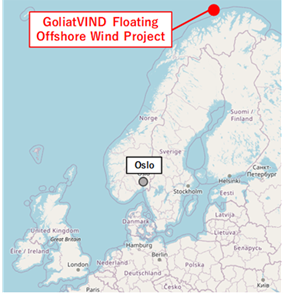
ENEOS Renewable Energy (ERE) is set to acquire a 20% stake in the GoliatVIND floating offshore wind project in Norway.
The site is on the border between the Norwegian Sea and Barents Sea. The project has an installed capacity of 75 MW, using five 15 MW wind turbines.
This is ERE’s first overseas offshore wind project. It will be developed with Source Galileo, Odfjell Oceanwind and KEPCO, which also has a 20% stake. They aim to begin commercial operation in 2028.
CONTEXT: Norway has set a target of 30 GW of offshore wind power by 2040. GoliatVIND received a grant of 2 billion NOK from Norway.
CONTEXT: ERE’s first floating offshore wind project, 16.8 MW near Goto City, Nagasaki Pref, was halted due to defects in two floating structures under construction, and launch has been pushed to January 2026.
TAKEAWAY: With the push for offshore wind power, Japan has fostered a competitive environment for firms. Cooperation with European firms, which are far more advanced, is indispensable for Japan to introduce floating wind tech at home. The Norwegian project offers a great opportunity for ERE to gain experience with its delayed Goto project. Still, to successfully introduce floating offshore wind power in Japan, more adjustments within organizations involved in such projects, and coordination between them, will be needed.
METI and the Ministry of Land, Infrastructure, Transport, and Tourism (MLIT) designated three new “preparation zones” for offshore renewable energy development: off the coast of Akita City, and two areas off Wakayama Prefecture.
These designations are part of the promotion areas under the Act on Promoting the Use of Marine Renewable Energy Generation Facilities.
CONTEXT: Japan classifies areas designated for offshore wind power generation projects into three categories: Preparation, Promising and Promotion zones. Once an area is upgraded to a “promotion zone”, auctions for wind projects inside it can take place. The other two zone categories are precursor stages, indicating that an area has potential to be utilized for wind farms.
MoE Minister Ito sent METI his formal opinion on a planned 550 MW offshore wind project in Hokkaido developed by Eurus Energy, calling for a more thorough study on the impact on biodiversity and the landscape.
MoE called for:
Conducting proper environmental impact assessment on birds and marine life, and taking measures to minimize impact on the habitat.
Minimizing the impact of the project on the scenic view.
The project is off the coast of Shimamaki Village, Hokkaido, and plans to use 23-56 turbines, (capacity of 10 MW to 25 MW), depending on the turbine type.
CONTEXT: Nearby the proposed site are several wind power plants in operation or undergoing environmental assessment by other operators. The MoE’s opinion echoes concerns about the overall impact of all nearby projects on the environment. Those include a 94.6 MW planned onshore wind farm by Cosmo Eco Power.
Wind turbine maker Vestas won a 134 MW order from Invenergy for the Inaniwa wind farm in Iwate Pref. This is Vestas’ largest onshore order to date in Japan.
The firm will supply and supervise the installation of 32 wind turbines (4.2 MW each). Launch is planned for early 2028.
MoE Minister Ito called on wind power engineering and procurement firm Japan Wind-Power Service to take into account the cumulative impact of JWS’ and other wind farms in and around Kuromatsunai Village in Hokkaido.
JWS plans a wind farm with a capacity of up to 130 MW.
Minister Ito also urged a review of the biodiversity assessment given that the selected site is inhabited by rare species such as the white-tailed sea eagle, and bear hawks.
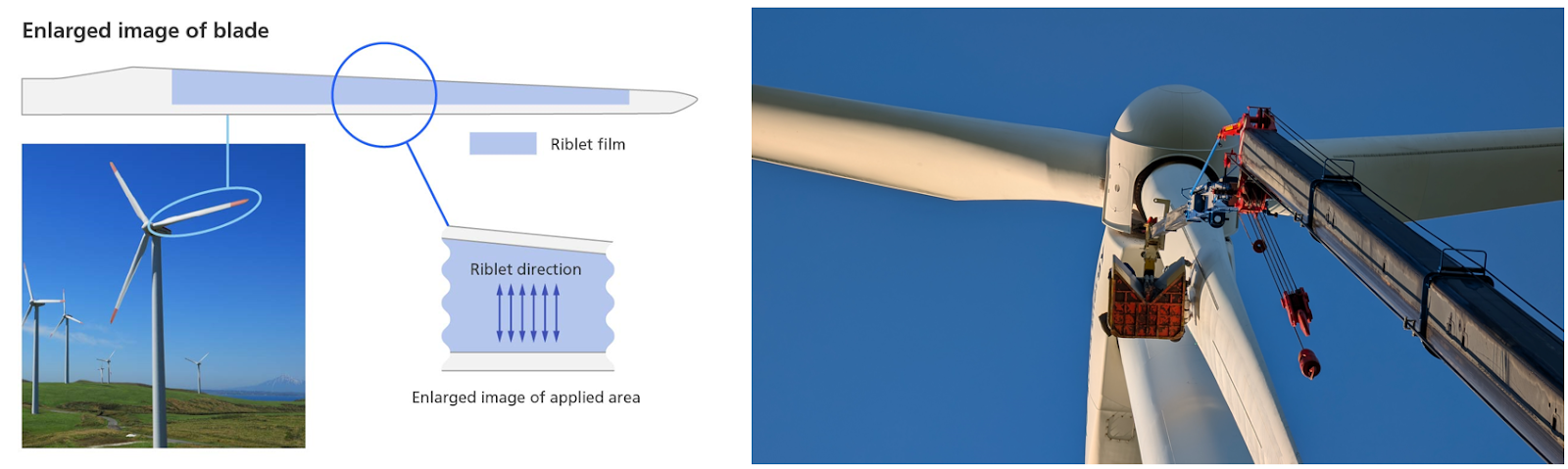
Eurus Energy began tests for wind power generation efficiency using Nikon’s riblet film for turbine blades.
This is Japan’s first attempt to run a verification test to improve wind power generation efficiency by attaching a riblet film to turbine blades. Nikon expects to improve wind power generation efficiency by around 3%.
The films help create a fine groove structure along the surface that comes into contact with liquid or air, reducing friction drag.
ANRE and OCCTO will create a simultaneous market framework for trading and balancing power supply, but they’ve yet to decide the timing for its launch.
The ANRE Energy Council Subcommittee on Basic Power and Gas Policies is studying details including the scope of power to be transacted, forward market structure, pricing and most recovery mechanism, and the role of market operator.
One of the most important issues is how to build this market system so that it responds to the large-scale deployment of renewable energy.
CONTEXT: The Study Group on a Simultaneous Market has been discussing the mechanism of a simultaneous market and cost-benefit analysis since August 2023, and has compiled the results in the draft interim report.
On Sept 20, the trading volume of electricity futures contracts on the EEX reached a record high of just under 900 GWh. This brought the monthly total to 5.6 TWh.
CONTEXT: September has fewer business days than usual due to the Silver Week of public holidays; however, trading volumes have not dipped. In fact, they are on track to come near the 6.6 TWh record monthly traded volume that occurred in February this year. The 2024 burst in trades has already seen 2024 comfortably beat the 2023 annual volume of 18.3 TWh. In just the first six months of 2024, volumes hit 28.9 TWh. Monthly and quarterly derivatives contracts remain the most popular trades on the EEX; however daily contracts have accounted for as much as 40% of trades in certain months, according to the exchange.
CONTEXT: The EEX says it has a 98.5% share of Japan’s futures power market, with TOCOM the rest. There are 77 trading participants on the EEX as of June 2024.
SIDE DEVELOPMENT: TOCOM to launch linked spot and futures services (JJ-Link) (Company statement, Sept 20)
On Oct 28, JEPX and the Tokyo Commodity Exchange (TOCOM) will launch a service linking the spot and futures electricity markets, called “JJ-Link.”
Initially, TOCOM will cross-check futures positions with JEPX spot data, with plans to unify the order process for both markets by 2025.
CONTEXT: The new service is expected to increase liquidity in electricity futures and facilitate hedge accounting.
On Sept 18, OCCTO directed KEPCO to receive electricity from other transmission service operators (TSOs) as the reserve ratio for power capacity in the Kansai area was due to fall below the minimum 3% reserve margin as hot temperatures led to increased power demand.
KEPCO secured the following power between 16:00 and 18:30:
329 MW from Tohoku,
410 MW from Tokyo,
380 MW from Chubu,
300 MW from Hokuriku,
750 MW from Chugoku,
300 MW from Shikoku.
CONTEXT: When there is a power shortage in any area, OCCTO has the prerogative to order TSOs to supply other areas with surplus output.
TAKEAWAY: The number of power transfers between regions has risen due to the volatility in weather, extreme heat, and further intermittency in the power sources. The main issue, however, is that the number of times a regional grid operator can request help is limited to about 12 times a year. The Tokyo area TSO has already requested help 10 times this year, which is a worrying sign as we head towards the peak demand period in winter.
ORIX’s group firm, Elawan Energy, will supply Google via a corporate power purchase agreement with the energy generated by a 37 MW solar project in Hill County, Texas.
The project is part of Elawan’s strategy to expand its presence in North America. Elawan specializes in the development and operation of wind and solar power plants.
Commercial operation of the solar project is expected to begin in 2026.
CONTEXT: Elawan operates 1.8 GW of renewables projects and has about 8 GW under development globally.
J-Power, through its subsidiary J-Solar, inked a virtual power purchase agreement with Tokyo Metro, providing environmental value from its 2 MW solar plant.
The Himeji City Oshio solar farm will generate around 3.9 GWh annually, with non-fossil certificates issued over 20 years.
J-Power will sell the electricity to JEPX, while Tokyo Metro continues using its existing electricity contracts.
CONTEXT: This is J-Power’s first direct virtual PPA.
IEA’s Tanaka Nobuo talks future of Japan’s nuclear industry, sees hope for SMRs
(Japan NRG, Sept 20)
Tanaka Nobuo, executive director emeritus of the IEA, talked about the future of Japan’s nuclear sector at the annual Gastech in Houston, Texas. He said the govt is investing in advanced reactors, such as fast reactors, gas-cooled reactors and SMRs.
Yet, utilities are still bound to technologies like large light-water reactors. The reason is that they believe the older tech has advantages from a regulatory point of view, as well as in terms of training people and the supply chain.
Tanaka said that the costs for building new ones is too high and the future of the nuclear sector is in SMRs.
Tanaka also said that a fast-neutron reactor (FNR) will be an efficient way of using uranium, that it offers advantages in nuclear waste management, and could be helpful even for removing Fukushima’s contaminated debris.
CONTEXT: A FNR is a nuclear reactor that uses fast neutrons without the need for a neutron moderator to slow them. Unlike conventional thermal reactors, FNRs can use a wider range of nuclear fuels such as depleted uranium and plutonium. This can reduce the volume and toxicity of nuclear waste
TEPCO sent 69 spent fuel assemblies from the Kashiwazaki-Kariwa NPP to Mutsu, Japan’s only interim spent fuel storage facility. It’s set to launch in late October.
Local authorities made the reduction of stored fuel a condition for agreeing to the restart. TEPCO plans further transfers in FY2025 and 2026, totaling seven shipments.
CONTEXT: TEPCO aims to restart Kashiwazaki-Kariwa NPP Units 6 and 7. About 80% of the plant’s spent fuel storage is used up.
TAKEAWAY: The fuel will be stored at the Mutsu facility for up to 50 years under local agreements. Yet, concerns remain about long-term handling. Rokkasho is meant to handle spent fuel, but it has yet to be completed due to regulatory delays, raising fears about the potential for indefinite storage at Mutsu.
MHI will hire 200 employees for its nuclear power division in FY2025, a 30% increase over FY2024. Since 2018, MHI’s nuclear sales have grown 150%.
Companies like Toshiba and Fuji Electric also intend to increase staff. Fuji Electric seeks new employees for designing high-temperature gas-cooled reactors.
CONTEXT: Japan’s nuclear workforce stands at about 50,000. Yet, the aging of experienced professionals and a lack of new construction have led to difficulties in passing on critical skills. Companies like Hitachi are using digital technologies, such as metaverse spaces and 3D CAD, to help with skill transfer. Additionally, KEPCO is offering technical training to support skill retention.
TAKEAWAY: Japan’s aging workforce is, in general, a problem; but the nuclear industry faces additional issues. The number of nuclear engineering students has declined since the Fukushima accident. Also, a large part of the industry’s employees have been working in non-operating facilities since the shutdown of all NPPs in the early 2010s.
The emergency gas treatment system at Tohoku Electric’s Onagawa NPP Unit 2 went off during preparations for periodic inspections. No abnormal radiation was detected.
CONTEXT: Tohoku Electric plans to restart the plant in October, with full operation in November. A similar incident occurred in June.
Tohoku Electric said the Sept 13 incident at Onagawa NPP Unit 2 occurred when a screw on a terminal was loosened, causing a cable disconnection and triggering the system as designed.
Chugoku Electric held an exercise at Shimane NPP’s Unit 2, simulating a major incident where water supply to the reactor and power to the plant were lost.
CONTEXT: If restarted as scheduled, it will be the first time Unit 2 has operated since January 2012.
Chugoku Electric will lower electricity prices for businesses by about 1% (¥0.3/ kWh) due to the planned restart of Shimane NPP Unit 2 in December.
The price reduction will take effect April 1, 2025, and apply to extra-high voltage and high voltage for factories, large-scale commercial facilities, and offices.
CONTEXT: The restart of Shimane NPP Unit 2 means turning on a facility that has not operated since January 2012.
JNFL execs will return a part of their salaries over delays in completing the Rokkasho Reprocessing Plant. The company acknowledges losing trust of other stakeholders.
Company president Masuda Naohiro will return 30% of one month’s salary. Three VPs will return 15% of one month’s salary each.
CONTEXT: The reprocessing plant intends to extract uranium and plutonium from spent nuclear fuel, and reuse it. Recently, the plant’s completion faced its 27th delay in 30 years, pushing the final date to FY2026. A major obstacle has been the operator’s failure in complying with the NRA’s safety standards and inspections.
NTT Anode Energy aims to enter Japan’s power transmission and delivery business with a new grid-control system to manage renewables.
The system analyzes output, and stores energy in batteries, and is designed to help prevent imbalances that lead to blackouts.
The firm will also develop a decentralized system that will locally produce and consume renewable energy to ensure stable supply even during disasters.
The firm plans to install battery storage at 7,000 sites across Japan to take advantage of wind and solar.
Trading house Mitsubishi will expand its involvement in Malaysian LNG projects, increasing its stake in a liquefaction plant in Sarawak from 4% to 10% by the end of FY2024. It also aims to extend its other 10% stake in a separate project in Sarawak until 2025.
The investments will boost Mitsubishi’s LNG production capacity in Malaysia from 1.4 million tons to 2.2 million tons per year. The company also owns a 15% stake in LNG Canada, coming online around 2025. Mitsubishi’s global LNG capacity will grow from 12.2 million to 15.1 million tons.
CONTEXT: Japan is diversifying its LNG supply. This is due to uncertainties with traditional suppliers like Russia and strained relations with Qatar. Other Japanese firms like Mitsui, Sumitomo, and Sojitz are also seeking new LNG investments globally. These include investments in the UAE and Australia.
LNG stocks of 10 power utilities were 1.64 million tons as of Sept 22, down 12.3% from the previous week (1.87 million tons). This is the same as at the end Sept 2023 (1.64 million tons), and 17.6% down from the five-year average of 1.99 million tons.
CONTEXT: The JMA’s long-term forecast says that hotter-than-usual weather will continue until the end of October before Japan welcomes a very short autumn. Then, temperatures will drop rather sharply in November.
Natural Gas Sector Bets on a Rebound as Power Demand Rises on Data Center Boom
After a tumultuous five years marked by calls to bury the natural gas industry amid efforts to decarbonize the sector, along with wild price volatility that saw historic lows in 2020, record highs in 2022 and a plunge again this year, corporate leaders now see the potential for long-term prosperity.
This new confidence is driven by a forecasted rise in global energy demand ignited by the rapid expansion of energy-hungry data centers and AI technologies. The next five years will see a natural gas supply boom that should keep prices affordable for developing countries, thereby opening new markets that hitherto relied on cheaper coal power.
What a difference a year makes. In November 2023, the United Nations’ COP28 climate summit loudly announced what activists called the “beginning of the end of the fossil fuel era.” However, the natural gas industry’s buoyant future can easily be discerned in the more than 1,000 orders to build LNG maritime transport vessels.
The recent Gastech conference in Houston, held from September 17-20, radiated this optimism. Industry leaders reaffirmed the role of natural gas in the global energy mix, with a clear focus on expanding market share, particularly at coal’s expense.
However, the sector is not resistant to change. Many gas companies are exploring hydrogen and other alternative energy options to lower their carbon footprint.
All these developments will have a significant impact on Japan, the world’s second LNG buyer after China, and a nation that still relies on burning gas for over a third of its electricity.
Asia propels rising LNG demand
The natural gas industry believes it can bridge the so-called ‘energy gap’ until renewables becomes the global baseload energy source by 2050.
Despite progress in building renewables capacity over the past two decades, fossil fuels – coal, oil, and gas – still supply nearly 80% of global energy, with coal alone contributing 35% of the total. Renewable energy accounts for only 12%.
With renewables lagging in many parts of the world, including Japan, where large offshore wind farms are expected to commence operations only at the end of this decade, natural gas demand is expected to double over the next decade, peaking in the early 2040s.
According to the International Energy Agency, by 2026, global power demand from data centers could double, as AI technology takes off. For example, BlackRock is planning a $30 billion AI investment fund with Microsoft, focusing on data centers and energy projects.
Shell’s LNG Outlook 2024 forecasts LNG demand reaching 685 million tons per annum by 2040, with Asia – especially China and India – driving much of the growth. The U.S. and Qatar are poised to supply a significant portion of this gas, with over 200 million tons of new export capacity expected to come online globally by 2030.
China, already the world’s largest LNG importer, is expected to continue its annual import growth of 13%, surpassing purchases of 85 million tons annually by 2024. And India is aggressively increasing LNG imports to replace coal, with projections of 67 million tons by 2030, nearly triple its 23 million tons in FY2022.
In the past two years, Japan has slid from the top spot to the No 2 position, and its total LNG imports are expected to slowly decline over the next decade as the country boosts offshore wind, solar and nuclear capacity. In 2023, Japan imported about 65 million tons of LNG, down from about 72 million in 2022, and 88.5 million in 2014.
In spring, JERA’s new CEO Kani Yukio went on record saying that Japan’s import volumes “may decline or may stay the same”, and that “Japan may not need LNG for 20 years … but other Asian countries need to replace coal with something and LNG will play an important role.” JERA, which is Japan’s largest power company and largest natural gas buyer, hopes to continue to play a key role in supplying fuel to neighboring countries.
At Gastech, Kani emphasized energy security while transitioning to cleaner energy. During the Houston conference, JERA inked a 10-year contract with Woodside Energy of Australia to deliver 600,000 tons of LNG per annum starting in April 2026. Earlier this year, JERA took a 15% stake in Woodside’s Scarborough project off Western Australia.
Meanwhile European LNG imports from the U.S. held strong in early 2024. However, selling LNG in the EU now faces more stringent regulations on methane emissions, requiring rigorous monitoring to track leakage across supply chains. The natural gas industry counters by claiming that its methane emissions only account for about 5% of the global total. (The oil industry and agriculture sector emit more methane than the natural gas industry)
Infrastructure investments and challenges
In the coming years substantial investments are anticipated in LNG liquefaction plants, regasification terminals, and transportation infrastructure. Innovations in LNG production, transport, and use are expected to drive efficiency improvements and open new markets.
An estimated $55 billion is expected to be invested in new LNG supply globally in 2024 and 2025 only, but price and supply volatility raise concerns about the viability of natural gas as a primary energy source for developing countries, which presently prefer to stick with coal.
Emerging markets in South Asia, Southeast Asia, and Africa are developing LNG import infrastructures, with countries like Bangladesh and Pakistan seeking to enter the market.
While the U.S. and Canada won’t build more gas-fired power generation capacity, they’re eager to export LNG. By 2030, North America’s total LNG exports could double, accounting for 30% of global demand. The U.S. has cemented its spot as the world’s top LNG exporter, with Q1 2024 figures indicating that the total this year might exceed 90 million tons.
By 2030, Shell plans to invest up to $13 billion in gas and its upstream, and the firm plans to boost LNG sales 20-30% by expanding its presence in Canada and Mexico to export LNG to Asia. One key project is the $30 billion LNG Canada facility in Kitimat, British Columbia that’s backed by a consortium that includes Shell (40%), Petronas (25%), Mitsubishi (15%), PetroChina (15%), and Korea Gas Corp (5%). This plant is the first on Canada’s West Coast, and the first cargo might ship in mid 2025.
In the Middle East, Qatar’s North Field expansion is progressing, with new production expected to come online by early 2025. African LNG exports from Mozambique and Senegal are also in the works. In South America, Mexico and Argentina are developing natural gas infrastructure and LNG export capacity.
In Asia, Mitsubishi Corp plans to boost its involvement in Malaysian LNG projects by nearly 60% in terms of production capacity, and by late FY2024 the trading house will acquire a 10% stake in a gas liquefaction plant in the state of Sarawak that’s operated by Petronas.
Mitsubishi also holds a 10% stake in another LNG project in Sarawak and plans to extend this contract in FY2025. It might invest several hundred billion yen, raising its annual LNG production capacity in Malaysia from 1.4 million tons to 2.2 million tons.
With all these new projects expected to come online in the next few years, experts are forecasting a glut of natural gas by 2027, which is why there is an urgency to open new markets across Asia, Africa and Latin America to absorb this growing supply.
Political and environmental considerations
As the natural gas sector bets on a new era of growth, it faces challenges related to environmental concerns and politics. Methane emissions remain a point of contention, though the industry argues that displacing coal with natural gas could reduce global emissions by 25%. However, this claim isn’t swaying many governments in North America and Europe.
In the U.S., the LNG market has been caught in the domestic political crossfire of this election year. In January, the Biden administration paused new LNG export approvals, creating uncertainty for major projects like Calcasieu Pass 2 and Commonwealth LNG.
At Gastech, Chevron CEO Mike Wirth criticized the White House, arguing that the LNG export pause hampers the transition from coal to natural gas, leading to higher energy costs and more emissions. Despite a federal court overturning the LNG moratorium in July, no new permits have been issued.
At the Asia Pacific Petroleum Conference in Singapore in early September, officials from Taiwan’s CPC Corp and Germany’s SEFE spoke of the importance of reliable LNG suppliers. CPC’s vice president, Jane Liao, stated her preference for traditional suppliers, citing long-standing relationships to guarantee supply reliability.
This sentiment reflects a broader trend among many Asian LNG buyers. With the U.S. export pause creating uncertainty, many are looking at diversifying their supply to enhance security. Though the U.S. is the top LNG exporter, buyers increasingly have more options.
With more and more sources of supply coming online by the end of the decade, and developing economies eager to initiate and/or expand their purchases of LNG, the industry is going to become a truly global market.
What does this mean for Japan? While Japanese utilities look at ways to shift away from fossil fuel generation by 2050, this still leaves a 25-year horizon. Also, major companies such as JERA see a role for them in the global market, for example, by trading LNG to countries ranging from Southeast Asia to India.
ANALYSIS
BY FILIPPO PEDRETTI
Delays at Rokkasho Nuclear Fuel Reprocessing Plant Hinder Japan’s Energy Goals
The future and long-term success of Japan’s nuclear power industry hinges not only on developing cutting edge, next-generation technology, but also on events taking place in a small fishing village in northeast Japan.
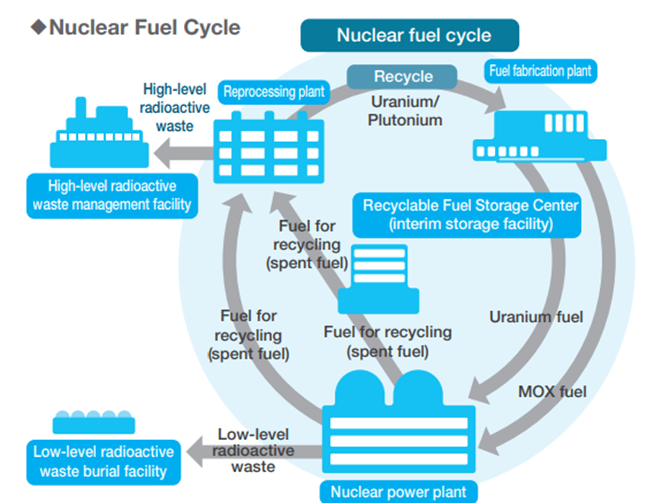
Construction of the Rokkasho nuclear fuel reprocessing plant in Aomori Prefecture on the Pacific Ocean coast is central to Japan’s nuclear fuel cycle policy. If construction is ever completed it will be the nation’s main facility processing nuclear waste disposal.
Work on the facility was launched in 1993 and it should have been completed in 1997. Yet, last month the project faced its 27th construction delay, and the operator, Japan Nuclear Fuel Ltd, said the plant’s completion will be postponed to 2026. Another two and a half years are needed to address issues related to Nuclear Regulation Authority regulatory reviews.
For decades, nuclear power energy was a strategic priority in Japan. The country’s first nuclear power plant launched in 1966, and by March 2011, nuclear power accounted for about 30% of Japan’s electricity production, with plans to boost that to 40%. The Fukushima disaster, of course, changed all that. For ten or so years since, the sector languished but power shortages and a desire to add cheaper, CO2-free generation to the grid has brought nuclear back into public favor. Whether it can stay there will depend on what happens when nuclear fuel is spent.
Unlike coal-fired and natural gas-fired power plants, nuclear power plants face the disposal and long-term storage of their fuel – which becomes nuclear waste. Japan is still unable to sufficiently resolve this issue, and until a solution is found that satisfies all stakeholders.
Japan NRG takes a closer look at the challenges and what solutions are possible for the disposal, storage and processing of spent nuclear fuel.
Fukushima’s impact on Japan’s reprocessing plants
As a country with scant domestic supplies of natural energy resources, for decades Japan has had to rely heavily on imports for energy; currently, nearly 95% of Japan’s energy is imported. Therefore, securing a stable energy supply has long been a central facet of Japan’s industrial policy, and nuclear power was expected to fulfill those needs.
Since Japan imports all the uranium for its nuclear power fleet, reprocessing and reusing its spent nuclear fuel is considered a desired outcome. Towards that goal, since the early 1990s, Japan has worked on building a facility to reprocess spent nuclear fuel for further use.
The Rokkasho Reprocessing Plant, located in the village of the same name, is slated to play a central role in Japan’s nuclear fuel management plans. But constant delays over the past three decades have plagued the industry, and today, realization of the nuclear fuel cycle seems as distant as ever. In the meantime, nuclear waste accumulates on-site at the nation’s NPPs.
The delays appear to stem from extended NRA screenings and internal communication issues within JNFL. In some cases, JNFL failed to share information or make necessary changes to approved plans.
Also, post-Fukushima, regulations became much stricter, increasing the necessary safety upgrades and costs. The project’s management involves many parties who assist with technical matters required by the NRA. The coordination of all this only added to the Rokkasho’s complexity.
Early successes
Until not so long ago Japan had a working reprocessing plant. In 1981, after ten years of construction, a MOX fuel processing facility opened 120 km northeast of Tokyo – in Tokai Village, Ibaraki Prefecture. But it went idle in 2006 after commercial contracts for fuel reprocessing dried up. During the years of its operation the plant reprocessed 1,140 tons of spent nuclear fuel.
The Tokai reprocessing plant was decommissioned due to the high costs of modifications required by the new regulations post-Fukushima. As the rules for the nuclear business became more stringent, once again, costs rose.
Tokai Reprocessing Plant. Source: JAEA
Without the Tokai facility, Japanese utilities have had to send spent nuclear fuel to the UK and France for reprocessing. Today, the use of recycled fuel, mostly from France, is limited to a few plants in Japan, especially for Kansai Electric (KEPCO). Currently, MOX fuel is in use at KEPCO’s Takahama NPP Units 3-4, Shikoku Electric’s Ikata NPP Unit 3, and Kyushu Electric’s NPP Unit 3.
Source: KEPCO, FEPC, Others
Broken promises
Japan’s overall spent fuel storage capacity is about 24,000 tons, with over 80% already used. By 2030, the major utilities have set a goal to add 6,000 tons to that total capacity. That plan calls for an interim storage facility, such as the one on the premises of Tokai No. 2 NPP, or the one in Mutsu (Aomori Pref) operated by TEPCO and Japan Atomic Power. The latter, slated to launch in September, will primarily serve TEPCO’s Kashiwazaki Kariwa NPP, and will store 5,000 tons of spent fuel for 50 years before sending it to long-term storage.
KEPCO, Japan’s largest NPP operator, also has plans to use an interim storage facility – to launch in the early 2030s at a site that has yet to be determined – for its spent nuclear fuel. This was a crucial point in the plan proposed to Fukui Prefecture last year thanks to which the utility secured local government approval for reactor restarts. In addition, in August 2023, KEPCO, together with Chugoku Electric, began studying the possibility of building a mid-term storage facility in Kaminoseki (Yamaguchi Prefecture).
The setback of the Rokkasho plant completion has hit KEPCO hard. In autumn last year, the company proposed a plan to Fukui Prefecture, promising to send the spent fuel to an interim storage facility outside the prefecture’s borders. In fact, the company made such a promise in the late ’90s but it has not been fulfilled and no solution is in sight.
Now KEPCO says it can’t fulfill that promise at all until Rokkasho is completed. On August 30, KEPCO and ANRE met with Fukui’s Deputy Governor Washizu Mio to report the plan’s revision. The governor said it violated the deal made with the prefecture a year earlier, and the burden is on the utility to show a firm commitment to resolving the issue.
When asked about the new plan’s timetable, KEPCO said it would present one as soon as possible. While the company is not responsible for the delay, it was proposing a plan that was dependent on the continuously postponed Rokkasho facility.
On Sept 5, KEPCO’s President Mori Nozomu also met Fukui Governor Sugimoto Tatsuji, to discuss KEPCO’s spent fuel management plans. The Governor stressed the importance of building trust between nuclear business operators and municipalities. He also urged the company to present a revised plan as soon as possible. On Sept 9, the Aomori Pref Governor asked ANRE to hold a conference on the Nuclear Fuel Cycle with him and cabinet ministers.
KEPCO’s spent fuel can’t wait for Rokkasho’s plant to be complete. The utilization rates for spent fuel pools at KEPCO plants are as follows:
NPP
Fuel assemblies’ capacity
Fue assemblies stored
Utilization rate
Mihama NPP
652
476
73%
Takahama NPP
3,758
3,223
86%
Oi NPP
3,872
3,459
89%
Conclusion
Given the high utilization rate of its NPP storage facilities, this summer KEPCO resorted to another solution for storing the fuel, i.e. dry storage facilities within the plants’ premises. (This solution will be discussed in Part II of this story, next week.)
The Rokkasho facility, however, remains central to Japan’s spent fuel management plans, and there are no signs that the country plans to abandon its dream of realizing a full nuclear fuel cycle. In the meantime, distrust is growing among the public and state agencies. Delays at Rokkasho have led Aomori Governor Miyashita to doubt JNFL’s management ability.
As for the Mutsu interim storage facility, many fear that, despite its name and intended use, it will end up storing nuclear material far longer than planned, since there will be nowhere else to ship spent nuclear fuel.
The same goes for the proposed facility in Kaminoseki. While Chugoku Electric is trying to restart its Shimane NPP Unit 2, locals fear that the company will end up lending the storage facility to KEPCO, which will then use it for its spent fuel coming from outside of the company’s jurisdiction. Needless to say, the locals are not enthusiastic. The idea of living in the proximity of large amounts of nuclear fuel is not appealing for many locals.
Unless the government finds a way to propose a viable plan for its nuclear fuel cycle and adhere to it, dismissing local criticisms and skepticism as mere symptoms of the “not in my backyard” mentality will ring hollow.
Repeated delays and broken promises from major industry stakeholders only make things worse when it comes to securing public trust. In turn, this only serves to compel nuclear operators to continuously replan and review their commitments.
If in the next few years Japan cannot make tangible progress toward its goal for long-term spent nuclear fuel processing and storage, then sooner or later, the country will have to reconsider its entire nuclear energy policy, which would eventually impact national energy decarbonization goals through 2050.
ASIA ENERGY REVIEW
BY JOHN VAROLI
This weekly column focuses on energy events in Asia and the Pacific
Australia / BESS
PV module manufacturer Trina Solar has applied for a 660 MW/ 2.64 GWh battery energy storage system in Western Australia. If approved, the 4-hour duration BESS would be at the Kemerton Strategic Industrial Area that’s designated as a state-priority project, intended for strategic and heavy industries in the South-West.
China / Carbon market
China seeks feedback on a plan to include cement, steel and aluminium production in its carbon emissions trading scheme by year’s end, hoping this will boost market liquidity. China’s carbon market consists of a mandatory ETS and a voluntary GHG emissions reduction trading market known as the China Certified Emission Reduction scheme.
China / Energy transition
Global clean energy investments have increased rapidly over the past decade, rising from $248 billion in 2014 to $745 billion in 2023, reports Rystad Energy. During this time, China has deployed more clean energy technologies than all other countries combined.
Coal power
A G7 plan to shut coal power plants in emerging markets faces further delays after a July deadline passed without a deal on the early closure of an Indonesian power plant that would be the first targeted under the Just Energy Transition Partnerships, which calls to invest billions of dollars in Indonesia, South Africa, Vietnam, etc to help in the energy transition.
India / Solar power
Spain’s Zelestra secured $147 million in financing for its 435 MW Gorbea solar plant in Rajasthan state. Currently, Zelestra India has 1.5 GW of projects in operation, construction, signed, or awarded, with a total portfolio of almost 5 GW.
Indonesia / Green financing
The Asian Development Bank approved a $500 million policy-based loan to expedite Indonesia’s energy transition towards sustainable sources. The country’s goal is to reach net zero power emissions by 2050.
Lithium supply
With EV demand growth slower than anticipated, demand for lithium – an essential component in batteries – is slowly just as significant investment in new supply bears fruit. WoodMacEnzie forecasts a surplus of 220,000 tons of lithium carbonate equivalent in 2024, almost doubling to 436,000 tons in 2026.
Natural gas
U.S. natural gas futures rose 7% to a 12-week high on worries that some Gulf Coast oil and gas producers would reduce output ahead of a hurricane this week.
Solar power
This year the global community is on track to install 593 GW of solar power, a 29% rise YoY, reported Ember. China already has the largest solar capacity and leads the world with new additions for January-July 2024, 28% higher YoY.
South Korea / Nuclear power
The SMART100 small modular reactor design was granted standard design approval by South Korea’s Nuclear Safety and Security Commission. SMART100 (System-integrated Modular Advanced Reactor 100) is an advanced version of the original SMART design that became the world’s first SMR to receive approval in 2012.
2024 EVENTS CALENDAR
A selection of domestic and international events we believe will have an impact on Japanese energy
January
First market trading day (Jan 4)
IEA “Renewables 2023: Analysis and Market Forecast to 2028” released (Jan 11)
Renewable Energy Exhibition (Jan 31 – Feb 2)
Taiwan presidential election (Jan 13)
Japan’s Diet convenes
IEA “Electricity 2024 / Analysis and Forecast to 2026” released (Jan 24)
February
CFAA International Symposium (Feb 2)
India Energy Week 2024 (Feb 6-9)
Lunar New Year (Feb 10-17)
Indonesia presidential election (Feb 14)
Japan-Ukraine Conference for Promotion of Economic Reconstruction (Feb 19)
FIT/FIP solar auction (Feb 19 – March 1)
Smart Energy Week (Feb 28-Mar 1)
March
Announcement of auction result for Offshore Wind Round 2 (for Akita Happo-Noshiro Project)
Onshore wind auctions (March 4-15; results on March 22)
International LNG Congress (LNGCON) 2024, Milan, Italy (March 11-12)
Russian president election (March 15-17)
World Petrochemical Conference, Houston, TX, USA (March 18-22)
IAEA Nuclear Energy Summit @ Belgium (March 21)
Ukraine presidential election (due before March 31)
Happo Noshiro, Murakami-Tainai, Oga-Katagami-Akita and Saikai-Eshima wind project auctions close (June 30)
July
Tokyo governor election (July 7)
7th Basic (Strategic) Energy Plan draft published (expected)
August
7th Basic (Strategic) Energy Plan draft presented to Cabinet (expected)
September
Global Offshore Wind Summit Japan 2024, Sapporo, Hokkaido (Sept 3-4)
The United Nations Summit of the Future (Sept 22-23)
Gastech 2024, Houston, TX (Sept 17-20)
IAEA General Conference
GX Week in Tokyo (expected late Sept to October)
Asia Green Growth Partnership Ministerial Meeting
Asia CCUS Network Forum
International Conference on Carbon Recycling
International Conference on Fuel Ammonia
GGX x TCFD Summit
October
IEA World Energy Outlook 2024 Release
BP Energy Outlook 2024 Release
Innovation for Cool Earth Forum (expected)
Connecting Green Hydrogen Japan 2024 (Oct 16-17)
Japan Wind Energy 2024 Summit (Oct 16-17)
Solar Energy Future Japan 2024 (Oct 16-17)
Japan Mobility Show (Oct 25-Nov 5)
November
US presidential election (Nov 5)
COP 29 in Azerbaijan (Nov 11-22)
Abu Dhabi International Petroleum Exhibition Conference (ADIPEC) 2024, Abu Dhabi, UAE (Nov 11-14)
APEC 2024 @ Lima, Peru
International Conference on Nuclear Decommissioning (TBD)
G20 Rio de Janeiro Summit (Nov 18-19)
Offshore Energy Exhibition & Conference (OEEC) 2024, Amsterdam, the Netherlands (Nov 26-27)
Biomass & BioEnergy Asia Conference (TBD)
European Biomethane Week 2024
December
Last market trading day (December 30)
Disclaimer
This communication has been prepared for information purposes only, is confidential and may be legally privileged. This is a subscription-only service and is directed at those who have expressly asked K.K. Yuri Group or one of its representatives to be added to the mailing list. This document may not be onwardly circulated or reproduced without prior written consent from Yuri Group, which retains all copyright to the content of this report.
Yuri Group is not registered as an investment advisor in any jurisdiction. Our research and all the content express our opinions, which are generally based on available public information, field studies and own analysis. Content is limited to general comment upon general political, economic and market issues, asset classes and types of investments. The report and all of its content does not constitute a recommendation or solicitation to buy, sell, subscribe for or underwrite any product or physical commodity, or a financial instrument.
The information contained in this report is obtained from sources believed to be reliable and in good faith. No representation or warranty is made that it is accurate or complete. Opinions and views expressed are subject to change without notice, as are prices and availability, which are indicative only. There is no obligation to notify recipients of any changes to this data or to do so in the future. No responsibility is accepted for the use of or reliance on the information provided. In no circumstances will Yuri Group be liable for any indirect or direct loss, or consequential loss or damages arising from the use of, any inability to use, or any inaccuracy in the information.
NEWS
・Ishiba Shigeru, lone anti-nuclear voice, wins LDP leadership race, set to become next Prime Minister
・Japan-U.S. energy roundtable calls for coordinated clean energy action to provide more decarbonize power volumes
・ENEOS Renewable Energy to join floating offshore wind in Norway, takes 20% stake in GoliatVIND