
JAPAN NRG WEEKLY
NOVEMBER 5, 2024
JAPAN NRG WEEKLY
NOVEMBER 5, 2024
NEWS
TOP
- ANRE sees need for another 15 GW of capacity by 2030 in revised supply-demand plans
- Share of nuclear power in national energy mix faces doubts as LDP gets battered by voters in Diet election
- Mitsubishi Corp to increase LNG production capacity through 2030 in bid to become leader in regional distribution
- Japan still keen to commercialize CCS by 2030 amid challenges
- ENEOS advances in synthetic fuel development with new pilot
- KHI launches hydrogen-mixed gas engine test facility
- Japan needs to secure dominance in fusion, but past failures loom
- EX-Fusion joins Keidanren, first nuclear fusion company to do so
- PowerX, Mercedes to build high-power EV charging network
- JICA inks loan with Ecuador to support renewables development
- Japan and Uzbekistan hold talks on promoting GX and DX
- First restart of a nuclear reactor in east Japan
- OCCTO proposes changes to power supply measures
- Sept spot market saw tighter supply-demand, 7% drop in offers
- Hour-ahead market results: contracted volume up 13% in Sept
- Hitachi sees net profit rise 40% due to power grid upgrades
- J-Power to sell stake in Texas gas power plant
- Former TEPCO head Katsumata Tsunehisa passes away at 84
- Vena Energy to build wind farm near Kashiwazaki-Kariwa NPP
- JERA completes purchase of stake in Australian gas field
- MOL seeks to alter contracts with Russia for LNG carriers
- LNG stocks down from last week and last year
ANALYSIS
WHAT’S NEXT FOR JAPAN’S ENERGY SECTOR AFTER THE DIET ELECTION?
The stability that underpinned Japan’s energy policy for decades now faces doubts. Since losing its Diet majority last week, the ruling LDP has lost some control over its energy agenda, leaving it reliant on minority parties. As PM Ishiba seeks to pick up the pieces, he’ll need to take greater heed of opposition parties and rely on support from lawmakers across the political divide. Populist energy policies and uncertainty over longer-term programs look inevitable.
ENERGY JOBS IN JAPAN: WHY IS HIRING STATISTICALLY HARDER HERE
Japan has long been known as a tough talent market. Companies, both international and domestic, often complain about a low volume of qualified applicants for job postings, and thus become frustrated with slow hiring. In addition, they often receive profiles from senior generations. Just how bad is the situation? Let’s dig deeper into this topic and finish with a few tips for companies looking to attract and hire talent in Japan.
ASIA ENERGY VIEW
A wrap of top energy news that impacts other Asian countries.
EVENTS SCHEDULE
A selection of events to keep an eye on in 2024.
JAPAN NRG WEEKLY
PUBLISHER
K. K. Yuri Group
Events
Editorial Team
Yuriy Humber (Editor-in-Chief)
John Varoli (Senior Editor, Americas)
Kyoko Fukuda (Japan)
Magdalena Osumi (Japan
Filippo Pedretti (Japan)
Tim Young (Japan)
Tetsuji Tomita (Japan)
Regular Contributors
Chisaki Watanabe (Japan)
Takehiro Masutomo (Japan)
Mayumi Watanabe (Japan)
SUBSCRIPTIONS & ADVERTISING
Japan NRG offers individual, corporate and academic subscription plans. Basic details are our website or write to subscriptions@japan-nrg.com
For marketing, advertising, or collaboration opportunities, contact sales@japan-nrg.com For all other inquiries, write to info@japan-nrg.com
OFTEN-USED ACRONYMS
|
METI |
The Ministry of Economy, Trade and Industry |
mmbtu |
Million British Thermal Units | |
|
MoE |
Ministry of Environment |
mb/d |
Million barrels per day | |
|
ANRE |
Agency for Natural Resources and Energy |
mtoe |
Million Tons of Oil Equivalent | |
|
NEDO |
New Energy and Industrial Technology Development Organization |
kWh |
Kilowatt hours (electricity generation volume) | |
|
TEPCO |
Tokyo Electric Power Company |
FIT |
Feed-in Tariff | |
|
KEPCO |
Kansai Electric Power Company |
FIP |
Feed-in Premium | |
|
EPCO |
Electric Power Company |
SAF |
Sustainable Aviation Fuel | |
|
JCC |
Japan Crude Cocktail |
NPP |
Nuclear power plant | |
|
JKM |
Japan Korea Market, the Platt’s LNG benchmark |
JOGMEC |
Japan Organization for Metals and Energy Security | |
|
CCUS |
Carbon Capture, Utilization and Storage | |||
|
OCCTO |
Organization for Cross-regional Coordination of Transmission Operators | |||
|
NRA |
Nuclear Regulation Authority | |||
|
GX |
Green Transformation |
NEWS: ENERGY TRANSITION & POLICY

ANRE sees need for another 15 GW in capacity by 2030 in revised supply-demand plans
(Denki Shimbun, Oct 30)
- ANRE presented a review on power supply and demand management, focusing on revising calculation methods for reserve rates in weekly power plans and reshuffling additional supply measures.
- Demand forecasts for 2030, excluding Okinawa, indicate a potential increase of up to 15 GW due to growth in high-voltage projects driven by expansions in data centers and semiconductor plants.
- Updates include: 1) changing the criteria for reserve power from a 5% to an 8% rate; 2) renaming “demand-supply tightness support” to “inter-area adjustment”; 3) switching operation of pumped storage to T&D companies
- New measures for the JEPX exchange were also discussed, including independence for the market monitoring office, and a new spot trading system to improve trade capacity by the end of FY2024.
TAKEAWAY: An additional 15 GW of capacity would be a tall ask if this refers to baseload power. It’s more than the current demand stimulus on offer via the various state auctions, such as the Capacity Market. All this indicates that much of the demand from data centers will need to be met through custom projects, or projects sponsored by data center operators.
- SIDE DEVELOPMENT:
ANRE discusses Basic Energy Plan in light of international trends and decarbonization
(Government statement, Oct 23)- ANRE held discussions on the Basic Energy Plan in light of current international trends and decarbonized power sources and technologies.
- Based on the World Energy Outlook 2024, the IEA has analyzed forecasts for natural gas demand, the importance of mineral resources and energy security, and the need to invest in decarbonized power sources amid rising electricity demand.
- Decarbonized power sources also need to address issues such as recycling and disposal of used solar panels, and the nuclear fuel cycle and final disposal of radioactive waste. Also, CO2 atmospheric removal tech needs to be developed.
TAKEAWAY: In the midst of growing energy uncertainty on the international stage, the next Basic Energy Plan will also need to be flexible enough to respond to uncertainty.
Mitsui, Repsol, etc. launch CCS project in Texas
(Company statement, Oct 29)
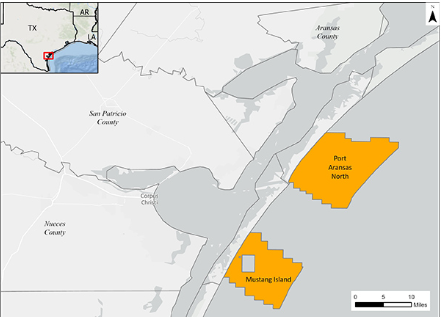
- Mitsui & Co, through its subsidiary MEP Low Carbon Solutions, formed a JV with Repsol and Carbonvert that’s called Aves; it owns CCS rights to sites offshore Corpus Christi, Texas that covers about 570 km2, and can store more than 600 MMT of CO2.
- Repsol has a 45% stake in Aves; Carbonvert 45%, and MEP 10%. The site is in a 100-mile radius of industries with over 35 Mt of annual CO2 emissions.
- CONTEXT: The CCS project will start in about five years, aiming to store up to as much as 30 tons of CO2 in the next 30 years. Mitsui also has a CCS project with JOGMEC in Offshore Peninsular Malaysia.
TAKEAWAY: Spanish oil giant Repsol believes that the project is a chance to build a carbon storage hub with environmental and economic benefits. Communities are concerned about potential risks from pipeline leaks and high offshore costs, and their approval is a major challenge for the CCS industry. Critics also point out that many CCS projects serve to boost oil production, thereby defeating the purpose of the energy transition.
- SIDE DEVELOPMENT:
Japan to commercialize CCS by 2030 amid challenges
(Nikkei Asia, Oct 30)- Japan aims to commercialize CCS by 2030, making it central to its national energy strategy. Nine Japanese business groups are conducting pilot projects, most in Japan and Malaysia. The government hopes one or two projects will launch by 2030.
- CONTEXT: Japan’s carbon market expects large emitters to join emissions trading by 2026, creating high demand for CCS, whose costs remain high, ranging from ¥10,000 to ¥20,000 per ton. Japan expects to achieve commercial viability by 2040, when CCS costs might fall below carbon prices. Wood Mackenzie predicts that Japan may need to store 80% of its CO2 abroad.
- Japan plans to store 6-12 million tons of CO2 per year by 2030, aiming for 120-240 million tons by 2050. MHI is optimistic on this target due to its successful Texas CCS project.
- Challenges include Japan’s limited domestic storage sites and high costs for clean energy needed to power CCS sites, as well as shipping costs for storage overseas.
ENEOS advances in synthetic fuel development with new pilot plant
(Nikkei Veritas, Oct 27)
- ENEOS Holdings, Japan’s largest petroleum refiner, took a step to commercialize synthetic fuels, launching a demo plant in Yokohama that uses renewable energy-derived hydrogen and captured CO2.
- CONTEXT: Synthetic fuel, produced by reacting hydrogen generated with renewable energy, can offset its own emissions by reusing captured atmospheric CO2. Similar tech can be used to make synthetic crude oil, refined into various fuel types like synthetic gasoline, diesel, and sustainable aviation fuel (SAF).
- The Yokohama facility is Japan’s first to synthesize fuel from raw materials on-site, with a daily production capacity of one barrel. It uses direct air capture (DAC) to harvest CO2 from the atmosphere.
- Future scaling plans include a larger demo producing 300 barrels per day by 2027–2028, with a commercial production target of 10,000 barrels per day by 2040.
TAKEAWAY: This demo is a baby step and little more than a lab-scale experiment at this point. However, Japan’s interest in synthetic fuels, which can utilize existing petroleum sector supply chains and infrastructure, is very real. ENEOS’ domestic rival Idemitsu has invested in HIF Global, which is a synthetic methanol producer with ambitions to produce 4 million tons annually by 2030. For now, the usual bottleneck of very high cost is a drag on development. For the synthetic fuel era to launch, green hydrogen production costs must come down, and that’s more likely next decade than this one.
KHI launches hydrogen-mixed gas engine test facility
(Company statement, Newswitch, Oct 30)
- Kawasaki Heavy Industries launched operations at its Kobe facility to test a large gas engine plant capable of burning a 30% hydrogen mix, aiming to develop commercial hydrogen-blended models by 2025.
- The company plans to start land-based tests for a marine hydrogen dual-fuel engine in December in Akashi, Hyogo, with over 95% hydrogen usage.
- Supported by the Green Innovation Fund, the DF engine’s hydrogen mode is scheduled for 2025 after initial diesel-mode trials.
- SIDE DEVELOPMENT:
Noritz to test 100% hydrogen-fueled home water heaters in Australia
(Company statement, Oct 22)- Noritz, in partnership with its Australian subsidiary Dux Manufacturing and energy provider ATCO Gas Australia, will begin a two-year trial of a hydrogen-fueled water heater for residential use in December.
- This test will take place at ATCO’s Clean Energy Innovation Hub in Western Australia, where the company has been blending green hydrogen with natural gas for residential supply, aiming to accelerate clean energy adoption.
Japan needs dominance in fusion, but past failures loom
(Diamond, Oct 29)
- Japan is a strong player in the emerging nuclear fusion sector, which, if successful, could address major environmental and energy challenges.
- Sumitomo Corp, MHI, and various start-ups seek to build their positions in the sector.
- There is a risk of falling behind in the “new energy war.” The U.S. and China are intensifying efforts to develop fusion supremacy.
- SIDE DEVELOPMENT:
EX-Fusion joins Keidanren, first nuclear fusion company to do so
(Nikkei, Nov 1)- EX-Fusion is Japan’s first fusion-focused company to join Keidanren, an unusually rapid entry for a tech startup only a few years after its founding.
- The startup aims to develop fusion energy tech that uses lasers to induce reactions in deuterium-tritium fuel. It aims to demonstrate power generation by 2030.
PowerX and Mercedes to build high-power EV charging network in Japan
(Company statement, Oct 23)
- Energy storage maker PowerX is partnering with Mercedes-Benz Group to develop a high-power EV charging network in Japan.
- PowerX will produce and deliver its ultrafast battery-powered EV charger, the Hypercharger, which is equipped with dispenser units customized for this partnership. It will also lead the rollout and operation of charging stations, including site selection.
- In the next two years, the partnership aims to expand to 25 locations and 100 charging ports, primarily in major metropolitan areas.
- SIDE DEVELOPMENT:
Idemitsu Kosan works on improved system for all-solid-state batteries
(Company statement, Oct 28)- Petroleum firm Idemitsu Kosan is working on an improved production system for solid electrolytes used in all-solid-state batteries.
- The firm began design work for a large-scale pilot plant at its Chiba Works; a final investment decision (FID) will be made by late 2025.
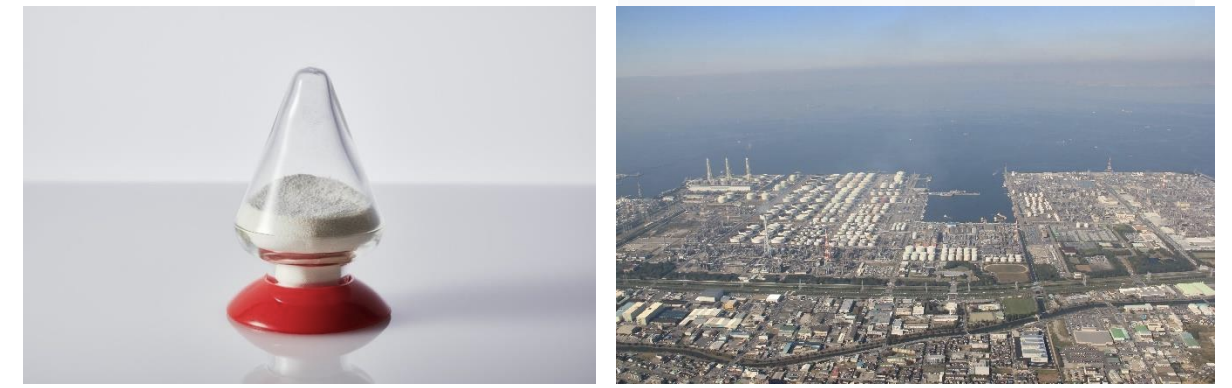
- Idemitsu Kosan’s solid electrolytes are made from sulfur, a byproduct of petroleum product manufacturing. The firm plans to boost production capacity for lithium sulfide that’s used as a raw material for solid electrolytes.
- CONTEXT: The firm plans to cooperate with manufacturers such as Toyota Motor. Last year, the two began mass production of all-solid-state batteries for EVs.
JICA inks loan with Ecuador to support renewables development
(Organization statement, Oct 25)
- The Japan International Cooperation Agency (JICA) inked a loan with the Empresa Pública Estratégia Corporación Eléctrica del Ecuador to develop a geothermal power project in north Ecuador, (generation capacity of around 50 MW).
- The agreement supports Phase 1, preparing secondary infrastructure for the project site. The total cost of Phase 1 is more than ¥7.8 billion, and the maximum loan amount is ¥6.582 billion. Phase 1 is scheduled for completion in August 2029. Phase 2 will involve building the power project itself.
- CONTEXT: In October 2023, Ecuador faced electricity rationing. In 2022 domestic electricity production fell short of demand due to long-term droughts and ongoing construction issues at a hydropower plant. The country seeks to diversify power sources to reduce dependence on hydropower, which fails during times of drought.
Kyoto Univ-affiliated Rhinoflux raises ¥200 mln to develop biomass tech
(Company statement, Oct 30)
- Rhinoflux, a Kyoto University startup, has raised ¥200 million to commercialize tech that generates electricity while capturing CO2.
- Rhinoflux’s tech uses wet chemical looping to recover large amounts of electrical energy and high-purity CO2 from poor-quality carbon resources.
- The firm plans a prototype by late 2024. Commercialization is expected in 2028.
- The tech’s main advantages are:
- wet biomass can be used as a raw material for power generation;
- allows for power generation at less than half the cost of existing biomass;
- CO2 can be concentrated for CCUS without purification.
- CONTEXT: Compared to other resources such as coal and natural gas, biomass has a low calorific value and is expensive to use as energy.
- SIDE DEVELOPMENT:
Waseda Univ researchers develop high efficiency and durable aqua battery
(Organization statement, Oct 29)- A group of researchers from Waseda University, one of Japan’s most prominent universities, discovered a highly durable anode reaction that causes very little degradation; this enabled them to create a highly efficient and long-lasting aqua battery with improved durability.
- Since the electrode material contains molybdenum, a rare metal, the group will search for materials with similar structures, aiming to develop cheaper and more durable electrode material.
Looop launches trial sales of portable power supply system
(Company statement, Nov 1)
- Looop, a new electric power player, began test sales of a portable home power supply system that charges and discharges in accordance with the market price of electricity.
- The DELTA2, a 1 kWh power supply unit, was developed by China-based firm EcoFlow, and is equipped with control software from Yanekara, a Chiba Pref-based startup that develops charging and discharging systems.
- The system connects to home appliances and is operated remotely. One unit could reduce a household’s annual electricity bill by several thousand yen.
Japan and Uzbekistan hold talks on promoting GX and DX projects
(Government statement, Oct 31)
- On Oct 31, METI Minister Muto held talks with the Minister of Investment, Industry and Trade of Uzbekistan on cooperation in the economic and energy sectors, including GX and DX.
- Both agreed to promote cooperation on renewable energy projects, including the use of the Joint Crediting Mechanism.
NEWS: ELECTRICITY MARKETS

Tohoku Electric restarts Onagawa NPP Unit 2
(Company statements, Oct 29-30)
- On Oct 29, Tohoku Electric restarted Onagawa NPP Unit 2. The company switched the reactor’s operation status from fuel loading to ”startup”.
- Tohoku Electric plans to proceed with inspections, tests, and other preparations. Electricity generation into the grid is planned for early November.
- Onagawa NPP Unit 2 reached criticality on Oct 30, at 00:12.
TAKEAWAY: This is the first NPP to restart in East Japan since the 2011 Fukushima disaster. With the NPP back online, east Japan power supply margins and stability should improve, which is especially important ahead of this winter’s peak demand period. The restart also represents a significant investment in safety and public trust; it follows major upgrades to mitigate risks from tsunamis and seismic events. Tohoku Electric anticipates large economic benefits from reduced fuel costs. Still, the resumed operation reignites the question about spent nuclear fuel storage. Local communities continue to express skepticism.
Share of nuclear power in national energy mix faces doubts as LDP battered in Diet election
(Nikkei, Oct 29)
- Achieving the goal of nuclear power accounting for 20% of the energy mix remains a challenge. Japan’s number of operational reactors must double from the current level.
- The govt continues to support nuclear reactivation. METI hopes the Onagawa Unit 2 restart will encourage further restarts.
- Despite this progress, there are hurdles, including strict regulatory requirements following the 2011 Fukushima disaster. Some reactors, like Tsuruga Unit 2, have faced disqualification due to the presence of active faults beneath them.
- CONTEXT: The proportion of nuclear energy in Japan’s energy mix has fallen about 30% in 2011 to about only 5.5% today.
- The opposition, particularly the Constitutional Democratic Party (CDP), gained seats in this weekend’s elections, revealing a growing resistance to nuclear power in regions like Niigata where there is local opposition to the reactivation of the Kashiwazaki-Kariwa NPP.
TAKEAWAY: National power demand is expected to rise in coming years due to the proliferation of data centers and semiconductor factories. The Liberal Democratic Party promotes nuclear energy, but the CDP emphasizes a non-nuclear future. If nuclear energy is to have a future in Japan it will need bipartisan support and compromise. For more information on the Diet election results, check out the Analysis section in this week’s issue.
OCCTO proposes changes to power supply measures ahead of winter to avoid shortages
(OCCTO statement, Oct 23)
- OCCTO proposed preliminary changes to power supply measures for this winter’s tight supply-demand situation, including ordering additional power activation, calculating a cross-regional reserve margin, and better utilization of surplus pumped storage facilities.
- The cross-regional reserve margin, which is the criteria for activation, will be raised from the current 5% to 8% in the case of switching to pumped storage power and starting additional surplus capacity; and lowered from 8% to 5% in the case of increasing the output of thermal power. As a result, the activation priority will be changed.
- In calculating the cross-regional reserve margin, the supply capacity will include the day-ahead balancing capacity and the anticipated use of surplus capacity in the Electric Power Reserve Exchange (EPRX).
- Regarding utilization of surplus pumped storage power in case of a lack of balancing capacity, the measures that can be introduced quickly, such as negotiating contracts with the TSO, will be discussed in tandem with the EGC.
- CONTEXT: OCCTO manages and oversees issues related to supply-demand based on the status of the cross-regional reserve margin. As far as additional supply capacity measures, the activation order of power sources is reviewed, taking into account economic costs and the burden on power producers and TSOs.
- SIDE DEVELOPMENT:
OCCTO reports on electricity supply-demand verification in FY2024
(OCCTO statement, Oct 23)- OCCTO reported on the results of electricity supply-demand for summer and the outlook for winter.
- The actual maximum demand for this summer was 160.95 GW, the fourth highest in the last five years. The reserve margin on the day of maximum demand was 12.6%; the lowest reserve margin was 11.8%, ensuring a stable supply in each area.
- By area, the maximum power demand due to extreme heat exceeded expectations in the Hokuriku and Kyushu areas in August. In addition, the maximum power demand due to extreme heat exceeded expectations in seven areas in September.
- CONTEXT: Twice a year, in spring and autumn, OCCTO prepares a “Report on Verification of Electricity Supply and Demand”. The spring report summarizes the results of the winter period and the outlook for the summer; while the autumn report summarizes the results of the summer and the outlook for winter.
September spot market saw tighter supply-demand, 7% drop in electricity offers
(Denki Shimbun, Oct 29)
- For September, JEPX reported a 7% month-on-month drop in daily average electricity offers at 1.157 TWh, with bids also down by 5.8% to 999.5 TWh per day.
- Unseasonably high late-summer temperatures and reduced power sources led to tight supply and demand in mid-September, with frequent days where bids exceeded offers, requiring increased supply through inter-area transfers and maintenance adjustments.
- Total monthly offers fell 10% from the previous month to 34.7 TWh, and total bids decreased 8.9% to 29.9 TWh.
- By time of day, average hourly offers and bids fell most during nighttime hours, with nighttime offers down 8% and bids down 6.9% compared to August.
- SIDE DEVELOPMENT:
Sept hour-ahead market results: contracted volume up 13%
(Denki Shimbun, Oct 31)- In the JEPX hour-ahead market, September’s average daily contracted volume increased by 13.3% over August, reaching 24.67 GWh — the first time in three months it surpassed the previous month’s results.
- With record-breaking heat persisting, contracted volumes remained high. For Sept 18-20, daily volumes exceeded 30 GWh, indicating a trend of using the hour-ahead market to compensate for shortfalls in the spot market. Toward the end of Sept, prices surged to as high as ¥100.
- The proportion of contracted volume in the hour-ahead market relative to total electricity demand across the nine areas increased by 0.2 points from the previous month to 1%. Daily average number of contracts rose by 1.2% to 8,701. Monthly contracted volume climbed by 9.7% to 740.97 GWh, while the number of contracts decreased by 2.1% to 261,041.
- The average contracted price for Sept dropped ¥0.01 to ¥14.58, which is ¥0.62 higher than the system price in the spot market.
- The highest price was ¥100.11, recorded on Sept 23 between 5:00 and 6:00 PM. Overall, September saw elevated prices with frequent high-value contracts.
Hitachi sees net profit rise 40% due to power grid upgrades amid AI boom
(Nikkei, Oct 31)
- Hitachi Energy had a consolidated net profit of ¥292 billion for the April-September period, up 40% YoY, driven by strong demand for power grid equipment stemming from the AI investment boom. It was Hitachi’s highest net profit in three years.
- The current spike in demand for power distribution is expected to continue for 10 to 20 years, and the company aims for $30 billion in sales by 2030, about double the forecast for FY2024.
- Through 2029, Hitachi plans to invest $6 billion in overseas power distribution manufacturing and development facilities, such as in North Europe and India.
- CONTEXT: The spike in demand for power distribution networks is a global phenomenon, driven by the rapid proliferation of AI data centers. The IEA estimates that global electricity demand, in large part driven by AI and data centers expansion, could reach 1,050 TWh in 2026, more than double than in 2022.
J-Power to sell stake in Tenaska Frontier natural gas power plant
(Nikkei, Nov 1)
- J-Power will sell its 31% stake in the Tenaska Frontier natural gas-fired power plant in Texas to Atlas Holdings.
- Tenaska Frontier, (830 MW generation capacity), supplies power to local markets.
- J-Power owns stakes in 11 thermal power plants in the U.S., and it’s selling off assets with lower operational efficiency. In June, J-Power decided to sell its stake in another gas-fired plant in Oklahoma.
Chugoku Electric’s Shimane NPP Unit 2 begins loading fuel
(Company statement, Oct 28)
- On Oct 28, fuel loading operations began at Shimane NPP Unit 2.
- The process will take one week to complete; 560 fuel assemblies will be moved from the fuel pool into the reactor.
- Chugoku Electric will inspect and test the equipment.
- CONTEXT: After further NRA inspection, the utility expects commercial operations to begin in January. The NPP runs on a BWR, making it the second BWR to restart after Onagawa NPP resumed on Oct 29.
TAKEAWAY: With the restart, likely in December, nuclear power will account for about 15% of Chugoku Electric’s energy mix in FY2025. The restart could improve annual profits by ¥40 billion.
- SIDE DEVELOPMENT:
Kyushu Electric unveils new emergency response facility at Genkai NPP
(Nikkei, Oct 29)- Kyushu Electric unveiled a new emergency facility at the Genkai NPP in Saga Pref, to serve as a response hub in the event of a major accident.
- It includes a command center equipped with communication lines to connect with national and corporate headquarters. The facility has emergency power supplies, food, etc., enabling it to operate for over a week.
KEPCO releases summary of investigation on Mihama NPP seawater system
(Company statement, Oct 29)
- CONTEXT: On Oct 5, KEPCO operators noticed salt deposits on the return header in the seawater system of the primary cooler of Mihama NPP Unit 3. There were small holes with thinning, prompting an investigation. As a result, the unit shut down on Oct 15. There was no radioactive impact on the environment.
- KEPCO’s investigation showed detachment of the coating material near tiny holes in the pipe. The “lining,” a resin coating applied to prevent corrosion from seawater, has detached in sections of the T-joint. Irregular corrosion patterns were observed on the carbon steel surface beneath the detachment.
Former TEPCO President and Chairman Katsumata Tsunehisa passes away at 84
(Nikkei, Oct 31)
- On Oct 21, former TEPCO President and Chairman Katsumata Tsunehisa passed away at the age of 84.
- He led TEPCO at the time of the Fukushima disaster in 2011, and managed the aftermath. He faced both criminal and civil lawsuits over his role in the 2011 disaster, with TEPCO shareholders filing for damages.
- Katsumata became TEPCO president in 2002, after the revelation of a cover-up of issues at the plant.
- CONTEXT: In a Tokyo District Court ruling, Katsumata and three other former executives were ordered to pay over ¥13 trillion. The decision is now under appeal. He was also charged with professional negligence. He was acquitted in both lower courts; an appeal is currently in the Supreme Court.
- SIDE DEVELOPMENT:
Fukushima NPP debris removal resumes after one-month pause
(Asahi Shimbun, Oct 28)- After a month-long halt due to malfunctioning cameras, TEPCO resumed trial removal of melted nuclear fuel debris from Fukushima Daiichi’s Unit 2.
- The utility has since replaced the cameras, though the exact cause of the problem remains unclear.
- TEPCO aims to extract about three grams of fuel debris from Unit 2 for analysis.
- CONTEXT: The operation was set to start in 2021 but was delayed, and only began on Sept 10 this year.
TAKEAWAY: Fuel debris removal is one of the most critical parts of Fukushima’s decommissioning. TEPCO needs to proceed carefully and plan with great detail. Any change in debris removal needs NRA approval, which only further prolongs the already late removal.
Vena Energy to build wind farm near Kashiwazaki-Kariwa NPP
(Company statement, Oct 25)
- Vena Energy released an environmental assessment for an onshore wind farm (69 MW capacity) in Kashiwazaki City, Niigata Pref .
- Construction starts in May 2026; commercial operation is scheduled for May 2028.
- CONTEXT: Kashiwazaki City is better known for the Kashiwazaki-Kariwa nuclear power plant that’s been shut since 2011 but which might soon restart if it can overcome opposition from some local residents.
TAKEAWAY: With a push from the Kashiwazaki mayor, the region is seeking to diversify energy sources by introducing wind power generation. There are a number of renewables projects planned in the area, which, if built, could partially replace the idle capacity at the NPP and alleviate some of the power supply deficits.
NEWS: OIL, GAS & MINING

Mitsubishi Corp seeks to boost LNG production capacity through 2030
(Reuters, Nov 1)
- Mitsubishi Corp forecasts that its LNG production capacity will increase by 5 Mtpa, reaching a total of about 17 Mtpa by the early 2030s.
- Mitsubishi has invested in a dozen LNG projects in various countries, such as new production in Canada and existing projects in Brunei, Malaysia, Australia, Oman, Russia, Indonesia, and the U.S.
- Mitsubishi currently has pro-rata ownership over 12 Mtpa, which is likely to reach 14 Mtpa in 2025 as the LNG Canada project comes online.
- Mitsubishi reported a 33% rise in net profit for the first half of the fiscal year, partly due to LNG sales and divestment from two Australian coal mines.
- CONTEXT: Japan is seeing a decline in domestic gas consumption due to increased nuclear and renewable energy use. Still, the country remains a major LNG importer, with Japanese firms trading surplus LNG on the global market.
TAKEAWAY: Japan has a strategy to manage any excess in LNG supply by investing in Asian gas markets. It is shifting from domestic reliance towards establishing a regional LNG trading hub for energy security. Thus, Japan is securing long-term LNG contracts without resale restrictions.
JERA acquires 15.1% stake in Australia’s Scarborough gas field
(Company statement, Oct 31)
- JERA completed a $1.4 billion acquisition of a 15.1% stake in Woodside Energy’s Scarborough gas field in Western Australia; thus securing about 1.2 Mtpa of LNG from the project. This deal was announced in February 2024 and now finalized after Australian regulatory approval.
- JERA’s share of natural gas will be transported via a 430-km subsea pipeline to Woodside’s Pluto facilities. JERA and Woodside also signed a long-term LNG supply agreement, delivering 0.4 Mtpa to Japan starting April 2026.
- The project received financing from JOGMEC. The acquisition could pave the way for future collaborations in low-carbon fuels and carbon capture.
- CONTEXT: This adds to JERA’s established LNG projects in Australia, which supplies over 10 Mtpa of JERA’s 35 Mtpa total LNG needs.
MOL hopes to alter contracts for LNG carriers and ice-breaking tanker in Russian use
(Company statement, Oct 31)
- MOL plans to alter contracts regulating its business with Russia, due to U.S. and European sanctions. But the issue is still under negotiations with relevant parties.
- At stake are three LNG carriers and one ice-breaking tanker. If negotiations fail, MOL will sell the vessels, but this might cause the company a significant loss.
- CONTEXT: Last year, Arctic LNG-2 was hit for U.S. sanctions that aim to limit Russia’s export revenue from natural gas.
LNG stocks down 5.5% from last week and YoY
(Government data, Oct 30)
- As of Oct 27, the LNG stocks of 10 power utilities were 2.07 million tons, down 5.5% from the previous week (2.17 million tons). This is 5.5% down from late October 2023 (2.19 million tons); and 2.5% up from the 5-year average of 2.02 million tons.
- CONTEXT: The warm weather trend of recent weeks is expected to continue into November, according to JMA’s seasonal forecast.
September Oil/Gas/Coal trade statistics
(Government data, Oct 30)
|
Imports |
Volume |
YoY |
Value (Yen) |
YoY |
|
Crude oil |
10.7 million kiloliters |
-5.0% |
802.6 billion |
-10.5% |
|
LNG |
5.4 million tons |
-1.7% |
490.1 billion |
1.1% |
|
Thermal coal |
10.7 million tons |
10.3% |
234.2 billion |
6.5% |
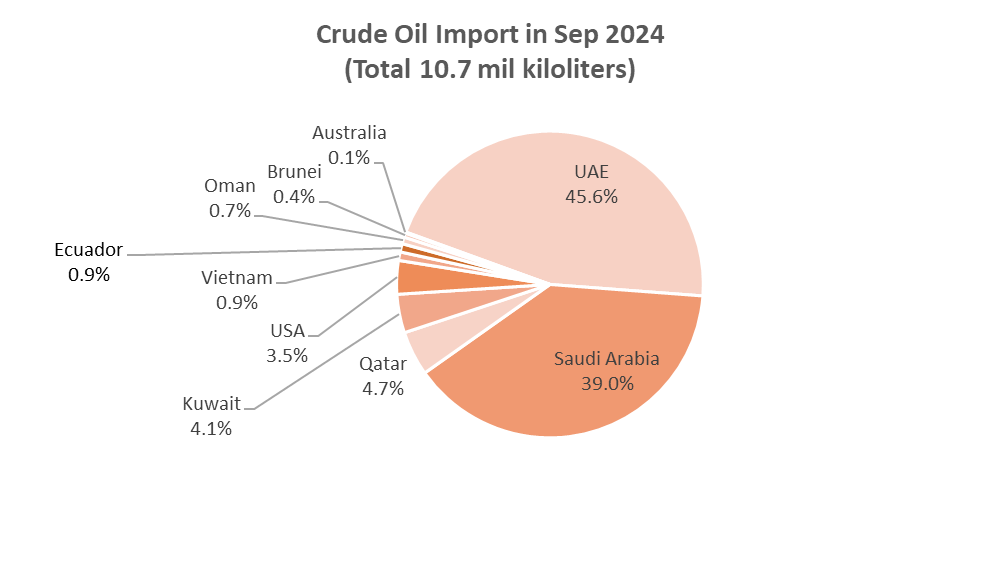
- In September, Japan imported 10.7 million kiloliters of crude oil, a 6.9% drop over August, and down 5% YoY. Nearly 95% of Japan’s crude oil imports came from the Middle East. With the warm weather persisting, crude oil demand for heating won’t jump any time soon, except in northern regions like Hokkaido and Tohoku.
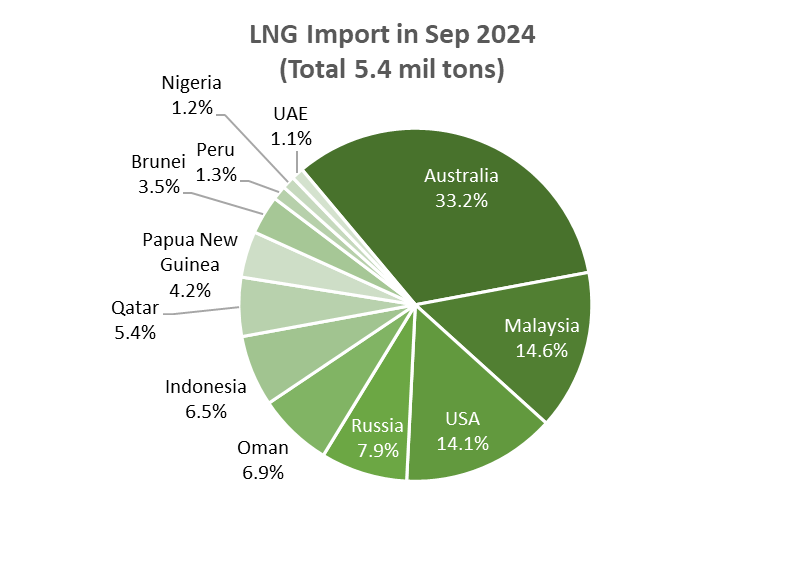
- October’s LNG imports totaled 5.4 million tons, down 5.2% from September (5.7 million tons). For the past three months (July to Sept), LNG imports were almost flat. However, imports from the U.S. doubled (383.3 kilo tons to 764.8 kilo tons), and those from Indonesia increased by 50.4% (235.2 kilo tons to 353.9 kilo tons); this covered the 20% drop from Australia (2.3 million tons to 1.8 million tons).
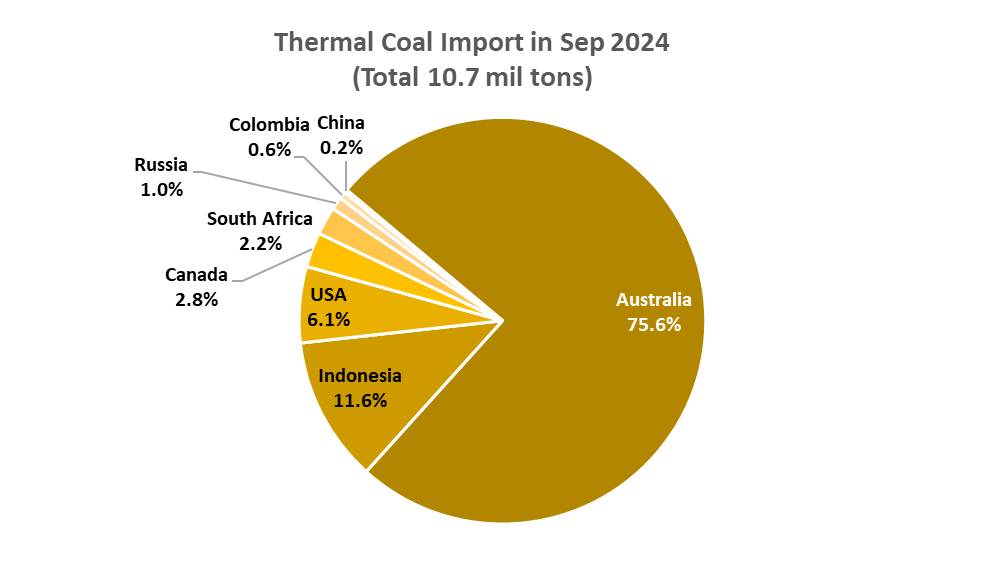
- September’s thermal coal imports rose to 10.7 million tons, which was 15.7% higher than the previous month, and the highest in 2024. The biggest chunk, accounting for over 75% of the total, came from Australia. For the first time in 2024, China was an exporter to Japan, but its share was negligible.
ANALYSIS
BY MAGDALENA OSUMI
What’s Next for Japan’s Energy Sector After the Diet Election?
The stability that has underpinned Japanese energy policy for decades is now facing doubts. Since losing its Diet majority last week, the ruling LDP has lost some control over the implementation of its energy agenda, leaving it reliant on minority parties.
State-led initiatives and programs that rely heavily on state funding and rule-making will face additional scrutiny and consensus-building, leading to potential delays. It also puts the government in a weak position to dictate the next Basic Energy Plan.
In a blow to the new Cabinet, the ruling Liberal Democratic Party-Komeito coalition lost its Lower House majority in the Oct 27 election, the first time since 2009 and a rare occurrence in the past half century. The results show widespread dissatisfaction among voters over energy and food price inflation and a recent slush fund scandal.
As Prime Minister Ishiba seeks to pick up the pieces, his government will need to take greater heed of proposals from opposition parties and rely on ad hoc support from lawmakers across the political divide. In such an environment, populist energy policies and uncertainty over longer-term programs look inevitable. How PM Ishiba proceeds, and how long he lasts in power, will cloud policy-making.
Results and the fallout
Despite choosing a leader seen as widely popular and even uncharacteristic for the LDP, the ruling party fared even worse than some polls had warned prior to the election.
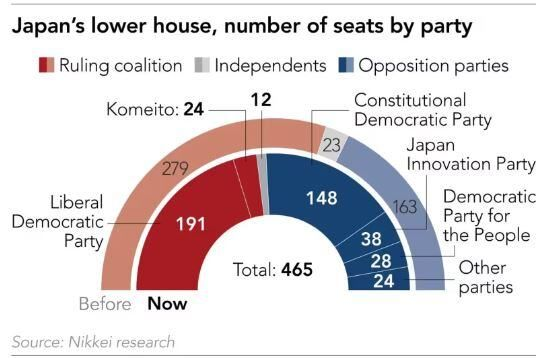
The LDP and its junior ally, the Komeito, not only failed to retain their 259 seats, but fell short of a stated target of at least 233 to preserve their Diet majority. In the end, the two parties won a total of 215 seats. Of these, the LDP took 191. Meanwhile, the gains were spread among several minority parties, but in a surprising turn of events the biggest winner was the main opposition, the center-left Constitutional Democratic Party.
Source: Nikkei Research
PM Ishiba has said the LDP-Komeito coalition seeks to stay in power. To do so, the coalition needs to form an alliance with a party whose main strategies, including energy and digital transformation policies, align.
But despite sharing goals, neither the LDP nor the opposition parties are eager to fully coalesce. Both the Democratic Party for the People and the Japan Innovation Party (JIP) ruled out the possibility of joining a full-fledged coalition led by the LDP.
The only possible scenario in which the LDP could form an alliance, which would help the LDP form a minority government, entails cooperation on a policy-by-policy basis, and Ishiba is expected to ask the DPP for such support. Appealing to the intransigent JIP is also an option.
Nuclear power as a key policy
The future of nuclear power was one of the few energy issues clearly articulated by politicians before the Oct 27 election. The LDP-Komeito coalition pledged support to reactivate Japan’s offline nuclear power plants amid expectations of a rapid growth in electricity consumption with the expansion of data centers. The coalition has backed the use of nuclear energy since its return to power in 2012.
In contrast to the LDP stance of being pro-nuclear, Ishiba made several comments before winning election as party leader in September that suggested he would look to phase out that controversial energy source and focus instead on renewables. He then walked this back soon after after taking over as PM, but a week later he again spoke of a real possibility for Japan to evolve without utilizing the atom for electricity.
Ishiba has also pledged to improve Japan’s energy self-sufficiency and curb emissions. The to-and-fro of his stance regarding nuclear could become even more distinct as he now looks to minority parties for support. Volatility in the government’s outlook on the sector may be reflected in the upcoming revision to the Basic Energy Plan, which is expected to outline the nation’s energy mix target for 2040.
The updated Plan is slated to be finalized and disclosed by the end of March 2025.
Japan’s current 2030 power mix target has nuclear energy accounting for 20% of the total; today’s actual share hovers around 8%. Meanwhile, the 2030 mix expects the use of renewables to significantly increase to 36-38% of power supply.
So, what will the LDP’s potential allies dictate?
On nuclear, the main potential collaborators, the DPP and JIP, have been positive about restarting existing nuclear stations, and also support development of new next-generation reactors.
Last week, Tohoku Electric’s No. 2 reactor at the Onagawa NPP became the first nuclear restart in eastern Japan since the nation’s nuclear fleet was shuttered in the aftermath of the March 2011 Fukushima nuclear disaster. That takes the total units restarted to 13 reactors, about a third of those deemed operable.
Building on this momentum and beginning the hard task of replacing old nuclear units with new ones, as per the policy adopted by the LDP-led government in 2023, won’t be easy. Before the October election, the JIP was discussed as a potential ally, and its desire to further Japan’s digital reforms aligned with support for decarbonized power sources including nuclear.
However, since the election, the JIP has been reluctant to join a LDP-Komeito coalition. This could be an issue since the main opposition party, the CDP, is vocally anti-nuclear and has agitated in regions like Niigata to grow local opposition to reactivating Kashiwazaki-Kariwa NPP. The CDP has categorically ruled out any potential cooperation with the LDP.
Ishiba’s uncertain fate
Ishiba, who unexpectedly won the LDP leadership race in September, said he intends to retain his position but many around the central government bureaucracy are skeptical of his prospects beyond the immediate future. Japan’s shortest PM term was recorded in 1945, when Prince Naruhiko served just 54 days. Ishiba was inaugurated as PM on Oct 1, 2024.
The decision whether Ishiba can keep the top spot depends on a vote at a special Diet session to be convened as early as Nov 11. Both the lower and upper houses will choose the next PM. Ishiba might ask the DPP’s Tamaki to help with his reelection, fearing turncoats within his own party ranks who want him to resign to take responsibility for the dismal election.
For now, the biggest gains are with the CDP, which won 148 seats, up from 98. The party’s leader, Noda Yoshihiko, is a former PM himself (2011-2012) and said he is open to forming a government with like-minded parties.
“If there is a political party that believes the LDP-Komeito government can’t continue to exist, we’d certainly like to work with them,” he said.
If successful, Noda could emerge as a new minority government leader.
A change in Japan’s decarbonization goals?
Whatever the political changes, the overall direction of Japan’s energy goals and decarbonization strategy are unlikely to shift. Also, the 2050 net-zero commitment is baked into law and widely supported across the political spectrum.
What could change are the approach and the timing. Stronger presence of the opposition parties in the lower house, which is more powerful than the upper house, will likely spark heated debates on energy security, the future of nuclear power, and the role of renewables versus other decarbonization pathways, such as synthetic fuels, hydrogen, etc.
The LDP designs policy at party level in coordination with big industry and brings relevant ministries broadly in line with its thinking. However, that measure of control looks set to dissipate. Instead, an LDP administration will have to review suggestions such as, for example, DPP’s calls for deeper gasoline subsidies or JIP’s call for a more serious carbon tax and carbon emissions trading system, as well as the use of more international, market-based benchmarks in decarbonization funding.
In one scenario, the LDP could become entirely beholden to minority party requests. Its current coalition partner, Komeito, failed to have its new leader win a seat in the recent election as the party linked to the hugely influential Buddhist group Soka Gakkai bore the brunt of conservatives’ dissatisfaction with the slush fund scandal. If the current Komeito leader resigns and his successor decides to start from a clean slate, the party may walk away from its LDP alliance.
In a time of compromises and horse-trading, the next Japanese government will tread cautiously on big-spending programs, while certain niche proposals could suddenly become mainstream. Such volatility is rarely welcome, but it will be the price for staying in power.
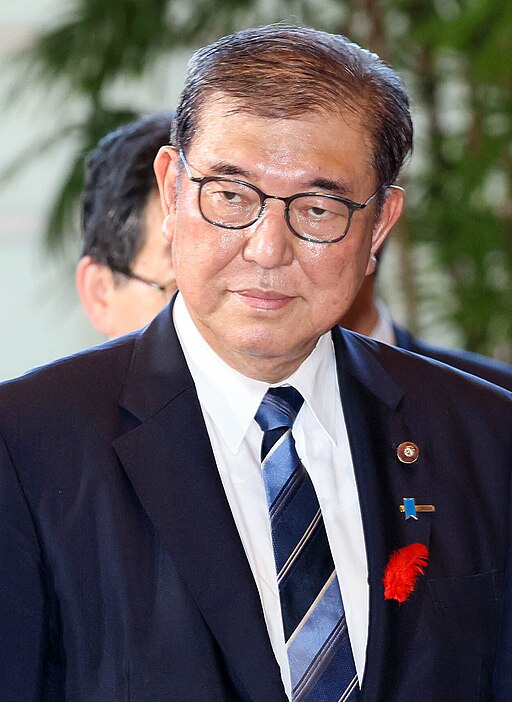 PM Ishiba Shigeru | Source: Cabinet Public Relations Office via Wikimedia Commons |
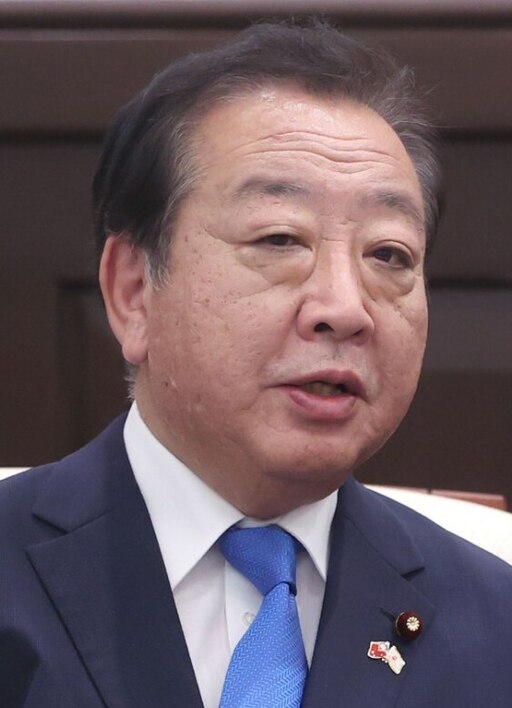 Noda Yoshihiko, head of the main opposition party CDP | via Wikimedia commons |
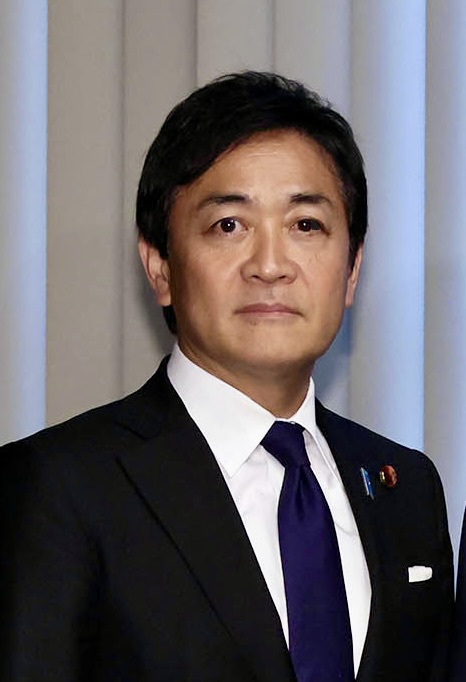 Tamaki Yuichiro, head of DPP | Photo by Cabinet Public Relations Office via Wikimedia Commons |
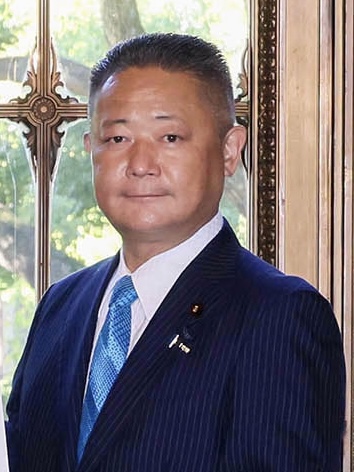 Baba Nobuyuki, head of the JIP | Source: Cabinet Public Affairs Office via Wikimedia Commons |
ANALYSIS
BY ANDREW STATTER
Energy Jobs in Japan: Why is Hiring Statistically Harder Here
Japan has long been known as a tough talent market. Challenges such as an aging population, long-term employment with large corporations, and a tendency toward privacy are all frequently cited as challenges, not to mention the language barrier.
Companies, both international and domestic, often complain about a low volume of qualified applicants for their job postings, and thus become frustrated with slow hiring. In addition, they often receive profiles from senior generations and face some of the highest agency recruitment fees globally.
Just how bad is the situation? Is it trending for better or worse? Let’s dig deeper into this topic and finish with a few tips for companies looking to attract and hire talent in Japan.
Language barrier drastically shrinks the relevant market
Guess who has a far easier time finding talent? Japanese companies! When dealing with local partners or developing projects in the domestic market, the language barrier is clearly not an issue. Yet, Japanese companies still face challenges in having a smaller market than in other countries. Their market grows significantly when the need for bilingual talent is off the table.
Of the 44 countries using TOEIC scores, Japan ranks 34th, with the average score among test takers at 561, compared to a benchmark of 800 needed to be considered business proficient. In a 2021 survey by Indeed, 6.6% of respondents claimed to speak English fluently or business level. This figure doubles for those comfortable speaking at a casual level.
Even if we chalk up these figures to the famous Japanese modesty, it’s safe to say that only 10% of the total working population meet the requirements of ‘business bilingual’, which is in stark contrast to most of Europe, the U.S. and Singapore.
Japan is getting older
The Japanese population is getting older, and it has been decades since the birth rate was high enough to keep up. The working age population decreased by over 16% in the last 30 years, from a peak of 87 million right after the bubble burst in the early 1990s to about 70 million today.
Compounding the depopulation challenge is the long tenures that Japanese tend to have in their companies, especially their first company. About 55% of Japanese professionals in their 20s have never changed companies, only dropping slightly to 42% for workers in their 30s. In their 40s there is a major shift, with about 80% of workers having had at least one job change.
Let’s jump into the culture behind this. We see two major factors.
- Firstly, Japanese corporate culture still has a strong idea of ‘lifetime employment’. People often expect that they’re choosing a company for life when they take their first job out of university. Once in the company, they’re assigned seniors who will guide, mentor and shape them, and they’ll hold close ties to those who joined the company in the same year. Only 10-15 years later, when some of that group was promoted multiple times and others were left behind, do workers start looking for opportunities elsewhere.
- The second reason is tied to societal expectations. Stability, and working for a strong, well-known (trusted) company are more important than holding a senior position or earning a high salary, especially for young professionals. Thus, many young adults in Japan opt to make major life decisions, such as purchasing their first home, getting married, having children before considering their careers and external opportunities.
Where are the women?
Gender is not the major problem in Japan as in neighboring China. Japanese females outnumber males at 52%. This is not the case in all areas of the workforce, and especially when it comes to the energy industry.
According to a survey of Aoyama Gakuin University, Sophia University, Chuo University, Shibaura Institute of Technology and more, only 16% of students enrolled in STEM subjects are female.
If we peel back one more layer, we see the issue is much worse. The bulk of females in STEM subjects are studying topics related to healthcare and chemicals where the student body is 20~25% female. Subjects most related to the energy industry are among the lowest female enrolment, led by mechanical and electrical engineering at 8% and 8.5%, respectively. Information engineering and civil engineering fare a bit better around 15%.
We also need to consider the ‘marriage cliff’ in Japan, where many highly qualified, successful women in their 20s and 30s change careers following marriage and childbearing. Due to systemic challenges in securing childcare, as well as expectations that children should be enrolled in extracurricular activities, it’s a major challenge for working mothers to continue full-time professional activities. As a result, many qualified women either change career tracks, or work part-time in their later 30s and 40s.
I am my company
In my home country of Australia, when I asked someone the standard opening question “What do you do?” they’d answer with “I am an engineer, I am a banker, I am a builder etc.” In Japan, however, the same question is typically answered by “I work for Mizuho, Mitsubishi, a real estate company etc.” The Japanese culture and mindset connects and prioritizes belonging to a company more than identifying with a profession.
In another Indeed survey, 15.4% of Japanese respondents said they’d consider a job change even though they were satisfied with their current company and role. Contrast this to the opportunism in the UK and U.S. where the figures were 32.8% and 29.8%, respectively.
When asked about changing companies for personal gain and progression, such as a higher position, a salary increase, etc., the positive responses from Japanese were again about half of their Western counterparts. Their main reason was “when the situation for the future at the company is hopeless,” and even then more than half of respondents said they’d stay until they were let go.
So, the stories are real. What can we do about it?
Yes, Japan is an outlier when it comes to the talent market. Despite improvements in language education, as well as state programs to get more women involved in technology and into leadership positions, change is not keeping up with demand.
This is exacerbated in the energy sector by the increasing complexity as our systems transition to renewable-based, distributed and managed digital technologies. Aware of this reality, hiring companies should consider the following to successfully recruit:
- Respect your elders. Japanese love to work and take pride in it. Hiring five to ten years older than you might elsewhere is a way to expand your talent pool.
- Offer flexibility. Hybrid working systems, flexible work schedules and benefits such as extra childcare leave will help you tap into the pool of qualified, experienced female talent.
- Focus on quality rather than quantity. Forget about getting 50 to 100 applicants to your job advert, or even 10 CVs from your recruitment partner. A pool of three to five candidates for most mid-senior positions who are strong enough to interview will suffice.
- Be decisive. Recognize that the demand for talent is high, especially for those who are visible on LinkedIn or job sites. Once you have that candidate engaged and they meet your criteria, don’t play games waiting and comparing to others – get them onboard!
- Sell the future. The statistics show that there are less young professionals on the move in Japan, but it is not zero. Young talent can be attracted and will move for the right opportunity, and that right opportunity must include a level of stability for the future.
Andrew Statter is a Partner at Titan GreenTech, an executive recruitment agency focused on the clean energy space.
ASIA ENERGY REVIEW
BY JOHN VAROLI
This weekly column focuses on energy events in Asia and the Pacific
Australia / Renewable energy
Research group Cornwall Insight forecasts that the National Electricity Market (NEM) will add 150 GW of solar PV, wind and energy storage capacity by 2043. Total installed capacity for those clean energy technologies is expected to rise from 52 GW in 2025 to 208 GW by 2043, a 300% increase.
China / Electricity
The government reported that in the first three quarters of 2024 total national electricity consumption was 7.41 trillion kWh, up 7.9%; but GDP grew 4.8% over the same period. Cloud computing, AI, and EVs have driven the growth rate of electricity consumption to be higher than the GDP growth rate.
China / Renewable energy
Three Gorges Renewables Group plans to build a massive power base that mixes wind, solar, coal and batteries in the Taklamakan Desert, investing as much as 71.8 billion yuan ($10 billion), and which will include 8.5 GW of solar panels, 4 GW of wind turbines, six 660-MW coal power generators and 5 GWh-hours of battery storage.
China / Oil refining
In mid-2025, PetroChina is set to shut the Dalian Petrochemical plant, which has a total capacity of 410,000 bpd. It is the largest domestic oil refinery, and the first major closure at a state-run plant.
India / Renewable energy
Adani Enterprises reported a more than seven-fold surge in Q2 profit, on higher demand in its renewable energy division. Adani Group’s flagship firm posted a net profit of 17.42 billion rupees ($207 million) for Q2, up from 2.28 billion rupees a year earlier.
Malaysia / Renewable energy
Sarawak state aims to become a renewable-energy leader and wants its skilled workforce to return home. Starting 2026, the state government will offer to make clean energy technology courses, such as hydrogen production and carbon storage, free for locals.
Philippines / Renewable energy
Reuters reported that Singapore’s GIC and Australia’s Macquarie are looking to sell their stake of roughly 30% in Philippine renewable energy firm Energy Development Corp (EDC), a deal that could fetch $2 billion.
South Korea / Offshore wind
The government announced a much-anticipated tender for 2.8 GW of renewable energy, including 1.5 GW of offshore wind capacity. About 1 GW is for bottom-fixed offshore wind, with a further 500 MW allocated to floating wind capacity.
Taiwan / Power demand
The government said power generation will be able to meet demand for semiconductor production and AI. If future nuclear technologies can meet safety prerequisites, then the government is open to discussions. Besides solar and wind energy, the government is also promoting other renewables including geothermal.
Vietnam / Oil refinery
Saudi Aramco wants to invest in Vietnam’s oil refinery sector and petroleum distribution. This was agreed after a meeting between PM Pham Minh Chinh and Saudi Aramco’s CEO Amin Al-Nasser in Riyadh during the PM’s visit to the Middle East.
2024 EVENTS CALENDAR
A selection of domestic and international events we believe will have an impact on Japanese energy
|
November |
|
|
December |
|
|
January 2025 |
|
|
February |
|
Disclaimer
This communication has been prepared for information purposes only, is confidential and may be legally privileged. This is a subscription-only service and is directed at those who have expressly asked K.K. Yuri Group or one of its representatives to be added to the mailing list. This document may not be onwardly circulated or reproduced without prior written consent from Yuri Group, which retains all copyright to the content of this report.
Yuri Group is not registered as an investment advisor in any jurisdiction. Our research and all the content express our opinions, which are generally based on available public information, field studies and own analysis. Content is limited to general comment upon general political, economic and market issues, asset classes and types of investments. The report and all of its content does not constitute a recommendation or solicitation to buy, sell, subscribe for or underwrite any product or physical commodity, or a financial instrument.
The information contained in this report is obtained from sources believed to be reliable and in good faith. No representation or warranty is made that it is accurate or complete. Opinions and views expressed are subject to change without notice, as are prices and availability, which are indicative only. There is no obligation to notify recipients of any changes to this data or to do so in the future. No responsibility is accepted for the use of or reliance on the information provided. In no circumstances will Yuri Group be liable for any indirect or direct loss, or consequential loss or damages arising from the use of, any inability to use, or any inaccuracy in the information.
K.K. Yuri Group: Hulic Ochanomizu Bldg. 3F, 2-3-11, Surugadai, Kanda, Chiyoda-ku, Tokyo, Japan, 101-0062.