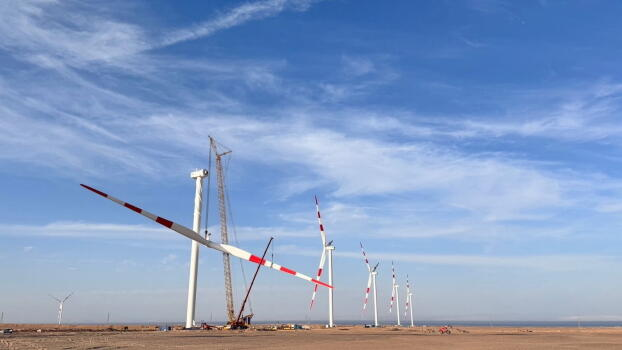
In a milestone for Japan’s nuclear industry, after 13 years of dormancy Tohoku Electric restarted Unit 2 at Onagawa NPP on Oct 29. In addition to bringing more carbon-free capacity online, this is the first restart of a boiling water reactor. It’s hoped that other BWRs will soon follow. The restart of BWR reactors in East Japan lags behind pressurized water reactors (PWRs)in West Japan. The new government seems intent on following former PM Kishida’s target of nuclear power providing 20%-22% of the national power mix by 2030. That means nationwide the number of operating reactors will need to double from the current level.
While many fret over an excess of CO₂ in the atmosphere, parts of Japan’s industry are gripped by anxiety over a looming CO₂ shortage. Industrial-grade CO₂ is essential for applications ranging from dry ice to welding, water treatment, and carbonated beverages. Today’s shortage stems from the shuttering of oil refineries, the backbone of CO₂ production. The consequences are stark and Japan’s imports of CO₂, once negligible, have surged in recent years. Prices, too, are climbing. Suppliers have responded with price hikes of 15-30%, squeezing industries already grappling with inflation and supply chain disruptions.
COP29 REVIEW
This week we again have a brief overview of top news from COP29 in Baku.
EVENTS SCHEDULE
A selection of events to keep an eye on in 2024.
JAPAN NRG WEEKLY
PUBLISHER K. K. Yuri Group
Editorial Team Yuriy Humber (Editor-in-Chief) John Varoli (Senior Editor, Americas) Kyoko Fukuda (Japan) Magdalena Osumi (Japan Filippo Pedretti (Japan) Tim Young (Japan) Tetsuji Tomita (Japan)
METI announced plans to mandate participation in carbon emissions trading for companies emitting over 100,000 tons of CO2 annually, starting in FY2026.
Japan’s carbon emissions trading mechanism might cover up to 400 companies in industries such as steel, electricity, aviation, logistics, and food manufacturing.
The mandate will apply to companies whose average emissions over three years exceed 100,000 tons. The govt will annually allocate emissions quotas to these companies free of charge.
Companies emitting less than their quota can sell the surplus, while those exceeding their limit must purchase additional quotas or face penalties.
To enforce mandatory participation by FY2026, the govt plans to submit legal amendments during the ordinary session of the Diet next year, with actual trading expected to begin in FY2027.
METI published highlights of its 2023 national energy supply and demand review.
Energy demand:
Final energy consumption decreased by 3% YoY, with reductions in city gas use (-4.1%), coal (-4.0%), oil (-2.9%), and electricity (-2.5%);
Industrial sectors saw declines due to sluggish manufacturing activity, while household consumption dropped as more staff returned to the office;
Transportation energy consumption was down slightly (-0.6%).
Energy supply:
Domestic primary energy supply fell 4.1%, with fossil fuels down 7% and non-fossil fuels up 10.6%;
Renewable energy, led by solar, grew for the 11th consecutive year;
Non-fossil fuels reached a 19.2% share, the highest in 25 years, with nuclear energy increasing 51.2%.
Power generation:
Total generation was down 1.6% to 985.4 TWh, the lowest since 2010;
Non-fossil fuel generation exceeded 30% for the first time since the Fukushima disaster, reaching 31.4%;
Renewables (including hydro) accounted for 22.9%;
Nuclear at 8.5%;
Thermal generation (excluding biomass) at 68.6%.
CO2 emissions:
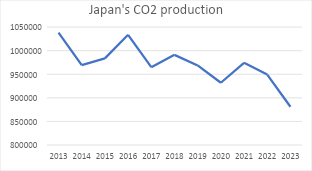
Energy-related CO2 emissions dropped 4.8% YoY to 920 million tons, a 25.9% reduction from 2013 levels, the lowest since 1990;
Power sector CO2 emissions intensity fell by 4.1% to 0.45 kg-CO2/kWh.
Energy self-sufficiency:
Japan’s energy self-sufficiency rate rose to 15.2%, its highest since the Fukushima disaster, driven by increased use of non-fossil energy sources.
TAKEAWAY: Data shows that Japan’s decarbonization is progressing, though clearly much of that progress is due to lower energy consumption. That will change at least in the next few years as more data centers and other IT-related facilities come online. Japan must find a way to continue the same rate of emission reduction without sacrificing supply.
METI plans to keep nuclear power’s share in the nation’s energy mix at about 20% for FY2040, consistent with the 20–22% target for 2030. The govt has clarified plans for rebuilding aging nuclear plants. These measures will be included in the next national energy policy update.
Challenges include streamlining the process of NRA reviews and obtaining consent from local governments and communities.
Companies want stronger govt support to ensure investment viability. This is due to the high costs of nuclear plant construction and renovation.
Also, renewable energy targets are set to expand, with the current goal of 36–38% by 2030 expected to increase by 2040.
CONTEXT: Before the Fukushima accident in March 2011, nuclear accounted for about 30% of Japan’s electricity, but that dropped to 5.5% in FY2022. Currently, 13 reactors across seven NPPs have restarted, but doubling this number is necessary to meet state targets. By year’s end, METI will likely set a target for FY2040.
METI’s Nuclear Subcommittee of the Advisory Committee for Energy that’s tasked with revising the Basic Energy Plan discussed removal of the phrase “reducing reliance on nuclear power as much as possible”, which is in the current plan.
Several members called for this change, such as Prof Saito Takumi (Takushoku University) and Ono Toru of the Keidanren.
Matayoshi Yuka of SMBC Nikko Securities said nuclear power is essential for energy supply and net-zero goals. Chairman Kurosaki Ken (Kyoto University) stressed the need to clarify the role of nuclear power to ensure economic growth.
METI and ANRE seek strict requirements for financing large-scale interregional grid connection projects as a way to mitigate associated risks and speed up development.
Experts recommend to outline cost estimates for potential additional expenses in advance, and to state these in guidelines. This would help secure cost recovery and facilitate project financing.
The proposal came up at a Nov 20 meeting on cost recovery as part of efforts to establish a grid connection between Hokkaido and Honshu.
CONTEXT: Under the existing transmission tariff system, if costs increase after the project is launched, the transmission operator must apply to the Electricity and Gas Market Surveillance Commission (EGC) for tariff adjustments. Approval is required for cost recovery, meaning any unexpected rise in cost is not guaranteed to be covered. Experts pointed out that factors such as changes in market prices or natural disasters may justify reflecting cost increases in transmission tariffs.
TAKEAWAY: The Hokkaido-Honshu subsea transmission project is unprecedented in scale and complexity. Amid concerns over potential delays due to coordination with stakeholders, ensuring a reliable mechanism for recovering increased costs is critical for stable progress.
METI and France’s Atomic Energy and Alternative Energies Commission updated their agreement on fast reactor development, including Japan Atomic Power Co and Électricité de France (EDF).
They also broadened technical focus.
CONTEXT: Such collaboration between Japan and France began in 2014, and originally included Japan Atomic Energy Agency, MHI, Mitsubishi FBR Systems, CEA, and FRAMATOME. It focused on accident countermeasures and developing simulation tools. They also revised the agreement and extended it in 2019.
On Nov, 17, METI and Peru’s Ministry of Energy and Mines signed an MoC on energy transition. It covers:
Energy management tech for renewables, energy efficiency and storage;
Renewable and low-carbon hydrogen and derivatives (ammonia and e-fuels);
Promotion of investment opportunities in clean energy.
CONTEXT: Over half of Peru’s electricity comes from renewables, mostly hydropower, as well as wind, solar, and bioenergy. Key aspects of Peru’s energy strategy include: diversifying the energy mix by expanding renewables use (wind, solar, geothermal power), and legislative support for clean energy transition.
The EGC proposed excluding the impact of additional supply capacity measures from parameters used to calculate the correction imbalance fee.
This fee, designed to rise during tight supply-demand periods, depends on a reserve margin index. But since FY2024, the index has been skewed by including additional supply measures, preventing the fee from reflecting actual market conditions.
Adjusting the calculation to disregard these measures would better align the fee with the true costs of addressing supply-demand imbalances.
CONTEXT: The extent of the hike in the imbalance fee is determined according to the power supply margin of TSOs.
Toyota Industries Corp signed an MoU with the Chubu Hydrogen and Ammonia Social Implementation Promotion Council to build a hydrogen and ammonia supply chain in the Chubu region.
They aim to popularize the development, production, and sale of hydrogen-related products such as fuel cell forklifts and circulation pumps. They’re also considering the use of hydrogen and ammonia in production activities at their factories.
CONTEXT: The Council was established in February 2022 as a forum for local governments and businesses to cooperate in introducing the use of hydrogen in the region. Companies involved include Aisin, Aichi Steel, Idemitsu Kosan, AGC, Suntory Holdings, JERA, and Sumitomo Corp.
TAKEAWAY: Earlier studies by this Council indicates that Chubu could reach hydrogen and ammonia demand of about 1.2 Mt tons per year from 2027 to 2030. Much of that will be thanks to JERA’s burning of ammonia at the Hekinan Thermal Power Plant and hydrogen use at Toyota’s factories in fuel-cell vehicles.
Professor Nishibayashi Hitoaki of Tokyo University has developed a method to synthesize ammonia at room temperature and atmospheric pressure without expensive organic solvents.
The process employs a “mechanochemical reaction” involving reactants such as samarium iodide, molybdenum catalysts, and water, with cellulose as an alternative hydrogen source. This could reduce production costs by up to 99%.
Companies like Idemitsu Kosan are testing Prof Nishibayashi’s tech in demo plants.
CONTEXT: Ammonia is a key ingredient in fertilizers and fuels, and emits no CO2 during combustion, and can serve as a hydrogen carrier.
Kanadevia, (formerly Hitachi Zosen) will invest ¥8 billion to build a factory with an annual production capacity of 1 GW in hydrogen electrolysis stacks.
The factory is planned in Tsuru City, Yamanashi Pref. Operations are due to start by the end of FY2028.
The project was selected under METI’s “GX Supply Chain Support Program” to promote decarbonization technologies.
CONTEXT: 1 GW of stacks would produce 157,000 tons of hydrogen annually, assuming an electrolysis efficiency of 5 kWh/ Nm3.
Kanadevia’s goal is to integrate hydrogen generation systems with its other clean tech products such as biogas systems and seawater desalination.
Osaka Gas and Marubeni Corp signed an MoU to create a framework for evaluating the quality of carbon credits.
Osaka Gas developed an AI system to assess the quality of carbon credit projects. It analyzes compliance, and has shown accuracy in an initial application for biochar based credits.
Marubeni will help commercialize the system, as well as create a platform for global carbon credit trading.
CONTEXT: The global market for carbon credits is expected to reach ¥100 trillion by 2030. Last week, Osaka Gas announced a business alliance with Sylvera, a company that will help develop the AI system for assessing credit quality.
On Oct 30, JX Nippon Oil & Gas Exploration Corp (JX) sponsored Vietnam’s first CCS business workshop to enhance understanding of CCS, and support legal and regulatory development.
JX shared insights from its Petra Nova CCUS project in the U.S., and emphasized the importance of accelerating CCS in Vietnam.
CONTEXT: JX entered Vietnam’s oil and gas sector in 1992 via its subsidiary Japan Vietnam Petroleum Corporation (JVPC). It launched Southeast Asia’s first CO₂-EOR (Enhanced Oil Recovery) project at the Rang Dong oil field in 2011.
Mitsui Sumitomo Insurance will launch a specialized insurance product to support companies entering the CCS sector; it will cover construction and operations risks, as well as physical damage, lost profits due to delays, and CO2 leakage.
This marks the first time a domestic insurer in Japan offers a package covering the various risks tied to CCS projects.
TAKEAWAY: Dedicated insurance programs will likely play a huge role in the CCS industry, covering risks such as CO2 leakage or equipment failures. While they will serve to manage third-party liabilities, the wide scope of insurance will increase the already high costs of CCS.
Nippon Steel Engineering has been commissioned by Mitsubishi Corp, INPEX, and Nippon Steel to design the basic framework for a CCS project. This involves the separation, transportation, and underground storage of CO2.
This initiative is part of JOGMEC’s advanced CCS program that aims to begin CO2 storage by FY2030.
The Nuclear Waste Management Organization of Japan (NUMO) completed a report on the literature review for a final site for high-level radioactive waste. The two sites under consideration are Suttsu Town and Kamoenai Village (both in Hokkaido). By February, NUMO plans to hold explanatory meetings with locals.
CONTEXT: Both Muttsu and Kamoenai are considering referendums. In June, Genkai Town (Saga Pref) became the third site to begin such research.
TAKEAWAY: The first phase of the selection process, the literature review (which does not involve boring), has ended. Still, it’s not guaranteed that the reviews will continue to the second phase. Hokkaido’s governor has reaffirmed the region’s opposition to hosting nuclear waste, saying that an ordinance prohibits its acceptance. The governor’s opposition is the main challenge for NUMO. But it can move onto the next phase of the review regardless.
Mitsui O.S.K. Lines (MOL) and KEPCO signed an MoU to study development of a liquefied hydrogen carrier. This is Japan’s first collaboration between a shipping company and a power generator on marine transport of liquefied hydrogen.
The study will test optimal vessel designs and operations and assess safety measures.
The power sector regulator EGC will allow power generation companies to reduce the supply of surplus power to the spot market in light of state-mandated GHG emission restrictions.
CONTEXT: Major utilities claim that the reduction of operations thermal power plants allows them overall to lower CO2 emissions. However, utilities are obliged to ensure that curtailment of their thermal power plants doesn’t occur during peak demand and other periods when it can affect market prices.
TAKEAWAY: The major utilities (EPCOs) should be selling their surplus power on the spot market at prices based on marginal costs, as per the Electricity Business Act and agreements with the EGC. In reality, the EPCOs sometimes squeeze the supply of ‘surplus’ power, resulting in higher market rates. This month, the EGC filed a business improvement order to JERA on this matter, claiming that the utility withheld surplus electricity from the spot (day-ahead) market between April 2019 and October 2023. This is clearly inciting pushback from the EPCOs, and it seems the EGC is willing to allow some leeway, accepting the rationale that the EPCOs also need to adjust their output based on emissions targets.
In October, JEPX recorded an average daily trading volume of 656.4 GWh, down 12.2% over September and the second consecutive monthly decline. Total monthly trading volume was 20.35 TWh, down 9.3% MoM but up 12.8% YoY.
Spot prices remained firm despite the volume drop, with the highest observed price nearing ¥40/ kWh, driven by record-high temperatures for October and reduced solar power output due to high rainfall across the country.
Average system prices fell compared to Sept, with the 24-hour average at ¥12.68, the daytime average at ¥13.24, and the peak average also at ¥13.24. The highest system price was ¥15.98 on Oct 18, while the lowest was ¥8.25 on Oct 13.
Regional price differences persisted, with Tokyo recording the highest average price of ¥15.33. West Japan’s prices were lower, ranging from ¥10 to ¥11. The highest spot price of ¥39 occurred on Oct 4 in East Japan during an unseasonal heatwave in Tokyo and constrained solar power generation.
Chubu Electric Power Grid secured balancing capacity through discretionary contracts for pumped-storage power generation to address high unmet rates in the weekly balancing market, a move approved as an “innovative solution” by the EGC.
A contract that the grid company made with Chubu Electric Mirai’s pumped-storage units covers 610 MW from July 2024 to March 2025, with costs adjusted to reflect lost market-based profits and alternative procurement costs.
Payments for July-August were lower than market procurement rates, reducing overall balancing costs.
CONTEXT: The grid operator’s solution also highlights balancing market challenges, particularly in Chubu and other regions, where pumped-storage capacity struggled to meet balancing requirements due to stringent technical demands.
Experts suggest systemic adjustments for fair competition and transparency, with some advocating that transmission operators directly manage pumped-storage resources for optimal value.
TAKEAWAY: Pumped storage hydropower plants are Japan’s most important resource to provide balancing reserves. Since April 2024, however, when all five products started trading on the EPRX (the marketplace for supply-demand adjustment contracts), the TSOs have faced a real challenge in accessing pumped hydro capacity. The fact that the grid operator in Chubu has found an acceptable solution is therefore of great interest both to OCCTO and other TSOs. Expect to see other regions trial similar schemes.
Six entities – J-Power, Suzuyo Shoji, Shizuoka Pref, Shizuoka City, Chubu Electric Power Grid and Suzuyo Electric Power – agreed to establish and operate a regional microgrid in Shizuoka City.
Goals include maximizing the use of solar power and integrating energy storage and distributed generation, and providing a robust backup power source while reducing dependency on a centralized grid.
The Hinode Regional Microgrid (Shizuoka City) will incorporate solar power generation systems, large-scale battery storage and energy management systems.
The microgrids will supply solar-generated electricity to local consumers under PPAs, with battery systems optimizing energy distribution under normal circumstances. During prolonged outages the microgrids will disconnect from the main grid to maintain local power supply.
TAKEAWAY: Shizuoka’s energy strategies are largely influenced by its geography and susceptibility to natural disasters. These challenges have led to efforts to decentralize energy systems and strengthen grid resilience, such as the Hinode District Microgrid aimed at creating self-reliant power systems that can operate independently during emergencies. While the Chubu region benefits from interregional power transmission lines, allowing electricity to flow between regions to balance supply and demand, microgrids are expected to be more reliant especially during peak demand or emergencies when local generation might be insufficient. Such initiatives also help expand the use of renewables, particularly solar, given that Shizuoka has a relatively favorable climate.
The Tokyo Metropolitan Govt plans to build a floating offshore wind power facility in the waters around the Izu Islands, with a capacity of about 1 GW. The plan was announced during COP29 in Baku.
TMG also plans to trial transactions to set up a market for green hydrogen.
CONTEXT: The region is noted for its favorable wind conditions.
TAKEAWAY: Creating floating offshore wind power capacity in the Tokyo Bay would place green electricity in proximity to an area with high electricity demand and with a well-established grid infrastructure. While floating wind tech is still in a nascent stage in Japan, it has advantages over fixed-bottom turbines: It allows wind turbines to be situated in deep waters; and it’s also believed to be more resilient to earthquakes. However, being close to the world’s largest metropolitan area will bring even more scrutiny to impact on marine ecosystems, concerns over noise pollution, and logistics in terms of navigating the heavy maritime traffic in Tokyo Bay. Costs of construction and maintenance are also likely to be higher than elsewhere in the country.
KEPCO will restart Mihama NPP Unit 3; power generation will resume on Nov 21, following completion of upgrades.
CONTEXT: On Oct 10, KEPCO detected thinning and minor perforation in the seawater return piping; this led to a shutdown on Oct 15. The polyethylene lining that prevents contact with seawater had come off. The piping was repaired with an epoxy resin lining but system operation caused it to peel, exposing the pipe’s base material to seawater, causing the damage.
Tohoku Electric said it halted Onagawa NPP Unit 2 for scheduled inspections. The shutdown will last about ten days. It will check for l issues with equipment after the reactor’s first power generation in 14 years.
CONTEXT: After the inspection, if everything proceeds as planned, the reactor will restart. Following NRA inspections commercial operations will resume by December.
TAKEAWAY: See the dedicated analysis in this issue for more details.
Chubu Electric’s president met with the Shizuoka Governor to discuss the Hamaoka NPP (Omaezaki City), such as the start of compliance reviews for new NRA regulatory standards and plans to raise the plant’s seawall height to 28 meters above sea level. It’s now 22 meters.
He explained that an anticipated tsunami height during a potential Nankai Trough earthquake is 25.2 meters above sea level.
TAKEAWAY: Billed by one geologist as potentially Japan’s most dangerous NPP, due to its proximity to Tokyo, Hamaoka NPP was shuttered due to political pressure by the government of PM Kan. For a long time, the station has looked unlikely to ever restart, but after over a decade of upgrades costing hundreds of billions of yen, the utility feels the public mood has changed. Thus, it began an early dialogue with the governor to anticipate any opposition.
Starting in FY2025, Chugoku Electric will shoulder ¥500 million per year to cover personnel costs for local govt staff involved in operations related to Shimane NPP in Matsue City.
In the past, the Pref used funds collected from a nuclear fuel tax imposed on Chugoku Electric to cover these personnel costs.
Japan will only see a 10% drop in coal-fired power by 2030, the lowest among G7 nations, said Global Energy Monitor.
Japan sees ammonia as a low-carbon alternative, aiming for 1% of electricity generation by 2030 with co-firing ammonia and coal at thermal plants.
Japan’s largest utility, JERA, plans to handle 7 Mt of ammonia by 2035.
Still, there are some feasibility concerns, including ammonia procurement. One large thermal power plant annually consumes 2% of current global ammonia supplies.
JERA plans to resume operations at the Taketoyo Thermal Power Plant on Chita Peninsula, Aichi Pref. The plant was shut in early February following a fire.
The company aims to restart biomass co-firing by the end of FY2026. Initially, the biomass co-firing rate will be reduced from 17% to 8%, with potential increases evaluated under strict safety protocols.
As a provisional measure, the plant will operate using coal only during high-demand seasons starting from Jan 2025 to ensure the stability of power supply.
CONTEXT: JERA believes the fire occurred due to dust accumulating and exceeding the lower explosive limit in the coal feeder that supplies woody biomass fuel from the belt conveyor and inside the bunker where the fuel is temporarily stored.
TAQA, JERA, and Al Bawani inked a 25-year PPA with Saudi Power Procurement Co, and will develop two greenfield combined cycle gas turbine (CCGT) plants: Rumah 2 IPP and Al Nairyah 2 IPP.
Each will have a generation capacity of 1.8 GW, for a total of 3.6 GW.
The plants will use advanced HL-class gas turbines and integrate carbon capture tech. The projects will be developed via special-purpose entities owned by TAQA (49%), JERA (31%), and Al Bawani (20%).
CONTEXT: These plants constitute TAQA’s fifth greenfield project in Saudi Arabia. Saudi Arabia has a goal of a 50/50 energy mix of renewables and gas by 2030, and net-zero emissions by 2060.
Toyota Tsusho, and its subsidiary Eurus Energy, will increase the capacity of a planned wind power project in Egypt to a total of 654 MW. The original plan for the Gulf of Suez Wind Farm II was for 504 MW capacity.
The increase by 150 MW is in line with Egypt’s policy to raise the portion of renewables to 42% of total power sources by 2030.
This will be Africa’s largest wind farm by capacity. Toyota Tsusho also has a stake in Gulf of Suez Wind Farm I that launched in 2019. Combined, these two projects will provide 916.5 MW of capacity. Toyota Tsusho has a 40% stake in both.
CONTEXT: Located in the Gulf of El Zayt, these wind farms are developed by Toyota Tsusho, Eurus Energy, Engie, and Orascom Construction. The generated power will be sold to the Egyptian Electricity Transmission Co via a 25-year PPA.
Tohoku Electric will provide temporary electricity bill discounts. This follows the planned restart of Onagawa NPP Unit 2.
CONTEXT: Tohoku Electric raised electricity rates in June 2023. Onagawa NPP Unit 2 is expected to resume operations in a few weeks.
TAKEAWAY: In the run-up to Onagawa’s restart, Tohoku Electric wants to offer tangible benefits to the public; but the discount on electricity bills is a temporary measure.
Japanese LNG buyers say they won’t be impacted by U.S. sanctions on Russia’s Gazprombank. They include JERA, Tohoku Electric, Kyushu Electric, and Osaka Gas, which buy LNG from the Sakhalin-2 project.
These companies have moved away from using Gazprombank for transactions.
The U.S. Treasury had issued licenses permitting energy transactions with sanctioned entities until June. But, it excluded Gazprombank. A separate license allows crude oil imports to Japan from Sakhalin-2 under specific conditions. Japanese companies confirmed compliance and don’t expect disruptions.
METI minister Muto Yoji said Japan will work with other G7 nations to maintain Sakhalin-2 energy supplies after June 2025.
U.S. activist investor Elliott Management took a stake exceeding 5% in Tokyo Gas, paying $422 million. Since late September, Elliott has been acquiring shares to engage Tokyo Gas in discussions and make strategic proposals.
On Nov 20, shares of Tokyo Gas surged 15% to ¥4,393, the company’s largest single-day gain since February 1987.
CONTEXT: Activist investors are gaining strength in Japan. Elliott has also invested in companies like Dai Nippon Printing, Mitsui Fudosan, and Sumitomo Corp.
JX Nippon Oil & Gas Exploration (JX) will invest over ¥100 billion in developing a new natural gas field in Malaysia. Production will begin in 2026. The project is in partnership with Petronas and includes storage of CO2 from gas production.
The gas field has reserves to produce 4 mtpa of LNG for 20 years; the gas will be sold to Southeast Asian firms and Japanese gas companies.
CONTEXT: JX is a subsidiary of ENEOS, and starting Jan 1, it will change its name to ENEOS Xplora. JX’s current LNG production in Malaysia is 1.2 mtpa. JX also plans expansion in Papua New Guinea and Indonesia. It aims to increase its global oil and gas output from the current 90,000 bpd to 100,000 bpd. JX has been focusing on Southeast Asia since exiting crude oil production in the North Sea in 2021
Mitsubishi Corp announced a final investment decision for the Tangguh Ubadari CCUS Compression Project in Indonesia, a $7 billion initiative. This project is part of the Tangguh LNG project, and aims to unlock an extra 3 trillion cubic feet of natural gas for energy supply across Asia, including Japan.
It will use captured CO2 for natural gas recovery, and will be Indonesia’s first large-scale application of this technology.
CONTEXT: The project is operated by bp. The JV also includes INPEX Corp, CNOOC, etc. The Tangguh LNG facility produces 11.4 mtpa of LNG.
TAKEAWAY: As the U.S. has frozen new LNG export licenses Japan is diversifying sources. Mitsubishi will also soon start receiving LNG from a project in Canada. In July, Mitsui & Co also decided to take a 10% stake in an LNG project in the UAE.
Seibu Gas plans to add a third large storage tank to its wide-area LNG supply base, the Hibiki LNG Terminal in Kitakyushu. Investment will exceed ¥50 billion.
Construction might begin by late FY2024, with operations to start in FY2029. The new tank will have a capacity of 230,000 kiloliters. It will increase the facility’s total LNG storage capacity by 60% from the current 360,000 kiloliters across two tanks.
CONTEXT: The Hibiki LNG Terminal opened in 2014. Seibu Gas plans a tender for the new tank’s construction.
LNG stocks of 10 power utilities were 2.28 Mt as of Nov 17, up 3.2% from last week (2.21 Mt). This is up 5.6% over end November 2023 (2.16 Mt); and up 7% over the 5-year average of 2.13 Mt.
CONTEXT: Temperatures in Tokyo dropped by 10oC with the rain last week. Power utilities have gradually ramped up LNG stocks since late October, but the national meteorological agency’s latest seasonal forecast is for mild weather in December.
Onagawa NPP Leads the Return of BWR Reactors in East Japan
In a major milestone for Japan’s nuclear industry, after 13 years of dormancy Tohoku Electric restarted the No. 2 reactor at Onagawa NPP (825 MW) on October 29. In addition to bringing more carbon-free capacity online, the event marks the first restart of a boiling water reactor (BWR), the same type that was in use at Fukushima Daiichi NPP.
Along with Fukushima, Onagawa NPP was hit hard during the earthquake that shook the Pacific coastal area of northeast Japan in March 2011. Located close to the epicenter, Onagawa withstood the earthquake’s full force and a subsequent 13-meter tsunami. Still, the NPP had to be mothballed.
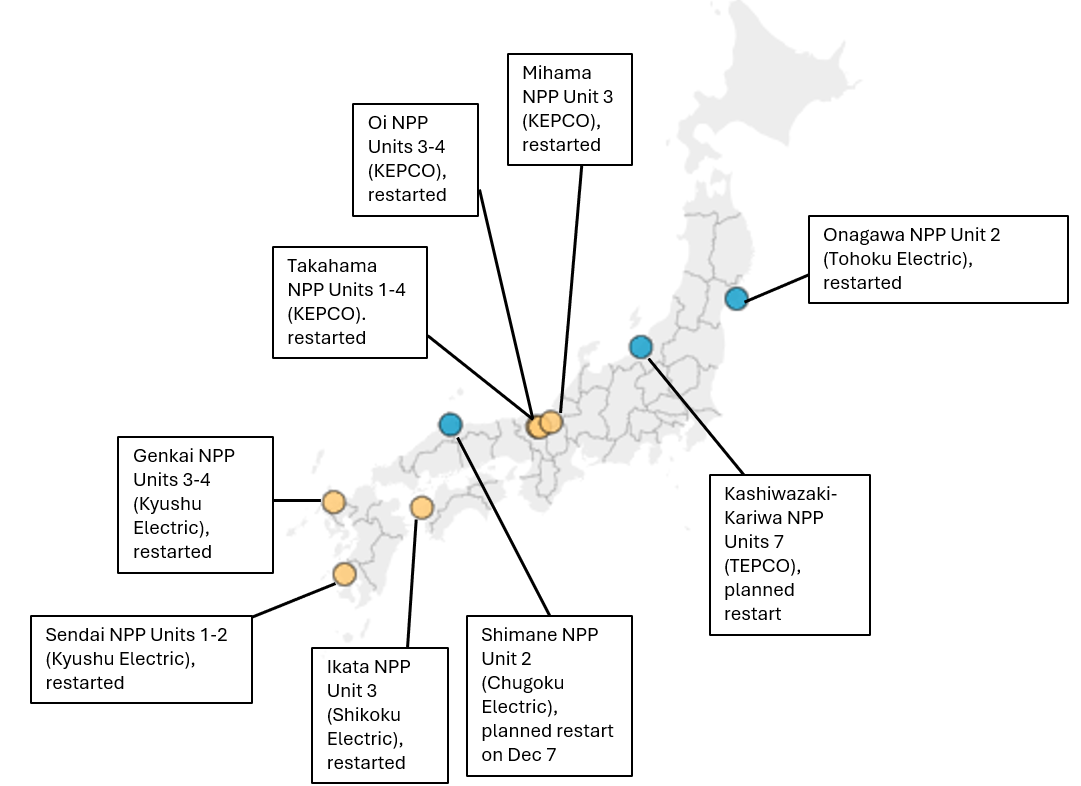
Onagawa’s restart has sparked hopes that other BWR reactors will soon follow. For example, Chugoku Electric’s Shimane NPP Unit 2 (in Matsue City) has completed loading nuclear fuel and plans to restart on December 7. Also, TEPCO’s Kashiwazaki-Kariwa Unit 7, also a BWR, has passed regulatory review and awaits local approval.
The restart of these BWR reactors in East Japan lags behind the already restarted pressurized water reactors (PWRs) in West Japan. The first PWR reactor to restart was Kyushu Electric’s Sendai NPP Unit 1 in August 2015, followed by Sendai NPP Unit 2 a few months later. Since then, ten other PWRs have restarted.
The Onagawa restart comes at a critical time for Japan’s energy policy. Despite Prime Minister Ishiba taking a cool stance on nuclear energy during his recent election campaign, the new government seems intent on following former PM Kishida’s target of nuclear power providing 20%-22% of the national power mix by 2030.
That means the number of operating reactors will need to double from the current level, accounting for just under 8% of the national energy mix.
Map of restarted PWRs (in yellow) and restarted/to be restarted BWRs (in blue). Kashiwazaki-Kariwa NPP Unit 7 is an Advanced Boiling Water Reactor (ABWR).
A boost for Tohoku Electric
Onagawa’s startup marks the 13th reactor to return online since the 2011 Earthquake hit the region and caused Japan to shut all its nuclear power plants.
In Japan, commercially operating reactors are called light-water reactors, and there are two types, distinguished by their steam generation systems. BWR is one type, the other is pressurized water reactors (PWRs). The reactors that restarted earlier (from 2015 to the present) in the Kansai and Kyushu regions are PWRs.
Most inactive reactors in Japan are BWRs, which were given additional tasks by the sector regulator to upgrade their safety specs in light of the Fukushima accident.
Restarting a nuclear reactor is complex and the number of moving pieces involved is daunting, with the slightest issue able to force a halt. Just about a week after Onagawa’s startup, Tohoku Electric detected a malfunction in measuring equipment, which led to a brief stop in operations. There was no serious incident nor radiation leakage, and the reactor restarted 10 days later.
Onagawa Unit 2’s restart means that nuclear power will account for almost 10% of the Tohoku Electric’s total power supply. The utility set a goal of a mix of 15% nuclear, 15% renewable energy, and 70% thermal power by FY2030. In the meantime, Tohoku Electric is working on safety reviews and applications necessary for the restart of Higashidori NPP Unit 1 (Aomori Pref) and Onagawa Unit 3.
The restart will also boost Tohoku Electric’s finances, providing a stable base-load power source for electricity supply in the winter. Tohoku Electric told Japan NRG that for FY2024, they estimated a reduction in annual fuel expenses by ¥26 billion. For FY2024, the company forecasts a slight increase in revenue to ¥2.83 trillion but a 43% drop in net profit to ¥130 billion. For its customers, Tohoku Electric said it was considering temporary discounts on electricity charges or points for the company’s point service.
Safety is paramount
Over the past decade, Tohoku Electric has invested heavily in safety improvements at Onagawa. This included raising the seawall height to 29 meters above sea level, and seismic reinforcement of equipment, as well as reinforcing the pressure suppression chamber at the bottom of the containment vessel, which in BWRs is smaller than in a PWR.
The cost of these upgrades came to about ¥570 billion; and another ¥140 billion will be invested by December 2026, such as into building a counter-terrorism facility. Also, Onagawa Unit 2 needs to address spent nuclear fuel storage, as its existing pool is 80% full, and due to hit the 100% level in four years.
The utility might build a dry storage facility on premise, possibly by 2028, and there are other challenges. Due to the decades-long shutdown, nearly 40% of personnel lack actual experience working on-site; they’ve only faced simulations and made visits to other NPPs.
The hefty investment in upgrades has paid off, however. In February 2020, Tohoku Electric passed an NRA review, and the local community agreed to the restart in November 2020.
Equipment malfunction
Operations came to a halt on November 3, just a week after the restart. A neutron measuring device, previously inserted into the reactor, had stopped working, which in turn led to the company’s decision of suspending the operations in order to investigate. The malfunctioning equipment is used to calibrate the neutron detectors inside the reactor and measures the neutrons in the reactor during its operation. During reactor startup and operation, a calibrating device is inserted into the reactor via cable. When the calibration device stopped working, it had to remove it.
Immediately after the reactor shut down, Japan NRG reached Tohoku Electric to understand the status at the Onagawa NPP. Tohoku Electric responded and confirmed there was no radioactive impact; an internal inspection began the same day. Still, the company said it could not provide a timeline for resuming the restart.
The second restart
On November 11, Tohoku Electric revealed the cause of the trouble – a loosened nut at the connection point of the guide pipe used to insert equipment into the reactor; it caused the guide pipe connection to come apart. The cables became dislodged, were caught inside the reactor containment vessel, and were unable to move. Tohoku Electric told Japan NRG that the cable ended up outside the guide tube and got caught on gratings or other components inside the reactor containment vessel, making it impossible to pull the cable out using the motorized system.
Tohoku Electric had replaced the guide pipe in May, but now suspects that tightening the nut was insufficient. Oddly enough, the guide pipe probably came apart during operational checks of the cables.
On November 13, at around 9 a.m., Tohoku Electric restarted the reactor. It reached criticality shortly before noon. Power generation and transmission began on November 15 at 6 p.m.. The company still expects the plant to resume commercial operation by the end of this year. Before that, it will undergo NRA inspection.
After restarting a reactor, output is steadily increased before transitioning to commercial operation. But in this case, the process will include stopping the reactor on November 24 after increasing the generator’s output to the full capacity of 825 MW, granting extra safety to the restart.
Oct 29
Reactor restart
Oct 30
Criticality
Nov 1
Turbine activation
Nov 3
Equipment malfunction
Nov 4
Reactor halt
Nov 13
Reactor restart
Nov 15
Electricity generation
Comments and reactions
Prior to the temporary halt, both the Onagawa mayor and the Miyagi Prefecture Governor Murai Yoshihiro stressed the importance of this restart after years of dormancy. Still, even before the hiccup with the measuring equipment became known, the governor said operations should be halted in case of any issues.
On November 11, after the equipment malfunction, the Miyagi Prefecture’s Reconstruction and Crisis Management Department issued a stern warning. The prefecture also requested strict adherence to construction management practices and recurrence prevention measures. Two days later, the Miyagi Prefecture governor disclosed the issuance of the warning to Tohoku Electric, stressing how even basic mistakes should not be overlooked.
Such statements reveal that the restart is proceeding with much wariness. Many in the Tohoku region retain vivid memories of the 2011 Fukushima accident and oppose nuclear restarts. On the day of the startup, a group protested in front of Tohoku Electric’s headquarters, and a lawsuit is in the courts, with residents demanding a halt to its operation, citing deficiencies in the evacuation plan in case of an accident. The Sendai High Court will rule later this month.
Others, however, welcome the restart as a boost for the local economy, especially employment. Also, the company announced temporary discounts on electricity bills in 2025.
Then, there are those in between. The majority of towns in prefectures that host NPPs that are outside the immediate vicinity of the stations have little to gain from supporting a restart. When trust in the plant operator is low, as it is currently with TEPCO, the chance that the prefectural governor gives a green light in the face of skeptics is slim.
Operators say they’re proceeding with utmost caution, while trying to find a subtle balance between the technical, economic and political spheres. For TEPCO to follow the example of Tohoku Electric, it will also need to find a way to rally local support in a way that has escaped it for the past decade.
ANALYSIS
BY MAYUMI WATANABE
Too Much and Yet Not Enough: The CO₂ Conundrum
While many people fret over an excess of carbon dioxide in the atmosphere, parts of Japan’s industry are gripped by a paradoxical anxiety: a looming CO₂ shortage.
Industrial-grade CO₂ – which is essential for applications ranging from dry ice to welding, water treatment, and carbonated beverages – is harder to source, threatening supply chains and raising costs. In a surprising twist, it may also be complicating one of the potential energy transition pathways, in which CO₂ would be recycled as ‘net-zero’ synthetic fuels for aviation, marine and auto transport.
Today’s problem stems from the global shuttering of oil refineries, historically the backbone of CO₂ production. These facilities captured emissions, filtered impurities, and processed the gas into a valuable feedstock. In Japan, oil refineries and ammonia plants accounted for 80% of the 0.9 million tons of CO₂ needed annually. Yet over the past decade, four major refineries have closed in the country, slashing crude oil processing capacity from 4 million barrels per day to just 3.1 million.
The consequences are stark and perhaps surprising. Japan’s imports of CO₂, once negligible, have surged, doubling to over 22,000 tons in 2023 and already soaring to nearly 30,000 tons by September of this year. Prices, too, are climbing. Gas suppliers have responded with price hikes of 15-30%, further squeezing industries already grappling with inflation and supply chain disruptions.
In 2023, the average sales price of CO₂ hit ¥24,000 per ton, which is incidentally about five times the price of carbon offset credits traded in Tokyo, and up from ¥20,000 a decade earlier.
Source: METI
Gas panic
Japan’s CO₂ emissions were 1 billion tons in 2022, excluding other global warming gases. About 0.9 million tons/ year of CO₂ are captured at factory sites and re-processed into 99-99.9% high-purity gas. Dry ice is the largest application taking 30-40% of the industrial-grade CO₂ supplies. Welding of metals, waste water treatment, petrochemical feedstock, carbonated beverages and agricultural applications comprise the rest.
In the past decade, Japan’s CO₂ capture has slightly declined, yet demand for the gas is up. This supply crunch is reshaping the CO₂ value chain.
Traditionally, heavy emitters such as energy and steel companies have led investments in carbon capture and utilization (CCU) technologies to offset their emissions. Today, it is the consumers – food producers, dry ice manufacturers, and chemical firms – who are scrambling to secure supplies.
The sense of urgency is evident across industries – not just obvious users like chemicals producer Cosmo Energy. Beverage giants like Asahi Group, food maker Kagome, and even supermarket chains like Aeon have launched carbon recycling projects to mitigate their reliance on dwindling domestic supplies. “Consumers, rather than emitters, are now the driving force of CCU,” observes a researcher at the state-run Research Institute of Innovative Technology for the Earth (RITE). The trend, he adds, reflects a broader global shift as fossil fuels are gradually phased out.
This pivot has also exposed shortcomings in Japan’s regulatory frameworks. In its 2023 Carbon Recycle Roadmap, the government divided CO₂ reuse into two categories: carbon utilization, where CO₂ is processed into stand-alone products like dry ice, and carbon recycling, where it is combined with other substances to create synthetic fuels, e-methane, methanol, or CO₂-storing concrete.
Only recycling qualifies for carbon credits or clean energy certificates, a distinction that critics argue is arbitrary. After all, synthetic fuels ultimately release CO₂ into the atmosphere just like traditional utilization processes. For example, if 0.5 tons of CO₂ is used to produce 15 nm3 of e-methane, when the fuel is consumed, 0.5 tons of CO₂ is released into the atmosphere, according to one synthetic fuel producer.
From the government’s perspective, however, recycling can be categorized separately because it leads to the creation of new products and, most importantly, contributes to the reduction of total national emissions.
To incentivize recycling, the government is planning to count such efforts as “avoided emissions” by 2025. Officials also acknowledge the need to broaden the scope, including support for CO₂ derived from non-fossil sources such as biomass and biogas plants (BECCS), a METI official told Japan NRG. Such non-fossil sources, which include waste incineration plants, fermentation and biogas plants, will also make CO₂ value chains cleaner. Yet for now, the rules remain skewed toward heavy emitters, leaving CO₂ consumers to fend for themselves.
CO₂ reuse types
Definition
Applications
Utilization (traditional)
Use of CO₂ in pure form
Dry ice, welding, carbonated drinks, medicine, agriculture, etc.
Recycling (new)
Converting into another substance
Synthetic fuel, synthetic methane, synthetic methanol, CO₂-stored building materials, etc.
Carbon utilization and recycling life cycles
CO₂ origin
Manufacturing process
CO₂ release
Dry ice (carbon utilization)
Oil refineries
Liquefy and solidify CO₂ amid pressure changes
Into atmosphere
E-fuel, e-methane (carbon recycling)
Oil refineries
Chemical reaction between CO₂ and hydrogen
Into atmosphere
CCS concrete (carbon recycling)
Cement manufacturing plants
Capture CO₂ into concrete
No release unless the concrete is destroyed
Carbon reuse that is not recycling
Reuse scenarios
Applications
Businesses
Type
Reuse of fermentation-derived CO₂ from beer production
CO₂ for carbonated beverages, fertilizers
Beverage makers
Utilization
Recycling used dry ice
Substitute CO₂ feedstock with used dry ice
Dry ice makers
Utilization
Reuse of fossil-fuel derived CO₂ from factories
CO₂ supplementation at farms
Kagome, Aeon
Utilization
BECCS
Sumitomo Osaka Cement
Utilization
A volatile market, a greener future
The scramble for CO₂ has triggered both innovation and expansion. Gas suppliers are ramping up production, with Resonac commissioning a 30,000-ton-per-year facility in April 2024. Meanwhile, alternative technologies are emerging. Sharp, for instance, has introduced a water-based dry ice substitute, while researchers are exploring other ways to reduce dependence on high-purity CO₂.
Despite these efforts, prices remain high, and may stay that way for the coming months or years. The upward momentum, however, will eventually weaken as consumers increase recycling and cut expensive purchases from gas suppliers.
The carbon market will likely face a structural conflict again. The government plan is to commercialize synthetic fuel production in the 2030s. If this happens, producers of e-methane and e-fuels will require vast quantities of CO₂ to scale up, but they also need it to be cheap.
For e-methane to compete with city gas, for example, CO₂ would need to cost less than ¥3,000 per ton, which is a fraction of today’s prices, said an official from a company conducting an e-methane pilot project.
This raises several questions: Will prices of high-purity CO₂ come down to ¥2,000-3,000 per ton, one tenth of what they are today? Will the emission pricing, which is a framework for a virtual CO₂ price, work for transacting real CO₂? Will a separate pricing mechanism be required for synthetic fuel-grade CO₂?
The broader implications for climate policy are profound. The CO₂ shortage underscores the tension between phasing out fossil fuels and ensuring a stable supply of industrial gases. It also raises questions about the role of carbon in a decarbonized future.
Once seen purely as a pollutant, CO₂ is now being reimagined as a resource, not only for industry but potentially for energy, plastics, and other applications. Carbon is still damaging when it accumulates unchecked in excessive quantities in the atmosphere, but as its role in society evolves, we may need to rethink our relationship with it.
“Hello carbon, what are you?” might be the question we’ll need to ask. The answer could redefine not just energy systems but the way we think about the building blocks of our modern world.
COP29 WRAP-UP, Week 2
BY JOHN VAROLI
This column again focuses on major developments at COP29 in Baku. Here are some of the main stories.
Azerbaijani President Aliyev fumed against Western fossil fuel critics, saying his country has faced a “campaign of slander and blackmail” from forces calling to boycott COP29. He added that his country accounts for less than 1% of global oil and gas production, while the EU governments criticizing Azerbaijan are purchasing its oil and gas.
Through 2035, wealthier countries will provide at least $300 billion annually to finance the developing world’s energy transition. The money will come from public finance as well as bilateral and multilateral deals. The deal also calls on parties to work toward unleashing a total of $1.3 trillion a year, with most of that difference expected to come through private financing.
However, if this financial support for developing countries comes mostly through market-rate loans or other barely discounted finance, then climate vulnerable countries might drown in debt, activists say. Many of these countries already spend more on servicing their debt than on education or health.
The ‘loss and damage’ fund, which was agreed on in 2022 to help countries respond to the effects of climate change, now has its first director: Ibrahima Cheikh Diong, a Senegalese-American with a financial development background. Last week, agreements were signed to allow the fund to start receiving money.
Negotiators worked out a deal to set standards for a centralized carbon trading market under U.N. auspices. But activists say the rules are not stringent enough, allowing for an unregulated market that could cause more havoc than no market at all.
Hundreds of lobbyists for industrial agriculture are attending COP29. They include some of the largest agribusinesses such as PepsiCo, Brazilian meatpacker JBS, animal pharmaceuticals company Elanco, as well as food sector trade groups.
The Declaration on Green Digital Action, which recognizes the potential of digital technologies to contribute to climate change mitigation, was signed by tech companies, governments and industry organizations. The declaration also acknowledges digital tech’s negative impact, such as the growing emissions from data centers, AI, and e-waste.
The Declaration on Enhanced Climate Action in Tourism and the Multisectoral Action Declaration for Resilient and Healthy Cities were approved, and a Declaration on Water for Climate Action was endorsed by almost 50 countries, the COP29 presidency announced.
The UK and U.S. will partner to speed up advanced nuclear technologies, aiming to create an alliance that will pool billions in R&D funds and support the COP28 commitment to triple nuclear energy capacity by 2050.
The Reducing Methane from Organic Waste Declaration was endorsed by 35 countries, including Russia and the U.S. It commits countries to sectoral methane targets in nationally determined contributions and to design methane-reduction policies and road maps.
2024 EVENTS CALENDAR
A selection of domestic and international events we believe will have an impact on Japanese energy
November
US presidential election (Nov 5)
COP 29 in Azerbaijan (Nov 11-22)
Abu Dhabi International Petroleum Exhibition Conference (ADIPEC) 2024, Abu Dhabi, UAE (Nov 11-14)
APEC 2024 @ Lima, Peru
International Conference on Nuclear Decommissioning (TBD)
G20 Rio de Janeiro Summit (Nov 18-19)
Result of solar auction #22 (Nov 26)
Offshore Energy Exhibition & Conference (OEEC) 2024, Amsterdam, the Netherlands (Nov 26-27)
APAC Wind Energy Summit (Nov 26-28)
Biomass & BioEnergy Asia Conference (TBD)
European Biomethane Week 2024
December
Last market trading day (Dec 30)
January 2025
First market trading day (Jan 4)
FIT/FIP solar auction #23 (Jan 6-24)
World Forum Offshore Wind (WFO) Global Summit 2025, Barcelona, Spain (Jan 21-22)
Offshore Technology & ENEX Exhibition @ Tokyo Big Sight (Jan 29-31)
February
Result of solar auction #23 (March 7)
Disclaimer
This communication has been prepared for information purposes only, is confidential and may be legally privileged. This is a subscription-only service and is directed at those who have expressly asked K.K. Yuri Group or one of its representatives to be added to the mailing list. This document may not be onwardly circulated or reproduced without prior written consent from Yuri Group, which retains all copyright to the content of this report.
Yuri Group is not registered as an investment advisor in any jurisdiction. Our research and all the content express our opinions, which are generally based on available public information, field studies and own analysis. Content is limited to general comment upon general political, economic and market issues, asset classes and types of investments. The report and all of its content does not constitute a recommendation or solicitation to buy, sell, subscribe for or underwrite any product or physical commodity, or a financial instrument.
The information contained in this report is obtained from sources believed to be reliable and in good faith. No representation or warranty is made that it is accurate or complete. Opinions and views expressed are subject to change without notice, as are prices and availability, which are indicative only. There is no obligation to notify recipients of any changes to this data or to do so in the future. No responsibility is accepted for the use of or reliance on the information provided. In no circumstances will Yuri Group be liable for any indirect or direct loss, or consequential loss or damages arising from the use of, any inability to use, or any inaccuracy in the information.