
WEEKLY
FEBRUARY 17, 2025
ANALYSIS
WILL TRUMP UNLEASH A GOLDEN ERA OF U.S.-JAPAN ENERGY RELATIONS?
- The recent summit between President Trump and PM Ishiba was the start of a more dynamic phase in bilateral relations, especially in energy
- Alongside already visible talks around LNG, we see collaboration in nuclear energy, hydrogen and the critical raw materials supply chain
PUMPED HYDRO: THE EMERGING BACKBONE OF JAPAN’S ENERGY TRANSITION
- Pumped hydro storage is proving key to balance and stabilize Japan’s grid as it reboots nuclear energy and moves to rely more on solar and wind
- Japan has world’s second largest pumped hydro capacity and the largest per capita, but the sector is set for further expansion
ASIA PACIFIC REVIEW
This column provides a brief overview of the region’s main energy events from the past week
NEWS
- Idemitsu Kosan and JGC appoint new presidents
- Itochu Enex takes stake in ENECHANGE
- Tohoku Electric tests biodiesel for barge fuel
- EEX sees record surge in electricity futures trading amid gas price concerns
- i Grid Solutions, Mitsubishi expand on-site PPAs
- Toyota creates a third-generation fuel cell system that offers longer cruising range
- JR Central develops hydrogen engines for trains
- Shizen unit tapped by Nozomi for solar farm management
- Itochu Enex introduces self-consumption solar power service in Thailand
WIND POWER AND OTHER RENEWABLES
- METI to launch 2nd round of bidding for demo floating wind project
- GPI launches ¥61 bln wind energy fund
- Contractor selected for Hokkaido offshore wind feasibility survey
- KEPCO to build data center powered with electricity from its own nuclear plant
- Kyushu Electric to restart pluthermal fuel use at NPP but delays plan by several years
- FEPC welcomes expansion of U.S. LNG purchases
- Arabian Oil to dissolve, merge into Fuji Oil
CARBON CAPTURE & SYNTHETIC FUELS
- Kyushu Electric to collaborate with Uniper on CCUS and other technologies
- Mitsui & Co, etc invest in U.S. synthetic fuel startup
EVENTS
| Mid-Feb | METI to update draft of 7th Strategic Energy Plan |
| Feb 19-21 | Smart Energy Week 2025 @ Tokyo Big Sight |
| Mar 5 | “REvision2025” International Symposium hosted by Renewable Energy Institute @ Tokyo, Japan |
| Mar 31 | End of Japan’s fiscal year 2024 |
SUBSCRIPTIONS & ADVERTISING
Japan NRG offers individual, corporate and academic subscription plans. Basic details are our website or write to subscriptions@japan-nrg.com
For marketing, advertising, or collaboration opportunities, contact sales@japan-nrg.com For all other inquiries, write to info@japan-nrg.com
JAPAN NRG WEEKLY
PUBLISHER
K. K. Yuri Group
Editorial Team
Yuriy Humber (Editor-in-Chief)
John Varoli (Senior Editor, Americas)
Kyoko Fukuda (Japan)
Magdalena Osumi (Japan
Filippo Pedretti (Japan)
Tim Young (Japan)
Tetsuji Tomita (Japan)
Regular Contributors
Chisaki Watanabe (Japan)
Takehiro Masutomo (Japan)
Mayumi Watanabe (Japan)
OFTEN-USED ACRONYMS
METI | The Ministry of Economy, Trade and Industry | mmbtu | Million British Thermal Units |
MoE | Ministry of Environment | mb/d | Million barrels per day |
ANRE | Agency for Natural Resources and Energy | mtoe | Million Tons of Oil Equivalent |
NEDO | New Energy and Industrial Technology Development Organization | kWh | Kilowatt hours (electricity generation volume) |
TEPCO | Tokyo Electric Power Company | FIT | Feed-in Tariff |
|
KEPCO |
Kansai Electric Power Company |
FIP |
Feed-in Premium |
|
EPCO |
Electric Power Company |
SAF |
Sustainable Aviation Fuel |
|
JCC |
Japan Crude Cocktail |
NPP |
Nuclear power plant |
|
JKM |
Japan Korea Market, the Platt’s LNG benchmark |
JOGMEC |
Japan Organization for Metals and Energy Security |
|
CCUS |
Carbon Capture, Utilization and Storage | ||
|
OCCTO |
Organization for Cross-regional Coordination of Transmission Operators | ||
|
NRA |
Nuclear Regulation Authority | ||
|
GX |
Green Transformation |
NEWS: GENERAL POLICY AND TRENDS

Idemitsu Kosan appoints new president
(Nikkei, Feb 12)
- Idemitsu Kosan said that executive Vice President Sakai Noriaki will replace Kito Shunichi as president on April 1, the first leadership change since 2018.
- The decision follows the merger of Idemitsu Kosan with Showa Shell. The new leadership will formulate the mid-term plan for FY2025.
- Sakai held roles in petroleum product sales, and finance, becoming CFO in 2020.
- CONTEXT: Kito became President in 2018 and led the merger with Showa Shell, and also brought the company into the SAF market and restructured its business portfolio. Since 2022, he has also served as head of the Petroleum Association of Japan.
TAKEAWAY: Mid-February is a popular time for big companies in Japan to announce leadership changes. It does not usually indicate a change in strategy or direction, as it may with European or American firms. For Idemitsu, the new president will need to decide the extent to which the company will pursue new energy alternatives, such as ammonia fuel and SAF compared with the group’s bedrock oil refining business. Unlike domestic peers ENEOS and Cosmo, Idemitsu has relatively little exposure to the renewable energy sector outside of a 400 MW solar portfolio in the U.S. The new president may want to decide whether the company should embrace renewables at scale or exit the sector.
(Nikkei, Feb 12)
- JGC said Chairman and CEO Sato Masayuki will take over as president on April 1. Current President and COO Ishizuka Tadashi will step down from all executive positions, including as a board director.
- The company reported a ¥7.8 billion loss in FY2023 due to project delays in Saudi Arabia’s oil and gas sector. In FY2024, the firm is also expected to have fallen into the red over problems with projects in Taiwan, the Middle East, and Canada.
- Sato served as CFO and was promoted to chairman in 2014. By assuming the presidency, Sato aims to balance business expansion with financial soundness.
- CONTEXT: Ishizuka is stepping down amid JGC’s recent poor performance. JGC said for FY2024 it will have a ¥40 billion loss due to financial difficulties faced by a Middle Eastern subcontractor, which is a downward revision of ¥27 billion from a previous forecast.
Itochu Enex acquires stake in ENECHANGE
(Company statement, Feb 3)
- Itochu Enex inked a capital and business alliance with ENECHANGE by taking a 17.45% voting rights stake, to become the company’s largest shareholder.
- The partnership will focus on acquiring new users by leveraging each company’s customer base and product offerings, co-developing and selling core retail systems for electricity, gas, and mobility.
- The firms will also jointly undertake business operations for retail service providers, co-develop energy consulting systems, and expand the EV charging service business.
- CONTEXT: ENECHANGE is spinning off its EV charging business, with a 51% investment from Chubu Electric.
Tohoku Electric and NYK trial coal transport vessel using biodiesel
(Company statement, Feb 10)
- Tohoku Electric, in collaboration with NYK Line, made a trial voyage using biodiesel fuel on a coal transport vessel, Noshiro Maru.
- The ship was refueled with biodiesel in the Keihin area on Feb 9, and departed the same day.
- CONTEXT: Launched in 1993 as Tohoku Electric’s first dedicated coal transport vessel, Noshiro Maru is the first owned by a utility to run on biodiesel, which is carbon-neutral because the CO2 emitted during combustion is offset by the CO2 absorbed by plants used as raw material.
- CONTEXT: Biodiesel can be used in heavy oil-fired marine engines and is seen as an effective means of reducing GHG emissions during the transition period from heavy oil to zero-emission fuels. MLIT supports the use of biofuels on existing ships. In March 2023, it published the “Guidelines for Handling Biofuels on Ships,” which was revised in March 2024.
TAKEAWAY: Biofuels for automobiles have been researched, developed and promoted for more than 20 years, but they are not widely used. In recent years, however, SAF, a biofuel for aircraft, has attracted attention, and the use of biofuel for ships is beginning to be promoted. As R&D of hydrogen and ammonia as next-gen shipping fuels is also underway, the attention to biofuel has been lower. However, Japan’s government has shown more interest in biofuel options in the last year, considering it a more cost-effective option.
NEWS: ELECTRICITY MARKETS
EEX sees record surge in Japan’s electricity futures trading amid gas price concerns
(Nikkei, Feb 12)
- On Feb 10, the EEX recorded a historic high in electricity futures trading, reaching about 2 TWh on the day, more than double the previous record of 0.9 TWh set on Sept 20, 2024.
- Trading volume was 2.4 times the 0.8 TWh of spot transactions on JEPX that day, driven by strong activity in seasonal contracts for summer and winter 2025.
- Tohoku Electric Energy Trading’s Izumi Takahiro attributed the surge to traders adjusting positions in response to rising European gas prices and potential spillover effects on Japan’s electricity market.
- Energy Grid CEO Kinosaki Yohei said the record volume reflects the growing exposure of Japanese utilities and consumers to global fuel price volatility, emphasizing the increasing need for risk management strategies.
i Grid Solutions and Mitsubishi UFJ to expand on-site PPAs
(Company statement, Feb 7)
- i Grid Solutions, which offers energy management solutions, agreed with Mitsubishi UFJ Trust Bank to promote an on-site PPA business.
- This initiative is part of i Grid’s Solar Alliance program that facilitates installations through partnerships with corporations, financial institutions, and municipalities.
- The two firms will start with an initial ¥5 billion in investment.
- They’ll also explore clean energy transition solutions, integrating battery storage and EVs to create self-sustaining, energy-independent communities.
- CONTEXT: i Grid is a big player in Japan’s on-site PPA market, offering zero upfront cost for solar installations on the rooftops of commercial and logistics facilities. As of January, it had developed 1,113 facilities with a total capacity of 275 MW. It is a core partner of Itochu.
NEWS: HYDROGEN
Toyota creates a third-generation fuel cell, offers 20% longer cruising range
(Company statement, Feb 14)
- Toyota’s new FC system offers double the durability of previous models, comparable to diesel engines, with a 20% longer cruising range and 1.2x improved fuel efficiency.
- This is achieved through advanced cell design and streamlined manufacturing processes, making hydrogen vehicles more affordable.
- Toyota will launch its FC in Japan, EU, North America, and China in 2026.
TAKEAWAY: Toyota was the original driver of Japan’s hydrogen push in the mid 2010s, but it has since been less vocal on hydrogen-based mobility, preferring to showcase its R&D of multiple engine / motor technologies as a way of hedging the bets on future demand. With EVs already strongly positioned in China, Europe and parts of the U.S., it will be difficult for Toyota to win support for FC mobility with the low availability of refueling infrastructure. Still, the R&D may not be in vain if the FC systems are able to replace diesel in trucks and other large vehicle segments.
Yara and NYK sign world’s first contract for ammonia-fueled ammonia carrier
(Company statement, Feb 10)
- Yara Clean Ammonia (YCA) and Nippon Yusen (NYK) inked the world’s first contract for a regular charter of ammonia-fueled medium gas carriers (AFMGC), which is the main type of vessel for international maritime transport of ammonia using ammonia as a fuel.
- The first carrier will be completed in November 2026.
- YCA operates the world’s largest ammonia network, with 15 ships; and has access, through Yara, to 18 ammonia terminals and many production and consumption sites.
- CONTEXT: Since 2021, YCA and NYK have done joint studies on the use of ammonia-fueled ammonia carriers. YCA, a subsidiary of Yara, the world’s leading crop nutrition company, seeks to create and expand demand for clean ammonia, including low-carbon emission fuels for ships and power generation, as well as low-carbon food production.
TAKEAWAY: Ammonia and hydrogen are next-gen fuels for ships. R&D is done under the auspices of the Green Innovation Fund, such as NYK developing the AFMGC with Japan Engine Corp, IHI Power Systems, Nihon Shipyard, and ClassNK. Biodiesel is also being tested as a fuel for existing engines.
Toyo secures licensing and equipment supply for fertilizer plant in Angola
(Company statement, Feb 12)
- Toyo Engineering (TOYO) will license its proprietary urea tech to Amufert, a fertilizer JV in Angola.
- One of the world’s largest urea plants, with daily production of 4,000 tons, will be built in Zaire Province.
- The facility launches in 2027.
- TOYO will provide licensing, basic design, proprietary equipment, and technical services, applying its urea synthesis and granulation tech for cost-effective construction and optimized operations.
- CONTEXT: TOYO has a global track record of over 100 urea projects and delivered two 4,000 tons/ day capacity urea plants in Nigeria. The plant will help Angola to achieve 100% domestic fertilizer production.
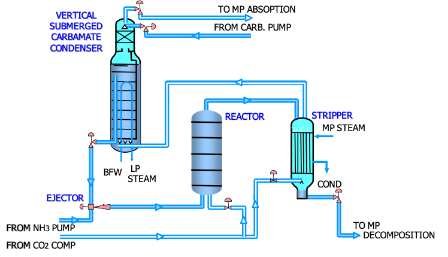
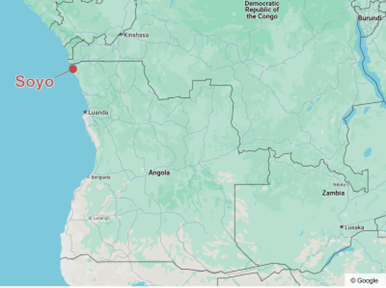
ACES21 synthetic loop (left); site for the first urea fertilizer plant in Angola (right)
Source: Toyo Engineering
JR Central develops hydrogen engines for trains
(Nikkei, Feb 12)
- JR Central has developed a 50 kW hydrogen engine aimed at replacing diesel engines on non-electrified railway lines, with a goal of increasing the output to 300 kW to meet the demands of long-distance routes with steep gradients.
- The hydrogen engine is designed to work alongside a storage battery, providing enhanced energy efficiency and performance. Test runs will be held in FY2025.
- CONTEXT: JR Central introduced perovskite solar panels on the soundproof walls of the Tokaido Shinkansen line. These panels, developed by Sekisui Chemical, will be used to generate electricity for station lighting.
KHI to start sale of large-capacity hydrogen compressor
(Company statement, Feb 12)
- Kawasaki Heavy Industries will begin selling a 600 Nm³/h hydrogen compressor in FY2025, designed for large-scale hydrogen stations catering to fuel cell heavy-duty vehicles such as buses and trucks.
- The new compressor doubles the hydrogen supply capacity of existing models, making high-flow, rapid refueling possible at large hydrogen stations.
- Kawasaki is developing even larger-capacity hydrogen compressors as part of NEDO’s hydrogen supply chain project.
Aisin develops portable fuel cell generator
(Company statement, Feb 14)
- Aisin unveiled a portable fuel cell generator that uses vehicle and home-use fuel cell (Ene-Farm) technologies.
- The generator uses hydrogen cartridges as fuel, and has no CO2 emissions.
- It’s suitable for construction sites, disaster relief, indoor events, and offices.
Yanmar launches recycling to convert old uniforms into hydrogen energy
(Company statement, Feb 10)
- Yanmar is partnering with Tokyo-based startup Biotechworks-H2 on chemical recycling to convert old uniforms into hydrogen energy without incineration, and to produce hydrogen.
- According to the startup, about five tons of discarded uniforms can produce about 300 kg of hydrogen.
TAKEAWAY: Japan NRG parent company, Yuri Group, covered the technology and business case of Biotechworks-H2 in a special GxxD series report last year. For more information, see: https://www.yuri-group.co.jp/gxxd
NEWS: SOLAR AND BATTERIES
Shizen Operations tapped by Nozomi for solar farm management
(Company statement, Feb 13)
- Shizen Operations, which specializes in power plant management, was tapped by Nozomi Energy to service 300 MW of solar PV capacity.
- CONTEXT: Nozomi is a renewables platform run by global investor Actis.
- The portfolio in question consists of 12 solar projects totaling 312 MW, and was acquired by Nozomi in Dec 2024. The firm now has 641 MW in total managed assets.
- In November, the firm integrated the asset management division within the Shizen Energy Group to provide seamless O&M and asset management services.
Itochu Enex introduces self-consumption solar power service in Thailand
(Company statement, Feb 6)
- A group firm of Itochu Enex, an energy trading firm in Thailand, ITC ENEX, launched a self-consumption solar power service at two factories owned by FCC THAILAND, a group firm of FCC.
- This service installs solar power generation equipment on the rooftops of factories, warehouses, and other facilities owned and managed by customers, enabling them to consume the generated electricity.
- The initial cost of installing the solar power generation equipment is free of charge but then the customer is charged a fixed monthly fee for using the equipment, including maintenance and inspection.
Itochu partners with Enphase on microinverter adoption
(Company statement, Feb 10)
- Itochu will partner with U.S.-based Enphase Energy, a management tech firm, to promote microinverter tech for solar panels in Japan.
- This comes as Tokyo mandates solar installations for new homes starting April 2025, driving demand for decentralized energy solutions.
- Microinverters offer a more efficient and flexible alternative to traditional string inverters, addressing installation challenges in urban areas with limited roof space.
- Itochu plans to speed up nationwide adoption by integrating Enphase’s tech into its existing decentralized energy and storage solutions.
NEWS: WIND POWER AND OTHER RENEWABLES
METI to launch 2nd round bidding for demo floating wind project
(Nikkei, Feb 10)
- By the end of the year, METI is set to launch Round 2 of public bidding for a floating offshore wind power demo project. It will be funded through the Green Innovation Fund, aiming to expand the designated demo areas.
- Round 1 results were announced in 2024. Projects off the coast of Tahara and Toyohashi in Aichi Pref, and off the Southern Akita Pref won.
- Offshore Iwau-Minami Shiribeshi and Offshore Shimamaki in Hokkaido are among the candidate areas for Round 2. Hokkaido and Sapporo City are urging the central govt to implement demo projects in the two Hokkaido offshore areas.
- CONTEXT: The announcement comes as the Japanese offshore wind industry is facing challenges due to inflation and soaring costs. Earlier in the month, Mitsubishi Corp announced a potential withdrawal from fixed-bottom projects awarded through a public bidding scheme.
- SIDE DEVELOPMENT:
- C-TEC issues environmental assessment for floating wind demo
- (Company statement, Jan 22)
- C-Tech, a Chubu Electric subsidiary, released an environmental assessment for the Aichi Offshore Floating Wind demo planned off the coast of Tahara and Toyohashi, Aichi Pref. Its partners include Kanadevia, Hokutaku, and Kajima Corp.
- The group plans to install a single floating wind turbine with a capacity of 12–16.5 MW, to be mounted on a hybrid semi-submersible floating structure, featuring a steel-concrete composite base at the tower’s foundation.
- Construction is set to begin in FY2028.
GPI launches ¥61 bln wind energy fund with SMBC Trust, etc
(Company statement, Feb 3)
- Green Power Investment will partner with Sumitomo Mitsui Trust Bank and JA Mitsui Lease to set up the ¥61 billion Green Power Renewable Fund II for investment into GPI’s development, construction and operation of large wind power projects.
- The Development Bank of Japan (DBJ) has also invested in the fund. The initiative is part of GPI’s capital strategy to support renewables developments.
Japan Meteorological secures contract for offshore wind survey
(Company statement, Feb 5)
- Japan Meteorological Corp was selected for JOGMEC’s FY2024 offshore wind feasibility study in the southern area off Iwau and Minami-Shiribeshi, Hokkaido Pref.
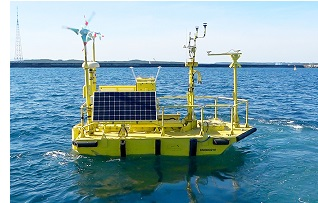
- This is the firm’s first use of floating lidar in a survey.
- The survey, part of a govt-led research model, will collect wind, meteorological, and oceanographic data for designing floating offshore wind farms.
- The floating buoy-mounted Doppler lidar will enable high-precision offshore wind and ocean observations, ensuring reliable, year-round data collection.
- The study, launched this month, will run through February 2027.
- CONTEXT: Doppler Lidar is a system used to measure winds by analyzing the backscattered energy and Doppler shift of radiation, typically produced by a laser transmitter, and collected by a receiver. It consists of a laser transmitter, a receiver, and a beam-pointing mechanism to probe different atmospheric volumes and measure wind components.
Eurus TS launches comprehensive wind farm O&M support
(Company statement, Feb 10)
- Eurus Technical Service, a subsidiary of renewables developer Eurus Energy Holdings, has launched Eurus O&M Service, a comprehensive support solution for onshore wind farm operations and maintenance.
- The service leverages over 20 years of expertise from Eurus’ own wind farms and extends support to external operators.
- It offers standard O&M (inspections, repairs, 24/7 monitoring, etc,) and helps optimize revenue by minimizing downtime.
Asuene partners with Nagasaki to develop offshore wind workforce
(Company statement, Feb 12)
- Asuene, a Tokyo sustainability solutions provider, signed an agreement with Nagasaki City and the Nagasaki Marine Industry Cluster Promotion Council to cooperate on workforce development and talent search.
- Asuene will leverage its GX and ESG-focused job platform, ASUENE CAREER, to match skilled professionals with clean energy opportunities.
NEWS: NUCLEAR ENERGY
KEPCO to build a data center powered by Mihama NPP
(Company statement, Feb 10)
- Optage, a telecom subsidiary of KEPCO, plans to build a data center for generative AI in Mihama, Fukui Pref, near Mihama NPP.
- The facility launches in FY2026 and will be powered by electricity from the NPP.
- The plan involves installing high-performance GPU-equipped servers inside containers. They will lease them to companies developing generative AI. Each container can hold up to 32 servers.
- According to Optage, this will be the first instance when KEPCO built a container-based data center for generative AI.
TAKEAWAY: Securing nuclear energy to power data centers has already started in the U.S. and a number of data center operators expressed interest in similar transactions in Japan. This KEPCO arrangement may be among the first of its kind in Japan, but it is also notable that the Kansai utility is both the power provider and (via a subsidiary) the client. Whether EPCOs will open these opportunities to non-related parties will be a development worth monitoring.
Kyushu Electric to restart pluthermal power generation
(Company statement, Feb 14)
- Kyushu Electric said it will restart pluthermal power generation, the use of mixed uranium-plutonium oxide (MOX) fuel, from the Rokkasho facility.
- However, the utility changed the expected start date from FY2027 to at least FY2029 or later.
- The MOX fuel will be refined in France.
- CONTEXT: MOX is the result of mixing uranium and plutonium extracted from spent nuclear fuel. Kyushu Electric began pluthermal power generation at Unit 3 of Genkai NPP in 2009. The company had been using MOX refined in France while waiting for the completion of the Rokkasho facility. The utility suspended pluthermal power generation in November 2023.
- CONTEXT: Kyushu Electric has plutonium stock stored in the UK. In April 2024, the company conducted a book transfer with Tohoku Electric and other companies. It then consolidated its entire overseas plutonium stock in France.
TAKEAWAY: The Federation of Electric Power Companies of Japan (FEPC) announced that 3.3 tons of plutonium will be consumed as MOX fuel by FY2029, possibly increasing that to 6.6 tons annually by FY2030 to reduce plutonium stockpiles. The usage plans for FY2027 and FY2028 have been revised down due to delays in operations of relevant facilities in France. Major power companies are forecast to hold 40 tons of plutonium by the end of FY2024. Kyushu Electric, Shikoku Electric, KEPCO, and (in the future) Chugoku Electric, are able to use MOX fuel.
KEPCO to increase volume of MOX sent to France
(Company statement, Feb 12)
- The Federation of Electric Power Companies of Japan will increase the amount of spent fuel sent to France for use in a processing study to enhance effectiveness.
- Under the revised plan, the total amount will double to 400 tons, consisting of 20 tons of spent MOX fuel and 380 tons of spent uranium fuel. The original plan was to transport 200 tons of spent fuel from KEPCO, including 10 tons of spent MOX and 190 tons of spent uranium.
- Orano, a French nuclear fuel cycle company, will hold reprocessing demos.
- CONTEXT: The study’s goal is to set up a viable reprocessing technology for spent MOX fuel. A key goal is to prove its feasibility in commercial reprocessing plants.
TAKEAWAY: Behind this decision looms the delay in completion of Japan Nuclear Fuel’s Rokkasho facility. KEPCO’s spent nuclear fuel management plan entailed sending part of it to Rokkasho for reprocessing. But, its launch was again postponed, from FY2026 to FY2028.
Fukushima NPP begins dismantling empty treated water storage tanks
(NHK, Feb 14)
- TEPCO began dismantling some of the treated water storage tanks at the Fukushima Daiichi NPP. This is the first time since the discharge of treated water began about 18 months ago.
- Over 1,000 tanks store treated water containing tritium and other radioactive substances, even after processing. Since August 2022, TEPCO has been releasing the diluted treated water into the ocean.
- With some tanks now empty due to the ongoing discharge, TEPCO has started dismantling them. The tanks are 9 meters in diameter and 12 meters high.
- CONTEXT: Since August 2023, TEPCO has discharged 78,285 tons of treated water, but contaminated water continues to accumulate at a rate of 80 tons per day due to groundwater and rain infiltration. TEPCO seeks to reduce this to 50-70 tons per day by FY2028, but exactly how remains unclear.
TAKEAWAY: Late last year, TEPCO retrieved only 0.7 grams of debris from Unit 2, a fact that underscores the technical hurdles. Without large-scale debris removal, reducing contaminated water remains difficult. It perpetuates reliance on storage tanks even as treated water is discharged.
NEWS: TRADITIONAL FUELS
FEPC welcomes expansion of U.S. LNG purchases
(Nikkei, Feb 14)
- During the recent Japan-U.S. summit, Hayashi Kingo, chairman of the Federation of Electric Power Companies (FEPC), welcomed the expansion of U.S. LNG purchases.
- Hayashi, also president of Chubu Electric, said it would broaden procurement options.
- After the summit, President Trump mentioned discussions on a Japan-U.S. JV to take advantage of oil and gas projects in Alaska. The U.S. plans to invest $44 billion in a project connecting northern gas fields to a southern Alaska port via pipeline.
Arabian Oil to dissolve, merge into Fuji Oil
(Denki Shimbun, Feb 10)
- Fuji Oil will absorb and dissolve its subsidiary, the defunct Arabian Oil.
- The impact on Fuji Oil’s consolidated financial results will be minimal.
- CONTEXT: Arabian Oil was established in 1958 with support from the Japanese govt to develop fields in Saudi Arabia, Kuwait, etc. Agreements with Saudi Arabia ended in 2000, with Kuwait in 2003. It withdrew from overseas oil development in 2013.
LNG stocks down from previous week, down YoY
(Government data, Feb 12)
- As of Feb 9, the LNG stocks of 10 power utilities were 2.15 Mt, down 10.8% from the previous week (2.41 Mt), down 1.4% from end Feb 2024 (2.18 Mt), and 1.4% down from the 5-year average of 2.18 Mt.
- CONTEXT: Despite snowfall across central mountainous regions, nationwide average temperatures rose last week. The JMA said the first spring gale already blew on Feb 3 in the Hokuriku area.
JERA thermal power station reaches 200 million tons of LNG intake
(Denki Shimbun, Feb 13)
- The cumulative LNG intake at JERA’s Higashi-Ohgishima Thermal Power Station reached 200 million tons, 41 years after the first intake in 1984.
- A ship carrying 67,000 tons of LNG from Australia’s Wheatstone arrived on Jan 30, marking the 200 million tons total.
- CONTEXT: The Higashi-Ohgishima Thermal Power Station is in Kawasaki City and consists of two units (1 GW each). Unit 1 began operations in September 1987. The station has nine underground LNG tanks with a total capacity of 60,000 kiloliters.
NEWS: CARBON CAPTURE & SYNTHETIC FUELS
Mitsubishi GC and Denki Kogyo develop power system with methanol fuel cells
(Company statement, Feb 5)
- Mitsubishi Gas Chemical and telecom equipment firm Denki Kogyo have developed a power system incorporating MGC’s direct methanol fuel cell generator, FcMycle.
- This system was adopted as the primary power source for wind condition monitoring equipment in ENEOS Renewable Energy’s wind power forecasting tech project.
- FcMycle is a type of polymer electrolyte fuel cell that uses a methanol-water solution instead of hydrogen gas as fuel.
- CONTEXT: Previously, Mitsubishi GC co-developed an uninterruptible power supply (UPS) system using direct methanol fuel cells with NHK. Since then, these fuel cells have been utilized as backup and emergency power sources when commercial electricity is unavailable.
Kyushu Electric begins collaboration with Uniper on hydrogen and CCUS
(Nikkei, Feb 12)
- Kyuden International, a subsidiary of Kyushu Electric, began collaboration with Germany’s Uniper, seeking opportunities in renewable energy, hydrogen and ammonia, and CCUS.
- Kyushu Electric will focus on Asia, and Uniper on Europe. It will also partner with Mizuho Leasing to tap into overseas renewable energy opportunities.
Mitsui & Co and partners invest in U.S. synthetic fuel startup
(Company statement, Feb 13)
- Five Japanese firms, including Mitsui & Co and Mitsui O.S.K. Lines, have invested billions of yen in U.S. synthetic fuel startup Twelve Benefit (TB).
- This year, the firm plans commercial flights using its sustainable aviation fuel (SAF).
- Other investors include the Development Bank of Japan, Toppan Holdings’ venture capital arm, and Advantage Partners’ hydrogen industry fund.
- In 2025, TB plans to launch a plant producing 1,800 barrels of SAF per year (enough for three round-trip flights between Haneda and San Francisco).
- TB has a proprietary carbon transformation tech that turns CO2 into fuels, chemicals, and materials via CO2 electrolysis.
- CONTEXT: TB has raised over $700 million from investors like Microsoft, as well as MOL Switch that was formed to invest in decarbonization tech, and which invested in TB in July 2024.
ANALYSIS
BY JOHN VAROLI
Will Trump Unleash a Golden Era of U.S. – Japanese Energy Relations?
The recent summit between President Donald Trump and Prime Minister Shigeru Ishiba has been widely hailed as a turning point in Japanese-American relations, particularly in energy. The new White House is keen to maximize profit from the nation’s abundant hydrocarbon resources, making energy a top priority.
Ishiba’s approach is to align closely with the administration while safeguarding Japan’s interests where they diverge from Washington’s. Yet, given the White House’s aggressive stance, Ishiba may find it difficult to push back when disagreements arise.
Japan, shaped by postwar American influence and host to a significant U.S. military presence, is deeply intertwined with Washington’s defense and trade policies. This dependency makes Tokyo eager to maintain smooth ties, especially as Trump revives economic grievances, including the longstanding trade deficit. While today’s $68 billion gap is far lower than its inflation-adjusted peak in 1985 (which would be $135 billion in today’s money), Trump remains determined to shrink it further.
To appease Washington, Ishiba has pledged greater investment in the U.S., particularly in LNG and steel. Japan has led net foreign direct investment in the U.S. for five consecutive years, hitting a record ¥11.73 trillion ($77 billion) last year. However, Trump’s 25% tariffs on steel and aluminum could complicate matters, though Japan has mechanisms like Nippon Export and Investment Insurance (NEXI) to mitigate risks.
Despite these percolating tensions, Washington and Tokyo are likely to find that collaboration in the energy sector will be the easiest way to reinforce their nearly 80-year alliance, which is a linchpin for security across Asia-Pacific. Continued cooperation and commerce in LNG, nuclear power, renewable energy, and hydrogen technologies will remain a priority in coming years. Here’s a brief overview.
LNG
Japan is the world’s second largest LNG importer, and the U.S. has been a key supplier since the U.S.-Japan Energy Partnership was established in 2017 during Trump’s first term. This helped Japan to diversify its energy sources and reduce dependence on Middle Eastern and Russian supplies.
Mitsubishi UFJ Financial Group (MUFG), Mizuho and Sumitomo Mitsui Banking Corp (SMBC) are the biggest financiers of LNG export projects in the U.S. having each allocated anywhere between $10.7 billion and $13.8 billion since 2012.
Japanese companies are also key investors in major LNG projects, including JERA, Japan’s largest power generation company, with its 25.7% stake in Freeport LNG (Texas). Mitsui & Co and Japan LNG Investment LLC, which is jointly owned by Mitsubishi Corp and Nippon Yusen Kabushiki Kaisha (NYK), have a stake in Cameron LNG (Louisiana).
In 2023, Japan imported 5.5 million metric tons of American LNG — only 8% of total purchases, but 34% more than in 2022. In 2024, Japan’s imports of American LNG rose 15%, and Ishiba has promised to push the numbers even higher. JERA already has a deal lined up to buy 1 million tons of fuel per year from Calcasieu Pass 2, a planned export terminal in Louisiana that was hit by Biden’s export permit freeze.
However, one of the most ambitious new U.S LNG projects will be closer to the Arctic Circle. Trump is keen on exporting LNG from Alaska, and he wants Japan to join a $44 billion joint venture that will produce natural gas in the North Slope region, transporting it via a 1,300-kilometer pipeline to the Nikiski LNG terminal in southern Alaska.
If built, the Nikiski LNG terminal will include facilities to liquefy 20 million tons of natural gas annually and a marine terminal for loading LNG onto ships. Shipments are expected to begin between 2031 and 2032.
This project, if realized, would offer Japan a geographically closer and logistically simpler supply, bypassing the congested Panama Canal.
Trump’s executive order prioritizing energy development in Alaska was one of the first he signed upon entering the Oval Office. That executive order mentions “Asia-Pacific allies” as markets for the U.S.-produced LNG, which, according to Ken Koyama, chief researcher at Japan’s Institute of Energy Economics, is a clear sign that sales to the region will be the way that the two allies seek to even out the trade deficit.
The Alaskan project, however, is most likely to be marred by controversy and litigation. Much of the state’s reserves are in federally protected lands, and if the Democrats return to the White House in 2029, then the new president could easily cancel it.
Japan’s domestic LNG demand is not expected to increase in the coming years. So why would Japan boost exports of a fuel that it doesn’t need more of? Japanese traders seek to become dominant players reselling LNG in Asia, where demand is expected to increase over the next 20 years. The U.S. and Japan could work together on building up the Southeast Asia markets for LNG, according to Koyama, also countering China’s regional influence.
Nuclear Energy
Nuclear power generation is another sector where Japan and the U.S. have been collaborating for years, but only since the energy crisis of 2022 has the energy source made a comeback among both policymakers and the general public.
Today, Japan, the U.S. and most industrialized nations are forging ahead with ambitious plans to build nuclear capacity, both as new reactors and through modernization of existing units. For example, Westinghouse and NuScale are working with Japanese partners to advance small modular reactors (SMRs), which, if built, could provide power to remote and underserviced areas.
Fusion energy research is also a sector where there’s potential for Japanese and American cooperation. In April 2024, PM Kishida and President Biden signed an agreement to accelerate the two countries’ decades-long cooperation in fusion. The goal is to develop complementarity between U.S. and Japanese resources and facilities, including those in universities, national laboratories and private companies. The two countries are also both participants in the ITER multinational fusion project.
Finally, the Japan-U.S. Strategic Energy Partnership, launched in late 2017, supports nuclear decommissioning and reactor safety. Last year, Japan and the U.S. agreed on the Fukushima Daiichi Decommissioning partnership with TEPCO and U.S. national laboratories to deepen joint research for decommissioning the destroyed facility, especially in fuel debris retrieval.
Hydrogen collaboration
Japan and the U.S. are expected to continue developing a global hydrogen supply chain, as well as increasing investments in hydrogen-powered electricity.
In January 2024, ENEOS took a stake in MVCE Gulf Coast’s low-carbon hydrogen and ammonia project which will produce low-carbon hydrogen and ammonia, with plans to export these products to Japan to support its decarbonization efforts.
In March 2024, JERA Americas inked a partnership with ExxonMobil to explore the development of a large-scale ‘blue’ hydrogen and ammonia production project at the oil company’s Baytown Complex near Houston, Texas. That facility is expected to produce about 900,000 metric tons of blue hydrogen annually, with operations slated to begin in 2028. JERA might purchase about 500,000 tons of low-carbon ammonia annually for use in Japan.
Late in 2024, Mitsubishi Corp announced its plan to take a stake in the Baytown facility and to partner with Idemitsu Kosan to offtake the low-carbon ammonia for use in Japan’s power generation and industrial sectors.
Later this year, Mitsubishi Heavy Industries (MHI) and Chevron seek to start producing green hydrogen in the State of Utah using renewable energy. Their joint venture, ACES Delta, will produce and store the hydrogen in salt caverns. An 840 MW power plant will be built to run on a blend of 70% natural gas and 30% hydrogen, fully transitioning to hydrogen by 2045.
Finally, JERA Americas is working with American partners to introduce hydrogen co-firing at its natural gas-fired power plants in the U.S. Northeast with a total power generation capacity of about 4 GW.
Conclusions
For the next four years, Trump’s mantra of “drill, baby, drill” will reshape U.S.-Japan energy ties. Increased output may enhance energy security and lower prices, but it also complicates climate goals for 2030 and 2050. Unlike under Biden, the alliance is no longer focused solely on a low-carbon transition; instead, geopolitical priorities and trade balance concerns are driving policy.
Japan’s real response remains uncertain. METI will closely monitor U.S. energy strategy shifts, while also watching how major American IT firms – previously vocal on green energy – adjust to Trump’s agenda. With global markets in flux, Tokyo may adopt a cautious stance, waiting to see if the next Democratic administration reverses course once again.
ANALYSIS
BY THOMAS SHOMAKER
Pumped Hydro: The Emerging Backbone of Japan’s Energy Transition
Pumped storage hydropower, a late 19th century technology that was largely ignored by the markets for decades, is now emerging as pivotal to bringing balance and stability to Japan’s grid as the nation both reboots nuclear energy and moves to rely more on solar and wind generation.
Japan currently has three major pumped hydro projects in various stages of completion, including one serving Tokyo that will have the world’s third-largest pumped-storage power capacity when fully online. Utilities are also making investments in existing plants so they are more responsive to contemporary energy needs.
Japan already has the world’s second largest pumped hydro generating capacity and by far the largest per capita. In many countries, such as the U.S. which hasn’t developed a major pumped hydro plant since the 1990s, a lack of new, suitable sites has slowed or halted the expansion of this kind of energy storage over recent decades.
With reactors now coming back online and variable renewable energy (VREs) expanding, the once predictable recharge timetables for pumped hydro are becoming chaotic. Japan NRG looks at how pumped hydro capacity, a relatively simple energy storage method, is being developed, deployed and traded in new ways to meet Japan’s 21st century energy needs.
Three current pumped hydro projects
Japan’s countrywide, mountainous topography makes it relatively easy to find unexploited locations for upper reservoirs sufficiently elevated above existing water sources, making the continued development of pumped hydro an attractive energy storage option.
In the latter half of the 20th century, pumped hydro plants in Japan were largely nuclear-powered and strategically built between reactors and their electricity end-users. They were pumped, or “charged,” at night when electricity demand was lowest. After the wave of reactor shutdowns in the wake of the Fukushima nuclear accident, pumped hydro plants were increasingly charged during the day instead, soaking up excess energy from rapidly proliferating solar installations.
Of Japan’s three major pumped hydro projects under development, two serve the Tokyo area under TEPCO. They will add to the 5.53 GW of pumped hydro capacity that the Tokyo-based utility built from the mid 1960s through 1995.
The worldwide pumped hydro industry’s rule of thumb is that a plant’s upper reservoir should have a hydraulic head, or elevation, that’s 200 meters above the lower reservoir so as to provide sufficient energy upon discharge. The two ongoing TEPCO projects vastly exceed this. Kannagawa Hydropower Plant, now one-third online and to have the world’s third largest pumped storage generation capacity of 2.82 GW when fully operational after 2032, has a hydraulic head of 653 meters, comfortably higher than the 634 meter Tokyo Skytree broadcasting tower.
The other TEPCO project is the 75% operational Kazunogawa Hydroelectric Power Station, with a hydraulic head of 714 meters. It will have 1.6 GW of capacity when completed.
Japan’s Current Major Pumped Hydro Constructions
|
Project |
Location / Utility |
Hydraulic head |
Current Capacity |
Target Capacity |
Notes |
|
Kannagawa Hydropower Plant |
Nagano / TEPCO |
653 meters |
940 MW |
2.82 GW (post 2032) |
Will have world’s third-largest pumped-storage capacity when complete |
|
Kazunogawa Hydroelectric Power Station |
Yamanashi / TEPCO |
714 meters |
1.2 GW |
1.6 GW (post 2024) |
Highest hydraulic head in Japan |
|
Kyogoku Hydroelectric Plant |
Hokkaido / Hokkaido Electric Power (HEPCO) |
369 meters |
400 MW |
600 MW (2033) |
First pure pumped-storage hydro plan in Hokkaido |
Japan’s final under-construction pumped hydro project is Hokkaido’s Kyogoku Power Plant, the northern island’s first pure pumped-storage facility (meaning, not tied to an existing hydropower dam). Its hydraulic head is less dramatic but still an impressive 369 meters that will produce 600 MW when its last unit begins operation in 2033.
Doubling down on charging
In 2019, researchers at the Tokyo-based Renewable Energy Institute (REI) looked into how pumped hydro was being utilized in Japan to deal with VRE. The energy scene at the time was rather novel: the nuclear reactors were still largely shut down from their almost complete grounding in the aftermath of the 2011 Fukushima disaster, while increasing amounts of solar energy under the FIT system was entering the grid.
The study looked at three of the nine balancing areas, or Transmission Service Operators (TSOs) in Japan: Kyushu, which had high VRE penetration and several reactors restarted; Kansai, which had low VRE but more reactors online; and, Chubu where nuclear plants were still offline.
Looking at days in 2018 when pumped hydro operations were the highest in each area, in Kyushu and Chubu pumped hydro was charged during the day when there was excess solar entering the grid; whereas plants in Kansai, with more nuclear power online, followed the traditional pattern of being charged at night.
REI continued to track pumped hydro charging times across all of mainland Japan. Researcher Kimura Seiichiro, one of the authors of the 2019 report, said that with VRE proliferating and nuclear energy rebooting, he sees pumped hydro having two recharge timetables – once during the day and once at night, although this is still a new and relatively rare occurrence.
Considering Japan’s renewed enthusiasm for nuclear energy and the goal of attaining 45 GW of wind power by 2040, Kimura predicts this will become standard in the near future.
Pumped hydro underpins new energy exchange
In January 2024, Japan held its first ever long-term decarbonized power source (LTDA) capacity auction. Of the 42 winners, three were pumped hydro projects which collectively were awarded contracts for 577 MW. The lion’s share went to Japan’s largest plant in the sector, KEPCO’s 1.9 GW Okutataragi Pumped Storage station, to update two of its 254 MW units from fixed to adjustable speed. This is a technology developed in 1990s Japan and it will enlarge the plant’s Load Frequency Control in preparation for VRE integration.
KEPCO’s upgrade project can be seen as part of a recent, larger trend across Japan’s energy grid to make it more nimble to market demands and supply fluctuations. In 2015, this began with the establishment of the private entity Organisation for Cross-regional Coordination of Transmission Operators (OCCTO) to co-ordinate power supply and demand nationwide and help develop infrastructure for cross-area transmission. OCCTO and METI then worked with Japan’s nine mainland TSOs to develop a balancing market that could mitigate VRE.
In 2021, these efforts matured with the establishment of the “Supply and Demand Coordination Market” (also known as the balancing market) that was affixed to the newly created Electric Power Reserve eXchange (EPRX). It allows each TSO to display the amount of adjustment power it wants to procure, (i.e. last-minute gaps between available supply and the demand), so that generators can offer bids.
Since its 2021 beginning, the EPRX market expanded incrementally, until FY2024 when trading began for all product categories, from primary to tertiary adjustment capacities. At that point, pumped hydro emerged as the main contract resource in the Tokyo, Chubu and Hokkaido areas.
As of June 2024, EPRX had 84 trading partners, including the TSOs and their subsidiaries, large firms like Nippon Steel and Itochu, as well as new local power firms and battery manufacturers.
Pumped hydro versus BESS
While Battery Energy Storage Systems (BESS) assets have yet to make a big impact on the EPRX market, they were the biggest winners of the initial LTDA round last year, in terms of the number of awards. Thirty projects were awarded subsidies to cover 4.56 GW of battery capacity.
As BESS efficiency has gone up and prices per kilowatt-hour have come down, it has become competitive with pumped hydro. The latter requires high startup costs, effectively blocking anyone outside of large utilities from developing it. Once up and running, however, pumped hydro stations can continue for half a century or more with minimal maintenance. One of TEPCO’s existing stations came online in 1965.
But many factors still make Japan’s existing 27.5 GW of pumped hydro generating capacity — which will be roughly 30 GW by the end of 2033 — attractive compared to modern battery storage. The main resources needed to develop pumped hydro are concrete and steel, both of which are domestically produced and don’t experience the same price volatility as rare metals like lithium and cobalt, let alone the geopolitical concerns around sourcing.
Once constructed, pumped hydro plants have minimal maintenance requirements and very long lifespans, usually defined as 50-60 years or more. Although modern BESS are often nearly 90% efficient upon launch of operation compared to pumped hydro’s roughly 80% efficiency, they degrade annually and are typically significantly weaker after a decade.
Then there’s disposal. With the very recent proliferation of BESS, Japan has yet to see significant quantities of used batteries enter the waste stream, but when the first generation of these systems is retired it’s a safe bet there’ll be significant recycling and disposal challenges.
Topography and the future of pumped hydro
Japan’s topography is so well suited to pumped hydro that a 2022 report from the Japan Science and Technology Agency (JST) proposed the development of small-scale pumped hydro plants powered by renewables across the country, creating a distributed storage system to match DEPs with the added benefit of being local buttresses against flooding.
In looking at the roughly 2,700 existing multipurpose dams across the country, the report identified nearly 1,000 suitable sites, meaning areas where a small upper reservoir of 100 meters in diameter could be constructed at least 200 meters above the lower reservoir made by the dam.
JST went on to predict that such distributed pumped hydro plants could have a storage capacity of 180 to 420 TWh per year. Skeptics doubt that all the locations listed by JST would actually make commercial sense, with the economic strength of pumped hydro traditionally in large-scale facilities. Regardless, it is clear that Japan has not yet exhausted its pumped hydro potential.
Considering current sharp upticks in energy demand from data centers and how the recently-released draft of the Seventh Basic Energy Plan calls for nuclear and renewables to make up 60-70% of the country’s power by 2040, Japan’s energy future will remain anchored by this 19th century technology.
ASIA ENERGY REVIEW
BY JOHN VAROLI
A brief overview of the region’s main energy events from the past week
Australia / Renewables
The Clean Energy Council said that 2024 was the best year for large-scale renewable energy investment in the country since 2018, with AU$9 billion in total capital committed. In Q4 2024 commitments were made to seven new large-scale renewable energy projects, for 1.6 GW of generation capacity and AU$2.4 billion of capital investment.
Battery storage
More long-duration energy storage systems, those with capacities exceeding eight hours, will be installed this year, reported Top Cleantech Trends published by S&P Global Commodity Insights. Installations are anticipated to more than double over 2024.
China / Renewables
The expansion of renewable energy capacity is projected to fall from the record high of 358 GW in 2024, according to Fitch Ratings, adding that this was due to tighter distributed solar policies and stressed returns. Still, China’s additions this year will remain above 2023.
India / Wind power
Oyster Renewable has partnered with Suzlon Group to develop a 200 MW wind farm in Madhya Pradesh.
India / Oil and gas
PM Modi has hailed a “mega partnership” with the U.S., as he and President Trump agreed on a deal for India to import more American oil and gas. The U.S. is India’s fifth-largest supplier of crude oil, but its market share has been in low single digits. Washington is also India’s second-largest supplier of LNG after Qatar.
Indonesia / Renewables
Indonesia updated its National Power Supply Plan, projecting an additional 71 GW of installed capacity over the next decade, with a focus on solar, hydropower, and geothermal energy. The plan targets increasing the share of renewable energy to 35% of the national energy mix by 2034.
Philippines / Renewables
In 2024, the Philippines installed 794 MW of new renewable energy capacity, according to the Dept of Energy.
Philippines / Renewables
The Dept of Energy said the recent 3rd Green Energy Auction (GEA-3) recorded an offered capacity of 7.5 GW, exceeding the installation target of 4.65 GW. A total of 14 projects, with delivery periods from 2025 to 2035, were submitted, including pumped-storage hydropower facilities with installation targets ranging from 250 MW to 2 GW.
South Korea / Renewables
The Korea Institute of Energy Research (KIER) and the U.S. Dept of Energy’s National Renewable Energy Laboratory inked an MoU for a joint renewable energy research and technology development. Their collaboration will focus on key carbon-neutral technologies such as solar energy, hydrogen, and energy storage.
Taiwan / Natural gas
Taiwan is interested in natural gas from Alaska and will continue to assess its feasibility as the government looks to narrow the trade surplus with the U.S. and avoid tariffs. Taiwan runs a trade surplus with the U.S. which rose 83% last year, as exports to the U.S. hit a record $111 billion, driven by demand for high-tech products such as semiconductors.
Disclaimer
This communication has been prepared for information purposes only, is confidential and may be legally privileged. This is a subscription-only service and is directed at those who have expressly asked K.K. Yuri Group or one of its representatives to be added to the mailing list. This document may not be onwardly circulated or reproduced without prior written consent from Yuri Group, which retains all copyright to the content of this report.
Yuri Group is not registered as an investment advisor in any jurisdiction. Our research and all the content express our opinions, which are generally based on available public information, field studies and own analysis. Content is limited to general comment upon general political, economic and market issues, asset classes and types of investments. The report and all of its content does not constitute a recommendation or solicitation to buy, sell, subscribe for or underwrite any product or physical commodity, or a financial instrument.
The information contained in this report is obtained from sources believed to be reliable and in good faith. No representation or warranty is made that it is accurate or complete. Opinions and views expressed are subject to change without notice, as are prices and availability, which are indicative only. There is no obligation to notify recipients of any changes to this data or to do so in the future. No responsibility is accepted for the use of or reliance on the information provided. In no circumstances will Yuri Group be liable for any indirect or direct loss, or consequential loss or damages arising from the use of, any inability to use, or any inaccuracy in the information.
K.K. Yuri Group: Hulic Ochanomizu Bldg. 3F, 2-3-11, Surugadai, Kanda, Chiyoda-ku, Tokyo, Japan, 101-0062.