Applications for Japan’s first large-scale hydrogen subsidy scheme are due to close in a month.
This puts ammonia in line for special attention. The burning of ammonia to generate electricity is not a recent phenomenon. Japan NRG looks at the history of this technology.
ASIA PACIFIC REVIEW
This column provides a brief overview of the region’s main energy events from the past week
New Energy and Industrial Technology Development Organization
kWh
Kilowatt hours (electricity generation volume)
TEPCO
Tokyo Electric Power Company
FIT
Feed-in Tariff
KEPCO
Kansai Electric Power Company
FIP
Feed-in Premium
EPCO
Electric Power Company
SAF
Sustainable Aviation Fuel
JCC
Japan Crude Cocktail
NPP
Nuclear power plant
JKM
Japan Korea Market, the Platt’s LNG benchmark
JOGMEC
Japan Organization for Metals and Energy Security
CCUS
Carbon Capture, Utilization and Storage
OCCTO
Organization for Cross-regional Coordination of Transmission Operators
NRA
Nuclear Regulation Authority
GX
Green Transformation
NEWS: GENERAL POLICY AND TRENDS
METI’s hydrogen official confident that Trump will support sector
(Japan NRG, Feb 19)
Hirota Daisuke, director of the Hydrogen and Ammonia Division at ANRE, said that despite uncertainty over the new U.S. stance on the hydrogen sector, he was confident that President Trump will support it.
As a businessman, Trump will see the benefit of U.S. hydrogen and ammonia exports on the trade relationship between the countries, said Hirota at Smart Energy Week in Tokyo. The White House will likely favor ‘blue’ hydrogen and ammonia projects over ‘green’ ones.
Hirota said the hydrogen industry faces a difficult challenge of building supply and demand at the same time, but felt confident that Japan will back both with the ongoing Contract for Difference (CfD) tender.
CONTEXT: CfD offers to pay low-carbon hydrogen and ammonia buyers the difference between continuing to buy fossil fuels and switching to cleaner hydrogen or related fuel alternatives. The subsidies would offer price-gap support for 15 years but are conditional on those awarded maintaining deliveries for a further 10 years.
After the 15 year period, Japan’s carbon credits market should be fully active and able to support the profitability of the hydrogen and related fuels sector, Hirota said.
TAKEAWAY: The status of subsidy and tax credit support for U.S. hydrogen and ammonia projects has been unclear since Trump ordered a freeze on the distribution of funds from the previous administration’s Inflation Reduction Act program. Japan has implied many times that its own subsidies on the hydrogen user side could be supplemented by other countries’ subsidies on the supplier side. U.S. developers of hydrogen and related products are confident that some IRA funding or tax credits will still be available. In a related matter, Australia’s parliament passed into law earlier this month a substantial hydrogen support program that offers producers subsidies, especially of ‘green’ molecules, so they can compete in export markets. Bid submissions in the CfD auction are due by late March.
Japan, the U.S., and South Korea will set up a research framework in FY2025, for advanced technologies essential for economic security. There will be four key projects, one of which will focus on hydrogen production.
A total of ten national laboratories from the three countries will take part in the initiative. From Japan: the National Institute of Advanced Industrial Science and Technology, the National Research Institute for Earth Science and Disaster Resilience, and the Japan Agency for Marine-Earth Science and Technology. The U.S. will have two research institutes, including Sandia National Laboratories.
The initiative aims to develop technologies to purify and store hydrogen efficiently, and at a lower cost using AI and other advanced techniques.
CONTEXT: The group will also research advanced computers, earthquake, and climate change predictions, and will use observational data on PM2.5 to build a climate model specialized for East Asia.
Japan moving beyond renewables vs nuclear debate; investment key to net-zero: METI
(Japan NRG, Feb 19)
Japan is moving beyond the renewables-vs-nuclear debate to fully utilize all low-carbon energy options, said Ito Sadanori, head of the Energy Efficiency and Renewable Energy Dept of ANRE during Smart Energy Week.
The government sees its role as promoting investment in clean energy and financing for large-scale projects, Ito said. METI’s focus today is on:
Supporting the introduction of hydrogen, ammonia, and synthetic methane with financial incentives and regulation;
Enhancing nation’s energy self-sufficiency by expanding domestic renewable deployment and bolstering industrial competitiveness;
Integrating renewables into the power market through grid upgrades, balancing mechanisms, and long-term reliability measures to reduce costs;
Coordinating Japan’s efforts with those in the Asia Zero Emissions Community (AZEC) to back electrification and fuel switching in SE Asia.
Japan’s development of advanced semiconductors, photonics, and AI-driven data center optimization will drive power demand. Energy efficiency is crucial.
High-energy industries will need to adopt new and different manufacturing processes to remain competitive, while Japan remains a leader in global decarbonization.
Japan should expand LNG imports from the U.S., but America’s share cannot be as large as that of Tokyo’s biggest supplier, Australia, said Yanagisawa Takafumi, a senior researcher at the Institute of Energy Economics, Japan (IEEJ).
Australia accounts for about 40% of Japan’s LNG imports. The problem with the U.S. is that obtaining cargo from that country takes longer (30 days via the Panama Canal and 40 days around the Cape of Good Hope), and there are logistical bottlenecks. So, boosting the U.S. share to 40% would not be good for Japan’s energy security.
Yanagisawa also cast doubt about the commercial viability of the Alaska LNG project touted by Trump as a joint investment opportunity. That project’s economics will depend on state support.
CONTEXT: Japan has a significant number of long-term LNG contracts up for renewal this decade, including with Russia’s Sakhalin II gas project.
GE Vernova will join a consortium bidding to build and operate a ¥1.5-1.8 trillion transmission line linking Hokkaido and Honshu, Japan’s largest transmission project.
CONTEXT: The project will have a 2 GW capacity and involve 800 km of subsea cables, connecting renewable energy facilities in the north with the Tokyo region, the top power demand center in the country.
The consortium, including U.S. investment firm Stonepeak, seeks to secure Japan’s transmission license via a special-purpose company (SPC). It is inviting Japanese firms to invest also, with GE Vernova hoping to offer its high-voltage equipment.
OCCTO is reviewing bids from both a domestic alliance led by TEPCO and the foreign group, marking the first time foreign firms have bid for a cross-regional transmission project in Japan.
The route faces high costs and technical challenges. The domestic group hopes to get government support to ensure financial viability, while the GE Vernova group wants state assistance in terms of approvals and help with local stakeholder negotiations.
TAKEAWAY: Power infrastructure investment has long been the domain of domestic companies and the entry of GE into the bidding is a shock. Japanese firms will seek to play up the national security factor, but politically this may be the best time for U.S. firms to strike a deal in Japan. The GE-led group is also helped by the fact that the TEPCO-led group seems to be demanding more state financial support.
ANRE and OCCTO resumed discussions at the council of advisers around the creation of a “simultaneous market,” refining details on pricing mechanisms and schedule of introduction.
CONTEXT: The market is also referred to as the “synchronized reserve” market. It aims to combine the functions of JEPX spot, JEPX intraday and EPRX (Electric Power Reserve Exchange) balancing marketplaces. METI believes that merging the trading of kWh and kW would be more efficient than the current setup.
Key topics discussed by officials included whether self-dispatching power generators must participate, the uplift cost calculations, and how to integrate balancing power systems into intraday trading.
CONTEXT: ‘Uplift costs’ refer to the process of determining additional payments to power generators beyond what can be covered with the market price. This includes expenses incurred to turn on the plant, what it costs to operate at minimum capacity, and marginal cost curves.
Authorities are determined to provide industry with a market roadmap and define operational responsibilities, though a concrete launch schedule remains undecided.
TAKEAWAY: The Three-Part Offer system that would combine output, capacity availability and balancing in one – which is similar to the U.S. PJM nodal pricing approach – has been under discussion at METI for over two years. It seeks to ensure that generators can remain in business even though power prices do not cover fixed costs. That’s important for grid security because a certain amount of capacity has to be kept in reserve and available during peak demand. Officials and experts have used the last two years to review the market reforms to date and take stock of shortfalls. With the talks finally moving towards implementation, we expect the process to accelerate this year.
EEX boosts margin credit for gas futures trading; options contract volumes rise
(Company statement, Feb 18)
The EEX started offering enhanced margin credits of up to 70% for trading related to dollar-based Platts JKM & $TTF futures against a range of European gas and electricity futures contracts.
The exchange is also working to set up a similar offset mechanism for Japanese electricity futures.
The power and commodities exchange said that in the first week since rolling out its options contracts for the Japan market, a large-lot transaction for 150 MW was concluded in the Kansai area, to add to a 50 MW transaction in the Tokyo area.
Asahi Kasei is working on technology for low-cost, large-scale production of green hydrogen using renewable energy by optimizing multiple water electrolysis systems to improve efficiency and stabilize production.
The new plant in Kawasaki, to begin operations in March, has four electrolyzers to produce hydrogen; it’s one of the few sites worldwide verifying the control of multiple commercial-scale alkaline electrolysis modules.
Asahi Kasei integrates Kawasaki’s electrolyzer control technology with operational data from its 10-MW facility in Fukushima.
Asahi Kasei will start accepting orders in 2025, aiming for ¥100 billion in hydrogen-related sales by 2030
IHI and JGC are advancing demo projects to produce ammonia using hydrogen generated from solar power. Fukushima Pref is also launching a support system in 2025 to accelerate the adoption of green hydrogen.
JGC Holdings is building a demo plant in Namie Town, adjacent to the Fukushima Hydrogen Energy Research Field (FH2R). The facility aims to produce four tons of ammonia per day.
CONTEXT: Fukushima Pref provides subsidies for companies that transport and use hydrogen, allocating ¥6 billion in the 2025 budget. A partnership was signed with Tokyo, ensuring that green hydrogen produced in Fukushima will be used in city buses and factories.
Toyota to launch new fuel cell truck, boosting hydrogen demand
(Japan NRG, Nikkei, Feb 19)
Toyota Motor will launch a new hydrogen fuel cell in early 2026 to coincide with rolling out a new FC small-sized truck later that year.
The FC system will be produced in Aichi Pref and is said to match the durability of diesel engines. Fuel efficiency is 20% greater than the current FC system.
The company also plans to introduce a large FC truck in 2028. Toyota hopes to create large demand for hydrogen with the truck business.
Honda has unveiled a next-gen fuel cell module with double the rated output of its predecessor, enhancing the acceleration of fuel cell vehicles (FCVs).
The company aims to cut production costs by 50%, and double durability; mass production is set to begin in FY2027.
Power density per unit volume will more than triple, allowing for a more compact design and increased cabin space. By reducing the use of rare metals, manufacturing costs could be halved.
CONTEXT: Honda is committed to making all its new vehicles zero-emission by 2040. The firm also plans to expand fuel cell adoption beyond the automotive sector and construction machinery.
Kawasaki Heavy Industries completed a demo test to verify its hydrogen supply chain (SC) GHG emissions calculation methodology. Using data from hydrogen production facilities, the study confirmed compliance with ISO/TS19870:2023, the international standard for hydrogen carbon intensity calculations.
CONTEXT: ISO/TS 19870:2023 is a technical specification on methodologies for determining GHG emissions associated with the production, conditioning, and transport of hydrogen.
The proof of concept (PoC) was conducted in collaboration with Obayashi, which manages the hydrogen production site, and Eto Sangyo, which oversees hydrogen transportation and supply at a hydrogen station in Oita City.
JR East, Hitachi, Nippon Kensetsu Kogyo, and Mitsubishi HC Capital are collaborating to establish an off-site hydrogen supply chain in Takanawa Gateway City. The project is scheduled to begin operations in March and aims to promote hydrogen as a clean energy source for urban infrastructure.
Hydrogen will be produced using solar power at a facility in Chiba Pref and transported to Takanawa Gateway City in alloy-based hydrogen storage cassettes.
The hydrogen will be used to generate electricity through pure hydrogen fuel cells, to then be utilized to charge autonomous mobility vehicles within the city.
ShinMaywa, in collaboration with High Pressure Gas and H2 & DX Social Research Institute, was selected by the Tokyo Metropolitan Govt to develop and demonstrate a general-purpose hydrogen utilization technology.
The initiative focuses on creating a small hydrogen supply unit that extracts hydrogen from Methylcyclohexane (MCH), a liquid hydrogen carrier that allows for safer and efficient transportation and storage at room temperature.
The project will run until March 2027 and will verify the feasibility of transporting and using MCH-derived hydrogen in urban areas.
TAKEAWAY: MCH was seen as losing out to the more prevalent hydrogen carriers such as ammonia and liquid hydrogen. This project indicates that supporters of the MCH approach have not given up making it part of the hydrogen society.
Researchers at Tokyo Science University developed an ammonia synthesis catalyst using barium silicate (Ba₃SiO₅) with hydride (H⁻) and nitride (N³⁻) ions, achieving high catalytic performance without the need for transition metals like ruthenium.
The catalyst enables efficient nitrogen activation through anion vacancy defects, allowing ammonia to be produced at 300°C, much lower than the conventional Haber-Bosch process that operates at 400-500°C and 10-30 MPa.
The catalyst showed stable ammonia production for over 100 hours, with an ammonia synthesis rate 10 times higher than traditional Ru/MgO catalysts; when combined with ruthenium nanoparticles, production increased 20-fold.
TAKEAWAY: Japan’s institutes have announced several significant breakthroughs in the ammonia and hydrogen space over the past six months or so. That is partly due to the emphasis placed on the sector by the government since the late 2010s, but even more so since the creation of the Green Innovation Fund. Realistically, it will be another five years or more before these innovations filter into commercial production. However, these developments indicate that hydrogen / ammonia supply chains may not need to be as unwieldy as they are today, which should lead to lower costs.
Kataoka Manufacturing (Kyoto) will build a new factory for laser processing machines used in the production of perovskite solar cells.
The company plans two new buildings near its existing factory in Kyoto, investing up to ¥6.8 billion. It should launch in 2029.
Kataoka’s laser machines engrave fine striped patterns on the surface of PSC cells.
The new factory was selected for METI’s GX Supply Chain Support Program, and will receive a ¥3.4 billion subsidy that will cover half of the investment.
Energy Power (Osaka) won a ¥4 billion contract for grid storage battery installation.
CONTEXT: Established in April 2016, Energy Power specializes in electrical construction and power retailing. The firm has a strong track record in grid storage battery installation projects.
Mitsubishi Electric will set up a JV and invest in Taiwan-based HD Renewable Energy (HDRE) that specializes in solar power and battery storage systems.
The JV will aggregate HDRE’s distributed energy resources, including solar and BESS. Mitsubishi Electric will acquire a 3% stake in HDRE.
The companies will also explore corporate PPAs using HDRE’s solar power systems in Japan.
Itochu Enex agreed with Air Water to introduce the TERASEL solar self-consumption power generation service.
Air Water will install a large-scale solar power system at its industrial gas plant in Hofu City, Yamaguchi Pref. Itochu Enex will handle construction and operation, while Air Water will purchase the electricity for gas and chemical production.
Construction begins in March; operations start by year’s end. This will replace 17% of the plant’s electricity consumption with solar-generated power.
CONTEXT: The Hofu plant produces industrial gases such as nitrogen and oxygen, as well as chemicals for semiconductor manufacturing through two Air Water Group firms. The production of nitrogen and oxygen requires significant electricity, which is currently sourced from coal-fired power plants.
NEWS: WIND POWER AND OTHER RENEWABLES
Offshore wind must look beyond tariffs as costs rise; time to cut capex: McKinsey
(Japan NRG, Feb 18)
Reliance on tariffs only to finance offshore wind projects is no longer tenable for the sector, said Alexander Weiss, global head of electric power and natural gas practice at McKinsey, at the Asia Offshore Wind Day conference in Tokyo.
Last year, the YoY cost of operations at wind power projects grew for the first time in a long time. The industry now needs to focus on capex reductions to attain better capex efficiency, and cut other costs to improve project profitability.
“The offshore wind industry is still a bit like the startup sector. Capex and opex discipline needs to improve,” Weiss said. A McKinsey survey of global industry players shows that most firms are now adjusting their organization size and enforcing firmer financial discipline as inflation keeps rising across a number of regions.
Only six countries currently have more than 500 MW of offshore wind power installed, but another eight are “committed” and a further 10 could be counted as “upcoming” markets.
CONTEXT: Global installed offshore wind capacity was 67.4 GW in 2023, according to the World Forum Offshore Wind, but that could grow to over 400 GW by 2030 under a bullish scenario, according to McKinsey. Rystad Energy sees the sector requiring another five years to ramp up to 400 GW.
SIDE DEVELOPMENT:
Trump’s orders unlikely to hurt onshore wind, but U.S. offshore hurting: BNEF
(Japan NRG, Feb 18)
President Trump’s orders to stop federal land leases for wind power generation is unlikely to affect the country’s onshore sector since most is on private land, said David Kang, head of research for Japan and Korea at Bloomberg NEF.
“Impact will be limited” for onshore projects, but offshore wind development will likely stall, Kang said at Asia Offshore Wind Day. Under Biden, the U.S. issued permits for 18 GW of offshore wind developments, which should still be able to proceed, Kang said.
New-build financing of offshore wind farms outside China is forecast to rebound to 12.9 GW this year, compared to just 6 GW last year, Kang said. Stabilization in turbine pricing and other costs will help.
CONTEXT: Global investment in the wind power industry was about $195 billion in 2024, lagging solar’s $521 billion, said BNEF. China accounts for almost two-thirds of the new wind capacity rollout.
Japan Wind Power Association (JWPA) said the country’s wind capacity reached 5.84 GW at the end of 2024, with a record annual increase of 663 MW, driven by installations in Hokkaido.
In 2024, Hokkaido’s wind power capacity increased by around 455 MW, YoY, reaching a total of about 1.13 GW. Hokkaido is Japan’s leading prefecture for wind power capacity, surpassing Aomori (890 MW) and Akita (800 MW).
The expansion was driven by projects such as Green Power Investment’s offshore wind farm at Ishikari Bay New Port and onshore wind farms by Eurus Energy Holdings.
In terms of the 2024 wind turbine market share, Siemens Gamesa Renewable Energy led with 46%, followed by GE Vernova at 34%, Vestas at 17%, and Enercon at 3%.
Nationwide, Japan has 53 offshore wind turbines, with a total capacity of 253 MW.
KEPCO inked an MoU with Spanish wind developer Iberdrola to cooperate on offshore wind projects.
Also, both firms will cooperate in power transmission.
CONTEXT: In December, KEPCO signed a share purchase agreement with Iberdrola in the Windanker offshore wind project off Germany’s coast that will have 21 fixed-bottom wind turbines, (total capacity 315 MW). Operation to launch by 2026.
Glocal, a Hiroshima-based offshore wind power engineering firm, plans a floating offshore wind farm near Kitakyushu City, Fukuoka Pref, with a max capacity of 30 MW.
While Glocal has previously deployed two-blade wind turbines; the new project will adopt three-blade models.
The floating foundation will be a barge-type structure. Construction is expected to begin in summer 2027, operations to start in summer 2028.
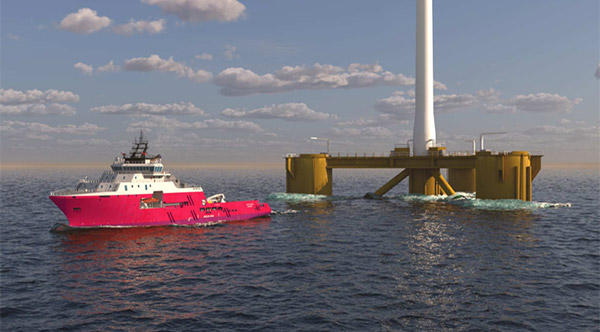
Mitsui O.S.K. Lines (MOL) and Fukada Salvage & Marine Works inked an MoU to develop towing and mooring vessels for floating offshore wind power.
They’ll create a framework for jointly owning and operating new specialized vessels, and securing a stable procurement system for mooring equipment.
CONTEXT: Floating offshore wind power involves assembling floating structures and wind turbines within port areas, before towing them to designated offshore locations. Once transported, these structures are anchored in place using a mooring system consisting of anchors and mooring lines. The entire process requires specialized vessels such as anchor handling ships.
Tokyu Land will invest over ¥50 billion in small hydropower by 2030, targeting 30 MW of capacity to compensate for a lack of new utility scale solar sites and challenges in the wind power sector.
The first project will launch in Gifu by 2028, with expansion in Tohoku and northern Kanto; existing hydropower plants may also be acquired.
CONTEXT: Hydropower is less weather-dependent than solar or wind, and has a 50-60% capacity utilization factor – four times more than solar. The national strategy calls for adding as much as 500 MW of small hydro by 2030.
On March 19, KEPCO resumed full operations at Oi NPP Unit 4. It’s been undergoing periodic inspections since Dec 14, 2024. After the reactor restart, the generator will be synchronized with the transmission grid.
No major replacements were made in the plant’s primary system, and no abnormalities in the pipes’ thickness were detected.
Kyushu Electric amended its Long-Term Facility Management Plan application to the NRA for Genkai NPP Unit 3.
It now includes a plan to conduct a special inspection of the solid waste incineration building in use since Nov 1981 – longer than the reactor itself, which began operation in March 1994.
CONTEXT: Shared facilities in use for longer than the reactor need inspections between 35 and 40 years after operational start. Facilities that have exceeded 40 years without inspection must undergo special inspection.
Shizuoka Gas signed a Heads of Agreement with TG Eagle Ford Resources LP (TGER), a subsidiary of Tokyo Gas America.
Shizuoka Gas will buy TGER’s 25% stake in a shale gas project in Texas.
The company made a $130 million acquisition through a new local subsidiary.
The mining area is 135 km² in Webb and La Salle counties. It will produce 400,000 tons of LNG per year, for 20 years, to sell in the U.S.
This is Shizuoka Gas’s first entry into North America and upstream gas.
TAKEAWAY: Shizuoka Gas aims to boost profits by expanding into overseas and U.S. energy markets. Currently, domestic gas sales are vulnerable to LNG price fluctuations due to Japan’s Raw Material Cost Adjustment System that adjusts gas prices monthly based on changes in LNG and LPG costs. For Tokyo Gas, this deal allows a chance to free up some cash for reinvestment while retaining control of the asset.
Woodside Energy is in talks to sell a 50% stake in the first phase of its Louisiana LNG project (formerly Driftwood LNG) that will cost about $16 billion when all four phases are completed.
Potential buyers include Tokyo Gas, JERA, and MidOcean Energy, a fund controlled by EIG Global Energy Partners and which counts Saudi Aramco and Mitsubishi Corp among its investors.
The project, acquired through Woodside’s $1.2 billion purchase of Tellurian, will produce 27.6 MTPA of LNG when completed. Woodside is seeking liquefaction fees of $2.70–$2.90 per mmBtu, which is above market rates, due to rising construction costs and permitting.
CONTEXT: Woodside’s plans to attract a strategic international partner coincide with Trump’s push for Japan to buy more U.S. LNG. MidOcean has concluded deals with Tokyo Gas in the past, buying its minority stakes in Australian LNG projects.
Tokyo Gas bought a 20% stake in FGEN LNG. The company owns and operates the first offshore floating LNG terminal in the Philippines. This is Tokyo Gas’ first investment in an operational overseas LNG terminal.
Tokyo Gas inked deals with First Gen (FGEN’s parent company) in 2018 and 2020.
CONTEXT: With Philippine demand for energy growing, the Department of Energy plans to increase LNG usage.
As of Feb 16, the LNG stocks of 10 power utilities were 2.01 Mt, down 6.5% from the previous week (2.15 Mt); down 7.8% from end Feb 2024 (2.18 Mt); and down 7.8% from the five-year average of 2.18 Mt.
CONTEXT: JMA’s weather forecast sees cold winter weather ending soon. Utilities have clearly factored this in, aiming to end the winter peak demand season without being over-stocked.
Kanadevia’s Swiss subsidiary, Kanadevia Inova, bought a majority stake in Groen Gas Coöperen, a Dutch biomethane firm. The deal’s value wasn’t disclosed.
Groen Gas is building a biogas plant that will generate 100 GWh of electricity per year using biogas derived from livestock manure.
CONTEXT: Europe’s market for biomethane – biogas extracted from livestock manure and used as a substitute for natural gas – is expanding. In December, Kanadevia Inova acquired UK-based Iona Capital and its group firms, gaining control of 11 biogas plants.
Xodus will support the Offshore Western Kyushu CCS project, one of Japan’s first large-scale CCS initiatives. A consortium that includes WEST, ENEOS, J-POWER, and ENEOS Xplora leads the project.
The goal is to capture 1.7 Mt of CO2 a year from ENEOS’ refineries and J-Power’s plants. Emissions will be sent via ship and pipeline for offshore storage near Kyushu.
The project, backed by JOGMEC, is part of the Advanced CCS initiative. A feasibility study is underway.
Asuene’s Singapore-based subsidiary, Asuene APAC, has partnered with Testech, a Philippine firm specializing in semiconductor manufacturing support and facility management around energy-saving.
Asuene and Testech will offer businesses an integrated service for CO2 measurement, reduction, and reporting.
CONTEXT: In 2019, the Philippine Securities and Exchange Commission introduced sustainability reporting guidelines, requiring listed firms to disclose non-financial sustainability data. Discussions are underway to mandate Scope 1 and Scope 2 emissions reporting.
ANALYSIS
BY MAGDALENA OSUMI
Is It a Ship, or Real Estate? No – It’s a Floating Wind Turbine
While Japan’s government is betting on floating wind power to be a key driver in renewables expansion in order to achieve 2040 emissions and clean energy targets, industry players are asking for new technical, economic and regulatory frameworks to invest in the sector.
On February 18, METI announced approval of the recently drafted Basic Energy Plan proposal, stating the goal of 40-50% renewable energy of the national energy mix by 2040, with wind power, both onshore and offshore, expected to account for up to 8%. While this is a small portion, it requires dozens of GW of new capacity. Japan has less than 6 GW of wind power installed today with offshore wind a tiny fraction of that.
Industry insiders expect floating wind projects to be included in annual auction rounds within three years.
Recent events at home and abroad are clouding the outlook for the offshore wind sector with most consultancies revising down their forecasts for capacity rollouts during this decade. And while companies look to the next phase of offshore wind’s development – through floating turbines – many are still struggling with the costs of the current phase. Earlier this month, a Mitsubishi Corp-led consortium claimed it cannot cover project costs for its fixed-bottom projects in Japan without further state financial assistance. If these projects stall, it could create a domino effect, delaying others scheduled for commercialization in the late 2020s.
On that same day when METI made its announcement, developers and industry stakeholders gathered in Tokyo for the 14th Asia Offshore Wind conference to discuss the sector’s issues. The talks continued into Smart Energy Week and adjacent events in Tokyo. Japan NRG reports on the latest mood and discussion points.
What is a floater?
The first major question that officials must grapple with is whether floating wind turbines qualify as “vessels” under maritime laws. Japan has two conflicting maritime laws in this regard. According to the Ship Safety Act, floating wind turbines are considered vessels. However, under the Vessels Act, offshore wind power plants are not subject to registration, which distinguishes them from standard vessels.
While the Vessels Act does not clearly define “vessels,” they are generally understood to possess buoyancy, loading capability, and mobility. Since floating wind turbines are moored to the ocean floor and lack mobility, they do not fall under this definition.
Expanding floating wind technology also means extending into the Exclusive Economic Zone (EEZ). Maritime traffic in Japan is governed by three key laws: the Act on Preventing Collisions at Sea, the Maritime Traffic Safety Act, and the Act on Port Regulations.
These, however, do not apply to the EEZ, where only exploration and development activities are covered by domestic law. As offshore wind farms could affect vessel movement and radar systems, METI is working on regulations to address local and regional challenges.
Floating demos
Earlier this month, METI announced that Round 2 of public bidding for floating offshore wind demonstration projects will launch by the end of the year, funded by the Green Innovation Fund. Candidate areas include Offshore Iwau-Minami Shiribeshi and Offshore Shimamaki in Hokkaido.
At the 14th Asia Offshore Wind Day, industry experts emphasized the importance of small-scale pilot projects to mitigate technical risks before full-scale deployment. However, progress has been slow. Round 1 bidding results were only announced in 2024, with SSE Pacifico among the winners, securing funding for a 30 MW project.
To accelerate sector growth, Japan must scale up projects and designate more demonstration areas. Toward that goal, Hokkaido and Sapporo City are urging the central government to expand demo sites in Hokkaido’s offshore waters.
Why Japan needs floating tech
Due to limited shallow waters, and the rising costs of fixed-bottom offshore wind, Japan has no choice but to prioritize floating wind. However, developers want a solid regulatory framework before concrete development plans can be made. Cost, however, remains the big unknown, as the full operational expense still hasn’t been determined for each unit, as well as on a major scale.
Japan is not alone in this challenge, given the novelty of the technology worldwide. However, in the eyes of many market players, it lags behind regional competitors like Taiwan and South Korea. Developers feel the Japanese government needs to provide more adequate support to give confidence to the burgeoning sector.
During the February 18 event, a Japanese wind power developer said that firms planning offshore projects often face difficulties negotiating with fisheries unions, as fishermen assume ultimate control over the seas.
He argued that these negotiations should be led by the state rather than left to individual companies. One international firm agreed, saying, “It’s unrealistic for developers to manage all the stakeholders.”
Challenges in floating tech
Global inflation, yen depreciation, and geopolitical conflicts have significantly increased offshore wind costs, including floating technology. Turbine manufacturers are hesitant to design new models specifically for floating wind farms, because they remain uncertain about market demand.
As such, manufacturers say they will likely offer very similar turbines to fixed-bottom units for the floating sector for this moment. Until a strong project pipeline and firm orders emerge, manufacturers have little incentive to develop new designs and are still waiting for strong volumes of firm orders for Asia-Pacific fixed-bottom turbines.
Offshore wind component prices remain about 25% higher than pre-Covid levels, though inflationary pressures have stabilized, according to Rystad Energy. While governments in Europe are adjusting to rising costs by increasing subsidies, Japanese developers argue that Japan’s policies are failing to keep pace.
Additionally, Japan’s port infrastructure is unprepared for floating wind deployment. The U.K., for instance, has already developed a port infrastructure roadmap to support its 5 GW floating offshore wind goal by 2030. Japan, by contrast, lacks a sufficient number of ports made available to the industry to handle floating foundations and turbine installation.
Last year, MLIT convened a forum to address these challenges, emphasizing the need for port facilities capable of managing floating wind projects. MLIT anticipates planning to only be completed by 2031, with offshore construction beginning five years after area designation, and then operations starting seven years later; which brings us to almost the mid 2040s.
Auction scheme needs overhaul
Perhaps the biggest stumbling block for progress in floating offshore wind, however, is the lack of a clear and profitable business model.
While a flat tariff system like the FIT would be ideal, a Japanese developer said that this option seems unlikely by the time floating projects are included in tenders. An industry equipment supplier said they expect floating wind projects to appear only in Round 5 or 6 of the offshore wind tenders.
Meanwhile, asking developers to secure long-term offtake such as through Power Purchase Agreements (PPAs) is impossible because of the costs that initial floating wind projects will command.
The difference between the “zero premium” bid prices offered in recent fixed-bottom auctions, and the prices that would be required to cover expected floating project costs, is a factor of four. Today’s PPA deal prices, which rarely exceed mid-¥20s per kWh, fall short of what the developer side needs.
Some European companies advocate for a two-sided Contract for Difference (CfD) model, which protects both buyers and sellers from price volatility. Another potential solution for the Japanese market is raising the auction ceiling price and indexing the bids to the FIP scheme.
There is also the option of introducing a ‘shared cost’ approach, though some developers say that this would require multiple stages of checks to split the long development lead times.
Either way, developers want METI to offer a new framework to give industry a sense of how the floating wind opportunities will potentially unfold.
Spanner in the works
Resolving the issues with the bottom-fixed auction system remains the government’s problem. Earlier this month, Mitsubishi Corp and its partner Chubu Electric publicly announced the possibility of withdrawing from the offshore wind sector altogether, despite winning all three bottom-fixed wind power auctions in Round 1. The developers say the cost increases incurred since they won the bids in 2021 make the projects no longer economically feasible.
METI’s initial push in offshore wind focused on cost, and that has translated in recent rounds all diverging to “zero premium” bids, which in effect mean accepting a ¥14/ kWh price. That level is at odds with the cost of development and can only be covered through PPA deals and other arrangements.
At least one overseas developer cited cost pressures and uncertainty as reasons for opting out of the Round 3 auction in 2024.
Fixing the bottom-fixed auction process may be more urgent for METI than attempting to lay out a new framework for the floating tech. Developers say the ministry is responding and aware of the issues, but their recent proposals to update the conditions from the next, 4th, auction round do not address the issues facing winners of the first three rounds.
“The current auction system inevitably leads to ‘zero premium’ bids,” a developer said. “The bid weighting needs adjustment to ease this pressure and allow realistic pricing.”
Another industry member remarked: “There’s been a lag in policy action, but it’s finally starting to move.”
Where is Japan’s floating wind sector headed?
With so many issues to solve in the bottom-fixed space, is there any urgency to creating a new framework for floating wind? Many wind power companies say: yes, there is.
While installing floating wind on a large scale is at least 15 years away, developers with interest in the Japanese market are planning well ahead and want to see a clear roadmap for the sector. If not, Japan risks developers leaving the market to work on projects in Taiwan, South Korea and elsewhere during “gap years” when no new capacity is auctioned or progress is slow. That, in turn, leads to shortages of specialist equipment, talent, or budgets to realise large-scale energy infrastructure development, affecting METI sector capacity targets and therefore the overall energy sector plans and emissions targets.
Developers want to see more momentum in the Japanese market, according to an industry consultant. While many of the challenges in the market today are local, the supply chain is very much global and Japanese wind projects will need to fit with international trends to succeed.
ANALYSIS
BY TETSUJI TOMITA
Why is Ammonia Used as Next-gen Fuel?
In just over a month, applications for Japan’s first large-scale hydrogen subsidy scheme are due to close. The ¥3 trillion of subsidies are expected to support a number of sectors that seek to switch from burning fossil fuels to cleaner alternatives, with potential end-users including steel and glass makers, chemical and oil refinery firms, as well as transport companies.
The most prominent sector in line for initial state support, however, is power generation. Japan still relies on coal and natural gas burning for over two-thirds of its electricity generation, and the prospects of renewables completely taking over in the 15 years are slim, according to the government’s own estimates.
This puts ammonia in line for special attention. Ammonia can be used as a hydrogen carrier because it contains hydrogen (about 18% by mass). Like hydrogen, it burns without emitting CO2, but unlike its cousin ammonia benefits from an existing global supply chain, as it has long been produced and transported for use as fertilizer. This established infrastructure makes ammonia a relatively cost-effective option for scaling up as a fuel.
Arguably Japan’s biggest backer of ammonia as a decarbonization tool is the country’s top thermal power utility, JERA, which ran the first commercial-scale test of co-firing ammonia and coal in a major power station. The 80% (coal) – 20% (ammonia) test was successfully completed last year; a full-time shift to this ratio at JERA’s Hekinan station is due in 2027. A year later, testing of 50-50 co-firing at the same plant is expected to start.
Still, the burning of ammonia to generate electricity is not only a recent phenomenon. Japan and other countries have researched the topic for decades. Japan NRG looks at the history of this technology.
Resurgence of interest in ammonia combustion
Research on ammonia as a fuel dates back to the early 20th century. The U.S. explored its use in gas turbines in the 1960s, but low combustion efficiency led to its abandonment in favor of cheaper and more efficient fossil fuels. Ammonia was relegated to discussions on nitrogen oxides (NOx) formation rather than as a viable energy source.
Interest in ammonia was rekindled in the late 1990s, as concerns over global warming intensified. In the 2000s, the concept of a “hydrogen society” emerged, positioning ammonia as a viable hydrogen carrier. However, it was Japan’s Strategic Innovation Promotion Program (SIP) that catalyzed a new wave of research. From 2014 to 2018, SIP’s Energy Carrier project demonstrated ammonia’s feasibility as a direct combustion fuel in coal-fired boilers and gas turbines. This initiative laid the groundwork for subsequent developments in ammonia power generation.
Japan’s major ammonia R&D projects
After the SIP program, the New Energy and Industrial Technology Development Organization (NEDO) launched multiple research efforts under the Green Innovation (GI) Fund, a ¥2 trillion ($13 billion) initiative to support low-carbon technologies. From 2021 to 2030, these projects aim to advance ammonia supply chains, next-generation ship development, and industrial decarbonization. (See Tables 2-3 below for further details on projects).
Companies such as Mitsubishi Heavy Industries, IHI, and JERA have made significant progress in ammonia-based power generation, while research institutions like Tohoku University, the National Institute of Advanced Industrial Science and Technology (AIST), and the Central Research Institute of Electric Power Industry (CRIEPI) are addressing combustion stability and NOx emissions.
Ammonia liquefies at approximately 9 atmospheres at room temperature and liquefies at -33°C even under atmospheric pressure. So, it has the same characteristics as LPG, and can be manufactured, stored and transported using mostly existing infrastructure. Wider usage of the fuel would, however, require larger equipment to store and transport ammonia.
Still, ammonia poses several challenges as a fuel. Compared to methane, the primary component of natural gas, ammonia’s laminar flow combustion rate is roughly 20%, and its calorific value per unit mass is about half. This makes stable ignition and efficient combustion challenging, particularly in confined combustion chambers such as those found in power plants and engines.
Additionally, ammonia contains a significant amount of nitrogen, which makes NOx emissions a concern. To mitigate these emissions, researchers are exploring ammonia combustion chemistry and developing equipment-specific NOx reduction strategies.
Unlike conventional fossil fuels, ammonia does not produce CO2 during combustion, meaning its radiative heat transfer characteristics also require careful consideration in system design. This can impact turbine and boiler performance, requiring modifications to existing systems.
Future prospects for ammonia-based power generation
A number of Japanese firms have tested ammonia co-firing at a pilot or commercial level in coal power plants. A few including JERA and Kansai Electric have also tried burning hydrogen in gas power plants.
To allow the end-users to keep their options open, Japan’s three heavy machinery firms – Mitsubishi Heavy, Kawasaki Heavy, and IHI – are working on different technologies across the hydrogen and ammonia space. For example, IHI in partnership with GE Vernova is focusing on ammonia-based solutions and smaller to mid-sized units, while Kawasaki Heavy Industries prioritizes hydrogen.
Meanwhile, Mitsubishi Heavy is squarely aimed at the market for large turbine units but hedges its bets on the fuel by testing both ammonia and hydrogen, as well as several electrolyzer technologies including SOEC.
With the eventual balance between hydrogen and ammonia dependent on cost, supply chain development, and regional energy policies, all options remain on the table.
The cost of switching to ammonia and hydrogen are often cited as a reason against pursuing the technology, but there are other criticisms. After all, while co-firing reduces CO2 emissions, it does not eliminate them entirely because fossil fuels are also used. Until power plants switch to 100% ammonia or hydrogen fuel, emissions will remain an issue. Equipment that would allow for the sole firing of ammonia or hydrogen at GW-scale is not expected to be developed until the end of this decade.
Until the technology is available and tested, ammonia’s role may be seen as a tandem partner for coal. In fact, environmental groups say that ammonia co-firing will intentionally or otherwise prolong the life of coal-fired power plants, delaying their phase-out.
The contrary view is that even if utilities had the equipment to deploy 100% ammonia-firing today, the amount of the fuel produced globally is vastly inferior to demand. The first step to bridge the gap is to create a bigger market for ammonia / hydrogen. That is what METI hopes to do through the ¥3 trillion Contract for Difference (CfD) subsidy program that is due to close its applications on March 31, 2025.
ASIA ENERGY REVIEW
BY JOHN VAROLI
A brief overview of the region’s main energy events from the past week
Australia / BESS
Essential Energy, a state-owned electricity infrastructure company, switched on three community batteries in New South Wales. Each BESS can produce 192 kW of power and store 530 kWh of energy.
China / LNG
The volume of LNG imports to China reached around 77 Mt in 2024, nearly reaching the record-high of 79 Mt in 2021, according to Rystad Energy.
China / Oil
CNOOC said that its Luda 5-2 North Oilfield Phase II project has commenced production, which should reach 6,700 barrels of oil equivalent per day in 2026.
India / LNG
India’s natural gas demand is forecast to increase nearly 60% by 2030, a IEA report says, putting India’s projected gas demand on a par with some of the world’s largest consumers.
Indonesia / Coal
Under its new electricity plan, Indonesia plans 26.8 GW of new coal capacity over the next seven years, with more than 20 GW coming from coal expansion.
Philippines / Power plants
Aboitiz Power Corp’s subsidiary Therma PowerVisayas received approval to decommission its 45 MW Naga oil-fired power plant.
Singapore / Energy transition
The Future Energy Fund plans to invest $5 billion in the energy transition, especially focusing on clean energy infrastructure and technological innovation.
Singapore / Hydrogen energy
Prime Minister Lawrence Wong said in his budget speech that there are inherent challenges in the production, storage, and transportation of hydrogen, which makes it hard to scale up in a commercially viable manner.
South Korea / LNG
South Korea will sharply reduce the portion of LNG in its power mix to 10.6% over the next 13 years, down from 28% currently.
South Korea / Nuclear power
South Korea finalised a new energy mix plan that envisages building two new large-scale nuclear power plants and one small nuclear power reactor by 2038. The country’s nuclear power generation is expected to grow from 180.5 TWh in 2023 to 248.3 TWh in 2038
Disclaimer
This communication has been prepared for information purposes only, is confidential and may be legally privileged. This is a subscription-only service and is directed at those who have expressly asked K.K. Yuri Group or one of its representatives to be added to the mailing list. This document may not be onwardly circulated or reproduced without prior written consent from Yuri Group, which retains all copyright to the content of this report.
Yuri Group is not registered as an investment advisor in any jurisdiction. Our research and all the content express our opinions, which are generally based on available public information, field studies and own analysis. Content is limited to general comment upon general political, economic and market issues, asset classes and types of investments. The report and all of its content does not constitute a recommendation or solicitation to buy, sell, subscribe for or underwrite any product or physical commodity, or a financial instrument.
The information contained in this report is obtained from sources believed to be reliable and in good faith. No representation or warranty is made that it is accurate or complete. Opinions and views expressed are subject to change without notice, as are prices and availability, which are indicative only. There is no obligation to notify recipients of any changes to this data or to do so in the future. No responsibility is accepted for the use of or reliance on the information provided. In no circumstances will Yuri Group be liable for any indirect or direct loss, or consequential loss or damages arising from the use of, any inability to use, or any inaccuracy in the information.
NEWS
• METI’s hydrogen official confident that Trump will support sector
• Japan moving beyond renewables vs nuclear debate; investment key to net-zero: ANRE