METI announced changes to the purchase prices for renewables from April 2025.
To accelerate the adoption of rooftop solar power, METI will introduce the Initial Investment Support Scheme in the second half of FY2025, ensuring no additional burden on the public. The purchase prices will be set as follows:
Residential PV: ¥24/ kWh (for up to 4 years); ¥8.3/ kWh ( 5–10 years)
The purchase price for FY2025 will be separately determined through auctions. The auction will apply to FIP-certified projects of 250 kW or more, except for rooftop installations, which are exempt. There will be four auction rounds, with the following maximum bid prices: ¥8.90/ kWh; ¥8.83/ kWh; ¥8.75/ kWh; ¥8.68/ kWh.
For onshore wind, the FY2025 purchase price will be settled via auction. There will be one round, with a maximum bid price of ¥13/ kWh. If the total auctioned capacity exceeds 1.2 GW, another auction will be held in the same fiscal year.
For fixed-bottom offshore wind power (excluding areas covered by the Renewables Utilization Act), the purchase price for FY2025 will be determined through public tenders auctions, with the maximum bid price undisclosed in advance.
For floating offshore wind (excluding areas covered by the Renewable Sea Area Utilization Act), the purchase price will remain at ¥36/ kWh until FY2027.
The changed rates are as follows:
Renewable
energy type
Capacity
FY2024
(¥)
FY2025
Q1,2 (¥)
FY2025
Q3,4 (¥)
FY2026
(¥)
FY2027
Solar power for residential use
Up to 10 kW
16
15
Initial Investment Support Scheme
NA
Ground-mounted solar power for commercial use
10-50 kW
10
10
9.9
NA
Over 50 kW
(not auctioned)
9.2
8.9
8.6
NA
Rooftop solar power for commercial use
Over 10 kW
12
11.5
Initial Investment Support Scheme
NA
Onshore wind power
Up to 50 kW
14
13
12
11.8
Onshore wind power (replacement)
All scales
12
12
NA
NA
CONTEXT: The prices are determined annually before the start of each fiscal year, in accordance with the Renewable Energy Special Measures Act.
METI said the renewable energy surcharge added to electricity bills will increase to ¥3.98/ kWh from April 2025. This marks the second consecutive year of increases.
A standard household consuming 400 kWh/ month will see an additional ¥196/ month compared to the previous year.
The increase is mainly due to higher renewable energy purchases and a decline in market electricity prices.
For FY2025, the total monthly surcharge for a standard household will be ¥1,592, or ¥19,104 annually. In fiscal 2024, the surcharge was ¥3.49/ kWh.
CONTEXT: Japan introduced the Feed-in Tariff (FIT) system in 2012 to promote renewables, requiring utilities to purchase solar and wind power at fixed rates for 10 to 20 years. This cost is covered by adding surcharges to electricity bills. The surcharge is determined annually by the METI minister. It is calculated by subtracting the revenue from selling renewables on the wholesale electricity market from the total cost of purchasing renewables from producers.
ANRE will review grid investment rules to address inefficient power infrastructure development caused by rapidly increasing, localized data center demand.
It will reconsider the current “first-come, first-served” approach that leads to excess infrastructure when early applicants withdraw their plans after new capacity has been built. The agency is also looking at factors such as who should cover the costs involved and how to optimize the efficiency of new grid facilities.
Officials will consider fairer cost allocation methods, such as potentially charging large consumers for additional costs incurred due to changes or delays.
Govt action will follow a review of the Inzai and Shirai areas of Chiba Pref, where many data centers are being developed, and of structural changes in local grids.
Companies will be asked to cooperate to gather reliable information, and officials may even look at certain contract conditions.
CONTEXT: As new data centers and related facilities are concentrated in certain areas, the govt aims to take a more active role as arbiter of disputes and also to ensure that development is aligned with that of local grids and their future upgrade.
ANRE also aims to provide better grid-capacity information to municipalities, which should help them to attract data centers to areas with excess grid capacity and avoid costly infrastructure upgrades in other regions with bottlenecks.
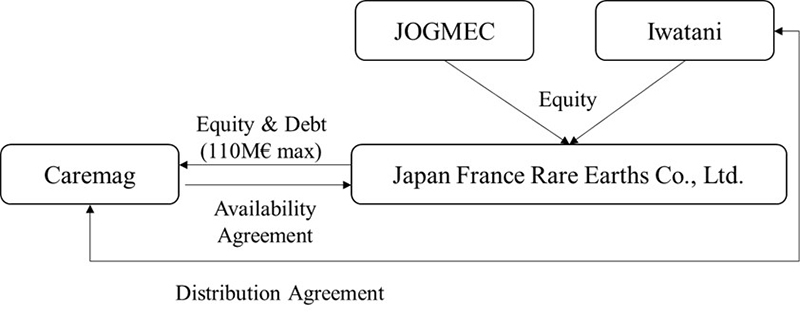
Japan will invest up to €110 million in a French rare-earth refining project run by Caremag, a subsidiary of Carester. The JV, Japan France Rare Earth, seeks to reduce reliance on China.
JOGMEC and trading house Iwatani invested in the JV, which will itself invest in equity and shareholder loans in the Caremag plant.
This deal includes long-term supplies of heavy rare earth oxides for Japan. France will provide over €100 million in subsidies and tax breaks.
The deal gives Japan 50% of the heavy rare earth oxides produced by the firm, providing Japan with 20% of its future dysprosium and terbium demand, needed to make magnets for EV motors, offshore wind turbine generators, and electronics.
Caremag is building a rare earth refining plant in Lacq, France, set to start in late 2026. The facility plans output of 600 tons of dysprosium and terbium oxides, about 15% of global production.
CONTEXT: Iwatani has been importing rare earths to Japan since the 1990s. Through the equity and debt financing to Caremag, the company will strengthen Japan’s global supply chain of rare earths.
Mitsubishi UFJ Financial Group plans to withdraw from the Net Zero Banking Alliance, following Sumitomo Mitsui Financial Group and Nomura Holdings.
Nevertheless, MUFG will maintain its sustainable finance goals. It will continue supporting decarbonization investments for domestic companies.
This decision is due to increasing backlash and legal risks in the U.S., as well as declining global momentum for coordinated climate efforts.
The three remaining Japanese banks – Mizuho Financial Group, Sumitomo Mitsui Trust, and Norinchukin Bank – are reconsidering membership. Similar exits have occurred among U.S. banks like JPMorgan Chase and Goldman Sachs.
Critics say the alliance violates antitrust laws and operates as a “climate cartel.”
CONTEXT: The NZBA, which once had 145 members, now faces a steady decline, with membership a little over 130. Macquarie Group also exited.
MILT and METI reported on the activities of the “New Technology Public-Private Council for Decarbonizing Aircraft” in FY2024.
In the light of technological development trends such as aircraft electrification, hydrogen-powered aircraft, and weight reduction, the agencies are trying to build a domestic cooperation system for international standardization, including surveys of standardization trends, examination of standardization activity strategies and policies, participation in standardization bodies and establishment of cooperation relations, etc.
CONTEXT: To promote decarbonization in the aviation sector, MILT and METI established the “New Technology Public-Private Council for Decarbonizing Aviation” in June 2022 and have been discussing the issue in three technical working groups (electrification, hydrogen, and lightweighting/efficiency). A new technology roadmap will be drawn up, outlining the establishment of a national partnership system.
TAKEAWAY: This council focuses only on electrification, hydrogen use, weight reduction and efficiency, which will require new technologies. It does not cover SAF, which is a drop-in substitute for existing fuels. Hydrogen-fueled and lightweight aircrafts are being developed by KHI, MHI, and other companies as part of the Green Innovation Fund. JAXA and IHI are developing electric-powered aircraft.
The MoE selected four projects for the fourth round, and one project for the fifth round, of the FY2024 Equipment Subsidy Program under the Joint Crediting Mechanism (JCM).
The selected projects focus on renewable energy and efficiency, and span countries such as Indonesia, Cambodia, and the Philippines.
In Indonesia and Cambodia, the projects are led by KEPCO and Chugoku Electric.
CONTEXT: The JCM, established in 2013, promotes adoption of advanced decarbonization technologies in partner countries, as well as measuring and verifying GHG reductions. JCM credits help Japan to achieve emission reduction targets, which are shared between both countries under Article 6 of the Paris Agreement. Japan partners with 29 countries, implementing over 250 projects. The goal is to reduce or absorb about 100 Mt of GHGs by 2030.
Chugoku Electric will invest in a solar farm with battery storage in Pursat Province, Cambodia, partnering with SchneiTec, a local renewables firm. They will build and operate the solar farm (13.75 MW). Chugoku Electric has a 10% stake in the project.
The electricity will be sold to Electricité du Cambodge under a 20-year PPA; operations are set to begin in April.
This initiative was selected under MoE’s Japan’s Joint Crediting Mechanism (JCM).
TEPCO announced an interim reconstruction plan, approved by the govt.
Officially known as the “Comprehensive Special Business Plan”, it revises the current one from 2021, and includes profit and loss forecasts through FY2025.
TEPCO seeks an extra ¥1.9 trillion in assistance from the govt. METI approved revisions, which forecasts a net profit of ¥57.2 billion for the current FY. It foresees ¥113.7 billion for the following FY.
Despite this, TEPCO expects cash flow to remain negative, with an estimated ¥960 billion shortfall over the next two years, due to Fukushima-related expenses. The new plan assumes that one nuclear reactor will restart within the year.
CONTEXT: The Comprehensive Special Business Plan outlines compensation strategies for the Fukushima Daiichi accident, focusing on business growth and financial recovery under state oversight. Since the first plan in 2012, TEPCO has implemented cost-cutting and business restructuring. The current (2021) plan targets ¥450 billion in net profit after 2030, and a decarbonization-driven transition. The next plan will focus on financial restructuring and external capital infusion to address ongoing liquidity challenges after six consecutive years of negative cash flow.
CONTEXT: TEPCO will release the next full plan after summer 2025. For the first time, TEPCO presented consolidated earnings forecasts for five group companies. Notably, its project expanded profit next year is heavily dependent on the operation of at least one nuclear reactor during FY2025. Its cash, and cash equivalents, which recently stood at about ¥900 billion, will likely decline to ¥382 billion by the end of FY2024 (i.e. March 2025). The utility requires around ¥300 billion in cash reserves to maintain stable operations.
TAKEAWAY: Decommissioning costs for Fukushima Daiichi NPP continue to rise. Delays in restarting Kashiwazaki-Kariwa NPP only worsen cash flow. TEPCO’s financial situation has stalled and without main shareholder cash injections – in other words, additional cash from the government – the company is bankrupt. Should it fail to meet goals for the reconstruction plan and NPP restart, the overall national energy strategy (especially for the Kanto region) will also be impacted. How long such a dire state of affairs will be allowed to continue is anyone’s guess, but the tactic of presenting financials on the basis of restarts has not helped the restarts occur in the past.
A study by research firm Fuji Keizai on solar and wind output curtailment predicts an increase from 21.6 TWh of curtailed volumes in 2024 to 131.1 TWh by 2040.
Nationwide curtailment is expected by 2030 as renewables reach 30% of the energy mix. To address this, battery storage, demand response (DR), and incentive-driven energy consumption measures are needed.
The study analyzed demand for green electricity, which in 2024 was estimated at 588 TWh (5.5% of the total), mainly in Tokyo, Chubu, and Kansai. By 2040, it’s projected to grow fivefold to 2,878 TWh, or about 25% of total electricity demand.
Corporate decarbonization efforts, green power incentives, and rooftop solar adoption in new buildings are expected to further drive growth.
By FY2026, JERA will start shutting some coal-fired plants on a seasonal basis. It will focus on high-emission sites like the Hekinan power station. The goal is to reduce CO2 emissions and shift coal from a baseload power source to usage based on occasional demand. During peak demand or low renewables output periods, JERA will burn more LNG.
Another utility, J-Power, has already started such seasonal cutbacks in 2023 on a trial basis. The company reduces coal use during sunny hours but increases it at night. J-Power expects the approach to also boost FY2024 profits by tens of billions of yen.
Coal has a low generation cost (¥10.7/ kWh). Still, falling electricity prices (driven by nuclear restarts) are making coal less competitive. Rising coal costs is also a big issue. Australian mine closures, for example, could worsen the situation.
CONTEXT: Coal remains 30% of Japan’s power mix, but its future is uncertain as cost pressures and global trends push toward cleaner energy. The govt has introduced subsidies to maintain idle coal plants as emergency backups but there is no utility interest in the scheme at present.
CONTEXT: For more information about the future of Japan’s coal-fired thermal power plants, please see the Feb 3 issue of Japan NRG.
TAKEAWAY: Japan’s coal power plants are under increasing regulatory pressure. There are upcoming carbon reporting mandates and capacity factor limits on inefficient plants. These policies are forcing utilities to adjust their operational strategies. This is making long-term reliance on coal less viable. Also, METI’s capacity auctions aim to encourage new LNG capacity, but supply gaps remain as existing plants retire. Meanwhile, reserve auctions to keep thermal plants as backups struggle to attract bidders due to low prices.
Japan’s electricity demand in November 2024 reached 63.15 TWh, up 1.6% YoY from 62.41 TWh, marking the fifth consecutive month of YoY growth.
New power providers (shin denryoku) saw sales rise 20.7%, reaching 11.33 TWh, a 18.8% market share. In the low-voltage segment for households the share was 24.2%.
Meanwhile, major power utilities saw sales fall 2.6% to 48.77 TWh, for a seven straight month of decline.
The number of registered new power players was 704 companies as of November 2024, up by two from the previous month, according to ANRE. The number of active retailers, as in those registering sales, was at 499, one down from a year earlier.
Meanwhile, in the latest ranking of power retailers – available for October – Tokyo Gas maintained its position as the biggest seller of electricity in Japan outside of the major power utilities, while Marubeni climbed to third, overtaking Osaka Gas. The No. 2 retailer overall and the biggest supplier of extra-high-voltage power was Ennet, which is a JV between NTT Anode Energy, Tokyo Gas and Osaka Gas.
ANRE told TEPCO Power Grid (TEPCO PG) to implement strict measures to prevent a recurrence of incorrect responses during pre-consultations for grid connections.
Following an investigation, ANRE received a report from TEPCO PG on Feb 28, detailing the circumstances leading to the incident, its impact on businesses, and proposed corrective actions.
Based on this report, ANRE issued guidance today to ensure compliance with regulations and prevent similar incidents in the future.
CONTEXT: The issue concerns TEPCO PG’s incorrect responses to pre-consultations from entities seeking to connect their power generation facilities to the network. Under the guidelines for T&D operations, TEPCO PG was required to provide accurate information for the connection process. However, it gave incorrect answers, potentially affecting business decisions and project feasibility for those seeking grid connections. Under Article 106, of the Electricity Business Act, METI has the authority to request reports and materials from utility operators regarding their operations and review compliance with regulations.
NTT Anode Energy and networking engineering firm NTT-ME were tapped for a decarbonization microgrid project in Ishikari City, which has been designated as a “Decarbonization Leading Area” by the MoE.
The project aims to introduce renewables and establish a microgrid across five public facilities including city hall and the library.
Solar power and battery storage systems will be installed, enabling energy supply through an onsite PPA.
CONTEXT: The microgrid-connected facilities will maximize renewable energy use under normal conditions and ensure power supply to critical sites during emergencies.
Iwatani will withdraw from a major green hydrogen project in Queensland, Australia. This follows the exit of other Japanese companies and the Queensland govt’s decision to halt further investments.
CONTEXT: The project planned annual production of 70,000 tons of green hydrogen by 2028. But, it faced increasing financial and logistical difficulties.
Green hydrogen has high production and transportation costs, requiring subsidies. Iwatani had invested across the supply chain but is now scaling back operations.
This withdrawal reflects a broader industry trend. Companies like Kawasaki Heavy Industries also face setbacks in hydrogen-related ventures.
TAKEAWAY: This is not a major surprise given that most of Iwatani’s partners in the project, including Kansai Electric, have already pulled out. There is still strong Japanese interest in Australian hydrogen supply, especially since the passing of local legislation to subsidize production. Which Australian projects make economic sense under the new conditions is under review by the Japanese sector players.
Mitsubishi Heavy Industries is advancing Solid Oxide Electrolysis Cell (SOEC) technology at its Takasago Hydrogen Park.
The company’s SOEC unit now operates at 800–1000° C and has achieved an efficiency rate of 85–90%, outperforming conventional alkaline and PEM electrolysis systems.
CONTEXT: Unlike PEM systems, SOEC does not rely on scarce precious metals like platinum or iridium, instead using yttria-stabilized zirconia, which offers durability and reduces dependence on rare materials.
MHI plans to commercialize large-scale SOEC systems (hundreds of megawatts) by the late 2020s, leveraging its expertise in Solid Oxide Fuel Cell (SOFC) technology. The target is a total system efficiency of 90%.
Obayashi Corp provided its geothermal hydrogen production site in Kokonoe, Oita Pref to demo Kawasaki Heavy Industries’ hydrogen transaction support platform.
Obayashi contributed operational data from its geothermal-powered hydrogen plant, including power usage, production volumes, and transportation data for delivery trucks.
Nippon Steel Engineering was tapped by Idemitsu Kosan to do a FEED study for an ammonia supply base and pipeline installation in the Shunan Petrochemical Complex.
The project aims to set up ammonia supply infrastructure by 2030, focusing on reusing existing pipelines, particularly in the difficult subsea sections, to reduce construction complexity and costs.
Nippon Steel Engineering said it was chosen due to its experience designing over 4,000 km of pipelines both domestically and internationally, as well as its strong technical expertise in energy and marine resource infrastructure.
Coca-Cola Bottlers Japan, in collaboration with Fuji Electric, installed the world’s first “hydrogen cartridge power-generating vending machine” at the Osaka Expo.
The machine uses a hydrogen cartridge and generates electricity through a chemical reaction between hydrogen and oxygen, producing zero CO2 emissions.
The machine will operate from April 13 to Oct 13, 2025 at the Expo site.
The Japan Atomic Energy Agency developed the world’s first battery using uranium. If commercialized, it could provide a new use for “depleted uranium,” a byproduct of nuclear fuel production, and serve as a storage solution for surplus electricity from renewable energy sources such as large-scale solar farms.
The 10 centimeter-wide, 5 cm-tall battery uses a uranium-containing electrolyte for the negative electrode and an iron-containing electrolyte for the positive electrode. The battery operates at 1.3 volts, similar to a standard 1.5-volt dry cell battery, and in a test it successfully powered an LED light. It was charged and discharged 10 times.
Starting in FY2025, JAEA plans to develop the battery into a redox flow one, which increases storage capacity by circulating electrolyte through a tank using a pump.
Application would be limited to radiation-controlled areas, such as in a NPP site.
TAKEAWAY: Pairing redox flow batteries with large thermal power plants has already been trialed in Japan and there are several examples. This would extend a similar principle to NPPs for a depleted uranium battery. What role such a battery would play in the energy grid, however, is as yet unclear.
Tokushima Pref outlined a roadmap with specific targets for its Tokushima Battery Valley Initiative, aiming to establish a battery industry cluster by 2030.
With up to ¥10 billion in subsidies from the 2025 budget, the prefecture aims to make the battery sector a key industry. Participants at a March 13 govt meeting included Toyota, Panasonic, and Shikoku Electric.
Tokushima govt set five key goals by 2030:
joint research projects,
train 10,000 battery industry professionals,
10 investment support programs,
¥200 billion in corporate investment, and a
50% reduction in GHG emissions.
To attract corporate investments, with a focus on battery-related industries, the local govt introduced a range of subsidies for businesses, including a relocation subsidy in the 2024 supplementary budget capped at ¥3 billion and a 20% subsidy rate.
CONTEXT: The initiative was launched in July 2024. According to the prefecture’s business support division, private manufacturing equipment investments eligible for subsidies in the past five years amounted to around ¥66 billion. For battery-related industries, the goal is to reach three times that amount.
JFE Engineering and financial services firm Tokyo Century are set to launch a grid-scale battery storage system in Memuro Town, Hokkaido.
This will be JFE’s first extra-high-voltage project, with a rated capacity of 20 MW and a battery capacity of 79 MWh, aiming to begin operations in the second half of FY2027. The project will use Li-on batteries.
The project has been selected for subsidies under Japan’s FY2024 Renewable Energy Expansion and grid battery storage support program.
CONTEXT: With the growing adoption of renewables, grid-scale battery storage is gaining importance to stabilize output fluctuations and reduce grid stress. In Hokkaido, large-scale offshore wind farms are expected to come online in the 2030s.
Digital Grid, a renewables trading platform operator, will debut on the Tokyo Stock Exchange’s Growth Market on April 22. It plans to invest the IPO proceeds, estimated at ¥1.1 to ¥2.37 billion, into its battery storage unit, Digital Grid Asset Management.
Digital Grid aims to complete six projects in the pipeline by July 2029. The company has grown revenue from ¥190 million in FY2019 to ¥3.5 billion in FY2023.
The firm has facilitated major deals, including a 72 MW solar PPA between Vena Energy and LY Corp in Maniwa City, Okayama Pref, scheduled to launch by 2026.
Existing shareholders – Mitsubishi Corp, Sony, Mitsui Chemicals, and Toyota Tsusho – will sell shares via a secondary offering. Daiwa Securities is the lead underwriter.
Daigas Energy, a wholly-owned Osaka Gas subsidiary, inked a partnership with Sanix and its subsidiary, Sanix Engineering, to expand its corporate solar power and resource recycling businesses.
Daigas Energy will leverage Sanix Engineering’s sales network and expertise in installation and maintenance to expand the reach of solar PPA service D-Solar, helping more corporate customers adopt solar energy systems.
Also, the firms will combine Sanix’s expertise in waste liquid purification, plastic fuel conversion, and power generation using recycled plastic fuels with Daigas Energy’s D-Bio (on-site biogas supply) and D-Aqua (water treatment).
NTT Anode Energy opened a safety testing facility for solid-state batteries (SSBs) where it will offer safety evaluation, demo and consulting services.
CONTEXT: As the development of SSBs — offering higher energy density and faster charging — advances, early-stage safety evaluations are crucial.
TAKEAWAY: The testing facility will help develop thermal energy storage as a way to balance electricity supply and demand as adoption of renewables spreads. Storage using materials such as rock, molten salt, etc can help with heat supply and power generation. The feasibility study on rock-based thermal storage, in particular, is expected to show significant environmental, economic, and reliability advantages.
Digital marketing firm i-mobile is entering the grid battery storage business with a 2 MW/ 8 MWh Li-on system in Hiki District, Saitama Pref. The battery is by Huawei.
Partnering with Digital Grid as an aggregator, it will trade in wholesale, capacity, and balancing markets.
The firm inked a construction contract with solar services firm Sun Village and aims to launch in July.
Trina Storage, the energy storage division of Trina Solar, obtained JET safety certification for its Elementa 2 large-scale battery and cold-climate residential battery.
This is the first time a foreign manufacturer has passed these tests. Elementa 2 passed durability, internal short-circuit prevention, and thermal runaway containment tests.
The firm will sell 4 MWh and 5 MWh storage systems in Japan.
J-Power, which has been providing renewable energy aggregation services for solar power, is now expanding to onshore wind farms with power generation forecasting, supply-demand balancing, and electricity trading.
J-Power says its forecasting system has shown high accuracy at the firm’s own wind farms.
Kyushu Electric’s Machida No.1 Power Station (Oita Pref) resumed commercial operation after upgrades. Launched in 1922, it has an output of 1.7 MW.
CONTEXT: Kyushu Electric’s hydro portfolio includes 138 power plants with a total capacity of 3.6 GW. The utility is upgrading its hydro portfolio, including the 8 MW Shinohara Power Plant in Oita Pref and the 7.5 MW Shinsugebaru Power Plant.
Chubu Electric began dismantling the reactor at Hamaoka NPP Unit 2 (Omaezaki City, Shizuoka Pref).
This marks the first time a reactor at a commercial NPP in Japan is dismantled.
CONTEXT: The removal of the reactor and containment vessel will continue until FY2035. Radioactive waste will remain on plant premises until a disposal site is found. The entire decommissioning, including the building, will run until FY2042, six years later than scheduled. The decision to decommission Units 1 and 2 came in 2008 due to the high costs of seismic reinforcement.
The Matsuyama District Court dismissed a request to halt the operation of Shikoku Electric’s Ikata NPP Unit 3. This case began in December 2011, when residents of Ehime Pref sued to stop the plant’s operation.
During the trial, the company said the NPP meets safety standards for earthquakes.
CONTEXT: The lawsuit was filed by 1500 residents, who now plan to appeal. In the past, there were other similar lawsuits, all dismissed.
TEPCO will start the second trial removal of fuel debris from Unit 2 at the Fukushima Daiichi NPP as early as April.
This marks a new phase in decommissioning. Still, a timeline for full-scale debris retrieval remains uncertain, even 14 years after the accident.
CONTEXT: Fuel debris is the solidified mixture of nuclear fuel and reactor structures that melted in the incident. There are around 880 tons of fuel debris across Units 1 to 3. Due to the high levels of radiation, human access is restricted. This makes debris removal the most challenging part of decommissioning. The govt and TEPCO aim to complete decommissioning by 2051.
Alaska governor Mike Dunleavy is visiting Japan, South Korea, Taiwan, and Thailand during March 19 to 30. Alaska Gasline Development Corp (AGDC) and development partner Glenfarne Group are joining the governor.
The goal is to raise $44 billion for a 1,300-km pipeline that would transport gas from Alaska’s north, and then ship it as LNG to Asian markets.
Despite U.S. diplomatic pressure, Japanese energy firms remain skeptical due to concerns about the project’s economic viability and high costs.
Potential investors include Inpex, Mitsubishi Corp, Mitsui, JERA, JOGMEC, and the Japan Bank of International Cooperation.
AGDC argues that Alaska’s low-cost natural gas feedstock makes the project competitive with U.S. Gulf competitors.
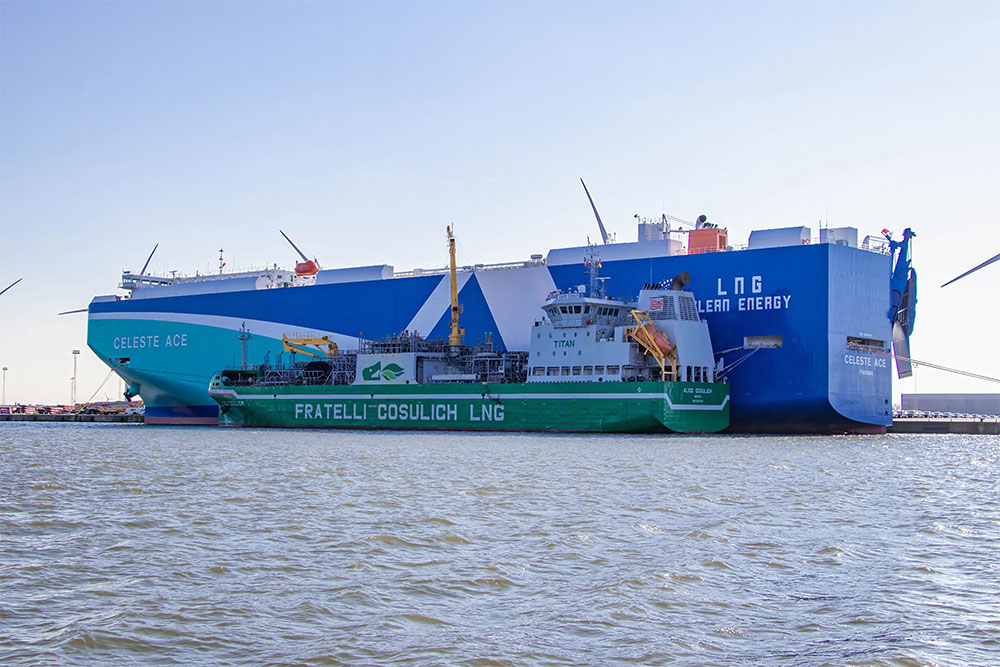
MOL supplied 500 tons of bio-LNG (liquefied biomethane) to its LNG-fueled car carrier Celeste Ace at the port of Zeebrugge (Belgium).
This is the first time a Japanese-operated ocean-going vessel used bio-LNG.
CONTEXT: Bio-LNG claims to have a carbon intensity of less than zero on a lifecycle basis. It meets EU sustainability standards, and reduces CO2 emissions by about 25% compared to conventional LNG.
As of March 16, the LNG stocks of 10 power utilities were 1.56 Mt, down 12.4% from the previous week (1.78 Mt); up 5.4% from end March 2024 (1.48 Mt); and 23.2% down from the 5-year average of 2.03 Mt.
CONTEXT: Japan has experienced unstable weather in the past week or so. Tokyo saw unseasonal snowfall on Wednesday (March 19), just days before the sakura is forecast to bloom. Temperature swings are set to continue as cold air and a low-pressure system comes into contact with moist air in the atmosphere, according to the JMA.
Kito Shunichi, Chairman of the Petroleum Association of Japan, called for the govt to design the emissions trading system, set to be implemented in FY2026, to reflect the realities of the oil industry.
He said it’s difficult for the petroleum refining sector to reduce CO2 emissions immediately, and urged the govt to avoid imposing excessive burdens.
CONTEXT: Under the new emissions trading system, the govt will allocate annual CO2 emission quotas to top emitters over a certain threshold. If emissions exceed the quota, companies will have to buy credits from others to offset the excess.
TAKEAWAY: Major industrial firms were able to subvert and significantly delay the shutdown of coal-fired power plants in Japan as many of them rely on in-house units to supplement supply from the grid. Therefore it’s still possible for the refinery firms to exert pressure on METI either to delay or soften the carbon credit markets. This is likely only the beginning of the lobbying campaign by the refiners. That said, if the government is unable to persuade the top emitters to transition into the system, the domestic carbon credits structure will be ineffective, and that has a knock on effect on several other low-carbon sectors.
Japan Railway Construction, Transport and Technology Agency (JRTT) conducted a test using biofuel as shipping fuel. The test was in collaboration with Toyota Tsusho, Toyotsu Energy, Daiseki Eco Solution, Nakagawa Yushi Shoten, and MU Arcline (subsidiary of UBE Mitsubishi Cement).
Using the cement carrier Takaokimaru, a ship owned by JRTT and MU Arkline, biofuel was generated from waste cooking oil from the ship, and the ship was operated using a mixture of heavy oil and biofuel; no problems occurred.
TAKEAWAY: Japan is testing both bio and synthetic fuel alternatives to petroleum, initially for blending purposes. While the former pathway is cheaper, it has volume limits. For more details, see this week’s Analysis section.
ANALYSIS
BY TETSUJI TOMITA
Future Prospects for e-Fuels: Will They Go Mainstream?
Late in 2024, Japan achieved a significant milestone: completing an entire synthetic fuels value chain, from renewable electricity to usable synthetic gasoline and diesel. This achievement, trumpeted by Japan’s largest refiner, ENEOS, sought to confirm the national strategy to bet on synthetic liquids – rather than electrification – as the long-term future of transport fuel.
Transport accounts for a sixth of Japan’s emissions, and over a fifth of the world’s. Pathways to decarbonize auto, shipping and aviation transport vary, but they could be roughly split into those that seek to swap petroleum molecules for cleaner-burning liquids and those that want to replace the energy source entirely to electrons via batteries, etc.
Among the main supporters of the latter electron route is China, which has built a comprehensive and near-dominant supply chain in batteries, and is on its way to controlling the electric vehicles (EV) niche. Japanese automakers, however, have been reluctant to turn fully to electrons for both social and strategic reasons. As such, Japan’s strategy for cleaner transport emphasizes drop-in alternatives to petroleum products, such as biofuels and synthetic fuels, also known as e-fuels.
The most immediate action that Japan can take to cut transport emissions is from blending fuels made from organic matter – re-used cooking oil, processed sugarcane, and biological waste. But the vast quantity of fuels required to power ocean shipping and aviation, never mind the near-80 million cars on Japanese roads, mean that after an initial biofuels-focused phase, energy planners see technological and commercial success of e-fuels as existential for the domestic transport and machinery industries.
Japan NRG reviews the country’s progress on e-fuels to date and next steps.
Background
E-fuels span a broad range of petroleum-alternatives that apply across multiple sectors. In most cases, however, these fuels mimic their crude oil cousins since they rely on a hydrocarbon compound for energy. As long as the carbon added to e-fuel is produced without emissions, (for example, by extracting it from the atmosphere using devices powered by renewables), this can be deemed a carbon-neutral process since it does not increase atmospheric CO2.
There are two main types of synthetic fuels: liquid fuels such as e-fuels or SAF (Sustainable Aviation Fuel), and gaseous fuels such as e-methane and green LPG. Here, we will focus on liquid e-fuels. The government is strongly backing e-fuels through funding, policy targets, and partnerships. Key policy and incentive measures include:
Green Innovation Fund (GIF): This ¥2 trillion fund established by METI and managed by NEDO has designated e-fuels as one of its priority areas. In April 2022, it awarded ¥114.5 billion to a suite of e-fuel, SAF, e-methane, and e-LPG projects. The major grants went to ENEOS (¥54.6 billion), Idemitsu SAF (¥29.2 billion), Osaka Gas and Tokyo Gas for methane projects, and Furukawa Electric (¥3.6 billion) for LPG. These are multi-year subsidies that cover a significant share of R&D and demo costs.
Targets: Together with the gas utilities, METI decided to have 1% of Japan’s city gas come from e-methane by 2030 (scaling to 90% by 2050); 10% of aviation fuel come from SAF by 2030; raise biofuel blending ratio for road transport fuel to 10% by 2030; and develop high-efficiency e-fuel production technology this decade, with an eye on commercialization in the following decade.
Demand-side incentives and regulations: subsidy schemes already in operation include the Contract for Difference (CfD) auction for hydrogen-related synthetic fuels, and a program targeting airlines to help with SAF purchases, is also in the works. Further blending requirement mandates and certification mechanisms for e-fuels are expected.
R&D goals
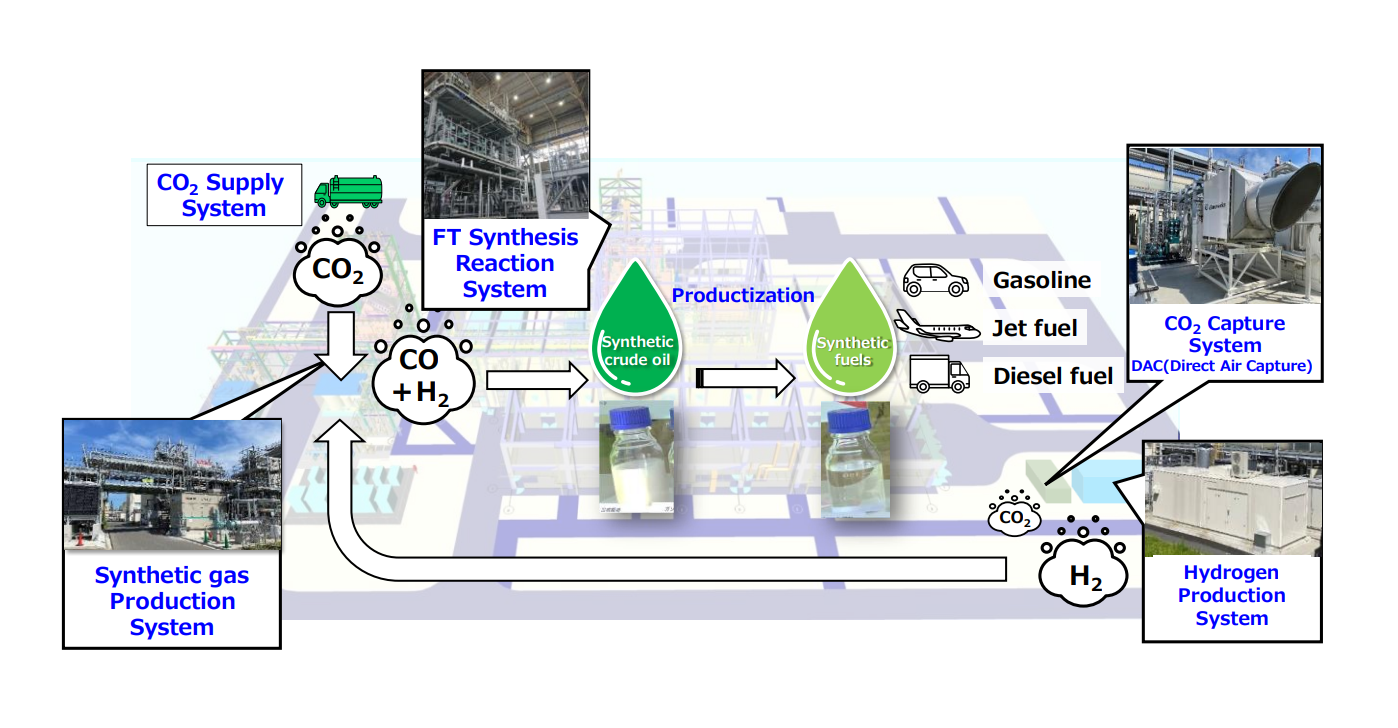
The main manufacturing processes for synthetic fuels are the Fischer-Tropsch synthesis (FT) and methanol synthesis. Both are existing technologies that utilize raw materials such as syngas (a mixture of hydrogen and carbon monoxide) and CO2.
Today, Japan’s R&D is focused on the next generation of FT, such as direct-FT, CO2 electrolysis, and solid oxide electrolysis cell (SOEC) co-electrolysis, among others. The goal is to lessen the vast volume of energy required for synthesis, while improving efficiency through new catalysts and minimizing the release of byproducts such as methane and other light gases.
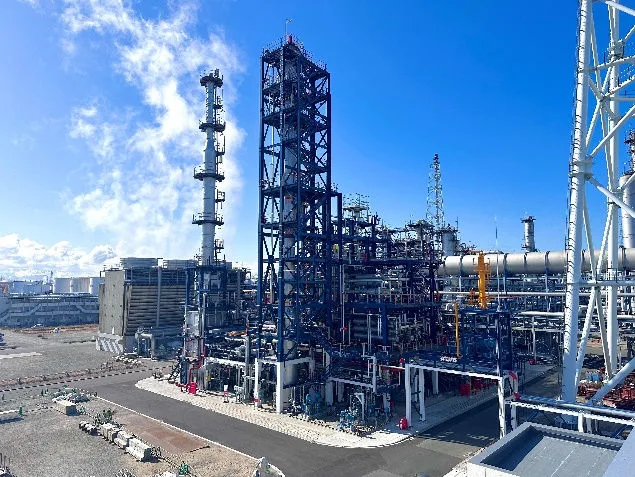
ENEOS announced a breakthrough in creating homegrown synthetic fuels with Japan’s first demonstration plant at its Yokohama research facility that opened in late September 2024. Each day, the facility produces about one barrel of synthetic gasoline and diesel, entirely from renewable electricity-derived hydrogen and captured CO2, using the FT synthesis method.
This success now sets the stage for the next phase: building a pilot plant that can produce 300 barrels per day by 2028. ENEOS expects to embark on full-scale commercial operations by the early 2040s, citing cost barriers.
ENEOS’ synthetic fuels demonstration plant
Source: ENEOS
ENEOS plans a gradual move away from its existing petroleum business, to evolve in lockstep with the creation of cost-competitive infrastructure to make green hydrogen in Japan, and also store and transport the fuel.
So, while ENEOS is working on its own tech to boost yields from the FT catalyst and realtor, and optimize the process of collecting feedstock, it’s mostly relying on progress elsewhere to make e-fuels work as a business proposition.
Rival Idemitsu Kosan has taken a different approach by partnering internationally to forge an e-methanol supply chain. In collaboration with shipping giant Mitsui O.S.K. Lines (MOL) and e-fuel producer HIF Global, Idemitsu plans to capture industrial emissions in Japan, transport them to renewable-energy-rich locations overseas, and then import the end-product – e-methanol.
Idemitsu’s strategic partnership agreement with HIF Global aligns it with a company that produces e-fuels in North and South America, Australia and other regions. This bet on securing overseas supply of e-methanol also won METI’s stamp of approval. Idemitsu’s $114 million investment in HIF Global in 2024 was later partly covered by state-run JOGMEC, which put $36 million into the Idemitsu subsidiary making the investment.
The interest in e-methanol comes from the e-fuel’s versatility. Once in Japan, Idemitsu sees options to convert it to synthetic gasoline or aviation fuels, banking on demand from either the shipping sector or aviation.
The investment in HIF aims to build a global e-methanol supply network that could start procurement from the second half of the 2020s. Idemitsu’s Hokkaido refinery is lined up to work with e-methanol in the latter part of this decade. Whereas ENEOS is keen to improve FT synthesis, Idemitsu sees better gains via improving CO2 electrolysis.
As discussed in the other Analysis story in this issue, Idemitsu is simultaneously banking on the development of biofuels via ATJ (Alcohol to Jet) and HEFA (Hydro processed Esters and Fatty Acids) technology to feed SAF demand. Thus, the company should be able to offer both bio and e-fuel products.
Interestingly, the two Japanese refiners have a three-way MoU with Saudi Aramco, signed in August 2023 to cooperate on the technical and practical application and diffusion of e-fuel.
Cost conclusions
None of these innovations will have a chance to take root unless costs are reduced, and this is where e-fuels have difficulties. While the drop-in application of e-fuels is a boon that means existing petroleum infrastructure can be utilized, current production costs are skewed by high hydrogen and carbon capture estimates.
Government estimates put the price of e-fuel at around ¥300 to ¥700 per liter – well shy of the ¥100–200 target by 2030. For comparison, regular gasoline retailed for ¥184.5 in February.
The ongoing CfD auction should help supply more affordable volumes of hydrogen and related energy carriers from 2030, while nationwide CCS projects are also due to start around that time. These two developments could change e-fuel economics. However, if most of the imported hydrogen is ‘blue’ rather than ‘green’, will the environmental benefit of e-fuels still stand up?
In theory, there’s market interest in e-fuels from various transport sectors. In practice, the evolution of e-fuels in Japan relies either on a cheap overseas supply chain or big domestic leaps in cost-performance and tech. In the meantime, battery performance metrics forge ahead.
The pilot e-fuels plant launched by ENEOS was indeed a breakthrough. Whether it has made a real impact is up for debate.
e-Fuel Type
Production Process
Primary Use Cases
Merits vs Demerits
E-gasoline & E-diesel (Synthetic Hydrocarbons)
Fischer-Tropsch (FT) synthesis: Green hydrogen (from renewable electricity) + Captured CO2 converted into hydrocarbons
✅ Compatible with current infrastructure; no engine modifications required; carbon-neutral. ❌ High production cost; requires significant renewable energy and CO₂ supply
E-methanol
Methanol synthesis: Green hydrogen (via electrolysis) combined with captured CO2 produces synthetic methanol
Marine shipping fuel, petrochemical feedstock, can be further processed to synthetic gasoline
Easier storage & transportation; simpler synthesis compared to hydrocarbons. But energy density is lower vs diesel, needs new fuel-handling infrastructure.
E-kerosene (Synthetic Aviation Fuel – SAF)
Alcohol-to-Jet (ATJ) synthesis or FT synthesis: Ethanol or green hydrogen + CO2 converted to jet-compatible kerosene
Aviation fuel (can blend directly with conventional jet fuel)
Fully compatible with existing jet engines & infrastructure, significant decarbonization potential. But currently expensive; significant energy inputs and cost challenge.
Synthetic LPG (Green LPG)
Catalytic conversion of green hydrogen + CO₂ (from biomass sources like livestock manure) into propane & butane
Rural heating, industrial energy, chemical feedstock
Maintains LPG’s easy handling and storage. Yet niche market, limited scale, high production cost initially due to expensive input feedstocks.
ANALYSIS
BY JAPAN NRG BASED ON MATERIALS IN SHIN ENERGY SHIMPO
As Japan Begins SAF Production, Obscure Okinawa Crops Seen as Key to Supply
Japan’s first large-scale SAF plant, on the premises of Sakai Oil Refinery
Source: Cosmo Energy
Until recently, Okinawa’s most famous liquid exports were watery lager and awamori, a fiery rice spirit enjoyed locally but little-known abroad. Now Japan’s southernmost prefecture may soon be contributing to a far more ambitious liquid revolution: sustainable aviation fuel (SAF). The prefecture’s little-known subtropical plants hold surprising potential to help Japan’s aviation sector.
Cleaner-burning fuel is critical to meeting the climate targets of Japan’s aviation sector, one of the world’s largest. While testing new aircraft designs that run on entirely new fuels such as hydrogen will take years, international rules demanding that airlines cut emissions are already in effect on a voluntary basis and due to turn mandatory in 2027.
Japan’s government has responded by setting a target that calls for all domestic flights to use at least 10% sustainable fuel, or SAF, by 2030. This push is backed by domestic refining firms. Next month, Cosmo Oil, in partnership with JGC Holdings and Revo International, will start operating Japan’s first large-scale SAF plant at its Sakai refinery in Osaka, turning used cooking oil into 30,000 kilolitres (kL) of clean-burning fuel a year. This fuel will be made available at Chubu Centrair International Airport.
The problem is, much of the SAF produced today relies on used cooking oil (UCO), a product limited by our ability to consume fried food. And while that appetite may be substantial, it pales in comparison to the volumes of non-petroleum oils required to support aviation. This is where a couple of obscure Okinawa plants come in.
Main SAF production methods
Technology
Major sources
HEFA (Hydro-processed esters and fatty acids)
Waste oil and fats, beef tallow, pongamia, microalgae, etc
Japan’s projected supply of SAF in 2030 is expected to be between 1.7 million and 1.92 million kl, based on METI data collated from domestic manufacturers. That should be enough to comply with the 2030 target for 10% SAF blending set by the government. Officials assume that 1.7 million kl of SAF will be required at that point.
Domestic refiners have a series of SAF projects in the works. In addition to Cosmo Energy’s Sakai refinery:
ENEOS plans to add 400,000 kl of SAF capacity (feedstock; used cooking oil and tallow; technology: HEFA[1]) at its Wakayama facility in 2028
Idemitsu will open 250,000 kl of capacity at its Tokuyama plant (feedstock: biomass etc; technology: HEFA), also in 2028
Idemitsu also expects to secure a further 250,000 kl of capacity (feedstock: ethanol etc; technology: alcohol-to-jet) in Japan and at overseas facilities by 2030
ENEOS is experimenting with e-SAF, a synthetic fuel produced from CO2 and ‘green’ hydrogen derived from renewable energy.
This rapid expansion is underpinned by demand from logistics firms like DHL Express, which recently secured a contract to source 7,200 kl/ year from Cosmo, and Japan’s two major air carriers, Japan Airlines (JAL) and All Nippon Airways (ANA).
And while the issue of cost is ever-present, the transport sector’s most daunting challenge is how to secure sufficient quantities of SAF since there is a shortage of feedstock. Municipal agreements, like Cosmo Oil’s ‘Fry to Fly’ project with cities such as Suita in Osaka Prefecture, highlight community-driven collection efforts, though volumes remain modest – Suita contributes merely 27,000 liters yearly, which is even smaller in SAF terms.
Import solutions
A relatively small refinery company, Taiyo Oil is taking a different tack. The company is investing about ¥200 billion into a brand-new facility in Okinawa that will turn alcohol derived from Brazilian and American sugarcane and corn crops into SAF.
The company plans to use alcohol-to-jet SAF technology developed by American startup LanzaJet. Output is forecast at 220,000 kl a year starting in FY2028. A portion of the product could also be turned into renewable diesel.
The company is even considering exports, calculating that selling SAF to Taiwan and other Asian neighbors may be as cost-effective as ferrying it to mainland airports in Tokyo and Osaka.
Local bounty
Taiyo’s bigger industry peers are also interested in Okinawa, but for two different reasons: the hardy subtropical plants Pongamia and Terihaboku. Non-edible, drought-resistant, and capable of flourishing in poor-quality soil, these plants offer excellent prospects for mass cultivation without encroaching on agricultural land needed for food.
Pongamia, a robust, oil-rich legume, thrives in the harsh climates of tropical and subtropical regions. It requires little fertilizer, tolerates salty, poor-quality soil, and has the potential to significantly enhance soil quality through nitrogen fixation. Critically, Pongamia yields substantially more oil per hectare than traditional oilseed crops like soybeans, resulting in a more efficient and sustainable fuel source.
Terihaboku, another subtropical gem found abundantly in Okinawa, also boasts impressive oil content of up to 50% in its seeds. Historically used for cosmetics and traditional medicines, its high oil yield and adaptability to poor soils and coastal conditions make it another ideal candidate for mass cultivation in the SAF domain.
Idemitsu Kosan has launched Japan’s first overseas Pongamia trial plantation, working with U.S. agricultural firm Terviva. Covering around 50 hectares in Queensland, Australia this trial aims to demonstrate Pongamia’s viability as a scalable, long-term feedstock. Idemitsu sees big promise, particularly because Pongamia oil yields per hectare significantly outperform other oilseed crops, emitting roughly half the carbon of soybean-based fuels.
Given Okinawa’s similar climate and abundant marginal land, the island could potentially support extensive Pongamia and Terihaboku cultivation. The oils extracted from the plants could then be processed into SAF at refineries that use HEFA technology. This would greatly contribute to Japan’s SAF requirements while also reducing the nation’s reliance on fuel imports, a useful bonus at a time of continued yen weakness and energy security concerns.
Another domestic refiner, J-Oil Mills, claims it has already proved that Pongamia and Terihaboku can be utilized as high-quality SAF. In late January, J-Oil Mills announced that SAF produced entirely from these plants’ oils had been assessed and passed international standards, qualifying as high-quality fuel suitable for aviation. The company even managed to cut costs by using seeds gathered locally – often from roadside trees.
Furthermore, by-products from processing the Okinawa plants (i.e. the husk and meal) could potentially serve secondary roles as biomass fuel or animal feed.
Conclusion
Commercializing novel feedstocks like Pongamia requires substantial upfront investment and years of cultivation trials. While current SAF production costs exceed conventional jet fuel, thus limiting immediate adoption, momentum for sustainable aviation is undeniably building.
The Japanese government often lauds the virtue of regional economic revitalization and innovation. Encouraging Okinawa’s agriculture sector to cultivate SAF feedstocks could provide dual benefits – reducing aviation’s carbon footprint and delivering economic prosperity to one of the country’s poorest regions and one of strategic importance for national defense. That’s a goal worthy of raising a toast of awamori.
ASIA ENERGY REVIEW
BY JOHN VAROLI
A brief overview of the region’s main energy events from the past week
Australia / BESS
Energy Vault Holdings acquired the 125 MW / 1 GWh Stoney Creek Battery Energy Storage (BESS) from Enervest Group. Construction on the $220 million project begins this year.
Australia / Solar and BESS
Fotowatio Renewable Ventures Australia acquired a 190 MW hybrid solar PV and energy storage project in Victoria from Acen Australia. The project features 140 MW of solar PV generation, with a 50 MW/ 100 MWh 2-hour battery energy storage system (BESS).
China / Solar power
Kuwait and China agreed to cooperation in renewable energy and solar plant technology. China will oversee the development of the third and fourth zones of the Al-Shagaya and Al-Abdiliya solar farms.
India / Nuclear power
India plans a nuclear plant in Gorakhpur, Haryana. Initial approvals were given in 2008, but delays occurred due to disagreements with French stakeholders. Now the project has renewed vigor and determination to see to fruition.
India / Thermal power
JSW Energy inked a power purchase agreement for its 1.6 GW coal-fired thermal power plant to be built in Salboni, West Bengal. It’s scheduled for commissioning in five years.
Indonesia / Palm oil
Indonesia will raise its palm oil export levy to between 4.5% and 10% of the reference price, up from 3% to 7.5%, to finance an increase in the amount of the oil used in biodiesel.
Malaysia / Gas power
Worldwide Holding Berhad’s 1.2 GW Pulau Indah combined cycle gas turbine (CCGT) power plant in Malaysia began operation. The plant is about 60 km from Kuala Lumpur.
Philippines / Solar power and BESS
Actis closed its $600 million acquisition in Terra Solar Philippines. Actis, along with Meralco PowerGen Corp and MGreen, plan to develop and expand MTerra Solar to 3.5 GW-peak of installed solar capacity and 4.5 GWh of BESS.
Singapore / SMRs
Experts say that SMRs are a good option for Singapore because it lacks the land and raw materials to produce renewable energy at scale. SMRs are about a tenth to a quarter the size of a traditional NPP. Singapore has the world’s most densely concentrated data center hubs.
South Korea / Natural gas
Korean energy companies met with Alaska Governor Mike Dunleavy, who visited Seoul today and tomorrow, to discuss potential participation to develop gas fields in Alaska.
Disclaimer
This communication has been prepared for information purposes only, is confidential and may be legally privileged. This is a subscription-only service and is directed at those who have expressly asked K.K. Yuri Group or one of its representatives to be added to the mailing list. This document may not be onwardly circulated or reproduced without prior written consent from Yuri Group, which retains all copyright to the content of this report.
Yuri Group is not registered as an investment advisor in any jurisdiction. Our research and all the content express our opinions, which are generally based on available public information, field studies and own analysis. Content is limited to general comment upon general political, economic and market issues, asset classes and types of investments. The report and all of its content does not constitute a recommendation or solicitation to buy, sell, subscribe for or underwrite any product or physical commodity, or a financial instrument.
The information contained in this report is obtained from sources believed to be reliable and in good faith. No representation or warranty is made that it is accurate or complete. Opinions and views expressed are subject to change without notice, as are prices and availability, which are indicative only. There is no obligation to notify recipients of any changes to this data or to do so in the future. No responsibility is accepted for the use of or reliance on the information provided. In no circumstances will Yuri Group be liable for any indirect or direct loss, or consequential loss or damages arising from the use of, any inability to use, or any inaccuracy in the information.
NEWS
• METI announces changes to renewables rates for FY2025 and beyond
• ANRE promotes grid development to accommodate localized data centers
• Japan to invest €100 mln in French rare-earth refining project



 Japan’s first large-scale SAF plant, on the premises of Sakai Oil Refinery