ANRE reviewed progress toward realizing goals for the 2030 energy mix, and outlined policies to make renewable energy a main baseload source by 2040.
ANRE also proposed a mechanism to set operational capacity and margins for inter-regional interconnection lines needed to resolve congestion in power grids.
Renewable energy growth uses “non-firm” connections that allow output control during congestion. As inter-regional lines expand, local grid congestion might increase. This must be managed by controlling power flows and capacity limits.
CONTEXT: As renewable energy use expands and power demand increases due to facilities like data centers, the need for grid development will grow. To plan and carry out this efficiently, institutional measures are needed, including more efficient financing, as stated in the 7th Basic Energy Plan.
The Electricity and Gas Market Surveillance Commission (EGC) has launched a new group to monitor so-called ‘other market revenues’ under the Long-Term Decarbonized Power Sources Auction (LTDA) scheme.
Under the LTDA framework, winning bidders must return to OCCTO around 90% of revenues earned from markets outside the LTDA mechanism (e.g. wholesale power sales or balancing markets).
To ensure fair implementation, EGC will scrutinize how much revenue operators declare from these additional sources, helping prevent underreporting and excess public subsidy.
CONTEXT: The LTDA aims to support only new power generation investments, with bids based on fixed costs. To simplify and prevent inflated bids, expected revenues from other markets are set to zero at the auction stage. However, once projects begin operating, they can earn substantial additional revenues. To avoid overcompensating operators while still preserving their incentive to operate efficiently, a clawback mechanism returns a portion of these ‘extra’ revenues to the system—hence the need for EGC monitoring.
OCCTO began discussing the long-term outlook for cross-regional grid development.
In preparation for the 3rd Master Plan for cross-regional grid systems, OCCTO must decide whether to revise the premises and scenarios in the current long-term outlook.
By year’s end, the unit cost of standard power transmission and transformation equipment will be recalculated to account for rising labor costs and inflation.
Regarding renewal of existing interconnection lines, OCCTO will evaluate them on a case-by-case basis. It won’t assume the same capacity as before.
CONTEXT: Current long-term policy for the cross-regional grid outlines potential enhancement plans for each possible scenario, based on expected trends and a cost-benefit evaluation. By year’s end, OCCTO will decide whether changes to the approach and scenarios are needed, and then in 2026, it will assess how those impact long-term outlook.
OCCTO discussed deduction of out-of-market balancing capacity as a measure against insufficient bids in the EPRX (Electric Power Reserve Exchange).
After investigating factors for out-of-market balancing capacity related to thermal power and pumped-storage, OCCTO concluded that a certain volume can be deducted from the EPRX FY2025 procurement requirements.
Although the deduction volume varies by area and product, total procurement across the nine areas could be reduced by 20% to 70%.
Deductions will be applied gradually and continue until March 2026.
CONTEXT: OCCTO already announced its policy to deduct out-of-market balancing capacity from the required amount in the balancing market, EPRX. However, the specifics and effective date weren’t discussed previously.
Sakura Internet and JERA will explore building data centers (DC) on JERA’s power plant premises, including LNG thermal power plants in Tokyo Bay.
They’ll study conditions for using JERA power plant sites as DC locations and explore use of cold energy from LNG for DC cooling. The generators would also supply electricity to the DCs.
Kansai Electric reached the target hydrogen co-firing ratio (on a volume basis) of 30% as part of a fuel blending demo at the natural gas-fired Himeji No. 2 Thermal Power Plant, Hyogo Pref.
CONTEXT: This is Japan’s first hydrogen co-firing power generation using a commercial-scale gas turbine.
The demo started in April with the blending ratio increasing over time.
Part of the power generated is supplied to the Osaka-Kansai Expo.
TAKEAWAY: While JERA has focused its Japan co-firing efforts on ammonia fuel and coal-fired power plants, Kansai Electric has been tasked by NEDO to demonstrate the potential for hydrogen and natural gas blending. The hydrogen co-firing rate was initially set at 10%, which is the level at which the LTDA mechanism, for example, would accept subsidy applications. However, Kansai Electric’s NEDO-mandated goal was to test the 30% benchmark with the idea that by mid-century gas-fired plants like Himeji could switch entirely to clean-burning hydrogen.
INPEX began a demo test (in Kashiwazaki City, Niigata Pref) that produces ‘blue’ hydrogen and ammonia. The facility uses natural gas from INPEX’s nearby gas fields.
The CO2 emitted during production will be injected into previously depleted gas reservoirs in the Hirai District of the HigashiKashiwazaki Gas Field using CCUS technology.
The hydrogen will be used for local power generation; some will be processed into ammonia thanks to catalysts by Japanese startup BHB Tsubame and supplied to local firms.
After the trial, full-scale hydrogen production is set to begin in autumn, at about 700 tons per year.
Hitachi Energy delivered rectifier transformers for electrolytic hydrogen to a hydrogen industry park built by China Energy Engineering Corp (CEEC) in Songyuan.
CONTEXT: CEEC’s Songyuan site is one of China’s largest integrated green hydrogen-ammonia-methanol projects, using wind and solar to power a 3 GW facility.
Hitachi Energy’s rectifier transformer supports stable and cost-effective hydrogen production through water electrolysis.
CONTEXT: China made hydrogen central to its energy strategy, to replace fossil fuels in industry and promote green ammonia and methanol. In late 2024, China unveiled a plan to boost clean hydrogen use and cut carbon emissions, aiming to produce 800,000 tons of green ammonia and methanol yearly.
KHI, along with major Japanese shipbuilders Imabari Shipbuilding and Japan Marine United, will collaborate to mass-produce liquid hydrogen carriers.
They’ll feature liquid hydrogen tanks with 40,000 m³ capacity, about 30 times larger than KHI’s prototype, enabling efficient global transport of hydrogen at -253°C.
TAKEAWAY: With growing international competition, such as South Korea’s HD Hyundai collaborating with MOL, this Japanese effort aims to maintain leadership in next-gen decarbonized vessels and revive the domestic shipbuilding industry.
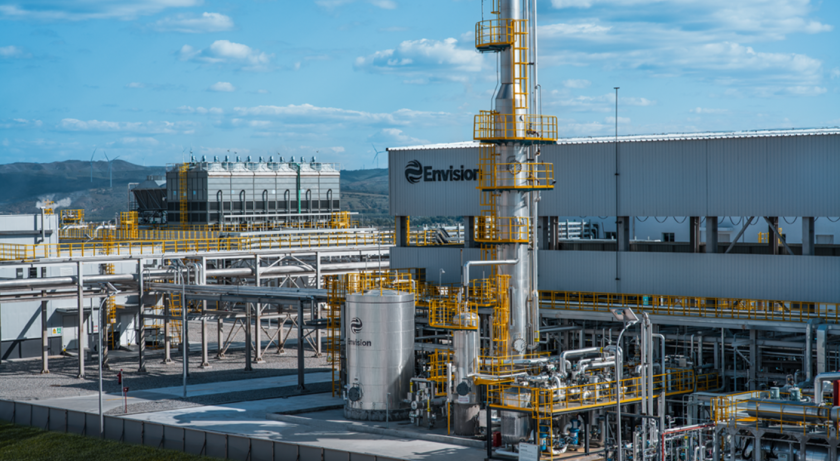
Marubeni inked a long-term agreement with Envision Energy to purchase green ammonia produced in Inner Mongolia using wind power.
This is Marubeni’s first green ammonia offtake deal and one of the world’s earliest commercial-scale agreements in the sector.
Production begins in late 2025, with Envision Energy expected to manufacture up to 300,000 tons of green ammonia annually, one of the largest such projects globally.
RTS Corp said that annual solar installation capacity through 2030 and 2040 must grow significantly in order to meet GX goals and GHG reduction targets.
CONTEXT: RTS is a Japan-based research and consulting firm specializing in solar PV and renewables.
Japan must roll out 5-7 GW of solar power capacity per year by 2030, aiming to reach between 103 GW (AC) and 117.6 GW (AC).
For 2040, the target is between 203 GW (AC) and 280 GW (AC); the annual rollout needs to be 10-16 GW (AC) per year from 2030 onwards.
The firm also said about 460,000 non-residential solar power installations, totaling around 29 GW, will reach the end of their FIT period between FY2032 and FY2036.
As of Dec 2024, total battery grid applications and connections were:
95 GW in projects under consideration;
8 GW with confirmed connection contracts;
170 MW grid-scale storage batteries connected to the power grid.
Projects under consideration had the largest cumulative capacity in three of nine regional areas managed by major utilities – Tohoku, Kyushu and Tokyo – at 32.3 GW, 14.37 GW and 13.88 GW, respectively.
Among contracted projects: those in Tohoku, Hokkaido and Kyushu had the highest capacity, with 1.75 GW, 1.33 GW and 1.26 GW.
RTS also stressed that since 2022, solar energy has shifted from being solely under METI to a policy framework involving several ministries. METI, MOE, the Ministry of Agriculture (MAFF), and MLIT now share responsibility for the 2030 solar target.
ENEOS Renewable Energy (ERE) is partnering with Green Energy Plus to develop small-scale solar power plants in the Chubu region using a bulk scheme approach.
The plan will develop 50 low-voltage solar projects totaling 5 MW, to be built by Green Energy Plus and acquired by ERE Group.
CONTEXT: This collaboration leveraged Green Energy Plus’s experience in bulk development of small-scale solar and ERE’s capabilities in power generation, battery storage, and corporate PPAs.
TAKEAWAY: The scheme shows a new trend, shifting focus from so-called “mega-solar plants” to smaller-scale solar plants due to limited land and rising real estate prices.
Sojitz, in partnership with KEPCO and Osaka Titanium Technologies, inked a 20-year corporate PPA to supply renewable energy.
As part of its distributed solar power business, Sojitz plans to develop 3,000 small-scale solar power plants across Japan by FY2026.
Under the deal, renewable energy from about 200 Sojitz-developed solar plants (totaling 20 MW) will power Osaka Titanium Technologies’ plant in Hyogo Pref starting in October.
CONTEXT: Active in the solar IPP business since 2009, Sojitz has built roughly 2 GW of renewable energy capacity globally. The company is shifting focus from large-scale solar projects to smaller distributed systems on underutilized land.
KEPCO, TRE Holdings, and chemicals firm Tokuyama will collaborate on the reuse and recycling of end-of-life solar panels.
Their business model will center on Tokuyama’s low-temperature thermal decomposition recycling tech.
Plans will include forecasting waste volumes, building a network to support closed-loop recycling (or horizontal recycling), evaluating business models, and assessing potential emissions reductions from reuse and recycling.
CONTEXT: With the volume of discarded solar panels expected to increase significantly in the late 2030s, the firms emphasize the importance of recycling materials like glass and silicon, which face technical and economic challenges. Since glass accounts for about 60% of a solar panel’s weight, its effective recycling could significantly reduce landfill waste.
On June 3, METI and MLIT discussed offshore wind development taking into account feedback from public comments on the revised public auction guidelines.
A major focus was the proposal to allow Round 1 auction projects (initially under the FIT) to shift to the FIP, which faced strong opposition.
CONTEXT: Mitsubishi, winner of three Round 1 fixed-bottom projects, requested pricing scheme revisions due to inflation and yen depreciation.
In the wake of Mitsubishi’s decision to halt projects in the pipeline, METI has been working on offshore wind support measures, including the FIP transition and capacity market participation for zero-premium projects.
However, some stakeholders criticized the FIP shift as undermining trust, noting past public documents explicitly assumed FIT-based implementation.
METI received feedback from 14 offshore wind developers and two industry associations. Some suggested a re-tendering process or allowing runner-up bidders a chance if original winners can’t proceed.
Some argued that if FIP is allowed, it should be under zero-premium terms to maintain fairness. But METI also faced criticism that price adjustment mechanisms don’t support zero-premium projects effectively.
Many requested support for offtakers of offshore wind power to improve market viability.
TAKEAWAY: Industry players anticipate that METI will need to offer enhanced support to help developers accelerate projects, warning that without such intervention, delays could trigger a cascading impact on other firms across the supply chain.
Work is delayed on an 180 MW offshore wind farm near Murakami and Tainai in Niigata Pref that’s led by Mitsui & Co, Osaka Gas, and RWE’s Japan unit.
Work on onshore electrical facilities is taking longer than expected as contractor negotiations slowed, pushing back some work originally set for April to October. However, the target operation date of June 2029 remains unchanged.
CONTEXT: Similar delays are affecting other projects, such as the Mitsubishi-led offshore wind plan off Choshi, Chiba, due to rising material and construction costs.
TAKEAWAY: Delays plaguing Mitsubishi-led projects from Round 1 are rippling through the industry, impacting port access and disrupting supply chains critical to Round 2 and Round 3 projects. As Mitsubishi continues to reassess its stalled developments, frustration is mounting among developers and stakeholders, who increasingly urge the govt to step in and provide support to keep the broader pipeline on track.
The House of Representatives in the Diet passed a revised version of the Renewable Energy Sea Area Utilization Act, allowing offshore wind power facilities in the Exclusive Economic Zone.
CONTEXT: The EEZ extends up to 200 nautical miles (around 370 km) from the coast, and gives countries special economic rights.
The govt can now designate suitable zones within the EEZ as areas open for development.
The change aims to accelerate expansion of offshore wind power; work in the EEZ is seen as more feasible since permitting is less of a problem due to fewer chances of conflict with other stakeholders.
CONTEXT: While fixed-bottom turbines are common in shallower territorial waters (22 km from the coast), floating wind turbines will become the main option in deeper EEZ waters.
TAKEAWAY: The news has been well received by industry players, who view the revision as a necessary step toward unlocking Japan’s vast offshore wind potential. The move aligns with the Basic Energy Plan approved by the Cabinet in February, which sets a target of raising wind power’s share in the energy mix from the current 1% to 4–8% by FY2040. The EEZ policy revision creates new opportunities, particularly for floating offshore wind. However, given that floating tech in Japan is still in the demo phase, and commercial projects could take up to a decade to come online, the govt must provide sustained policy support, as well as foster investment and technological advancement.
J-POWER began construction of an onshore wind farm in Kaminokuni, Hokkaido.
Adjacent to two existing wind farms, this new one will feature 12 Siemens Gamesa turbines, total capacity of around 50 MW.
CONTEXT: This is J-POWER’s 10th wind project in Hokkaido. Once operational in 2028, it could become Japan’s largest onshore wind facility, with 25 wind turbines, each 9.6 MW.
Toshiba Energy Systems completed delivery and commissioning of all four 350 MW pump-turbine generator sets for China’s Ninghai pumped-storage power plant.
This is the firm’s second pumped hydro project in China, after Qingyuan in 2016.
Mitsubishi and other Japanese firms are advancing next-gen geothermal power using new deep-drilling tech that fosters development beyond traditional hot spring areas.
U.S.-based Quaise Energy, backed by Mitsubishi, aims to launch its first plant by 2028 using millimeter-wave drilling, an innovation that could unlock vast geothermal potential even in flatlands.
CONTEXT: Other Japanese firms, such as Toyo Engineering and Chubu Electric’s Eavor, are also piloting closed-loop systems in Asia. With growing power demand from data centers, these innovations offer promise for expanding stable, renewable power supply in Japan and beyond.
The govt is revising its “Fusion Energy Innovation Strategy” to accelerate the use and industrialization of nuclear fusion. The goal is a fusion power demo by the 2030s.
A Task Force will discuss technical readiness, business models, site selection, and regulatory frameworks.
Led by the Cabinet Office, the task force will include industry experts, researchers, and govt observers (MEXT, METI, and the NRA). Key focus areas include prototype reactors, pilot plants, financing, and international collaboration.
CONTEXT: Recently, nuclear fusion startup EX-Fusion raised ¥2.6 billion from VC firms, boosting valuation to between ¥12 billion and ¥16 billion. The firm wants to prove 100-watt power generation by 2030 and achieve commercialization around 2040. Govt subsidies are expected to help offset the ¥400 billion cost of building a commercial reactor.
Japan has now implemented the GX Decarbonization Act, which allows nuclear power plants to operate beyond 60 years. It was originally passed in May 2023.
The legislation update resulted in amendments to five related laws, including the Electricity Business Act and the Reactor Regulation Act. It permits extending the 60-year operation period by excluding the time that NPPs had to shut down due to safety reviews or court rulings.
CONTEXT: The rules that reactors operating beyond 30 years must also submit a Long-Term Facility Management Plan every 10 years still apply. They relate to equipment degradation and maintenance strategies.
The Tokyo High Court overturned a ruling that had ordered four former TEPCO execs to pay ¥13 trillion in damages over the Fukushima Daiichi nuclear disaster in 2011.
The court ruled that the execs couldn’t have foreseen the massive tsunami before the 2011 earthquake, and thus were not liable. This decision nullifies the Tokyo District Court’s 2022 ruling that held them responsible.
A shareholder lawsuit argued that a 2002 govt earthquake report made the tsunami risk foreseeable. TEPCO conducted its own estimate in 2008 suggesting a 15.7-meter wave was possible. The plaintiffs claimed the execs failed to act and install protective systems.
Yet, the appeals court found that the 2002 report did not have enough credibility to compel reactor shutdowns or take countermeasures. The judge said it was “understandable” the execs didn’t feel a strong sense of urgency at the time.
Still, the court noted that standards of responsibility for company directors on nuclear accidents should be reviewed.
The plaintiffs intend to appeal to the Supreme Court.
The planned summer restart of the Kashiwazaki-Kariwa NPP is now unlikely. Niigata Pref said public hearings to gather residents’ opinions will continue through Aug 31.
TAKEAWAY: The extended timeline means that Governor Hanazumi will not need to make any decisions on the restart until later on in Sept or even after. Once gaining consent, TEPCO has said that Unit 7 would need two months from restart approval to full operation. Unit 7 was the initial target for the first reactor restart at the NPP. It already has fuel loaded and its technical restart preparations are complete. But, despite TEPCO’s initial focus on Unit 7, the utility is now likely to switch attention to Unit 6, which should begin fuel loading on June 10. Under current anti-terrorism regulations, Unit 7 is only allowed to operate until Oct 13. Unit 6 has approval to operate until Sept 2029.
KEPCO received NRA approval for planned upgrades at its Takahama and Mihama NPPs. The modifications include replacing reactor core components in Takahama Units 1 and 2. Also, it is upgrading turbine-driven auxiliary feedwater pumps across Takahama Units 1–4 and Mihama Unit 3.
CONTEXT: Takahama NPP Unit 3 (PWR, 870 MW) restarted on May 30. Commercial operations will resume June 30.
Kyushu Electric said restart of Genkai NPP Unit 3 is delayed, due to a malfunction in a valve that’s part of the main steam system sending steam to the turbine.
CONTEXT: The reactor has been offline for regular maintenance since March. It should have resumed operation on June 4. This is a further delay, already pushed back by three days due to a separate incident in May.
On May 30, a small fire occurred at the Tokai No. 2 NPP in Tokai Village, Ibaraki Pref. It began from a cable connected to equipment during welding work in the reactor building’s basement.
CONTEXT: A fire also occurred in the central control room in February. There were 11 similar incidents in the past three years; nine have happened since 2023.
TAKEAWAY: Tokai No. 2 is a story of aging infrastructure, regulatory friction, and eroding public trust. It got restart approval in 2018 and was included in the LTDA, but remains idle due to legal setbacks, construction delays, and safety concerns. The latter include these repeated fire incidents. This latest fire is minor, but for a nuclear-skeptic public it could be a signal of the reactor’s operational fragility.
Australia approved Woodside Energy’s request to extend operations at its North West Shelf LNG facility until 2070. This avoids the project’s shutdown in 2030. The decision concludes a six-year process marked by delays and environmental opposition, and issues related to protecting ancient cultural heritage.
Govt officials set conditions on air emissions to protect local cultural heritage. Woodside must respond within 10 days to complete the approval.
CONTEXT: Japan Australia LNG (MIMI) owns a 16.6% stake in the project; it’s evenly owned by Mitsubishi Corp and Mitsui & Co. In December, Woodside upped its stake in North West Shelf to 50% by acquiring Chevron’s share.
TAKEAWAY: The extension is a much-needed boost for Woodside and all of Australia’s natural gas sector. In recent years, there’s been sinking investor confidence in Australia’s gas sector due to uncertainties caused by efforts to abruptly end activity in the country’s fossil fuel sector. A recent report revealed that 95% of gas company CEOs see Australia as less attractive for investment than five years ago. With this decision, Woodside can develop new gas fields, such as the offshore Browse project.
The govt aims to expand financial support via JOGMEC’s risk-sharing tools, to enhance LNG security. It also aims to boost storage infrastructure and establish cargo swap arrangements.
Another goal is to diversify fossil fuel supply chains, such as maintaining long-term oil and gas contracts with partners in the Middle East and Southeast Asia. This also applies to coal contracts.
The govt plans to expand offshore exploration in regions like Hokkaido, considering extending tax incentives like depletion allowance for mining activities.
There are also initiatives such as the Asia Transition Finance framework and the Energy Career Academy to support energy transitions in emerging economies and train energy professionals.
Officials from Japan, South Korea, and Taiwan attended a state briefing in Alaska about the proposed $44 billion LNG project. The Trump admin encourages these countries to invest in the project as a way to reduce their trade surpluses.
U.S. Energy Secretary Chris Wright, Interior Secretary Doug Burgum, and Alaska Governor Mike Dunleavy attended. Burgum emphasized the strategic and economic importance of energy exports to U.S. allies.
CONTEXT: The project calls for transporting gas from Prudhoe Bay in north Alaska, via a 1,300-km pipeline, to the south for conversion to LNG and shipment to Asia.
TAKEAWAY: Current project estimates indicate that construction could begin in 2026 and production as soon as 2031. But investors worry about cost overruns and the project’s future after the Trump presidency. A major weak point is that it lacks binding buy agreements.
As of June 1, the LNG stocks of 10 power utilities were 2.26 Mt, up 4.6% from the previous week (2.16 Mt), up 6.1% from end June 2024 (2.13 Mt), and up 7.6% from the 5-year average of 2.10 Mt.
CONTEXT: The govt adjusted statistics of imports while announcing the details. Thus, the figures are different from what we reported last week.
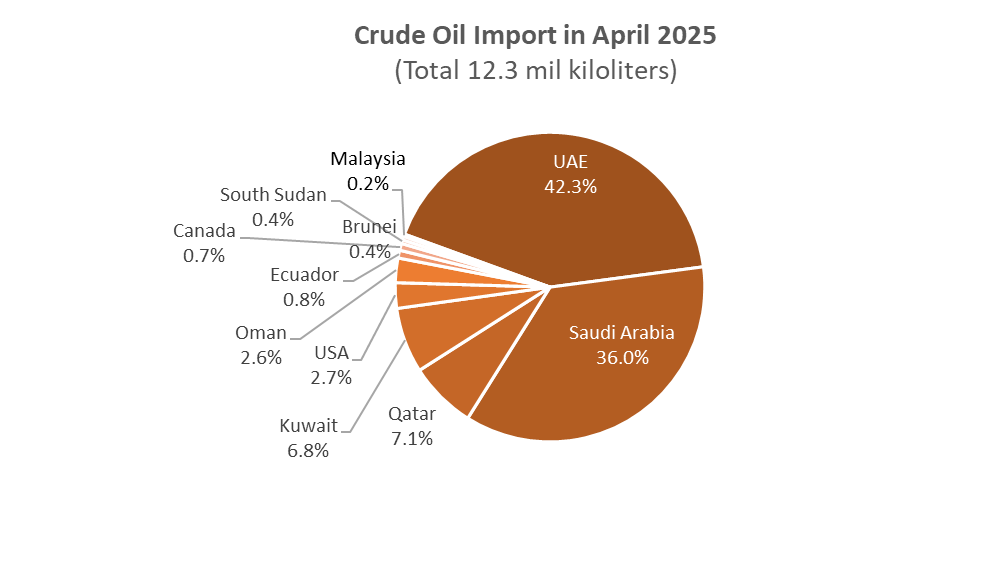
In April, Japan imported 12.3 million kiloliters of crude oil, of which nearly 95% came from the Middle East. Canada, Brunei, Malaysia, and South Sudan returned as suppliers for the first time in 2025.
The volume increased by 14.5% from March in preparation for (early) summer heat. Due to the foreign exchange rate, the import value was down slightly.
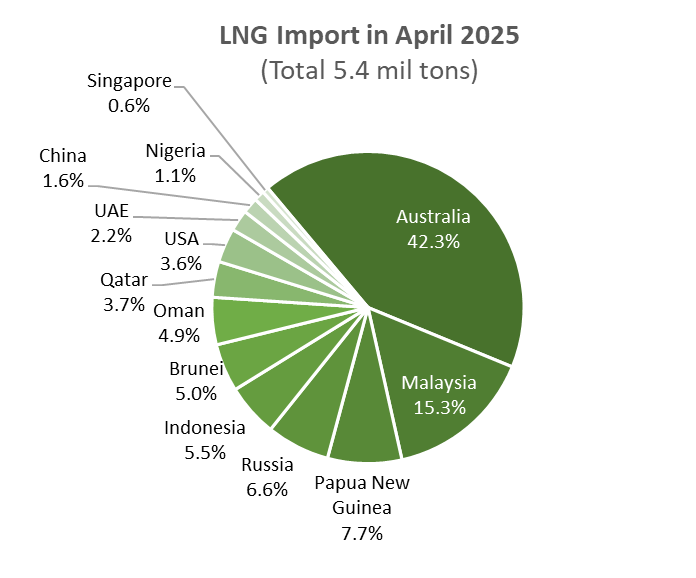
LNG imports in April totaled 5.7 Mt, a 4.3% increase over March (5.2 Mt) and up 1.7% YoY. China and Singapore returned as suppliers for the first time this year; however, their volumes were very small. Imports from Russia decreased by 45%.
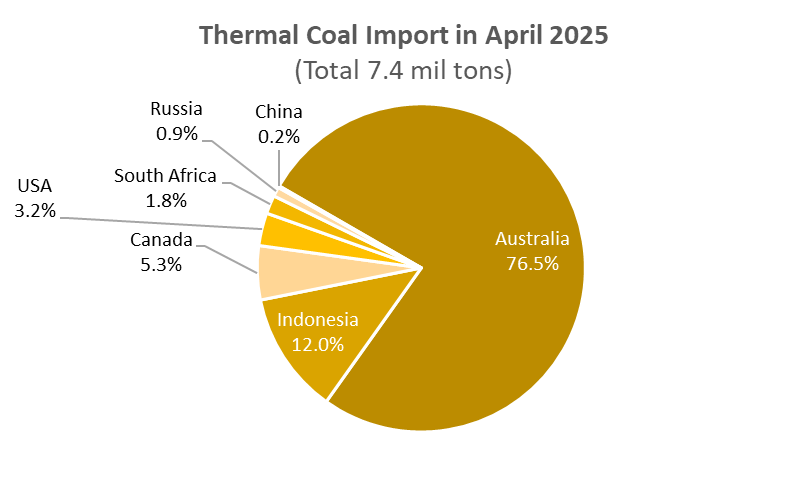
April thermal coal imports totaled 7.4 Mt, and Australia is the biggest supplier as usual. The imports from Canada nearly doubled from the previous month, but those from South Africa decreased by 66%.
The govt will review applications for businesses interested in CCS exploratory drilling in the Tomakomai area.
Once approved, the chosen companies will begin test drilling to confirm the storage capacity of the underground reservoirs.
The goal is to establish Tomakomai as a key hub for Japan’s CCS infrastructure.
CONTEXT: The area covers around 96 km2. In 2016–2019 a demo project stored 300,000 tons of CO2 in the same site. Nearby power plants and refineries proposed a large-scale CCS project. It aims to sequester 2 Mt of CO2 a year.
The govt discussed the EU’s Carbon Border Adjustment Mechanism (CBAM). There are three major challenges for Japanese exporters:
CO2 emission calculations,
Carbon price deductions, and
Third-party verification requirements.
The EU proposed simplifications, including exemptions for SMEs (importers under 50 tons/ year). It allows default carbon price values when actual data is unavailable. Still concerns remain, particularly around verification rules.
CONTEXT: The EU currently restricts certification to European-accredited bodies, which increases costs for Japanese firms.
TAKEAWAY: Japan is advocating for mutual recognition of verification bodies, like the UK’s approach. Additionally, supply chain complexities highlight the need for standardized reporting formats. While the EU’s simplified rules offer some relief, the Japan side wants further flexibility.
MLIT will ask real estate developers to calculate the CO2 generated over the entire life cycle of a building, from construction to demolition. This will start in FY2028.
The method is the Life Cycle Assessment (LCA), and involves estimating emissions from building materials like steel and concrete. Also, it includes emissions from construction processes, maintenance, and waste treatment at demolition.
The system will target large non-residential buildings.
CONTEXT: The govt began trial implementation of LCA on certain public buildings that are starting design during FY2025. MLIT notes that buildings account for about 40% of global CO2 emissions. 30% is from use and 10% from materials production.
TAKEAWAY: The system aligns with international standards such as GRESB and Scope 3 emissions. They cover the entire supply chain. The news is timely, as METI seeks to revise the structure of the GX League to include more industries, focusing on Scope 3 emissions.
Eneres, a subsidiary of KDDI, launched a service to support the creation and distribution of J-Credits. These are govt-certified carbon reduction credits.
The service targets value generated by self-consumed solar power and onsite PPAs.
TAKEAWAY: As Japan prepares to start emissions trading in FY2026, demand for J-Credits will likely rise. Enaris aims to tap into this opportunity and is even considering the development of its own trading platform.
Tokyo Gas said it will provide carbon credits to offset 100–200 tons of CO2 emissions during the Tokyo 2025 World Athletics Championships.
The company will use voluntary credits from Indonesia’s Katingan Mentaya Project that conserves forests to prevent deforestation.
This marks the first use of voluntary carbon credits for an international sports event held in Japan.
ANALYSIS
BY MAGDALENA OSUMI
Intercontinental Power Links: A Feasible but Complex Path to Energy Resilience
The recent blackout that swept the Iberian Peninsula and parts of France has brought renewed attention to the risks and rewards of interconnected power grids. While some blamed the scale of European interconnections for the April 28 outage, the broader takeaway is more nuanced: properly managed interconnectors may be critical to resilience.
That message resonates in Japan, where energy experts have long debated the merits of regional interconnection. Japan remains an energy island, with no electrical links to neighboring countries. But with extreme weather events increasing in frequency and the energy transition gaining ground, the idea of linking Japan’s grid to one of its neighbors is again under consideration.
A proposed Japan–Korea subsea power cable would span 220 kilometers across a relatively manageable seabed. Using HVDC (high-voltage direct current) technology, the cable would allow the two countries to trade electricity without directly syncing their grids. That means each grid stays independent, but they can still buy and sell power when desired.
In a scenario similar to the one on the Iberian Peninsula, the Japan–Korea interconnection would provide a critical safety net. A 2 GW HVDC link — the typical scale — could allow one country to support the other with backup electricity during a major grid failure.
While it won’t replace total demand, it could help stabilize critical infrastructure, support black-start operations, and buy time for domestic systems to recover in case of an emergency. In an era of frequent climate-related disruptions, that kind of mutual resilience is crucial.
Practicality of multilateral connection
In 2022, a group of energy firms founded Japan Interconnector (JI) to develop subsea power cables projects – aptly known as interconnectors – in the Asia Pacific region. The first effort, the EEL Project, will be an interconnector from Japan’s Kyushu island to South Korea’s Busan City, a distance of 220 km. Another connection is also being considered between Pohang in South Korea and Matsue City, Shimane Prefecture in Japan.
Given the limited experience of subsea cables in Asia, JI is partnering with the UK’s Frontier Power, which developed NeuConnect, a 725 km interconnector between the UK and Germany, (1.4 GW capacity). Shizen Energy is the lead investor in a pre-seed funding round for the Japan–Korea Interconnector project.
JI is also working on subsea cable projects around Japan, Korea, and Taiwan, such as the Taiwan Undersea Network Alliance (TUNA), spanning 1,200 km between Kyushu, Okinawa and Taiwan. Last year, Taiwan began deliberating on a plan to import electricity from Japan and the Philippines, modelled on Singapore’s regional interconnector program.
Taiwan is also exploring a broader regional grid initiative, specifically the proposed Japan-Taiwan-Philippines HVDC interconnector, which, if realized, would foster multilateral electricity trade, spur renewables development and enhance energy resilience in APAC.
Direction of grid improvements
Japan has already shown strong interest in international interconnection projects, with companies contributing to initiatives in Europe and Asia through technical cooperation, feasibility studies, and even infrastructure development, such as the Belgium–UK link. Also, the Japan Bank for International Cooperation provided significant financing for the UK–Germany project, with Japan’s KEPCO and TEPCO as investors.
This involvement highlights Japan’s ability to support large-scale cross-border energy infrastructure, both financially and technically, while also reflecting its broader strategic commitment to regional and global energy connectivity.
Proponents of bilateral interconnector projects stress that with the progress in domestic grid improvements, the technical tools for cross-border interconnections in Japan are also already in place. Earlier this year, OCCTO picked winners for a tender to build a 2GW, 800 km HVDC subsea interconnector between Hokkaido and Honshu to link the two islands via a line along the bottom of the Sea of Japan. Completion is slated for the early 2030s.
Advocates for the Japan-Korea link point to global norms like the EU’s 15% interconnection target, noting that Japan is an outlier in use of such technology to improve energy resilience. The currently proposed bilateral and regional interconnectors from Japan – by excluding China – also avoid geopolitically sensitive issues that sank earlier efforts.
But is Japan’s government ready to embrace interconnection options?
For now, Japan is focused on strengthening power grid resilience via domestic, regional strategies, according to the latest version of the Basic Energy Plan. The government is advancing microgrids to help alleviate grid congestion in vulnerable regions. While these enhance local resilience and energy autonomy, they can’t resolve structural grid vulnerabilities or replace the need for interregional transmission upgrades.
Proponents of interregional connections, such as the Japan–Korea power cable, argue that the economics are strong, with power price spreads driven by differences in generation mix, demand, or weather patterns. Also, though both countries share the same time zone, there remains substantial potential for electricity trading (arbitrage) due to structural differences.
Critics, however, often raise energy security concerns in a global environment where governments seek to onshore critical industries. But under the proposed plan, each country would control its own converter station and could disconnect the link unilaterally at any time.
Pan-Asia vision and geopolitical concerns
Despite the advantages, METI remains wary of interconnection proposals, especially after earlier projects like the Asia Super Grid — which included China and Mongolia — became politically sensitive. That idea was first publicly proposed in 2011, shortly after the Fukushima nuclear disaster, by Son Masayoshi, the founder and CEO of SoftBank Group.
The plan emerged as part of Son’s broader initiative to shift Japan away from nuclear power and toward renewables, especially solar and wind power. The vision was not only technological but also geopolitical — a bold call for regional energy cooperation across Asia.
The idea gained traction through the Japan Renewable Energy Foundation, with the aim to source wind power from Mongolia’s Gobi Desert and transmit it via HVDC lines to Japan, South Korea, and China. An MoU was signed in 2016 by SoftBank, Korean utility KEPCO (unrelated to Japan’s utility), State Grid Corp of China, and Russia’s power grid company Rosseti.
Feasibility studies were formally launched, but in 2017–2019 progress stalled due to geopolitical concerns, especially over China’s involvement. Regulatory hurdles and Japan’s domestic focus on grid upgrades and energy self-sufficiency were other obstacles.
That effort has faded, and South Korea’s KEPCO disbanded its interconnection team. But discussions around a Japan–Korea bilateral interconnector have continued independently, often framed to exclude China for political and strategic reasons.
Moving forward with bilateral plan
JI says its vision is welcomed by Japan’s business community, and sources familiar with the project confirm that talks with METI continue behind the scenes but the ministry remains sceptical due to political turmoil in South Korea. Yet, that country’s utility, KEPCO, remains interested.
On June 4, Prime Minister Ishiba expressed hope for a stable improvement in ties with South Korea under new President Lee Jae Myung, saying the two countries should partner in tackling global challenges.
Relations between Japan and South Korea improved under Lee’s predecessor Yoon Suk Yeol after a period of difficulty over issues related to wartime history. But with Lee, Japan could be back to square one, given his nationalist stance on Japan’s 1910-1945 colonial rule of the Korean Peninsula.
Japan also worries that pursuing a connection with Taiwan might trigger a reaction from China. Yet, the international link between Japan and one of its neighbors could serve as a blueprint for future regional collaboration in Northeast Asia, paving the way for more flexible, resilient, and climate-aligned electricity systems.
As extreme weather and shifting geopolitical dynamics test national energy strategies, interconnection may prove not just beneficial but necessary. Success of the Japanese-Korean project will depend not only on engineering and market logic, but on sustained intergovernmental cooperation and a credible financing pathway.
ANALYSIS
BY TETSUJI TOMITA
Hydrogen Dreams, Fiscal Reality: Comparing the Main State Subsidy Mechanisms
Japan has big dreams for hydrogen. By 2050, it wants to use 20 million tons of the clean-burning gas each year – more than any other country today. The government sees hydrogen not just as a decarbonization tool for heavy industry and shipping, but as a pillar of national energy security and a balancing element for variable renewables. Yet turning this vision into reality is proving expensive, and slow.
METI’s 2030 price target for hydrogen is ¥30 per normal cubic meter (Nm³), or roughly $2.40 per kilogram. But real-world costs remain stubbornly high. Retail prices at hydrogen stations are still around ¥100/ Nm³, which translates as closer to $8/ kg. And some demonstration project bids – such as Tokyo’s green hydrogen auction – have come in at over ¥300/ Nm³.
The scale of the gap is sobering. In order to hit its 2030 benchmarks, Japan must find ways to cut hydrogen costs and increase annual supply by at least one million tons. It also needs to support the take-up of hydrogen by hard-to-abate manufacturing without ignoring interest in the fuel from the power sector, as well as possible future demand from transport.
That’s where subsidy schemes come in. So far, two main programs have emerged to help bridge the costs and stimulate demand: the Contract for Difference (CfD) and the Long-Term Decarbonized Power Sources Auction (LTDA). The former subsidizes the difference between hydrogen’s production cost and fossil fuel benchmarks. The LTDA, meanwhile, incentivizes utilities to use hydrogen and ammonia by guaranteeing fixed-price contracts.
The devil, however, lies in the details. Both schemes carry uncertainties and restrictions. Japan NRG takes a look at the specifics.
Hydrogen price in CfD
Background: The first CfD tender opened applications at the end of last year and accepted them until the end of March 2025. METI is making the initial selection before passing the administration of the subsidies to JOGMEC. The majority of applications are focused on hydrogen and ammonia, rather than synthetic fuels, with imports making up the bulk of the offered volumes. A decision on the winners is expected later this year. After that, METI is due to consider whether to host a second CfD round. As much as ¥3 trillion in subsidies has been made available for winners of the initial round.
The CfD program aims to address one of the most significant barriers to hydrogen commercialization: the cost disparity between low-carbon hydrogen and traditional fossil fuels such as LNG or coal. This program subsidizes the difference, or price gap, between the actual cost of producing and delivering low-carbon hydrogen and a reference fossil fuel price.
State support reduces financial risks for hydrogen producers and suppliers, encouraging investment in production technologies like renewable-powered electrolysis and natural gas reforming with carbon capture, as well as in logistics infrastructure and storage.
Once approved, CfD winners will receive support for 15 years, provided they report costs and volumes transparently. After the support ends, they are contractually obliged to keep supplying fuel on commercial terms for at least another 10 years – an attempt to build a self-sustaining market.
The formula used to determine the subsidy takes into account capital expenditures (CAPEX), operating costs (OPEX), fuel inputs, inflation indexing, and financing costs. The reference price is set to reflect the market-competitive level at which hydrogen could be traded in Japan.
Despite the formula’s complexity, METI does not publish reference values or caps, making it difficult for investors to assess likely outcomes. Still, the CfD is expected to be the primary tool for scaling supply-side investment over the next several years.
A2: Costs necessary for the continuous supply of hydrogen, etc., after the supply begins
B1: Construction cost for manufacturing, transportation, carrier conversion, and CCS, etc, necessary for the supply of hydrogen, etc
B2: Costs required before starting operation
C: Funding costs, profits, etc
Total Supply: Total amount supplied during the support period
Notes: When importing hydrogen for supply, fuel costs, charter fees, and overseas shipbuilding costs needed for overseas transportation are also included.
Hydrogen price in LTDA
The LTDA tackles hydrogen from the demand side – specifically, its use in power generation. It provides long-term fixed-price contracts, typically for 20 years, to generators of low-carbon electricity. Projects bid for the minimum premium they need above expected wholesale power prices to make their projects viable.
While originally focused on energy storage and thermal power retrofits, the LTDA is expanding to include hydrogen and ammonia-fired power plants. Unlike the CfD, however, it does not subsidize hydrogen production. Instead, hydrogen fuel costs are rolled into the total bid price. This forces bidders to optimize their hydrogen sourcing strategies to stay competitive.
Therefore, the financial viability of these projects depends on the competitiveness of hydrogen costs relative to other low-carbon power generation technologies and wholesale electricity prices. This mechanism creates an effective demand signal for hydrogen in the power sector, motivating suppliers to reduce costs and enabling hydrogen-fired power plants to succeed in the auction.
The LTDA generally sets maximum bid prices by power source type, but for hydrogen and ammonia, significant relaxation of these limits is under consideration starting from the third auction of FY2025. Variable costs such as fuel expenses will also be allowed to be included in the bid price, not limited to fixed costs.
The maximum price will be determined by adding domestic fixed costs to fuel costs, based on the most recent govt power generation cost estimates (from February 2025). The fuel costs will be calculated as follows: The price difference between the total fuel costs (including both fixed and variable components) and the fuel costs for LNG and coal. It is assumed that the capacity is operated at a run rate of at least 40%.
Hydrogen fuel unit prices are shown in US dollars based on IEA estimates, and the prices converted to Japanese yen are listed in the table. However, due to fluctuations in the exchange rate, the yen-converted value is subject to change and should be considered as a reference only. The actual price of hydrogen will vary depending on the method of production and supply.
Table: Estimated Hydrogen Fuel Price in LTDA
Classification
Year
H2 Price
JPY/Nm3
JPY/kg
USD/ton
Overseas Blue H2
2024
58
649
4,504
2040
53
590
4,095
Domestic Green H2
2024
173
1,938
13,458
2040
50
557
3,865
REFERENCE:
Govt Targets
2030
30
336
–
2040
20
224
–
Conditions: H2 1 kg = 11.2 Nm3, 1 USD = 144 JPY
Source: Japan NRG based on METI materials
Comparison
The CfD and LTDA target different stages of the hydrogen value chain. The CfD is a supply-side mechanism designed to stimulate hydrogen production and infrastructure. It offers more direct price transparency and cost support for hydrogen production.
The LTDA, by contrast, is a demand-side tool to pull hydrogen into the power sector. It emphasizes market-driven competition to secure decarbonized power supply, where hydrogen cost competitiveness becomes one factor among others in determining project viability.
Together, they aim to create a functioning market, but the programs face similar challenges. These include reducing hydrogen costs through tech innovation and economies of scale, establishing robust international hydrogen trade frameworks, and ensuring accurate carbon accounting to certify the fuels as low-carbon.
Table: Comparative Analysis of CfD and LTDA
Criteria
CfD
LTDA
Primary Objective
Reduce cost gap between hydrogen & fossil fuels
Enable competitive decarbonized power generation
Subsidy Target
Hydrogen producers and suppliers
Power generators using hydrogen
Pricing Reference
Fossil fuel price
Wholesale electricity market price
Subsidy Calculation
Price difference between hydrogen cost and reference
Difference between bid price and average market price
Cost Transparency
Requires detailed hydrogen cost data
Hydrogen cost embedded in bid, less transparent
Contract Duration
15 years (Supply must continue for 10 years after support ends)
20 years
Risk Sharing
Hydrogen suppliers and government share price fluctuation risk
Operators have incentives to reduce power generation costs (market competition)
Japan has built an ambitious policy framework to promote hydrogen – one of the few countries to do so. The CfD program offers crucial early-stage support to bring down hydrogen prices and scale supply chains. The LTDA, by contrast, ensures demand by integrating hydrogen into the power sector through predictable long-term contracts.
The schemes are complementary, but only if funding holds up and program rules remain stable. As METI raises cap prices and expands LTDA eligibility, developers may shift their focus from the CfD to power generation projects, where revenue is more visible and fuel costs can be hedged.
METI’s banking on suppliers to cut costs by about ¥70/ Nm³ through CAPEX and OPEX while also delivering at least one million tons of hydrogen into Japan by 2030 is highly ambitious to say the least. Many market players will be focusing on the level of carbon pricing that Japan will introduce in the coming years to balance the price gap between clean and fossil fuels.
Overall, the government needs to ensure that both of its subsidy mechanisms remain attractive and their price supports are realistic to ensure that hydrogen volumes start growing in the second half of this decade.
ASIA ENERGY REVIEW
BY JOHN VAROLI
A brief overview of the region’s main energy events from the past week
Australia / Natural gas
PM Albanese reaffirmed support for natural gas extraction through at least 2070, saying it’s needed to support the energy transition. Environmentalists pledge to fight him.
China / Coal power
In Q1, China approved 11.3 GW of new coal power capacity, said Greenpeace East Asia; in all of 2024, China had a 41.5% decline in new coal approvals, reaching 62.24 GW.
China / Ethane imports
The U.S. won’t give a license to Enterprise Products (based in Houston) for three ethane cargoes heading to China.
China / Natural gas
The West-to-East Gas Pipeline has delivered a total of 550 bcm of gas to the Yangtze River Delta region, boosting development. There are plans to extend the project.
China / Pumped storage
Total installed pumped storage capacity has risen to more than 58 GW, and China ranks first in the world for nine consecutive years.
India / Renewable energy
Renewable energy’s share in total installed power capacity rose to 49% in April 2025, up from 32% in 2014, said the Union Power Minister.
India / Pumped storage
THDC India launched the first 250 MW of the 1 GW Variable Speed Pumped Storage Plant, the country’s first. It is located in Tehri, Uttarakhand.
Laos/ Hydropower
Hydropower capacity is projected to reach 16 GW in 2035, with a compound annual growth rate of 4.8% from 2024 to 2035, reported GlobalData.
Rare earths
The EU is pressing China to ease restrictions on exports of rare earths due to an “alarming situation” for the car industry, with production lines in danger of shutting down.
Singapore / Interconnections
Long reliant on gas, Singapore wants to develop regional interconnections, primarily via subsea cables, to link national grids and enable cross-border electricity trade.
Disclaimer
This communication has been prepared for information purposes only, is confidential and may be legally privileged. This is a subscription-only service and is directed at those who have expressly asked K.K. Yuri Group or one of its representatives to be added to the mailing list. This document may not be onwardly circulated or reproduced without prior written consent from Yuri Group, which retains all copyright to the content of this report.
Yuri Group is not registered as an investment advisor in any jurisdiction. Our research and all the content express our opinions, which are generally based on available public information, field studies and own analysis. Content is limited to general comment upon general political, economic and market issues, asset classes and types of investments. The report and all of its content does not constitute a recommendation or solicitation to buy, sell, subscribe for or underwrite any product or physical commodity, or a financial instrument.
The information contained in this report is obtained from sources believed to be reliable and in good faith. No representation or warranty is made that it is accurate or complete. Opinions and views expressed are subject to change without notice, as are prices and availability, which are indicative only. There is no obligation to notify recipients of any changes to this data or to do so in the future. No responsibility is accepted for the use of or reliance on the information provided. In no circumstances will Yuri Group be liable for any indirect or direct loss, or consequential loss or damages arising from the use of, any inability to use, or any inaccuracy in the information.