
WEEKLY
JULY 7, 2025
ANALYSIS
HOKKAIDO’S TOMARI UNIT 3 STRIDES TOWARD A RESTART DESPITE OBSTACLES
- After more than a decade of regulatory limbo, Hokkaido Electric is poised to tap back into its nuclear power capacity.
- Recently, the NRA issued a draft safety approval in effect greenlighting one unit’s restart by 2027 – as long as local consent can be secured. Still, the path to operation is anything but certain.
ENERGY JOBS IN JAPAN: FIGHT TO RETAIN TALENT
- Competition for talent is increasing, and the opportunity for high potential talent to increase their market value is higher than ever before.
- Hiring companies need a clear retention strategy for top talent. When it comes to retention, prevention is better than a cure.
ASIA PACIFIC REVIEW
This column provides a brief overview of the region’s main energy events from the past week
NEWS
- Japan to pioneer deep-sea rare-earth extraction
- Machinery firm develops prototypes for subsea extraction of rare earths
- TEPCO to include power supply to data centers in its growth strategy
- JERA: new thermal plants needed as demand rises
- Electricity futures trading area to expand to Chubu
- June spot market volume roses
- OCCTO prepares draft for the LTDA and main capacity market auctions
- EGC decides to discontinue gross bidding system
- Mitsubishi firm and others invests in Australian hydrogen mining startup
- METI mandates rooftop solar for 12,000 businesses
- EDF Power Solutions wins energy storage contract
- Osaka Gas acquires stake in Fukushima solar farm
- Tokyo Gas acquires rights for two grid-scale BESS
WIND POWER AND OTHER RENEWABLES
- Eurus Energy, Toyota Tsusho complete Africa’s largest wind farm
- Cosmo Eco wind farm starts with PPA for Amazon
- Kashiwazaki mayor retracts previous approval for NPP restart
- METI gives outlook on strategy for oil and LPG reserves
- Japan may buy more U.S. oil amid political pressure
CARBON CAPTURE & SYNTHETIC FUELS
- METI begins detailed design of carbon market
- Petronas advances CCS projects with JAPEX, Mitsui
- MHI begins CC demo at Himeji Power Station
EVENTS
Aug 27-28 Asia-Pacific Economic Cooperation / Energy Ministerial Meeting @ Busan, South Korea
Sept 9-12 Gastech 2025, Milan
Sept 15-19 IAEA General Conference 2025
Sept 16-18 APAC Wind Energy Summit @ Melbourne, Australia
Sept 17-19 Smart Energy Week Autumn 2025 / EV-HV-FCV Expo / Green Factory Expo / H2 & FC Expo / PV Expo / Battery Japan / Smart Grid Expo / Wind Expo / CCUS Expo / Decarbonization Expo / Circular Economy Expo @ Makuhari MesseJAPAN NRG WEEKLY
PUBLISHER
K. K. Yuri Group
Editorial Team
Yuriy Humber (Chief Editor)
John Varoli (Senior Editor, Americas)
Kyoko Fukuda (Data, Events)
Magdalena Osumi (Renewables & Storage)
Filippo Pedretti (Thermal, CCS, Nuclear)
Tetsuji Tomita (Power Market, Hydrogen)
George Hoffman (Sales, Business Development)
Tim Young (Design)
SUBSCRIPTIONS & ADVERTISING
Japan NRG offers individual, corporate and academic subscription plans. Basic details are our website or write to subscriptions@japan-nrg.com
For marketing, advertising, or collaboration opportunities, contact sales@japan-nrg.com For all other inquiries, write to info@japan-nrg.com

NEWS: GENERAL POLICY AND TRENDS
Japan to pioneer deep-sea rare-earth extraction
(Nikkei Asia, July 1)
- Japan will launch a pilot in January 2026 to extract rare earth minerals from seabed mud near Minami-Torishima Island, 1,950 km southeast of Tokyo.
- At about 5,500 meters below the ocean surface, nearly 35 tons of mud will be collected, marking the world’s first extraction from such depths.
- The area is estimated to hold around 16 Mt of rare earths, including key minerals like dysprosium used in EV motors and gadolinium used in nuclear reactors.
- A second, larger extraction trial is planned for FY2027, including a local refinery to simplify transport and processing.
TAKEAWAY: Rare earths are crucial for magnets and many auto and electronics devices that Japanese firms produce. Though only small volumes are needed, the lack of these elements can result in production stoppages – as automakers like Suzuki recently experienced. Japan’s program to secure rare earths separately from China, which dominates the supply chain for these raw materials, has been in the works for well over a decade but so far it has focused on finding sources in allied nations. This is the first significant effort to secure rare earths within Japan’s territory. Building domestic production – including processing facilities – will take many years, but there’s been progress in this area in the last year or so.
- SIDE DEVELOPMENT:
- Machinery firm develops prototypes for subsea rare earth extraction
- (Nikkei Asia, July 3)
- Furukawa is developing prototype equipment to mine rare-earth elements and rare metals from the ocean floor, leveraging its terrestrial mining expertise.
- Furukawa holds about 20 maritime-mining patents, comprising 30% of Japan’s total.
- A dedicated team of about 10 specialists was set up in 2023, marking the firm’s decision to accelerate commercialization in this sector.
- CONTEXT: Japan’s seabed was found to hold nickel and cobalt ores, as well as rare-earth elements. JOGMEC is the main state entity involved in searching and mining such elements. Furukawa developed technology, such as hydraulic crawler drills, for seabed mining partly with JOGMEC’s support.
TEPCO to include electricity supply to data centers in growth strategy
(Nikkei, July 4)
- Supplying power to data centers will be key for TEPCO’s medium- to long-term growth. This plan was presented to TEPCO’s largest shareholder – the Nuclear Damage Compensation and Decommissioning Facilitation Corp (NDF).
- TEPCO will strengthen its power transmission network for data centers and semiconductor plants to meet rising electricity demand nationwide.
- The operating committee of NDF meets on a regular basis to evaluate TEPCO’s financial performance. TEPCO’s revised Comprehensive Special Business Plan is still being prepared. The document was expected in FY2024, but faces delays due to many uncertainties, especially about TEPCO’s nuclear facilities.
- SIDE DEVELOPMENT:
JERA: new thermal plants needed amid rising demand - (Denki Shimbun, June 30)
- JERA’s President Okuda said the digital transformation is driving electricity demand, and surpasses what energy efficiency measures can offset. Thus, new thermal power plants must be built.
- He emphasized the need for flexible capacity to balance renewable variability, and commented on offshore wind auctions, urging fair competition amid policy shifts.
NEWS: ELECTRICITY MARKETS
Electricity futures trading area to expand to Chubu Region
(Nikkei, July 4)
- Japan’s electricity futures trading area will soon expand to the Chubu region.
- Despite significant electricity demand from industries like automotive and households, those seeking to hedge risks in the electricity market have so far been limited to trading contracts for the Tokyo and Kansai regions, resulting in substantial price disparities with Chubu’s physical electricity prices.
- Anticipating demand from businesses for hedging and traders leveraging regional price differences, exchanges are moving to list new futures products.
- CONTEXT: Electricity futures are derivative transactions that allow trading electricity at a fixed price for a future date, such as a year ahead. They settle the price difference with spot electricity traded on platforms like the JEPX. By trading futures in advance, sellers can lock in sale prices, while buyers can avoid unexpected procurement cost increases.
- TOCOM is considering listing electricity futures for the Chubu region, in addition to the existing East (Tokyo) and West (Kansai) area contracts. These will include “monthly” and “annual” contracts.
- The EEX might also expand its coverage to the Chubu region.
- JEPX’s June spot prices averaged ¥12.9/ kWh in Tokyo, ¥11 in Chubu, and ¥10.6 in Kansai, making Chubu area pricing in between that of Tokyo and Kansai..
TAKEAWAY: Price differences arise due to regional variations in power sources and constraints in inter-regional transmission capacity that limit the amount of electricity transferable between areas. Capturing these nuances makes for a more effective hedging tool for power producers and retailers.
June spot market volume rises with surging demand
(Denki Shimbun, July 4)
- In June, the JEPX spot market average daily transaction volume rose 10.4% MoM to 743.1 GWh, surpassing a prior month’s performance for the first time in four months.
- Unusually warm weather led to rising temperatures and a sharp spike in electricity demand. Tight supply-demand conditions persisted until late June, as power sources under maintenance or repair had not fully resumed operation.
- The total monthly transaction volume rose 6.8% MoM to 22.23 TWh, accounting for 32.9% of all national electricity demand, down 2 percentage points.
- The average daily electricity demand across nine areas nationwide surged 17% MoM and 5% YoY.
- The 24-hour average rose ¥1.95 to ¥10.87; the daytime average climbed ¥3.14 to ¥11.64; and the peak average increased ¥3.75 to ¥10.67.
- The highest actual price recorded in June was ¥34.71 – in Chubu, Hokuriku, and Kansai areas on June 23 from 10:30 AM to noon, and June 24 from 2:30 PM to 3:00 PM.
OCCTO prepares draft for LTDA and main capacity market auctions
(Agency statement, June 26)
- OCCTO prepared draft application guidelines for the FY2025 capacity market main auction and the long-term decarbonized power sources auction (LTDA).
- Key points for the auction are: allowing participation by “zero-premium projects” that bid ¥3/ kWh in the national offshore wind power tender and also giving dispatchable power sources priority contracts based on performance in efficiency tests.
- On the demand curve, target procurement volume for bids is 190 GW; the reference price (NetCONE) necessary to encourage new development is set at ¥10,075/ kW. However, these figures will be finalized after consultation with the national advisory committee and are scheduled to be published between late July and early August.
- Participant registration for the main auction is planned for August–September, with the bidding period scheduled for October.
- For the LTDA, participant registration is expected to begin around October 2025, with bidding scheduled for January 2026.
- CONTEXT: Regarding capacity market auctions, including the LTDA, the final version of the application guidelines will be prepared by taking into account public opinions during the draft stage, before the actual call for participants begins.
OCCTO announces weekly reserve margin for summer
(Agency statement, June 27)
- As part of its electricity supply-demand monitoring for the summer, OCCTO began publishing the reserve margin for the following week every Friday.
- For the period from June 30 to July 4, the lowest projected reserve margin is 9.1% in the Tohoku, Tokyo, and Chubu areas on July 1.
- Although demand is expected to rise due to the end of the rainy season announced in western Japan, supply capacity has also increased compared to the previous and the week before last, resulting in an interregional reserve margin exceeding 8%.
- Taking into account the capacity of additional power sources that can be activated, the reserve margin is expected to exceed 14% in all areas.
- CONTEXT: OCCTO provides information on interregional reserve margins via its online “Cross-regional Reserve Margin Web Publication System.” This system visualizes weekly reserve margins for both nationwide and regional power supply-demand conditions, helping to foresee supply-demand tightness. This is important from the perspective of maintaining a stable electricity supply.
- SIDE DEVELOPMENT:
- Kansai Electric secures power for supply-demand balance
- (Company statement, July 1)
- Based on OCCTO instructions, Kansai TSO received electricity from Chubu TSO to improve its power supply-demand balance – up to 1.49 GW was received between 14:30 and 17:00, and 330 MW between 17:00 and 18:30.
- Due to increased electricity demand caused by high temperatures and a reduction in capacity due to some power plant problems, without an intervention the Kansai regional reserve margin was seen falling below 3%.
- CONTEXT: OCCTO directs TSOs to provide cross-regional power interchange when power supply-demand becomes tight in a particular supply area.
EGC decides to discontinue gross bidding system
(Government statement, June 27)
- The Electricity and Gas Market Surveillance Commission (EGC) officially decided to discontinue the gross bidding system, which had been suspended.
- CONTEXT: Gross bidding began in April 2017 in which the EPCOs would release a certain volume of electricity – originally traded within their own corporate groups – into the wholesale electricity market. Three key benefits were expected: (1) improving market liquidity, (2) suppressing price volatility, and (3) enhancing transparency. But over the years, the system was not utilized as much as expected and critics said it had many issues.
TAKEAWAY: The rationale for the gross bidding system has likely passed. At the time of the liberalization of the electricity market, major EPCOs commanded an overwhelming share of power generation, and their retail divisions also retained a significant market share. EPCOs conducted almost all transactions related to the power they generated with their own group firms or related entities. That left only a relatively small surplus for the wholesale electricity market. As such, there was a shortage of tradable volumes for many new market entrants / retailers, which were at a significant disadvantage. The gross bidding system was introduced to counter this issue and was effective at the time. However, over recent years it was found to be less and less effective.
Fuel cost adjustments cut August power rates for major utilities
(Denki Shimbun, June 30)
- Nine of the 10 major utilities (EPCOs) will lower their August electricity fuel cost adjustments, driven by declining prices of coal (-7.2%), LNG (-3.0%), crude oil (-4.2%), and a stronger yen to the dollar.
- Kansai Electric remains unchanged due to sustained fuel cost adjustment caps.
- CONTEXT: Government electricity bill subsidies have resumed, lowering average electricity bills across all utilities. In July, subsidies cut the average household monthly bill by between ¥520 (Kansai) and ¥691 (Okinawa).
- City gas providers will also mark their third consecutive monthly decrease in August due to fuel cost adjustments, similarly supported by renewed government subsidies.
JERA Cross launches solar P2P power trading trial
(Company statement, July 1)
- JERA Cross, a decarbonization consultancy subsidiary of JERA, began a peer-to-peer (P2P) electricity trading trial in Setagaya Ward, Tokyo, supplying surplus residential solar power in the community using technology from TRENDE.
- The trial involves about 300 participants (200 sellers generating power, and 100 buyer households) and will continue through March 2027.
- Coordinated with Setagaya Ward and agricultural cooperative groups Zen-Noh and Zen-Noh Energy, the trial incorporates demand response measures and rewards participants with digital local currency.
- The initiative aims to demonstrate local energy self-sufficiency, addressing challenges such as grid balance fluctuations and rising electricity prices.
- CONTEXT: Peer-to-peer (P2P) electricity trading allows consumers and small-scale producers (e.g., homes with rooftop solar) to trade electricity directly among themselves without going through traditional utilities or intermediaries.
TAKEAWAY: P2P promoters point to several reasons why this niche can benefit Japan. For one, it is usually applied to local projects and renewable energy sources, bolstering the nation’s efforts in green power and regional resilience. P2P can also be used to help balance the grid in times of oversupply, which again fits with the theme of supporting the growth of renewables. How much these technologies can facilitate demand-response and lower prices is something that trials like the one in Tokyo seek to demonstrate. If successful, the trials will likely be expanded to other communities and especially micro grid systems.
NEWS: HYDROGEN
Toyota, Mitsubishi, ENEOS invest in Australian hydrogen mining startup
(Company statement, July 3)
- Mitsubishi Gas Chemical, Toyota Motor and ENEOS Xplora, a unit of the oil refining firm, agreed to invest a total of AUD $14.5 million in the Australian hydrogen mining startup Gold Hydrogen, which aims to commercialize Hydrogen and Helium-3 mining in South Australia.
- Mitsubishi said the deal provides it with access to naturally occurring, zero-emission hydrogen for use in low-carbon emission methanol production.
- Gold Hydrogen is listed in Australia. The investment followed the publication of the firm’s results from early Stage 1 drilling of its small-diameter exploration wells, Ramsay-1 and Ramsay-2, which confirmed an active hydrogen and helium system, with results including up to 95% natural hydrogen purity, up to 36.9% helium purity, and elevated levels of helium-3.
NEWS: SOLAR AND BATTERIES
METI mandates rooftop solar targets for 12,000 businesses
(Nikkei, June 28)
- From FY2026, METI will begin to require 12,000+ businesses with energy-intensive factories or stores to begin rooftop solar installations and set, regularly update, and report on installation targets.
- The policy applies to business facilities using the equivalent of 1,500+ kiloliters of crude oil energy annually.
- The policy promotes lightweight perovskite solar cells and aims to accelerate solar deployment as suitable sites for mega-solar projects decrease.
EDF Power Solutions wins major energy storage contract in Japan
(Company statement, July 4)
- EDF Power Solutions was selected by the Japanese govt to build a 110 MW lithium-ion battery, winning a public tender.
- This project, originating from the second edition of the LTDA, involves installing a 110 MW battery with three hours of storage capacity near the city of Okayama, scheduled to be operational by 2029.
- EDF Power Solutions will have to complete a full charge-discharge cycle every day, supplying 110 MW continuously to the grid for three hours daily.
- The installation directly addresses the need for grid flexibility arising from the rapid increase of intermittent renewable energy sources, such as solar and wind.
- CONTEXT: EDF Power Solutions is a subsidiary of Électricité de France Group, specializing in energy storage. This contract marks EDF Power Solutions’ first battery storage project in Japan. Globally, the company operates a total capacity of more than 600 MW, and has a further portfolio of 1 GW under development.
Osaka Gas acquires stake in Fukushima solar farm
(Company statement, June 27)
- Osaka Gas acquired a 40% stake in Sonnedix’s 40 MW Soma Tsubota solar farm in Soma City, Fukushima Pref.
- This is the company’s seventh investment in a Sonnedix-owned solar facility, bringing its total solar capacity to 250 MW.
- The plant’s 40 MW output will be sold by Osaka Gas via FIP non-fossil certificates.
Tokyo Gas acquires operating rights for two grid-scale BESS
(Company statement, June 30)
- Tokyo Gas acquired 20-year-long operating rights and offtake for two battery storage facilities: Renova’s 30 MW Ishikari Plant (Hokkaido) and Equis Development’s 50 MW/ 201 MWh Ashiya Plant (Fukuoka), with both to launch in FY2027.
- By 2030, the company aims to develop BESS operating capacity of 800 MW, with its own storage plants, acquiring operating rights from other firms.
- Project revenue will primarily come from the balancing market, supplemented by capacity and wholesale power markets – without utilizing the LTDA.
- CONTEXT: The new deals expand Tokyo Gas’s total grid-scale battery portfolio to about 300 MW across six facilities. The utility seeks to reach 800 MW by 2030 and is keen to take on more of the market transaction risk via offtake deals.
- SIDE DEVELOPMENT:
- Tokyo Gas and Shikoku Electric begin solar project
- (Company statement, July 1)
- Tokyo Gas, through its subsidiary Prominet Power, and Shikoku Electric invested in the 27 MW Kamikatada solar farm in Koga, Ibaraki Pref.
- This comes with a shift to the FIP, selling power to Tokyo Gas starting July 1.
Tokyo Century adds BESS to solar farm, shifts to FIP
(Company statement, June 27)
- Tokyo Century began work on a 15 MW/ 60 MWh co-located battery at its 25 MWdc Kirishima Mega solar farm in Kagoshima Pref, marking its second and largest FIP-linked battery project in Japan.
- Set to launch in January 2027, the project moves the plant from FIT to FIP.
- SIDE DEVELOPMENT:
- Eurus Energy to build BESS in Hokkaido
- (Company statement, June 30)
- Eurus Energy plans to build a 10 MW/ 27 MWh Ikeda Battery Park in Hokkaido.
- Construction to begin in September, and with operation set to launch in October.
Yamato Solar releases EIA for solar farm
(Company statement, June 30)
- Yamato Solar revealed the EIA for its 100 MW AgriHills solar farm in Yamato Town, Kumamoto Pref.
- The project aims to install over 153,000 650 W solar panels over 119 hectares of former farmland; construction begins in Jan 2026 and operations in Feb 2030.
- Upon completion, the project is expected to generate 118 GWh of electricity annually.
Tokyo Century issues Japan’s first I-REC for a BESS-equipped solar farm
(Company statement, June 30)
- In a first for Japan, Tokyo Century, via Kyocera TCL Solar, issued the first I-REC (International Renewable Energy Certificate) for a BESS-equipped solar farm – granted to the 1.99 MW Kumamoto Arao Mega facility.
NEWS: WIND POWER AND OTHER RENEWABLES
Eurus Energy, Toyota Tsusho complete Africa’s largest wind farm
(Company statement, July 2)
- Eurus Energy and Toyota Tsusho finished building the Suez Wind Farm II in Egypt.
- The firms operate in the country via their JV – Red Sea Wind Energy.
- With over 100 turbines, the wind farm is Africa’s largest (650 MW capacity). It supplies power via a 20-year PPA to Egypt’s national energy provider, EETC.
- CONTEXT: This is the second Japanese-backed wind project to open in Egypt this summer. In late June, Sumitomo and AMEA completed the 500 MW Amunet wind farm.
Cosmo Eco Power’s wind farm launches with PPA for Amazon
(Company statement, June 27)
- Cosmo Eco Power’s overhauled 33 MW Shin-Mutsu-Ogawara wind farm began operation in Rokkasho, Aomori Pref.
- It operates under FIP and has a 20-year PPA with Amazon, the company’s first with a Japanese onshore wind farm.
- The plant previously operated from 2003-2023, before being modernized.
MoE issues EIS for Hokkaido wind farm project
(Government statement, June 27)
- The MoE submitted an opinion for the planned 143 MW Kaminokuni wind farm in Hokkaido, urging detailed assessments of potential impacts on nearby water sources, protected forests, aquatic species, and birds.
NEWS: NUCLEAR ENERGY
Kashiwazaki mayor retracts previous approval for NPP restart
(Nikkei, July 2)
- Sakurai Masahiro, mayor of Kashiwazaki, will put on hold his previous approval for Kashiwazaki-Kariwa NPP’s restart. This came after TEPCO decided to focus on restarting Unit 6 instead of Unit 7, as planned.
- Sakurai accepted Unit 7 restart, based on TEPCO’s promise to outline the energy plan for Units 1–5 within two years of restarting Units 6 and 7.
- But due to delays in anti-terrorism measures, Unit 7 is now expected to restart no earlier than August 2029. This pushes the energy plan timeline to 2031, and Sakurai said TEPCO’s original promise no longer matches the reality on the ground.
- CONTEXT: On July 1, Sakurai met with the NPP’s director and TEPCO’s local rep. He plans to meet TEPCO President Kobayakawa Tomoaki later in July.
TAKEAWAY: This is a significant roadblock for TEPCO’s restart as it means the utility will need to lead a new series of negotiations with the local city authorities.
NEWS: TRADITIONAL FUELS
METI gives outlook on strategy for oil and LPG reserves
(Government statement, June 30)
- METI’s subcommittee on oil and LPG noted that LPG supply sources have shifted from the Middle East to North America, while demand rises across Asia.
- METI also noted that Japan has a growing need for energy during natural disasters, thus it made its first release of strategic oil reserves.
- The 7th Strategic Energy Plan recognizes declining domestic oil demand, but reserves remain important in light of geopolitical risks and growing demand across APAC.
- The govt plans to improve flexibility of reserve release options, and the sites of reserves will be decentralized. During emergencies, priority will be given to more flexible storage sites.
- LPG is a low-emission fossil fuel, used by about 40% of Japanese households. Over 90% of LPG imports come from the U.S., Canada, and Australia.
- To ensure readiness, the govt aims to maintain current reserve levels, both state and private stockpiles.
- Japan also seeks more cooperation with oil-producing and Asian consumer countries.
- CONTEXT: Between FY2025 and FY2029, Japan aims to maintain state oil reserves equal to 90 days of imports, including half of the joint stockpiles with producing countries, as well as 70 days of domestic consumption at private sites. For LPG, the targets are reserves equal to 50 days of imports for state stockpiles and 40 days for private sites.
- SIDE DEVELOPMENT:
Japan might buy more U.S. oil amidst political pressure - (Nikkei Asia, June 30)
- PM Ishiba is considering Trump’s suggestion that Japan buy more U.S. oil to reduce trade imbalances. But needs more detailed evaluation.
- Trump wants more Japanese investment in U.S. energy, including Alaskan gas fields. Ishiba, however, is focused on shifting toward renewables, nuclear, and hydrogen.
- CONTEXT: With Diet upper house elections on July 20, Ishiba faces domestic challenges such as inflation, low growth, and soaring social security costs. The PM sees the post-election period as a chance to tackle major national reforms. There is also the issue of oil grades, which are not easily interchangeable.
LNG stocks down from previous week, up YoY
(Government data, July 2)
- As of June 29, the LNG stocks of 10 power utilities were 2.15 Mt, down 5.3% from the previous week (2.27 Mt), up 0.9% from end June 2024 (2.13 Mt), and up 2.4% from the 5-year average of 2.10 Mt.
- CONTEXT: Tokyo has hot days of over 30 C. The govt has suggested setting air conditioners at 28 C to save energy.
NEWS: CARBON CAPTURE & SYNTHETIC FUELS
METI begins detailed design of carbon market
(Denki Shimbun, July 3)
- METI began designing Japan’s emissions trading system (GX-ETS), and launched working groups on allocation rules. Key topics include setting a 10% cap on carbon credit usage, and establishing verification bodies.
- Benchmarks for power generation and manufacturing sectors will be developed. There will be a phased implementation starting 2026.
Petronas advances CCS projects with JGC, JAPEX, Mitsui
(Nikkei, July 1)
- Petronas is accelerating CCS efforts with Japanese and global firms such as JGC Holdings, JAPEX, Mitsui & Co, TotalEnergies, and ExxonMobil.
- By 2030, it plans three CCS hubs in Malaysia to accept and store CO2 from both local and overseas, creating a new revenue stream while reducing reliance on oil and gas.
- The first domestic CCS project will start later this year, using offshore depleted gas fields. The three hubs – in Borneo, north and south Peninsular Malaysia – will have a combined storage capacity of 15 Mt of CO2 per year.
- The Borneo project, which launches in FY2029 with JGC and JAPEX, will receive about half its CO2 from Japan. Malaysia is also negotiating agreements with Singapore and Japan for cross-border CO2 transport.
- Petronas plans 20% of its total capital spending over the next five years to go to low-carbon initiatives, including CCS. Yet, profitability remains uncertain due to high storage costs (estimated at $60–120 per ton) compared to CO2 prices around $70 in Europe. Govt support will be essential in the early stages.
MHI begins demo capturing CO2 from Himeji Power Station
(Nikkei, July 2)
- MHI launched a demo plant that captures CO2 from gas turbine power generation.
- Located at KEPCO’s Himeji No. 2 Power Station, the demo can capture 5 tons of CO2 per day with over 95% separation efficiency and 99.9% purity.
- Yet, a single gas turbine emits about 3,800 tons of CO2 daily. Thus, the demo is for testing separation and capture, not for full-scale CO2 removal. The captured CO2 is mixed back into the exhaust and returned to the power plant.
- This plant is MHI’s fifth demo facility for CC, but only the second targeting natural gas, and the first using a gas turbine. The company aims to reduce degradation caused by NOx and SOx in exhaust.
- CONTEXT: One main challenge is that CO2 capture requires steam, reducing output of the steam turbines used in gas turbine combined-cycle (GTCC) systems. CO2 capture can lead to a power reduction of about 20–30%.
J-Credits startup Bywill raises ¥1.62 billion
(Company statement, July 1)
- Tokyo-based startup Bywill raised ¥1.62 billion from VC firms and major companies like Sparx Group’s Mirai Creation Fund, JICN, SCSK, and Chubu Electric.
- CONTEXT: The company, founded in 2013, helps in creating J-Credits via various methods: heat pumps, biomass, solar power, and forest management.
ANALYSIS
BY FILIPPO PEDRETTI
Hokkaido’s Tomari Unit 3 Strides Toward a Restart Despite Obstacles
After more than a decade of regulatory limbo, Hokkaido Electric is poised to tap back into its nuclear power capacity. On April 30, the Nuclear Regulation Authority issued a draft safety approval for Tomari NPP Unit 3, in effect greenlighting restart by 2027 – as long as local consent can be secured. Meanwhile, safety reviews for Units 1 and 2 are still pending.
In late spring, Tomari’s Unit 3 was one of three nuclear reactors selected under OCCTO’s LTDA for decarbonization subsidies, which is another indication that a restart is close. The other two were Tokai No. 2, which still faces safety reviews, and TEPCO’s Kashiwazaki-Kariwa Unit 6 (see Japan NRG’s June 23 issue).
Of those three, Tomari Unit 3 has the best chances to get back online. Still, the path to operation is anything but certain. The utility is grappling with financial difficulties, regulatory obligations and, of course, political approval.
Just how soon could Tomari Unit 3 possibly turn back on? Japan NRG takes a look.
Need for nuclear
When it launched in late 2009, Tomari Unit 3 was Japan’s newest reactor. But it barely functioned 1.5 years before it was shut down along with the country’s entire nuclear power fleet in the wake of the March 2011 Fukushima disaster.
Over 11 years ago, Hokkaido Electric applied for restart, but its application has stalled due to debates over whether a nearby underground fault line is active. Another issue is the location of key facilities on land reclaimed from the sea. Local groups opposing a restart say that a major quake could wreak havoc since these key facilities aren’t situated on solid bedrock.
Hokkaido Electric insisted that the fault is not active, and eventually the NRA agreed, giving the NPP a top mark for safety. Still, local opponents continue to argue against a restart.
In the meantime, as the NPP remains idle, the utility has relied on LNG and coal imports, leaving Hokkaido residents with some of Japan’s highest monthly bills.
Government-approved regulated electricity rates by company (based on June 2025 usage)
Company | Electricity Rate (Yen) |
Hokkaido Electric | 9,413 |
Okinawa Electric | 9,361 |
Tokyo Electric | 8,852 |
Tohoku Electric | 8,719 |
Chubu Electric | 8,595 |
Shikoku Electric | 8,483 |
Chugoku Electric | 8,310 |
Kansai Electric | 7,791 |
Hokuriku Electric | 7,639 |
Kyushu Electric | 7,594 |
That cost disparity is a serious liability for Hokkaido’s ambitions to court energy-hungry, high-tech industries such as the $36 billion Rapidus semiconductor plant. SoftBank also plans to build a 1 GW data center in the region. Together, these projects could push Hokkaido’s peak electricity demand up 50% by 2035.
The region, however, is rich in renewables and energy storage projects – in 2024, two of Renova’s storage battery projects, for 90 MW and 50 MW, won OCCTO capacity subsidies. But industry insiders argue that to keep the lights on at the mega projects such as the Rapidus chip foundry and SoftBank’s data center, a consistent, dispatchable power source is needed. When it comes to carbon-free baseload, that pretty much leaves nuclear power.
Costs
Hokkaido Electric estimates that restarting Tomari Unit 3 could lower fuel costs, which hit ¥174 billion in FY2024 alone. Should the NPP be brought back online, the utility forecasts that nuclear power could account for as much as 40% of its electricity mix by 2030.
Yet, those ambitions require significant capital outlays. Safety upgrades for Tomari include a new port, a seawall, and anti-terrorism infrastructure. Total bill: ¥515 billion. Such work is part of the utility’s ¥1.29 trillion capital expenditure plan through FY2030. As much as 70–80% of the planned spending will be related to nuclear infrastructure.
The costs, safety and other concerns, had some of Hokkaido Electric’s shareholders calling for the company to wind up its nuclear facilities altogether. At the June 26 shareholders meeting, however, the utility confirmed that it will continue operating NPPs.
What worries shareholders is the uncertainty of the financial return on all that investment. Even with lower fuel bills, some investors question if the project will deliver significant profit given the huge upfront costs, not to mention the nuclear sector’s regulatory uncertainties. The risks are reflected in Hokkaido Electric’s balance sheet. In FY2025, due to increased nuclear-related and labor expenditures, the utility expects profits to fall 60% to ¥26 billion.
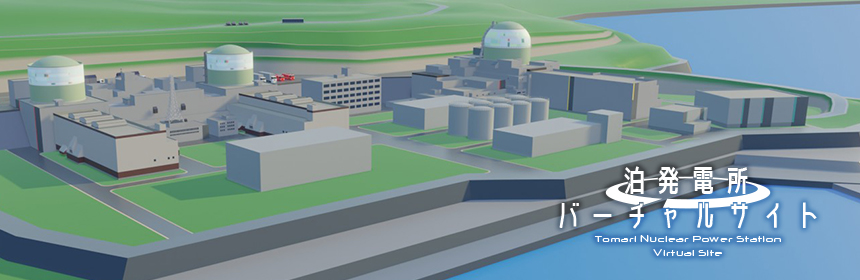
Source: Hokkaido Electric
The port
Hokkaido Electric’s new port is a crucial part of its strategy. In early June, the utility explained its plans for the facility to the prefectural governor. Located roughly 1.8 kilometers north of the NPP, the new port will be outside the Tomari site, thus mitigating tsunami risk, especially from potentially drifting vessels. A secure road – including tunnels and bridges – will connect the port and the plant. This will help ensure safe transport of spent nuclear fuel.
Since it lies outside the NPP’s perimeters, port construction is not subject to NRA approval. This should help avoid regulatory bottlenecks. Also, its construction will begin only after the reactor restarts and take about four years.
Hokkaido Electric reassured regulators and authorities that the NPP can operate for several years without new fuel shipments. In case of a delay to construction and a subsequent halt of nuclear operations, existing power sources will suffice, thanks to Ishikariwan Shinko Power Station Unit 2. The latter, powered by LNG, is scheduled to start operations in FY2030.
Despite such efforts, the restart still hinges on local approval, which has become a sort of ‘holy grail’ in Japan’s energy politics. Hokkaido Governor Suzuki called on the federal government to clarify how local consent should be ascertained. Currently, it is customary for nuclear projects to obtain the approval of their host community; however, such a process is neither regulated nor standardized. The actual procedure of testing citizens’ sentiment is open to interpretation. This leaves the issue as politically sensitive and ambiguous.
In early June, Hokkaido Electric’s Tomari site director met with the mayor of Tomari Village to present details of the port and road construction plan. Public consultations and a final regulatory review, including input from METI, will be imperative before a final go-ahead from local politicians.
Conclusion
A proactive stance by Hokkaido Electric to build new infrastructure for Tomari NPP, as well as winning over the NRA, are good omens for a restart. But the ambiguity of local consent procedures leaves the endeavor open to attack and delay, even if the opposition is small. Local officials will fear public backlash without a clear guideline to follow and point to in case of criticism.
This is where the disparity between a pro-nuclear national policy and the hands-off approach to restarts by the national government become painfully evident. Local authorities fear they have too much to lose and not enough to gain from blessing reactor restarts.
Operating utilities are stuck in the middle, absorbing most of the financial damage created by this indecisiveness and passing on a portion of the fallout to consumers via electricity bills.
For now, the tech sectors that need the clean electricity that NPPs can provide are supporting the nuclear revival – especially in countries like the U.S. But unless this support extends to local stakeholder management, Big Tech is likely to grow frustrated with the timelines and the fickle political and regulatory conditions of the nuclear sector.
Japan’s pro-nuclear stakeholders – in government and industry – have a few years to show that restarts can go ahead and become a predictable process. If they can’t, energy-intensive users will simply switch to other options.
ANALYSIS
BY ANDREW STATTER
Energy Jobs in Japan: Fight to Retain Talent
With a common focus on identifying and attracting top talent, the importance of retaining people is often overlooked. In the Japanese energy market competition for talent is increasing, the types of hiring companies are diversifying and the opportunity for high potential talent to significantly increase their market value with strategic moves is higher than ever before.
Hiring companies need to consider and implement a clear retention strategy from the start. This includes working style and benefits packages, longer term incentives designed to increase retention, visibility for career growth and most critically, a healthy workplace culture where employees feel valued and respected.
The market here is small, and people talk. In the past few months, we’ve seen multiple cases of one or two key people leaving a toxic organization, and within a very short period of time a mass exodus follows. When it comes to retention, prevention is better than a cure.
The pull factor, temptation from the outside
Why do people pay north of a million JPY for a Rolex or Louis Vuitton bag? Is the quality ten times better than a product that costs a hundred thousand JPY? Of course not, however scarcity drives up prices. Various job functions within the energy industry are either relatively new, or have an outsized impact on the success of an organization. These are the main areas where we see talent scarcity driving up hiring prices:
- Offtake. Talent with a strong network of bankable offtakers beyond the obvious GAFA players, and a track record of getting PPAs signed are in huge demand.
- Project origination. Japan is land-scarce for large scale projects. Talent who have built a personal network of landowners and brokers have gained significant market value.
- Interconnection. Both LTDA rounds were 10x oversubscribed for BESS applications. That is a lot of grid connection applications being made. Talent who can do this swiftly and efficiently commands a premium on the labor market.
- Trading. With futures volumes up 4x from last year and asset backed trading on the rise, this talent is the new profit center for operators.
If you add in other skills, such as bilingual ability or engineering + commercial negotiations, then scarcity increases. The bilingual electrical engineer who can also do development and lead commercial negotiations has become a Patek Philippe.
As an employer, you can bet that your talent in such categories will be approached by competitors. Even if they don’t have a LinkedIn profile and online presence, the market is small enough that they will be approached by ex-colleagues, friends, or business partners. Some of the approaches will include big money offers, significant promotion opportunities or other major ‘pull factors’ that can tempt your otherwise happy talent away.
Benefits, what do people want?
Covid-19 shook up the work place, and shifted priorities for many. Work-life balance and flexibility have become a major factor for many employees, especially those with young families. The increase in European companies entering Japan with generous leave policies also creates a disparity that can sway decisions. Below are key benefits that today’s talent cares about, which can keep people satisfied or see them walking out the door:
- Hybrid workstyle. 3 days in the office, 2 days at home is the most desired setup for employees in Japan now. 5 days in the office is increasingly rare, even for blue-chip Japanese firms.
- Remote workstyle. Related to hybrids, many people moved back to their home regions post Covid. A system that allows them to work from their hometown, and payment for travel and/or accommodation close to HQ is highly desirable.
- Leave. The Ministry of Health, Labour and Welfare (MHLW) mandates a minimum of 10 days annual leave. Some companies still only offer this, where others are offering 20 or 25 days, with additional leave for sick days, childcare leave etc.
- Housing support. Companies can adopt a couple of methods to offer full or partial rental support; the benefit to the employee is that a portion of the cost is paid pre-tax.
There are other benefits offered by some firms, such as wellness and education support, additional health insurances, pension/ retirement systems; however, the above four have the highest impact on talent attraction and retention.
Build a golden cage
The term ‘golden handcuffs’ typically refers to post-exit performance terms for top management; however, a similar approach can be taken to keep employees engaged and employed until the company reaches critical success milestones.
The simple approach of paying a higher base salary can work in some cases. After all, Japanese talent tends to lean toward certainty and security, so they’ll favour higher base salary (minimize downside risk) over high variable performance bonuses.
That being said, with scarcity pushing the value of ‘lightly experienced’ talent up, hiring companies are often reluctant to pay top dollar for as yet unproven talent. Building up a performance based ‘golden cage’ can be an ideal approach to minimize initial budget outlay, but give strong incentive to high performers and increase retention. Here are some long-term incentive methods that are particularly effective:
- RSU (Restricted Stock Units) or SO (Stock Options): RSU only applies to publicly listed companies, and SO can be given for private firms. Typically, having a one year cliff and three or four year period will give the company strong retention ability as the employee has significant value tied up in staying. SO can be weaker as typically illiquid, and RSU has the risk that a company trying to tempt your talent away may opt to buy your RSU out in the form of a stock for stock sign-on bonus.
- Exit-linked profit share: Often seen in development platforms or investment vehicles, a one-off bonus payout linked to events such as fund exit, asset selldown, etc, can be a strong retention strategy. The key is visibility. When the timeline, or the calculation for a split is vague, it often feels less real to employees and they’ll walk away from this.
- Performance based profit share: Typically appearing in consulting/ advisory or trading firms, giving a percentage of profit on an annual basis is an effective way to reward your early joiners as the business grows. Risk is directly related to the performance of your business; if it does well then they’re making too much money to walk. But if the business suffers, so do the employees as vulnerabilities in the scheme are exposed.
Not every scheme will apply to every type of business, however the feeling of reward and recognition for contributions made is one of the strongest factors in talent retention.
Career growth – is it worth staying?
With competitors sniffing around your top talent, offering Director titles to your Managers, giving wider responsibilities and attractive packages, how do you keep your people from being tempted? Showing a clear future is critical. If someone is presented with a certain step up externally, and the internal vision lacks clarity, or worse, if internal promotion relies on simply taking more trips around the sun, you are sitting on a ticking time bomb.
Companies that do this the best are open with their team with organization planning. Employees can apply internally to open positions, and even if those openings have both internal and external candidates being considered, the visibility and the chance to apply are major retention factors.
For a loyal employee, working hard for years, suddenly having an external hire come in above them can often be a trigger to start talking with people like us!
Not every company is large or complex enough to offer various career development routes. Even if you are a small firm, what you can do is set clear KPIs and performance targets that link to promotions in terms of title and income, even though the role and responsibilities may remain largely unchanged. Avoiding a feeling of stagnation, and fostering a sense of forward progress is critical for employee engagement.
Culture can make or break everything
Countless times, we’ve witnessed people leaving a lucrative golden cage, leaving a solid benefits package on the table and stepping away from imminent promotions because the culture simply sucked. Yelling bosses, no inter-team communication, shifting goalposts, top-down management, expectation to put in the hours over generating results etc are all signs of a bad culture.
Anytime someone leaves, or looks to leave, take the time to conduct an exit interview. Not only with the employee, but also with their direct manager and upper management.
Look for patterns if you have multiple exits. The old saying ‘people don’t leave jobs, they leave managers’ is often very true.
Andrew Statter is a Partner at Titan GreenTech, an executive recruitment agency focused on the clean energy space.
ASIA ENERGY REVIEW
BY JOHN VAROLI
A brief overview of the region’s main energy events from the past week
Australia / Offshore wind
This week it became known that Norwegian energy major Equinor quietly exited the Bass Offshore Wind Energy project near the coast of Tasmania.
Australia / Renewables
Malaysia’s Gamuda agreed with the Downie family to develop renewables in Tasmania. Gamuda will take an unspecified equity stake in the Downie’s 600 MW wind and solar portfolio that also has up to 600 MW of BESS.
China / Gas
China boosted domestic gas production to 81 Mt in the first five months of 2025, up from 76 Mt in 2024, and 39 Mt a decade ago.
China / Oil
Some of China’s largest ports are still receiving Iranian crude, frustrating U.S. embargo efforts to strangle Tehran.
India / Oil
The govt is considering three additional strategic oil reserves to enhance energy security. India is the world’s third largest oil importer and consumer.
Indonesia / Oil
The govt’s new energy strategy entails attracting oilfield services providers with the latest technology to help revive and increase production from ageing or idle wells.
Singapore / Renewables
PM Wong discussed “several priority areas of cooperation” – including renewable energy and agri-trade – with Cambodian PM Hun Manet.
Southeast Asia / LNG
The region’s LNG import infrastructure investments are expected to reach $11.8 billion in the coming year. However, geopolitical tensions and price pressures are challenging LNG supply, casting uncertainty over the region’s energy goals.
South Korea / Fossil fuels
In April, fossil fuels accounted for under half of electricity generation for the first time in the country’s history, driven by a decline in coal-fired power and record solar energy output.
Disclaimer
This communication has been prepared for information purposes only, is confidential and may be legally privileged. This is a subscription-only service and is directed at those who have expressly asked K.K. Yuri Group or one of its representatives to be added to the mailing list. This document may not be onwardly circulated or reproduced without prior written consent from Yuri Group, which retains all copyright to the content of this report.
Yuri Group is not registered as an investment advisor in any jurisdiction. Our research and all the content express our opinions, which are generally based on available public information, field studies and own analysis. Content is limited to general comment upon general political, economic and market issues, asset classes and types of investments. The report and all of its content does not constitute a recommendation or solicitation to buy, sell, subscribe for or underwrite any product or physical commodity, or a financial instrument.
The information contained in this report is obtained from sources believed to be reliable and in good faith. No representation or warranty is made that it is accurate or complete. Opinions and views expressed are subject to change without notice, as are prices and availability, which are indicative only. There is no obligation to notify recipients of any changes to this data or to do so in the future. No responsibility is accepted for the use of or reliance on the information provided. In no circumstances will Yuri Group be liable for any indirect or direct loss, or consequential loss or damages arising from the use of, any inability to use, or any inaccuracy in the information.
K.K. Yuri Group: Hulic Ochanomizu Bldg. 3F, 2-3-11, Surugadai, Kanda, Chiyoda-ku, Tokyo, Japan, 101-0062.