
WEEKLY
SEPTEMBER 8, 2025
ANALYSIS
THE NEW HEADWINDS FACING JAPAN’S BIOMASS INDUSTRY
- The biomass sector has had a whirlwind of a year. On the one hand, several large biomass projects came online. On the other hand, these are most likely the last new large-scale plants to open for the rest of the decade.
- Current targets aim for a 5-6% share of biomass in the national energy mix by 2040. Are these goals realistic? We check on the sector conditions.
ENERGY JOBS IN JAPAN: OFFSHORE WIND SETBACK, DISASTER OR A SPEED BUMP?
- Will Mitsubishi’s exit from offshore wind power be a hammer blow to the thousands of jobs expected to be created by the industry, or is this merely a speed bump on the way to inevitable growth?
- What happens when a leading developer leaves the market? We talk through the impact on the team and the wider sector.
ASIA PACIFIC REVIEW
This column provides a brief overview of the region’s main energy events from the past week
NEWS
- METI drafts steel and cement industry CO2 measuring benchmarks
- Hitachi to invest over $1 billion in T&D equipment manufacturing in the U.S.
- METI agrees with India to focus cooperation on hydrogen, renewables, and carbon credits
- OCCTO finalizes guidelines and terms for Round 3 of the LTDA auction
- JEPX releases results of the first FY2025 baseload market auction
- The first non-fossil value trading held in FY2025
- JSE and JFE Engineering sign FEED contract for H2 pipeline in central Japan
- JAL Group begins trial of first hydrogen-powered aircraft towing vehicle
- J-POWER to build one of U.S.’s largest solar plants
- Investment firm and Taiwanese partner to build 200 MW BESS in Japan
- Top cement maker inks long-term solar PPA with Kyuden Mirai Energy
WIND POWER AND OTHER RENEWABLES
- Akita offshore wind sites to be re-auctioned by “year-end”
- METI to extend renewables tax breaks, expand support for wind power
- Toda succeeds in test of one-step floating wind turbine installation tech
- Governor confirms decision on Kashiwazaki-Kariwa NPP’s future won’t come until after Nov
- Kyushu Electric invests to renovate Genkai NPP
- Japan commits to U.S. annual energy purchases and explores Alaska LNG offtake
CARBON CAPTURE & SYNTHETIC FUELS
- Cosmo Oil and Alaska Airlines ink SAF deal
EVENTS
Sept 9-12 Gastech 2025, Milan
Sept 15-19 IAEA General Conference 2025
Sept 16-18 APAC Wind Energy Summit @ Melbourne, Australia
Sept 17-19 Smart Energy Week Autumn 2025 / EV-HV-FCV Expo / Green Factory Expo / H2 & FC Expo / PV Expo / Battery Japan / Smart Grid Expo / Wind Expo / CCUS Expo / Decarbonization Expo / Circular Economy Expo @ Makuhari Messe
Oct 8-9 Innovation for Cool Earth Forum @ Westin Hotel Tokyo IEA World Energy Outlook 2025 Release
PUBLISHER
K. K. Yuri Group
Editorial Team
Yuriy Humber (Chief Editor)
John Varoli (Senior Editor, Americas)
Kyoko Fukuda (Data, Events)
Magdalena Osumi (Renewables & Storage)
Filippo Pedretti (Thermal, CCS, Nuclear)
Tetsuji Tomita (Power Market, Hydrogen)
George Hoffman (Sales, Business Development)
Tim Young (Design)
SUBSCRIPTIONS & ADVERTISING
Japan NRG offers individual, corporate and academic subscription plans. Basic details are our website or write to subscriptions@japan-nrg.com
For marketing, advertising, or collaboration opportunities, contact sales@japan-nrg.com For all other inquiries, write to info@japan-nrg.com
NEWS: GENERAL OUTLOOK AND TRENDS
METI drafts steel industry benchmarking framework
(Government statement, September 1)
- METI drafted a benchmarking framework for the steel industry, with three separate categories. The goal is to measure CO2 emissions for the different manufacturing methods and products.
- One category is for blast furnace (BF) steelmaking. The other two are for electric arc furnaces (EAF) producing ordinary steel, and for EAF producing special steel.
- The benchmarking divides steel production into two stages. The first is upstream, covering operations from raw material intake to semi-finished products. The second is downstream – heating, rolling, and finishing to produce final steel products.
- For upstream, benchmarks will measure CO2/ ton of crude steel or pig iron. For downstream, emissions will be based on fuel energy consumption.
- METI will adjust for differences in production methods, as well as differences in energy efficiency and product characteristics.
- CONTEXT: Steelmaking is highly energy-intensive, relying heavily on fossil fuels like coal in traditional blast furnaces. Producing one ton of steel can emit up to 1.8 tons of CO2. To mitigate this, greener alternatives are needed – such as electric arc furnaces powered by renewable energy, hydrogen-based reduction, and CC technologies.
- SIDE DEVELOPMENT:
METI develops new cement sector benchmark - (Government statement, September 1)
- METI is developing a new cement sector benchmark to measure and manage CO2 emissions from cement manufacturing.
- Most CO2 emissions (over 90%) result during production of clinker, an intermediate product. Thus, METI plans to focus the benchmark on clinker production.
- The benchmark will calculate emissions based on CO2 per ton of clinker produced, which aligns with the EU Emissions Trading System (EU-ETS).
- The proposed formula for determining emission allowances is: Allocation = Benchmark target × Direct emission ratio × Baseline activity volume.
- CONTEXT: The benchmark target represents the desired CO2 emission intensity per ton of clinker. The direct emission ratio accounts for the balance between direct and indirect emissions. The baseline activity volume is the average clinker production between FY2023 and 2025.
METI agrees with India to focus energy collaboration on hydrogen, renewables
(Government statement, August 29)
- PM Ishiba met with Indian PM Modi on an official visit to Tokyo last week.
- They agreed to strengthen economic cooperation, including launching a Japan-India Economic Security Initiative and reinforcing supply chain resilience.
- On Aug 25, the Japan-India Energy Dialogue reviewed past cooperation in electricity and energy conservation, renewable energy, oil and natural gas, and coal, and looked for new areas that would benefit from a joint approach.
- The two countries agreed to cooperate on clean hydrogen and clean ammonia to promote bilateral cooperation.
- CONTEXT: India’s energy demand is surging due to economic growth, urbanization, and industrial expansion, with electricity consumption set to grow 4% annually and triple by 2050. India’s power capacity is 476 GW, with a goal of 500 GW of non-fossil fuel capacity by 2030. Coal dominates, but renewables and green hydrogen are gaining traction.
TAKEAWAY: India’s energy boom is important for Japan, which sees India as a major partner for energy security and economic opportunities. Japanese investment over the next decade is targeting India’s green energy, AI, and critical minerals sectors. Collaborations like green hydrogen exports and solar projects help Japan decarbonize while reducing reliance on other regions.
- SIDE DEVELOPMENT:
- Japan inks deal with India on JCM
- (Government statement, August 29)
- The govt inked an MoC with India on the Joint Crediting Mechanism, which generates carbon credits through decarbonization projects.
- India’s key decarbonization focuses are biogas, renewable hydrogen, ammonia, industrial transition, and CCS – areas where Japanese companies have leading tech.
- India is the 31st JCM partner with Japan.
- CONTEXT: The JCM allows both countries to cooperate in technology and finance, and to share GHG reduction and absorption credits according to their contributions.
TAKEAWAY: Japan aims to create enough JCM credits to cover 100 million tons of CO2 equivalent by 2030, and a similar amount over the following decade. That’s a tall order, given that the JCM mechanism has been around since 2013 but it had only sponsored projects that would displace 20 million tons of CO2 equivalent as of late in 2024. India’s ambitious solar and green ammonia expansion plans potentially give the Japanese a bigger market to strive toward, broadening compliance options and creating new offtake and investment channels.
Hitachi to invest over $1 billion in T&D equipment manufacturing in the U.S.
(Company statement, September 5)
- Hitachi Energy will invest $457 million to build the largest power transformer factory in the U.S., to be located in South Boston, Virginia.
- In total, the company is investing more than $1 billion to expand its manufacturing capacity in the U.S. for critical power transmission and distribution equipment.
- CONTEXT: As data centers proliferate in line with the Trump admin’s AI Action Plan, demand for energy is growing; they will account for nearly 12% of all power consumption in the U.S. The country will have to build more power generation capacity, as current infrastructure is insufficient, and which in turn has led to high energy prices for consumers, fueling a backlash.
TAKEAWAY: Large power transformers, essential for high-voltage transmission and supporting applications like AI data centers and power generation, are in short supply. Lead times take up to three years due to increased global demand and supply chain complications. Hitachi’s expansion reduces reliance on foreign supply chains and improves grid reliability. Backed by the Trump admin’s pro-energy policies, this investment is framed as a step toward “energy dominance” and winning the “AI race.”
- SIDE DEVELOPMENT:
MHI to double gas turbine production capacity - (Bloomberg, September 1)
- In the next two years, MHI plans to double its gas turbine production capacity as global demand surges due to aging infrastructure, construction of new data centers, as well as expanding manufacturing, and electrification needs.
- MHI CEO Ito said increasing orders are driving this expansion, and meeting these needs is now a top priority.
- Since turbine production expenses almost doubled in recent years, MHI is improving production efficiency despite rising costs for materials, supplies, and staffing.
- Ito cautioned that turbine demand often faces boom-and-bust cycles, and a major concern is uncertain forecasts for data center expansion. Still, MHI thinks demand will stay strong over the next decade.
- CONTEXT: Competitors like GE Vernova also enjoy similar growth as global demand to build new power generation capacity has entered a boom period.
NEWS: ELECTRICITY MARKETS
OCCTO finalizes guidelines and terms for 3rd LTDA
(Agency statements, September 1 and 3)
- OCCTO finalized application guidelines and the capacity assurance contract terms and conditions for the third round of the Long-Term Decarbonization Power Source Auction (LTDA) in FY2025.
- It states auction capacity limits for batteries, and revises the method of adjusting variable costs and the calculation of the increased amount.
- For batteries, a capacity limit that previously applied only to lithium-ion batteries, restricting a foreign country to less than 30% of total awarded capacity, is extended to other types of batteries. This is done to reduce supply chain risks.
- For hydrogen, ammonia, and CCS costs, OPEX will be adjusted annually based on the consumer price index (CPI), while CAPEX will be adjusted only once for CPI changes between the bidding time and the start of the scheme.
- For cost increases, 10% must be borne by operators to prevent moral hazard. Extra costs from extended program periods (e.g., O&M or refurbishment due to longer operation) are excluded from this rule.
- CONTEXT: In late June, based on discussions at METI’s advisory council (System Design Task Force), OCCTO prepared draft guidelines and contract terms and conditions, and held a public comment period from July 16 to 30.
TAKEAWAY: The rules for the third LTDA in FY2025 are finally decided. Many changes have been made to application rules to promote clean capacity investment and enhance revenue predictability. Updates include raising the bid price ceiling, introducing an automatic adjustment system, expanding the scope of eligible power generation technologies, and establishing conditions for bidding.
JEPX releases the first FY2025 results of the baseload market
(Organization statement, August 29)
- JEPX released the first FY2025 results of the Baseload (BL) market.
- The one-year product saw a significant increase in contracted volume compared to the previous auction but still totaled only 53.2 MW across three areas. The two-year product had no contracts.
- Contract prices for the one-year product were ¥13.3/ kWh in Tokyo (down ¥1.97), ¥11.75 in Kansai (down ¥0.83), and ¥11 in Kyushu (no contract last time).
- By area, contracted volumes were 10 MW in Tokyo (3.2× increase), 38.6 MW in Kansai (5.5× increase), and 4.6 MW in Kyushu.
Year / Round | Contract Date | Base Price Area | Contract Price [¥/kWh] | Contract Volume [MW] | |
FY2024 | 1st | Aug 30, 2024 | Hokkaido | 15.60 | 41.0 |
Tokyo | 12.97 | 14.8 | |||
Kansai | 13.41 | 0.3 | |||
2nd | Oct 18, 2024 | Hokkaido | 15.65 | 1.4 | |
Tokyo | 13.31 | 10.7 | |||
Kansai | – | – | |||
3rd | Nov 27, 2024 | Hokkaido | 16.05 | 80.0 | |
Tokyo | 13.36 | 110.3 | |||
Kansai | 13.53 | 9.8 | |||
4th | Jan 31, 2025 | Hokkaido | 15.27 | 3.1 | |
Tokyo | 12.58 | 7.0 | |||
Kansai | – | – | |||
FY2025 | 1st | Aug 29, 2025 | Hokkaido | 13.3 | 10.0 |
Tokyo | 11.75 | 38.6 | |||
Kansai | 11.00 | 4.6 | |||
Source: JEPX
The first non-fossil value trading held in FY2025
(Organization statement, August 29)
- JEPX published the first FY2025 trading results on the non-fossil value market.
- The FIT certificate market hit a record-high for the third time in a row, up 10% YoY, ranging from ¥0.4 to ¥4/ kWh.
- The compliance market showed higher prices than previous years, with non-FIT certificates trading at ¥0.72/ kWh (nuclear, no renewable designation) and ¥0.91/ kWh (large hydro, renewable-designated), compared to the past minimum of ¥0.6.
- CONTEXT: The Non-Fossil Value Trading Market allows electricity retailers and other obligated entities to purchase certificates that represent the environmental value of non-fossil power sources, such as renewables and nuclear. These certificates are traded separately from physical electricity on JEPX. The system ensures compliance with government requirements for non-fossil energy use and helps promote decarbonization by assigning a tradable value to non-fossil power generation.
Market Classification | Certificate | Trading Year / Round | Contract Date | Contract Volume [GWh] | Contract Price (max/min) [¥/kWh] | |
Renewable Energy Value Trading Market | FIT | FY2024 | 1st | Aug 30, 2024 | 14,379 | 0.40 (0.61/0.40) |
2nd | Oct 29, 2024 | 11,648 | 0.40 (0.60/0.40) | |||
3rd | Feb 28, 2025 | 15,343 | 0.40 (1.00/0.40) | |||
4th | May 23, 2025 | 19,068 | 0.67 (4.00/0.40) | |||
FY2025 | 1st | Aug 29, 2025 | 209,77 | 0.40 (4.00/0.40) | ||
Market for Compliance with the Act on Sophisticated Energy Supply Structure | Non-FIT: Renewable Energy Designation | FY2024 | 1st | Aug 29, 2024 | 1,732 | 0.60 |
2nd | Oct 28, 2024 | 1,166 | 0.60 | |||
3rd | Feb 27, 2025 | 81 | 1.30 | |||
4th | May 22, 2025 | 395 | 1.30 | |||
FY2025 | 1st | Aug 28, 2025 | 358 | 0.91 | ||
Non-FIT: No Renewable Energy Designation | FY2024 | 1st | Aug 28, 2024 | 262 | 0.60 | |
2nd | Oct 27, 2024 | 135 | 0.60 | |||
3rd | Feb 26, 2025 | 66 | 1.30 | |||
4th | May 21, 2025 | 258 | 1.30 | |||
FY2025 | 1st | Aug 27, 2025 | 431 | 0.72 | ||
Source: JEPX
TEPCO PG directs power generators to supply reserve capacity
(Denki Shimbun, September 2, 3, 4)
- TEPCO PG took additional supply capacity measures each day from Sept 1 to 3.
- Since the reserve margin during evening peak hours was projected to fall below 8% due to extreme heat, TEPCO PG requested generators to provide their available surplus capacity even after the gate closure.
- On Sept 1, the measure took effect from 4:30-6:00 p.m., securing up to 110 MW.
- On Sept 2, from 4:00-5:30 p.m., securing up to 150 MW.
- On Sept 3, from 3:30-5:00 p.m., securing up to 140 MW.
- To address the shortage in adjustment capacity procurement, TEPCO PG also tapped into power from pumped-storage facilities.
- CONTEXT: To address tight electricity supply-demand conditions, non-utilized capacity can be provided as supply capacity after gate closure. In addition, operation of pumped-hydro storage can be temporarily switched from operator to the TSO.
- SIDE DEVELOPMENT:
- Chubu Electric receives 240 MW emergency supply from TEPCO
(Nikkei, September 3)- On Sept 3, Chubu Electric PG received 240 MW from TEPCO PG after lower-than-expected solar output and a generator outage pushed reserve margins below the 3% threshold needed for stable supply.
- The emergency transfer, approved by OCCTO, lasted from 2:30-3:00 p.m. and was Chubu’s first such request since Sept 2024.
- Chubu PG said reserve margins across the wider block, including Chubu, are expected to remain above 8% going forward, ensuring no threat to power supply stability.
- CONTEXT: Until more capacity and BESS comes online, sudden weather changes and equipment malfunctions and deficiencies will remain key vulnerabilities.
- SIDE DEVELOPMENT:
- OCCTO requests Tohoku/ Tokyo TSOs to coordinate work suspension plans
- (Agency statement, August 31)
- OCCTO requested Tohoku and Tokyo TSOs to coordinate work suspension plans, as the cross-regional reserve margin was forecasted to decline in both supply areas on Sept 1 and 2.
- On Aug 29, the reserve margin for Tohoku and Tokyo areas was expected to be at a minimum of 4%. Additionally, there were multiple power supply issues, and there were concerns that high temperatures could lead to an increase in electricity demand.
- CONTEXT: OCCTO can request measures such as adjusting outage plans, restarting idle plants, or increasing output when supply-demand balance is tight or at risk.
EGC approves TEPCO PG contract for securing pumped storage
(Government statement, August 29)
- EGC reviewed the contents of the negotiated contract for pumped storage from TEPCO PG, and approved it to secure balancing capacity, when procurement rates for quick-response products in the balancing market remain below 10%.
- The contract until March 2026, covering up to 600 MW from two units with black start capability, will be priced below the revenue cap unit cost (¥2.19/ kWh), ensuring cost efficiency.
- Since procurement of primary and secondary balancing capacity has been low (0–6%), and weekly product prices are about twice the cap, the EGC judged the contract will help stabilize supply-demand operations without limiting other market participants, as the volume represents only about 30% of total procurement.
- CONTEXT: The negotiated contracts for pumped storage began in the Chubu area and have also been implemented in Tohoku, Kansai, and Hokkaido. Tokyo became the fifth area.
TAKEAWAY: With these contracts, the volume of the balancing market can be secured in advance, reducing the amount offered in the market and streamlining the contracting process. In addition, by reducing the need for additional parallel operation of pumped storage and thermal power, the overall balance of the power system can be made more efficient. That said, contracting a portion of the market at below revenue cap is a worrying signal for BESS operators, limiting the volumes of power that can be traded.
Chubu Electric PG launches transmission equipment inspection consultancy
(Company statement, September 1)
- Chubu Electric Power Grid launched a transmission equipment inspection consulting service with Tokyo startup Sensyn Robotics.
- Using drones and AI, inspection, anomaly detection, and repair planning will be automated, thereby reducing inspection workloads.
NEWS: HYDROGEN
JSE and JFE Engineering sign FEED contract for H2 pipeline on Kawasaki coast
(Company statement, September 2)
- Japan Suiso Energy and JFE Engineering signed a FEED contract for a hydrogen pipeline in the Kawasaki coastal area.
- As part of the Green Innovation Fund project, “Large-scale Hydrogen Supply Chain Establishment,” JFE Engineering will design a pipeline to supply domestically produced hydrogen to JSE’s Kawasaki liquified hydrogen terminal.
- This terminal will play a pivotal role in supplying vaporized hydrogen from imported LH2 to users in the Kawasaki coastal area.
- CONTEXT: JSE is funded by Kawasaki Heavy Industries and Iwatani Corp. JFE Engineering has extensive experience in pipeline construction.
TAKEAWAY: In early August, KHI began building a large liquefied hydrogen storage tank for Kawasaki LH2 Terminal, and work is progressing as scheduled. Also, JSE carried out a third-party allocation for liquefied hydrogen supply chain at the end of August. These investments should facilitate establishing a full-scale hydrogen supply chain after completion of the demo project.
JAL Group begins trial of first hydrogen-powered aircraft towing vehicle
(Company statement, August 29)
- Japan Airlines (JAL), JALUX, and JAL Airtech will begin the first field test of an aircraft towing vehicle powered by hydrogen fuel.
- JALUX leads the project, with Tajima Motor handling vehicle development, JAL conducting field tests, and JAL Airtech managing maintenance and refueling.
- The trials run through December to assess effectiveness.
- CONTEXT: The Tokyo Govt aims to expand hydrogen energy demand and promote its early social implementation as part of efforts to achieve decarbonization.
NEWS: SOLAR AND BATTERIES
J-POWER to build one of U.S.’s largest solar plants
(Company statement, September 2)
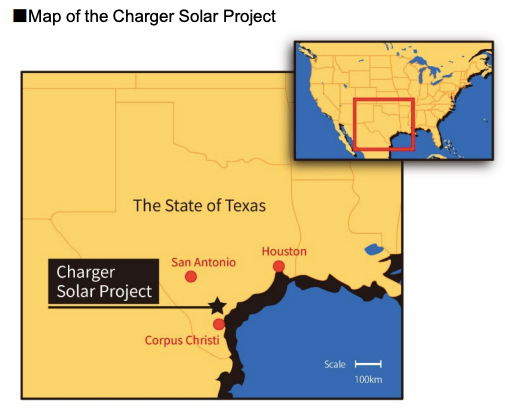
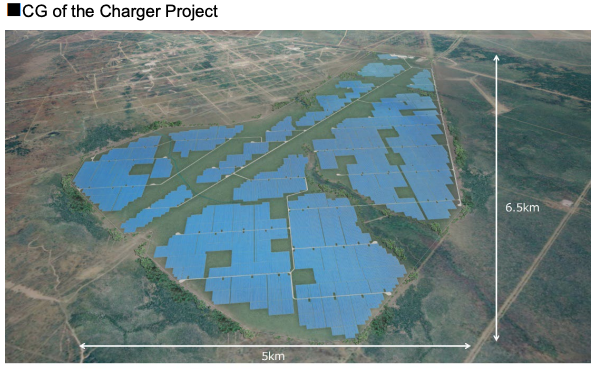
- J-POWER confirmed plans to build a 394 MW (AC) utility-scale solar power plant in South Texas.
- CONTEXT: This project was originally set to launch in summer 2023, but supply chain disruptions and grid interconnection delays on ERCOT (the state’s grid) led to delays. Texas has high demand for grid access.
- If launched according to its new schedule – November 2026 – the Charger Solar Project will rank among the top 20 largest solar plants in the U.S.
- Local partners include Solar Plus Development and Avondale Solar.
- CONTEXT: The development marks J-POWER’s first fully owned renewable project in the U.S., reflecting its 2024–2026 medium-term plan to shift its portfolio toward carbon-neutral assets.
TAKEAWAY: Texas is a leading solar market in the U.S., with over 37 GW of such installed capacity as of mid-2025, driven by abundant irradiation and a rapidly growing economy. The project’s location, equidistant from Houston and San Antonio, both high-energy-demand cities, is seen as a guarantee of commercial viability.
Merchant Bankers and Taiwanese firm to build 200 MW BESS in Japan
(Company statement, September 1)
- Merchant Bankers, a Tokyo-based investment and asset management firm, will partner with Taiwan’s Euka Power to co-develop large-scale grid storage projects in Japan, starting with a 200 MW/ 800 MWh battery system in Kyushu.
- If built, it will be one of the country’s largest. Construction is slated to begin this year, operations are targeted for 2026.
- The firms inked an MoU and plans to finalize deals with other stakeholders (energy firms and financial institutions) later this year.
- CONTEXT: Euka Power, part of the Shanghai-listed Techmation Group, brings tech expertise including power conditioner and vanadium flow battery patents.
Taiheiyo Cement inks 20-yr solar PPA with Kyuden Mirai Energy
(Nikkei, Company statement, September 5)
- Taiheiyo Cement inked an offsite PPA with Kyuden Mirai Energy to install solar panels on former cement plant sites in Kitakyushu (1.84 MW) and Kanda (1.94 MW).
- Starting December 2025, the electricity – about 4.65 GWh annually – will be supplied via Kyushu Electric to Taiheiyo’s local plants and logistics bases.
TAKEAWAY: This project is significant because it shows how Japan’s heavy industry is beginning to decarbonize through long-term PPAs, while also repurposing idle industrial land for renewable generation. By partnering directly with Kyushu Electric’s subsidiary, Taiheiyo Cement not only secures stable green power but also sets an example of how energy-intensive sectors can leverage existing assets to meet sustainability goals.
Ryohin Keikaku and JERA set up renewable power producer
(Company statement, September 1)
- Ryohin Keikaku and JERA set up MUJI Energy to develop renewables projects, primarily solar. The new firm will develop around 13 MW of solar capacity within a year, covering about 20% of Ryohin Keikaku’s annual electricity use.
- In addition to generation, the new firm will provide electricity supply and ancillary related operations to its services.
- Ryohin Keikaku owns 80% of the new company’s shares. All of the environmental value of the electricity produced will be acquired by Ryohin Keikaku via JERA Cross through a virtual PPA.
- CONTEXT: Ryohin Keikaku targets a 50% reduction in emissions by 2030.
Hyogo Pref urges NTT Anode Energy to improve safety for solar farm
(Company statement, August 29)
- Hyogo Pref govt issued a second-stage review statement on NTT Anode Energy’s planned 52 MW solar power project in Sumoto City, Awaji Island.
- The project, to be built on 61 hectares of former quarry land, will install about 81,000 panels and begin operation within two years of groundbreaking.
- While bird flight impacts were assessed as minimal, the prefecture asked NTT to also consider changes to feeding habitats for birds.
NTT Anode Energy starts building grid-scale BESS in Tomakomai
(Company statement, September 1)
- NTT Anode Energy began building a 18.2 MW/ 76.77 MWh grid-scale BESS in Tomakomai City, Hokkaido.
- Operations are scheduled to start in FY2028. The project will use Li-ion batteries.
- The project was selected for govt support under the FY2024 renewable energy and storage promotion program, receiving about ¥1.95 billion in subsidies.
- The company, which has experience building and operating storage plants across Japan, will act as aggregator for its facility.
- SIDE DEVELOPMENT:
- NTT Anode Energy begins commercial operation of 7th grid-scale BESS
- (Company statement, September 1)
- NTT Anode Energy began commercial operation of its 1.9 MW/ 7.9 MWh grid-scale Li-ion battery storage system in Tsubata, Ishikawa Pref.
- This is NTT Anode’s seventh grid-scale battery project, supported by a ¥200 million subsidy under the FY2023 grid-scale battery program, contributing to its portfolio of ~180 MWh at high voltage, and ~160 MWh at extra-high voltage.
Eurus Energy begins building grid-scale BESS in Hokkaido
(Company statements, September 1 and 5)
- Eurus Energy began building a 10 MW/ 27.4 MWh grid-scale battery in Ikeda Town, Hokkaido, scheduled to start operation in October 2027.
- It is the company’s first storage project in Hokkaido and fourth in Japan.
- The ¥2.5 billion project received an ¥820 million subsidy and will be operated via Eurus’s VPP platform ReEra. It will support demand-supply balancing.
- The project will use PowerX’s Mega Power 2700A storage system (10 units).
Kyudenko and Shirokuma Electric launch BESS in Gunma and Tochigi
(Company statement, September 1)
- Kyudenko, through its JV Joshu Ota Storage, began operation of three 2 MW-class grid batteries (7.45 MWh total) in Gunma and Tochigi Prefs.
- Developed and operated by Shirokuma Electric, the projects were selected under Tokyo’s FY2023 subsidy program and use Chinese CATL batteries.
TAKEAWAY: The projects highlight a growing wave of small-scale, high-voltage storage developments in Japan, a trend expected to continue in the coming years as part of govt efforts to bring greater grid stability and resilience to the national power system.
Lester enters grid battery market
(Company statement, August 29)
- Lester, a Tokyo-based trading firm, is entering the grid battery market with a 2 MW/ 8.1 MWh Huawei system in Saitama.
- Lester operates over 150 renewable plants in Japan and 94 solar sites in Taiwan.
- CONTEXT: Lester’s core business is semiconductors, electronic components, and related solutions, acting as a sales agent/distributor for global manufacturers. Through its subsidiaries like V-Power, it has expanded into renewables projects.
NEWS: WIND POWER AND OTHER RENEWABLES
Akita offshore wind sites to be re-auctioned by year-end
(Denki Shimbun, September 5)
- The govt will re-auction two designated offshore wind areas in Akita Pref waters, with institutional measures expected to be in place this year, allowing bidding.
- The decision follows earlier delays and feedback from local govts and residents, who sought more clarity on project design and community coexistence measures.
- Officials indicated that adjustments will include stricter rules on local benefit-sharing and clearer guidance for developers to ensure projects gain regional acceptance.
- CONTEXT: The re-auction reflects the govt’s effort to keep its offshore wind rollout on track despite Mitsubishi Corp’s decision to withdraw from the Round 1 auctions, including these two Akita sites.
TAKEAWAY: It is not immediately clear if the “year-end” promise relates to the calendar or the fiscal year. The latter ends in March 2026. Either way, the decision to re-auction the Akita sites quickly underscores METI’s urgency to keep Japan’s offshore wind program on track after Mitsubishi Corp’s exit. With local govts and residents demanding clearer benefit-sharing and coexistence measures (such as, how much the local fisheries will be compensated), the new framework makes community engagement as critical to success as financial and technical capacity.
METI to extend renewables tax breaks, expand support for wind power
(Japan NRG, September 5)
- METI will seek an extension of renewable energy tax incentives as part of its FY2026 budget and tax reform requests.
- The current two-year fixed asset tax reduction for renewable facilities (wind, solar, biomass, geothermal, small hydro) will be extended to three years and be recalibrated to favor domestically sourced projects that show community coexistence.
- Offshore wind projects will get special treatment: tax break eligibility will extend to six years for projects starting operations through FY2031 and there will be lower taxable valuations. However, coverage will be limited to government-designated sites.
- Solar support will narrow exclusively to perovskite panels to promote Japan’s competitive edge in that tech.
- CONTEXT: Lowering fixed asset taxes is a way to reduce business risks without the government offering more money for the electricity from the projects. The timing is also significant as it comes soon after Mitsubishi-led consortia withdrew from three major offshore wind projects, citing unfavorable economics.
TAKEAWAY: By easing upfront tax burdens, the measure frees up capital for reinvestment, signaling that Japan intends to keep backing large, capital-intensive renewable projects, especially in offshore wind. The measures are also tied to more explicit engagement with local communities and their acceptance. METI wants to show communities in Akita and elsewhere that feel let down by Mitsubishin’s exit from their wind projects, that the changes energy officials are making will benefit not only businesses but also the projects’ host communities.
Toda succeeds in test of one-step floating wind turbine installation tech
(Company statement, August 29)
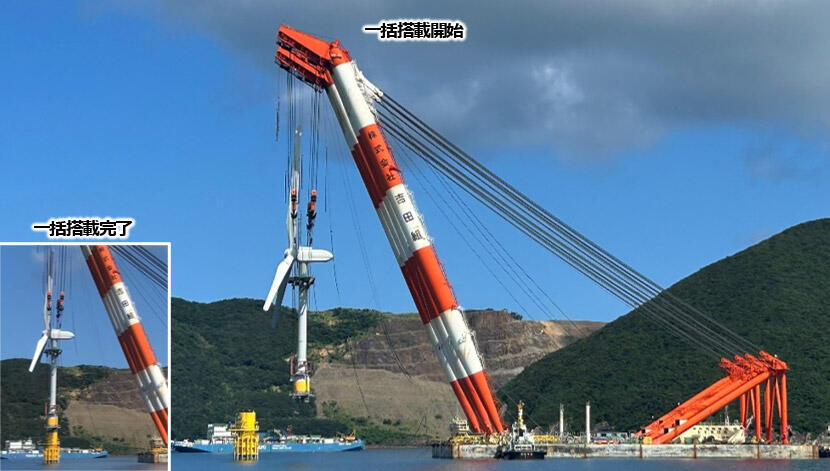
- Toda Corp completed a demo test of its one-step wind turbine installation tech using a one-third scale (2 MW-class) model of a 15 MW floating offshore wind turbine.
- The test, carried out in Goto, Nagasaki, confirmed that fully assembled turbines (tower, nacelle, blades) can be lifted and installed at sea using existing 3,700-ton class heavy-lift vessels available in Japan.
- The innovation aims to cut costs by assembling turbines on land or barges and installing them in one piece, reducing offshore work time.
- The firm plans to scale up from this 2 MW-class trial to full 15 MW-turbine demos.
Metal One invests in Global Energy Harvest to boost wave power tech
(Company statement, September 2)
- Steel trading firm Metal One and power distribution equipment maker Nitto Kogyo invested in Global Energy Harvest, which is developing wave power generation tech.
- The ¥400 million investment will be used to improve the tech and build a mass production system for power generation equipment.
- This is Metal One’s second investment in Global Energy Harvest following 2024.
- CONTEXT: Wave power generation uses the vertical motion of waves to drive generators. Global Energy Harvest focuses on small generators, mainly for installation at ports and breakwaters.
NEWS: NUCLEAR ENERGY
Decision on Kashiwazaki-Kariwa NPP’s future to come after Nov
(NHK and other media, September 3-4)
- The Niigata Governor Hanazumi said his decision on restarting Kashiwazaki-Kariwa NPP won’t come earlier than November.
- A prefectural public opinion survey began on Sept 3 and runs until Sept 18. The final report is due by late October. Hanazumi will study results before making a decision.
- The survey relates to nuclear safety, disaster preparedness, and the impact of restart.
- CONTEXT: Hanazumi completed consultations with all city and town mayors in Niigata, with five public hearings that ended on Aug 31. The opinion survey is the last major step in the decision-making process. TEPCO aims for an early restart of Unit 6 at Kashiwazaki-Kariwa, but needs local approval.
- Meanwhile, TEPCO President Kobayakawa told Kashiwazaki City Mayor Sakurai that the company will accelerate its decision on the future of Units 1–5. Initially, the utility said it would move to consider a partial decommissioning of those facilities two years after Unit 6 restarted.
- Mayor Sakurai welcomed the new pledge as a “credible step toward reducing risk” and reiterated conditional support for restarting units 6 and 7, calling them significant for both TEPCO and Japan’s energy security.
Kyushu Electric invests ¥13.7 billion to renovate Genkai NPP
(Nikkei, September 3)
- Kyushu Electric Power will upgrade the main transformers of Units 3 and 4 of the Genkai Nuclear Power Plant (Genkai-cho, Saga Pref).
- Total investment, including construction costs, is expected to be ¥137 billion.
- Unit 3 is expected to be renovated by FY2027 and Unit 4 in FY2030. The NPP’s earthquake resistance will also be doubled.
- CONTEXT: The main transformers adjust voltage when transmitting electricity from generator to power lines, or when supplying power from outside during regular inspections. Replacement for Unit 3 will happen during regular inspections in FY2027, while Unit 4’s upgrade will be in FY2030. The main transformer capacity will increase by 5%, and the internal transformer capacity by 17%.
MHI to increase workforce, prepares to develop next-gen reactors
(Nikkei, August 31)
- This fiscal year, Mitsubishi Heavy Industries aims to hire more than 200 specialists in nuclear power plant-related areas.
- Also, IHI plans to boost the number of personnel to supply equipment to domestic and international nuclear power plants.
- CONTEXT: These developments reflect a general optimism in the nuclear power industry at home and abroad, as many governments are embarking on NPP construction and modernization. NPP restarts in Japan are moving forward, albeit slower than expected. The next question to be resolved is whether to go forward with plans to build next-gen reactors and how many to build.
- SIDE DEVELOPMENT:
- Council for Development of Nuclear Human Resources to launch
- (Nikkei, September 2)
- METI and the Cabinet Office will launch a council on nuclear-related workforce promotion.
- The goal is to help foster a pool of qualified skilled labor that can work in nuclear industry corporations.
- CONTEXT: According to the NRA, of the 16 major electric power companies and nuclear power-related manufacturers, 15 said that within the next ten years it will become difficult to pass on experience and skills due to labor shortages.
TAKEAWAY: In addition to environmental consequences, one of the unforeseen impacts of the Fukushima disaster in March 2011 was a major disruption in the nuclear industry workforce. As NPPs sat idle, qualified workers abandoned the sector for other opportunities and student numbers on nuclear engineering courses dropped. Today, securing the workforce and ensuring technology continuity is a major problem. Mitsubishi’s decision to hire more than 200 people comes at a crucial juncture.
Onagawa NPP Unit 2 restarts after hydrogen detector replacement
(Company statement, August 30)
- Tohoku Electric replaced four hydrogen concentration detectors in the Onagawa NPP Unit 2. They are inside the containment vessel.
- After various tests the reactor restarted on August 30. The company will increase the reactor’s output and resume power generation once preparations are complete.
- CONTEXT: Two hydrogen detectors had shown malfunctions, leading the company to replace all four detectors, including the remaining two functional ones. The reactor was shut down on August 21 for replacement work.
Chugoku Electric chief comments on planned interim storage
(Nikkei, September 1)
- Chugoku Electric President Nakagawa Kengo spoke on the interim storage facility for spent fuel in Kaminoseki; he wants it to be economically viable as soon as possible.
- The company plans to present a business plan to the town, which will decide whether to approve the project.
- Yet, securing acceptance from municipalities is a major challenge. Nakagawa hopes that once the Rokkasho reprocessing plant is operational, local support will follow.
- Nakagawa said the facility is essential for stable long-term nuclear power operation. In 2024, the utility restarted Shimane NPP Unit 2, and aims to restart Unit 3 by 2030.
- KEPCO said its plants could reach on-site max storage capacity in 3 to 6 years.
TAKEAWAY: Chugoku Electric, which wishes to build a new NPP in the area, says building the interim facility is feasible. If realized, it would be Japan’s second such facility. The other, by Recyclable-Fuel Storage Co, is in Mutsu, Aomori Pref. The Kaminoseki site would store spent fuel in metal casks before shipment to Rokkasho in Aomori Pref where it will be recycled into MOX fuel. While construction on the Rokkasho plant has faced repeated delays over 30 years, becoming an endless saga if not a symbol for the industry’s struggles, completion is now set for FY2026.
NEWS: TRADITIONAL FUELS
Japan explores Alaskan LNG purchases as part of $7 bln energy deal
(Reuters, September 5)
- Japan confirmed its commitment to an annual $7 billion worth of energy purchases from the U.S.; meanwhile, Japan is also “exploring” an off-take agreement for Alaska LNG.
- In return, the U.S. will apply its lowest tariff rates to Japanese pharmaceuticals and semiconductors.
- CONTEXT: Trump is keen to develop the country’s Arctic region, and key to these plans is the long-stalled Alaska LNG project, which calls for exporting natural gas from Alaska to Asia. The $44 billion project will require building a lengthy pipeline to carry the gas from northern Alaska to a port in the south, where it would be liquified and put on a vessel to Asia. Foreign support is seen as crucial for offtake and financing reasons. Japan, already the top direct foreign investor in the U.S., has been courted by the White House to play a leading role on the Alaska project.
TAKEAWAY: It is difficult to analyse what is happening around the Alaska LNG at this moment since nearly all the announcements concerning “deals” are coming from politicians, rather than the companies that would be involved. Arguably, for the govt officials on both sides the headlines are more important than the deals themselves. We remain skeptical that a binding agreement is close without a number of other parts of the puzzle slotting into place. The project was dissected in detail in our Aug 25, 2025 issue.
Asahi Kasei seeks license for both high purity and recovery rate with biogas purification
(Nikkei, September 1)
- Asahi Kasei achieved both high purity and high recovery rates of methane in a test of a biogas refining system in Kurashiki City, Okayama Pref.
- The purity of the biomethane was more than 97% during the field test, which ran for about a month. The firm will continue with tests and improvements.
- Next, the firm will look for partners to grant licenses for the global expansion of this technology.
LNG stocks down from previous week, up YoY
(Government data, Sept 3)
- As of Aug 31, the LNG stocks of 10 power utilities were 2.01 Mt, down 7.8% from the previous week (2.18 Mt), up 18.2% from end Aug 2024 (1.7 Mt), but down 1.5% from the 5-year average of 2.04 Mt.
NEWS: CARBON CAPTURE & SYNTHETIC FUELS
Cosmo Oil and Alaska Airlines ink SAF deal
(Company statement, August 29)
- Cosmo Oil Marketing and Alaska Airlines inked a SAF sales deal, for delivery at Kansai Airport for the Osaka–Honolulu route operated daily by Hawaiian Airlines, a subsidiary of Alaska Airlines. This is the first SAF used on a Hawaiian Airlines flight.
- The SAF will be produced by Saffaire Sky Energy, a JV of Cosmo Oil, JGC Holdings, and Revo International.
- CONTEXT: Cosmo is building Japan’s first domestic SAF supply chain and promoting citizen collection of used cooking oil to support SAF production.
ANALYSIS
BY ANDREW SMALL
The New Headwinds Facing Japan’s Biomass Industry
The biomass sector in Japan has had a whirlwind of a year. On the one hand, several large biomass projects came online, such as Osaka Gas’s Sodegaura plant and Renova’s Omaezaki plant, adding 150 MW of total capacity.
On the other hand, these are most likely the last new large-scale plants to open for the rest of the decade. Multiple major players have already frozen further development of biomass projects in Japan this year. Also, changes in government policy are likely to reshape the availability and profitability of woody biomass fuels, limiting interest in new capacity.
Japan relies heavily on imported biomass – mainly wood pellets from North America and palm kernel shells from Southeast Asia – because the domestic supply of forestry residues and agricultural waste is too limited and costly to meet the needs of its substantial biomass power sector.
Still, as stated in the 7th Basic Energy Plan released earlier this year, current national targets aim for a 5-6% share of biomass in the national energy mix by 2040. With this goal and many recent changes in mind, what prospects might the biomass sector see in the coming years?
Declining profitability
Several developments in recent years have had a negative impact on the economic viability of Japan’s imported biomass fuels. Among these, the most important has been a rise in fuel costs and regulatory shifts in state subsidies.
First, with the yen’s depreciation and rising inflation, the cost of imported biomass fuels has increased noticeably. Between 2020 and 2023, the import costs for wood pellets increased by over 66% and PKS by over 63%. On top of this, earlier this year in a watershed decision, METI said it would no longer subsidize the use of wood as a feedstock for power generation projects larger than 10 MW. This includes the most commonly used wood pellets and palm kernel shells (PKS) fuels.
Starting FY2026, new projects that use such fuels will be excluded from the FIT and FIP schemes. Given that wood pellets and PKS are the most important fuels now used in large-scale plants in Japan, the shift will drastically impact the type of biomass projects likely to be profitable, as well as which ones attract further investment.
The fuel subsidy changes have been building for a while. In early 2024, METI said that rice husks and straw, as well as wheat straw, would not be recognized as biomass fuel and won’t be subsidized through the FIT and FIP. The decision was made due to the use of these natural materials for both food and energy, and the national goals of improving Japan’s self-sufficiency in both. Rice products being used for energy could add further pressure to prices for the food staples that are also a sensitive election issue.
The two policy shifts in tandem narrowed the type of biomass fuel projects that current and future projects could depend on. This reduced the incentives for firms to make capital-heavy investments in biomass plants, the profitability of which is already heavily dependent on fuel prices.
Normally, such a downturn in sector economics would worry energy officials. But in this case, there is no strong concern. That’s because, according to METI, the government’s 2030 goal for 8 GW of biomass introduction has already been exceeded with the current 8.1 GW installed. This allows energy planners to put support for large-scale biomass projects on ice until at least the end of the decade, and allocate budgets elsewhere.
Halting new investments
Over the last year, several major players have reacted to changing industry headwinds.
Renova, which started operation of its wood-fired Omaezaki plant earlier this year, has halted all new projects involving wood biomass until 2030. The decision was made primarily in response to the increase in fuel prices and the change to the government subsidy system. JAPEX, which operates four biomass plants, also announced shelving all plans to develop new plants, citing issues with profitability.
Erex, which operates mutliple biomass plants in Japan totalling just under 400 MW of capacity, said it would shift its growth strategy to focus on biomass in Cambodia and Vietnam. The firm operates with a 1.1 GW biomass portfolio already in Vietnam, the move locates erex’s biomass investments to the same region where a significant amount of biomass fuel is produced, which reduces its price variability.
Stable profitability has become increasingly difficult for both existing and new projects. Wood biomass power projects with than 10 MW of capacity will remain eligible for FIT and FIP subsidies, but such small projects are of little interest to the main industry players, which include Osaka Gas and Nippon Paper Industries.
Other Japanese firms involved in biomass are actually running coal-fired power plants that are configured to utilize woody biomass as a secondary fuel. For example, JERA converted the 1.07 GW Taketoyo Thermal Power Station in Aichi Pref. to co-fire biomass in 2022 at a rate of up to 17% (in terms of calorific value) as a means of reducing the CO2 footprint of the facility. But co-firing plants can run entirely on their primary fuel if necessary.
Uphill battle for imported biomass
Earlier this summer METI indicated it would continue to support projects with FIT and FIP certification even after those contracts come to an end, primarily to ensure that operators do not switch back to fossil fuel power after the end of their contracts.
METI is also attempting to develop a stable domestic supply chain for woody biomass fuel in 20 regions across Japan’s varied climates, aiming to convert wood-related waste into fuel. Even with such efforts, however, it is unlikely that a future domestic supply chain could support many more large-scale woody biomass projects.
In 2023, Japan imported over 5.8 million tons of wood pellets, and domestically produced just under 159,000 tons – a massive gap between domestic production capacity and national energy needs. If METI’s measures prove effective, they could provide a small, though more reliable fuel resource that complements imports for already completed biomass facilities.
New large-scale biomass projects that rely on imported materials, however, face significant hurdles and are now likely to be frozen.
Conclusion
The bleak outlook for large-scale biomass plans does not mean that Japan will not add any new biomass capacity this decade. Given continued support through FIT and FIP and a domestic supply chain, smaller-scale projects can still move forward. Fuels like methane fermentation biogas, municipal waste, construction waste, and unused materials are still eligible for FIT and FIP certification. These are not, however, available in large quantities.
In terms of Japan’s clean energy targets, the funk in the biomass sector is not likely to cause a lot of consternation. Current 2040 energy goals suggest that the government will prioritize other low-emissions power generation and is content to see the biomass sector shift to developing local and small-scale projects that tap into the biofuel resources already in place. These new projects will better fit with a ‘local production for local consumption’ approach that Japan has promoted for a while.
For the bigger utility players, however, the only option to pursue biomass at scale today is to consider carbon capture technology add-ons that could potentially generate carbon credits and therefore add a new revenue stream. How well the economics would work will become more clear next year with the launch of mandatory carbon credits trading in Tokyo.
Energy Type | Category | FIT/FIP Price (JPY/kWh) | Remarks | ||
FY2025 | FY2026 | FY2027 | |||
Biomass | Wood – Less than 2 MW | 24.0 | 24.0 | FIT/FIP same | |
Wood – 2 MW to less than 10 MW (wood) | 24.0 | 24.0 | FIP only | ||
Wood – 10 MW or more / Liquid | Bidding | Support will end from 2026 | |||
Unused material – Less than 2 MW | 40.0 | 40.0 | FIT/FIP same | ||
Unused material – 2 MW or more | 32.0 | 32.0 | FIP only | ||
Construction waste | 13.0 | 13.0 | FIT/FIP same | ||
Municipal waste | 17.0 | 17.0 | FIT/FIP same | ||
Methane fermentation biogas | 35.0 | 35.0 | FIT/FIP same | ||
Biomass FIT/FIP Pricing
ANALYSIS
BY ANDREW STATTER
Energy Jobs in Japan: Offshore wind setback, disaster or a speedbump?
In last week’s Analysis section, Japan NRG dug into the reasons behind Mitsubishi Corporation and their partner’s decision to renege on their commitments to deliver 1.75 GW of offshore wind power across the three projects they won in Round 1 auctions in December 2021.
What impact does this have on the workforce for offshore wind? This is a major industry, with METI targets of 30 to 45 GW of projects to be installed by 2050. With a 60% requirement of domestic content in the supply chain, this industry would create thousands of jobs in manufacturing, engineering, installation, operations and maintenance domestically. As seen with the initial flurry of market entries and investment into the sector, we also expected strong opportunities for experienced global professionals from developers and engineering firms to collaborate with Japanese firms to accelerate the successful rollout of quality projects.
Since the controversial 2021 wins, many foreign firms have exited the Japan market, while domestic firms have scaled back development and bid activity; the workforce has remained stagnant in some firms and shrunk in others. From Titan’s observations, after a developer has left the market, about half of their team moves to competitors to continue pursuing offshore wind; but the other half move to new, growth sectors within the energy industry.
Will the news of Mitsubishi’s exit be a hammer blow to the thousands of jobs expected to be created by offshore wind, or is this merely a speedbump on the way to inevitable growth?
Boom and slowdown, the damage was done in 2021, not 2025.
Naturally, the headlines now are about the exit of Mitsubishi and other partners, including Chubu Electric, as well as key suppliers GE Vernova and Kajima Corporation. At this point in time, with rising supply chain costs, the weakening yen and other economic factors, (Mitsubishi Corporation CEO Nakanishi and his management team had only one choice. Bound by responsibility to protect their business and shareholders, they had to pull the plug.
The brashness (and maybe a touch of arrogance?) of the 2021 bids is where the damage was done. Bidding at a rate far below all competitors and below the forecasts of all market experts caused massive ripple effects across the industry which was set to grow up until that point. It has several immediate consequences:
- Forced policy changes, which delayed Round 2 by 12 months, causing most other players to pause or at least scale back hiring.
- Lowered price / profitability expectations for future rounds, which drove several major players to exit, leaving dozens of professionals without an employer and hundreds more shifting roles internally.
- Delayed Japan market entry for supply chain players, including in logistics, foundations, cables and other major components such as WTGs, all of which paused commitments to build local presence and hire.
On the frontlines of supporting the development of the workforce in a nascent industry, the effect was clear to our team at Titan. In 2020 and 2021, offshore wind made up approximately 60% of our energy team revenue; this dropped to below 20% in 2022 and 2023.
METI’s reaction: make or break
As with Mitsubishi, we can point the finger at METI’s action, or lack of action back in 2021. Initially, policy was too heavily weighted toward price with inadequate regulation around a bidder’s ability to deliver the projects. When the inevitable industry backlash followed the 2021 auction results unveiling, officials were slow to respond and indecisive.
Now, it is time for officials at METI (and other ministries) to step forward and rebuild trust with not only the investors but also the domestic supply chain and the very professionals who decided to make a career out of wind energy. The initial signals are positive: barely a day after news of Mitsubishi’s decision was made official, public statements from METI Minister Muto and the ministry’s Head of Wind Development Fukuoka promised a re-auction of the Round 1 sites, a revision to auction rules and an ongoing commitment to growing the sector.
Both investors in offshore wind projects and Japanese professionals share one thing in common: a long-term mindset and aversion to risk / volatility. To convince companies to invest and hire again, as well as professionals to transition their careers into offshore wind, METI needs not only to address the Round 1 projects, but ensure that Round 2 and 3 winners are given enough support to deliver their projects successfully. Beyond this, a much clearer pathway toward the 30-45 GW 2050 target, inclusive of support for development of the EEZ, is necessary.
Silver lining?
Failure is only permanent if we fail to learn from mistakes. If METI is able to support winners of other projects, find new investors for Round 1 projects (which are generally considered to be attractive sites) and chart a sustainable path forward – we may be in the situation where the offshore wind sector experiences a rebirth. It would lead to jobs created not only in Tokyo, but in the regions hosting projects.
Assuming the six projects from Rounds 2 and 3 move ahead, and new, responsible stewards are found for the three projects that Mitsubishi gave up – the sector will finally need to transition to the construction phase. This will create dozens of jobs on the developer side, complemented by hundreds of jobs in the supply chain, installation, operations and maintenance.
Once the market is again seen as stable, and with long-term growth opportunities, both foreign and domestic players will likely flock back, which should lead to a healthier competitive market landscape and more labor demand.
The big hope is that METI will now look more to companies that have experience not only in investing, but also in developing, delivering and operating complex offshore wind and related infrastructure projects. This would bode well for experienced global players. It would also help Japanese players with excellence in engineering, while retaining a role for major trading houses to deliver on finances and the management of stakeholders in the political arena.
Increased diversity and capability of consortiums bidding for and winning projects will create more opportunities for both Japanese professionals to move into offshore wind and for experienced foreign talent to bring their skills to this market. With the U.S. offshore wind industry in dire straits and the Taiwan market winding down, this could be the ideal time for Japan to leverage top-tier global expertise and talent, which will then lead to reskilling of the domestic workforce.
Move, hold or run?
For professionals in the offshore wind industry or those considering the space, what to think about your future career prospects? Is it time to panic and exit, or will patience be rewarded?
My opinion right now is that the future depends on METI’s actions and industry reception. It is too early to run.
- If you are directly working in the offshore wind industry and your employer remains committed, I’d suggest to stay, watch and wait. Moving at the first signs of difficulty is never seen favourably by other employers. Sticking to it and making earnest efforts can put you at the forefront of the industry if the right shifts are realized.
- On the other hand, if you are considering a move into this space from another area, my suggestion would be to pause. The silver lining is far from guaranteed. METI and the industry have an opportunity to revamp the outlook, but we need to see moves in the right direction, clear policy reform, and improvement in investor sentiment before recommending a current switch of careers to get into offshore wind.
Delayed reactions to today’s decisions, we can learn from the past.
Four years had to pass in order for the full impact of Mitsubishi and partners’ over-confident and naive decisions to become manifest. Over that time, we’ve seen a steady decline in the industry: market exits, investor hesitation, a stalling of supply chain development, etc. All these were signs that pointed to what is now labeled the “Mitsubishi shock”.
Conversely, decisions made today will not turn things around tomorrow. But if we see a steady progression of small wins – policy changes, new agreements, new commitments, MoUs, or new market entrants, then it will build a runway to sector revitalization. The litmus test will likely be investor appetite for Round 4 (and the re-tendered Round 1).
In close proximity, Mitsubishi’s announcement looks like an insurmountable barrier to offshore wind in Japan. Zoom out, and it may look like merely a speedbump.
Andrew Statter is a Partner at Titan GreenTech, an executive recruitment agency focused on the clean energy space.
ASIA ENERGY REVIEW
BY JOHN VAROLI
A brief overview of the region’s main energy events from the past week
Australia / Grid infrastructure
Clean Energy Finance Corp said it will make its largest-ever investment, with AU$3.8 billion to support the Marinus Link interconnector connecting the states of Tasmania and Victoria.
Australia / Wind power
ACEN Australia’s 900 MW Robbins Island wind project secured government approval. The AUD3 billion project will power up to 500,000 homes.
China / Natural gas
President Xi agreed with President Putin on construction of the Power of Siberia 2 pipeline, which if built in the early 2030s would more than double Chinese purchases of Russian gas to 100 bcm/ year. Power of Siberia 1 launched in 2019.
China / Oil
Russia’s largest oil producer Rosneft secured an additional deal on supply of 2.5 MMT of oil per year to China via Kazakhstan, said the Energy Ministry in Moscow.
China / Solar
Kazakhstan and China Energy Engineering Group (Energy China) have signed an investment agreement on constructing a 300 MW solar power plant in the Turkistan region, the Kazakh Energy Ministry’s press service said.
India / Russian relations
PM Modi praised his country’s growing energy ties with Russia at a meeting with President Putin, defying punitive tariffs levied on New Delhi by Trump over purchases of Russian oil.
Indonesia / Energy investment
Indonesia’s energy and mineral sector attracted $32.3 billion in investments in 2024 alone, with oil and gas claiming $17.5 billion and minerals/coal securing $7.7 billion.
Laos / Wind power
The 600 MW onshore wind farm in Laos achieves commercial operation four months early, injecting power into Vietnam via a 500 kV interconnection and consolidating an international financing package of $950 million.
Singapore / Nuclear power
The Energy Market Authority will conduct a study to evaluate the safety performance and technical feasibility of advanced nuclear energy technologies, such as SMRs. No final decision to deploy nuclear power has been made.
Vietnam / Wind power
Copenhagen Infrastructure Partners, through its Growth Market Fund II, and Petrovietnam agreed to develop an offshore wind project in Vietnam’s south-central region.
Disclaimer
This communication has been prepared for information purposes only, is confidential and may be legally privileged. This is a subscription-only service and is directed at those who have expressly asked K.K. Yuri Group or one of its representatives to be added to the mailing list. This document may not be onwardly circulated or reproduced without prior written consent from Yuri Group, which retains all copyright to the content of this report.
Yuri Group is not registered as an investment advisor in any jurisdiction. Our research and all the content express our opinions, which are generally based on available public information, field studies and own analysis. Content is limited to general comment upon general political, economic and market issues, asset classes and types of investments. The report and all of its content does not constitute a recommendation or solicitation to buy, sell, subscribe for or underwrite any product or physical commodity, or a financial instrument.
The information contained in this report is obtained from sources believed to be reliable and in good faith. No representation or warranty is made that it is accurate or complete. Opinions and views expressed are subject to change without notice, as are prices and availability, which are indicative only. There is no obligation to notify recipients of any changes to this data or to do so in the future. No responsibility is accepted for the use of or reliance on the information provided. In no circumstances will Yuri Group be liable for any indirect or direct loss, or consequential loss or damages arising from the use of, any inability to use, or any inaccuracy in the information.
K.K. Yuri Group: Hulic Ochanomizu Bldg. 3F, 2-3-11, Surugadai, Kanda, Chiyoda-ku, Tokyo, Japan, 101-0062.