
WEEKLY
SEPTEMBER 16, 2025
ANALYSIS
GAS INDUSTRY SAYS ERA OF PRAGMATISM AND ENERGY SECURITY IS JUST BEGINNING
- After years of volatility and uncertainty due to climate concerns, the global natural gas sector entered 2025 with a new mantra: Pragmatism.
- At last week’s Gastech, the sector’s most important annual event, calls for “energy realism” echoed across panels.
JAPAN BUILDS BRIDGES TO CENTRAL ASIA, WITH INVESTMENT FOCUS ON UZBEKISTAN
- With rapidly shrinking oil and gas deposits, Uzbekistan is betting on green energy. This is where Japanese financing and technology in wind, solar and hydrogen can play a central role.
- Japan NRG went to Tashkent to find out how relations between the two countries are developing, speaking with the Deputy Minister for Energy.
ASIA PACIFIC REVIEW
This column provides a brief overview of the region’s main energy events from the past week
NEWS
- METI is relaxing rules to shorten 10-year wait for data center power supply
- EU-backed fund to invest in Japan’s green startups
- Mitsui, Itochu to buy stakes in iron ore deposit
- Stronger OCCTO role in grid planning, investment to be considered
- ANRE drafts revised DR business guidelines
- Activist fund becomes top-three investor in Kansai Electric, seeks non-core asset sales
- TOCOM power futures trading slows sharply
- Tokyo Govt starts Round 2 of the green H2 trial
- Niterra backs Polish SOEC green ammonia pilot
- Hokkaido to probe 1,200 forest clearing cases after solar developer’s violation
- PowerX gets into battery tolling deal with asset manager to expand power retail services
- NTT energy unit selects PowerX for extra-high voltage battery farm
WIND POWER AND OTHER RENEWABLES
- Govt to add support measures for offshore wind developers following Mitsubishi’s exit
- Largest-scale biomass plant starts operations
- Kitakyushu plans floating offshore wind manufacturing hub by FY2030
- Fusion startup raises ¥6.75 bln for heat extraction demo
- KEPCO reactor restart delayed by three weeks due to damaged piping
- JERA takes tentative step to procuring LNG from Alaska project with preliminary agreement
- Idemitsu Kosan to buy all of Fuji Oil
- JFTC launches investigation into ENEOS
CARBON CAPTURE & SYNTHETIC FUELS
- Carbon credits market trading reaches 1 Mt of CO2
- METI to review CCS project systems
EVENTS
Sept 15-19 IAEA General Conference 2025
Sept 16-18 APAC Wind Energy Summit @ Melbourne, Australia
Sept 17-19 Smart Energy Week Autumn 2025 / EV-HV-FCV Expo / Green Factory Expo / H2 & FC Expo / PV Expo / Battery Japan / Smart Grid Expo / Wind Expo / CCUS Expo / Decarbonization Expo / Circular Economy Expo @ Makuhari Messe
Oct 8-9 Innovation for Cool Earth Forum @ Westin Hotel Tokyo IEA World Energy Outlook 2025 Release
PUBLISHER
K. K. Yuri Group
Editorial Team
Yuriy Humber (Chief Editor)
John Varoli (Senior Editor, Americas)
Kyoko Fukuda (Data, Events)
Magdalena Osumi (Renewables & Storage)
Filippo Pedretti (Thermal, CCS, Nuclear)
Tetsuji Tomita (Power Market, Hydrogen)
George Hoffman (Sales, Business Development)
Tim Young (Design)
SUBSCRIPTIONS & ADVERTISING
Japan NRG offers individual, corporate and academic subscription plans. Basic details are our website or write to subscriptions@japan-nrg.com
For marketing, advertising, or collaboration opportunities, contact sales@japan-nrg.com For all other inquiries, write to info@japan-nrg.com

NEWS: GENERAL OUTLOOK AND TRENDS
METI to relax rules to shorten 10-year wait for data center power supply
(Nikkei, September 10)
- METI will revise its rules to allow data centers to connect to the power grid faster if they contain equipment such as batteries that can act as backup power supply in times of outage.
- CONTEXT: Modern data centers deploy an array of systems categorized as the Uninterruptible Power Supply that mitigate short-term fluctuations in electricity frequency and volume. These systems include power storage.
- Since most data centers also have backup systems, METI might allow such facilities to connect sooner even if the usual levels of grid safety measures are not available. For grid upgrade work, METI wants data centers to bear part of the cost.
- CONTEXT: The spread of AI is driving up data traffic volumes and IT firms are flooding the grid with connection applications. However, local T&D operators must weigh available capacity to deal with new load. OCCTO predicts that by FY2034, peak electricity demand by data centers will increase 13-fold.
TAKEAWAY: Data center operators have anticipated the need to offer their UPS systems to local grids as a way to help with system balance and stability. Several years ago, Microsoft published a study, explaining how data centers can play a role in a power system with higher renewables penetration, being uniquely positioned to maintain grid balance. Microsoft also assumed that this would not entail any negative impact on the data centers’ own customers. Whether data center operators will share this sentiment is unclear, but faster connections will be welcomed by data center operators and may see a faster rollout of new facilities.
- SIDE DEVELOPMENT:
- Goda and ESR to build a large data center as sustainability model
- (Company statement, September 8)
- Goda and ESR will build a large data center in Ibaraki City, Osaka Pref, to open in 2029. The goal is to serve as a model for low-carbon, sustainable data centers.
- A research facility will also be included to test renewable energy use and operational efficiency in data centers.
- CONTEXT: Goda’s businesses include solar power systems, residential solar, storage solutions like home battery systems, and V2H (vehicle-to-home) systems; ESR is a large real estate investment, development, and management company focused on new economy real assets across Asia-Pacific.
EU-backed EIT InnoEnergy to invest in Japanese green start-ups
(Nikkei, September 11)
- EIT InnoEnergy, one of Europe’s largest green venture capital funds, plans to enter Japan under an EU–Japan industrial framework.
- The fund manages over €34 billion, with backing from major EU energy firms like Siemens, TotalEnergies, Engie, and EDF.
- The fund will target startups in batteries, solar, and hydrogen, boosting their overseas expansion potential.
- The initiative will be launched after the EU Vice President’s meeting with the METI minister later this month.
- This is the first project under the EU–Japan competitiveness alliance agreed in July 2024, which covers supply chains, defense, and energy.
- For the EU, it’s part of the Clean Industrial Deal, aiming to turn decarbonization into growth and counter China’s dominance in green tech.
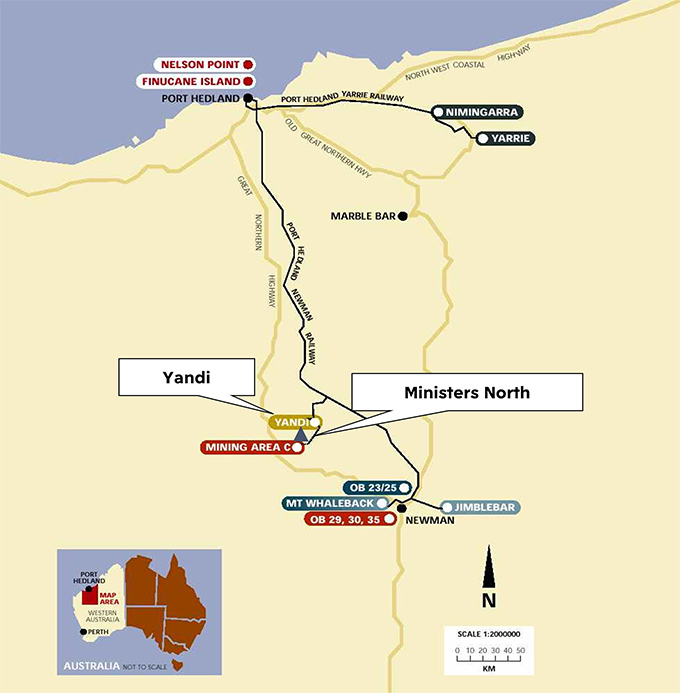 Mitsui and Itochu to acquire stakes in iron ore deposit in Australia
(Company statement, September 9)
- Mitsui & Co and Itochu will acquire stakes in the Ministers North Iron Ore Deposit mine in Western Australia.
- Mitsui will have 7% and Itochu 8%. BHP has 85%. The goal is to produce 20 Mt annually; final investment approval is expected by June 2026.
- The project will help offset declining output at existing mines like Yandi, while supporting plans to expand total production in Australia to over 305 Mt/ year.
- CONTEXT: Mitsui remains Japan’s top iron ore rights holder, planning to expand its stake to over 100 Mt by 2050. Itochu, Japan’s second largest ore rights holder, aims for about 40 Mt by 2030 through strengthened Australian and Brazilian operations. Both Mitsui and Itochu are competing with trading house peers like Marubeni and Sumitomo in securing long-term iron ore supply.
Mitsui Chem, Idemitsu and Sumitomo join forces to control domestic resins market
(Nikkei, September 10)
- Sumitomo Chemical’s polyolefin business will be merged with a JV by Mitsui Chemicals and Idemitsu (Prime Polymer), and will then account for about 40% of domestic general-purpose resin production capacity.
- The merger is scheduled to complete by April 2026.
- CONTEXT: Polyolefin is used in a wide range of products, such as polyethylene in shopping bags, and polypropylene in automobile parts. These two types account for 40-50% of Japan’s synthetic resin production.
TAKEAWAY: Due to the widespread usage of polyolefin and considering that resins are made from crude oils, this news affects many industries. The Japan Plastics Industry Federation said domestic production of polyolefins has fallen for three consecutive years, down 6% in 2024 over 2023.
NEWS: ELECTRICITY MARKETS
Stronger OCCTO role in central grid planning, investment to be considered
(Government statement, September 8)
- The electricity reform subcommittee debated giving OCCTO stronger authority to oversee grid investments, saying that current regional planning is too fragmented to cope with surging renewables and data center rollouts.
- Proposals include enabling OCCTO to set mandatory, long-term area-specific and also cross-regional grid plans – rather than relying on consensus among utilities; and to monitor implementation progress more closely. The state should also offer financing guarantees for large transmission projects, the committee suggested.
- Rising curtailment of solar power in Kyushu and other regions prompted calls for more flexible transmission use and new incentives for investment in interconnections.
- The committee also highlighted the need to accelerate integration of storage providers, such as large-scale batteries, into market operations to balance renewables.
- Demand-side participation – including DR programs and dynamic pricing – is expected to be a key agenda item at the next session.
- The subcommittee will revisit specific rule changes at its next meeting, including potential reforms to OCCTO’s planning authority and market mechanisms.
ANRE drafts revised DR business guidelines
(Government statement, September 8)
- ANRE drafted revisions to the guidelines for the Energy Resource Aggregation Business (ERAB) that aggregates and utilizes distributed energy resources (DER).
- The revisions clarify baseline setting methods for demand response (DR) using small, low-voltage resources such as household devices, ahead of their planned participation in the balancing market from FY2026.
- The draft also organizes rules on information sharing between retailers and aggregators for the capacity market, recommending standardized formats to reduce administrative burdens.
- CONTEXT: DR helps balance electricity supply and demand, contributing to resolving power shortages and ensuring stable supply, and is therefore utilized in both the capacity market and the balancing market.
TAKEAWAY: In addition to industrial and commercial high-voltage and extra-high-voltage levels, DR’s use is also expanding at the low-voltage level, such as households and small shops, making it necessary to establish rules tailored to the characteristics of diverse devices. With this guideline revision, DR should become easier to use.
Activist fund becomes top-three investor in Kansai Electric, seeks non-core asset sales
(FT, September 3)
- New York-based fund Elliott Management acquired a 4–5% stake in Kansai Electric, becoming a top-three shareholder in Japan’s second-largest utility and biggest operator of nuclear power plants.
- The activist fund is urging Kansai to sell around ¥150 billion ($1 billion) in non-core assets annually, including property and a large construction company stake, in order to fund higher dividends and share buybacks.
- CONTEXT: Kansai shares jumped more than 8% on the news; the stock had been down 13% year-to-date, including a 20% drop in November after an equity offering.
- Elliott sees Kansai’s 11 reactors, seven in operation, as a low-cost advantage to strengthen margins and attract investment, as Japan pushes corporate governance reform and nuclear restarts. Kansai reported ¥420 billion profit in FY2024.
TAKEAWAY: Investing in Japan’s utilities has been something that activist funds have traditionally avoided since it’s a heavily regulated sector, and the last overseas fund to seek a large stake in a Japanese power company was blocked on national security grounds. But, the electricity market has liberalized and there are new opportunities in services related to data centers, energy storage, and green power procurement, putting the country’s EPCOs on a more commercial footing. Yet, they retain many non-core legacy businesses and assets that an activist investor will target. What’s more, Japanese power utilities are cheap! The EPCOs are worth ten times less than EU and U.S. peers, and yet Kansai Electric’s efforts to raise capital late last year showed that low share prices will be a block to raising funds.
(Government statement, September 11)
- ANRE launched a study group on Promoting Utilization of FIP to foster services such as aggregation and power/ weather forecasting; this will be leveraged to support project planning and financing.
- ANRE presented key issues for the FIP transition, and the Japan Photovoltaic Energy Association presented its FIP roadmap and action plan.
- CONTEXT: Under the FIP, renewable energy producers need to operate based on market supply-demand conditions. Establishing this approach requires close coordination with aggregators, weather forecasters, and financial institutions, while improving forecasts and efficiency for generation and market prices.
Next-gen power dispatching system delayed by one year
(Denki Shimbun, September 8)
- Development of the central load dispatching system, led by Hitachi, is about a year late, with requirements and basic design completion now revised to November.
- Delays stem from greater-than-expected development complexity and extensive customization of imported package software, raising concerns over timeline and cost.
- Common specifications for the nine T&D companies (excluding Okinawa) have been completed, but detailed design of the main system remains behind schedule.
- An interim review of the revenue cap system found six utilities had outage increases of 5% or more in FY2024 versus reference levels, while four had errors in imbalance charge billing; companies pledged measures, including patrols and tree trimming.
TAKEAWAY: With the logistics of the market system running behind, the practical application will most likely also be delayed, which will probably impact new market mechanisms such as the Simultaneous Market. As segments such as the balancing market move from week-ahead to day-ahead trading, IT systems are playing a greater role in determining how well the market functions.
TOCOM power futures trading slows sharply in August
(Exchange data, September 8)
- Electricity futures volume on the TOCOM fell to 2,698 contracts in August, down from 9,412 in July, as large 100+ contract deals disappeared and most trades were under 50 contracts.
- Of 144 total trades, 115 were off-exchange, focused on fixing prices for winter 2025–26 and FY2026, while exchange-based activity centered on Sept–Nov contracts amid ongoing heat and hedging demand.
- East-area baseload October 2025 futures saw the largest single deal at 200 contracts priced at ¥13.20/ kWh, while smaller exchange trades in mid-August cleared around ¥13.70–13.80.
- Settlement prices for August contracts were ¥13.21 (East baseload) and ¥11.41 (West baseload), well below their August 2023 launch levels of ¥17.04 and ¥14.23 respectively, reflecting weaker fuel costs and softer demand.
- CONTEXT: Market participants noted that despite interest in intraday trading, liquidity remains limited.
- SIDE DEVELOPMENT:
- Spot power prices ease in August despite record heat
(Exchange data, September 8)- Across eight of nine regions (except Hokkaido), spot electricity prices on JEPX fell over July as ample sell-side supply kept the market stable despite extreme heat.
- Tokyo logged 18 “extremely hot days” in August (i.e. above 35°C), the most on record, and Gunma’s Isesaki area hit 41.8°C, a new national high, yet power prices did not spike sharply.
- Average temperatures were +1.84°C above the long-term baseline, tying 2024 as the second-hottest August since records began in 1898.
- Fuel prices softened at month-end: LNG averaged ¥85,053/ ton (down ¥396 from July), coal ¥16,911/ ton (down ¥119), and crude oil ¥65,297/ kl (up ¥1,595).
Chiyoda begins balancing market trading using salt plant
(Company statement, September 9)
- Chiyoda Corp began trading in Japan’s balancing market using facilities at Nihon-kaisui’s Ako salt plant.
- Leveraging the plant’s cogeneration system and steam balance, the companies developed a flexible operation scheme that supports both production and market participation, enabling the supply of adjustment capacity.
- Normally, the plant draws power from the grid, but under this initiative it can adjust intake or even export electricity in response to balancing market signals, entering as a “nega-watt and posi-watt type” resource.
- This effort enhances the value of the plant’s facilities while contributing to regional power supply-demand stability.
- CONTEXT: Nihon-Kaisui is owned by Air Water. The Ako Plant manufactures and sells salt, as well as producing and selling electricity and steam. Chiyoda is advancing its energy management business in collaboration with factory operators.
JERA to sell shares in Thai Ratchaburi gas-fired project
(Company statement, September 8)
- JERA is transferring all its shares (15%) in the Ratchaburi Power project in Thailand to two local shareholders: Ratchaburi Alliances and Global Power Synergy Public.
- Ratchaburi Power’s output is 700 MW and has a combined cycle power generation method; both units started operating in 2008.
- CONTEXT: RATCH Group invests in power generation, both conventional and renewables, and energy-related infrastructure. Global Power Synergy focuses on producing both conventional and renewable energy in Thailand and abroad.
NEWS: HYDROGEN
Tokyo Govt opens applications for Round 2 of Green H2 Trading trial
(Company statement, September 8)
- Japan Exchange Group has opened Round 2 of the Tokyo Metropolitan Govt.-backed green hydrogen exchange trial initiative.
- The exchange is now accepting applications to supply or use green H2. Supplier-side bidding is Sept 19; User-side bidding – Oct 3. The purchase agreements and then transport of the hydrogen will be completed between Oct and February.
- The trading is based on a double CfD auction system, where the seller and the buyer prices are determined through separate bidding. The difference between the two is covered by the Tokyo govt., thus bridging the gap between supply and demand price expectations.
- CONTEXT: Tender results from Round 1 (FY2025):
- Supply-side – ¥280/ Nm3 for a trailer (1 bidder); ¥355/ Nm3 for a ‘cradle’ (i.e. bundle of gas cylinders or a packaged cylinder transport) size (1 bidder);
- User-side – ¥100/ Nm3 for a trailer (2 bidders); and ¥280/ Nm3 for a ‘cradle’ (3 bidders)
TAKEAWAY: Japan Stock Exchange’s TOCOM platform has worked with the Tokyo Metro Govt since last year to implement and operate this ‘Tokyo Green Hydrogen Trial Trading Project’. In effect, it’s a miniature version of the CfD mechanism that was rolled out by the national government last year, except that Tokyo’s project is squarely focused on local green H2 supply and on near-term delivery. The national CfD auction is due to award subsidies to large, 25-year projects and will most likely involve overwhelmingly imported hydrogen and ammonia fuels.
Niterra backs Polish SOEC green ammonia pilot
(Company statement, September 10)
- Niterra (formerly NGK Spark Plug) inked an MoU with research institutes and chemical companies in Poland to demonstrate SOEC (Solid Oxide Electrolysis Cell) tech for producing green ammonia.
- A pilot unit will be installed in 2026 at Puławy City, verifying hydrogen production and ammonia synthesis under real industrial conditions.
- The goal is to replace fossil-based hydrogen in fertilizer production.
- CONTEXT: Niterra is a Japanese company known for automotive parts and advanced ceramics. SOEC is a high-temperature electrolysis tech that produces hydrogen more efficiently by using both heat and electricity to split water.
TAKEAWAY: SOEC is important for Japan, which imports most of its energy, as it is another way to produce H2 and potentially for less than other electrolyser technologies. By pursuing highly efficient hydrogen production with SOEC, Japan seeks to strengthen energy security, develop new green fuels like ammonia, and play a leading global role in the H2 economy.
- SIDE DEVELOPMENT:
- Niterra launches power subsidiary to supply solar-derived electricity
- (Company statement, September 9)
- Niterra set up a wholly owned subsidiary, Niterra Power, to supply renewable electricity, mostly solar, directly to business partners and through retail sales.
- Starting with corporate clients, the company also plans to collaborate with municipalities.
KHI obtains design approval for ammonia-fueled LPG/ ammonia carrier
(Company statement, September 8)
- Kawasaki Heavy Industries (KHI), in collaboration with Mitsui E&S, a supplier of ammonia-fueled main engines and ammonia fuel supply systems, obtained Approval in Principle from ClassNK for an LPG/ammonia carrier capable of using liquefied ammonia as marine fuel.
- This carrier uses cargo ammonia as fuel without extra tanks, neutralizes gas during maintenance, and can transport full-load dense ammonia with its reinforced hull.
- CONTEXT: KHI seeks to develop and sell eco-friendly ship technologies, such as LPG- and LNG-fueled vessels and hydrogen- and ammonia-related products, that meet global environmental regulations and support carbon neutrality by 2050.
TAKEAWAY: As far as ammonia-fueled ships development, NYK Line, IHI Engines, Japan Shipyard, and Japan Engine Corp are cooperating. KHI is developing hydrogen-fueled ships, but it wants to have some optionality in ammonia as well, seeing its potential applications for the shipping sector. Competition in technological development among multiple companies is expected to drive progress toward the practical application of ammonia-fueled ships.
MOL obtains AiP for design of offshore hydrogen production and supply facilities
(Company statement, September 10)
- Mitsui O.S.K. Lines (MOL), Korea Shipbuilding & Offshore Engineering, and Hyundai Heavy Industries are developing a floating ammonia cracking facility to supply hydrogen energy to onshore sites, and have obtained an Approval in Principle (AiP) from the Lloyd’s Register.
- This facility supplies hydrogen from onshore by equipping a ship with technology that thermally decomposes ammonia into hydrogen and nitrogen.
NEWS: SOLAR AND BATTERIES
Hokkaido to probe 1,200 forest clearing cases after solar developer’s violation
(NHK, other news reports, September 5)
- A developer of a large-scale solar project near Kushiro Wetlands in Hokkaido was found to have violated the Forest Act by clearing land without permission.
- On Sept 2, the prefecture ordered the halting of the project.
- The construction site was in Kushiro City; the developer was found to have conducted forest development without permits.
- The findings led the prefectural govt to review some 1,200 forest clearing cases from the past three years for similar violations.
- Hokkaido is urging the central govt to build a comprehensive land-use database for better oversight.
- CONTEXT: Clearing or converting forest land (for solar or other projects) requires notification and permission from prefectural governors or forestry authorities. Some areas are designated as protected forests where stricter rules apply. The permitting rules apply at national and local levels, making it necessary for project developers to ensure that the rules environment around each project is confirmed ahead of time.
MIRARTH subsidiary and PowerX launch grid-scale BESS under tolling scheme
(Company statement, September 8)
- MIRARTH Asset Management launched a grid-scale storage in Aikawa City, Kanagawa Pref, built jointly with PowerX. Capacity: 1.99 MW/ 7.4 MWh.
- MIRARTH owns the asset, while PowerX pays a fixed fee to use it within its retail power business. It marks the first project under PowerX’s planned storage tolling scheme and MIRARTH’s first storage plant.
- It will support PowerX’s retail services, including X-PPA, while also participating in the wholesale, capacity, and balancing markets.
- CONTEXT: PowerX’s X-PPA service combines wind and domestically-sourced biomass as base power sources with daytime solar power. It provides power for office buildings and commercial facilities and is expected to cover around 80% of the annual demand with renewables; the remaining 20% to be sourced from the trading market.
TAKEAWAY: Tolling has yet to go mainstream, with few companies, such as Tokyo Gas, offering the service in the BESS market. Tolling is challenging because the offered contract prices are often pegged to the lowest regulated benchmark, leaving developers squeezed between high battery costs and low contracted revenues.
NTT Anode Energy Selects PowerX BESS for extra-high voltage battery site
(Company statement, September 11)
- PowerX received an order from Kandenko to supply 28 units of its Mega Power 2700A battery systems (total 76.7 MWh) for the Hokkaido Tomakomai Battery Farm, developed by NTT Anode Energy.
- The project, scheduled to start operation in FY2028, will be an extra-high voltage grid-scale battery farm, supporting renewable integration and grid stability.
- SIDE DEVELOPMENT:
- Erex announces its first grid-scale BESS in Miyazaki Pref
- (Company statement, September 4)
- Erex plans to develop a grid-connected Li-ion battery storage project in Kushima City, Miyazaki Pref; it will use a 1.99 MW / 8.12 MWh system.
- Commercial operation is scheduled for July–September 2026, addressing growing volatility from solar and wind power. The firm will act as its own aggregator.
TAKEAWAY: While Erex plans to broaden its focus into battery storage, alongside PPAs and renewables aggregation, no additional specific BESS projects have been disclosed so far.
Solar Frontier and FPS partner to help solar operators add BESS, switch to FIP
(Company statement, August 27)
- Solar Frontier and FPS agreed to support solar power operators in shifting from FIT to FIP. The program focuses on battery storage and enabling market-based trading.
- While nationwide, it mainly targets Kyushu, where frequent output curtailment makes storage more economically attractive.
- Solar Frontier will provide battery sizing, business feasibility simulations, support with financing explanations, applications, and post-operation services.
- FPS will handle trading electricity and environmental value in the markets, etc.
Toyota Tsusho invests in South Korean Li-Ion battery cathode materials maker
(Company statement, September 9)
- Toyota Tsusho acquired a 25% stake in LG-HY BCM, a JV between LG Chem and China’s Huayou Cobalt, which produces high-performance nickel-cobalt-manganese (NCM) cathode materials in Gimpo, South Korea.
- With a production capacity of 66,000 tons/ year, Toyota Tsusho now joins the cathode materials supply chain, securing stable, competitive materials for Li-ion battery production, especially for North American battery producers.
TAKEAWAY: The investment also gives the company an advantage as sourcing batteries from Asia helps nearly halve the cost. Battery units account for about half of the cost of BESS projects.
KEPCO subsidiary to offer optimization service for grid-scale BESS operators
(Company statement, September 10)
- Kansai Electric T&D will launch a grid battery operation service that optimizes charging and discharging, potentially doubling revenue and extending battery life.
- The system will be offered to operators as a SaaS model.
- By leveraging its expertise in power transmission and market trends, the service could improve the profitability and efficiency of energy storage.
NEWS: WIND POWER AND OTHER RENEWABLES
Govt to add support measures for offshore wind developers following Mitsubishi’s exit
(Government statement, Nikkei, September 11)
- The govt will offer additional support for offshore wind after Mitsubishi Corp and its partners withdrew from three projects (in Akita and Chiba Pref) due to soaring costs.
- The aim is to prevent a domino effect of withdrawals by other developers, including JERA and Mitsui, who are also struggling with project costs.
- The main proposed policy changes are:
- Extension of sea-area usage rights: Until now: max 30 years, after which sites were to be re-auctioned. Under the new rule, developers will be able to extend beyond 30 years (up to ~40–50 years) upon request and if deemed reasonable. This is expected to lengthen the revenue forecast period.
- Bid evaluation reform (post-2025): Previous tenders were focused on the bid price (50% of the total score). Going forward, evaluation criteria will have a reduced weighting for the bid price and instead put more emphasis on project feasibility and stability.
- The withdrawal penalty will cost the Mitsubishi consortium its ~¥20 billion deposit. The govt is considering requiring those that exit projects also to hand over some of their data, such as site surveys.
- For projects that want to change their conditions after the bid is accepted, the govt has clarified that it will approve this based on three conditions:
- Changes are reasonable/ necessary,
- They will have no major impact on competition,
- There will be no fundamental change to project scope.
- CONTEXT: Offshore wind is seen as vital for decarbonization, with the govt targeting 4–8% of the nation’s electricity in 2040 to come from wind farms, up from ~1% in FY2023.
- CONTEXT: Offshore wind globally faces inflation-driven cost pressures. New installations in 2024 are forecast to fall 30% YoY to 8 GW. Amid the changing environment other countries are also adjusting support. For instance, the UK raised reference strike prices, while South Korea has adjusted scoring to weigh supply-chain and safety, not just price.
TAKEAWAY: METI has been quick to show a willingness to relax offshore wind rules to keep projects viable and enforce withdrawal penalties. But, the proposals are seen as not going far enough by some in the sector. Developers want greater clarity on issues including how officials will look at ‘wake effect’ – when upstream turbines reduce wind speed for those that are downstream turbines, lowering efficiency – a feature likely to emerge when multiple projects are located close together. Once Mitsubishi completes its exit from the three projects and they are re-auctioned, developers want to know what will happen to the deals the trading house had with local stakeholders like fisheries cooperatives, and whether they will be able to maintain the same arrangements for grid connection rights and port use. In short, there are several practical details that may need to be ironed out first before the next auctions of sea areas can take place.
- SIDE DEVELOPMENT:
- Japan plans national floating offshore wind test center
- (Reuters, September 10)
- Japan will open a national floating offshore wind test center next year to develop and verify technologies suited to the local ocean and weather conditions.
- Despite Mitsubishi dropping three major projects, the initiative led by the Floating Offshore Wind Technology Research Association (FLOWRA) seeks to support large-scale floating wind deployment, targeting 15 GW or more by 2040.
- The center will draw on expertise from Scotland and Norway.
Japan’s largest-scale biomass power plant launches in Aichi
(Company statement, September 8)
- JFE Engineering, Chubu Electric, Toho Gas, and Tokyo Century began operations at the Taharu Biomass Power Plant in Tahara City, Aichi Pref, one of Japan’s largest biomass facilities.
- The plant, which took about three years to build, has a capacity of 112 MW, generating around 770 GWh/ year.
- It uses 420,000–440,000 tons of wood pellets annually, mainly from SE Asia.
- CONTEXT: Ownership is as follows: JFE and Chubu Electric 40% each; Toho Gas and Tokyo Century 10% each. Electricity is sold under the FIT.
TAKEAWAY: Japan’s push for biomass boosts renewables capacity, but reliance on imported wood pellets raises questions about carbon neutrality, cost, and true energy security, making it at best a transitional strategy. The economics of the biomass sector are also changing, as detailed in last week’s Analysis section.
IHI exits U.S. biomass after Trump rollback of decarbonization policies
(Nikkei, September 8)
- IHI will withdraw from its U.S. biomass power business in California, selling its stake in one plant, liquidating two others, and exiting from the remaining two.
- IHI acquired the portfolio in 2012 from Exelon – three biomass plants and two coal-fired plants slated for conversion.
- U.S. energy policy under the Trump administration, declining demand, and costly maintenance have undermined the plants’ profitability.
- CONTEXT: The withdrawal is part of IHI’s restructuring and divestment of unprofitable businesses, including sales of railcar and space equipment. The overseas energy and environment division, which recorded double-digit negative margins on sales of some ¥40 billion, now focuses on solar, power conditioning equipment, O&M contracts, and wastewater treatment tech in Europe. IHI aims to narrow losses and focus more on profitable areas like aircraft engines.
Kitakyushu plans floating offshore wind manufacturing hub
(Nikkei, government statement, September 11)
- Kitakyushu City in south Japan plans a floating offshore wind power manufacturing hub in the Hibikinada West area, aiming for operation by late FY2030.
- The site will host production of floating foundations (semi-submersible floaters), mooring lines, and wind turbine assembly and storage yards, covering 72 ha of land and 50–100 ha of surrounding waters.
- The hub will serve as a core supply chain center for domestic and East Asian offshore wind projects, building on Kitakyushu’s ongoing Green Energy Port Hibiki initiative that already operates a base port for fixed-bottom offshore wind turbines.
- SIDE DEVELOPMENT:
- Kyuden Mirai and Cosmo launch R&D on floating offshore wind
- (Company statement, September 2)
- A consortium including Kyuden Mirai Energy, Cosmo Eco Power, Rera Tech, and Kobe University were selected for a NEDO-funded project to develop a floating offshore wind measurement system such as for turbulence measurement accuracy.
- The project combines low-motion floating platforms with motion-reduction devices to stabilize Doppler lidar equipment.
- A 3-year field test will run from FY2025-2027 at a test site in Aomori Pref.
- CONTEXT: Rera Tech is a start-up company from Kobe University that works on advanced wind measurement and analysis tech for offshore wind power.
MoE urges Renova to reassess its 288 MW onshore wind project in Hokkaido
(Government statement, September 4)
- The MoE issued a ministerial opinion on Renova’s planned Enbetsu–Shosanbetsu wind power project in north Hokkaido.
- The project plans up to 36 turbines (4.2 MW to 8 MW each), with total capacity of 288 MW, across about 2,987 ha in Enbetsu and Shosanbetsu.
- Construction is set to start in May 2031; commercial operation in May 2036.
- The MoE said over 100 wind turbines are under environmental assessment in the same region, thus, cumulative environmental impact must be considered.
NTT East, Akita Pref and Akita Univ to collaborate on wind turbine maintenance tech
(Company statement, September 5)
- NTT East’s Akita branch, Akita Pref and Akita University inked a deal to develop drone-based health monitoring and inspection tech for wind turbines.
- Using Akita as a demo site, the project aims to foster know-how for maintenance inspections, support commercialization of the tech, etc.
- It also focuses on research, data analysis, student and researcher training, etc.
Kyoto Univ startup forms industry–academia consortium to develop PSCs
(Company statement, September 10)
- Kyoto University startup Enecoat Technologies has formed an industry–academia consortium with Toyota, JGC, Toyoda Gosei, KDDI, YKK AP, Kyoto University, and Aoyama Gakuin to develop perovskite solar cells for buildings.
- The project is backed by Japan’s Green Innovation Fund with about ¥10 billion, aiming to cut power costs below ¥14/ kWh by 2030.
TAKEAWAY: Japan is pushing PSC as a key decarbonization tech. Enecoat’s consortium is notable because it combines Kyoto University’s advanced materials research with Enecoat’s efficiency and production know-how, and the industrial scale of partners like Toyota, JGC, Toyoda Gosei, YKK AP, and KDDI. This mix of academic depth and industry expertise gives it an edge in turning flexible PSCs into practical, large-scale solutions for buildings.
- SIDE DEVELOPMENT:
- MoE subsidy to boost PSC adoption and cut solar-plus-storage costs
- (Company statement, September 4)
- MoE opened subsidy applications to support PSC deployment and solar-plus-storage cost reduction, to create scalable deployment models and advance storage parity.
- Details are available here: https://www.eta.or.jp.
Shizuoka Gas strikes alliance with local renewables developer
(Company statement, September 9)
- Shizuoka Gas & Power acquired a 33.5% stake in Smart Blue, a renewable energy developer, the group’s first equity stake in a renewable operator.
- Shizuoka Group targets 200 MW of renewable capacity by 2030.
- Smart Blue developed renewables in Shizuoka Pref, mostly solar, totaling 66 MW.
NEWS: NUCLEAR ENERGY
Kyoto Fusion raises ¥6.75 billion for heat extraction demo
(Nikkei, September 9)
- Kyoto Fusioneering raised a total of ¥6.75 billion, completing its Series C funding.
- The funds will go toward a test plant in Kyoto, to develop and demonstrate a heat cycle system that extracts heat from a nuclear fusion reactor.
- Funds will also help develop a test facility with the Canadian Nuclear Laboratories.
- CONTEXT: The goal is to launch fusion power generation technology by the 2030s; KF must grapple with the overall design of the fuel cycle system.
KEPCO’s Takahama Unit 4 restart delayed by three weeks
(Nikkei, September 8)
- The restart of KEPCO’s Takahama Unit 4 has been delayed by three weeks and will resume full operation on Nov 13.
- CONTEXT: Damage to pipes was discovered in July during a regular inspection and repair work is ongoing.
NRA revises guidelines on indoor sheltering during evacuation
(Nikkei, September 10)
- The revision to Nuclear Disaster Response Guidelines states the national govt decides if residents in a 5-30 km radius of a nuclear plant should continue sheltering indoors three days after the start of an evacuation.
- The revisions should come into force as early as the middle of September.
- CONTEXT: Since a change in the evacuation method might cause stress to citizens, the authorities are determined to keep indoor shelter as the main strategy.
NEWS: TRADITIONAL FUELS
JERA considers procuring LNG from Alaska
(Company statement, September 11)
- JERA announced a ‘consideration of buying’ LNG from Glenfarn in Alaska; as much as 1 Mtpa with a 20 years contract.
- If the deal goes through, it would be FOB (free on board), allowing JERA to decide when it receives the LNG and whether to resell it.
- CONTEXT: Alaska LNG is a Trump priority especially in the context of Japan-U.S. tariff negotiations. The Japanese and U.S. govts agreed to implement stable, long-term purchases of U.S. energy totaling $7 billion per year.
Idemitsu Kosan to buy all of Fuji Oil in ¥26 bln deal
(Company statement, Jiji, September 11)
- Oil refining major Idemitsu offered ¥480/ share to raise its stake in Fuji Oil from 22% to 92.5%. Fuji Oil’s board supports the takeover bid.
- After the deal, Fuji Oil is expected to be delisted.
- The Saudi Arabian govt will retain its 7.5% stake, but Kuwait Petroleum Corp, which also holds 7.5%, is expected to apply for the tender offer.
- CONTEXT: The two companies plan to restructure their production systems in an integrated manner countering declining demand for petroleum products in Japan. Fuji Oil has a refinery in Sodegaura City, Chiba Pref, and its main business is refining crude oil into gasoline and diesel.
Japan Fair Trade Commission launches investigation into ENEOS
(Nikkei, September 10)
- ENEOS is among the eight companies that the Japan Fair Trade Commission suspects of creating a cartel to manipulate diesel prices in sales between wholesalers and logistics companies.
- In May, the JFTC conducted an on-site inspection of six out of eight companies, suspecting the companies of forming a cartel in Kanagawa Pref, which led to suspicion that Kanagawa is not the only prefecture going through this.
- Since the companies involved account for a large share of Tokyo’s diesel sales to corporations, the price adjustment might have had a nationwide impact.
- CONTEXT: This is not the first time ENEOS has been under scrutiny. In 2020, there was a gasoline scandal, where competing gas station chains, while claiming that their high-octane fuels were unique, in fact bartered fuel with each other and shared storage tanks, demonstrating the struggle to maintain profit. Similarly, this week’s news shows companies going to great lengths to keep their businesses profitable.
JERA and Montenegro ink MoU on gas-fired power plant development
(Company statement, September 11)
- JERA and Montenegro will conduct a feasibility study on the technical, commercial, and financial aspects of a proposed LNG terminal and the associated gas-fired power plant development project.
- Montenegro’s Minister of Energy and Mining hopes this paves the way to energy security and sustainable development.
- CONTEXT: Montenegro will use JERA’s global expertise to strengthen energy security, support decarbonization goals, and improve resilience of the energy mix, aiming to position the country as a major energy hub in the Western Balkans.
LNG stocks down from previous week, down YoY
(Government data, September 10)
- As of Sept 7, the LNG stocks of 10 power utilities were 1.81 Mt, down 10% from the previous week (2.01 Mt), down 1.1% from end Sept 2024 (1.83 Mt), and down 11.7% from the 5-year average of 2.05 Mt.
NEWS: CARBON CAPTURE & SYNTHETIC FUELS
Carbon credits market trading reaches 1 Mt of CO2
(Exchange statement, September 9)
- The total volume of carbon credits traded on the Tokyo Stock Exchange reached 1 Mt of CO2 equivalent.
- CONTEXT: TSE launched the Carbon Credit Market on a trial basis in October 2023. The market is due to move to a mandatory phase from next year for heavy polluters, while other firms take part on a voluntary basis.
- The exchange said that trading in carbon credits occurred on 363 out of 466 days (78%). The total as of Sept 8, 2025 stood at 1,003,386 t-CO2 (daily average of 2,153 t-CO2). The number of participants stood at 334 participants.
TAKEAWAY: Setting a price on carbon makes fossil-fuel power less attractive from a business perspective, and channels capital toward renewables, energy efficiency, and emerging solutions like hydrogen. At present, cleaner energy alternatives like hydrogen cannot compete on price, but with a price on carbon the gap is meant 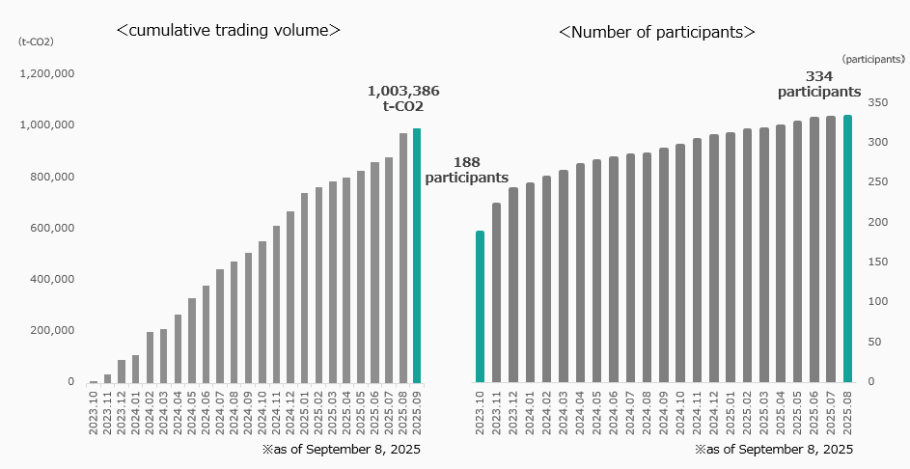 to reduce, also making clean energy projects more bankable. The big challenge, however, is motivating businesses with a carbon price they cannot ignore without overly squeezing them. In August, the carbon credits traded around ¥5,000 to ¥6,000 t-CO2.
Source: TSE
METI to review CCS project systems
(Government statement, September 12)
- “CCS Business System Review Working Group” with experts on underground structures will be set up under the Carbon Management Subcommittee to explore conditions necessary for safe and stable CO2 storage.
- Offshore storage projects are jointly administered by METI and MoE.
- CONTEXT: CCS helps with decarbonization in hard to abate sectors such as cement production and some forms of power generation. The CO2 is then transported and stored underground, often in depleted oil and gas reservoirs.
Tokyo selects companies for synthetic fuel project
(Government statement, September 8)
- Tokyo Govt selected ENEOS and Mitsubishi Corp for its Synthetic Fuel Adoption Expansion Support Project.
- The aim is to supply synthetic fuels for various mobility uses and broadly promote their benefits to Tokyo residents.
- Mitsubishi imports synthetic fuel from overseas; ENEOS manufactures, adjusts, and manages its quality in Japan.
- CONTEXT: The national govt aims to commercialize synthetic fuels by the early 2030s, while the Tokyo govt has policies to promote their widespread adoption.
NTT to develop used oil collection app with Malaysian partner for SAF
(Company statement, September 9)
- NTT Data is collaborating with Malaysia’s Fathopes Energy to develop an app that tracks used cooking oil collection, automates documentation, and supports certification to improve efficiency and traceability for sustainable aviation fuel (SAF).
- The app will allow businesses to record collection volumes and locations, automatically generate related documents and support certification processes.
- NTT Data has also signed an MoU with Fathopes and Japan’s Revo International to run a pilot project in Aichi Pref, with an aim to build a local SAF supply chain model.
TAKEAWAY: The partnership could strengthen Japan’s SAF supply chains, while boosting Malaysia’s role as a SAF feedstock hub. Japan’s collection of used cooking oil is already at an advanced stage but much greater volumes are needed to support SAF targets.
BY FILIPPO PEDRETTI
Gas Industry Says Era of Pragmatism and Energy Security is Just Beginning
After nearly a decade of climate-driven volatility, the global natural gas industry entered 2025 with a new mantra: pragmatism. At last week’s Gastech, the sector’s flagship annual trade fair, calls for “energy realism” echoed across panels.
As Brazil prepares to host the COP30 climate summit in November, Gastech exuded optimism about surging demand from AI and data centers, and the central role gas is set to play. Energy security and long-term contracts have eclipsed climate as the industry’s dominant concern.
The sector’s exuberance flies in the face of mounting mid-term risks. The European Union may have substituted its Russian piped gas dependence for LNG from the U.S., now the world’s top supplier, but policy direction could change again if the Democrats return to power. Meanwhile, Moscow is building bridges to Asia, seeking buyers willing to fend off Western concerns in return for affordable long-term contracts – which likely weakens the demand picture for new American projects.
Those concerns are set aside for now as the gas industry looks to change the narrative after a tumultuous few years. After all, only a year ago, before Trump entered the White House, U.S. LNG export licenses were on pause and most G7 governments pledged to phase out all fossil fuels, while major media heavily criticized oil and gas. The new exuberance has opened the importers’ chequebooks, but what has fundamentally changed?
Winds of change
A higher level U.S. presence at Gastech in Milan distinguished it from last year’s in Houston, with officials ruefully recalling how former President Biden had frozen new LNG permits. Secretary of Energy Chris Wright said Biden had “put humans after climate; not vice versa”.
Today, the sector has a U.S. president who speaks their language. Interior Secretary Doug Burgum boasted that “in seven months, the new administration approved five new projects”.
Trump is promoting large-scale investments, including the $100 billion for the Alaska LNG project and related infrastructure across the state. If realized, that project, Burgum said, could provide LNG supplies to Tokyo in eight days.
Burgum mentioned progress with luring JERA as a buyer. The Japanese utility and world’s top LNG importer signed a letter of intent with Alaska LNG operator Glenfarne to buy 1 Mtpa FOB for 20 years. JERA also demonstrated its ambitions as an LNG reseller and trader, signing an MoU with Montenegro for a feasibility study on an LNG terminal and gas-fired power plant; and a one-year agreement to deliver 600 million cubic meters of LNG to Turkey.
Hasegawa Yuya, Director of Energy Resources Development at METI, said natural gas is well situated as the solution to rapidly growing global energy demand. And it won’t be a short-term romance — gas will occupy a crucial place in meeting global energy needs, as well as Japan’s own, even after decarbonization goals are met in 2050. This is why Tokyo welcomes long-term contracts, and is eager to facilitate procurement.
JERA confirmed that it sees long term contracts as essential – the only way to avoid the volatility of spot contracts. Kani Yukio, JERA’s CEO, said the firm is ‘over-committing’ to LNG contracts, betting that its shipping and trading capabilities can manage seasonal upswings and downswings in demand.
“The biggest risk is underestimating future demand,” Kani said. Acquiring additional supplies is a risk that JERA is willing to take, confident that its trading and shipping resources guarantee resale on the secondary market.
From transition fuel to destination fuel
“The era of a gas phase-out is over,” touted TotalEnergies CEO Patrick Pouyanné, adding that gas is not only complementary but necessary for renewables. He mentioned the Rio Grande LNG reaching a FDI, a lower carbon project that JERA is also joining.
Tokyo Gas Executive Officer Yao Yumiko stressed that gas and renewables complement each other, with gas helping to balance power supply when renewables production is insufficient. And this will continue for the long-term.
“Transition is not fossil versus renewable,” said INPEX’s Ueda Takayuki. “They are not exclusive. Gas must work alongside renewables and ammonia to guarantee supply.” He added that he believes many co-firing power plants will eventually shift to 100% natural gas, and expects LNG global demand to grow to 700 or 800 Mtpa.
In the end market demand decides national energy mixes, not government policies, Ueda said.
Methane leaks and decarbonization
Methane emissions remain a sensitive issue. Yao of Tokyo Gas said in the near term companies need to ensure that the gas value chain is sustainable. This means reducing methane leakage upstream. Efficiency across the entire chain must increase, as well as boosting transparency and collaboration to cut emissions.
GIIGNL president Laurent David noted growing pressure for standardized reporting of methane emissions.
Other voices, however, such as JOGMEC’s Director of LNG and Methane Management, Masataka Yarita, cautioned that “different facilities and regions need different approaches,” making a single global standard unrealistic.
At Gastech, Japan was also out in force during ammonia and hydrogen-related panels. TOYO Engineering, which presented its concept design for a blue ammonia floating production storage and offloading FPSO, expects that such demand will grow to 1 billion tons by 2070.
Also at Gastech, MOL presented a floating ammonia cracking system to enable offshore hydrogen production, and Fukui Seisakusho and ClassNK signed an MoU to develop ultra-high pressure safety relief valves for hydrogen dual-fuel engines.
Tanaka Nobuo, CEO of Tanaka Global and former IEA Executive Director, maintained that Japan needs to invest in the hydrogen supply chain and small nuclear reactors (SMRs) as the energy alternatives. But some attendees dismissed the hydrogen / ammonia pathway as simply too costly and had similar comments about carbon capture technologies (CCS).
CCS is not considered an important tool from a market perspective, INPEX’s Ueda admitted. If buyers want CCS to be applied, the cost difference with standalone LNG should be reflected in the pricing, he said.
Ironically, the gas sector’s preferred vision for an energy transition sees a mid- to long-term shift to next-generation gas technologies such as e-methane, which is compatible with existing infrastructure. Both carbon-capture and clean hydrogen are required to create e-methane.
Maritime sector
Another big theme at Gastech was the decarbonizing of the maritime sector. Matsunaga Masaki of ClassNK said the global shipping industry remains highly fragmented, as regulations differ across regions. This needs to be rectified and made uniform.
Sako Yutaro, a ClassNK engineer, spoke about ammonia-fuelled ships. Currently, around 23% of ordered ships use alternative fuel. Of these 1,187 vessels, 638 will run on LNG, and only 43 on ammonia (mostly bulk carriers and LPG carriers). In 2024, NYK and ClassNK delivered the world’s first commercial-use ammonia fuelled ship, and plan to deliver an ammonia fuelled gas carrier next year together with Nihon Shipyard and IHI.
Akahoshi Kengo, senior staff officer at Kawasaki Heavy Industries, spoke about liquefied hydrogen and LPG/ ammonia carriers. As far as the former, KHI delivered the world’s first in 2022, and it now seeks to develop medium-large liquefied hydrogen carriers by the 2030s.
Conclusion
Japan is still betting on long-term LNG contracts, holding onto gas as a key position for the national energy mix. METI is open to securing 20 Mtpa of additional contracts over the next 15 years. The country seems unconcerned by any possible future price crash, worrying only on supply diversification and trading expansion.
Japan’s attitude is aligned with the global gas industry’s optimism. Even in case of over-supply, most gas executives believe it would eventually adjust.
Still, some experts predict a glut is around the corner, starting in 2026, due to new U.S. and Qatari projects coming online, as well as reduced demand by the world’s top buyer, China, which is eager to expand piped gas with Russia.
As gas-skeptic observers, such as the IEEFA have warned, the future of gas in Asia isn’t certain. One example is Pakistan asking Qatar to defer LNG supplies due to weak demand. On the other side of the globe, a U-turn in Washington is possible if the Democrats return to the White House in January 2029.
While the U.S,, the EU and their allies were at the center of Gastech, just days before the conference, Moscow and Beijing agreed on the Power of Siberia 2 pipeline concept, and moved LNG cargoes between the two countries. This news was mostly ignored by Gastech, as if pertaining to another dimension. China and Russia are the elephants in the room that no one seemed to want to talk about.
For a sector that values long-term contracts and investments, the dismissal of Russian volumes seemed a gross oversight given its gas reserves and ambitions. And with Trump eager to strike a deal with Moscow, Russia’s fully-fledged return to global markets is no longer inconceivable.
Gastech’s central message was clear: natural gas will remain a cornerstone of the global energy mix. What is less certain is the scale of its future share. The optimism on display in Milan will be tested in the coming years.
BY JOHN VAROLI
 Japan Builds Bridges to Central Asia, with Investment Focus on Uzbekistan
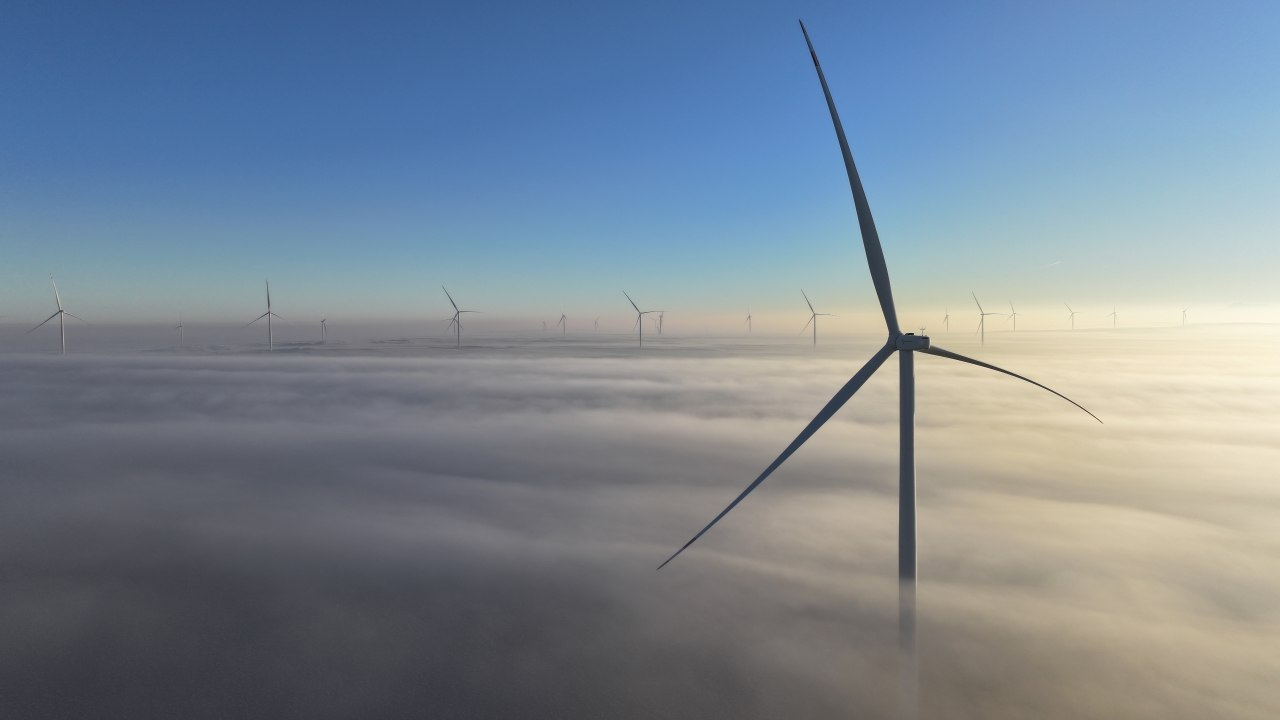
In the past two years, Japan’s business community has increased focus on the countries of Central Asia, especially Uzbekistan. A number of solar and wind investment deals have been made, high-level delegations from Tokyo have visited the region, most recently at the end of August, and plans for cooperation in a variety of industries are underway.
Energy and mining are the leading sectors of Japanese interest, since the region offers both reserves of oil and gas, as well as climatic conditions to build green energy infrastructure.
Access to the landlocked countries of Central Asia, however, is a major challenge for Japan, which has historically been a leader in sea-based transportation. This geographic fact might explain why Tokyo is moving slowly and cautiously with establishing what clearly should be mutually beneficial partnerships.
As Central Asia’s most populous country located in the region’s very heart, Uzbekistan has earned the most interest from Japan. Uzbekistan’s ambitious effort to become a leader in green forms of energy makes the country even more attractive as a partner for Tokyo.
With rapidly shrinking oil and gas deposits of its own, and importing a significant amount of energy supplies from neighbors such as Russia, Uzbekistan is betting the future of its national energy mix is green. This is where Japanese financing and technology in renewables can play a central role. At least that’s what Tashkent hopes.
Japan NRG went to Tashkent to find out how the relations between the two countries are developing, speaking with Umid Mamadaminov, Deputy Minister for Energy.
Relations since independence
Diplomatic ties between Japan and Uzbekistan commenced in 1992, in the wake of the collapse of the Soviet Union. As for most of the world, the new ‘stans’ of Central Asia were terra incognita for Japan. New relations proceeded slowly amid the upheaval and instability as the new countries struggled to find their own way in the global community.
Umid Mamadaminov, Deputy Minister for Energy.
In the initial stages, Japanese economic cooperation centered around official development assistance. Over the past 30 years, that has seen cumulative loans of roughly ¥528 billion through FY2022.
Only recently, however, have relations between the two countries been marked by high-level events that speak of the desire on both sides to deepen relations to major cooperation and development. A milestone came in January 2024, when the Uzbekistan-Japan Business Forum witnessed the signing of a Memorandum of Cooperation between METI and Uzbekistan’s Ministry of Energy to advance the energy transition focusing on renewables, hydrogen, and efficient power generation.
That same month, a JETRO-hosted business forum was held in the capital city of Tashkent resulting in four energy cooperation agreements, with presentations from Sojitz Corp and Yokogawa Electric. Later that year, in October, the METI Minister held talks with his Uzbek counterpart, also agreeing to promote renewable energy projects, including through the use of the Joint Crediting Mechanism (JCM). A month after that, the Japan Bank for International Cooperation (JBIC) signed an MoU with Uzbekistan’s Ministry of Investment, Industry and Trade to foster Japanese business opportunities in clean energy and infrastructure.
This year, the momentum continues. At the end of May, Mitsubishi Heavy Industries (MHI) signed an MoU with Uzbekistan’s Ministry of Energy to study a plan for stable supply of electricity. The project will upgrade existing MHI-supplied power equipment, develop hydrogen-ready gas turbine systems, and assess future carbon-neutral infrastructure. Such work is important to help Uzbekistan reach its goal of 54% renewable energy by 2030, said Umid Mamadaminov, Deputy Minister for Energy.
Pivot to Central Asia
Last month, Foreign Minister Iwaya embarked on a diplomatic mission to Central Asia, the first by Japan’s top diplomat in three years. His meetings in Uzbekistan, including with counterpart Bakhtiyor Saidov and President Shavkat Mirziyoyev, underscored Tokyo’s intent to elevate its engagement locally.
“The visit was not just ceremonial, but confirmed the strong political will on both sides to deepen our partnership,” said Deputy Minister Mamadaminov. “In particular, energy cooperation was at the center of the talks. Japan has been a reliable partner in developing Uzbekistan’s energy sector for many years – from modernizing oil refineries to building large-scale thermal power plants.”
Both sides expressed a desire to accelerate joint projects, including renewable energy initiatives and new gas-to-power technologies. Japan pledged ongoing support through JICA programs and scholarships, to help Uzbekistan build human capital for the energy transition.
“The main outcome of this visit is clear: Uzbekistan and Japan are moving together toward a future of clean, secure, and sustainable energy development, while also laying the foundation for broader economic and humanitarian cooperation,” added Deputy Minister Mamadaminov.
This trip, which also included Kazakhstan, signals Japan’s strategic pivot toward Central Asia at a time when global competition for resources is intensifying. Iwaya’s goal is to bridge the gap in Tokyo’s diplomatic network in the region, where China, South Korea, and the EU are already active.
The last Japanese prime ministerial visit to the region was by Abe Shinzo in 2015. In contrast, the EU convened an inaugural gathering of Central Asian leaders in April 2025; and the leaders of China and South Korea have visited Kazakhstan in the past year or so – Xi Jinping as recently as in June.
Rapidly growing energy demand
If dynamic regions such as Southeast Asia are seeing an average of 3-4% annual growth in energy demand, Uzbekistan is seeing an average of 7%, with that figure reaching 10% in the capital. Since 2015, energy demand is up almost 50%, and the goal is to reach 50 GW of capacity by 2030. Currently, the country has 23 GW.
As the most populous Central Asian nation and a key energy hub, Uzbekistan is a natural focal point for Tokyo in the region. To date, Japanese firms have invested in more than 10 major projects there totaling over $5.8 billion. These include:
- Mitsubishi Corp commissioning 1.8 GW of combined-cycle power plants in Navoi and Turakurgan
- Trading house Sojitz collaborating with the Shurtan Gas Chemical Complex
- Toyota Tsusho preparing a 500 MW wind power plant in Bukhara
- Sumitomo Corp exploring participation in 2.5 GW of local solar and wind projects
- Shikoku Electric acquiring a 14.4% stake in a ¥600 billion renewables project led by Saudi Arabia’s ACWA Power and Sumitomo; the initiative includes a 1 GW solar farm in Samarkand and a 1.5 GW wind farm in Kungrad, each with energy storage; operations are targeted for 2027–2028.
These investments dovetail with Uzbekistan’s ambitious clean energy goals: installing 21 GW of solar and wind capacity by 2030.
“We see great potential in areas such as hydrogen, battery storage, and smart grid tech,” said Deputy Minister Mamadaminov. “Japanese companies bring advanced know-how, while Uzbekistan offers rich natural potential and a growing energy market.”
Japan is not only financing projects, it is helping shape a modern energy sector that will serve both Uzbekistan’s economy and the wider region for decades to come.
ASIA ENERGY REVIEW
BY JOHN VAROLI
A brief overview of the region’s main energy events from the past week
Australia / Natural gas
The govt extended operation of North West Shelf, one of the country’s largest fossil fuel projects, by four decades, until 2070.
Australia / BESS
By the end of 2026, Tesla expects to have 4.5 GW of grid-forming BESS operating across Australia’s southern states.
China / BESS
The National Development and Reform Commission (NDRC) targets 180 GW of new energy storage across the country by 2027 that could see as much as $35 billion invested.
China / Energy patents
China now accounts for about 75% of global energy patent applications, up from 5% in 2020, reports Ember.
China / Oil & Gas
During President Tokayev’s visit to China, Kazakhstan agreed to over $1.5 billion worth of oil and gas projects with Chinese companies.
India / Clean energy
India reported that it reached the 250 GW clean energy milestone, and will strive to double that to 500 GW by 2030.
India / Natural gas
India plans to double the share of natural gas in its energy mix to 15% by 2030, as part of a strategy that aims for 500 GW of non-fossil energy capacity by that year.
South Korea / Natural gas
POSCO International is the first South Korean company to join the $45 billion Alaska LNG project following reports it signed a tentative LNG supply agreement with Glenfarne.
South Korea / Nuclear power
The Environment Minister said nuclear power would remain in the country’s energy mix while working to rapidly reduce coal, oil and natural gas.
Vietnam / Natural gas
Two LNG-fueled power generation projects in Thanh Hoa province’s Nghi Son Economic Zone have restarted after a period of suspension. Each has a planned capacity of 1.5 GW.
Disclaimer
This communication has been prepared for information purposes only, is confidential and may be legally privileged. This is a subscription-only service and is directed at those who have expressly asked K.K. Yuri Group or one of its representatives to be added to the mailing list. This document may not be onwardly circulated or reproduced without prior written consent from Yuri Group, which retains all copyright to the content of this report.
Yuri Group is not registered as an investment advisor in any jurisdiction. Our research and all the content express our opinions, which are generally based on available public information, field studies and own analysis. Content is limited to general comment upon general political, economic and market issues, asset classes and types of investments. The report and all of its content does not constitute a recommendation or solicitation to buy, sell, subscribe for or underwrite any product or physical commodity, or a financial instrument.
The information contained in this report is obtained from sources believed to be reliable and in good faith. No representation or warranty is made that it is accurate or complete. Opinions and views expressed are subject to change without notice, as are prices and availability, which are indicative only. There is no obligation to notify recipients of any changes to this data or to do so in the future. No responsibility is accepted for the use of or reliance on the information provided. In no circumstances will Yuri Group be liable for any indirect or direct loss, or consequential loss or damages arising from the use of, any inability to use, or any inaccuracy in the information.
K.K. Yuri Group: Hulic Ochanomizu Bldg. 3F, 2-3-11, Surugadai, Kanda, Chiyoda-ku, Tokyo, Japan, 101-0062.