
WEEKLY
OCTOBER 27, 2025
ANALYSIS
NEW CABINET BLENDS INDUSTRIAL PRAGMATISM WITH DEFENSE INNOVATION
- The Cabinet of new PM Takaichi signals continuity in energy realism, but with a sharper industrial edge. Her Cabinet picks indicate a careful balance between various trade, business, and politics.
- Her choice of Akazawa to head METI and Koizumi at defense suggests efforts to link energy security, tech innovation and national resilience more tightly than before.
KEPCO TO SHUT LAST OIL-FUELLED UNITS, BUT NUCLEAR AND LNG ON THE RISE
- KEPCO will soon shut units at an oil-fired power plant that has long functioned as a reserve facility. Declining use rates and rising maintenance challenges have made its role marginal.
- Among utilities, KEPCO is not alone in this shift away from oil as a power generation fuel, but it’s perhaps the only one that has a good alternative.
ASIA PACIFIC REVIEW
This column provides a brief overview of the region’s main energy events from the past week
NEWS
- Takaichi cabinet prioritizes energy security and industrial resilience
- Defense Minister hints Japan may seek nuclear subs
- Gas association warns of labor shortages and inflation concerns
- Tohoku Electric, NTT East to promote data centers
- OCCTO confident on winter power balance outlook
- Toshiba to invest ¥55 billion in T&D equipment
- Tokyo launches green H2 facility using hydropower from Yamanashi
- Takasago and others supply green H2 through small hydropower
- Infrastructure funds investing in large-scale solar farms face financial struggles
- i Grid Solutions and Tokyu Land to develop jointly solar assets
- Sekisui and NTT group set sights on PSC for walls
WIND POWER AND OTHER RENEWABLES
- JERA Nex bp exiting U.S. offshore market
- Kajima joins JERA-led Akita offshore wind project after split from Mitsubishi
- Council backs early restart of Hokkaido Electric’s Tomari NPP
- TEPCO begins removing fuel from reactor
- U.S. urges allies to join anti-Russia sanctions while Japan seeks extension of LNG exemption
- JERA to buy stake in Louisiana shale gas asset
- Tokyo Gas signs LoI with Alaska LNG operator
CARBON CAPTURE & SYNTHETIC FUELS
- JGC to explore deployment of CO2 battery in Japan
- METI selects bp and MRI for study on JCM carbon credits from CCUS
- Mitsui & Co joins Thailand’s first CCS project
EVENTS
Nov 10-21 COP30 @ Belem, Brazil
Dec 4 Japan CCS Forum 2025 @Tokyo
Jan 28-30 Renewable Energy 2026 @Tokyo Big Sight
PUBLISHER
K. K. Yuri Group
Editorial Team
Yuriy Humber (Chief Editor)
John Varoli (Senior Editor, Americas)
Kyoko Fukuda (Data, Events)
Magdalena Osumi (Renewables & Storage)
Filippo Pedretti (Thermal, CCS, Nuclear)
Tetsuji Tomita (Power Market, Hydrogen)
Aglaé Bange (Renewables and Biomass)
George Hoffman (Sales, Business Development)
Tim Young (Design)
SUBSCRIPTIONS & ADVERTISING
Japan NRG offers individual, corporate and academic subscription plans. Basic details are our website or write to subscriptions@japan-nrg.com
For marketing, advertising, or collaboration opportunities, contact sales@japan-nrg.com For all other inquiries, write to info@japan-nrg.com
NEWS: GENERAL OUTLOOK AND TRENDS

Takaichi cabinet prioritizes energy security and industrial resilience
(PM’s Office via Nikkei)
- PM Takaichi instructed her new cabinet to pursue “crisis management investments” in key areas including energy and resource security, positioning a strong economy as the foundation for national strength.
- METI Minister Akazawa was directed to ensure stable energy supply through Japan’s core “S+3E” strategy – balancing safety, stability, economic efficiency, and environmental goals – while promoting safe nuclear use, domestic resource development, and renewable energy expansion.
- Akazawa was also tasked with advancing GX-related investment of more than ¥150 trillion over ten years, aligning energy security with decarbonization to strengthen industrial competitiveness and open new growth markets.
- MoE Minister Ishihara was asked to focus on carbon neutrality by 2050 and the 2030 emissionreduction target, coordinating with the GX minister to lead Japan’s global decarbonization role while improving nuclear safety and disaster preparedness.
- Ishihara will also manage coordination for COP and climate diplomacy, and support the cleanup and recovery efforts in areas affected by the Fukushima disaster.
- Minister for Internal Affairs and Communications Hayashi was asked to deal with the impact of repealing the gasoline tax / light oil excise tax.
- TAKEAWAY: The instructions emphasize energy resilience as national security, calling for tighter integration between industrial, defense, and energy policy, particularly around dual-use technologies and supply chain autonomy for semiconductors, AI, and critical minerals. For a deeper dive into the new Cabinet and the roles of ministers closest aligned to the energy sector, see this week’s Analysis section.
- SIDE DEVELOPMENT:
- New Defense Minister hints Japan may pursue nuclear submarines
- (Government statement, TBS, October 22)
- Defense Minister Koizumi Shinjiro said Japan will seek to acquire next-gen submarines. No propulsion options, including nuclear power, will be ruled out.
- Koizumi said the govt must “enhance deterrence and response capabilities by considering every option… including development of submarines equipped with VLS (Vertical Launching Systems) for missiles.”
- TAKEAWAY: Japan has long avoided nuclear-powered submarines due to their cost, technical complexity, and political sensitivities. Implementing such changes would impact shipbuilding and nuclear technology, while also having significant international implications for how Japan’s military is perceived.
Govt outlines direction and approach of GX policy
(Government statement, October 16)
- CONTEXT: The govt prioritizes energy security and economic growth in its GX policy, while fostering decarbonization.
- While GX investments are progressing, further development requires sector-specific reviews and targeted strategies.
- For renewables, nuclear power, grids, and transportation, Japan aims to enhance institutional measures to stimulate private investment.
- Priority actions include accelerating clean power and grid development, boosting investment in transport and housing, promoting decarbonization in heavy industries, and fostering innovation to enhance global competitiveness.
- CONTEXT: The GX is progressing through transition bonds, investment strategies, and Green Innovation Fund projects. In 2025, the government adopted the GX2040 Vision and revised key laws to promote growth-oriented carbon pricing.
- TAKEAWAY: More than six months have passed since approval of the GX2040 Vision. Progress in GX investments is now assessed in light of subsequent domestic and international developments. In this expert working group, only the sector-specific investment status and future challenges were reviewed and general directions outlined. A more detailed evaluation and revision will be conducted in the near future.
Gas association warns METI about inflation and labor shortages
(Government statement, October 23)
- The Japan Gas Association informed METI about the state of the city gas pipeline industry. An aging and shrinking population will lead to a severe labor shortage; especially, skilled workers needed for pipeline construction and maintenance.
- Second, persistent inflation and soaring construction costs are creating unsustainable financial pressure.
- In response, the industry is pursuing digitalization and workforce development.
- It is also promoting smart meters, AI, and remote monitoring technologies. Yet, companies and their associations call for government support. To maintain critical infrastructure and national security of supply, regulatory reforms are needed.
Kanden Engineering faces security cost fraud scandal
(Company statement, Government statement, October 24)
- Kanden Engineering, a subsidiary of Kansai Electric Group that handles electrical construction for the group, revealed its employees falsified security guard hours and numbers from FY2019 to FY2024, inflating costs at construction sites.
- Over the last two years, the overbilling amounted to several tens of millions of yen.
- CEO Okubo Masatoshi apologized, admitting a lack of compliance culture and committed to a probe and prevention measures.
- Okubo said he’ll return 20% of his executive compensation for two months starting November. The firm might file criminal charges against the 13 employees involved.
- The fraud was uncovered following an internal whistleblower report in June 2025.
- CONTEXT: On Oct 24 METI requested a formal report from Kansai Electric Power Transmission & Distribution. The report must include causes of the incident, preventive measures, subsidiary procurement and contract management systems and information on whether there are similar concerns in other operations.
- TAKEAWAY: The scandal highlights weaknesses in internal controls, compliance culture, and oversight of subcontracted services, particularly for cost-sensitive construction services like security.
NEWS: ELECTRICITY MARKETS
 Tohoku Electric, NTT East, DBJ to promote data centers
(Company statement, October 16)
- Tohoku Electric, NTT East, and Development Bank of Japan (DBJ) agreed to promote data centers (DCs) in the Tohoku and Niigata regions.
- These regions’ advantages include abundant renewables potential and a cool climate.
- The three companies will seek to attract DCs and contribute to regional revitalization and industrial promotion through creation of new industries and employment.
- CONTEXT: Based on the GX 2040 Vision, discussions are underway on policies to promote the domestic siting of GX-related industries. Efforts focus on the proper sitting and regional decentralization of DCs through Watt-Bit collaboration, integrating power (Watt) and information and communication (Bit).
- TAKEAWAY: The Public-Private Advisory Council on Watt-Bit Collaboration published its Report 1.0 in June, in which decentralization of DCs is a key objective. This serves as a good example, and it is expected to encourage the development of other DC locations as well.
OCCTO releases report on verification of electricity supply-demand
(Agency statement, October 24)
- OCCTO published a final report on verification of electricity supply and demand.
- It covers the FY2025 summer actuals and the FY2025 winter forecast.
- FY2025 summer power supply-demand results:
- Peak demand reached 162.6 GW, the third highest in five years, with stable supply maintained.
- Some areas exceeded severe weather forecasts, and demand assumptions will be revised for summer 2026.
- FY2025 winter power supply-demand forecast:
- All regions expected to secure at least the basic 3% reserve margin.
- OCCTO will use the capacity market, monitor conditions, and take additional measures or issue alerts if supply-demand tightness is expected.
- CONTEXT: OCCTO publishes this report – on Verification of Electricity Supply and Demand – twice a year, in May and October. The October edition reviews the previous summer and forecasts the upcoming winter. The May edition does the reverse.
- TAKEAWAY: According to the Japan Meteorological Agency (JMA)’s “Outlook for Winter Weather (Dec–Feb)” released in Sept, winter temperatures are expected to be near normal nationwide. Thus, all areas are likely to be able to secure the 3% minimum required reserve margin, providing a certain level of assurance for the government.
Toshiba ESS to invest ¥55 billion in power T&D equipment
(Company statement, October 17)
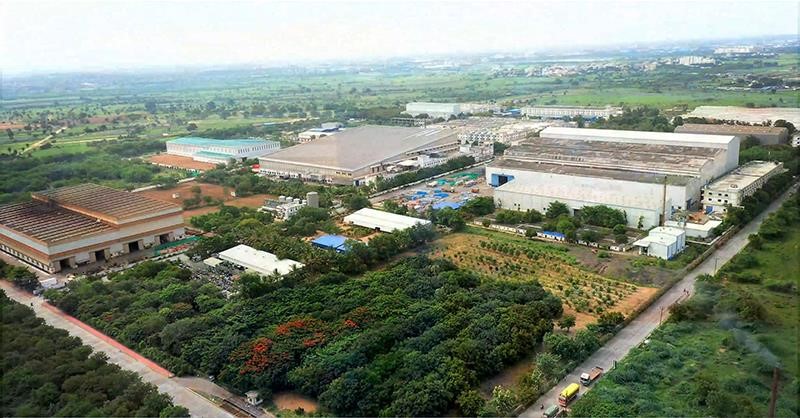
- Toshiba Energy Systems & Solutions will invest ¥55 billion by FY2027 to expand production in its power transmission and distribution equipment business.
- This includes ¥35 billion in additional investment at its Hamakawasaki plant in Japan and Toshiba Power Distribution Systems India, on top of a previously planned ¥20 billion investment for 2024– 2026.
- CONTEXT: The expansion aims to double production capacity by FY2030 in order to meet rising domestic and global electricity demand, driven by renewables adoption, data center expansion, and aging infrastructure replacement.
- TAKEAWAY: Toshiba ESS seeks to expand capacity and diversify its product lineup for global markets that face rapidly increasing demand due to renewables deployment and urban growth has created a supply shortage. In this regard, India is a leading new market.
EGC discusses rising labor costs and prices under revenue cap system
(Government statement, October 22)
- Electricity and Gas Market Surveillance Commission (EGC) experts discussed how to handle rising labor costs and prices under the revenue cap system.
- To reflect labor cost and price increases from the first regulatory period of the revenue cap system (FY2023-2027) in wheeling charges, the applicable period is considered as two years starting FY2026.
- Since revising ordinances and investment plans takes time, adjustments are mainly planned for the second regulatory period (FY2028-2032).
- Operators interested in mid-term adjustments during the first period may apply.
- CONTEXT: This system sets a maximum revenue for power grid operators, ensuring fair consumer prices while promoting efficiency and investment. However, there are cases where increases in labor costs or fuel prices cannot be fully passed on to the consumer via rates; thus, rising costs may place an excessive burden on the operators.
- TAKEAWAY: Stable power supply requires maintaining supply chains and construction capacity, reinforcing networks for decarbonization and data centers, and enhancing resilience. TSOs’ efficiency efforts alone cannot offset rising costs, so appropriate regulatory measures, including for the first period, are now needed.
EEX and TOCOM host Japan Power Summit
(Company statement, Japan NRG, October 21)
- The European Energy Exchange (EEX) and Tokyo Commodity Exchange (TOCOM) hosted “Japan Power Summit 2025” to discuss electricity futures trading.
- There were more than 800 participants, including trading professionals and experts from major electric power and gas companies in Japan and abroad.
- Chugoku Electric and RWE Supply & Trading Japan gave keynote speeches.
- In panel discussions, traders and risk managers shared experiences, and the challenges and potential of Japan’s rapidly growing electricity futures market.
- The govt’s proposed Mid-to-Long-Term Power Market reform came under especially heavy scrutiny, with domestic power company representatives questioning the need for such a system on top of the existing futures markets.
- Most speakers said they expect continued growth in the derivatives market and volumes to increase several fold in the next few years, though they also warned bourse operators not to expand the product range too quickly fearing that it would fragment liquidity.
- Both the EEX and TOCOM confirmed plans to roll out Chubu area products in the coming months, adding to the Tokyo and Kansai area derivatives.
- Once the market volumes expand, there may be room to add also the Kyushu area futures and options, according to some traders.
- CONTEXT: Japan Power Summit launched in 2023. Interest in it has grown since electricity futures began trading on TOCOM in 2019 and on EEX in 2020.
- TAKEAWAY: The bi-annual gathering of power market participants has grown not only in terms of the number of firms participating but also the scope of those joining. From electricity traders to BESS developers and solar plant operators, the event has been able to pool a large slice of the broader electricity industry. This also shows how power generators are becoming more interested in markets and market-based pricing mechanisms, envisioning a future in which even wind and solar farms, batteries, and other power facilities are selling a portion of their output directly into the markets.
TESS Engineering joins platform for operator-aggregator matching
(Company statement, October 17)
- TESS Engineering joined a new FIP operator–aggregator matching platform launched by ANRE.
- This will help expand and optimize renewables use under the FIP, which is replacing the older FIT system.
- The firm provides services including support for FIT-to-FIP transitions, battery installation, and aggregation management.
NEWS: HYDROGEN
 Tokyo launches green H2 facility using hydropower from Yamanashi
(Government statement, Nikkei, October 23)
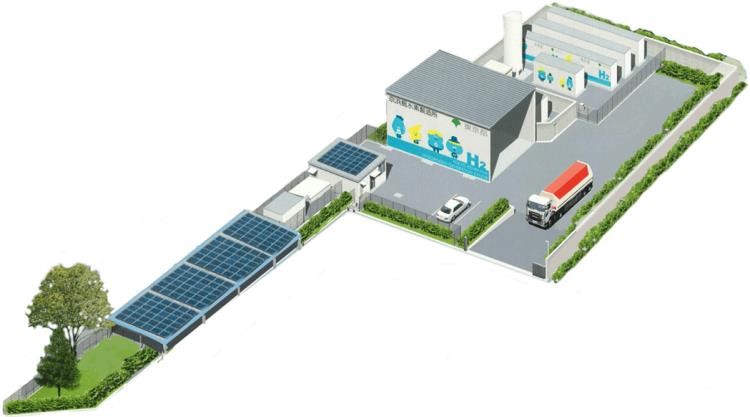
- The Tokyo Metropolitan Govt and Yamanashi Pref completed the first phase of work on a large-scale green hydrogen production facility in Tokyo’s Ota Ward.
- The facility uses hydropower, via TEPCO, and water supplied by the Tokyo waterworks to produce hydrogen with no CO2 emissions.
- The facility operates a 500 kW electrolysis unit and produces about 120 cubic meters of hydrogen per hour (20 tons/ year). The hydrogen will first be used at public facilities such as Tokyo Big Sight.
- By FY2027, Tokyo plans to triple production capacity by adding two more units.
- Tokyo’s future plans include using sewage sludge-derived CO2 to produce synthetic methane, exploring cosmetic raw material applications, and supplying hydrogen to Tokyo fueling stations as part of the city’s broader decarbonization strategy.
Takasago and others supply green H2 through small hydropower
(Company statement, October 17)
- Hidagoboc Holdings, its group Inoue Koumuten, and Takasago Thermal Engineering (TTE) agreed to set up a green hydrogen supply business model utilizing small hydropower generation.
- Hidagoboc Group promotes small hydropower in the Hida-Takayama area to enhance forests and local communities.
- TTE promotes carbon neutrality by developing local green energy solutions and launched its largescale hydrogen generator earlier this year.
- CONTEXT: Hydropower, including small-scale projects under 1 MW, offers stable, efficient generation and supports local development.
- TAKEAWAY: TTE developed the “Hydro Creator” solid polymer water electrolysis system deployed in the Atsuta microgrid (Ishikari, Hokkaido), and which will be used at the Kirin Hokkaido Chitose Brewery to shift from fossil fuels to green hydrogen.
NEWS: SOLAR AND BATTERIES
 Infrastructure funds investing in large-scale PV farms face financial struggles
(Nikkei, October 24)
- Japan’s listed infrastructure funds, mainly investing in large-scale solar power plants, struggle financially. Their combined market capitalization has dropped 35% in two years to ¥106.4 billion.
- Declines are driven by output curtailments, equipment theft, and rising maintenance and financing costs amid inflation and higher interest rates.
- For instance, Canadian Solar Infrastructure Fund lost about 14% of revenue from curtailed generation in early 2025, while Japan Infrastructure Fund Investment Corp saw losses of around 5% annually.
- Theft of copper cables has caused shutdowns and dividend cuts. For instance, Tokyo Infrastructure & Energy Investment cut per-unit dividends by 40% to ¥1,693.
- To offset risks, funds are adding storage batteries and shifting from the FIT to the FIP, which allows market-based sales with subsidies and reduced curtailment priority.
- Some funds, such as Japan Infrastructure Fund, plan to convert all Kyushu sites to FIP by FY2026, while others are exploring direct power sales agreements post-FIT.
- CONTEXT: Investors remain cautious due to the expiration of 20-year FIT income (starting 2032) and the lack of clear post-FIT growth strategies.
- The industry association stresses that renewed investment flows are crucial for expanding renewables and achieving national decarbonization goals.
i Grid Solutions and Tokyu Land to develop 200 MW of solar power
(Company statement, October 20)
- i Grid Solutions and Tokyu Land will strengthen their partnership in solar power to promote on-site PPA projects.
- They will develop an additional 200 MW of solar between 2026 and 2029, investing over ¥20 billion.
- Initially, their goal was to develop 100 MW of on-site solar power over three years. Now they are on track to achieve that goal.
- Total development capacity will spike to 300 MW.
- SIDE DEVELOPMENT:
- SMFL and Green Energy Plus to acquire 50 MW of solar power
- (Company statement, October 20)
- SMFL’s subsidiary, SMFL Mirai Partners, and Green Energy Plus agreed on SMFL’s acquisition of non-FIT 50 low voltage solar power plants by March 2026.
- SMFL will supply renewable electricity through a corporate PPA.
- By 2030, the companies plan to acquire 50 non-FIT projects, 50 MW total capacity.
Sekisui, NTT and Nikkei to develop film-type PSCs
(Company statement, October 20)
- Sekisui Chemical, Sekisui Solar Film, NTT Data and Nikkei Engineering agreed to develop aluminum-based, film-type PSCs for exterior walls.
- Efforts will focus on mounting methods, evaluating installation techniques for buildings in urban centers, as well as durability in areas with salt-laden air.
- Initial trials already began in 2023 at an NTT building in Tokyo’s Shinagawa ward and testing will continue there.
- TAKEAWAY: Exposure to salt causes corrosion and degradation of PSCs, a significant hurdle to the full deployment of this technology in Japan where most of the population lives near the ocean or sea. Other companies have made several field tests, such as Macnica at Yokohama Port, and JERA at Yokosuka thermal power plant. Japan is betting big on PSCs as the next-gen tech to boost solar power output especially because it allows the country to make effective use of its limited space. Also, Japan is the world’s second-largest iodine producer (the main raw material in PSCs) and has the largest iodine reserves.
- SIDE DEVELOPMENT:
- JR Kyushu, Enecoat and JGC to test PSCs at train station
- (Company statement, October 21)
- Enecoat Technologies, JR Kyushu, and JGC installed PSCs on the roof of Hakata Station’s platform, Japan’s first such demo.
- The project, supported by MLIT and Fukuoka Pref, will test power output and durability to advance commercialization.
- Installation uses JGC’s “sheet method,” which integrates PSCs into lightweight, flexible sheets for low-cost, adaptable installation.
- TAKEAWAY: Since July 2022, Hakata station’s energy needs have been met by solar energy from Kusu FIT power plant (Oita Pref), owned by JR Kyushu Electric System. Via ZEB buildings, dual energy, biodiesel or battery trains, energy savings in train operation, JR seeks to cut carbon emissions by half by 2030 over 2013 levels.
HP Renew Energy launch two models of flexible solar PVs for buildings
(Company statement, Oct 14)
- HP Renew Energy launched two models of flexible solar PVs for buildings:
- Max capacity of 260 Watt, and 18.8% module conversion efficiency.
- Max capacity of 210 Watt, and 19.3% module conversion efficiency.
- The 260-Watt PV will be installed on building windows; while the 210-Watt PV is to be installed on balconies.
- These PV systems can be a way to obtain ZEB (Zero Emission Building) certification.
- SIDE DEVELOPMENT:
- Prometex Holdings launches weather-resistant solar PV model
- (Company statement, Oct 15)
- Prometex Holdings launched a new model of black PV to be installed on residential buildings, with a max capacity of 220 Watt, and a 22% module conversion efficiency.
- Other main features:
- Resists strong winds and heavy snow;
- Anti-glare glass, suppressing reflections;
- Double-glazed construction, preventing deterioration from moisture and UV rays, thus reducing maintenance.
Trina Solar and S-Rack launch carport equipped with solar PVs
(Company statement, Oct 16)
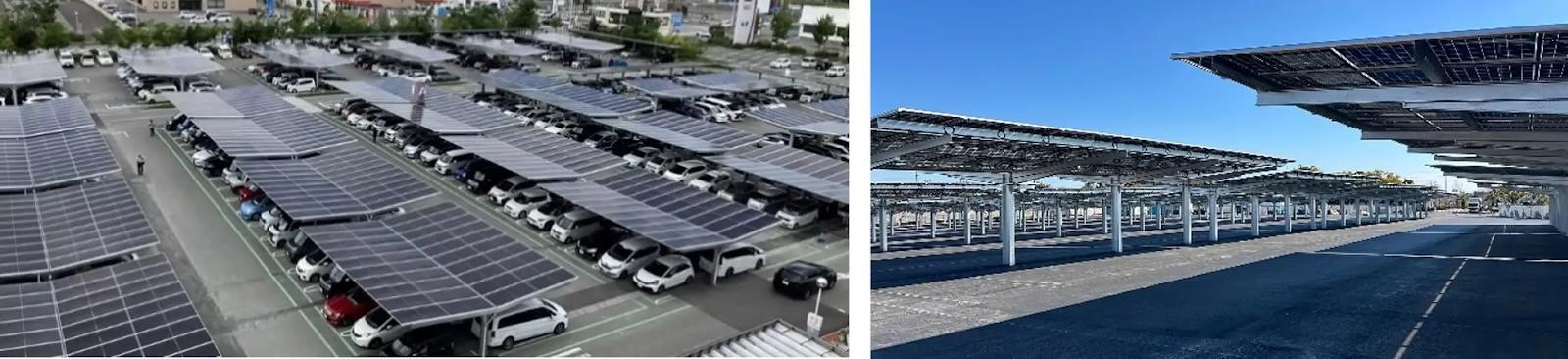
- Trina Solar and S-Rack launched a carport with solar PVs on top that can be installed in areas under more stringent fire-resistance regulation.
- The product combines Trina Solar’s Vertex double-glass module with S-Rack’s carport mounting system.
- The carport system obtained certification, verifying the effectiveness of preventing the spread of fire to adjacent buildings.
Marubeni Eneble partners with China’s Sigenergy to promote BESS in Japan
(Company statement, October 21)
- Marubeni Eneble, a Marubeni subsidiary providing energy-related services, formed a partnership with China’s Sigenergy to promote industrial and grid-scale battery storage solutions in Japan.
- They plan to propose these batteries to EPCs, grid-scale storage developers, and land developers for applications such as FIP-converted solar plants, grid storage, and self-consumption systems.
- SIDE DEVELOPMENT:
- Sun Village and Marubeni reach agreement for BESS projects
- (Company statement, Oct 17)
- Sun Village and Marubeni Power Retail agreed on four HV BESS grid outsourcing projects, each with a capacity of 2 MW / 8 MWh.
- The first, in Ashikaga (Tochigi Pref), was connected to the grid last month. o Marubeni will serve as the aggregator in the wholesale, supply-demand balancing, and capacity markets, and aims for 100 MW in orders this year.
Japan launches network focused on fostering talent for battery sector
(Government statement, October 16)
- The govt set up the Battery Advanced Talent Outreach Network to bolster training and recruitment of skilled workers needed for domestic battery manufacturing.
- The initiative builds upon earlier industry–academia–govt collaboration in the Kansai region, expanding them nationwide and to universities.
- The goal is to secure the human resources required to meet targets set in the 2022 Battery Industry Strategy, supporting both decarbonization and DX.
- TAKEAWAY: The move is part of the govt’s focus on prioritizing domestic procurement of batteries for energy storage systems as part of its broader industrial and energy security strategy. The goal is to reduce reliance on foreign supply chains and strengthen national production capacity.
Soden enters energy storage business
(Company statement, Nikkei, October 17)
- Soden, an EV charging equipment company founded in 2022, is entering the grid-connected battery storage business.
- It raised a total of ¥2.26 billion, including ¥1.61 billion in loans (mainly from Chiba Bank) and ¥650 million in equity funding from VC firms such as AG Capital.
- The firm has installed over 5,000 EV chargers, and expects ¥2.82 billion in sales and ¥180 million in operating profit for FY2025.
- Soden plans to expand into energy storage and virtual power plants (VPP), aiming for a 2 GWh capacity by 2030.
NEWS: WIND POWER AND OTHER RENEWABLES
 JERA Nex bp cancels Beacon Wind project, exits U.S. offshore market
(Japan NRG, October 22)
- JERA Nex bp, the offshore wind venture between JERA and bp, is drastically cutting operations in the U.S., cancelling projects such as Beacon Wind off Massachusetts (up to 2.5 GW). The project would have fed the New York grid.
- The firm cites reduced state subsidies and rising costs as reasons for the decision.
- Although environmental reviews were completed while Biden was still in the White House, final permits were never issued.
- JERA Nex bp will retain U.S. lease rights but its entire local team will leave; the firm will focus on Europe and Japan.
- CONTEXT: The company holds the rights to 13 GW of as-of-yet uncompleted offshore wind projects, primarily in Europe.
- TAKEAWAY: Policy hurdles under Trump, including permitting delays and subsidy cuts, have created a challenging environment that continues to influence development decisions and has led many companies to cancel plans despite investment losses. Combined with rising costs, this has made U.S. wind projects unviable. JERA has only recently created the tie-up with bp in the wind sector and it has taken on a huge challenge given the sector’s condition today. Still, it’s a bet on offshore wind power becoming a significant part of the future clean energy mix and while buildout in the U.S. is currently off the table, the sector’s fortunes in Europe are good and set to improve in Japan too.
Kajima joins JERA-led Akita offshore wind project after split from Mitsubishi
(Company statement, October 23)
- Kajima Construction secured a contract to build wind turbine foundations for the offshore wind power project off Oga City, Katagami City, and Akita City, Akita Pref.
- The project, led by Oga–Katagami–Akita Offshore Green Energy (a consortium comprising JERA Nex bp Japan, J-Power, Tohoku Electric, and trading house Itochu), will feature 315 MW of installed capacity.
- The wind farm will use 21 Vestas turbines, each 15 MW, with monopile foundations. The consortium aims to begin operations by June 2028.
- Kajima will handle the design, manufacture, procurement, transport, and installation of the turbine foundations.
- CONTEXT: The firm was previously part of a Mitsubishi-led consortium, which recently dropped three major offshore wind projects awarded in the first offshore public tender in 2021. Kajima decided to split from the consortium before Mitsubishi announced its final decision to exit the projects in late August.
- TAKEAWAY: Kajima’s experience working on a nearby offshore wind project, even amid halted construction, positions it well. While industry players still anticipate setbacks in wind project progress, Kajima’s partnership with JERA’s group offers a promising boost.
- SIDE DEVELOPMENT:
- JRI signs deal with Akita City to promote GX-related industries
- (Company statement, October 20)
- The Japan Research Institute (JRI) agreed with Akita City to promote and cluster industries related to the nation’s energy transition.
- The initiative will
- support local renewable energy use, including creating local production–local consumption energy schemes,
- plan energy infrastructure,
- attract advanced industry companies, and
- train specialized personnel.
- CONTEXT: Akita City and Akita Pref are designated as national decarbonization priority areas. Akita City has favorable conditions for onshore wind farms, existing offshore wind farms at Akita Port, and multiple planned projects in general waters.
Eurus Energy releases EIA document for an onshore wind farm
(Company statement, October 15)
- Eurus Energy released the EIA scoping document for its Shiji wind farm in Iwaki City, Fukushima Pref.
- The project aims to develop a 94.5 MW onshore wind farm, installing up to 21 wind turbines, each 4 MW to 6 MW.
- Construction to begin around April 2031; completion by December 2033; and to begin operation in March 2034.
- The planned site is located near the existing Eurus Tabito wind farm.
NEWS: NUCLEAR ENERGY
 Tomari council backs early restart of Hokkaido Electric’s Tomari NPP
(Nikkei, October 24)
- Tomari Village Council, which hosts Tomari NPP Unit 3, held a special committee meeting on nuclear issues, and agreed to support an early restart of the reactor, which already passed NRA safety review.
- The special committee and full council consist of the same members. So, it means the village council has decided to approve the restart.
- Mayor Takahashi said he would respect the council’s decision. He will present his own official stance at an appropriate time after comprehensive consideration.
- CONTEXT: Hokkaido Electric aims to restart the plant in early 2027, but this requires consent from four neighboring municipalities and Governor Suzuki.
- TAKEAWAY: In the analysis section of Japan NRG’s July 7 issue, Tomari NPP Unit 3 was presented as the reactor with the highest chances for an early restart out of those selected for subsidies under the LTDA program. The main reasons cited were the proactive stance of Hokkaido Electric in complying with NRA’s reviews and building infrastructure, as well as a strong push from the local business community.
TEPCO begins removing fuel from Kashiwazaki-Kariwa NPP Unit 7
(Denki Shimbun, October 22)
- TEPCO began removing nuclear fuel from Unit 7 at Kashiwazaki-Kariwa NPP. The fuel was loaded in April last year, but the reactor remains idle because the required special safety facilities aren’t ready yet.
- Instead of storing fuel inside both the reactor and in the spent fuel pool, all of it will be consolidated in the pool. This will make management easier.
- SIDE DEVELOPMENT:
- Niigata Pref to survey public opinion again on Kashiwazaki-Kariwa restart
- (Nikkei, October 24)
- Niigata Pref will hold another public opinion survey on Kashiwazaki-Kariwa NPP’s restart, from Oct 24 to Nov 7, targeting 8,344 residents within a 30-km radius.
- Governor Hanazumi will use the results to make his decision on the NPP’s restart.
- CONTEXT: The survey comes after an earlier one showed that only 37% agreed that the NPP meets conditions for restart. 60% disagreed. As the Governor wants to use the results to reach his own decision, this further delays the restart.
- TAKEAWAY: As Japan NRG has said multiple times, Governor Hanazumi is stalling for time and is unlikely to make any decision before 2026, when he is likely to use his re-election campaign to test the water on local appetite for a restart. Given the lack of a formal structure in the local approval process for a nuclear reactor restart, Hanazumi is free to conduct his decision-making as he wishes.
Kyushu Electric applies to NRA for Sendai NPP installation amendment
(Company statement, October 24)
- Kyushu Electric applied to the NRA to amend the reactor installation at Sendai NPP, to add a dry storage facility for spent nuclear fuel.
- This facility will diversify storage beyond current pool storage. The utility submitted a prior consultation document to Kagoshima Pref and Satsumasendai City.
NEWS: TRADITIONAL FUELS
 U.S. urges allies to join anti-Russia sanctions; Japan seeks extension of LNG exemption
(Government statement, Japan NRG, Nikkei, October 23)
- The U.S. Treasury hit Russian oil companies Rosneft and Lukoil with new sanctions, covering all entities in which they hold more than a 50% stake.
- Treasury Sec Bessent called on allies to join and enforce these sanctions.
- Japan continues to import LNG from Russia’s Far East under an existing exemption, and plans to request an extension for them from the U.S.
- CONTEXT: Rosneft participates in Sakhalin-1, an oil and gas project in Russia’s Far East. Japanese investors include METI, JAPEX, Itochu, and Marubeni.
- From Japan’s point of view, the main concern lies with Sakhalin-2, a project that is largely producing LNG. The ownership is as follows: Gazprom (77.5%), Mitsui (12.5%), and Mitsubishi (10%).
- Gazprom and its affiliated banks are under U.S. sanctions. But, Sakhalin-2 remains exempt, allowing Japan to continue LNG imports from it and a tiny amount of oil. Russian LNG accounts for about 9% of Japan’s total imports, supplying both power utilities and gas companies.
- The U.S. had previously extended the Sakhalin-2 transaction license until Dec 19. METI is lobbying for a further extension.
- TAKEAWAY: Following Japan’s 2022 oil import ban on Russia, Sakhalin-1 already ceased shipping crude oil to Japan. Officials in Tokyo say the new U.S. sanctions have little immediate impact on fuel supplies. METI maintains that Japan’s stakes in the Sakhalin projects are important for energy security, and experts warn that if Japan’s LNG imports from Russia stop, domestic electricity and gas prices could rise.
- SIDE DEVELOPMENT:
- METI Minister comments on U.S. pressure over Russian energy imports
- (Nikkei, October 21)
- METI’s Minister Muto said Russian LNG plays an “important role” for Japan’s energy security. He expressed caution about stopping imports.
- He said rising procurement costs in the tight Asian market could lead to higher electricity prices.
JERA to buy stake in Louisiana shale gas asset
(Company statement, October 23)
- JERA will acquire 100% of the stakes held by Williams Upstream Holdings and GEP Haynesville in the South Mansfield shale gas asset in Louisiana.
- Investment is $1.5 billion upfront. Current production is over 500 million cubic feet per day, and will expand production to 1 billion cubic feet.
- TAKEAWAY: As already noted by Japan NRG, JERA is at the forefront of energy purchase agreements between Japan and the U.S. since Trump took power. This investment further confirms JERA’s eagerness for U.S. energy. New METI minister Akazawa also welcomed this acquisition, saying it will strengthen the Japan–U.S. relationship. More such investments in the near future are likely. For more info, check the Analysis section of Japan NRG Sept 29 issue.
Tokyo Gas signs LoI with Glenfarne Alaska LNG
(Company statement, October 24)
- Tokyo Gas signed a Letter of Intent with Glenfarne Alaska LNG that holds a 75% stake in Alaska LNG. The agreement allows Tokyo Gas to begin strategic negotiations to buy LNG from the project.
- CONTEXT: Alaska LNG Project, led by Glenfarne, will process natural gas from Alaska’s North Slope, and liquefy it at a terminal in Nikiski, Alaska, with an annual capacity of about 20 Mt. The project aims to leverage Alaska’s large gas reserves and its proximity to Asia to strengthen regional LNG supply stability.
- TAKEAWAY: Tokyo Gas will explore potential LNG purchases of about 1 Mtpa, depending on progress and pricing. The company had signed a similar agreement with the Alaska Gasline Development Corp in 2017 that expired in June 2025. As of March 2025, Tokyo Gas sources about 11 Mtpa of LNG from countries including the U.S. and Australia. JERA has also signed a LoI with Glenfarne.
INPEX corrects Ichthys LNG emissions data
(Company statement, October 23)
- INPEX discovered errors in the calculation and reporting of emissions from its Ichthys LNG facility for FY2023–2024.
- These include volatile organic compounds (VOCs) and BTEX compounds (benzene, toluene, ethylbenzene, xylene).
- INPEX is also reviewing emissions data from earlier years.
LNG stocks up from previous week, up YoY
(Government data, October 22)
- As of Oct 19, the LNG stocks of 10 power utilities were 2.13 Mt, up 10.4% from the previous week (1.93 Mt); up 15.8% from end Oct 2024 (1.84 Mt); and up 4.9% from the 5-year average of 2.03 Mt.
September Oil/ Gas/ Coal trade statistics
(Government data, October 22)
| Imports Volume YoY Value (Yen) YoY | ||||
| Crude oil | 10.8 million kiloliters (68.1 million barrels) | 1.3% | 733.9 billion | -8.6% |
| LNG | 5.2 million tons | -5% | 425 billion | -13.3% |
| Thermal coal | 8.4 million tons | -22.1% | 149.3 billion | -36.6% |
NEWS: CARBON CAPTURE & SYNTHETIC FUELS
 JGC inks MoU with Italy’s Energy Dome to explore deployment in Japan
(Company statement, October 23)
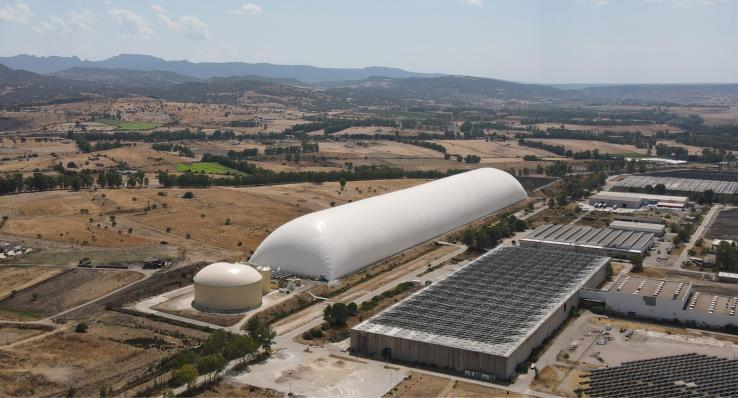
- Engineering firm JGC signed an MoU with Energy Dome (Italy) to explore introducing CO2 battery tech in Japan.
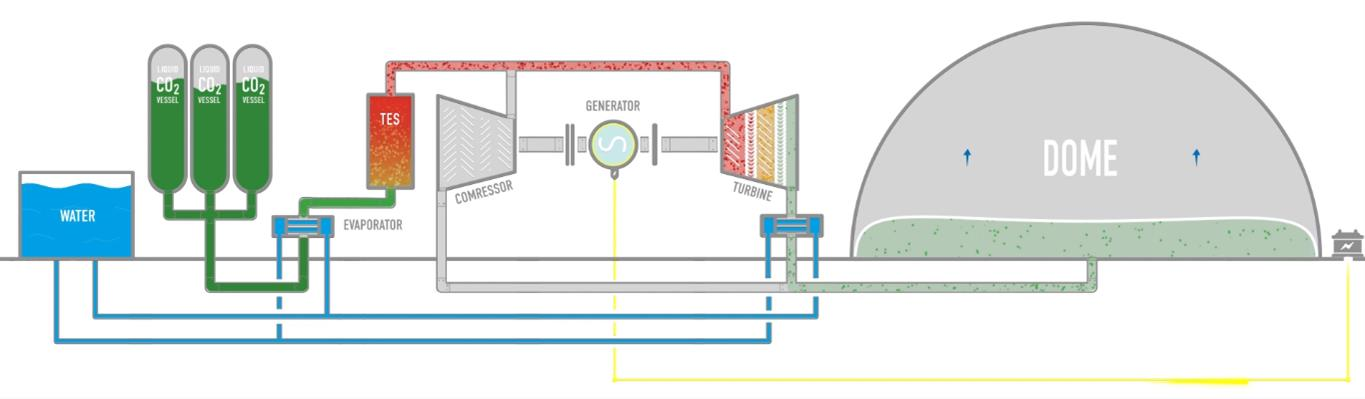
- CO2 batteries store energy longterm by compressing and liquefying CO2, then release it to generate electricity when needed.
- Advantages include no use of rare metals, no degradation over time, high efficiency, lower cost, and use of existing supply chains.
- Energy Dome has already operated a 20 MW/ 200 MWh commercial-scale CO2 battery plant in Italy and is expanding globally.
- The collaboration will assess the feasibility of commercial-scale CO2 battery deployment in Japan, combining Energy Dome’s tech with JGC’s EPC expertise.
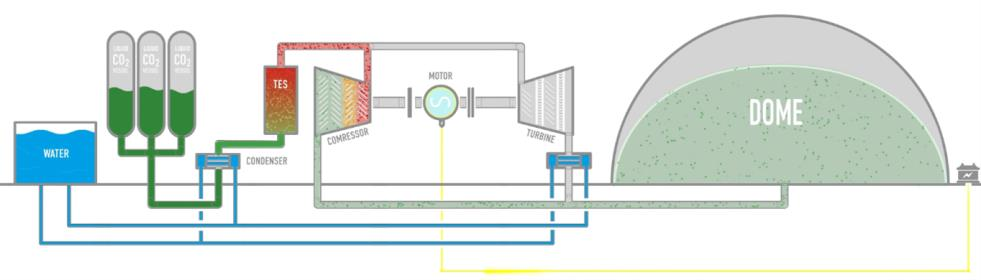
Charging (above) and discharging (below) phases of the system using CO2 batteries
METI selects bp and MRI for study on JCM carbon credits from CCUS
(Company statement, October 15)
- In partnership with Mitsubishi Research Institute (MRI), METI selected bp for a feasibility study to develop a method for generating carbon credits under JCM for CCUS projects. They’ll use the Tangguh CCUS project in Indonesia.
- The study intends to create a framework for industries to capture, transport, and store CO2. This should enable international collaboration on CCUS.
- TAKEAWAY: A CCUS framework for generating carbon credit would allow Indonesian CO2 emitters with Japanese investment to generate credits.
Mitsui & Co joins Thailand’s first CCS project
(Company statement, October 22)
- Mitsui & Co’s subsidiary MOECO joined Thailand’s first CCS project at the Arthit gas field in the Gulf of Thailand. The company holds a 4.762% share in the project, operated by PTTEP, and aims to begin operations in 2028.
- The project will store up to 1 Mt of CO2 a year. The CCS facility is integrated with the Arthit gas field, which supplies about 8% of Thailand’s domestic natural gas.
- CONTEXT: This follows feasibility studies under a support program from METI.
Asuene finishes second U.S. M&A and raises ¥11.5 billion
(Company statement, October 23)
- Asuene closed its Series C2 round, raising ¥780 million in new shares and facilitating ¥2.2 billion in secondary transactions. Funding now totals ¥11.5 billion.
- Asuene completed the 100% acquisition and integration of Iconic Air, a U.S.-based company that provides GHG and methane leak management.
- This is Asuene’s second U.S. acquisition, following the purchase of NZero in May.
ANALYSIS
BY YURIY HUMBER
Japan’s New Cabinet Blends Industrial Pragmatism With Defense Innovation
The new prime minister, Takaichi Sanae, has assembled a cabinet that signals continuity in Japan’s energy realism, but with a sharper industrial edge. One of her first promises, to cut the gasoline tax, underlines that pragmatism: easing household and transport costs while signalling that energy affordability, not only decarbonization, will define her agenda.
Takaichi has often been described as a political firebrand, but her Cabinet picks indicate a careful balance between trade, business, and politics. Her choice of Akazawa Ryosei as METI minister and Koizumi Shinjiro as defense minister suggests that she intends to link energy security, technological innovation and national resilience more tightly than before. Heading the MoE is former banker Ishihara Hirotaka – a nod to how environment policy is increasingly linked to investment, green finance and international capital flows.
Akazawa’s role will be in part to progress the major energy and other infrastructure projects that he agreed with the U.S. in his role as chief trade negotiator under the prior administration. Koizumi’s presence should see a more concerted effort to integrate renewable energy into key national defense and other facilities, opening further opportunities for clean tech that also gets dubbed as ‘dual use’ for its military application.
Meanwhile, the appointment of several veteran METI officials at Takaichi’s office should help to advance the national strategy of coordinating industrial, digital, and energy developments. From the Watt-Bit Collaboration to the GX Hubs initiative, the government – and METI in particular – has embarked on a mission to sync the expansion of new industrial facilities with clean energy resources, using this as a driver to meet the nation’s 2050 carbon neutrality goal.
METI: keeping promises
Akazawa, a 64-year-old former transport bureaucrat turned politician, is a quintessential policy insider. A graduate of the University of Tokyo and Cornell University, he has served in roles ranging from transport policy to economic revitalisation. He arrives at METI with a reputation for competence, not flash, and strong loyalty to outgoing PM Ishiba.
His appointment extends rather than overturns Japan’s long-standing approach to energy: pragmatic, security-minded and increasingly cost-conscious. Yet Akazawa’s instincts point to a subtler recalibration. In line with Takaichi’s orders, he appears keen to place industrial strength at the heart of decarbonization, an approach that favors domestic manufacturing, supply-chain stability and international trade links as much as climate goals.
Japan’s strategy for hydrogen and ammonia, for example, is likely to be framed less as a climate virtue and more as a strategic industrial opportunity to support GX in sectors ranging from steel to shipping.
At METI, Akazawa inherits a familiar set of dilemmas. Nuclear restarts remain slow, but the economic logic for reviving reactors has grown. A weak yen has made fossil-fuel imports – particularly LNG – expensive, even if Japan’s long-term contracts strategy offers some respite. Renewables deployment continues, but with rising costs and local resistance to large-scale projects. The offshore wind sector is in a particularly sensitive spot.
Akazawa’s team is expected to stress incremental renewables expansion and squeeze more from existing mechanisms rather than roll out new initiatives. Expect to see more ‘overloading’ of existing auctions, such as the LTDA, to cater to all sectors.
Akazawa will also oversee Japan’s growing web of energy and industrial investments in the U.S. At the upcoming Oct 28 Takaichi–Trump summit, Tokyo plans to tout a series of commitments to U.S. energy, semiconductors and materials. The giant Alaska LNG complex, and the Stargate AI infrastructure with accompanying data centers, sit squarely within a $550 billion investment and trade framework that Akazawa agreed to with the White House in September, and which also covers critical minerals and shipbuilding.
In short, Akazawa represents not a break from past realism but its evolution into a more industrial-centred pragmatism – one that measures energy not only in carbon or cost, but in terms of competitiveness and geopolitical return.
In defense of renewables
If Akazawa’s METI embodies industrial pragmatism, the appointment of Koizumi at the defense ministry hints at an institutional broadening of the domestic energy debate. A protégé of former defense minister Taro Kono, a long-time advocate of renewables and transparency, Koizumi is expected to encourage the Self-defense Forces (SDF) to take energy resilience more seriously.
The military establishment has traditionally left such matters to METI. Yet as U.S. strategists have learned, energy security is no longer peripheral to defense planning. America’s armed forces have spent two decades hardening bases against floods, typhoons and thawing permafrost – a practical response to climate stress rather than a political statement. Even as Washington’s civilian leadership drifts in and out of climate rhetoric, the Pentagon continues to integrate renewable power, micro-grids and fuel diversification into its operations.
Tokyo has been keeping tabs. The creation in 2024 of the Defense Innovation Science & Technology Institute (DISTI) – modelled on DARPA in the U.S. – gives Koizumi a tool to pursue that integration. With a budget of around $140 million and a staff of a hundred researchers, DISTI’s remit spans AI, robotics and energy systems for defense.
The project’s launch marked Japan’s recognition that defense innovation must cover not only weapons but the power systems that sustain them. Expect at least some of the increased defense budget to end up in items that would historically have been labeled as energy.
Koizumi may push his ministry to see renewables as not only an environmental tool but a bet on distributed generation to keep communications and logistics running, should the grid ever get attacked or disabled. The compactness of SMRs may also appeal. Koizumi’s recent mention of Japan’s interest in nuclear submarines is not a random talking point.
In August, the U.S. Council on Strategic Risks argued that Japan’s security could be strengthened further through closer coordination between renewables policy and defense planning, underpinned by better access to critical minerals. They even suggested reducing METI’s dominance of the energy portfolio and fostering “energy literacy” across the diplomatic and security establishment.
That is, of course, easier said than done. The bureaucratic borders in central Tokyo are among the most entrenched in the world. Still, the proposal captures the blurring of the lines between energy, security, industrial policy and national resilience. Expect this trend also to open more opportunities for clean/ deeptech startups working on ‘dual use’ technologies, such as drones, which can deliver energy efficiencies as well as a military edge.
Cross-government approach?
For now, cooperation between METI and the defense Ministry is more a concept than a program. Each guards its turf. Yet as their interests converge, people like Takaichi’s principal executive secretary Iida Yuji will become increasingly influential. Iida was until recently METI’s top bureaucrat; he will now act as the prime minister’s key coordinator across ministries.
A career official steeped in energy policy, Iida spent much of his tenure at ANRE and later led METI’s Economic and Industrial Policy Bureau, where he oversaw the nexus of energy, environment and industry.
Also, keep an eye on the new environment minister. Son of late Tokyo governor Ishihara Shintaro, he is a six-term lawmaker and former State Minister of the Environment.
Before entering politics he worked for the Industrial Bank of Japan and Mizuho. That experience should prove valuable as Japan tries to fuse environmental policy with industrial and financial priorities – and raise up to ¥20 trillion in a bond program linked to the GX investment plan.
Ishihara has long argued that growth and decarbonization can reinforce one another, not compete – a stance that aligns neatly with PM Takaichi’s push for pragmatic, investment-driven climate policy. His appointment signals that the MoE will be expected to speak the language of markets (and especially carbon markets) as well as that of regulation.
In areas like hydrogen and batteries the various ministries could find much common ground, especially as these technologies rely on secure access to critical minerals, which means finding alternatives to supply chains dominated by China.
A pragmatic symbiosis
Takaichi’s cabinet is not seeking an energy revolution; it is refining Japan’s established forms. That may feel uninspiring. Yet in an era of wild policy swings elsewhere, Japan’s incrementalism is a kind of virtue: stability disguised as stasis.
For investors and industry, this means a steady policy environment. Nuclear restarts will inch forward; hydrogen and ammonia will remain subsidized but scrutinized; renewables will expand but face higher local-content expectations. Defense-related R&D could open new commercial avenues in storage, mobility fuels and critical-materials processing.
Japan has long been pragmatic about energy. That pragmatism’s center of gravity is changing: from fuel import security toward an integrated model that ties energy, resilience, industry and defense all together.
ANALYSIS
BY FILIPPO PEDRETTI
KEPCO To Shut Last Oil-Fuelled Units, but Nuclear and LNG on the Rise
At the end of September, Kansai Electric (KEPCO) announced plans to shut units at the oil-fired Gobo Power Station in Wakayama Prefecture, accelerating the utility’s pivot away from carbon-intensive generation.
Gobo has long functioned as a strategic reserve facility, but declining use rates and rising maintenance challenges have made its role marginal. While Units 1-2 will be decommissioned, the fate of Unit 3 remains undecided.
KEPCO is not alone in this shift. A growing number of Japanese utilities are retiring their thermal fleets with over 25 GW of oil-, gas- and coal-fired slated for decommissioning this decade. But only KEPCO can count on a sizable operational nuclear power plant fleet. Indeed, its energy mix leans more and more on nuclear power, in the wake of NPP restarts.
Japan NRG takes a closer look at KEPCO’s shift – what’s behind it, and most importantly what comes next.
Goodbye to Gobo
Located in Wakayama Prefecture, Gobo Power Station was commissioned in phases from 1984 and 1985. The three generating units, each 600 MW, have a combined output capacity of 1.8 GW, roughly 18% of KEPCO’s total fossil-fuel power.
Unit 2 has been offline since 2019, with the other units serving as backup to meet spikes in demand or to compensate for dips in renewable output. The relative ease of oil storage has made it useful for such emergency roles. Still, at present, Gobo Unit 1’s capacity utilization rate is reported to be at only 4%.
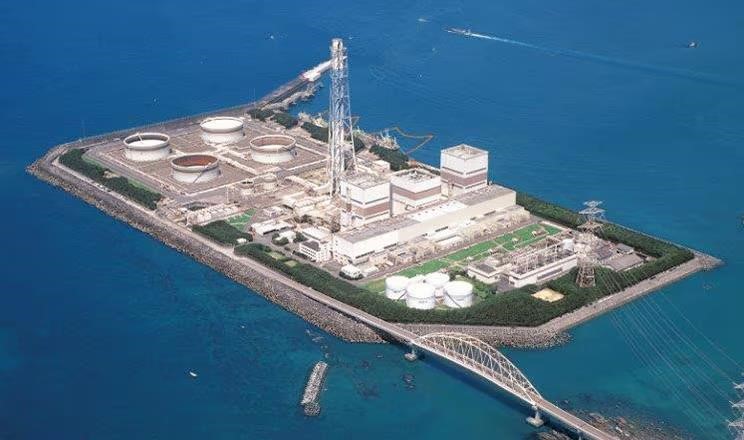
This fall, the utility decided that Units 1 will retire by June 2026, while Unit 2 will retire by the end of this month. KEPCO told Japan NRG that maintenance of such facilities is difficult, due to multiple factors such as advanced age, as well as changes in operating status.
As for Unit 3, the utility said no decision has been made. Options include the possible use of it as a reserve power system. KEPCO plans to monitor trends in the balance of power supply and demand, as well as national energy policies. If it’s assessed to be surplus to requirements, it could be suspended or decommissioned.
Gobo’s fate follows KEPCO plans to decommission two units (600 MW each) at the oilfired Ako Power Station, in Hyogo Prefecture. Launched in 1987, it was fueled by crude oil and heavy fuel; operations ended in July. Another oil-based KEPCO facility, the Tanagawa Daini Power Plant, which also consisted of two 600 MW units, was retired in 2020, about 43 years after it launched.
A third KEPCO oil-fired facility was Aioi, with three units. In 2022, Units 1 and 3 were shut. Unit 2 is still operational, though converted to run on solid biomass and with its capacity reduced from the original 375 MW to 200 MW.
Other utilities follow
KEPCO’s decision comes at a time when other utilities are taking similar steps. By March 2026, Kyushu Electric plans to decommission Unit 2 of Buzen Power Station, which will end all its oil-fired power generation.
By 2030, J-Power will also retire or suspend five coal-fired units. JERA, the country’s largest power generator, aims to end utilization of inefficient coal plants by 2030. Hirono Unit 2 in Fukushima was JERA’s last oil-fired plant in the Tokyo area.
In early October, JERA decommissioned old LNG plants, namely Anegasaki Units 5 and 6; Sodegaura Unit 1, Chita Unit 5; and Hirono Unit 2. Their total capacity is 3.2 GW, and were idle for years, too degraded to restart. Since FY2020, the utility has added or replaced 7.3 GW of power generation capacity.
JERA is now building Chita Units 7 & 8 (1.3 GW, LNG fuelled, slated to launch in FY2029). Plans also include new Sodegaura Units 1–3 (about 2.6 GW) launching in 2032, with environmental reviews underway.
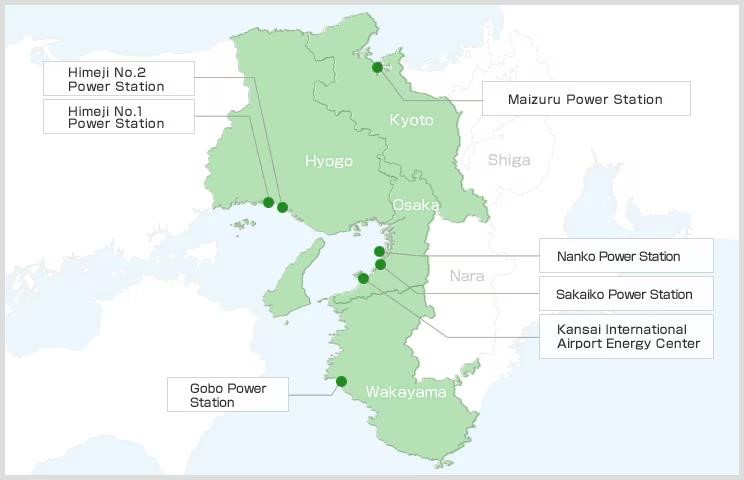
KEPCO’s thermal power plants
| Prefecture | Name of Power Station | Capacity | No. of Units | Main Fuels |
| Osaka | Sakaiko Power Station | 2 GW | 5 | LNG |
| Nanko Power Station | 1.8 GW | 3 | LNG | |
| Kansai International Airport Energy Center | 40 MW | 2 | LNG, Kerosene | |
| Hyogo | Himeji No. 1 Power Station | 1.5 GW | 4 | LNG |
| Himeji No. 2 Power Station | 2.9 GW | 6 | LNG | |
| Wakayama | Gobo Power Station | 1.8 GW | 3 | Heavy oil, Crude oil |
| Kyoto | Maizuru Power Station | 1.8 GW | 2 | Coal |
LNG and BESS on the rise
In FY2014, fossil fuels accounted for almost 90% of KEPCO’s total generation, following the shut downs of nuclear generation after the 2011 Fukushima disaster. Oil accounted for about 15% of that fossil-fired total.
Since then, nuclear has made major strides. In FY2019 fossil fuels accounted for 59% of KEPCO’s power generation, and nuclear for 27%. By 2023, KEPCO had restarted all seven of its operable nuclear reactors, and fossil fuel power now accounts for 39% (with oil covering less than 1% of that), while nuclear rose to 48%. All these years, hydropower has remained stable at about 10% of the total.
While nuclear power has rebounded, KEPCO told Japan NRG that LNG-fired generation is also seen as a rising star – a flexible and necessary transitional option, an effective response to rising power demand from data centers.
Among KEPCO’s LNG-fuelled facilities, there are the 1.8 GW Nanko station (three units), the 1.5 GW Himeji No. 1 (four units), and the 2.9 GW Himeji No. 2 station (six units). These are slated for upgrades and modernization in the early 2030s. The Sakaiko Power Station, five units, is also a 2 GW LNG-fired facility.
For balance in the fuel portfolio, KEPCO has the 1.8 GW coal-fired Maizuru station (two units) and the Kansai International Airport Energy Center (40 MW), fuelled by LNG and kerosene.
One area where KEPCO feels it needs to strengthen its power supply assets, however, is energy storage. Batteries would offer flexibility in balancing the generation assets and the rising renewables volumes locally. Toward that goal, the Kansai utility plans BESS facilities in the Kanto and Chubu regions, targeting an energy storage capacity of 1 GW by the early 2030s. There are plans for massive 100 MW-class BESS facilities also in Sapporo, Osaka, Hamamatsu, and Mito.
So far, KEPCO has set up the Kinokawa Battery Station, together with Orix, which has a rated output of 48 MW and capacity of 113 MWh, making it one of Japan’s largest.
Conclusion
Oil-fired power’s economic viability is dwindling, squeezed by two imperatives – energy security and decarbonisation. KEPCO’s generation mix is a case study of the new calculus for legacy power assets that are caught between volatile fossil fuel prices and climate policy.
In short, the advanced age and high maintenance costs of the Gobo units are no longer tenable.
With half of its electricity sourced from nuclear power, KEPCO has also been more appealing to new corporate electricity clients seeking CO2-free energy. Nuclear power now provides the base load in KEPCO’s new mix, as restarts have restored balance to the grid.
Still, following KEPCO’s path is hardly an option for other utilities. Many still struggle to restart their NPPs. Hence, the Kansai utility’s views on natural gas reflect how its large LNG-fired fleet remains crucial. The super-chilled fuel is seen as the most flexible and viable transitional option for now to meet quickly rising energy demand.
In the future, options outside natural gas may emerge. KEPCO’s investments in battery storage and a dogged pursuit of hydrogen and CCS signal interest in those directions.
With some large industrial customers of TEPCO’s retail units grumbling about losing discounts, KEPCO has a good chance of expanding its client base thanks to its diversified mix. And, as the carbon credits market in Japan moves to the mandatory phase, this will be a powerful sales pitch to secure major new corporate revenue.
ASIA ENERGY REVIEW
BY JOHN VAROLI
A brief overview of the region’s main energy events from the past week
ASEAN / Coal
FutureCoal, Global Alliance for Sustainable Coal, and ASEAN Centre for Energy renewed their MoU to support sustainable coal development across the ASEAN region.
Australia / Rooftop solar
Rooftop solar systems, now installed on more than 4.2 million homes, are producing record levels of midday generation, according to Griffith University. The average household system has grown seven-fold in capacity over the past decade. This makes distributed rooftop solar the nation’s largest source of renewable generation.
Australia/ Solar and BESS
Ingeteam won a contract to supply inverters and control systems for European Energy Australia’s 100 MW Winton North solar-plus-storage project in northeast Victoria.
China / LNG
LNG imports plunged 15% YoY in September, an 11th straight monthly decline. They’ve fallen 17% over 2025 so far, replaced by cheaper fuel arriving via pipeline or produced locally, and an abundance of other power sources like coal, solar and hydro.
India / LPG
India plans to cut imports of liquefied petroleum gas from the Middle East because its state refiners look to boost U.S. purchases. India buys 90% of its LPG imports from the Middle East. India pledged to raise U.S. energy purchases from $10 billion to $25 billion.
India / Oil
Flows of Russian oil to major Indian refiners are expected to fall to near zero after the U.S. imposed sanctions on crude giants Rosneft and Lukoil.
Indonesia / Oil & Gas
Indonesia and Brazil inked an MoU to enhance cooperation in the energy and mining sectors, including projects related to oil and gas resource management.
Malaysia / Coal
By 2035, the country’s coal-fired power generation capacity will be cut by half and phased out entirely by 2044, said Minister of Energy Transition, Datuk Amar Fadillah Yusof.
Taiwan / Green energy
Chipmakers are worried about the feasibility of a state plan to deliver new green power supplies, potentially compromising energy security as power demand grows, said the head of the Taiwan Semiconductor Industry Association.
Disclaimer
This communication has been prepared for information purposes only, is confidential and may be legally privileged. This is a subscription-only service and is directed at those who have expressly asked K.K. Yuri Group or one of its representatives to be added to the mailing list. This document may not be onwardly circulated or reproduced without prior written consent from Yuri Group, which retains all copyright to the content of this report.
Yuri Group is not registered as an investment advisor in any jurisdiction. Our research and all the content express our opinions, which are generally based on available public information, field studies and own analysis. Content is limited to general comment upon general political, economic and market issues, asset classes and types of investments. The report and all of its content does not constitute a recommendation or solicitation to buy, sell, subscribe for or underwrite any product or physical commodity, or a financial instrument.
The information contained in this report is obtained from sources believed to be reliable and in good faith. No representation or warranty is made that it is accurate or complete. Opinions and views expressed are subject to change without notice, as are prices and availability, which are indicative only. There is no obligation to notify recipients of any changes to this data or to do so in the future. No responsibility is accepted for the use of or reliance on the information provided. In no circumstances will Yuri Group be liable for any indirect or direct loss, or consequential loss or damages arising from the use of, any inability to use, or any inaccuracy in the information.
K.K. Yuri Group: Hulic Ochanomizu Bldg. 3F, 2-3-11, Surugadai, Kanda, Chiyoda-ku, Tokyo, Japan, 1010062.