
WEEKLY
March 30, 2026
ANALYSIS
PERSIAN GULF WAR FUELS GLOBAL ENERGY SHIFT, WITH U.S. SET TO DOMINATE
- The global energy crisis is setting off a structural shift in Asian energy procurement toward other sources.
- Buyers including Japan face greater reliance on U.S. supply, deepening Washington’s leverage over trade and broader economic ties.
METI SETS UP GROUP TO DESIGN SYSTEM FOR THE SIMULTANEOUS POWER MARKET
- As variable renewables expand, separated markets for spot, intraday and balancing procurement can create conflicting demands for the same flexible capacity.
- The result is tighter supply-demand conditions, increased volatility, and congestion. The simultaneous electricity market, in theory, offers a way to improve coordination, transparency and system efficiency. We review the latest policy talks.
ASIA PACIFIC REVIEW
This column provides a brief overview of the region’s main energy events from the past week
NEWS
- Japan starts to release national and joint international petroleum reserves
- Govt sounds out brokers over possible oil futures intervention to stem further yen weakness
- Finance group launches Hokkaido-focused GX fund
- FY2026 renewables surcharge set at new record high
- Cabinet approves bill to amend Electricity Business Act
- Govt to relax penalties on coal-fired power plants due to fuel supply risks connected to Iran war
- Two more CfD subsidy winners announced; two hub projects also due to receive support
- KHI launches compressor for hydrogen liquefaction
- Startup claims next-gen solar product could replace PV panels
- Govt sets FIT/ FIP purchase prices for FY2026 onward
- Sekisui and partners launch PSC demo
- Kansai Electric to build battery storage in Kyushu
WIND POWER AND OTHER RENEWABLES
- Vena Energy scales down wind farm project while adopting larger turbines
- Itochu-led onshore wind project begins commercial operations under FIT
- NRA to extend deadline for NPPs to upgrade antiterrorism facilities
- Kyushu Electric reactor to restart commercial operations
- Tokyo Gas says may supply LNG to other firms
- Cyclone disrupts Australian LNG exports
- INPEX to prioritize Azeri crude shipments to Japan amid supply risks
- Shizuoka Gas to invest $100 million in LNG company
CARBON CAPTURE & SYNTHETIC FUELS
- Toho Gas launches regional CO2 recycling e-methane supply system
- Cosmo Energy agrees with university to produce nextgen biofuel
EVENTS
March 31 End of Japan’s Fiscal Year 2025
Mid-April FIT/FIP Solar Auction #28
Japan Atomic Industrial Forum
(JAIF) Annual conference @ Tokyo
April 24 Green Elements at Work @ Google for Startups
May 3-6 Golden Week (many companies will close from April 29 to May 6)
May 26-28 Japan Energy Summit @ Tokyo Big Sight
June 3 South Korea – Local Elections
June 23-25 “Summer Davos” in Dalian, China
September 14-18 IAEA General Conference 2026
PUBLISHER
K. K. Yuri Group
Editorial Team
Yuriy Humber (Chief Editor)
John Varoli (Senior Editor, Americas)
Kyoko Fukuda (Data, Events)
Magdalena Osumi (Renewables & Storage)
Filippo Pedretti (Thermal, CCS, Nuclear)
Tetsuji Tomita (Power Market, Hydrogen)
Aglaé Bange (Renewables and Biomass)
George Hoffman (Sales, Business Development)
Tim Young (Design)
SUBSCRIPTIONS & ADVERTISING
Japan NRG offers individual, corporate and academic subscription plans. Basic details are our website or write to subscriptions@japan-nrg.com
For marketing, advertising, or collaboration opportunities, contact sales@japan-nrg.com For all other inquiries, write to info@japan-nrg.com
NEWS: GENERAL OUTLOOK AND TRENDS

Japan releases national and joint international petroleum reserves
(Government statement, Japan NRG, March 26)
- In response to supply disruption caused by the U.S./Israeli war on Iran, Japan began an unprecedented release of national and joint petroleum reserves.
- The govt will release 53 million barrels (one month’s worth of domestic demand) from 11 facilities, sold to four major refineries (ENEOS, Idemitsu Kosan, Cosmo Oil, and Taiyo Oil) for ¥540 billion. The release is about 20% of state reserves.
- Also, for the first time ever, Japan will release five days’ worth of oil stored by oil-producing nations like the UAE and Kuwait.
- CONTEXT: Japan’s total emergency reserves are equal to about 254 days. This includes state (146 days), private (101 days) and joint producer (foreign-held) stocks (7 days). On March 16, major oil companies began releasing 15 days’ worth of private stockpiles.
- TAKEAWAY: Beyond utilizing stockpiles, Japan is now expediting efforts to diversify suppliers, seeking alternative sources from the Americas and Central Asia. The goal is to protect the domestic economy from its current heavy dependence on Middle Eastern oil.
- SIDE DEVELOPMENT:
- Japan sounds out market on possible oil futures intervention
- (Reuters, Bloomberg, March 24-26)
- The Ministry of Finance approached major banks with oil trading operations to gauge views on potential intervention in crude oil futures, aiming to ease pressure from surging energy prices and protect the yen from further weakness. o The outreach resembles a “rate check” used ahead of currency intervention, suggesting authorities are exploring tools beyond FX markets.
- Finance Minister Katayama said speculative activity in oil futures is influencing foreign exchange markets, adding the govt is ready to take “all possible measures.”
- The move follows discussions in the U.S. earlier this month on similar intervention options, although Washington later denied plans to act.
- TAKEAWAY: The willingness to intervene in the market reflects the govt’s strong concern that oil price volatility is feeding directly into yen weakness and domestic energy costs. The yen has plunged past 160 to the USD for the first time in 20 months. The issue with all interventions, however, is that they can stem the flow but rarely overturn it. An intervention will buy the govt a little time; it won’t deliver more oil to the market. Officials will use that time likely to ensure more nuclear and coal power is online, and consider other backup plans.
Petroleum Association head says Japan should get more U.S. crude
(Nikkei Asia, March 24)
- Japan’s oil industry seeks to diversify crude supply away from the Middle East.
- Kito Shunichi, chairman of the Petroleum Association of Japan, said companies should secure longterm supplies of U.S. crude, especially from Alaska, even if facing higher costs and delivery time.
- Major refiners like ENEOS, Idemitsu, Cosmo Energy, and Taiyo Oil are now exploring U.S. imports.
- Kito said that while diversification is necessary, eliminating Middle Eastern oil is unrealistic. He also suggested that if disruptions continue, Japan should extend the release of its national oil reserves beyond April.
- CONTEXT: Japan and the U.S. have agreed to cooperate on infrastructure to boost Alaskan oil production. Alaskan crude presents technical challenges. It contains higher metal content that requires extra refining equipment. Despite this, Alaska has a logistical advantage, reaching Japan faster than Middle Eastern oil.
- SIDE DEVELOPMENT:
- Ex-minister urges to consider Alaska oil imports amid Iran war disruption
- (Nikkei, March 27)
- Former Vice Foreign Minister Mori Takeo said Japan should consider importing oil from Alaska and Canada to reduce its reliance on Middle East oil.
- “Even if passage [through the Strait of Hormuz] is possible temporarily, it’s a mistake to think we can keep relying on the Middle East for 90% of our oil,” Mori said.
- TAKEAWAY: In recent days, a number of top officials, including Foreign Minister Motegi and METI minister Akazawa, have endorsed switching to Alaskan oil, even labelling this as a game-changer moment. See this week’s Analysis for a deeper dive into these issues.
Iran charging transit fees for Hormuz safe passage; GCC protests
(Argus, Bloomberg, March 24-27)
- Iran is asking for as much as $2 million per voyage for commercial vessels passing through the Strait of Hormuz.
- The levy is on an ad hoc basis, effectively creating an informal toll on the waterway.
- CONTEXT: Iran holds overwhelming influence over Hormuz, which normally sees sea traffic carrying a fifth of the world’s oil and gas, and vast amounts of food, metals and other materials.
- Iranian lawmakers have proposed formalizing the transit fee.
- “This is a violation of the UN Convention of the Law of the Sea (UNCLOS),” Gulf Cooperation Council secretary general Jasem Mohamed Al-Budaiwi said.
Finance group launches Hokkaido-focused GX fund
(Company statement, March 27)
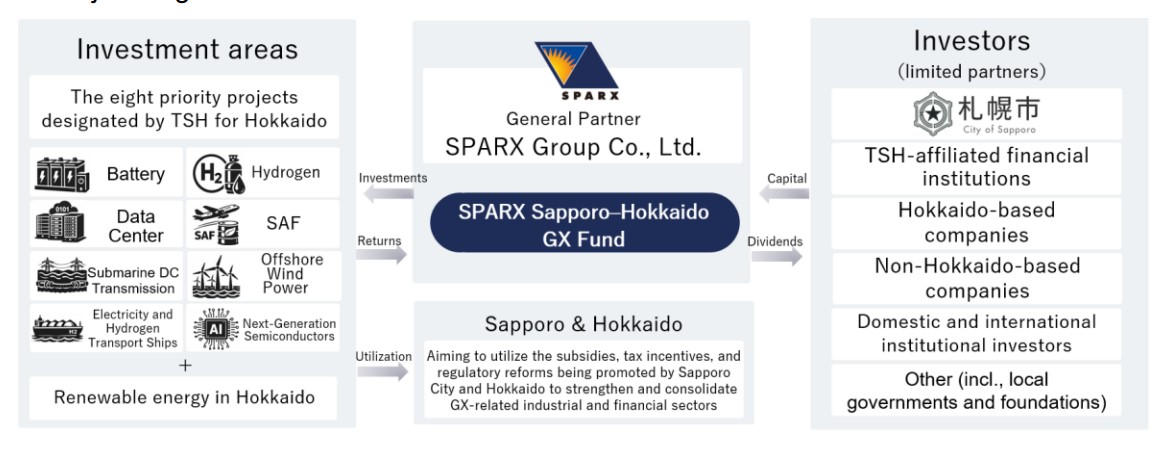
- Asset management firm Sparks Group launched Japan’s first region-specific public-private GX fund, backed by 14 investors including the city of Sapporo, to finance clean energy projects in Hokkaido.
- The fund targets a total amount of ¥10 billion, and will invest in offshore wind, hydrogen, data centers, semiconductors and battery storage, leveraging incentives under Hokkaido’s GX special economic zone designation.
- The initiative is aligned with the “Team Sapporo-Hokkaido” platform and aims to channel domestic and international capital into the region by combining public support, regulatory easing and privatesector investment.
Toray introduces surcharge system to pass through naphtha feedstock cost spikes
(Nikkei, March 27)
- Toray introduced a surcharge pricing system for resins, carbon fiber and other petrochemicalderived products to reflect raw material cost changes more quickly.
- The system allows price adjustments within as little as one month, compared with several months previously, as naphtha prices – its key feedstock – have surged more than 70% since late February.
- The move aims to cushion earnings and production from volatility due to the Iran war.
- TAKEAWAY: This signals a more determined approach by manufacturers to install dynamic pricing mechanisms to offset cost volatility and the risk of physical supply shortages. Rapid pass-through pricing is now a necessity for energy-intensive manufacturers, a change from the traditional practice of allowing the margins to absorb rising costs in the hope that the situation changes. Today’s inflationary environment is the main motivation for this change.
Eurus to develop demo offshore datacenter powered by renewables
(Company statement, March 25)
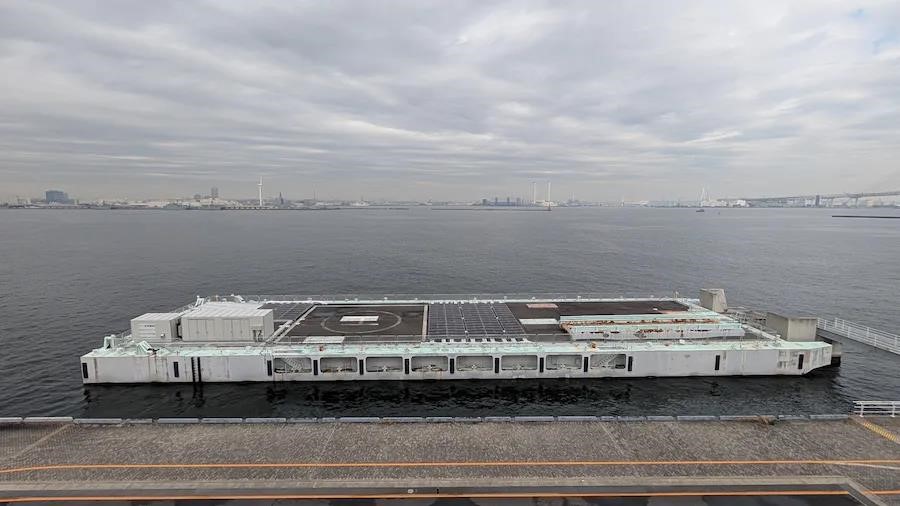
- Eurus Energy, NTT Facilities, NYK Line, MUFG Bank and Yokohama City agreed to develop a demo offshore containerized data center using a floating mooring facility in the city’s port. It will be entirely powered with renewables.
- TAKEAWAY: Offshore data center projects can help alleviate data center congestion in urban areas. Floating, self-powered data centers point to an interesting convergence of offshore energy and digital infrastructure, but this is still at a very early stage that will only proceed if energy reliability is paired with realistic costs.
NEWS: ELECTRICITY MARKETS

Govt sets record high renewable energy surcharge rate for FY2026
(Government statement, March 19)
- The government set the FY2026 renewable energy surcharge at ¥4.18/ kWh, its highest level to date, up ¥0.20 from ¥3.98/ kWh in FY2025.
- Total FIT purchase costs are estimated at ¥4.85 trillion, down slightly (–¥3.3 billion YoY), while avoidable costs are projected to fall more sharply (–¥141 billion to ¥1.65 trillion). This pushes the net surcharge burden to ¥3.2 trillion.
- Electricity sales are expected to decline by 4.3 TWh to 766.5 TWh, further lifting the per-unit surcharge.
- For a typical household (using 400 kWh/ month), the surcharge will be ¥1,672/ month or ¥20,064/ year.
- The new rate will apply from May 2026 to April 2027.
- CONTEXT: The surcharge is set annually by METI under the FIT Act. It is calculated by subtracting avoidable costs (wholesale power prices) from total FIT purchase costs, adding administrative expenses, and dividing by total electricity sales.
- TAKEAWAY: The increase is smaller than last year’s ¥0.49 jump, but the upward trend remains intact. Lower wholesale power prices – reducing avoidable costs – are the main driver this year. More broadly, the surcharge continues to reflect the cumulative cost of Japan’s large FIT-supported solar buildout (now approaching 80 GW). After a temporary dip in FY2023 due to high power prices, the surcharge has resumed its rise from just ¥0.22 in 2012. This structural pressure underpins the government’s shift away from FIT. The burden is expected to ease only after FY2032, when early FIT projects begin to roll off after their 20-year support period.
- SIDE DEVELOPMENT:
- KEPCO president says household electricity rates will not change
- (Nikkei, March 27)
- KEPCO’s President Mori said household electricity rates will remain unchanged because Japan’s fuel cost surcharge system has a price cap.
- This means the utility has already reached the limit on how much of the increase in fuel costs can be passed on to consumers.
- But for non-regulated (market-based) plans, prices could start rising around June.
- CONTEXT: KEPCO sources about 13% of its LNG from the Middle East.
Cabinet approves bill to amend the Electricity Business Act
(Government statement, March 24)
- The Cabinet approved a bill to amend the Electricity Business Act, to be submitted to the 221st Diet session.
- The METI minister will certify development plans for regional grids and large-scale power sources, while OCCTO will be authorized to provide financing using state-backed funds.
- Revenues from cross-regional electricity trading will be used to subsidize the expansion of inter- and intra-regional transmission networks.
- Large-scale power producers will be required to consult in advance before decommissioning major generation assets.
- Regulations on electricity retailers will be strengthened, including the addition of suspension periods as grounds for license revocation.
- To promote electricity trading, the government will designate and supervise wholesale power exchanges, including new mid- to long-term and balancing markets.
- Solar power equipment will be subject to third-party design assessments prior to construction to reduce accident risks.
- CONTEXT: Since March 2025, METI has been reviewing the design of a next-generation electricity system through dedicated subcommittees and working groups. An interim summary released on March 17 called for stronger investment incentives, expanded grid capacity, and tighter supply obligations for retailers, highlighting the need for legislative backing.
- TAKEAWAY: The amendments formalize the current shift toward a more state-coordinated power system, combining financial support for grid and generation investment with tighter regulatory oversight. Measures such as OCCTO-backed financing and the recycling of trading revenues point to a more interventionist approach to transmission expansion, while stricter rules on plant closures and retail licensing aim to safeguard supply stability. At the same time, enhanced oversight of power markets and solar safety standards reflects growing concerns over market functioning and operational risks. Taken together, the bill signals a broad effort to reinforce energy security as Japan faces rising demand and a more volatile global energy environment.
- SIDE DEVELOPMENT:
- Govt approves loans for NPPs and large-scale transmission networks
- (Jiji, March 24)
- An Electricity Business Act amendment will allow state-backed institutions to make loans to NPPs and large-scale transmission networks. OCCTO will manage the loans.
- The govt will supplement private sector investment to meet rising energy demand. Financial resources will be drawn from state fiscal investment and loan programs.
- TAKEAWAY: Large-scale reactors carry a price tag of ¥2 to ¥6 trillion, making them unbankable through private financing alone. With OCCTO as an intermediary, the govt seeks to preserve a “national policy, private management” scheme. ANRE already requested ¥54 billion in the FY2026 budget to kickstart this system. ¥24 billion will be for power supply capacity and ¥30 billion for transmission and grid integration. For more on this subject, see the Analysis section in Japan NRG March 16.
Govt to relax coal power penalties amid Middle East supply risks
(Government statement, March 27)
- ANRE assessed the impact of Middle East instability on Japan’s power and gas supply, highlighting risks to LNG procurement.
- As an emergency measure, for one year, the government will suspend capacity market penalties on inefficient coal-fired power plants in FY2026 to conserve LNG.
- Under current rules, coal plants with efficiency below 42% face a 20% reduction in capacity market revenues if their annual utilization exceeds 50%. This penalty will not be enforced.
- The policy will allow greater use of coal-fired generation, reducing LNG consumption by an estimated 500,000 tons.
- Domestic utilities currently hold around 4 million tons of LNG inventories.
- The government is also considering broader participation of coal-fired plants in capacity market auctions, reversing earlier restrictions aimed at decarbonization.
- Meanwhile, the expected restart of TEPCO’s Kashiwazaki-Kariwa NPP Unit 6 is expected to reduce domestic gas demand, partially offsetting supply disruptions. According to the government, increased coal utilization combined with nuclear restarts could replace up to 40% of LNG imports previously routed via Hormuz.
- TAKEAWAY: By easing penalties, the govt is effectively reactivating underutilized coal capacity as a buffer against LNG supply shocks. The policy underscores the structural vulnerability to imported fuels and Japan’s continued reliance on thermal power in times of crisis. While framed as a one-year measure, it potentially highlights the limits of the current transition framework when confronted with geopolitical risk.
In parallel, OCCTO is introducing a temporary kWh monitoring framework ahead of the summer peak, with results expected in early April. This will provide an early indication of whether additional supply-side interventions are needed.
Hokuriku Electric to decommission thermal power plant
(Company statement, March 24)
- Hokuriku Electric will decommission the Mikuni Unit 1 thermal power plant in Fukui Pref by April 2028 due to the facility’s advanced age and difficulty in securing heavy oil to fuel operations.
- The move triggers a loss of ¥8.5 billion. The station operates at a very low capacity, so its closure won’t disrupt regional energy supply.
- The utility revised downward FY2025 net profit forecast from ¥62 to ¥53 billion.
- CONTEXT: The 250 MW unit began operation in 1978.
- TAKEAWAY: The shutdown won’t affect power supply stability, especially due to a new grid interconnection loop between regions (Chubu, Hokuriku, Kansai) beginning in April. This is the only active unit at the site. The closure will mark the complete retirement of the Fukui thermal plant.
Suzuyo Shoji launches regionally integrated energy supply project
(Company statement, March 24)
- Suzuyo Shoji launched the Hinode District Energy Supply Project in Shizuoka City.
- The project aims to build a community-based energy supply model that efficiently uses renewable energy by utilizing distributed energy resources such as solar power (1 MW) and battery storage (1.95 MW) for logistics and public facilities.
- CONTEXT: The microgrid is promoted under a public-private consortium, following its selection for a METI subsidy program supporting the deployment of distributed energy resources and independent local grids.
- TAKEAWAY: Some microgrids include resilience-focused, urban smart community, and remote/off-grid systems. Japan’s microgrids have typically emphasized disaster resilience, but are now transitioning toward integrated, business-oriented energy systems.
Eneres to provide support for operators transitioning from FIT to FIP
(Company statement, March 23)
- Eneres will support operators seeking to transition from the FIT to FIP, with a focus on production curtailment regulations expected from FY2026 onward.
- The service, called eneGX FIP, offers the following support:
- Business feasibility assessment;
- Assistance with application procedures for transition to FIP;
- Optimization of BESS utilization;
- Plans of long-term procurement of electricity and environmental value.
- CONTEXT: New regulations are expected to strengthen production curtailment requirements for FIT assets prior to their transition to FIP. This may lead to a decline in sales revenue due to reduced electricity generation opportunities.
Looop launches emergency support program for market-linked tariff households
(Company statement, March 18)
- Looop introduced an emergency support program for households on market-linked electricity plans, in response to rising wholesale power prices.
- The program includes three measures:
- Discounts on electricity charges during the single highest one-hour usage period each month, with additional reductions based on contract duration.
- A temporary discount of up to ¥1.5/ kWh applied in March 2026.
- Automatic “coupon” discounts triggered when spot electricity prices exceed predefined thresholds.
- CONTEXT: Most retail electricity tariffs in Japan include a fuel cost adjustment charge, which reflects changes in LNG, oil, and coal import prices with a lag of several months. By contrast, market-linked tariffs are directly tied to wholesale electricity prices, which fluctuate every 30 minutes based on supply and demand. This exposes consumers to real-time price volatility rather than delayed fuel cost passthrough.
- TAKEAWAY: Looop’s program highlights the growing tension between price transparency and price stability in the retail power market. While market-linked plans can offer savings during periods of low demand, they expose households to sharp price spikes during supply tightness. The introduction of targeted discounts and price caps suggests retailers are under pressure to add risk-mitigation features to these products, particularly after recent episodes of price volatility. This may signal a broader shift toward hybrid tariff structures that retain market linkage while limiting extreme price exposure, as fully variable pricing proves difficult for households to manage.
NEWS: HYDROGEN

METI approves additional hydrogen CfD and hub support projects
(Government statements, March 27-28)
- METI approved two new projects under its hydrogen CfD subsidy scheme and two hydrogen hub development projects, marking the latest round of awards under the program.
- CONTEXT: The first four projects were awarded in September and December 2025. Two were for domestic green hydrogen supply chains, and two revolved around sourcing blue ammonia from the U.S.
- The latest CfD approvals cover green hydrogen production projects: o Yamanashi cluster (No.5): Led by Yamanashi Hydrogen Company, Suntory, and boilermaker Tomoe, producing 1,607 t-H2/ year via electrolysis for use at Suntory’s Hakushu plant and local supply; Support starts April 2028.
- Fukushima cluster (No.6): Led by Yamanashi Hydrogen Company, Himeji Rika, and Tomoe, producing 1,177 t-H2/ year for industrial heat applications and regional distribution; Support starts April 2028.
- Both projects will supply hydrogen primarily for industrial heat use (including process heat such as boilers and furnaces), replacing fossil fuels in manufacturing processes.
- METI also approved two hydrogen hub development projects focused on imported blue ammonia: o Tomakomai hub (No.7): Led by Hokkaido Electric, Mitsui & Co., and IHI, supplying ammonia for co-firing at Tomatoh-Atsuma thermal power plant and industrial furnaces of UBE Mitsubishi Cement and Tosoh Corp; Support starts January 2031.
- Hekinan hub (No.8): Led by JERA and industrial partners including Toyota Industries and AGC, centered on ammonia co-firing at the Hekinan power plant and for use in industrial furnaces; Support starts December 2030.
- The hub projects are linked to the earlier No. 3 and No. 4 CfD awards, with the same core companies involved across ammonia import, supply, and domestic distribution.
- JOGMEC’s Hydrogen Project Department conducted technical and economic evaluations of all projects in coordination with METI.
- CONTEXT: Japan’s hydrogen CfD scheme is designed to bridge the cost gap between low-carbon hydrogen and fossil fuels, providing long-term price support to both producers and users. The program is being rolled out in phases, with early rounds targeting a mix of domestic production and import-based supply chains. While green hydrogen projects remain relatively small and localized, the hub model – centered on imported hydrogen derivatives such as ammonia – is intended to underpin large-scale demand in power generation and industry.
- TAKEAWAY: This round highlights the dual-track structure of Japan’s hydrogen strategy. On one hand, smallscale green hydrogen projects are deployed for site-specific industrial decarbonization, supported by CfD subsidies to ensure cost competitiveness. On the other, the govt is accelerating the build-out of large importbased ammonia supply chains to enable system-wide fuel switching, particularly in the power sector. Together, the approvals suggest that the govt is prioritizing scalability over domestic self-sufficiency, relying on overseas production to anchor its hydrogen transition. Still, the smaller domestic use cases will be a key niche to monitor in the 2030s as they may become a springboard to bigger volumes.
KHI launches innovative compressor for hydrogen liquefaction plants
(Company statement, March 19)
- Kawasaki Heavy Industries (KHI) said it built a demo facility for the world’s first centrifugal hydrogen compressor (KM Comp-H2) for hydrogen liquefaction plants at its Harima Works. Operations using 100% pure hydrogen gas began in January.
- The new system enables high-capacity hydrogen compression in a much smaller space, reducing installation space to about one-seventh of conventional systems.
- Optimized gas cooling and high-efficiency impellers cut annual power consumption by 3–4% versus conventional systems.
- The system is also applicable to hydrogen pipelines, underground storage, and industrial facilities such as refineries, steel plants, and ammonia plants.
- CONTEXT: KHI has developed a comprehensive set of technologies for liquefied hydrogen, covering the entire value chain from liquefaction to transportation and storage. Its core technology cools hydrogen to −253°C for efficient large-scale storage and transport. Leveraging decades of cryogenic expertise, KHI also offers integrated plants that combine liquefaction, storage, and loading into a single optimized solution.
- TAKEAWAY: Reducing supply costs is essential for the global adoption of hydrogen energy, driving growing demand for large-scale hydrogen liquefaction plants. However, there is currently no equipment that can highly compress large volumes of hydrogen gas for cooling within a limited space, which is at the core of such plants. If successful, KHI’s demo facility can make a significant step toward this vital goal.
NEWS: SOLAR AND BATTERIES

Hyogo Univ spinout claims next-gen solar product could replace PV panels
(Japan NRG, March 24)
- The Institute of Advanced Chemistry (IAC) in Himeji (Hyogo Pref) is developing rigid, non-bendable perovskite solar cells (PSCs) that claim to be affordable, durable, and easily recycled as they are made from readily available materials.
- At a recent deep-tech event in Osaka, IAC head Okamoto Kazuya presented the technology developed by University Professor Ito Seigo, a well-regarded researcher in dye-sensitized and PSC.
- After achieving a 20% submodule conversion ratio by 2029, the startup claims its PSCs can gradually replace aging silicon solar panels. The IAC estimates production costs of about ¥10,000/ m2, yielding electricity at roughly ¥10/ kWh – well below the govt target of ¥14 by 2030.
- The construction includes a fluorine-doped tin oxide (FTO) glass substrate with a multi-porouslayered-electrode (MPLE).
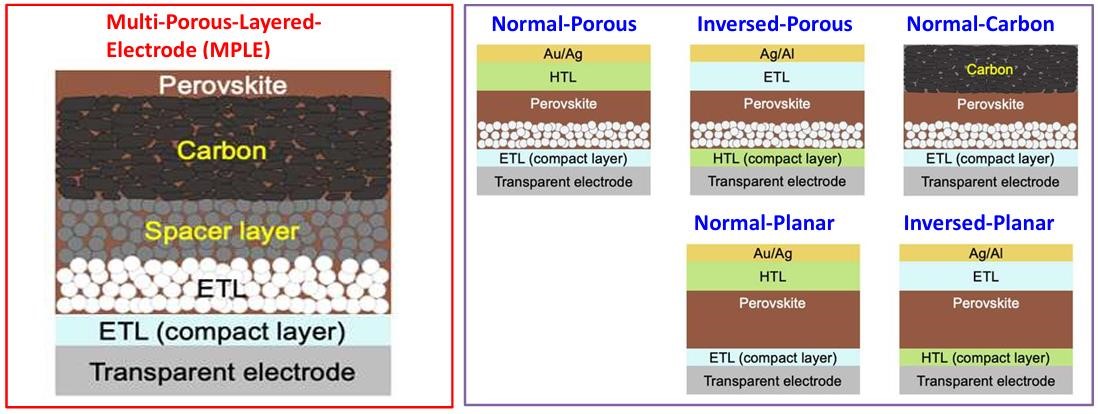
- The IAC already devised how to make PSCs with carbon electrodes that are durable enough for a 20-year warranty.
- The electrodes are made from a paste of multi-porous carbon with a surface electrical resistance of under 10 Ω, far below the 100 Ω in a typical conductive carbon paste.
- These electrodes exhibit strong durability against UV rays and perform well in laboratory stress tests in 85⁰C heat with 85% humidity, making the cells suitable for hot and humid climates in places like SE Asia and parts of Africa.
- IAC’s design does not contain indium and its PSCs can also be printed under normal atmospheric conditions, rather than a vacuum.
- CONTEXT: Indium is a byproduct of zinc smelting. Global refined production of about 1,000 tons per year is mostly in China and consumed in indium tin oxide for displays and other optoelectronic uses. Indium prices nearly doubled in Q1 this year.
- Recycling these PSCs is simple: chemical processing easily washes away perovskite crystals, leaving only the glass substrate that can be integrated into a new PSC.
- TAKEAWAY: MPLEs and other mesoscopic carbon-electrode architectures have been explored in PSCs for about 15 years, and they typically trade some peak efficiency for longer stability and easier, lower-cost processing.
However, many solar power buyers prioritize conversion efficiency over the hardware’s production cost. In the IAC’s case, the intriguing part is not the record conversion efficiency but the claimed electricity cost of just ¥10/ kWh. Whether this will hold up in larger-scale demos is yet to be seen, but this is a promising step.
Govt sets FIT/ FIP purchase prices for FY2026 onward
(Government statement, March 19)
- METI set the purchase prices for renewables under the FIT/ FIP for FY2026 onward.
- From H2 of FY2025, an initial investment support scheme (two-step setting) takes effect for residential and non-auction commercial rooftop solar to accelerate deployment without increasing public burden.
- Starting FY2027, ground-mounted commercial solar won’t be eligible for support.
- For geothermal, small/medium hydropower, and biomass power in FY2026, there are no changes from the previous year’s settings.
- CONTEXT: ANRE’s Procurement Price Calculation Committee reviews and recommends FIT/ FIP levels for renewable energy. It evaluates costs, market conditions, and policy goals to ensure proper pricing and expansion of renewables.
| Energy Type | Category | FIT/FIP Price (¥/ kWh) | Remarks | ||
| FY2025 | FY2026 | FY2027 | |||
| Solar | Rooftop – Less than 10 kW | 15 | 24 8.3 | 24 8.3 | FIT only Upper: initial 4 years Lower: after 5th year |
| Rooftop – 10 kW or more | 11.5 | 19 8.3 | 19 8.3 | FIT/FIP same Upper: initial 5 years Lower: after 6th year | |
| Ground – 10 kW to less than 50 kW | 10 | 9.9 | No support | FIT/FIP same | |
| Ground – 50 kW or more | 8.9 | 9.6 | No support | FIT/FIP same | |
| Ground – 250 kW or more | Bidding | Bidding | No support | FIP only | |
| Wind (onshore) | New – Less than 50 kW | 13 | 14 | 13.7 | FIT only |
| New – 50 kW or more | Bidding (13) | Bidding (14) | Bidding (13.7) | FIP only ( ) shows upper limit | |
| Replace | 12 | 13 | FIT/FIP same | ||
| Wind (offshore) | Embedded type | Bidding | Bidding | Bidding | FIP only |
| Floating type | 36 | 36 | 36 | FIT/FIP same | |
Sekisui and partners launch PSC demo in Chiba
(Company statement, 24 March)

- Sekisui Solar Film, TERRA, Chiba University, Chiba Bank, and Himawari Green Energy launched a 3-year demo involving film-type PSCs installed over a paddy field at one of the university’s campuses in Kashiwa.
- The project aims to evaluate the performance of the cells in agrivoltaics, and their impact on agricultural yield and methane emissions.
- CONTEXT: Since 2024, Sekisui and TERRA have been testing film-type PSCs in Sosa (Chiba Pref). Compared to silicon modules, PSCs offer advantages in agrivoltaics: higher transparency, better light transmission, and lower weight, making them well-suited for lightweight greenhouses, especially on small-scale farmland (which accounts for the majority of agricultural land in Japan).
- SIDE DEVELOPMENT:
- Tokyo Gas and Power Roll test low-cost PSCs
- (Company statement, 25 March)
- Tokyo Gas and Power Roll launched a one-year demo of low-cost PSCs to assess performance and durability.
- Power Roll has been developing PSCs that do not rely on indium, a critical metal that accounts for 40–60% of the cost of conventional PSCs. Instead, electrodes are formed on a microstructured film, reducing the risk of resource depletion.
- CONTEXT: In most PSCs, indium tin oxide is used as the transparent conductive oxide layer, providing both optical transparency and electrical conductivity.
Kansai Electric to build battery storage in Kyushu, to exceed 400 MW
(Company statements, March 25)
- Kansai Electric will participate in two new battery storage projects in Fukuoka and Kumamoto via JVs, expanding its grid-scale storage footprint.
- The project in Fukuoka will have 39 MW output (145 MWh capacity); the project in Kumamoto will reach 50 MW (175 MWh), bringing Kansai Electric’s total storage development to about 416 MW.
- Operations are scheduled for December 2028 and June 2029, respectively.
- CONTEXT: The expansion reflects rising demand for grid balancing as renewable penetration increases, particularly in Kyushu, where solar curtailment is an issue.
- TAKEAWAY: By expanding its BESS footprint outside of its home region to Kyushu and doing so at scale, Kansai Electric aims to position itself as a major regional player in the BESS market.
- SIDE DEVELOPMENT:
- Helios BESS project secures ¥5.4 billion green bond
- (Company statement, March 23)
- Financing of ¥5.4 billion was secured for the Helios BESS station in Hokkaido (50 MW/ 104 MWh) through a green project bond.
- HD Renewable Energy is the asset manager.
- CONTEXT: This is the first time in Japan that a bond is backed by grid-scale BESS. Helios is a merchant project trading its electricity via JEPX and EPRX.
- Aurora Energy Research did the financial simulation and cash flow analysis.
PowerX to expand battery production to large-scale containers
(Company statement, March 23)
- PowerX will expand battery production with its 10-foot BESS, “Mega Power 2500.”
- Production of 800 units/ year (2 GWh) starts in January 2027 at its plant in Okayama Pref. Together with its other site in Tamano (Okayama Pref) and a new plant in Hokkaido, total capacity could reach 7.5 GWh by 2030.
- SIDE DEVELOPMENT:
- PowerX to open a new battery plant in Hokkaido
- (Company statement, March 23)
- PowerX will open a new plant to produce its “Mega Power 2500” units in Tomakomai (Hokkaido), amid rising demand for BESS.
- The units will be supplied to BESS projects in Hokkaido and Tohoku region. Production of 800 units per year (2 GWh) is scheduled to begin in June 2027.
- PowerX also aims to add a second production line, as well as expanding into the production of containers for data centers.
- TAKEAWAY: PowerX decided to open a plant in Tomakomai due to its proximity to New Chitose Airport and the local seaport, decreasing transportation costs. But cost savings are also supported by proximity to large-scale projects. Tomakomai is the focal point for several large-scale BESS projects (18 to 90 MW) that are expected to be operational between 2027 and 2028. Several of them have sourced batteries from PowerX. Regarding data centers, while most facilities are in Tokyo, greater land availability in Hokkaido has attracted investor interest, illustrated by the Hokkaido Tomakomai AI Data Center, whose construction began in 2025. It is expected to become one of Japan’s largest, with a site area of 700,000 m² and power capacity exceeding 300 MW.
Sustech agrees with TESS Engineering to optimize assets by adding BESS
(Company statement, March 16)
- Sustech agreed with TESS Engineering to provide the “FIP Conversion × Battery Integration Model” to boost renewable energy assets’ value via BESS installation.
- The model aims to enhance profitability by:
- shifting part of the electricity generated during daytime to periods with higher market prices, capturing a higher adjusted premium under the FIP system;
- improve annual battery utilization rate, enabling faster investment recovery.
- SIDE DEVELOPMENT:
- Nichicon launches new residential BESS lineup
- (Company statement, March 12)
- Nichicon launched a new residential BESS product lineup, the “ESS-U5 Series.”
- These can be integrated with a household PV system. It charges during daytime and supplies stored electricity at night.
- It has two operating modes.
- Full-load mode: supplies power to all household appliances.
- Specific-load mode: supplies power only to selected appliances.
- SIDE DEVELOPMENT:
- Itochu and partners to develop five BESS stations
- (Company statement, March 19)
- Itochu, RS Asset Advisors, Hulic, and Fuyo General Lease agreed to develop five BESS projects by 2028, with a total capacity of 40 MWh.
Toray and partners develop high-efficiency organic solar cell with reduced voltage loss
(Company statement, March 23)
- Universities of Kyoto, Hiroshima, Tsukuba and Toray Research Center developed an OPV (Organic Photovoltaic) cell combining low voltage loss and high-efficiency generation compared to conventional OPVs, using the polymer PTNT1-F.
- CONTEXT: OPVs are next-gen lightweight and flexible cells composed only of organic matter with no harmful substances, contrary to silicon cells or PSCs.
- TAKEAWAY: Rigid organic polymers such as PTNT1-F have electrons over their structure, enabling light absorption and charge transport. But, conventional OPVs have a larger voltage loss and more limited power conversion efficiency on average (10-19%), while tandem PSCs could reach an above 30% rate.
Takenaka releases results of smart energy system in households
(Company statement, March 18)
- Takenaka released performance results of its I.SEM® (Intelligent Smart Energy Management) system. It improved self-consumption of solar power through optimized control of heat pump water heaters, using AI to forecast the following day’s solar power generation and building electricity consumption.
- Real-time data monitoring allows the system to respond to deviations from forecasts, enabling maximum utilization of surplus electricity and peak demand reduction.
- Results showed that excess power was reduced 38%, peak demand 22%, and heat pump water heater consumption 13%.
- TAKEAWAY: This system has the potential to impact energy efficiency and savings. In residential settings, water is typically heated at night, creating demand peaks; but solar power generation occurs during the daytime, resulting in significant surplus electricity.
- SIDE DEVELOPMENT:
- Tohoku Electric to promote energy-efficient water heaters
- (Company statement, March 16)
- Tohoku Electric will promote EcoCute household heat pump water heaters, offering a ¥1,000 monthly discount on electricity bills for two years to customers.
- CONTEXT: EcoCute systems use ambient air heat to produce hot water while consuming less electricity. This feature is useful in regions such as Tohoku and Niigata Pref, where hot water demand is higher due to colder climates.
Hanwha Japan obtains JC-STAR level 1 for power conditioners
(Company statement, March 24)
- Hanwha Japan obtained level 1 of JC-STAR certification for its extended power conditioner Q.READY® series that can be used for residential batteries and V2H (Vehicle To Home) systems.
- TAKEAWAY: JC-STAR seeks to strengthen protection against cyber threats. It also seems to operate somewhat for protectionist purposes, raising the bar for foreign players to enter the market. The govt has made JC-STAR certification mandatory starting April 2027 for all connected equipment that may be vulnerable to cyberattacks (including stationary BESS, residential batteries, and EMS).
GBP launches protective fences for solar power plants
(Company statement, March 13)
- GBP launched a lineup of protective fencing solutions for solar power plants in mountainous areas, on slopes, or on uneven terrain.
NEWS: WIND POWER AND OTHER RENEWABLES

Vena Energy scales down Karatsu wind project while adopting larger turbines
(Company statement, March 27)
- Vena Energy has finalized environmental approval for its planned Karatsu onshore wind project in Saga, with revisions to layout and scale following regulatory review.
- The project’s capacity has been reduced to a maximum of 45 MW from an earlier 54 MW plan, while turbine numbers were cut from 13 to 7 by switching to larger 6.5 MW units. The development area was also reduced from about 427 ha to 293 ha.
- TAKEAWAY: The redesign reflects efforts to minimize environmental impact and highlight the growing role of optimization in domestic onshore wind development. Japan’s onshore wind pipeline is increasingly shaped by environmental and permitting constraints, pushing developers toward fewer, larger turbines.
Itochu-led onshore wind project begins commercial operations under FIT
(Company statement, March 25)
- A consortium led by Kanadevia, Itochu and Tokyo Century began commercial operations at Mutsu Ogawara onshore wind farm in Aomori under the FIT scheme.
- The project – 15 turbines of 4.3 MW each – has a 57 MW grid capacity.
- Itochu and Kanadevia both own 40%; Tokyo Century holds the rest.
JR East and J-Power launch hydropower PPA to supply railway assets
(Company statement, March 27)
- JR East and J-Power signed a PPA to supply renewable electricity from the 2.2 MW Suetsuzawa hydropower plant in Niigata to railway stations and commercial facilities.
- CONTEXT: The deal marks JR East Group’s first PPA using hydropower and emphasizes local consumption of renewable energy.
- TAKEAWAY: The project reflects a growing trend of “local production for local consumption” PPAs, linking regional renewable assets with infrastructure operators to support decarbonization and regional revitalisation. Hydropower is often overlooked in corporate PPAs due to its smaller capacities, but it can be a stable, local baseload option.
NEWS: NUCLEAR ENERGY

NRA plans to extend deadline for NPP anti-terrorism facilities
(JAIF, March 27)
- The NRA proposed to extend the deadline for installing anti-terrorism facilities at nuclear power plants.
- Previously, utilities were required to complete facilities within five years of construction plan approval. The new rule would allow five years from the start of operation.
- If approved at an NRA meeting on April 1, the rule takes effect this year.
- CONTEXT: This rule was introduced after the Fukushima disaster. Of 12 reactors subject to the rule, only one – Oi Unit 4 – has completed the facility on time.
- TAKEAWAY: The rule change was proposed because many NPPs face delays in completing the required facilities due to labor shortages and other issues. As a result, several NPPs face shutdowns or delays in restarting operations, such as Onagawa NPP Unit 2, operated by Tohoku Electric. Under the new rule, it would have more time to complete construction, thus allowing more operational time.
Kyushu Electric’s Sendai NPP Unit 2 to restart commercial operations
(Company statement, March 24)
- Kyushu Electric’s Sendai NPP Unit 2 will return to normal operation after periodic inspection. The facility is set to reactivate its reactor in late March.
- During this maintenance period nuclear fuel was replaced.
- The facility should resume full-scale commercial operations by April 28.
NEWS: TRADITIONAL FUELS

Tokyo Gas signals potential LNG resale amid Middle East supply disruption
(Sankei Shimbun, March 25)
- Tokyo Gas said it may supply surplus LNG to other utilities at market prices to help balance supply and demand, President Shinichi Sasayama indicated.
- Potential buyers include JERA, Tohoku Electric, and KEPCO, which are facing disruptions to LNG procurement from Qatar due to the Iran conflict.
- Sasayama noted that surplus volumes are not constant but could be made available opportunistically.
- CONTEXT: Tokyo Gas sources over 90% of its LNG under long-term contracts and has minimal exposure to Qatar. In FY2024, it imported about 11 million tons, of which roughly 4 Mt were resold overseas. Surplus cargoes typically emerge during periods of weak domestic demand, such as mild winters.
- By contrast, Osaka Gas said it has already committed surplus LNG to existing customers, limiting its ability to redirect volumes.
- TAKEAWAY: The disruption highlights the growing role of Japanese firms as portfolio players in global LNG markets, rather than purely domestic suppliers. With diversified procurement and flexible resale capabilities, companies such as Tokyo Gas are positioned to arbitrage regional supply shocks. This flexibility is uneven across the sector, however, depending on contract structures and existing sales commitments, as illustrated by Osaka Gas.
More broadly, the episode underscores how Japan’s upstream diversification – spanning Australia, the U.S., and Southeast Asia – provides a buffer against Middle East risks. It also points to a structural shift: by 2030, Tokyo Gas aims to expand third-party LNG sales by up to 5 million tons per year, reinforcing its role as a regional supplier. - SIDE DEVELOPMENT:
- SE Asia seeks Japan oil support as Middle East war disrupts supply
- (Asia Nikkei, March 27)
- Vietnam and the Philippines asked Japan for oil supply support, including potential access to its strategic reserves, as the Iran war tightens regional fuel availability.
- CONTEXT: Japan holds reserves covering more than eight months of consumption, compared with 45 days in the Philippines, where an emergency has been declared.
- Tokyo is considering assistance but will prioritize domestic supply.
- The requests highlight mounting strain in Asian fuel markets as soaring prices, tanker costs and insurance premiums restrict access to spot cargoes.
- TAKEAWAY: The Philippines relies on the Middle East for 98% of crude oil imports, which prompted President Marcos to declare a state of energy emergency due to street protests over doubling of gasoline prices in less than a month. With energy security becoming regionalized, Japan’s large oil reserves position it as a backstop for Asia, but it has to tread carefully not to expose its own energy supply vulnerabilities.
Cyclone disrupts Australian LNG exports, tightening global supply
(AFR, News.com Australia, March 27)
- A tropical cyclone forced shutdowns at major LNG facilities in Western Australia, curbing output from Woodside’s North West Shelf, as well as Chevron’s Gorgon and Wheatstone projects.
- Australia’s affected projects accounted for nearly half of the country’s exports last month and about 8% of global LNG supply.
- With offshore platforms shut, at least one production unit at Gorgon was taken offline. In Darwin, Santos’ LNG plant was offline for upgrades. The status of INPEX’s Ichthys LNG operations in Darwin, which rely on a gas field offshore close to the cyclone’s path, remained unclear.
- CONTEXT: The disruptions come as Qatar’s LNG exports remain halted following attacks and the closure of the Strait of Hormuz, removing a major source of supply for Asian buyers. Asian LNG prices have surged more than 90% since late February.
- The simultaneous outages are likely to intensify competition for spot cargoes in Asia.
INPEX to prioritize Azerbaijan crude shipments to Japan amid supply risks
(NHK, March 27)
- INPEX will prioritize shipments of crude oil from Azerbaijan to Japan, redirecting volumes previously sold to Europe in response to rising procurement risks linked to the Middle East crisis.
- The company holds stakes in Caspian Sea oil fields producing about 780,000 b/d, with its equity share at roughly 8%.
- CONTEXT: The shift highlights efforts by Japanese firms to rebalance crude sourcing away from the Middle East by leveraging upstream equity oil in alternative regions.
- SIDE DEVELOPMENT:
- INPEX acquires stake in shale gas assets in Australia
- (Company statement, March 25)
- INPEX will take stakes in three onshore gas blocks in Australia’s Beetaloo Basin from Daly Waters Energy, its entry into the shale development area.
- The firm will take 11.25% stakes in the FSDA North and South blocks, and 20% in the BCD block, with an option to raise its BCD stake to 43.75%.
- CONTEXT: The Beetaloo Basin is one of Australia’s most lucrative shale gas areas, with pilot production to begin supplying 40 terajoules per day from Q3 2026.
- The move could support both domestic gas supply in Australia’s Northern Territory and future feedstock for INPEX’s Ichthys LNG plant.
Shizuoka Gas to invest $100 million in LNG company
(Company statement, March 26)
- Shizuoka Gas will invest $100 million in MidOcean Energy, an LNG company managed by global energy investor EIG.
- MidOcean owns stakes in LNG projects in Australia, Canada, and Peru, and covers the full value chain from gas production to liquefaction, transport, and trading.
- Shizuoka Gas is expanding its natural gas and LNG operations in Japan and overseas, building on past investments such as a U.S. shale gas project.
- CONTEXT: Last week, Idemitsu Kosan entered the LNG business with an investment of $500 million in MidOcean. On March 12, JERA said it was selling its stakes in two Australian LNG projects to MidOcean.
Idemitsu Kosan’s Vietnamese refinery secures oil for April-May
(Nikkei, March 27)
- Vietnam’s Nghi Son Refinery, led by Idemitsu Kosan, secured enough crude oil to continue operations through the end of May.
- The company said it found alternative supply sources, though it did not disclose where the oil will come from.
- CONTEXT: The refinery is owned by Idemitsu Kosan, PetroVietnam, and Mitsui Chemicals. It processes about 200,000 bpd, using Kuwaiti crude and supplies 30–40% of Vietnam’s petroleum demand.
JAPEX begins drilling at exploratory well in Hokkaido
(Company statement, March 25)
- JAPEX began drilling an exploratory well offshore in the Hidaka area of Hokkaido to confirm the presence of natural gas.
- The drilling site is about 50 km offshore at a depth of 1,070 meters, roughly 5 km northwest of a site explored in 2019.
- METI subsidizes the project, covering up to 50% of drilling costs.
(Government data, March 25)
- As of March 22, the LNG stocks of 10 power utilities were 2.39 Mt; up 4.8% from the previous week (2.28 Mt); up 12.7% from end March 2025 (2.12 Mt), and up 19.5% from the 5-year average of 2 Mt.
NEWS: CARBON CAPTURE & SYNTHETIC FUELS

Toho Gas launches regional CO2 recycling e-methane supply system
(Company statement, March 24)
- Toho Gas, AISIN, and DENSO launched Japan’s first demo of a “regional CO2 recycling e-methane supply system.”
- Regional CO2 recycling means the same entity emits and reuses CO2 to produce e-methane, improving traceability and enabling it to be treated as zero-emission at the point of use, supporting early international recognition.
- CO2 captured at AISIN and DENSO plants is transported to Toho Gas’s Chita facility to produce emethane, which is then supplied back via the gas grid.
- CONTEXT: The firms have jointly studied CO2 recycling since 2022 and shared findings via METI forums, including the methanation public-private council. This demo is a new step toward building regional CO2 recycling.
- TAKEAWAY: While this project is a significant step forward, several key challenges remain for e-methane’s fullscale deployment, such as production cost, policy design, and supply constraints. E-methane is more expensive than natural gas due to high hydrogen and production costs. Clear rules for emissions accounting, traceability, and certification are also needed, as well as an expanded supply of low-cost hydrogen.
Cosmo Energy agrees with Nihon Univ to produce next-gen biofuel
(Company statement, March 16)
- Cosmo Energy HD agreed with the College of Industrial Technology in Nihon University (Chiba Pref) to do R&D on bio-isobutanol production using non-food feedstocks, through saccharification and sugar fermentation.
- CONTEXT: Bio-isobutanol is a next-gen biofuel produced through the fermentation of renewable organic materials (sugars, starch). Unlike ethanol, it can be blended with gasoline at any ratio and used in existing engines without modification. This agreement was signed to expand Cosmo Energy’s biofuel portfolio beyond ethanol.
- Bio-isobutanol is expected to be used in the production of SAF, chemicals, and as a substitute for diesel fuels.
- TAKEAWAY: The bio-isobutanol market is still in development. However, driven by growing demand for green chemistry (e.g., for additives and coatings) and, above all, by the increasing number of SAF projects, bioisobutanol could be commercialized by the early 2030s in Japan. Just like Cosmo Energy, Sojitz also signed an agreement in 2021 with Green Earth Institute to conduct research on this biofuel. Despite advantages over bioethanol, the main challenge is isobutanol’s toxicity, which makes it difficult for microorganisms to survive during production, and thus delays commercialization.
- SIDE DEVELOPMENT:
- Kuribayashi Steamship and Nippon Biofuel test next-gen biofuel for sea vessels
- (Company statement, March 24)
- Kuribayashi Steamship and Nippon Biofuel launched a demonstration using a biofuel based on SVO (Straight Vegetable Oil) extracted from jatropha cultivated in Ghana by Nippon Biofuel.
- The fuel, blended with heavy fuel oil, will be used to power vessels operated by Kuribayashi Steamship.
- CONTEXT: Jatropha is a drought-resistant plant that can be used as a biofuel feedstock. Although the yield is generally lower than those of other biofuel feedstocks such as palm or pongamia, it remains of interest in this particular project as SVO can be produced through a simpler manufacturing process. Heavy fuel oil is a residual product obtained from crude oil distillation. It is a high-viscosity, high-density fuel mainly used in marine applications.
ANALYSIS
BY JOHN VAROLI
Persian Gulf War Fuels Global Energy Shift, with U.S. Set to Dominate
March 2026 has seen the largest energy supply disruption in modern history. The U.S.Israeli war on Iran is curtailing energy production across the Persian Gulf, destabilizing markets, and effectively closing the Strait of Hormuz, via which 20% of global oil and LNG supply usually flow.
What President Trump presented as a short conflict now resembles a protracted confrontation. Iran is utilizing asymmetric warfare across the Gulf region, raising the risk of prolonged disruption to energy infrastructure and shipping.
With hostilities and instability likely to persist for years, oil and gas importers are scrambling to secure other supplies to cover immediate shortfalls. The last of Middle East shipments to Japan to transit the Hormuz – that set sail before the Feb 28 strikes – are due to arrive by early April. Japan has begun releasing oil from its vast national stockpiles, but refiners need more volumes.
Still, the longer-term implications for Gulf suppliers – and for oil market forces such as OPEC – may prove most significant. The crisis is setting in motion a structural shift in Asian energy procurement toward alternative sources. U.S. oil and gas companies will benefit, but they are not alone. Other exporters – including Canada and Norway – also seek to capture new demand.
For Asian consumers including Japan, the challenges will be logistical and technical (adapting refineries to process different crude grades). But above all, it will be strategic. Greater reliance on U.S. energy, for example, will deepen Washington’s leverage over trade, security arrangements, and broader economic ties.
Historic energy shock
Over the past four weeks, Iranian retaliation – including attacks on tankers and energy export infrastructure in Saudi Arabia, the UAE, Iraq, Kuwait, and Qatar – has reduced Middle Eastern output and exports by an estimated 10 million barrels per day (bpd). Qatar’s LNG industry is expected to remain offline for several months, with some facilities requiring years to fully restore. Qatar accounts for roughly 20% of global LNG supply.
The International Energy Agency (IEA) has described the crisis as the most severe shock since the 1973 Arab oil embargo. Brent crude briefly exceeded $120 per barrel and has since stabilized around $100.
Japan seeks to reroute shipments away from Hormuz, said METI minister Akazawa, while aiming to secure “additional alternative supplies.” But such measures are limited in scope.
IEA director Fatih Birol has called the crisis “the greatest threat to global energy security in history,” adding that the current loss of oil supply is greater than the 1970s oil crises, as well as the loss of natural gas supply that followed sanctions against Russia due to the war in Ukraine. In response, IEA member countries are undertaking a record release of strategic reserves, estimated at around 400 million barrels.
However, emergency stocks cannot offset sustained supply losses indefinitely. For major Asian importers – China, India, Japan, South Korea, and Singapore – the Persian Gulf has shifted from a core supply base to a major liability and source of risk.
Tanker insurance costs have surged, shipping routes are being diverted around Africa, and cargoes have been delayed or cancelled. Asian buyers face industrial supply chain disruptions and rising fuel procurement costs.
Accelerating global diversification
The current crisis reinforces a long-standing vulnerability. Since the 1973 oil embargo – enacted due to Washington’s support of Israel – the Persian Gulf has seen: the 1979 Iranian Islamic Revolution, the Iran-Iraq War tanker attacks in the 1980s, the 1990-91 U.S.-Iraq Gulf War, the U.S. invasion of Iraq in 2003 and U.S. invasion of Syria in 2014.
That reliance is pronounced in Asia, which accounts for roughly 80% of Gulf oil and LNG exports. Japan’s crude imports illustrate the trend: Middle East dependence has risen from about 82% in 2015 to nearly 96% in 2024, with little room for supply flexibility.
Japan’s oil imports
| Year | Middle East total | Saudi Arabia | UAE | Qatar | Kuwait | Iran | Non-Middle East total |
| 2015 | 82.5% | 33.8 | 25.3 | 8.4 | 7.8 | 5 | 17.5% |
| 2020 | 92% | 42.5 | 29.9 | 8.3 | 8.6 | – | 8% |
| 2023 | 94.7% | 39.4 | 40.9 | 4.5 | 8.2 | – | 5.3% |
| 2024 | 95.9% | 40.1 | 43.6 | 4.1 | 6.4 | – | 4.1% |
China, with its vast strategic oil reserves and growing renewables capacity, is somewhat insulated from the energy crisis for now, but it still seeks alternatives. India has shortened workweeks across the country as fuel shortages mount and even airlifted fuel. Meanwhile, Europe is assessing the potential to reactivate coal capacity.
In parallel, buyers are accelerating efforts to secure supply from outside the Gulf, including the U.S., Canada, Brazil, Guyana, West Africa, and the North Sea. Guyana remains one of the fastest-growing producers globally, with output expected to approach 1 million bpd by 2027.
Canada and Norway are also positioning themselves as key alternative suppliers. Canadian officials have framed the crisis as a turning point for energy security, with producers accelerating both oil and LNG export capacity. LNG Canada, which began operations last year, is expected to help lift exports to around 50 million tons per year by 2030.
Norway, already operating near capacity, is pursuing expansion projects, including developments in the Barents Sea. Equinor aims to increase international production roughly 25% by 2030, reinforcing its role as a key European supplier.
Among these alternatives, U.S. crude and LNG remain particularly competitive due to scale, reliability, and established export infrastructure. Cargoes can be shipped from the Gulf Coast to Asia via the Panama Canal, supported by secure maritime routes.
U.S. shale production also offers flexibility, with shorter investment cycles allowing producers to respond quickly to price signals. Asian refiners, traditionally optimized for Middle Eastern grades, are weighing whether switching to U.S. blends is technically and economically viable.
The crude Japan buys is linked to the Dubai benchmark, reflecting its heavy reliance on
Mid Eastern supply. But that model is under strain. Premiums for Middle Eastern grades – and for similar heavy, sour alternatives such as Malaysia’s Labuan, Indonesia’s Minas and Vietnam’s Bach Ho – have surged to $10–15 per barrel from around $1, according to Bloomberg.
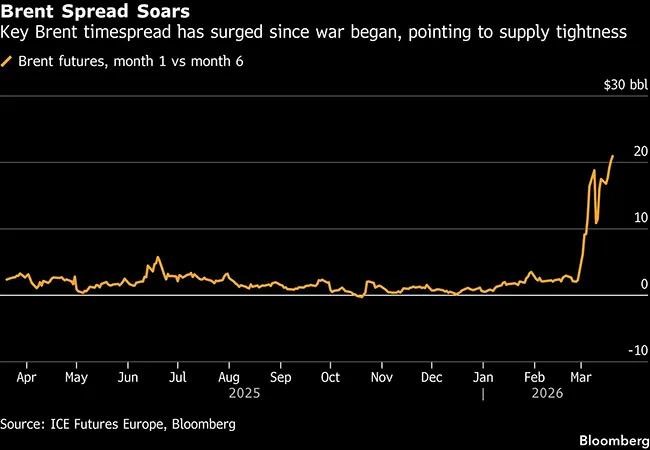
U.S. crude delivered to Asia is trading at premiums of $12–15 per barrel on an arrival basis. Despite higher costs and technical constraints, Asian refiners have purchased around 60 million barrels for April loading, the highest in three years.
These numbers are likely to rise. Last week, Kito Shunichi, chairman of the Petroleum Association of Japan, said the nation’s companies should secure more long-term supplies of U.S. crude, especially from Alaska, to counter the Middle East reliance. Japanese refiners including ENEOS, Idemitsu, Cosmo Energy, and Taiyo Oil are reportedly exploring imports from the U.S. without going as far as a full move away from Persian Gulf oil.
Both the METI minister Akazawa and Foreign Minister Motegi have recently publicly spoken of the potential benefits to Japan’s energy security from buying Alaska oil.
U.S. prepared for dominance
Unlike producers in the Persian Gulf, U.S. oil and gas operations remain unaffected by conflict. Since 2018, the U.S. has been the world’s largest oil producer, with crude output averaging roughly 13.2–13.6 million bpd. Including natural gas liquids and processing gains, total petroleum supply reaches approximately 21–22 million bpd.
Prior to the Iran conflict, U.S. crude exports were around 4 million bpd. With Middle Eastern flows reduced by an estimated 10 million bpd, U.S. producers are expected to play a central role in filling the gap.
At $100+ per barrel, each additional exported barrel adds massive cash flow. Majors like Exxon project Permian output scaling to 2.5 million bpd by 2030, fueled by current prices.
The Permian accounts for roughly 44% of U.S. oil production. Its short-cycle enables rapid supply responses compared to conventional projects. ExxonMobil is forecasting double-digit growth in 2026, while other operators, including Occidental and Permian Resources, are planning incremental increases. Basin-wide growth is expected to remain steady.
On the LNG side, U.S. export terminals along the Gulf Coast are ramping up utilization, with additional capacity under construction. Exports are projected to rise from 11.9 billion cubic feet per day (bcfd) in 2024 to over 21.5 bcfd by 2030.
Venezuela as part of the equation
Developments in Venezuela add another layer to global supply dynamics. Following U.S. intervention earlier this year, Washington has expanded access to Venezuelan crude through licensing arrangements with selected companies.
Venezuela holds the world’s largest proven oil reserves (over 300 billion barrels), though production remains low at around 1 mbpd due to U.S. sanctions. Some forecasts suggest exports could approach 900,000 bpd under revised conditions.
By facilitating these flows, the U.S. is increasing available supply to its refiners and partners, providing additional flexibility in easing reliance on Gulf producers, balancing markets, and claiming greater trade and geopolitical clout.
The post-Gulf era
The 2026 crisis marks a critical juncture in global energy markets. With the Iran war pushing global prices skyward, U.S. exporters are profiting and, in the process, reconfiguring the risk calculus for Asian buyers. Oil and LNG markets may no longer pivot on Riyadh or Qatar but, rather, on Houston and Washington.
While OPEC producers remain significant, their ability to stabilize markets is constrained by geopolitical conflict and supply outages. Non-Gulf producers – led by the U.S., and including Canada, Norway and emerging suppliers such as Guyana – are gaining market share.
The result is not the full replacement of one dominant supplier group with another, but a more fragmented and security-driven system in which buyers prioritize reliability over cost. This implies higher insurance costs, longer trade routes, new oil infrastructure investments, and greater state involvement in energy markets.
The fact that one of Japan’s first investments under the $550-billion U.S. trade agreement is in an oil export terminal is telling.
When in early 2025 Trump promised to “unleash American energy”, it was framed as domestic policy. In the context of the Venezuela and Iran conflicts, Trump’s policy now appears as an attempt to overhaul the existing global energy system. Asian consumers are being pushed to diversify away from the Persian Gulf – and toward the Gulf of America.
Is this the age of U.S. energy dominance?
ANALYSIS
BY JAPAN NRG TEAM
METI Sets Up Group to Design System for Simultaneous Power Market
After nearly three years of debate, government discussions on creating a platform to integrate Japan’s fragmented short-term power markets are moving from concept to design.
While the 21st meeting of METI’s committee studying the introduction of a simultaneous electricity market ended without much fanfare, beneath the procedural tone a key development emerged: the proposal to establish a dedicated working group to design the system architecture. This signals that the policy process has entered a new phase.
The group, expected to begin work in FY2026, will focus on technical feasibility – particularly the design of a complex clearing system capable of coordinating energy and balancing supply in real time. This suggests that years of conceptual debate will now give way to detailed system development, with a decision on implementation likely after a technical verification phase around FY2026–2027.
The policy driver is straightforward. As variable renewables expand, today’s separated markets for spot, intraday and balancing procurement can create conflicting demands for the same flexible capacity. The result is tighter supply-demand conditions, increased volatility, and congestion. The simultaneous electricity market, in theory, offers a way to improve coordination, transparency and system efficiency.
So what exactly are Japan’s energy planners trying to build? Japan NRG reviewed the latest policy discussions.
Reforms continue a decade after liberalization
Nearly ten years after full liberalization of Japan’s electricity retail market, policymakers are still refining the balance between competition, investment signals, and system stability.
The current structure – centred on JEPX spot and intraday trading alongside the EPRX balancing market – was designed to introduce price competition and improve efficiency. However, the rapid expansion of renewable energy has exposed structural limitations. Separate markets for energy (kWh) and balancing capacity (ΔkW) can create conflicting incentives, particularly during periods of tight supply.
Episodes such as the winter 2020 price spike, as well as tighter conditions in the balancing market since its full rollout in 2024, have highlighted these tensions. As renewable penetration increases, so too does the need for flexible capacity — and for market mechanisms that can allocate it efficiently without amplifying volatility.
Against this backdrop, METI’s simultaneous market concept represents an attempt to redesign short-term market operations as a more coordinated system, while still preserving market-based price formation.
What it’s meant to do
Japan’s simultaneous electricity market is being designed as an integrated short-term trading platform. Rather than trading energy and flexibility in parallel systems and reconciling mismatches later, the new platform would calculate a single, consistent outcome – determining which resources run, at what output, and at what price.
In practical terms, this means combining bid data with system constraints, such as transmission limits, to produce an operationally feasible plan. METI emphasises that this would remain a market-based mechanism, not a centralized dispatch system.
The rationale is straightforward: as renewables expand, fragmented markets risk competing for the same flexible resources. A unified system aims to reduce these inefficiencies and improve coordination under tight conditions.
How it will work
The market would operate in multiple stages, not only day-ahead but also in successive time-ahead rounds closer to real time. This would allow the system to adjust to updated demand and renewable generation forecasts.
At each stage, the platform would calculate a feasible dispatch plan – including start/stop decisions and output levels – while simultaneously determining prices and settlements.
At least initially, optimization is expected to focus on constraints in the high-voltage (HV) transmission network. However, coordination with distribution-level congestion, where many distributed energy resources (DERs) are connected, remains an unresolved issue.
From concept to implementation
Discussion within METI’s main advisory committee has evolved from defining the concept to addressing practical implementation challenges and later to phased implementation.
Key agenda items were set by the second committee meeting, in September 2023, when METI set up technical verification tracks for the core calculation logic and for pricing and settlement approaches (often referenced as verification A and B in committee reports).
More recently, this evolved into more practical market design questions, which METI wants expressed in “ordinary business language.” These include:
- the scope of bidding and data disclosure requirements;
- how market results link to balancing group (BG) planning;
- the structure of uplift and cost recovery mechanisms;
- the treatment of pumped storage and distributed resources;
- and the framework for market monitoring and compliance.
To advance this work, METI has proposed creating a dedicated business design and technical research group, comprising academics, market participants, and system vendors. While detailed technical discussions are expected to take place in smaller, largely non-public sessions due to commercial sensitivities, METI’s Simultaneous Electricity Market Study Group (同時市場の在り方等に関する検討会) – continues to oversee the discussions and make key policy decisions.
Will it work?
With the focus shifting to implementation, the central issue is whether such a system can be built and operated in practice.
The proposed platform requires a sophisticated IT architecture capable of handling bid submission and data management, running large-scale optimization to determine dispatch, calculating prices and settlements, and supporting publication, monitoring, and integration with existing systems – all within tight operational timeframes.
Among these elements, the clearing and commitment function is widely regarded as the most challenging. It must process large volumes of data, incorporate network constraints, and produce results quickly enough to support repeated market runs closer to real time. Stakeholders have already raised concerns about whether this can be achieved with sufficient speed, transparency, and reliability.
In response, METI has outlined a phased roadmap. The first stage centers on detailed business design, alongside parallel work to determine the future market operator and to conduct technical feasibility studies. This will be followed by a second phase focused on defining system requirements. Only after these steps will a final decision be made on whether to proceed with full implementation.
Timeline for Japan’s simultaneous electricity market (indicative)
| Phase | Timing | Key activities | Output / decision point |
| Concept development | 2023–2025 | Policy discussions within METI’s Simultaneous Electricity Market Study Group; definition of market concept and objectives | Conceptual framework established |
| Phase 1: Business design & technical research | FY2026 (Apr 2026–Mar 2027) | Detailed market design; selection of market operator; technical feasibility studies (incl. clearing system); establishment of dedicated working group | Interim report (around March 2027) |
| Phase 2: System requirements definition | Post-FY2026 | Specification of system architecture, operational rules, and implementation requirements | Readiness for implementation decision |
| Final decision | TBD (postverification) | Government evaluation of feasibility, costs, and market impact | Go / no-go on market introduction |
Conclusion
Japan is not entering uncharted territory. Sophisticated co-optimized power markets already operate abroad, most notably in the U.S., where PJM’s market clears energy and ancillary services together while incorporating transmission constraints. In fact, METI’s plans for the simultaneous electricity market are inspired by the PJM.
But overseas examples are not a guarantee of smooth replication. The regional PJM system serves more than 67 million people; Japan’s national power system covers 124 million. This means, technical decisions will need to adapt to an even bigger system, with its own institutional and grid constraints.
More of a risk, however, may not even be technical. If the design and procurement process drags on, then the market could be overtaken by the very changes it is meant to manage: rising renewables penetration, tighter balancing needs, more DER on distribution networks, and a potentially narrower margin for error in capacity planning.
That would leave Japan’s energy planners trying to solve yesterday’s coordination problem with tomorrow’s IT system.
ASIA ENERGY REVIEW
BY JOHN VAROLI
A brief overview of the region’s main energy events from the past week
Australia / Fuel crisis
PM Albanese said the country’s fuel supply remains “secure” as prices soar and despite reports of panic buying and petrol stations running dry since the start of the Iran war.
Australia / Solar
Experts say Australia’s energy storage market stands at a “critical inflexion point”, where the rapid growth of rooftop solar and home batteries “threatens to fundamentally undermine” the business case for utility-scale generation, forcing developers to rethink project economics.
China / Nuclear
China and the International Atomic Energy Agency agreed to deepen cooperation on the peaceful use of nuclear technology, with a focus on development across the Global South.
China / Oil & Gas
The Philippines and China resumed high-level talks this week over the disputed South China Sea, exploring preliminary steps toward oil and gas cooperation.
Energy crisis
Oil industry executives at CERAWeek in Houston said the energy crisis is bigger than many understand and prices are unlikely to return to pre-war levels soon. The disruption to jet fuel, diesel and gasoline is even bigger. Shortages ripple across Asia and will hit Europe by April.
India / Energy crisis
The govt said the country faces downside risks to its growth forecast of 7% to 7.4% for FY2026, due to higher energy costs and supply disruptions stemming from the Iran war.
India / Fuel tax
India lowered fuel taxes in a bid to protect consumers from rising energy prices. The govt was forced to choose between drastically increasing fuel prices amid the crisis or taking a “hit on its own finances” to protect buyers.
South Korea / Fuel crisis
PM Kim Min-seok said the govt must prepare for “worst-case scenarios” over the Iran war, and will set up an emergency economic task force to coordinate cross-ministerial efforts.
Taiwan / Fuel crisis
Taiwan has been targeted by a wave of online disinformation claiming the nation’s gas supplies would soon be depleted due to disruptions from the Iran war.
Taiwan / Offshore wind
Taiwan opened its next offshore wind auction, with 3.6 GW up for grabs. The govt said applications will be accepted until Sept 30.
Disclaimer
This communication has been prepared for information purposes only, is confidential and may be legally privileged. This is a subscription-only service and is directed at those who have expressly asked K.K. Yuri Group or one of its representatives to be added to the mailing list. This document may not be onwardly circulated or reproduced without prior written consent from Yuri Group, which retains all copyright to the content of this report.
Yuri Group is not registered as an investment advisor in any jurisdiction. Our research and all the content express our opinions, which are generally based on available public information, field studies and own analysis. Content is limited to general comment upon general political, economic and market issues, asset classes and types of investments. The report and all of its content does not constitute a recommendation or solicitation to buy, sell, subscribe for or underwrite any product or physical commodity, or a financial instrument.
The information contained in this report is obtained from sources believed to be reliable and in good faith. No representation or warranty is made that it is accurate or complete. Opinions and views expressed are subject to change without notice, as are prices and availability, which are indicative only. There is no obligation to notify recipients of any changes to this data or to do so in the future. No responsibility is accepted for the use of or reliance on the information provided. In no circumstances will Yuri Group be liable for any indirect or direct loss, or consequential loss or damages arising from the use of, any inability to use, or any inaccuracy in the information.
K.K. Yuri Group: Hulic Ochanomizu Bldg. 3F, 2-3-11, Surugadai, Kanda, Chiyoda-ku, Tokyo, Japan, 101-0062.