
WEEKLY
May 25, 2026
ANALYSIS
CAN A TINY PACIFIC ISLAND SOLVE JAPAN’S NUCLEAR WASTE DISPOSAL ISSUES?
- Finding a long-term storage site for nuclear waste is a major obstacle to advancing nuclear power in Japan. Since the early 2000s, the state hoped that cash-strapped municipalities would volunteer. This strategy yielded few candidates.
- Now, Tokyo is surveying an uninhabited island far in the Pacific.
JC-STAR IN RENEWABLES: JAPAN’S NEW REGULATORY APPROACH TO IoT CYBERSECURITY
- The energy sector has long been a target for cyberattacks. Under new rules, JC-STAR, a state-backed cybersecurity certification scheme, will be mandatory for projects involving interconnected solar, wind, battery storage, and fuel-cell equipment.
- While this imposes additional costs and burdens on developers and manufacturers, the framework could strengthen the sector’s resilience and supply-chain transparency.
ASIA PACIFIC REVIEW
This column provides a brief overview of the region’s main energy events from the past week
NEWS
- Japanese experts question 1.5°C target amid renewed energy security fears
- Summer power demand to rise on hot weather
- ASEAN praises AZEC, but wants Japan to be more than energy tech supplier
- Japan steps up domestic and international response to supply chain constraints
- Government announces electricity supply-demand measures for FY2026 summer
- Sumitomo Electric wins record order from German grid operator
- Toyota Tsusho commits to 100% renewable electricity and joins RE100
- Green bond eligibility to expand to EV batteries, hydrogen turbines
- KHI partners on liquefied hydrogen supply chain in Amsterdam
- Daiwa Securities to invest ¥100 bln in BESS
- Firms establish PSC promotion group
- Japan to pilot use of PSCs at defense bases
WIND POWER AND OTHER RENEWABLES
- Japan, Singapore seek to develop floating wind technology
- Invenergy wins financing for Ibaraki project
- Hokkaido Gas and HRO start tests of hot spring-associated gas for cogeneration
- Tohoku Electric restarts Onagawa Unit 2
- FEPC allocates more staff to Rokkasho review
- INPEX inks supply deals from Abadi LNG
- Brazil offers additional crude exports to Japan
- Idemitsu tanker transits Strait of Hormuz
CARBON CAPTURE & SYNTHETIC FUELS
- CCS Business Law enters full enforcement
- Idemitsu invests in U.S. carbon removal tech
- Cosmo Oil to develop tech for solid carbon retrieval with molten salt electrolysis
EVENTS
June 3 South Korea – Local Elections
June 3-4 Kyushu Innovation Week / Kyushu GX Decarbonization Expo @ Marine Messe Fukuoka
June 3-5 AXIA EXPO 2026 (Hydrogen and Ammonia Next-Generation Energy Exhibition/Next-Generation Smart City Exhibition / GX Innovation Exhibition) @ Aichi Sky Expo
June 9-11 APAC Wind Energy Summit @ Hanoi, Vietnam
Jun 11-Jul 19 FIFA World Cup
June 15-17 G7 Summit @ Evian, France
June 23-25 “Summer Davos” in Dalian, China
September 14-18 IAEA General Conference 2026
October International Maritime Organization –
Net-zero Discussions
Nov 2-5 ADIPEC 2026 @ Abu Dhabi
Nov 3 U.S. Midterm Elections
Nov Publication of International Energy
Agency – World Energy Outlook 2026
Nov 18-19 Asia-Pacific Economic Cooperation –
Leaders Meeting @ Shenzhen, China
PUBLISHER
K. K. Yuri Group
Editorial Team
Yuriy Humber (Chief Editor)
John Varoli (Senior Editor, Americas)
Kyoko Fukuda (Data, Events)
Magdalena Osumi (Renewables & Storage)
Filippo Pedretti (Thermal, CCS, Nuclear)
Tetsuji Tomita (Power Market, Hydrogen)
Aglaé Bange (Renewables and Biomass)
George Hoffman (Sales, Business Development)
Tim Young (Design)
SUBSCRIPTIONS & ADVERTISING
Japan NRG offers individual, corporate and academic subscription plans. Basic details are our website or write to subscriptions@japan-nrg.com
For marketing, advertising, or collaboration opportunities, contact sales@japan-nrg.com. For all other inquiries, write to info@japan-nrg.com
NEWS: GENERAL OUTLOOK AND TRENDS

Japan energy experts question 1.5°C target as security fears return to forefront
(Japan NRG, May 20)
- Energy and climate experts at a Tokyo conference argued that the global 1.5°C warming target is difficult to achieve politically and economically, with several speakers emphasizing the gap between climate ambition and policy implementation.
- Participants noted that pathways require annual CO2 reductions of 9% through the 2030s – a pace exceeding the temporary emissions declines seen during COVID-19.
- Speakers highlighted a shift from “ideology to pragmatism.” Several said energy security and industrial competitiveness have re-emerged as priorities in the wake of the Ukraine war and Iran war, reducing interest in rapid fossil fuel phaseouts.
- Japanese policymakers and industry defended a technology-neutral approach centered on multiple pathways, including LNG, ammonia co-firing, hydrogen, nuclear power and CCS. They also called for bridging the gap between industry and finance, calling for a harmonization of planned and market economic approaches.
- TAKEAWAY: Rather than abandoning climate goals, Japan’s policymakers are reframing them around resilience, technology deployment and economic practicality. This highlights a widening philosophical gap between Asia’s more flexible, multi-pathway approach and more rigid decarbonization frameworks favored internationally earlier this decade.
Summer temperatures likely to remain above normal
(Company presentation, May 21)
- Japan is expected to experience another hotter-than-normal summer, though current forecasts suggest conditions may be slightly less extreme than the record heat in 2025. Most scenarios point to temperature anomalies of about +1°C to +1.7°C above the 1991–2020 average, comparable to 2023–2024.
- Forecasters at Atmospheric G2 expect elevated sea surface temperatures (SSTs) around Japan and the western Pacific to remain a key driver of heat.
- Warm SSTs east of the Philippines and along Japan’s south are expected to support a northward extension of the Pacific High, increasing chances of persistent heat.
- Temperatures will be elevated in northern Japan, potentially reaching +2°C over the norm for June–August; eastern Japan is also expected to see above seasonal averages.
- Rainfall is forecast to be slightly above normal due to stronger moisture inflows from the south, according to Atmospheric G2.
- El Niño conditions are expected to develop from June and persist into winter 2026, with some forecast models projecting Niño 3.4 anomalies potentially approaching +2°C by Sept.
- TAKEAWAY: The outlook from Atmospheric G2 is similar to that recently released by the Japan Meteorological Agency (JMA) and points to another summer of high cooling demand, even if temperatures do not exceed 2025 extremes. Persistently warm SSTs and above-normal temperatures raise the likelihood of stronger electricity demand, tighter power balances and elevated spot-market volatility during peak summer periods.
- SIDE DEVELOPMENT:
- Summer power demand seen rising on hot weather
- (Company presentation, May 21)
- Tokyo’s electricity demand is increasingly temperature-sensitive, with Yes Energy estimating that a +3°C deviation from seasonal norms in peak summer could raise Tokyo demand by more than 10 GW in 2026 – roughly 4 GW more than in 2022.
- Since 2023, Tokyo’s peak electricity demand reached 57.6 GW in August 2025; while maximum solar generation has already approached 17.8 GW this spring.
- Chubu and Kansai recorded peak solar generation above 10 GW and 6 GW respectively, highlighting the growing scale of midday solar supply.
- CONTEXT: Solar curtailment is rising as renewable capacity expands and shoulder-season demand weakens. In April, Kyushu curtailed over 25% of solar power, while in March Tokyo witnessed its first solar curtailment ever.
- During Golden Week in early May, Tokyo curtailment reached as high as 6 GW.
- Despite increasing spring curtailment, Japan is unlikely to see the same during peak summer months because cooling demand remains strong and there is no negative power pricing mechanism. Residual demand in Tokyo would otherwise have fallen to exceptionally low levels during sunny spring holidays, Yes Energy said.
- Weather-corrected demand trends reveal that electricity consumption remains structurally weaker than in 2021–2022, despite record summer demand in recent years.
- This indicates recent peak load increases were driven primarily by extreme heat rather than broad-based consumption growth.
ASEAN praises AZEC, but wants Japan to be more than energy tech supplier
(Japan NRG, May 20)
- ASEAN countries struggle to meet clean energy targets and need support in building practical decarbonization ecosystems, said officials from a regional think tank at a meeting in Tokyo.
- Japan, viewed as a key partner, should position itself as a co-creator of transition ecosystems rather than simply a supplier of energy technologies, one official said. ASEAN countries want the relationship to evolve into a “technology partnership” rather than a one-way “technology transfer.”
- CONTEXT: ASEAN, the Association of Southeast Asian Nations, comprises 11 fast-growing economies where energy demand continues to rise rapidly. In many countries, the priority is still “energy addition” – expanding total energy supply to support industrialization and urbanization – rather than replacing existing assets through a conventional “energy transition.” In 2023, Japan launched the Asia Zero Emissions Community (AZEC) initiative to strengthen regional decarbonization.
- ASEAN countries face constraints, including strong Chinese competition for access to energy and mineral resources, financing shortages, uneven regulatory frameworks and relatively young fossil fuel infrastructure.
- The recent AI-driven Data Center push, however, could galvanize investment into new clean generation capacity, the official said. But ASEAN countries want to reserve the right to use “transition fuels,” including coal.
- TAKEAWAY: Japan views SE Asia as a geopolitical partner and a core export market for new energy technologies, including ammonia co-firing, hydrogen and CCS. AZEC was designed to institutionalize these relationships and position Japan at the center of Asia’s energy transition. But the initiative is caught between competing geopolitical pressures. Trump is sceptical of decarbonization, EU govts are uneasy about support for technologies that could prolong coal use, while China sees SE Asia as a critical arena for its own energy and industrial expansion. As a result, AZEC is evolving from a narrowly climate-focused initiative into a platform centered on energy security, industrial resilience and supply-chain strategy. ASEAN, meanwhile, signals that cooperation will depend less on rhetoric and more on investment, financing and industrial participation from Japan.
Japan to consolidate international and domestic response to supply chain constraints
(Japan NRG, May 22)
- At a May 19 summit in South Korea, PM Takaichi and President Lee Jae-myung discussed joint crude oil procurement, also considering creating a joint reserve.
- The initiative is part of the “POWERR Asia” framework to support SE Asian countries that lack reserves by providing financial and technical help.
- Chairman of the Japan Foreign Trade Council, Yasunaga Tatsuo (also Chairman of Mitsui & Co), said Japan should discuss shipbuilding cooperation with South Korea on LNG carriers. Japan has not built any LNG carriers since 2019.
- METI launched a crisis team to handle thousands of supply chain complaints.
- Japan has tapped its large oil reserves, and it is also facilitating private sector purchases from the U.S., Russia, and Azerbaijan.
- Domestic laws restrict the govt from selling oil reserves to other nations.
- Japan aims to ensure SE Asia’s medical exports to Japan are not cut off, providing $10 billion in financial aid through institutions like the JBIC.
- Chairman of the Petroleum Association of Japan, Kito Shun’ichi (also Idemitsu Kosan chairman), said there is no immediate need to curb demand for gasoline and diesel, adding that the country is able to keep up oil procurement and make refineries work.
Sumitomo exits nickel project in Madagascar after losses
(Company statement, Nikkei, May 1)
- Sumitomo Corp is exiting the Ambatovy nickel project in Madagascar after years of heavy losses and operational issues.
- Sumitomo will divest its 54.17% stake in the project to Ambatovy Mineral Resources Investment, a Jersey-based mining investment consortium and pay $418 million to offload the assets.
- The remaining share is held by a Korean state-backed resources firm. Sumitomo will retain certain nickel offtake rights.
- CONTEXT: Ambatovy operations were suspended in February ahead of Cyclone Gezani and are expected to resume this quarter. Sumitomo invested a total of $3 billion in the project. But it struggled to stabilize production and improve profitability.
- TAKEAWAY: The project had high risk, persistent technical problems, and over ¥400 billion in losses, which raised Sumitomo’s cost of capital and depressed its stock. And yet, ownership of upstream critical minerals assets is vital to Japan’s security and trade. With China dominant internationally in terms of access to key minerals or their reprocessing, Japan’s govt needs to find a way to support more upstream investment rather than allow the Ambatovy sale to confirm for Japanese firms that this is not their wheelhouse.
- SIDE DEVELOPMENT:
- Sumitomo and Sojitz expand rare earth production in SE Asia
- (Company statement, Nikkei, May 17)
- Sumitomo Metal Mining and Sojitz are expanding rare earth production in SE Asia to reduce reliance on China and build a more stable supply chain.
- SMM operates major nickel processing projects in the Philippines, including Coral Bay and Taganito, where it converts low-grade ore into battery-related materials and also extracts rare earths like scandium as a byproduct.
- Sojitz is building a rare earth supply chain independent of China in cooperation with Lynas for processing in Malaysia and developing new mining projects across SE Asia, including Vietnam, seeking to expand refining capacity.
- CONTEXT: Rare earth demand, especially scandium, is surging due to power demand from AI data centers, with global demand already doubling.
- TAKEAWAY: China dominates global rare earth supply and has imposed export restrictions, so Japan is diversifying sourcing, especially into SE Asia, to secure materials critical for AI, fuel cells, and advanced tech, supported by both U.S. policy and regional resource potential.
- SIDE DEVELOPMENT:
- Chinese customs data shows rare earth exports to Japan curtailed
- (Reuters, May 23)
- China has effectively halted exports of several heavy rare earths and gallium to Japan since December, raising concerns that Beijing is increasingly using critical mineral supply chains as diplomatic leverage amid tensions over Taiwan.
- Chinese customs data reportedly show exports of dysprosium, terbium, yttrium oxide and gallium to Japan have nearly stopped for at least four months, aside from limited yttrium shipments. The materials are essential for rare earth magnets, semiconductors, aerospace and defence applications.
- Japan is the world’s largest producer of rare earth magnets outside China but remains heavily dependent on Chinese supplies of heavy rare earths. One major Japanese magnet producer has reportedly stopped accepting new orders for magnets containing dysprosium due to supply uncertainty.
Ruling party chief questions ¥170/L gasoline subsidy
(Jiji Press, May 18)
- The ruling Liberal Democratic Party acting secretary-general Hagiuda signaled opposition to indefinitely maintaining the govt’s gasoline subsidy that keeps regular gasoline prices around ¥170/L.
- Speaking after PM Takaichi instructed the govt to compile an FY2026 supplementary budget, Hagiuda said “it would be difficult” to continue anti-inflation measures without reviewing the ¥170 benchmark.
- Hagiuda said Japan had largely overcome concerns over securing sufficient crude oil volumes amid the Iran war, but warned that replacement imports involved higher transportation and procurement costs.
- CONTEXT: Japan resumed fuel subsidies in mid-March after disruption risks linked to the Strait of Hormuz pushed up oil prices. The govt compensates wholesalers to cap nationwide gasoline prices.
- Separately, the govt has begun discussions to allocate approx. ¥500 billion from the reserve funds of the initial budget for FY2026 to subsidize electricity and gas bills, which are expected to rise during the summer months.
- TAKEAWAY: Political support for maintaining the gasoline subsidy may be weakening as fiscal costs rise. While PM Takaichi wants to keep support to avoid an economic downturn, public opinion towards energy conservation is positive. With more electricity and gas subsidies to come, state finances face pressure such that a supplementary budget is now in the works – something Takaichi has worked hard to avoid. If bond markets react badly to additional state spending, a pullback in the subsidies will be inevitable.
Mitsubishi Materials to invest ¥10 billion in tungsten production
(Nikkei, May 19)
- Mitsubishi Materials plans to invest ¥10 billion to expand tungsten production and recycling in Japan and Europe as China tightens export controls on critical minerals.
- By 2029, output will rise 40% at the firm’s German subsidiary H.C. Starck to 7,000 tons/ year, and double production at Japan New Metals’ Akita plant to 2,400 tons.
- The increase is for higher-margin tungsten products used in electronics and chips.
- CONTEXT: Mitsubishi Materials completed the acquisition of H.C. Starck in December 2024, gaining production sites in Europe, North America, China, and Japan. The acquisition expanded the group’s tungsten supply capacity to about 15,000 tons annually, roughly six times its previous level. H.C. Starck is one of the world’s largest tungsten recyclers and has operations in Germany, Canada, and China.
- TAKEAWAY: A recent survey released highlights concern in Japan over tungsten supply security. The results suggest awareness among manufacturers that tungsten is a strategic material due to its importance in chips, electronics, and industrial tooling. The findings reinforce why Japanese firms are accelerating recycling and domestic processing investments as securing stable access to critical minerals is viewed not just as a procurement issue, but as part of broader economic security and industrial policy.
NEWS: ELECTRICITY MARKETS

Govt announces electricity supply-demand measures for FY2026 summer
(Government statement, May 20)
- ANRE reported on the latest electricity supply-demand outlook for summer and discussed measures.
- All regions are expected to maintain the minimum 3% reserve margin required for stable electricity supply, even under an extreme heat scenario, such as would be expected once every ten years.
- However, some regions will face tight supply conditions, and the govt may implement additional measures if supply-demand balances worsen.
- Based on the outlook, no nationwide energy-saving request will be issued in advance.
- The govt will continue closely monitoring supply-demand conditions, strengthen supply capacity through renewables, nuclear restarts, and grid upgrades, as well as promote energy efficiency, and monitor fuel inventories amid global uncertainty.
- CONTEXT: Since the Great East Japan Earthquake in March 2011, OCCTO has made annual electricity supply-demand assessments before peak summer (July-Sept) and winter (Dec–March) to ensure stable electricity supply. On May 14, OCCTO’s expert committee finalized the electricity supply-demand outlook for summer 2026.
- TAKEAWAY: The FY2026 summer power outlook is still officially stable, so there is no pre-season conservation request. But compared with FY2025, the system is clearly tighter, with less buffer in some regions. The govt has already taken extra action in Tokyo by procuring more capacity, and it puts more emphasis on fuel security, weather risk, and grid resilience.
Sumitomo Electric wins record €2 bln order from German grid operator
(Company statement, May 21)
- Sumitomo Electric Industries won a record order of €2 billion (about ¥360 billion) from German grid operator Amprion to supply underground power cables for one of Europe’s largest wind transmission projects.
- The 530 km network will transport electricity from offshore and onshore wind farms to industrial centers in central Germany, with completion targeted for 2032.
- In February, Sumitomo Electric set up an EPC subsidiary in Germany to strengthen local engineering, procurement, and construction capabilities for European projects.
- All ~1,590 km of cables will be made in Germany by Südkabel (Mannheim), which Sumitomo Electric acquired in 2024, with a €90 million capacity expansion.
- CONTEXT: The project reflects growing European demand for grid infrastructure driven by renewable energy expansion, electrification, and data center growth.
Toyota Tsusho commits to 100% renewables target, joins RE100
(Company statement, May 14)
- Trading house Toyota Tsusho joined global climate group RE100, aiming for 100% renewable electricity use in its operations by 2040 – advancing solar, energy storage, and clean energy sourcing.
- It also targets a 50% reduction in Scope 1 and 2 emissions by 2030 and net-zero emissions across its entire value chain by 2050.
- CONTEXT: Toyota Tsusho is the main trading house inside the Toyota group, which is the country’s biggest automaker and most influential company. But Toyota Tsusho is a conglomerate in its own right – with 900 subsidiaries worldwide. It operates in many domains such as metals, automotive, global logistics, chemicals, electronics, machinery, energy, etc. It has a strong presence in Africa.
- TAKEAWAY: RE100 membership is prestigious and expected by many G7 investors and customers. Joining RE100 signals stronger expectations for suppliers and partners to adopt cleaner practices. As a massive company with global operations, Toyota Tsusho has enormous upstream and downstream impact. As covered by Japan NRG in the past, Toyota Tsusho is also likely the biggest owner of renewable energy assets in Japan by capacity after several acquisitions, including the solar and wind plants of SoftBank Energy. Toyota Tsusho plans to invest around ¥1 trillion more in renewable energy and energy management by 2030.
Tokyu Power caps spot-linked household electricity tariffs amid market volatility
(Company statement, May 19)
- Tokyu Power Supply, backed by Tokyu and Tohoku Electric, will introduce a price cap for its JEPX spot market-linked household electricity plan in the Tokyo area to reduce customer exposure to surging wholesale power prices.
- The revised plan starts with June consumption charges billed in July.
- The “Life Fit Plan” updates rates every 30 minutes. Tokyu Power will cap the spot price component used in tariff calculations at ¥55/ kWh and absorb costs over that.
- The firm cited changes in bidding behavior by major electricity market players since April that contribute to high Tokyo-area spot prices relative to other regions.
- CONTEXT: The retail market saw a rapid expansion of market-linked pricing plans after the 2016 deregulation, but the model has become volatile following repeated fuel price shocks since 2021.
- TAKEAWAY: The move highlights concern among retailers that fully pass-through market pricing may become politically and commercially difficult to sustain during periods of extreme fuel volatility. It also reflects how Middle East risks impact Japan’s retail electricity market through LNG-linked wholesale prices.
ENECHANGE expects profit after period of losses, Iran war a factor
(Nikkei, May 15)
- ENECHANGE, which is building Japan’s largest EV charging network to add to its energy advisory and data businesses, expects FY2026 consolidated net profit to rise fourfold YoY to ¥550 million, and revenue to rise 2% to ¥6.8 billion.
- For FY2025, the firm had a net profit of ¥130 million, its first since going public in 2020, supported by strong performance in its comparison and switching service.
- FY2024 saw a net loss of ¥1.2 billion.
- In FY2026, the company plans to develop a pricing system for new electricity providers and begin sales the following year to expand business.
- CONTEXT: Higher energy prices are expected to increase usage of ENECHANGE’s platform among households and businesses, leading to overall revenue and profit growth.
- TAKEAWAY: The firm’s profit growth is driven by its electricity plan comparison and switching service, as rising electricity prices, partly due to tensions in the Middle East, are expected to boost demand for switching providers. Rising electricity prices incentivize both consumers and businesses to seek cost-efficient alternatives, and the ease of switching amplifies this shift toward more competitive providers.
KEPCO to increase Himeji’s output 30%
(Company statement, May 18)
- KEPCO will renew facilities at Himeji No. 1 Power Plant (Himeji City, Hyogo Pref). It runs on natural gas and has 1.44 GW total capacity.
- It will install high-efficiency combined cycle units. After the renewal, the plant’s total output could increase by about 30% to roughly 1.95 GW.
- The goal is to start operations in FY2033.
- The utility has long-term plans for use of CCUS, hydrogen, ammonia, etc at Himeji.
Tokyo Metro agrees with SMFL Mirai Partners on virtual PPA
(Company statement, May 20)
- Tokyo Metro agreed with SMFL Mirai Partners on a virtual PPA that could reduce the company’s carbon emissions by 7.5%.
- SMFL Mirai Partners will source electricity from a power plant owned through an SPC and sell its environmental value in the form of non-FIT NFCs.
- The scheme is expected to supply around 60 GWh annually.
- CONTEXT: Tokyo Metro aims to reduce emissions 53% by 2030 over 2013 levels. Its main initiatives include renewable energy procurement and train recycling programs.
Shizen Connect holds top market share in aggregator market
(Company statement, May 22)
- Shizen Connect ranked as the market leader among RA/AC aggregators in Fuji Keizai’s report “Current Status and Prospects of the Energy Resources Market 2026”.
- CONTEXT: RA refers to Resource Aggregators, namely operators managing software platforms and sensors connected to batteries and other distributed energy resources.
- AC refers to Aggregator Coordinators, which focus on electricity trading and bid management across power markets. Aggregators may operate as both RA and AC, or specialize in only one of these.
- Shizen Connect reportedly holds a 26% market share.
- TAKEAWAY: The report says three other firms hold significant market shares (two at 15% and one at 10%), followed by another player at 4%. This suggests a market structure based on a small group of leading aggregators, while the remaining share is among a large number of smaller operators. Other major aggregators in Japan include E-Flow, Toshiba Energy Systems & Solutions, and NTT Anode Energy. The report estimates that the DR-VPP platform market reached ¥45 billion in FY2024 and could expand to ¥424 billion by FY2030, with BESS expected to remain a major growth driver.
Nice agrees with ReENE for FIT renewable energy scheme
(Company statement, May 14)
- Real estate and construction company Nice agreed with ReENE to introduce a new FIT renewable energy supply scheme, starting July.
- It will use electricity generated by the Kisarazu solar power plant (32 MW, Chiba Pref) and provide FIT NFCs for Nice’s headquarter power consumption.
- TAKEAWAY: This type of scheme, in which companies supply electricity generated from power plants they own for internal consumption, allows them to improve ESG performance, reduce exposure to electricity price volatility, and secure at least part of their power supply.
NEWS: HYDROGEN

Green bond eligibility to expand to EV batteries, hydrogen turbines
(Asia Nikkei, May 21)
- As early as June, the MoE plans to revise green bond guidelines to broaden eligible technologies beyond traditional renewable energy projects.
- Newly eligible fields are expected to include EV batteries, battery materials such as cathodes, and hydrogen gas turbines.
- The revisions will align Japan’s framework with updated International Capital Market Association (ICMA) principles adopted in 2025.
- The changes expand eligibility from projects with direct emissions reductions to technologies that support lower emissions across supply chains.
- Recently, Japan’s green bond market has lost momentum. In 2025, domestic issuance fell about 20% YoY to roughly ¥1.6 trillion, while the number of issuances declined to 99 from 123. Issuance peaked at ¥3.1 trillion in 2023.
- Market participants cited higher interest rates, yen weakness, inflation, and rising renewable energy project costs as factors.
- CONTEXT: Japan’s green bond guidelines follow international ICMA standards while incorporating domestic financing practices. Green bond proceeds support projects such as renewable energy, energyefficient buildings, EVs, and battery recycling facilities.
- TAKEAWAY: This development is both a way to bolster green finance markets and recover issuance momentum, and a means of opening additional financing routes for technologies such as hydrogen-fired power generation and battery supply chains. The shift also reflects the govt’s broader move away from framing policy purely around “decarbonization” toward emphasizing industrial and supply-chain “resilience,” allowing Japan to balance between U.S. and European approaches to energy policy.
Fuji Electric and Toagosei to test FC using unrefined electrolytic hydrogen
(Company statement, May 18)
- Fuji Electric and Toagosei launched tests of a hydrogen fuel cell (FC) power system using unrefined electrolytic hydrogen produced at Toagosei’s Nagoya plant.
- The project aims to verify the efficiency, durability, and commercial viability of utilizing industrial by-product hydrogen for decarbonization.
- Fuji Electric developed a low-cost, durable hydrogen FC system using the module from Toyota Mirai, leveraging its experience from more than 100 industrial fuel cell installations since 1998.
- Toagosei has expertise in electrolysis, enabling a supply of electrolytic hydrogen.
- CONTEXT: Hydrogen produced as a byproduct of industrial electrolysis processes, such as chlor-alkali and potassium electrolysis, is expected to be utilized, but further verification is needed regarding the impact of impurities on power generation performance and the lifecycle costs for commercialization.
- TAKEAWAY: The FC module used in FCVs requires ultra-high-purity hydrogen compliant with ISO 14687 and SAE (Society of Automotive Engineers) J2719 standards, typically with hydrogen purity above 99.97% and extremely low levels of impurities such as CO and sulfur compounds. Therefore, if byproduct hydrogen can be used in this FC system, it would expand the range of hydrogen supply options.
KHI partners with EcoLog for liquefied H2 supply chain in Amsterdam
(Company statement, May 21)
- Greece-based EcoLog and Kawasaki Heavy Industries (KHI) signed an MoU to partner on a midstream liquefied hydrogen supply chain in Europe, including shipping, terminals, and ship-toshore integration.
- The partnership supports EcoLog’s liquefied hydrogen corridor project at the Port of Amsterdam, enabling stable hydrogen imports to Europe from Oman, Saudi Arabia, Spain, and Brazil through diversified supply routes.
- KHI will provide expertise in liquefied hydrogen carriers and terminals, while EcoLog will leverage its LNG shipping experience to future hydrogen transport.
- CONTEXT: EcoLog is an energy infrastructure company founded in 2021 and part of the CERES Shipping Group. It develops liquefied hydrogen shipping and terminal infrastructure to support global hydrogen supply chains and decarbonization.
- TAKEAWAY: The partnership reveals momentum toward a commercial-scale liquefied hydrogen supply chain in Europe, with Amsterdam as a potential hydrogen import hub. KHI seeks to strengthen its position as a global leader in liquefied hydrogen shipping and terminal infrastructure.
NEWS: SOLAR AND BATTERIES

Daiwa Securities to invest ¥100 billion in BESS by 2030
(Nikkei Asia, May 19)
- Daiwa Securities plans to invest ¥100 billion in BESS by 2030, with its first project in Chitose and scheduled to begin operations in 2027 (38 MW/ 160 MWh).
- CONTEXT: Amid the opening in 2027 of Rapidus’ semiconductor plant in Chitose and the expansion of data centers across Hokkaido, extra-high-voltage (EHV) projects are expected to increase. At present, around a dozen EHV projects are operational, with at least 20 more expected to be commissioned by 2030, including LTDA-related assets.
- TAKEAWAY: Aside from data centers, semiconductor fabrication needs large volumes of power, particularly for low-size nodes such as Rapidus’ planned 2 nm mass-production line in Chitose. In 2021, the global semiconductor industry consumed around 150 TWh of electricity, and this is expected to exceed 200 TWh by 2030, making it a long-term driver for the BESS market.
- SIDE DEVELOPMENT:
- EnBio HD to open a 30 MW BESS in Nagano
- (Company statement, May 18)
- EnBio HD obtained rights to develop a 30 MW BESS station in Nagano Pref.
- Contract details weren’t disclosed.
- TAKEAWAY: BESS in the prefecture have so far been limited, consisting of a few 2 MW assets, many of which are not yet operational. The development of a large-scale EHV station highlights regional diversification that goes beyond Hokkaido or Tohoku. Another notable project in the Chubu TSO region is Renova’s 75 MW asset in Mie Pref, planned to start commercial operation in 2028.
Major firms set up PSC promotion group
(Company statement, Government statement, May 20)
- Major firms, including Aisin, Panasonic, and Ricoh set up the Japan Association for Promotion of Perovskite Solar Cells (JPSC), aiming to accelerate commercialization of PSCs.
- JPSC will focus on product standardization, safety and quality certification, recycling rules, and supply-chain development.
- It will work with state bodies and other institutions in the solar sector, such as Japan Photovoltaic Energy Association and Japan Electrical Safety & Environment Technology Laboratories.
- TAKEAWAY: The founding of JPSC reflects Japan’s goal to compete with China, which has expanded its lead not only in traditional solar module production but also perovskite-related patents and manufacturing. Japan aims to build domestic clean-energy supply chains, as well as improve energy security and industrial competitiveness. There is concern Japan could repeat its loss in the conventional solar panel market, where domestic producers were pushed out by lower-cost Chinese products.
- SIDE DEVELOPMENT:
- Tokyo Century to make additional investment in PSCs
- (Company statement, May 21)
- Tokyo Century will invest more in green tech startup PXP to support construction of a massproduction facility. The timeline or the amount wasn’t disclosed.
- The two firms also signed a deal to secure priority access to future solar panel supply for Tokyo Century’s corporate PPA business.
- CONTEXT: Tokyo Century also plans to explore applications in EVs and future PSC tandem tech.
- TAKEAWAY: The deal reflects growing interest in next-gen solar tech that can overcome Japan’s land and infrastructure constraints on renewables expansion. Lightweight and flexible solar panels are increasingly viewed as important for expanding distributed energy systems, improving urban energy resilience, and supporting corporate decarbonization without relying only on large-scale utility projects. These projects are notable as the company is planning to use panels that weigh a tenth of those now on the market, which allow for broader use of existing urban infrastructure, such as parking structures.
Japan to pilot use of PSCs at self-defense bases
(Nikkei, May 19)
- The govt will test PSCs at Japan Self-Defense Force bases, starting in Okinawa this summer, with plans for nationwide deployment after 2027.
- The goal is to use govt facilities to create demand, accelerate commercialization, and improve energy self-sufficiency at bases.
- SIDE DEVELOPMENT:
- Toyo Seikan to partner with Dutch on PSCs
- (Company statement, May 15)
- Toyo Seikan and Netherlands Organisation for Applied Scientific Research (TNO) will partner to develop the PSC market in Europe.
- MiraNeo®, Toyo Seikan’s flagship product, is an ultra-high moisture barrier film that protects solar cells while remaining thin and flexible, making it suitable for PSCs.
- The partnership will also involve Perovion, a company spun out of TNO specializing in PSCs and production optimization using the roll-to-roll method.
- TAKEAWAY: PSC production in Japan is in an early stage, but initiatives aimed at making the technology adaptable to a wide range of applications could pave the way for future exports of Japanese products to fast-growing PSC markets such as the EU.
Survey: economic concerns and community visibility drive solar adoption
(Company statement, May 21)
- Energy diagnostic service provider Enegaeru says economic concerns and visibility within communities are major drivers behind residential solar adoption in Japan.
- Findings from the firm’s recent survey with the International Engineering Center regarding solar power expansion show that 70.3% of Japanese homeowners began considering solar adoption after seeing panels installed in their neighborhood.
- The main motivations for adopting solar and BESS were reducing electricity bills (75.7%) and improving disaster preparedness during blackouts or emergencies.
- The largest barriers to adoption remain high installation costs, uncertainty over investment payback periods, and concerns about long-term economic benefit.
- More than half of existing solar users said economic simulations helped them understand the financial benefits of solar.
- TAKEAWAY: The survey results suggest that Japan’s solar expansion is driven not only by decarbonization goals but also by electricity cost pressures and resilience concerns following repeated natural disasters and power supply disruptions. Also, partly due to the current geopolitical situation, uncertainty over costs, payback periods, and reliability continues to slow broader adoption.
Slow EV adoption forces charging firms to enter civil rehabilitation
(Company statement, May 19)
- Teikoku Databank said Miraiz ENECHANGE and related EV charging infrastructure firms filed for civil rehabilitation (similar to bankruptcy protection) at the Tokyo District Court.
- The companies, backed by ENECHANGE and Chubu Electric Power Miraiz, had planned to expand the ENECHANGE EV Charge network across hotels, commercial facilities, and golf courses.
- CONTEXT: The business has struggled due to slow EV adoption, low charger utilization rates, and rising installation costs. The companies are unable to meet upcoming debt obligations. Chubu Electric said liabilities totaled ¥4.7 billion, while Teikoku Databank reported total liabilities of ¥8.9 billion. Chubu Electric recorded ¥2.5 billion in impairment losses for FY2026.
- TAKEAWAY: The case highlights challenges in Japan’s EV infrastructure market, where charging network expansion has outpaced actual EV adoption and utilization. It also reflects risks facing energy transition investments in Japan, particularly projects that require large upfront infrastructure spending before achieving sufficient market scale or profitability.
JFE group research arm launches testing service for EV insulation
(Company statement, May 19)
- JFE Techno-Research, a JFE steel group company, launched a new testing service to evaluate the lifespan of insulation materials used in EVs and industrial equipment.
- The service uses advanced V-t (voltage-time) testing with high-voltage pulse waveforms that replicate real inverter operating conditions. It can simulate extreme environments and accurately predict insulation durability.
- The tech aims to help firms develop reliable high-performance electrical components.
- TAKEAWAY: In recent years, higher-performance inverter systems in EVs and industrial equipment have increased demand for insulation materials that can withstand steep pulse voltages. These surge voltages can cause degradation that conventional sine-wave testing cannot accurately predict, driving demand for V-t testing that replicates real conditions. The issue is especially relevant in Japan, where automakers and manufacturers are expanding electrification and adopting high-efficiency SiC (silicon carbide) inverters. While higher switching frequencies improve efficiency and reduce size, they also increase stress on the insulation systems, making advanced durability testing increasingly important.
Chubu Electric and Marubeni Power to build 400 small-scale solar farms
(Company statement, May 15)
- Chubu Electric and Marubeni Power Retail, a subsidiary of trading house Marubeni, will develop 400 small-scale solar plants in the Chubu region, spanning prefectures between Tokyo and Kyoto.
- The plants will have a 20 MW capacity in total. Construction starts this year, with operations to launch mid-FY2027.
- Marubeni will oversee construction while Chubu will operate them.
- CONTEXT: Chubu Electric group set its FY2030 renewables target at 3.2 GW cumulative capacity, and as of April it reached 46% of its goal.
- TAKEAWAY; The project expands distributed solar with lower upfront investment and will supply power via offsite PPAs. This follows a new trend focusing on small-scale solar farms in response to the intensifying opposition to large projects. Smaller sites are more feasible in Japan due to restricted land availability, allowing for quicker and easier grid connection using existing urban infrastructure: rooftops, parking structures and industrial sites.
OF launches integrated O&M service for solar and BESS
(Company statement, May 15)
- OF Co., an O&M provider for the telecom and energy sectors, launched an integrated O&M service to address telecom infrastructure failures and unsynchronized equipment supplied by different vendors.
- The firm said its integrated approach helps reduce operational disruptions, such as identifying the cause of technical failures.
- CONTEXT: Beyond solar PV, this type of service is critical for BESS assets, which are remotely controlled through EMS platforms and connected to aggregation systems. In the event of a 24-hour outage, lost revenue can reach millions of yen for a 2-MW asset.
- SIDE DEVELOPMENT:
- Orix to provide construction and civil engineering services for BESS and solar
- (Company statement, May 20)
- Orix Renewable Energy Management began providing engineering services for solar PV and BESS power plants, including equipment repair and replacement.
MIRAI-LABO installs solar-powered off-grid streetlights
(Company statement, May 22)
- Technology firm MIRAI-LABO installed 10 solar-powered “non-extinguishing” streetlights in Atsuma town, Hokkaido, as part of reconstruction efforts following the 2018 Hokkaido blackout caused by the Eastern Iburi Earthquake.
- The streetlights operate on solar power and can remain illuminated for up to 20 days even during severe weather conditions.
- The streetlights also function as emergency smartphone charging stations.
- TAKEAWAY: Several major blackouts have occurred in Japan in recent years. While the 2018 Hokkaido blackout was particularly severe, leaving nearly 3 million households without electricity for two days, there have been other outages following earthquakes, typhoons, or even transmission line imbalances, such as in Shikoku in 2024. This has made renewable energy-based backup systems crucial for improving power grid resilience.
NEWS: WIND POWER AND OTHER RENEWABLES

Singapore and Japan agree to develop floating wind tech
(Singapore’s MTI announcement, May 19)
- The Technology Centre for Offshore and Marine Singapore will partner with Japan’s Floating Offshore Wind Technology Research Association (FLOWRA) to advance floating offshore wind.
- The news was announced at RECHARGE Wind Power Summit Asia-Pacific 2026.
- TCOME recently launched a new project to develop AI models for the marine and offshore energy sector to support vessel design, predictive maintenance, etc.
- CONTEXT: Singapore’s energy minister said he views international cooperation as crucial amid geopolitical disruptions, which has also pushed the govt to turn its attention to offshore wind.
Invenergy secures financing for Ibaraki Wind Project
(Company statement, May 15)
- SBI Shinsei Bank and Sumitomo Mitsui Trust Bank arranged project financing for an onshore wind farm being developed by Invenergy in Ibaraki Pref.
- The project will have 19 turbine units (Vestas, 4.2 MW each), installed across three cities in Ibaraki Pref and part of Fukushima Pref town.
- Capacity is 80 MW but will be capped at 60 MW due to limited grid connectivity. Construction began in 2025, and commercial operations are targeted for 2028.
MHI to supply water-jet propulsion system for CTV for worker training
(Company statement, May 18)
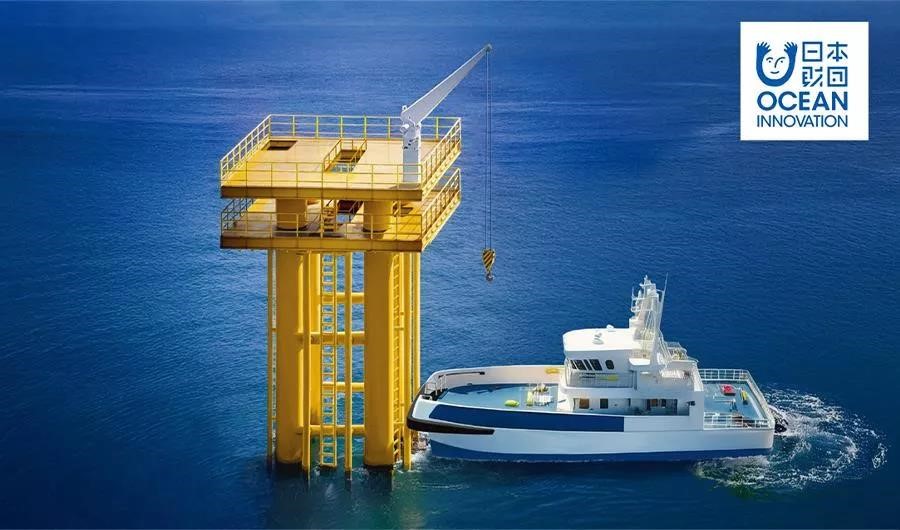
- MHI won an order to supply a water-jet propulsion system for a training Crew Transfer Vessel used by the Nagasaki maritime training association.
- The vessel will support Japan’s first offshore training tower, enabling realistic situations.
- TAKEAWAY: Improving worker training and safety is crucial for the offshore wind sector where there’s increasing demand for skilled operators and reliable vessels. Advanced propulsion and automation tech help ensure safer, more efficient maintenance of offshore wind turbines.
Hokkaido Gas and HRO test hot spring-associated gas for cogeneration
(Company statement, May 19)
- Hokkaido Gas and Hokkaido Research Organization (HRO) launched a field test to promote use of hot spring-associated gas found in hot spring areas across Hokkaido.
- Many of these gases, which contain methane, are released into the atmosphere.
- The project will evaluate the use of hot spring gas as fuel for the residential gas engine cogeneration system, testing combustion performance and identifying technical challenges for practical use.
- CONTEXT: HRO is a research agency established by the Hokkaido govt for energy, environment, geology, agriculture, fisheries, and industrial innovation.
- TAKEAWAY: Utilizing hot spring-associated gas as a resource has the advantage of low development costs because the gas already flows from existing hot spring sources. However, many sources produce only small amounts of gas, making it difficult to operate large boilers or generators, so utilization must be tailored to the available gas volume and suitable equipment. In addition, using or selling methane gas as fuel requires compliance with the Mining Act and approval of mining rights from the relevant regional bureau of METI.
U-Power and UPDATER to procure and share renewable electricity
(Company statement, May 18)
- U-POWER and UPDATER, both retail electricity companies, will partner to procure and share renewable electricity in order to strengthen stable and price-stable clean energy supply for corporate customers.
- The collaboration includes joint renewable energy procurement, electricity sharing, offsite PPA cooperation, and development of flexible electricity plans.
- UPDATER’s blockchain-based electricity traceability platform will be combined with U-POWER’s procurement and corporate sales network to support more transparent and reliable renewable energy supply chains.
- TAKEAWAY: The partnership reflects growing demand for renewable electricity products that combine procurement stability with greater transparency over electricity sourcing.
NEWS: NUCLEAR ENERGY

Tohoku Electric restarts Onagawa Unit 2 after detecting steam
(Company statement, May 18)
- Tohoku Electric restarted the reactor of Onagawa NPP Unit 2. Output will increase while confirming equipment integrity before resuming power generation.
- CONTEXT: A small amount of steam containing radioactive materials had exited from a drain pit. Tohoku Electric stopped the reactor on May 16, and an inspection of the valve connected to the drain pit found metal debris lodged inside.
FEPC sends more personnel to Rokkasho eyeing completion
(Company statement, May 22)
- The chairman of the Federation of Electric Companies of Japan addressed the issue of nuclear waste disposal, supporting completion of Japan Nuclear Fuel Limited (JNFL) Rokkasho Reprocessing Plant.
- Up until now, nearly 100 personnel have been sent to Rokkasho, and after a govt request in March, another 30 people were sent. The goal is to complete the facility this fiscal year.
- The chairman also thanked the mayor of Ogasawara Village for accepting the survey for a nuclear waste disposal site.
- He asked the Nuclear Waste Management Organization of Japan (NUMO) to address the mayor’s requests to proceed with the survey.
- TAKEAWAY: See this issue’s analysis section for a detailed look at the topic.
NEWS: TRADITIONAL FUELS

INPEX inks deals to supply LNG from Abadi project
(Company statement, May 20)
- INPEX agreed in principle with bp, PT Perusahaan Gas Negara (PGN), PT PLN Energi Primer Indonesia, and Shell Eastern Trading for supplies of LNG from Abadi LNG in Indonesia.
- PGN inked a deal to buy LNG for a 15-year term starting 2033, and agreed in principle with PT Pupuk Indonesia (Persero) for supply of pipeline natural gas.
- CONTEXT: INPEX discovered the Abadi gas field in 2000. It targets 9.5 Mtpa of LNG, equal to about 10% of Japan’s total imports. It also targets up to 35,000 barrels of condensate daily and 150 million cubic feet of natural gas per day.
- TAKEAWAY: These deals are a step toward formal Sale and Purchase Agreements (SPAs) and Gas Sales Agreements (GSAs) for most of Abadi’s expected output. They propel the project toward a Final Investment Decision (FID), which INPEX aims to make in 2027.
Brazil offers additional crude exports to Japan
(Asia Nikkei, May 20)
- Brazilian FM Mauro Vieira said his country is ready to help Japan’s energy security through increased crude oil exports.
- Vieira discussed the issue with METI Minister Akazawa during his visit to Tokyo, adding that Petrobras is prepared to expand its presence in Japan.
- CONTEXT: Brazil is the world’s ninth-largest oil producer.
- Vieira emphasized Brazil’s role as a supplier of critical minerals, including rare earths used in EVs and electronics, but stressed Brazil wants to develop domestic processing and value-added industries rather than simply exporting raw materials.
- SIDE DEVELOPMENT:
- Idemitsu Kosan tanker passes Strait of Hormuz, to arrive in Japan next week
- (Nikkei, May 22)
- Idemitsu Kosan said its large crude oil tanker Idemitsu Maru arrives in Japan today.
- The tanker carries about 2 million barrels of Saudi Arabian crude oil to be processed at the Aichi refinery (enough for about 12 days of operations).
- The tanker had entered the Persian Gulf in late February.
- CONTEXT: This is the first return of a tanker to Japan after passing through the Strait of Hormuz following the outbreak of the Iran war.
Idemitsu Kosan’s refinery in Vietnam imports crude from Congo
(Nikkei, May 18)
- The Nghi Son refinery in Vietnam, operated by Idemitsu Kosan and others, has imported crude oil from the Republic of Congo for the first time, about 950,000 barrels, equal to five days of the refinery’s processing capacity.
- The news was reported by Petrotimes, a media outlet owned by Petrovietnam, which holds a 25% stake in the refinery.
- A tanker arrived on May 13–14 to unload the Congolese crude.
- Nghi Son has a daily processing capacity of 200,000 barrels, producing fuels like gasoline and diesel. It meets 30–40% of Vietnam’s petroleum product demand.
- Until recently, about 80% of Vietnam’s crude imports came from Kuwait.
- Kuwait Petroleum International is also a partner in the refinery.
- TAKEAWAY: PM Takaichi announced support for Nghi Son’s crude procurement through NEXI, the first project under the $10 billion “POWERR Asia” framework. The decision was based on the view that stable operation of the refinery supports supply chains for medical materials. Japan cannot tap its rich reservoirs and directly supply oil to other nations. But, the country’s supply chains, especially for medical products, are closely tied to other partners in Asia. Thus, the move is a way to guarantee a stable supply of goods from such countries.
Tokyo Gas partners with Gas Malaysia on LNG regasification terminal
(The Edge Malaysia, May 15)
- Tokyo Gas is partnering with Gas Malaysia and VTTI, a Dutch energy infrastructure firm, to develop a new LNG regasification terminal in Kedah, Malaysia.
- VTTI owns and operates storage terminals for oil, gas, chemicals, and LNG.
- The project (RM3 billion or up to ¥120 billion) will be led by Gas Malaysia; Tokyo Gas has a 15% stake.
- The terminal will use a floating storage and regasification unit (FSRU).
- TAKEAWAY: Amid global energy disruptions, Japan is using such projects to diversify gas supply chains, strengthen its presence in SE Asia, and secure long-term influence over regional energy infrastructure, while counterbalancing China’s growing role in the region.
Maruzen Petrochemical temporarily halts production
(Nikkei, May 21)
- Chemical manufacturer Maruzen Petrochemical has temporarily halted production at its Chiba plant after a major customer entered scheduled maintenance.
- The firm said the shutdown is unrelated to the Iran war or feedstock shortages.
- CONTEXT: The move is part of the firm’s broader restructuring plan to consolidate production into the Keiyo Ethylene complex by FY2026.
- TAKEAWAY: The shutdown reflects restructuring pressures in Japan’s petrochemical and energy sectors as weak demand and Asian oversupply push companies to consolidate. It also highlights Japan’s sensitivity to feedstock risks, with firms trying to balance operational decisions against fuel supply stability, import dependence, and long-term decarbonization trends.
LNG stocks down from previous week, down YoY
(Government data, May 20)
- As of May 3, the LNG stocks of 10 power utilities were 2.04 Mt; down 3.8% from the previous week (2.12 Mt). They were also down 12.1% from the end of May 2025 (2.32 Mt), and down 6% from the 5-year average of 2.17 Mt.
NEWS: CARBON CAPTURE & SYNTHETIC FUELS

CCS Business Law enters full enforcement
(Government statement, May 21)
- The CCS Business Law entered full enforcement. It focuses on regulating storage and pipeline transportation, and follows earlier phases that governed exploration (August 2024) and test drilling (November 2024).
- The govt decided that for CO2 stored in marine environments, the injected gas must maintain a purity of 99 vol% or higher. Purity below 99 vol% is only permissible if specific impurity standards are met.
- The ordinances establish formal procedures to apply for storage business implementation plans. Closure plans must detail measures such as the sealing of wells, evaluation of well integrity, and CO2 leakage prevention.
- Operators can apply to abolish their storage business and transfer management to JOGMEC once the stored CO2 is stable. This period is required to be no less than 10 years after cessation of CO2 injection.
- Operators will have to pay a fee to JOGMEC, calculated to have enough funds to cover the costs of managing the storage for at least 30 years.
- Plans must now include an evaluation of the impact on the marine environment in case of leakage.
- METI and the MoE are creating guidelines based on the international standard ISO27914, which covers geological disposal of CO2.
Idemitsu Kosan invests in U.S. CO2 removal tech
(Company statement, May 15)
- Idemitsu Kosan invested in U.S.-based CREW Carbon. The two companies will explore deploying CREW’s carbon dioxide removal (CDR) technology at wastewater treatment plants in Japan and other Joint Crediting Mechanism (JCM) countries.
- CREW’s tech prevents CO2 from rising into the air, retaining it in wastewater.
- The company also has a proprietary Measuring, Reporting, and Verification (MRV) system to generate verified carbon credits.
Cosmo Oil to develop tech for solid carbon retrieval with molten salt electrolysis
(Company statement, May 22)
- Cosmo Oil, in partnership with Kyoto University, iMSEP, Sumitomo Heavy Industries, and SEC Carbon, will develop tech for producing solid carbon from CO2 using molten salt electrolysis.
- The goal is to convert captured CO2 into valuable carbon materials through high-temp electrochemical processes, potentially creating a low-carbon alternative for industrial carbon production.
- iMSEP is a Japanese tech firm specializing in electrochemical separation and electrolysis tech using molten salt.
- CONTEXT: The tech uses molten salts as the electrolyte to extract or produce materials and fuels more efficiently than conventional methods. It can reduce CO2 emissions in heavy industries and also enable cleaner hydrogen production and support production of strategic materials such as lithium, aluminum, rare metals and ammonia-related compounds.
- TAKEAWAY: The project reflects interest in carbon tech as part of industrial decarbonization strategies. Rather than only storing captured CO2, the tech seeks to recycle emissions into usable materials, thus helping reduce dependence on fossil-based industrial feedstocks and support development of circular carbon supply chains for hard-to-abate industrial sectors. However, the tech is expensive and challenging to scale.
ANALYSIS
BY FILIPPO PEDRETTI
Can a Tiny Pacific Island Solve Japan’s Nuclear Waste Disposal Issues?
Despite making a comeback in recent years from the oblivion of the post Fukushima disaster era, and enjoying new-found favor by the government, a major challenge hangs over Japan’s nuclear energy strategy and stymies efforts for the sector’s growth. That challenge is a long-term storage site for nuclear waste.
As nuclear power plant restarts have followed one after the other since 2023, a permanent site where to send and store the byproduct of nuclear energy has yet to be found. Without such a site, all of Tokyo’s efforts to fully benefit from the atom’s potential will come to naught.
Since the early 2000s, the government has relied on a hand-raising model, hoping that cash-strapped municipalities across Japan would volunteer for geological surveys. But this strategy has mostly failed, leading to only a few candidate towns in the past 25 years.
The situation changed early this year when METI asked all prefectures to collaborate on finding candidate sites. This top-down approach reversed the previous methodology. Soon after, Ogasawara Village accepted Tokyo’s request to survey Minamitorishima, an uninhabited island far in the Pacific.
Still, the acceptance came with conditions. The mayor noted that Ogasawara’s citizens may worry about reputational damage in case of ocean contamination. Also, there could be political backlash from other Pacific nations.
While Tokyo is adamant about revitalizing nuclear power, and the 2025 Basic Energy Plan emphasizes its status as a vital baseload power source, the sector remains a ”mansion without a toilet.” Closing the cycle is imperative, and resolving the storage issue is key.
Minamitorishima
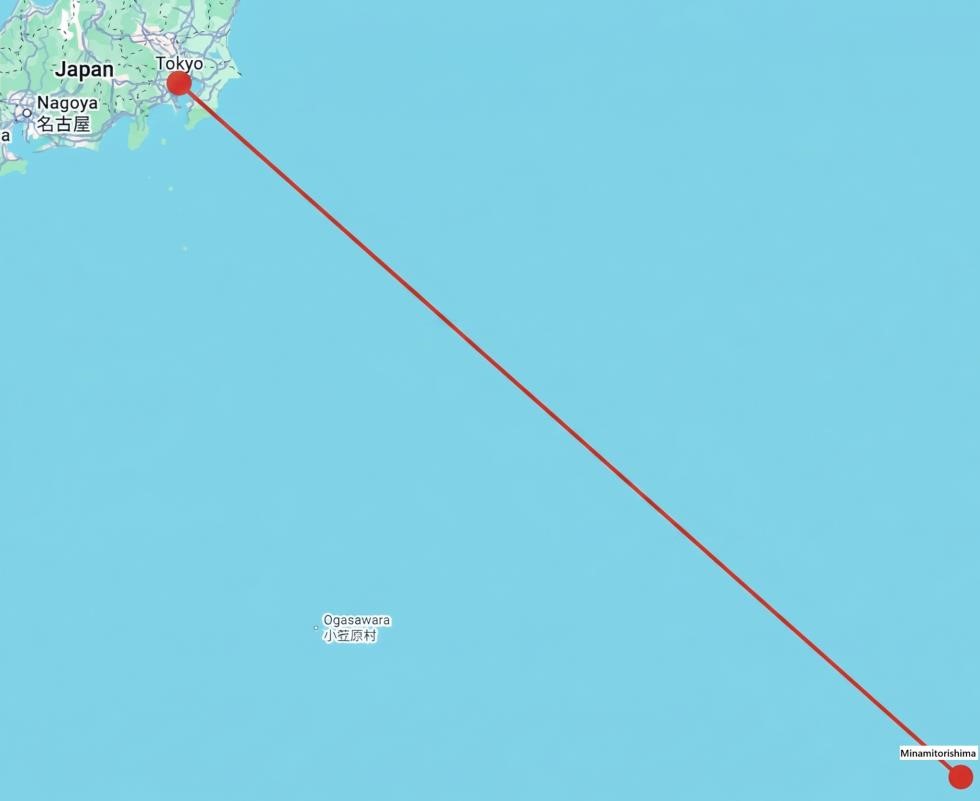
Minamitorishima is an uninhabited and state-owned island in the Pacific administered by Ogasawara subprefecture. While the 1.5 square kilometer island has no permanent civilian population, members of Japan’s Self-Defense Force are stationed there and rotated.
Choosing a remote island as a nuclear storage site helps to bypass common problems faced when dealing with mainland sites. METI and the Nuclear Waste Management Organization of Japan (NUMO), the state-backed organization in charge of implementing nuclear waste disposal, say Minamitorishima has these advantages:
- Location 2,000 km from central Tokyo, and 1,200 km from the also uninhabited Ogasawara islands of Chichijima and Hahajima.
- State-owned, with no civilian residents. This precludes the complex hurdle of potential relocation and local community displacement.
- On the Pacific Plate. Authorities say it indicates high potential for meeting deep geological disposal criteria.
- Excluded from the Ogasawara World Natural Heritage area. Minamitorishima avoids environmental prohibitions that apply to the rest of the archipelago.
Yet these do not grant the state a free pass. Distance does not equal indifference: citizens concerned with environmental issues or unexpected risks can still raise their voices. Public opinion may sway Ogasawara Subprefecture authorities, which despite the distance are actually a unit of the Tokyo Metropolitan Government.
Local authorities may still refuse to proceed with the second or third survey phases needed to complete the process. And even if the central government considers the island suitable, local authorities may also object to building the actual storage site.
NUMO told Japan NRG that it’s aware of local concerns about potential terrorism or sabotage. But, the international community might also protest. When Japan began diluting and releasing treated water from Fukushima into the Pacific, there was much global concern. Minamitorishima most likely would also face intense scrutiny.
Further complicating the island’s candidacy is that in terms of engineering, building a storage site on Minamitorishima is a major challenge. The island’s shallow bedrock of brittle coral reefs requires more durable technologies and systems.
A solution could be to drill under the coral reefs, and bury the waste several thousand meters deep. (Law mandates disposal 300 meters deep or more.) This engineering challenge, however, is formidable.
Selection Process
Japan has already generated large amounts of high-level radioactive waste. According to NUMO, in 2025, Japan’s physical stock of vitrified-waste canisters stands at 2,530. The Japan Nuclear Fuel Limited waste management facility in Rokkasho holds 2,176 of them. Japan Atomic Energy Agency (JAEA) holds the other 354 canisters. A single canister, which is protected by a larger carbon steel overpack, is around 130 cm in height, with a diameter of about 40 cm, and weighs around 500 kg.
The path to a final nuclear waste repository is a 20-year marathon of sorts, and consists of several surveys and subsidies for candidate towns.
The Final Disposal Act regulates nuclear waste site selection, which has three phases: a literature survey, a preliminary investigation, and a detailed investigation. The government guaranteed the first step for Minamitorishima, and it will have to approve the next two steps. After these steps, Tokyo will be able to confirm whether the site is suitable or not.
The literature survey analyzes geological records and volcanic history only. There are no drilling or boring operations: only documental studies. Suttsu Town and Kamoenai Village in Hokkaido, Genkai Town in Saga, and now Ogasawara Village agreed to pursue this first step. The Hokkaido sites already completed it.
NUMO told Japan NRG that it’s compiling public opinion reports on Suttsu and Kamoenai in Hokkaido, and analyzing and evaluating data for Genkai Town in Saga Prefecture.
The transition to Stage 2, however, is another story: it includes physical boring and requires the prefectural governor’s consent. In Hokkaido, Governor Suzuki Naomichi is critical of the site selection within the prefecture borders, saying that the government’s subsidy-heavy approach is “hitting [municipalities] over the head with bundles of cash”. Candidates receive ¥2 billion for the first stage, more than tripling to ¥7 billion for the second.
When accepting the survey last month, Ogasawara Village’s Mayor Shibuya Masaaki issued several non-negotiable demands to the state. He required the government to provide experts to explain every facet of risk to villagers, and he won’t consider moving to Stage 2 until the government nominates and surveys other regions. This is to ensure that Ogasawara is not the sole option. In fact, METI had already sent documents to all prefectural governors in January, urging cooperation in finding disposal sites.
| Location | Survey Stage | Status | Population | Selection |
| Minamitorishima | Literature Survey | Planned | 0 | National request |
| Suttsu | Literature Survey | Completed | ca 3,000 | Local application |
| Kamoenai | Literature Survey | Completed | ca 900 | Local application |
| Genkai | Literature Survey | Underway | ca 4,900 | Local application |
Fuel Cycle Not Yet a Cycle
While the urgency for a final disposal site is directly tied to completing Japan’s nuclear fuel cycle, there is another major headache that magnifies Tokyo’s frustrations – the floundering effort to build a reprocessing plant in Rokkasho, Aomori Prefecture.
That plant aims to recycle spent nuclear fuel into usable MOX fuel. Efforts over the past 30 years by the operator, JNFL, to complete the plant have been unsuccessful.
Both the final-disposal site quest and Rokkasho are essential to the nuclear fuel cycle’s realization. The latter should recycle fuel for further use, while the former will handle the high-level radioactive waste that remains after reprocessing. Rokkasho’s delays are part bureaucratic, part technical. The site faced prolonged safety screenings and compliance checks with post-Fukushima regulations.
Recent Long-Term Decarbonized Power Sources Auction (LTDA) results prove the facility’s importance. For the first time, a new-build reactor, J-Power’s 1.38 GW Oma Power Plant, was awarded. The Advanced Boiling Water Reactor (BWR) will run on 100% MOX fuel.
The forced halt at Rokkasho has consequences for Japan’s nuclear-waste strategy. Aomori Governor Miyashita Soichiro recently exercised a de facto veto over the Mutsu interim storage facility, refusing to allow further spent-fuel intake. He worries that without progress at Rokkasho, or a credible long-term disposal pathway, Mutsu could quietly become a permanent repository rather than a temporary stop in Japan’s still incomplete fuel cycle.
Conclusion
When questioned by Japan NRG regarding the recent policy shift toward a government-led approach, NUMO decided not to respond, and also declined to provide a definitive answer regarding Ogasawara Village’s stance. The issue is indeed both delicate and critical, and utmost caution is understandable.
While the government emphasizes Minamitorishima’s advantage of having no civilian population, a 2017 “Scientific Characteristics Map” highlights numerous other viable areas across Japan. Selecting Minamitorishima solely due to its lack of civilians, without presenting technical data, is awkward. After all, up until now, geology was the main criteria in selecting a suitable site.
Minamitorishima’s ability to avoid local consent issues seems like a last-minute fix after over two decades of fruitless searching. The nuclear storage canisters have a high level of radioactivity and are increasing in number. Securing a final domestic disposal site can no longer be postponed. The day of reckoning is not just coming. It’s here.
As nuclear power regains a key position in the national energy mix, the amount of radioactive waste will only increase. The envisioned full nuclear cycle is a core condition to make the sector function properly.
ANALYSIS
BY AGLAÉ BANGE
JC-STAR in Renewables: Japan’s New Regulatory Approach to IoT Cybersecurity
The energy sector has long been a prime target for cyberattacks, pushing governments and private companies to strengthen cybersecurity measures.
In 2015–2016, energy infrastructure accounted for more than one-third of cyberattacks globally. By 2023, attacks against utilities – including energy companies – had risen by more than 200%. Such attacks can trigger power outages, equipment failures, fires and the fraudulent misuse of connected devices.
Japan’s rapidly expanding renewable energy sector has not been immune.
In 2024, nearly 800 remote monitoring devices in solar installations were compromised in a single cyberattack and then used to conduct fraudulent online bank transfers – the most significant cybersecurity incident to date involving Japan’s renewable energy sector. The incident intensified debate over the vulnerabilities created by interconnected renewable energy assets and accelerated a major regulatory shift.
The issue is more urgent as Japan’s power system grows more decentralized. Aggregators are combining distributed solar, storage and flexible demand assets into portfolios that participate in balancing and price-setting mechanisms. This turns connected renewable energy equipment into economically valuable infrastructure as well as cybersecurity risks.
Under new rules, a state-backed cybersecurity certification scheme known as Japan Cyber-Security Technical Assessment Requirements (JC-STAR) will become mandatory for projects involving interconnected solar, wind, battery storage and fuel-cell equipment.
Although cybersecurity is the primary justification, the policy may also reflect broader industrial and strategic concerns, including protection of Japan’s fast-growing BESS market and rising unease over dependence on foreign-made equipment.
While implementation imposes additional costs and administrative burdens on developers and manufacturers, the framework could ultimately strengthen the sector’s operational resilience and supply-chain transparency.
Background: JC-STAR certification and compliance
JC-STAR is administered by the Information-technology Promotion Agency (IPA), which operates under METI. It consists of four certification tiers: ★1, ★2, ★3 and ★4.
From April 2027, all newly grid-connected high-voltage solar and battery storage systems will be required to obtain ★1 certification, minimum conformity standard. The requirement will be extended to low-voltage systems from October 2027. For existing equipment, the certification will become applicable at the time of replacement.
The scheme applies to IP-based control systems with communication functionality, whether connected through the internet or internal networks. Equipment includes inverters, switches, sensors, energy management systems (EMS), power conditioning systems (PCS), routers and CCTV systems, including imported products.
The framework was formally introduced in March 2025, although so far only the ★1 standard is operational.
The ★1 tier serves as a baseline cybersecurity standard intended to address common vulnerabilities affecting IoT devices. Certification remains self-declared by manufacturers, although testing can be outsourced to approved laboratories or assessment providers. ★2 applies to industry-specific products, while ★3 and ★4 require third-party evaluation and are intended for critical infrastructure and high-security applications.
The framework focuses on several core areas:
- access control and authentication
- software vulnerability management
- protection against unauthorized inverter access
- operational resilience and recovery capability
JC-STAR requirements also apply to existing systems undergoing major upgrades.
Industry concerns over implementation
The decision to make JC-STAR mandatory within such a short timeframe has generated concern among developers and equipment suppliers, particularly over supply-chain readiness and certification capacity.
According to developers, there are delays in finalizing EPC contracts for stationary BESS projects, which complicate efforts to expand portfolios amid strong market growth and intensifying competition. In response, some companies have begun prioritizing procurement agreements with manufacturers whose interconnected product lines have already secured JC-STAR certification.
Yet, the disruption also highlights a broader shift underway in the market for renewable energy equipment. As interconnected systems increasingly replace stand-alone hardware, cybersecurity compliance is becoming a competitive differentiator rather than simply a regulatory obligation.
This has already benefited companies such as Daihen, which recently signed an agreement with Sun Village supported by its portfolio of JC-STAR-certified equipment. The emerging divide is therefore less about technological capability than speed of compliance and supply-chain adaptability.
Several major manufacturers have already moved to secure certification. PowerX and TMEIC, for example, obtained JC-STAR approval for their BESS control systems as early as October 2025. As more suppliers complete the certification process, current procurement bottlenecks and compliance-related delays are likely to ease over the next few years.
Industrial protectionism: targeting China?
Some industry observers view JC-STAR as carrying an implicit industrial policy dimension, particularly given the dominant position Chinese manufacturers have in Japan’s solar and battery supply chains through lower-cost equipment offerings.
The new rules arrive amid concern over Chinese cyber activity and vulnerabilities in critical infrastructure. Japan has joined countries including the U.S., South Korea, New Zealand and Germany in issuing warnings over state-linked cyber operations originating from China.
Among the equipment subject to suspicion are inverters. In 2025, U.S. authorities ordered inspections of solar-powered highway infrastructure that might contain hidden radios inside batteries and inverters remotely controlled from China.
Japan’s government has similar concerns, with discussions at METI over possible restrictions on Chinese-made models to require companies to source inverters either domestically or from non-Chinese foreign suppliers. Some companies, however, told Japan NRG they’re concerned about such a restriction, arguing that Japanese models are more expensive while offering lower average performance and quality.
By raising market-entry requirements for suppliers, JC-STAR may favor larger manufacturers with the resources needed to manage auditing, compliance and certification. Several companies interviewed say the framework contains a de facto protectionist element, even if it is not formally presented as such.
At the same time, Japan’s approach broadly aligns with tightening cybersecurity regulation elsewhere. Singapore introduced its Cybersecurity Labelling Scheme (CLS) in 2020, while the UK adopted the Product Security and Telecommunications Infrastructure Act (PSTI) in 2022, with enforcement beginning in 2024.
Japan has already signed partial mutual-recognition MoUs with both frameworks to reduce compliance burdens and improve international alignment. More agreements are likely, facilitating import and export opportunities for compliant IoT products and allowing developers to diversify supply chains beyond China.
Can self-assessment ensure cybersecurity alone?
Before JC-STAR, METI and IPA relied on guidelines, voluntary standards and contractual requirements, alongside international ISO frameworks and private certification systems.
One unresolved issue is whether self-assessment-based certification can provide sufficient assurance for increasingly critical infrastructure.
Evidence from overseas suggests that formal certification can improve cybersecurity outcomes. A UK government-commissioned study found that companies certified under the Cyber Essentials program experienced significantly fewer cyber insurance claims than non-certified firms, with claims falling by 80% in 2022.
However, certification does not eliminate risk, particularly as cyber threats evolve faster than regulatory standards. The absence of mandatory third-party auditing at the entrylevel ★1 stage therefore remains a point of debate.
So far, Japan has prioritized a relatively flexible and low-cost implementation model in order to accelerate adoption and avoid imposing excessive compliance costs on industry. But this approach may evolve over time.
The EU’s Cyber Resilience Act, to become mandatory from 2027, already requires thirdparty assessment for higher-risk products. If cyber incidents involving renewable energy infrastructure continue to increase in Japan after JC-STAR implementation begins, pressure could grow for a more rigorous auditing regime closer to the European model.
Conclusion
Japan aims to raise solar power’s share of the electricity mix to about 25% by 2050. But as renewable energy infrastructure becomes more digitalized and interconnected, cybersecurity risks are a core operational and policy issue rather than a secondary technical concern.
The most significant impact of JC-STAR may extend beyond compliance itself. The framework is likely to reshape procurement standards, increase demand for specialists in industrial IoT cybersecurity and encourage the development of domestic testing and assessment capabilities.
Although developers and manufacturers struggle with implementation timelines and certification bottlenecks, the long-term effect could be the gradual professionalization of cybersecurity practices across Japan’s renewable energy supply chain.
In that sense, JC-STAR is not a defensive regulatory measure. It also marks a broader shift toward treating cybersecurity as a fundamental component of energy infrastructure reliability, market access and industrial competitiveness.
ASIA ENERGY REVIEW
BY JOHN VAROLI
A brief overview of the region’s main energy events from the past week
Australia / Fuel crisis
Australia secured another 100 million liters of diesel and jet fuel that will arrive in the coming weeks, but Energy Minister Chris Bowen warned there’s still a “long way to go” in the fuel supply crisis.
Australia / Renewables
Singapore-based Equis launched GreenPoint Energy, consolidating its Australian renewable energy and battery storage operations under a dedicated platform. It has a 2.5 GW portfolio of 12 BESS and wind projects across every National Energy Market-connected state.
China / Natural gas
Russia and China agreed to speed up work on the Power of Siberia 2 gas pipeline that will transport up to 50 billion cubic meters of gas annually to China. The announcement came after talks in Beijing between President Putin and President Xi.
China / Solar panels
Exports of Chinese solar cells and panels continued to surge in April as demand for solar installations in Africa, SE Asia, and Europe soars amid the oil and gas crisis. Exports to SE Asia and Africa were up by 75-85% compared to April 2025.
India / Oil
Venezuela is now India’s third-largest crude oil supplier. According to govt data, May shipments from Venezuela to India are nearly 50% higher than in April.
India / Oil and gas
U.S. Secretary of State Rubio visited India and told PM Modi that “U.S. energy products have the potential to diversify India’s energy supply.”
Indonesia / Natural gas
The energy minister says there’ll be no cuts to the 2026 gas export quota. All proposed export quotas have been approved and remain valid through year’s end. The minister added that the govt is committed to a fair investment climate in the country’s oil and gas sector.
Malaysia / Energy security
Malaysia’s energy supply remains secure despite global uncertainties stemming from the Iran war, said PM Ibrahim.
South Korea / Nuclear
As govt policy supports nuclear power expansion, total nuclear output could reach 219 TWh by 2035, forecasts GlobalData.
Taiwan / U.S. ties
State-run energy group CPC Corp plans to build a Taiwan Tower in Houston to act as a point of service for Taiwanese businesses investing in Texas and for U.S. firms seeking to invest in Taiwan.
Disclaimer
This communication has been prepared for information purposes only, is confidential and may be legally privileged. This is a subscription-only service and is directed at those who have expressly asked K.K. Yuri Group or one of its representatives to be added to the mailing list. This document may not be onwardly circulated or reproduced without prior written consent from Yuri Group, which retains all copyright to the content of this report.
Yuri Group is not registered as an investment advisor in any jurisdiction. Our research and all the content express our opinions, which are generally based on available public information, field studies and own analysis. Content is limited to general comment upon general political, economic and market issues, asset classes and types of investments. The report and all of its content does not constitute a recommendation or solicitation to buy, sell, subscribe for or underwrite any product or physical commodity, or a financial instrument.
The information contained in this report is obtained from sources believed to be reliable and in good faith. No representation or warranty is made that it is accurate or complete. Opinions and views expressed are subject to change without notice, as are prices and availability, which are indicative only. There is no obligation to notify recipients of any changes to this data or to do so in the future. No responsibility is accepted for the use of or reliance on the information provided. In no circumstances will Yuri Group be liable for any indirect or direct loss, or consequential loss or damages arising from the use of, any inability to use, or any inaccuracy in the information.
K.K. Yuri Group: Hulic Ochanomizu Bldg. 3F, 2-3-11, Surugadai, Kanda, Chiyoda-ku, Tokyo, Japan, 101-0062.