
WEEKLY
June 29, 2026
ANALYSIS
JAPAN’S OFFSHORE WIND DEBATE IS MOVING BEYOND AUCTION DESIGN
- Policy updates are easing concerns around auction rules and state support. The next set of challenges lies on the technical side.
- Japan’s tectonic setting, steep seabed topography and exposure to earthquakes and typhoons create geotechnical challenges that need common standards before projects can be financed at scale.
ENERGY’S HOLY GRAIL?
THE SEARCH FOR NATURAL HYDROGEN
- Natural hydrogen is one of the most intriguing prospects in the energy transition. In theory, it can be recovered like oil or natural gas.
- A commercially viable natural-hydrogen resource would reduce pressure on power systems and help decarbonize hard-to-abate sectors such as steel, chemicals and cement.
- So, what is Japan doing in this area?
ASIA PACIFIC REVIEW
This column provides a brief overview of the region’s main energy events from the past week
NEWS
- PM Takaichi orders new energy diversification plan after Persian Gulf shock
- Japan and France deepen critical minerals ties
- ANRE proposes further revisions to 4th LTDA
- EGC analyzes surge in JEPX spot market prices
- OCCTO reviews status of balancing resources through FY2035
- MHIET reaches commercialization level for 500 kWclass hydrogen engines
- Kanadevia agrees with Oman firm on green hydrogen
- TEPCO and Daiwa to develop 1 GW of BESS
- PowerX receives BESS order from Vietnam
- Idemitsu secures JAXA funding for space solar cell mass production
WIND POWER AND OTHER RENEWABLES
- Equinor to exit offshore wind in Japan
- MoE launches support for floating wind plans
- JOGMEC to help municipalities develop geothermal energy
- Govt maps ¥30 trillion in GX and fusion investments through FY2040
- Final price tag on Rokkasho spent fuel reprocessing plant reaches ¥16 trillion
- Chugoku Electric to develop Shimane Unit 3
- INPEX prioritizes Central Asian crude oil
- 70% of firms impacted by naphtha shortage
- Tokyo Gas to invest in U.S. gas expansion
- JERA mulls coal-linked PPAs for emergencies
CARBON CAPTURE & SYNTHETIC FUELS
- JOGMEC tests CO2 leakage behavior from buried pipelines
EVENTS
Jun 30-Jul 1 Asia Nuclear Energy & SMR 2026 @
Singapore
July 1-2 4th WFO Asia Pacific Summit @ Tokyo
Jun 11-Jul 19 FIFA World Cup
August Asia-Pacific Economic Cooperation / Energy Ministerial Meeting
Sept 7-10 APPEC 2026, Singapore
Sept 9-11 Smart Energy Week (Autumn) 2026 @ Makuhari Messe (co-exhibiting H2 & FC Expo, Battery Japan, Smart Grid, Wind Expo, CCUS Expo, etc.)
Sept 9-11 Automotive World @ Makuhari Messe
September 14-18 IAEA General Conference 2026 @ Vienna, Austria
October International Maritime Organization –
Net-zero Discussions
Nov 2-5 ADIPEC 2026 @ Abu Dhabi
Nov 3 U.S. Midterm Elections
Nov Publication of International Energy
Agency – World Energy Outlook 2026
Nov 18-19 Asia-Pacific Economic Cooperation –
Leaders Meeting @ Shenzhen, China
PUBLISHER
K. K. Yuri Group
Editorial Team
Yuriy Humber (Chief Editor)
John Varoli (Senior Editor, Americas)
Kyoko Fukuda (Data, Events)
Magdalena Osumi (Renewables & Storage)
Filippo Pedretti (Thermal, CCS, Nuclear)
Tetsuji Tomita (Power Market, Hydrogen)
Aglaé Bange (Renewables and Biomass)
George Hoffman (Sales, Business Development)
Tim Young (Design)
SUBSCRIPTIONS & ADVERTISING
Japan NRG offers individual, corporate and academic subscription plans. Basic details are our website or write to subscriptions@japan-nrg.com
For marketing, advertising, or collaboration opportunities, contact sales@japan-nrg.com. For all other inquiries, write to info@japan-nrg.com
NEWS: GENERAL OUTLOOK AND TRENDS

PM Takaichi orders new energy diversification plan after Persian Gulf shock
(Nikkei, Government statements, June 25)
- PM Takaichi will instruct METI to prepare a new “comprehensive package” by late August to strengthen Japan’s energy supply-demand structure after the Middle East crisis exposed vulnerabilities in fuel procurement.
- The package will be separate from the Basic Energy Plan and will focus on diversifying crude oil procurement, expanding use of nuclear power and domestic renewables, and securing stable electricity supply for industrial competitiveness.
- The govt plans budget support for oil refinery upgrades so domestic refiners can process more nonMiddle Eastern crude, including from the U.S. It will also consider stockpiling midstream petrochemical products derived from naphtha.
- For power, the package will promote nuclear unit replacement, development of next-generation reactors, and deployment of domestic renewables such as perovskite solar cells and wind power.
- The plan will also address expected electricity demand growth from AI data centers.
- In July, the administration expects to procure all crude oil that had been secured via the Strait of Hormuz from alternative routes.
- TAKEAWAY: Many of the proposed measures overlap with existing GX and energy-security policy, including nuclear use, domestic renewables, next-gen energy tech and reducing exposure to fossil-fuel import risk. So, the package is seen as an acceleration or even a repackaging of the current energy agenda, not a wholesale change in direction. The PM favors large national investments in areas such as nuclear, domestic renewables, refinery resilience and strategic supply chains, but the harder question is how much can be funded and legislated. The Iran war gives the govt a stronger argument for bold spending, yet resistance from fiscal officials and a more assertive opposition in the Upper House will force compromises. The policy document may arrive in late August, but its impact and nuances will take much longer to filter through.
Japan and France deepen critical minerals partnership
(Japan NRG, June 25)
- Japan and France will expand cooperation on critical minerals, building on agreements reached during President Macron’s visit to Japan in April.
- A key pillar is the Caremag rare earth refining and recycling project in south France, backed by €216 million from the French govt, JOGMEC and Iwatani.
- The facility begins operations in early 2027 and will supply Japan with dysprosium and terbium, enough to meet around 20% of its demand for the heavy rare earths used in EVs, offshore wind turbines and electronics.
- TAKEAWAY: The partnership reflects Japan’s accelerating efforts to diversify critical mineral supply chains amid China’s export restrictions, while positioning France as a strategic refining and recycling hub for Europe and Japan.
NEWS: ELECTRICITY MARKETS

ANRE proposes further revisions to 4th LTDA
(Government statement, June 23)
- ANRE proposes more revisions to the 4th LTDA (Long-Term Decarbonized Power Sources Auction) design.
- Due to higher interest rates, the proposed base capital cost will rise from 5% to 5.5%.
- Capital cost assumptions could range from 4.5% to 6.5%, with annual adjustments to reflect future interest rate changes.
- Woody biomass, agricultural residue solid fuels, and liquid biofuels will remain eligible for the 4th LTDA, although they were planned to be excluded.
- There’ll be price caps for LNG-fired power in two categories: ¥92,000/ kW-year for projects requiring new LNG receiving terminals; and ¥65,000/ kW-year for projects utilizing existing terminals.
- Price caps for hydropower, new pumped storage, and nuclear power will rise from 1.5× to 2× the reference cost, with long-duration energy storage adjusted accordingly.
- To balance stronger investment incentives with overall support costs, the maximum support period will be shortened to 30 years (previously it was 40 years) for hydropower, new pumped-storage, LDES, nuclear power, and LNG-fired power.
- CONTEXT: Revisions for the 4th LTDA have been discussed in the govt working group since March. The LTDA is a state-backed capacity market mechanism launched to accelerate the country’s transition to carbon neutrality.
- TAKEAWAY: The revisions show how far the LTDA has moved beyond its original image as a decarbonization auction. It is becoming Japan’s main policy tool for underwriting large power investments that are difficult to finance through merchant revenues or private offtake alone, including nuclear, pumped storage, LDES, hydro and LNG. The proposed changes reflect that reality: higher assumed capital costs, wider price caps and continued eligibility for fuels such as biomass and LNG are all attempts to keep enough firm and flexible capacity in the pipeline. The risk is that the LTDA becomes a catch-all mechanism for every technology Japan wants, but the market will not build. This makes future auction design more about cost discipline and technology prioritization than decarbonization. It also means earnings from LTDA-backed assets will be constrained.
EGC analyzes factors behind surge in JEPX spot market prices
(Government statement, June 19)
- EGC, the market regulator, analyzed factors behind the surge in JEPX spot market prices, and compiled countermeasures.
- Since April, the spot market system price has risen significantly YoY. In the Tokyo area, prices at times reached the ¥40–50/ kWh range.
- Major factors are higher fuel costs driven by the Iran war, the expiration of long-term bilateral power contracts at the end of March, and supply constraints caused by interconnector and power plant maintenance.
- Enhanced market monitoring has found no evidence of inappropriate trading intended to manipulate market prices.
- Simulations showed that dividing large block bids into smaller units and allocating startup costs to each block can improve bid acceptance rates on JEPX and help reduce high spot prices.
- CONTEXT: Block bids in JEPX allow market participants to submit a single bid covering multiple consecutive trading periods, rather than bidding for each 30-minute interval separately. This reflects the operational constraints of power plants, which typically need to run continuously for several hours. • TAKEAWAY: Large block bids can affect market prices if they are not accepted, so JEPX has been promoting the division of large sell-side block bids into smaller units to improve acceptance rates and enhance market efficiency.
- SIDE DEVELOPMENT:
- EGC reviews criteria for lifting transitional electricity tariff
- (Government statement, June 19)
- Based on data as of late March, the EGC reviewed competition environment criteria needed for lifting transitional electricity tariff regulations.
- Consumer awareness of retail electricity liberalization remains high nationwide and switching continues to progress in all regions.
- Okinawa meets the criteria, with at least two competitors holding market shares above 5%, and is likely to meet requirements for lifting transitional tariff regulations.
- No other region showed much competitive progress compared with the previous year.
- CONTEXT: Transitional regulated tariffs are govt-approved electricity rates maintained after retail market liberalization to protect consumers from sudden price increases. They serve as temporary safeguards until sufficient competition develops in the electricity market. As of June, no electricity service area in Japan has fully lifted the regulated tariff.
- TAKEAWAY: Okinawa’s electricity market is much smaller than those of the mainland regions, making it easier for a few competitors to gain significant market shares. In larger mainland markets, incumbents remain dominant, making it harder to meet deregulation criteria. Maintaining transitional regulated tariffs protects consumers from sudden price increases and ensures price stability. On the other hand, it may limit retail competition, discourage market entry by new suppliers, and slow the transition to a fully competitive electricity market.
OCCTO reviews status of balancing resources through FY2035
(Agency statement, June 22)
- OCCTO reviewed the status of balancing resources for FY2029 and FY2035.
- Future balancing capacity requirements are expected to rise in most areas due to regional trends and revised outage assumptions.
- Although balancing resources are also projected to grow, the increase is not expected to provide a sufficient margin over rising demand.
- Balancing capacity is expected to be sufficient across all regions and products in both FY2029 and FY2035. However, margins are expected to be smaller in FY2035, despite regional self-sufficiency.
- Overall, the mid- to long-term outlook for balancing resource adequacy cannot be regarded as optimistic.
- CONTEXT: Rising renewables and thermal power plant retirements may create balancing capacity shortages. An assessment through FY2034 found that nationwide balancing needs can be met through interregional coordination.
- TAKEAWAY: The review suggests Japan is not facing an immediate balancing-resource cliff, but the system is losing the surplus flexibility that historically came from a large thermal fleet. This matters because even if requirements can be met through FY2035, thinner margins will make the power system more dependent on factors such as accurate forecasting, interregional coordination and the availability of fast-response resources. As renewables grow and older thermal units retire, balancing capacity will need to be treated less as an ancillary service and more as a core investment category. So, OCCTO’s challenge is not just securing enough new MW, but creating revenue streams that keep flexible thermal, storage, DR and other balancing resources available when the system needs them.
House of Reps passes amendment for Electricity Business Act
(Government statement, June 25, Denki Shimbun, June 11 & 22)
- A bill to Partially Amend the Electricity Business Act passed the House of Representatives, and was then sent to the House of Councilors.
- The bill introduces a financing scheme through OCCTO for large-scale power generation projects, and requires generators to consult with transmission and distribution utilities before retiring major power plants.
- The committee adopted a resolution calling for clearer govt responsibility and support for developing large-scale power plants and transmission networks.
- CONTEXT: The bill was approved by the Cabinet on March 24, and submitted to the 221st session of the Diet. On June 9, the House of Representatives’ Committee began substantive deliberations. This bill focuses on three main pillars: transmission network expansion, ensuring adequate power supply capacity, and enhancing safety measures for solar power installations.
- TAKEAWAY: The amendment signals a shift in policy from liberalizing and competing in the electricity market to strengthening energy security and ensuring a stable, long-term supply. It encourages investment in transmission networks and generation capacity to meet growing power demand, while also improving the integration of renewables and enhancing safety oversight of solar facilities.
TSOs seek approval for stricter grid-connection rules
(Company statement, June 24)
- The 10 TSOs applied to METI for approval to revise the General Provisions for Wheeling Services, with the changes scheduled to take effect on Oct 1.
- The revisions would tighten procedures for grid-connection applications and reservations.
- Demand-side applicants will have to pay construction charges within three months of receiving connection approval, or their application will be cancelled.
- Applications will also be cancelled if customer-requested changes or deficiencies in the application require a new technical review or affect the network reinforcement work needed for connection.
- For non-FIT/ FIP generators, applicants will have to submit proof of land-use rights within two months of connection approval. If they fail to do so, their grid-connection reservation will be cancelled.
- CONTEXT: The General Provisions for Wheeling Services set the terms under which retailers, generators and other users access transmission and distribution networks, including connection procedures and applicable charges.
- TAKEAWAY: The revisions are part of a broader effort to stop grid capacity from being tied up by projects that are not ready to proceed. Stricter payment and land-rights deadlines should help TSOs release unused connection capacity more quickly and reduce speculative or incomplete applications. That matters as renewable projects, data centers and other large power users compete for limited grid access. The change will not create new grid capacity by itself, but it should make the connection queue more disciplined and transparent.
Hokkaido TSO won’t procure contracted pumped-storage balancing capacity
(Government statement, June 19)
- Hokkaido Electric Network said it won’t procure balancing capacity through pumped-storage negotiated contracts in FY2026.
- In FY2025, these contracts secured about 47% of balancing capacity and cut procurement costs by around ¥2 billion, but reduced market procurement volumes and increased unsuccessful bids.
- Recent market conditions have changed, with more low-cost resources available and stronger competition following the end of pumped-storage contracts.
- The company expects wide participation of BESS in Secondary and Tertiary products to improve resource utilization, enhance competition, and reduce balancing costs.
- CONTEXT: In FY2026, the Chubu, Tohoku, Kansai, Tokyo, and Chugoku areas planned to procure balancing capacity through pumped-storage negotiated contracts. In the Hokkaido area, however, the decision on such contracts was reconsidered after analyzing market trends over one to two months and quantitatively evaluating both the effectiveness of bilateral procurement and its impact on the market.
- TAKEAWAY: Hokkaido’s decision suggests the pumped-storage contracts were less a strategic attempt to crowd out BESS than a defensive measure against balancing-market scarcity and high-priced bids. In FY2025, bilateral pumped-storage procurement gave the TSO a way to secure capacity and cap costs, but it also reduced market volumes and contributed to unsuccessful bids. The fact that Hokkaido now sees enough low-cost resources and BESS participation to rely on market procurement is therefore a positive signal for competition. It also shows the role batteries need to play: not just as merchant arbitrage assets, but as credible balancing resources that can reduce TSOs’ need for out-of-market procurement.
Sekisui Chemical launches new database analysis method
(Company statement, June 24)
- Sekisui Chemical’s EnviroLife Research Institute launched an electricity consumption analysis method for HEMS (Home Energy Management Systems) by incorporating data on apartment layouts and household lifestyles.
- The institute collected quantitative data from 100,000 households over a 14-year period. The analysis aims to assess how changes in lifestyles, particularly before and after the COVID-19 pandemic, have affected household electricity consumption.
- TAKEAWAY: This approach differs from conventional HEMS, which primarily rely on environmental conditions (temperature, humidity), equipment operating data, and electricity consumption data. By incorporating household lifestyle and housing characteristics, the analysis could provide a more comprehensive understanding of consumption patterns, and thus improve electricity demand forecasting.
- SIDE DEVELOPMENT:
- GreenAI agrees on corporate decarbonization support
- (Company statement, June 25)
- GreenAI will partner with CEC (Clean Energy Connect) to support corporate decarbonization through energy efficiency and energy conservation.
- While CEC provides off-site PPA services, GreenAI offers an AI-powered energy management system that monitors energy consumption and GHG emissions.
Kyushu Electric to face reorganization into holding company
(Japan NRG, June 26)
- Kyushu Electric is transitioning to a holding company structure “Kyuden Holdings,” by April 2027 in order to boost profitability and speed up growth in areas like renewable energy.
- The restructuring will organize six core businesses under the new holding company.
- The company’s financial performance is improving. But, it faces major challenges such as a recent massive customer data leak, compliance issues, and the need to replace its aging nuclear reactors with new units.
NEWS: HYDROGEN

MHIET reaches commercialization-level for 500 kW-class hydrogen engines
(Company statement, June 23)
- Mitsubishi Heavy Industries Engine & Turbocharger (MHIET) demonstrated a 500 kW-class hydrogen-only engine generator operating at rated output (435 kW, 1,500 rpm) using 100% hydrogen.
- Over 100 hours of testing at its Sagamihara facility confirmed stable performance, reliability, and operability under real-world conditions.
- Key technical issues were resolved, including abnormal combustion control, load fluctuation response, and system durability verification.
- MHIET said the technology has reached a commercialization-level stage.
- CONTEXT: Within the MHI Group, MHIET plays the role of a core engine technology developer and system integrator for distributed power generation solutions. While MHI leads the overall hydrogen and decarbonization strategy, MHIET is responsible for the design, manufacturing, and validation of reciprocating engine-based power systems.
- TAKEAWAY: The hydrogen engine generator could be a key solution for decarbonizing distributed energy systems. It complements other technologies, such as gas engines and fuel cells, within the group’s diversified energy portfolio. MHIET’s integrated development approach enables rapid feedback from testing to product refinement, accelerating the path toward the commercialization of hydrogen-based power generation systems.
KHI to build liquefied hydrogen equipment testing facility
(Company statement, June 23)
- KHI will set up one of Japan’s largest testing facilities for liquefied hydrogen equipment at its Harima Works hydrogen technology center in Hyogo.
- The facility will use real-scale liquefied hydrogen for practical testing and is planned to start operations in FY2027.
- The key features of the new facility are: 1) strengthening a safety and reliability technology base; 2) accelerating elemental technology development; and 3) expanding innovation through collaboration.
- CONTEXT: The demand for testing and validation has increased alongside the commercialization and demonstration of the liquefied hydrogen supply chain. Development is underway as part of the Green Innovation Fund’s project titled “Large-scale Hydrogen Supply Chain Establishment.”
- TAKEAWAY: KHI’s facility points to a less visible but important stage in Japan’s hydrogen strategy: building the testing infrastructure needed before large-scale supply chains can become commercial. Liquefied hydrogen requires specialized equipment, safety validation and operating know-how across storage, transport and handling, not just production or end-use demand. As MHI has done with hydrogen power generation at Takasago Hydrogen Park, KHI is positioning itself as a core validation hub for the liquefied hydrogen supply chain. Opening the facility to universities and partner firms could help broaden Japan’s technical base, but it also underlines how much work remains before liquefied hydrogen can move from demonstration projects to routine commercial logistics.
Kanadevia inks deal with Oman firm for green H2
(Company statement, June 24)
- Kanadevia inked a partnership with Bahwan Engineering, one of Oman’s largest conglomerates, to develop green hydrogen and other low-carbon fuel projects in Oman, such as e-methane produced from renewable hydrogen and CO2.
- The firms will cooperate along the entire project lifecycle: from bid preparation and engineering design to procurement, manufacturing, and sales.
- TAKEAWAY: Oman seeks to become a major producer and exporter of low-carbon fuels while creating local jobs and strengthening industry. Oman’s hydrogen agency, Hydrom, targets annual green hydrogen production of 7.5–8.5 Mt by 2050, requiring an estimated 95–100 GW of electrolyser capacity. Large-scale project tenders are underway. Kanadevia expects further opportunities to emerge as Oman expands its hydrogen sector.
NEWS: SOLAR AND BATTERIES

TEPCO and Daiwa House to develop 1 GW of BESS
(Company statement, June 22)
- TEPCO Group and Daiwa House agreed to develop grid-scale BESS projects totaling 1 GW / 4 GWh across Japan by 2035.
- Daiwa House Group will handle land acquisition, site development, design and construction. TEPCO Group will handle battery procurement, electrical works, maintenance and BESS operations.
- For each project, the companies plan to establish an SPC to own the BESS asset, with the possibility of bringing in outside investors.
- CONTEXT: The agreement follows METI’s June storage battery and power-source industry strategy, which set a target of tripling battery-related sales by Japanese companies over the next 10 years by 2035.
- TAKEAWAY: The deal pairs Daiwa House’s land-development and construction capacity with TEPCO’s battery procurement, grid-operation and market-trading expertise. The planned use of SPCs also suggests the partners are preparing a project-finance-style platform that could bring in outside capital as the pipeline expands.
- SIDE DEVELOPMENT:
- Fuji Electric launches BESS aggregation system
- (Company statement, June 22)
- Fuji Electric launched “EnergyGATE for Power Trading”, a system that enables electricity trading through BESS.
- Operating across Japan’s three electricity markets (balancing, capacity, and spot), the system optimizes revenue by automatically controlling BESS charging and discharging, forecasting electricity supply and demand up to three days in advance.
- The system can be installed on stationary BESS, PCS (Power Conditioning Systems), gateway devices and controllers.
- CONTEXT: A gateway device is a networking device that connects different communication networks, enabling data exchange between energy assets and trading or control platforms.
- TAKEAWAY: Day-ahead (24-hour) forecasting for the spot and balancing markets, and forecasting over up to 72 hours for capacity market optimization, are common features of BESS aggregation platforms. They rely on price forecasting models and continuously refine them through rolling optimization. Fuji Electric’s strategy to expand aggregation services to residential batteries and renewable energy assets reflects a competitive positioning against aggregators already active in these segments, such as ENERES and Shizen Connect.
PowerX receives BESS order from Vietnam
(Company statement, June 19)
- PowerX won an order for a BESS in Vietnam, its first-ever overseas project.
- The company didn’t provide details.
- TAKEAWAY: According to its 8th Power Development Plan, Vietnam targeted 10 GW of installed BESS capacity by 2030, but has revised that to 16.3 GW. As of 2025, installed capacity was below 100 MW, leaving room for foreign players such as PowerX, which has supplied batteries to at least more than 60 projects in Japan.
Idemitsu secures JAXA funding for space solar cell mass production
(Company statement, June 18)
- Idemitsu Kosan secured up to ¥3 billion in funding from JAXA’s Space Strategy Fund to develop high-efficiency, lightweight CIGS (copper indium gallium selenide) solar cells for satellites and to develop mass-production tech.
- The firm plans pilot production at its facility in Chiba Pref, to begin in 2027.
- TAKEAWAY: In general, solar cells in space are significantly more productive than those on Earth primarily due to the absence of atmospheric interference and continuous sunlight exposure. The JAXA project supports Japan’s efforts to strengthen its domestic space supply chain by developing next-gen solar cells that are not only lighter, but also potentially more suitable for domestic mass production than conventional satellite solar modules as they rely less on scarce materials.
Tokyo Century to decarbonize Japanese firms in Philippines
(Company statement, June 23)
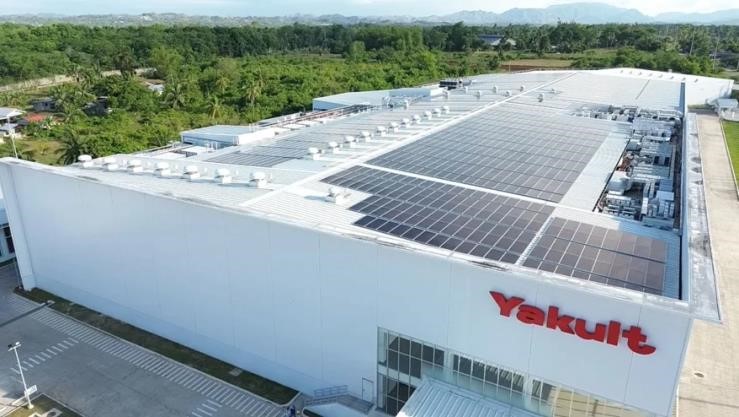
- Tokyo Century, a Japanese financial services firm, will establish a JV with MSpectrum, the renewables subsidiary of the Philippines’ largest electricity distributor, Meralco, and JFE Engineering.
- The goal is to develop corporate solar PPA projects in the Philippines, and install 50 MW of solar capacity by 2030, mostly for Japanese firms operating locally.
- The JV’s first project will supply a 1.46-MW rooftop PV system for Yakult Philippines’ second factory on Mindanao.
- TAKEAWAY: The venture reflects growing Japanese investment in SE Asia’s corporate renewable energy market, leveraging local utility expertise, as well as Japanese engineering and financing, to support the decarbonization of Japanese manufacturers in the Philippines.
Digital Grid adds new PPA matching feature
(Company announcement, June 24)
- Energy trading platform Digital Grid added a new feature to its corporate PPA marketplace, RE Bridge, which now has over 100 member firms.
- The new addition allows electricity buyers to post preferred contract terms – price, location and contract duration – and negotiate directly with renewable energy suppliers without waiting for the platform’s quarterly matching events.
- TAKEAWAY: The update is aimed at streamlining corporate renewable energy procurement by making PPA negotiations faster, and reducing the administrative burden for buyers.
Chubu Electric Miraiz agrees on DR services for residential BESS
(Company statement, June 18)
- The DR service, Nacharge Link Battery, will be available to household batteries remotely controlled by GridShare.
- CONTEXT: Chubu Electric Miraiz launched Nacharge Link Battery in 2023 to automatically control residential batteries during DR events. Since 2018, GridShare has offered an AI-based battery charging and discharging optimization service.
- SIDE DEVELOPMENT:
- Suzuyo Shoji inks deal for DR
- (Company statement, June 17)
- Suzuyo Shoji will partner with Greenphard Energy, which develops EMS using DR for refrigeration, freezing and air conditioning systems.
- The service aims to reduce energy consumption by installing IoT devices on high-load equipment, such as refrigeration, freezing and air conditioning systems.
GBP launches all-in-one assistance service for BESS projects
(Company statement, June 18)
- GBP launched an all-in-one service, “One Stop”, covering all stages of a BESS project, from early development to equipment installation.
- CONTEXT: GBP is a company involved in the renewable energy business and the provision of equipment, such as cables for solar power plants.
- Services include:
- Addressing operational issues associated with BESS deployment, such as equipment delivery delays;
- Coordinating with transportation providers (sea and air freight operators) and obtaining permits for transporting BESS equipment;
- Storing equipment prior to final delivery;
- Managing fire safety compliance.
- CONTEXT: The service aims to streamline project execution by reducing the number of parties involved, leveraging GBP’s established relationships with EPC contractors, logistics providers, and local fire departments.
- SIDE DEVELOPMENT:
- UPDATER to develop environmental attribute tracking for BESS
- (Company statement, June 26)
- UPDATER launched a project with the University of Tokyo to develop battery charging and discharging tracking technology.
- The technology aims to identify, on an hourly basis, when and where the electricity stored in a battery was generated, in order to certify that the electricity discharged from a BESS originates from renewable energy sources, including electricity stored during the day and reinjected into the grid at night.
- CONTEXT: As BESS are charged from multiple electricity sources and repeatedly alternate between charging and discharging with the grid, it is difficult to determine the origin of the electricity or to attribute it to a specific power plant.
JICN invests ¥200 million in compact EVs
(Company statement, June 19)

- The MoE-backed JICN (Japan Green Investment Corp for Carbon Neutrality) invested ¥200 million in Lean Mobility, a company specializing in compact EVs.
- The firm’s first EV, Lean3, is designed for short-distance travel, such as deliveries.
- CONTEXT: Last-mile delivery electrification refers to the final stage of goods delivery. Thanks to its compact size, the Lean3 requires little parking space, making it suited to urban deliveries.
- TAKEAWAY: In 2023, the entire transport sector accounted for 19% of Japan’s CO2 emissions, with road transport accounting for over 80% of the sector’s emissions. As e-commerce expands, the carbon footprint of last-mile deliveries is a major concern. Compact EVs and other low-emission delivery vehicles, such as cargo ebikes, are seen as a solution.
- SIDE DEVELOPMENT:
- Plugo secures EV charging investment
- (Company statement, June 26)
- EV charging platform Plugo raised ¥300 million from state-backed Japan Green Investment Corp for Carbon Neutrality (JICN), bringing total funding to ¥3.2 billion.
- The investment is JICN’s first in the EV charging sector.
- Plugo will use the funds to expand its next-gen charging platform, strengthen partnerships with automakers and businesses, and accelerate deployment of an open, interoperable charging network that’s less reliant on state subsidies.
- TAKEAWAY: The investment supports Japan’s push to expand its EV charging network to 300,000 charging points by 2030, with greater emphasis on improving interoperability, reliability and private-sector-led deployment.
MIRAI-LABO launches solar pavement in public spaces
(Company statement, June 26)
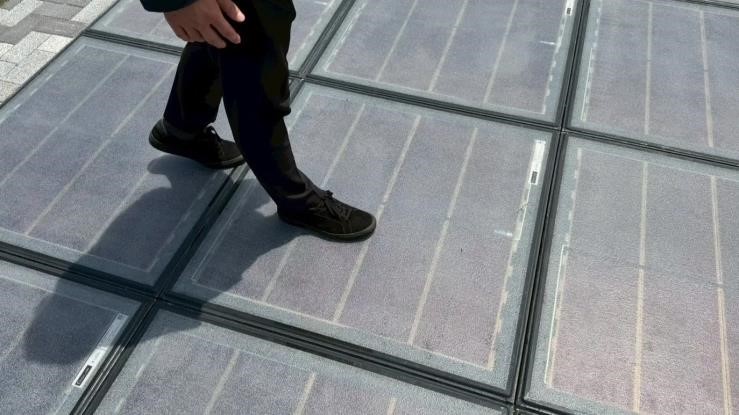
- MIRAI-LABO, a clean-tech firm in Tokyo, launched Solar Mobiway block, a solar pavement panel that can be installed on sidewalks and public spaces.
- The firm aims to generate renewable power without using additional land or clearing forests for solar farms. It plans to expand deployment to municipalities, commercial facilities, schools, and sites across Japan.
- It will capture sunlight from multiple angles and remain durable enough so it can withstand pedestrian traffic.
- TAKEAWAY: Beyond generating electricity, the system highlights a broader shift toward decentralized energy infrastructure, pairing solar generation with battery storage to provide backup power for public spaces during disasters and grid outages. The launch also reflects growing interest in multi-functional urban infrastructure that combines renewable power generation, energy storage and resilience. While solar pavements remain a niche tech globally, it holds potential for public spaces where conventional rooftop or ground-mounted solar is impractical.
NEWS: WIND POWER AND OTHER RENEWABLES

Equinor to exit offshore wind in Japan and South Korea
(Company statement, media reports, June 26)
- Norway’s Equinor will end its offshore wind business in Japan and South Korea by late 2026, closing its Tokyo office as it refocuses on integrated power markets and priority projects, including offshore wind in the UK.
- The company failed to secure any projects in Japan’s offshore wind auctions, despite bidding in R1 and R3 via local consortiums; and it didn’t win projects in South Korea.
- Equinor will continue cooperation with Japanese firms in tech development, commodities, capital markets and supply chains through global operations.
- TAKEAWAY: Equinor’s exit could be read as another foreign developer giving up. One more way to view this is that Japan is a difficult market for overseas players that rely on global credentials without building a deep local execution platform. Offshore wind in Japan requires long-term local staffing, supply-chain work, community engagement, auction discipline and patience through regulatory uncertainty. The companies most likely to remain are those willing to treat Japan less as a tender opportunity and more as a long-cycle industrial market. While Equinor’s decision probably says as much about portfolio discipline and allocation of management attention, the timing seems odd given the upcoming opportunities via a R1 retendering and R4.
- SIDE DEVELOPMENT:
- Norway’s NGI and OYO to partner for geotechnical service for offshore wind
- (Company statement, June 24)
- TAKEAWAY: The deal strengthens NGI’s presence in Japan’s offshore wind sector. As projects move into deeper, more complex waters, expertise in site characterization and geohazard assessment are crucial to reduce project risk and improve bankability. This deal highlights that while Japan’s offshore wind market is challenging for developers, as reflected by Equinor’s planned exit, it still offers opportunities for specialist engineering and supply chain firms in project development. See this issue’s Analysis section for more on geotechnical challenges in Japan’s offshore wind sector.
MoE launches support program for floating offshore wind planning
(Government statement, June 22)
- The MoE launched a grant program to support local govts, companies and organizations in preparing plans for floating offshore wind projects.
- The scheme will fund feasibility studies, local stakeholder engagement and business planning for projects aimed at local renewables production and consumption, with subsidies covering up to 50% of eligible costs. Applications are open until July 15.
- TAKEAWAY: The initiative is designed to accelerate community-based floating offshore wind development by helping regions prepare bankable projects and local energy business models ahead of future deployment.
Chiba Bank enters onshore wind via Choshi repowering project
(Nikkei, June 22)
- Chiba Bank will finance a ¥9.6 billion wind farm modernization project in Choshi City, Chiba Pref.
- Led by Choshi Renewable Energy Power, the aging turbines will be replaced with four 4.2 MW turbines (16.8 MW total) and include a BESS.
- Upgrade work begins in FY2028.
- TAKEAWAY: The project is positioned as a model for repowering Japan’s ageing FIT-era wind farms, with a regional bank financing and developing renewable energy to support local industry decarbonization and stable electricity prices.
JOGMEC to help municipalities develop geothermal energy
(Company statement, June 23)
- JOGMEC is accepting applications for its “Geothermal Model Area” program to develop geothermal energy and improve its social acceptance.
- CONTEXT: The program was set up in 2019 to provide subsidies and technical support to municipalities promoting geothermal development.
- This effort targets regions without existing geothermal facilities, especially those in the exploration stage.
- TAKEAWAY: The initiative supports regional revitalization and tourism by improving public perception of geothermal energy. It’s an effort to address concerns in areas where geothermal projects are perceived as conflicting with hot spring tourism.
NEWS: NUCLEAR ENERGY

Govt maps ¥30 trillion in GX and fusion investments through FY2040
(Government statement, June 24)
- The govt presented a roadmap for more than ¥370 trillion in cumulative public and private investment across 17 strategic fields by FY2040.
- Of the total, ¥28.8 trillion is allocated to the GX field, including PSCs, hydrogen, green steel, nextgen geothermal, offshore wind, next-gen nuclear reactors and GX chemicals. Fusion energy accounts for a further ¥3.1 trillion.
- For PSC, the govt will support both lightweight film-type cells for walls and other new installation sites, and high-efficiency tandem cells. The roadmap targets GW-scale mass production before 2030 and about 20 GW of domestic deployment by 2040 – in line with prior sector targets.
- For hydrogen and ammonia, the roadmap calls for private investment in supply chains via the long-term decarbonized power sources auction (LTDA) and other measures; and points to new or replacement demand for mixed-firing and dedicated gas turbines.
- For next-gen geothermal, the govt plans to start demos at multiple sites in 2026, while offshore wind policy will focus on attracting foreign turbine makers and building an Asia-Pacific manufacturing base.
- For next-gen reactors, the roadmap calls for stronger supply chains, corporate PPAs and improved investment predictability, while strengthening govt financing support for nuclear R&D.
- Shipbuilding now includes LNG carriers. Japan has not built LNG carriers since 2019, but the roadmap aims to establish the capacity to build three to five vessels per year after 2035, supported by stable orders and workforce development.
- CONTEXT: The roadmap was presented at the Council on Economic and Fiscal Policy and is expected to be reflected in the govt’s growth strategy. The figures are not direct fiscal spending commitments; they are estimates of cumulative public and private investment that could be mobilized through domestic investment support, demand creation, market formation and industrial-policy measures.
- TAKEAWAY: The latest roadmap reinforces the Takaichi administration’s preference for large-scale industrial policy, linking energy security, GX, nuclear, fusion, data centers and supply-chain resilience into a single growth narrative. For the energy sector, the key points are probably the focus on demand creation in new sectors, such as PSC, H2, and new nuclear, rather than the money amounts themselves. As with PM Kishida’s administration, which offered up a ¥150-trillion investment plan across multiple sectors, the numbers are again estimates for what is required to achieve progress rather than financial commitments from the state. And while PM Takaichi clearly wants to allocate bigger budgets to growth sectors and technologies, how much her administration will be able to assign is far from clear.
Final price tag on Rokkasho spent fuel reprocessing plant to reach ¥16 trillion
(TBS News Dig, Japan NRG, June 23)
- The final cost for completing JNFL’s Rokkasho spent nuclear fuel reprocessing plant has risen to ¥15.98 trillion, an increase of ¥360 billion from the previous year’s estimate and the highest so far.
- This total includes construction costs, 40 years of operation costs, and post-operation decommissioning.
- The main driver is the cost of construction work to meet the NRA’s new regulatory safety standards. Construction costs alone rose by ¥180 billion to ¥3.92 trillion.
- Also, the total cost for the MOX fuel plant at the same site rose to ¥80 billion, reaching ¥2.68 trillion.
- SIDE DEVELOPMENT:
- White paper stresses importance of nuclear fuel cycle
- (Government statement, June 23)
- The cabinet released the 2025 edition of Japan’s Nuclear Energy White Paper on the importance and challenges of the nuclear fuel cycle policy. o It states the nuclear fuel cycle can help reduce the volume of high-level radioactive waste; but the unfinished system is misunderstood by the public.
- While the Rokkasho plant has faced repeated construction delays, regulatory review for its operation is almost complete.
- The white paper also discusses reconstruction efforts in Fukushima, as well as measures to address the shortage of skilled personnel in the nuclear sector.
- TAKEAWAY: Reprocessing spent fuel, which is ~95-97% reusable uranium and plutonium, reduces the volume and danger of high-level radioactive waste. This eases long-term storage and disposal challenges compared to a once-through cycle. Rokkasho is central to this, though operational delays and costs have been significant issues. Critics argue the cycle is uneconomic or a “pipe dream” in practice, but official policy prioritizes security and resource maximization over pure economics.
TEPCO to dissolve third-party committee overseeing its nuclear operations
(Nikkei, June 23)
- TEPCO held the final meeting of its Nuclear Reform Monitoring Committee that was established in 2012 to oversee TEPCO’s nuclear operations following the Fukushima disaster. The committee will cease to exist.
- The committee concluded that “nuclear safety awareness has taken root” at TEPCO.
- The report cited the recent Kashiwazaki-Kariwa NPP shutdown, following alarms, as evidence of successful safety efforts.
- CONTEXT: In April, TEPCO began Kashiwazaki-Kariwa Unit 6 commercial operations. TEPCO President Kobayakawa said “restart is not the goal but the start.” He pledged to continue improving plant safety.
Chugoku Electric to develop Shimane NPP Unit 3
(Japan NRG, June 26)
- At a recent shareholder meeting, Chugoku Electric addressed concerns over its lagging stock price compared to its peers.
- To improve capital efficiency and profitability, the company plans to develop the Shimane NPP Unit 3 and the Yanai Thermal Power Plant Unit 2.
- Also, the company rejected shareholder proposals to withdraw from nuclear power. It is exploring joint development of an interim spent nuclear fuel storage facility.
- SIDE DEVELOPMENT:
- Ohi NPP Unit 4 resumes full operations
- (Company statement, June 22)
- Ohi Nuclear Power Plant Unit 4 resumed full-scale operations.
- Since March 4, it was in periodic inspection, with reactor startup on May 26 and criticality on May 27.
NEWS: TRADITIONAL FUELS

INPEX prioritizes Central Asian crude amidst Persian Gulf crisis
(Diamond, June 24)
- INPEX VP Takimoto Toshiaki discussed the firm’s response to the Iran war.
- INPEX handles 500,000 barrels of crude oil per day; 70% from the Middle East.
- Takimoto said the prolonged Hormuz disruption has forced Japan to rethink its energy strategy. The country has been too dependent on the Middle East. INPEX’s future direction is to balance overseas oil field development with domestic clean energy.
- The blockade impacts shipments via the Persian Gulf, but the company’s operations are in part insulated because ADNOC’s overland pipeline from the Habshan field to the Port of Fujairah (1.8 million barrels/ day) is not impacted by the conflict.
- The company also switched Central Asian oil away from spot sales to Europe and toward supply for Japan. This was possible thanks to advance preparations based on lessons learned from past oil crises.
- About 70% of INPEX’s net profit comes from the Ichthys LNG project in Australia, not the Middle East.
Survey: 70% of firms impacted by naphtha supply shortage
(Teikoku Databank, June 23)
- Teikoku Databank surveyed the impact of the Iran war on the supply of petroleum products. It focused on naphtha and had 4,604 valid responses.
- Results show that impact has intensified compared to March and April, according to 69.4% of companies polled.
- 32.6% said that the impact has further worsened, while 36.8% said it has slightly worsened. 18.4% saw “no major change,” and 10.2% saw “no particular impact.”
- 83.9% cited rising raw material/parts costs, while 73% cited unstable procurement/ difficulty in sourcing. 50.2% cited longer procurement lead times.
- Companies are taking countermeasures such as securing inventory (51.7%) and revising prices (39.5%). Others are renegotiating delivery dates, prices, and specifications with customers (37.8%).
- CONTEXT: Teikoku Databank said the ability to respond varies. It depends on a firm’s profitability to absorb price hikes, and capacity to secure inventory. Looking ahead, it emphasized the importance of understanding the entire supply chain.
- TAKEAWAY: For more on the Iran war’s impact on Japan’s energy supplies, see Japan NRG April 20 and June 22 Analysis sections.
Tokyo Gas to invest ¥350 bln in U.S. gas expansion
(Japan NRG, June 26)
- Focusing on overseas expansion, Tokyo Gas will invest ¥350 billion between FY2027 and FY2029 to develop shale gas and manage LNG plants in the U.S.
- To protect against potential U.S. policy shifts, Tokyo Gas will limit its investments to projects that do not depend on govt support.
Itochu Enex supplies biofuel blend to vessel in Fukuoka Pref
(Company statement, June 18)
- Itochu Enex supplied a biofuel blend to a ship at Hakata Port (Fukuoka Pref).
- The biofuel was supplied by Idemitsu Kosan, which delivered a B24 blend mixed with conventional VLSFO (Very Low Sulfur Fuel Oil).
- CONTEXT: VLSFO is the standard bunker fuel in the maritime industry and must contain no more than 0.50% sulfur by mass to reduce sulfur oxide emissions.
- TAKEAWAY: B24 is a common choice among marine and industrial applications compared with higher blends such as B50 or B100; it’s compatible with conventional diesel engines without major modifications (no filter clogging risk). B30 is considered the upper operational limit for biofuel blends in conventional diesel engines.
JERA considers coal-linked PPAs to limit emergency power costs
(Company statement, Japan NRG, June 24)
- JERA is considering offering long-term PPAs that include coal-fired power as early as this summer, as part of measures to reduce customer exposure to high LNG prices during emergencies.
- The company said the cost benefits of coal-fired generation are unlikely to reach customers through wholesale market sales alone. To pass on those benefits, coal-fired power would need to be secured in advance through PPAs with retailers.
- JERA estimates that under emergency conditions, using both LNG and coal-fired generation could reduce Japan’s annual generation costs by about ¥3 trillion compared with relying only on LNGfired generation.
- JERA said coal-fired generation should be reduced under normal conditions, particularly in lowerdemand spring and fall periods, to lower CO2 emissions, but used more flexibly during emergencies to reduce spot LNG procurement and customer costs.
- The company is also strengthening its LNG value chain through U.S. shale gas interests, long-term LNG contracts from the U.S., Qatar and Malaysia, and portfolio optimization across procurement, shipping, terminals and sales.
- CONTEXT: PPAs are usually discussed as a tool for procuring renewable electricity. JERA is using the term differently here: as a long-term power supply contract that can pass through the cost benefit of coal-fired generation during periods of fuel-market stress. Its argument is that wholesale market sales alone may not deliver the same customer-cost reduction during emergencies.
- TAKEAWAY: JERA’s proposal shows how the meaning of PPAs is widening in Japan. In renewables, PPAs are mainly a decarbonization and price-hedging tool; here, JERA is presenting them as an emergency fuel-risk hedge that lets retailers secure cheaper coal-linked supply before LNG prices spike. The logic may be uncomfortable but commercially clear: if Japan wants to preserve LNG inventories and limit customer costs during a geopolitical shock, some coal capacity needs to remain contractable rather than only dispatched through the market. The risk is that emergency resilience becomes a justification for keeping coal assets commercially relevant for longer, even as JERA says normal-period coal output should fall and decarbonization through ammonia and CCS will continue. Separately, JERA noted that it is investing ¥5 trillion between FY2024 and FY2035 into low-carbon assets.
- SIDE DEVELOPMENT:
- J-Power considering long-term operation of existing coal-fired power plants
- (Nikkei, June 25)
- At its annual shareholders’ meeting, J-Power President Kato said the firm could extend operation of its coal-fired power plants due to energy security concerns.
- J-Power plans to unveil a new medium-term management plan in spring 2027.
- Kato said the plan to invest in renewables and nuclear power is unchanged.
- Ohma NPP, under construction with a target start date of 2030, was discussed. J-Power said that due to safety reviews, operation as scheduled will be difficult.
Mitsubishi Power and LNGPH ink energy deal in Philippines
(Company statement, June 22)
- Mitsubishi Power signed a long-term parts and services deal with LNGPH (Philippines) for the 1.2 GW Ilihan power plant in Batangas.
- CONTEXT: LNGPH is an integrated LNG import and regasification terminal and gas-to-power complex in Batangas with a total installed capacity of 2.5 GW, supporting supply of natural gas for power generation in the Luzon grid.
- The deal extends power supply until 2040; Mitsubishi Power will provide critical parts and services to the Ilihan Plant; Mitsubishi Power supplied M501G gas turbines to the plant in 2002.
- CONTEXT: Mitsubishi Power is strengthening its presence in the Philippines; it’s the only firm in the country’s energy sector with a local engineering and service hub. It supplies the equipment for over 25% of the Philippines’ total installed capacity.
Sojitz to sell UK oil and gas subsidiary
(Company statement, June 25)
- Sojitz Corp will sell its UK oil and gas subsidiary, Sojitz Energy, to NEO Energy.
- CONTEXT: The divestment is part of Sojitz’s broader strategy to withdraw from all oil interests by 2030.
- TAKEAWAY: Sojitz Energy has been an unprofitable venture, with consecutive losses over the past three years, including a net loss of $8.4 million in FY2025. Selling this asset allows Sojitz to improve asset efficiency.
MOL expands contracts for bio-LNG in Europe
(Company statement, June 18)
- Mitsui O.S.K. Lines (MOL) renewed and expanded contracts with Titan and Axpo for bio-LNG fuel supply for its LNG-fueled car carriers in Europe.
- This builds on a March 2025 supply agreement with Titan in northwest Europe. The contract with Axpo is new, for bio-LNG supply in the Mediterranean region.
- CONTEXT: Bio-LNG is liquefied methane derived from biomass such as livestock and food waste. It reduces lifecycle GHG emissions, achieves carbon neutrality, and utilizes existing LNG infrastructure.
- SIDE DEVELOPMENT:
- Kanadevia Inova to develop biomethane in Sicily
- (Company statement, June 24)
- Kanadevia’s Swiss subsidiary, Kanadevia Inova, will develop a biomethane production plant in Italy, covering EPC services with a 20-year O&M contract.
- The plant, located in Sicily, will produce about 4.42 million standard cubic metres of biomethane per year, using Kanadevia Inova’s wet anaerobic digestion tech.
- The biogas produced will be upgraded, through a membrane separation system, into biomethane with a purity level comparable to that of conventional natural gas.
LNG stocks up from previous week, down YoY
(Government data, June 24)
- As of June 21, the LNG stocks of 10 power utilities were 2.11 Mt, up 3.4% from the previous week (2.04 Mt), down 5.4% from end June 2025 (2.23 Mt), and down 0.5% from the 5-year average of 2.12 Mt.
May Oil/ Gas/ Coal trade statistics
(Government data, June 17)
| Imports Volume YoY Value (Yen) YoY | ||||
| Crude oil | 4.7 million kiloliters (29.7 million barrels) | -57.3% | 539.2 billion | -28.5% |
| LNG | 4 million tons | -15.1% | 391.9 billion | -3% |
| Thermal coal | 6.6 million tons | 14.1% | 148.2 billion | 47.3% |
NEWS: CARBON CAPTURE & SYNTHETIC FUELS

JOGMEC tests CO2 leakage behavior from buried pipelines
(Government statement, June 26)
- JOGMEC conducted CO2 leakage tests from a buried pipeline to verify simulations of how leaked CO2 diffuses through soil and reaches the surface.
- The test used a trench filled with layers of native soil and crushed stone, with an asphalt surface layer. CO2 was injected at a depth of 1.2 meters to simulate leakage from an underground pipeline.
- Five-hour injection tests were conducted at two high flow rates, about 20 L/min and 45 L/min. At 20 L/min, the CO2 remained largely trapped in the soil, with no notable surface leakage. At 45 L/min, CO2 reached the surface.
- TAKEAWAY: Pipeline leakage is a practical risk that CCS projects need to manage as CO2 transport networks expand. The test does not show that leakage can be prevented, but it helps improve models for how CO2 behaves after a leak and how quickly it may reach the surface. JOGMEC plans further work on simulations covering both soil and atmospheric diffusion, including cases that reflect realistic pipeline safeguards.
ANALYSIS
BY MAGDALENA OSUMI
Japan’s Offshore Wind Debate is Moving Beyond Auction Design
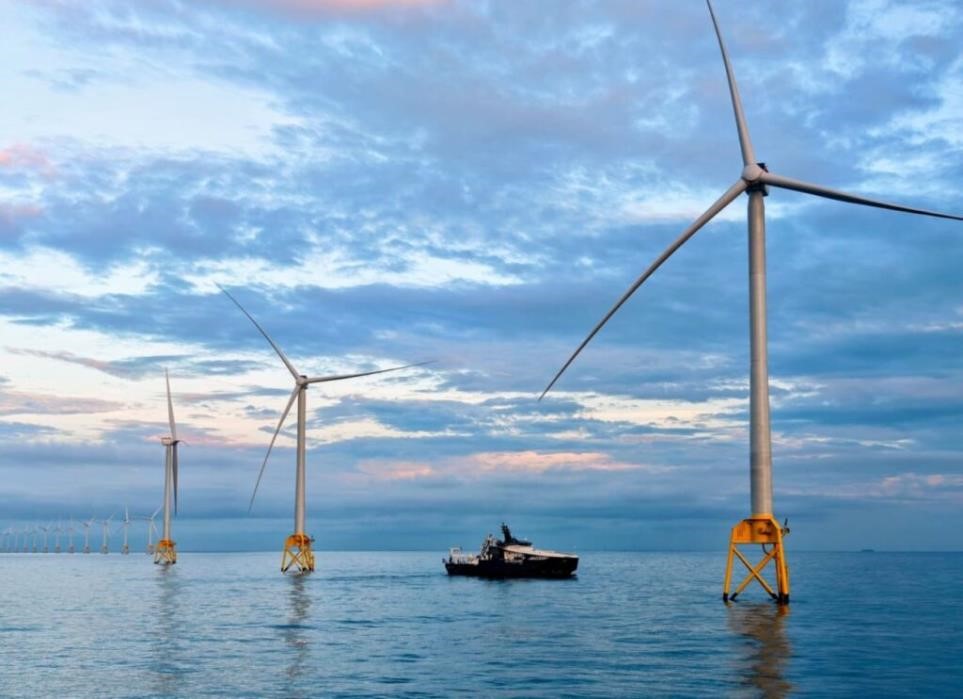
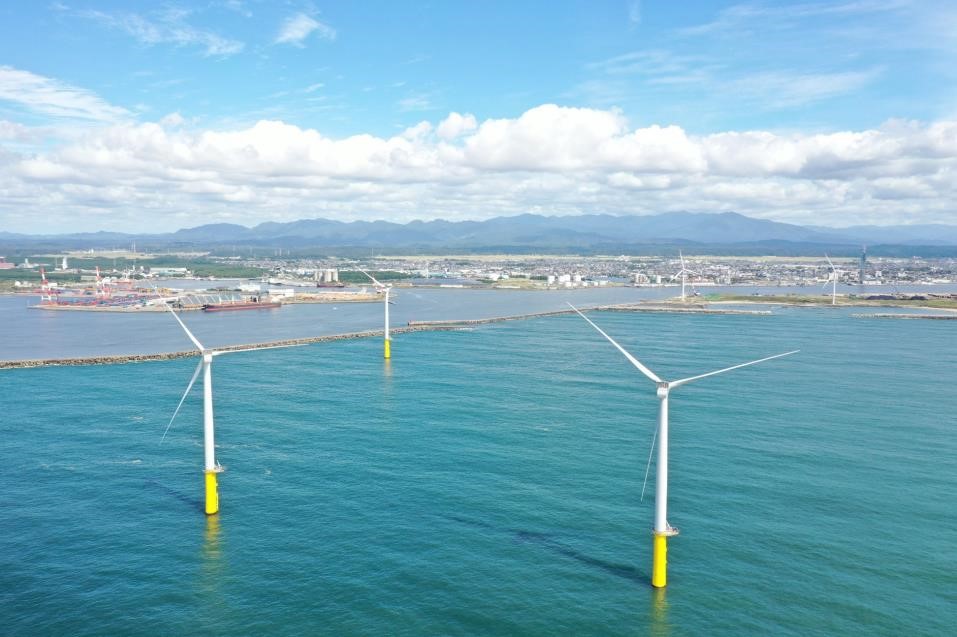
For the past several years, Japan’s offshore wind industry has worried about auction rules, pricing, withdrawal conditions and the level of state support. Those complaints have not entirely disappeared. But today developers are pointing to a different set of obstacles: the geotechnical uncertainty created by Japan’s tectonic setting, steep seabed topography and exposure to geohazards such as earthquakes and typhoons.
The policy side is at least starting to move. On June 5, METI and MLIT announced the most significant upgrade so far to Japan’s annual offshore wind auction framework. The revised rules place greater weight on project feasibility rather than price alone, while JOGMEC is set to provide seabed geological survey data to reduce early-stage uncertainty for bidders.
Policy updates, however, have not resolved the question of how offshore wind projects are surveyed, certified and financed in Japanese waters. Developers may still face more costs and delays because project surveys and testing often need to satisfy local requirements and international standards required by insurers, lenders and certification bodies.
The result can be duplicate geotechnical investigations, seabed surveys and engineering assessments, effectively requiring some aspects of site characterization and due diligence to be verified twice. Auction rules can be improved by ministries. The seabed, and the standards used to assess it, are less easily simplified.
That is not a bad sign. A sector still arguing mainly about auction rules remains stuck at the starting line. One debating seabed data and certifications is beginning to grapple with the practical demands of project execution.
Regulatory framework
The challenge stems in part from the regulatory and certification framework governing offshore wind projects in Japan. While domestic regulations generally do not prescribe specific foundation designs, developers must demonstrate that geotechnical and geological risks have been adequately assessed and managed.
This often requires compliance with a combination of domestic and international standards, including IEC 61400-3 for offshore wind turbines and IEC 61400-3-2 for floating wind, as well as DNV offshore standards, ClassNK guidelines, and requirements under Japan’s Electricity Business Act, Marine Renewable Energy Act and Port and Harbor regulations.
Survey data collected to satisfy Japanese permitting requirements may also need to undergo further analysis, validation or independent certification to meet the expectations of international insurers, financiers and certification bodies.
Industry members argue that this can increase development costs and extend project timelines, particularly in Japan’s complex offshore environment, where seismic activity, typhoons and challenging seabed conditions often require more extensive site investigations than in European markets.
Geotechnical challenges
The issue extends beyond the regulatory framework. Developers claim that the government’s provision of geological survey data represents an important step forward, but does not fully address the challenges associated with offshore site investigations. They add that the baseline data provided by JOGMEC is valuable for regional screening and early project planning, but does not offer the level of site-specific information required for foundation design and risk assessment.
Although Japanese and international frameworks rely on similar investigation methods – including CPTs, boreholes and geophysical surveys – differing expectations regarding data density, testing scope and independent verification may necessitate additional studies.
As a result, developers may still need to commission extensive geotechnical and geohazard assessments, which raises questions over how much the new measures will ultimately reduce development costs and the overall survey burden.
Japan has relied more heavily on SPT-based (Standard Penetration Test) investigations, while the global offshore wind industry, particularly in Europe, has moved toward dense CPT-based (Cone Penetration Test) site characterization. This difference is one reason some international developers and certifiers are concerned about whether the available public datasets in Japan will provide sufficient information for detailed foundation design.
A recent academic review on floating offshore wind in Japan, published on March 30, notes that CPT investigations are uncommon domestically. That matters because the government sees floating technology as key to accelerating offshore wind deployment, while CPT surveys are easier to conduct in deep water and are widely used internationally for offshore wind foundation design.
JOGMEC has also commissioned studies on CPT data and European seabed investigation practices, suggesting recognition that mature offshore wind markets place greater emphasis on CPT-based site characterization. Yet in Japan, this approach has yet to be fully validated, standardized, or widely trusted for offshore geological conditions.
In other words, Japan’s technical study process is still in transition. JOGMEC’s centralized dataset should reduce some early-stage uncertainty, but it will not by itself settle questions over methodology, data density or bankability.
The larger task is to build confidence that Japan’s offshore investigation practices can satisfy both domestic procedures and expectations of international developers, certifiers, insurers and lenders. State-backed surveys could play an important role not only in expanding the available data, but in helping establish a common technical standard for Japan’s offshore wind market.
Bankability
Industry players note that geotechnical uncertainty is not merely a technical issue, but also a financing challenge. Lenders and insurers require a high degree of confidence in seabed conditions, foundation performance and geohazard risks before committing capital.
The challenge is not simply obtaining more data, but obtaining data of the right quality, density and credibility. Where site data is limited, or investigation methodologies are not widely recognized internationally, developers may face higher financing costs, additional due diligence requirements and larger risk premiums.
Taiwan offers a useful comparison. Ørsted did not take a final investment decision on Greater Changhua 2b and 4 until 2023, roughly five years after the project secured capacity in Taiwan’s 2018 auction. During that period, developers completed extensive engineering work, supply-chain planning, permitting and risk assessment before lenders and investors were prepared to finance construction.
Similarly, the 1 GW Hai Long project was awarded capacity several years before offshore construction began in 2024. Developers carried out site investigations, foundation design and certification work before installation commenced. The lesson is not that Japan should expect identical timelines, but that offshore wind projects in geologically complex markets often require a long period of technical de-risking before they become bankable.
Geohazards
For Japan, offshore wind site investigations need to go beyond what is required in the North Sea. Unlike EU markets, offshore wind projects in Japan need to be designed for the combined effects of seismic activity, typhoon-driven waves and currents, as well as complex seabed conditions.
Assessing how foundations, anchors and cables perform under these remains an area where both data and operational experience are limited. Developers need to answer these questions:
- Can the seabed support the turbines?
- Will earthquakes damage the foundations?
- Will typhoons and extreme waves exceed design loads?
- Could secondary hazards (liquefaction, scour, submarine landslides, tsunami) undermine the project?
Developers must also conduct site-specific seismic hazard assessments, liquefaction studies, tsunami and submarine landslide analyses, and detailed metocean modelling to evaluate extreme wind, wave, current and storm surge conditions.
These investigations are essential to ensure turbines, foundations, cables and mooring systems can withstand both seismic events and severe weather in the course of their operational lifetime.
Lessons for Japan
Taiwan’s offshore wind sector, particularly projects in the Changhua region, provides a relevant reference for Japan, as both markets face similar challenges related to earthquakes, typhoons and complex seabed conditions.
Taiwan’s projects required extensive geotechnical investigations, liquefaction assessments, seismic hazard studies and typhoon-specific modelling before they could move into construction. They also adopted larger 14–15 MW turbines and jacket foundations in deeper waters, a useful reference for the engineering challenges Japan is likely to face.
Greater Changhua and Hai Long are real-world laboratories for the approaches that Japan is likely to require as it scales up offshore wind development. Taiwan’s lessons suggest that reducing geotechnical uncertainty is often a prerequisite for achieving bankability.
Industry players say JOGMEC’s surveys may help with early-stage screening, but insurers and lenders will ultimately require site-specific evidence that foundation, cable and mooring risks have been quantified and mitigated. The challenge is whether Japan can reduce subsurface uncertainty to a level acceptable for large-scale investment.
In offshore wind, geological risk is financial risk. Until developers, lenders and regulators have greater confidence in site conditions, geotechnical uncertainty is likely to remain a significant obstacle to project delivery.
ANALYSIS
BY TETSUJI TOMITA
Energy’s Holy Grail? The Search for Natural Hydrogen
Natural hydrogen, also known as white hydrogen or geologic hydrogen, has become one of the more intriguing prospects in the energy transition.
Its appeal is easy to understand. Unlike green hydrogen, it does not need to be produced with large volumes of renewable electricity. Unlike blue hydrogen, it does not depend on fossil-fuel reforming and carbon capture. If it can be extracted at scale from underground reservoirs, it could offer a low-carbon fuel with fewer production steps than today’s main hydrogen pathways.
That possibility has drawn interest from a growing number of countries, including Japan. Natural hydrogen is generated by geological processes and, in theory, can be recovered in a way closer to oil or natural gas extraction than to industrial hydrogen production.
The attraction is considerable. A commercially viable natural-hydrogen resource could lower costs, reduce pressure on power systems and provide another route to decarbonizing hard-to-abate sectors such as steel, chemicals and heavy transport.
But there are a number of uncertainties around this theoretical Holy Grail of clean energy resources. It is not yet clear where natural hydrogen can be found in commercially useful volumes, how quickly reservoirs regenerate, how extraction should be regulated, or whether projects can be profitable outside a few favourable geological settings.
Natural hydrogen may therefore be best seen not as a ready-made answer to the hydrogen economy’s problems, but as a high-potential resource still searching for proof. If proponents are right, it could become a valuable new energy source. And if not, it may remain another promising technology whose geology, economics and engineering fail to align.
Mother Nature’s gift
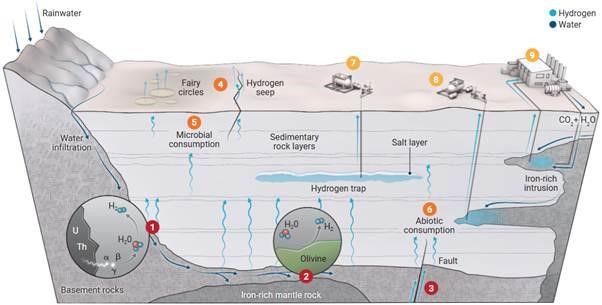
Natural hydrogen is molecular hydrogen (H2) generated naturally within the Earth’s crust through geological processes. The main formation mechanisms are serpentinization (reaction of water with iron-rich rocks), radiolysis (dissociation of water by radiation from radioactive isotopes in rocks), and gas release from deep geological sources, such as the mantle.
The U.S. Geological Survey (USGS) estimates global in-place geologic hydrogen resources at about 5.6 million megatons, though that figure is not equivalent to recoverable reserves. The main extraction challenges are: distribution, depth, and accessibility.
Earth’s hydrogen factories
Global Development Trends
World Natural Hydrogen Site
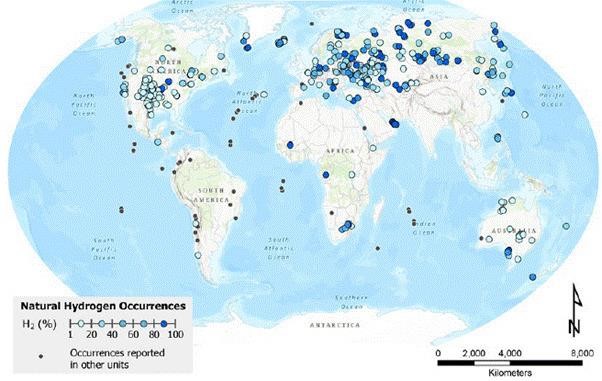
Interest in natural hydrogen has expanded rapidly since the early 2020s. Exploration is underway across Australia, Europe, North America, South America, and the Middle East. The best-known site to date is the Bourakébougou field in Mali, where high-purity hydrogen was discovered in 2012 and has been used to generate electricity for a local village.
Developed by Hydroma, a Canadian company, the project has confirmed several hydrogen reservoirs and has provided important evidence that natural hydrogen is continuously replenished underground. While large-scale commercial production has not yet been achieved, Bourakébougou has stimulated exploration efforts across the globe.
Major Global Projects
| Company / Organization | Headquarters | Project Location | Overview |
| Hydroma | Canada | Bourakébougou, Mali | Since 2012, conducting non-commercial pilot power generation projects in rural villages, in 2017-2019, drilled 24 wells |
| Koloma | U.S. | Idaho and Kansas, U.S. | Often viewed as the sector leader in terms of capital raised |
| HyTerra | Australia | Kansas and Nebraska, U.S. | One of the most visible listed natural hydrogen explorers |
| Gold Hydrogen | Australia | South Australia | One of Australia’s headline natural hydrogen projects |
| Mantle8 | France | Pyrenees, France | One of Europe’s best-funded emerging players, combining exploration with subsurface technology |
| La Française de l’Énergie (FDE) | France | Lorraine, France | Hydrogen findings in Lorraine and a large exploration permit application |
| Helios Aragón | Spain | Spain | Developer of Europe’s first natural hydrogen production project |
| Max Power | Canada | Saskatchewan, Canada | One of the main Canadian firms pursuing dedicated natural hydrogen exploration |
Developments in Japan
Japan remains at an early stage of natural hydrogen development. It has no commercialscale exploration projects, and government support remains modest compared with programs emerging in Europe, North America and Australia. Yet the resource is no longer treated simply as a scientific curiosity.
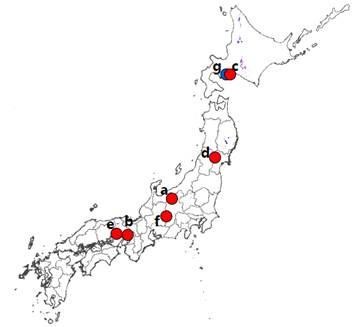
Japan has geological formations that may be favourable for natural hydrogen generation, particularly areas containing ultramafic and serpentinized rocks. In 2025, JOGMEC surveyed natural hydrogen trends and identified both the potential and the unresolved challenges facing the sector.
Its final report, released in April, JOGMEC listed several promising domestic locations, including Arima, where hydrogen concentrations of 51.4 vol% have been observed; Happo, at 34%; Noboribetsu, at 11%; and Naruko, at 3.6%. Research also estimated surface hydrogen flux at Noboribetsu Oyunuma at about 10 tons per year.
Natural Hydrogen Observed Areas in Japan
The policy signal is still tentative, but becoming clearer. Natural hydrogen was officially recognized as one of the next-generation hydrogen production technologies in the 7th Basic Energy Plan, approved by the Cabinet in February 2025. This is only a start, but it does place the technology inside Japan’s formal energy-policy framework.
The more concrete step is through NEDO’s Frontier Development Program, which supports R&D and commercialization in fields that could create new industries by 2040. Natural hydrogen was selected as a research topic under the “utilization of unused subsurface resources” category. Participants include Tohoku University, ENEOS Xplora, Hokkaido University, AIST and Kyushu University.
For now, the aim is not commercial production. It is to build the technical foundation for assessing whether natural hydrogen can become an energy resource at all. That means improving geological understanding, identifying suitable exploration methods and creating a basis for collaboration between industry, academia and government.
In summary, Japan’s approach could be categorized as cautious, but not passive. There is a real interest in understanding whether this niche can become a real industry.
Frontier Development Program for Geologic Hydrogen
| Organization | Theme |
| Tohoku University | Recovery and enhanced generation of natural hydrogen from ultramafic rocks |
| ENEOS Xplora | Assessment of natural hydrogen potential in Japan |
| Hokkaido University | Geochemical factors affecting generation and stimulation of geologic hydrogen (low temperature serpentinization) |
| AIST, JAPEX | Exploration and evaluation of hydrogen-generable rocks (potential map of geologic hydrogen in Japan) |
| Kyushu University, Kyushu Electric | Natural hydrogen resources in the Kyushu region (potential in Kyushu island) |
For now, Japan’s biggest firms seem to be focusing their efforts on gaining expertise through investments in promising overseas startups in this area, with domestic sector development a lower priority. Examples:
- MHI and Osaka Gas invested in Koloma, October 2024;
- MOL Switch invested in Koloma (U.S.), February 2025;
- ENEOS Xplora, Toyota Motor, and Mitsubishi Gas Chemical invested in Australia’s Gold Hydrogen, July 2025;
- Chiyoda Corp signed a MoU with Geokiln Energy Innovation (U.S.), December 2025.
Technical challenges
The growing interest in natural hydrogen is tempered by significant technical uncertainties. One of the most significant is a limited understanding of natural hydrogen systems, including how hydrogen is generated, how it migrates through the subsurface, and how it accumulates in reservoirs and is replenished over time. Reliable exploration methods and resource assessment techniques are still being developed.
Also, efficient technologies are needed to extract hydrogen from underground reservoirs and to separate it from impurities such as nitrogen, methane, carbon dioxide, and water vapor. Because hydrogen molecules are very small, preventing leakage during production, storage, and transportation is another critical challenge. Infrastructure must also be designed to withstand hydrogen embrittlement and ensure long-term safety and reliability.
Finally, environmental monitoring is required to assess impact on groundwater, ecosystems, and greenhouse gas emissions.
Economic competitiveness
The industry must show that natural hydrogen can be produced sustainably, at sufficient scale, and at a cost competitive with other hydrogen production pathways such as green and blue hydrogen. Several recent studies suggest that, under favorable geological conditions, production costs could fall below $1/ kg. This would make natural hydrogen much cheaper than many current green H2 projects, which typically face production costs of $3–8/ kg or higher depending on electricity prices and utilization rates.
Because natural hydrogen does not require electrolysers, renewable generation assets, or carbon capture facilities, capital expenditures could be substantially lower than those of alternative hydrogen production pathways.
Actual costs will depend on exploration success rates, reservoir productivity, hydrogen purity, infrastructure requirements, and project scale. As with the exploration of conventional oil and gas, drilling unsuccessful wells could lead to an increase in overall development costs.
Cost Comparison of Hydrogen Production Pathways
| Hydrogen Type | Production cost range | Status |
| Natural hydrogen (White/ geologic) | $0.5 – 1/ kg-H2 (7 – 14 ¥/ Nm3) | Highly dependent on exploration success, well flow rates, and purification costs. |
| Blue hydrogen | $2 – 4/ kg-H2 (27 – 54 ¥/ Nm3) | Established technology but reliant on fossil fuel prices, CCUS infrastructure viability, and upstream methane leak management. |
| Green hydrogen | $4 – 15/ kg-H2 (¥54 – 202/ Nm3) | Expensive due to high capital expenditures for electrolyzers and reliance on dedicated renewable energy capacity. |
Outlook for natural hydrogen
In the near to medium term, natural hydrogen is likely to remain at the stage of exploration, pilot projects and technical validation rather than full-scale commercialization.
Its appeal is clear. If commercially recoverable resources can be identified, natural hydrogen could supplement low-carbon hydrogen supply for industrial uses such as ammonia production, refining, chemicals and steel. Its future importance will depend on whether exploration can confirm meaningful reservoir volumes, whether extraction and monitoring technologies improve, and whether environmental and economic risks can be managed.
For now, however, the uncertainties remain large. Field validation is limited, commercial flow-test data is still scarce, and the sector has not yet proved that natural hydrogen can be produced reliably at scale.
Japan’s best course is therefore to treat the resource as a strategic option rather than a near-term solution: follow overseas test results, build domestic geological data, clarify the regulatory framework and avoid allowing early excitement to outrun evidence.
ASIA ENERGY REVIEW
BY JOHN VAROLI
A brief overview of the region’s main energy events from the past week
Australia / BESS
London-based Eku Energy submitted two 300 MW/ 1.2 GWh BESS projects for assessment: one is in Victoria, and the other in New South Wales.
Australia / Natural gas
Woodside Energy agreed to supply domestic gas to Alcoa Corp’s Australian unit from 2027 to 2030. Woodside will supply 31.1 petajoules of domestic gas from its Western Australian operations to Alcoa’s refineries.
China / Oil
In July, China will raise the amount of refined fuel that state-owned refiners can export to
800,000 metric tons, up from 600,000 tons in June. Domestic crude oil processing slowed to 54 Mt in May, the slowest in nearly four years. Imports slowed even faster to just 33 Mt from 38 Mt in April, and 50 Mt in March.
China / LNG
China is preparing a second LNG import terminal to receive cargoes from Russia’s Arctic LNG 2 project. Longkou LNG terminal in Shandong province begins operations in October.
India / Nuclear
Adani Group plans to develop 10 GW of nuclear power capacity by 2035 as part of a push to build an integrated energy platform spanning thermal, renewable, hydroelectric, gas-based and transmission assets.
India / Renewables
Most of India’s planned renewable energy infrastructure will be exposed to climate hazards, putting about $55 billion of assets at risk of damage by the end of this decade, said Zurich Insurance Group. Some 239 GW of proposed solar, wind and hydropower capacity across 10 states – about 90% of the total – are vulnerable to tornadoes, wildfires and extreme floods.
Indonesia / Biodiesel
Indonesia is accelerating its bioenergy transition and will launch B50 biodiesel in July. The govt says it will reduce reliance on imported fuel and expand the use of domestically produced palm oil-based energy.
Indonesia / Oil
Two tankers belonging to state-owned Pertamina remain stuck, awaiting Iranian clearance to transit the Strait of Hormuz, despite reports that other vessels were able to leave the area.
South Korea / Solar
Korea Trade Insurance Corp will provide EUR 900 million for Serbia’s 1.2 GWp solar project with BESS, to be built by Hyundai and UGT Renewables.
Taiwan / Oil
Qatar is reviving crude oil sales. A shipment of the nation’s Al-Shaheen grade was sold to Formosa Petrochemical Corp, which sought supplies for August to Sept.
Disclaimer
This communication has been prepared for information purposes only, is confidential and may be legally privileged. This is a subscription-only service and is directed at those who have expressly asked K.K. Yuri Group or one of its representatives to be added to the mailing list. This document may not be onwardly circulated or reproduced without prior written consent from Yuri Group, which retains all copyright to the content of this report.
Yuri Group is not registered as an investment advisor in any jurisdiction. Our research and all the content express our opinions, which are generally based on available public information, field studies and own analysis. Content is limited to general comment upon general political, economic and market issues, asset classes and types of investments. The report and all of its content does not constitute a recommendation or solicitation to buy, sell, subscribe for or underwrite any product or physical commodity, or a financial instrument.
The information contained in this report is obtained from sources believed to be reliable and in good faith. No representation or warranty is made that it is accurate or complete. Opinions and views expressed are subject to change without notice, as are prices and availability, which are indicative only. There is no obligation to notify recipients of any changes to this data or to do so in the future. No responsibility is accepted for the use of or reliance on the information provided. In no circumstances will Yuri Group be liable for any indirect or direct loss, or consequential loss or damages arising from the use of, any inability to use, or any inaccuracy in the information.
K.K. Yuri Group: Hulic Ochanomizu Bldg. 3F, 2-3-11, Surugadai, Kanda, Chiyoda-ku, Tokyo, Japan, 101-0062.