
WEEKLY
July 21, 2026
ANALYSIS
ELECTRICITY RETAIL LIBERALIZATION ENTERS ITS HARDER SECOND DECADE
- Japan’s electricity retail market has reached the end of its first post-liberalization phase. Market access and customer choice created the first wave of competition.
- Procurement strategy, hedging, balancing and decarbonization will shape the next one. The irony is that liberalization made it easier to enter the electricity business just as it became harder to run.
KEY FIGURES BEHIND JAPAN’S BESS MARKET: TRENDS AND OUTLOOK
- Japan’s operational grid-scale BESS capacity is nearly 1.5 GW. The buildout has accelerated since 2022. The shift marks a new phase for Japan’s battery market.
- Growth was once driven by residential systems and EVs. Now, the strongest momentum comes from stationary grid-scale BESS. Japan NRG reports on the major BESS trends.
ASIA PACIFIC REVIEW
This column provides a brief overview of the region’s main energy events from the past week
NEWS
- JERA weighs U.S. listing amid global expansion and AI power demand growth
- Govt promotes vertical AI sector strategy for energy
- Sojitz to work with Alcoa on gallium production
- EEX power futures rebounded as hedgers locked in lower prices
- ANRE proposes further revisions to 4th LTDA
- Govt proposes mechanism to keep at-risk thermal capacity available
- JFE and JSE develop Japan’s first high pressure hydrogen pipeline
- JERA, Samsung to build ammonia supply chain
- JR East to deploy Japan’s first hydrogen hybrid trains
- RTS expands solar policy report to cover BESS business support
- PXP launches a demo of tandem CSC/PSCs
- Eurus Energy enters Poland’s solar and BESS sectors
WIND POWER AND OTHER RENEWABLES
- Govt sets ¥30/ kWh cost guide for offshore wind project formation
- ANRE sets out LTDA terms for stranded offshore wind projects
- JERA invests in next-gen U.S. geothermal energy
- Rokkasho spent fuel facility to face another delay
- Kyushu Electric to export unused nuclear fuel assemblies from Genkai NPP
- Kyoto court rejects lawsuit for halting Oi NPP
- Mitsubishi buys U.S. natural gas assets of Aethon
- JOGMEC mulls sale of stakes in APAC LNG projects
- Petronas and Shizuoka Gas sign LNG supply deal
- Mexican crude shipment to arrive in Japan
CARBON CAPTURE & SYNTHETIC FUELS
- Govt proceeds in establishing CCS regulatory and financial framework
- JAPEX sets up a subsidiary for Tomakomai CCS project
EVENTS
August Asia-Pacific Economic Cooperation / Energy Ministerial Meeting
Sept 7-10 APPEC 2026 @ Singapore
Sept 9-11 Smart Energy Week (Autumn) 2026 @ Makuhari Messe (co-exhibiting H2 & FC Expo, Battery Japan, Smart Grid, Wind Expo, CCUS Expo, etc.)
Sept 9-11 Automotive World @ Makuhari Messe
Sept 14-18 IAEA General Conference 2026 @ Vienna, Austria
Sept 14-17 Gastech @ Bangkok
Oct 8 Innovations for Cool Earth Forum (ICEF) @ Westin Tokyo
Oct 13-15 Global Offshore Wind Summit – Japan 2026 @ Nagasaki
Nov 2-5 ADIPEC 2026 @ Abu Dhabi
Nov 3 U.S. Midterm Elections
Nov Publication of International Energy Agency – World Energy Outlook 2026
Nov 18-19 Asia-Pacific Economic Cooperation – Leaders Meeting @ Shenzhen, China
PUBLISHER
K. K. Yuri Group
Editorial Team
Yuriy Humber (Chief Editor)
John Varoli (Senior Editor, Americas)
Kyoko Fukuda (Data, Events)
Magdalena Osumi (Renewables & Storage)
Filippo Pedretti (Thermal, CCS, Nuclear)
Tetsuji Tomita (Power Market, Hydrogen)
Aglaé Bange (Renewables and Biomass)
George Hoffman (Sales, Business Development)
Tim Young (Design)
SUBSCRIPTIONS & ADVERTISING
Japan NRG offers individual, corporate and academic subscription plans. Basic details are our website or write to subscriptions@japan-nrg.com
For marketing, advertising, or collaboration opportunities, contact sales@japan-nrg.com. For all other inquiries, write to info@japan-nrg.com
NEWS: GENERAL OUTLOOK AND TRENDS

JERA weighs U.S. listing as global expansion and AI power demand grow
(Reuters, July 17)
- JERA began a feasibility study for a possible U.S. listing as it seeks to expand overseas and broaden its funding options.
- JERA has long viewed the Tokyo Stock Exchange as its primary listing option, but is now examining U.S. market conditions, investor demand and regulatory requirements.
- The company is owned equally by TEPCO and Chubu Electric. It has annual revenue of about ¥3 trillion, assets of around ¥10 trillion and domestic power generation capacity of 59 GW, including projects under development.
- JERA handles about 35 million tons (Mt) of LNG annually and has been expanding its LNG supply chain through upstream investment, procurement and trading, with recent investments focused on the U.S.
- The company is also considering large-scale gas-fired power plants in the U.S. to supply rising electricity demand from data centers.
- A listing could help JERA fund large energy projects, raise its profile among global investors and provide stock for future M&A.
- CONTEXT: JERA has for years been viewed as a potential listing candidate. It was created via the integration of TEPCO and Chubu Electric’s fuel and thermal power businesses, giving it a central role in Japan’s LNG procurement and thermal-power strategy. TEPCO’s stake also gives any JERA listing broader policy significance because TEPCO remains responsible for Fukushima-related costs, and its corporate value is linked to the govt’s wider TEPCO reform agenda.
- TAKEAWAY: A U.S. listing would give JERA a different story to tell investors than just a Japanese IPO. In Tokyo, power utilities trade at low valuations (well below price-to-book) and are closely associated with domestic regulation, fuel costs and nuclear policy. In the U.S., JERA could present itself as a global LNG, gas-power and infrastructure company tied to the AI data-center buildout, aligning with U.S. energy priorities, including LNG, upstream gas, power generation and data centers. The listing would strengthen JERA’s funding capacity while supporting TEPCO’s balance-sheet reform and preserving JERA’s role as the govt’s go-to energy company for LNG security and overseas expansion.
- SIDE DEVELOPMENT:
- iGrid set for Tokyo Stock Exchange listing
- (Nikkei, July 17)
- Distributed energy management firm iGrid Solutions will list on the Tokyo Stock Exchange on July 29 in an IPO.
- The firm manages distributed energy resources, including rooftop solar and BESS.
- CONTEXT: The firm also promotes local production and consumption of electricity, and expects net profit to rise 8% YoY to ¥1.7 billion in FY2026.
- TAKEAWAY: There is a surprising dearth of pure-play renewables stocks in Japan. This IPO shows growing investor interest in distributed energy management and the excitement about rooftop solar and battery deployment. iGrid’s business model reflects a broader shift toward decentralized power systems, where digital platforms, flexible demand and energy storage play an important role in integrating renewable energy and improving grid efficiency.
Govt promotes vertical AI sector strategy for energy
(Government statement, July 10)
- Japan will promote vertical AI across industry and govt to boost productivity, innovation, and competitiveness, and has identified measures to be taken by 2030 in 20 public and private sectors, including energy.
- Investment will focus on sectors with high market potential, public value, and strategic importance, while sector strategies will encourage private investment and accelerate AI transformation (AX).
- In the energy sector, the govt will promote the following:
- Vision: Use vertical AI to optimize energy management and grid operation, enabling more efficient integration of renewable energy, batteries, and demand response while reducing fossil fuel consumption and operating costs.
- Key Actions by 2030: Promote AI in power generation, transmission and distribution, city gas networks, demand response, and smart maintenance.
- TAKEAWAY: Japan’s energy strategy positions vertical AI as a key tool to improve grid efficiency, optimize energy use, and address labor shortages via industry-wide data integration. This strategy signals stronger public support for AI deployment in regulated energy infrastructure, creating opportunities for utilities, AI developers, and digital solution providers while accelerating power system digitalization and decarbonization.
Nvidia and MHI eye AI data center power cooperation
(Asia Nikkei, July 14)
- Nvidia and MHI are considering cooperation on AI data centers.
- MHI would supply cooling systems and energy management equipment.
- MHI also has a major global position in gas turbines and will explore cooperation in power infrastructure for electricity-intensive data centers.
- Nvidia calls its next-gen AI data centers “AI factories.”
- In Japan, SK Group works with Nvidia to develop an AI factory.
- CONTEXT: Nvidia dominates the global market for high-performance GPUs used in AI servers, but rising power consumption and heat generation are key constraints for AI data centers. Stable power supply and advanced cooling are critical to maintaining GPU performance and improving data center efficiency.
- TAKEAWAY: MHI’s data center-related business is small, but it sees the sector as a growth area. AI infrastructure is an energy opportunity, drawing in equipment makers, power generators and retailers as data centers need cooling, backup power and supply-demand optimization. Potential synergies are clear: large AI facilities could encourage co-location of new generation, storage and energy-management systems. But structuring this is complicated, especially where facilities remain connected to the grid and must coordinate with utilities, retailers, TSOs and local authorities.
Industry officials say Iran crisis is far from settled
(Japan NRG, July 17)
- President of the Petroleum Association of Japan Kito Shunichi described the Strait of Hormuz as unreliable, saying crude oil procurement cannot depend on it due to military clashes between the U.S. and Iran.
- He also said Japanese oil companies must avoid the Strait via alternative routes, and that this crisis is an opportunity to build a more resilient, diversified supply chain.
- Finally, he said that all trapped Japanese tankers have left the Persian Gulf.
Sojitz to work with Alcoa on gallium production in Australia
(Company statement, July 15)
- Sojitz will develop gallium production in Western Australia through its JV with JOGMEC, in partnership with Alcoa.
- The project will recover gallium as a byproduct from an existing alumina refinery, creating a new supply source for Japan and other markets.
- Gallium is a critical mineral used in LEDs, semiconductors and advanced electronics.
- TAKEAWAY: The project strengthens Japan’s critical minerals security by establishing a new, long-term source of gallium outside China, supporting domestic semiconductor and advanced manufacturing industries.
NEWS: ELECTRICITY MARKETS

EEX power futures rebounded in June as hedgers locked in lower prices
(Exchange statement, July 9)
- EEX power futures trading recovered in June after a weak May. Total volume rose to 11.4 TWh from 7.4 TWh; the number of trades rose to 1,398 from 1,031.
- EEX said the decline in futures prices, after the U.S.-Iran ceasefire, fostered recovery by encouraging long hedgers to lock in lower prices with easier margin requirements.
- Trading is focused on summer and winter hedging, but fiscal-year products saw a rise in volume, suggesting stronger demand for longer-term procurement cover.
- Short-term products also continued to grow, supported by more independence from fuel-market pricing and June weather volatility.
- Tokyo remained the largest trading area, while Chubu and Kansai showed signs of recovery after a sharp drop in April and May.
- EEX’s trading volume equaled about 40% of JEPX spot-market volume in June, down from 174% in March but still a sign that futures liquidity remains significant relative to the physical spot market.
- EEX retained almost all Japan power futures market share, at about 99.6%, even as TOCOM trading volumes also began to recover.
- The number of participants with trading records reached 129 at the end of June, split almost evenly between Japanese firms and international participants.
- CONTEXT: EEX Japan power futures include day, weekend, week, month, quarter, and fiscal-year products. Both baseload and selected peak-load contracts are available for Tokyo, Kansai and Chubu. Starting Sept 7, the EEX also plans to expand the Japan Power orderbook and clearing hours to 9:00– 18:00 JST. European Commodity Clearing (ECC) began offering margin offsets between Japan Power, JKM LNG and European energy contracts.
- TAKEAWAY: June’s rebound suggests the futures market is more responsive to shifts in fuel risk and retail hedging demand. The Iran ceasefire-driven drop in forward prices gave buyers a window to secure supply at lower levels, while lighter margin requirements improved trading capacity. The increase in fiscal-year activity points to retailers and other hedgers looking beyond near-term summer and winter exposure toward more structured procurement. At the same time, growth in short-term products shows rising demand for flexibility as weather, regional price divergence and future market reforms make power-price risk more granular. While the market remains concentrated, participant growth and recovery in Chubu and Kansai suggest that Japan’s regional futures curve is a more usable hedging tool.
ANRE proposes further revisions to 4th LTDA
(Government statement, July 14)
- ANRE proposed additional revisions to the design of the 4th Long-Term Decarbonized Power Sources Auction (LTDA), covering eight remaining issues before OCCTO publishes draft auction rules for consultation.
- The total target volume for decarbonized power sources remains 5 GW.
- The offshore wind price cap will be raised significantly. Details are covered separately in the Wind section.
- The biomass price cap will remain at ¥100,000/ kW/ year.
- The formula for offshore wind decommissioning costs will be revised. Instead of using a flat 5% of total construction costs, the calculation will include 70% of offshore construction costs plus 5% of onshore equipment construction costs.
- For renewables, the capacity-factor requirement will be relaxed. Instead of using the expected capacity factor under the FIT/FIP system, ANRE will use the lowest actual annual average capacity factor recorded over the past 10 years as the minimum threshold.
- The support period for renewables will be capped at 20 years for solar PV, wind, geothermal and biomass.
- For LNG-only generation, ANRE proposed a new fixed reimbursement option for other market revenues. Developers would be able to choose a fixed refund of ¥8,000/ kW/ year instead of the current actual revenue-based refund.
- CONTEXT: Since March, ANRE has held six meetings to review the design of the 4th LTDA. The latest proposal compiles the remaining revisions and draft guidelines, with OCCTO expected to publish draft auction rules and terms for public consultation.
- TAKEAWAY: The revisions show ANRE trying to make the LTDA more investable without turning it into an open-ended subsidy. The relaxed capacity-factor rule is important because it avoids penalizing renewables against optimistic FIT/FIP assumptions and instead anchors eligibility to actual operating performance. At the same time, shorter support periods and fixed refund options are designed to limit consumer exposure and simplify revenue treatment. As we have outlined in previous issues, the broader direction for the LTDA is that the scheme is becoming less of a decarbonization auction and more of a risk-allocation mechanism for technologies the market is not financing on its own.
ANRE proposes mechanism to keep at-risk thermal capacity available
(Government statement, July 14)
- ANRE analyzed why thermal power plants are being retired or mothballed, using capacity market results and interviews with generators.
- The review found that retirements are not driven only by age. Generators also cited profitability, equipment problems, changes in the business environment, environmental measures, replacement plans, maintenance costs, supply-chain constraints and difficulty securing skilled personnel.
- ANRE said short- to medium-term supply-demand outlooks suggest Japan may not secure enough capacity for stable supply, making it realistic to make maximum use of existing power sources, mainly thermal, until enough new capacity is built.
- The agency proposed considering an additional capacity-procurement mechanism after the capacity market main auction, which is held four years before delivery.
- The mechanism would use medium- to long-term supply-demand forecasts to decide whether additional capacity should be secured, rather than waiting until shortly before the delivery year.
- ANRE said earlier procurement is needed because older plants cannot always be restarted or maintained at short notice. Major repairs, parts procurement, supply-chain arrangements and personnel retention may need to be planned several years in advance.
- The mechanism could also secure capacity across multiple years, rather than only for one summer or winter, to give generators enough visibility to justify maintenance and life-extension investment.
- CONTEXT: The capacity market secures supply capability four years before delivery. However, ANRE says this creates a blind spot: capacity judged unnecessary in the four-year-ahead auction may be retired even if it becomes necessary later due to demand growth, plant outages or delays in new supply. For years through FY2030, when capacity-market responses are already largely fixed, ANRE is considering more flexible use of reserve power and at-risk plants. For FY2031 onward, it will examine a broader mechanism consistent with the capacity market and reserve-power system.
- TAKEAWAY: The capacity-market design is being adjusted to prevent an orderly retirement process from becoming a supply-security issue. It’s not that ANRE wants to preserve all old thermal plants indefinitely. The goal seems to be to stop capacity that may be needed in the 2030s from disappearing before replacement power, storage, grid upgrades and DR are ready. Officials believe that the four-year capacity-market window is too short for some retirement and maintenance decisions, especially for aging thermal plants that require major repairs, spare parts and specialist personnel. But ANRE’s solution would create yet another layer of market design.
- SIDE DEVELOPMENT:
- ANRE reviews draft demand curve for capacity market main auction
- (Government statement, July 14)
- ANRE reviewed the draft demand curve for the FY2026 capacity market main auction prepared by OCCTO.
- The proposed demand curve raises both the procurement target volume and the reference price (Net CONE – Cost of New Entry) to reflect growing capacity needs for FY2030 and changes in the investment environment.
- The revised demand curve will be finalized and published by the end of this month.
- The main auction will be held in October; results to be announced in January 2027.
- CONTEXT: The demand curve used in the capacity market affects both the target procurement volume and clearing prices. Accordingly, (1) OCCTO prepares a draft demand curve; (2) the draft is reviewed by the govt’s advisory committee; and (3) OCCTO finalizes it.
- TAKEAWAY: The revised demand curve signals a more supportive investment environment for existing and new capacity by substantially increasing the Net CONE to reflect higher construction costs, financing costs, and updated generation cost assumptions.
ANRE to lower balancing market price cap – again
(Government statement, July 14)
- ANRE proposed cutting the price cap for Primary, Secondary-1 and Combined products in the balancing market from ¥15 to ¥10/ ΔkW-30min, effective for delivery from Sept 1.
- The move follows the March 14 reduction from ¥19.51 to ¥15/ ΔkW-30min, when all products shifted to day-ahead trading.
- ANRE said bid volumes have increased since day-ahead trading began, but procurement shortfalls have continued and bids near the price cap are still being awarded. As a result, it judged that competition has not clearly improved.
- The agency also said there is no strong evidence that the upcoming high-demand season will create a more competitive bidding environment. Higher demand may increase available thermal capacity, but it may also reduce spare capacity available for balancing-market bids.
- ANRE expects the lower cap to reduce procurement costs by limiting high-priced awards. It acknowledged that some thermal and pumped-storage resources may reduce market bids, but said this could be partly replaced by out-of-market use of available capacity.
- The impact on BESS is key. ANRE found that batteries accounted for a large share of bids above ¥14/ ΔkW-30min in recent periods, especially for Primary and Combined products.
- ANRE’s hearings found that thermal and pumped-storage operators often refrain from bidding when opportunity costs exceed the price cap. By contrast, many BESS and VPP/DR operators said they would continue bidding after lowering prices, based on comparison with revenues available in other markets.
- CONTEXT: At the 110th institutional design working group, ANRE decided that if competition did not improve after day-ahead trading began, the price cap for Primary, Secondary-1 and Combined products would be lowered in stages from ¥15 to ¥10 and eventually to around ¥7.21/ ΔkW-30min. The latest review covers about three months of trading after the shift to day-ahead procurement.
- TAKEAWAY: The price-cap cut is a direct intervention in BESS revenue expectations. Many grid-scale battery projects have assumed that balancing-market revenues would help support project economics, especially for fast-response products. ANRE is now signaling that high bids near the cap will not be tolerated simply because the market remains thin. The policy logic is that if BESS and VPP operators can keep bidding by accepting lower prices, then the government can cut procurement costs without immediately endangering balancing capacity. But the commercial message is unlikely to be welcomed by the market. BESS developers will need to assume lower balancing-market upside and build projects around more conservative revenue stacks, including capacity payments, arbitrage, bilateral contracts and possibly aggregation services. The balancing market remains important, but it is becoming less of a high-margin early-mover opportunity.
Electricity data aggregation system to be upgraded
(Government statement, July 7)
- ANRE will upgrade the electricity data aggregation system to make smart meter data more accessible and useful for local govts during disasters and emergency responses.
- Local govts face three challenges: large data files, full-dataset downloads due to limited search functions, and limited data-processing capacity.
- This update will reduce the volume of data, enable flexible data searches, and provide basic visualization tools using Excel.
- CONTEXT: Electricity data refers to information collected by smart meters, which measure electricity consumption every 30 minutes and allow remote data retrieval. Smart meters have been installed at all electricity supply points across Japan.
- TAKEAWAY: The upgrade aims to transform electricity data from a resource that only a limited number of large municipalities can effectively use into one that can be utilized by a wide range of local govts with ordinary PCs. By reducing data-processing costs and improving accessibility, the system is expected to expand the use of electricity data for disaster preparedness, emergency response, and post-disaster recovery.
NEWS: HYDROGEN

JFE and JSE develop Japan’s first high pressure hydrogen pipeline
(Company statement, July 13)
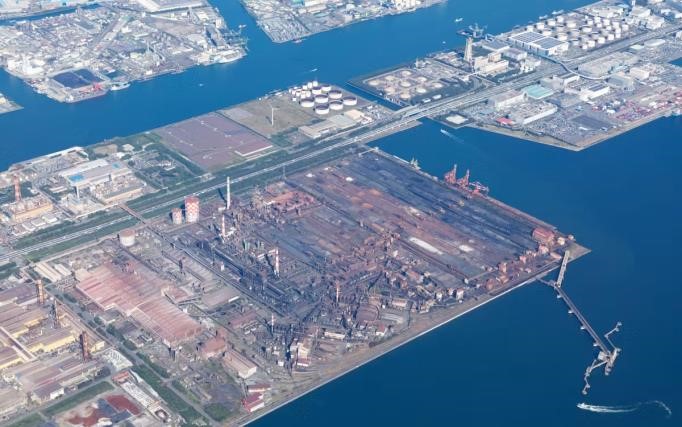
- KHI and Iwatani invested in a JV between JFE Engineering and JSE to develop Japan’s first high-pressure hydrogen pipeline off the coast of Kawasaki that’s predicted to meet the demand of up to 1 million tons of hydrogen per year.
- JFE Engineering will be responsible for engineering, procurement, and construction (EPC).
- The pipeline will be 4 km long; hydrogen will be produced at the Resonac facility in Ogimachi, Kawasaki, and provided to the former JFE Steel site being built as a hydrogen liquefaction base.
- Starting FY2030, JSE plans to receive liquefied hydrogen from abroad.
- CONTEXT: JSE, in collaboration with ENEOS, is building a liquefied hydrogen supply chain, including overseas hydrogen production, liquefaction facilities, liquefied hydrogen carriers, receiving and storage tanks, unloading terminals, and pipeline distribution.
- TAKEAWAY: The Kawasaki coastal area is emerging as Japan’s first integrated hydrogen hub, combining a liquefied hydrogen import terminal with a high-pressure pipeline to supply industrial users. This pipeline could serve as a model for future commercial hydrogen networks, supporting the Tokyo Govt’s plan to develop a regional hydrogen pipeline system in the airport and waterfront area.
JERA and Samsung to collaborate on ammonia supply chain
(Company statement, July 13)
- JERA and Samsung C&T will collaborate on developing a stable ammonia supply for decarbonized power generation in both Japan and South Korea.
- JERA aims to start thermal power generation that co-fires ammonia as fuel. Together with Samsung C&T, JERA aims to expand ammonia and hydrogen ventures.
- CONTEXT: Japan and South Korea both face the challenge of a small ammonia market and a lack of domestic firms producing ammonia.
- CONTEXT: Japan sees ammonia co-firing as one route to decarbonize coal-fired power, with policy roadmaps pointing toward higher ammonia blending ratios over time.
- TAKEAWAY: The agreement shows how Japan and South Korea are beginning to turn government-level hydrogen and ammonia cooperation into private-sector supply-chain development. Both countries want low-carbon ammonia for power-sector decarbonization, but neither (at this point) has a large domestic ammonia production base or enough demand on its own to create a mature import market. Cooperation between JERA and Samsung C&T could help aggregate future demand, improve negotiating power with overseas suppliers and support more flexible procurement between the two markets. In theory, closer coordination could also allow Japanese and Korean buyers to swap or redirect cargoes during periods of supply stress. But this remains early-stage, and the commercial value of Japan-Korea coordination will depend on whether large-scale offtake actually materializes.
IHI to test land-based ammonia-powered reciprocating engines
(Company statement, July 15)
- IHI Power Systems began a land-based power generation test plant for ammonia-fueled engines.
- Field tests aim to realize an ammonia ratio and GHG reduction rate of over 90%, and verify the practicality and safety of fuel supply and power generation facilities.
- Tests will be made by 6 MW class ammonia/ heavy oil dual-fuel engines, based on 1.6 MW 28 ADF (Ammonia Dual Fuel) engines developed for domestic ships.
- Aside from domestic industry uses, the power generation system will be introduced to domestic and international customers.
- TAKEAWAY: The 25 ADF and 28 ADF engines were developed to decarbonize the maritime fuel industry as Japan is a leading shipping power. The present development shows efforts to extend this to land-based applications, which advances govt plans for creating an ammonia supply and value chain by generating additional demand for the fuel and ammonia-based technologies.
- SIDE DEVELOPMENT:
- Tokyo Gas, etc succeed in field tests for hydrogen co-firing
- (Company statement, July 13)
- Tokyo Gas, TGES (Tokyo Gas Engineering Solutions), and Yanmar Energy System conducted field tests for hydrogen co-firing in the city gas cogeneration system.
- They succeeded in hydrogen co-firing without compromising environmental performance and practicality compared to only firing city gas.
- CONTEXT: Due to increased combustion instability when increasing the rate of hydrogen co-firing, and the importance of continuing stable power generation when fuel supply is interrupted, the introduction of hydrogen faces many hurdles.
JR East to deploy Japan’s first hydrogen hybrid trains
(Company statement, July 14)
- JR East to deploy Japan’s first hydrogen hybrid trains, “HYBARI”, in late FY2027.
- They’ll be modified as Japan’s first commercial trains that use hydrogen; operation will begin on the Tsurumi line and Nambu line.
- TAKEAWAY: While the current model for hydrogen hybrid trains does not yet match the performance of diesel-powered trains, HYBARI is a major step towards hydrogen-based decarbonization goals in the railway industry. The next-gen model will have the potential to close that gap, making hydrogen hybrid trains a practical option.
NEWS: SOLAR AND BATTERIES

RTS expands solar policy report to cover BESS business support
(Company statement, July 13)
- Research firm RTS released the 2026 edition of its report on policy and market trends in Japan’s solar and BESS sectors.
- The report has been substantially redesigned from the 2025 edition. While the previous version summarized renewable energy policy by ministry and agency, the new edition focuses on business support measures across 19 major policy areas.
- The coverage period has also been updated to April 2025–June 2026, including recent policy developments.
- The report now covers both renewable energy and BESS policy, reflecting the growing importance of storage in Japan’s power-market and renewable-integration strategy.
- Key policy areas include cybersecurity, the government’s megasolar countermeasures package, residential solar, agrivoltaics, solar on infrastructure space, PSCs, solar-panel recycling, non-fossil value trading, grid-connection discipline, LTDA, the capacity market, the balancing market, distributed energy resources and battery industrial strategy.
- The report also covers efforts to define desirable agrivoltaics projects, certify long-term stable solar operators, review environmental assessment rules and strengthen safety regulation under the Electricity Business Act.
- CONTEXT: Japan’s solar policy is shifting away from capacity expansion toward more selective deployment. Large-scale solar remains important, but land-use conflict, local opposition, grid constraints and aging FIT assets are pushing policy toward rooftop solar, infrastructure-based deployment, agrivoltaics, PSCs, recycling and stronger safety rules. At the same time, BESS is becoming central to grid connection, renewable integration and power-market reform.
- TAKEAWAY: It’s interesting to see how the structure of RTS’s flagship report has changed. Solar is no longer treated as a standalone renewables sector driven mainly by FIT/FIP, while BESS is no longer just a technology add-on. Both are now embedded in a wider policy framework that includes grid discipline, cybersecurity, environmental rules, recycling, non-fossil value, capacity payments and balancing-market revenues.
PXP launches a demo of tandem CSC/PSCs in Kanagawa
(Organization statement, July 9)
- PXP launched a one-year demo in Yokohama for its film-type tandem CSC/PSC solar cells (chalcopyrite/perovskite) in collaboration with Kanagawa Pref.
- The solar cells are installed at Kanagawa Plaza, which has curved surfaces.
- The demo aims to:
- Evaluate the stability of power generation efficiency and durability of the cells when installed on curved surfaces
- Assess other potential installation sites, including walls, poles, and windows.
- Compare their performance with that of non-tandem CSCs.
- TAKEAWAY: Tandem PSC/CSC solar cells are highly promising, as they offer a theoretical power conversion efficiency of over 30%. But, this performance still needs to be validated under real-world operating conditions.
- SIDE DEVELOPMENT:
- Deployment of film-type PSCs to be expanded in Shiga
- (Organization statement, July 13)
- Shiga Pref completed installation of film-type PSCs on a school roof.
- The cells, commercialized by Sekisui Solar Film, will also be installed at other schools and public buildings in the town of Omihachiman.
Eurus Energy enters Poland with investments in solar and BESS
(Company statement, July 17)
- Eurus Energy entered the Polish market via investments in both solar power and grid-scale BESS.
- The firm is building two 20 MW solar plants in the Wielkopolska region, with commercial operations to launch in the second half of 2027.
- CONTEXT: Eurus also formed a 50:50 JV with EDF Power Solutions Polska to develop the 120 MW/ 280 MWh Kobiernice BESS project in south Poland. Construction begins this month, with commissioning later in 2027.
- TAKEAWAY: Eurus Energy seeks to expand its overseas business beyond wind power, and seeks new opportunities in European markets. For its part, Poland is rapidly expanding renewables power generation and seeks to strengthen grid stability. Other major Japanese firms aiming to expand to Poland include the largest convenience store chain operator, 7&i Holding.
Highreso agrees with PowerX to develop BESS for data centers
(Company statement, July 15)
- Highreso agreed with PowerX to develop energy infrastructure supporting GPU (Graphics Processing Unit) data centers and AI computing platforms.
- CONTEXT: GPU data centers are designed to support compute-intensive workloads such as AI training, inference, and large language models. Their power demand is several times higher than that of conventional CPU data centers.
- Highreso will collaborate with PowerX in two main areas:
- Deploying BESS at GPU data centers;
- Expanding GPU data center projects via joint sales and marketing activities, site identification, and collaboration with infrastructure investors.
- TAKEAWAY: GPU data centers are expanding in Japan, with companies like SoftBank or KDDI developing large-scale AI computing facilities, primarily in the Tokyo and Osaka metro areas. As electricity demand continues to surge to levels above 100 TWh by 2030, BESS units will play a key role in mitigating rising electricity costs and grid constraints.
- SIDE DEVELOPMENT:
- Renon Power accelerates investment in Japan’s BESS market
- (Company statement, July 15)
- U.S. BESS developer Renon Power will expand in Japan, targeting cumulative sales of 10,000 low-voltage BESS units and 30 high-voltage BESS projects by FY2028.
- CONTEXT: Renon develops EMS, PCS, O&M services, and BESS solutions for residential and utility-scale applications. To date, it has supplied battery systems to more than 200 sites across Japan.
NEDO selects proposals to develop next-gen battery chemistries
(Organization statement, July 9)
- NEDO selected two proposals to develop next-gen battery tech beyond lithium-ion.
- The chemistries are fluoride-ion, zinc-manganese, and sodium-ion.
- The projects will include pilot-scale manufacturing trials.
- TAKEAWAY: These batteries rely on widely available materials – zinc, manganese, and sodium – which are less supply-constrained than critical minerals such as lithium or cobalt. While sodium-ion batteries have benefited from around a decade of extensive R&D and now enter commercial production, fluoride and zinc-manganese technologies still need further validation in terms of performance, cycle life, safety and cost competitiveness. Fluoride batteries still face challenges related to ion conductivity. For now, electrolyte solutions must be kept under temperatures of 150–300°C, making it difficult to compete with lithium-ion batteries in stationary BESS, similarly to the constraints faced by sodium-sulfur batteries. For more on these constraints, refer to this issue’s Analysis section.

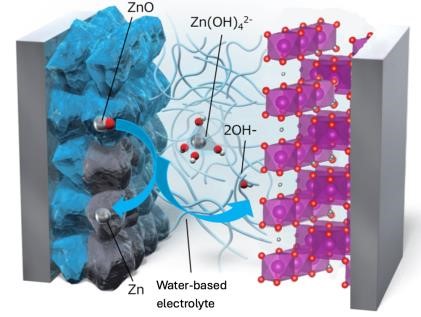
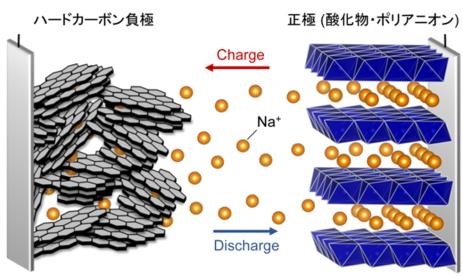
Battery chemistries (in order: fluoride, zinc-manganese, sodium-ion)
JFE Engineering agrees with SMAS to develop battery-swapping EVs
(Company statement, July 9)
- JFE Engineering agreed with SMAS (Sumitomo Mitsui Auto Service) to develop battery-swapping EVs, primarily targeting delivery vehicles and garbage trucks.
- CONTEXT: Battery-swapping EVs are vehicles whose depleted batteries can be automatically replaced with fully charged ones at dedicated swapping stations in under five minutes (between 58 and 90 seconds in this initiative).
- JFE Engineering will be responsible for developing and maintaining the vehicles.
- CONTEXT: JFE Engineering has such partnerships with around 30 local govts.
- TAKEAWAY: Electric trucks are uncommon in Japan, with a penetration rate of only 1.06%, according to the Japan Trucking Association. The govt set a target for electric trucks to account for 20–30% of the fleet by 2030. Achieving this goal will require the deployment of optimized charging and energy infrastructure. As for battery-swapping EVs, in addition to eliminating lengthy charging times, an operational issue for commercial vehicles is high rates of utilization. Battery swapping can also help reduce strain on the power grid.

JFE Shoji and Hiko Farm test agrivoltaic suspension method
(Company statement, July 14)
- JFE Shoji and Hiko Farm launched an agrivoltaics demo in Hitachi-Omiya (Ibaraki Pref) using a proprietary vertical suspension method for solar PVs.
- The method utilizes the existing greenhouse structure rather than ground-mounted supports, reducing installation costs and simplifying deployment.
NEWS: WIND POWER AND OTHER RENEWABLES

METI and MLIT set cost guide for offshore wind project formation
(Government statement, July 14)
- METI and MLIT proposed using around ¥30/ kWh as a near-term guide for forming offshore wind projects.
- The figure is not a new fixed tariff, but a benchmark for prioritizing project formation in sea areas where projects can be developed cost-effectively.
- The policy aims to support offshore wind expansion while limiting the burden on consumers.
- The ¥30/ kWh guide is based partly on the 2025 generation cost working group estimate of ¥30.9/ kWh for offshore wind.
- Officials also noted that recent JEPX electricity prices have been around ¥10–15/ kWh, making it necessary to consider how far offshore wind costs can be justified relative to market power prices.
- The government said project formation should proceed first in areas with favorable conditions, rather than pushing ahead with high-cost sites where wind, seabed, grid-connection or self-owned transmission-line conditions make development expensive.
- CONTEXT: Japan’s offshore wind strategy initially envisioned 10 GW of installed capacity by 2030 and 30–45 GW by 2040, but these targets have slipped as the sector struggles with rising costs, project delays, difficult seabed and weather conditions, supply-chain constraints and auction-design issues. The government has already moved to revise offshore wind auction rules.
- TAKEAWAY: The ¥30/ kWh guide shows the govt trying to put a cost boundary around offshore wind expansion. Officials still see offshore wind as important for energy security, decarbonization and domestic industrial development, but also acknowledge that not every potential sea area should be developed. The practical takeaway is that project formation will likely become more selective: favorable sites move first, while higher-cost areas may be delayed unless costs fall or support mechanisms change. Developers will hope that there are enough favorable sites given to auction in the near-term future to help build up the kind of scale needed to reduce costs.
ANRE sets LTDA terms for stranded offshore wind projects
(Government statement, July 14)
- ANRE proposed the terms under which previously awarded zero-premium offshore wind projects can participate in the 4th Long-Term Decarbonized Power Sources Auction (LTDA).
- The measure applies to zero-premium projects selected in the 2nd and 3rd offshore wind auction rounds, provided they give up the FIP payment equivalent to balancing costs.
- Up to six projects totaling around 700 MW on an expected-capacity basis could participate.
- Offshore wind would receive a 500 MW award cap within the 4th LTDA, reflecting concern over consumer costs.
- ANRE proposed regional offshore wind price caps of around ¥345,000–701,000/ kW/ year, depending on area adjustment coefficients. These are well above the standard ¥200,000/ kW/ year LTDA threshold.
- The price caps are based on a revised offshore wind benchmark of ¥31.9/ kWh, converted into LTDA capacity-price terms using an assumed 39.3% capacity factor and regional adjustment coefficients.
- ANRE also proposed allowing offshore wind bids to include higher decommissioning-cost provisions. Instead of the previous 5% of total construction costs, developers could include funding equivalent to 70% of offshore construction costs plus 5% of onshore equipment construction costs.
- The change reflects offshore auction rules requiring developers to secure funds for marine equipment removal by the start of operations, either through financial guarantees or segregated accounts.
- CONTEXT: Round 2 and Round 3 offshore wind auctions produced several zero-premium projects, but project economics have since soured significantly. ANRE had already signaled that these projects could use the LTDA as a bridge. The July 14 proposal defines what that bridge would actually offer.
- TAKEAWAY: These terms give stranded offshore wind developers a more realistic support framework, but they are not an open-ended rescue. The higher price caps recognize that zero-premium bids no longer reflect today’s offshore wind cost base, while the new decommissioning-cost treatment addresses a funding obligation that was understated under the previous LTDA formula. At the same time, the 500 MW cap limits how many of the R2 and R3 projects can rely on the auction. For developers, the question is whether the LTDA terms are enough to restore bankability after giving up balancing-cost FIP payments and competing within a capped, technology-mixed auction.
METI seeks floating offshore wind demo sites in harsh sea environments
(Organization statement, July 15)
- ANRE announced the launch of a nationwide call for prefectures to nominate sites for floating offshore wind demo projects in harsh sea environments.
- Candidate sites must meet strict criteria, including sufficient wind resources, water depths exceeding 500 meters, rocky seabed conditions, etc.
- METI plans to subsidize up to two-thirds of project costs.
- TAKEAWAY: The demo program will serve as a stepping stone toward larger 300 MW-scale floating projects and could lead to the establishment of permanent offshore test centers. Developing tech for ultra-deep waters, floating substations, mooring systems and installation methods would strengthen Japan’s domestic supply chain and improve competitiveness in Asia-Pacific floating wind markets.
Hokkaido Univ to set up offshore wind training curriculum
(Nikkei, July 15)
- Hokkaido University, in conjunction with Hokkaido Electric, will set up a new curriculum for training in offshore wind power generation.
- The curriculum will start in FY2027.
- CONTEXT: A large breadth of knowledge related to electricity, machinery, civil engineering, environment, and law is required to work in offshore wind. Typical courses of study may not account for all areas, so there is a need to provide supplemental education.
- SIDE DEVELOPMENT:
- Toda to train wind turbine maintenance personnel
- (Company statement, July 16)
- Goto City and Toda Construction agreed to cooperate to train maintenance staff for offshore wind turbines.
- CONTEXT: Toda built the Goto Offshore Wind Farm, the first commercial floating farm in Japan. It launched operations in January.
MOC and DNV to obtain third-party offshore wind site evaluation
(Company statement, July 9)
- Mutsu-Ogawara Metocean Observation Center (MOC) agreed with DNV, a global risk management and assurance organization, for technical assistance at its offshore wind observation test site in Rokkasho, Aomori Pref.
- MOC is Japan’s first public facility for offshore wind verification in environments close to actual offshore conditions.
- DNV has significant international experience with measuring offshore wind power.
- CONTEXT: Prior verification of the offshore environment based on international norms like IEC is indispensable for a commercial viability assessment.
JERA invests in next-gen geothermal energy in the U.S.
(Company statement, July 14)
- JERA invested in U.S.-based startup Quaise Energy, which is developing next-gen millimeter-wave drilling technology for geothermal energy.
- CONTEXT: JERA is the second Japanese company, after Idemitsu Kosan, to invest in Quaise Energy, highlighting the growing momentum behind the adoption of advanced geothermal technologies in Japan. For more information on millimeter-wave drilling, refer to the July 6 issue.
NEWS: NUCLEAR ENERGY

Rokkasho spent nuclear fuel reprocessing plant faces another delay
(Nikkei Asia, July 17)
- The completion of the Rokkasho spent nuclear fuel reprocessing plant in Aomori Pref faces a potential 28th delay.
- CONTEXT: Construction of the Rokkasho reprocessing plant in Aomori began in April 1993, and since then the work has constantly been plagued by delays.
- The latest deadline for completion was FY2026, but Japan Nuclear Fuel Ltd (JNFL) must revise its timeline due to new NRA safety demands.
- The NRA is concerned over the risk of storing high-level radioactive liquid waste accumulated since 2006.
- JNFL says it will take four months to submit a revised construction plan to the NRA.
- CONTEXT: Japan’s electric utilities have about 17,090 tons of spent uranium stored at local nuclear power plants. More than half of NPPs have reached 80% of on-site storage capacity. Once operational, the Rokkasho plant will be able to extract reusable uranium and plutonium to produce MOX fuel.
- TAKEAWAY: Rokkasho is central to Japan’s envisioned “nuclear fuel cycle” strategy. Another delay will cause spent nuclear fuel to continue piling up in storage pools at NPPs. Without Rokkasho, utilities have few options. They can expand dry storage facilities onsite or use interim storage facilities offsite; or send the fuel abroad for reprocessing. But none of these options helps closing the nuclear fuel cycle, part of which entails 12 reactors operating with MOX fuel.
Kyushu Electric to export unused nuclear fuel assemblies from Genkai NPP (Company statement, July 13)
- Kyushu Electric will send 8 unused nuclear fuel assemblies from Genkai NPP Unit 1 (decommissioned) to Framatome’s processing plant in the state of Washington (U.S.).
- Transport has been rescheduled for Q2 of FY2026, with export in September.
- CONTEXT: This upcoming shipment is the fourth of its kind. A total of 148 assemblies have already been shipped overseas in three separate batches. After this shipment, Genkai Unit 1 will still have 16 unused fuel assemblies in storage. Unit 2 (undergoing decommissioning) has 28 unused assemblies remaining.
- TAKEAWAY: Genkai Units 3 and 4 use different fuel specifications, so the unused fuel from Units 1 and 2 cannot simply be loaded into the operating reactors. At the U.S. facility, the unused uranium fuel will be processed/recovered for reuse in nuclear fuel manufacturing.
- SIDE DEVELOPMENT:
- Kyushu Electric seeks amendment for dry storage facility at Sendai NPP
- (Company statement, July 17)
- Kyushu Electric submitted an amendment on fire detection policy to the NRA regarding its plan to build a spent nuclear fuel dry storage facility at Sendai NPP.
- The facility is planned to be operational by FY2029.
- CONTEXT: The proposed facility will store spent nuclear fuel currently cooling in a pool; from there it would go to the facility sealed in metal casks and cooled through natural air convection. The current spent fuel pools are running out of space, with Unit 1 at about 78% capacity, and Unit 2 at 84% capacity.
- TAKEAWAY: Without the reprocessing plant in Aomori, Sendai NPP has limited operational future. Sources speculate it will only be able to continue operating until 2031. The new dry storage facility could extend the plant’s operational capacity until 2038.
Kyoto court rejects lawsuit for halting Ohi NPP
(Chunichi Shimbun, July 14)
- A Kyoto court rejected a lawsuit to halt operation of Ohi NPP Units 3 and 4.
- Over 3,400 residents filed the lawsuit on earthquake risk concerns and the NPPs seismic design standards. The judge ruled the plant’s safety estimates were reasonable.
- CONTEXT: Units 1 and 2 have ended operations and will be decommissioned. Units 3 and 4 began operating in 1991 and 1993. In 2017, they passed safety examinations under new regulatory standards and remain operational.
TEPCO submits plan on accident response equipment for Kashiwazaki-Kariwa
(Niigata Nippo, July 16)
- TEPCO sent a “Design and Construction Plan” application to the NRA on severe accident response equipment for both Kashiwazaki-Kariwa NPP Units 6 and 7.
- It outlines plans to add spare units to their severe accident equipment inventory.
- CONTEXT: The reactor resumed commercial operations in April after being offline for 14 years. The NRA also granted preliminary approval to Kashiwazaki-Kariwa NPP Unit 6 to continue operating until 2036. Every 10 years, nuclear power providers must receive approval for a “Long-term Facility Management Plan” to operate a reactor beyond 30 years. Unit 6 began operating in 1996 and will reach its 30-year milestone in November.
NEWS: TRADITIONAL FUELS

Mitsubishi Corp buys U.S. natural gas assets of Aethon Energy
(Japan NRG, July 16)
- Mitsubishi Corp purchased the U.S. natural gas assets of Aethon Energy in a $7.5 billion deal, its largest-ever acquisition,
- Mitsubishi set up a new subsidiary, Adamas Energy, to operate the assets, which are in the Haynesville Shale in Texas and Louisiana. At peak production, the assets could produce gas equivalent to about 18 Mtpa of LNG, roughly 25% of Japan’s annual LNG demand.
- CONTEXT: This deal reflects a trend among Japanese firms – Tokyo Gas, Osaka Gas, and JERA already secured production assets near U.S. Gulf Coast LNG hubs.
- TAKEAWAY: The acquisition allows Mitsubishi to supply the surging U.S. domestic demand for gas-fired electricity due to AI data centers. Also, by owning the land, facilities, and pipelines, Mitsubishi seeks to protect itself from volatile gas prices.
JOGMEC mulls sale of equity stakes in Asia-Pacific LNG projects
(Bloomberg, July 16)
- JOGMEC is considering selling equity stakes in LNG projects in the Asia-Pacific region to local investors.
- It has issued a tender seeking firms to provide asset valuation and advisory services for the potential sale.
- The move comes as Japan prepares for rising LNG demand.
- The tender only covers valuation and related advisory work.
- There has been no announcement of a final decision to sell the stakes.
Petronas and Shizuoka Gas sign LNG supply deal
(Company statement, July 13)
- Petronas (Malaysia) signed a supply deal with Shizuoka Gas for 840,000 tons of LNG, for seven years, starting in 2032.
- The firms pledged to work together in decarbonization across the LNG value chain.
- CONTEXT: Petronas first supplied Shizuoka Gas in 1996, receiving over 200 LNG cargoes since then. Shizuoka Gas sees LNG as a cornerstone of its decarbonization plan. In May, Shizuoka signed a long-term LNG supply agreement with Tokyo Gas, to deliver five cargoes of LNG, starting in 2027.
Mexican crude shipment to arrive in Japan after supply deal
(TeleNews, July 15)
- METI said a tanker carrying Mexican crude was expected to arrive in Japan as early as July 17. The shipment was arranged by Cosmo Energy HD.
- It would be the first Mexican crude shipment to Japan since the U.S.-Iran war began.
- Mexican crude is similar in quality to the Persian Gulf crude Japan typically buys.
- CONTEXT: In April, PM Takaichi and Mexican President Sheinbaum agreed to advance cooperation on energy supply, including crude-oil procurement.
- TAKEAWAY: The shipment is a small but visible example of Japan’s effort to diversify crude supply routes after the Middle East shock. While Mexican crude cannot quickly replace dependence on Middle Eastern supply, especially given the long voyage via the Cape of Good Hope, its similar quality makes it easier for Japanese refiners to process. This gives Mexico strategic value as an alternative procurement source.
LNG stocks up over previous week, up YoY
(Government data, July 15)
- As of July 12, the LNG stocks of 10 power utilities were 2.42 Mt, up 3.4% from the previous week (2.34 Mt), up 37.5% from end July 2025 (1.76 Mt), and up 18.6% from the 5-year average (2.04 Mt).
- Temperatures during the day have begun to exceed 30°C on a regular basis and there is high humidity. Power utilities are increasing LNG stocks to meet rising demand for electricity.
NEWS: CARBON CAPTURE & SYNTHETIC FUELS

Govt proceeds in establishing CCS regulatory and financial framework
(Government statement, July 16)
- The govt released a new regulatory and financial framework for CCS projects.
- Operators must plan to track CO2 behavior, well integrity, and marine environment across three operational stages: normal time, concern time, and abnormal time.
- A model project envisions a 25-year CO2 injection period when operators check the site using technologies like 3D seismic surveys. Monitoring must continue even after injection stops.
- When a project ends, operators must plug wells, and remove unnecessary structures.
- Operators can apply for the transfer of long-term management responsibilities after a post-injection period, including 10 years after the last CO2 injection, subject to government approval.
- Once the govt approves, JOGMEC will manage long-term monitoring and site operations.
- The government will subsidize the gap between a project-specific base price for CO2 separation, transport and storage and a reference price linked to the value of carbon mitigation.
JAPEX sets up a subsidiary for Tomakomai CCS project
(Company statement, July 13)
- JAPEX set up Tomakomai CCS as the implementing entity for a project in Hokkaido.
- Exploratory drilling is completed at one of two planned offshore locations.
- CONTEXT: The project will capture emissions from Idemitsu Kosan`s Hokkaido Refinery and Hokkaido Electric’s Tomatoh-Atsuma Power Station. JAPEX and TCCS will be responsible for CO2 transportation, injection, and deep underground storage. The goal is to begin full commercial operations by FY2030, becoming Japan’s first commercial CCS project.
Environmental groups protest test drilling for CCS project
(Organization statement, July 14)
- Environmental and local groups are protesting the govt’s test drilling for a CCS project off the Kujukuri coast in Chiba Pref.
- The drilling involves massive construction, such as installation of offshore drilling rigs over 100 meters tall. The coalition argues that the drilling could threaten marine ecosystems and local fisheries.
- The coalition argues that CCS is a high-cost technology with negligible benefits for reducing GHGs and carries the risks of CO2 leakage.
- CONTEXT: The “Tokyo Metropolitan Area CCS Project,” led by INPEX, aims to capture CO2 from industrial sites, and then transport the captured CO2 via a pipeline across many cities in Chiba Pref to be stored under the ocean floor.
ANALYSIS
BY TETSUJI TOMITA
Electricity Retail Liberalization Enters Its Harder Second Decade
Japan’s electricity retail market has reached the end of its first post-liberalization phase. Ten years after full retail opening in 2016, the basic achievements are clear: more suppliers, more customer choice, more tariff options, and a much larger wholesale market.
The next phase will test the depth of retailer capability. Market access and customer choice created the first wave of competition; and procurement strategy, hedging, balancing and the menu of decarbonization services will shape the next one.
The domestic electricity industry was historically built around vertically integrated regional monopolies. These former general electric utilities controlled generation, transmission and retail supply within their service areas, with tariffs approved through a cost-of-service regulatory framework. This model supported investment and reliability during the nation’s postwar growth period, but it offered little to no competition and consumer choice.
Reform came gradually. Retail competition was first introduced for large customers in 2000, then expanded to high-voltage commercial and industrial users in 2004 and 2005. JEPX was established in 2005, creating the foundation for wholesale electricity trading.
After the 2011 earthquake and Fukushima nuclear accident exposed weaknesses in the regional monopoly system, officials accelerated electricity system reform. OCCTO was established in 2015, full retail liberalization followed in April 2016, and legal unbundling of transmission and distribution businesses was completed in 2020.
The irony is that liberalization made it easier to enter the electricity business just as the business was becoming harder to run.
Market Share of New Electricity Retailers

First results and their limitations
The first decade of full liberalization delivered visible progress. The number of registered retailers rose from 291 in April 2016 to around 800 by March 2026. New entrants came from city gas, LPG, oil, telecoms, railways, trading houses and local government-affiliated businesses. Consumers gained access to bundled electricity and gas plans, loyalty points, renewable electricity menus and other value-added services.
Switching also increased sharply. The cumulative number of switching cases rose from around 820,000 in April 2016 to about 35 million by March 2026. New retailers’ share of total electricity sales reached a record 23% in August 2021, showing that liberalization had created a real competitive layer on top of the old regional structure.
But the same period also exposed the limits of Japan’s first liberalization model. A retail license became a broad entry point for companies with very different business intentions: some sought to sell electricity directly to households and businesses, while others mainly needed registration to trade in wholesale markets. As a result, the headline number of registered retailers overstated the depth of actual retail competition.
Even among companies actively selling electricity, many lacked their own generation or long-term supply sources. The most common business model around the turn of the decade was to procure electricity from JEPX and sell it through fixed-price retail contracts. That worked when spot prices were low. It became dangerous when fuel prices surged and wholesale prices spiked during the 2021 electricity crisis and again after Russia’s invasion of Ukraine in 2022.
Retailers selling fixed-price contracts suddenly faced procurement costs that exceeded customer revenues. Some suspended new sales, withdrew from the market, or transferred customers to other suppliers. New retailers’ market share fell to 15% in May 2023 before recovering to around 22% by the end of 2024 as wholesale prices stabilized.
The policy lesson was that market entry alone did not create durable competition. Japan had many retail license holders, but only a smaller group were active suppliers, and fewer still had the procurement depth, hedging capability and risk-management systems needed to withstand fuel and wholesale-price shocks. Liberalization brought new companies into the market, but low-price competition alone proved insufficient for a sector that still carries a public-service obligation.
For retailers, survival now depends on more sophisticated price-risk management, including derivatives, long-term procurement and access to stable supply. For incumbent generators, the challenge is different: they need clearer forward signals on how much electricity retailers will need not only tomorrow or next week, but one year, several years, or even 10 to 20 years ahead if demand growth requires investment in new generation.
The liberalization story has therefore moved from open entry and retail price competition to a more selective phase built around supply capability, risk allocation and investment visibility. That is why Japan is again updating its power-market architecture.
Growth in Number of Registered Electricity Retailers

Making market design more realistic
Over the past five to six years, the government introduced or supported a set of power market mechanisms: the capacity market, power futures, the balancing market, the long-term decarbonized power sources auction (LTDA), and indirect transmission rights (ITRs). Two more major reforms are also in development: the mid- to long-term trading market and the simultaneous market, with the former expected to launch within the next two years.
Why so many platforms? In practice, each responds to a weakness revealed by the first decade of liberalization.
The capacity market addresses the need to keep sufficient supply capability available even when energy-market revenues are uncertain. The LTDA goes further by giving long-term revenue visibility to new decarbonized power sources and energy storage. Both mechanisms reflect a policy judgment that liberalized wholesale prices alone cannot ensure the investment needed for reliability and decarbonization.
Mid- to long-term electricity trading will address another weakness: excessive dependence on spot procurement. If these markets become liquid, retailers will be able to secure electricity months or years ahead, reducing exposure to sudden JEPX price spikes. That could help narrow the structural advantage of incumbent utilities, which still benefit from large generation portfolios and internal hedging.
Long-term contracts are not a cure-all. They reduce exposure to price spikes but also create risk if market prices fall below contracted levels. Retailers need sophisticated procurement portfolios that combine long-term contracts, futures, bilateral deals and spot-market purchases. The competitive edge will shift from customer acquisition to portfolio management.
Regional price risk is another emerging issue. As spot prices diverge across areas due to grid constraints, outages and renewable output, retailers will need better tools to hedge area-price differences. ITRs are meant to play that role, but ANRE’s recent decision to continue baseload market price-difference settlement for another year shows that the market is not yet ready to shift all regional price risk to these instruments.
Balancing reforms and the planned simultaneous market could be even more transformative for retailers with operational capabilities. Japan’s current system separates energy trading and balancing procurement. The simultaneous market would co-optimize energy and balancing functions, improving system efficiency and making the value of flexibility clearer.
For retailers, this raises the importance of demand forecasting and real-time supplydemand management. Forecasting errors will become more costly as imbalance exposure increases. Retailers with advanced data systems, AI-based forecasting and the ability to manage customer-side resources will have an advantage over those that remain simple electricity resellers.
Non-generation players
This is where demand-side resources become central. Batteries, EVs, demand response (DR), heat pumps and customer energy-management systems can provide flexibility to the grid. Retailers that can aggregate these resources may earn revenue from balancing services, reduce procurement risk and offer customers more valuable energymanagement products.
The role of retailers could therefore shift from selling kilowatt-hours to coordinating distributed energy assets.
Decarbonization adds another layer. Japan retains its net-zero commitment, and corporate and household customers are gradually broadening their appetite for lowcarbon electricity, renewable PPAs, storage-linked supply, EV charging services and, at minimum, non-fossil certificates. Retailers that can combine procurement, environmental value and customer-side energy assets will be better positioned than those competing only on tariff discounts.
Digital capability is becoming part of the same shift. Entrants such as Octopus Energy (UK), which operates in Japan through TG Octopus Energy with Tokyo Gas, show how retail competition can move from price plans to platform capability. Octopus uses software to automate billing, analyze consumption patterns and manage customer accounts, lowering administrative overhead and supporting more dynamic pricing and tailored green tariffs.
The point is not that every retailer needs its own generation. Some will compete by controlling customer relationships, data, flexible demand and environmental value. But this still requires investment in systems, analytics and risk management. The retail market is therefore likely to divide between asset-backed suppliers, digital aggregators and smaller players that either specialize or partner with larger platforms.
Diversity and inclusion in electricity retail
The likely result is a more stratified retail market. Large retailers and energy groups will be better able to build trading teams, secure long-term contracts, manage imbalance risk and invest in digital platforms. Smaller retailers may survive by specializing in regional services, customer niches or partnership models. Others are likely to consolidate or exit as compliance, hedging and operational demands increase.
This does not mean Japan is reversing liberalization. It means liberalization is entering a more complex phase. The first decade opened the market to competition. The second will test whether that competition can coexist with investment, reliability, AI-driven demand growth and decarbonization.
The number of registered retailers is no longer the most useful measure of progress. Switching volumes still matter, but they say little about whether retailers can manage procurement risk, support system flexibility or help finance stable supply. The more important question is whether Japan’s market design can give retailers both the incentive and the capability to manage price volatility, integrate demand-side resources and deliver low-carbon electricity.
Retail liberalization began as a reform about consumer choice. Its next stage is about making the market reflect the physical and commercial realities of electricity supply.
ANALYSIS
BY AGLAÉ BANGE
Key Figures Behind Japan’s BESS Market: Trends And Outlook
As of June 2026, Japan’s operational grid-scale BESS capacity reached nearly 1.5 GW, according to research by Japan NRG. That is already higher than official figures indicate, and it points to a market expanding faster than headline data report.
In fact, the buildout has accelerated sharply since 2022. In 2025, more than 450 MW of grid-scale battery projects were connected to the grid, making it the strongest year so far. In 2026, nearly 330 MW were commissioned or are scheduled to connect by yearend. With more projects likely to be announced in the coming months, this year’s total could match or even exceed the 2025 level.
The shift marks a new phase for Japan’s battery market. Growth was once driven mainly by residential systems and EVs. The strongest momentum is now coming from stationary grid-scale BESS. Developers, utilities and industrial users are responding to renewable curtailment, grid congestion and rising demand from large demand hubs, such as data centers and semiconductor manufacturing facilities.
The figures in this analysis are based on Japan NRG’s dedicated database tracking existing and future grid-scale BESS projects nationwide. Data collection began in mid2025 and draws on public company disclosures, subsidy data and direct industry conversations, allowing projects to be tracked by location, scale, stakeholder and development status.
So, what are the key trends shaping the market?
Regional trends
BESS projects are unevenly distributed across Japan, with Hokkaido and Kyushu accounting for the largest share, both in terms of the number of operational BESS projects (nearly 50%) and installed capacity (about 60%). Other major regions include Tokyo, Chubu, and Tohoku.

Based on the projects announced and documented through 2030, the main trend is a more balanced regional distribution of BESS deployment. While Hokkaido and Kyushu will remain major markets, central Japan is expected to gain momentum, with the Chugoku and Kansai regions joining Chubu. Tohoku will also see a significant increase in activity, both in terms of project units and installed capacity, reaching 885 MW spread across 21 projects.
By contrast, Shikoku and Hokuriku attract limited interest, with their TSOs not looking to expand transmission networks. In 2026, they will account for fewer than ten projects and less than 30 MW of gross capacity. Looking ahead, no additional projects are announced for Shikoku, while only three additional projects are planned in Hokuriku.
Another clear trend emerging from the project pipeline concerns grid connection voltage. Most operational BESS stations today are high-voltage (HV), but that is bound to change. Of all the projects scheduled for grid connection between 2027 and 2030, nearly two-thirds will be extra-high-voltage (EHV). These represent a combined installed capacity of about 4.5 GW, far surpassing the 155 MW total for HV projects.

Co-located projects: growing in number, but still marginal
The vast majority of BESS projects in Japan, including those yet to be connected to the grid, are standalone. To date, nearly 20 co-located projects have been identified:
| Project name | COD | TSO area |
| Japan Wind Development Rokkasho | 2008 | Tohoku |
| Softbank Yakumo Solar Park | 2020 | Hokkaido |
| JRE Fukuchi No. 3 Solar Power Plant | 2020 | Kyushu |
| Suzuran Kushiro-cho Solar Power Plant | 2020 | Hokkaido |
| Blue Power Hokkaido Akaigawa Solar Power Plant | 2020 | Hokkaido |
| Ishikari Bay New Port Offshore Wind Farm | 2022 | Hokkaido |
| Taro Solar Power Plant | 2025 | Tohoku |
| F Usuki Solar Power Plant | 2026 | Kyushu |
| Omura Mega Solar Power Plant No. 4 | 2026 | Kyushu |
| Fukuoka Iizuka No. 1 Mega Solar Power Plant | 2026 | Kyushu |
| TAS Kumamoto Triangle Solar Farm | 2026 | Kyushu |
| Daigas Energy Kanoya | 2026 | Kyushu |
| West New Zealand Village Grid Storage Station | 2026 | Chugoku |
| erex Munakata | 2027 | Kyushu |
| Kumamoto Solar Project Kikuchi | 2027 | Kyushu |
| JR East Nikaho | 2027 | Tohoku |
| Pacifico Energy Miyoshi | 2028 | Chugoku |
| Fukushima Megasolar Nishigo Village No.1 Power Storage Station (LTDA) | N/A | Tohoku |
| Fukushima Megasolar Nishigo Village No.2 Power Storage Station (LTDA) | N/A | Tohoku |
The largest on this list is the 400 MWh Miyoshi BESS, co-located with a solar power plant. About two-thirds of all co-located projects date to 2025, highlighting a trend toward adding BESS to existing facilities, or integrating BESS from the outset in new solar (or more rarely, wind) power plants, in regions with high levels of curtailment such as Kyushu.
Co-located projects, however, are not expected to become a dominant segment, with developers likely to continue favoring standalone installations. BESS located near EHV nodes can capture multiple revenue streams while also supporting the growing electricity demand of electrified industrial facilities and data centers, rather than being limited to storing intermittent renewable generation for discharge during peak demand periods.
Batteries: providers and chemistries
Japan NRG identified battery suppliers for projects with a total capacity of 7.3 GWh (almost 200 projects). Several observations can be drawn. Despite concerns over increasing competition from Chinese manufacturers, domestic suppliers still hold a strong position, accounting for nearly 4 GWh of identified capacity, largely driven by GS Yuasa and PowerX.
Chinese manufacturers account for about 900 MWh of documented capacity, but this figure should not be considered representative, as it is likely (if not certain) that Chinese battery suppliers are involved in a substantially larger share of projects for which supplier information isn’t publicly disclosed. Other non-Japanese suppliers include Tesla and Saft.

Distribution of battery providers
Lithium-ion – more specifically lithium iron phosphate (LFP) – dominates the Japanese market and appears to be the default technology for stations. The other chemistries identified are sodium-sulfur (NaS) and vanadium redox flow batteries (VRFB), supplied respectively by NGK Insulators and Sumitomo Electric.
While VRFBs entered the market with a first commercial project in 2019, and Sumitomo Electric has since expanded its sales, NGK discontinued production of its NaS batteries in 2025 due to competition from lithium-ion. One potential explanation is the higher operating and maintenance costs associated with NaS batteries, which require the electrolyte solution to be maintained at temperatures of 300-350°C, making them less competitive than LFP.
To date, no station using sodium-ion batteries (SIBs) has been announced in Japan, but such projects could emerge in the coming years, as SIBs are more competitive than NaS batteries, and have attracted growing interest from local developers. CATL’s newly launched TENER sodium energy storage system, with global deliveries scheduled to begin in June 2027, could be adopted for future projects in Japan.
Conclusion
In total, Japan NRG identified just over 6 GW of BESS capacity that is expected to come online by 2030. Given the number of projects that have yet to be officially announced, total installed capacity is highly likely to exceed 7 GW and could even surpass 10 GW, before the market gradually reaches saturation.
By that stage, the market is likely to be dominated by a limited number of major operators and a more consolidated group of battery suppliers than today. Development will primarily focus on EHV projects supplying large electrified industrial facilities and data centers, besides renewable energy integration.
As these infrastructures continue to expand, long-duration energy storage (LDES) technologies could also emerge to complement conventional BESS with typical storage durations of three to six hours.
Therefore, stationary BESS is establishing itself as an essential component of the power system, rather than merely a solution for storing intermittent renewable electricity.
ASIA ENERGY REVIEW
BY JOHN VAROLI
A brief overview of the region’s main energy events from the past week
Asia / LNG
Wood Mackenzie forecasts that Asia Pacific’s LNG demand for 2026 will see a second consecutive year of decline, totaling 257 Mt, down from 268 Mt in 2025, and down from a peak of 278 Mt in 2024. It says that the U.S.-Iran war tightens global supply and pushes spot prices to levels that forced buyers to cut volumes.
Australia / BESS
Australia is a major market for Chinese batteries, accounting for almost 10% of new global battery capacity. Australian officials recently toured Guangdong, where China Southern Power Grid Technology showcased energy storage.
Australia / LNG
Three Australian plants that provide about 8% of the world’s LNG have curbed output due to a cyclone. Karratha, the facility that feeds Woodside Energy’s North West Shelf export plant, had an interruption. Also, Chevron stopped one of the three production units at its Gorgon plant, and it stopped a platform that feeds its Wheatstone facility.
China / LNG
Two LNG tankers exited the Strait of Hormuz last week, heading to Pakistan and China; and a stranded supertanker with Iraqi crude left the Persian Gulf for China on Saturday.
China / Oil
China “will take all necessary measures to resolutely safeguard” the rights and interests of its enterprises, said the Foreign Ministry, commenting on U.S. sanctions on Russia and those who do business with the country.
India / Hydrogen
India launched its first domestically built, hydrogen-powered train. The train will make two return trips each day along a 90 km route linking the cities of Jind and Sonipat.
India / Renewables
India added 29 GW of renewable energy capacity in the first half of 2026, including about 26 GW of solar and 3 GW of wind, reports JMK Research. Solar installations increased 43% YoY, but wind capacity additions declined 16%.
Philippines / Oil & gas
Australian company Tetragon Energy launched a new phase of oil and gas exploration in Philippine waters through a seismic reprocessing contract awarded to DUG Technology.
South Korea / LNG
The govt will consider a sharp increase in the share of LNG power in its electricity plan. It’s also reviewing a proposal to meet part of Samsung Electronics and SK hynix’s planned semiconductor cluster’s 6.3-GW power demand with LNG combined-cycle plants.
Vietnam / Hydropower
Vietnam Electricity (EVN) and RusHydro (Russia) discussed cooperation in hydropower development, dam safety, and pumped-storage hydropower during a meeting in Hanoi.
Disclaimer
This communication has been prepared for information purposes only, is confidential and may be legally privileged. This is a subscription-only service and is directed at those who have expressly asked K.K. Yuri Group or one of its representatives to be added to the mailing list. This document may not be onwardly circulated or reproduced without prior written consent from Yuri Group, which retains all copyright to the content of this report.
Yuri Group is not registered as an investment advisor in any jurisdiction. Our research and all the content express our opinions, which are generally based on available public information, field studies and own analysis. Content is limited to general comment upon general political, economic and market issues, asset classes and types of investments. The report and all of its content does not constitute a recommendation or solicitation to buy, sell, subscribe for or underwrite any product or physical commodity, or a financial instrument.
The information contained in this report is obtained from sources believed to be reliable and in good faith. No representation or warranty is made that it is accurate or complete. Opinions and views expressed are subject to change without notice, as are prices and availability, which are indicative only. There is no obligation to notify recipients of any changes to this data or to do so in the future. No responsibility is accepted for the use of or reliance on the information provided. In no circumstances will Yuri Group be liable for any indirect or direct loss, or consequential loss or damages arising from the use of, any inability to use, or any inaccuracy in the information.
K.K. Yuri Group: Hulic Ochanomizu Bldg. 3F, 2-3-11, Surugadai, Kanda, Chiyoda-ku, Tokyo, Japan, 101-0062.