
WEEKLY
November 9, 2026
ANALYSIS
AS PUMPED HYDRO EXPERIENCES A GLOBAL RENAISSANCE, JAPAN LOOKS TO LEAD
- With the proliferation of renewable energy, many countries are reapproaching ‘water batteries’ as a way to exploit intermittent energy sources.
- J-Power and Japanese equipment providers are well positioned to help Tokyo dominate the growing pumped hydro market as the sector rides a global renaissance.
BEYOND THE METER: JAPAN’S UTILITIES TURN THEIR CUSTOMER BASES INTO BUSINESS OPPORTUNITIES
- Major regional utilities possess millions of customers who pay monthly. They are monetizing this captive audience to offer services unrelated to energy such as banking, telecommunications, and real estate.
- The goal is to boost earnings that are less capital-intensive than power generation.
ASIA PACIFIC REVIEW
This column provides a brief overview of the region’s main energy events from the past week
NEWS
- METI selects projects for decarbonized power-based regional development
- Shikoku Electric to attract data centers with new gateway initiative
- Govt to narrow focus of sectors to 16 key areas
- EEX power futures volume jumps 54% in October
- Temperature swings tighten autumn power market
- TEPCO’s financial deterioration threatens external investment plans
- EGC reports Apr–Oct balancing market costs
- KEPCO launches off-site nuclear and hydro PPA
- Nippon Steel produces DRI using 100% hydrogen
- Asahi Kasei, P2H2 developing AEM electrolysis
- KHI to create world’s largest LH2 loading arm
- METI, MoE advance solar POV recycling rules
- Re-ENE, Mitsubishi Electric launch JV targeting 1 GW of BESS
- KEPCO wants to triple BESS capacity by 2030
WIND POWER AND OTHER RENEWABLES
- Ibaraki cancels 160 MW offshore wind project
- Tokuyama partners target Japan biomass market
- Chubu Electric briefs Shizuoka governor on Hamaoka NPP return
- Japan, Vietnam to sign MoU on SMRs cooperation
- Hitachiomiya mayor explains waste survey decision
- Blackstone and pension funds back LNG Canada in $3.1 bln deal
- Hiroshima Gas posts net loss on LNG price surge
- Chiyoda raises profit forecast on Qatar LNG repairs
CARBON CAPTURE & SYNTHETIC FUELS
- JPX starts FY2026 trading on GX League excessreduction credits
- Gyxis registers J-Credit scheme for industrial fuel switching
EVENTS
Nov 9-20 COP31 @ Antalya, Türkiye
Nov 18-19 Asia-Pacific Economic Cooperation – Leaders Meeting @ Shenzhen, China
Nov 18-20 Smart Energy Week @ INTEX Osaka
Nov 25-27 Factory Innovation Week @ Aichi Sky
Expo C~F, Nagoya
Nov 28 Taiwan Local Elections
Dec 1-3 DeCarbon Tokyo 2026 @ Tokyo Marriott Hotel
Dec 14-15 G20 Summit @ Miami
Feb 17-19 Factory Innovation Week 2027 @
Tokyo Big Sight
Mar 24-26 Smart Energy Week @ Tokyo Big Sight
PUBLISHER
K. K. Yuri Group
Editorial Team
Yuriy Humber (Chief Editor)
John Varoli (Senior Editor, Americas)
Kyoko Fukuda (Data, Events)
Filippo Pedretti (Thermal, CCS, Nuclear)
Tetsuji Tomita (Power Market, Hydrogen)
Aglaé Bange (Renewables, Biomass & Energy Storage)
Gillian Sawyer (Renewables)
George Hoffman (Sales, Business Development)
Rada Kuznetsova (Clients Accounts, Website)
Tim Young (Design)
SUBSCRIPTIONS & ADVERTISING
Japan NRG offers individual, corporate and academic subscription plans. Basic details are our website or write to subscriptions@japan-nrg.com
For marketing, advertising, or collaboration opportunities, contact sales@japan-nrg.com. For all other inquiries, write to info@japan-nrg.com
NEWS: GENERAL OUTLOOK AND TRENDS

METI selects businesses for decarbonized power-based regional development
(Government statement, October 30)
- METI chose winners for its GX Regional Co-Creation Subsidy for decarbonized power-based development.
- 11 projects were selected: seven for manufacturing facility investments and four for data centers (DC); they cover 11 municipalities across Japan.
- The subsidy covers up to 50% of eligible costs, capped at ¥25 billion per project. Rates and caps vary across five tiers depending on project location, links to decarbonized power sources, and power source type.
- Eligible costs for subsidies include building and property acquisition, equipment, and system development. The subsidy runs through Sept 30, 2030. METI plans a second call for applications in November.
- CONTEXT: The GX Strategic Areas Program promotes industrial clusters through regional support and regulatory reforms across three categories: industrial complex revitalization, data center clusters, and decarbonized power utilization. A fourth category of decarbonized power-based regional development supports investment by businesses contributing to power-hosting communities via the GX Regional CoCreation Subsidy.
| Project Type | City/Town (Pref) | Awardees | Investment / Subsidy | Main Decarbonized Power Sources |
| Manufacturing | Matsushima (Miyagi) | Oishii Farm | ¥19.3 bln / ¥9.6 bln | offshore wind (Akita), geothermal, solar (Miyagi) |
| Seiro (Niigata) | GlobalWafers Japan | ¥15.9 bln / ¥5.3 bln | offshore wind (Niigata) | |
| Nomi (Ishikawa) | NGK | ¥81.1 bln / ¥25 bln | offshore wind (Akita), onshore wind, solar (Ishikawa) | |
| Minami-Alps (Yamanashi) | Musashi Energy Solutions | ¥12.3 bln / ¥3.1 bln | hydro (Yamanashi) | |
| Tsu (Mie) | Pure Salmon Japan | ¥5.2 bln / ¥2.6 bln | offshore wind (Akita), solar (Mie) | |
| Saijo (Ehime) | Advantec | ¥17.8 bln / ¥5.9 bln | solar, including perovskite (Ehime) | |
| Arita (Saga) | Nippon Shokubai | ¥11 bln / ¥2.8 bln | nuclear (Saga) | |
| DC | Ishikari (Hokkaido) | Kyocera Communication Systems | ¥3.3 bln / ¥0.8 bln | offshore wind (Hokkaido) |
| Takahama (Fukui) | NIN | ¥4.7 bln / ¥1.9 bln | nuclear, hydro (Fukui) | |
| Matsue (Shimane) | Keisanshigen Company Shimane | ¥82.3 bln / ¥25 bln | nuclear (Shimane) | |
| Satsumasendai (Kagoshima) | Satsumasendai DC Energy Management Center | ¥253.2 bln / ¥25 bln | nuclear, geothermal (Kagoshima) |
TAKEAWAY: The selected projects will utilize a range of decarbonized power sources. Nuclear power will play an important role in supporting large-scale DC investments. Some projects will also procure offshore wind power from other prefectures, highlighting the potential for cross-regional electricity procurement. DC projects account for about half of the total requested subsidies, with two projects seeking the maximum ¥25 billion available. Overall, the scheme is expected to accelerate large-scale industrial and DC investments by linking regional development with stable supplies of decarbonized electricity.
Govt to prioritize 16 key investment areas from among strategic sectors
(Nikkei, November 5)
- The govt will prioritize 16 key investment items from its 17 strategic sectors, such as AI, data centers (DCs), next-gen semiconductors, advanced materials, etc.
- The govt plans to incorporate these priorities into a Growth Strategy Action Plan, supported by a new investment framework for projects that involve high private-sector risks or requiring greater policy certainty.
- CONTEXT: The 17 strategic sectors are key industries at the core of Japan’s Growth Strategy, formulated in July. The goal is to mobilize more than ¥370 trillion in public- and private-sector investment by FY2040.
- TAKEAWAY: The govt strategy has been criticized for covering too many sectors, making it too broad to effectively drive economic growth. This reads like an adjustment to give the appearance of a more focused, results-oriented industrial policy.
Shikoku Electric announces digital gateway initiative to attract DCs
(Company statement, October 30)
- Shikoku Electric unveiled the Shikoku Digital Gateway Initiative for digitalization and industrial development to attract large-scale data centers (DCs) to the region.
- The initiative aims to create a DC-friendly environment by investing in international subsea cable projects, landing cables in Shikoku, expanding regional land networks, and establishing multiple routes connecting Shikoku with Osaka and Fukuoka.
- The company will invest in the Asia United Gateway East (AUG-East), an international subsea cable system linking Japan, Singapore, and other Asian countries; and develop a branch cable landing in Anan, Tokushima.
- CONTEXT: Shikoku currently lacks key digital infrastructure for DC development, including highcapacity backbone networks. The absence of international subsea cable landing stations in the region also makes it difficult to attract DC investment.
- TAKEAWAY: Shikoku faces growing competition from Hokkaido and Kyushu, which are developing international subsea cable infrastructure and attracting DC investment. Hokkaido has advantages in renewable energy potential, land availability and cooling efficiency, while Kyushu benefits from geographical proximity to other Asian markets. But development of a new international cable landing point in Tokushima would change the situation. Together with multiple land routes connecting Shikoku to Osaka and Fukuoka, Japan’s communication routes could be diversified and dependence on existing infrastructure concentrated around Tokyo and Osaka could be reduced.
- SIDE DEVELOPMENT:
- Shikoku Electric to supply local decarbonized electricity to DCs
- (Company statement, October 30)
- Shikoku Electric will explore a local power supply scheme using decarbonized sources, primarily Ikata NPP, to supply data centers (DCs) in Ehime Pref.
- The plan is part of the govt’s GX Strategic Areas Program.
- In addition, the utility will examine developing a generative AI-oriented DC in the Nanyo area of southern Ehime.
- CONTEXT: Under the Shikoku Digital Gateway Initiative, Shikoku Electric plans to develop digital infrastructure and attract DCs to the Shikoku region.
- TAKEAWAY: In round 1 of the GX Regional Co-Creation Subsidy, announced on Oct 30, two nuclear-powered DC projects were chosen: in Satsumasendai City, Kagoshima, and in Matsue City, Shimane. With further application rounds planned, Shikoku Electric’s plan may also be selected. Meanwhile, Kagawa Pref was included among the promising areas selected for the GX program’s DC cluster category, alongside Hokkaido and Fukuoka. This is a chance to combine Shikoku Electric’s infrastructure investment with state support and regional industrial policies. Such coordination could accelerate investment beyond telecoms infrastructure, including DCs, renewable energy and related digital industries.
Getworks, TGES, Nippon Paper to launch containerized DC
(Company statement, November 5)
- Getworks, Tokyo Gas Engineering Solutions (TGES), and Nippon Paper Industries signed land-use and power-supply agreements for a containerized data center (DC) at Nippon Paper’s Kushiro mill site.
- The roles of the three companies are: 1) Getworks plans, builds, and operates the facility; 2) TGES handles foundations and water and electrical works; and 3) Nippon Paper supplies land and power from its existing generation and receiving facilities.
- Although planning began in May, the project is expected to be commercialized quickly by reusing infrastructure at a former paper mill that still generates power.
- 6 MW is due to be operating in FY2026, expanding to 40 MW by Sept 2027, with development potential of up to 150 MW.
- Further growth will be studied in stages, including gas-fired distributed generation through TGES’s Hybrid Power Source DC Solution.
- CONTEXT: TGES and Getworks signed a business partnership on Sept 14 to accelerate development of containerized DCs by utilizing former factory sites, existing power facilities, and distributed energy resources. Getworks is a data infrastructure provider specializing in the planning, design, construction, and operation of containerized DCs. It has built over 300 units in Japan and offers expertise in both liquid- and air-cooled systems.
- TAKEAWAY: The Kushiro project’s strategic value lies in securing rapid grid access, not cheap land, by reusing existing power infrastructure and industrial assets to avoid lengthy grid-connection delays. If successful, it could establish a scalable model for converting former factories into AI DCs.
NEWS: ELECTRICITY MARKETS

EEX Japan power futures volumes jump 54% in October
(Exchange report, November 5)
- EEX power futures volume rose to 28.3 TWh in October, up 54% MoM from 18.4 TWh in September and 88% YoY. It was the second-highest monthly volume this year after March’s 43.9 TWh. The number of trades reached an all-time high of 2,509.
- Fiscal-year contracts accounted for more than 60% of total volume as Japan’s annual hedging season began. Activity also expanded beyond FY2027 into FY2028 contracts, indicating that participants are extending their hedging horizons.
- Shorter-dated contracts eased as trading shifted toward fiscal-year products.
- Volumes rose across Tokyo, Kansai and Chubu, with Chubu setting a monthly record. Tokyo and Chubu growth was concentrated in fiscal-year contracts, while Kansai also saw stronger hedging in monthly contracts for the coming winter.
- Interestingly, EEX trading rose sharply while JEPX spot volumes continued to decline as temperatures moderated, lifting the EEX-to-JEPX spot volume ratio above 90%.
- EEX’s market share nevertheless slipped again as volumes also increased on competing exchanges. Monthly active participants remained at 66, but 24 firms traded more than 500 GWh, the secondhighest level on record.
- CONTEXT: EEX plans several product changes in 2027, including European-style options, daily and weekly contracts for Chubu, revised weekly contracts aligned with JEPX indirect transmission rights, and longer monthly futures expiries.
- TAKEAWAY: The March spike masks a substantial volume growth narrative that’s been taking place on the EEX since February. Monthly trading has more than doubled over this time frame, moving activity to a new level compared to the 10-12 TWh monthly range seen for most of 2025. The other great trend of this year is the shift into fiscal-year contracts and the desire by many market participants to look further into FY2028. It will be interesting to see if this deeper and longer-dated hedging activity can be sustained through the winter season, rather than fading once annual procurement needs are covered.
Temperature swings tighten autumn power market, lift spot prices
(Exchange data, OCCTO, Nikkei, November 4)
- Power supply-demand conditions have become increasingly volatile during the autumn shoulder season, as sharp temperature swings lift heating and cooling demand while scheduled maintenance reduces available generation capacity.
- On Oct 20, JEPX spot prices in Hokkaido briefly surged to ¥105/ kWh, after staying below ¥40/ kWh for most time slots the previous day. This was the highest level since summer 2022 and the highest autumn price since records began in FY2006.
- Temperatures around Sapporo fell by about 10 C from the previous day, while low wind speeds reduced wind generation, further tightening supply-demand conditions.
- The following day, unusually warm weather sharply increased electricity demand across parts of central and western Japan. OCCTO said reserve margins in Chubu, Hokuriku and Kansai were expected to fall below 5%, prompting it to ask operators of private generation to increase output.
- Conditions tightened further in Kansai, where OCCTO issued several supply-demand improvement instructions, including orders for up to roughly 0.9–1 GW of additional electricity to be transferred from other regions during the late afternoon.
- Market participants that deviate from their submitted generation or demand plans are exposed to imbalance charges, which can rise sharply during tight supply-demand periods. In Chubu, Hokuriku and Kansai, imbalance prices temporarily reached the ¥300/ kWh cap.
- TAKEAWAY: Autumn is normally used for thermal plant inspections because electricity demand is lower than in summer or winter. When weather deviates sharply from seasonal norms, however, the combination of reduced available capacity and sudden demand changes can produce significant regional price spikes. This year’s Super El Nino conditions are creating further extremes in climate and temperature fluctuations. The 32 recorded typhoons as of November 2026 mark one of the highest number of typhoon formations in a single year since records began.
TEPCO’s financial deterioration threatens external investment plans
(Sentaku, November 2026)
- TEPCO HD’s financial position is deteriorating rapidly, raising concerns about its planned restructuring through external capital investment.
- The utility’s revised internal financial plan projects consolidated ordinary profit of just ¥4 billion in FY2026, down 99.1% YoY and more than ¥270 billion below the target in its fifth Comprehensive Special Business Plan, adopted in January.
- TEPCO also expects its year-end cash balance to fall to ¥272 billion, below the ¥300 billion minimum needed to meet payment obligations.
- Its banking consortium set up a ¥200 billion credit facility to support liquidity.
- The deterioration is largely attributed to TEPCO Energy Partner (EP), the group’s electricity retail subsidiary. The revised projections identify ¥131 billion in worsening retail margins and another ¥130 billion in losses related to the Middle East war and higher spot electricity prices.
- CONTEXT: JERA’s transition to non-discriminatory wholesale electricity sales has reduced TEPCO EP’s access to relatively cheap power, while the retailer has struggled to pass higher procurement costs on to major customers or shift them to market-linked tariffs.
- EP’s limited use of futures and swaps to hedge wholesale market exposure lies in stark contrast with the more sophisticated trading operations developed by competitors such as Tohoku Electric.
- Much of TEPCO’s revised financial projections now rely on METI’s plan to introduce more stringent requirements for electricity retailers to secure supply several years in advance, as well as the restart of another reactor at Kashiwazaki-Kariwa NPP.
- TAKEAWAY: TEPCO is negotiating with five potential investor groups – KKR, Blackstone, BlackRock, SoftBank and Japan Industrial Partners – as part of a restructuring strategy. However, deteriorating earnings and uncertainty over future cash generation could undermine investor interest. A failure to secure external capital would increase pressure for more fundamental restructuring, potentially including major asset disposals. For a deeper dive on this subject, see the Analysis section from Oct 19, 2026.
EGC reports monitoring results for Apr-Oct balancing market
(Government statement, October 30)
- The EGC, the power and gas market regulator under METI, reported the monitoring results for the balancing market from April to October 2026.
- Balancing costs rose substantially in Q1 of FY2026, driven primarily by higher fuel prices and rising wholesale electricity prices.
- Total balancing costs: ¥167.19 billion (+ ¥91.66 billion YoY)
- Balancing costs recovered through wheeling charges: ¥89.90 billion (+ ¥29.38 billion YoY)
- Key factors behind rising balancing costs are increased TSO burden from imbalance-related start-up costs, higher ΔkW procurement prices, and higher kWh costs associated with generator rescheduling.
- Discussions will focus on improving imbalance pricing, ΔkW price formation, and the gap between upward/downward balancing prices. The goal is to boost the cost-causation principle and more efficient nationwide merit-order-based balancing.
- CONTEXT: The EGC monitors trading in the balancing market to assess price formation, competition, and market fairness. It analyzes bidding behavior and price trends to identify potential market power abuse or inappropriate pricing.
- TAKEAWAY: Rising balancing costs highlight the need for stronger incentives for accurate supply-demand planning and more efficient market participation. Higher costs could increase electricity charges for consumers. Meanwhile, growing demand for flexibility creates new opportunities for BESS and other flexible resources. Improving coordination across electricity markets is key to containing costs and integrating renewable energy.
- SIDE DEVELOPMENT:
- EGC reports results of electricity retail market monitoring survey
- (Government statement, October 30)
- The EGC reported the results of the 12th electricity retail market monitoring survey on public procurement contracts for FY2025.
- In FY2025, the number of successful public procurement contracts rose to 2,871, with new market entrants (shindenryoku) accounting for 81% of winning bids, up from 70% in FY2024, while the EPCOs’ share fell to 14%.
- The average winning bid price also declined YoY by ¥1.51/ kWh to ¥21.77/ kWh, indicating intensifying competition in the retail electricity market.
- In FY2025, nine of 2,871 public procurement contracts had retail prices below the average regional spot market price, while three cases were reported to EGC by market participants as questionable.
- The EGC investigated three EPCOs or their affiliates given that the parties won at low or questionable levels, but found no cases of retail prices falling below procurement costs.
- The next monitoring survey will cover contracts concluded in FY2026 and is scheduled for July–August 2027.
- CONTEXT: This monitoring program is an EGC initiative to ensure fair competition in the electricity retail market. Based on information provided by competitors regarding certain price levels, the EGC conducts targeted investigations with selected retailers to examine the terms of their retail contracts, assess actual market competition, and consider necessary measures.
- TAKEAWAY: The growing share of new retailers and declining public procurement prices indicate intensifying competition in the electricity retail market. This may put further pressure on retailers’ profit margins, making efficient power procurement, risk management, and flexible supply portfolios increasingly important. This topic was covered in great detail in last week’s Analysis section. As price competition intensifies further, the EGC will also need to strengthen its monitoring to prevent unsustainable pricing practices.
KEPCO launches off-site nuclear and hydro PPA service
(Company statement, October 30)
- KEPCO launched sales of off-site corporate PPAs, with supply to start in FY2027.
- The electricity will be sourced from nuclear and hydropower plants owned by the company, with 50 MW of installed capacity allocated to each energy source.
- The scheme includes the supply of electricity and non-FIT NFCs to end-users through retail electricity providers, and is the first initiative to use NPPs for physical PPAs (short-term contracts of 3–5 years).
- TAKEAWAY: KEPCO has launched Japan’s first physical Power Purchase Agreement (PPA) framework enabling corporate buyers to procure nuclear energy bundled with Non-Fossil Certificates. This is under fixed-price contracts of 3–5 years, shielding consumers from fuel price spikes and wholesale market volatility. While this provides reliable power well-suited for data center operators, the model merely reallocates existing nuclear capacity. There is no financing nor adding of new zero-carbon generation to the grid. Nuclear power is excluded from global sustainability standards such as RE100. So, corporate buyers and export manufacturers bound by such commitments are unable to utilize the scheme toward their renewable targets.
Kansai TSO may procure up to 1.1 GW for coastal grid reliability
(Government statement, October 30)
- Market regulator EGC discussed how Kansai TSO should procure power sources needed to maintain supply reliability in the Kansai coastal area during replacement of major transmission lines starting in FY2027.
- Although competitive procurement is generally preferred, the number of suitable power sources and potential new entrants is limited by local grid and geographical constraints.
- Kansai TSO may therefore secure up to 1.1 GW through negotiated contracts without first holding an open tender, limited to the minimum capacity required to maintain supply reliability.
- To ensure transparency and cost-effectiveness, Kansai TSO will publicly announce the start of contract negotiations, report the results to EGC, and undergo a post-procurement review. EGC will also seek OCCTO’s views.
- CONTEXT: Kansai TSO needs nearby generation during the FY2027 upgrade of the 154 kV ShigiShikitsu transmission line as demand in the area rises. Existing surplus-power contracts cannot guarantee plant availability or allow maintenance schedules to be adjusted, requiring separate arrangements to secure capacity throughout the construction period.
- TAKEAWAY: Similar cases in Hokkaido (2023) and Kansai (2024) showed that negotiated procurement can be justified when particular power sources are needed for local grid reliability and effective competition is difficult. The latest proposal goes further by allowing negotiations without an initial open tender, potentially setting a precedent for exceptions to competitive procurement while increasing the importance of transparent pricing and regulatory oversight.
JERA, ENEOS to jointly redevelop Sodegaura gas-fired power plant
(Company statement, November 6)
- JERA and ENEOS Power agreed to jointly develop and operate New Units 1 and 2 at Sodegaura Thermal Power Station in Chiba Pref, with a JV to be established in FY2026. JERA will hold 66% and ENEOS Power 34%.
- The two LNG-fired combined-cycle units will each have capacity of about 870 MW, or 1.74 GW in total, with thermal efficiency of around 64%. Unit 1 is planned to begin operations in 2032 and Unit 2 in 2033.
- The project forms part of JERA’s broader replacement of Sodegaura Units 1–4 with three new units. New Unit 3 is planned for 2041 and is not included in the JERA-ENEOS agreement.
- JERA and ENEOS Power already cooperate on the redevelopment and operation of Goi Thermal Power Station in Chiba Pref.
- CONTEXT: Sodegaura’s existing four units were commissioned between 1974 and 1979 and total 3.6 GW. The replacement project will reduce overall capacity to about 2.6 GW while shifting to higherefficiency combined-cycle technology. JERA and ENEOS will also examine future use of hydrogen and CCS.
- TAKEAWAY: The agreement extends the JERA-ENEOS partnership from Goi to another large Chiba gas project, allowing the two companies to share the substantial capital burden of replacing aging thermal capacity. It also reinforces JERA’s strategy of retaining large-scale LNG generation while improving efficiency and leaving open pathways for future hydrogen and CCS use.
MHI lifts energy orders outlook, launches first ¥300 bln buyback
(Company statement, November 6)
- Mitsubishi Heavy Industries raised its FY2026 order intake forecast from ¥7.0 trillion to ¥8.0 trillion and launched a share repurchase program of up to ¥300 billion. It also lifted its free cash flow forecast from ¥600 billion to ¥800 billion and its ROE target from 12% to 14%.
- Energy Systems remained a major growth driver. MHI raised the segment’s full-year order forecast from ¥3.55 trillion to ¥4.4 trillion, supported by stronger GTCC and nuclear demand.
- The GTCC order target was increased from ¥2.4 trillion to ¥3.0 trillion. H1 orders were particularly strong in North America and Asia, while large-frame gas turbine orders remained elevated.
- Nuclear order guidance rose from ¥450 billion to ¥600 billion, reflecting additional nuclear fuelcycle work and continued strong demand.
- MHI also booked about ¥70 billion in one-time expenses related to warranty costs at the Nakoso and Hirono integrated coal gasification combined-cycle plants in Fukushima Pref.
- CONTEXT: MHI reported H1 FY2026 order intake of ¥3.61 trillion, up 9% YoY, while business profit rose 45% to ¥249 billion. The company raised its full-year business profit forecast to ¥600 billion from ¥540 billion.
- TAKEAWAY: Strong GTCC and nuclear demand is giving MHI enough confidence to raise both its energy-sector outlook and shareholder returns. The buyback also signals that the company expects stronger cash generation to continue despite legacy costs from older thermal projects.
NEWS: HYDROGEN

Nippon Steel succeeds in test production of direct reduced iron using 100% hydrogen
(Company statement, November 4)
- Nippon Steel successfully produced over 1,000 tons of direct reduced iron (DRI) from low-grade iron ore using 100% hydrogen as the reducing agent.
- The company achieved stable continuous operation for more than 300 hours at its pilot shaft furnace by developing technologies to compensate for the endothermic reaction of hydrogen reduction and suppress the degradation of low-grade ore.
- This breakthrough could expand the use of abundant low-grade iron ore while significantly reducing CO2 emissions from steelmaking.
- Nippon Steel aims to establish commercial-scale technology by 2040.
- CONTEXT: The development of direct hydrogen reduction technology using 100% hydrogen is advanced by a consortium comprising Nippon Steel, JFE Steel, and the Japan Research and Development Center for Metals.
- TAKEAWAY: In late July, JFE Steel said it produced trial DRI using green hydrogen for the first time in Japan. Nippon Steel and JFE Steel are advancing hydrogen-based ironmaking through complementary approaches, but their achievements show progress in various aspects of its development. Overseas, projects such as HYBRIT in Sweden and HYFOR/HY4SMELT in Austria are also advancing toward industrial-scale demos, using different reduction processes and feedstocks, including iron ore pellets and ultra-fine, lower-grade ores. Japan’s efforts are notable for demonstrating stable hydrogen reduction of lower-grade iron ore at a large pilot scale. Key challenges remain scaling up operations, improving energy efficiency, and securing sufficient supplies of cost-competitive low-carbon hydrogen.
Asahi Kasei and P2H2 to develop electrolysis for hydrogen production
(Company statement, November 4)
- Asahi Kasei and Power to Hydrogen (P2H2) signed an MoU to commercialize anion exchange membrane (AEM) water electrolysis.
- P2H2 is a U.S. clean energy startup and develops industrial-scale AEM electrolyzers for cost-effective green hydrogen production using its Hybrid AEM tech.
- Asahi Kasei invested in P2H2 in August 2024 and positions hydrogen-related businesses as a future growth driver, leveraging its extensive experience in chlor-alkali electrolysis and large-scale alkaline water electrolysis demos.
- The companies aim to commercialize their joint development by combining P2H2’s technological expertise with Asahi Kasei’s manufacturing and business capabilities.
- CONTEXT: AEM electrolysis combines the advantages of conventional AWE (alkaline water electrolysis) and PEM (proton exchange membrane) technologies by using a solid polymer electrolyte membrane, potentially enabling the use of lower-cost, non-precious metal catalysts. However, membrane durability, long-term operational stability, and scalability are key challenges.
- TAKEAWAY: Overseas companies such as Enapter, EvolOH, and P2H2 have taken a lead in AEM electrolysis through commercialization, industrial partnerships, and supportive hydrogen policies. In Japan, AWE, PEM, and SOEC (solid oxide electrolysis cell) technologies are advancing toward commercialization and larger-scale deployment largely thanks to Green Innovation Fund backing. AEM development is pursued through separate NEDO-funded R&D projects, with firms, such as Sumitomo Electric and Fuji Electric, working on components, cells, stacks, and systems. Partnerships with overseas developers could combine their AEM expertise with Japan’s strengths in materials, manufacturing, and engineering. Remaining challenges, such as durability and the economics of large-scale systems suggest that AEM electrolysis is still at an early stage of commercialization.
KHI launches development of world’s largest LH2 loading arm
(Company statement, November 4)
- Kawasaki Heavy Industries (KHI) launched development of the world’s largest liquid hydrogen (LH2) loading arm, with a diameter of 12 inches or more.
- The new equipment is designed to enable the high-volume, efficient transfer of LH2 between vessels and shore-based facilities, supporting the expansion of large-scale hydrogen transportation and supply infrastructure.
- The loading arm is targeted for commercialization in FY2033 and is expected to handle four times the volume of the existing 6-inch model.
- TAKEAWAY: Development of the 12-inch-or-larger loading arm reflects KHI’s expectation that LH2 supply chains will evolve from commercial-scale demos to larger international operations in the 2030s. The technology could enhance KHI’s competitiveness in the global LH2 infrastructure market as larger hydrogen carriers and import terminals enter utilization.
Turkmenistan, Japan discuss hydrogen energy and AI cooperation
(Trend, November 6)
- Turkmenistan and Japan discussed expanding cooperation in hydrogen energy, AI, and digitalization.
- The discussion took place in Tokyo on Nov 5 when the Turkmen Ambassador met Japanese Parliamentary Vice-Minister for Foreign Affairs Akiko Ikuina.
- In late August, Japan’s Foreign Minister visited Turkmenistan; he praised the country as a reliable partner and said Tokyo values developing mutually beneficial relations.
NEWS: SOLAR AND BATTERIES

METI and MoE explore measures on managing solar PV recycling
(Government statement, October 30)
- METI and the MoE discussed measures to promote solar PV recycling, aiming to establish a regulatory framework for businesses generating large volumes of commercial solar panel waste.
- It is proposed to:
- lower the minimum weight for individual solar panels covered from 4.7 kg to 3.7 kg, and to include almost all conventional solar panels;
- set a threshold of 50 tons for large-scale facilities, capturing the panel weight for a capacity of about 1 MW.
- CONTEXT: The original minimum weight threshold of 4.7 kg reflected older industry standards, when solar panels were heavier than they are today.
- The categories proposed for inclusion include double-glass solar panels and building-integrated photovoltaics (BIPV).
- The definition of what constitutes a “large volume” of commercial solar panel waste was also discussed. The threshold is determined based on:
- distribution of panel weight installed relative to power generation capacity;
- the proportion, by weight, of total panel waste generated;
- TAKEAWAY: The govt estimates that whether the threshold is set at 40, 50 or 60 tons, the waste covered by the regulation is expected to account for about 40% of the total weight of solar panel waste to be generated between 2027 and 2050, with the annual share reaching up to 50%. This kind of regulation primarily targets large-scale solar power facilities (above 1 MW), to avoid imposing excessive regulatory requirements on smaller facilities.
Re-ENE and Mitsubishi Electric start JV, target 1 GW of BESS
(Company statement, November 2)
- Re-ENE and Mitsubishi Electric established a JV – Re-ENE Energy Management (REM). The company will handle the aggregation of BESS and renewable energy assets, provide retail electricity and PPA services, and manage BESS stations.
- REM currently has a total installed capacity of 165 MW, comprising two projects in Hokkaido – 4 MW; three projects in Tohoku – 42 MW; four projects in Tokyo – 44 MW; one project in Chubu – 2 MW; and three projects in Kyushu – 73 MW.
- Using Mitsubishi Electric’s Serendie® platform, the company aims to build a portfolio of 2 GW of aggregated renewable energy capacity.
- It also targets 1 GW of installed BESS capacity, starting with the planned operation of a BESS at logistics center “LOGI’Q” in Chiba Pref and data center in Ishikari (Hokkaido), both owned by Tokyu Fudosan.
- TAKEAWAY: LOGI’Q, which is a ZEB-certified building (Zero Energy Building), features rooftop solar panels and has sufficiently high electricity demand to justify installation of a BESS unit. This type of co-located BESS can either be used to power the building for self-consumption, or participate in electricity markets. This is the case with Prologis Park Chiba 1, where a 2 MW BESS installed on unused land within the logistics site purchases electricity from the market and sells it back to the grid.
KEPCO to triple energy storage capacity, aiming for top spot in Japan
(Nikkei, November 6)
- Kansai Electric (KEPCO) plans to triple its domestic energy storage capacity by 2030, boosting it from the current ~450 MW to over 1.5 GW, equivalent to the output of 1.5 nuclear power plants.
- This is an upward revision from its previous target of 1 GW and would make the company one of the largest in the sector.
- KEPCO announced plans for a total of 455 MW across eight locations nationwide, including the Kinokawa Energy Storage Facility (Kinokawa, Wakayama Pref), one of Japan’s largest, which began operations in 2024 in partnership with Orix.
- Also, the utility expects to manage another 1 GW of capacity at facilities owned by other entities.
- CONTEXT: According to data from Enegate, during a peak period on May 5, Japan saw a surplus of 25 GW of solar-generated electricity, equal to the output of 25 NPPs.
- TAKEAWAY: KEPCO sees BESS as a comparatively fast route to earnings growth. Its current management plan assumes storage projects can reach operation within 3–5 years and targets ROIC above 10%, versus longer development periods and lower return targets (~5+%) for major generation investments. To further capture the BESS sector upside, KEPCO is also building an aggregation platform to earn revenues across multiple electricity markets.
Tokyo Gas launches buy-back service for electricity discharged from home batteries
(Company statement, November 4)
- Tokyo Gas launched an upgraded Battery Network Service that offers different buyback rates depending on the purpose of battery control.
- For same-day control in response to capacity market activation orders, the company pays up to ¥70/ kWh for electricity discharged from home batteries.
- For control based on previous-day forecasts, it pays the electricity rate plus ¥10/ kWh.
- Tokyo Gas says this is the first service in Japan to offer different buyback rates depending on the purpose of remote battery control.
- The service aims to prepare for capacity market participation starting April 2027.
- It is also expected to promote low-voltage demand response (DR) and virtual power plants (VPPs), helping ensure a stable power supply.
- CONTEXT: Growing renewable energy is increasing the need for flexible grid resources, making home batteries important for DR and VPP. Tokyo Gas launched remote battery control in 2024 and successfully tested capacity-market response. However, concerns over electricity bills and battery charge levels highlighted the need to improve customer incentives and encourage wider participation.
- TAKEAWAY: This service shows that the key to scaling household DR and VPP isn’t in technology but in incentive design and trust. Actual household earnings will depend on eligibility conditions and how often high-price control events occur. Household uptake of this service will be an early indicator of how fast Japan’s low-voltage DR/VPP market can scale.
Tohoku Electric expands off-site solar PPAs with retailers and bank
(Company statements, November 2)
- Tohoku Electric will supply renewable electricity from solar facilities in the Tokyo metropolitan area to 48 Tsuruha Group stores under an off-site corporate PPA. Supply began at 21 Kusuri no Fukutaro stores on Nov 1, while 27 Tsuruha Drug stores are scheduled to start receiving power in March 2027.
- The Tsuruha arrangement will supply about 1,763 MWh/ year of renewable electricity and cut CO2 emissions by around 743 tons annually.
- Separately, Tohoku Electric began supplying solar-generated electricity from five facilities in Fukushima Prefecture, totaling 648.3 kW, to 28 Toho Bank locations under a roughly 20-year offsite PPA.
- Toshiba aggregates the Fukushima solar output and supplies it wholesale to Tohoku Electric, which then delivers it to the bank.
- CONTEXT: The Toho Bank project uses a Fukushima Prefecture subsidy aimed at promoting local renewable-energy generation and consumption.
Suntory HD and PXP publish results of CSC demo
(Company statement, October 28)
- Suntory HD and PXP announced the results of a one-year demo in Sagamihara (Kanagawa Pref), which began in July 2025.
- 4 CSC modules were installed on a vending machine in a park; results were:
- Annual energy savings of 45% and a similar reduction in emissions.
- A power generation-to-consumption ratio of up to 153% on a sunny day with sufficient solar irradiance (recorded on March 8, 2026).
- The coverage ratio varied depending on weather and season.
- SIDE DEVELOPMENT:
- PXP to receive ¥160 million for its CSC manufacturing plant
- (Company statement, October 29)
- PXP will receive ¥160 million in subsidies from Kanagawa Pref to finance building the company’s CSC manufacturing plant, set to begin operation in FY2027.
- TAKEAWAY: Together, these developments show the scalability potential of PXP’s solar modules. The company has secured orders from a major corporation and subsidies for a production plant expected to have an annual production capacity of 25 MW. While that is modest compared with conventional solar panel manufacturing facilities, an established customer base can ensure the plant’s commercial viability. Tokyo Gas recently inked a deal with PXP, following demos that confirmed CSC’s power generation efficiency, like with Suntory. The company plans to incorporate these cells into its own solar PPA service.
NEWS: WIND POWER AND OTHER RENEWABLES

Ibaraki cancels 160 MW Kashima offshore wind project
(Government statement, Nikkei, November 5)
- Ibaraki Prefecture formally halted the 159.6 MW Kashima Port offshore wind project, concluding that continued development was no longer feasible. The prefecture also revoked Wind Power Energy’s selection as developer and canceled the approved occupancy plan.
- The project was backed by Wind Power Group, Tokyo Gas and Vena Energy subsidiary Japan Wind Energy through Wind Power Energy. Tokyo Gas held 35%, Japan Wind Energy 35%, and Wind Power Group 30%.
- The project planned 19 fixed-bottom turbines of 8.4 MW each, for a total capacity of 159.6 MW, off Kashima and Kamisu in Ibaraki Prefecture.
- Tokyo Gas separately confirmed that it had already withdrawn from the project. President Sasayama cited worsening offshore wind economics amid inflation and difficulties securing local acceptance.
- CONTEXT: The project had been under development for more than a decade and had secured FIT certification in 2020. Earlier plans targeted construction from FY2024 and operation around 2026– 2027, but development was repeatedly delayed.
- TAKEAWAY: The cancellation adds to signs that Japan’s offshore wind pipeline is squeezed by rising construction costs, equipment inflation and local-development risks. Unlike Mitsubishi Corp.’s withdrawal from the Round 1 government tenders, however, Kashima was a separate port-area project with a much longer development history, so it should not be read as another auction-project cancellation. Pressure is building on the central govt to offer more support to the offshore wind sector to meet national green power targets.
Tokuyama and partners to sell South Korean biomass products in Japan
(Company statement, October 27)
- Tokuyama Industry agreed with Hyojin Methanol (South Korea) and real estate investment firm M&S HD to commercialize biomass-derived products in Japan.
- Hyojin Methanol obtained exclusive import and sales rights in Japan, and intends to sell biomethanol, biochar and bioliquids.
- The company recently launched a plant in South Korea to produce equipment and modules for biomass production. Biomass-derived products will be manufactured at a separate facility.
- Volume production targets per product are as follows:
- 15,000 tons for biomethanol
- 14,000 tons for biochar
- 13,000 tons for bioliquids.
- Commercialization in Japan is expected to start in November 2027.
- TAKEAWAY: In 2025, biomass accounted for about 3% of South Korea’s total energy mix, about half the share in Japan, but was the country’s second-largest source of renewable energy after solar (6%). In 2025, the South Korean govt phased out the issuance of renewable energy certificates (RECs) for new biomass projects and for state-owned facilities co-firing imported biomass with coal, following concerns about overreliance on imports and over-deforestation in SE Asia. In this context, initiatives for local biomass production have emerged in the country since then, but now South Korean firms see Japan as a more advanced and lucrative market.
Tokyo court holds trial for wind power corruption case
(Jiji, Kyodo, November 5)
- Prosecutors asked the Tokyo District Court to sentence former Lower House member Akimoto Masatoshi to six years in prison over an offshore wind corruption case.
- Akimoto is accused of receiving about ¥72 million in bribes from former Japan Wind Development president Tsukawaki Masayuki between March 2019 and June 2023 in return for Diet questions and other actions favorable to the company.
- Prosecutors also sought about ¥42.8 million in forfeiture from Akimoto and a three-year prison sentence for Tsukawaki.
- Both defendants have pleaded not guilty to the bribery charges. The defense is scheduled to make its final arguments in January 2027.
Takasago Thermal Engineering to launch a demo of heat recovery system for boilers
(Company statement, October 19)
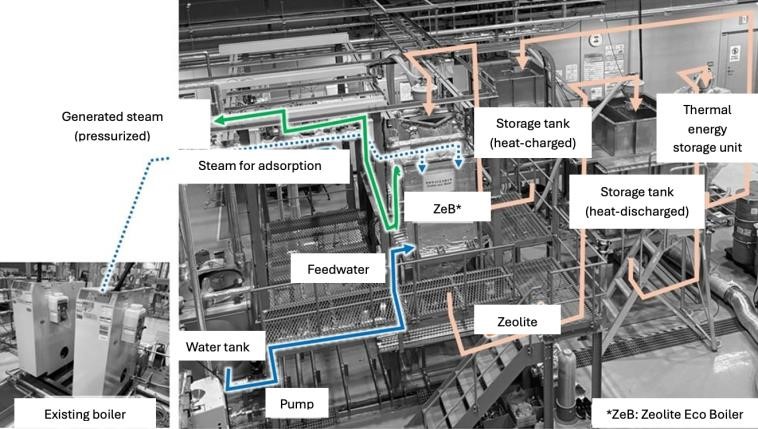
- Takasago Thermal Engineering will launch a demo of a heat-recovery system that stores waste heat from incineration facilities and reuses it to generate steam, under an MoE FY2026 demonstration program.
- The demo aims to test systems that store unused heat generated at waste facilities using zeolite as an absorbent.
- CONTEXT: Zeolite stores heat when it dries, releasing it when it absorbs moisture.
- Heat is extracted from the zeolite and used to generate steam. After releasing its heat, the zeolite can be recovered and reused. According to the company’s estimates, fuel consumption can be reduced by 20–30% compared with supplying steam from a conventional boiler.
- CONTEXT: Prior to this demo, the company conducted a joint research project in collaboration with the University of Tokyo and Waseda University, during which Takasago Thermal Engineering developed a “zeolite eco-boiler”. The project demonstrated the continuous generation of steam and reductions in fuel consumption.
NEWS: NUCLEAR ENERGY

Chubu Electric chief briefs Shizuoka governor on Hamaoka reforms
(Nikkei, November 2)
- Chubu Electric President Yasui met Shizuoka Gov. Suzuki to explain additional measures addressing the seismic-data misconduct at Hamaoka NPP.
- Chubu plans to strengthen compliance staffing within its nuclear division, including personnel with legal and risk-management experience, and introduce regular technical audits by outside experts. Gov. Suzuki welcomed greater external oversight and a more open evaluation process, noting the risk that highly specialized nuclear organizations can become insular.
- CONTEXT: Hamaoka sits in an area expected to be heavily affected by a future Nankai Trough megaquake. Earlier this year, Chubu Electric admitted manipulating seismic data used in NRA restart reviews for Units 3 and 4, prompting withdrawal of the applications in September and a major management reset.
Japan and Vietnam to sign MoU on SMR cooperation
(Nikkei Asia, November 6)
- Japan and Vietnam will sign a MoU to cooperate on deploying next-gen small modular reactors (SMRs) in Vietnam as early as 2040.
- CONTEXT: PM Takaichi and President To Lam meet early next week.
- Japan will provide technology and training to support Vietnam’s SMR adoption.
- While Japan withdrew in 2025 from a project with a 2035 deadline, this new deal refocuses bilateral efforts on next-gen reactors, targeting a post-2040 timeframe.
- Vietnam is the only SE Asian nation with a bilateral nuclear pact with Japan.
Hitachiomiya discusses decision to accept literature survey for waste disposal site
(FNN, Japan National Press Club, November 5)
- Mayor Suzuki of Hitachiomiya, Ibaraki Pref, explained why the city accepted a literature survey for a possible high-level radioactive waste disposal site, the first stage of Japan’s site-selection process.
- Suzuki said final site selection will take decades and that decisions on whether to proceed to later stages will ultimately fall to future city leaders.
- The mayor said Hitachiomiya does not plan to distribute the literature-survey grant to neighboring municipalities. If the process advances to the next overview-survey stage, however, he would consider using future grants in ways that benefit surrounding communities as well.
- Suzuki said he accepted the survey partly because Japan needs municipalities willing to examine potential disposal sites.
- CONTEXT: Hitachiomiya accepted METI’s request for a literature survey in September. The city stresses that participation in the survey does not predetermine acceptance of a final disposal facility; it is intended first to assess whether the area may be geologically suitable.
NEWS: TRADITIONAL FUELS

Blackstone and pension funds back LNG Canada in $3.1 bln deal
(Company statement, Reuters, November 2)
- A Blackstone-led group including four Canadian institutional investors will invest $3.1 billion in a Mitsubishi Corp subsidiary that holds the trading house’s stake in LNG Canada. The investors will acquire a 49.9% non-controlling interest in the subsidiary.
- Mitsubishi values the 49.9% stake being sold at about $1.6 billion. The remainder of the investment commitment will help finance the LNG Canada Phase 2 expansion.
- The Mitsubishi holding company owns a 15% stake in LNG Canada, the British Columbia export terminal that began shipments in 2025.
- Phase 2 will double LNG Canada’s production capacity from 14 Mtpa to 28 Mtpa.
- Mitsubishi’s LNG offtake rights and customer relationships will remain unchanged. Its attributable offtake will rise from 2.1 Mtpa to 4.2 Mtpa once the expansion is completed.
Hiroshima Gas net loss on LNG price surge
(Company statement, November 6)
- Hiroshima Gas posted a consolidated net loss of ¥506 million for H1 of 2026, falling into the red for the first time in two terms after a ¥325 million net profit a year earlier.
- Revenue rose 6% YoY to ¥42.66 billion, but the company posted an ordinary loss of ¥572 million (compared to a ¥555 million profit in the prior period).
- LNG prices surged due to war in the Middle East, and losses widened due to the time gap between rising fuel expenses and consumer gas rates.
- The full-year forecast remains unchanged for FY2026, projecting revenue of ¥92 billion (up 4%) and a net profit of ¥2.2 billion (up 5%).
Chiyoda Corp raises full-year consolidated net profit forecast
(Company statement, November 4)
- Chiyoda Corp raised its full-year consolidated net profit forecast to ¥28 billion, more than double its initial projection of ¥12 billion.
- The increase is due to an LNG plant repair contract in Qatar, damaged in an attack.
LNG stocks down from previous week, down YoY
(Government data, November 4)
- As of Nov 1, the LNG stocks of 10 power utilities were 1.92 Mt; down 10.7% from the previous week (2.15 Mt); down 7.2% from end November 2025 (2.07 Mt), and down 9.9% from the 5-year average of 2.13 Mt.
NEWS: CARBON CAPTURE & SYNTHETIC FUELS

JPX starts FY2026 trading of GX League excess-reduction credits
(Exchange statement, November 6)
- The Tokyo Stock Exchange began FY2026 trading of GX League excess-reduction credits on Nov. 6, with trading scheduled every Friday through February 2027.
- The credits represent emissions reductions achieved by GX League participants beyond their voluntary reduction targets and trade alongside J-Credits on JPX’s carbon-credit market.
- CONTEXT: JPX added GX credits to its carbon-credit market as part of METI’s efforts to develop the trading infrastructure around the GX League emissions-trading framework.
- TAKEAWAY: The trading window remains limited, but GX credits are becoming a practical bridge between Japan’s voluntary GX League system and the broader emissions-trading framework that is gradually becoming more formalized.
Gyxis registers J-Credit scheme for industrial fuel switching
(Company statement, November 2)
- LPG wholesaler Gyxis registered its Life Plus G Factory project under the J-Credit scheme, aggregating emissions reductions from fuel switching and equipment upgrades at industrial facilities such as melting and drying furnaces.
- The project will convert those aggregated reductions into J-Credits, with Gyxis preparing to recruit customers and end-users to participate.
- Credits generated through the scheme will partly be used for Gyxis’s carbon-offset LPG business, as well as circulated within the LPG industry or returned to participating companies.
- TAKEAWAY: The project links industrial fuel switching directly to a new source of carbon-credit value. For Gyxis, that creates an additional incentive for customers to replace higher-emission fuels while also generating credits that can support its carbon-offset LPG.
- SIDE DEVELOPMENT:
- INPEX gains forest-based J-Credits from Numata project
- (Company statement, November 2)
- A forest-management project involving INPEX and Numata City received certification for 936 t-CO2 of J-Credits, with the credits split equally between INPEX and the municipality.
- INPEX plans to use its share partly for carbon-offset LNG and natural gas, while Numata intends to sell its portion and reinvest proceeds in forest management.
ANALYSIS
BY THOMAS SHOMAKER
As Pumped Hydro Experiences a Global Renaissance, Japan Looks to Lead
Abandoned strip mines rarely find second lives. But in Australia’s Far North Queensland, the Kidston Gold Mine, shuttered 25 years ago, is being retrofitted by Japanese electricity producer J-Power into the world’s first pumped storage hydro power plant utilizing such an asset. If successful, this project will pave the way for pumped hydro projects around the world in areas not previously considered for this type of energy storage.
With a growing portfolio of international projects, J-Power and other Japanese companies are well positioned to help Japan dominate the growing pumped hydro market as the sector rides a global renaissance. In fact, Kidston will be Australia’s first new pumped storage plant since the early 1980s.
Power grids need long-duration solutions to balance intermittent wind and solar energy, and Pumped Storage Hydropower (PSH) offers just that. With over 200 GW of installed capacity in 2025, PSH is the world’s largest form of energy storage.
But most PSH infrastructure was installed in the second half of the 20th century, designed to capture thermal or nuclear energy produced at times of low demand and strategically discharge to relieve electricity grids during peak consumption hours.
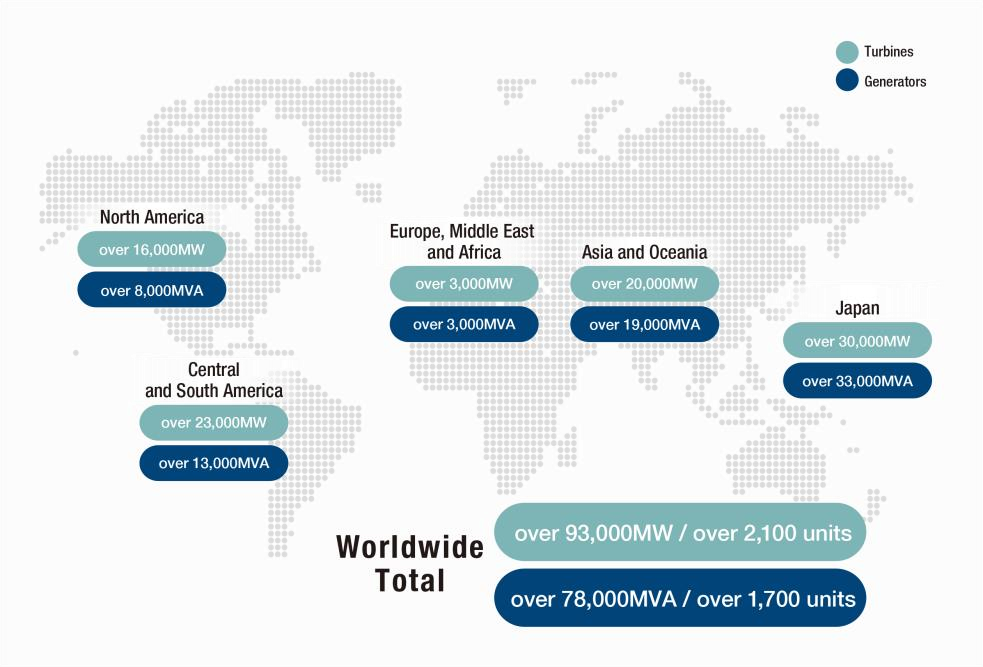
Chart showing Hitachi Mitsubishi Hydro’s turbine & generator deliveries around the world, for both traditional hydro power and PSH
With the proliferation of renewable energy over the last 15 years, coupled with the increasing demands of data centers, countries around the world are reapproaching ‘water batteries’ as a crucial means of exploiting intermittent energy sources.
China offers opportunities
Japan’s current installed PSH capacity of 21.9 GW accounts for about 10% of the global total and is by far the largest fleet per capita, as well as the most technologically advanced. As renewables proliferate across the world, Japan’s leadership in pumped hydro is opening opportunities abroad, including innovative projects that are bringing PSH to altogether new places such as Kidston in Australia.
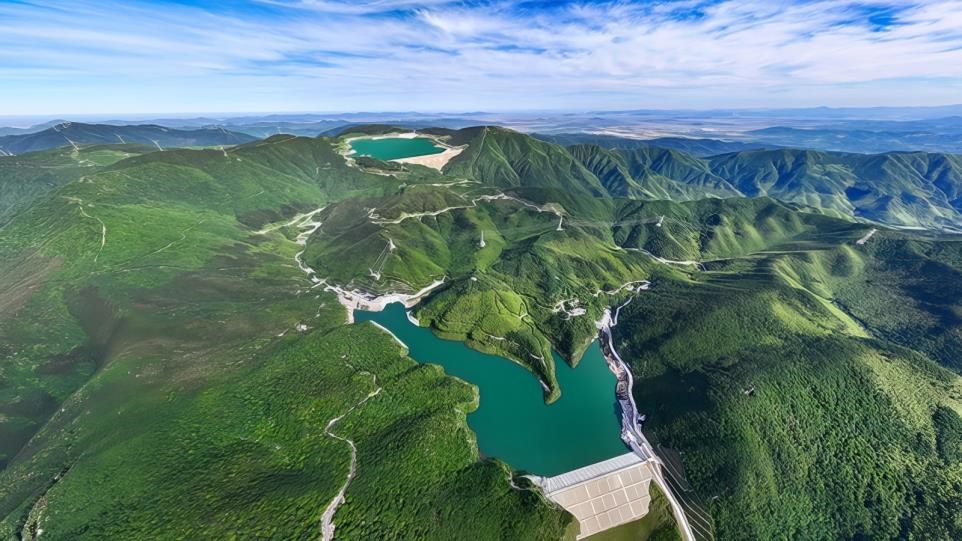
Toshiba Hydro Power installed turbines, generators and a BOP system for this 1.4 GW PSH plant.
Although Japan’s domestic PSH expansion slowed during the late 20th century in line with global trends, the sector continued to innovate. Japanese companies pioneered adjustable-speed PSH systems in the late 1980s, allowing operators to vary electricity consumption during pumping and provide more flexible grid balancing. In the early 2000s, Toshiba also developed splitter runners, a new turbine design that reduces water turbulence and vibration, improving equipment reliability.
China offers significant opportunities for Japanese manufacturers, with its pumped hydro capacity forecast to reach 120 GW by 2030, nearly double its 2025 level. Japanese firms have supplied equipment for numerous Chinese projects, leveraging their technological expertise and long experience in PSH development. Toshiba has established a strong presence through its Chinese manufacturing subsidiary, supplying advanced turbines, generators and control systems for major installations.
In 2005, Toshiba established its Chinese subsidiary, Toshiba Hydro Power (THPC), and has since supplied more than 87 hydro turbines and 101 generators for projects across the world, the lion’s share in China. In 2016, this included four sets of turbines using splitter runners – a technology Toshiba developed in the early 2000s – and generatormotors for the 1.28 GW Qingyuan pumped hydro plant, as well as various auxiliary systems and equipment like supervisory control systems.
Recently, THPC supplied the 1.4 GW Ning Hai pumped hydro plant – which came online in 2025 – with turbines, generators and a sophisticated balance of plant control system.
Japan’s other preeminent pumped hydro exporter is Hitachi Mitsubishi Hydro, established in 2011 by three companies – Hitachi, Mitsubishi Electric and Mitsubishi Heavy Industries – to integrate their hydroelectric power system endeavors.
Unlike Toshiba’s heavy emphasis on control systems, Hitachi Mitsubishi Hydro mainly focuses on turbine manufacturing, including the Francis turbine, which is the world’s most widely used for hydropower. When traditional hydropower plants are included, Hitachi Mitsubishi Hydro says it has delivered over 2,100 turbines with over 93 GW of capacity globally. South America is the largest market outside of Japan, at around 23 GW.
Thinking outside the mountain
Japan’s emergence during the 20th century as the PSH leader was largely the result of geography. A pumped hydro plant requires an upper reservoir built at a sufficient elevation above a lower reservoir to provide adequate energy upon discharge; the industry standard being 200 meters or more. Japan’s ubiquitous mountainous terrain makes it well suited to such energy storage, as are large parts of China, which became the PSH capacity leader around 2019.
One reason for the global slowdown in PSH construction in the late part of the 20th century was that many countries had already exploited the most suitable areas near large power plants and consumption centers. But as renewables generation expands, so does the need for energy storage, particularly over longer durations that conventional BESS cannot economically provide. This is prompting utilities and heavy industries to explore unconventional locations for pumped hydro projects.
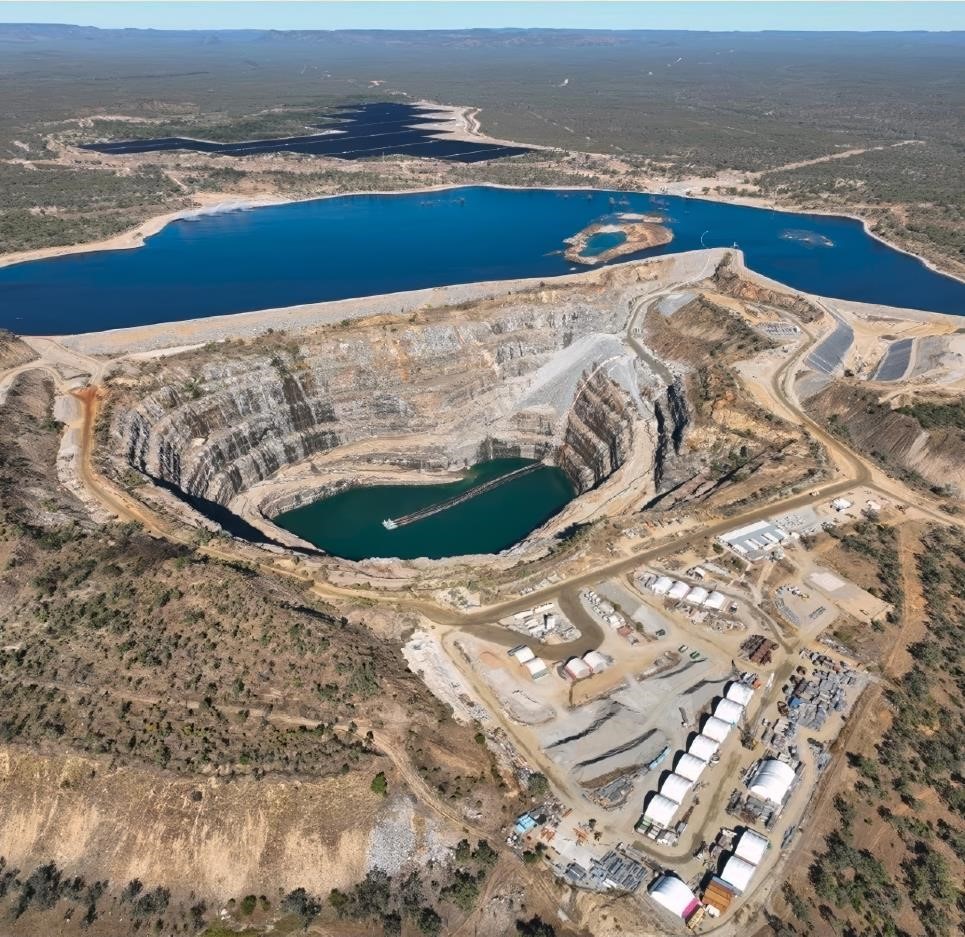
Aerial view of the under-construction Kidstone Pumped Storage plant, part of the Kidston Clean Energy Hub
In 2021, J-Power acquired a 10% share of Genex, an Australian power company focused on renewables and energy storage, entering into a technical support contract to assist in developing a pumped-storage hydroelectric power plant. Then, in 2024, J-Power bought all of Genex’s shares, making it a wholly-owned subsidiary.
By this time, construction was apace on Genex’s Kidston Clean Energy Hub in Far North Queensland, which brought a 50 MW solar installation online in 2017. Along with a 120 MW wind farm under construction and 150 MW BESS installation, the centerpiece is the 250 MW Kidston Pumped Storage Hydro facility that uses two pits of an abandoned gold strip mine. The vertically integrated energy hub is due for completion in FY2027.
While Kidstone may be the prototype, the idea of using abandoned mines for PHP has received much attention in recent years. A 2024 study by Chinese and Australian researchers suggested using the “proliferation” of abandoned coal mine tunnels across China for PSH. In 2025, the U.S. Department of Energy said it was studying how to turn abandoned coal mines into PSH facilities.
Others around the world that have studied the use of open-pit or underground mines for PSH include the Indian Institute of Technology Roorkee. Most recently, a 2026 study by German academics reviewed 164 open-pit lignite mines across the EU, identifying 50 sites as technically feasible for PSH.
Like Far North Queensland, the key innovation is that these potential reuses of mines would bring PSH to relatively flat topographies that traditionally would not have been applicable for this kind of energy storage.
The engineering challenges are not insignificant. For Kidstone, the open-pit mines – there are two in the complex, both of which are being used for the pumped hydro conversion – had naturally filled with highly-tainted water that had to be pumped out and treated. This is a problem that is sure to be found in most mines, open pit or underground.
As is the fate of man-made subterranean tunnels, most shafts are unstable and will eventually collapse without major reinforcement, which needs to be extra robust to deal with rapid influxes of water. And then there is the installation of the underground power plants with all the intake and discharge tunneling. Nevertheless, the main excavation work is already complete.
The competition
While European, Australian and Chinese firms are also active in hydro and PSH projects globally, Japanese companies benefit from decades of technological expertise and established international partnerships. J-Power’s relationship with Genex is one example of how these advantages can help Japanese firms enter new markets.
In 1997, for instance, Fuji Electric partnered with Germany’s Voith Hydro to establish Fuji Voith Hydro, which mainly serves the Asia-Pacific region. Japanese innovation has also extended to seawater PSH, with an experimental 30 MW facility in Okinawa that operated from 1999 until its decommissioning in 2016, following weaker-than-expected growth in local electricity demand.
As the global PSH market expands, Japanese firms have opportunities on several fronts. China’s ambitious construction program creates demand for advanced turbines, generators and control systems, while the growing need for flexible, long-duration storage could increase interest in adjustable-speed technology pioneered by Japanese manufacturers.
Meanwhile, projects such as Kidston show how Japanese expertise can be applied to unconventional sites, potentially opening new markets in countries with limited traditional pumped hydro resources.
For Japanese companies, the renewed interest in pumped hydro represents an opportunity to turn decades of accumulated expertise into international business. Having continued to develop and refine the technology during the lean years of limited global investment, they are now well placed to benefit from the current global boom in energy storage.
ANALYSIS
BY FILIPPO PEDRETTI
Beyond the Meter: Japan’s Utilities Turn Their Customer Bases into Business Opportunities
Japan’s major regional utilities, the EPCOs, possess millions of households and corporate customers that pay every month. This relatively captive audience is being tapped into and monetized by the EPCOs to offer commercial activities not related to energy.
By selling those customers banking, telecommunications, real estate and other services, the utilities aim to boost earnings that are less capital-intensive than power generation. Such services also give customers more reasons to stay with their existing energy provider.
Several EPCOs, such as Chubu Electric and Kansai Electric (KEPCO), have taken the lead in monetizing customer bases. Revenues from these additional services can sometimes account for as much as 8% of total annual profits.
Still, there’s no guarantee of success. Going head to head with more established national competitors, such as leading telecom corporations and financial institutions, is a major challenge. Those competitors have specialist brand recognition, plus a deep reserve of qualified talent. How much added value lies in the utility’s custom network?
Banking through the power bill
After peaking in 2007–2011, Japan’s domestic electricity demand entered a period of decline. That changed in 2023, when demand began an upward trend on the back of growing electrification, digitalization and new energy-intensive industries.
For major utilities, however, this rebound is less of a windfall than it appears. While national power demand is expected to grow by about 6% over ten years, this rise will be concentrated in specific areas, such as data center clusters near Tokyo and in the Kansai region.
Rising demand does not neatly translate into proportionally rising retail profits either. That’s because to tap into it, utilities need to put capital into new generation and grid capacity. Meanwhile, the retail business, open to full competition since 2016, offers thin margins and weak customer loyalty.
To help boost overall revenues, some of the EPCOs have been expanding into nonenergy commercial activities that range from financial services to telecommunications and more.
In late 2024, Chubu Electric Power Miraiz (CEPM), Chubu Electric’s retail electricity and gas subsidiary, entered the banking sector by partnering with Docomo SMTB Net Bank to launch embedded financial services. The partnership produced KatEne BANK for household customers, the first household-oriented banking service in Japan’s electric utility industry.
Through a dedicated app, KatEne BANK offers deposits, transfers and loans. In 2025, CEPM followed with BizEne BANK, which targets corporate customers and sole proprietors. Rather than operating a bank itself, CEPM acts as a banking agent, using its existing energy customer base to distribute financial products.
This lets the utility earn from distribution while its banking partner holds the deposits and the lending risk. Over time, banking could become part of a wider offering that extends well beyond paying the utility bill.
For Chubu Electric, the appeal is clear. The utility already handles monthly payments from millions of customers. Adding deposits, transfers and loans to that relationship turns a single transaction into a broader financial connection, and gives customers one more reason to keep buying their energy from Chubu.
Telecom: an established cash cow
If Chubu Electric’s banking activities show where diversification starts, KEPCO’s ventures show where it can lead. Its telecom businesses that started decades earlier are now a major source of earnings, generating ¥312.6 billion in total sales and ¥46.9 billion in ordinary profit in FY2024.
KEPCO’s subsidiary OPTAGE, which runs the eo Hikari broadband and mineo mobile brands, had 1.71 million fiber broadband subscribers and 1.35 million mobile subscribers as of April 2025.
Other EPCOs have followed similar paths. Kyushu Electric’s QTnet operates BBIQ broadband and QTmobile provides data center services. Chugoku Electric’s Enecom offers Mega Egg broadband and corporate ICT services. Shikoku Electric operates STNet, and Tohoku Electric has a stake in TOHKnet.
Telecom is a natural fit for power utilities. Many of these subsidiaries grew out of the communication networks that the EPCOs built to run their own power systems, and the parent companies already know how to sign up, serve and bill millions of retail customers.
The telecom industry also connects back to the power business – today more than ever. The same digitalization that’s lifting electricity demand is driving demand for connectivity and data center services, which several subsidiaries now provide.
A long tradition of diversification
The EPCOs’ commercial operations already extend well beyond power generation, networks and electricity sales. TEPCO and KEPCO, for example, are also active in real estate, tourism and medical services. Some of these businesses are recent investments; others have existed for decades.
Most are regional, mirroring each utility’s service area and targeting the same households and businesses that buy its electricity. The table on the next page lists a selection.
Strengths and limits
Across these ventures, the underlying advantage is the same. The EPCOs have large customer bases, recognized regional brands and established billing relationships. Each new service can be sold through channels that already exist, at a lower cost of acquiring customers than a newcomer would face.
Bundling also helps client retention. A household that pays for its electricity, gas, broadband and mobile service through one provider has more reasons to stay with the company than a client that only buys power. In a retail market where customers can switch suppliers at any time, this makes a difference. Non-energy services do not only diversify revenue; they also protect the core business.
There are, however, limits to the diversification model. When venturing outside energy, the utilities step into the territory of long-established incumbents. Just like the EPCOs in power retail, banks, mobile phone carriers and property developers enjoy business and customer relations that span decades, as well as brand recognition, deeper personnel expertise and national-scale infrastructure.
In some cases, diversification could even end up cannibalizing the EPCO’s original power sales business.
EPCOs diversify beyond electricity and gas
| EPCO | Non-energy businesses | Selected examples |
|---|---|---|
| TEPCO | Real estate, finance, hospitality, telecom | Toden Real Estate; TEPCO Fintech; Atema Kogen Resort (Hotel Belnatio); FamilyNet Japan broadband |
| Kansai Electric | Telecom, real estate, healthcare, tourism | OPTAGE (eo Hikari broadband, mineo mobile); Kanden Realty & Development; Kansai Medical Net; Kanden Amenix; Kurobe Gorge Railway |
| Chubu Electric | Banking, financial services | KatEne BANK (retail banking, launched 2024); BizEne BANK (business banking, launched 2025), both through Chubu Electric Power Miraiz |
| Kyushu Electric | Telecom, mobile, IT | QTnet (BBIQ broadband, QTmobile, data center services) |
| Chugoku Electric | Telecom, IT | Enecom (Mega Egg broadband, corporate ICT services) |
| Shikoku Electric | Telecom, IT, cable TV | STNet (telecommunications and IT services); cable television operations |
| Tohoku Electric | Telecom, IT, real estate | TOHKnet (telecommunications); TOiNX (IT services); Higashi Nihon Kogyo (property) |
| Hokkaido Electric | Telecom, IT, document management | Hokkaido Telecommunication Network; Hokuden Information Technology; Hokkaido Records Management |
| Hokuriku Electric | Telecom, IT | Hokuriku Telecommunication Network (corporate connectivity and network services) |
As such, for most EPCOs, non-energy businesses remain a supplement rather than a pillar of their revenue stream, and KEPCO’s telecom operations are the exception rather than the rule. Diversification can help to stabilize earnings, but it cannot replace the core business.
Looking at the financials of the EPCOs, non-energy ventures contribute in the single digits to low double digits of total earnings. As such, the side businesses act as highmargin stabilizers rather than volume drivers.
KEPCO provides the clearest benchmark for a mature operation. Its telco unit represented about 7.2% of KEPCO’s FY2024 consolidated revenue (¥4.34 trillion). It also represents 8.8% of its consolidated ordinary profit (¥531.7 billion). The segment delivered an ordinary profit margin of roughly 15%. So, it is far outpacing the thin margins of retail electricity. In this way it’s providing steady cash flow to buffer fuel price volatility and core power investments.
For other utilities, with newer or smaller initiatives, non-energy contributions are in the low single digits. They are functioning as defensive churn reducers rather than earnings replacements.
Conclusion
Securing revenue streams unrelated to energy production and sales is a priority for some, but not all EPCOs. While Chubu Electric’s move into banking is recent, KEPCO’s telecom ventures are an established source of earnings. Both take advantage of the same asset: a long-established relationship with retail energy consumers.
The return of electricity demand growth doesn’t change this logic; if anything, it reinforces it. Growth will remain uneven at the national level and likely slower than the expansion of other sectors like digital and telecommunications.
As power retail competition intensifies and EPCOs’ core businesses absorb more capital, services that ride on existing customer relationships offer the utilities something power sales increasingly cannot: steady growth that does not require investing billions of dollars to build or upgrade a power plant.
KEPCO’s OPTAGE, for instance, holds a 60% market share for fiber-optic internet (FTTH) in the Kansai region’s detached houses market (for homes using 5 Gbps or faster courses.) It is also carving out a nationwide presence through its “mineo” mobile brand with 1.35 million users, which consistently ranks as the No. 2 independent MVNO (Mobile Virtual Network Operator) in Japan.
Similar regional strength exists across Japan, from Kyushu Electric’s QTnet (“BBIQ”) to Chugoku Electric’s Enecom (“Mega Egg”). However, expanding these services beyond their home turf remains difficult as regional utilities come up against national specialists.
Joint ventures offer more viable alternatives. In banking, for example, Chubu Electric’s KatEne BANK and BizEne BANK operate under an asset-light Banking-as-a-Service (BaaS) structure. The utility acts as a registered agent while partner banks hold the balance-sheet credit risk.
Rather than competing on volume nationwide, their goal is hyper-local customer retention. They are offering incentives – such as up to 5% points-back on energy bills when linked to home mortgages. This helps in regional power markets where switching rates have already crossed 50%
The open question is how far the utilities can stretch before they move beyond what their brands and skills can support. So far, the most successful models, such as KEPCO’s OPTAGE, are those built on assets and capabilities the utilities already had. That is likely to remain the test for whatever the EPCOs try next.
ASIA ENERGY REVIEW
BY JOHN VAROLI
A brief overview of the region’s main energy events from the past week
Australia / BESS
Batteries are still a small share of total generation but are increasingly influential during the evening peak, when they are beginning to displace gas and hydro as the generators that most often determine price, said the Australian Energy Regulator.
China / BESS
At the end of September, China’s operational new-type energy storage capacity reached 167 GW/435 GWh, up 63% YoY, according to the NEA.
China / Nuclear
Construction of Haiyang NPP Unit 5 began; it’s the start of phase III of the Haiyang Nuclear Power Complex and among the world’s first Generation III nuclear power projects. The site is planned in three phases for 6 GW class reactors.
India / Coal
India’s coal-fired generators remain critically short of fuel. Total stocks were 20 million tons as of late October, down from 48 Mt in Oct 2025.
India / Solar
On the eve of the Bharat Renewable Energy Summit 2026, PM Modi praised India’s growing solar power sector, saying the clean energy transition is creating new opportunities in agriculture, energy storage, domestic manufacturing and green jobs.
Indonesia / Green cooperation
Indonesia and Vietnam plan better cooperation in waste management, clean transport, EVs and smart urban technologies, including digital governance and environmental monitoring.
Singapore / Electricity
Indonesia will not export electricity to Singapore in the near future because domestic energy needs must take priority, said the Energy Minister. This makes uncertain a deal to supply up to 3 GW of clean electricity to Singapore.
South Korea / Nuclear
Turkish President Erdogan called South Korea an important potential partner in his country’s plans to develop a nuclear power plant in Sinop on Turkey’s Black Sea coast.
Thailand / Smart energy solutions
ZD Energy held the global launch of its overseas smart energy solutions and charging robot products in Chonburi, Thailand. The company officially introduced smart energy solutions for residential and public settings.
Vietnam / Coal
Vietnam will boost coal-fired power generation to ensure a reliable electricity supply, as rising demand and delays to major power projects put pressure on the system amid efforts to achieve double-digit economic growth. As of Oct 15, Vietnam spent over $7.3 billion to import more than 60 Mt of coal, up 36.2% and 11.2% YoY, respectively, in value and volume.
Disclaimer
This communication has been prepared for information purposes only, is confidential and may be legally privileged. This is a subscription-only service and is directed at those who have expressly asked K.K. Yuri Group or one of its representatives to be added to the mailing list. This document may not be onwardly circulated or reproduced without prior written consent from Yuri Group, which retains all copyright to the content of this report.
Yuri Group is not registered as an investment advisor in any jurisdiction. Our research and all the content express our opinions, which are generally based on available public information, field studies and own analysis. Content is limited to general comment upon general political, economic and market issues, asset classes and types of investments. The report and all of its content does not constitute a recommendation or solicitation to buy, sell, subscribe for or underwrite any product or physical commodity, or a financial instrument.
The information contained in this report is obtained from sources believed to be reliable and in good faith. No representation or warranty is made that it is accurate or complete. Opinions and views expressed are subject to change without notice, as are prices and availability, which are indicative only. There is no obligation to notify recipients of any changes to this data or to do so in the future. No responsibility is accepted for the use of or reliance on the information provided. In no circumstances will Yuri Group be liable for any indirect or direct loss, or consequential loss or damages arising from the use of, any inability to use, or any inaccuracy in the information.
K.K. Yuri Group: Hulic Ochanomizu Bldg. 3F, 2-3-11, Surugadai, Kanda, Chiyoda-ku, Tokyo, Japan, 101-0062.