BY YURIY HUMBER
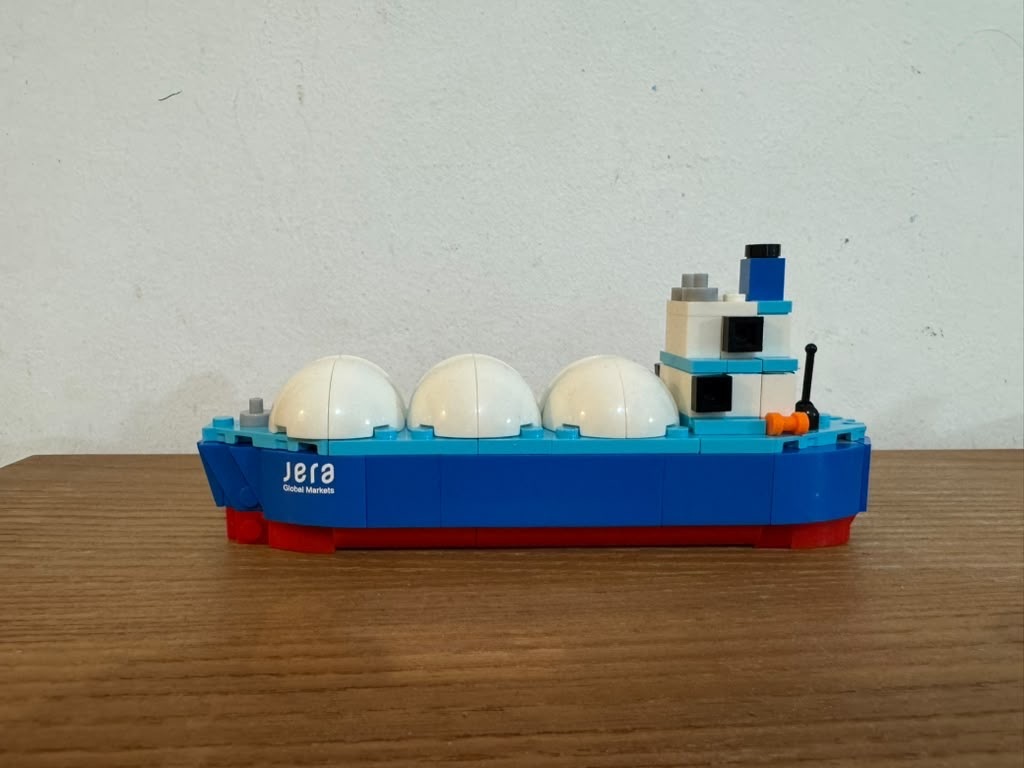
One of the more popular giveaways at Gastech in Bangkok this month was a Lego-like LNG tanker handed out by JERA, the world’s largest LNG buyer. The model came in dozens of small pieces. Japan’s emerging energy-security strategy looks much the same.
Tokyo is no longer treating diversification as a simple question of buying gas from more countries. The goal is to diversify the industry on every level – Japan wants more suppliers, more contract structures, more pricing benchmarks, more trading capability, more resilient infrastructure and, pragmatically, more ways of ensuring that neighboring Asian economies can withstand the same shocks.
Even LNG stockpiles, difficult and expensive to hold physically, were re-imagined by Japanese officials at Gastech as future financial tools such as call options that could provide access to gas without requiring Japan to store every molecule itself.
Thanks to elevated prices, a prevalent confidence was hard to miss at Gastech 2026, with the vast BITEC convention center in Bangkok filled with over 50,000 energy professionals, 1,000 exhibitors and 200 conference sessions, followed by a seemingly endless circuit of dinners and side events. Gas producers and traders had much to celebrate after another year of tight supply and strong prices. Yet one of the industry’s giants was conspicuously absent: QatarEnergy.
The world’s largest single LNG producer has seen its output and exports heavily disrupted by the near-closure of the Strait of Hormuz and attacks on infrastructure at Ras Laffan, the world’s largest LNG export hub – an uncomfortable reminder of the sector’s vulnerabilities.
For Japan, however, few commodities now sit at the intersection of economics, decarbonization and national security quite like LNG. Gas-fired power remains central to the electricity system and LNG costs feed quickly into wholesale power prices, while the slowdown in some clean energy investments has reinforced gas’s role as the dispatchable partner to renewables.
Japan was also one of the countries that built the modern Asian LNG market: its first cargo arrived from Alaska in 1969, followed by decades of investment in receiving terminals, shipping, long-term contracts and gas-fired generation. More than half a century later, even as Asia’s center of LNG demand shifts toward larger emerging economies, Tokyo is still pushing much of the argument for gas as the fastest practical route away from coal across the region.
But how does Japan see the LNG sector evolving from here?